
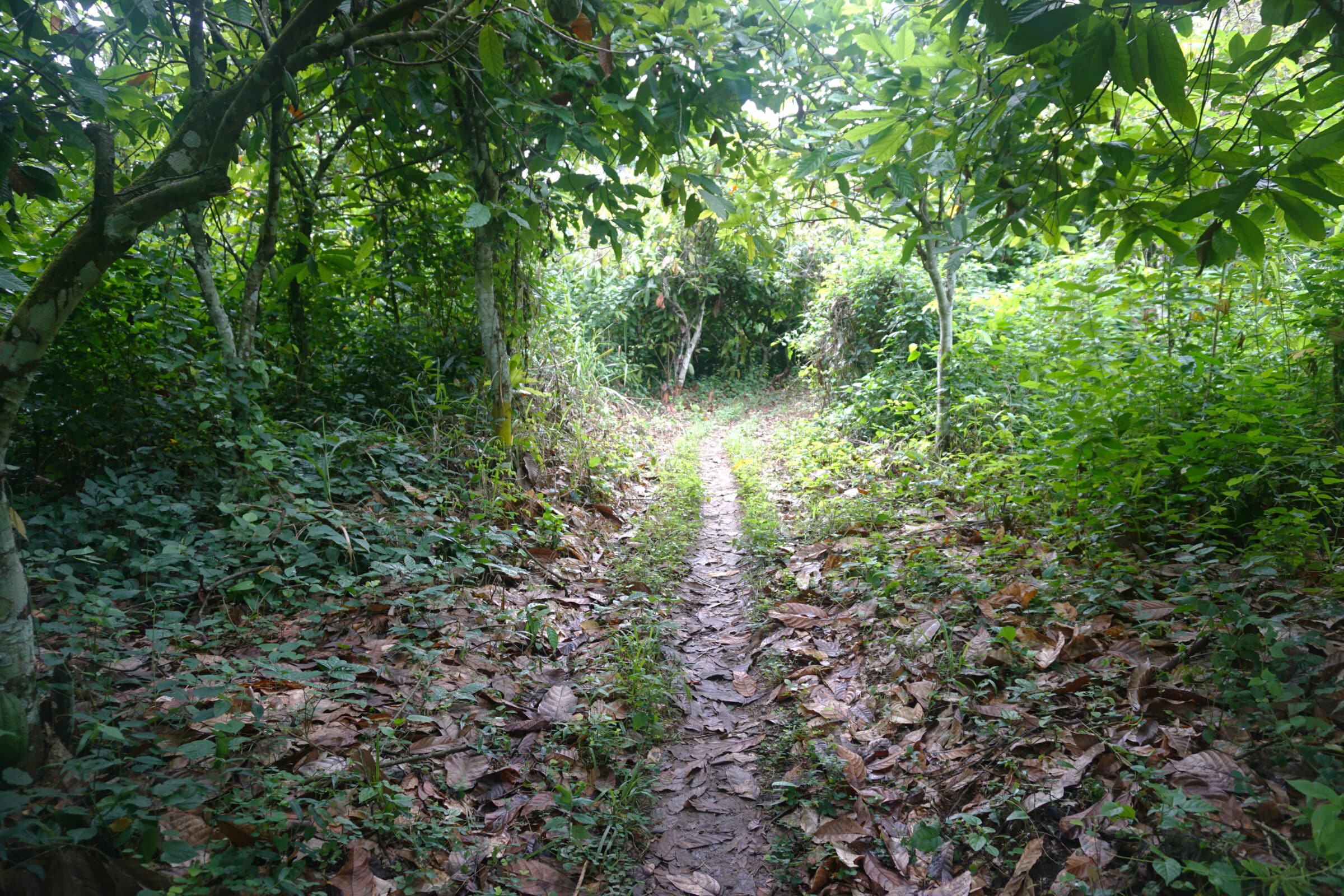
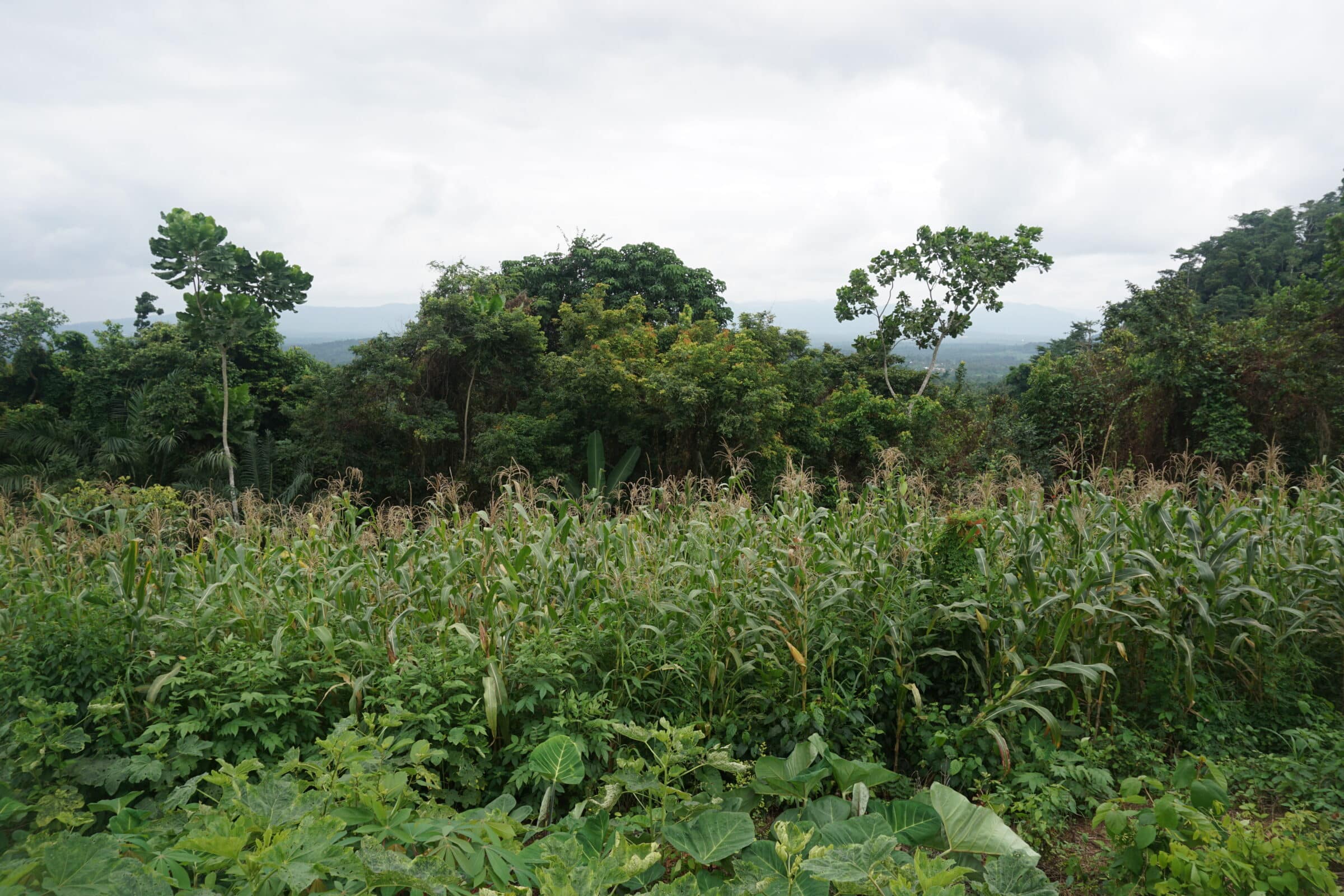
I will begin by telling the story of how I came to be the steward of a five-acre parcel of land in Ghana. After my first semester as a graduate architecture student at the Massachusetts Institute of Technology, I made a trip back home. While I was there, on a Saturday in January 2022, my uncle invited me to join him on a drive to the Eastern Region, where he’d been asked to assess a piece of farmland for purchase. My uncle lives in Accra, and the land was about two hours north by car. We arrived in the rural community of Sukrong-Daniel, and met the woman who owned the land, Madam Rebecca Duaquaye, and the caretaker who farmed the land, Eric Mantey.
My uncle invited me to join him in assessing a parcel of farmland for purchase.
Together they brought us to the parcel for sale, walking up the hills for about 30 minutes. We canvassed the land following the boundary markers, and incidentally collected a harvest of oranges. Then we descended the hills back to Sukrong-Daniel. As we walked, Madam Rebecca Duaquaye described how she’d received the land as an inheritance from her husband, a medical doctor who passed away in 2016. She had farmed the land for some years but wanted to relocate to the district capital Adeiso. She explained that the commute up and down the hills was increasingly difficult on her body, and that the lease-sale would allow her to finance a funeral ceremony for her late mother. She also needed funds to help pay for her son’s education, who’d been recently accepted to the University of Ghana.
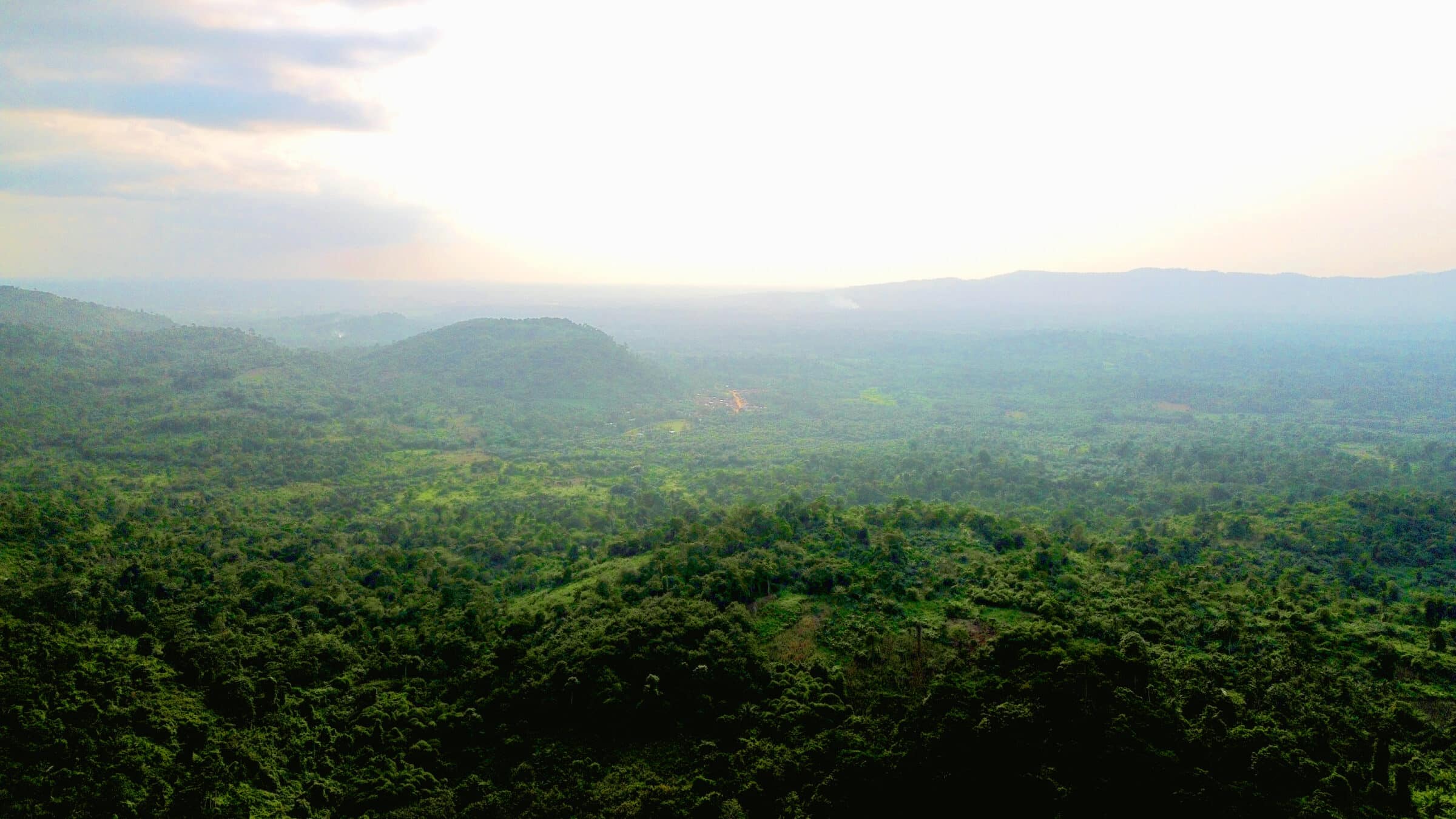
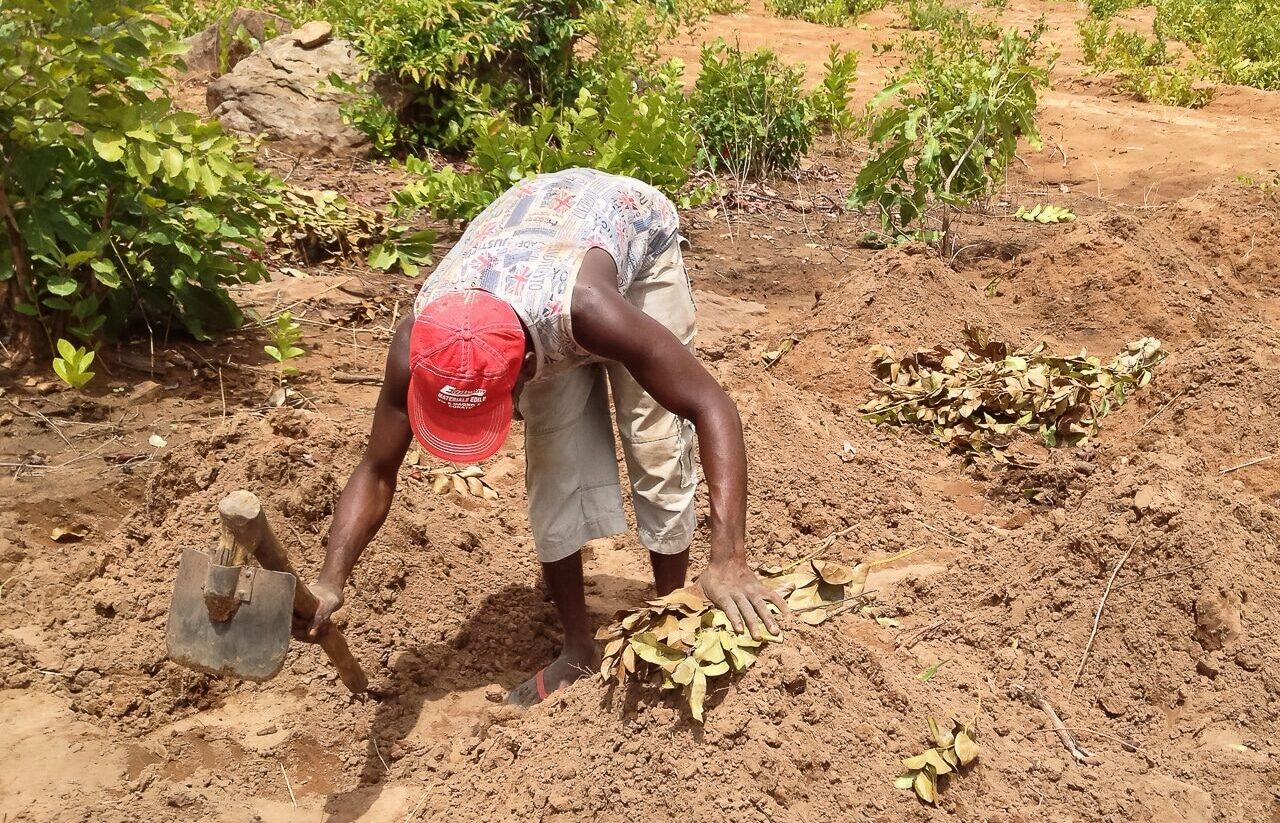
My uncle declined to purchase the land. He’d noted that the steep pitch would make any kind of development difficult, and access was available only through narrow hiking paths. He turned to ask if I might be interested in making the lease purchase instead, and I agreed almost immediately. My reasons were mostly practical. The price was within my means; I knew land was an asset that did not depreciate; the purchase would preserve the value of the money I had in my savings account. I also liked the idea of conserving the land’s ecological value by protecting it from development.
The price was within my means, and I knew land was an asset that did not depreciate.
Eventually I signed a document prepared by a court solicitor to the effect that 3.5 acres of land were transferring from Madam Rebecca Duaquaye to myself (officially named Courage Kpodo) for a period of 99 years, beginning in 2023 and expiring in 2122 CE, after which I (my inheritor) could renew the lease for another 45 years, or the land would revert to Madam Rebecca’s family (her future descendants or inheritors). While Madam Rebecca and I were drawing up the lease, my new neighbor, Mr. Agyenkwa Agyei, offered me 1.27 acres of his adjoining land for lease. His reasons were similar to those of Madam Rebecca. As he aged, he no longer found it sustainable to farm the hills. I came to own about 4.7 acres, which I approximate to five for conciseness in this essay.
There is one final step in the lease-sale of all non-public lands in Ghana: the transaction must be approved by the Lands Commission. 1 Because the land I sought to lease falls within the jurisdiction of Sukrong-Budu, the community below the hills, I needed to visit the chief of Sukrong-Budu and seek his blessing for the lease. I did this, and the transaction was made official by an Attestation of Land Sale Deed in January 2024.
The land I steward is located on a hill-cluster in the Eastern Region, in an area known as the birthplace of Ghana’s cocoa industry. The cocoa plant is not native to Ghana, but to the Amazon basin of South America. It was introduced in 1857, and then, with more success, in the 1880s, by Tetteh Quarshie. 2 Farmers from the Akuapem mountain range were the first to grow cocoa, but soon a large migration of enterprising farmers and laborers cultivated new farmlands, eventually venturing into the area of Akyem-Abuakwa where land was even more fertile. Parcels were purchased by small groups, usually composed of family members and the laborers they employed.
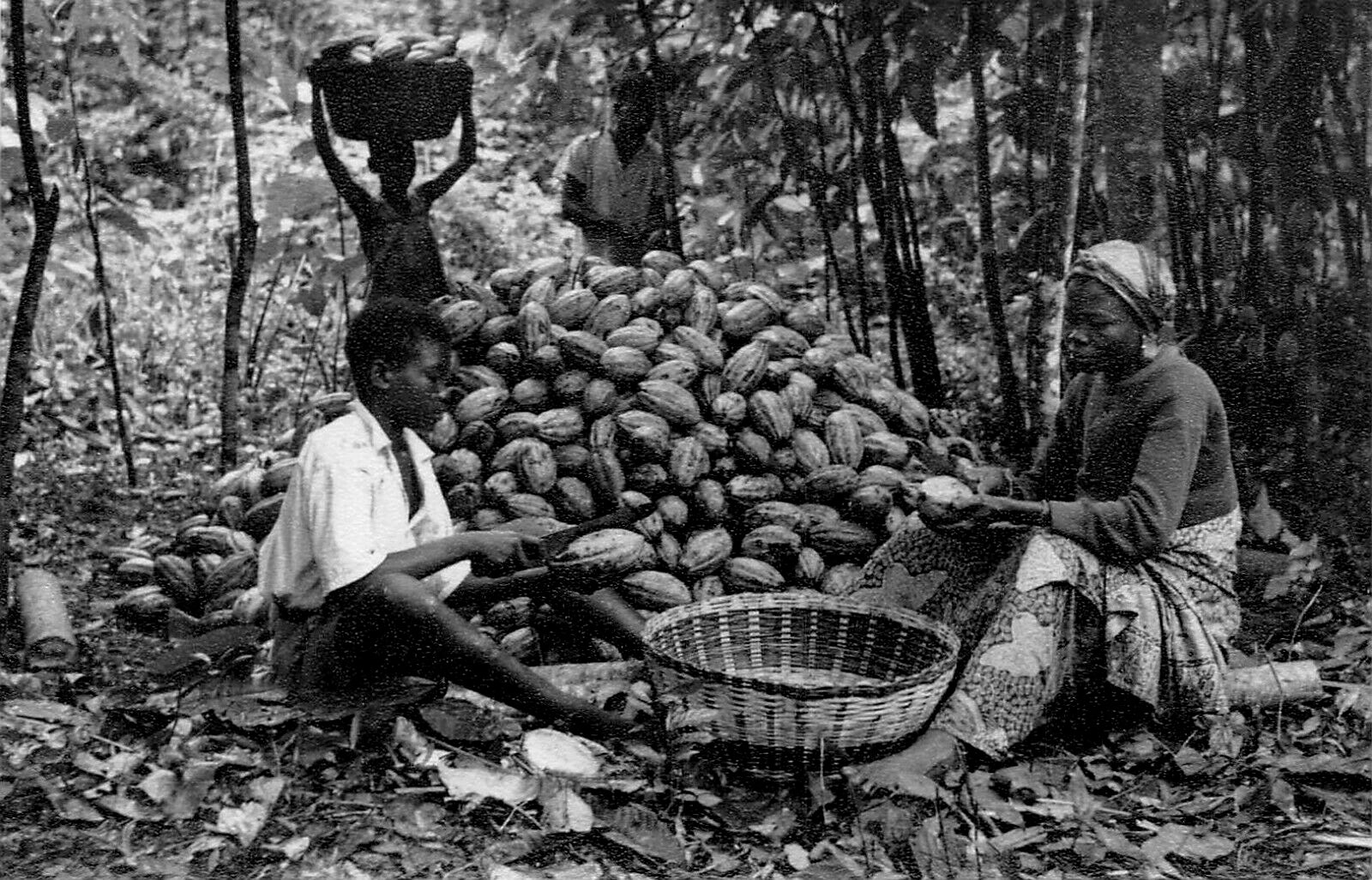
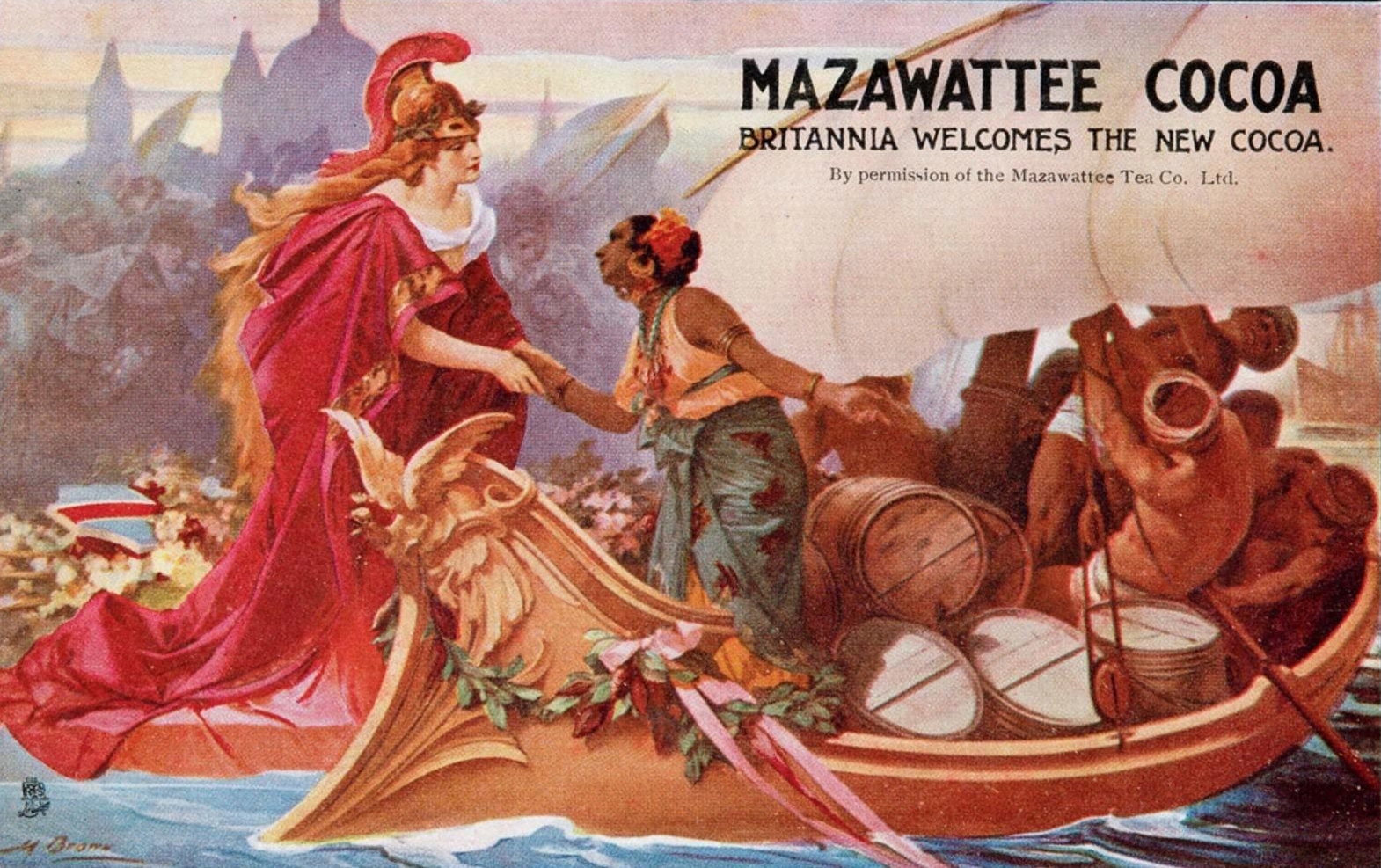
By 1911, Ghana, known then as the Gold Coast, had become the world’s largest producer of cocoa. The industry continued to grow. Between 1919 and 1959, Gold Coast exports increased by 838 percent, the majority of which was cocoa. Cocoa was a cash crop. In Ghana, cocoa equals money — a fact inextricably woven into the national imaginary, and reflected in various idioms and slang. “Cocoa season” for instance, describes times when the national economy is in a good condition.
Initially, cocoa farming developed without encouragement or input from the colonial government, which prioritized coffee exports. 3But as profits increased, the colonialist Gold Coast agricultural department began to exert more control.
In Ghana, cocoa equals money — a fact woven into the national imaginary, and reflected in various idioms and slang.
Government officials criticized the state of cocoa production farmlands, and planned to legislate federal reform of the cocoa farming process. These reform efforts described traditional fallowing techniques as wasteful, and viewed the typical growing patterns on small farms as disorderly — not adequately “neat,” “proper,” or “British.” 4 These judgements were propped up by the Western export market, who required a certain quality of product for export and assumed that such quality standards could be met only with colonial government intervention. As the Acting Director of Agriculture in the Gold Coast remarked, “Legislation appears essential in order to impress necessary cultural reforms upon a people incapable of taking the necessary measures to ensure the future prosperity of the industry by other methods than that of coercion — a method which is inherently familiar to them.” 5
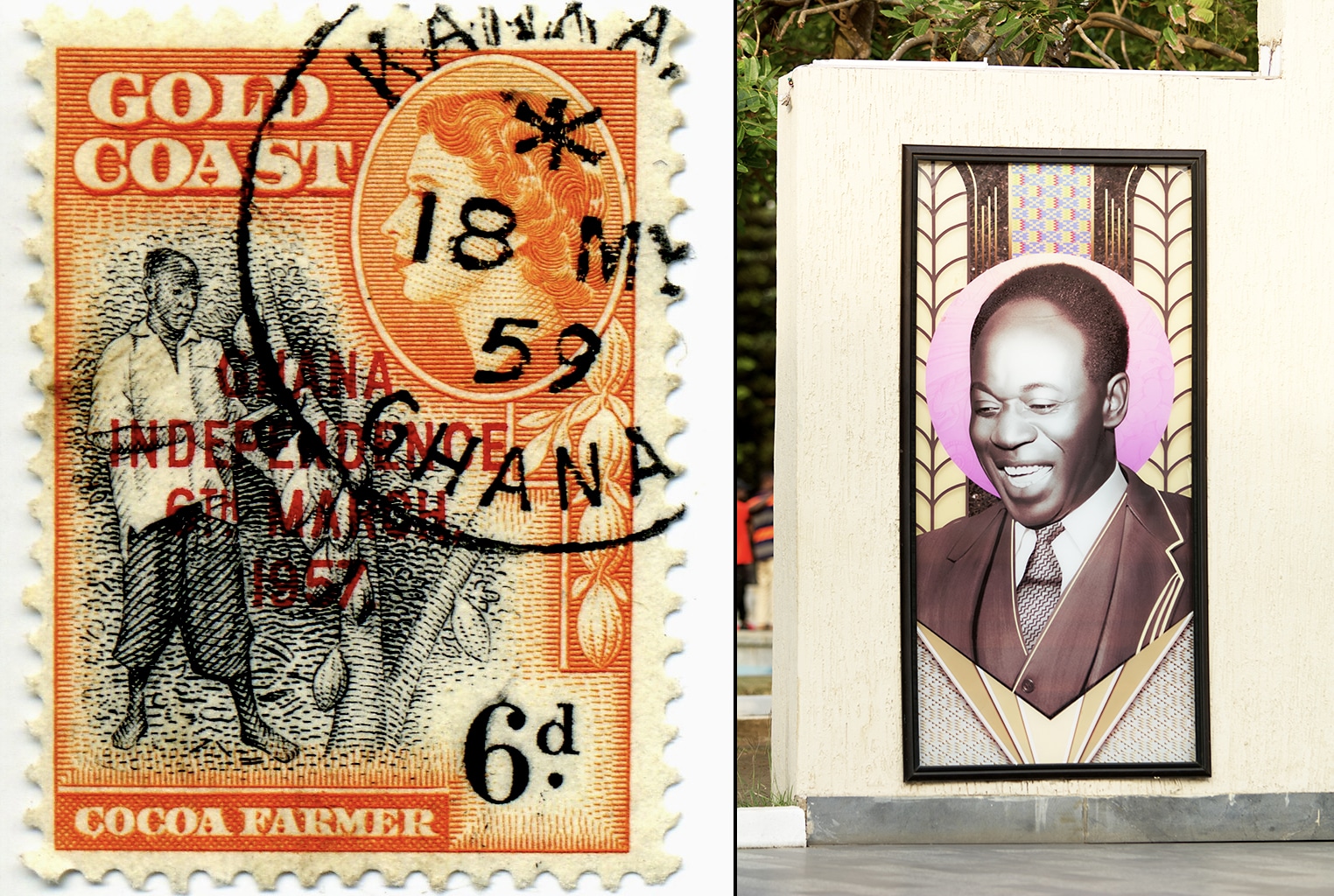
Naturally, the farmers themselves knew the most about growing cocoa and the conditions under which the plant thrives. In fact, it can be argued that the success of the cocoa industry in Ghana was precisely due the farmers’ resistance to the style of monocultural farming advocated by the government. Farmers had integrated the cash crop within a complex network of other plants that were essential to life, whereas the regions of Ghana that adapted the government’s monocultural techniques soon suffered the consequences of large-scale deforestation. 6
The relationship between the colonial government and small cocoa farmers grew antagonistic.
The relationship between the colonial government and small cocoa farmers also grew antagonistic over the issue of price-setting. When the Gold Coast Cocoa Marketing Board first set a price for cocoa, in 1947, the idea was to insulate cocoa farmers against a fluctuating global market. 7 The Board’s stated purpose was to “secure the most favorable arrangement for the purchase, grading, export and selling of Ghana cocoa, and to assist…the cocoa industry of Ghana for the benefit and prosperity of the producers.” 8 The aims and workings of the Board were laudable in theory, but the policies only briefly worked to the benefit of farmers and laborers. Heavy taxation and below-market purchase prices, imposed in the name of national development, soon made the Board a distasteful entity.
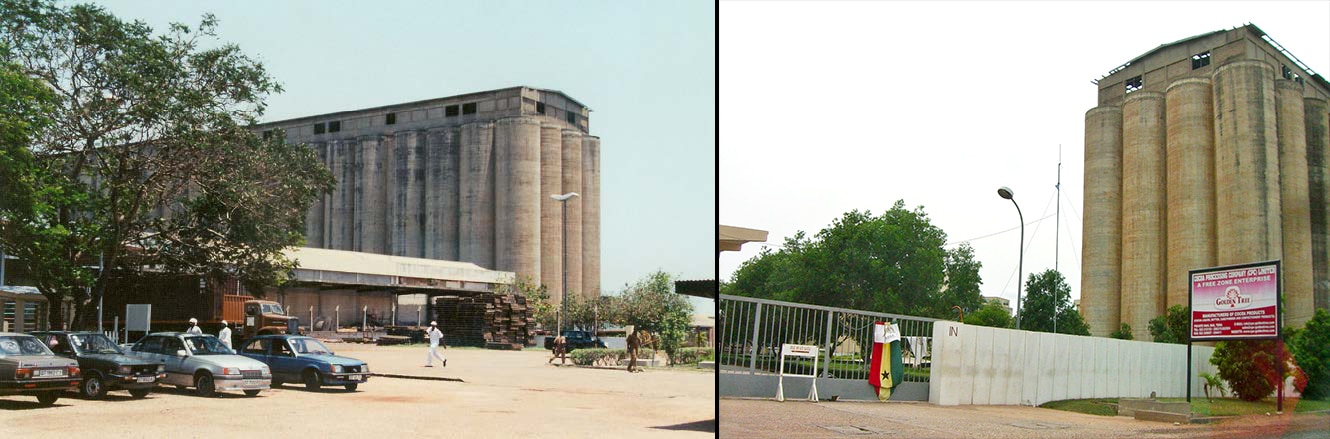
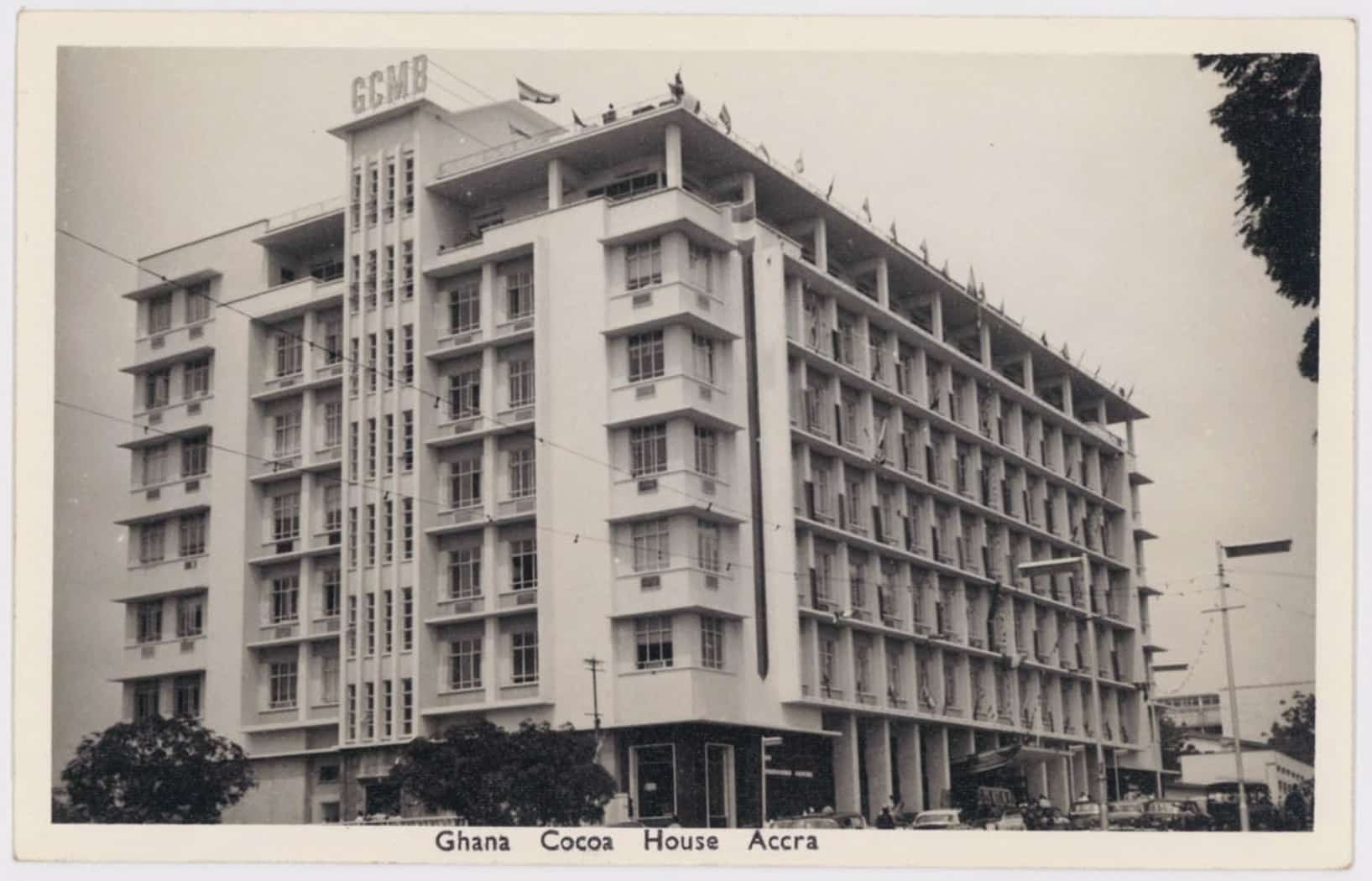
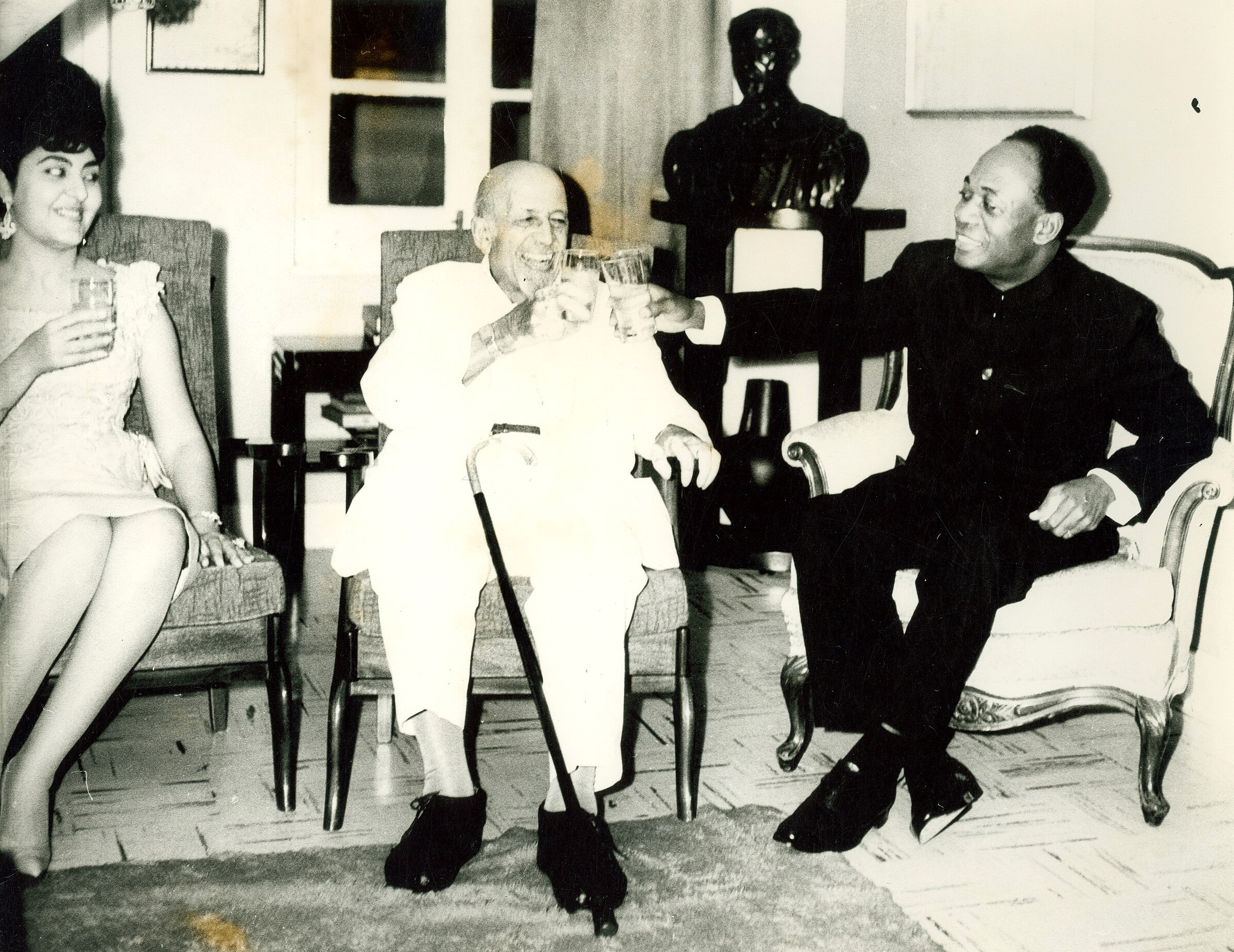
When Ghana won independence in 1957, its first president, Kwame Nkrumah, sought to capitalize on Ghana’s status as the world’s largest cocoa producer. Nkrumah believed the county could become self-sufficient by nationalizing cocoa production, and famously burned cocoa beans to send a message of non-compliance with unfair international market prices. 9 Nkrumah commissioned the construction of a series of silos, spread across the country, that would receive and hold cocoa beans and other crops, so as to leverage greater control in the global trade of cocoa, and keep the largest profits in Ghana.
Nkrumah famously burned cocoa beans to send a message of non-compliance with unfair international market prices.
(Nkrumah’s intention was that the concrete grain silos would declare Ghana’s modernity — remember that Le Corbusier hailed grain elevators in Buffalo, New York as “the first fruits of the New Age” — but the typology was not new or foreign to Ghana’s rural agricultural regions. Traditional granaries, usually built of earth with timber frame construction, had long provided food and economic security.) But Nkrumah’s term of power was short, and the silos were left incomplete when he was overthrown in a coup d’état in 1966. 10 Subsequent governments abandoned Nkrumah’s plan for monopolizing the country’s cocoa revenue. 11 Cocoa production in the region has since declined, but the communities thus built live on. That said, there has been a recent surge in sales of cocoa farms, due to an aging farmer demographic and an economy in transition. The timing of Madam Rebecca’s quittance and my lease-sale was not atypical.
Today, the communities within the hills of the land I lease bear the names of the first farmer-settlers who moved there to farm cocoa: Yaa-Aso, Sukrong-Daniel, Sukrong-Budu, Sukrong-Amanfuso, Peni-Ama, Penakukura, Gyampo, Kwaku Yerebi, Kwame Safo, and Obeng Yaw. I learned through conversations with these farmers that many trace their lineage to lands west of where they live today, across the River Densu, to towns like Aburi, Anum, Mampong, and Akropong. Laborers and farmers from further away include Dagbani and Fulani people from the savanna regions in northern Ghana, and Anlo-Eʋe people from the former British and French Togoland (now divided into the Volta Region of Ghana and Togo). 12
Pluralism is evident in the farmers’ ecological approach in that their cocoa plants share space with many other species.
A similar pluralism is evident in the farmers’ ecological approach. The cocoa plants, which grow best in shade, share space with many other species: mahogany, plantains, cassava, citrus. The most significant of these plants, in both prevalence and cultural meaning, is the Newbouldia laevis tree, which is native to tropical Africa. I know about this tree from my familial identity as an Anlo-Eʋe. It is called Avia in the Anlo-Eʋe language and is grown extensively in the coastal regions of the Anlo-Eʋe people in Ghana’s Volta Region. My parents taught me stories about Avia, which is known by many other names across West Africa. Amongst the Akan, it is called Nii Nyaba, Susumasa, and Bɛɛma dua; the Ga call it Nii Abaa; in Yoruba, it is Ewe Akoko; in Igbo, Ogilisi; in Hausa, Aduruku; in Maninka, Kunjumborong; in Wolof, Ngam.
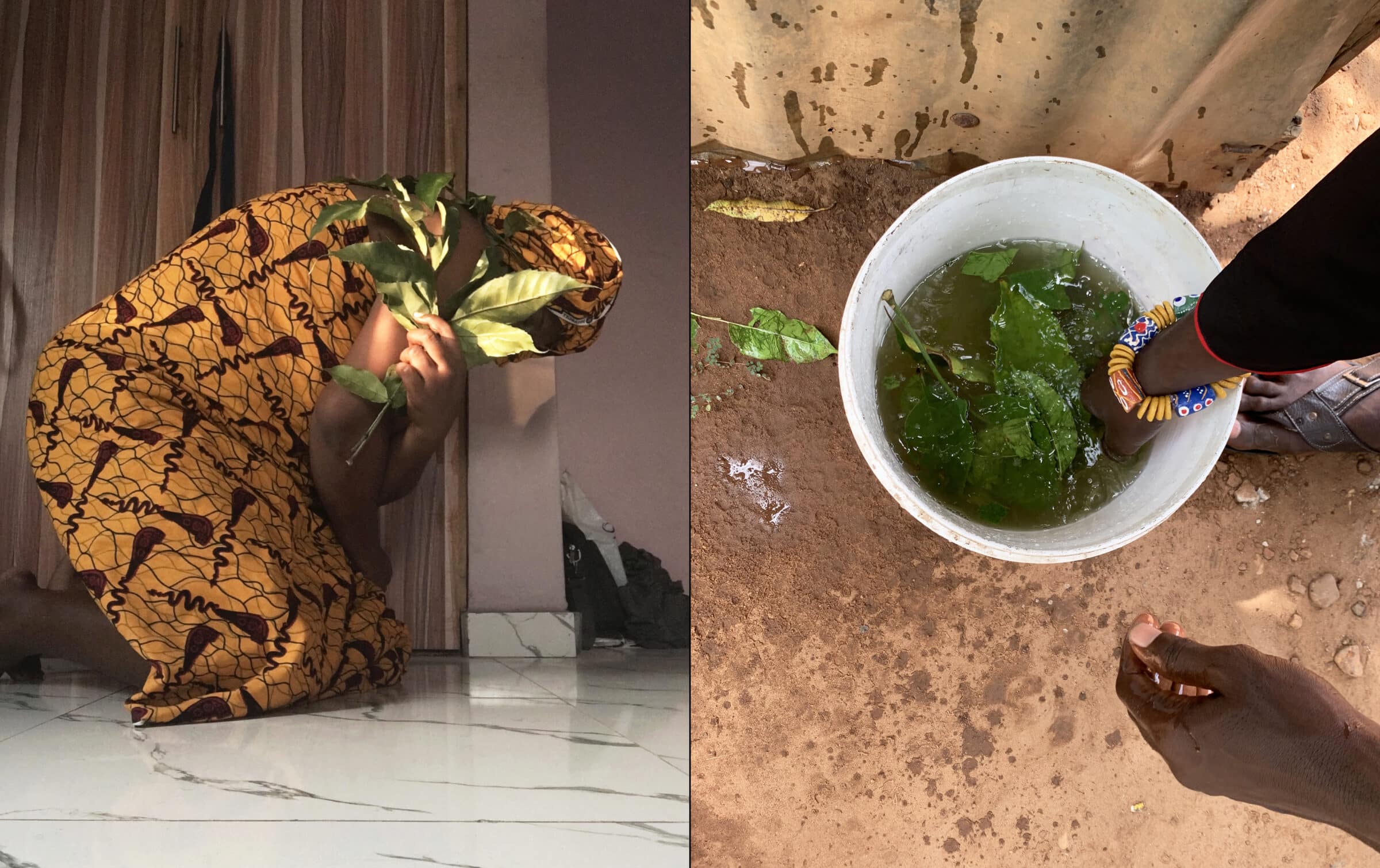
Even though the N. laevis tree bears no edible fruit or other tradable commodity, the tree is widely venerated, and it serves many functions, ranging from the physical and mechanical to the immaterial and mystic. Healers use the tree’s bark to treat epilepsy and convulsions, and the leaves to treat diabetes and sickle cell disease. 13 The tree is also widely used as a living fence; several grown closely together delineate a public street from a private space. (Sometimes it’s called “African boundary tree.”) In an important death ceremony, the tree’s leaves are mixed with water to cleanse all who partake in the rituals of burial. I’ve been cleansed this way myself, in 2020, during the burial of my father’s brother. We returned from the graveyard and everyone washed their hands in a solution of N. laevis leaves and water before entering my grandmother’s courtyard, so as to block entry to the uneasy spirits that follow any person who visits the cemetery.
The N. laevis tree is widely venerated, and serves functions ranging from the physical and mechanical to the immaterial and mystic.
I spoke to a traditional vodun healer, Martine de Souza, to learn more about the tree’s significance. De Souza is of the Fon people and is descended from the Afro-Brazilian merchant Francisco Félix de Souza, who was based in Benin and traded in gold, oil palm, and enslaved Africans across West Africa’s infamous slave coast. 14 De Souza considers N. laevis essential to her practices of making remedies, doing divination, and facilitating ancestral supplications. She told me that in Abomey, the capital of the Kingdom of Dahomey, the oldest trees mark the spots where Fon merchants and traders saved their wealth, which was at the time in the form of cowrie shells (Monetaria moneta). Archaeological digs still turn up shells mingled with the roots of very old N. laevis trees.
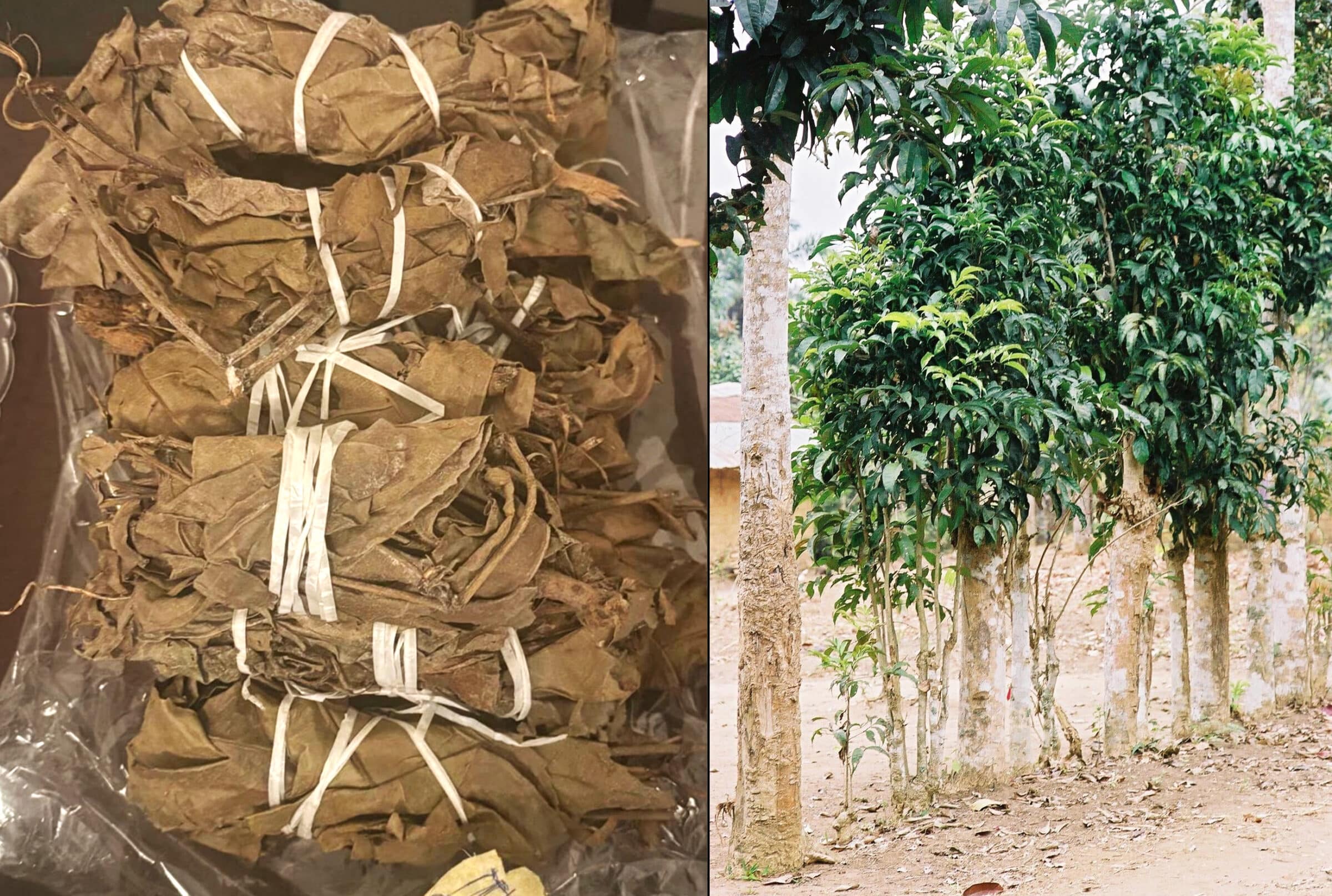
In the Vodun religion, walking around a N. laevis tree was a ritual to aid in forgetting one’s origins when embarking on a new chapter of life. This ancient custom became part of the Ouidah Slave Route. When the trail passed one specific large N. laevis tree, named the Tree of Oblivion, enslaved men were forced to march around the tree nine times, and enslaved women seven times. This symbolic gesture erased one’s past, but was also meant to dissolve any grievances against the enslaver. Farther along the trail was another tree, a kapok tree (Ceiba pentandra) named the Tree of Hope and Return. Enslaved men and women circled this tree three times, so as to partially reverse the process of oblivion and ensure that upon bodily death in a foreign land, their souls would return home to West African soil. 15
Walking around a N. laevis tree was a ritual to aid in forgetting one’s origins.
It’s not clear who planted the many N. laevis trees on the land I hold, but it was likely Anlo-Eʋe immigrants, which were a small minority of those that arrived in these hills to farm cacao. As followers of the Vodun religion, the Anlo-Eʋe bears a deep reverence for the tree and incorporates it in virtually all rituals and shrine spaces. N. laevis trees are often planted on the grounds of a new settlement, to mark human presence and consecrate the land, so it’s likely the Anlo-Eʋe would have carried the tree with them to their new home. (Anlo-Eʋe people today will travel with the leaves of N. laevis in their pockets as a protective talisman, especially when the journey involves unfamiliar people.) My father noted that one N. laevis tree growing on the land, was, judging by its height, probably planted at least two generations ago. 16
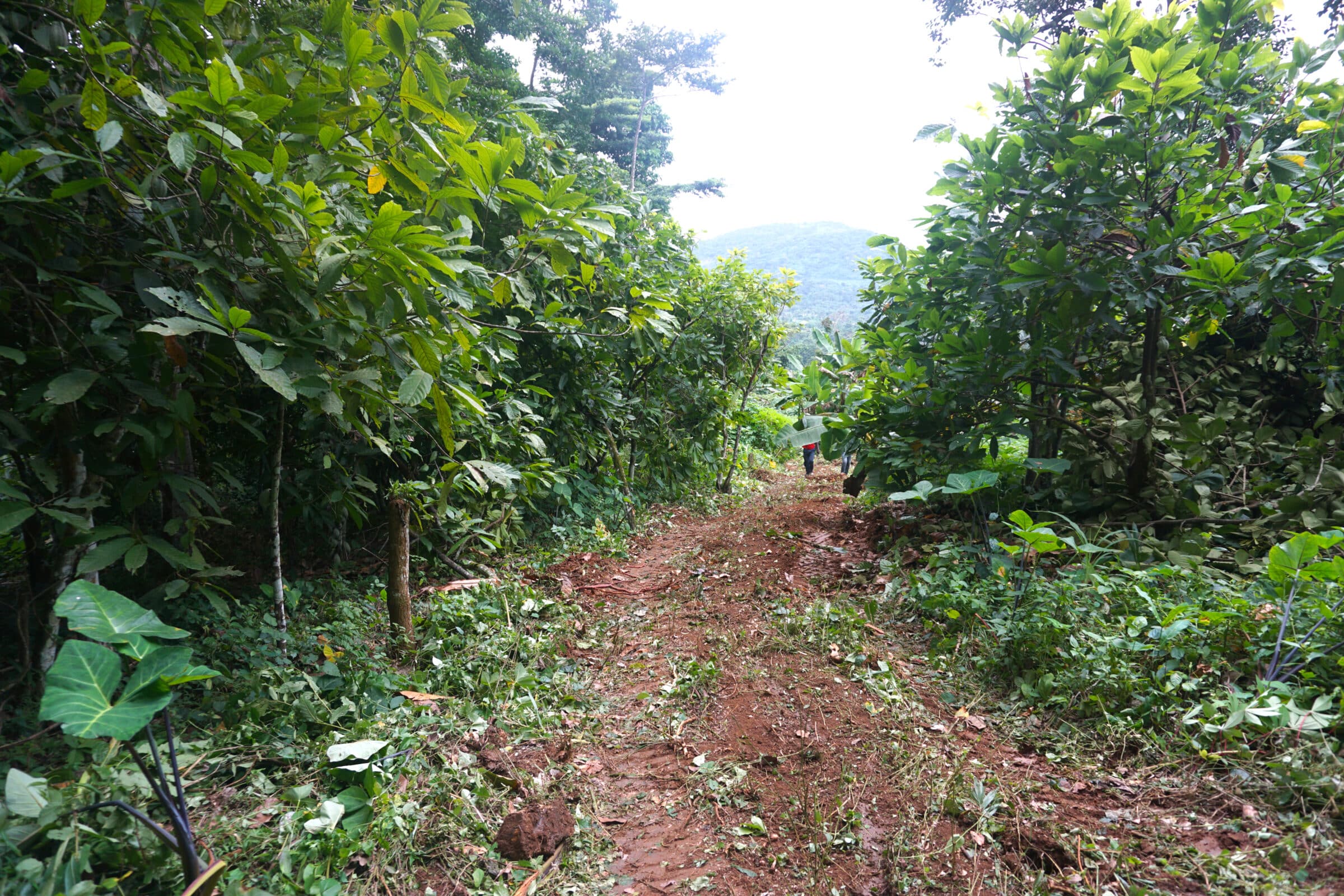
Although I first arrived at the five-acre parcel via the path from Sukrong-Daniel, over subsequent years I took other paths, exploring their differences. My sister, a geographer, helped me map the various routes with GIS imaging software, and I compared the time it took to walk them, their steepness, the kinds of plant life in view, the ratio of cultivated land versus old growth forest. The two main paths were the one from Sukrong-Budu and the path from Yaa-Aso. The path leading from Sukrong-Budu was steeper, and shortest by travel time. The path from Yaa-Aso was longer, both by travel time and physical distance — two kilometers overall. It was a gentler route, with cocoa trees growing directly adjacent the path. It was clear to me this was a harvest path, the means by which cocoa was carried to market.
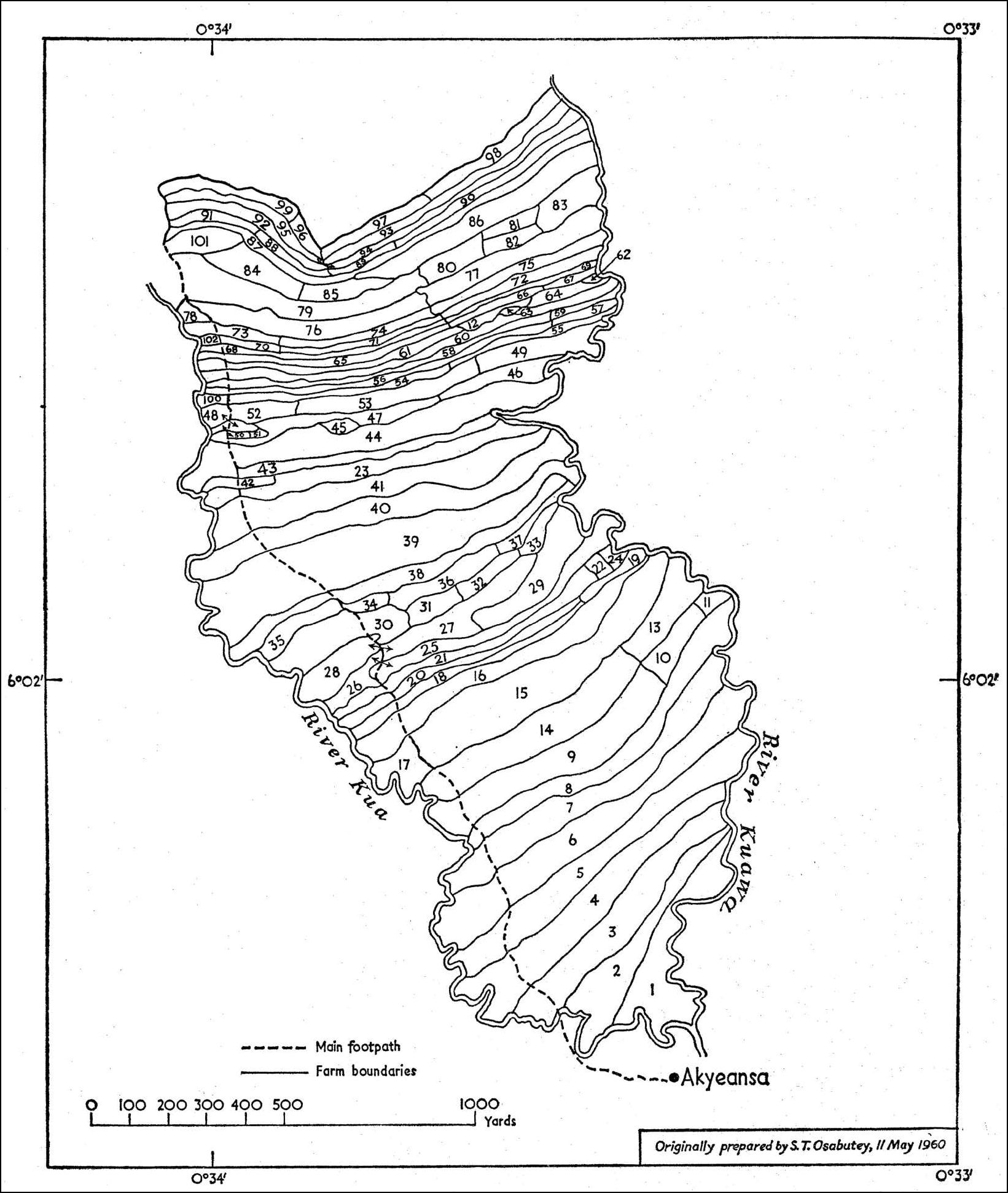
I began to see this path as emblematic of the history of the land I hold, and equally central to the land’s future. For me to do anything or build anything on the land would require a movement of materials or people along this path. As social anthropologist Polly Hill has written, the harvest path is a peculiar symbol. It enables the aims of the capitalist-farmer, even as it goes against the logic of capitalistic land distribution in which all land is privatized. 17 The path to the land I hold passes through seven different parcels of private property owned by seven different people. I began to imagine what it would look like to decolonize the architectural epistemology of the harvest path for a pluriverse future.
I began to imagine decolonizing the epistemology of the harvest path.
I learned from my farmer neighbors that there was already an ongoing conversation about the path, specifically about expanding it, though there was some disagreement about which of the paths should be expanded. It was a complicated decision, not only because each route had pros and cons vis-à-vis fluidity of movement, but also because the farms along the new path stood to receive the greatest benefits. By the time I joined the dialogue, the Yaa-Aso path had been more or less chosen, due to its gentle slope. This path was at its widest closest to the town of Yaa-Aso, with three visible tracks of the kind made by the wheels of the cargo tricycles common in this area. But then the path shrunk to two tracks, and then, as it progressed up the hills, to a single walking track. In this condition, the cargo tricycle could travel about two-thirds of the total two kilometers, but the rest of the journey had to be completed on foot. To be clear, even where the path was wide enough to accommodate a cargo tricycle, it wasn’t a pleasant ride. A trip by cargo tricycle often took several hours, because of frequent breakdowns and stops to get unstuck. The tricycle operators charged accordingly, and the cost was usually prohibitive to farmers along the path. 18
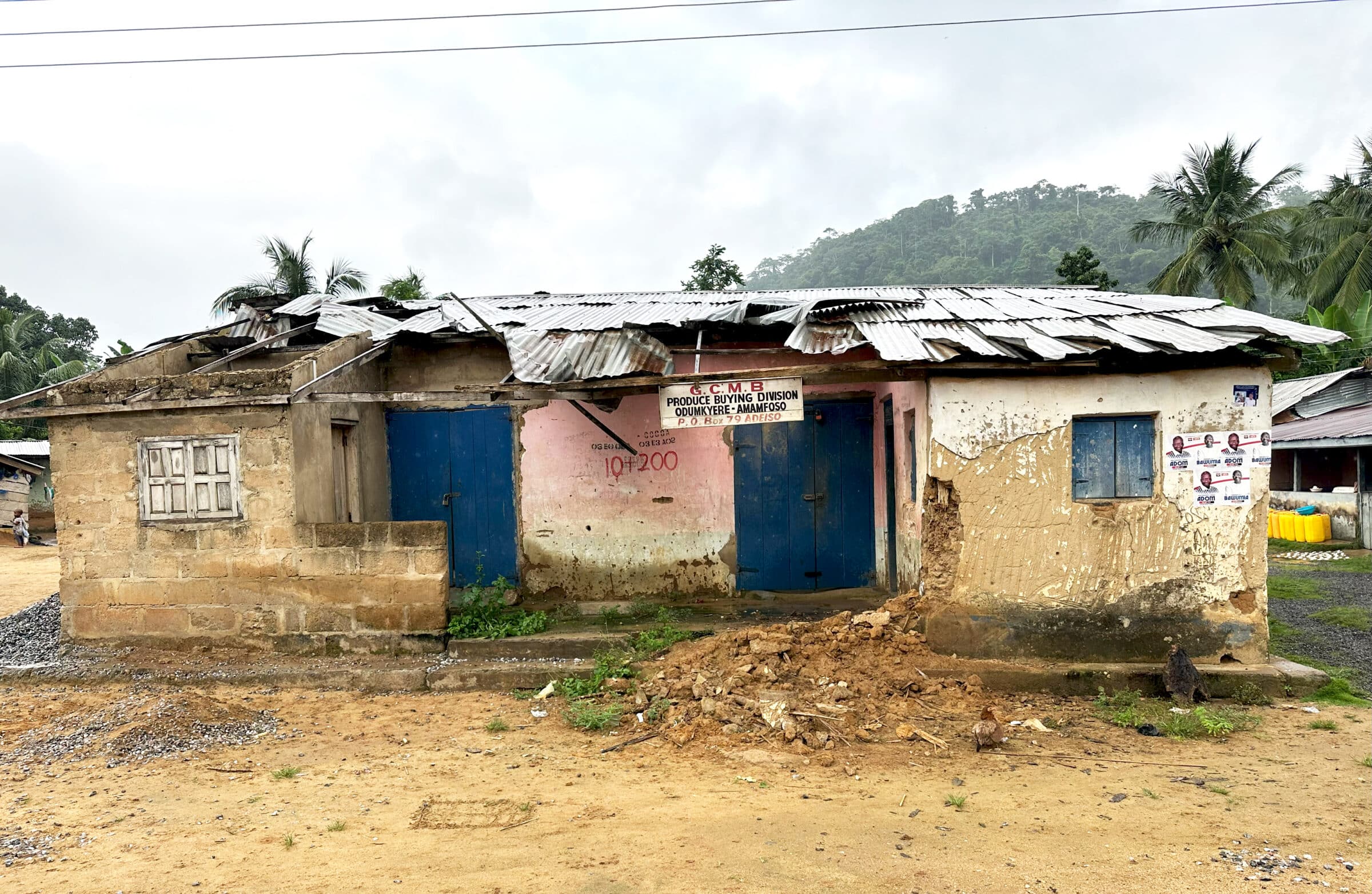
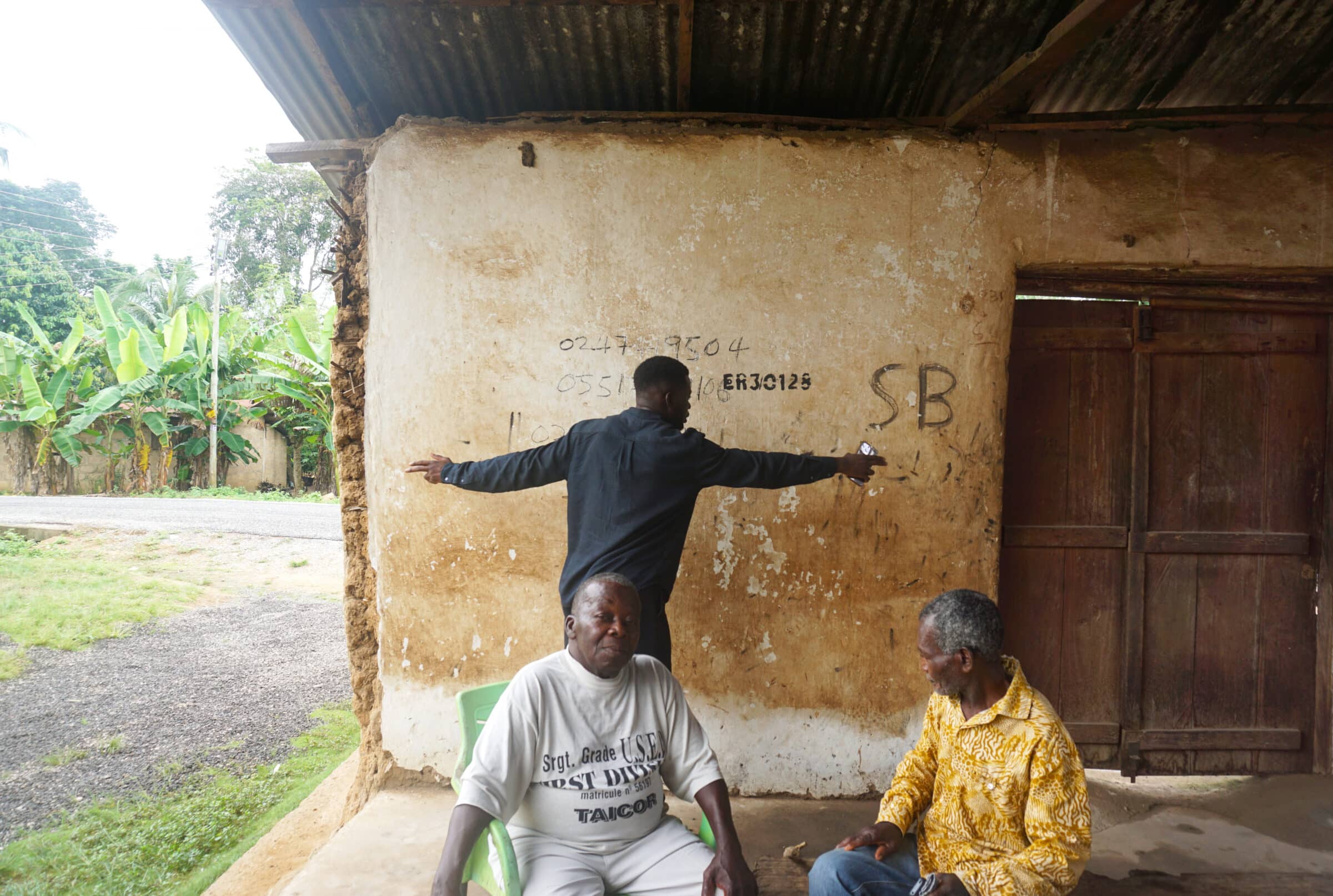
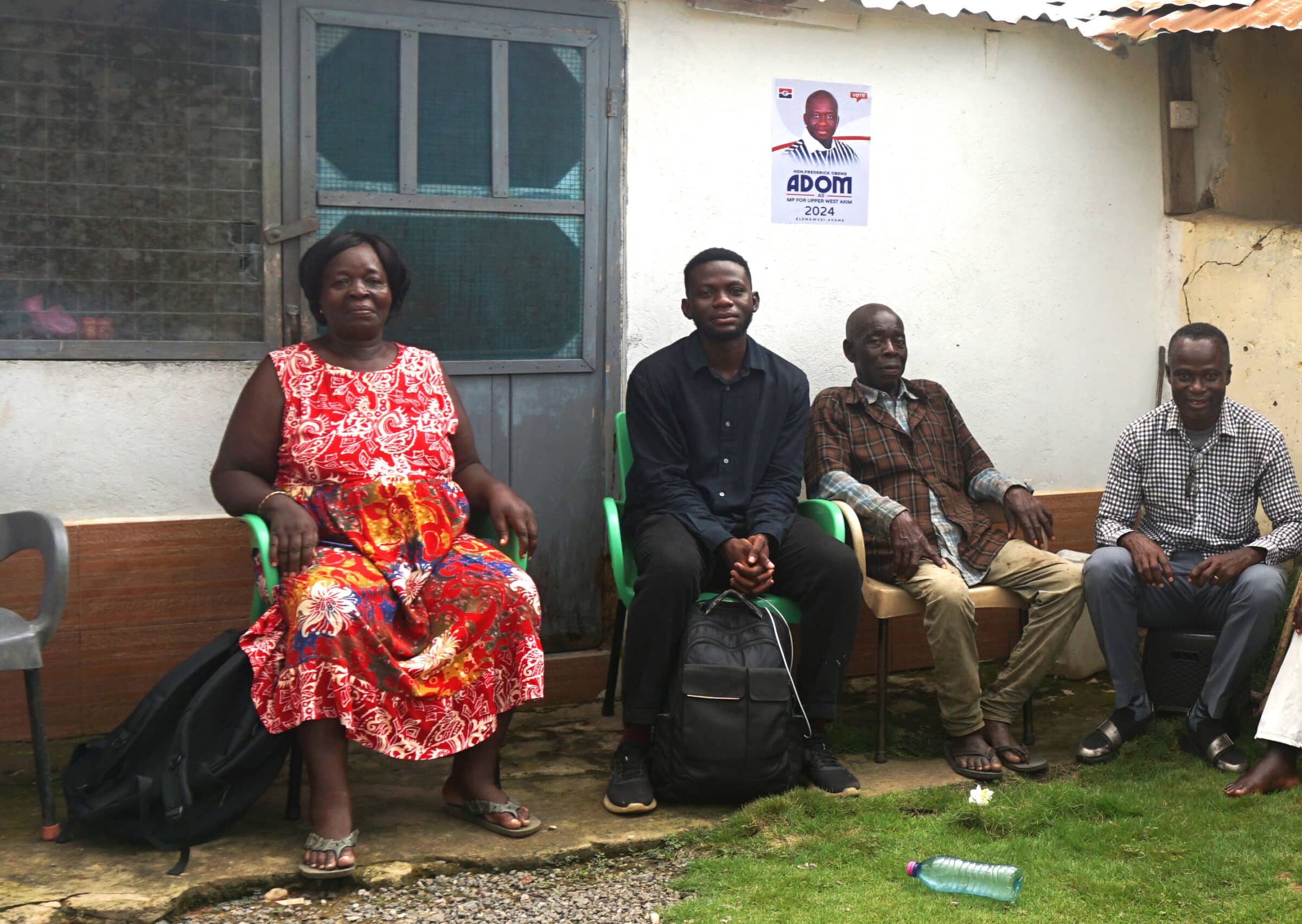
The farmer-led plan to widen the Yaa-Aso path threatened to stall out for lack of resources, and I saw that I could help. On July 13, 2024, I organized a meeting of the seven farmers and landowners along the path. It was a gathering in three languages: Twi, Anlo-Eʋe, and English. There was a general understanding that the path was key to any futures we could dream of. Developing it would have direct and immediate benefits: increase the property value of the farmlands, ease the conveyance for aging farmers, and, most importantly, grow value for the people who would inherit the land from us. We decided to expand the path to a width of about seven feet at all points. I demonstrated this dimension by stretching my arms along the remaining crumbling wall of the old government cocoa distribution building where we met.
Seven feet is not excessively wide, and certain stretches of the path already measured that width. The group’s main concern was that some path-adjacent crops would necessarily be lost in the process. I suggested that whatever decision we agreed on could evolve, and that we could discuss these losses on a case-by-case basis.
There were many small moments of negotiation; each decision was made collaboratively, on site.
We spent the rest of the day walking the path together. I recorded and placed coordinates for every cocoa tree that would need to be removed were the path widened to a seven-foot clearance. There were many small moments of negotiation: discussion of where the planned path would make a curve instead of a straight line and vice versa; of tallying cocoa trees to be saved or lost or pruned; of calculating the turning radii of a proposed curve. Each decision was made collaboratively, on site.
We made significant progress during that first meeting. The main concern of the next meeting was what monetary value to assign each cocoa tree lost. Whereas some farmers viewed the lost cocoa trees as capital vested into the making of the path, others wanted to quantify the loss of a fruit-bearing tree as compensation to be dispensed. I had promised to bear the costs of widening the path, of which crop compensation was one. Interestingly, none of the farmers wanted to assign a monetary value to the plantain, taro, and cassava crops that would be lost — only cocoa.
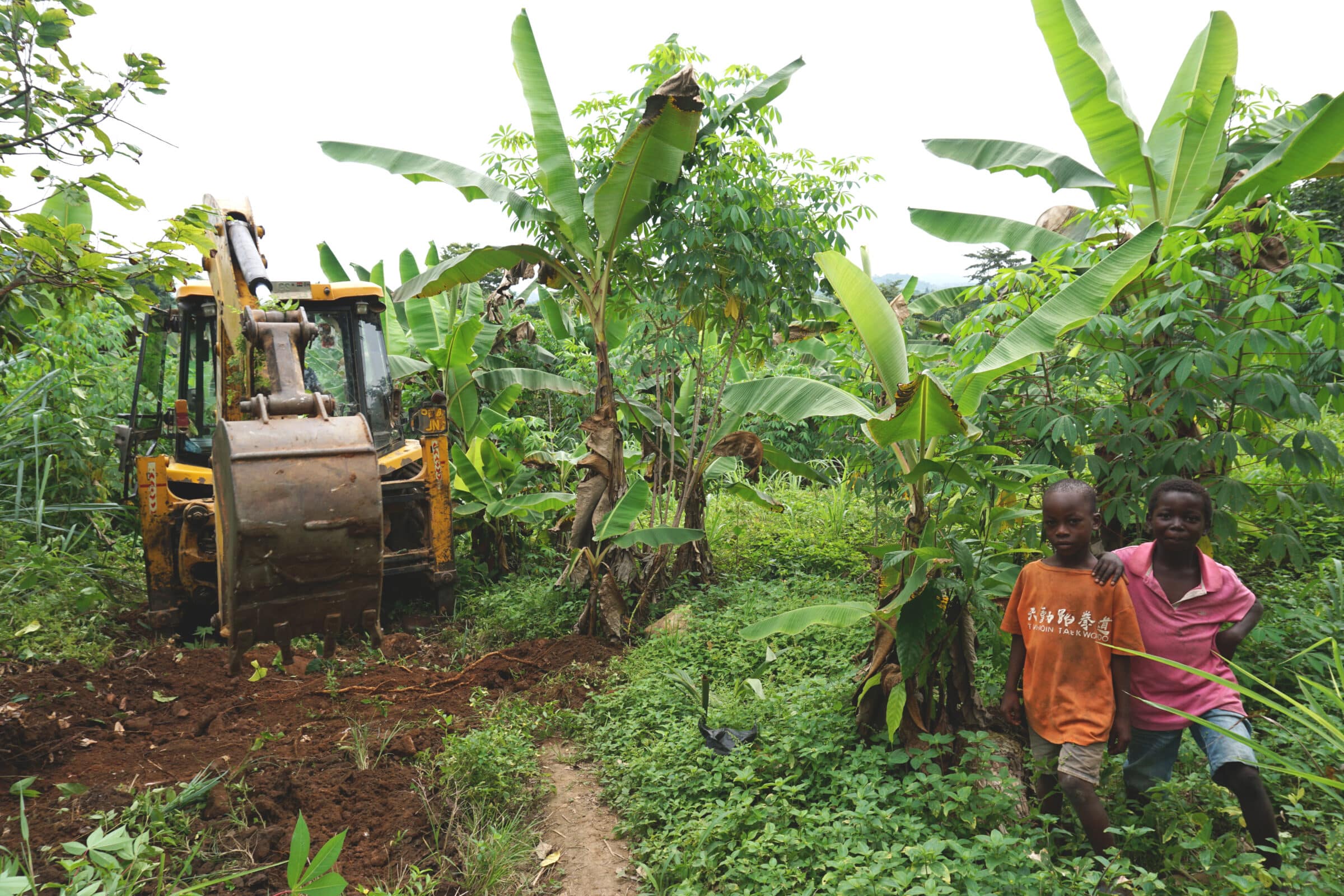
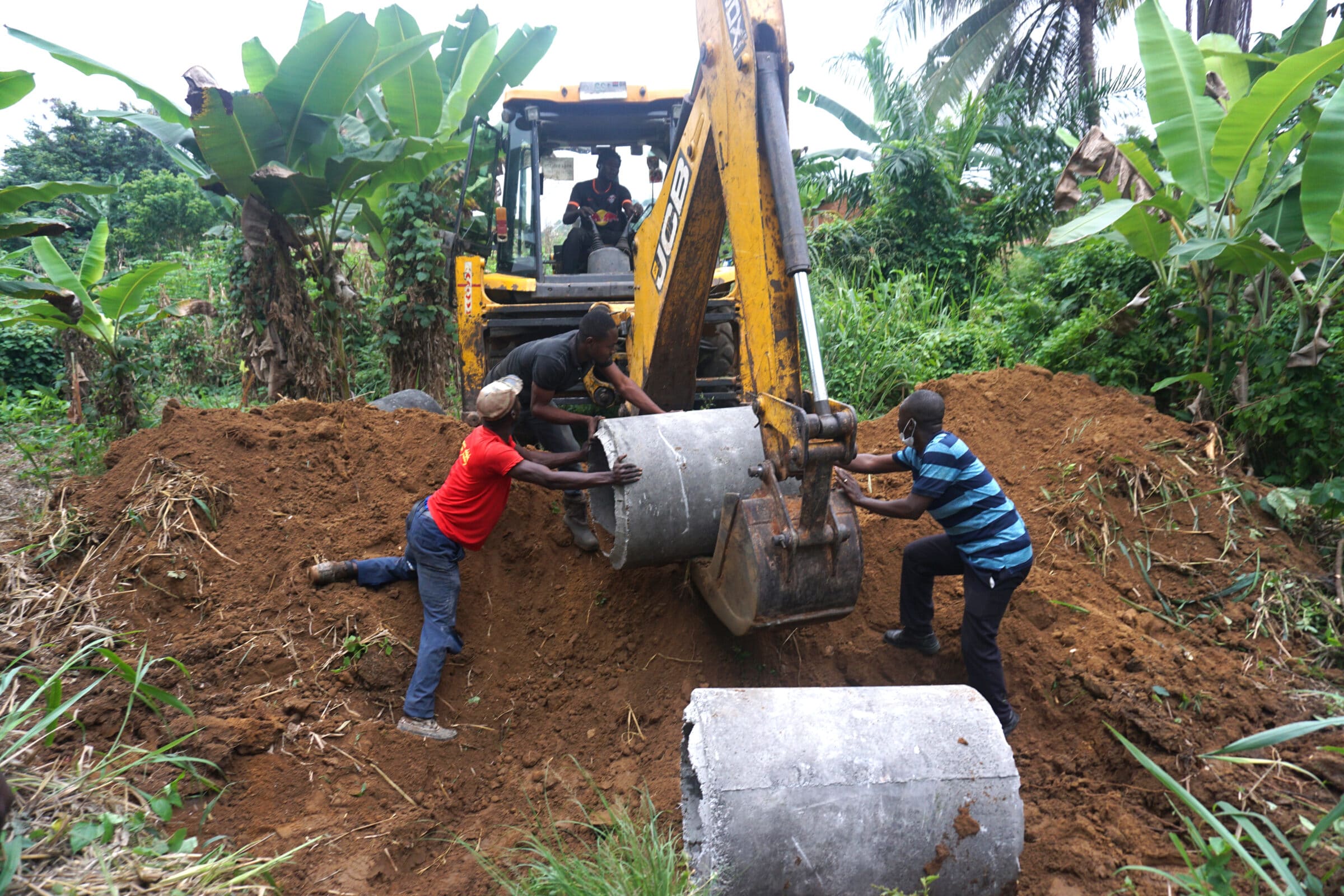
After the negotiations were finished, I began searching for an appropriate method. My first idea was to hire laborers to clear the path by hand. We quickly realized that this would cost more money and take more time than I had, as I was scheduled to return to MIT. We instead looked for a mechanized method that would be cheaper and quicker. There were a number of backhoe loader and dozer machine operators offering services within this area. These machines are generally used for sand extraction, a new economy in Ghana, but after talking to a few operators and inspecting the widths of their machines, we understood they could also clear a path.
Children followed us and watched everything we were doing; they will become the path’s eventual actors.
We decided to use a JCB 3DX Super with a backhoe loader and a seven-foot clearance blade. First, we prepared the site — removing viable crops for transplanting and pruning — and then the mechanized clearing began. The process took about two days, August 19 and 20, 2024. There were a number of children who followed us and watched everything we were doing. This had special resonance, as children in Akyem-Abuakwa are traditional witnesses for a transfer event, the logic being that children will outlive their ancestors and yet hold the memories of the transfer deed. The practice of child witnesses was common in Ghana until the mid-19th century when land transfers began to be recorded via legal documents filled with jargon, such as the one I hold. 19 In this case, the children who watched the making of the path will become the path’s eventual actors. Their memories will carry the path event forward through time.
There was a moment of reckoning towards the end of the project. A seasonal stream flows towards the path, trickling down from a ground spring higher up the slopes. The existing path had dammed the stream, to ensure that it didn’t flood the path, or damage the plantain farm on the path’s other side. After consulting with the plantain farmer, we decided that the new expanded path could interface with the stream instead of blocking it, allowing a double passage of path and stream. We planned also that the wake of the seasonal stream would create the fertile conditions necessary for a garden that might meet the medicinal, nutritional, and spiritual needs of the residents of the Yaa-Aso community, with plants such as lemon grass, taro, moringa, and N. laevis trees.
The machine had broken because we’d failed to pacify the spirit-stream.
We decided to use concrete culverts to permit the stream’s flow under the path, and found a manufacturer that made precast concrete culverts in a variety of widths. We began to place these culverts on the second day. Suddenly, the JCB machine broke. The central hydraulic hose ruptured, and the machine’s operational arms were immobilized. As we attempted a repair, a neighbor came to tell us that the machine had broken because we’d failed to pacify the spirit-stream, which was named Asuo Nsuma. She said incidents like this are common when a natural force has been overlooked. We took her counsel, and on the following day, Elder Sakyi, one of the farmers along the path, led a prayer for the occasion, seeking the stream’s absolution. In Akuapem-Twi, Elder Sakyi prayed first to the ancestors of the land, and then to the stream as an animate life-force. This is my translation of his prayer:
In this world
Our youth have now been placed in our stead
We aged, you have seen
It has reached the father, the elder, and everyone
My elder King Kwasi, drink
Atta Kwame, drink
Kofi Adom, drink
Nana Ampofo, drink
This is land settled by Akropong peoples
At this time, your dear grandchild,
It is myself
When they birthed me, you all bore witness
I am the steward of this place
We have received mature men, that are strong, and courageous people
They say they are creating a path through this land
That we may receive visions of the land
It is a good thing, may they live long
May they receive the strength and the means to carry it out.
You stream that lies here!
Drink this
River Nsuma, drink this
All mountains present here, receive this drink
Hold on to it this morn
Your grandchild Akomeah,
your grandchild Sakyi is the one who calls out to you
It is such that, at this moment, we wish to create a path over you,
That you may flow through
That the path being created, may be rooted
So, give them strength,
Grant them access,
strength of strength, and wisdom and creativity
To use in executing this task they have begun
May all live long
This device (JCB) that lies here,
Even if a mishap has occurred
As we plan to do right by you, and create a path for you
We call on you, come and flow
River Nsuma, drink
All encircling spirits, drink
All mountains present here, drink
Receive this good drink, and help the workers here
That their work will be successful
You device, here is your libation
Operator, live long
Once you are activated, respond accordingly
And we will know that yes
You have received it
So, drink
May all of us gathered here live long!
May our elder matriarch live long
After the prayer, we continued our cuts and buried the concrete culverts.
I’ve titled this essay “Ending Well” because I learned at some point that the late husband of Madam Rebecca, Dr. Isaac Duaquaye, the prior owner of the parcel of land I hold, built and ran a modest medical clinic in Adeiso named the End Well Clinic. I understand “Ending Well” as a socio-cultural script for the future and dreams we hope for: that development on the African continent — its cities, rural areas, the land I hold — will be something other than a linear prescription of urbanization, and that Ghana will negotiate on its own terms what growth and development should look like.
I offer these thoughts at a particular point in time, but I will continue to sit with them for the rest of my life.


.jpg)
.jpg)

If you would like to comment on this article, or anything else on Places Journal, visit our Facebook page or send us a message on Twitter.