
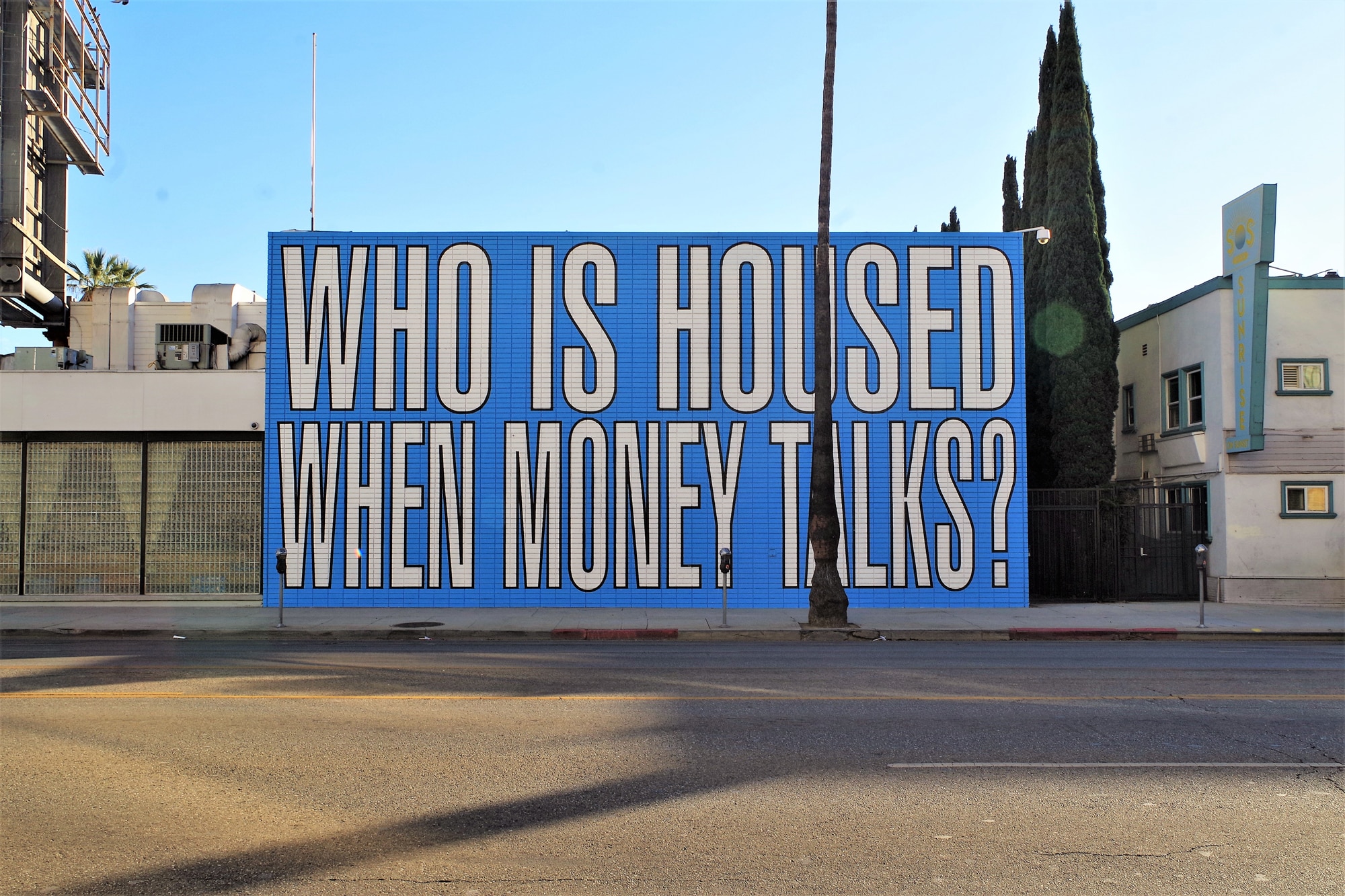
The facts of the U.S. housing crisis are staggering. Almost 80 percent of households can’t afford to buy a median-priced home. Half of renters are officially “rent-burdened,” with 10 million households spending more than 30 percent of their income on rent, and another 12 million spending more than 50 percent. And the threat of eviction is never far away. Last year, the Eviction Lab tracked more than 1.1 million eviction filings in just 32 cities in 10 states. People who are evicted often have nowhere to turn, as federal law has capped public housing far below the need. On a single night in 2023, a record 653,104 people experienced homelessness. 1
This crisis has been building for decades, but housing costs have often hidden behind other economic concerns — like jobs and health insurance — in stump speeches and news broadcasts. Even after the Great Recession of 2008, which was famously triggered by malpractice in the housing finance sector, the federal government has let states and cities set technocratic rules and rely on specialized practitioners to interpret them. Housing policy has become a clunky thicket of tax incentives, zoning codes, and financing tools, almost impossible for non-experts to navigate. That complexity makes organizing and activism both more difficult and more necessary. Self-styled “YIMBY” activists have had some success in clipping some branches in that thicket, but loosening regulations to stimulate building hasn’t made housing affordable. The power imbalance between renters and owners is too great.
These moves signal an end to the political consensus that has reigned for the past decade, that supply-side measures alone could keep housing costs under control.
What we need is a nationwide program of housing reform backed by a mass social movement. But for the past three presidential terms, the people who might join that movement have been fighting with each other over differences in economic theory and political philosophy. The liberals in this debate see a shortage of housing units. They say developers are not building enough housing in the places people want to live, so we should clear the way by deleting antiquated, unfair, unwise rules embedded in zoning and building codes. Increasing supply, their reasoning goes, will naturally bring down prices. On the other side, the left sees a shortage of housing justice. They argue our real estate system is rigged in favor of landlords and speculators, allowing them to extract wealth from poor renters, who are disproportionately people of color, exacerbating the racial wealth gap. Therefore, much stronger regulations are needed to protect the vulnerable from predatory rent increases, evictions, and displacement. These two camps are often at odds, sniping on social media and blocking each other’s legislative proposals.
So I was pleasantly surprised this summer by the announcement of a federal plan that signals a new political opening. The headline: “President Biden Announces Major New Actions to Lower Housing Costs by Limiting Rent Increases and Building More Homes.” The president has urged Congress to threaten landlords with losing tax breaks if they don’t cap rents, while the executive branch takes steps to increase housing supply, like opening public lands for affordable development. The Harris-Walz campaign has gone even further, promising to incentivize 3 million housing units in four years and crack down on corporate investors who have manipulated the market through algorithmic rent hikes and price-fixing. 2 These moves signal an end to the political consensus that has reigned for the past decade, that supply-side measures alone could keep housing costs under control. For a new narrative to take hold, the liberal and left wings of housing advocacy will have to work together, which means organizers in both camps need to take each other’s ideological positions seriously and recognize each other’s strengths.

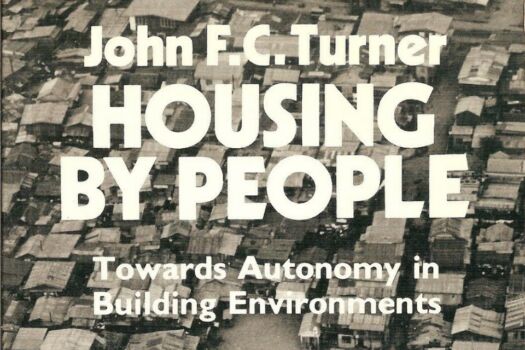
The point of community organizing is to build power among those who have been denied it. This essay is the fourth in a series on Places in which I explore past and present attempts to activate the agency of residents to address their own housing challenges. The first essay looked at community land trusts, a mechanism to decommodify property by decoupling the ownership of land and buildings. While CLTs cannot easily scale to meet the affordability crisis, I believe they are worth pursuing as models of consensus-based decision-making that can foster engaged citizens and political leaders. The second and third essays profiled housing theorists who applied their architectural intelligence to problems beyond the design of buildings, seeking to harmonize the expertise of architects and urban planners with residents’ desire to make decisions about their own way of living. John Habraken saw the rapid building of millions of homes in the Netherlands after WWII as an opportunity to reconceive how architecture might meaningfully engage with the diversity of household needs over time. John F. C. Turner saw the informal, self-built settlements of Lima, Peru as a counterforce to the coercive tendencies of architecture and planning. They both identified empathy, or trust in the lived experience of residents, as central to the project of recalibrating the power imbalance between the housers and the housed. 3
We can’t regulate our way out of a housing shortage. We also can’t build our way out of racial capitalism.
With this final essay in the series, I want to encourage architects, planners, scholars, and activists who have been aligned with the pro-housing movement — the YIMBYs, broadly conceived — to reflect on how collaboration with housing justice advocates can strengthen their work. Some might feel they don’t need the help; they have scored plenty of legislative wins on their own. But they have also suffered notable losses — like the collapse, last year, of the Builder’s Remedy compromise in the New York statehouse. 4 And they are going to face more headwinds unless they can show the public that their policies actually translate to lower housing costs and greater power for people and communities on the front lines of the affordability crisis.
Meanwhile, I want to encourage housing justice activists — whose work is rooted in a century of solidarity and struggle, drawing insights from trade unionism and the community organizing traditions of the Progressive Era — to lean into their biggest strength: the narrative force of their lived experience and the leadership capacity forged on those front lines. Claiming that power can shift the conversation away from complex and abstruse policy jargon and toward a universal language of human rights and basic dignity. But at the end of the day those universal rights belong to people who also need roofs over their heads. Therefore, forming coalitions with anybody willing to build new housing — for-profit, non-profit, or state actors — is essential, as is continuing the fight to protect those rights.
We can’t regulate our way out of a housing shortage. We also can’t build our way out of racial capitalism. But we can create enough housing and create enough power within communities to ease the affordability crisis. A new national framework for housing requires a deep coalition between the housing supply-siders and the justice demand-siders. Only then can we start to supply justice.

Beyond Yes in My Backyard
Right now, the YIMBY movement is ascendant, with organized money at its back. Affordability advocates have joined forces with property developers to rewrite housing policy from Oregon to Massachusetts. In deep-red Montana, backyard accessory dwelling units and apartments in commercial districts — once feared by Republicans as a gateway to urban density — are no longer prohibited. Bucolic Vermont has reduced minimum lot sizes and parking requirements while authorizing duplexes and fourplexes. Florida now “allows mixed-income housing — built to the highest allowable density in the municipality — in all commercial and industrial zones, as long as some of the units are reserved for workforce housing.” 5
But whether these policy changes will actually ease housing costs remains to be seen. At a recent conference, Brookings fellow Jenny Schuetz — whose 2022 book Fixer-Upper lays out a cogent, YIMBY-aligned argument for lowering regulatory barriers to construction and subdivision — conceded that “it’s too early to tell if these reforms are actually producing more housing or more affordability.” A more skeptical expert, Patrick Condon of the University of British Columbia, reflected on the example of Vancouver, which has doubled its population density since 1970 while also turbocharging new development. “If adding supply was going to reduce prices, Vancouver should have the cheapest housing in North America,” he said. “It now has the most expensive housing in North America.” 6
The YIMBY movement is ascendant, with organized money at its back. But whether these policy changes will actually ease housing costs remains to be seen.
One reason for this disconnect is that the financialization of housing has skewed the supply-demand curve. In his 2019 book Capital City: Gentrification and the Real Estate State, Samuel Stein shows that global real estate, worth $217 trillion, now comprises 60 percent of all the assets in the world. To explain why so much capital has come for land and buildings, Stein identifies a broad range of enablers: financial deregulation, U.S. monetary policy, Chinese construction, plus a “a proliferation of predatory equity funds scouring the globe for ‘undervalued’ investment opportunities and finding them in housing; economic polarization around the world, with extremely wealthy and somewhat nervous individuals viewing property as the safest place to hide their money.” 7 According to economic geographer Manuel Aalbers, “Housing is central to financialized capitalism: it is not ‘just another asset to be financialized,’ but the key asset.” 8 And Raquel Rolnik, former UN special rapporteur for the right to housing, has stated persuasively that the problem is not supply, the problem is capitalism. 9
Obviously, these analyses come from the political left. But parallel critiques are found in cradles of laissez-faire theory, like The Economist, where a special report on housing opens with a bang: “Housing is at the root of many of the rich world’s problems.” The report argues that high-income countries have made “it difficult to build the accommodation that their populations require; they have created unwise economic incentives for households to funnel more money into the housing market; and they have failed to design a regulatory infrastructure to constrain housing bubbles.” 10

When the YIMBY movement started about ten years ago, its demographics and tactics were met with suspicion and disdain from more seasoned housing organizers. Build baby build was the mantra of a group of predominantly White millennials with office jobs in high-rent, coastal cities, who had been locked out of homeownership as they entered adulthood amid the subprime housing crisis, the Great Recession, and then the Covid pandemic. Shelby King, an investigative reporter for Shelterforce, has charted the shifts in this movement as it grew from a loud bunch of neophytes into a well-organized national campaign. 11 At first, these activists would show up to any community meeting where new, denser housing was being proposed — affordable, market-rate, or luxury — and argue vigorously for its approval. As they organized into chapters and grew a national network, they developed more nuanced strategies. Now, according to the YIMBY Action website, they “advocate for research-backed policies to increase the supply of housing, both market-rate housing and government subsidized housing. Our policies are informed by pragmatism; we focus on solutions that can lower the cost of housing without competing for scarce public dollars, and that get rid of red tape in favor of more effective, streamlined regulations.” 12
Increasing ‘supply’ is distinct from, say, increasing affordability or addressing inequality in the housing market.
That mission merits closer reading. Increasing “supply” is distinct from, say, increasing affordability or addressing inequality in the housing market. Indeed, the statement is explicitly agnostic about the balance of market-rate and subsidized housing. It eschews a moral argument in favor of “pragmatic” solutions, announcing its appeal as nonpartisan, non-ideological common sense. Crucially, though, this statement ends on a call for regulations, albeit ones more effective than those currently on the books. The movement has indeed matured from a posture of build-baby-build to an awareness of the complexity of why and for whom regulations are supposed to work in a country of widening inequality.
As their strategies and partnerships evolve, some groups have rebranded from YIMBY to “pro-housing.” But their antagonists, remain, of course, the NIMBYs, a term that stereotypically describes White suburban owners of single-family homes opposed to the siting of multi-family residential buildings in their neighborhoods. The public rationale may be couched in concerns about overcrowding schools and roads, violating neighborhood “character,” or downward pressure on the resale value of their homes. But affordable housing advocates have long detected racist overtones in the NIMBY opposition to denser, less expensive housing.
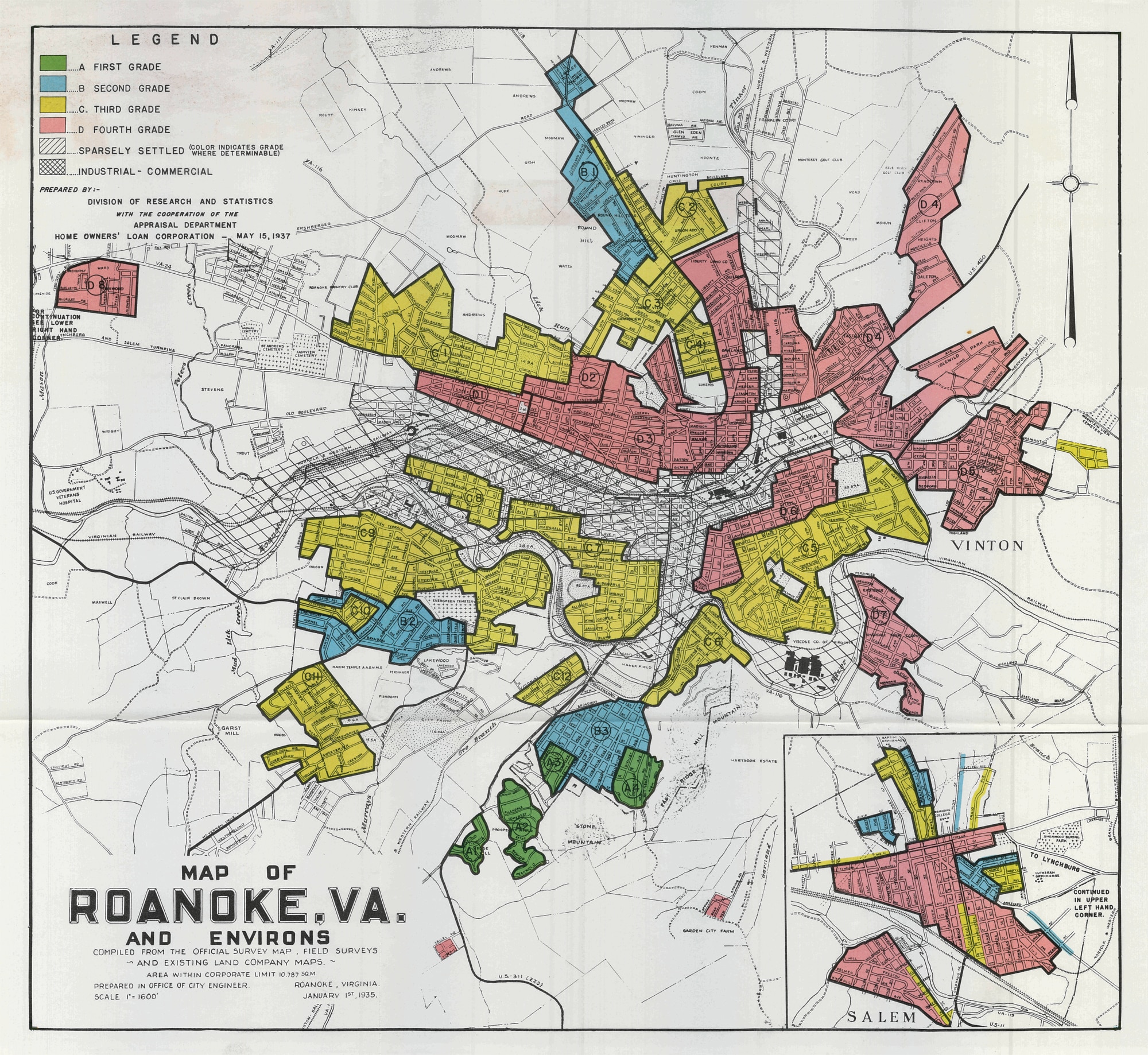
Of course, this opposition was once expressed in more explicitly racist terms. The U.S. Supreme Court ruled in 1917 that racially biased zoning was unconstitutional, but the decision focused only on upholding property rights (the right of a property owner to lease or sell to anyone regardless of race) not on equal protection under the law (safeguarding any renter or homebuyer from racial discrimination in the housing market). Moreover, the decision applied only to legal statutes issued by local governments, not to private agreements. So, effectively, the court sanctioned racially exclusive covenants in private developments beyond city limits, inviting the growth of “sundown towns” where racial minorities were not allowed to own property, or live, or visit after dusk. Meanwhile, cities and suburbs created zoning districts that were technically race-neutral but restricted new development to single-family homes. For the next century, zoning would be a strategy for codifying racial segregation.
For the YIMBY movement to make housing more accessible to more people, it needs to shift its focus from the supply of units to the supply of justice.
Foregrounding this exclusionary legacy was key to one of the first big policy wins for the YIMBY movement. Following a successful advocacy campaign led by a group that felicitously called itself Neighbors for More Neighbors, the city of Minneapolis made history in 2018 by abolishing single-family zoning, citing the history of racial discrimination. Homeowners in this expensive city can now, as of right, subdivide existing houses into multiple units. Local, state, and provincial governments throughout the U.S. and Canada have advanced similar measures, including California SB 9 which, in 2022, legalized fourplexes in the most populous state.
The genius of the Neighbors for More Neighbors campaign — a movement that began with humorous memes and posters mocking homeowners’ resistance to density — is how it raised awareness that decoupling a building’s height and bulk from its internal unit configuration could enable gentle densification without a whole bunch of new, large buildings. Accessory dwelling units are another popular way to get more housing units from existing configurations: adding apartments above garages, in basements, or in other outbuildings, on a lot originally zoned for a single-family home. Here, again, an alliance with housing justice advocates might produce better policy. ADUs help homeowners defray mortgage and can support intergenerational homes and other communal living arrangements. 13 But whether they respond to real housing demand depends on external factors. No one is going to find cheaper rent from this strategy if all the ADUs become Airbnbs.


To their credit, Neighbors for More Neighbors put the racism of single-family zoning at the center of their case for abolishing it. By calling it out, they created a precedent for an easy point of alignment with anti-racist activists in the housing justice movement. According to Rasheedah Phillips, who directs the housing program at PolicyLink, a racial and economic equity think tank, addressing the housing crisis “means recognizing that not all communities are starting from the same point and that communities of color have been displaced [from] and locked out of affordable housing.” 14 Many more YIMBY groups need to follow Neighbors for More Neighbors’ lead in naming the racism inherent in so much zoning policy, instead of emphasizing colorblind affordability for young, college-educated professionals.
For the YIMBY movement to make housing more accessible to more people, it needs to shift its focus from the supply of units to the supply of justice. YIMBYs now have considerable political capital, and they should pivot toward using regulatory reform as a way to build the power of those denied it. Because the YIMBY position is often seen as bipartisan and market-friendly, it can also leverage its momentum in red states whose legislatures have blocked urban tenant movements. Tennessee, for example, pre-empted the city of Nashville from regulating Airbnb, while Georgia prohibits any form of rental regulation, according to Ernest Brown of Abundant Housing Atlanta, a YIMBY group. 15 In such contexts, the alignment between activists in both camps should be easy to find. To build that alignment into a national social movement, contemporary housing advocates should learn from the century-long history of the housing justice movement.
From Tenant Rights to Housing Justice
New York City’s largest rent strike began on December 26, 1907, led by a teenage organizer named Pauline Newman. Born in what is now Lithuania, she learned to fight injustice early: demanding an education in a time and place where local schools refused Jewish students and Jewish schools refused females. After emigrating to New York after her father’s death, she began working in a hairbrush factory at age nine and then found work in the notorious Triangle Shirtwaist Factory. (She was no longer working there at the time of the deadliest industrial disaster in U.S. history, a fire that killed 146 workers, almost all immigrants and women or girls.) Appalled at the labor conditions and armed with the literacy she had insisted upon, she found solace and inspiration in Yiddish worker-poetry and the social realism of Charles Dickens. She organized after-work reading groups at the Triangle, raising the political awareness of coworkers and beginning her long career as an activist. She was quick to see that the tactics of organizing the shop floor could be applied to the tenement and the neighborhood.
New York City’s largest rent strike began on December 26, 1907, led by teenage organizer Pauline Newman.
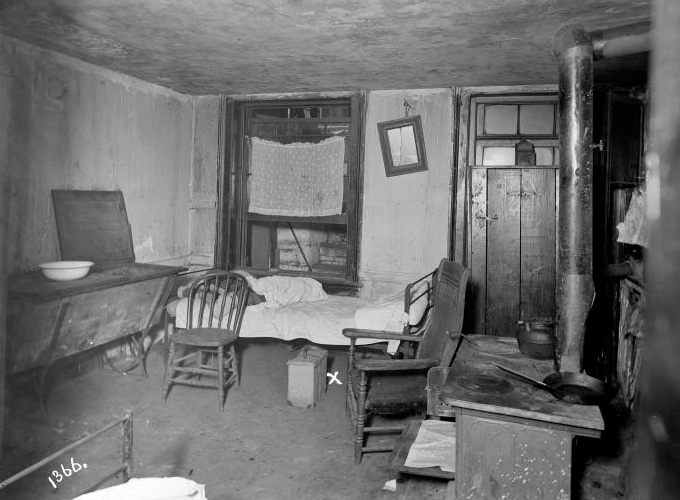
The first large, multi-family apartment buildings in the United States were tenements for low-income immigrants, built in the late 19th century. Many of the historic wins of the Progressive Movement during this period — reforms intended to ameliorate the disease, squalor, and political corruption brought on by rapid industrialization and urbanization — found root in the need to improve the quality of housing for poor people. From Jacob Riis’s groundbreaking photographs in How the Other Half Lives to Jane Addams’s embedding of social services like childcare and education into low-income housing, advocates grounded their work in the physical environments in which poor people, especially immigrants, were living. 16 These are just two famous examples among many strategies to persuade powerful people to feel a sense of responsibility for the powerless. Their work did not, however, prioritize challenging the balance of that power.
Nonetheless, these projects did lead to real change. The New York State Tenement House Act of 1901, referred to as the “New Law,” remains to this day “the basis for the regulation of low-rise housing design in New York City,” according to Richard Plunz’s definitive account, A History of Housing in New York City. It drastically improved living conditions by expanding ventilation shafts to interior courtyard proportions and by requiring running water and exterior windows in every apartment. Greater safety had consequences, however: the strict enforcement of these requirements made building new tenements on single lots financially unfeasible, and individual builders were outmatched by large development companies that began to dominate housing production. And whereas the requirements of the Old Law could be interpreted by anyone on his own, “The spatial complexities of the New Law, together with its mandate for larger-scale projects, assured architects a share of this market.” 17

As has often been the case in New York City, political change comes most easily when it aligns with the interests of large capital. Real improvement in the quality and the attainability of the urban housing stock happened because activists, political leaders, architects, and the real estate industry found common cause. But that common cause does not mean a permanent alignment of interests. Those same large developers who were building to a higher standard could also use their monopoly to raise rents. So, activists had to address the power imbalance between landlords and tenants through collective action.
In the Lower East Side, where New York City’s tenements were concentrated, the construction of the Williamsburg Bridge, completed in 1902, required the demolition of buildings that had previously housed 17,000 people. The insufficient number of rental apartments in the area fueled predatory rent hikes, in some cases up to 30 percent. 18 Within a few years, renters had had enough. In 1904, several hundred residents began protesting in the streets, building on the tactics of a group of neighborhood women who had previously staged a community-wide boycott of kosher butchers, objecting to increases in the price of meat.
The striking tenants were able to convince landlords that no other families would dare to move in if they were evicted; doing so would amount to crossing the picket line.
Contemporaneous accounts called the activists “housewives,” although a significant number also worked outside the home in factories, which may account for the new language and tactics they introduced into their actions. According to Jenna Weissman Joselit, a scholar of American Jewish history, they referred to “themselves as ‘strikers,’ to their non-cooperating neighbors as ‘scabs,’ to building-level tenant groups as ‘tenant unions,’ and to the withholding of their rent as a ‘rent strike,’” in the first usage of the term in American history. In addition to invoking the language of the labor union, they appropriated its “techniques of protest” such as “the use of pickets, outside demonstrations, marches, canvassing the neighborhood for support.” 19 By mobilizing solidarity among renters, the striking tenants were able to convince landlords that no other families would dare to move in if they were evicted; doing so would amount to crossing the picket line. One by one, the landlords acquiesced, sparing 2,000 people from eviction. This success didn’t lead to any additional regulation or oversight, and so renters in the Lower East Side remained vulnerable to price gouging. But they also remained organized, ready to flex the muscle of collective action when landlords again tried to raise the rent. That readiness presents another lesson for contemporary activists seeking to translate movement gains into policy wins.
A few years later, landlords announced another round of painful rent increases at a time of economic recession following the Panic of 1907. This time, the coalition between women working in the home and those working in factories (often teenagers) became instrumental in broadening the protest beyond the Jewish households of the Lower East Side, garnering support from Italian neighborhoods and community institutions and eventually enlisting tenants to join the strike in Brooklyn and Harlem. While the strike’s leaders, like the remarkable teenage activist Newman, “had to work during the day, the impassioned housewives that they organized could go from tenement to tenement to convince others to strike. Thus, the success of the strike depended both on shop floor networks of teenaged girls and on networks of neighborhood housewives and mothers.” 20
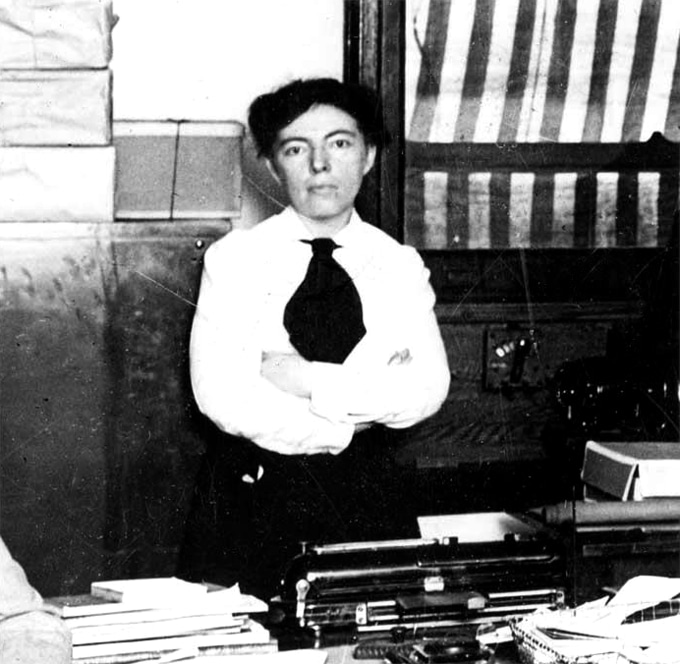
Over the course of Newman’s career as an organizer in multiple sectors, she consistently strengthened connections between tenants’ rights, women’s rights, and the labor movement. She lived openly with her female life-partner, with whom she raised a child. Her stint at the Triangle Shirtwaist Factory informed her nearly 70 years of service to the International Ladies’ Garment Workers’ Union. As an organizer, journalist, and liaison between the union and government officials, Newman helped turn the ILGWU into a formidable force that made workers’ compensation laws and other protections a meaningful part of the New Deal agenda while sponsoring cooperative housing developments for working-class New Yorkers. One of these, Penn South, in midtown Manhattan, to this day “continues to provide 2,820 truly affordable homes in the heart of one of the world’s most unaffordable cities.” 21
Indeed, tenant-led collective action helped win many achievements we now take for granted, from public housing in the late 1930s to rent control during WWII. But in the second half of the century, the power of tenant unions waned and, not coincidentally, the rise in housing prices accelerated. According to the Joint Center for Housing Studies at Harvard University, “the median American rent payment rose 61 percent in real terms between 1960 and 2016 while the median renter’s income grew by 5 percent.” 22 Federal subsidies for homebuilders, especially in the suburbs, stimulated construction and land speculation, enriching the real estate industry and entrenching its influence over public policy: lobbying budgets, transactional relationships with elected officials, sweetheart development deals. (Today, the average real-estate firm pays just over one percent in income taxes, while the average across all industries is around eleven percent.) 23
What happened to the tenant unions? Some were subsumed into other housing non-profit organizations, which focused on community development goals and affordable housing development. Reflecting on this trend between the early 1980s and late 1990s, Iraida Afanadoor, an organizer for Philadelphia’s Tenant Action Group, noted, “People don’t have the fight and anger channeled properly. That is the role of organizers and advocates, to bring that anger into something constructive that we can take to a citywide and statewide level.” 24 But, today, as rents rise and the proportion of renters grows, and as an increasingly financialized real estate sector has grown more rapacious, a resurgence of collective power-building through tenant unions shows the enduring relevance of Newman’s legacy.
The history of housing justice should be the basis for a new narrative that enables YIMBY groups to make the connection between racist zoning and racist development.
Not far from where I live in Brooklyn, the neighborhood of Crown Heights has experienced some of the most rapid gentrification I’ve ever witnessed. In just a couple of years, Franklin Avenue, its main drag, went from dollar stores, Caribbean-owned small businesses, and boarded-up storefronts to fancy bars and coffeeshops. But the visible gentrification of a retail strip distracts from the more pernicious practice of actively displacing long-term residents to raise rents. Crown Heights is a hotbed of predatory equity, “where private equity firms acquire buildings with a high percentage of rent-regulated units and a business plan to convert those units to market rate rentals.” 25 As the stories of trumped-up evictions mounted, a group of activists who had been involved in Occupy Wall Street worked with longtime neighborhood advocates to bring together older and newer residents to resist unlawful clearance of rent-stabilized units. The result was the Crown Heights Tenants Union, which has pushed to codify collective bargaining agreements between tenants and landlords in the deeds of rented buildings, won court victories in overcharging and harassment cases, and educated countless tenants about their rights.
The form of predatory equity that attacked Crown Heights is a classic example of racial capitalism. According to the abolitionist geographer Ruth Wilson Gilmore, capitalism “requires inequality,” and racism “enshrines it.” 26 Neighborhoods like Crown Heights that today are the targets of impatient financial capital are the same neighborhoods deprived of any capital at all in the middle of the 20th century through redlining and blockbusting. 27 The racial wealth gap that persists — for every $100 in wealth held by white households, Black households hold only $15 — is directly attributable to these policies and practices. 28 For housing justice advocates, this history is often the wellspring of their activism. It should also be the basis for a new narrative that enables YIMBY groups to make the connection between racist zoning and racist development.


A deep understanding of the impacts of this kind of structural racism informs the activism of contemporary tenant unions. The Kansas City Tenants Union, for example, grew out of comprehensive research into eviction rates in Jackson County, Missouri, and their disproportionate impact on Black households. 29 “Housing is the infrastructure of American racial capitalism,” argues Tara Raghuveer, co-founder of the KCTU. “From redlining to blockbusting to exclusionary zoning, housing policies and lending practices have created and maintained racialized hierarchies. The modern housing market, marrying public and private supports to secure mortgages, protects a pathway to wealth-building for those who have been able to access it.” She supports this argument with the fact that while Black people earn 60 percent of White incomes, Black families hold just 10 percent as much wealth as White families. 30 Raghuveer now directs the Homes Guarantee campaign with People’s Action, a national progressive advocacy and political organization. The Homes Guarantee envisions a policy plan that will ensure every person in the U.S. has housing that is safe, accessible, sustainable, and permanently affordable. Their campaign leads with the belief that “the people closest to the problems are closest to the solutions. Our grassroots leaders are the experts of their own experience. The vision for a national Homes Guarantee comes straight from people who are impacted by the nation’s housing crisis, and builds from a long tradition of tenant organizing.” 31
In February 2020, across New York state, 92,000 people were homeless, and 5.5 million renters did not have the right to renew their leases.
Tenant groups from Boston to St. Paul to Pasadena use similar language, signaling the leadership roles of poor renters of color, many of whom have faced eviction and homelessness themselves. 32 In The New York Times, Tressie McMillan Cottom profiles the Louisville Tenants Union, whose members now understand that asserting their rights requires political power, so they run candidates for City Council. Their “strongest political strategy,” Cottom writes, “is pushing for local ordinances that give community members the authority to assess new housing developments that use city resources to determine whether they would displace residents or reduce a neighborhood’s affordability.” She quotes Josh Poe, a co-founder of the tenants union, who says tenant organizing “will be to the 21st century what labor organizing was to the 20th century.” 33
In Brooklyn, the Crown Heights Tenants Union has shown how developers and landlords displace Black, Brown and elderly tenants, and then systematically overcharge the (often White) tenants who take their place, thus continuing — in a perverse inversion of blockbusting — a “cycle of displacement by accelerating tenant turnover and raising average rents across the neighborhood.” 34 The union has focused on building solidarity between older and newer tenants to form a truly multiracial coalition.
One of CHTU’s founders, Cea Weaver, a White woman from Rochester, subsequently went on to direct campaigns for the statewide group Housing Justice for All, which has united 80 tenant organizations to work for policy change. Originally called the Upstate-Downstate Alliance, HJ4A’s initial strategy was to demonstrate the common needs of tenants in rental markets as different as New York City and Buffalo. For generations, the challenges of the nation’s most populous city have been seen as exceptional and incomparable to those of smaller, postindustrial cities upstate. But a tenant facing eviction is a tenant facing eviction, whether their Brooklyn neighborhood is rapidly gentrifying or their poorly maintained building has been condemned in Syracuse. With this insight guiding its coalition-building, according to Weaver, HJ4A has “worked across the state of New York to build a people-power movement that is capable of challenging the role that the real estate industry plays in … Albany.” 35 The resources and toolkits that HJ4A produces for its members prioritize strategic storytelling. “When we tell our stories,” one such toolkit begins, “we can expose the truth of what we are dealing with as tenants and homeless New Yorkers and shift the narrative on housing in our state. We can use our stories to inspire others to fight alongside us and join our movement.” 36
The pandemic, says organizer Cea Weaver, ‘reawakened the political imagination of renters’ to believe a different kind of relationship with landlords is possible.
In 2019, HJ4A scored a huge victory when it added provisions in the Housing Stability and Tenant Protection Act to ensure that rent stabilization now covers the entire state, that landlords cannot easily remove apartments from rent stabilization, and that renters have more protections against evictions and fees. In securing the passage of this law, HJ4A and its partners bested a well-funded trade group in what The Real Deal, a real estate industry news outlet, called “the biggest legislative upset in a generation.” 37
The following year, as Covid swept the world, the idea of a massive rent strike moved from the margins of political demands to the center, especially in New York City, hit hard by the first wave of the virus. Nearly 65 percent of New York City’s households are renters, and more than half of those are “rent-burdened,” while a third are “severely rent-burdened,” paying more than half of income on rent. 38 Across the state, in that first February of the pandemic, 92,000 people were homeless, and 5.5 million renters did not have the right to renew their leases. In public presentations, I’ve heard Weaver cite statistics like these as preamble to outline her vision of what a real recalibration of the power imbalance between renters and landlords might look like. The pandemic, she says, “reawakened the political imagination of renters” to believe a different kind of relationship with landlords is possible. Landlords “rely on our consent. We can collectively withdraw our consent.” 39

In September 2020, the Centers for Disease Control and Prevention issued an eviction moratorium, declaring the regular rate of evictions would make it impossible for many renters to comply with stay-at-home and social distancing mandates. Such an order would have been impossible if issued by a housing agency like HUD, but the public health emergency enabled new tools that linked issues of health and housing in public understanding. As such, the moratorium added credence to an article of faith fundamental to the mission of the housing justice movement and its constituent organizations: housing is a human right.
Another priority of the organization is the creation of more housing for low-income and homeless New Yorkers. So, here too, justice advocates can connect with housing reformers who want to prioritize building for those most vulnerable to displacement. The dialogue, Weaver says, should be centered on “What kind of housing are we building and where and who is going to have power over what that housing is going to look like?” Weaver continues:
Power is central to the type of conversation we are having. When we are building more housing, is that … entrenching and cementing the “too much power” that many of my members feel like the real estate industry has over their lives? Or when we’re building more housing, is that creating housing opportunity for people who are shut out of the housing market? Is it creating a pathway to collective control over land and housing as a resource and a source of power? So, when I’m thinking about the state of play between people who want to build more housing and people who are organizers in the tenant movement, I’m thinking about what are people’s different definitions of power.
In acknowledging “people who are shut out of the housing market,” Weaver is referencing the racist history of redlining, predatory mortgages, and the rent-gouging of the working class. This history is one that many in the housing justice movement feel is ignored by YIMBY activists who think that all we need to solve the housing crisis is fewer regulatory constraints. 40
We can keep arguing over whether more regulation or more units will make housing more affordable. One thing we should be able to agree on is that we need a greater supply of justice. If we center justice, the practical — and, so far, successful — tools of the pro-housing movement become, just that, tools, rather than ends in themselves. The goal should not be deregulation. It must be affordability. And, if we are to organize a broad and powerful coalition around a mass social movement for housing, we must not lose sight of why affordability matters. Affordable housing should protect — and empower — the vulnerable. Unlike housing units or land, justice is not finite. Indeed, it can be a renewable resource if we balance the power of those who have resources to build units with the power of those most affected by the affordability crisis.



If you would like to comment on this article, or anything else on Places Journal, visit our Facebook page or send us a message on Twitter.