

They had no kings, and no priests, and no aristocracies. They were sisters, and as they grew, they grew together — not by competition, but by united action.
— Charlotte Perkins Gilman, Herland, 1915
Through the 19th century and even earlier, young girls in the Canton Delta of Southern China wore their hair in long braids — until they were married. The wedding dictated a new hairstyle: during the ceremony, elder female relatives or a personal maid would unweave the braids and restyle them into a bun. The change from braid to bun marked a woman’s social maturity, as well as her transition from girl to wife. 1 But sometimes, the same ritual meant something very different. Women who decided not to marry, ever, also ceremoniously combed their braids into a bun, except they did the combing themselves, and not within the context of a marriage.
“Combing Up” or “Self-Combing” represented the initiation of a Comb Sister: an unmarried, celibate, economically sufficient woman who lived communally with other women. Becoming a Comb Sister was a young woman’s only alternative to arranged marriage, though it was also a potent gesture of defiance, self-determination, and female solidarity. 2 Comb Sisters referred to themselves as a “sisterhood,” a word rarely used in rural Canton, and in this case uniquely apt. Comb Sisters assumed the role of family and community in each other’s lives.


The story of the Comb Sisters is about Chinese women’s autonomy, but it’s also a story about the silk industry, the geography of the Canton Delta, woman-only workplaces, the Buddhist goddess Guanyin, and the distinctive architectural form of the gupouk, a home specially designed for Comb Sisters to live, worship, and gather. 3
Comb Sisters were not a tiny sect or a little-known phenomenon. By the late Qing Dynasty (at the end of the 19th century), almost every village in the Delta harbored its own Comb Sister community. Reports about Canton nearly always mentioned these “strange” customs, and newspapers and registries make plain that Comb Sisters were common. 4 The scholar Wu Qingshi startlingly observed in 1909 that in his hometown, South Village in Panyu County (with a population of about a thousand), not a single woman had married — all had become Comb Sisters. 5
Almost every village in the Delta harbored its own Comb Sister community.
Nonetheless, the ubiquity of the practice sits alongside the paucity of records and memorials. Archives contains only fragmented narratives, and what oral histories exist are colored by bias and disparagement. (The holdings of the Shunde County archives, for instance, contain texts such as, “The Bad Habits of Shunde Women,” “The Bizarre Actions of the Comb Sisters,” and “The Comb Sisters’ Priceless Chastity.” 6 The rumor that Comb Sisters were killed if they broke their vow of celibacy continues to be repeated, even today, despite complete lack of evidence.) There’s never been a study to determine even the basic fact of how many Comb Sisters there were. According to scholar Marjorie Topley, writing in 1978, the reasons for this absence are clear enough: “These were not the sort of customs traditional Confucianists would be inclined to write about. The customs arose at a time when marriage and childbearing constituted the only socially valued way of life for a woman; they thus incurred the displeasure, sometimes active displeasure, of the State.” 7
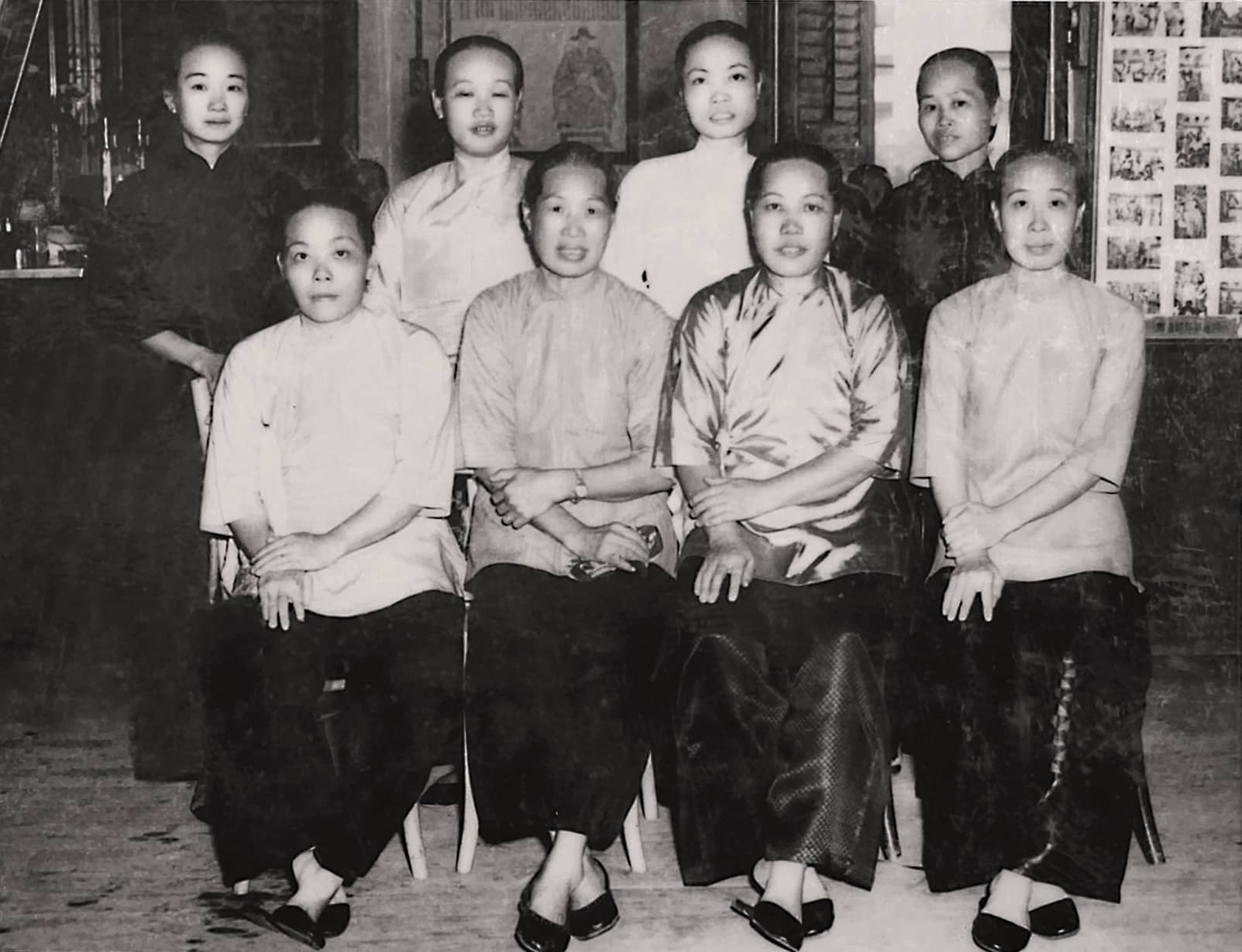
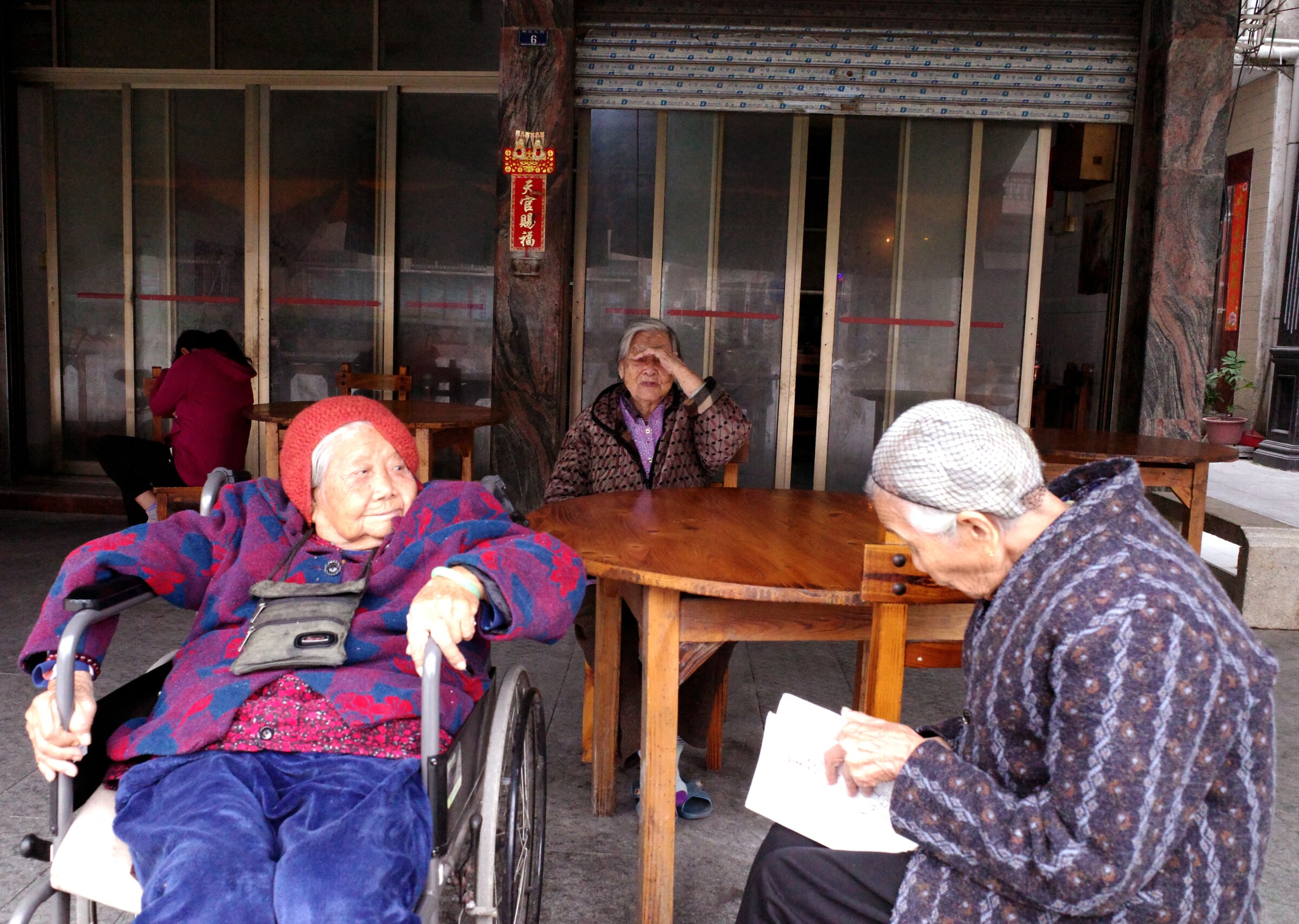
As a young woman growing up in the Canton Delta, I learned very little about the Comb Sisters. Their reputation was made clear by the fact that they were referred to as gupo, which is a pejorative in Cantonese. Gupo means “grandfather’s sister,” but it’s commonly used to describe any woman who has passed the typical age for marrying and remains unwed. The word translates in English to “spinster” but it connotes a much more pathetic figure: a woman on the fringes, disconnected from family and society — lonely, miserable, secluded, isolated, even ghostly. When I finally met the last generation of Comb Sisters through my field research, I discovered the fallacy of this stereotype, and I began to understand and deplore its consequences.
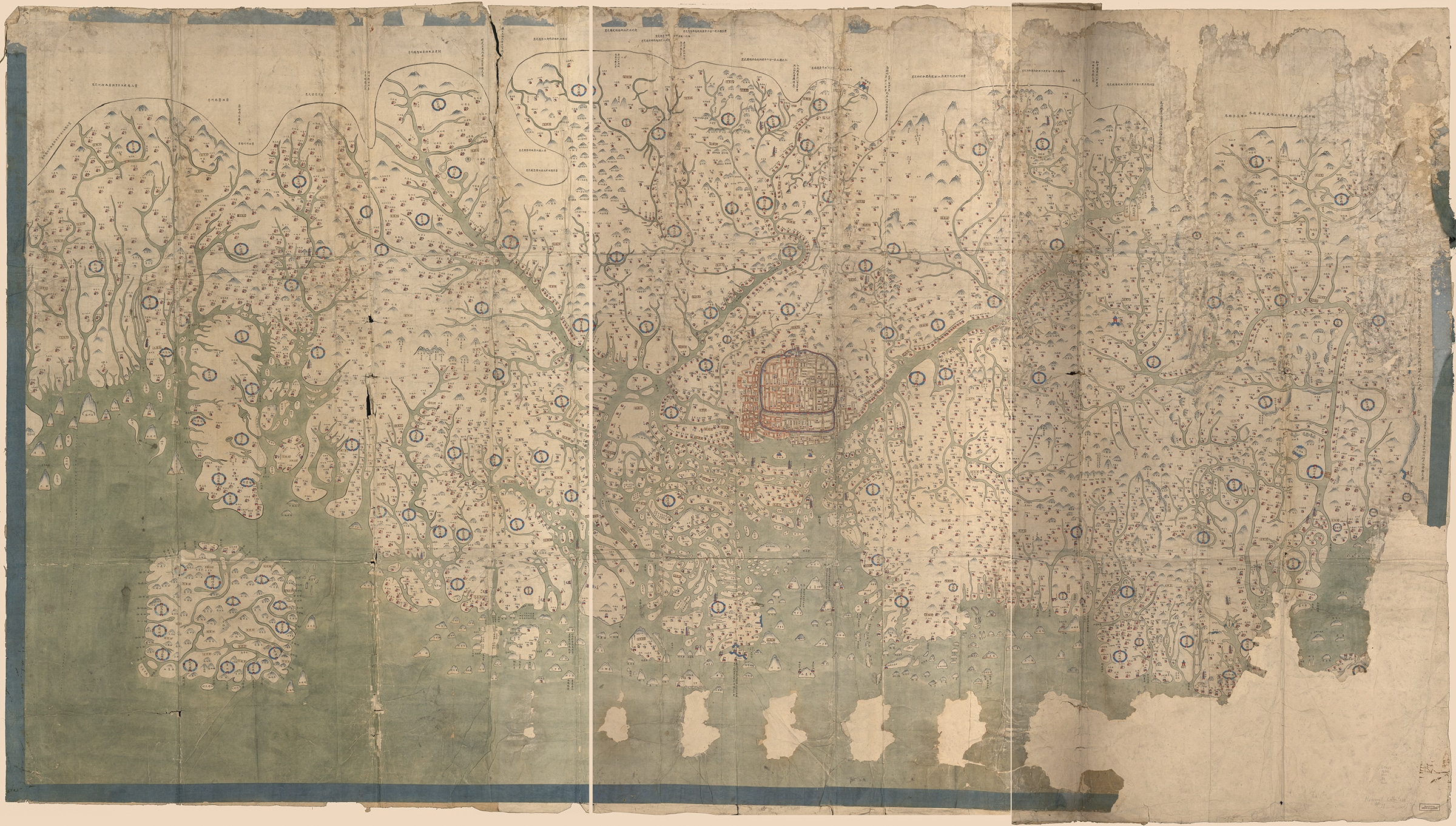
The existence of the Comb Sister tradition is inextricably linked to Canton Delta’s silk industry. The Canton Delta is the heartland of sericulture, especially Panyu, Nanhai, and most notably, Shunde County, where silk production has flourished since ancient times. (This area is now typically known as the Pearl River Delta, but I use the historical placename “Canton Delta” in this essay to avoid anachronism.) The weather is humid and rainy, and the soils rich and alluvial, shaped by sediment deposits from the West, East, and North tributaries of the Pearl River. The land is flat and fertile, but it’s crisscrossed by myriad waterways and prone to flooding. Most of the Delta lies below sea level, such that its fields can be mistaken for a series of waterlogged islands. It’s an ideal landscape for growing flood-tolerant mulberry trees, the leaves of which comprise the sole diet of silk worms. 8
Mulberry tree leaves fed the silk worms, and the silk worm waste was fed to the fish.
The farming system established by the late 16th century was elegantly self-sufficient. 9 A series of small dams and dikes created ponds where fish were raised, and the patches of waterlogged land in between the ponds grew mulberry trees. The resultant landscape was a mosaic-like mix of land and sea, so visually distinctive that it had its own name: “four-water-six-land,” in reference to the ratio of each. There were some storage sheds amidst the mosaic landscape, constructed of mud and plants, but all other structures, including the community’s homes, were built elsewhere, on higher ground. Leaves from the mulberry trees fed the silk worms, and the silk worm waste was fed to the fish swimming in the ponds. Both silk and fish were sold at harvest.

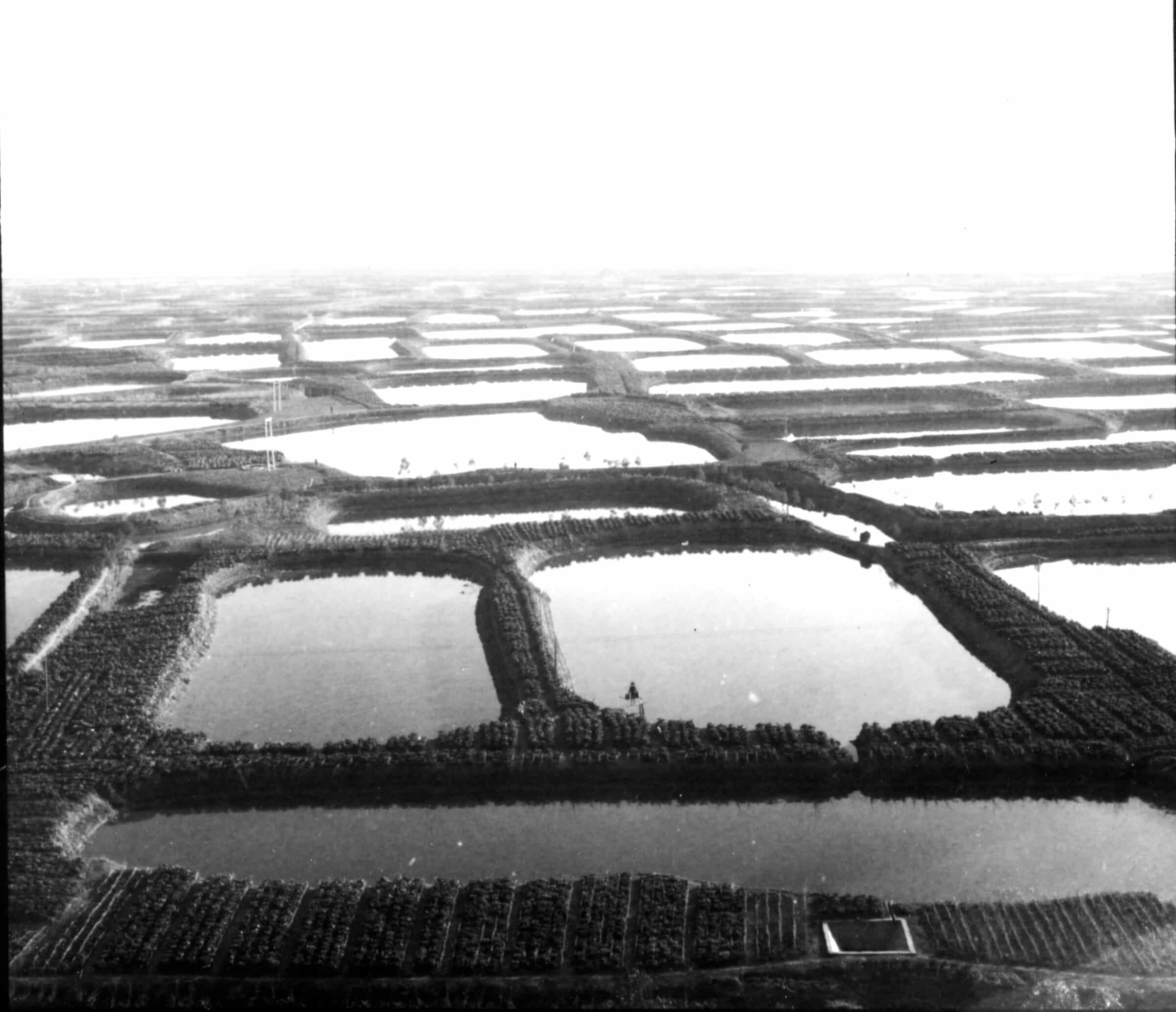
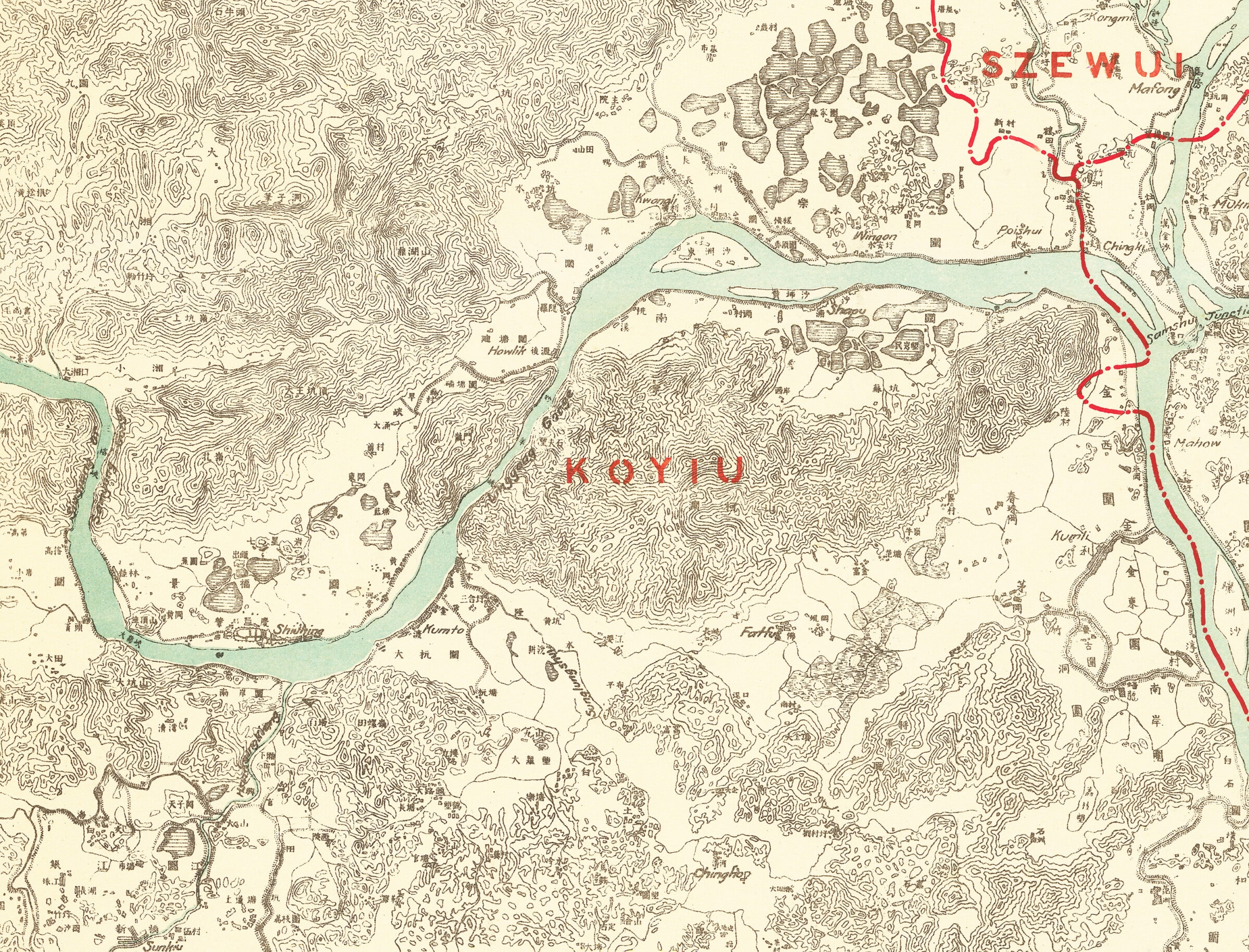
Mulberry tree plantations in the Canton Delta were typically small family businesses, with the entire family oriented around seasonal labor. Agriculture in China tended to be men’s work — “Men plough, women weave,” is a popular Chinese idiom — but mulberry tree plantations relied on a different division of labor. Whereas men handled the transport and sale of fish, leaves, worms, and silk, women did the work of harvesting the leaves, feeding the worms, and spinning the silk.
The women’s tasks required greater skill.
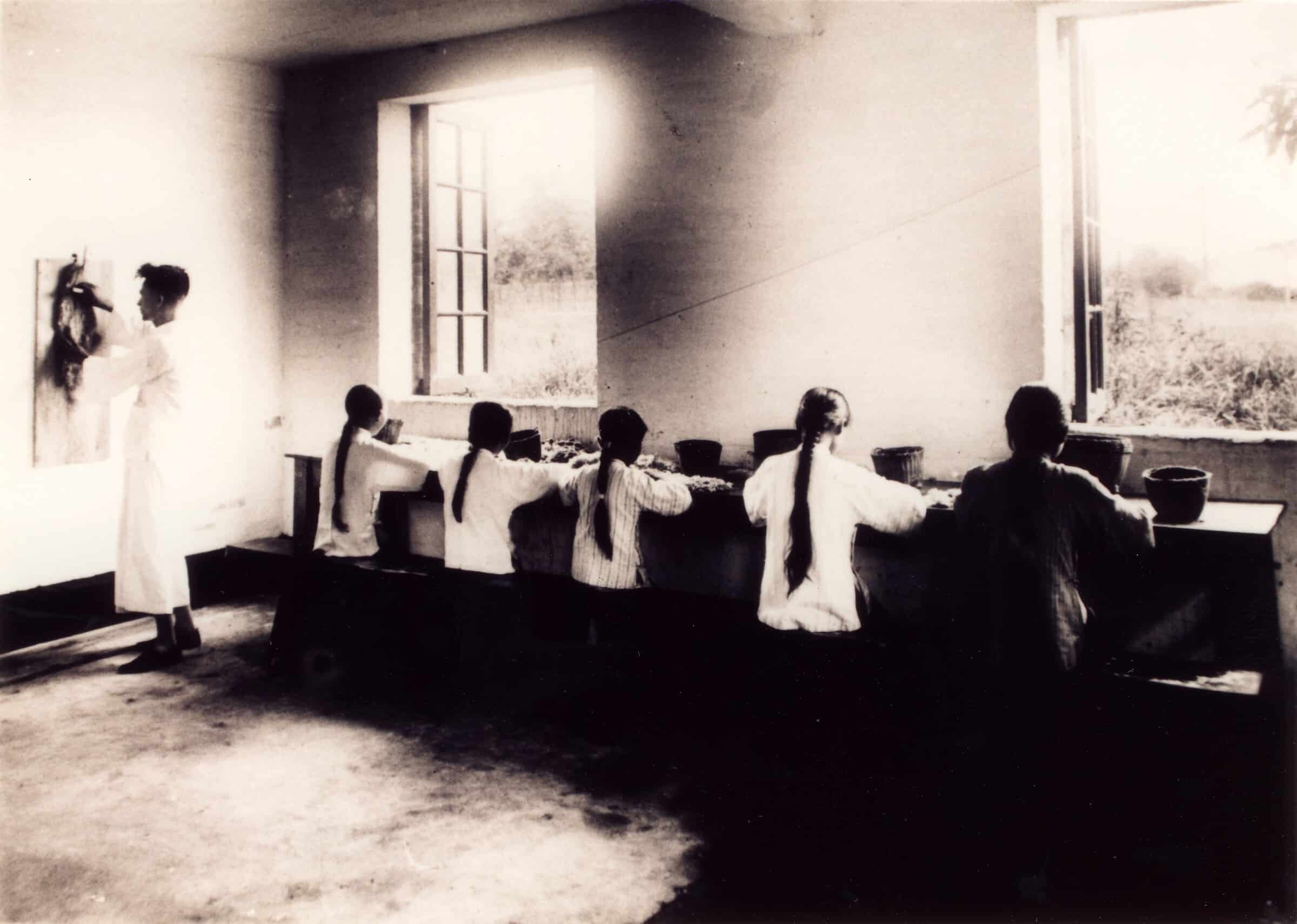
The women’s tasks required greater skill. Silk worms of different ages need leaves of different degrees of tenderness, cut to different sizes. 10 Wives and daughters picked the leaves — the trees were pruned to a height more like a shrub — then sorted and sliced them into the appropriate size, depending on the age of the worms being fed. Careless picking reduced the yield the next time around, and the picked leaves had to be kept entirely free of moisture; a bit of dew or rain could induce fermentation, which made the worms sick. As Comb Sister M Huang Ruiyun explained:
Rearing silkworms was the hardest task; it required a lot of effort. Especially those that had just hatched, they were so tiny and could easily die. We had to manually cut the mulberry leaves into thin strips, like grass, to feed them. There was so much work to do. 11
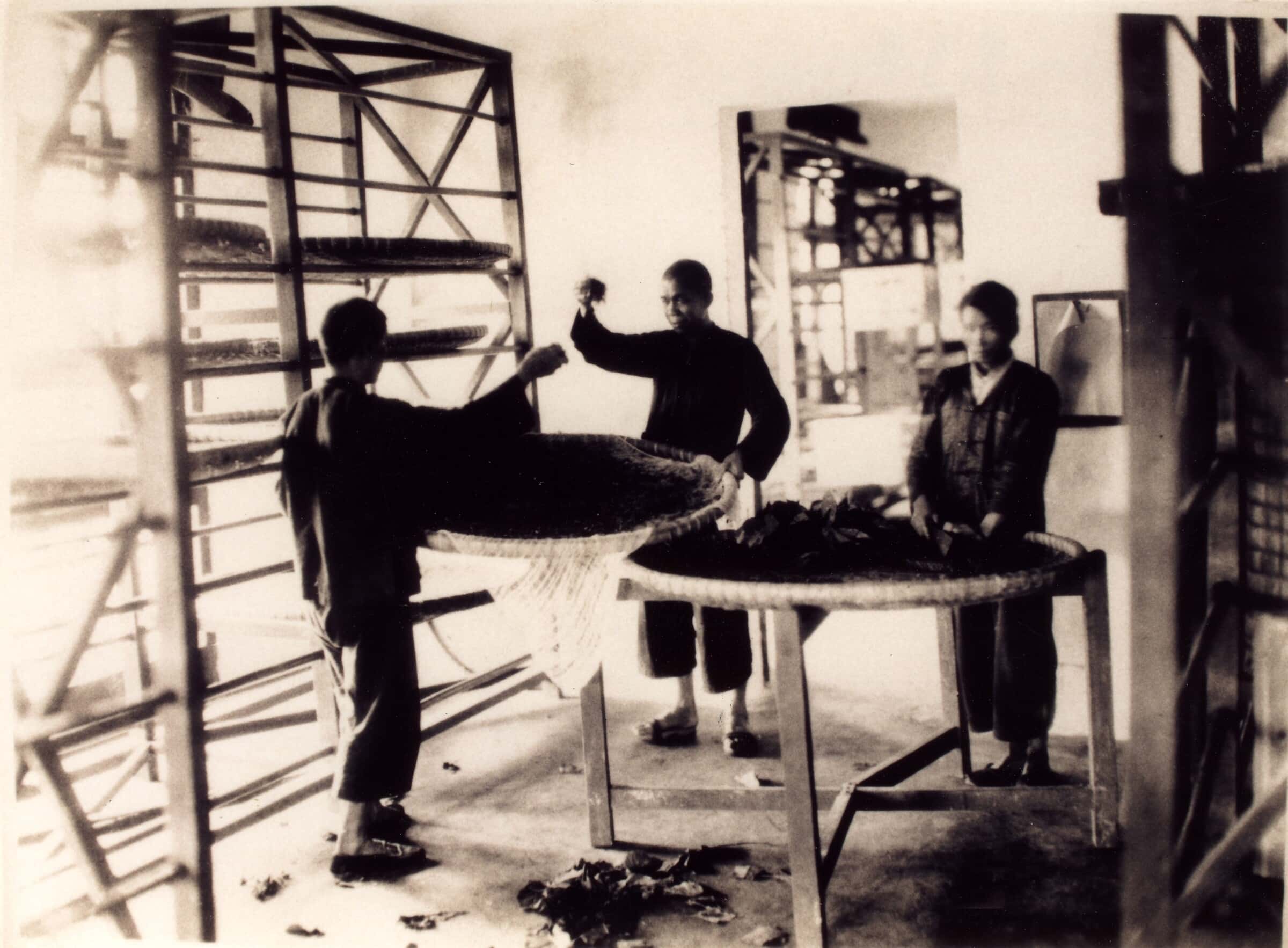
The labor was around the clock; in their early growth periods, silk worms require feeding every two hours, day and night, with especially tiny bits of leaf, “almost as fine as a hair.” 12 The space in which they grow needs to be kept dark, warm, and humid, and the environs regularly cleaned. 13 The worms go through five phases of resting and molting, during which they can’t be disturbed by loud noises, noxious smells, or even a draught, all of which might kill the worm, as will irregular feeding or leaves of the wrong size. The shallow split bamboo baskets in which the worms lived — a basket four feet in diameter held 2,000 to 3,000 worms — quickly filled with waste, and had to be laboriously changed.
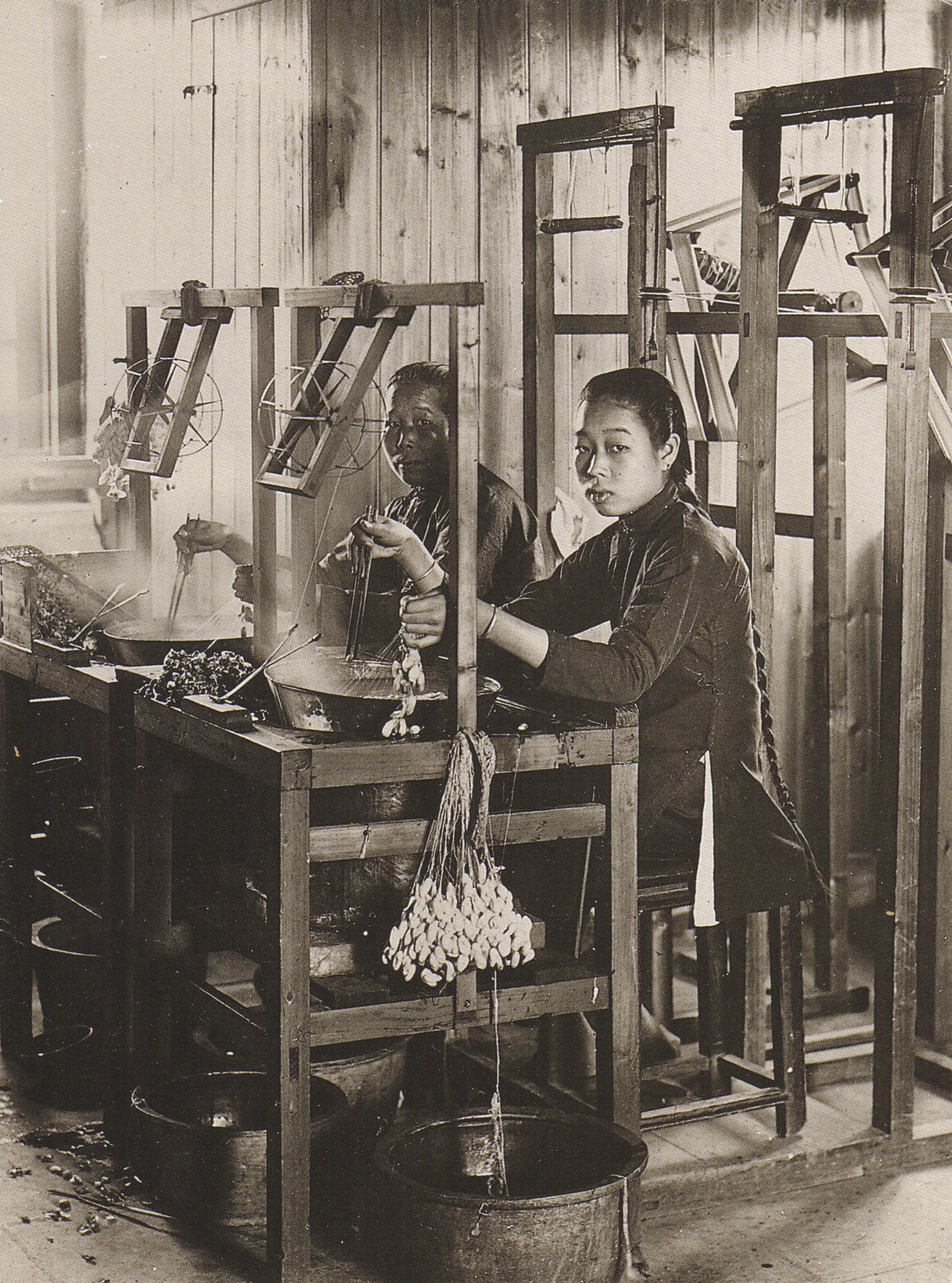
Pre-filature silk reeling, 1930. [from Trea Wilshire, Old Hong Kong; scanned by Chicken Lips/Winter Silks via Flickr]

Selecting cocoons, ca. 1910. [Shunde District Archives]
Young women sorting mulberry leaves, ca. 1910. [Shunde District Archives]
Feeding silk worms, ca. 1910. [Shunde District Archives]
Feeding silk worms, ca. 1910. [Shunde District Archives]
"Golden yellow" cocoons, ready to be unwound, 2007. [SJ Liew, via Flickr under license CC BY-NC-SA 2.0]
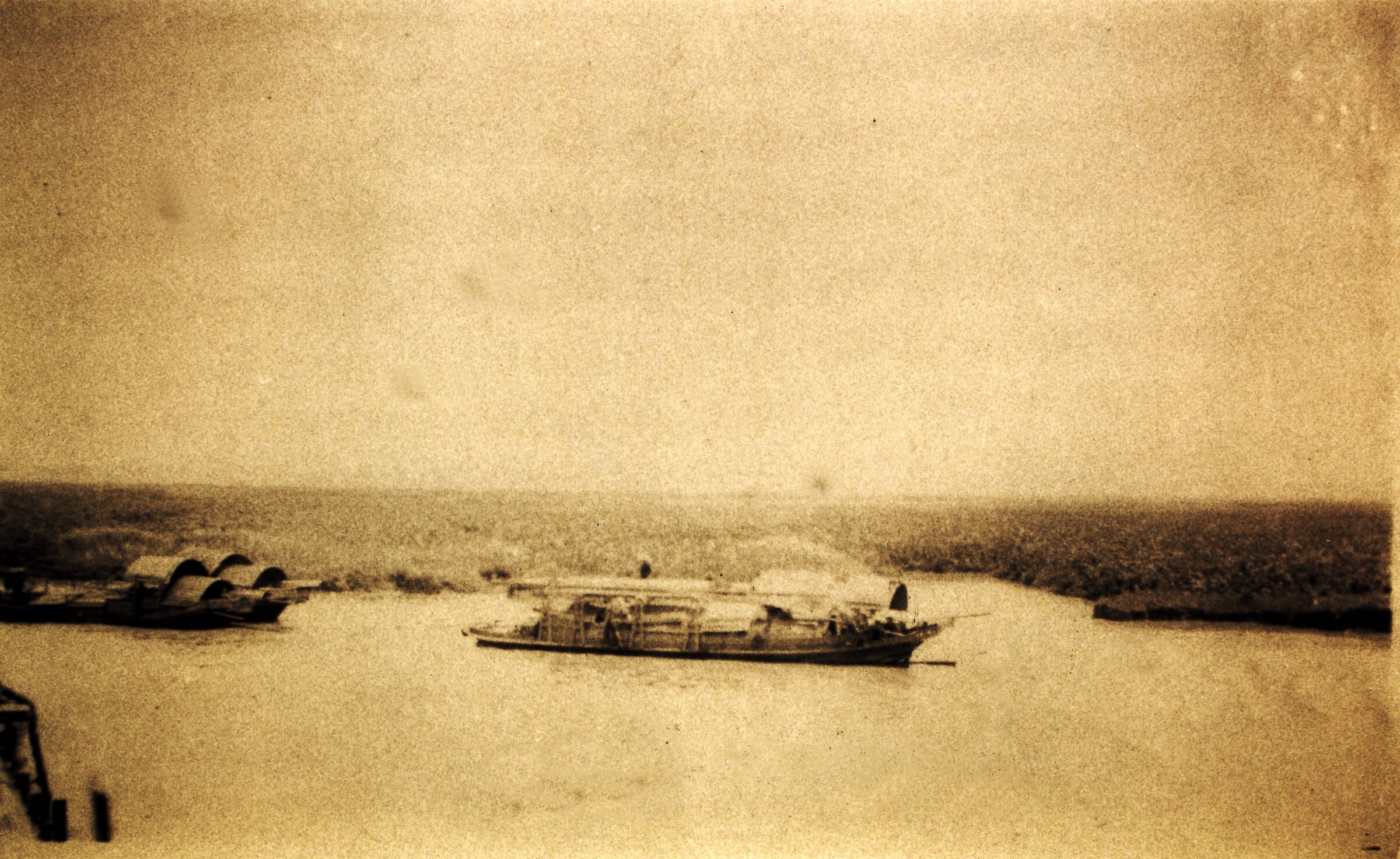
Traversing Canton Delta fish ponds, ca. 1910. [Shunde District Archives]
"Guangdong tong sheng shui dao tu" [Map of Waterways in Guangdong Province], including the silk industry areas of Panyu, Nanhai, Shunde, and Zhaoqing, ca. 1815. [Artist unknown, Library of Congress]
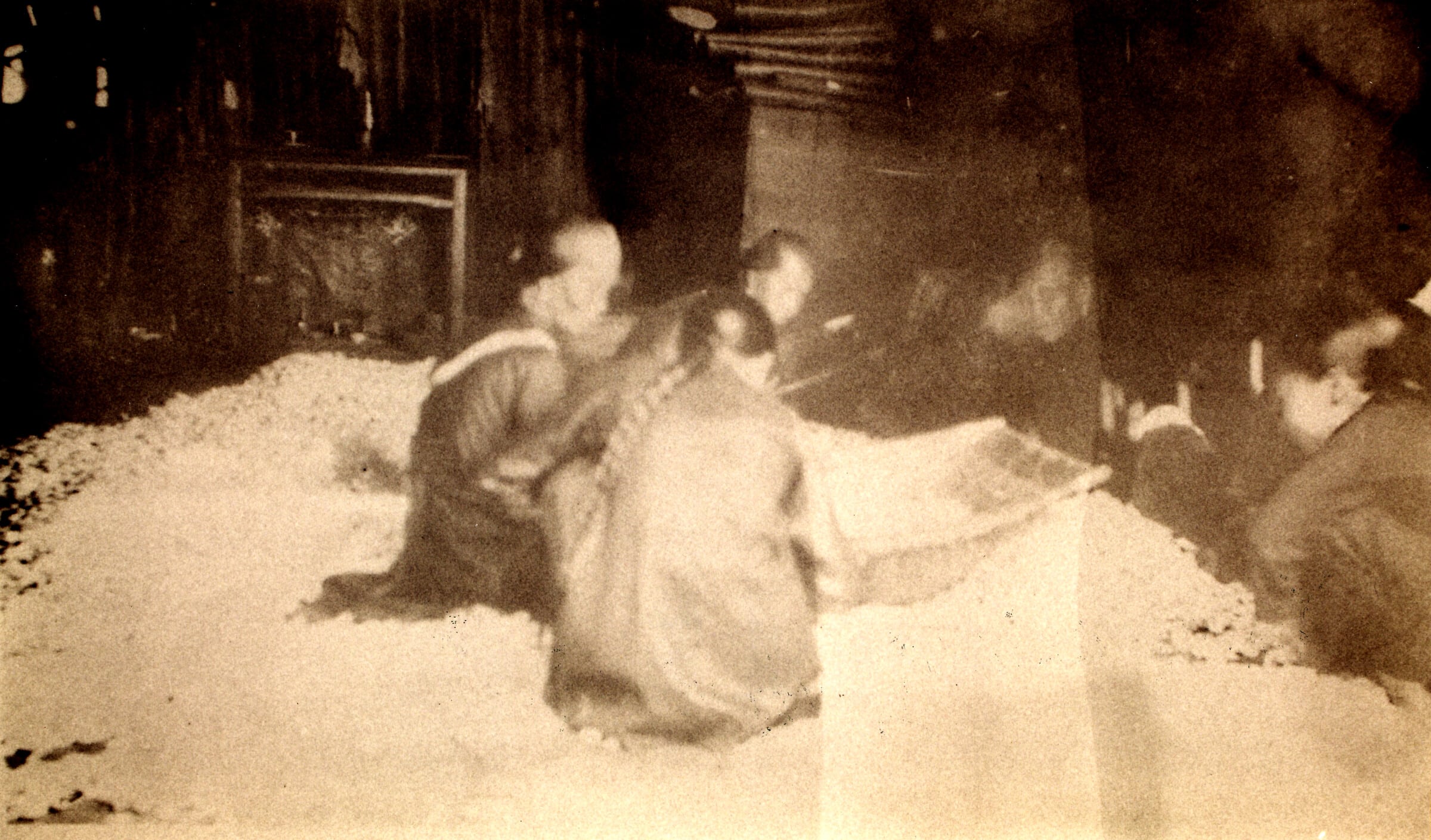
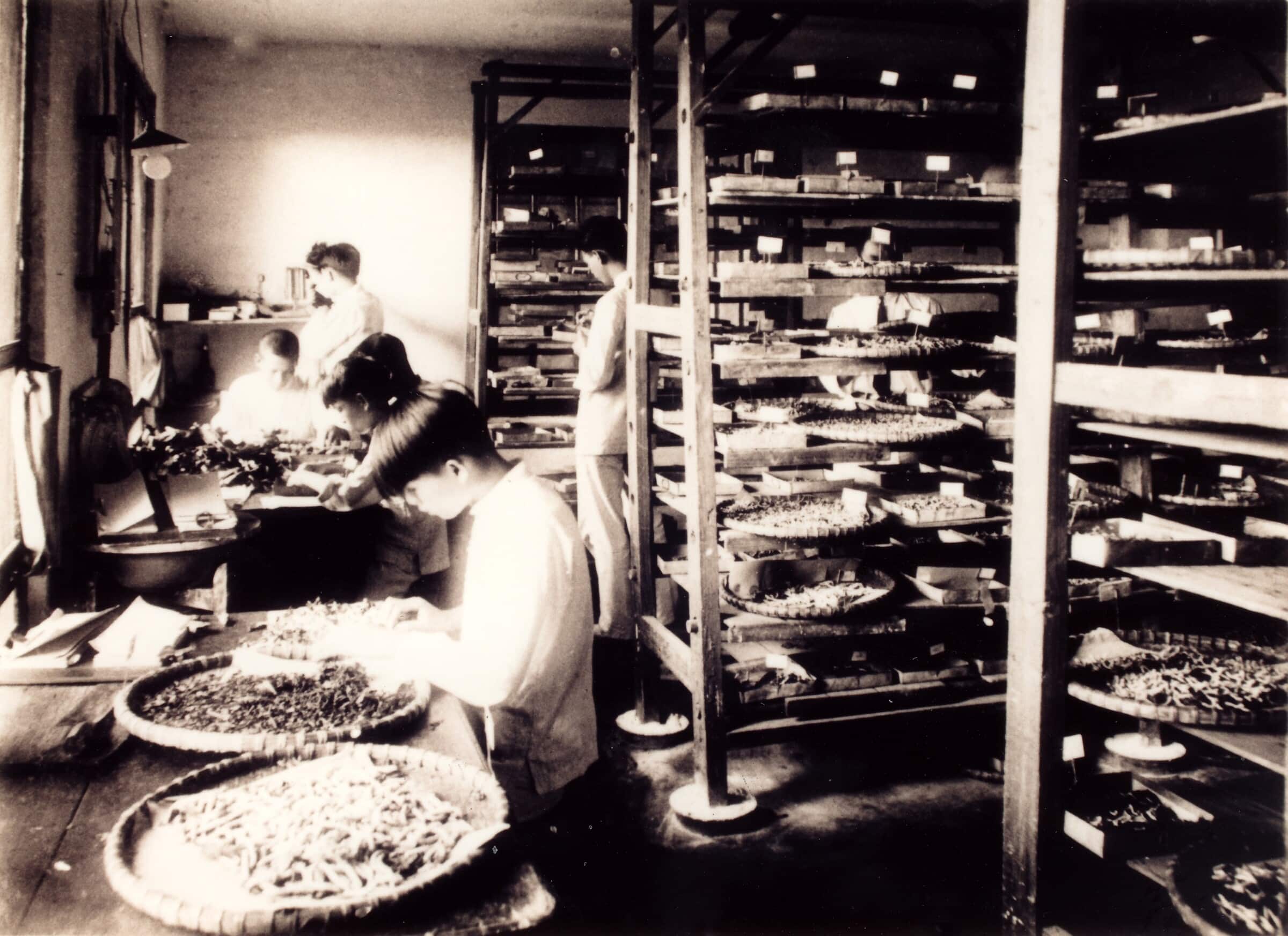
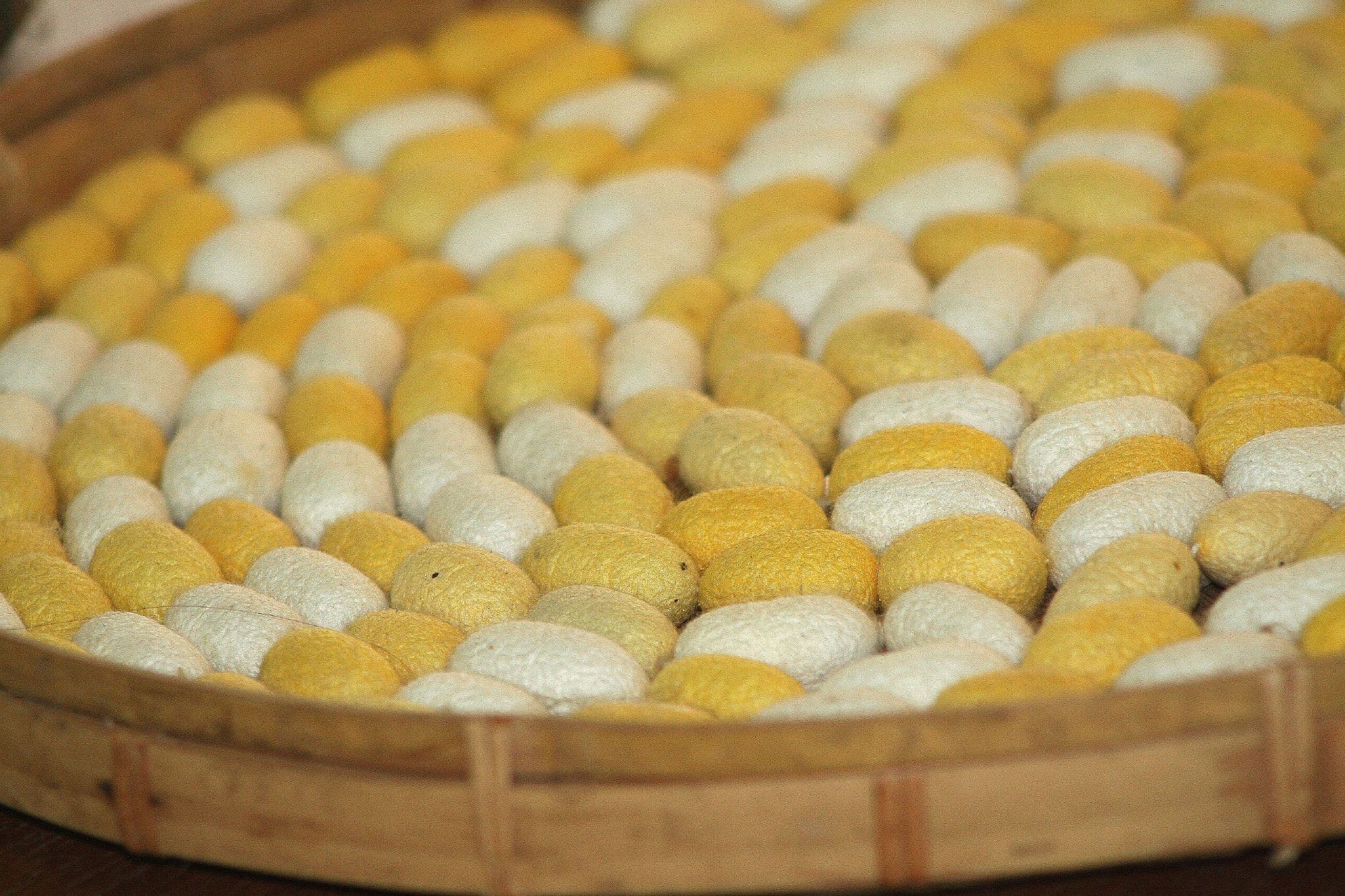
Silkworms are ready to spin their cocoons about eighteen days after birth. Their heads turn “a creamy translucent yellow” indicating maturation of the silk glands. 14 At that point, women individually removed each worm from its basket and placed it on special bamboo racks. The cocoon would be complete in about 24 hours, and turn golden yellow. 15 To kill the moth inside, the racks were steamed with a charcoal fire, and then the cocoons were cooled, dried, and sorted by size and color. Eventually, each cocoon was threaded onto special spinning racks made of bamboo. (Ripe cocoons might also be sold to cocoon merchants. 16)
Silk was extracted from the cocoons through a process called “reeling,” which before the 1870s was nearly all done by hand. 17 The cocoons were first softened in hot water, stirred around with chopsticks. The heat diminished the natural gumminess of the silk threads, so that a cocoon could be unwound continuously. When the cocoon was sufficiently pliable, the silk reeler would locate the protruding end of the filament as it floated in the water.
Every rural woman in the silk districts knew how to reel, and their apprenticeships began early in life.
A simple wooden hand-reeling device was set atop the water, and filaments from multiple cocoons were twisted together upwards to pass through a small hole in a coconut shell, and from there wound onto a bamboo wheel. When one thread ended, another needed to be carefully integrated. As the threads cooled, their gum was reactivated, such that multiple fibers conjoined to form a single, strong filament known as raw silk. Keen eyesight, manual dexterity, and patience determined the silk’s quality. 18 Almost every rural woman in the silk districts knew how to reel silk, and their apprenticeships began early in life. 19
Hand-reeling began to fall out of favor in the mid-19th century. It was never particularly efficient, and the uneven texture and variable thickness of hand-reeled silk became less desirable as Chinese silk began to enter a global market. Silk production was already slowly moving towards industrialization when, in the 1850s, a silkworm epidemic in Europe created a sizable demand for imported silk. The Delta gentry rapidly mechanized the entire industry. Chen Qiyuan invented a steam reeling machine that unwound cocoons with steam power and, in 1872, opened Ji-chang-long Textiles in his native Nanhai County, the first Canton Delta silk factory.
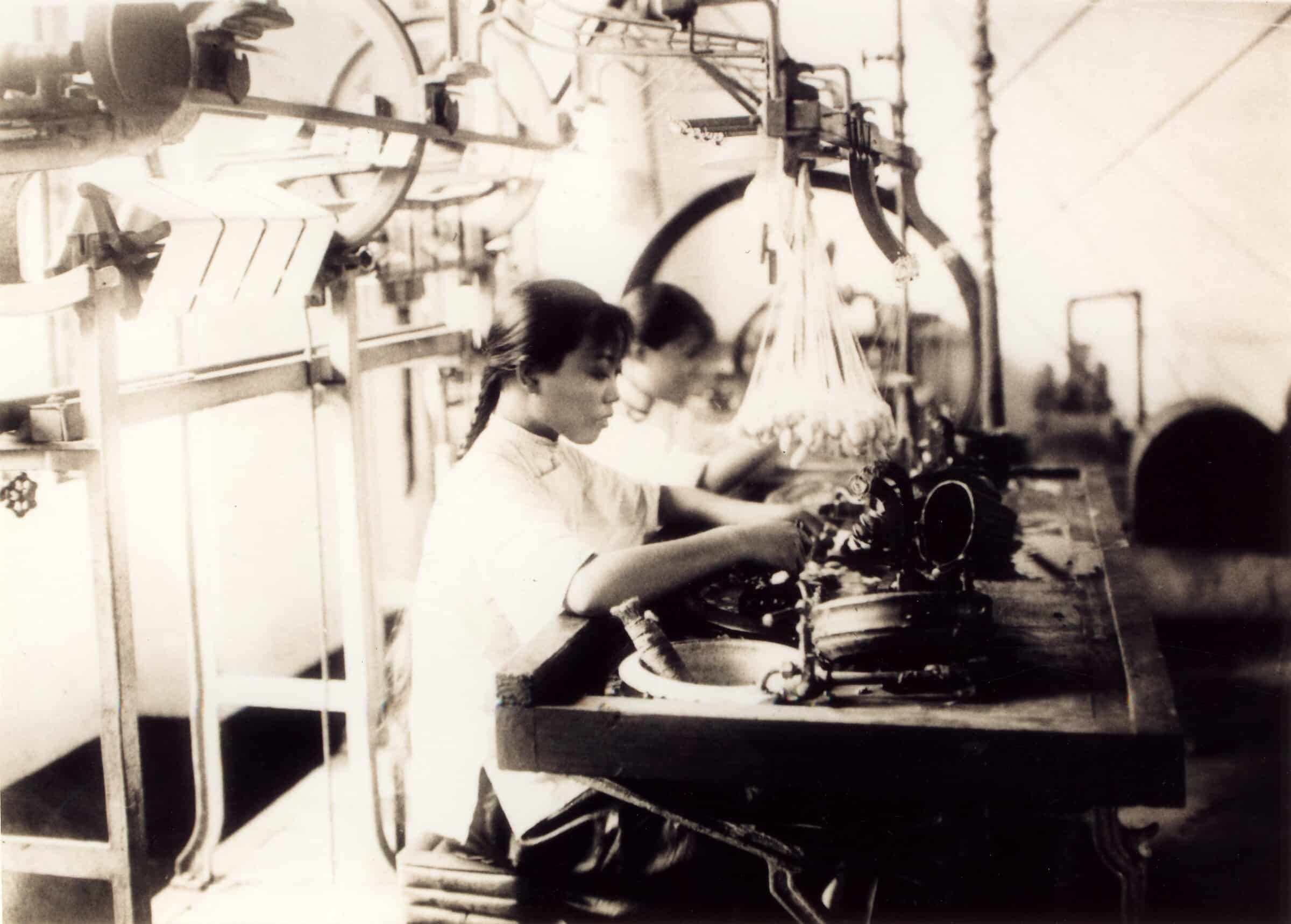
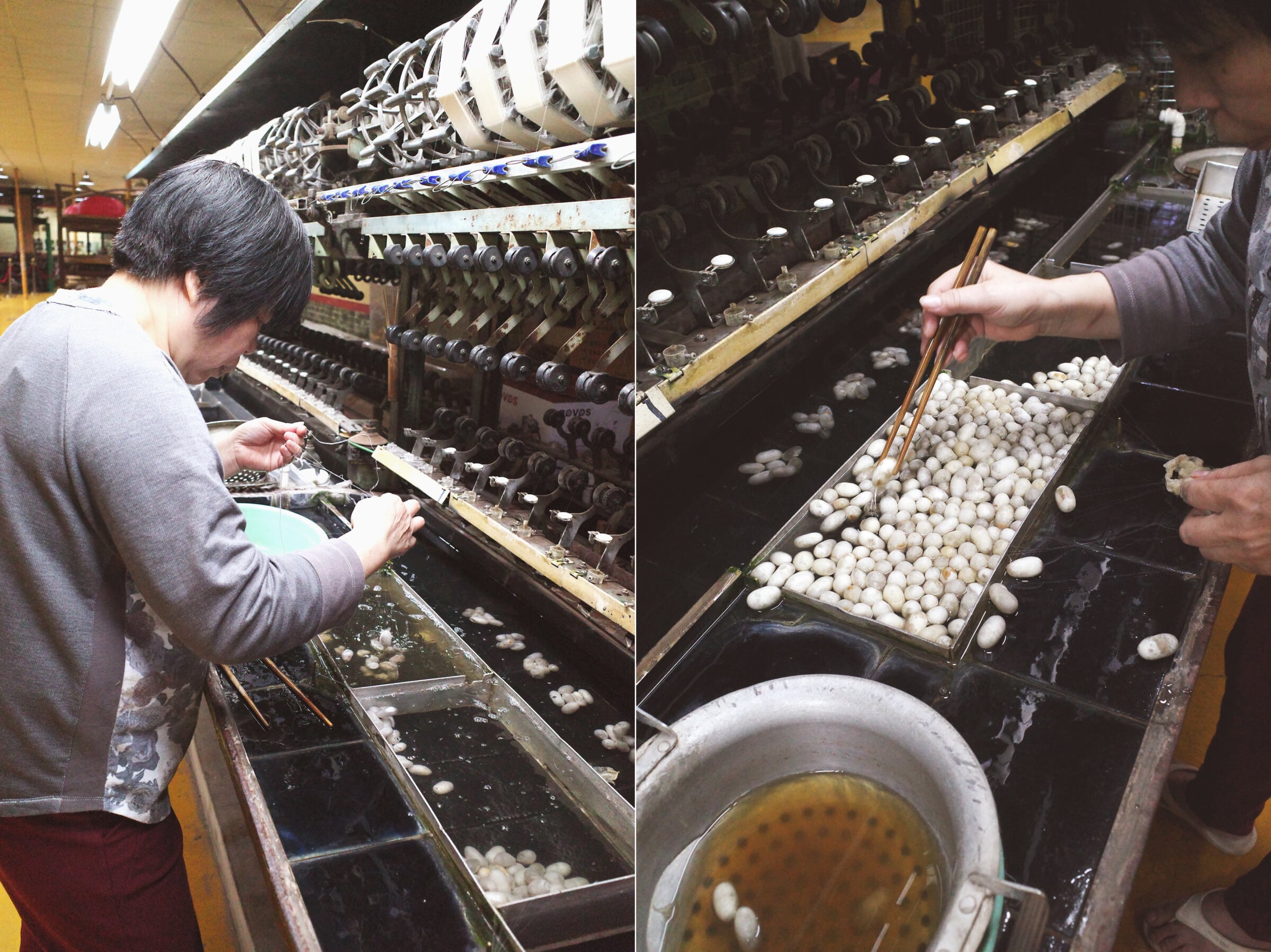
Ji-chang-long Textiles was a success, and more factories opened. In the early 1880s, there were six; by the 1920s, there were 167. The mechanized process of harvesting silk was called “filature,” and it was a much larger-scale operation than hand-reeling. The cocoons floated in giant basins, and about 100 cocoons were unwound simultaneously. The factories were only efficient if there were at least 200 basins of cocoons, each of which was staffed by a single attendant. Ji-chang-long Textile, which was slightly larger than average, employed six to seven hundred workers. It’s estimated that the total number of silk factory workers started at about 3,000 in the early 1880s, then grew to about 40,000 in the early 1910s, until eventually, in the 1920s, the silk factory workforce in the Canton Delta was 83,000 strong, a 27-fold increase. 20 The vast majority of this new workforce were women.
When silk reeling was a small family business, the family patriarch controlled the profits, but with the shift to factory filature, women received their wages directly. 21 Their salaries were not trivial. For perspective, a teacher in Shunde earned about ten Yuan a month in the 1920s, and a family of four could live on about twelve Yuan. A silk reeling worker could earn over seventeen Yuan. 22 For the first time in the history of China, working women gained economic independence, and, in some cases, became the family’s primary breadwinner. Once women could live comfortably on their own earnings, marriage had less appeal, and in fact, to many women, it came to seem humiliating. As one Comb Sister told an interviewer in 1975 or ’76,
I want my freedom; I would be no man’s slave. Men treat their wives like property. It is terrible to be a wife. I feared that my husband would take a concubine. No matter how good a wife you might be your husband can still take a concubine and then life is horrible. He will spend all his time with the concubine. You will be a servant in your own house. 23
Factory employment also shaped women’s relationships with each other. According to the Comb Sisters I spoke with, the all-women environment led to conversations that hadn’t happened before, and shed new light on their individual lives. The workplace took on elements of a public forum, or a feminist consciousness-raising group. The women listened and empathized with each other’s stories of suffering at the hands of fathers, brothers, and bosses. Grievances and misfortunes that had seemed the tragedy of individual women were understood to be common and systemic. The Comb Sister phenomenon emerged as much from these conversations as from women’s newfound economic independence.
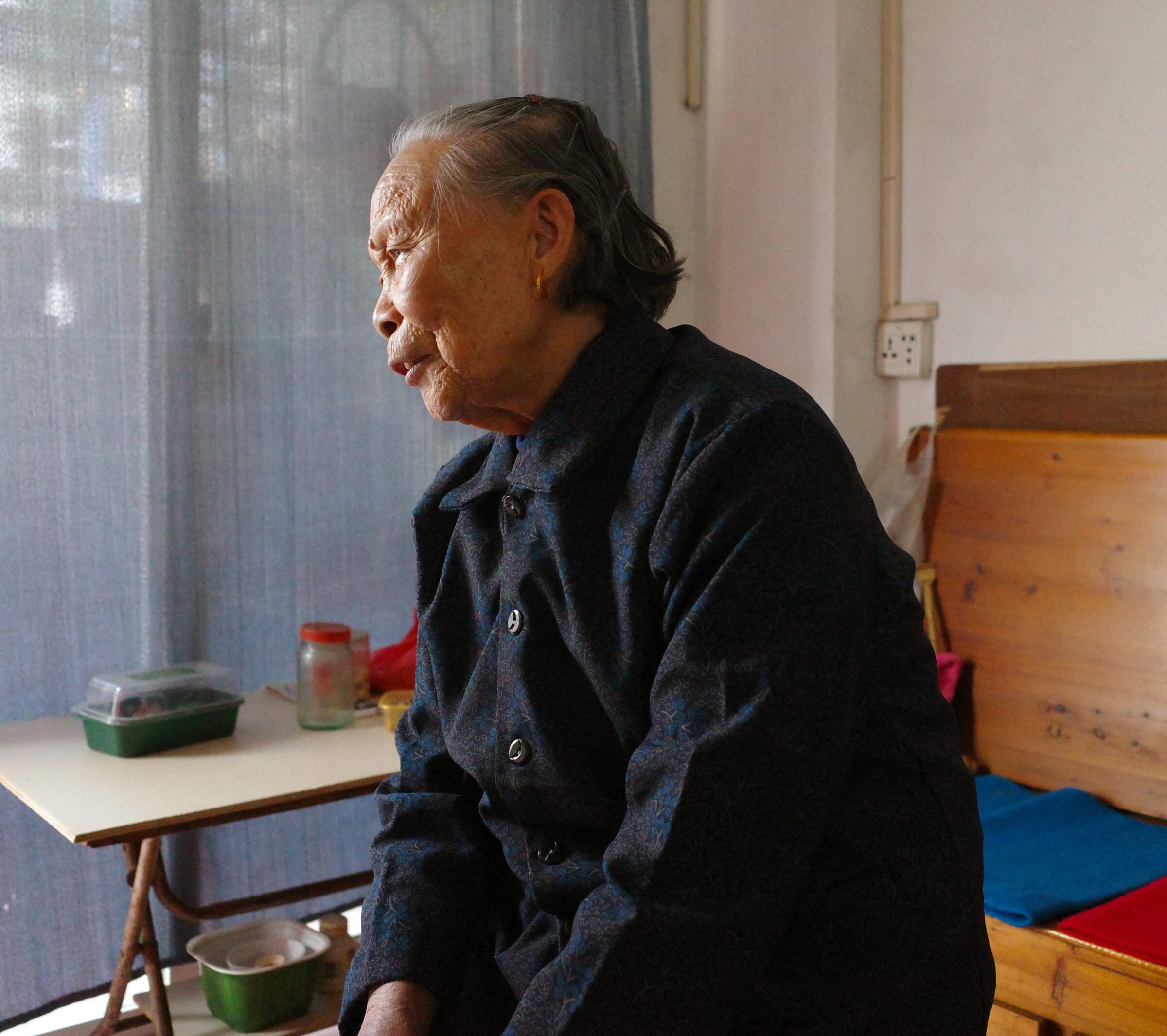

The Comb Sister phenomenon was unusual and anomalous, but there was some historical precedent in the buluojia tradition, which began earlier than the Comb Sisters and was relatively common in the Canton Delta for at least two centuries. Buluojia, or “bridedaughters,” are young women who married, but did not consummate their marriage or move into their husband’s home. There was a nominal wedding, but no change in domestic arrangements — the buluojia continued living at home and working in the family business. 24
Once women could live on their own earnings, marriage had less appeal.
To address the economic boon of marriage, wherein women were laborers traded between families, a buluojia negotiated directly with the husband’s family, to the effect that she promised to pay some portion of her family’s income to her husband’s family as compensation. Anthropologist Janice E. Stockard termed buloujias “compensation marriages,” based on this payout. 25 The earliest record of the buloujia tradition is in 1827, though it existed far earlier, long before the silk reeling factories. Historians believe buluojias were a vestige of the Canton Delta’s transition from a matriarchal to a patriarchal society. The remnants of ancient matriarchy were retained longer in the Delta than in central China, because of the Canton’s geographic isolation. 26
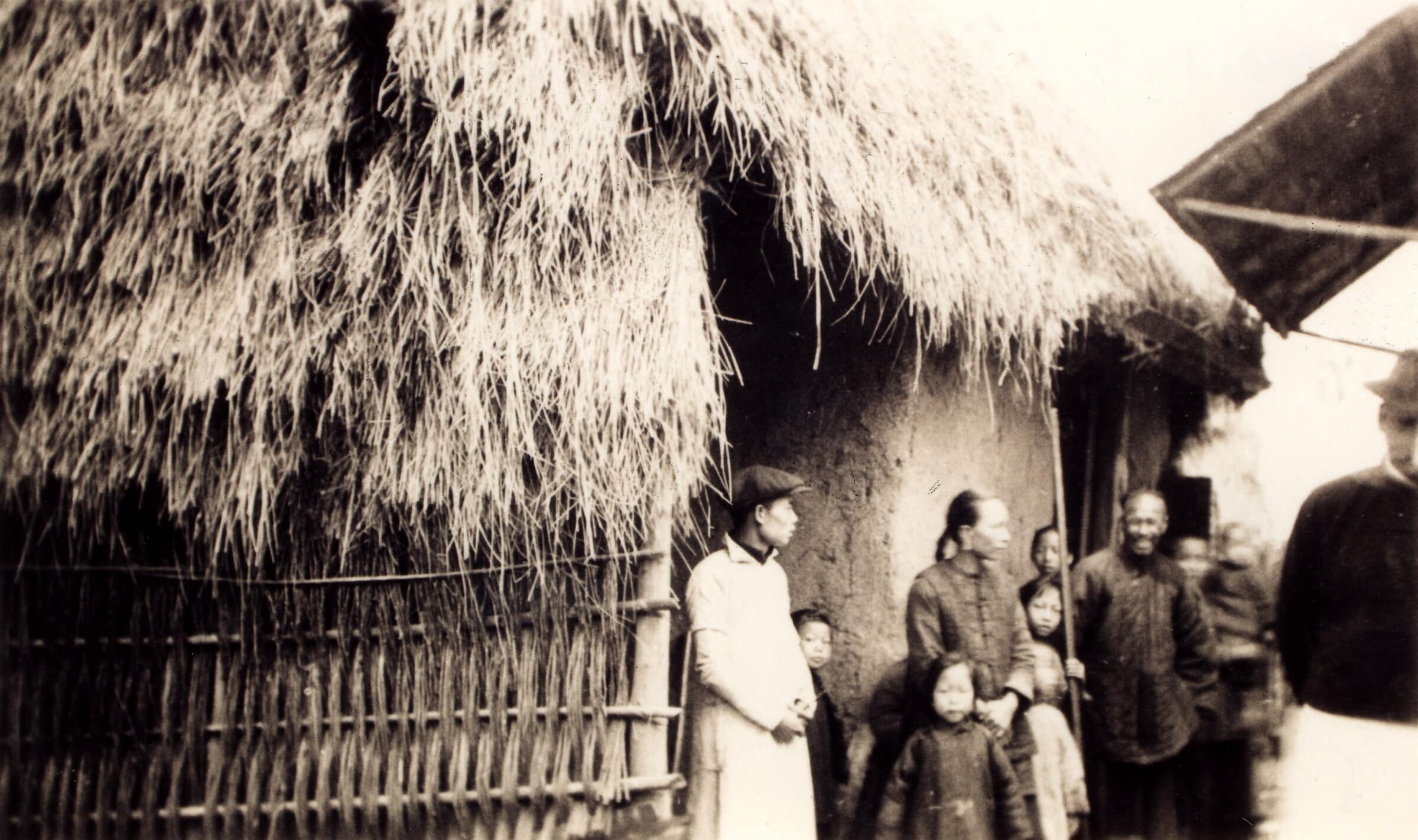
By the 1860s, buluojias represented a mild form of resistance to the institution of marriage, which helped the more radical Comb Sister tradition take hold. That said, one practice did not replace the other. During the ascendency of factory silk, both continued side by side. 27 In fact, the self-marrying Comb Sisters had a great deal in common with the sham-marriage buluojias, and in my research, local villagers tended to discuss both in conjunction with each other. 28
There also seems to have been growing popular sympathy for the plight of women married by force. One of the oldest surviving films of the Hong Kong film industry, the 1937 The Light of Women, tells the story of Luk Mo-jing, who refuses her arranged marriage to a factory owner with several concubines. 29 She joins with a few friends who similarly refuse to marry, and they flee to a neighboring city to enroll in school. Mo-jing falls in love, and there is again talk of marriage, but when she realizes her partner is a disreputable coward, she flees a second time. Having escaped matrimony twice, she adopts a daughter, founds a school for disadvantaged girls, and lives as a single woman. The film is clearly sympathetic toward Mo-jing’s rejection of marriage; her character represents Chinese modernity straining against the constraints of patriarchal feudal society.
Becoming a Comb Sister took great bravery, not least because the designation cast one’s afterlife into uncertainty. Most Chinese villages imposed constraints on where women who had never been married could live if they were old, sick, or dying. It was thought ill-boding to be proximate to the death of a woman who lacked affiliation to a male descent line. A “hostless” daughter, as a Comb Sister was called, was not allowed to die in the main house of her natal family, but was removed to wait for death elsewhere, alone, usually in an outlying building—a shed, or an empty house at some distance from her kin. 30 (The earthen storage sheds in the mulberry fields were often used for this purpose.) These “death houses” still exist; I visited one in a small village in Sanshui County — a modest brick structure, just 20 square meters in size, located outside the village territory. I saw through a window three photographs of deceased Comb Sisters who presumably died in the house. 31
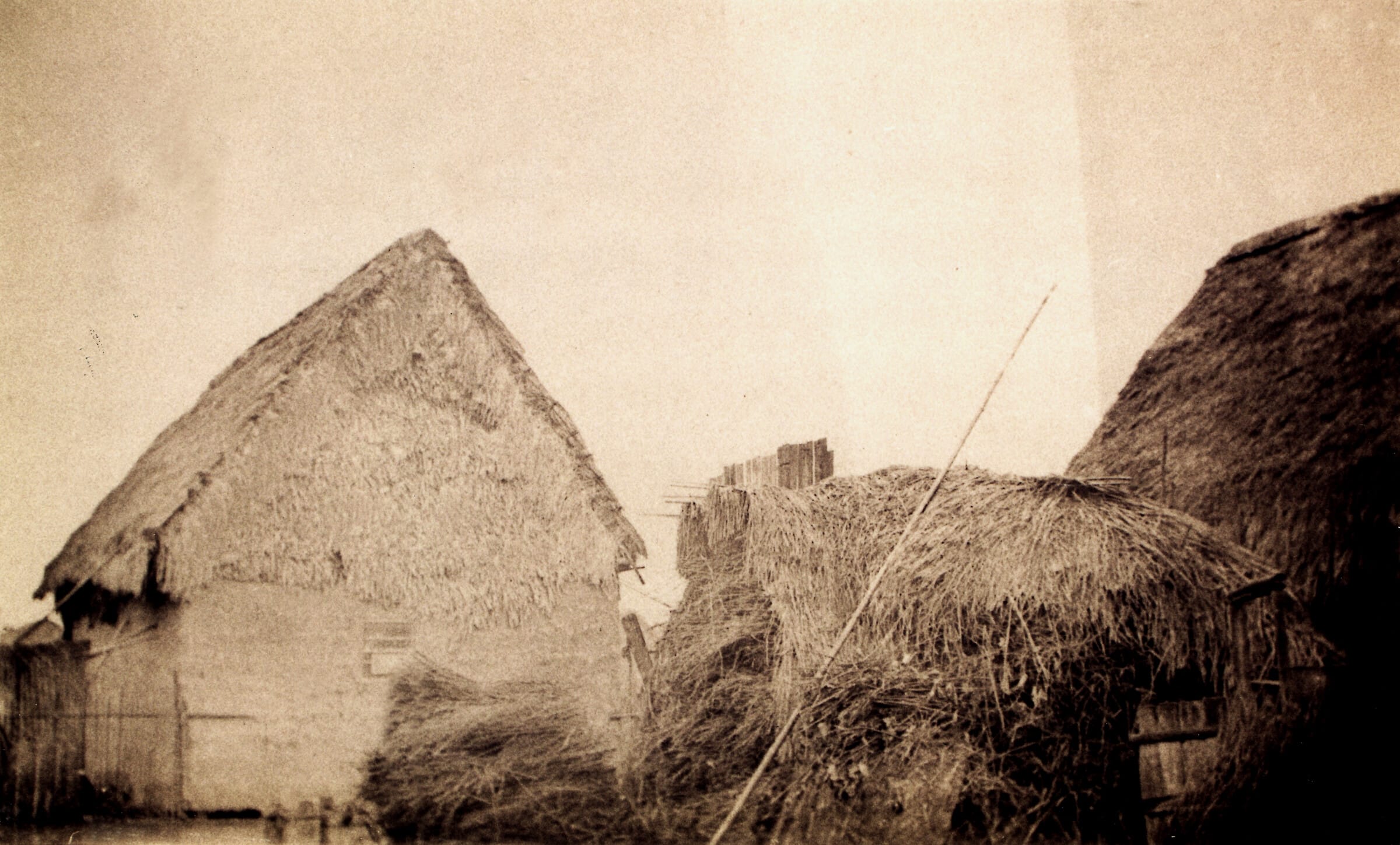
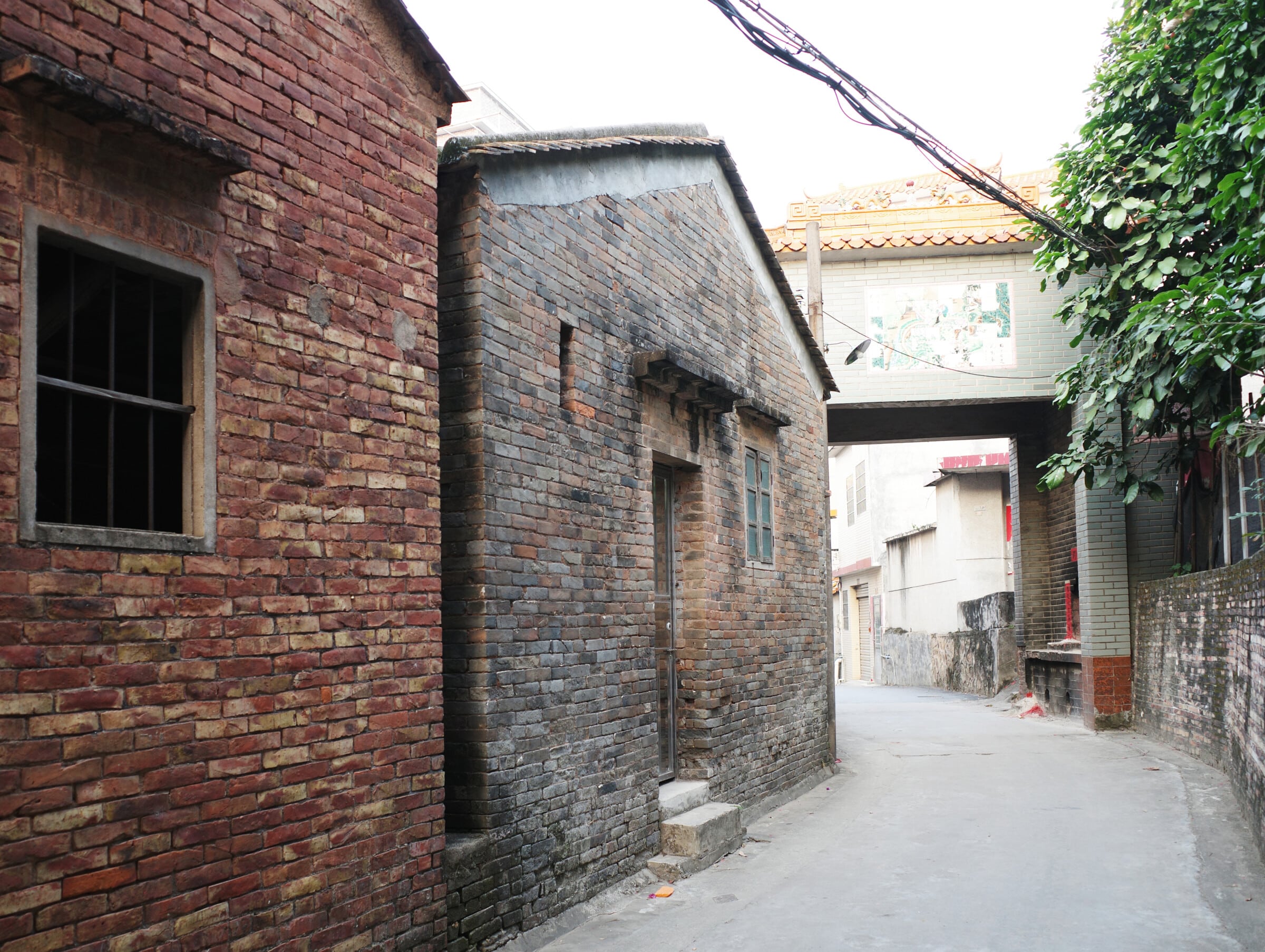

Such deaths were lonely, and sometimes gruesome. The Comb Sister Madam Huang Hekui hauntingly described what she was told of her aunt’s passing:
In the early past, the life of a Comb Sister in her later years was very miserable, especially when she was close to death and not allowed to die in the village. She would be carried out of the village to a small shed by a fish pond. I heard from my father about an aunt of mine who, when old and near death, wasn’t allowed to die in the village. Her family built a small shed by the pond outside the village, carried her there, and left her alone to wait for death. No one took care of her until she passed away. It was my father who paid for her coffin and burial. 32
The taboo extended to the unmarried woman’s spirit tablet, the representation of her departed spirit written as her name. Placing a Comb Sister’s spirit tablet on the altar of her natal home was prohibited, such that unmarried women had no guarantee of the most basic rituals that assured their honor in the afterlife. 33 (A soul without a spirit tablet becomes a frightening, wandering ghost.) As the number of Comb Sisters increased, so did the urgency of addressing the problem of where and how they would die. All Comb Sisters needed a place to age, and a place to house their spirit tablet. No such place existed until the typology of the gupouk was born.
As the number of Comb Sisters increased, so did the urgency of addressing where and how they would die.
The oldest still-existing gupouk in the Canton Delta, Zhaoqing County’s Guanyin Hall, was not constructed as a gupouk, but as a temple. 34 Built in 1848, before silk industrialization, Guanyin Hall was gifted to Comb Sisters by an affluent sympathizer, Madam He Miaoye of the Qing Dynasty. 35 The temple was modified to create a communal residence, and ultimately housed several generations of Comb Sisters. Comb Sisters increasingly saw the necessity of securing a place like Guanyin Hall and began to design and build their own gupouks. Funds were gathered in a variety of ways. In some cases, Comb Sisters pooled their savings, and thriftily scavenged materials. In others, Sisters from wealthy families used inheritances.
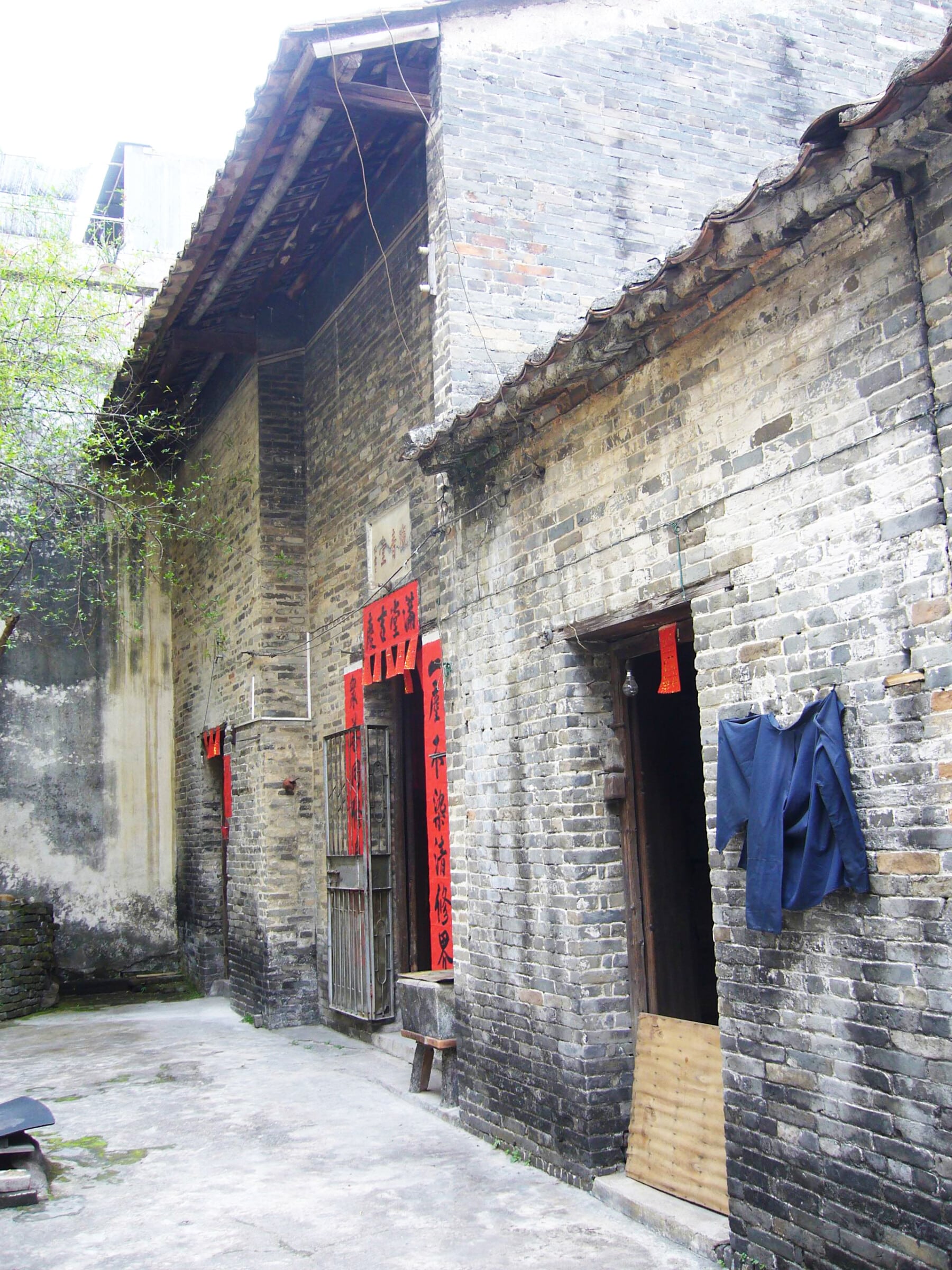
Gupouks were usually located beyond the village boundaries, so as not to flout taboos surrounding unmarried women. Their architectural style was in some ways consistent with typical 19th-century Cantonese residential buildings: constructed of wood and a gray-colored breathable brick mixed from riverbed silt; a gabled, tiled roof; a central courtyard surrounded on four sides. In other ways, gupouks were extraordinarily innovative, particularly in their flexibility. Most were much larger than a typical home, and all accommodated anywhere from ten to 100 women. The sleeping areas had no predetermined layout.
Gupouks were extraordinarily innovative, particularly in their flexibility.
Beds were often made by laying a board atop two wood benches, and were easily stacked, re-configured, or dismantled. The number of residents could expand or contract with very little inconvenience. The textile screens and mosquito nets used for privacy were similarly modular. It was expected that Comb Sisters would rearrange, decorate, or enhance their living quarters to their suiting, and also that their alteration could be undone, to make the space fresh for a new resident.
The downstairs communal areas, arranged around an open courtyard, were accessible from many directions, and lit by natural light. The Comb Sisters I spoke to remember airiness and order. There was often an outdoor leisure area, and a garden where herbs and vegetables were grown. At Good Virtue Hall in Nanhai County a series of smaller common rooms created space for pairs or trios of women who wanted to play cards, or socialize, or prep produce when the kitchen was full. Sometimes small backyard dwellings further expanded sleeping space.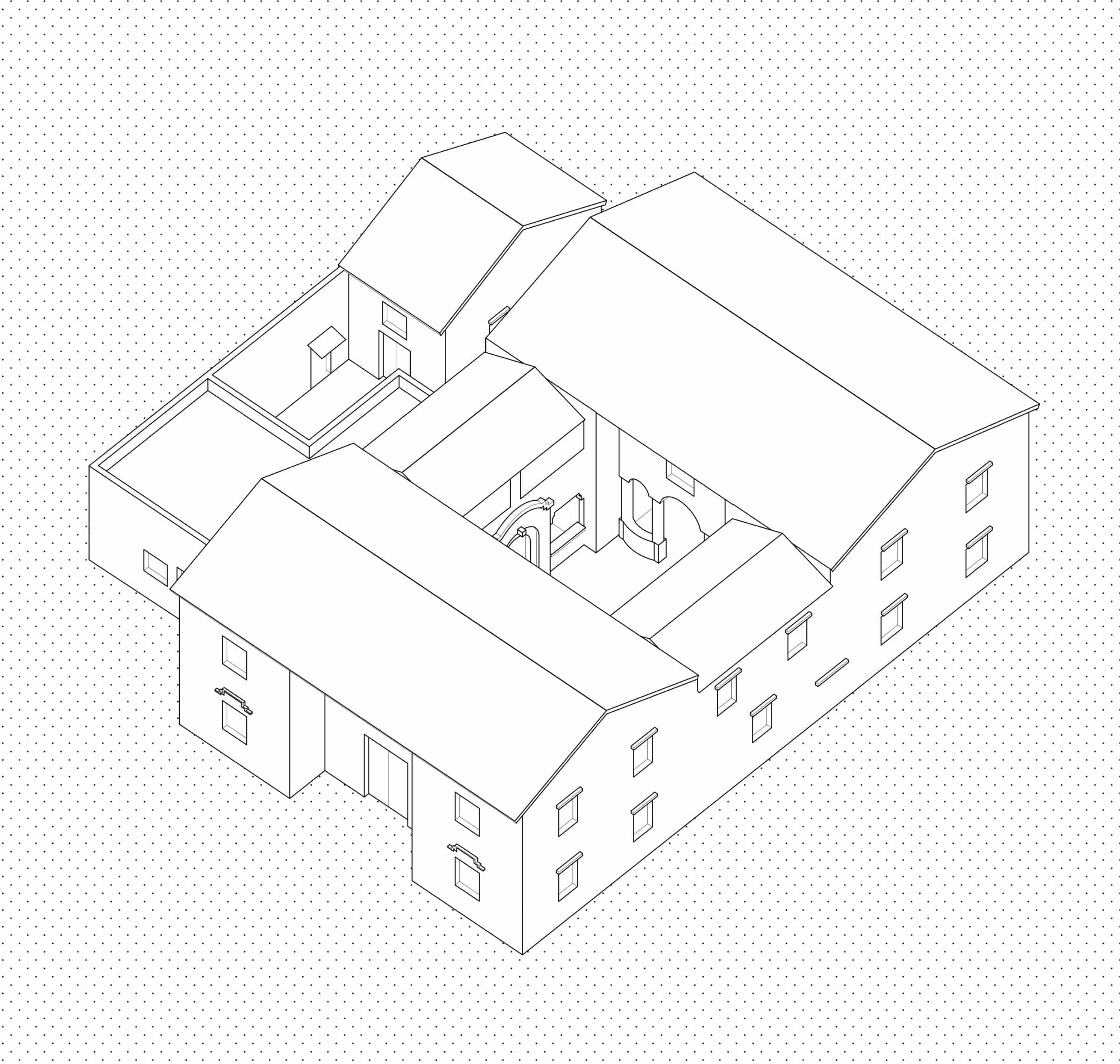
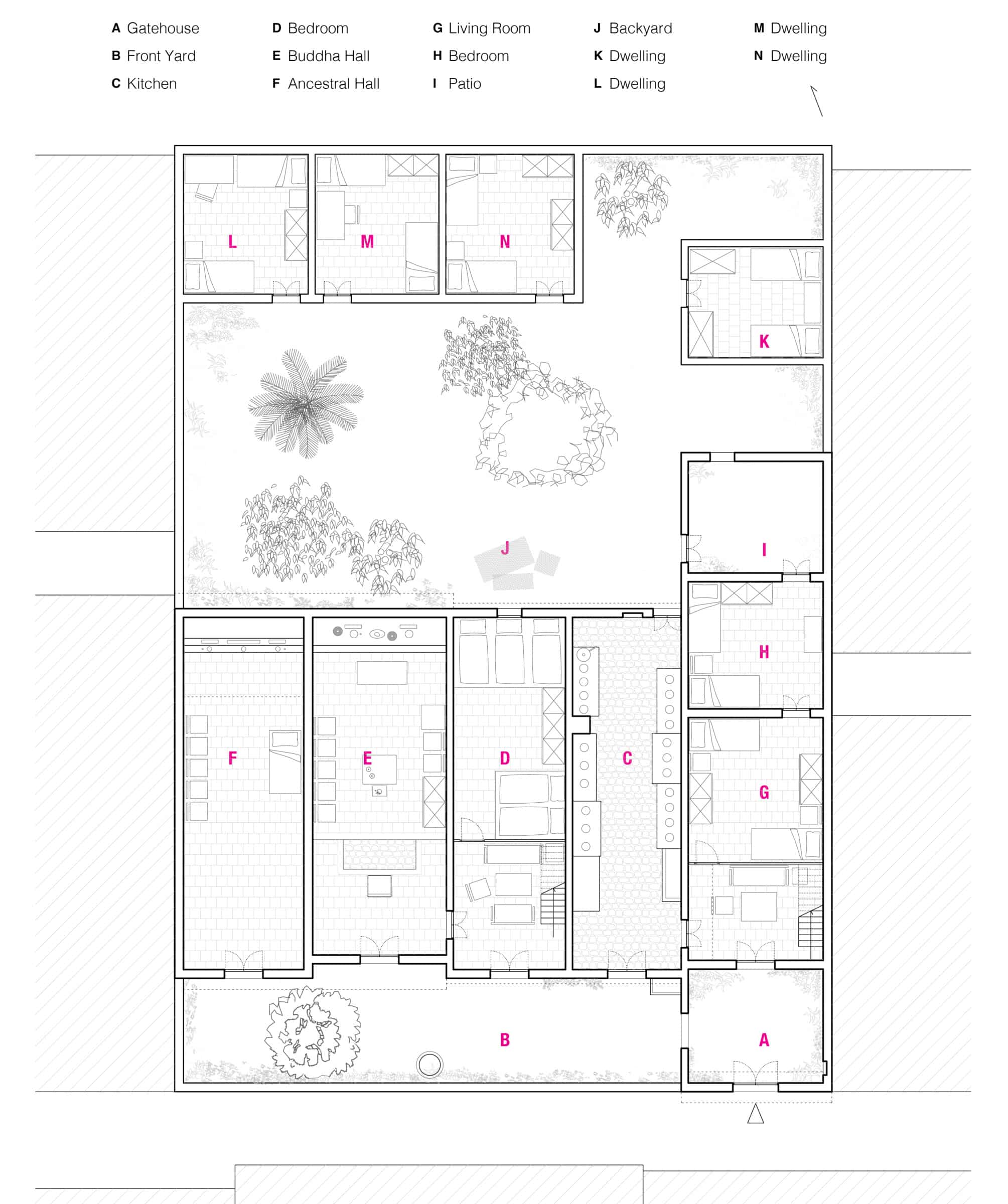
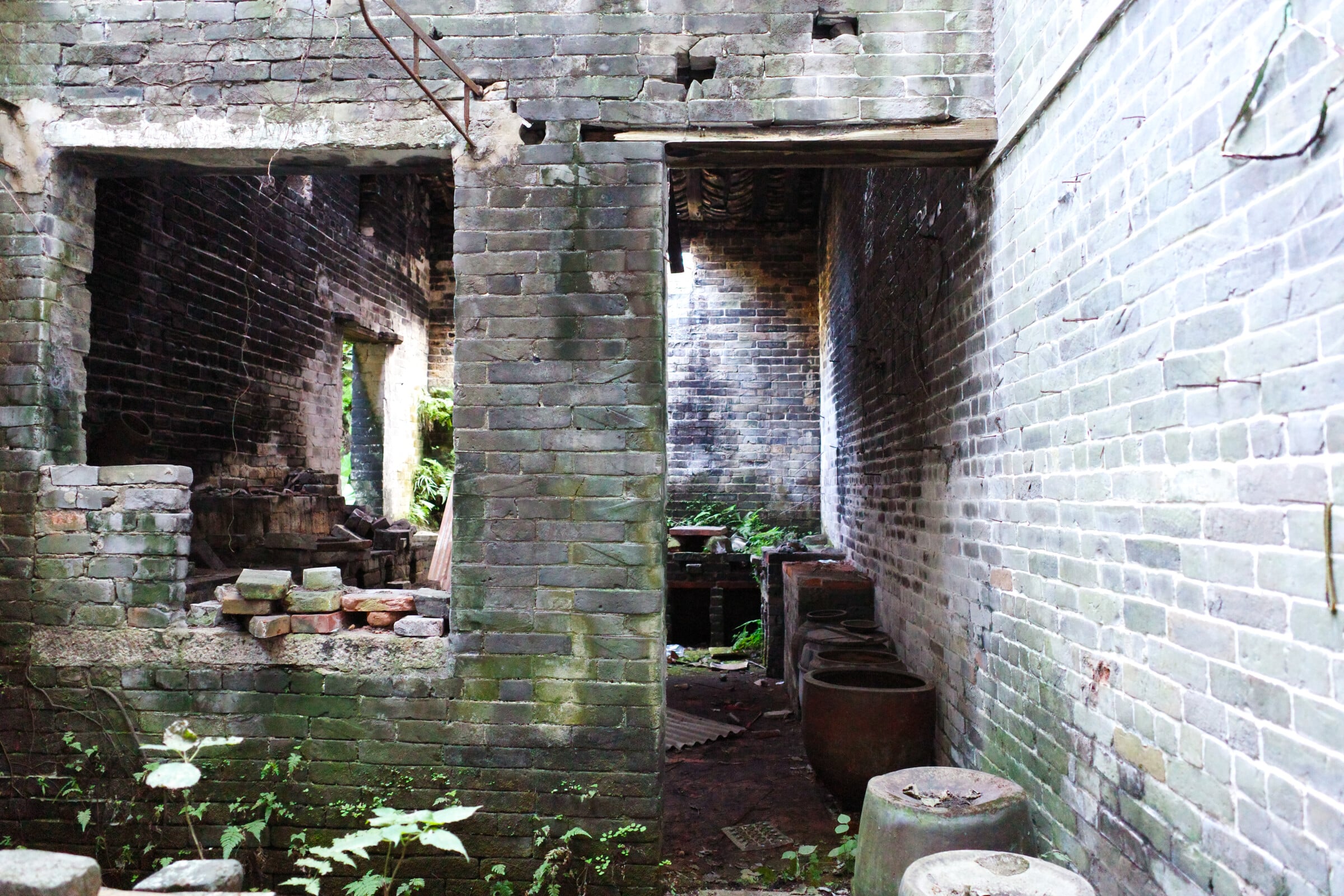
It was a communal living situation, and yet, not all was communal. Comb Sisters highly valued their autonomy, and designed their environs accordingly. Gupouk kitchens, for instance, featured a separate work station for each resident, with its own stove, cookware, and countertop. “Earn your own money, cook your own food,” was a Comb Sisters saying. The kitchen at Good Virtue Hall was equipped with 30 stoves, though this was an unusual amount — there were more commonly around 20 stoves. As Madam Guan explained, “Everyone has their own taste preferences. Cooking one’s own meant not having to accommodate others.” 36 Many Comb Sisters were vegetarian, and I was told that they “were truly ingenious cooks, often using unexpected ingredients.” 37
‘Earn your own money, cook your own food,’ was a Comb Sisters saying.
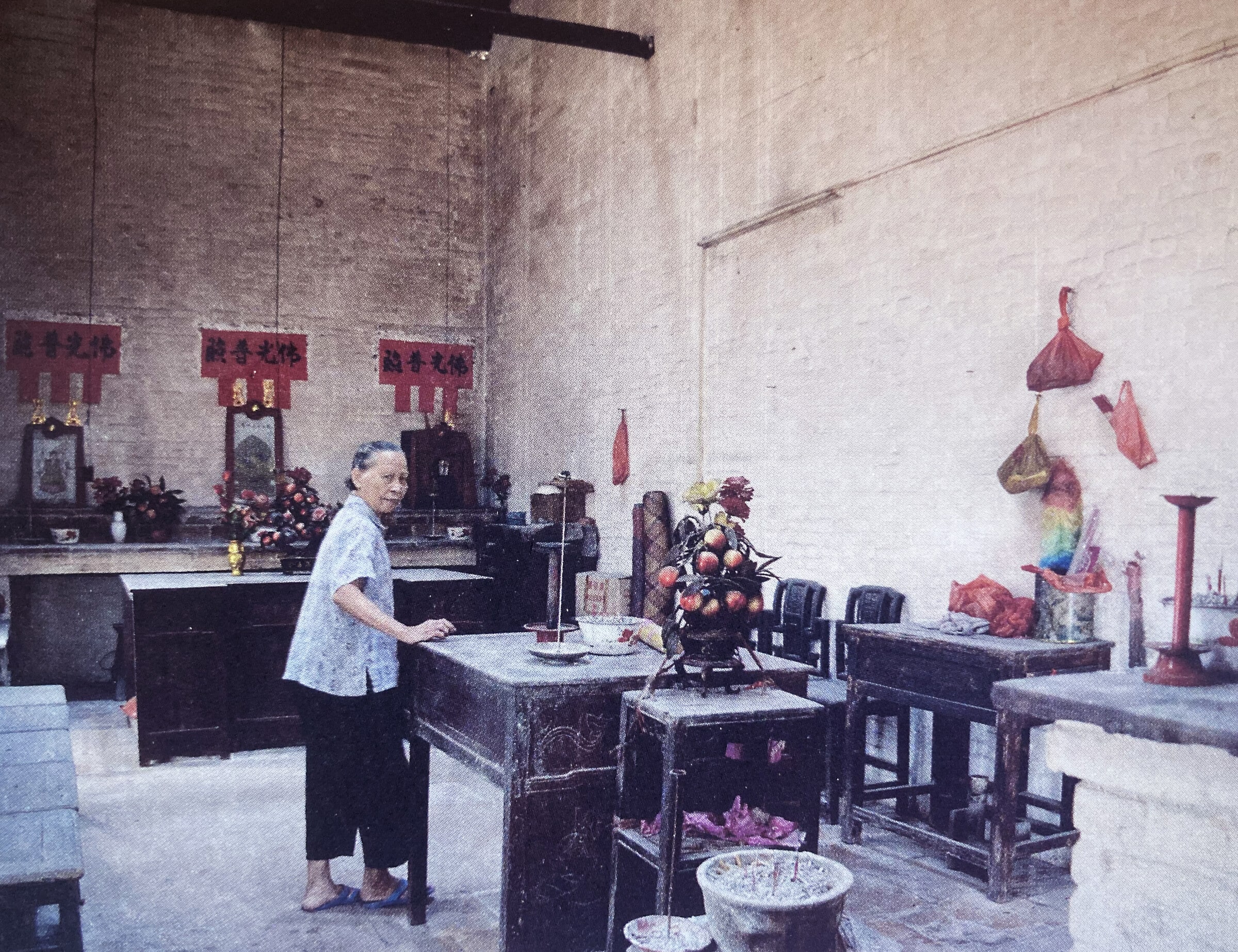
End-of-life care happened in designated areas. At Guanyin Hall, Comb Sisters cared for the dying in the Ancestral Hall, which was also where foremothers were worshiped. The rear wall featured a three-tiered altar, and displayed the spirit tablets. In the final moments of a resident’s life, her fellow Sisters would gather in the Ancestral Hall, along with the souls of Comb Sisters departed, who would accompany the dying woman on her last journey. A corridor served the same function at Good Virtue Hall. Elderly Comb Sisters who sensed death was imminent would wait in Good Virtue’s Long Live Hall, similarly surrounded by their Sisters. The Hall’s Eternal Lamp was kept alight through the night of a woman’s passing, to guide the soul’s onward travel.
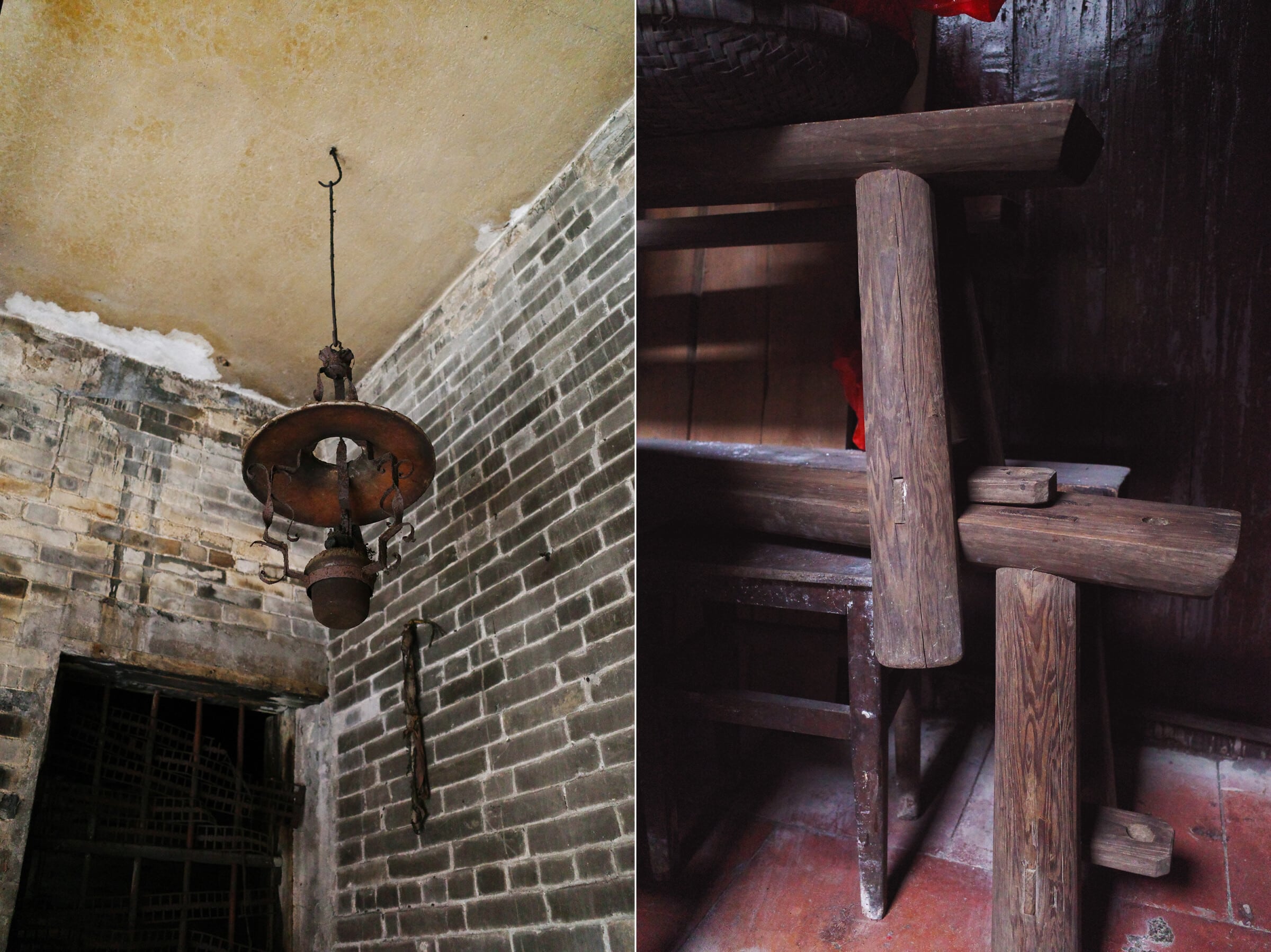
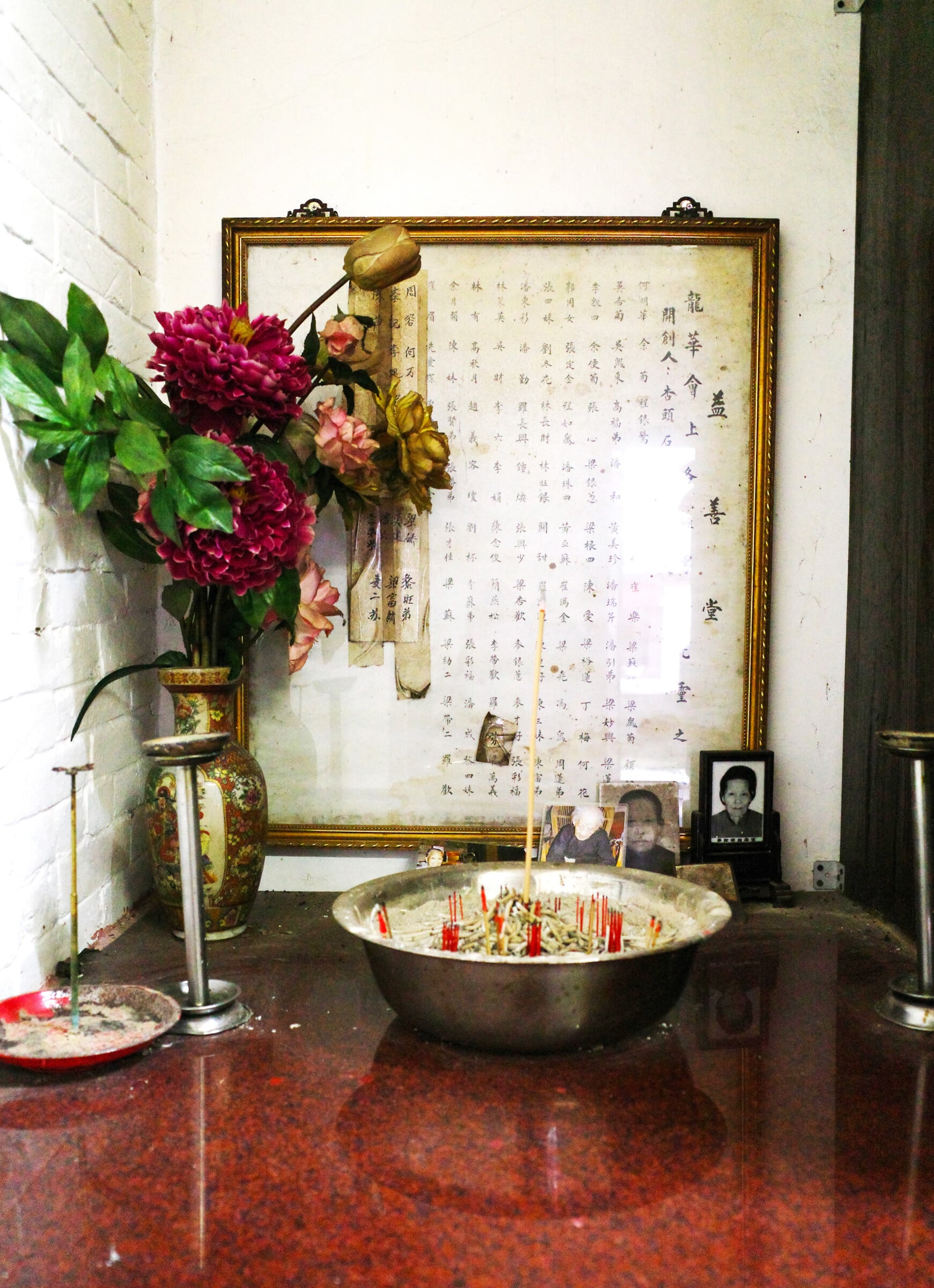
After a woman’s death, her Sisters would arrange the burial and establish a spiritual tablet to be permanently installed in the gupouk. 38 These tablets were dramatically different than was typical on the Canton Delta. Remember that in the usual arrangement, unmarried women were not represented on domestic altars; in the altars of the larger ancestral hall, which might serve a clan numbering in the hundreds, no women were represented, married or not. Spirit tablets in the ancestral hall were ordered following a strict genealogical diagram of patriarchal bloodline, with the oldest male ancestors placed on the highest rows and generational turnover plotted through sons. This organizational structure was obviously unsuitable to Comb Sisters, so they invented their own, in which women’s spirit tablets were placed in a line or grid, without any hierarchy. All Comb Sisters were deemed worthy of their own tablet, male lineage had no relevance, and no spirit tablet took precedence over any other.
Gupouks offered hospitality and companionship at all stages of life.
Comb Sisters typically joined a gupouk long before old age, on a buy-in basis. The cost for a spot varied; the ledger from Good Virtue Hall indicates that some women paid 50 Yuan, others 100 Yuan. In instances of financial hardship, jewelry was accepted in lieu of currency. These funds were then allocated for communal necessities, such as building maintenance. A ledger tracked all transactions and served as proof of a woman’s right to residency upon her return.
Reserving a spot in a gupouk was something like securing a place to retire, except that the stability of having a final resting place was especially significant for Comb Sisters, whose lives were otherwise unconventional and vulnerable to cultural prejudice. Although gupouks offered Comb Sisters hospitality at all stages of life, they were most valuable, in the words of a former gupouk housekeeper, as a “final destination.” 39 When a Comb Sister transitioned out of the workforce, she relocated to her gupouk and spent the rest of her days in Sister companionship, secure in the knowledge that she and her spirit would be taken care of.
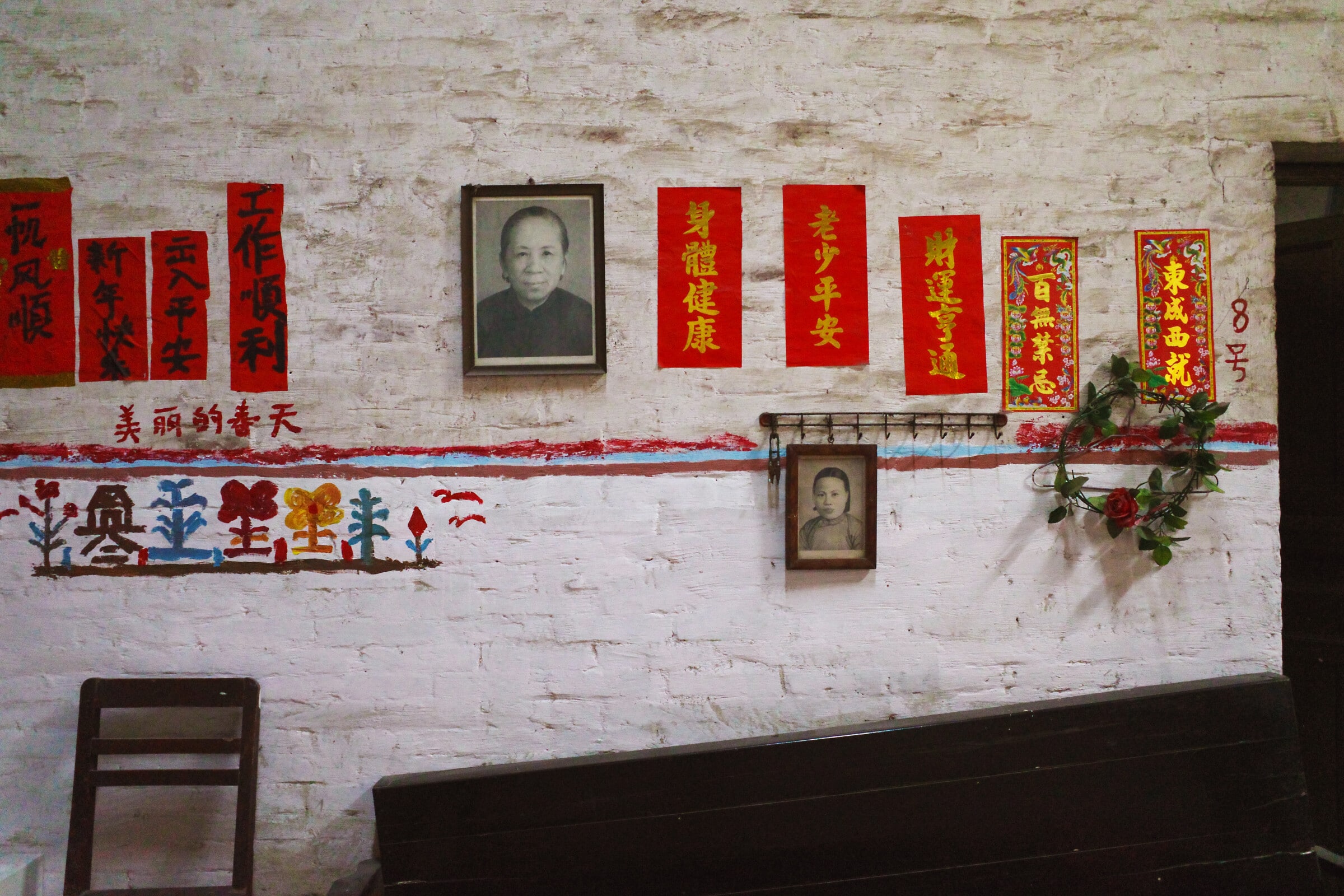
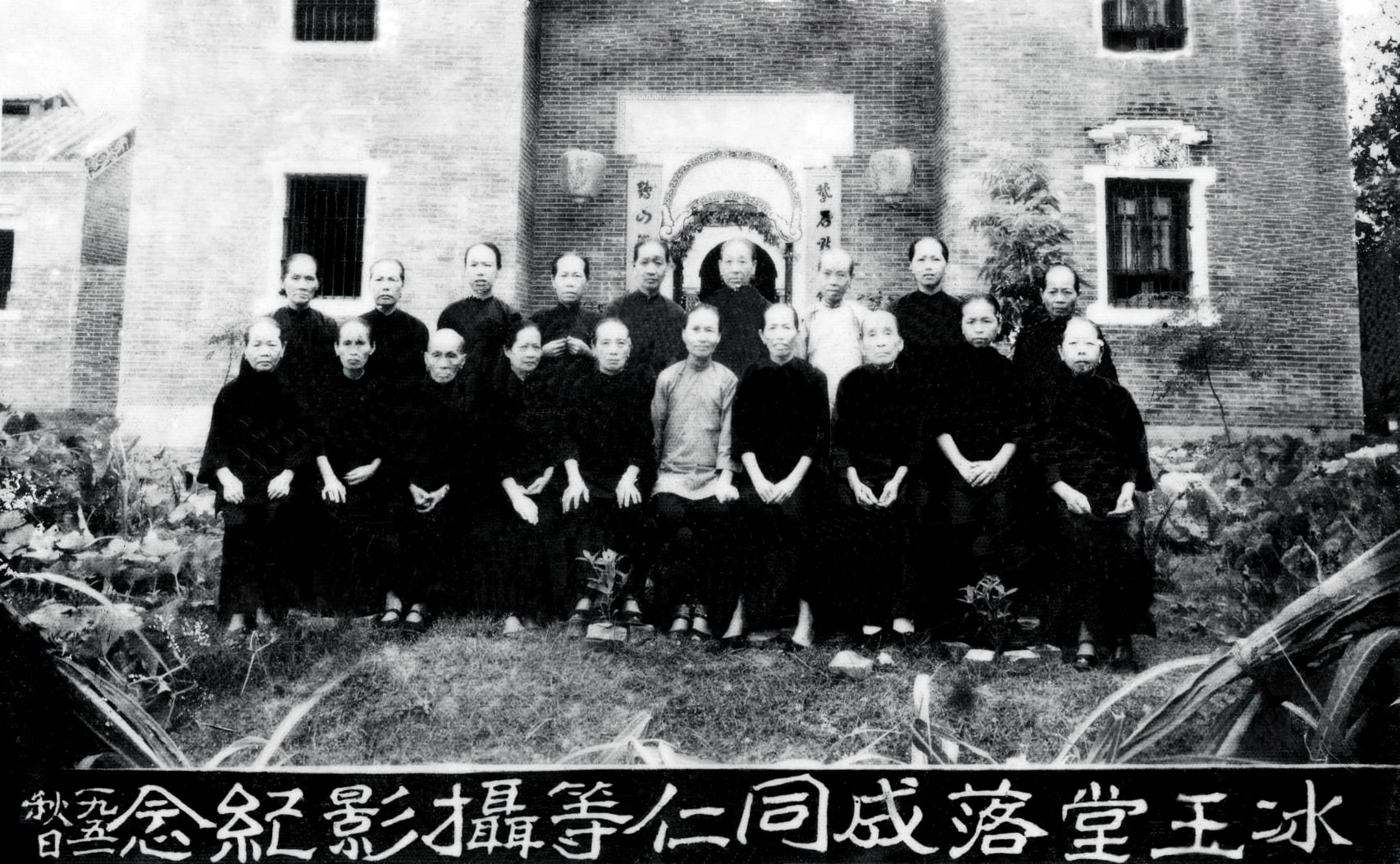
Some gupouks were akin to friendly boarding houses, but others featured more elaborate kinship-like structures. The Comb Sisters at Guanyin Hall, for instance, organized themselves into a series of subgroups or fongs. Each fong included several junior members guided by one senior mentor. 40 Securing a senior “sister” as sponsor was a prerequisite of the Combing Up ceremony. The younger sister would pledge respect to her mentor, who in turn promised to impart essential skills via an apprenticeship, thereby ensuring the younger sister’s livelihood and independence. 41
The mentorships were often more mother-daughter than teacher-student.
These mentorships could be very familial — more mother-daughter than teacher-student. Guanyin Hall Comb Sister Madam Hu Ernü, for instance, learned her livelihood from her mentor Si Jie, whom she called both her “godmother” and her “master.” Another Comb Sister of Guanyin Hall, Madam Wu Amei, was mentored by her paternal aunt, whose decision to become a Comb Sister influenced her own. Sometimes sleeping arrangements followed the fong organization, as did primary responsibility for care of elders. Creating smaller subgroups within the gupouk collective ensured that each Comb Sister enjoyed both the pleasure of a broad community, and the intimate ties of chosen kin.
The public heart of the gupouk was the Main Hall, where the Buddhist goddess Guanyin was worshiped. Widely revered in the Canton Delta, Guanyin is known as the Goddess of Mercy. She represents wisdom and compassion, though her significance to the Comb Sisters is due to her backstory. According to regional interpretations, Guanyin refused to marry, angering her father to the point that he killed her. Later, she returned to the world having achieved enlightenment, despite her unmarried status, such that her refusal of marriage is revealed to be a spiritual decision of the highest order. A scholar tells Guanyin’s story:
When Miao-shan [Guanyin] reached the marriageable age, however, she refused to get married. …The king was greatly angered by her refusal and punished her harshly … with the aid of gods, she completed [her punishment], she was allowed to go to the White Sparrow Nunnery to undergo further trials in the hope of discouraging her from pursuing the religious path. She persevered, and the king burned down the nunnery, killed the five hundred nuns, and had Miao-shan executed for her unfilial behaviour. While her body was safeguarded by a mountain spirit, Miao-shan’s soul toured hell and saved beings there by preaching to them. She returned to the world … and achieved enlightenment. 42
A Comb Sister explained to me how this narrative resonated within the Comb Sister community. 43 It legitimized a woman’s right to be single, portrayed the father’s judgement as cruel and barbaric, and linked the decision to not marry as stemming from integrity and religiosity. 44 The Comb Sisters believed themselves like the goddess Guanyin, in that they took pride in their unmarried identities. 45 Most gupouks housed their statue of Guanyin at the center of the main hall, offering incense and prayers daily. The oaths of the Combing Up ceremony — to commit to a life of celibacy, and to actively participate in the Comb sisterhood — were usually taken in front of the statue.
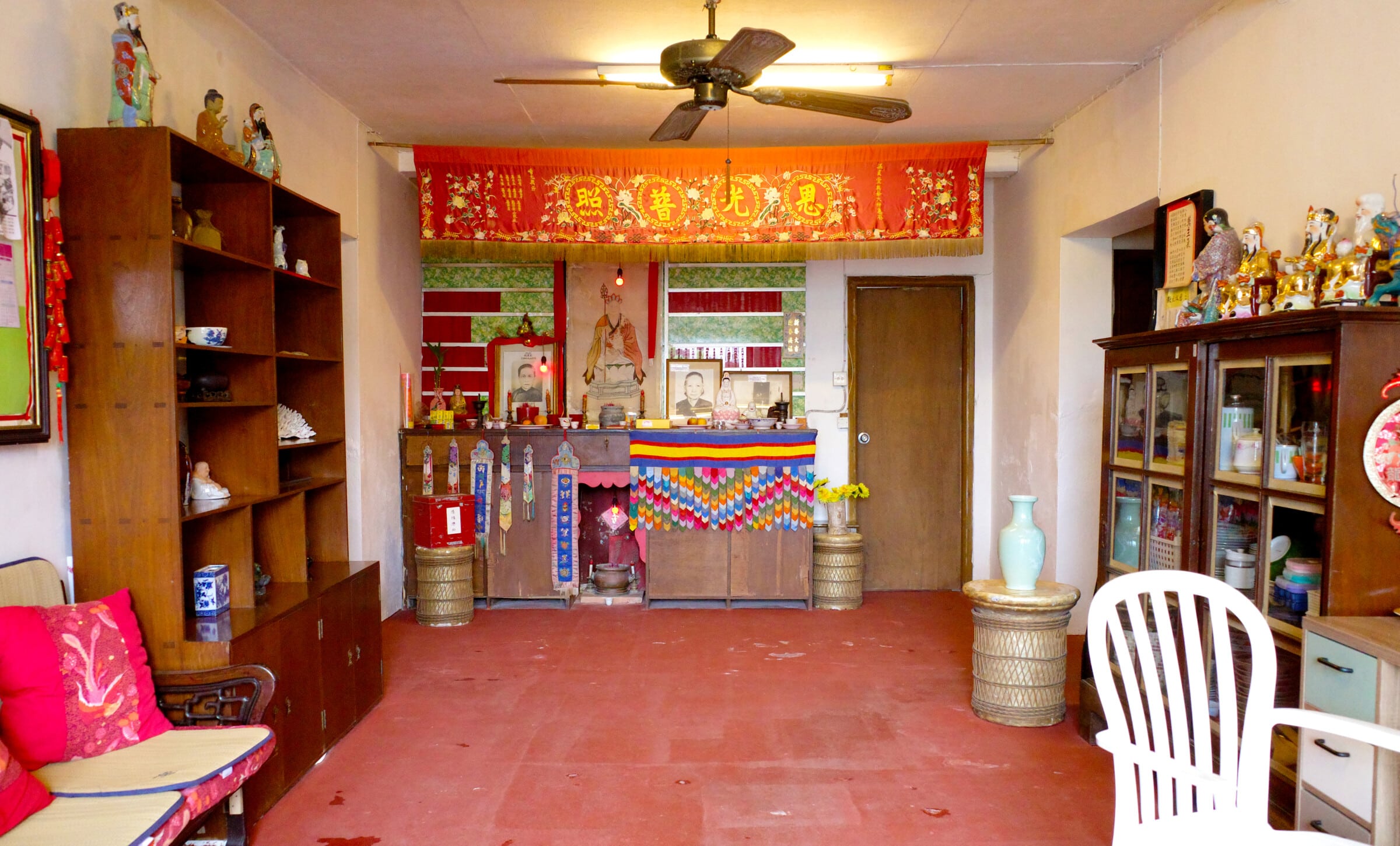
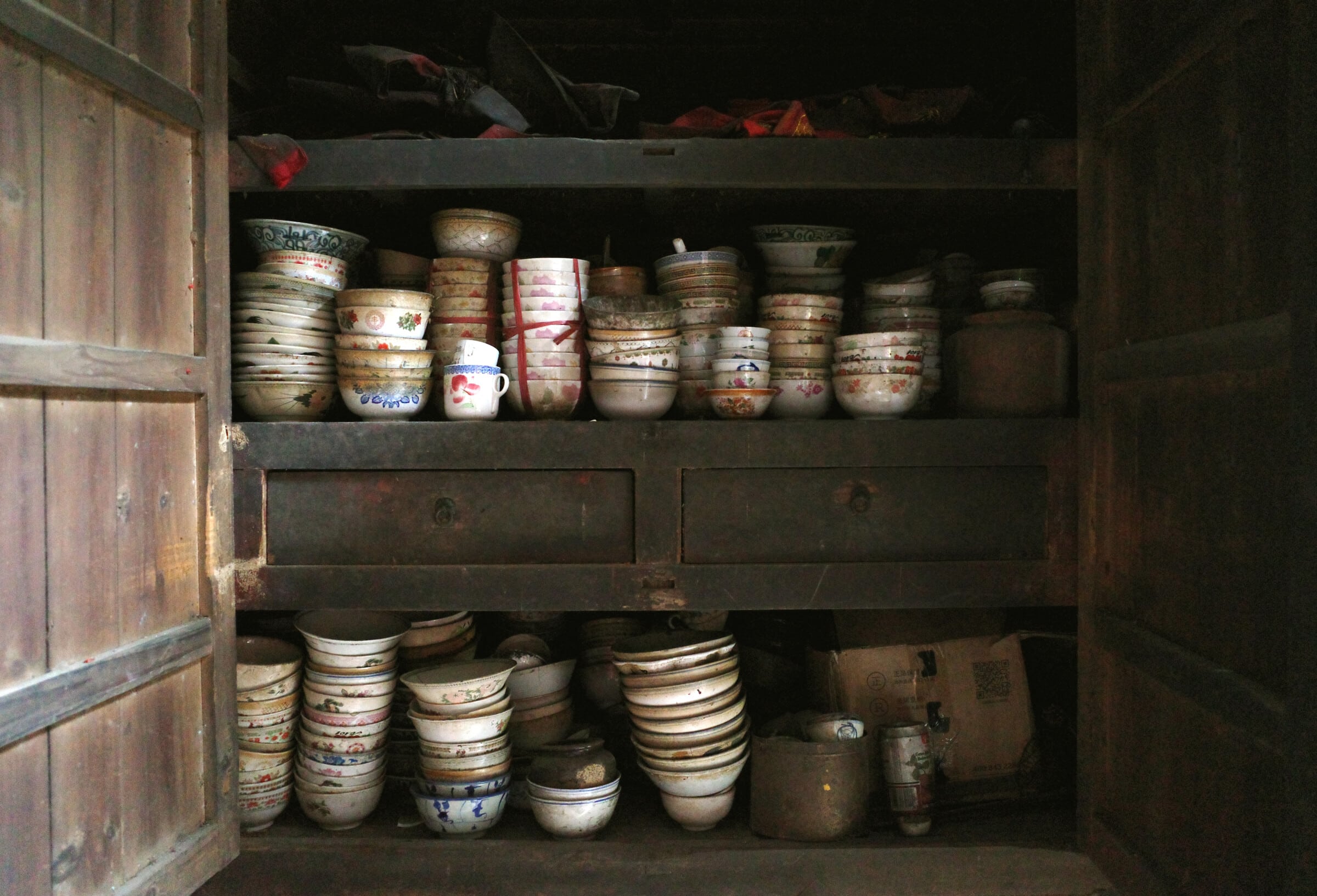
Because Guanyin was also worshiped in the Canton Delta in general, shared admiration of the goddess tied Comb Sisters to their local communities. For instance, on Guanyin’s birthday, most gupouks used their courtyard to host a vegetarian banquet for friends, neighbors, and family. These social gatherings were widespread among the sericulture counties and are fondly remembered. There is a common misconception that Comb Sisters were isolated hermits, but the hospitality of these lavish annual dinners suggests otherwise.
South China’s silk industry collapsed in the 1930s following a global economic recession. The price of Chinese silk in the New York market fell 44 percent between 1930 and 1932; by 1934, prices were a third of what they’d been at the start of the decade. The Canton Delta’s 200 filature factories precipitately closed, one after another, until by 1935 there were only 21 left. 46 As employment became scarce, Comb Sisters were subject to intensified forms of oppression. Some were unable to find jobs in other industries, and became permanently unemployed. 47 Others migrated in search of work, usually from rural to urban areas, and sometimes to neighboring countries. 48
As employment became scarce, Comb Sisters were subject to intensified forms of oppression.
Most of the Comb Sisters in the diaspora worked as domestic servants in wealthy households as amahs or majie, but it was not an easy path. Single women entering the urban labor market faced significant gender discrimination, in addition to the fact that their migrations were generally not sanctioned by the Chinese government — the hukou system and its precursors stipulated that rural workers stay in rural areas. I interviewed three Comb Sisters who had lived and worked, respectively, in Singapore, Guangzhou, and Zhaoqing, and none ever secured the status of legal residents. They were effectively stateless for the majority of their working lives.


The other factor in the longevity of the Comb Sisters tradition was the New Marriage Law, signed into effect by the People’s Republic of China in May 1950. The law banned arranged marriage and forbade hair-combing ceremonies; women and men ostensibly entered marriage as equals. Although the conditions of married life remained stifling and exploitative to many women, the original rationale for becoming a Comb Sister dissolved, and their Combing Up ceremony was outlawed as “feudal.” It was still possible to become a Comb Sister after 1950, and many women did, but the numbers significantly dwindled.
I mapped and found evidence of 45 gupouks.
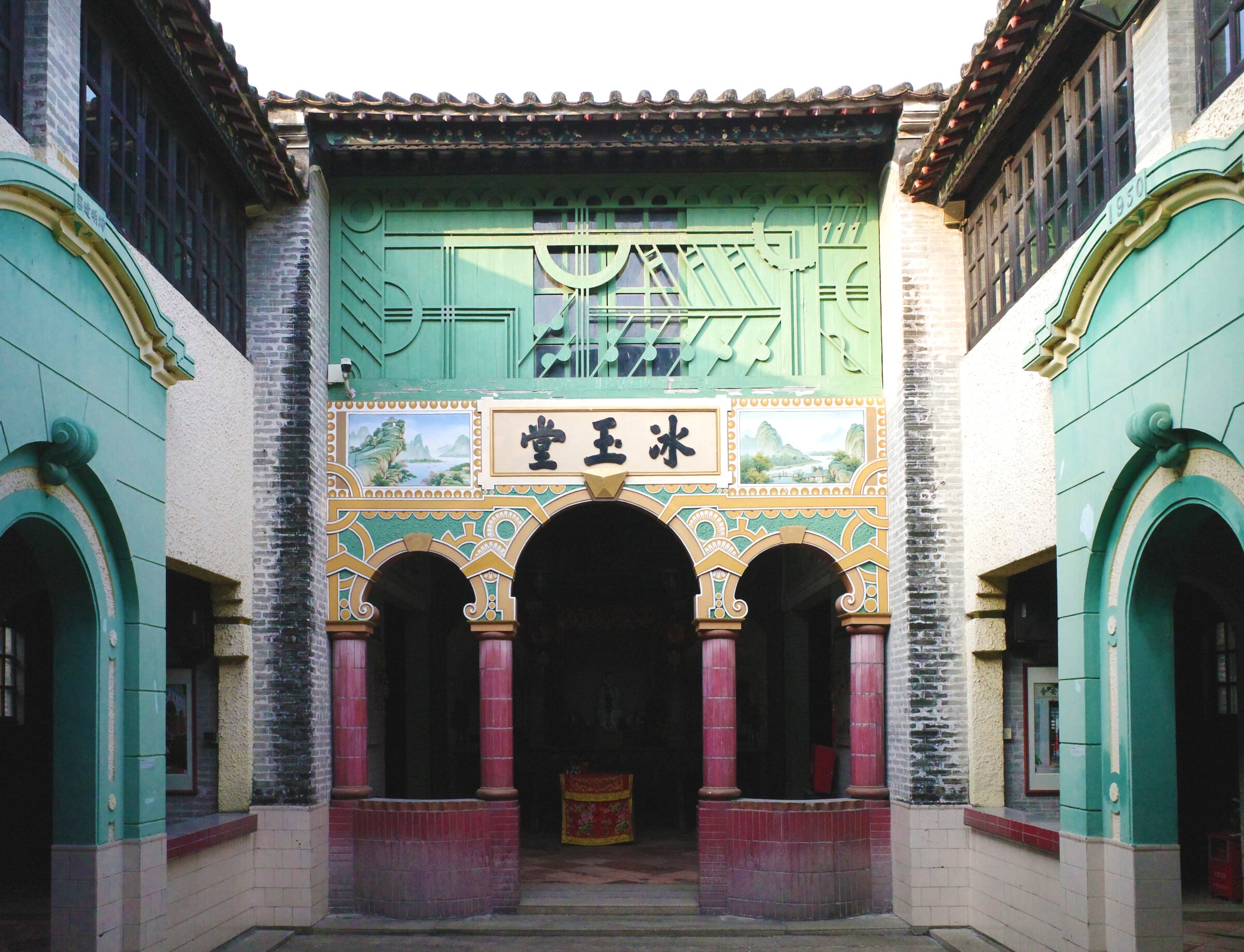
There are no Comb Sisters currently living in gupouks, though a few are still alive, and many gupouks are still standing. Using existing texts and on-site field investigation, I mapped and found evidence of 45 gupouks, twelve of which are dispersed through China, Malaysia, Singapore, and Vietnam, reflecting Comb Sisters’ migratory patterns and the nodes of their sisterhood, with the remaining 33 in the Canton Delta. 49 Aside from Ice Jade Hall in Shunde County, which has been made into a Comb Sister museum, these gupouks are vacant and in disarray. I found access extremely difficult. One gupouk burned down just weeks before I arrived. Another had been recently demolished and replaced by something else with no trace of what was there before.
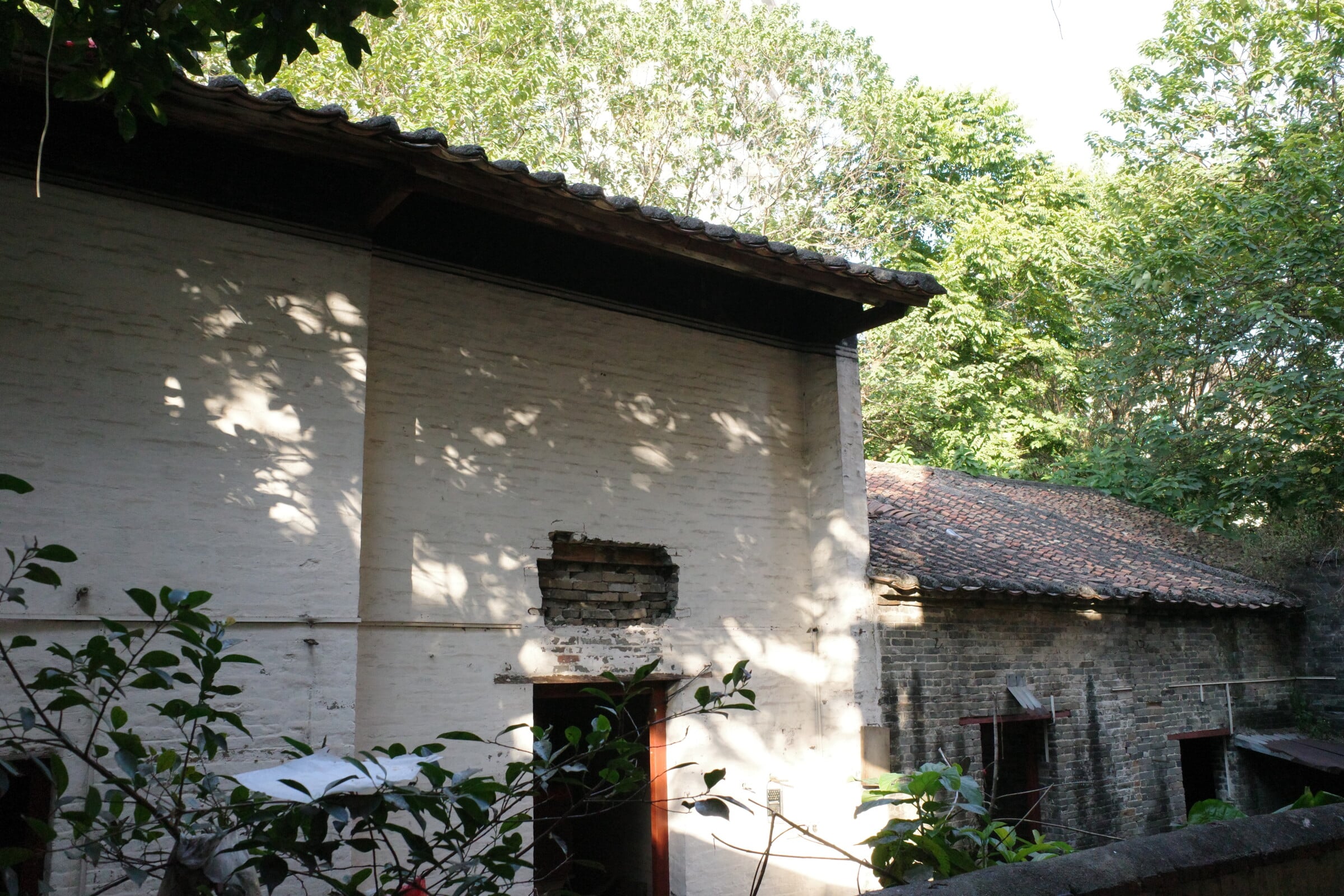

Guanyin Hall is in particularly dire straits. In 2005, real estate developers proposed transforming the riverfront on which Guanyin Hall sits into a series of modern residential houses. The project involved demolishing many old homes and alleys, including Guanyin Hall, which the developers specifically wanted gone. They believed that its presence would affect the marketability of their new development, even suggesting that the gupouk might exude an aura that would dampen the matrimonial prospects of young women who lived in the neighbourhood. 50 At the time, there were about ten Comb Sisters still living at Guanyin Hall. Fearful that the developer’s plans would be approved, they considered relocating the structure, and even moved some bricks to a new site. 51
Today, Guanyin Hall is home to eight vagrants.
In the end, Guanyin Hall was not demolished, but abandoned. All of the surrounding buildings were razed, making the landscape desolate. The ten Sisters aged, and lacking security in their home and unsure of what would happen, they moved away. The number of Comb Sisters in the community dwindled until there was no group to gather. One Comb Sister who had lived near Guanyin but not inside remained as a caretaker, but then she was relocated to a resettlement housing complex when her house was demolished. Today, Guanyin Hall is home to eight vagrants. The iconic marble plaque, “Guanyin Hall, 1884,” gifted by a former mayor, was stolen, and the courtyard is filled with trash. The statue of Guanyin is still in its place, though someone now sleeps at the statue’s base. Guanyin Hall’s squatters are entirely unaware of the building’s history.
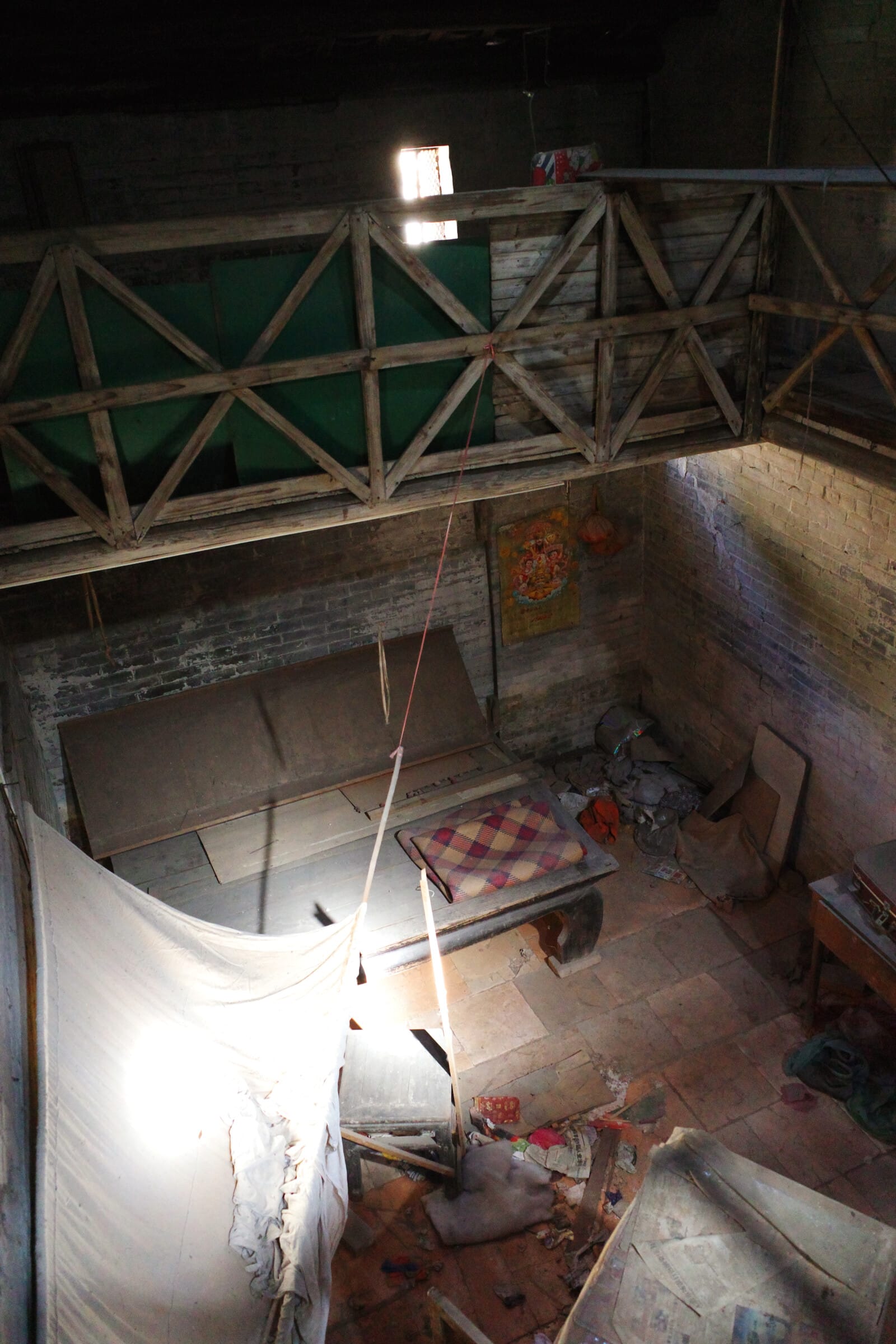
Abandoned bedroom of Eternal Hall, 2023. [Yingjia Tan]
The communal kitchen of Guanyin Hall, 2023. [Yingjia Tan]
Main Hall of Bright Joy Hall, 2023. [Yingjia Tan]
Secondary Buddha Hall at Good Virtue Hall, 2023. [Yingjia Tan]
Courtyard of Good Virtue Hall, 2023. [Yingjia Tan]
Bedroom at Good Virtue Hall, 2023. [Yingjia Tan]
Main Buddha Hall at Good Virtue Hall, 2023. [Yingjia Tan]
Front courtyard of Guanyin Hall, 2023. [Yingjia Tan]
Guanyin statue at Guanyin Hall, 2023. [Yingjia Tan]
Backyard of Guanyin Hall, 2006. [Deng Jie]
Courtyard of Ice Jade Hall, now restored as a museum, 2023. [Yingjia Tan]
Front entrance and Main Hall of Ice Jade Hall, now restored as a museum, 2023. [Yingjia Tan]
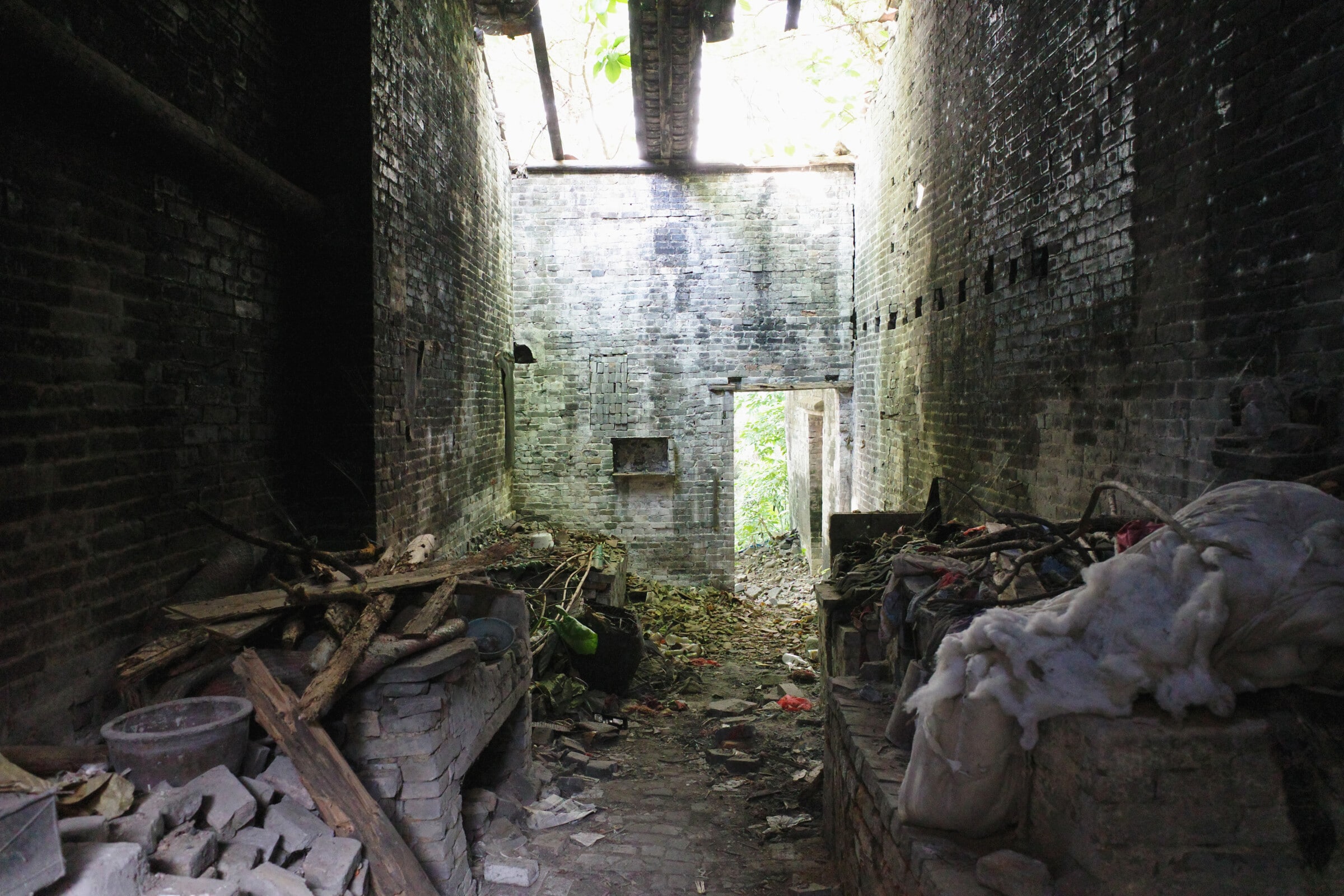
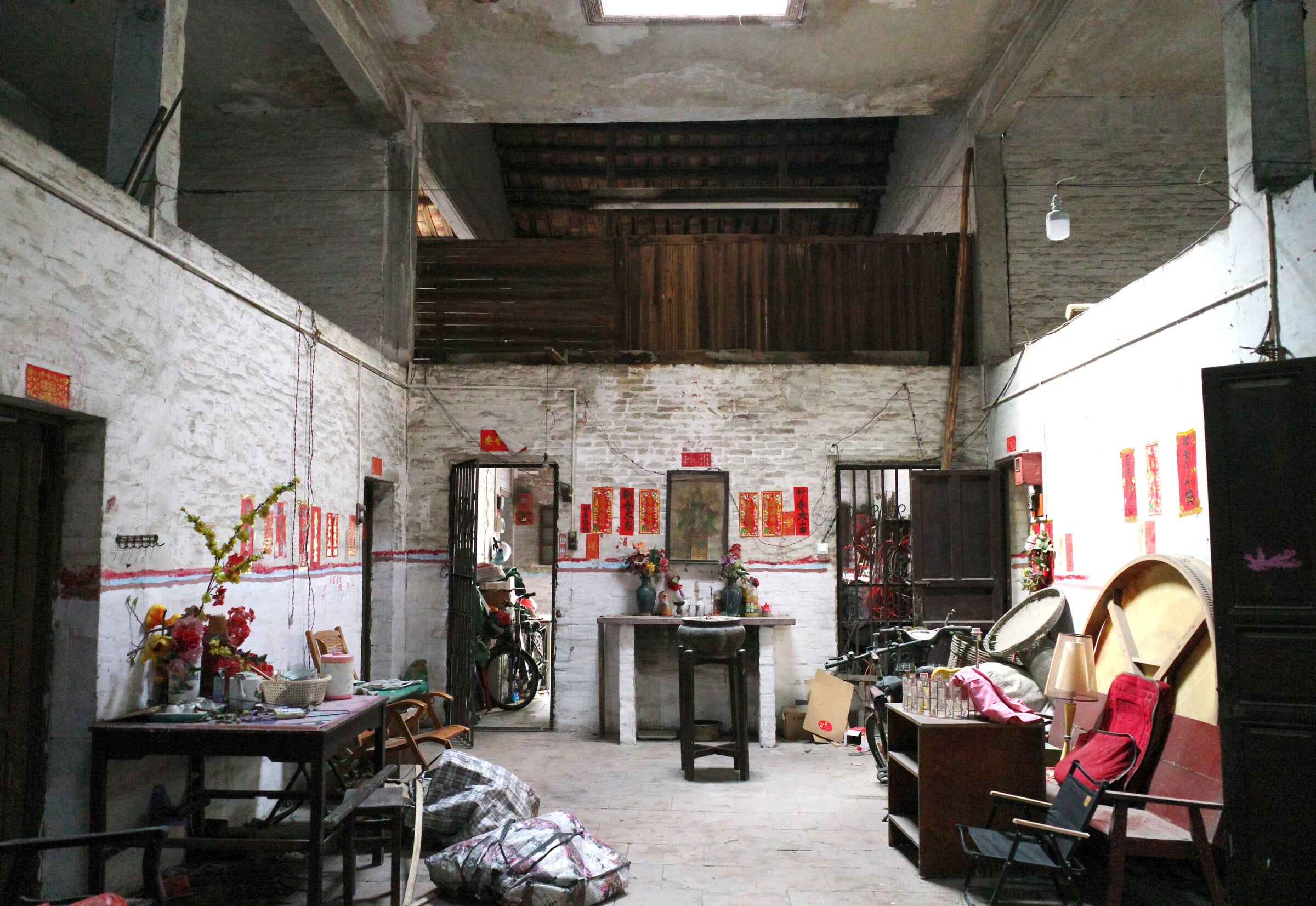
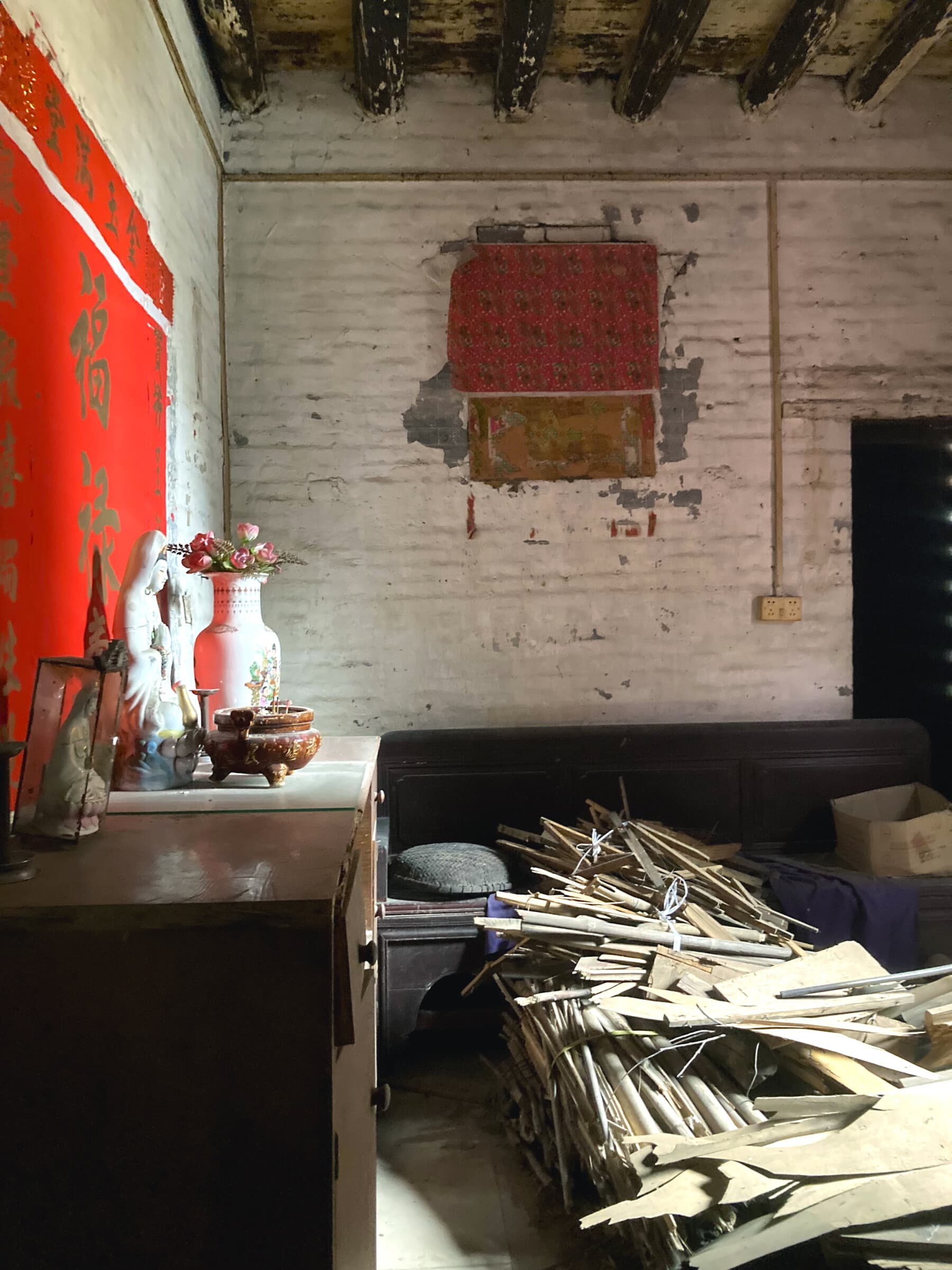
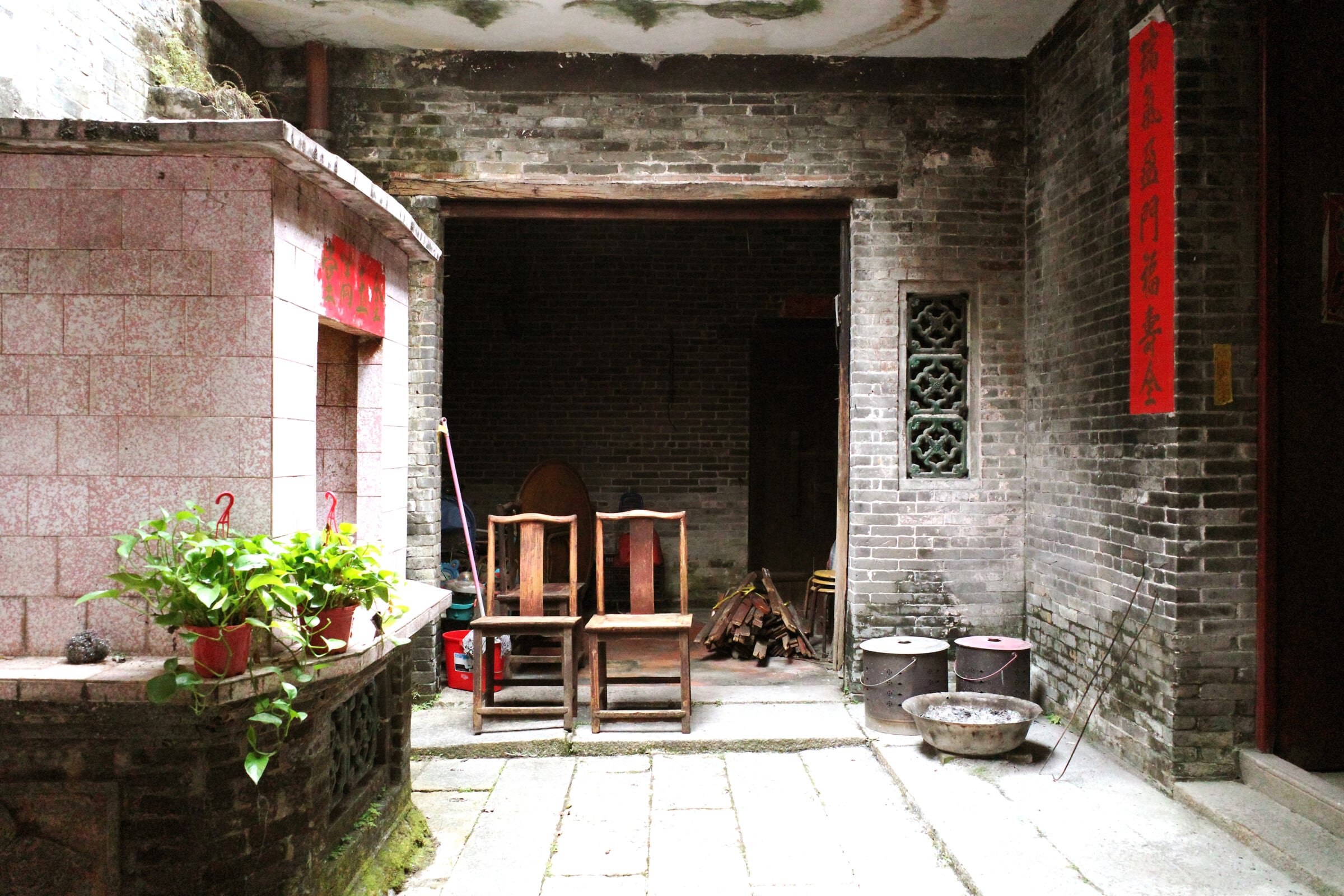
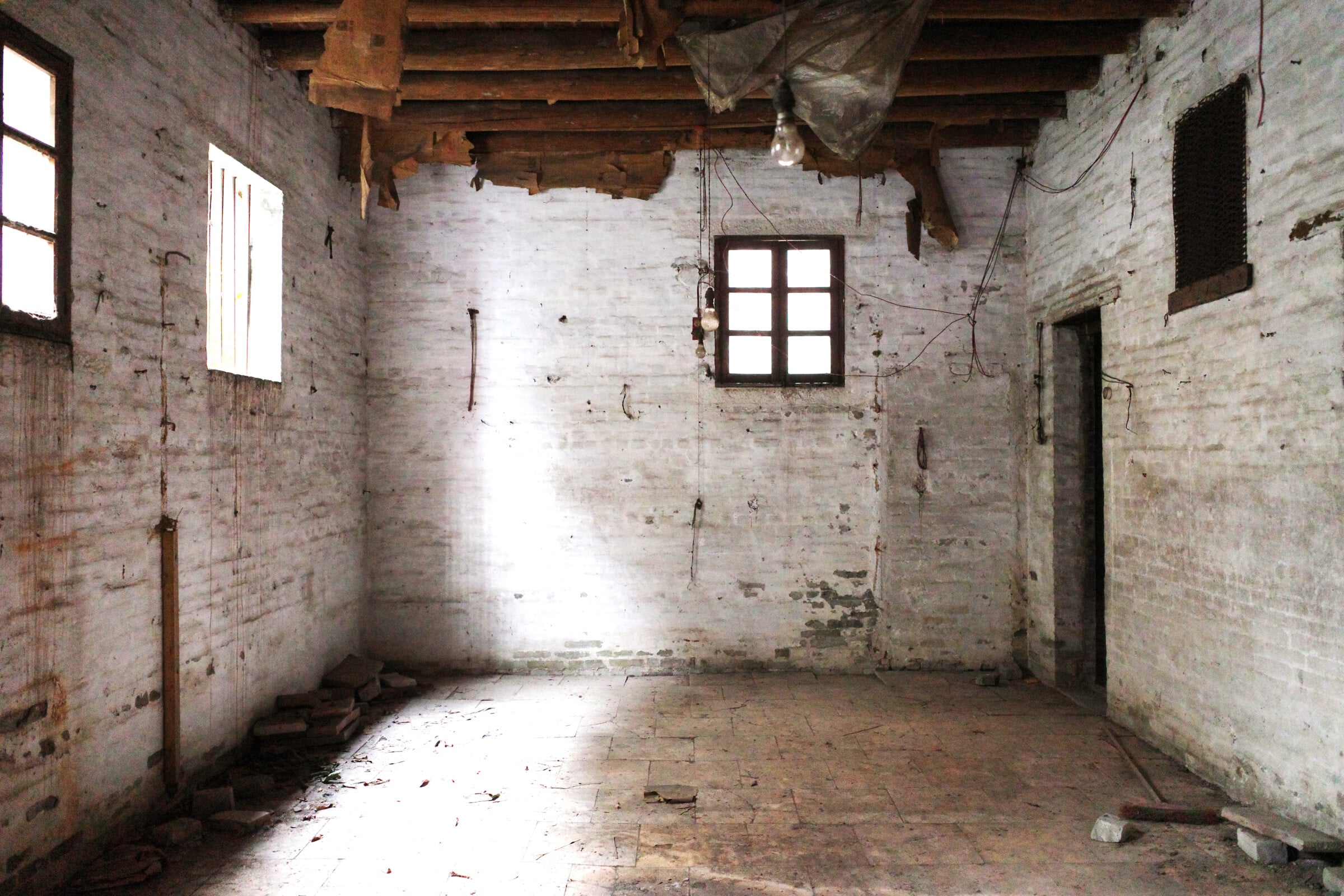
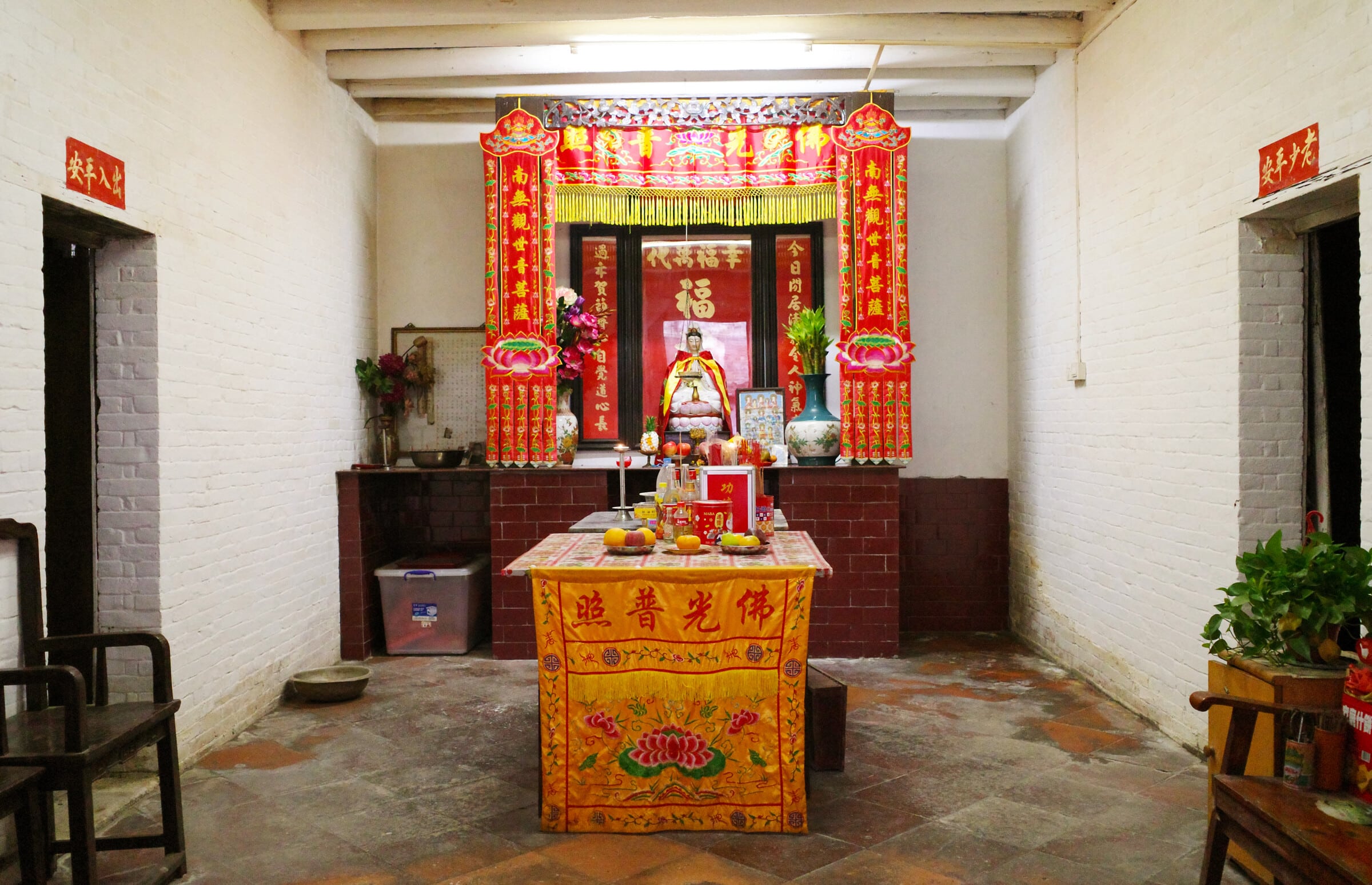
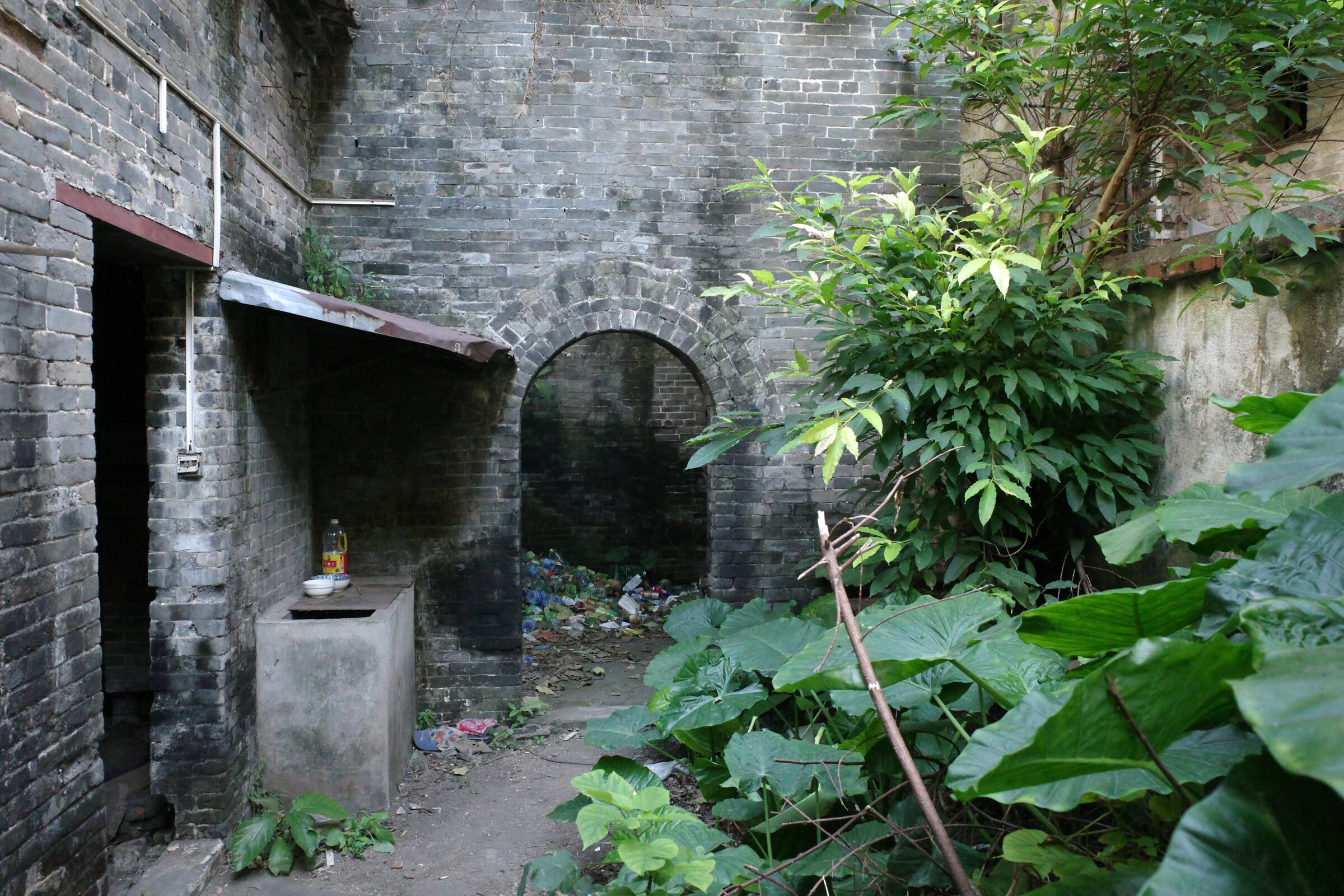
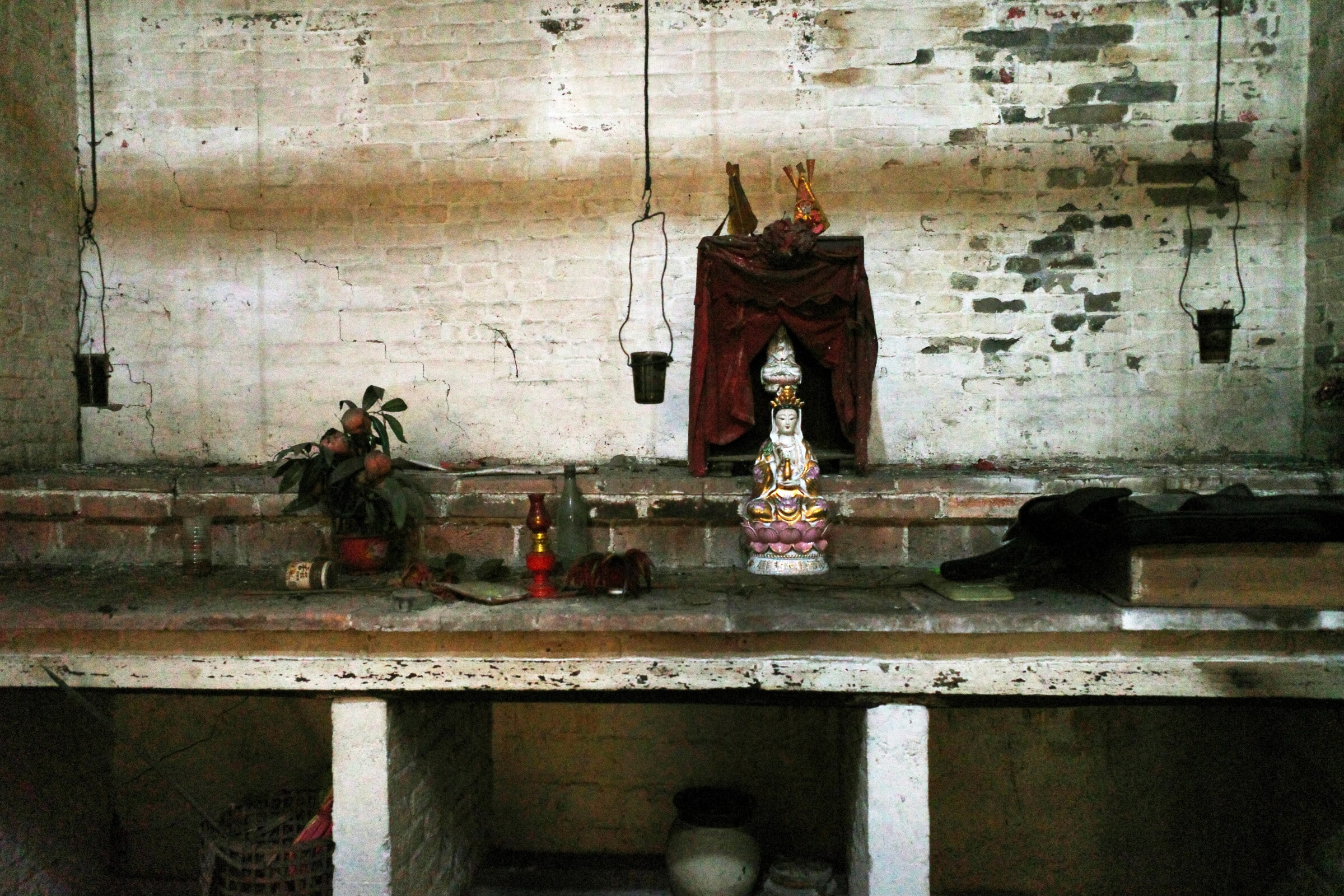
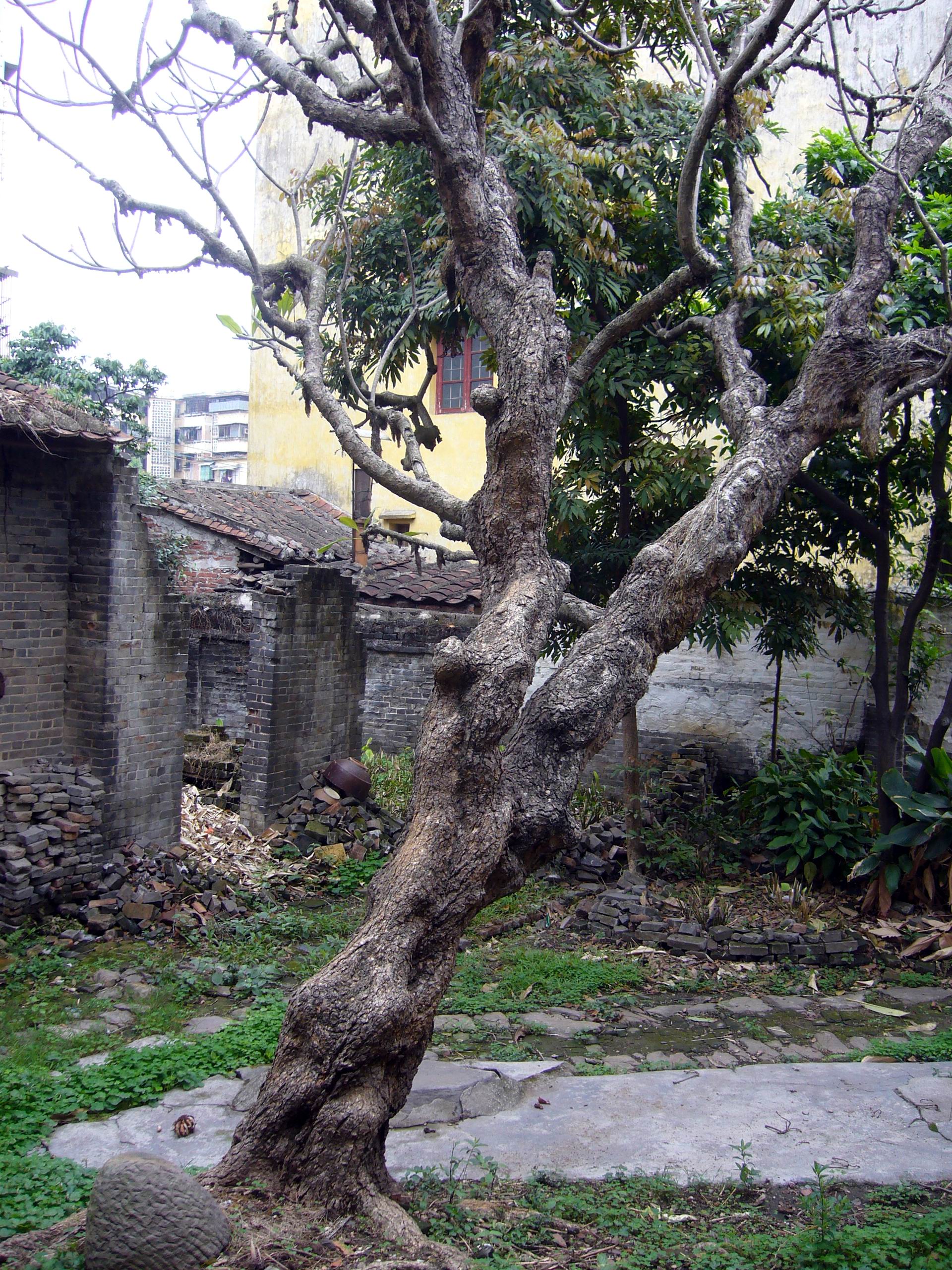
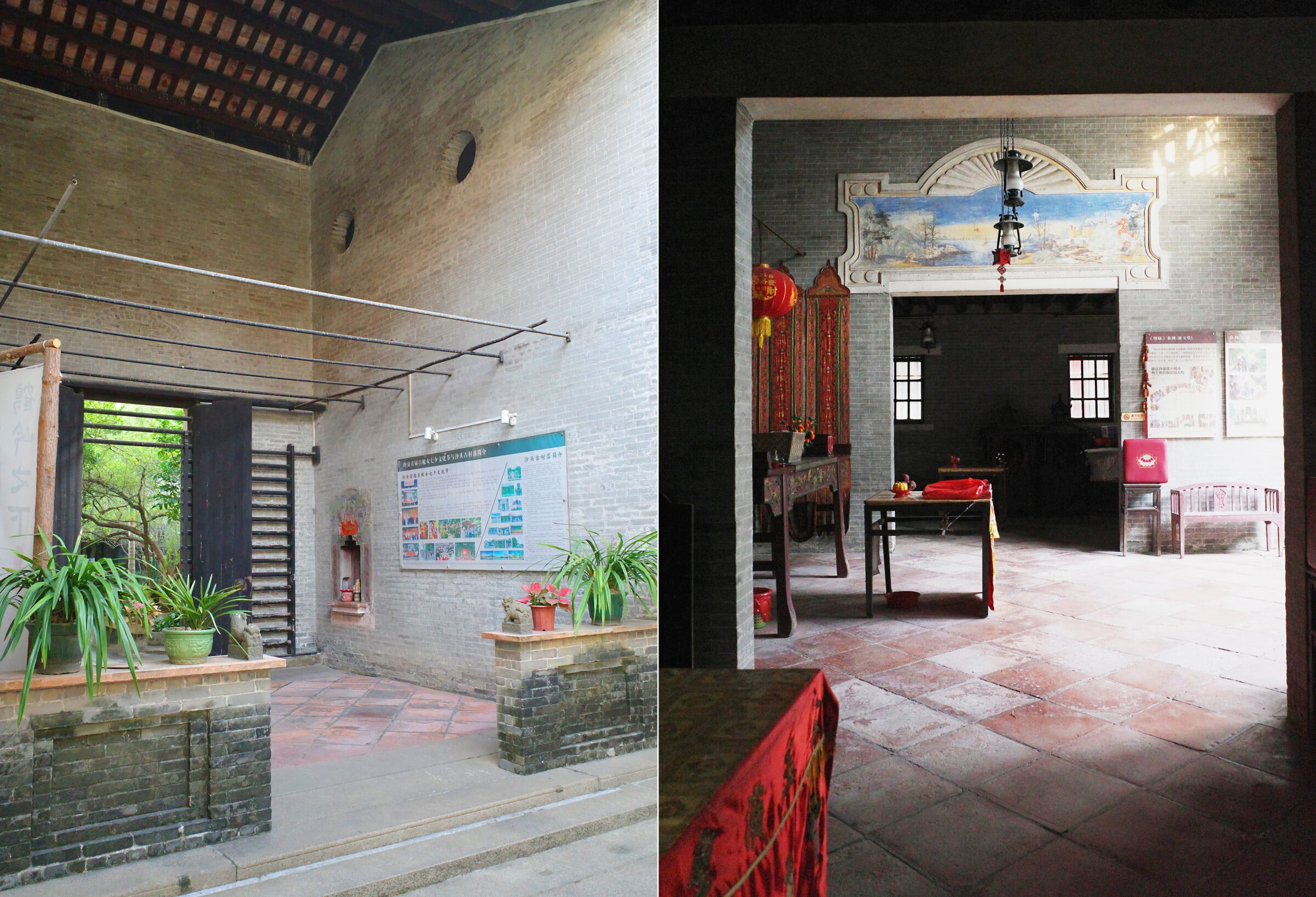
Good Virtue Hall has fared better, mostly due to the efforts of its guardian, Madam Guan Yanfen. 52 Madam Guan worked as a young woman in the 1980s at the nearby Nanhai Silk Factory. When a workplace brain injury affected her marriage prospects, she decided to follow the example of her spinster neighbors and become a Comb Sister. In 1998, she spent 1,000 Yuan to secure the final spot in Good Virtue Hall. 53 These days, Madam Guan lives across the street from the Hall. As part of her daily routine she visits to offer incense to the goddess and her ancestral Comb Sisters, chanting and praying. Adjacent to the deity are Good Virtue Hall’s spirit tablets: hundreds of names, each representing a Comb Sister who resided here, written in beautiful calligraphy on white paper and framed. The Eternal Lamp still hangs in the Long Live Hall, and sleeping furniture remains in the long-abandoned bedrooms. The communal kitchen still contains 30 wood-fired stoves, the walls behind them darkened by smoke.
Useful, important history is being forgotten.
The Hall was burglarized in 2010, and the invaluable register was stolen, along with the cash box, antique vases, and an ancient statute of Guanyin. Madam Guan replaced what she could, and preserved the Hall’s basic religious functions. Born in 1964, she will likely be the very last Comb Sister in the whole Canton Delta.
I often had the sense in the course of my research that useful, important history was being forgotten. The Comb Sister stigma, rooted in misogyny, has hindered study and appreciation of how these women claimed autonomy and created an alternative community based on sisterhood. The stigma has also prevented close architectural study of the versatility and innovation of the gupouk as a typology for collective living. Comb Sisters were not economically privileged, and they were not exposed to a Western feminist philosophical tradition. Nonetheless, they understood that deepening their relationships with each other was the key to carving out greater freedom, contentment, and stability. The Comb Sisters I met were not radical gender warriors, but ordinary women who recognized their oppressed circumstances and used collective action and mutual support to design an alternative way of life.


If you would like to comment on this article, or anything else on Places Journal, visit our Facebook page or send us a message on Twitter.