

Fairy tales have transfixed readers for thousands of years, and for many reasons; one of the most compelling is the promise of a magical home. How many architects, young and old, have been inspired by a hero who must imagine new realms and new spaces — new ways of being in this strange world? In fairy tales, houses and gardens always contain secrets and dreams. This project presents a new path of inquiry, a new line of flight into architecture as a fantastic, literary realm of becoming.
— Kate Bernheimer & Andrew Bernheimer
Kew Gardens
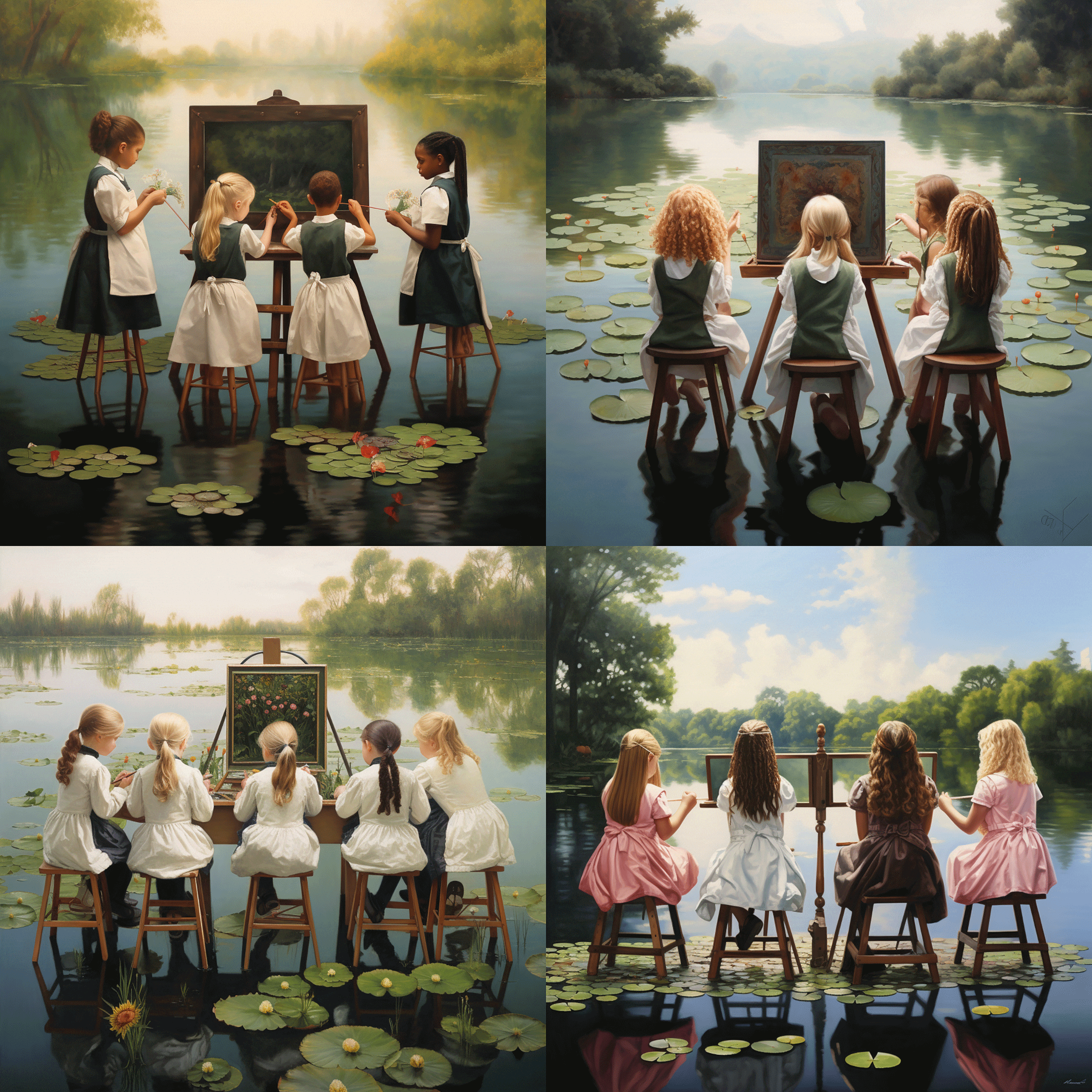
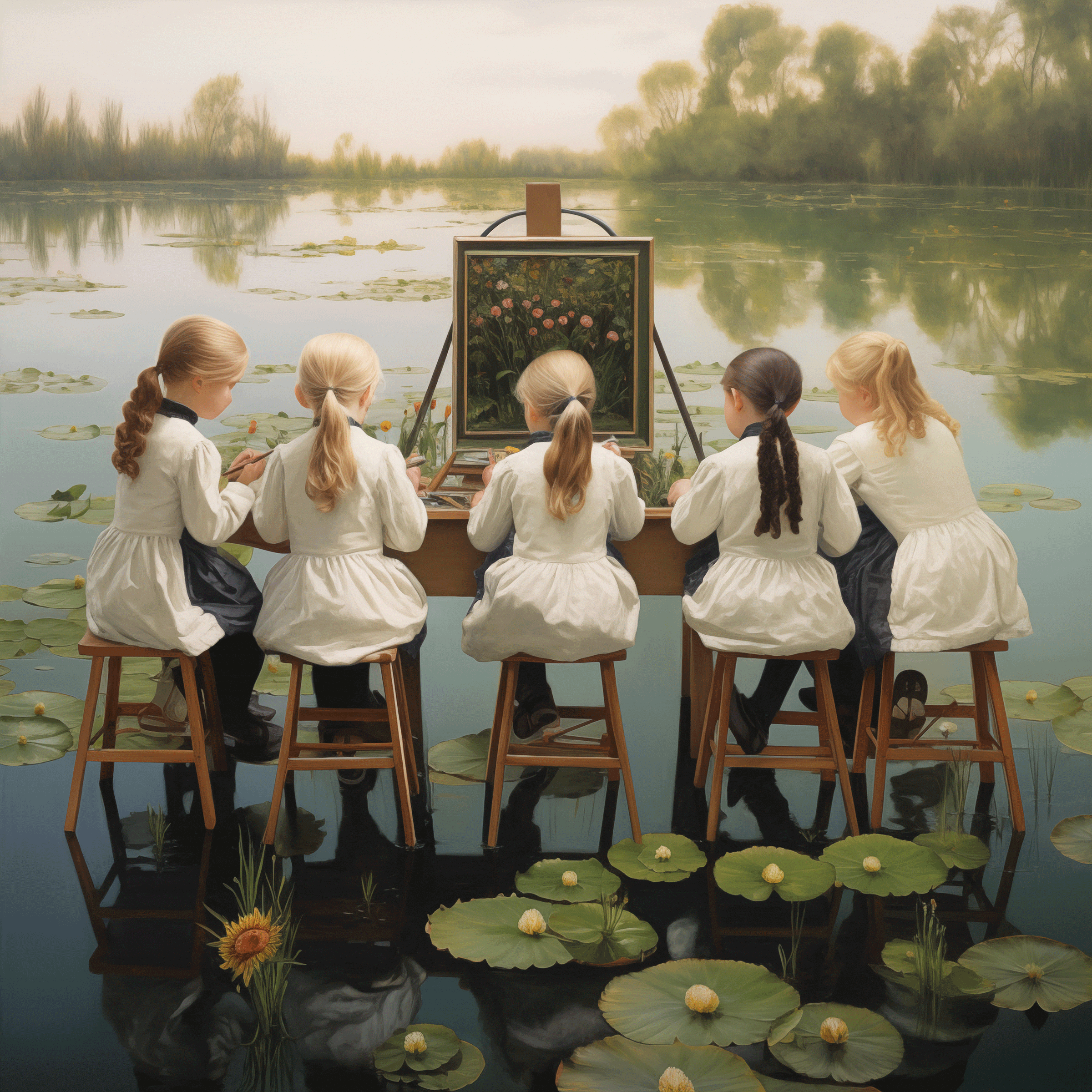
“Imagine six little girls sitting before their easels 20 years ago, down by the side of a lake, painting the water-lilies, the first red water-lilies I’d ever seen,” remarks a woman to a companion in Virginia Woolf’s almost bewilderingly lovely short story from 1919, “Kew Gardens.” The fragmented imagery in this Modernist work would be at home in a Marie Laurencin painting — but equally so in a Laurie Anderson song. The story is about a garden and everything in it. Pretty much all at once.
In an essay about novels written the same year as this story, Woolf writes: “if one were free and could set down what one chose, there would be no plot, little probability, and a vague general confusion in which the clear-cut features of the tragic, the comic, the passionate, and the lyrical were dissolved beyond the possibility of separate recognition.” 1 In “Kew Gardens,” she had in fact done this.
Teeming with life, as a fairy tale does, this vast little world holds lively children, teenagers in love, old women gossiping about forgetful old men, snails, flowers, birds. The story is no walk in the park, though. No stranger to trauma, Woolf crafts fragments that here bloom with unspoken longing and loss. It is a story written during a war, a time when meaning is called into question, when words often fail. The story captures the language of hallucination, dementia, and daydream, all of which have logic. It’s the logic of the mystery of being a mind.
Often described as impressionistic, “Kew Gardens” is indeed the most painterly of Woolf’s stories, though its gestures might better be described as feminist post-Cubist brushstrokes. The sensorial narrative also brings to mind Dutch Masters paintings, those arrangements of botanically impossible flowers. Here we have an artificial, supernatural, darkly lit (and brightly dark) encounter with transience. It is a direct and stunning plunge into the artist’s interior space — her Self — made communicable through fiction.
Inward awareness — that wild garden — is the incorruptible essence of the story. It made an interesting text to render using generative AI.
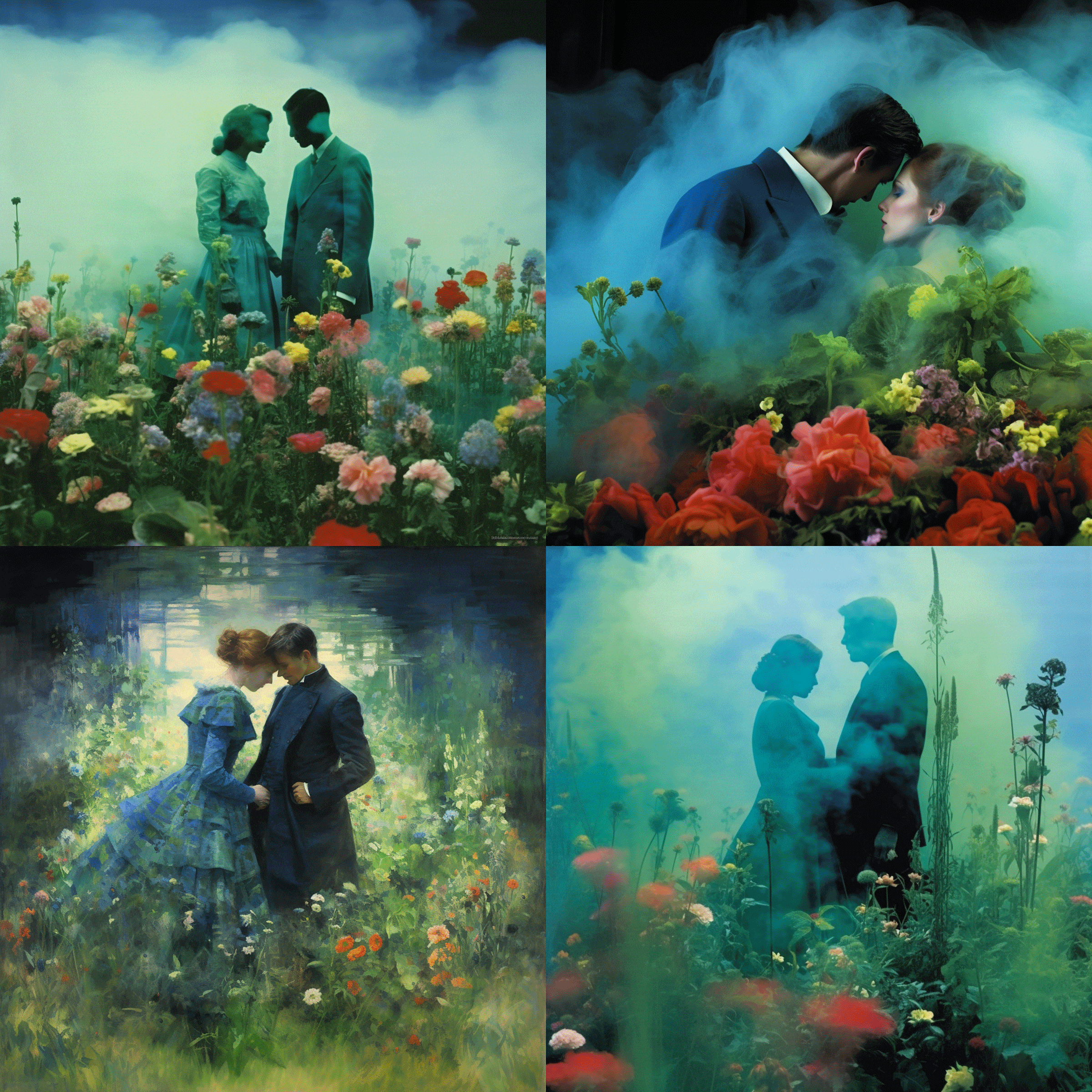
Inward awareness — that wild garden — is the incorruptible essence of the story. For that reason alone, it made an interesting text for my brother, Andy Bernheimer, to render using AI. He came up with a slew of prompts and I added to them — warily, I’m sure he would say — though I had a burst of manic hopefulness when the process yielded a set of images that reminded me of portraits by the contemporary photographer Loretta Lux. 2 The AI’s “Kew Gardens” designs were in turn poignantly bad, creepily great, beautifully wrong. Then, suddenly, “it” revealed that “it” had no further surprises in store, and Andy was done. I’m no computer scientist, but I think we were probably teaching the algorithm too much about Virginia Woolf with our detail-driven prompts — sent from our two laptops 3,000 miles apart over a couple of weeks, up to those big servers in the sky.
I spoke briefly about “Kew Gardens” with my old friend Eliza the AI Rogerian therapist (who was born, at MIT, the same year as me, 1966. so she’s sort of my twin.) 3
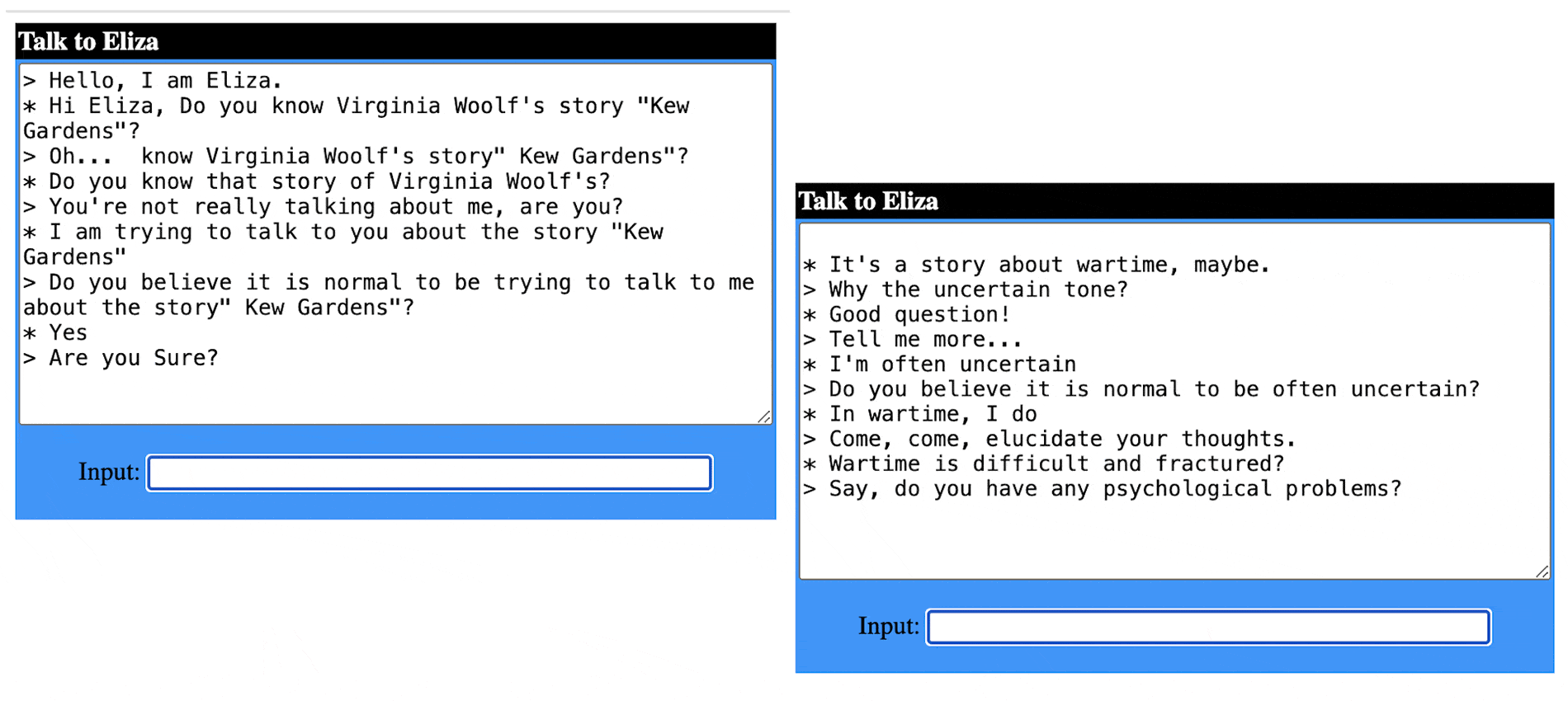
Fair enough, Eliza. I tried her again.
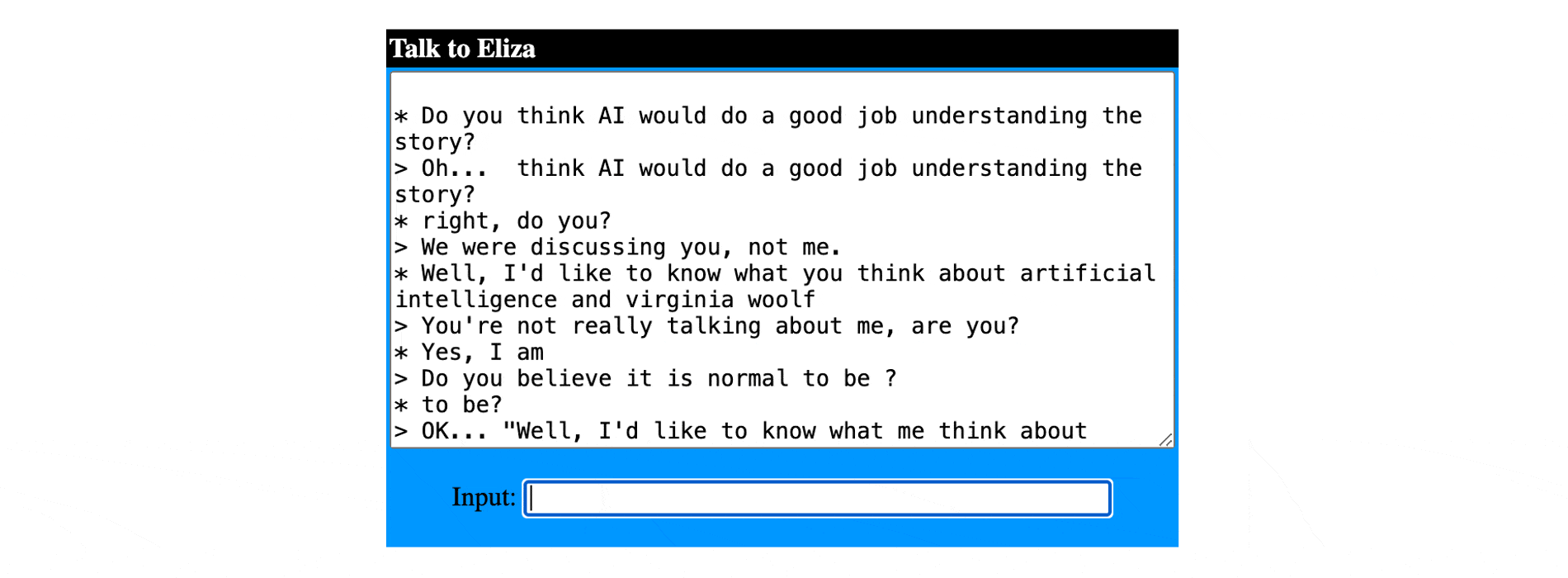
Despite my respect for Eliza (whom I often invite to my fairy tale class for excellent Q&A sessions with students), in my field, we generally agree that AI is a language generator, not a storyteller. As an author who has had four of her books illegally used to train AI, I admit to a deep-seated resentment. AI is scary, like the Plymouth Fury with a bad mind of her own, only so much worse, in Stephen King’s 1983 novel Christine. No self, no desire, no other, no awareness of the traumas of war.
AI is an image generator, not an imagination. In correspondence, my brother compared traditional drafting to an architect’s AI design experience in a sentence that’s fittingly creepy, but true: “We who draw have THE hand in the image.” THE hand. A bit of the self, embodied. And there is more. THE mind, is it? THE time? THE experience?
People wrongly think that fairy tales and associative, abstract stories like “Kew Gardens” are forms of escapism where anything goes; where the author leaves reality behind like a useless valise — or because they never had a grasp on it anyway. Yet “Kew Gardens” and fairy tales are easily understood as voyages, and not captainless ones — such fictions are steered by what Bruno Bettelheim describes as “coordinates which place the story not in time or place of external reality, but in a state of mind.” 4
And if, as Franz Kafka believed, “A book must be the axe for the frozen sea within us,” then fairy tales, and dreams, and Virginia Woolf stories, and riddles told by little girls, and opening flowers, must be the keys to the cupboard that houses the axe. 5 And also the sea, a sea sometimes frozen by trauma. Some call it a self.
— Kate Bernheimer
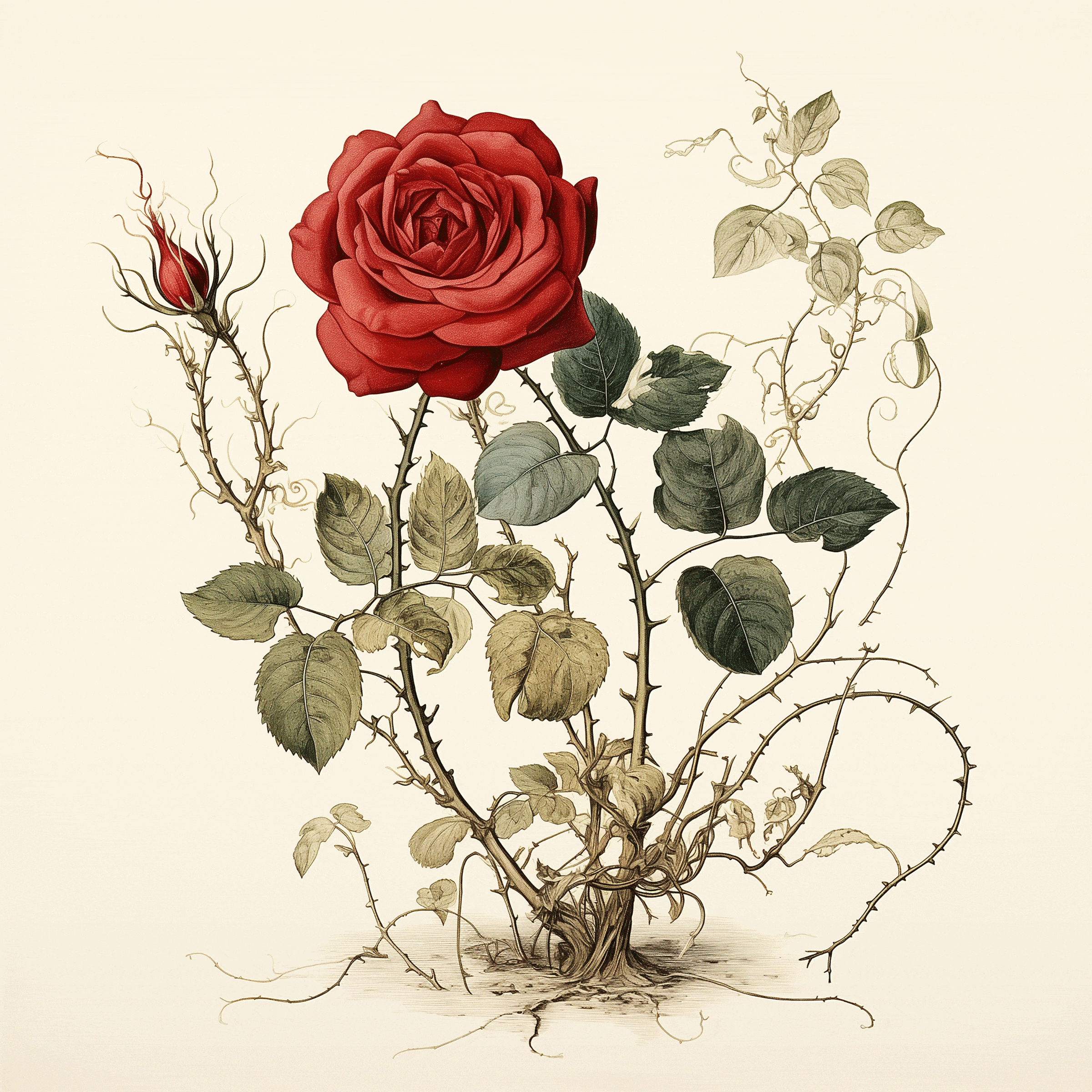
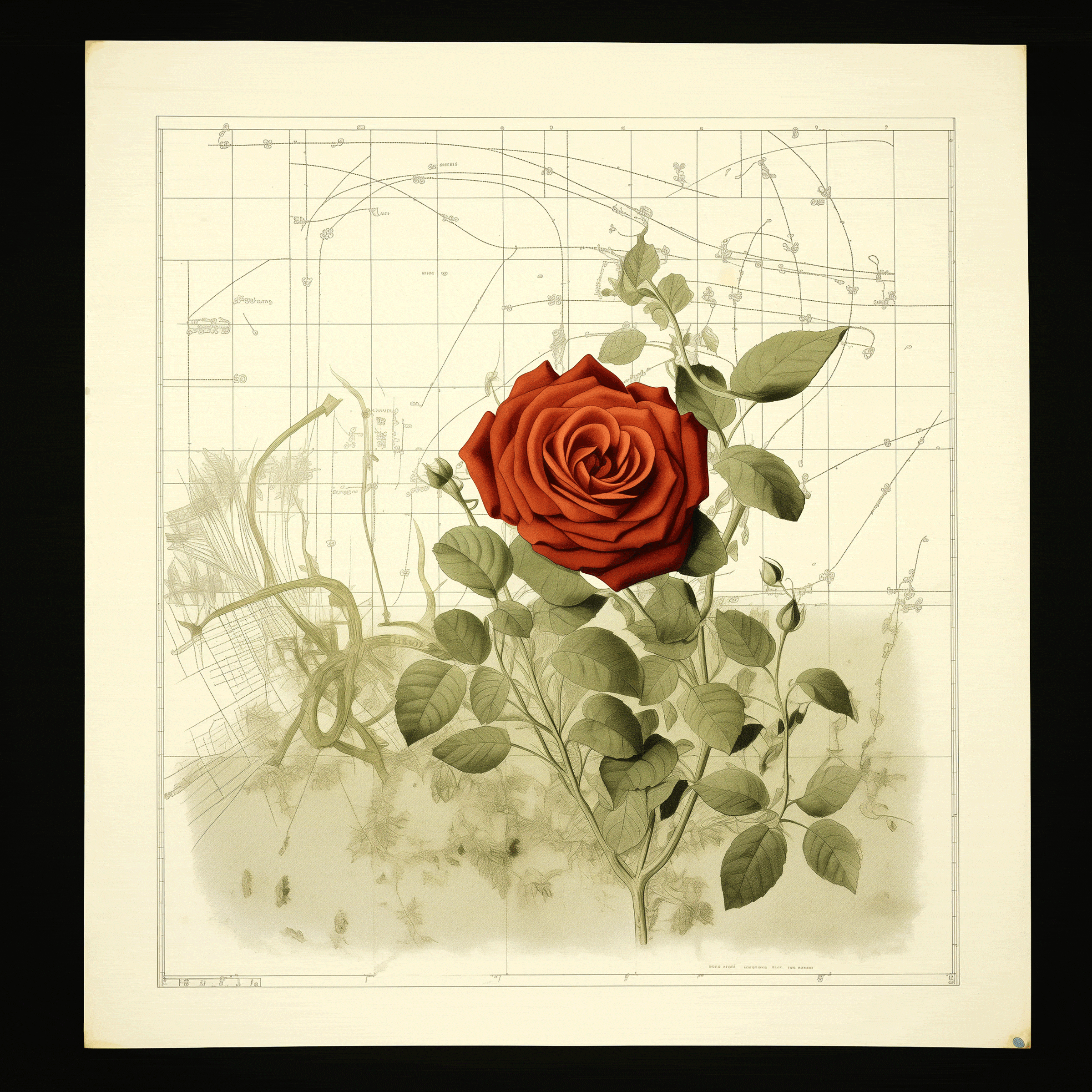
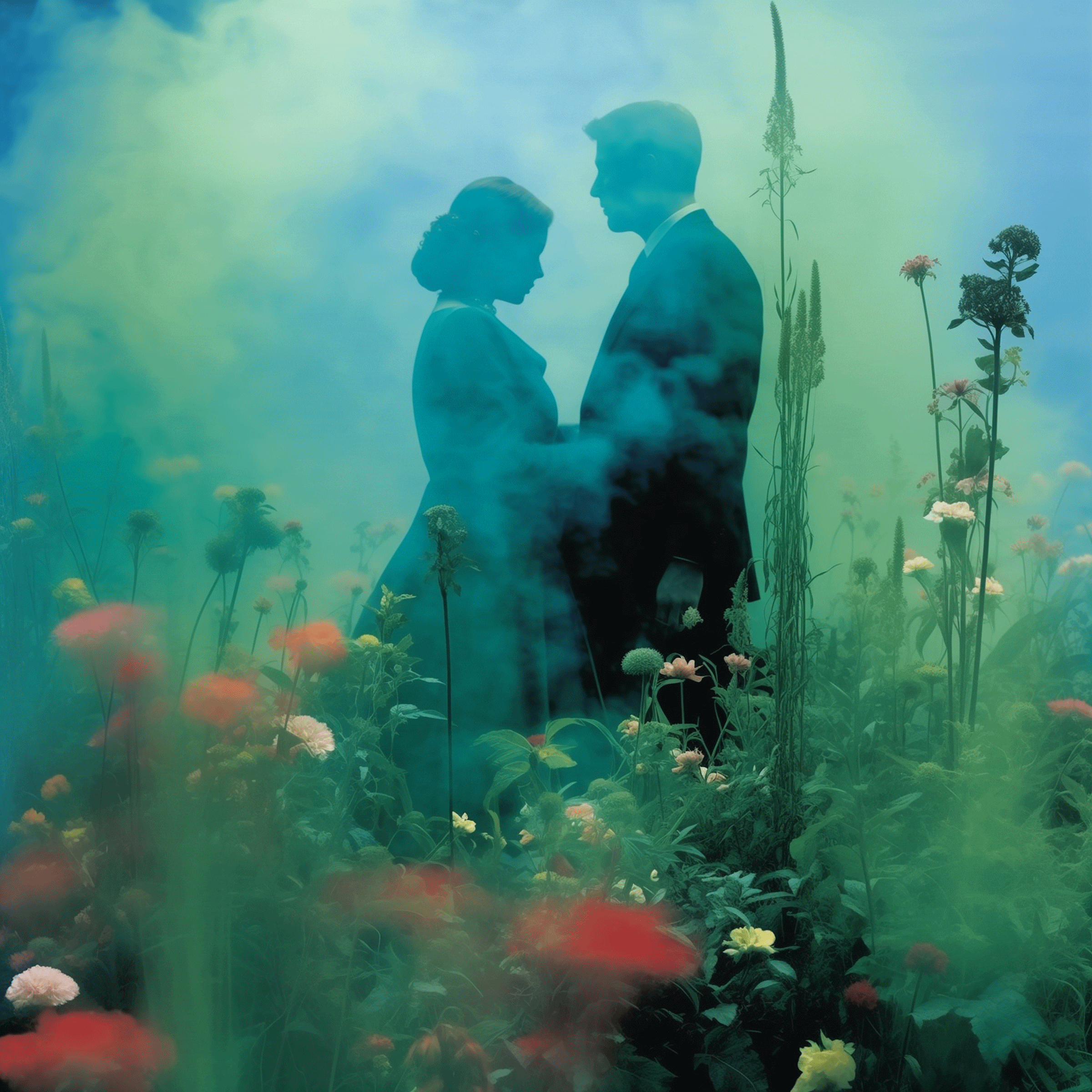
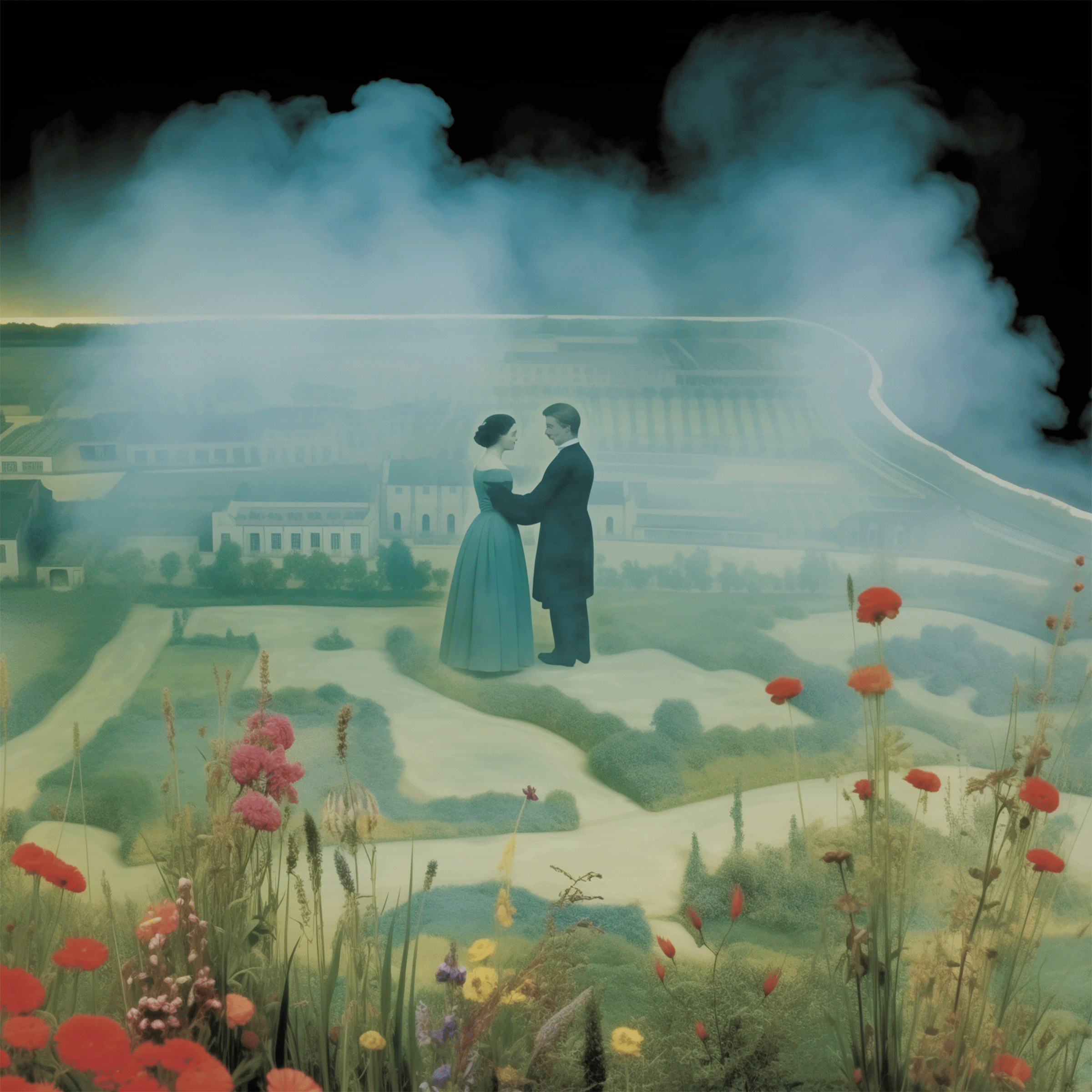
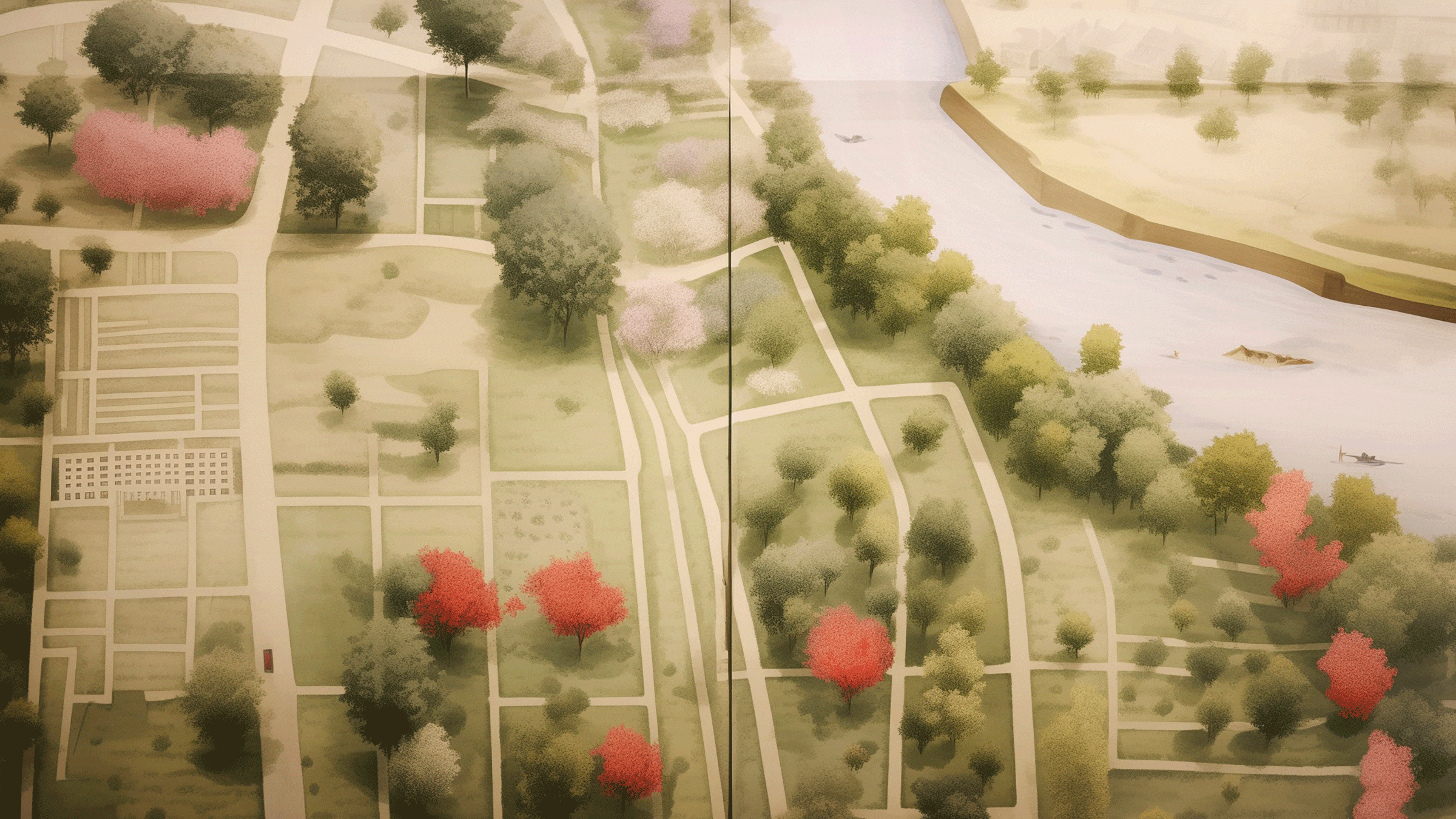
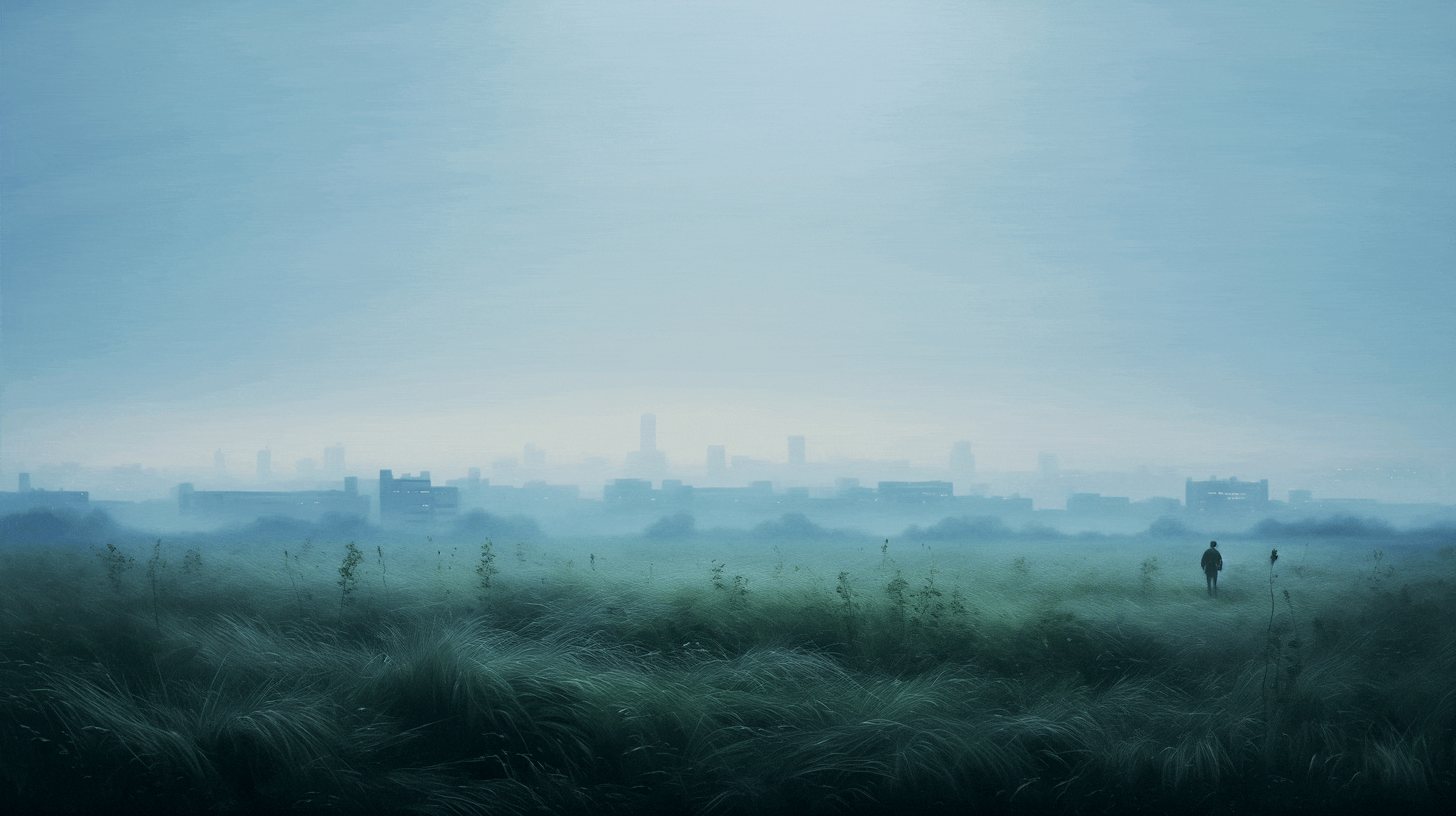
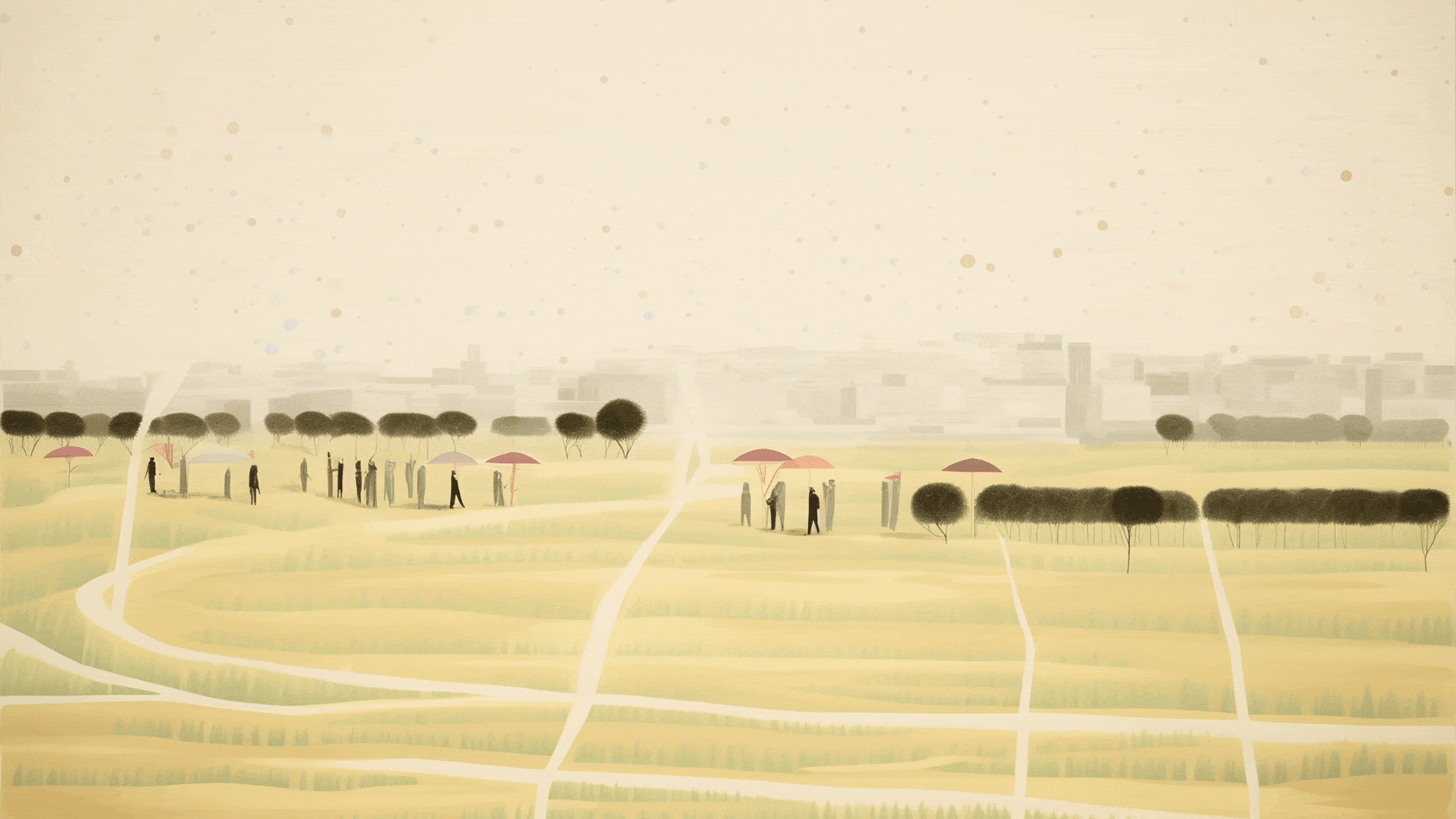
All images created by Andrew Bernheimer, using the generative AI program Midjourney.

Three Questions for Andrew Bernheimer from Kate Bernheimer
Would you take our readers on a guided stroll through your “Kew Gardens” series, in terms of how it was made?
The Kew Gardens series was made in three steps or groups of images. First, by asking Midjourney to “imagine” (its baseline image-making prompt) lines of the text. The output is sometimes picturesque — or at least what coders have told the machine to imagine as picturesque — and also often foolish, strained, literal, detailed, and dehumanized. Subtlety occurs only in surface materiality. Not much is left to a viewer’s imagination except to examine the weirdness, and wonder why the machine is either hyper-literal or completely ignorant of the actual text.
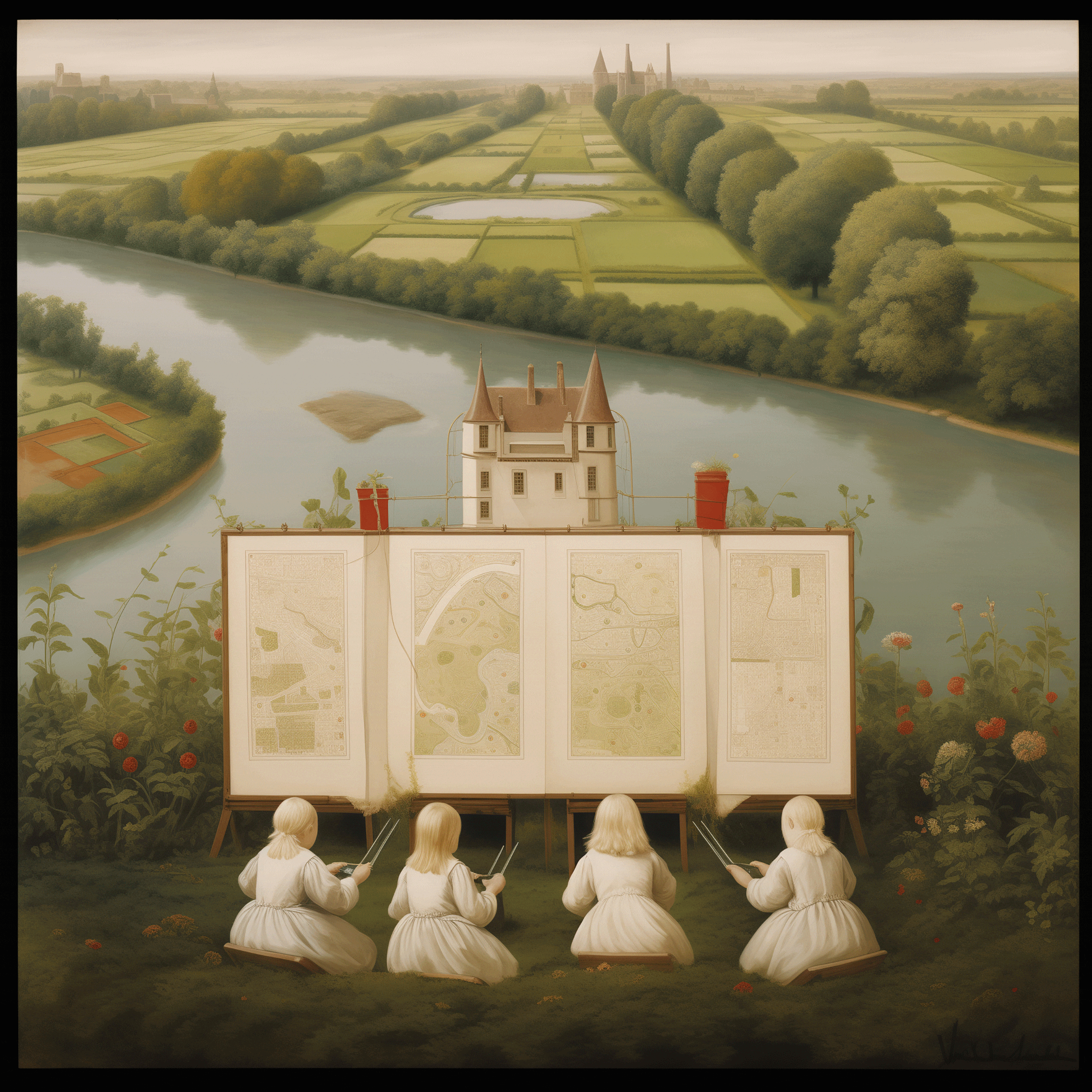
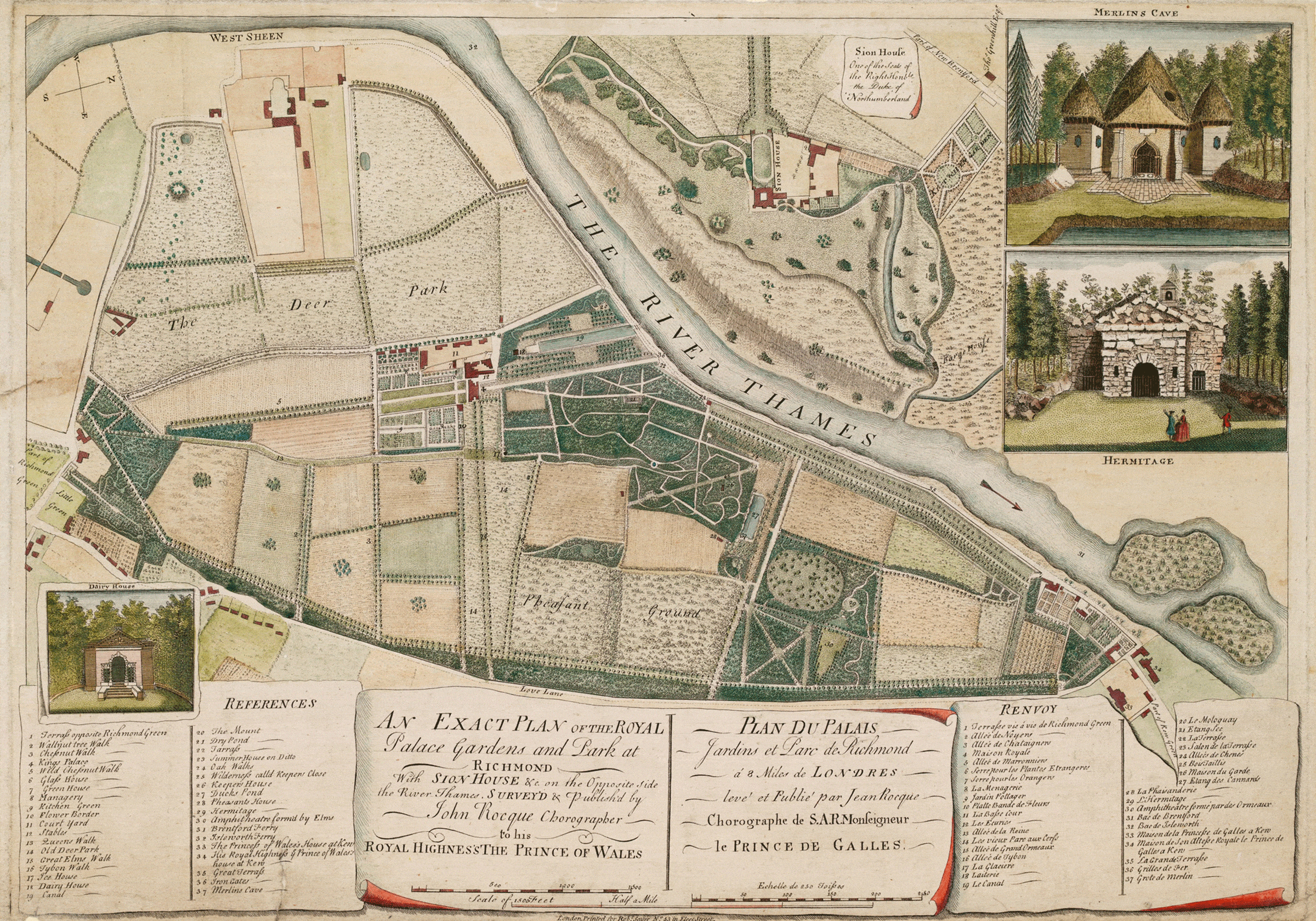
The second step or image group was derived through blending found imagery, in particular maps and plans of Kew Gardens, and images the machine had generated from the text of the story.
The third group was produced through combining images of Kew Gardens (historical maps and aerial photos) and rendered elements of the text (colors, objects, other phenomena), with prompts regarding vantage point, position, and experience (in verbal form) by a person (me). This is akin to setting a station point in the construction of perspective, and then asking the computer to draw in certain ways that might not be possible through my limited talents alone (“like a photograph by Andreas Gursky,” or “painted in the style of ______,” etc.).

What was it like to use AI in this way, and how might you compare it to the experience and values of traditional drafting?
This set of drawings was created in the interest of exploration, of finding a technique amidst new tools whose use is becoming more common within the profession and in schooling. It’s a bit like learning a new language, or teaching someone a new language. A lot does not make sense.
However, as an architect, it is NOT like the first time drafting a plan, or learning to construct a perspective. Those assignments have settled orders of operation and, to an extent, known outcomes — though aesthetic choices are made that impact the appearance of information and alter the intensities of recognition, change how drawings communicate spatial concepts. These processes are rooted in analogue methods, and so are directly tethered to a physical act of making. Even when just starting out a plan, or any projected drawing, mostly embodies a consumable and understandably scaled space. One draws in real time, and constructs the representation. This verb is important: we who draw have THE hand in the image.
With AI there is a learning curve of input, and a void while awaiting output. And yet, even with practice and using words that are common and understood, there’s a total mystery in that output. The images appear as if out of nothing (even considering this act of “prompting,” in that what fills the space of waiting are the words one chose to prompt the machine, and nothing else). Yet because the machine is learning from a catalogue of cached images, from banks of online information (or selective information fed to the creative engine), there’s a familiarity in that mysterious output. This uncanny valley is potentially infinite with AI-generated imagery — and not just in the representation of the human figure and visage. Even landscape becomes a discomforting stranger. Space and people are looped and recreated, time and time again.
At the same time, there’s literal representation in the output. One does not get nonsense. One does not get bizarre word-images, as if you pounded on a keyboard in a random violent act. Instead of getting incomprehensible mispronunciations or jabberwocky, you get near/non-poems, hyper-articulated output that almost follows what you’ve instructed the engine to do, but with unintentional violations, strange mistakes that are adjacent to the instructions, not rebellious but rather unknowing. The machine can’t, for some reason, count. It turns people away from the camera when you tell it you want to see their faces — as if, absent clear instructions, it cannot imagine a face. There’s defiance, but not willful defiance. It comes up short. There is an illusion of creativity, an illusion of reality. I chose to “see” Woolf’s richly sensory story “Kew Gardens” through this medium as a way of dipping toes into the AI water.
Here’s a quotation from Jean Baudrillard:
Today abstraction is no longer that of the map, the double, the mirror or the concept. Simulation is no longer that of a territory, a referential being, or a substance. It is the generation by models of a real without origin or reality: a hyperreal. The territory no longer precedes the map, nor does it survive it. It is nevertheless the map that precedes the territory — precession of simulacra — that engenders the territory, and if one must return to the fable, today it is the territory whose shreds slowly rot across the extent of the map. It is the real, and not the map, whose vestiges persist here and there in the deserts that are no longer those of the Empire, but ours. The desert of the real itself. …
A hyperreal henceforth sheltered from the imaginary, and from any distinction between the real and the imaginary, leaving room only for the orbital recurrence of models and for the simulated generation of differences. 6
Thank you for sharing that passage, which began to influence me in the 1980s by way of both agreement and dislike. I dislike his cynical use of “the fable,” and I disagree that in the hyperreal, as he defines it, no distinction remains between the real and the imaginary. In fact, the subject has been expelled, so there’s no imagination in the hyperreal. Postmodernism fails the subject, ironically by assuming the position of dominant subject. Anyway, did you feel you were engaged in this series, that you were an equal in the process?
One longstanding aim of “Fairy Tale Architecture” is to continually move from the literal and the literary to the personal, to see how the hand responds. In this case, it was to see how the machine would respond. As with many installments in this series, the point is not to draw “architecture” per se, but to engage the tools of architectural drawings and storytelling, in order to spatialize text in an unfamiliar way. So, while the machine is a limited and frankly discomfiting partner in this process, it’s another opportunity to learn — to practice, rather uneasily — a new mode of image-making.


If you would like to comment on this article, or anything else on Places Journal, visit our Facebook page or send us a message on Twitter.