
The ultimate wisdom of the photographic image is to say: “There is the surface. Now think — or rather feel, intuit — what is beyond it, what the reality must be like if it looks this way.” Photographs, which cannot themselves explain anything, are inexhaustible invitations to deduction, speculation, and fantasy.
—Susan Sontag, “In Plato’s Cave” 1
What we require of the photographer is the ability to give his picture a caption that wrenches it from modish commerce and gives it a revolutionary use value.
—Walter Benjamin, “The Author as Producer” 2
Much of the critical response to Monuments of Solidarity, LaToya Ruby Frazier’s dense and provocative mid-career retrospective at the Museum of Modern Art, has been in broad agreement on a couple of key points. The first is that Frazier is an enormously talented and committed artist. Still in her early forties, she is already claiming her place in the lineage of pivotal Black American makers and thinkers — creating work that’s in dialogue with leading photographic documentarians of African American life like Gordon Parks and Carrie Mae Weems; that brings to mind the vital journalism of Ida B. Wells, the activist scholarship of W. E. B. DuBois and Zora Neale Hurston, the polemical virtuosity of James Baldwin, the catholic brilliance of bell hooks. The second point is that Frazier’s goals are not only aesthetic. She is aiming to stimulate action toward social justice, and to this end she introduces viewers to people whose stories embody not only myriad forms of disenfranchisement but also resistance to those forces. Again and again, Frazier’s work shows us communities joined by an ethics of care: friends, family, and co-workers, intersectionally united by shared gender, labor, socioeconomic, educational, or environmental conditions.
Frazier’s goals are not only aesthetic. She is aiming to stimulate action toward social justice.
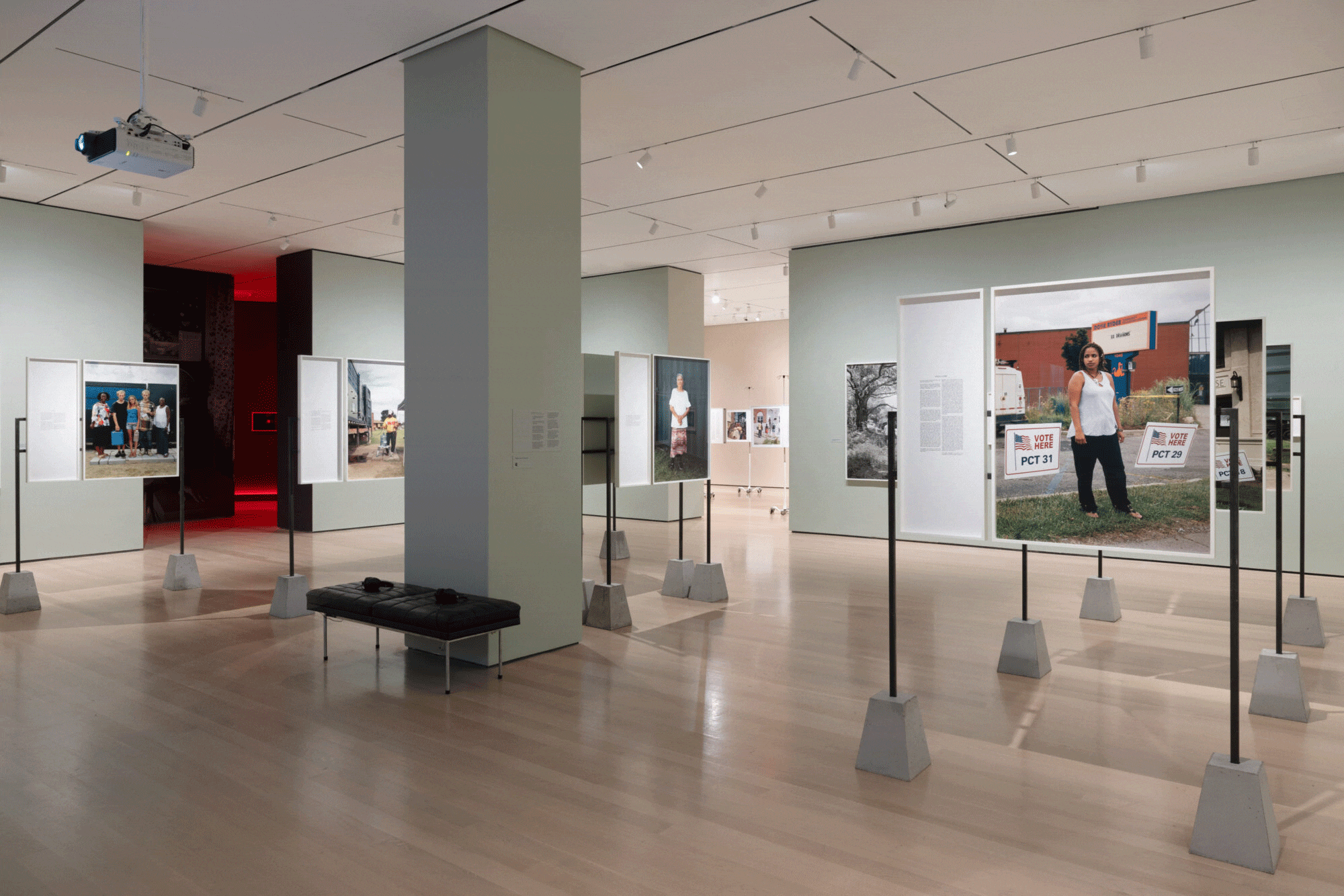
Likewise, there have been common throughlines in the critical assessment of the show’s limitations. Mainly these have had to do with how well, or ill, the design of the installation served the work, and, relatedly, about the level of attention the show expected, or demanded, of viewers. The term of art for the wall labels in museum shows is “didactics”; in Monuments of Solidarity that description became dauntingly literal. The exhibition featured an enormous amount of written exposition, often in the form of first-person testimonial captioning; in more than a few cases, the accompanying text ran to several thousand words. Obviously, the intention was to bring viewers closer to the people portrayed in the photographs.
But more than one critic has observed that the extensive annotation also threatened to unduly belabor the experience; to turn an otherwise empathetic encounter into a cautionary tale about what can happen when an artist flouts the basic narratological principle of “show, don’t tell,” and thus blunts rather than enhances the work’s impact. 3 Of course, visitors could have simply ignored some or all of the verbiage. Yet its presence inevitably raised questions about the conceptual dynamics of Frazier’s work as it has evolved over recent years, and also about the status of documentary photography in the art museum, tout court. What is the proper balance between the photographic and the textual, between the image’s aesthetics of deduction and speculation and the caption’s instrumentalizing power to define and explicate?
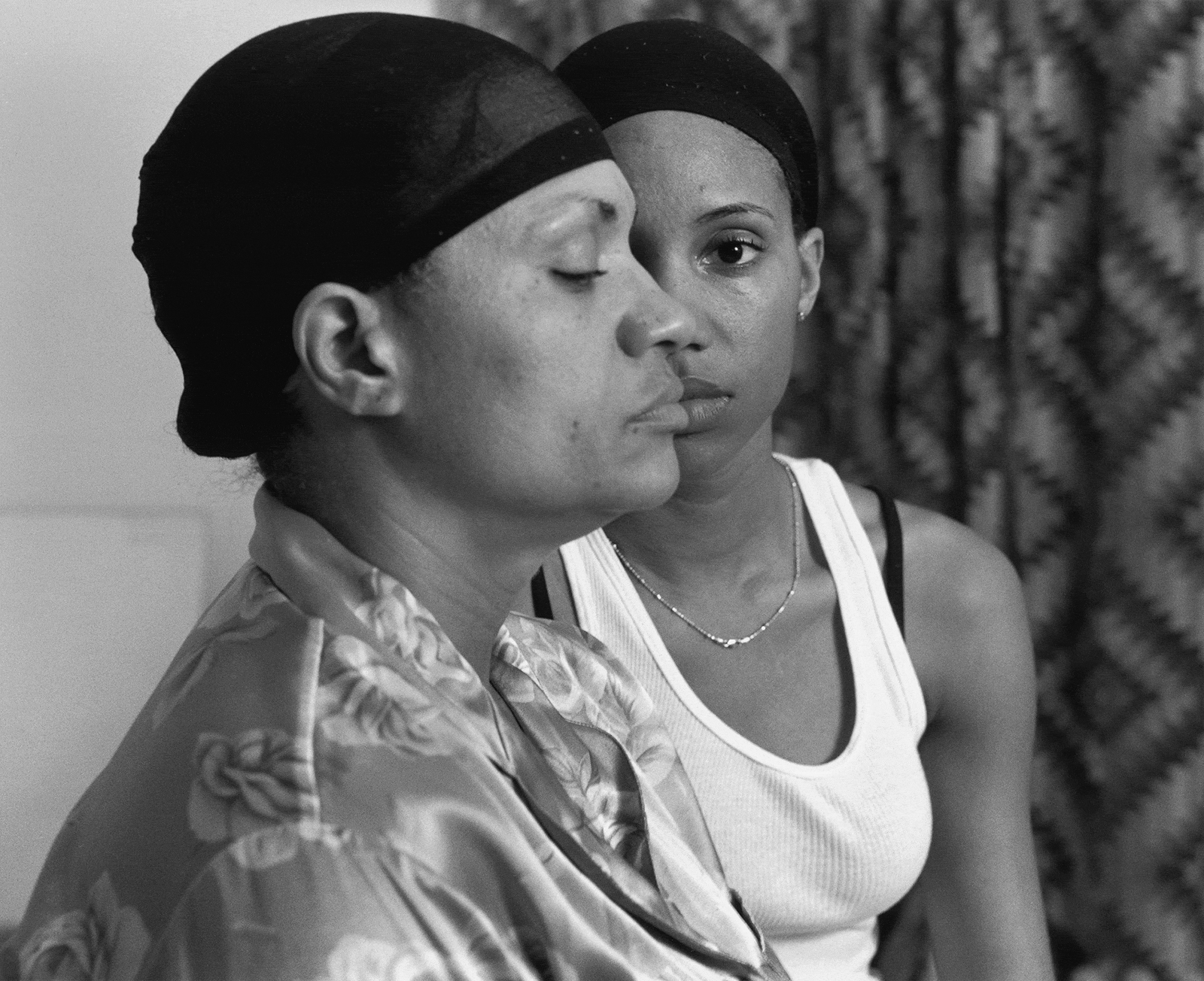
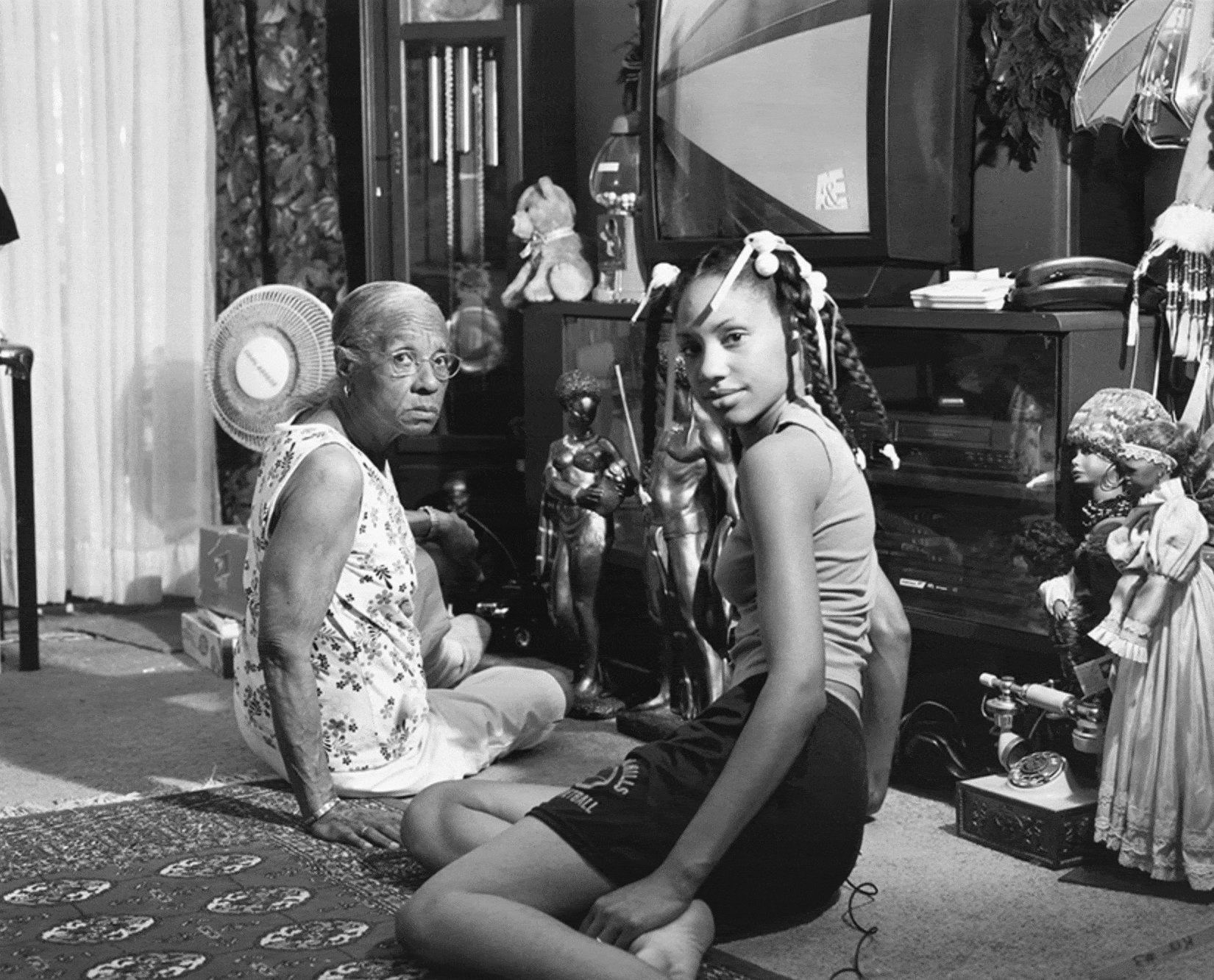
LaToya Ruby Frazier was born and raised in Braddock, Pennsylvania, a town on the Monongahela River southeast of Pittsburgh. Andrew Carnegie built his first steel factory there, in 1875, as well as his first library, a decade and a half later. The town thrived for almost a century before succumbing to the socioeconomic decline that affected so many cities across the Rust Belt as the American steel industry drastically contracted. Frazier began making photographs as a teenager; her first and probably still best-known work, The Notion of Family, a series of more than a hundred photographs taken from 2001 to 2014, focuses on what was then closest to home: the relationship between her mother, Cynthia, her grandmother, Ruby, and herself, and between all three women and the damaged town where they had grown up.
The images of family are alternatively tender and ferocious in their depiction of the three women together and apart.
The photographs from the series, almost all black-and-white, formed the first of the show’s eight sections, or “monuments” to different forms of solidarity. The images are alternatively tender and ferocious in their depiction of the three women together and apart; some are (apparently) candid, while others are clearly staged. Several of the most famous are in the latter group. Momme, for instance, from 2008, is a portrait of Frazier staring at the camera, her face half-hidden behind her mother’s profile, suggesting an image of merged identity that evokes the mise-en-scène of Ingmar Bergman’s Persona. Meanwhile, in Huxtables, Mom, and Me, also from 2008, the artist wears a t-shirt with an image of The Cosby Show, which during its run, from the mid-1980s to the early ’90s, became famous for its portrayal of upper-middle-class African American geniality and gentility; behind the artist, we see the reflection of her mother, staring sternly, in a mirror.
Some of the less theatrical compositions pack the most vivid emotional charge. In Grandma Ruby and Me, from 2006, Frazier sits on the floor next to her grandmother; looking younger than her years with her hair in braids and ribbons, she is smiling, somewhat wryly, the telltale cord of the camera remote snaking behind her. In Mom After Surgery, from 2009, Cynthia leans heavily on a bathroom sink, recent scars on her side and breast clearly visible. And in Grandma Ruby Wiping Gramps, from 2003, we witness an act of intimate compassion that will be harrowingly familiar to anyone who has cared for elderly loved ones.
As the exhibition proceeded, Braddock emerged as a crucial character in itself — the first stirrings of the highly attuned psychogeographic attention to place that would come to be a hallmark of Frazier’s work. The town’s long reliance on the steel industry for its economic equilibrium became a kind of double-bind: on the one side, the industry brought (modest) prosperity; on the other, residents were exposed to a range of toxic waste generated by the mill — “a slow, decades-long poisoning” in the words of Delphine Sims, in one of the catalogue essays. 4 The manifold inequities related to labor and health were crystalized for Frazier in the closure and eventual demolition of the town’s hospital, which had served the community for more than a century. Its ultimate shuttering, in January 2010, not only caused the loss of more than 600 local jobs but also left Braddock without a medical facility. This conjoined misfortune was clearly a watershed moment for Frazier’s activist sympathies.
Braddock emerged as a character in itself — the first stirrings of the highly attuned psychogeographic attention to place that is now a hallmark of Frazier’s work.
Accordingly, the section devoted to If Everybody’s Work is Equally Important?, from 2010–2013, showed the artist turning her gaze increasingly outward, toward the community; this project also, importantly, marked the beginning of her expanded use of text to elaborate on the images. Here Frazier is responding not just to the human toll of the hospital closure; she is also reacting against a shockingly tin-eared advertising campaign created in 2010 by Levi Strauss & Co., in partnership with the embattled city, titled “Go Forth to Work.” The photographs collected in the section’s centerpiece project — Campaign for Braddock Hospital (Save Our Community Hospital), from 2011 — are each accompanied by a handwritten text adducing some aspect of the collision between a corporate fantasy of fashionably taxing labor and the reality of the increasing decrepitude of the town and its social services as such work became scarcer and lower-paying.

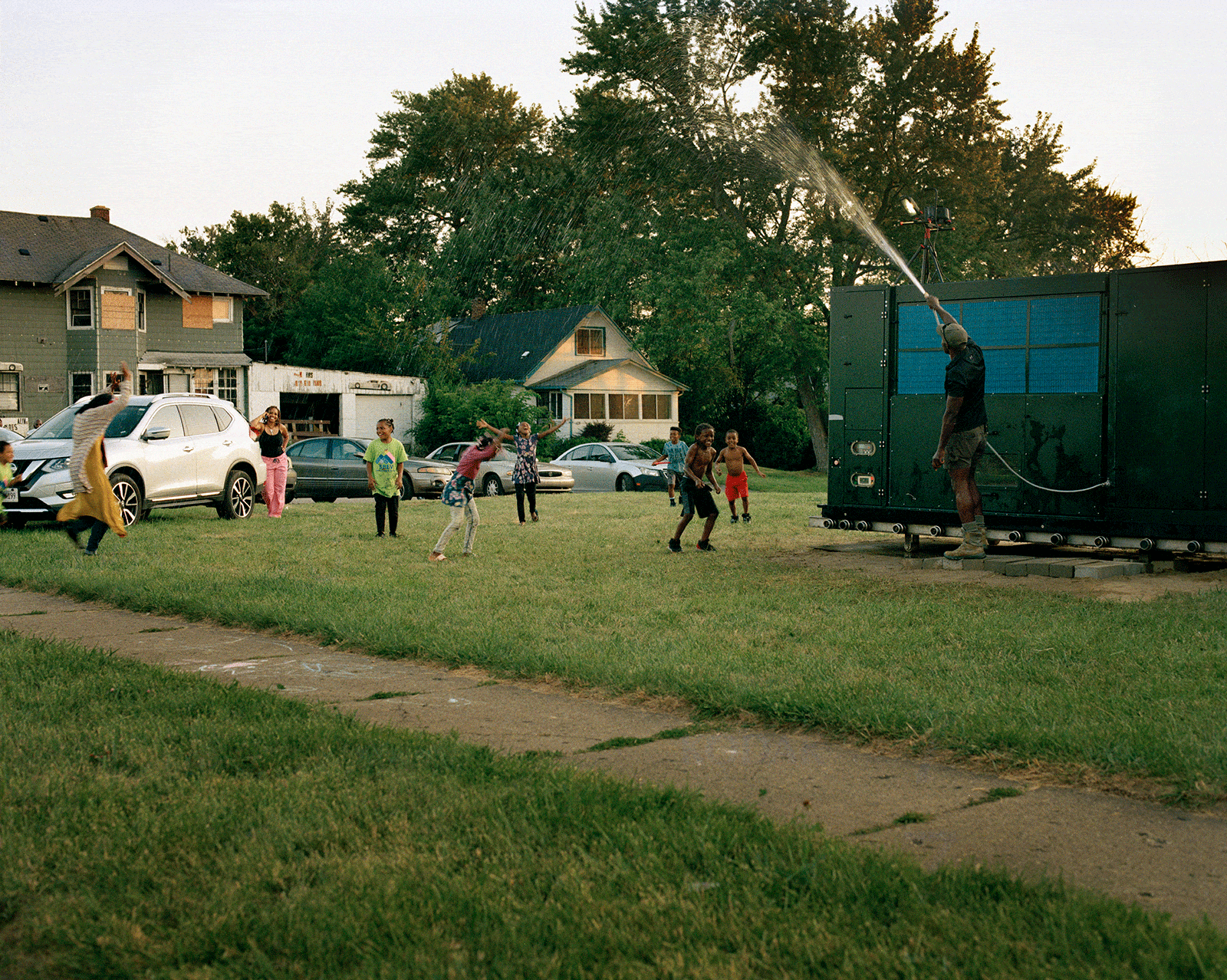
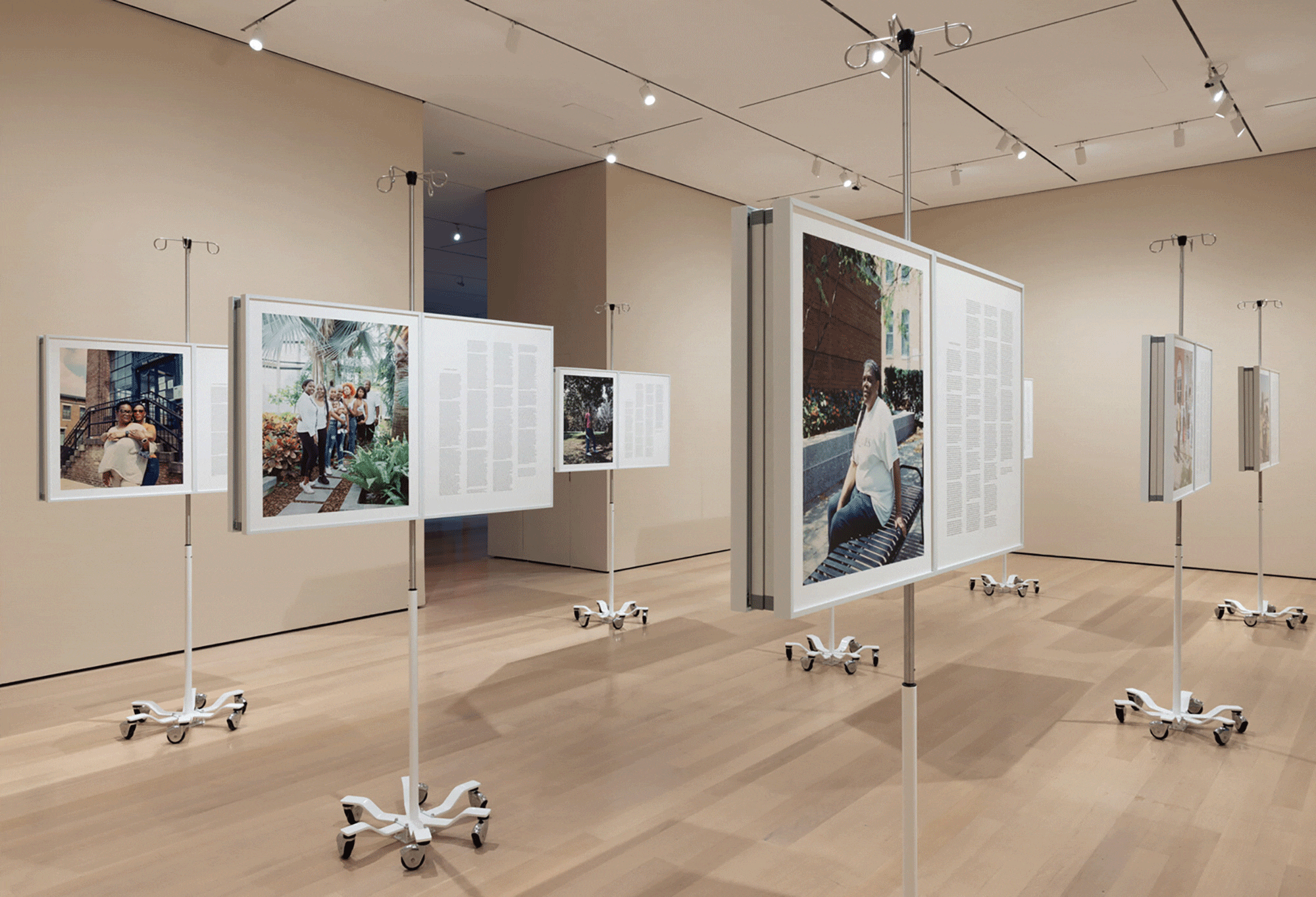
Flint Is Family In Three Acts, from 2016–2020, was arguably the show’s most conceptually complex section. The series tells the story of the environmental racism experienced by residents of Flint, Michigan, when, in a catastrophic cost-cutting measure, officials of the majority Black city switched the source of the municipal water supply. As a result, lead-contaminated water was pumped into homes for more than a year. Frazier is here at her most persuasive, carefully balancing between photographic and textual material. The artist focuses on a group of local women — including Shea Cobb; Cobb’s mother, Renée; her daughter, Zion; and her best friend, Amber N. Hasan — and weaves a portrait of the personal and social effects of the crisis, mixing uncaptioned images, hung on the walls, with text-accompanied photos set on freestanding frames in the middle of the gallery.
Flint Is Family, about the environmental racism experienced by residents of the majority Black city, was arguably the show’s most conceptually complex section.
The three acts referenced in the title are the crisis itself; Shea’s temporary relocation with Zion to her father’s Mississippi farm (there are several images of the freshwater spring on his property); and the return of Shea and Zion to Flint, where the community came together to install an atmospheric water generator — funded in large part by Frazier herself, who donated the proceeds from her first gallery show and swung a matching grant from the Rauschenberg Foundation — in an empty lot. 5 This section also features the first examples of Frazier’s assured work in color, including a series of captioned portraits, many with the generator as a backdrop, as well as what was perhaps the single most joyful, unencumbered image in the entire show — a beautiful shot of children playing under a spray of clean water from the machine on a warm July evening.
Flint Is Family showed Frazier at her most potent in terms of both aesthetics and activism; but other parts of the exhibition were significantly less successful, for a variety of reasons. Some felt comparatively perfunctory — for instance, the documentary images of Pier 54: A Human Right to Passage, a 2014 performance by Frazier on the shore of the Hudson River in Manhattan, and the somewhat haphazardly organized tribute to labor leader Dolores Huerta, a co-founder, with Cesar Chavez, of the National Farm Workers Association.
Others were overly fussy in their presentation. A prime example of this could be found in a room next to the Flint gallery, which contained a project focused on Sandra Gould Ford, a writer and advocate who worked as a clerk and secretary at the Jones and Laughlin Steel Company in Pittsburgh in the mid-1980s. As the plant underwent mass layoffs, Ford began to gather documents, including blueprints and accident reports, and also to surreptitiously take photographs. But the installation at MoMA — an elliptical room (apparently meant to evoke a planetarium in honor of Ford’s interest in astronomy) bathed in rolling washes of white, blue, and red light — was remarkably ill-judged, literally consigning to the shadows materials that were intended to illuminate what the steel company sought to keep unseen.


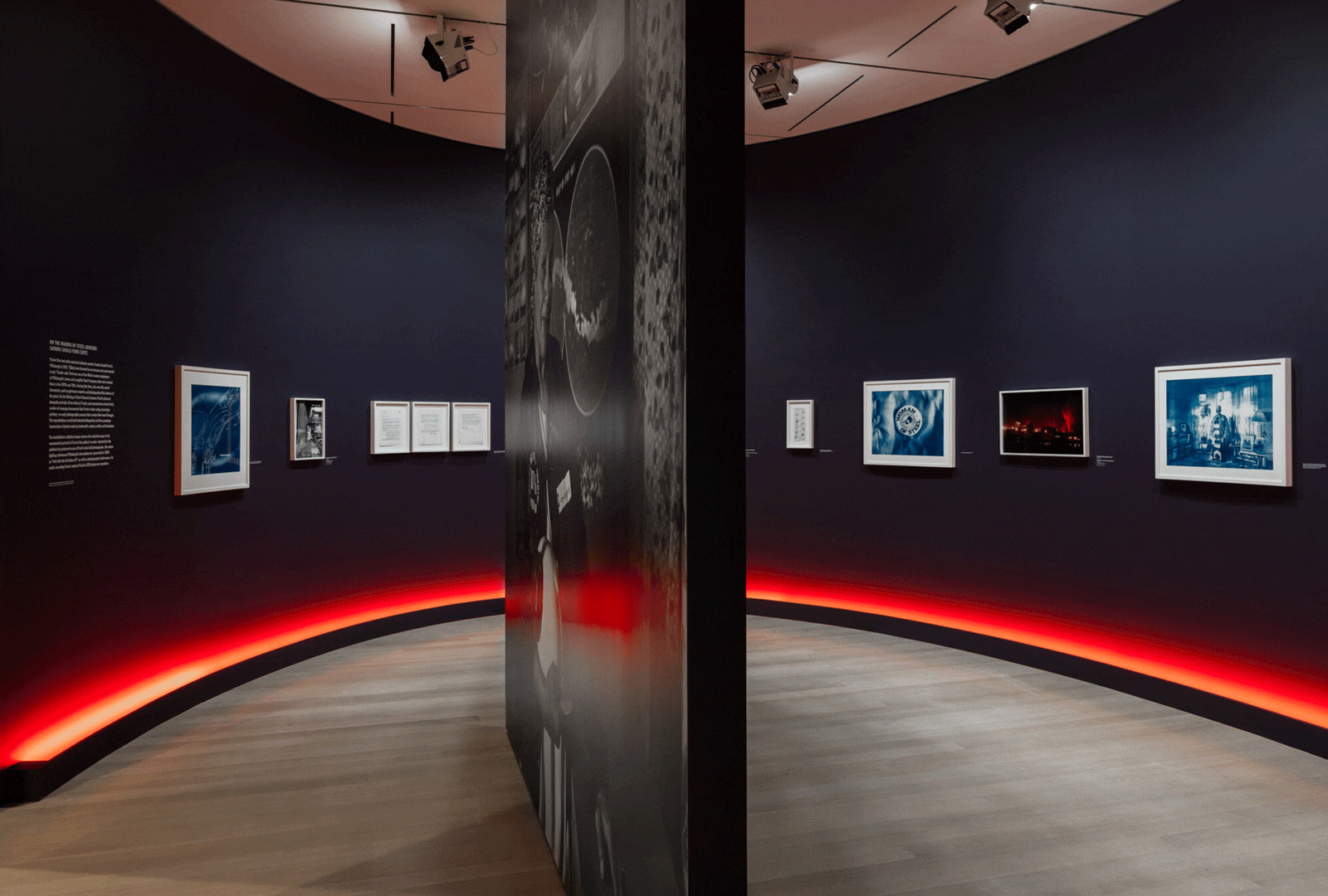
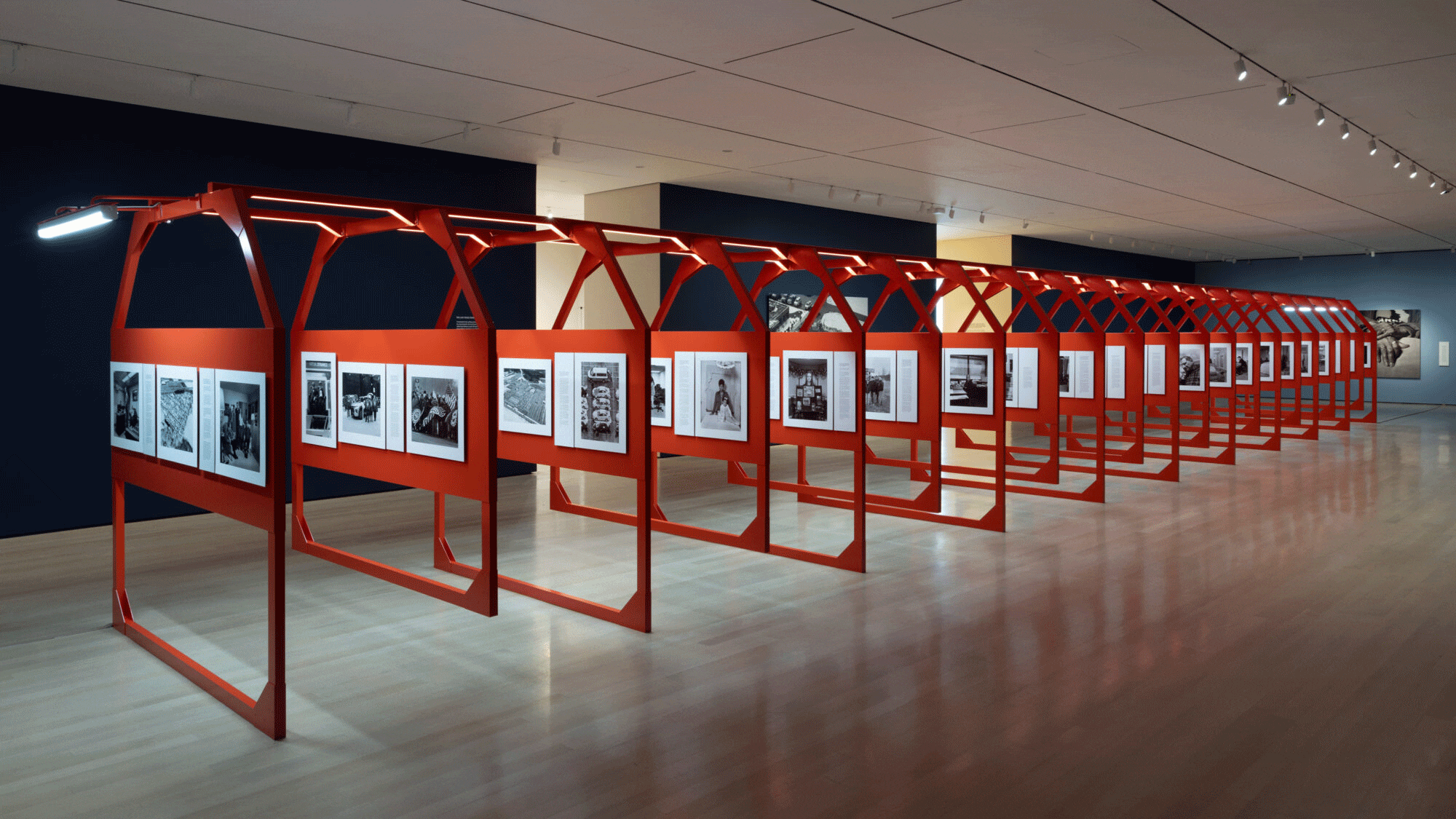
The Ford series was originally presented in 2017 at the August Wilson Center, in Pittsburgh; that show, On the Making of Steel Genesis: Sandra Gould Ford, was a less contrived, more content-friendly installation. In contrast, The Last Cruze, another project that grapples with the human costs of industrial decline, was saddled with an overdetermined installation from its very first showing, in 2019, at Chicago’s Renaissance Society. 6 In that project, Frazier documented the closing, in 2018, of the General Motors plant in Lordstown, Ohio, and the impacts on workers, many of whom were members of the United Auto Workers International union. In Chicago, the photographs were hung on a series of 21 large, red, arch-shaped stanchions designed to recall a factory assembly line.
That installation scheme, reenacted at MoMA, did not enhance but instead interfered with viewers’ ability to take in either Frazier’s often wonderfully affecting photographs or the heartfelt (if nearly impossibly voluminous) testimony of former plant workers. In fact, the narrow spaces between the stanchions were effectively just wide enough for one visitor at a time, which complicated attempts to linger long enough to engage meaningfully with the rich stories told on them. And while not similarly compromised by an overly complicated presentation, another photographic series, More Than Conquerors: A Monument for Community Health Workers of Baltimore, Maryland, 2021–2022, upped the textual ante to the breaking point, swamping viewers with tens of thousands of explanatory words alongside uncharacteristically pedestrian portraits of Frazier’s passionate, dignified subjects.

There’s no question that the extravagant loquacity of the book qua exhibition (exhibition qua book?) that is Monuments of Solidarity presented a significant challenge to viewers. It’s a problem that has often tripped up attempts to convey nuanced political, historical, or affectual experience in the art museum. (And one that will be particularly familiar to makers and viewers of exhibitions on architecture, where it must necessarily be left to archival and documentary materials or models to elaborate the complex lived sense of a given place.)
So was the outpouring of words in this case a problematic flaw? Or was it a tonic of crucially enriching elaboration? “Photographs cannot create a moral position,” Susan Sontag observed, “but they can reinforce one — and help build a nascent one.” 7 Is Frazier’s trajectory toward ever greater reliance on paratext a symptom of some depletion of persuasiveness in the pictures themselves, or a kind of definitional naming that’s necessary to build a politico-moral consciousness and give her pictures the radical utility they aspire to? In other words, do the very things that make her work less successful as art make it more successful as activism?
So was the outpouring of words in the exhibition a problematic flaw? Or was it a tonic of crucially enriching elaboration?
A few years ago, in the New York Times, the novelist Viet Thanh Nguyen critiqued the ideological foundations of the American literary establishment; in particular, he argued that the narrative rule “show, don’t tell” — the mantra of university writing workshops — is not simply a matter of disinterested advice about craft. Rather, he contended that the technique of selective omission is actually rooted in the dynamics of class and power. “As an institution, the workshop reproduces its ideology, which pretends that ‘Show, don’t tell,’ is universal when it is, in fact, the expression of a particular population, the white majority, typically at least middle-class and often, but not exclusively, male,” he writes. “Like all privileges, this identity is unmarked until it is thrown into relief against that which is marked, visible and outspoken.” 8 Almost all the individuals who populate Monuments of Solidarity are in some way othered as a result of race, gender, class. The great bulk of their stories, individually and collectively, has long been submerged below the sociopolitical waterline. In this light, it can be argued that the most worthwhile project must be to lift them up, to make them seen and heard. It might not make for the most compelling aesthetic experience at an exhibition in an art museum, but that may actually be beside the point.


If you would like to comment on this article, or anything else on Places Journal, visit our Facebook page or send us a message on Twitter.