

Before the 1940s, the vast majority of young people in the United States with physical, sensory, or cognitive disabilities did not attend the same school as their neighbors or playmates.1 Many such children didn’t attend school at all — they were cared for (or, just as often, neglected) at home — but those who did traveled to regional day schools, or they lived elsewhere, boarding at residential schools in bucolic, protective rural locations.
Whether the school was in the city or the country, its architectural style was easily recognizable. Schools for disabled children built in the 19th century were grand structures meant to telegraph “home” and “institution” simultaneously. The designs incorporated neoclassical, Romanesque, and Queen Anne elements, or a pastiche of all three, and drew eclectically on period-style college dormitories, luxury hotels, public libraries, and civic clubs. Many residential schools were housed in former estates built by industrial or mercantile wealth, or in buildings meant to mimic such estates. Double-height ceilings, gender-segregated parlors, ornamental staircases, oversized turrets, gabled dormers, gingerbread moldings, exaggerated bay windows, terra-cotta brickwork and roof tiles — all were typical. The actual needs of the actual residents were much less important than the display of civic munificence.


Stylistic affectation served as smokescreen for the true purpose of these buildings, which was twofold. First, contain and segregate young people with disabilities; and second, make that segregation palatable to the genteel class for whom supporting the schools was an expression of noblesse oblige.
Eventually, however, the smokescreen became too expensive to sustain. Cost-conscious trustees and legislators began to regard these behemoths of Victorian fussiness as a drain on state coffers. But what was the alternative? What other kinds of buildings could serve this very specific purpose? By 1930, the design of schools for children with disabilities was on the cusp of extraordinary change.
Architectural modernism does not have a glowing reputation among scholars of disability.
The unlikely agent of change was modernism — “unlikely” because architectural modernism does not have a glowing reputation among scholars of disability. The critique unfolds in all directions, based on evidence as clear as day. In Making Disability Modern, Elizabeth Guffey and Bess Williamson document how many of modernism’s avatars were sympathetic to eugenics, and how many embraced a utopianism explicitly circumscribed by health and race. Adrienne Brown, Anne Anlin Cheng, Christina Cogdell, and Ginger Nolan have pointed out that although the canonical practitioners of architectural modernism claimed ideological neutrality, they were in fact engaged in a ploy to make a White, elite, able-bodied cultural aesthetic seem innocent of its relationship to settler colonialism and legalized segregation. 2
The quintessential modernist material — glass — is generally understood by disability scholars not as a paragon of light and transparency, but as a handmaiden to institutional power. Glass enables the state’s proclivity for bodily surveillance. 3
Some scholars have added nuance to this critique. Beatriz Colomina, for instance, has suggested that modernism’s early affinity with eugenics — whether via Philip Johnson’s Nazism, or Norman Bel Geddes’s obsession with sexual selection, or Le Corbusier’s conflating of cleanliness with whiteness — faded over time. In America in particular, as the design aesthetic spread to ranch houses and consumer goods (and was rechristened “midcentury modernism” or “Danish modern”) it became far more associated with capitalism than any particular racial ideology.
Many of Colomina’s peers, however, remain unconvinced. Cogdell’s Eugenic Design, for instance, argued two decades ago that even the most banal midcentury modernist home furnishings are tainted with prewar aspirations toward social engineering. The fact that architectural modernism so easily became midcentury modernism is not evidence of its ideological slackening, but its ideological perniciousness. 4 “There are those who say that it is not Modernism but the perversion of its principles that are to blame,” write Joy Monice Malnar and Frank Vodvarka. “Yet these were principles so rooted in the belief that humans were flawed, that offered so little recognition of human attributes, that such perversion must have been easy.” 5
Before it became a codified aesthetic, architectural modernism was a vector of experimentation.
The disability studies critique of modernism is neither exaggerated nor misplaced; and yet, at the same time, my research suggests that not all forms of modernist design should be categorized as irredeemably villainous. There is a neglected and altogether forgotten body of work by architects and educators in the United States in the 1930s who used the social potential of modernism to produce designs that better met the needs of children with disabilities. Most of these projects were ignored, even in their own time; a preeminent compendium, Elizabeth Mock’s Built in USA 1932-1944 (1944), does not feature a single such school. 6 Yet the structures in question not only improved the lives of thousands of young people, but proposed a radical vision of civic care through design.
It bears remembering that before architectural modernism became a codified aesthetic, it was a vector of experimentation, a zone of possibility. Some practitioners were aligned with progressive social values associated with the Bauhaus, where radical rethinking of space and design were used to address and improve housing and laboring conditions for working-class people, as well as learning conditions for students and educators. These values translated easily for architects who designed schools that encouraged social bonding and pleasure in seeing and being seen — virtues rarely attached to schools for children with disabilities. Didactic, coercive versions of architectural modernism — the version historians of disability rightly critique — coexisted alongside an empathic, expansive version that centered children’s experience in sometimes astonishing ways.

Many designs that were implemented in schools for children with disabilities in the United States were prototyped in Europe, first in healthcare settings. By the late 1920s, there were several hospitals, sanatoriums, and tubercular clinics that pioneered elements of the so-called International Style, i.e. a stripped-down austerity that eliminated extraneous decoration along with references to past historical styles, so as to create a simplified design specific to the function of the building. 7 In spaces dedicated to promoting health and hygiene, this meant plentiful natural light, white-tiled walls and floors, and easy access to fresh air via large windows, open terraces, and balconies. 8
Philip Johnson seems not to have realized the irony of promoting the hygienic power of the ‘most fit’ by drawing on models of care developed to meet the needs of the ‘least fit.’
These design elements quickly migrated to schools. New pedagogies and new theories of emotional and cognitive development, by John Dewey, Friedrich Fröbel, Maria Montessori, Jean Piaget, and Rudolf Steiner, were developing simultaneously, and stirred an appetite for new built forms. The champions of the International Style were happy to oblige; they well understood that schools generated more positive associations than hospitals. If the gospel of modernism was going to spread, young healthy children were the ideal missionaries. As design scholar Juliet Kinchin explains, schools “were viewed as crucial to the absorption and spread of modernist values … the new modern schools were simple, light, and flexible; a tabula rasa upon which the modern child could inscribe his or her identity.” 9 Hospitals protected and cared for those who were most vulnerable, whereas schools represented bloom and vitality. “The International Style is exactly what schools need,” opined the Fascist Philip Johnson, who seems not to have realized the irony of promoting the hygienic power of the “most fit” by drawing on models of care developed to meet the needs of the “least fit.” 10
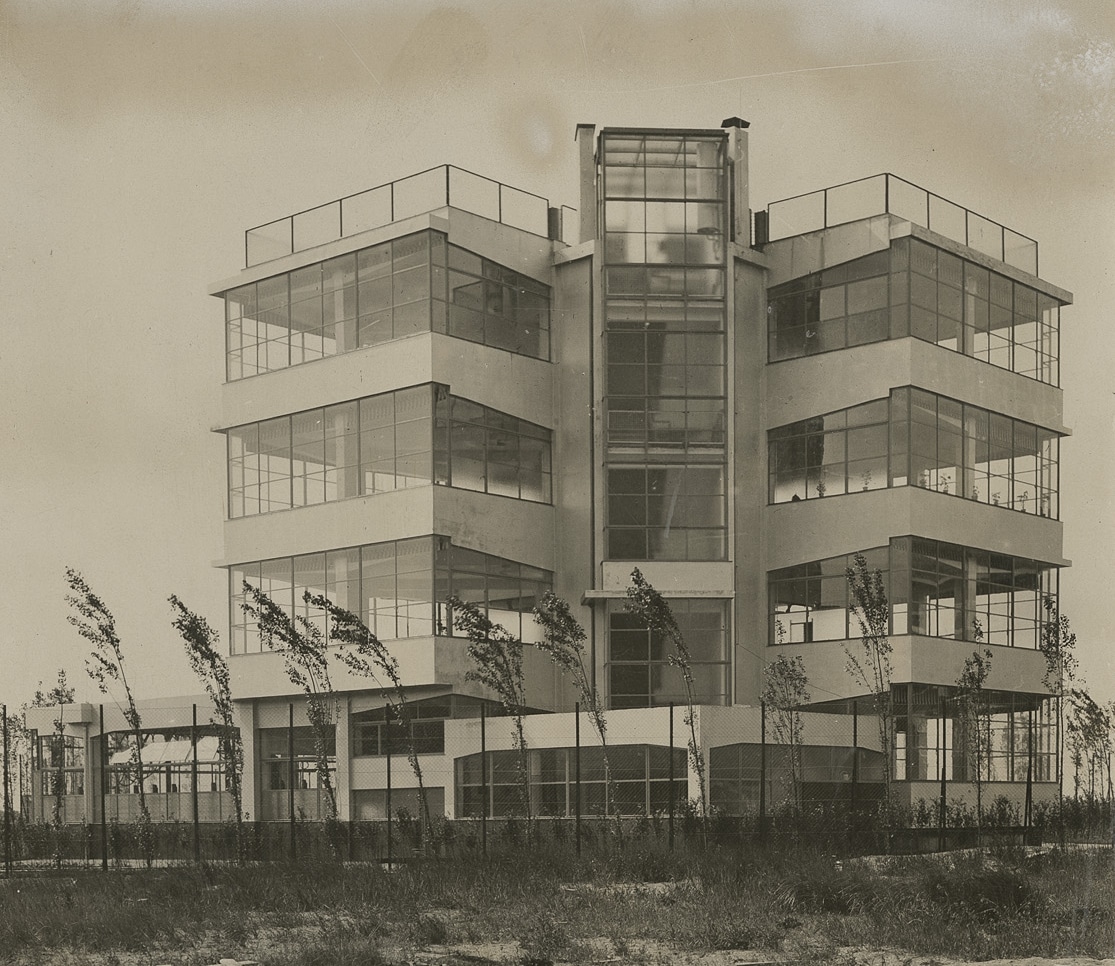
European designs of the 1930s intertwined architectures of health with architectures of learning. One particularly influential project was the Cliostraat Openluchtschool voor het Gezonde Kind, or “Open Air School for the Healthy Child,” completed in Amsterdam in 1930 by Jan Duiker. The name signals the design’s indebtedness to Duiker’s previous project, a large tuberculosis sanatorium. In addition to customized furniture made of plywood and hollow tubular steel — lightweight materials that made classroom setups mobile and child-friendly — Duiker incorporated features considered indispensable to a sanitorium: access to fresh air, sunlight, open spaces, greenery, and designated daybeds for resting.
In the case of the 1936 Suresnes School, designed by Eugène Beaudouin and Marcel Lods in Suresnes, near Paris, a team of experts directly advised on the design. Some were medical professionals, and others brought their lived experience. Louis Boulonnois, for instance, served on the committee as a former tubercular patient and current public-school teacher. The Suresnes School was sited in an open meadow bordered with leafy trees, and featured classrooms with glass doors on three sides. Children could rest or play on shaded patios, nestled among trees.

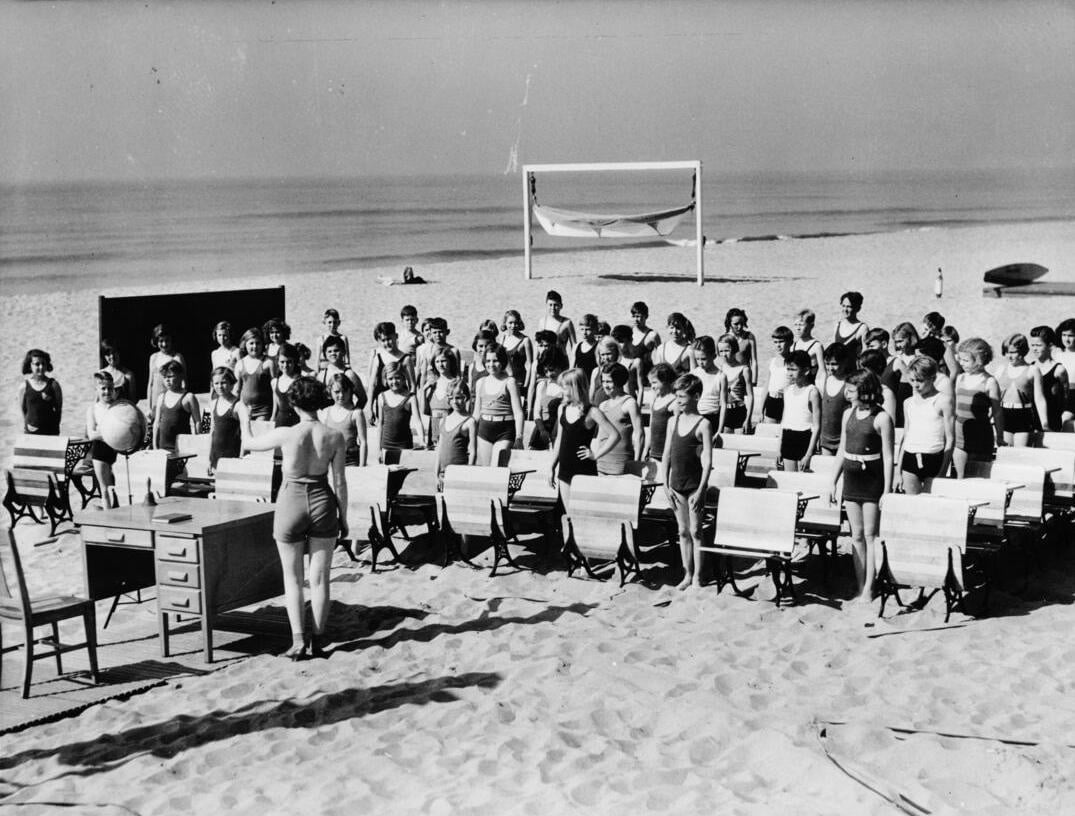
A small number of entirely outdoor “Open Air” schools comprised the extreme end of this movement, but many schools incorporated open-air design principles, with partition walls that opened to a pavilion, or entire walls of windows, all open during class. Zürich’s Wiedikon Kindergarten, designed by Hans Hofmann and Adolf Kellermüller in 1932, was located in an urban neighborhood but nonetheless prioritized greenery inside and out. The original design included vertical gardens dangling from open glass walls, making the entire structure a kind of Bauhausian Hanging Gardens of Babylon. 11
American educators began to take note. To be clear, most school designs during this period did not experiment with modernist ideas — preferring instead the tried-but-true patchwork of historical styles that comprise 19th and early-20th century civic aesthetics. But a few projects ventured into new territory, beginning with the preschool and kindergarten of Oak Lane Country Day School, commissioned in 1929 from 34-year-old Swiss-born William Lescaze.
Oak Lane was a progressive experimental school outside Philadelphia; John Dewey served on the board, and Noam Chomsky was a toddler student. Lescaze was tasked with designing the nursery-kindergarten building and its classroom furniture. He scaled everything to child size, including the stair treads, and used cork flooring to soften falls. With its flat roof and metal-mullioned windows, Lescaze’s design is credited as the first incarnation of the International Style on U.S. soil. The difference between Lescaze’s design and Oak Lane’s older grade school was as stark as the difference between an electric refrigerator and a wood-and-brass ice box.
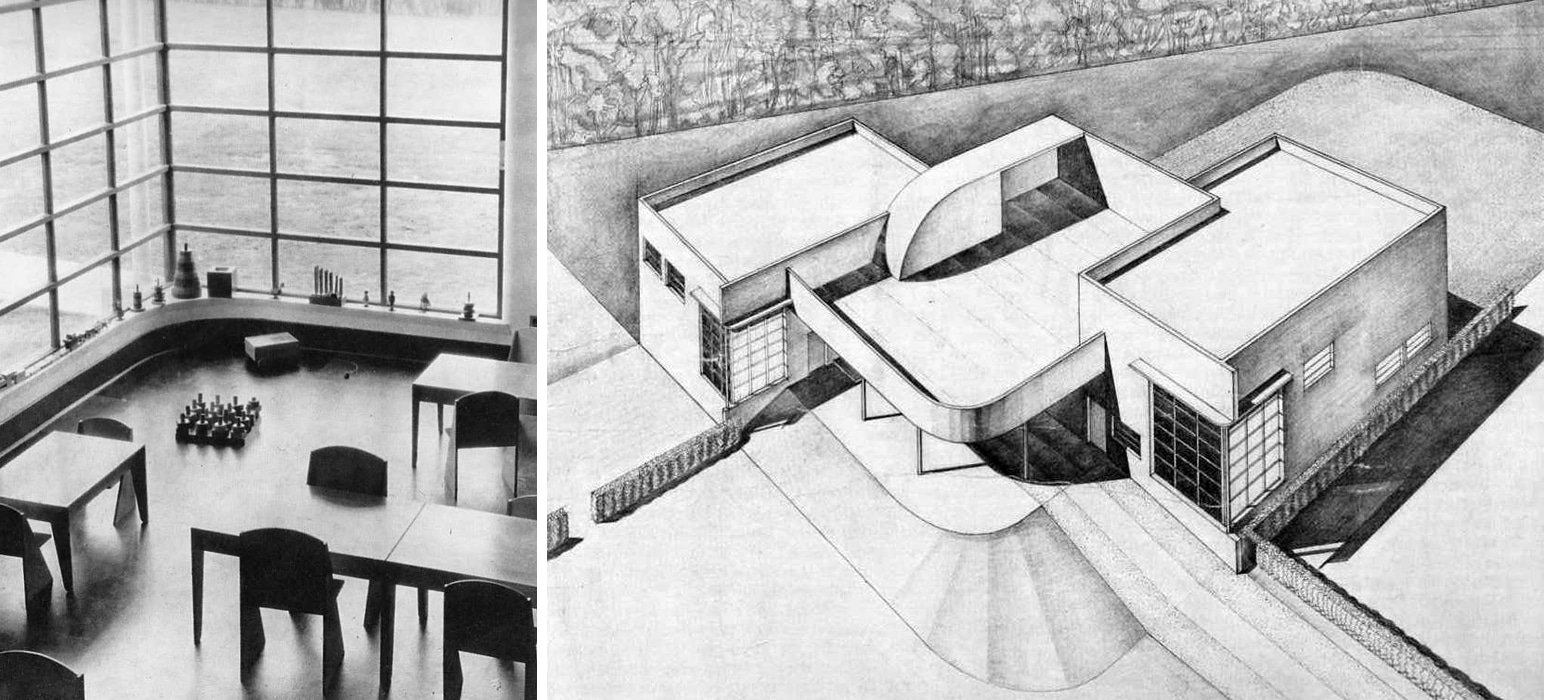
Over the decades, the praise bestowed upon Lescaze’s Oak Lane project, as well as that of Richard Neutra’s Corona School (1935) and Eero Saarinen’s Crow Island School (1940), has had the unfortunate effect of drawing attention away from other pedagogical institutions built in the same era, that are equally deserving of attention, and in some ways more innovative. One building long neglected by historians is the Washington Boulevard Orthopaedic School in Los Angeles (1936), designed by William F. Ruck. 12 Unlike Oak Lane, the Washington Boulevard School was not a small, experimental anomaly, but a large public school for children with physical impairments, who attended from all across the city.
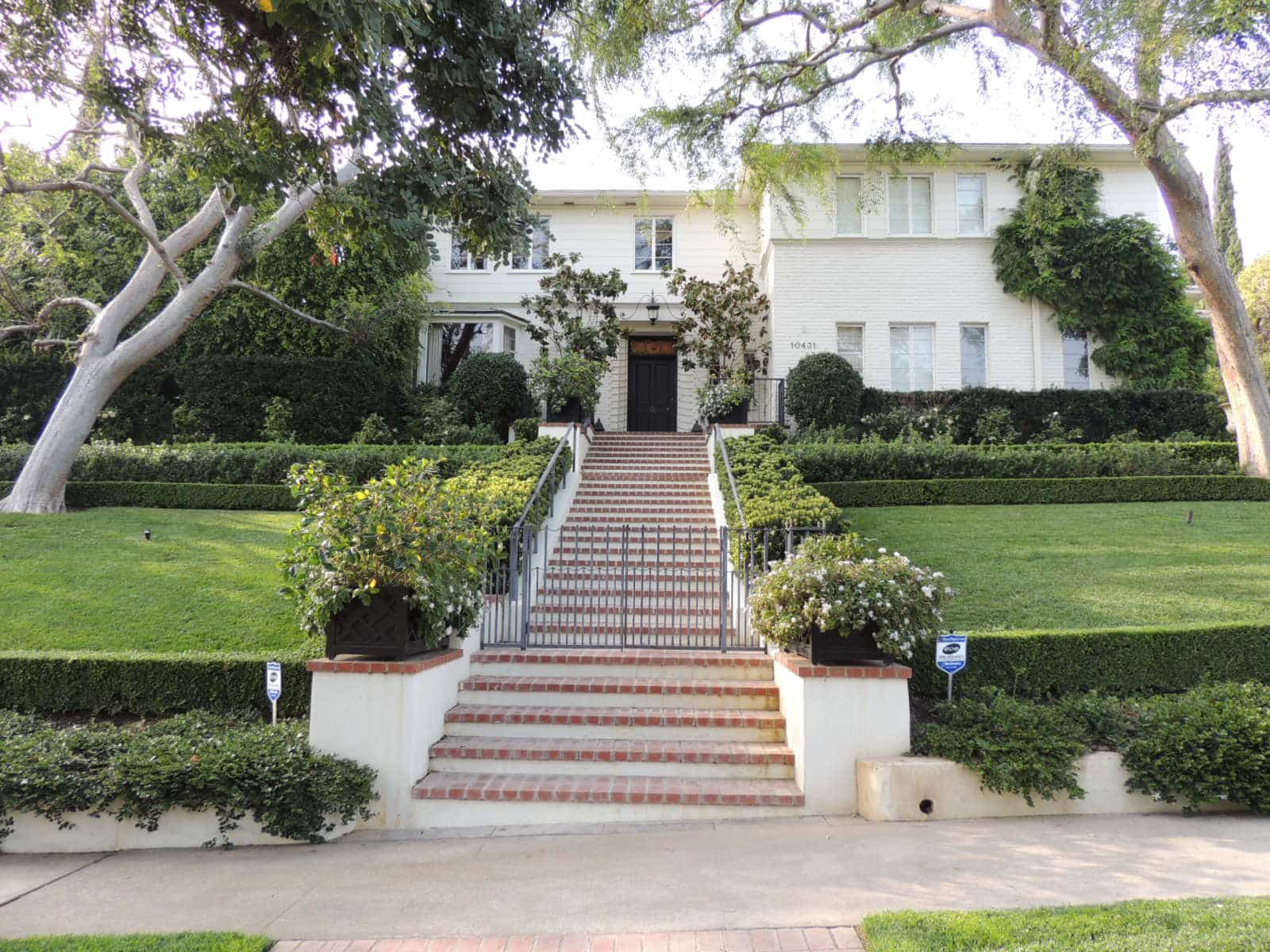
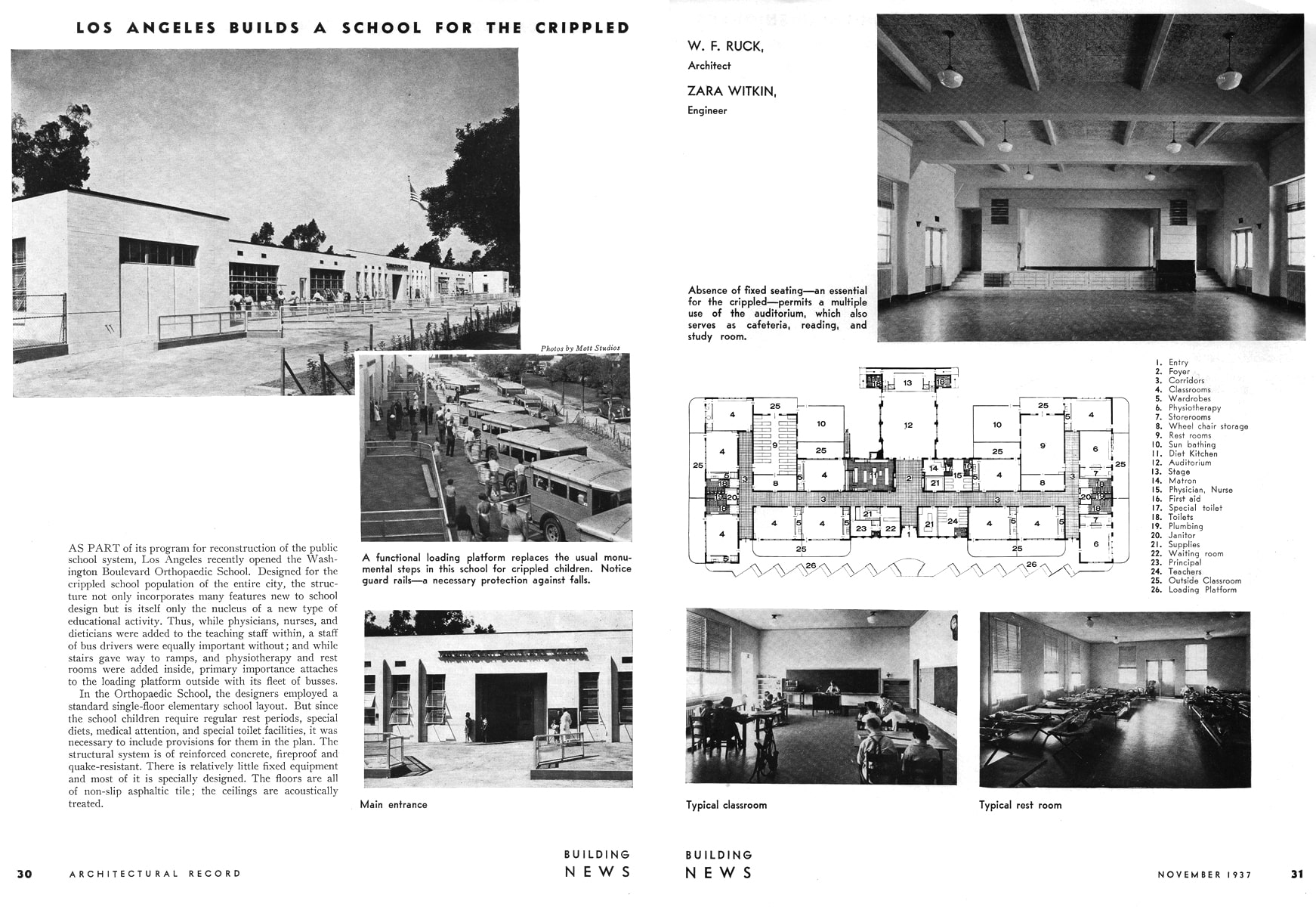
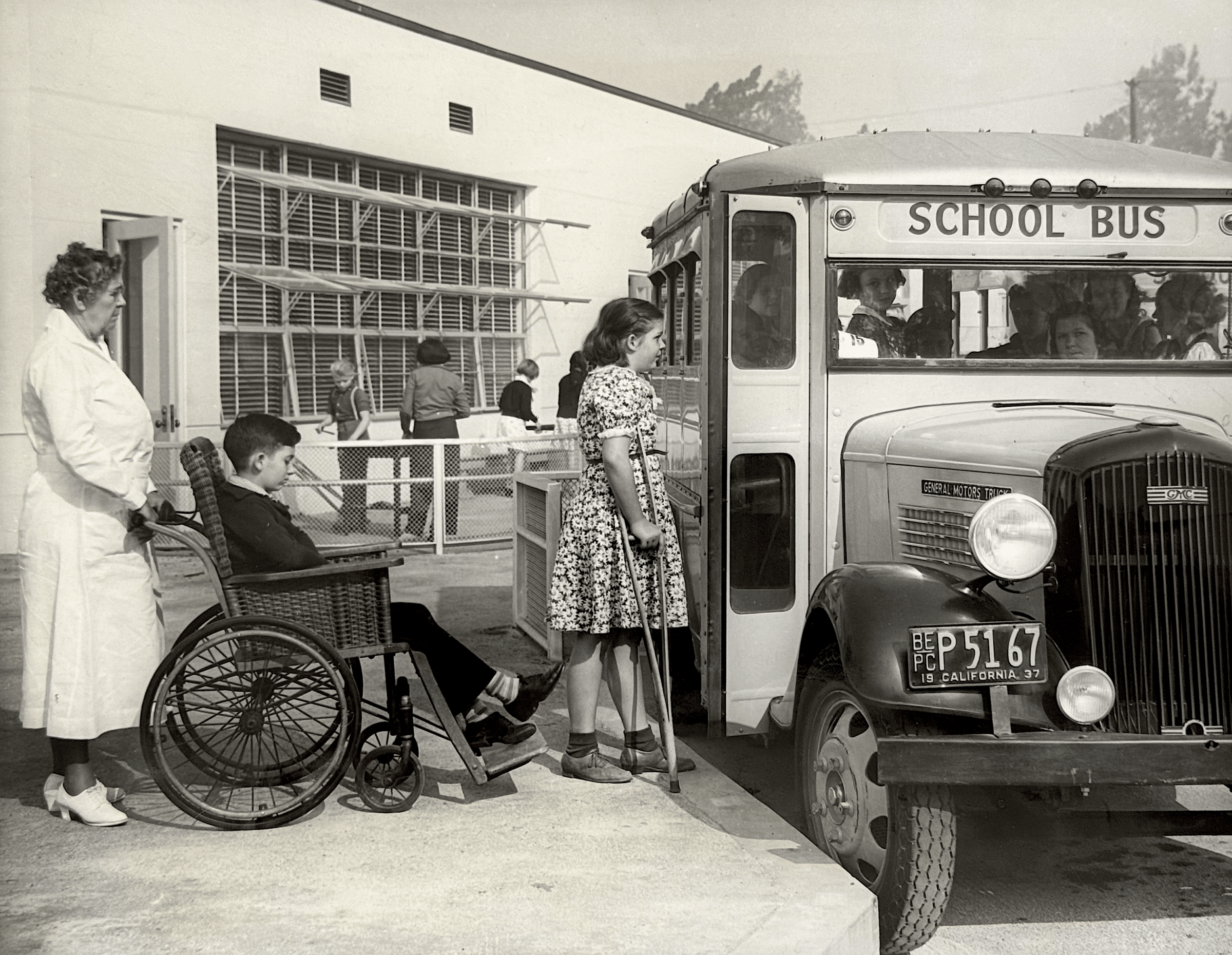
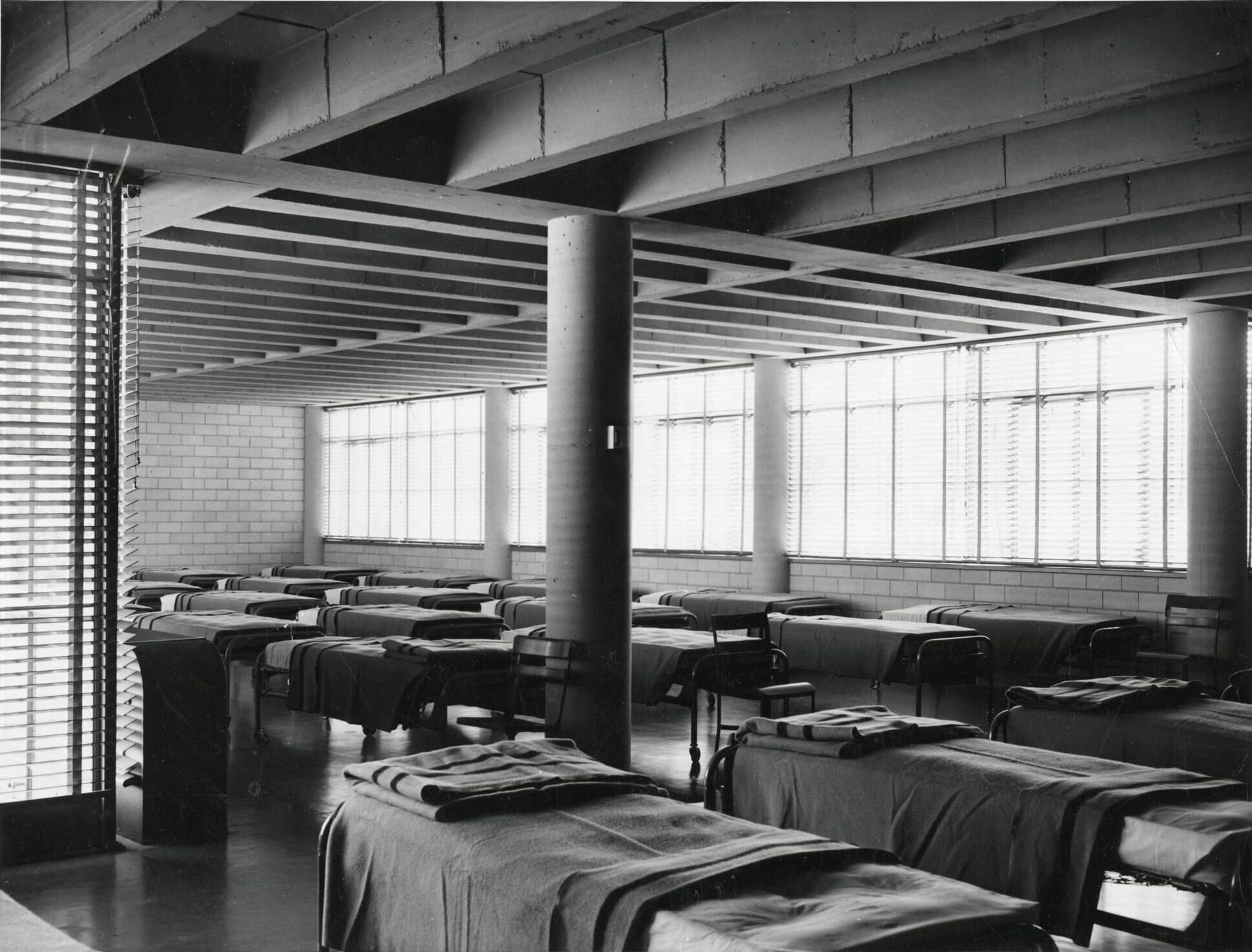
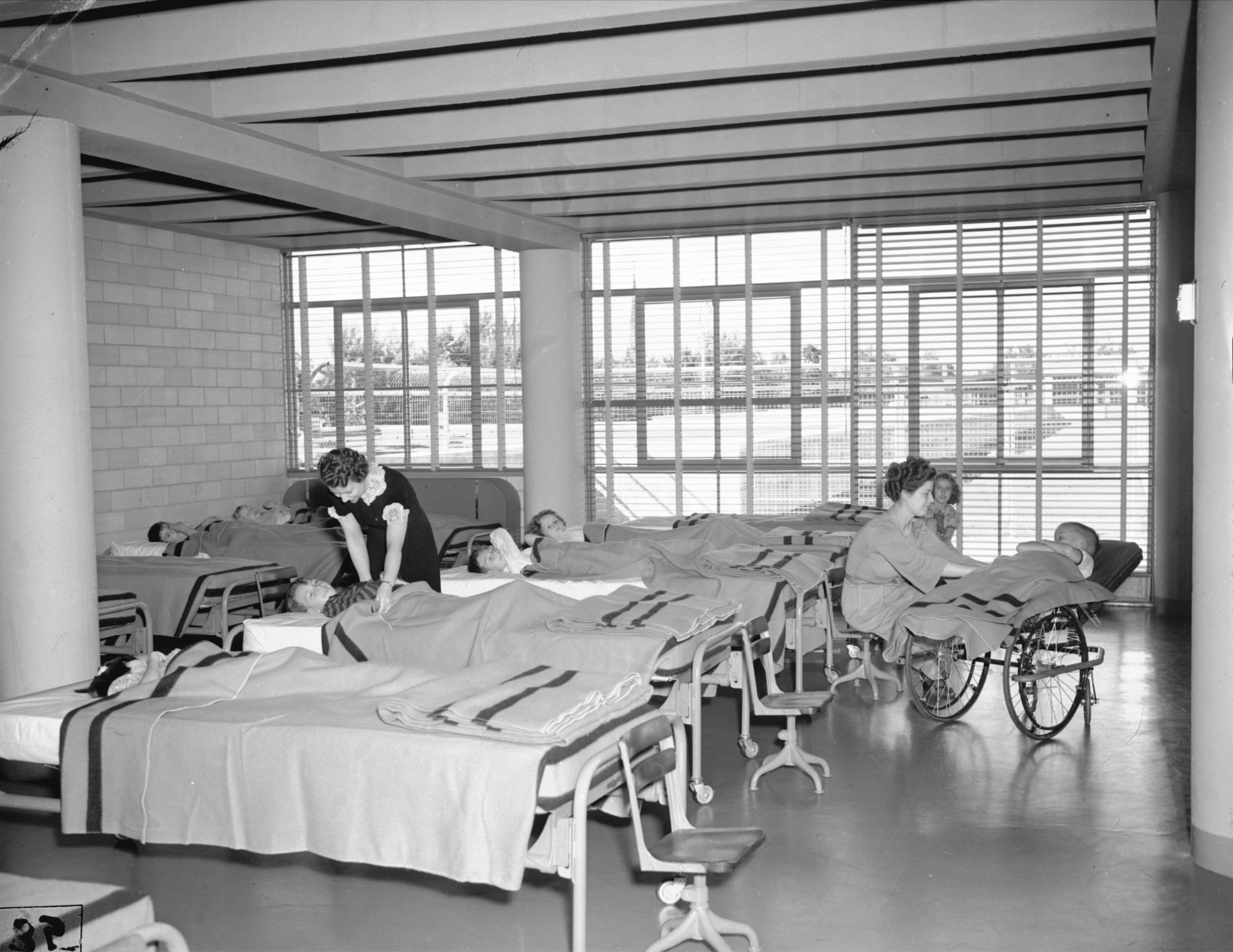
Ruck’s long, single-story structure echoed streamlined effects he’d used for mansions, designed for private clients in Bel Air and Beverly Hills. The Washington Boulevard School included up-to-date ventilation systems and designated rest areas where fatigued students could lie down on cots in cool, soothing darkness. Photographs and blueprints reproduced in a 1937 issue of Architectural Record show that the building’s minimalist entrance was directly adjacent to individual lanes, separated by railings, which guided students to and from their mode of transportation and the school’s entrance.
The school featured several lanes, such that students could queue depending on their assistive technology, i.e. kids on crutches lined up for the bus behind other kids on crutches. The classrooms’ spare furnishings — a photo shows just a few chairs and one small table, piled high with books and art supplies — gave students greater freedom of movement and made space for social play. Even a generation earlier, the same children who attended the Washington Boulevard School as day students would have boarded at a residential school or been isolated at home.

The Charles A. Boettcher School for Crippled Children in Denver (1940) was even more ambitious. Burnham Hoyt was a midwestern architect, who, like Ruck, had no previous experience designing for disability. Though Hoyt is more frequently associated with his design for the Red Rocks Amphitheater, a concert venue about fifteen miles outside of Denver carved into living rock, the Boettcher School is arguably his magnum opus. 13
Hoyt connected the school to the hospital via a subterranean tunnel.
Some features of the Boettcher would have been recognizable to anyone who had toured Dessau or Amsterdam in the 1910s and 1920s: large white cement spaces supported by spindly industrial columns and walled with plate glass; a porte-cochere held aloft by cement pylons; a low, wide horizontal footprint resembling that of a factory or department store; double-height windows overlooking interior courtyards; enclosed green spaces for eating lunch or enjoying the sunshine; hygienic stainless steel banisters, white tile, cement walls. The entrance doors were embedded in an all-glass frontage for maximum light. Because some Boettcher students lived at the adjacent pediatric hospital, Hoyt connected the school to the hospital via a subterranean tunnel. This long, weatherproof, lighted corridor provided safe passage until students emerged into a two-story atrium flooded with sunshine.
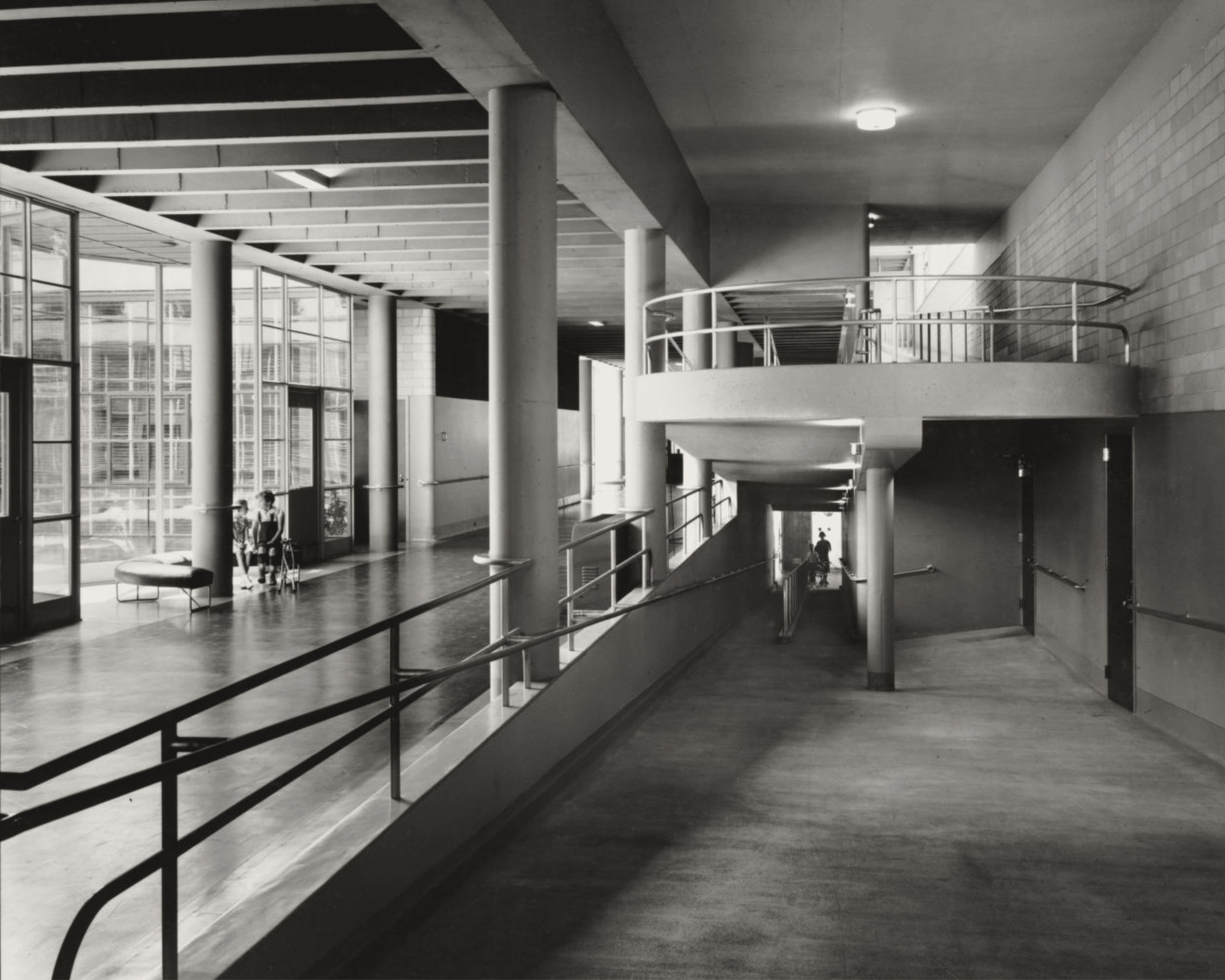
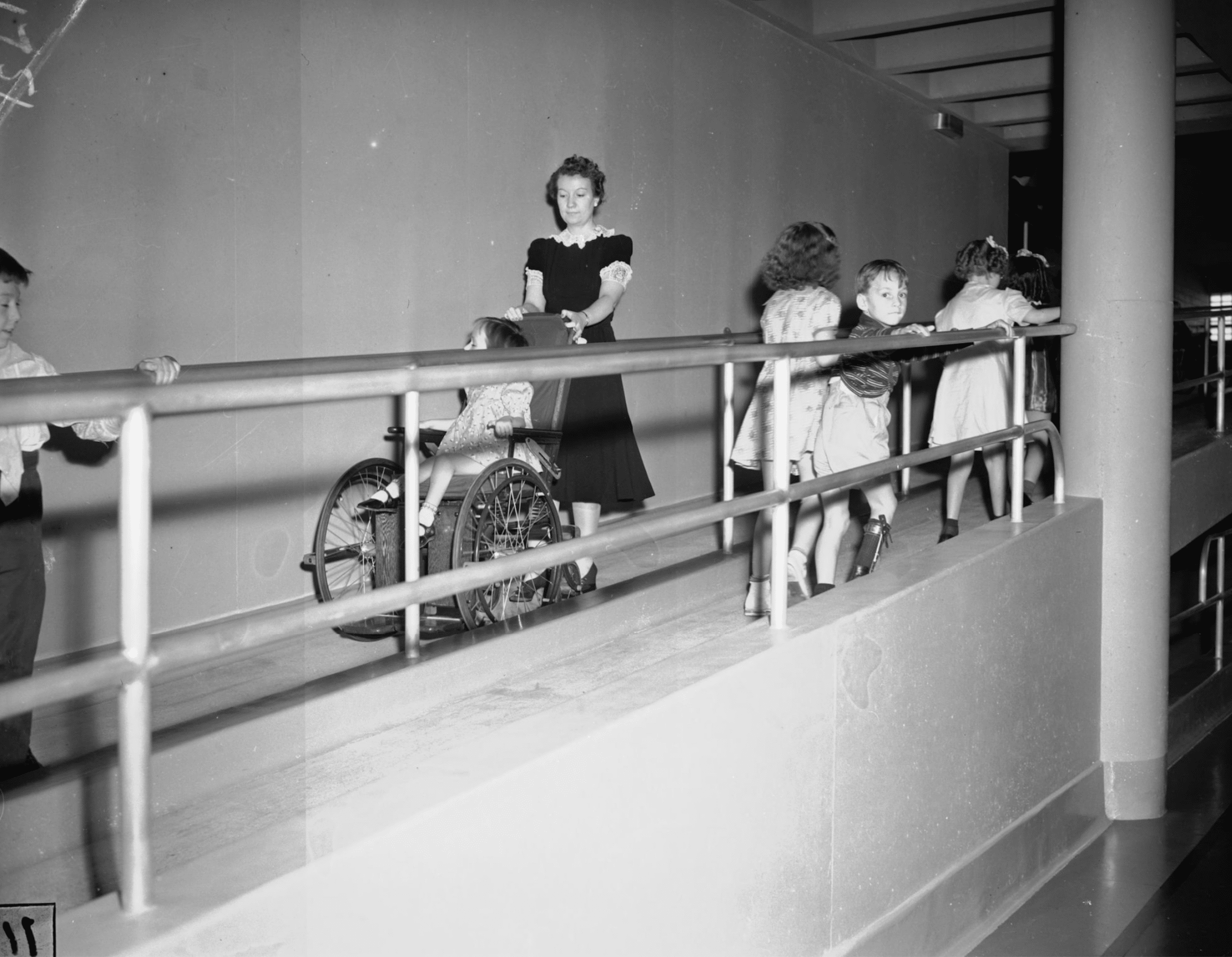
Hoyt’s specific genius was in the care with which he attended to the lived experience of the students. One of his design accomplishments, for instance, was to neutralize the perceived differences between bodies, whether between children with various forms of disability or between students with disabilities and teachers or administrators without. His piece de resistance was a double-lane ramp that connected the first floor, mezzanine, and second floor, and obviated the need for a staircase. There was no alternate mode of vertical conveyance; everyone used the same ramp, eliminating the typical division between those who could climb a staircase and those who would need to be carried or left behind.
The ramp was furnished with a stainless-steel tube railing not unlike those in iconic buildings like Walter Gropius’s Fagus Factory (1911) or Le Corbusier’s Villa Savoye (1929), but whereas these projects used such details to create a more machine-like, programmatic environment, Hoyt used them to enhance human agency. The bars accommodated all modalities of movement. Photographs show the railings being gripped and leaned against, used as a place to rest or to interact with fellow students on floors below.
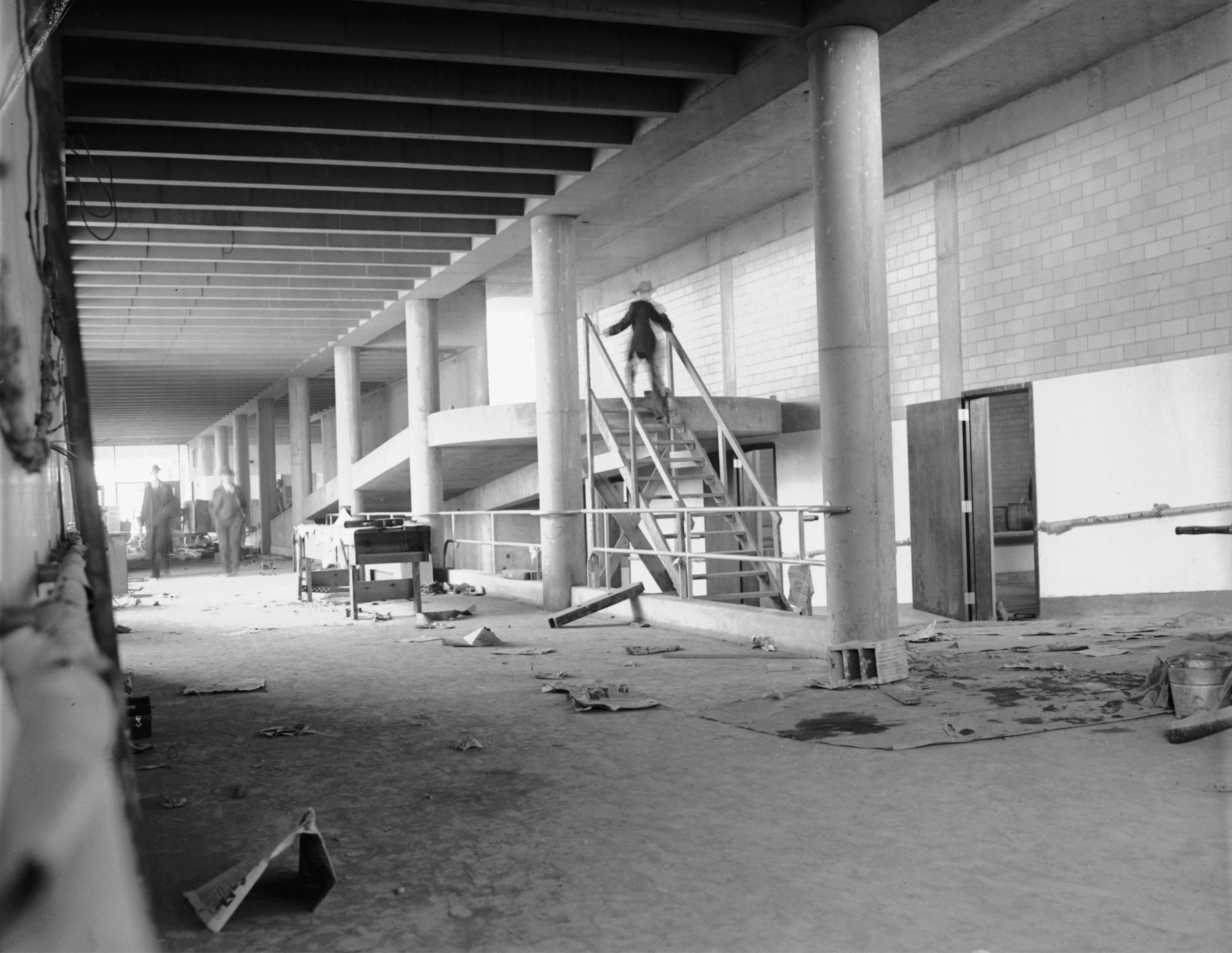
Construction of the Charles Boettcher School, 1940. [Hedrich-Blessing Photographers via Denver Public Library Special Collections, X-28332]

Charles Boettcher School promotional photo, August 26, 1940. [Photographer unknown, collection of the author]
“School for Crippled Children, Denver, Colo.,” The Architectural Forum, 1937. [via USModernist]
Charles Boettcher School, c. 1945. [Photographer unknown via Denver Public Library Special Collections, X-28337]
Resting room at the Charles Boettcher School, 1940. [Photographer unknown via Denver Public Library Special Collections, WH1990]
Charles Boettcher School, c. 1941. [Hedrich-Blessing Photographers via Denver Public Library Special Collections, Z-10052]
Charles Boettcher School, c. 1941 [Hedrich-Blessing Photographers via Denver Public Library Special Collections, Z-10051]
Charles Boettcher School, c. 1941 [Hedrich-Blessing Photographers via Denver Public Library Special Collections, X-28336]
Charles Boettcher School, c. 1941.[Hedrich-Blessing Photographers via Denver Public Library Special Collections, Z-10056]
Charles Boettcher School, home economics classroom, c. 1941. [Hedrich-Blessing Photographers via Denver Public Library Special Collections, Z-10063]
Charles Boettcher School, July 1940. [Photographer unknown via Denver Public Library Special Collections, Z-28338]
Dancers performing at the Boettcher School, ca. 1950s. [Lloyd Rule via Denver Public Library Special Collections, Z-10343]
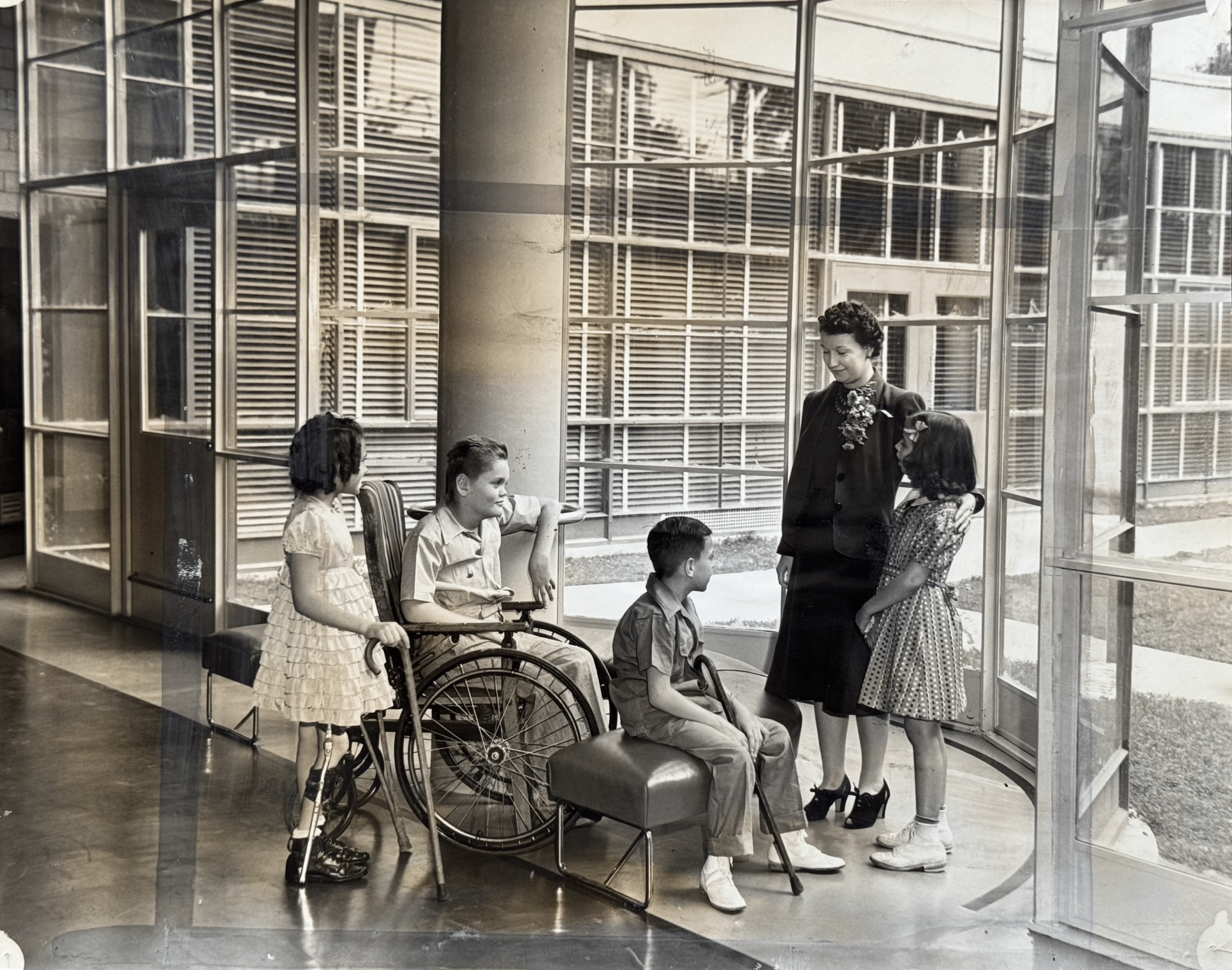
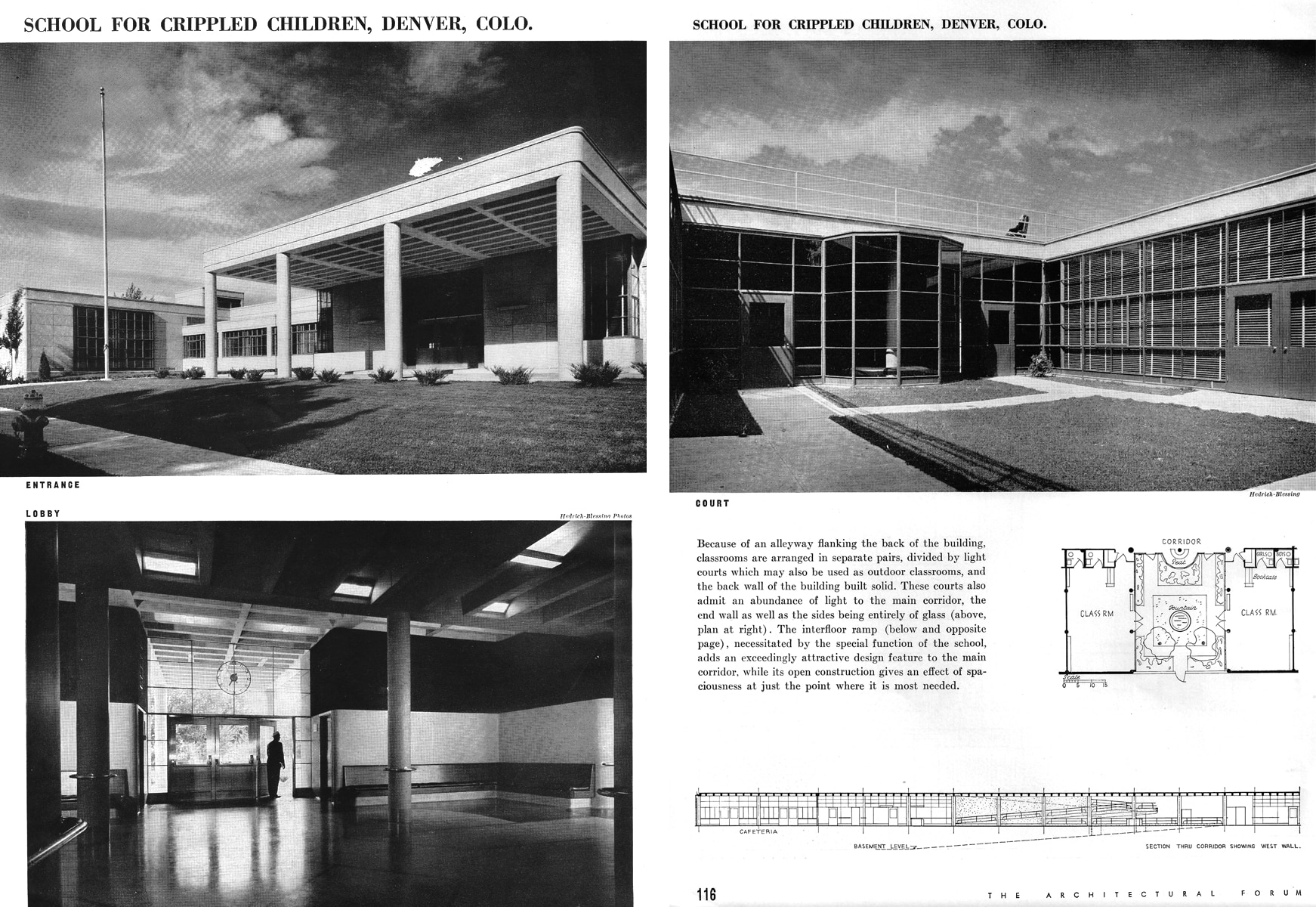
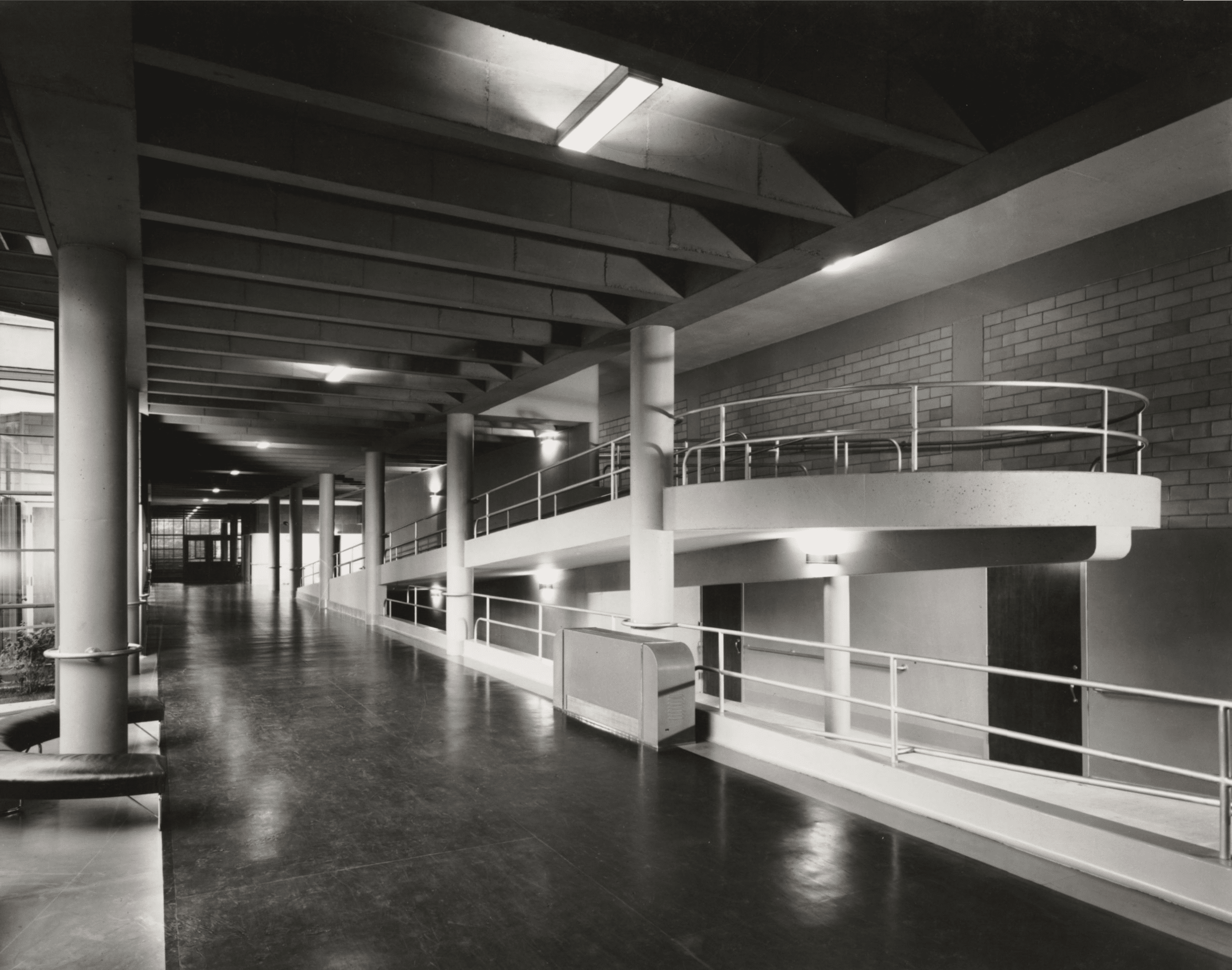
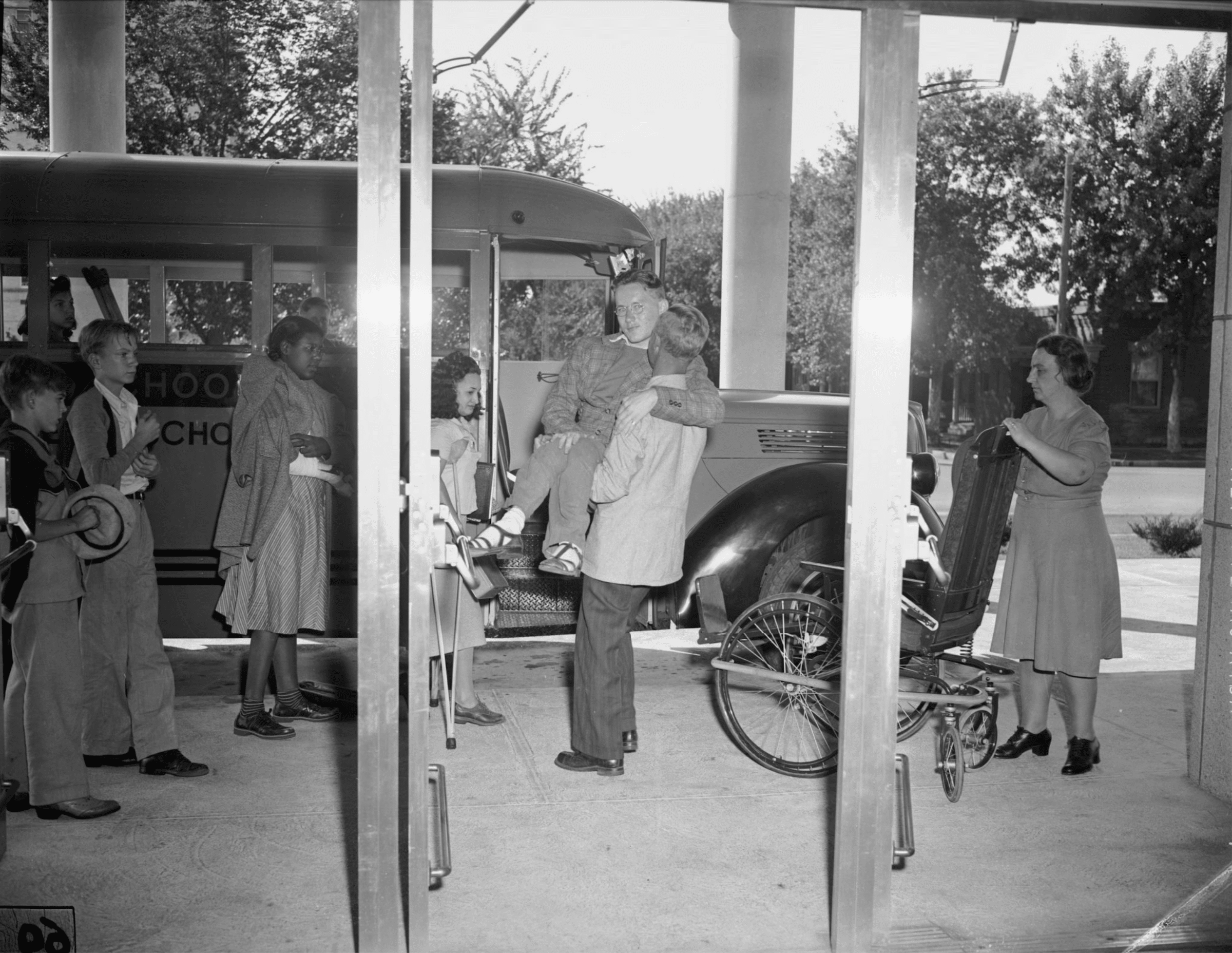
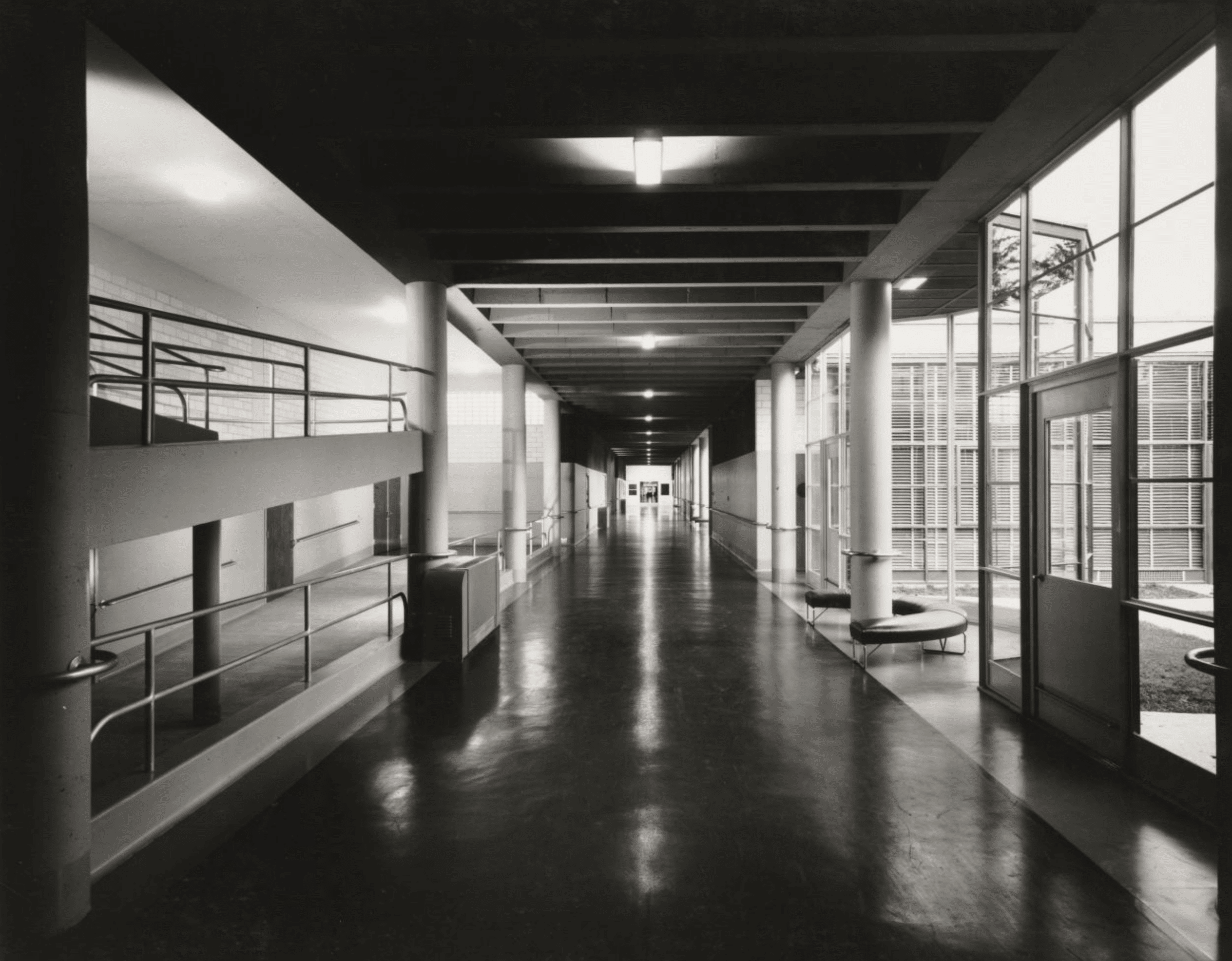
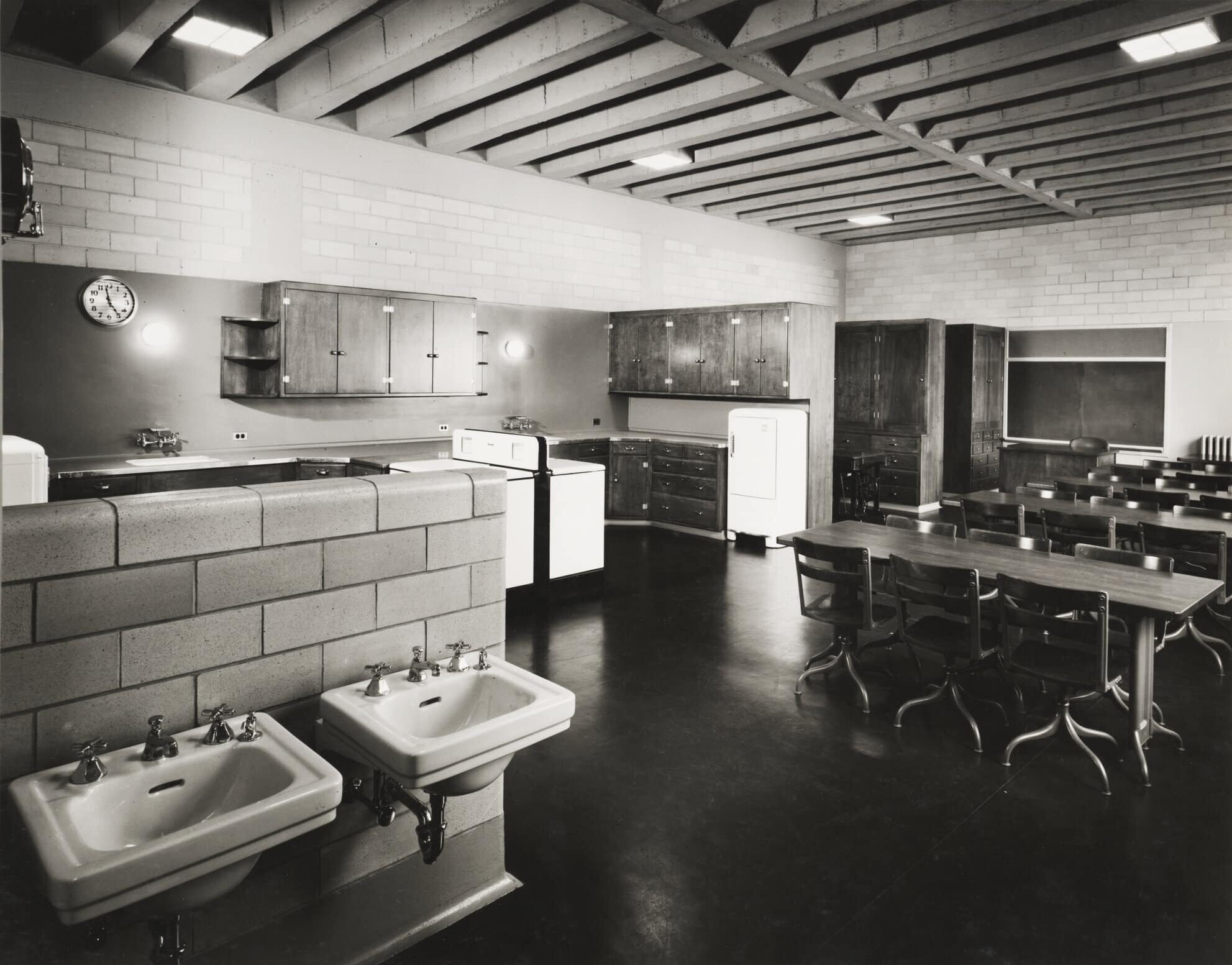
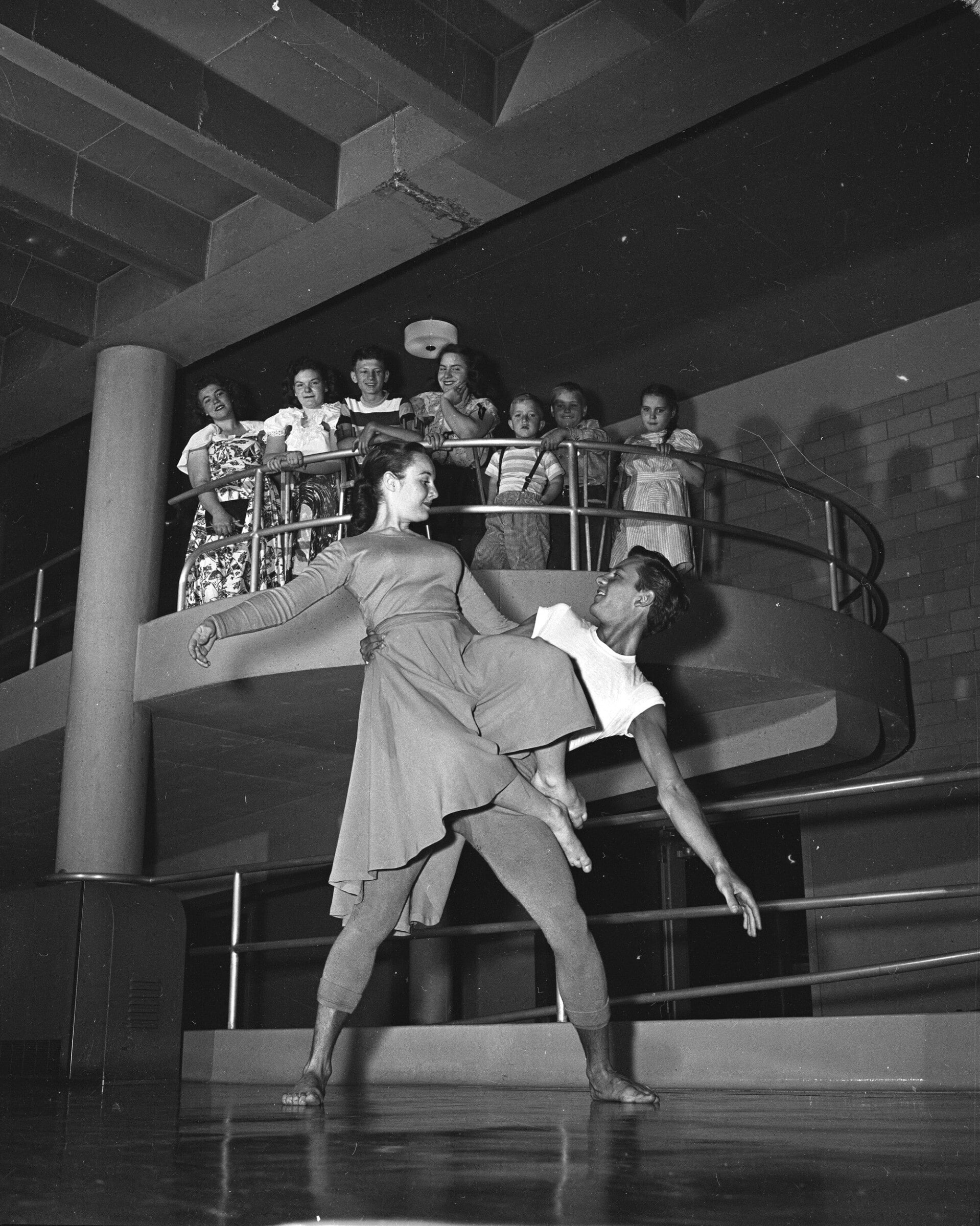
The Boettcher’s relationship with opticality is perhaps typical of International Style, but extremely atypical of disability design. Hoyt relied heavily on the repetition of circular or half-circular elements, including benches that wrap around concrete pylons to a curved window bay. These features, in combination with large airy spaces, created many places to see and be seen. One photo shows a boy with a cane sitting on a half-circle padded leather bench, exactly as would a tourist in an upscale hotel lobby. The building enabled a form of embodiment that prioritized illumination over obscurity, and allowed children to be front and center, rather than hiding them away.
Such was not the case in other schools. The design mandate of the Sunshine School for Crippled Children in Oakland, California (1937), for instance was to “create the most cheerful possible atmosphere in order to encourage the children to forget as far as possible their disabilities,” implying that the less a disability was visible, the better — exactly the opposite of the Boettcher School. 15
Common attitudes and prejudices toward children with disabilities were not miraculously suspended by designs like that of the Boettcher School. The repetition of words like “cripple” in the names of these institutions suggest as much, but there are other indicators as well. Some schools explicitly discouraged students from dating each other, while others implied that students were somehow dangerous, or contagious, and needed be segregated from the general population. 16 Many schools hewed closely to conventions of treatment that were tied to a medical model of disability, which put the onus on the child and their family to rehabilitate or correct the body so as to conform to social expectations. The West Virginia School for the Deaf and Blind in Romney (1938) privileged the values associated with hearing and oralism to the extent that it deliberately discouraged the use of sign language, and outfitted every classroom with special microphones and speakers. 17
Teaching children ‘hygienic living’ was a higher priority than book learning.
Historian of medicine Rachel Elder’s close study of the White Special School for Epileptic Children in Detroit (1935) demonstrates that teaching children “hygienic living” was a much higher priority than book learning. 18 Some schools encouraged aggressive or experimental medical interventions: eye surgeries for students with visual impairments; major leg, knee, and hip surgeries for students with physical impairments; and, in the case of the White Special School, injections of sheep-brain lipoids to suppress seizures. This last was the result of an odious partnership between Parke Davis pharmaceuticals and Detroit’s Board of Education and Department of Public Health.
One reason that school design for disabled children changed so dramatically in the 1930s and ’40s was the U.S. government’s Works Progress Administration. WPA projects often drew on architectural modernism, partly because the forms were simple and thus more easily constructed, and partly because of the prerogatives of the architects for hire. The consequence is that monies from the WPA were dispersed in ways that accelerated the ascendant ethos of architectural modernism. WPA funds, for instance, were essential to the construction of the Boettcher School, the budget of which matched public dollars with a donation by the eponymous mercantile millionaire. In the more common scenario, new schools were constructed entirely by the WPA. 19
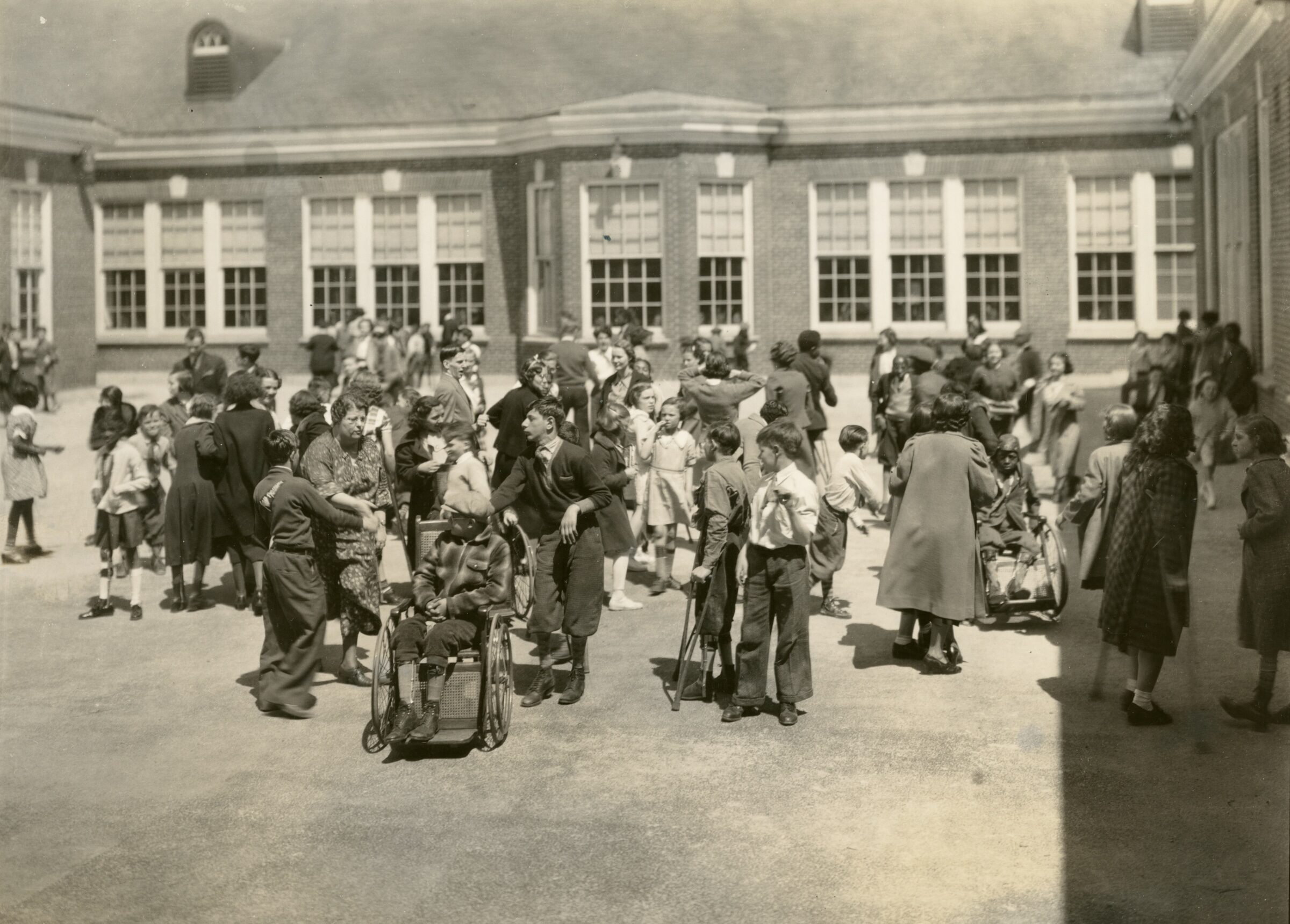
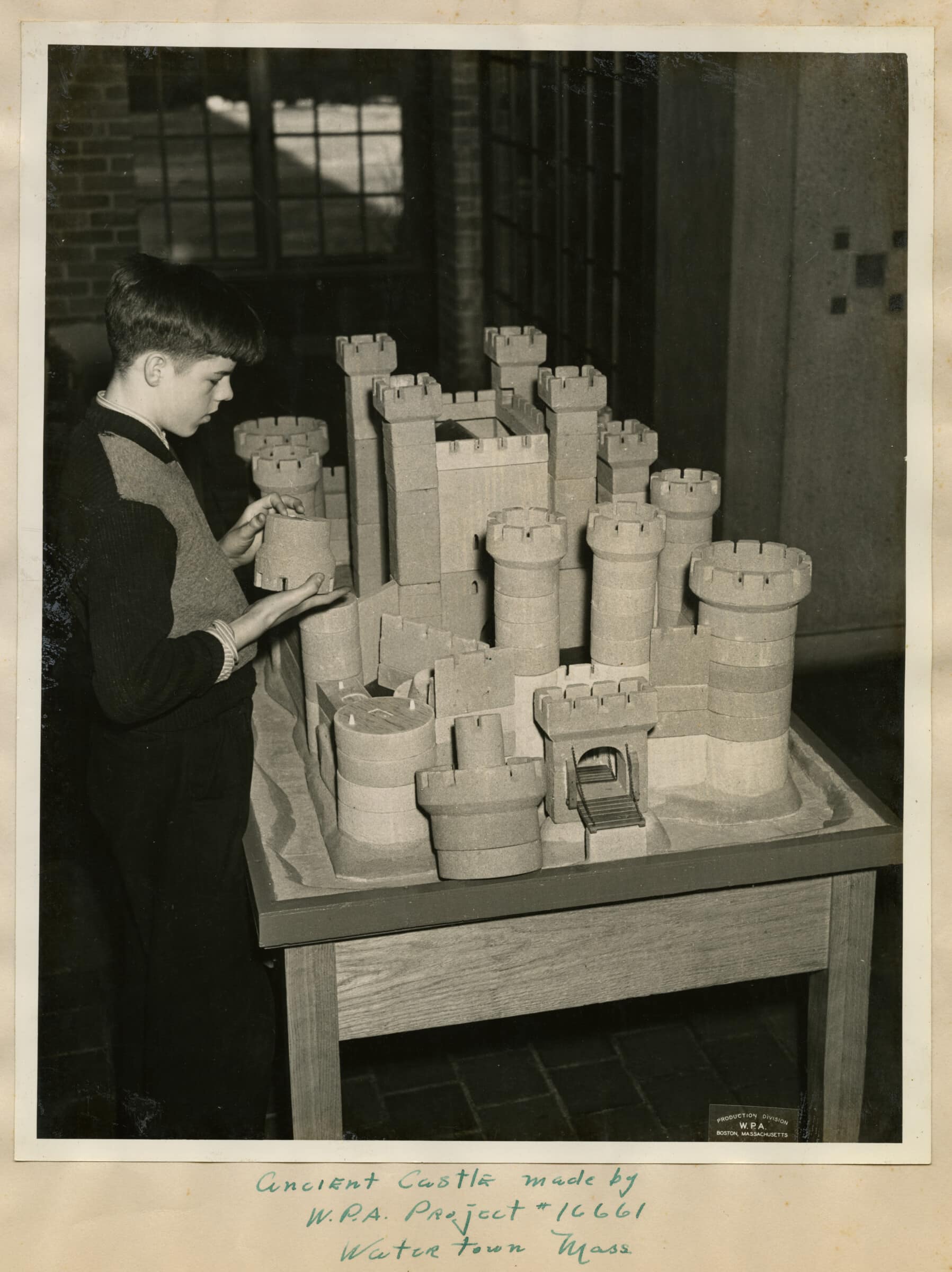
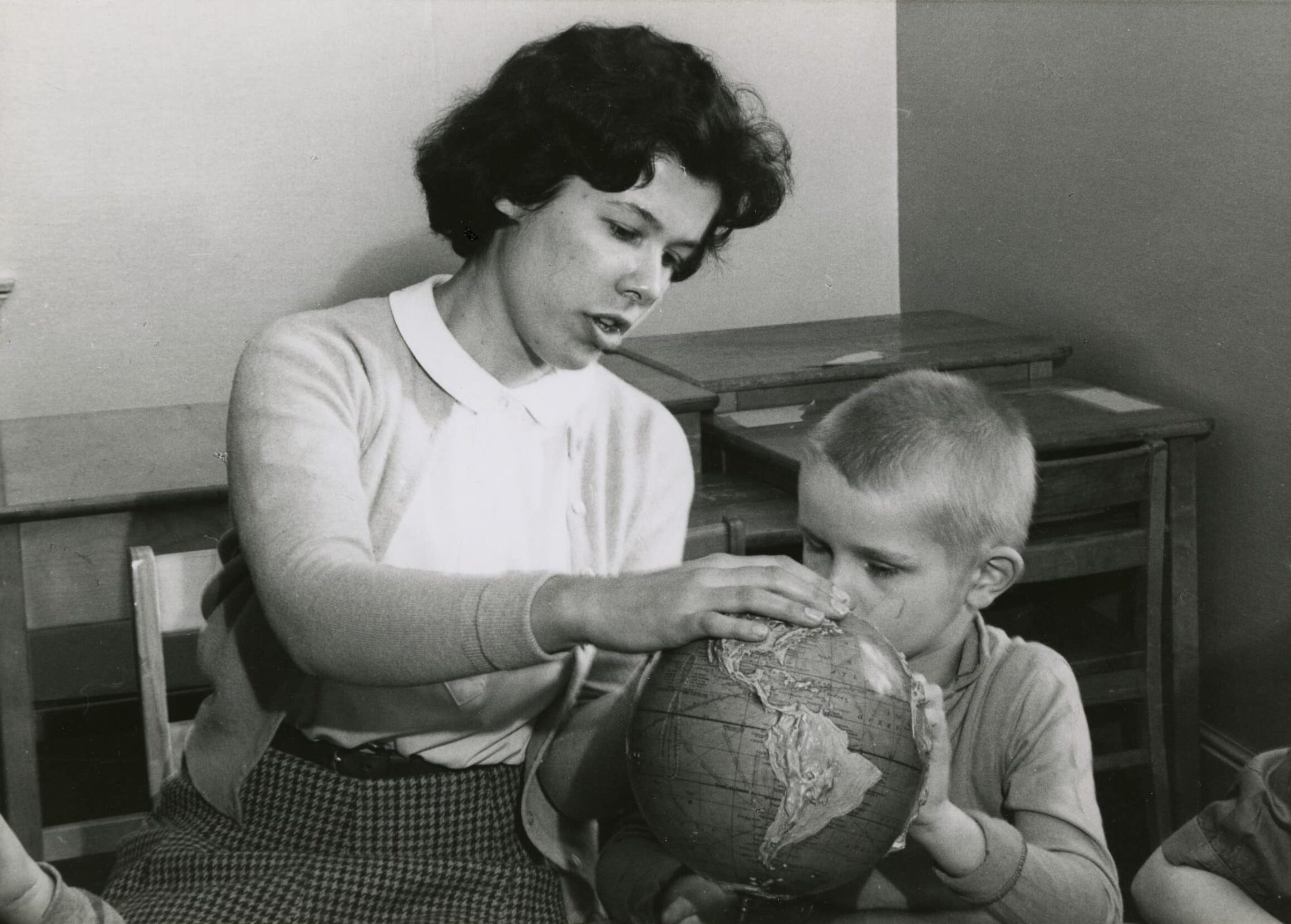
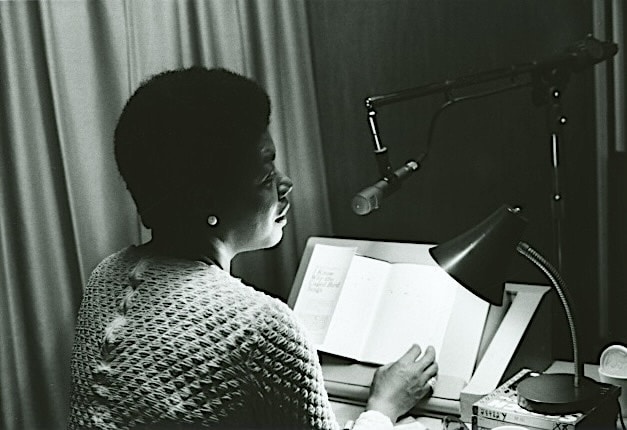
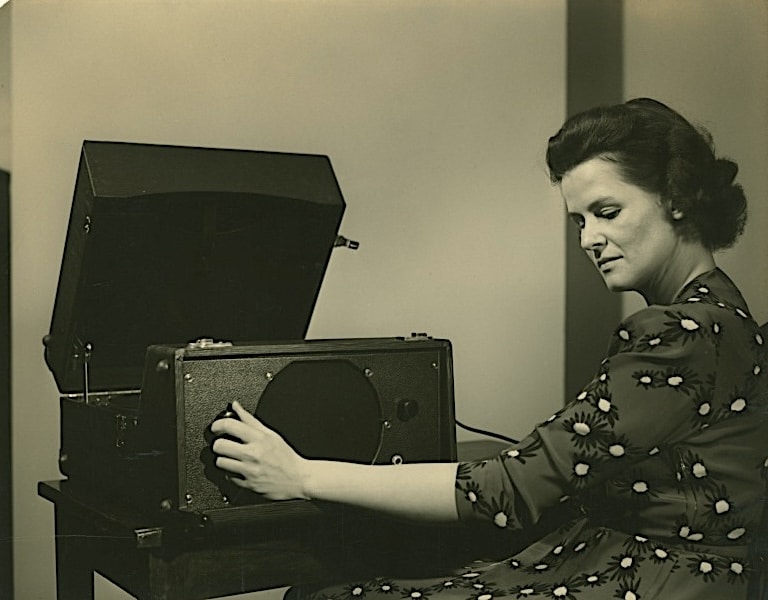
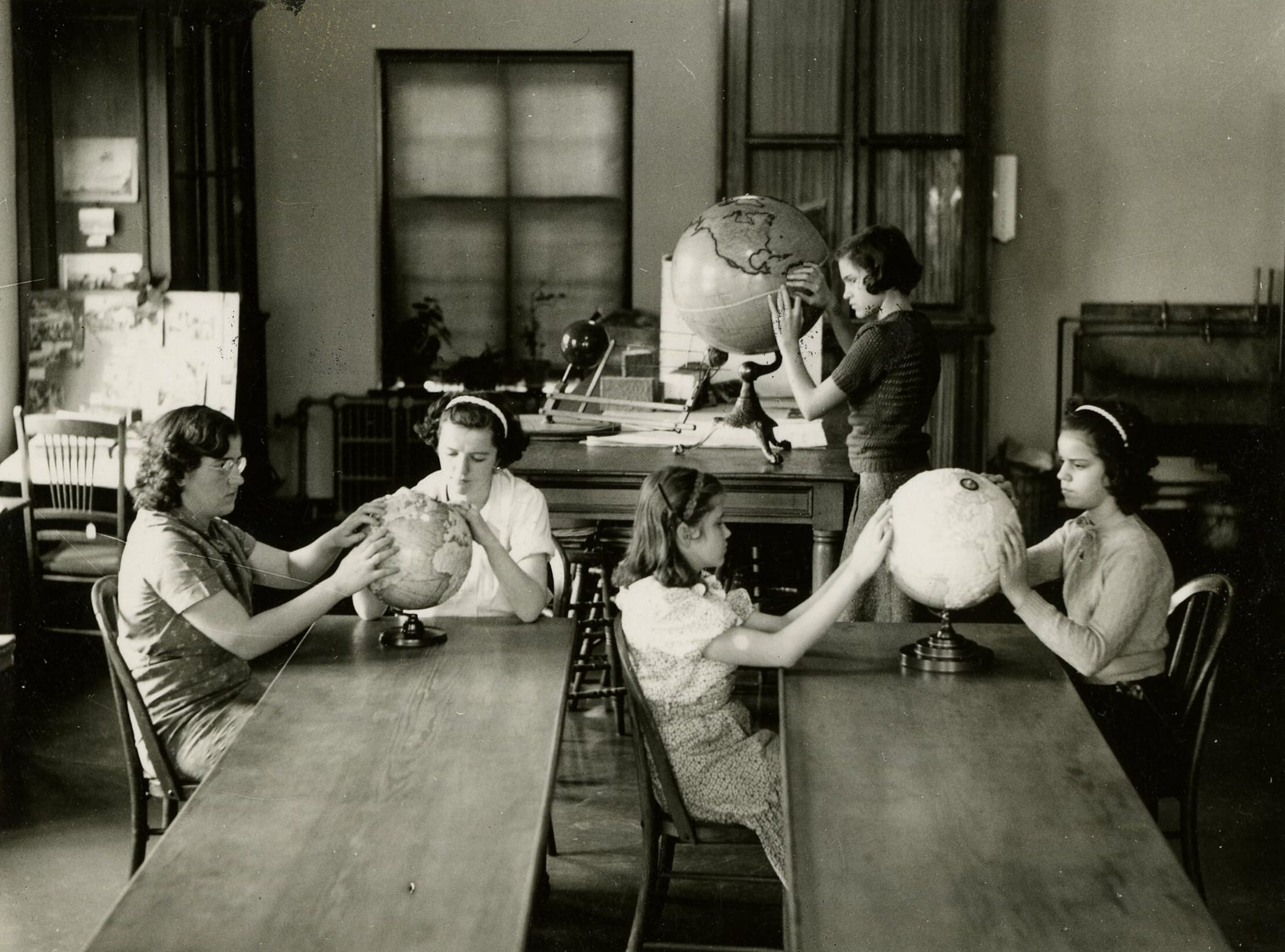
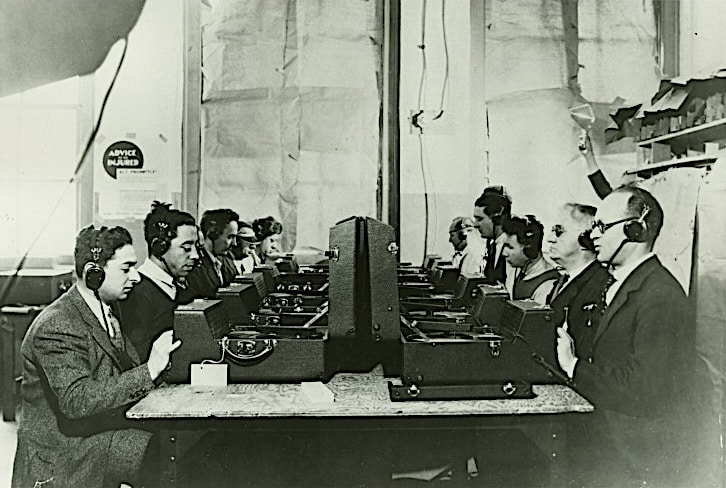
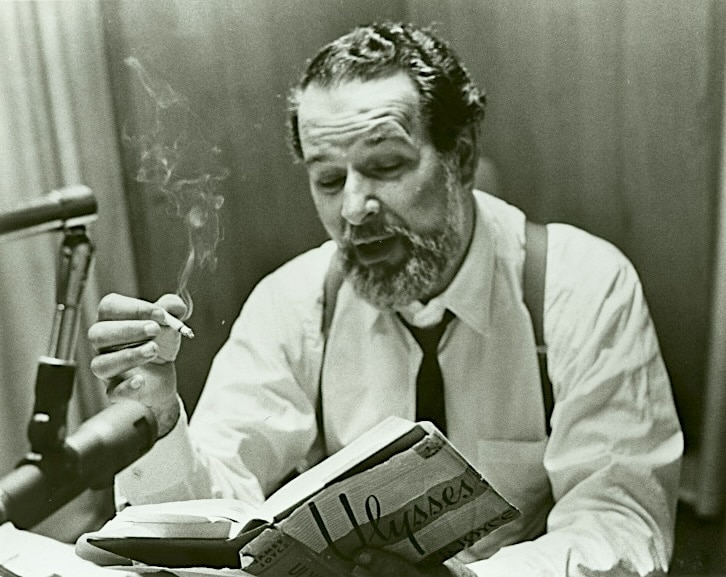
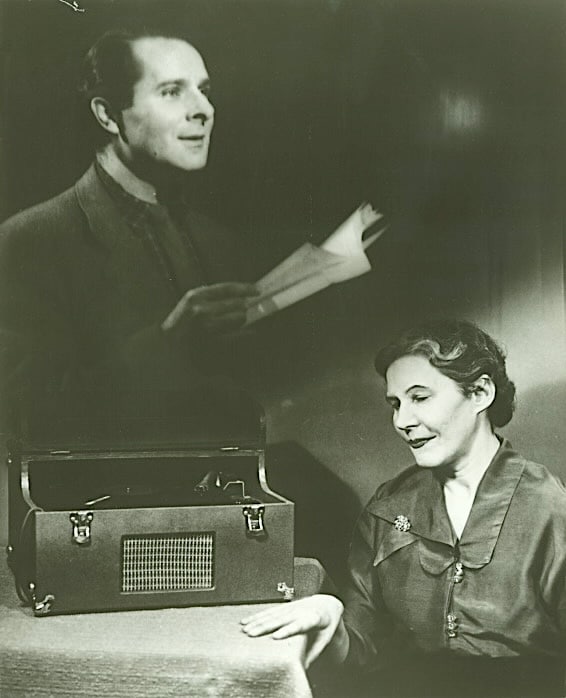
In addition to building schools, the WPA spearheaded a number of smaller-scale projects that improved educational experience for children with disabilities. WPA funds were earmarked for supporting experimental efforts to integrate these kids into mainstream classrooms, for instance, prototyping what came to be known as special education classes. 20 For the first time, costly features like elevators were incorporated into public school design, and classrooms outfitted with audiovisual technologies such as lantern slides, record players, and overhead projectors. The WPA also produced and distributed inventive classroom materials that better served diverse learning styles and modalities, including embossed maps, books printed in Braille, and tactile learning aids.
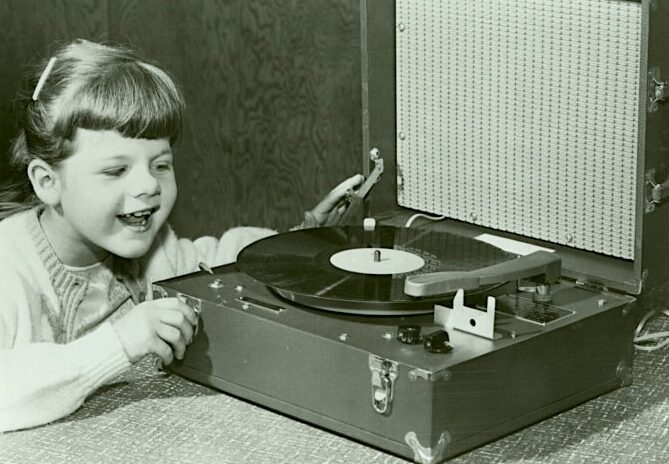
WPA Talking Book Project, c. 1935-36. [Photographer unknown, American Foundation for the Blind Talking Book Project Studio Photographic Archive via Internet Archive]
Teacher and student at the Perkins School for the Blind explore a tactile aid fabricated and distributed by the WPA, ca. 1937. [Courtesy Perkins School for the Blind Archives, Watertown, Mass. via Flickr]
WPA Talking Book Project, c. 1935-36. [Photographer unknown, American Foundation for the Blind Talking Book Project Studio Photographic Archive via Internet Archive]
Ninth-grade student at the Perkins School for the Blind explore tactile globes fabricated and distributed by the WPA, ca. 1937. [Courtesy Perkins School for the Blind Archives, Watertown, Mass. via Flickr]
WPA Talking Book Project, c. 1935-36. [Photographer unknown, American Foundation for the Blind Talking Book Project Studio Photographic Archive via Internet Archive]
WPA Talking Book Project, c. 1935-36. [Photographer unknown, American Foundation for the Blind Talking Book Project Studio Photographic Archive via Internet Archive]
WPA Talking Book Project, c. 1935-36. [Photographer unknown, American Foundation for the Blind Talking Book Project Studio Photographic Archive via Internet Archive]
WPA Talking Book Project, c. 1935-36. [Photographer unknown, American Foundation for the Blind Talking Book Project Studio Photographic Archive via Internet Archive]
WPA Talking Book Project, c. 1935-36. [Photographer unknown, American Foundation for the Blind Talking Book Project Studio Photographic Archive via Internet Archive]
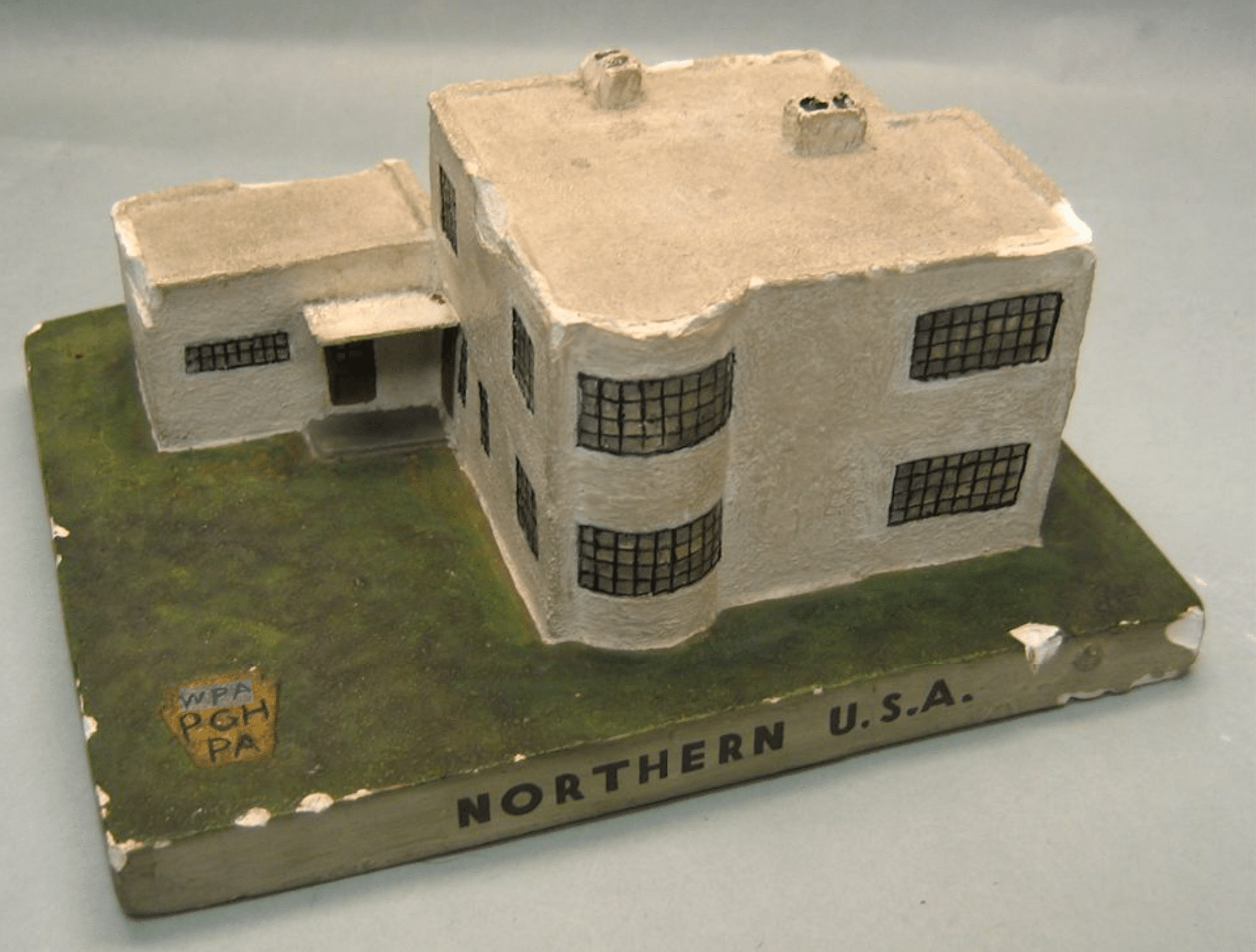
Model by the Pittsburgh branch of the Museum Extension Project, sponsored by the WPA, and designed to teach children about modern architecture. MEP produced learning objects for children in rural areas, poor children in cities, and children with disabilities in residential schools. “Modern Country House, Northeastern USA,” ca. 1938. [Courtesy Broward County Library Digital Archives]

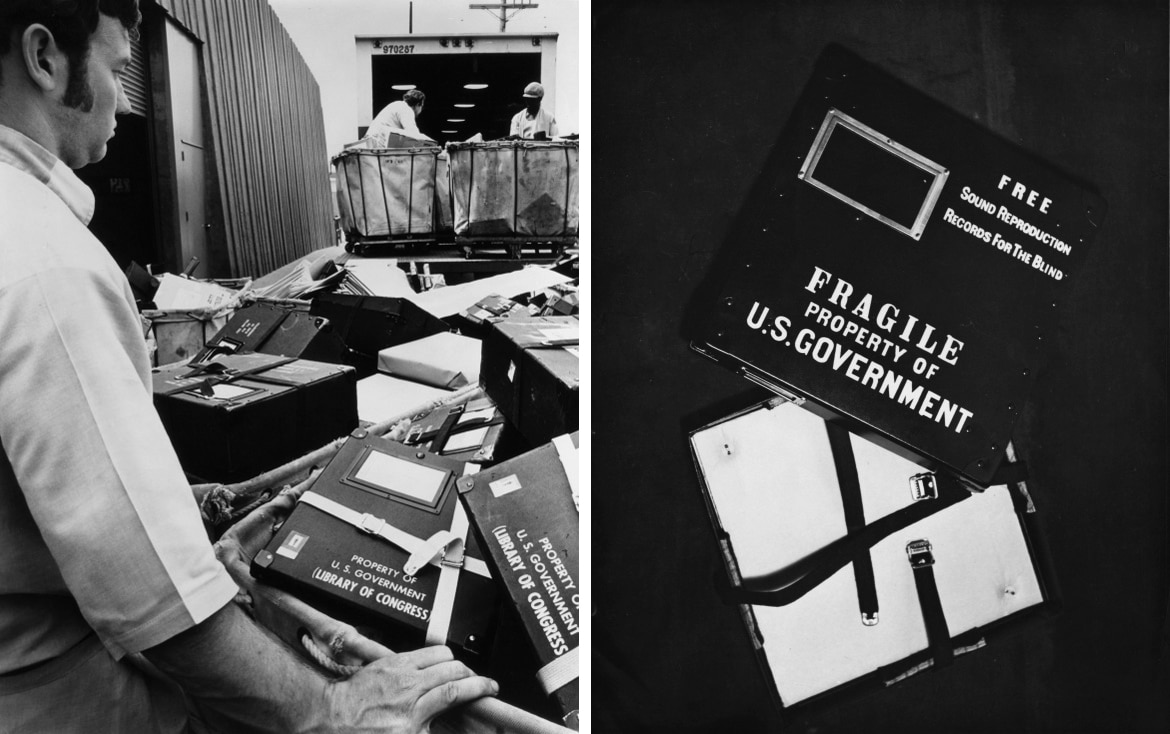
Classroom furniture became more innovative and accommodating. Not all schools could afford tubular steel-framed furniture by Marcel Breuer or Charles and Ray Eames, but inexpensive knockoffs made classrooms more navigable by students with special needs. WPA workers crafted molded plywood desks and daybeds specifically for children of varying bodily capacities. Hinged tables and chairs that folded down in various configurations were fabricated for the Willis and Elizabeth Martin Orthopedic School in Philadelphia (1936) to better accommodate wheelchairs and other mobility devices, and the school was enhanced with an accessible gymnasium, art studio, and auditorium. For the A. Harry Moore School in Jersey City, New Jersey, the WPA funded a three-story addition that included an indoor swimming pool equipped with hydraulic lifts, and an enclosed solarium from which students could view the Manhattan skyline, both were designed to account not only for children with a broad range of physical disabilities, but their attendants and nurses.

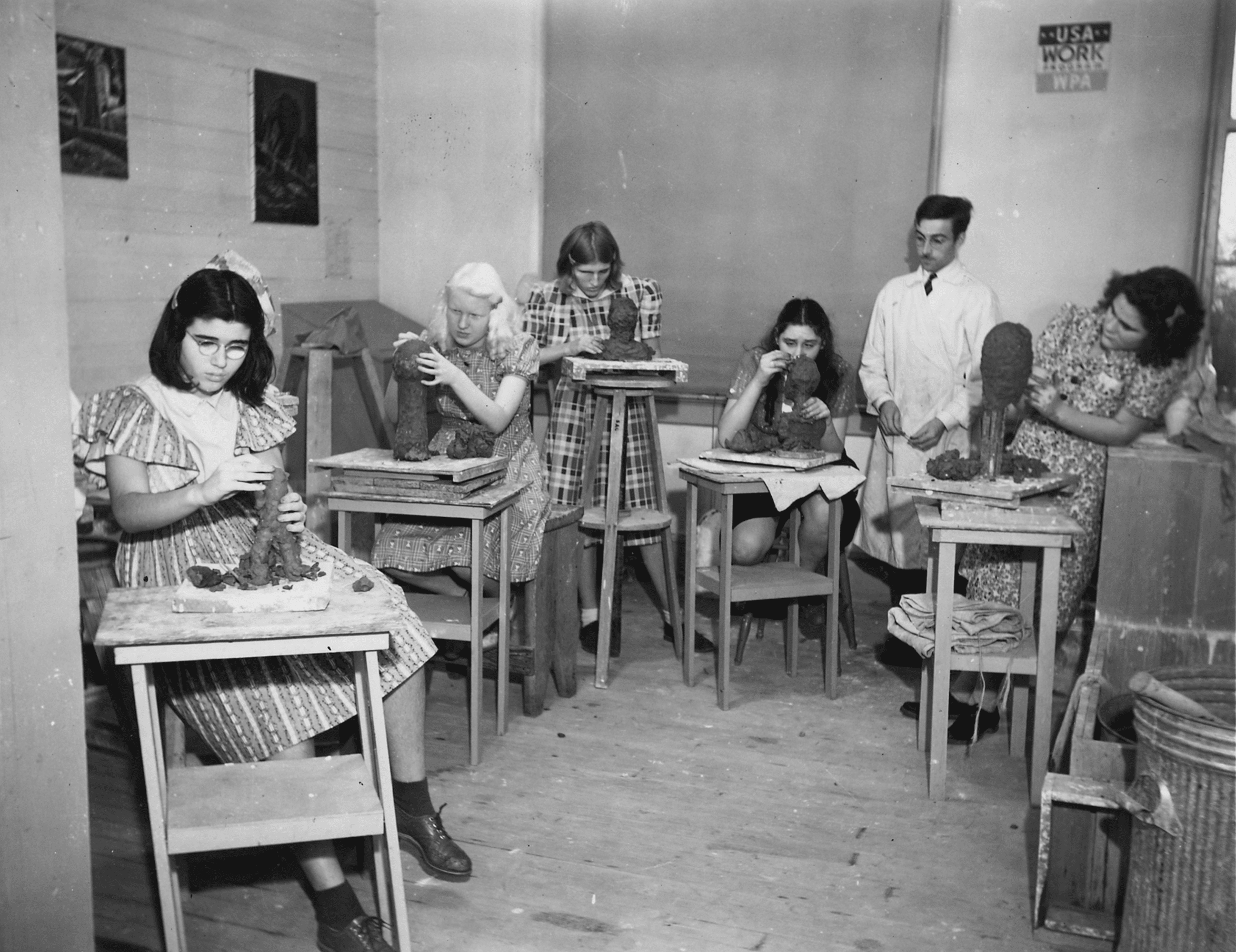
As is well known, the WPA also promoted the arts under the aegis of the Federal Art Project. Artists were hired for sundry commissions, and the WPA bankrolled community art centers across the nation. Some of these programs directly served children with disabilities. The Salem Federal Art Center in Oregon (1938), for instance, provided free instruction to children who were blind or visually impaired. The children were taught by WPA-funded teachers, and the classes documented by WPA-funded photographers. In a 1938 photograph of a sculpture class, five young women intently mold clay beneath a tricolor patriotic sign: “USA — WORK — WPA.” 21
The Federal Art Project also commissioned site-specific artwork specifically for children with disabilities. Sculptor Irene Emery was hired in 1937 to produce a bas-relief of a flock of birds in flight for a sunroom at the Carrie Tingley Hospital for Crippled Children in Hot Springs, New Mexico. Deliberately textured and set at a low height for children who used wheelchairs, Emery’s sculpture could be seen by the sighted, but also traced by the fingers of children with visual impairments. 22


Emery’s commission was relatively modest compared to that of Sargent Claude Johnson, who was tasked by the Public Works Administration, a parallel agency to the WPA, to produce installations for the California School for the Blind in Berkeley. 23 Johnson, a prolific African American sculptor and painter associated with the Harlem Renaissance, created two monumental pieces for the school’s auditorium: a wood scrim to conceal the inner workings of a pipe organ, completed in 1934, and a proscenium that hung above the stage, completed in 1937. Johnson fashioned the former from redwood with a layer of red varnish and gilding, and the latter from walnut, with details cast in steel.


He designed both as narrative tableaus that unfold in a sequence featuring musicians and instruments, gazelles, rabbits, songbirds, owls, cacti, and a variety of stylized masks. In the center of the proscenium, Johnson carved the face of what appears to be a European conquistador (pointed Van Dyke beard) sandwiched Janus-style between two profiles — on the left, an African warrior bearing ritual markings; on the right, an elongated skull stripped of its flesh. Together, the trio of faces sparely suggests an intertwined history of colonialism and death, giving a darkly ironic twist to the surrounding flora and fauna. 24 Johnson’s design assumes its audience needs no patronizing artificial cheer.
It’s been more than eight decades since these schools were built, and many have not fared well. Some of the physical structures and their remarkable design features have been either demolished or renovated beyond recognition; where they still exist, they rarely serve the population for which they were intended. The particulars form a saga of sustained disrespect. The former Washington Boulevard Orthopaedic School, rechristened the Sophia T. Salvin Special Education Center in the 1960s, maintains its relationship to students with special needs, but Ruck’s original design, most of which remains intact, remains unappreciated by scholars, historians, and the Los Angeles Unified School District, which failed to mention the school in a 2014 report about preserving historic architecture. 25

Sargent Johnson’s PWA commissions for the California School for the Blind were recently included in a long-overdue Johnson retrospective at the Huntington Art Museum in Pasadena, which brought together these works for the first time in over 40 years. The walnut proscenium, currently on loan for the exhibition, usually hangs in a UC Berkeley conference room next to an air conditioner, unavailable to and presumably unknown by the general public. 26
The Charles A. Boettcher School was razed in 1993. Though the hospital promised the site would be used to expand pediatric services, it’s now the home of a three-story parking structure, with a few street-level commercial tenants, including a private gym called the Body Shaping Company.
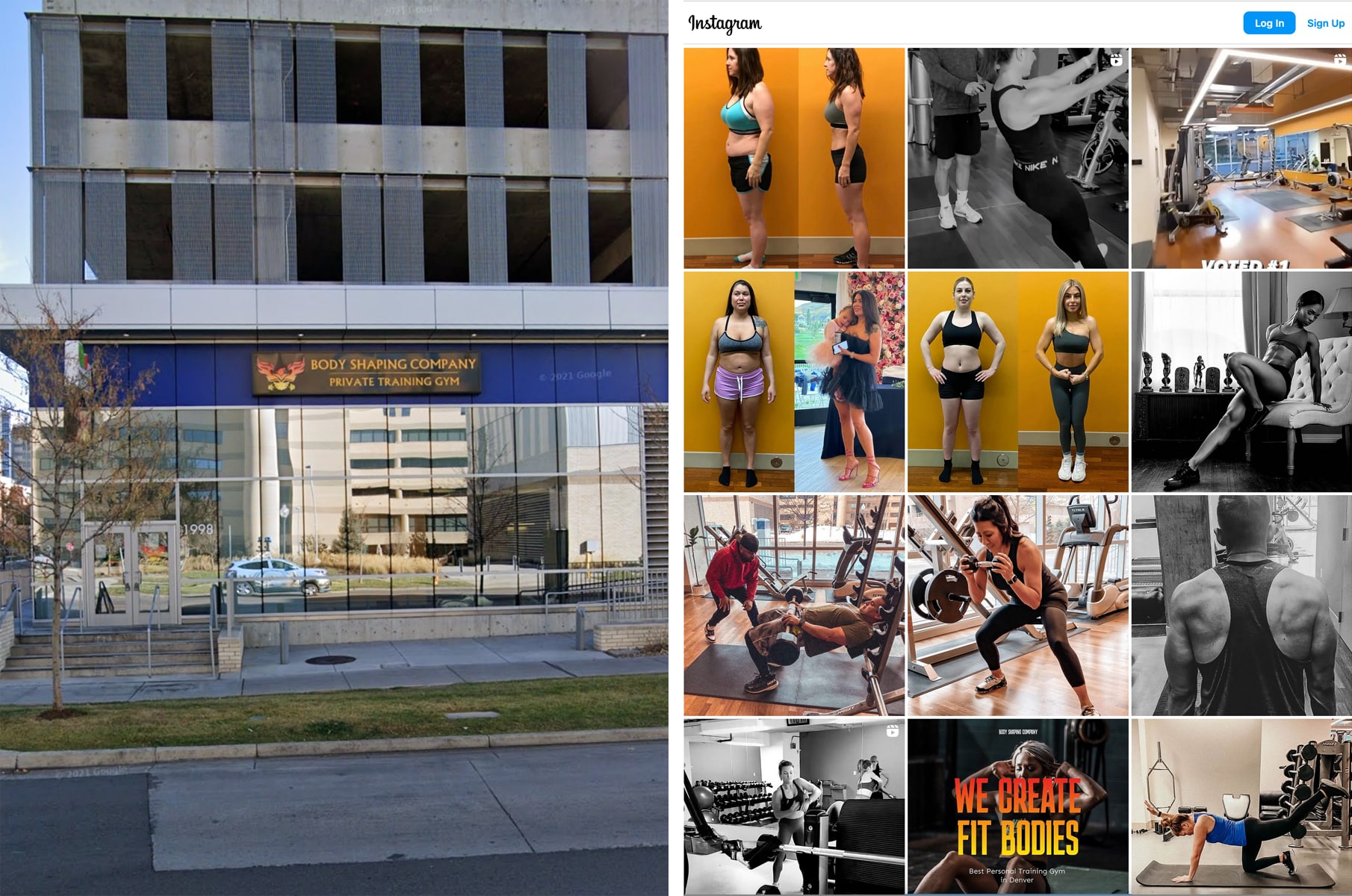
Surely gym members are unaware that below them is a tunnel through which children once traveled — some pushing themselves in wheelchairs, some balanced on their crutches or canes, some in leg braces, some helping their peers — to a school that was built not to fix, or hide, or rehabilitate young bodies, but to accept them on their own terms.
The cultural revolutions of the 1960s and 1970s are typically regarded as the first time that architects designing for people with disabilities challenged modernist compulsions to standardize and flatten difference. As the argument goes, these new, more sensitive designs followed grassroots activism and legal changes. The Architectural Barriers Act of 1968, for instance, helped people with disabilities and their advocates reimagine architecture as a medium of participatory democracy. Meanwhile, the social model of disability has given language and urgency to the fact that a user’s inability to access the built environment is a problem of the built environment, not of the user. These social, cultural, and legal shifts have been instrumental in turning medicalized subjects back into people. 27

Yet the evidence suggests that publicly-funded modernist architecture democratized access to education long before the 1960s. The Washington Boulevard School, the Boettcher School, the WPA and PWA artist commissions — all were decades ahead of their time. Contained in these projects are the seeds of our current conversations about user-centered design, or what some disability activists and theorists call “crip design.” As disability scholar Aimi Hamraie has written, crip design “is not a synonym for disability, nor is it simply a political orientation. Rather, it is a specific commitment to shifting material arrangements.” 28
“Shifting material arrangements” is also one definition of what occurred in these modernist case studies. As surprising as it seems, there was a stretch of time in the 1930s and ’40s when American politicians, architects, and bureaucrats drew on an experimental spatial design to produce more democratically available and more empathic buildings. Some educational leaders in this period went so far as to describe attunement to difference as the very raison d’etre of design. In 1938, the chair of the Progressive Education Association, Willard Beatty, defined the primary task of the designer as creating “aesthetic experiences wherein the individual may feel and vicariously experience what life really means to others.” 29 Deepening public investment in education and infrastructure is regarded very differently in our own time — as a socialist plot or naïve faith in the public sector. Rather than fall prey to such cynicism, we might remember that there are many historical precedents for prioritizing architecture that is truly for the public — including projects that constitute “the public” through the experiences of people with disabilities.


If you would like to comment on this article, or anything else on Places Journal, visit our Facebook page or send us a message on Twitter.