

“CAUTION! UNSTABLE HISTORIC STRUCTURES,” warned the sign in Atlanta’s storied Oakland Cemetery. Staked in the ground fronting the cemetery’s Confederate Burial Grounds, the sign clearly referred to the obelisk that stood nearby — a perilously stacked structure that did appear to merit prohibitions on sitting or climbing.
Since 2015, more than a hundred communities across the American south have removed, relocated, or otherwise modified Confederate monuments.
But the warning’s most telling reference seemed more diffuse, and more political: less about objects and their relative physical unsafety than their contentious historical status. Instability in this sense could have extended to a marker that had been removed from the cemetery in 2021, after being repeatedly vandalized by activists who opposed its veneration of the Confederacy. That sculpture, a memorial to unknown Confederate dead known as the Lion of Atlanta, had suffered damage from splattered paint and (it was suspected) a pickaxe — antagonisms that had only accelerated following the installation of contextualizing markers by the Atlanta History Center two years earlier. 1
Since 2015, more than a hundred communities across the south have removed, relocated, or otherwise modified Confederate monuments. This movement has closely tracked horrific acts of racist violence — including in Charleson in 2015, Charlottesville in 2017, and Minneapolis in 2020 — that galvanized a broad antiracist movement aiming at, among other targets, the eradication of White supremacist symbols. How has the Confederate landscape been changed — or not — by these removals and re-sitings? To what extent have such changes sparked broader reckonings with histories of racial injustice in southern communities, and how will the current backlash against such confrontations with the racist past continue to refashion the landscape?

Historian Karen Cox refers to monuments as “intensely local objects,” set in context by the people who live with them, rather than through one-size-fits-all civic assumptions. Yet one commonality, Cox argues, is that relocating or otherwise reframing statues and other controversial talismans should not be the end of the story for any community. “Removing a monument does not remove the systemic racism with which it has long been associated,” Cox reminds us; removal “is a symbolic act only, although it may also serve as an important first step.” 2 Katherine McKittrick extends such ideas to consider the deep cultural logics that enable a range of spaces — “the prison, the city, the resort” — to retain values upheld by the Confederacy. In so doing, McKittrick notes that such values are reinforced not only by explicit references, but by the everyday expressions of power that still enforce the “built-in capacity” of antebellum plantation life “to maintain itself.” 3
How can reckonings with violently racist hierarchy be inscribed on spaces where monuments intended to perpetuate that hierarchy once stood?
We might ask, then, how deeper reckonings with a violently racist hierarchy can be inscribed on spaces where statues and monuments intended to perpetuate that hierarchy once stood? How has Cox’s recommendation — to extend beyond the “important first step” of a removal — been taking shape in situ, in the plazas, parks, and institutional spaces of southern cities and towns? To answer these questions, I’ve spent the past year visiting and documenting the site of each Confederate monument that has been removed since 2015. Considering these local changes in the aggregate underscores the fact that the business of reshaping these sites of public memory is far from a binary phenomenon, in which symbols that remain in place continue to be venerated while those that have been removed are stripped of their cultural resonance. Of the Confederate objects that no longer occupy their original settings, almost as many have been relocated and re-displayed as carted away to storage. In about a third of these cases, the spots on which the objects once stood remain empty. The other two-thirds of former commemorative sites have been repurposed in ways that sometimes recognize and engage with their own histories, but much more often obscure those pasts and the tendentious public objects that once memorialized them.
Removal campaigns have failed across the board to force a broader questioning of McKittrick’s “plantation logic,” tied to the practices — in police departments, schools, workplaces, and other organizations — that perpetuate oppressions of the racialized past. Erstwhile monument sites continue, in many cases, to be flashpoints for further reversals, in the name of redeeming “erased” histories that some understand as being of a piece with past American “greatness.” Such timid, halting, and disputed recastings of the nation’s Confederate past might rightly be seen as a distraction from, rather than a fundamental alteration of, deeper histories of racism inscribed on the landscape.
And yet, the ways in which these spaces, and the sculptures they once hosted, are treated and remade (or not) belong to a lineage of mobilization around these sites that in some cases reaches back to their original placements more than a century ago. These locations have always furnished civic opportunities to affirm and, at key points, to contest conceptions of the region’s — and our nation’s — racial history.
How might we assess this continuing process of alteration and redress? Shifts in a commemorative landscape accrue significance not only through individual components that may be added, subtracted, or altered. Rather, the full effects of such changes are realized through interaction with other signs and symbols in the surround, as each inflects, and is inflected by, adjacent memory-laden features. Considering how, and whether, substantive reckonings with Confederate histories can be inscribed on physical places thus requires attending not only to monumental elements that remain within — or have been taken away by — communities seeking to challenge longstanding portrayals of their own pasts.
Such an exploration of still-unrealized political futures also requires attention to the broader resolutions and contradictions to which nearby alterations draw attention. Public investment in the monumental landscape heightens the search for meaning in what remains, imbuing the quotidian — and sometimes the accidental and the incomplete — with charged significance. As potential catalysts for changes in policy and at other structural levels, these spaces contain the seeds of reconciled futures.
The wave of resistance to these symbols has been unprecedented in scale. But Confederate monuments have been controversial for as long as they have existed.
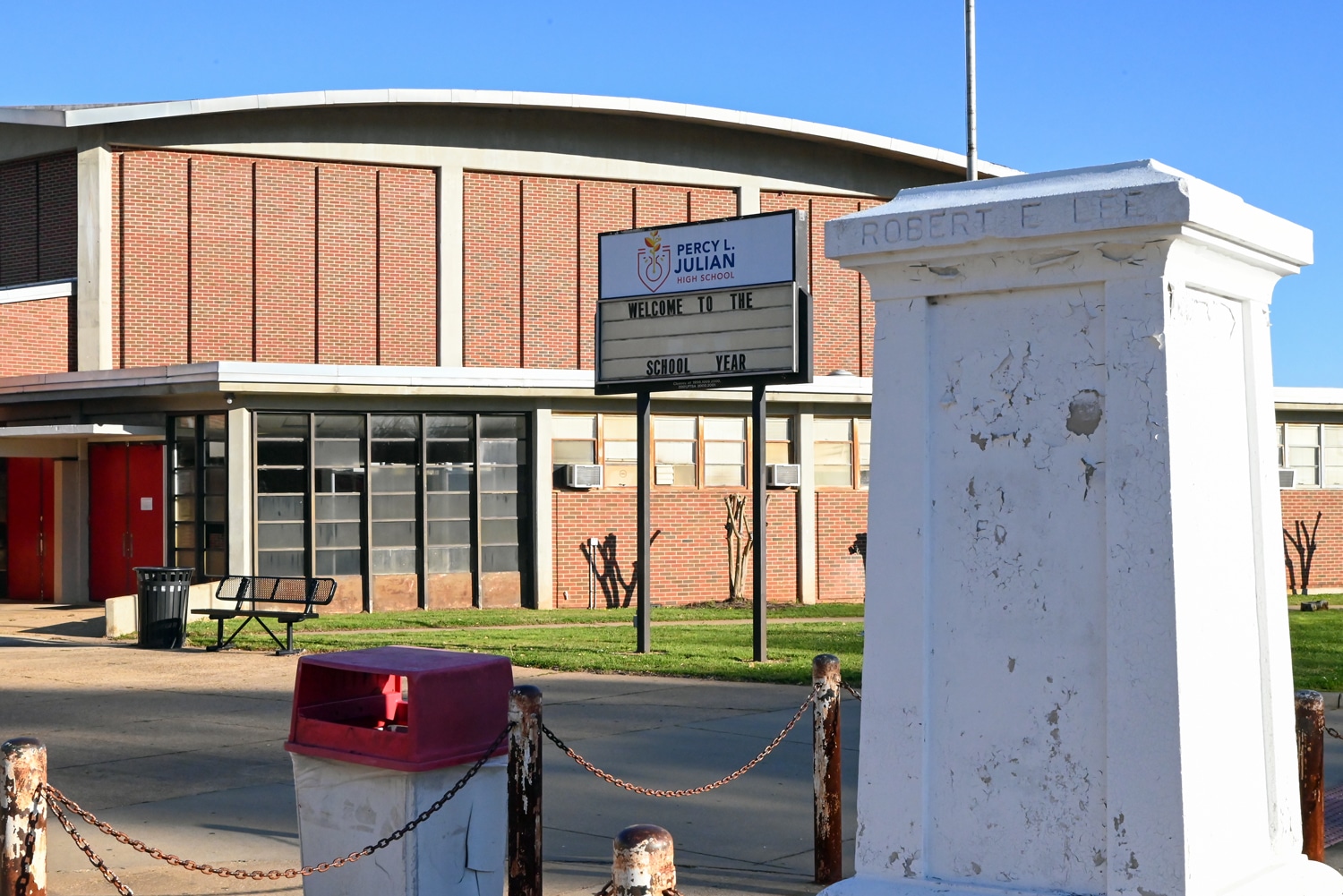
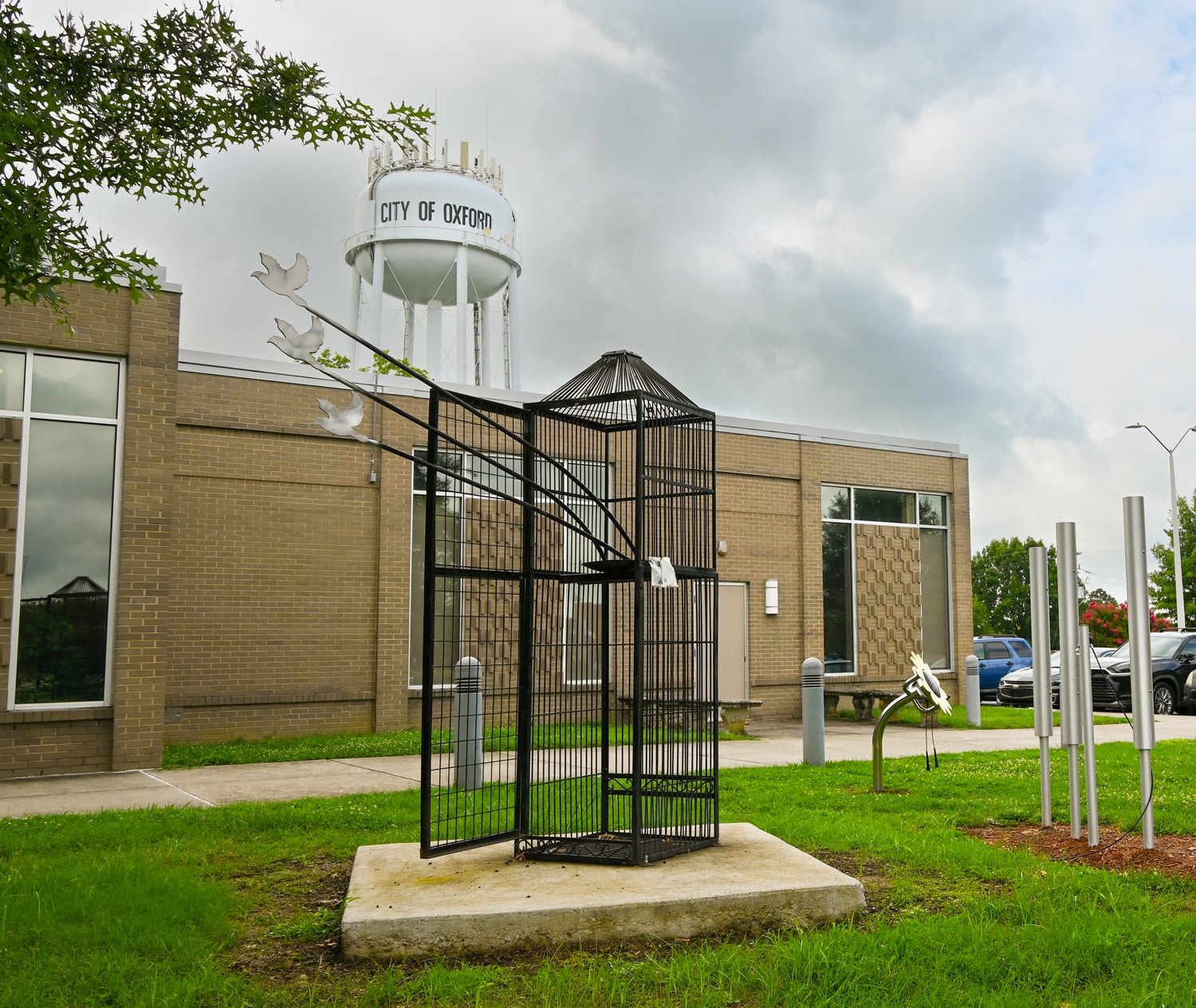
The most recent wave of resistance to Confederate symbols has been unprecedented in its scale, but not in its aims. Indeed, Confederate monuments have been controversial for as long as they have existed. Belying the aura of permanence associated with their materialization in granite, marble, and/or concrete, along with their frequently elaborate emplacements, these objects have long been surprisingly mobile. A statue of Robert E. Lee in Montgomery, Alabama, for instance, served for nearly 50 years as a sort of roving symbol of White supremacy, placed on both commercial and residential thoroughfares across the city before being moved, in 1955, to the front entrance of the city’s namesake Lee High School — which had emerged as a defiant symbol of segregationism following the previous year’s Brown v. Board of Education decision. 4 The Lee statue was knocked from its plinth by protesters in 2020, and has remained in storage since. In Oxford, North Carolina, a Confederate statue removed in 2020 from outside the city’s library had also been installed there just a half-century before, after having stood for six decades outside the county courthouse. That earlier relocation was part of a compromise stemming from the killing of a Black Vietnam War veteran named Henry Marrow by a member of the Ku Klux Klan, and ensuing protests that had targeted the monument at its original location. 5 Today, the library site is occupied by a large sculpture of three doves escaping their cage. Donated to the city by the artist, Adam Walls, the piece is titled Free.
Struggles over Confederate memorials and their public placements date to a concerted campaign by the United Daughters of the Confederacy and their allies to rewrite the history of the Civil War. In the UDC’s insidious recasting, the war was not caused by the secession of southern states seeking to maintain chattel slavery. It was rather a tragic Lost Cause — a doomed but heroic effort by a besieged region to maintain its freedoms in the face of federal forces trampling “states’ rights.” At the 1894 dedication for the Lion of Atlanta, for example, speakers made no mention of slavery, but strenuously emphasized the “sacred … righteousness and truth” undergirding the Confederate cause. 6 Through the placement of monuments, such beliefs were powerfully consecrated in public space — institutionalized as “history” to be preserved rather than as ideology intended to elevate the values Confederates sought to defend.
Confederate objects were disproportionately located at courthouses and state capitols, along heavily trafficked boulevards and in crown-jewel city parks.
According to the Southern Poverty Law Center, by 2015, nearly 900 statues and other large-scale Confederate monuments dotted the landscape. The vast majority were placed in former secessionist and border states. But the enshrining of these histories was not confined to the region; the UDC also placed monuments in California, Arizona, Montana, Washington D.C., and even on one of Boston’s harbor islands. 7 Few of these were erected in the decades immediately following the Civil War. Rather, a majority were placed by the UDC and other like-minded coalitions during the first two decades of the 20th century, coincident with the resurgence of the Klan and the enshrining in law of Jim Crow segregation. A smaller number were added during the Civil Rights Movement, as acts of resistance against the struggle that would bring Jim Crow to its legal end. 8 Accentuating their role in solidifying racist hierarchy, Confederate monuments were disproportionately located in front of courthouses, on the grounds of state capitols, or as centerpieces along heavily trafficked boulevards and in crown-jewel city parks. As such, while the text and imagery of the monuments glorified their cause, the works’ intended ideological functions were revealed as much by their context — what we see when we view the object in its surroundings — as in their explicit iconography and inscriptions. Ostensibly representing a bygone period, while continuing to channel Lost Cause mythology toward a present-day aim of solidifying White supremacist power structures, these statues were never inert civic furniture.
The fundamental importance of context applies as we assess the past decade’s challenges to these objects’ hegemony. To discern the lineaments of this evolving Confederate landscape, we would do well to focus on how moves to modify, remove, and/or relocate monuments affect the inscription of racialized hierarchy on the broader landscape. In this sense, the ongoing significance of removed or reinterpreted monuments inheres in their lingering presences — the traces they leave when removed; the juxtapositions created when they disappear (and sometimes reappear elsewhere); and the questions of jurisdiction that shape fights over these objects and the places they occupy.
Traces
“An actual historical dilemma,” notes Monument Lab co-founder Paul Farber regarding sites of removed Confederate statues in Memphis, Tennessee, “is how to bulldoze symbols of racial division while marking their removal as part of a longer, ongoing process of dismantling white supremacy.” 9 Simply toppling or deaccessioning Confederate symbols can create a political vacuum rather than establishing a platform for reflecting on and grappling with histories of struggle. “The longer the removal stays unmarked, and the story of change is not rendered into the [land] itself,” Farber writes, “the more Confederate apologists can squeeze out a wistful nostalgia of what was, whether or not the pedestal, concrete, or lights remain in place.”
Such concerns apply across the sites of removal that I’ve visited. Fewer than a tenth of these locations now include a marker or other feature telling any part of the story of the vanished object, or of the rationale and timing for its uprooting. Another ten percent of sites now host recently commissioned public art (like Free in North Carolina), or patriotic installations that speak only indirectly to the longtime veneration of the Confederacy by local powers that be. The remaining significant majority of sites remain unmarked — empty, landscaped over, or otherwise submerged into their surrounds.
The weight of the objects was never solely symbolic, and their material imprints remain heavy, even when their places now appear as voids.
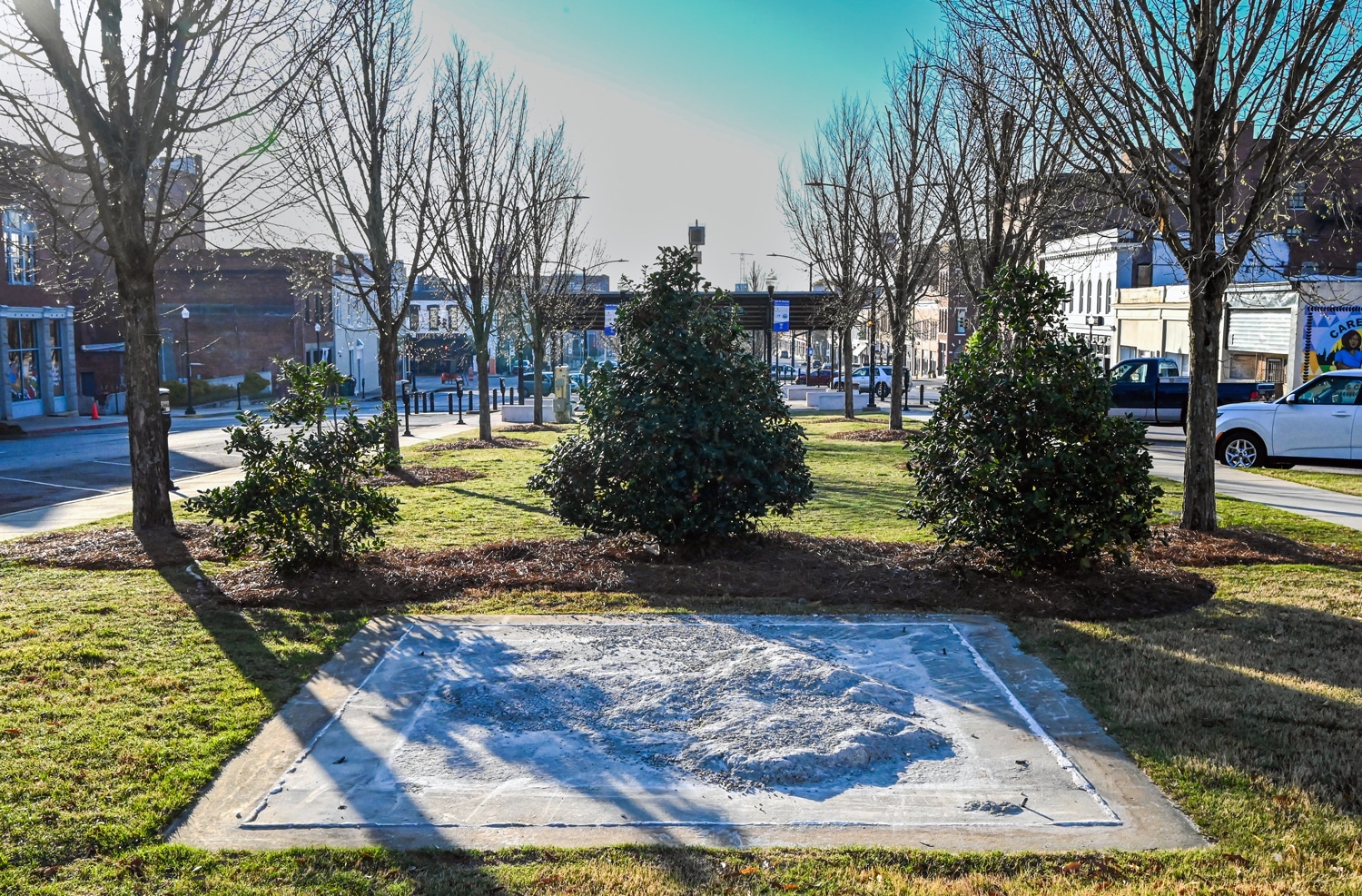
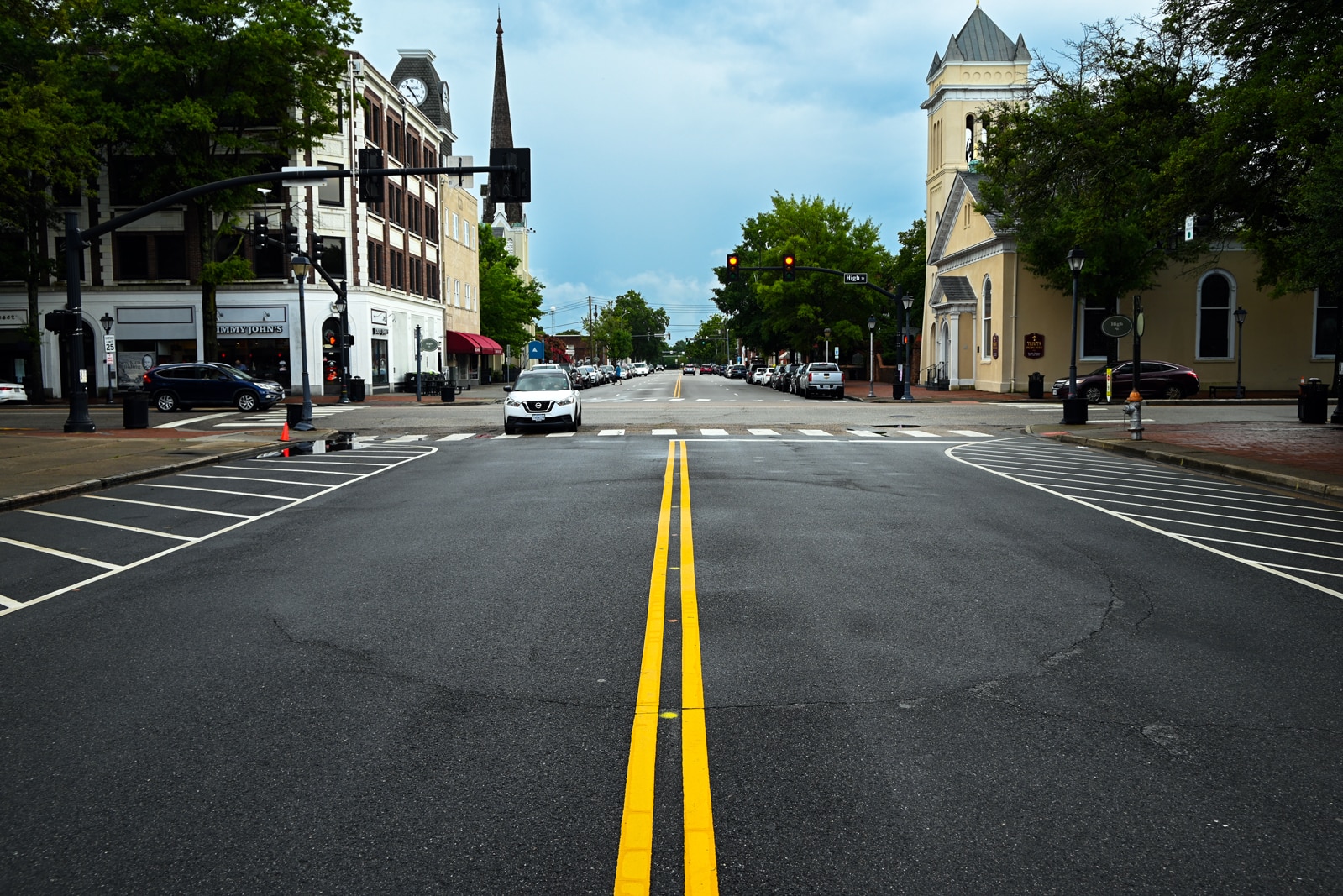
But as embodiments of unacknowledged and unreconciled histories, Confederate monuments are not easily expunged, even when their erstwhile places now appear as voids. The weight of the objects was never solely symbolic, and their material imprints remain heavy. In several cities in Virginia, for instance, monuments have been removed from the centers of intersections, and the former roundabouts or mini-squares paved over, leaving scars on the asphalt. Such scarring is evident as well in the much larger number of sites where monuments stood on grass. Consider, say, the grounds of the Arkansas Military History Museum in Little Rock; or the Rockdale County Courthouse in Conyers, Georgia; or the quad outside Gorgas Library on the University of Alabama campus. In each place, a sculpture was removed in 2020. But even five years later, weathered, sunken patches of earth outline the spots where monuments to Little Rock’s Confederate Capitol Guard, Rockdale County’s Confederate regiment, and Alabama’s Confederate students once were. Comparable imprints persist in indoor spaces where commemorations have been removed, such as the library on the Tennessee campus of Sewanee: The University of the South, where a clear impression marks the wood beam that once supported a bust of Confederate General Leonidas Polk.
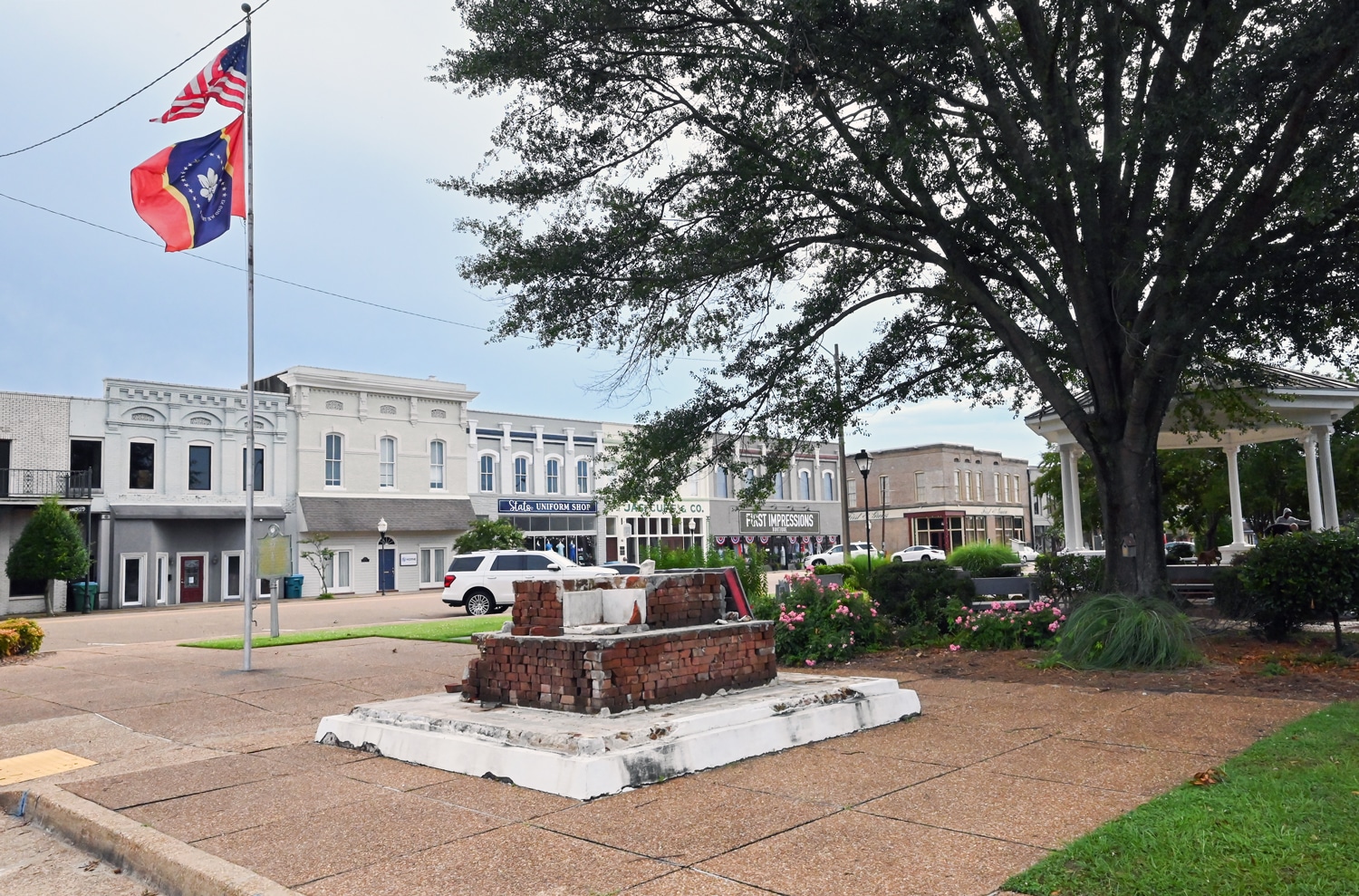
In other instances, such imprints have been purposely preserved. In nearly a fifth of the sites I’ve catalogued, a statue’s plinth or surrounding features like steps, fencing, or plantings were left behind when the object itself was hauled away. In Mobile, Alabama, the base that held a statue of Confederate Naval Admiral Raphael Semmes now stands unmarked, retaining pride of place along the city’s Mardi Gras parade route; the telltale square of concrete in its brick enclosure has not been repurposed, and the plantings and protective chain surrounding it are intact. Visitors to Macon, Georgia, can still find the base that held a concrete obelisk honoring “Women of the South,” along with the jagged edges of the column, which appears to have been broken from its foundation by force. In Grenada, Mississippi, an unadorned and crumbling brick plinth in Courthouse Square remained in place nearly a year after the monument to Confederate soldiers and sailors that it supported was taken down. Such sites can feel like festering sores.
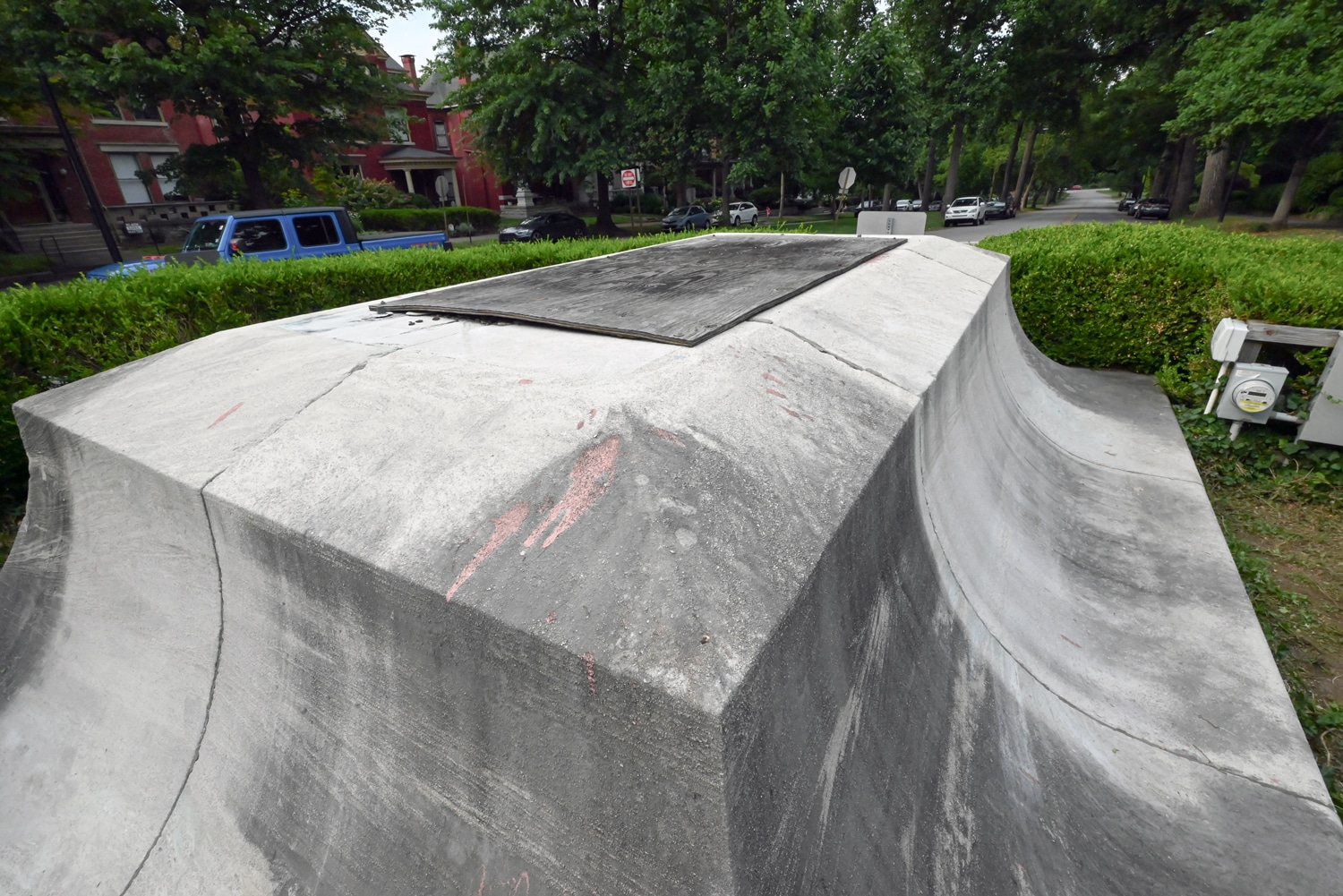
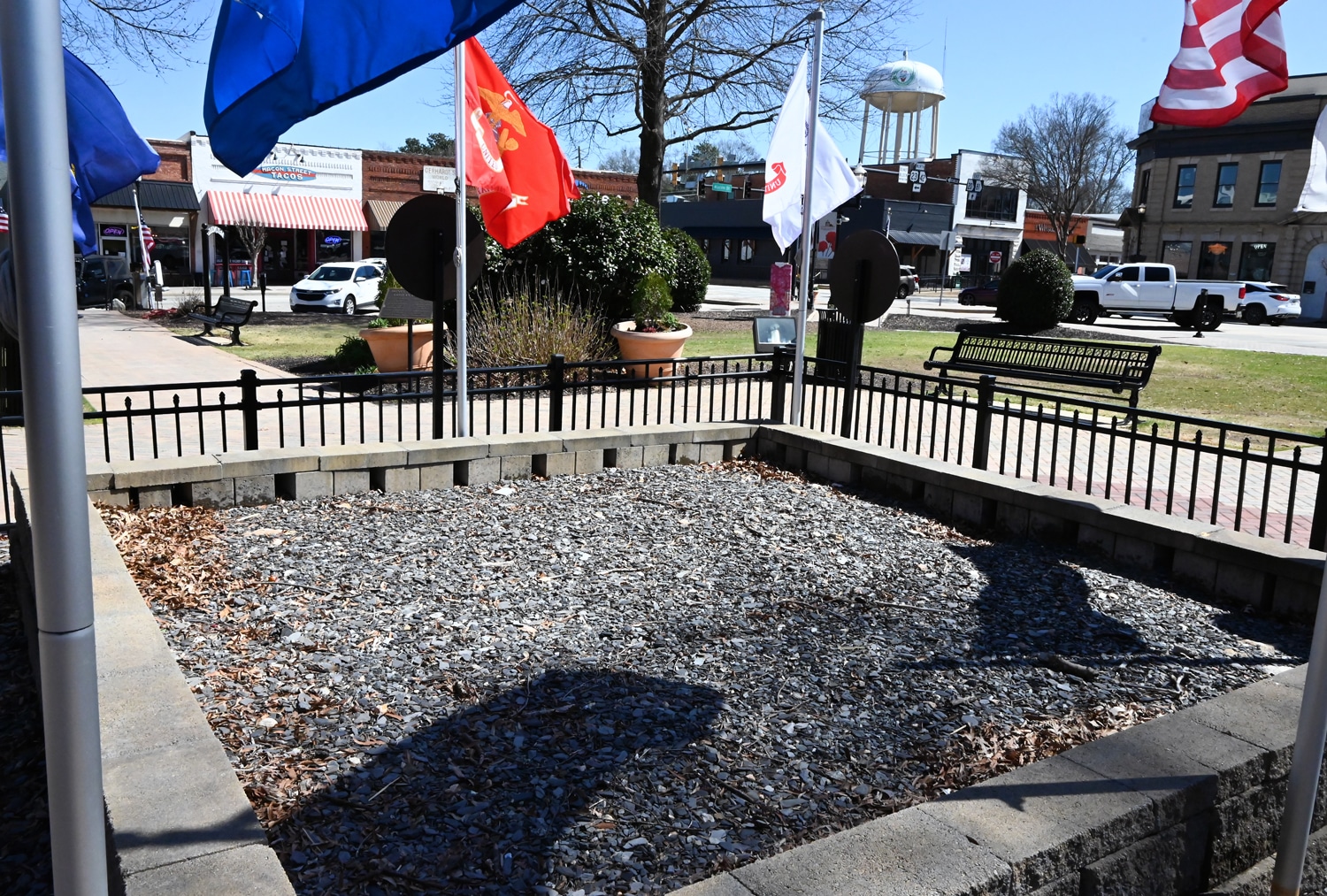
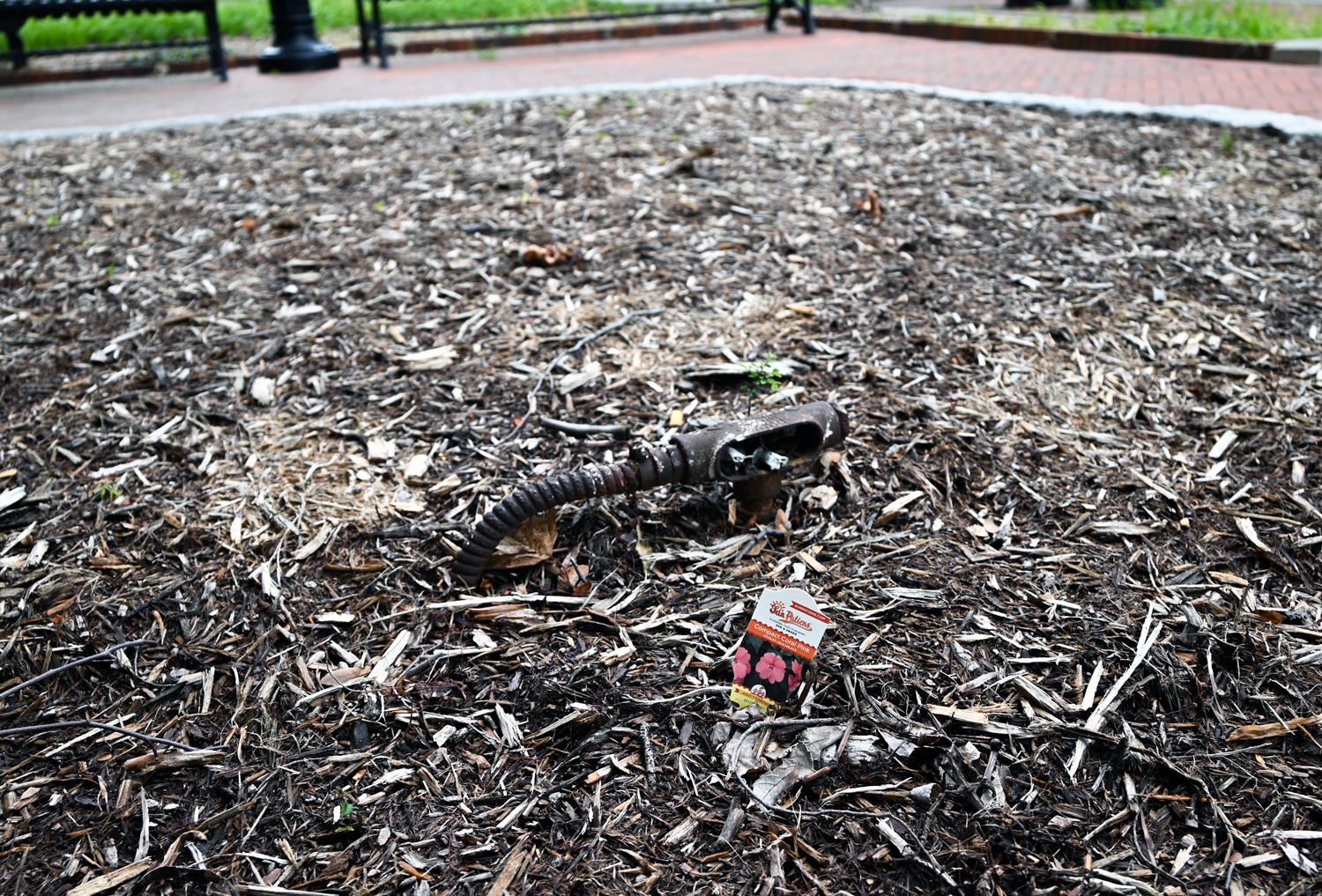
Many other locations are in a condition comparable to the space in front of the Old Courthouse in Durham, North Carolina, where a lighting fixture that once illuminated a Confederate soldier statue still pokes through mulched-over ground. Flags that once surrounded the figure of Confederate Colonel (later U.S. Senator) Charles T. Zachry in McDonough, Georgia, now fly over a barren patch of gravel. A different aspect of recent dissent remains visible at the site of a monument to Confederate officer John B. Castleman in Louisville, Kentucky. The statue now resides in a storage facility belonging to the city, but its base was left behind in a leafy residential neighborhood. Hemmed in by untrimmed hedges, the concrete form is topped by a weathered sheet of plywood, and bears the traces of paint thrown by protesters.
Juxtapositions
Such vestiges of vanished objects in the landscape are not outliers; they remain the norm. But what of the handful of sites that have retained their Confederate objects — or parts of them — sometimes adding features that seek to critically engage the monuments’ messages?
Just two monuments to Black historical figures have been installed at vacated sites — in Decatur, Georgia, and Roanoke, Virginia.
Perhaps the most fully realized site marked in this way is in Decatur, Georgia. For more than a century, a Confederate obelisk stood in front of the Historic DeKalb County Courthouse. A protest campaign in 2019 resulted in the placement of a contextualizing plaque, which only accelerated local struggle over public memory. Continued mass actions culminated in a judge’s order declaring the monument a public nuisance and mandating its removal. Crucially, the plaque remains, a vehicle for rendering visible how the adjacent space had long “bolstered white supremacy and faulty history” by “implying that public spaces and public memory belong to whites.” In 2024, a double-sized statue by the Jamaican sculptor Basil Watson of civil rights hero and longtime U.S. Representative John Lewis was placed where the obelisk once stood, following through on the plaque’s declaration that “public history can be of service when it challenges us to broaden our sense of boundaries and includes community discussion of the victories and shortcomings of our shared histories.”
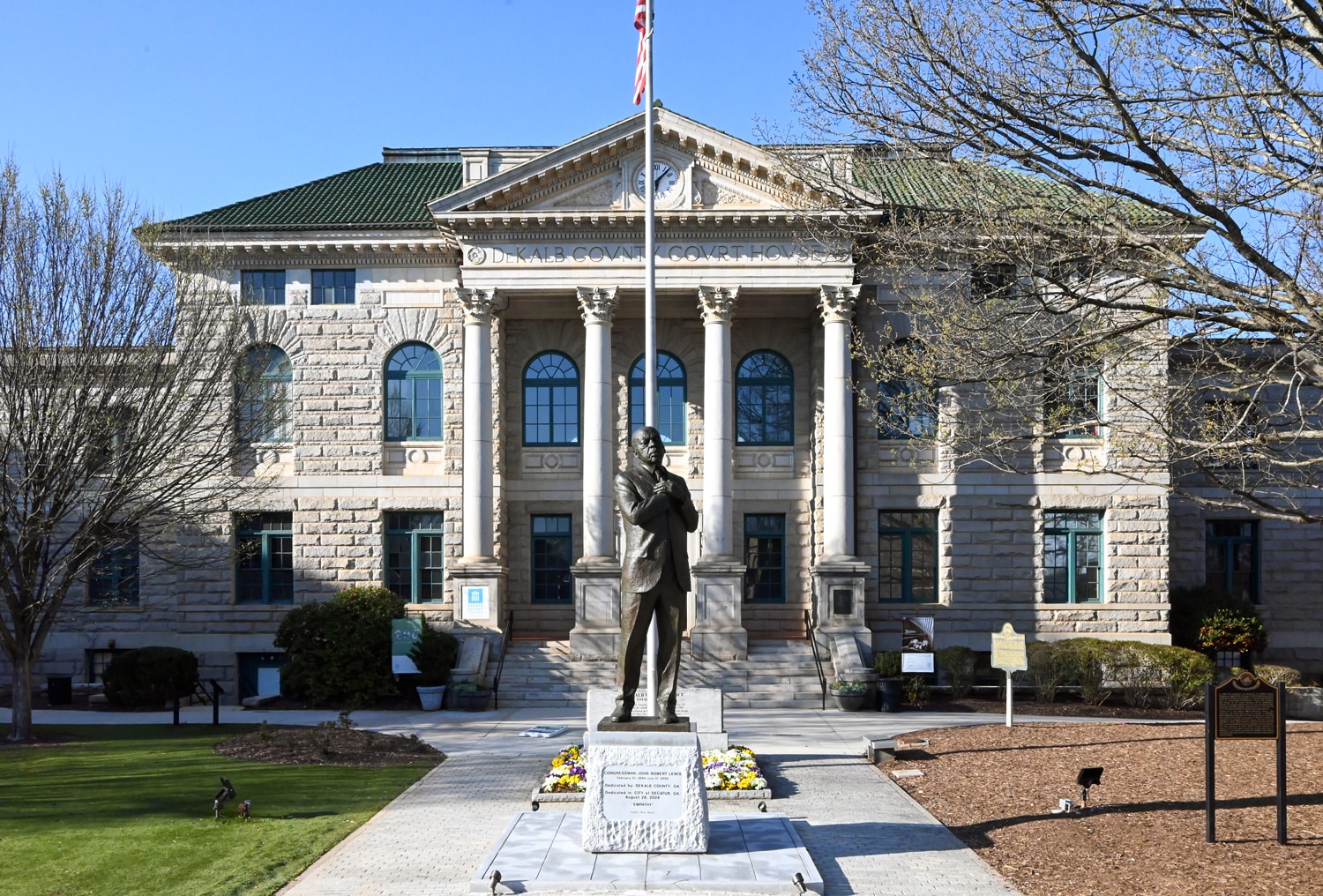
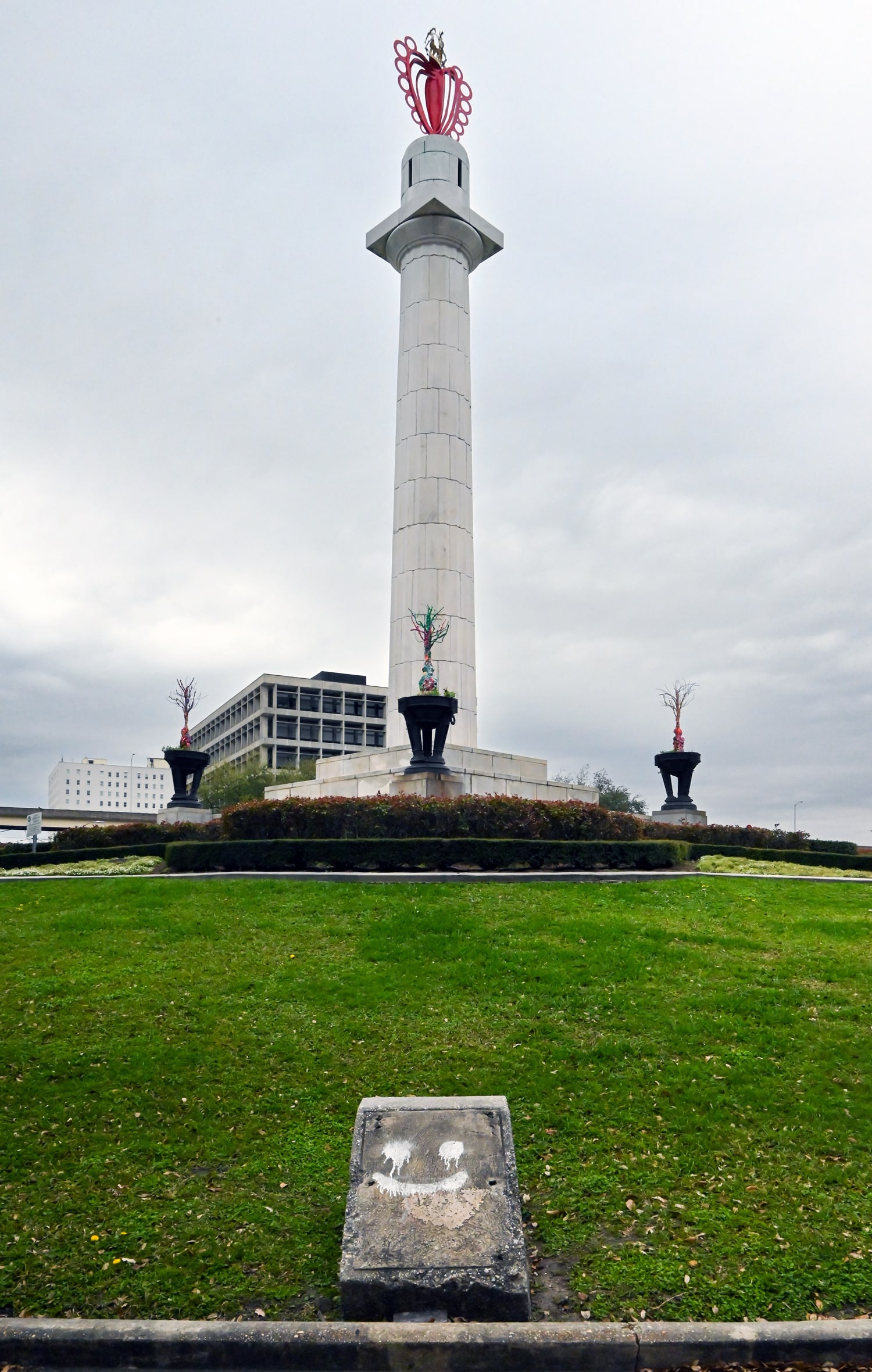
The Lewis statue in Decatur is one of just two monuments to Black historical figures that have been installed at sites vacated by Confederate objects. (The other is in Roanoke, Virginia, where a statue of Henrietta Lacks —whose “immortal” genes, collected without her consent, have since transformed medical research — now fills a place long occupied by a monument to Robert E. Lee.10) But other kinds of juxtapositions now inflect sites of Confederate veneration. The grandest of these might be in New Orleans, where a temporary work by sculptor Raúl de Nieves, titled The Sacred Heart of Hours and the Trees of Yesterdays, Todays, and Tomorrows, was installed in 2024 atop the 60-foot column that had, until a high-profile removal in 2017, held a bronze figure of Lee. Part of the Prospect New Orleans Triennial, de Nieves’s work was in situ through June, 2025. 11
The text on the plaque accompanying The Sacred Heart of Hours… framed it as “a loving reset for a site once dedicated to memorializing the Confederacy,” announcing that this intervention in the space once known as Lee Circle — since rechristened Harmony Circle — should “signal the relevance of Latinx immigrants in New Orleans.”
Other juxtapositions have been more modest in scale, if no less powerful. In Montgomery, a plinth remains outside the high school once named for Lee, even after activists tore down the statue it supported. That was in 2020; in 2023, the Montgomery Public School District changed the school’s name to honor the trailblazing Black chemist Percy L. Julian. The empty Lee plinth is now set in a decidedly anti-monumental context defined not only by its peeling paint, surrounding chain barrier, and adjacent trash receptacle, but by signage announcing the school’s current namesake.
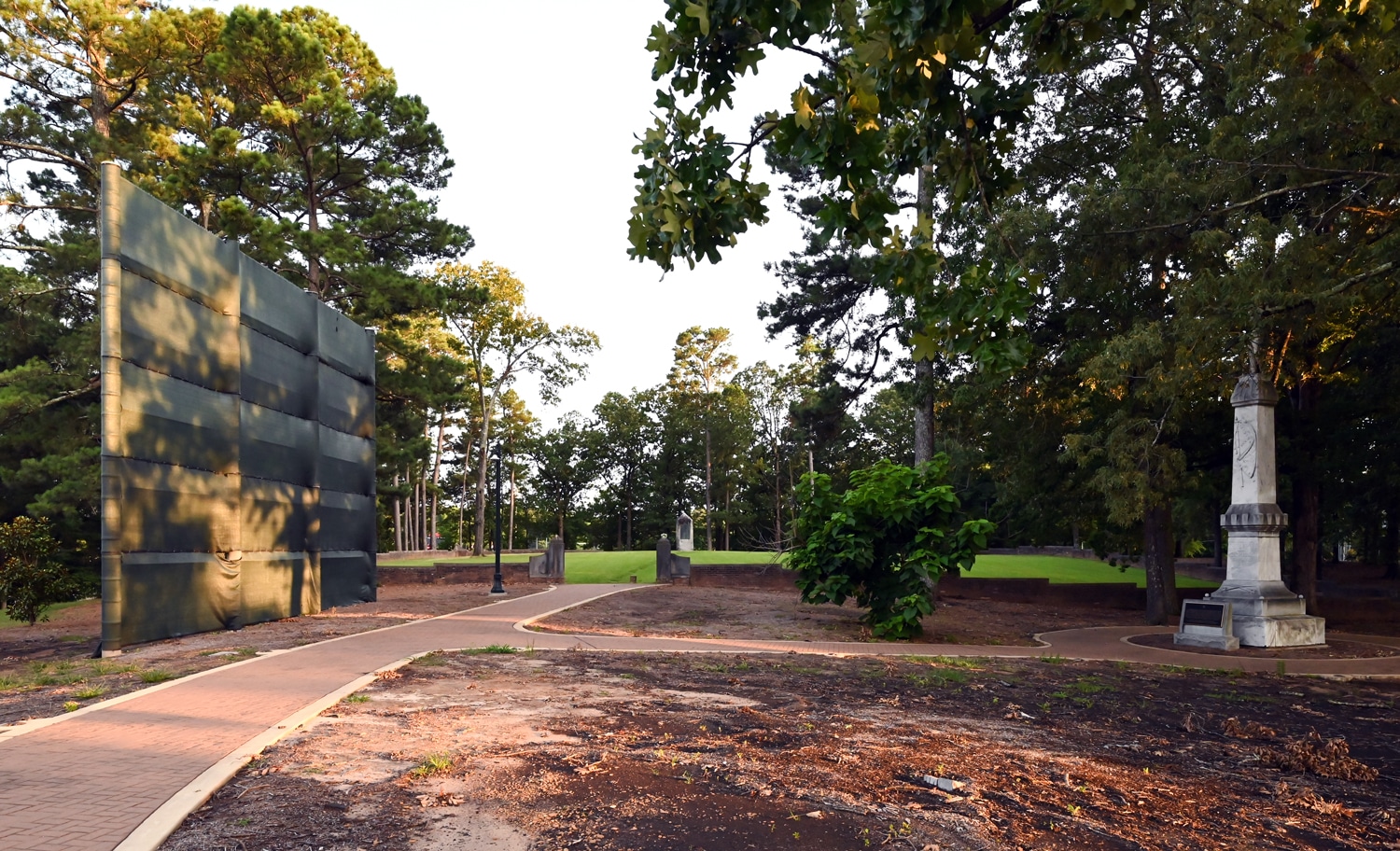
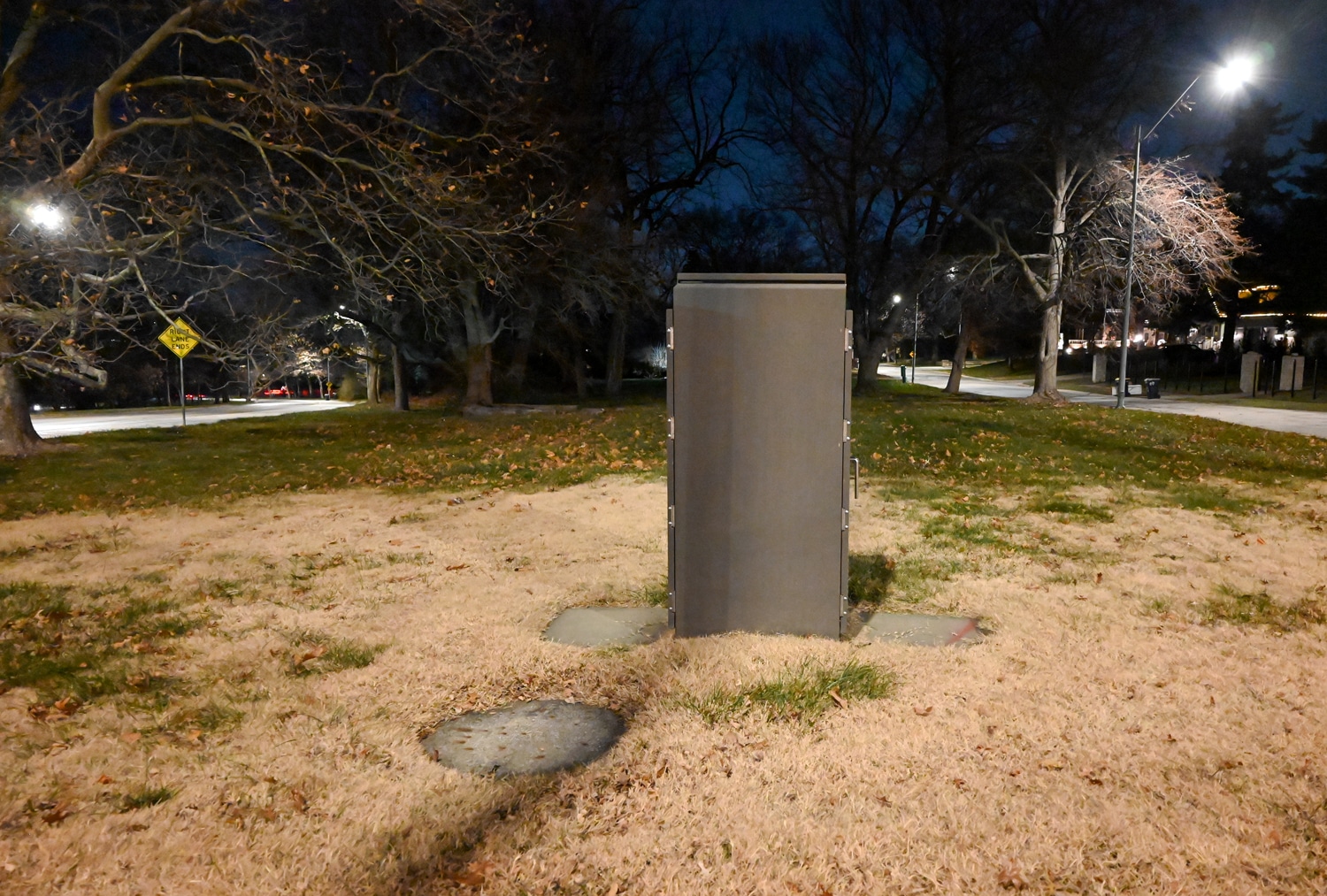
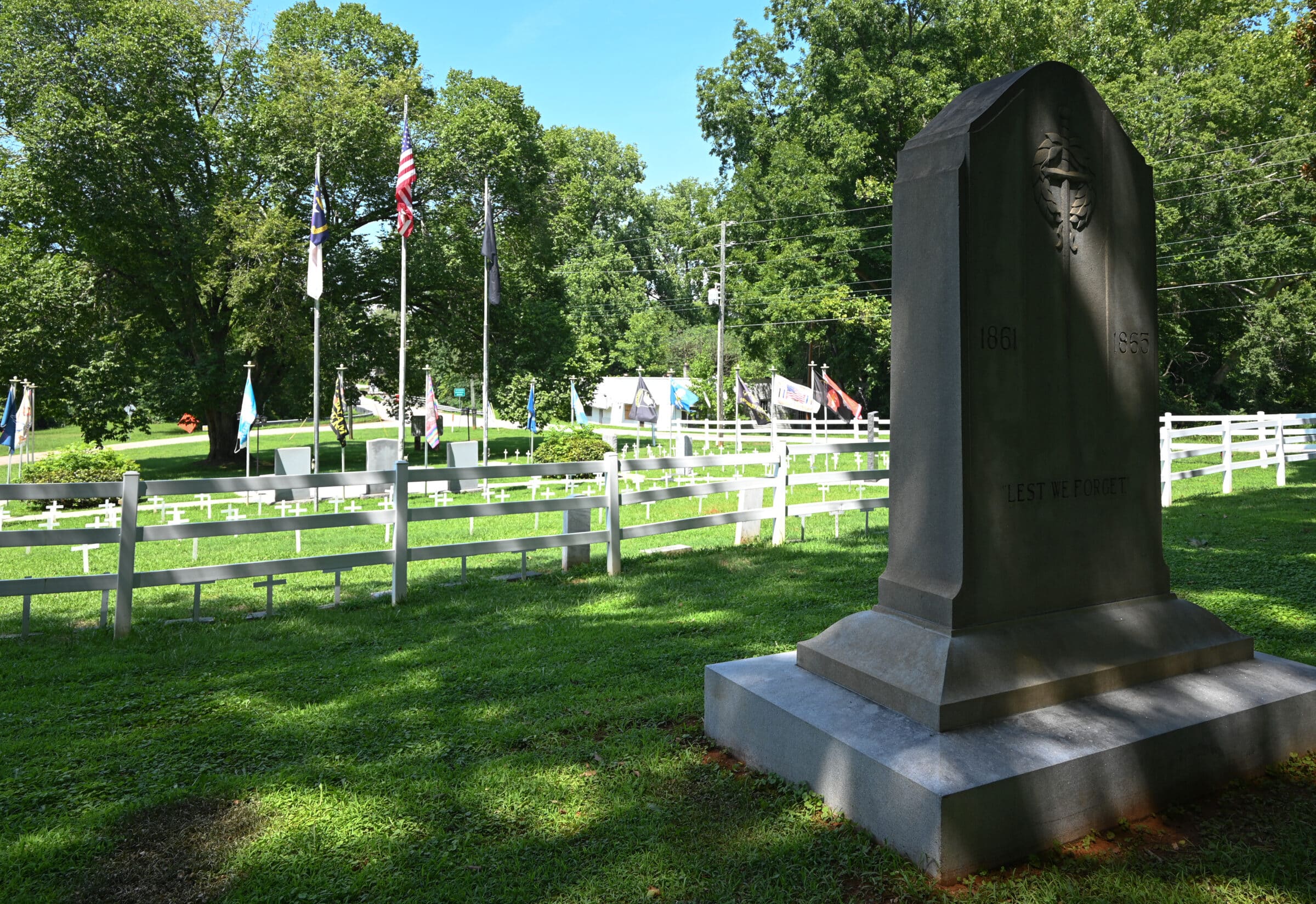
In other cases, the mundane has completely overtaken the honorific. On a grass median in an affluent residential neighborhood in Kansas City, Missouri, a utilitarian electrical box now sits atop the concrete pad that once supported a monument to “Loyal Women of the Old South,” removed in 2017. A similarly diminished mood hangs over the marker commemorating Confederate dead in Rockingham, North Carolina. Moved from the city’s main square in 2020, the headstone-style monument now stands in a shaded area on the periphery of Veterans’ Memorial Park, outside — and symbolically apart from — the fenced area enclosing markers and flags honoring veterans of other wars. At the University of Mississippi in Oxford, a statue honoring Confederate soldiers was similarly sidelined in 2020, when it was moved from its prominent perch at the school’s main entrance to a Confederate cemetery in a far corner of campus. Soon after, complaints from football players who could now see the statue from their practice fields prodded the university to erect a large screen blocking the athletes’ views. 12
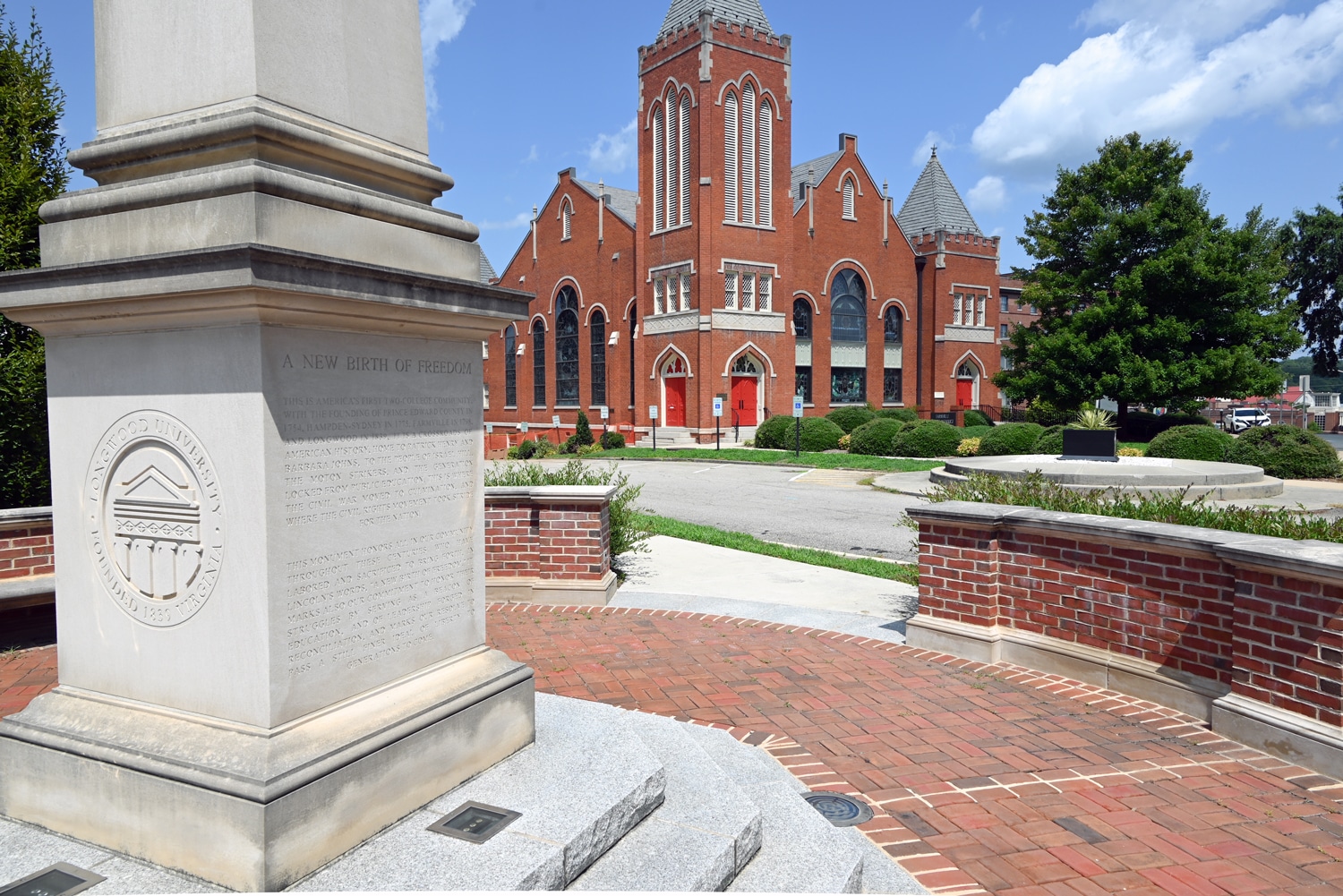
In Farmville, Virginia, in 2018, Longwood College created a more direct standoff, addressing the presence of a Confederate soldiers’ monument adjacent to its campus by placing a new counter obelisk across the street. Titled A New Birth of Freedom, the obelisk recognizes the area’s complicated political history, including the “generations locked from public education” — Prince Edward County, where Farmville is located, infamously closed its public schools altogether in the 1950s, in defiance of desegregation orders stemming from the Brown decision. In dedicating the obelisk, the college expressed its “resolve to pass a still finer ideal of liberty to generations to come.” The pairing of contradictory monuments was altered again in 2020, when the town council voted to remove the soldiers’ marker. Longwood’s obelisk now stands alone. The Confederate site is vacant save for an unadorned planter on its left-behind base.
Jurisdictions
In both Oxford and Prince Edward County, removals, though contested, were facilitated by the fact that both the sculptures at issue and the land they occupied are owned by the schools initiating the changes. In many other places, refashionings have been complicated by jurisdictional problems related to control over the contentious objects themselves, or over the spaces where they once were or have recently been placed.
The UDC’s historical role in commissioning, funding, and siting Confederate monuments has led to contemporary questions about whether the organization, which still exists, continues to own the statues they helped to install on public land a century or so ago. In St. Louis, Missouri, in 2017, removal of the Confederate Memorial from the city’s largest park was temporarily halted following a lawsuit brought by the local Civil War museum, asserting that the UDC did indeed control the memorial, and could rightfully deed it to the museum. 13 In Fayetteville, North Carolina, Leesburg, Virginia, and a number of other cities, comparably murky issues regarding legal title have led UDC chapters to request that local officials move statues that the group purportedly owns, citing concerns that the objects could not be sufficiently protected from activists seeking to damage or tear them down.
Such tactics are emblematic of a countermovement that has shadowed higher-profile campaigns to banish monuments from public space. Focused on the re-display of Confederate objects on private land, these efforts have refashioned the topography of Confederate commemoration in two senses.
First, dozens of monuments that had been placed in prominent public locales now reside in private spaces like cemeteries or veterans’ memorial parks. Such positions ostensibly accord with the fact that the objects remember Confederate dead. At the same time, the gravitas of these settings helps to burnish the statues’ symbolic language, emphasizing their claims to valor, gallantry, and heroism — messages in many cases enhanced through additional signage commemorating the once-public monuments’ recent arrivals on private land. Treating these objects as memorials to the fallen (an interpretation often insidiously emphasized by supporters of the monuments), obscures the fact that the statues also, indeed primarily, serve contemporary functions, continuing to venerate the values undergirding Confederate soldiers’ service.
Dozens of monuments that had been placed in prominent public locales now reside in private spaces like cemeteries or veterans’ memorial parks.
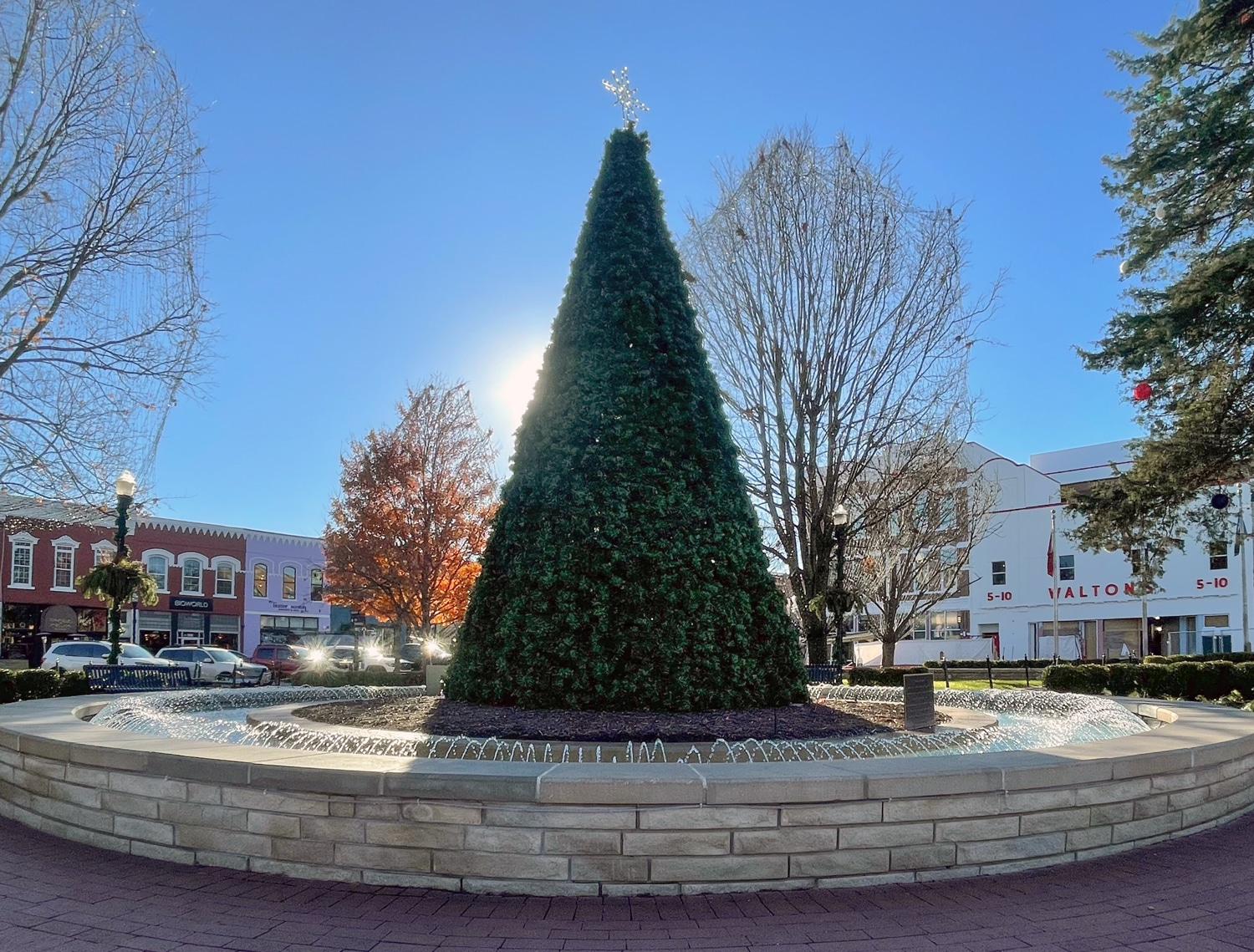
Bentonville, Arkansas, offers a clear instance of such a shift in site. Until its removal in 2020, the city’s Confederate soldier statue, with its inscription celebrating “names … borne on honor’s shield,” had stood for 112 years in the center of the main square — tellingly located between the county courthouse and the original Walton’s five-and-dime, progenitor of Wal-Mart. When I visited in December 2024, that space was occupied by a large holiday tree, with no visible vestige of the site’s former use. Yet the statue remained on view a few blocks away, as the centerpiece of a lavish new private park laid out in the shape of a Maltese cross, honoring the “history of all the veterans who served in the Civil War.” The UDC was heavily involved in the development of this park, which — given the centrality it grants to other honorifics such as the Confederacy’s First National Flag and a wall listing Confederate soldiers likewise “borne on honor’s shield” — has if anything enhanced the symbolic profile of the contested statue. 14 In Ocala, Florida, a “Johnny Reb” statue that had been tucked into a nondescript nook beside the county’s Judicial Center has recently resurfaced as a touchstone object in the area’s privately-run veterans memorial park. There, the monument stands in full view of busy roads, adjacent to a planned “Memorial to God,” a public-private city project that is to feature a life-sized bronze soldier kneeling before a black marble panel inscribed with the Ten Commandments. 15
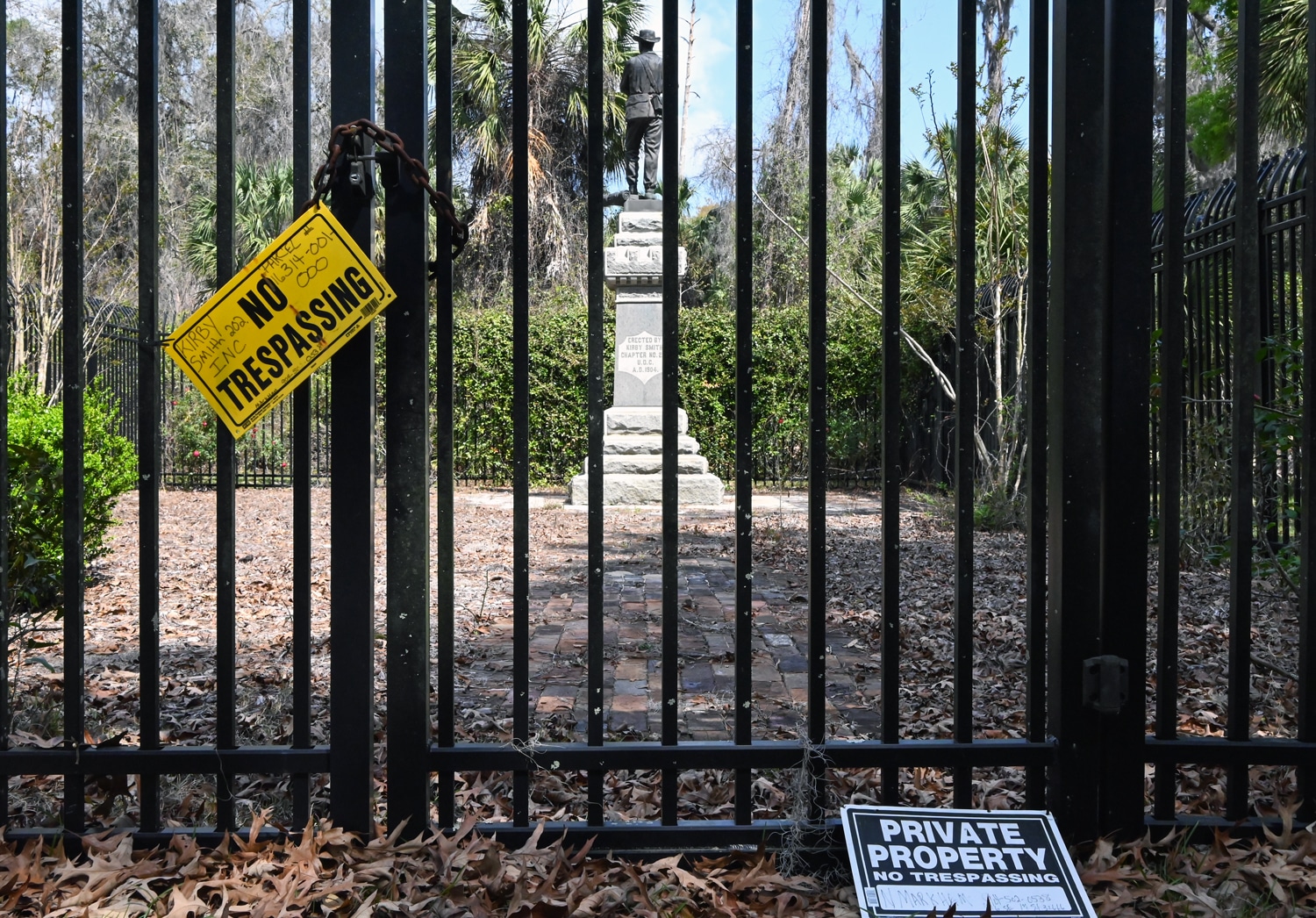
The second way in which privatization has refashioned the Confederate landscape concerns a pronounced political realignment by those who support continued display of these public objects. Once viewed as vehicles for yoking the Lost Cause with the aims and values of 20th century power structures, the shifting of monuments into private hands now often signals distrust of local governments. Such reorientations contribute to an outsized emphasis on security. For instance, “Old Joe,” a Confederate soldier’s statue that had long stood in front of the County Administration Building in Gainesville, Florida, is now on display at a private cemetery in a nearby rural area. In placing the statue behind a high fence with locked gates, the caretakers appear to have emphasized defense of the object over its accessibility.
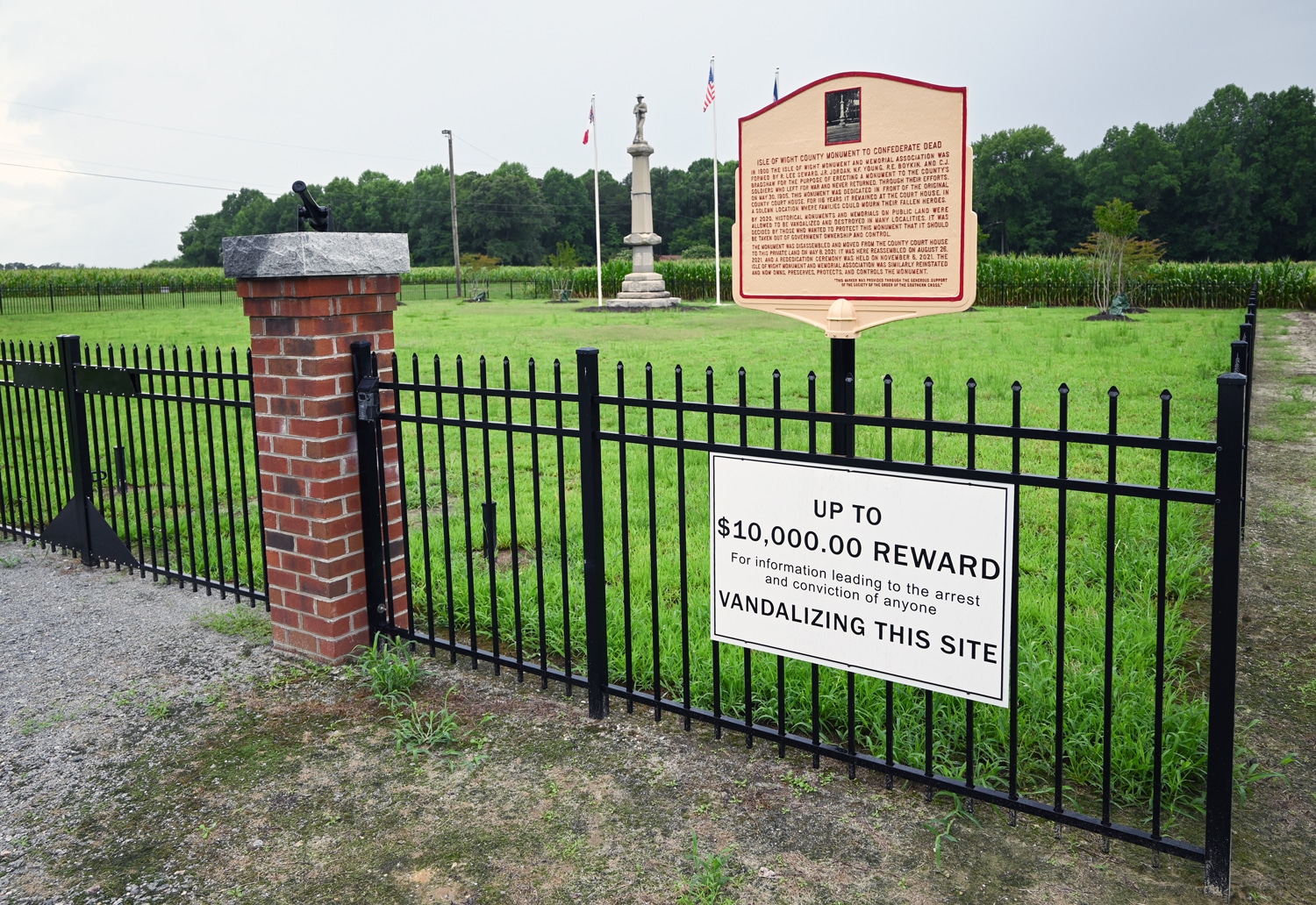
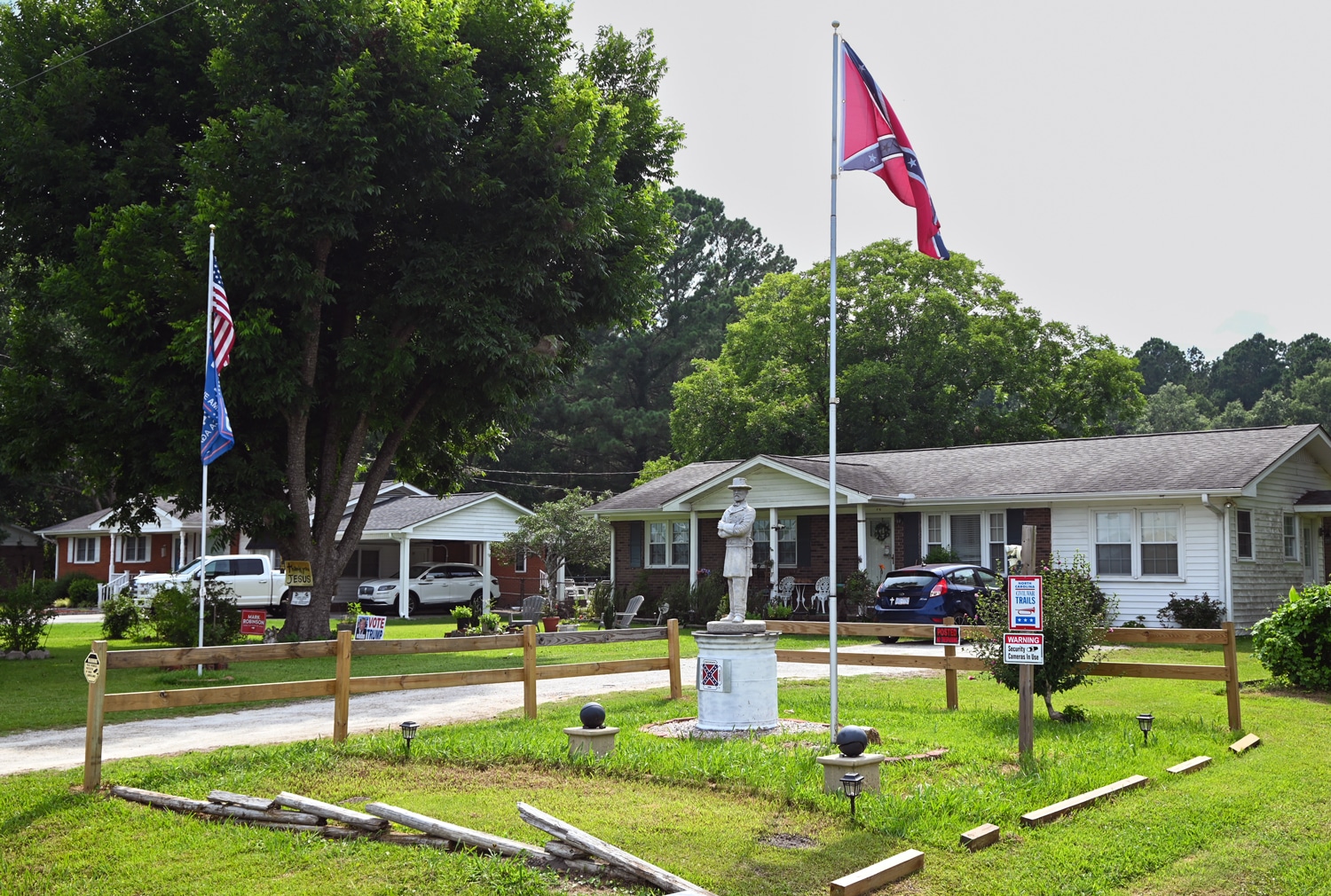
Another Confederate soldier’s statue that was recently moved to a cornfield on a private farm in Virginia’s Isle of Wight County strikes the balance between visibility and protection in a more explicit way. A large sign placed on the wrought-iron fence enclosing the field promises a reward up to $10,000 “for information leading to the arrest and conviction of anyone VANDALIZING THIS SITE.” A plaque erected just inside the fence announces: “by 2020, historical monuments and memorials on public land were allowed to be vandalized and destroyed in many localities .… It was decided by those who wanted to protect this monument that it should be taken out of government ownership and control.” Cast in metal with raised text, the sign is designed to look like the markers commissioned by state historical commissions.
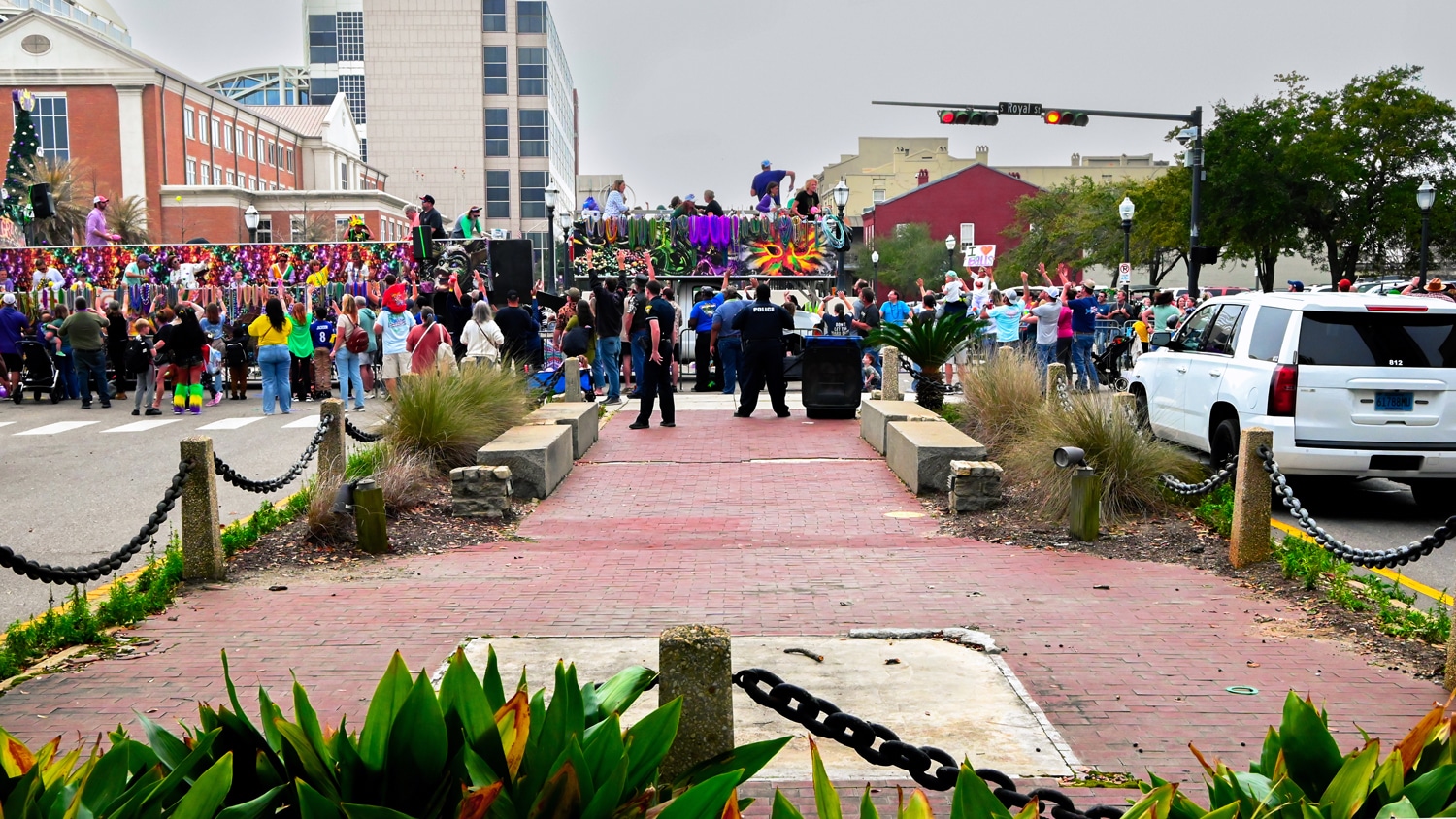
Mobile AL (February 2025): A statue honoring Confederate Admiral Raphael Semmes stood for decades on this site at a downtown intersection, along the route of the annual Mardi Gras parade. The statue was removed in 2020, and re-displayed at the nearby History Museum of Mobile. But the city’s parade — which many locals claim is the nation’s oldest, inaugurated in 1703 — continues to be a major source of civic pride.

Grenada, MS (May 2025): Following a city council vote in 2020, the Confederate monument in Courthouse Square was left in place but wrapped in a tarp for four years, before newly elected Mayor Charles Latham ordered its immediate removal in September 2024. The damaged base remained in place nearly a year later. Meanwhile, on the city’s periphery, a newly poured cement base awaited the statue’s reinstallation. The new site is isolated — behind a fire station, around a wooded corner in a large field, out of view even from the firehouse itself.
Farmville, VA (July 2024): The obelisk in the foreground was installed in 2018 by Longwood College, placed on the edge of campus so as to intentionally critique the Confederate monument in the nearby traffic circle. Longwood’s monument now stands unchallenged, as the adjacent memorial to “Confederate Heroes” was removed in 2020.
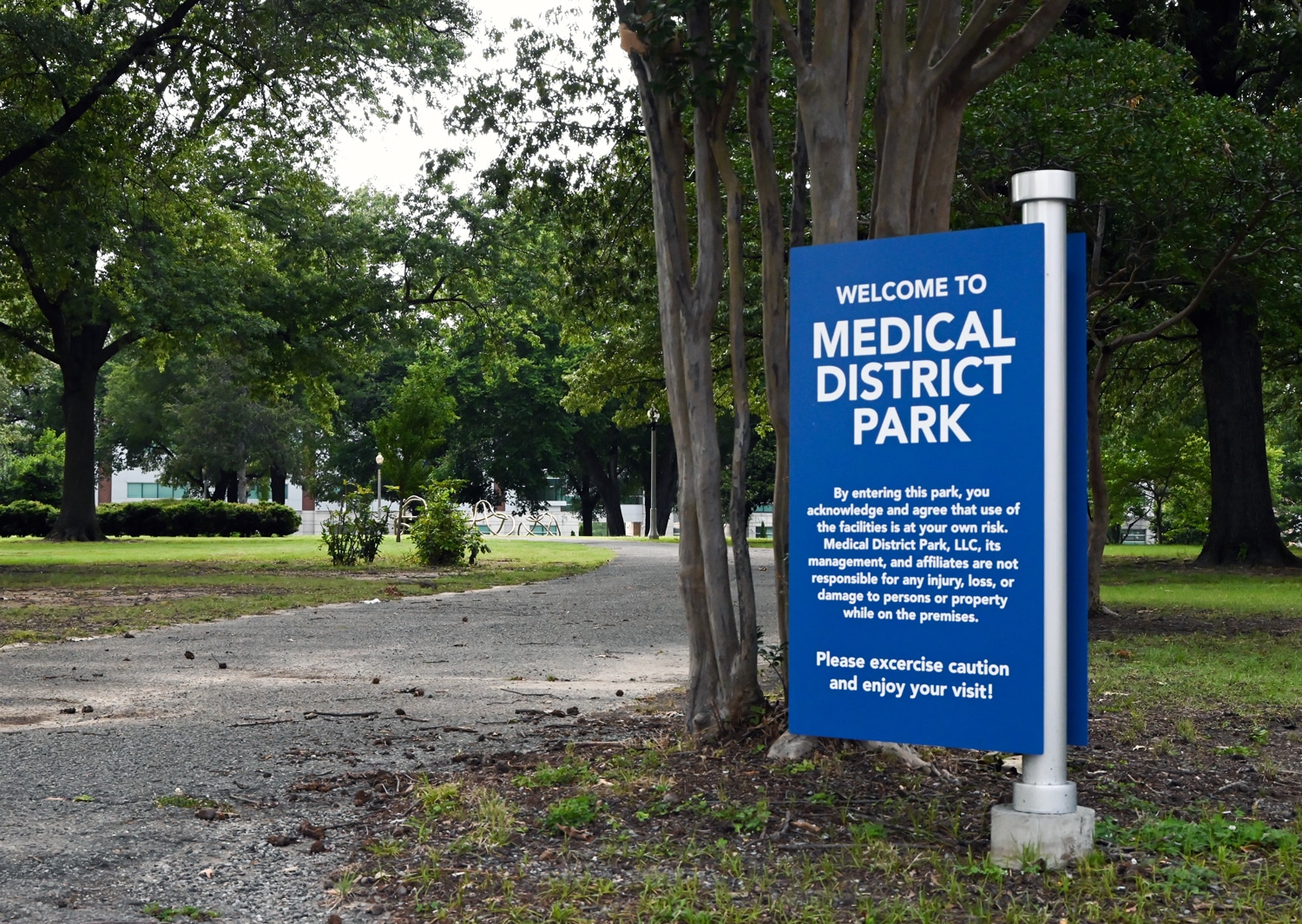
Memphis, TN (June 2025): Forrest Park was the longtime burial site of Confederate General (and KKK co-founder) Nathan Bedford Forrest, marked by a large statue in his honor. Rechristened Medical District Park, the space now exhibits metal sculptures by artist Molly Gochman (visible in the background of this image), titled Monuments to Motherhood; when I visited, “Black Lives Matter” was painted in large, colorful letters on three sides of the walkway that surrounds the work. The unusual liability signage that now marks this entrance resulted from the 2017 sale of the park by the City of Memphis to a nonprofit foundation, in order to circumvent Tennessee’s prohibition on the removal of monuments from public land.
Rockingham, NC (July 2024): This marker erected “in loving memory of our Confederate soldiers” was removed from the city’s Harrington Square in 2020 and re-installed the following year in the county’s Veterans Memorial Park. Other recent additions to the park, including one commemorating the Iwo Jima flag raising and another depicting what is known as a battlefield cross — the makeshift memorial of a helmet resting on a gun propped vertically between a pair of boots — reside within the fenced area, leaving the Confederate memorial as the sole marker in the outer periphery.
Isle of Wight County, VA (July 2024): A Confederate soldier statue removed in 2021 from Monument Circle outside the historic county courthouse now resides in a cleared, fenced area of a local farmer’s cornfield. The well-tended site is heavy on security, rooted in its supporters’ defiant sense that the monument needed to be “taken out of government ownership and control” after such official bodies “allowed [Confederate symbols] to be vandalized and destroyed in many localities.”
Dalton, GA (March 2025): This statue of Confederate General Joseph E. Johnson was moved in 2021 from the main downtown intersection to the rear of the nearby Huff House, run by the local Whitfield-Murray Historical Society. (Johnson used the house as a military headquarters in the winter of 1864-65.) Georgia law mandates that removed monuments be “relocated to a site of similar prominence, honor, visibility, and access,” a stipulation seemingly at odds with the Huff House’s present-day status as an affordable rental venue for parties.
Gainesville, FL (March 2025): “Old Joe,” the Confederate soldier statue that stood in front of the county’s administration building until 2017, is now located in a cemetery on the outskirts of this city best known as home to the state’s flagship university. Surrounded by heavy fencing, the figure faces toward a dense wooded area and away from the cemetery grounds, its venerated status belied by emphatic warning signage.
Durham, NC (July 2024): This space in front of the Old Durham County Courthouse is mulched over and lacks other adornment, although an electrical element previously used to illuminate the Confederate soldier monument that stood here still pokes out of the ground, alongside a plant tag promising “flowers that flourish.”
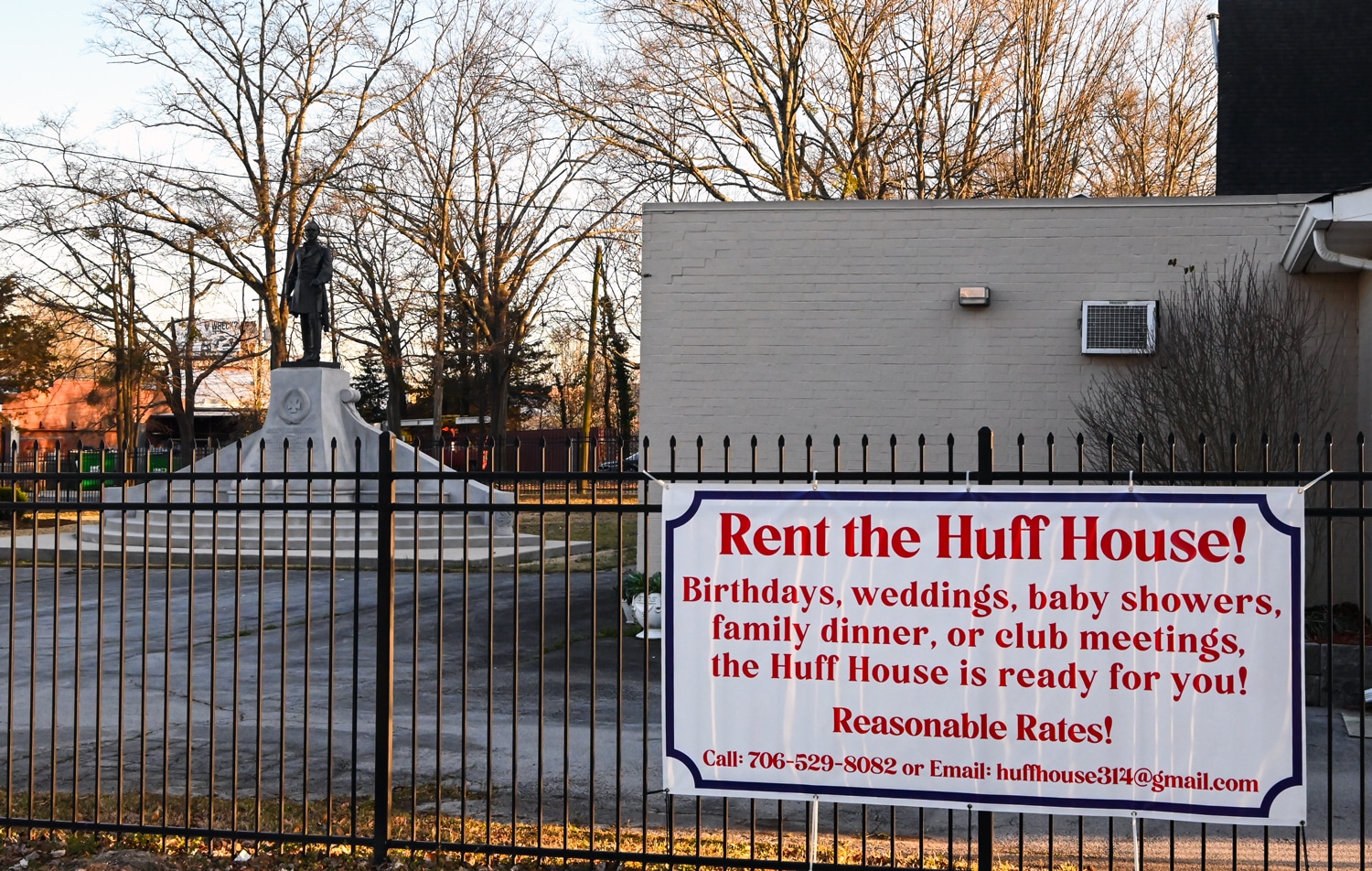
One might reasonably ask how, even if wrested from government “control,” a Confederate statue ends up in a cornfield? Such vicissitudes vary state by state. A Virginia statute allows monument removals at local discretion, provided that municipalities extend an open call “for relocation and placement to any museum, historical society, government, or military battlefield.” In Isle of Wight, after removal of the monument to a municipal cemetery was barred by the town council that had jurisdiction, the farm owner remained the only interested party; he agreed to put the statue on display, and it was transported to his land at county expense. 16 A Georgia statute stipulating that removed monuments must be “relocated to a site of similar prominence, honor, visibility, and access” has prompted dubious interpretations of those standards, including a statue relocated to the rear of an historic house that hosts birthday parties and baby showers. In North Carolina, law requires the State Historical Commission to approve removals or alterations of state-owned monuments, though latitude is granted to local governments if the move is made in order to preserve objects. 17 Expansive definitions of these terms have led to more removals or relocations there than in any other state.
In contrast, South Carolina, Mississippi, and Tennessee have strict prohibitions on the removal of monuments. As a result, few Confederate symbols have come down in these states, although the cases of those that have are revealing. In Memphis, city officials circumvented state legal protections for Confederate objects on public land by selling two parks for nominal amounts to nonprofit foundations, each of which promptly relocated the statue in question outside of the city. 18 Satisfyingly for progressive opponents of Confederate symbols, such side-stepping inverted the civil rights-era segregationist playbook, when many local governments privatized public facilities to avoid complying with desegregation orders mandated by the Civil Rights Act of 1964.
A Final Case
I arrived in Cape Girardeau, Missouri, close to noon on a clear February day, the sun cutting sharp shadows across the park fronting City Hall. As a slaveholding state that did not secede from the Union, Missouri’s political sympathies were divided throughout the Civil War, with dozens of skirmishes involving Union forces and Confederate agents and sympathizers. The land that is now the park harbors memories of such divisions, having once been the site of a market where enslaved people were sold, as well as a makeshift headquarters for Union troops who for a time occupied Cape Girardeau under martial law. In 2017, the former Courthouse Park was renamed Ivers Square after Union soldier James Ivers and his wife Harriet, to recognize, for the first time, the nearly 250 emancipated Black men who had come to the courthouse to enlist in the Union Army. In 2019, a statue was erected to recognize those soldiers’ “courage and sacrifice.” A year later, the square’s Confederate War Memorial, placed nearby in 1935 by the UDC and shifted to the park in 1995, was removed by the city council. Deliberating over those changes, one member of the city’s Historic Preservation Commission referred to the monument as a “symbol of oppression.” Another labeled Confederate soldiers as “traitors.” 19
Such admonitions, however, did not extend to the park’s other monument to Civil War history. Perched above the centerpiece fountain, that statue of a Civil War soldier had been installed in 1911 as a “memorial to the fallen soldiers of the City and County.” By intention, this soldier was depicted devoid of badges, buckles, or other details specific to either Union or Confederate uniforms. But in the renamed Ivers Square, in the presence of the statue honoring “Union Army Soldiers of African Descent” and celebrating their role in securing “liberty, justice, and freedom for thousands of their fellow Missourians,” even the apparently nonpartisan figure now reads as consonant with Union solidarities.
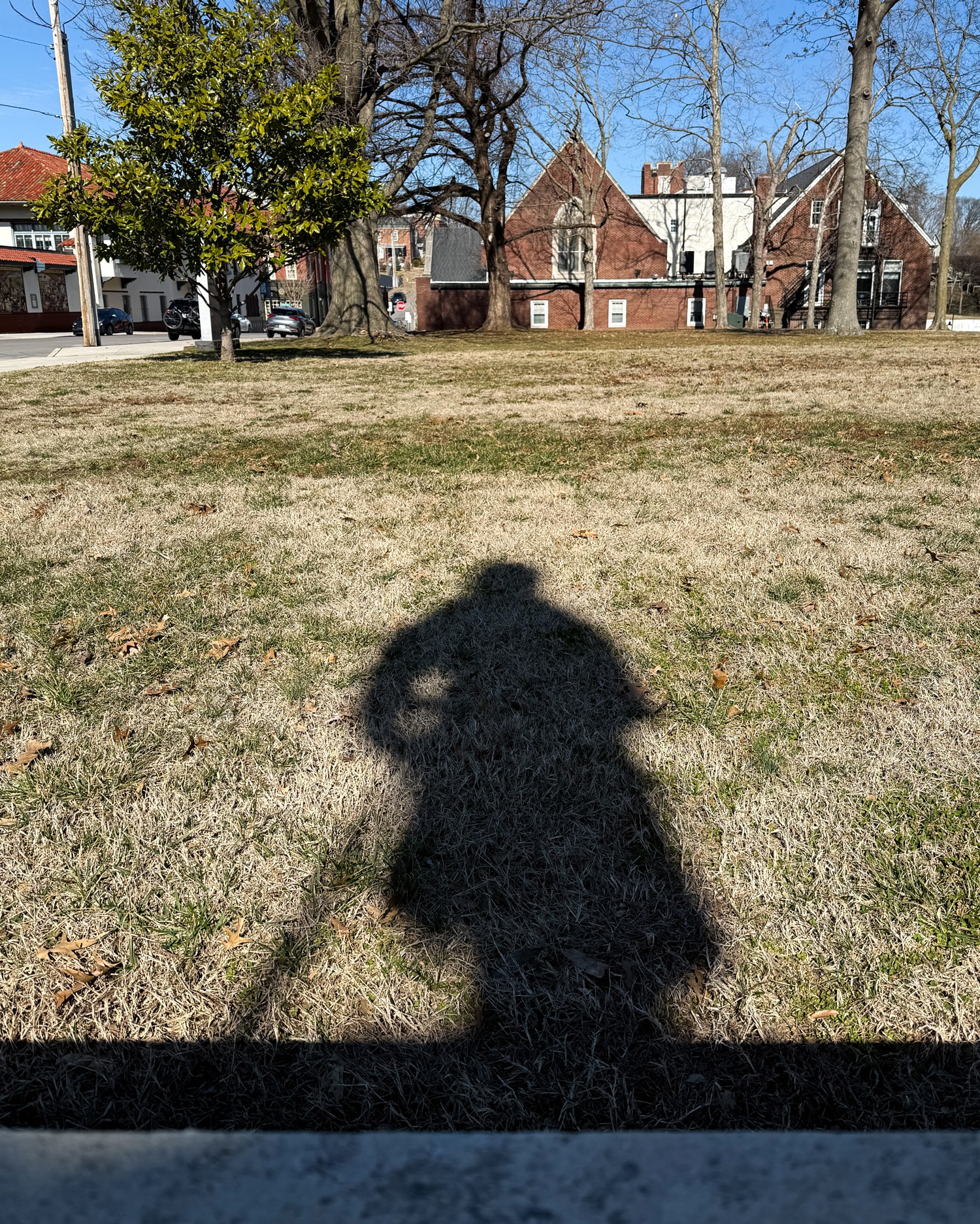
With these thoughts in my head in the park at City Hall, I watched as, rather remarkably, the crisp shadow of the 1911 statue fell almost perfectly on the patch of grass where the Confederate War Memorial once stood. For a few moments, before the sun shifted, a singular image captured the elusive juxtaposition: the space of an expunged Confederate monument literally overshadowed by an implicitly Unionist soldier, whose African American compatriots are memorialized nearby. It was a synchronicity representing in microcosm the promise, and challenge, of continued reckonings with Confederate landscapes. The stories and meanings inscribed on these sites are not static and not singular, not constrained by any one object’s presence or absence. Rather, the power of these struggles over public meaning resides in their potential — the creation of dynamic spaces in which communities can take the necessary, if not sufficient, first steps to reflect upon, mobilize around, and ultimately honor values and practices that are rich, true, and inclusive.


If you would like to comment on this article, or anything else on Places Journal, visit our Facebook page or send us a message on Twitter.