

Frances Richard: You have been working for several years on ideas of the architectural gift, and have realized this research in a number of projects. To cite a few: an exhibition you’ve co-organized with Damjan Kokalevski called “The Gift: Stories of Generosity and Violence in Architecture” recently opened at the Architectural Museum in Munich. In 2022, you were convener for a conference at the British Academy titled “The Gift of Architecture: Spaces of Global Socialism and Their Afterlives.” And your 2020 monograph Architecture in Global Socialism: Eastern Europe, West Africa, and the Middle East in the Cold War explores issues of international largesse and exchange — what you call “socialist worldmaking.”
A focus on architectural gift-giving affords new ways of thinking about the worldwide processes triggered by capitalist industrialization and colonial exploitation.
Would you talk about the parameters and findings of this research? What is the architectural gift, as exemplified in what kinds of sites? Why has the inquiry followed the trajectories it has?
Łukasz Stanek: Architectural gift-giving is embedded in a long tradition of imperial and religious donations of buildings. But my collaborators and I have been interested in its relationship to modern urbanism; in how a focus on architectural gift-giving affords new ways of thinking about the worldwide processes triggered by capitalist industrialization and colonial exploitation since the 18th century. In my book, the temporal frame is more restricted: I studied Cold War collaborations — often unequal — between architects, planners, and construction companies from socialist countries in Eastern Europe, and their counterparts in West Africa and the Middle East. The movement of labor, blueprints, and construction materials and technologies across these geographies shaped cities such as Accra, Lagos, Baghdad, Abu Dhabi, Kuwait City, and many others, from the 1950s to the 1980s. Gifted buildings were among the most visible interventions by means of which the Soviet Union, China, and other socialist countries both supported the newly independent countries, and hoped to achieve political leverage and economic gains. To cite a few examples: the National Assembly Building in Conakry, a Chinese gift to Guinea; the Kikwajuni housing district in Zanzibar, an East German gift; or the House of Culture and Youth Theatre Complex in Darkhan, a Soviet gift to Mongolia.
FR: What does “gift” mean in blunt financial terms when national governments and whole regions are involved? In the simplest practical sense, how did a gifted building get built in these midcentury examples?
ŁS: My working definition of an architectural gift is a building that was designed and constructed with the intention to be handed over, and to be received without explicitly accepting any obligation to reciprocate — even if such an obligation was implied or anticipated by both giver and receiver. This is a very broad definition, but it leaves out many candidates for architectural gifts, from historical buildings donated to a nation by their owners, to housing in a welfare state. This definition emphasizes the performative character of giving and receiving. Of course, in the case of objects as complex as buildings, there are many candidates for both roles, and not everybody is asked whether they want to give or whether they want to receive a building.
Within this understanding, the number of buildings gifted by socialist countries to newly independent ones was relatively small. Yet the concept of the gift has been important for me as a way to understand international dynamics of architectural exchanges during the Cold War. A case in point is barter, which was a mode of exchange favored by the Soviet Union, its satellites, and their partners in Africa and Asia. As an exchange of goods for goods without the mediation of money, barter was attractive to both socialist and postcolonial countries, which had scarce reserves of convertible currencies (such as U.S. dollars or pounds sterling).

Like a market transaction, bartering is based on value equivalences, and the partners needed to decide, for example, how many tons of cocoa or barrels of crude oil were required in exchange for a hospital or a school. But these equivalences were not defined exclusively by prices on international markets. Barter arrangements were understood as “mutual assistance,” which was a phrase the Soviets used in the late 1950s and early ’60s to describe their dealings with the newly independent countries. In other words, barter was ambiguously situated between market and gift economies. The focus on such transactions shows how state-socialist institutions and their counterparts in Africa and Asia exploited differences between the political economy of state socialism and the emerging global market in design and construction services, which was dominated in the postwar decades by capitalist countries. 1
Gifts come with an aura of singularity; the donor’s unique generosity meets the receiver’s unreserved gratitude. Yet gifted buildings are not unique.
FR: This geopolitical, historical description puts a lot of pressure on the apparently disinterested concept of the gift. Even if the mechanism of exchange was barter rather than sale and purchase, there was still a quid pro quo, and also a mutual upholding of ideological commitments. As a medium of exchange between international allies (or prospective allies), what I understand you to be saying is that, in the postwar decades, the architectural gift transcends distinctions between socialist and capitalist, to become a form of (semi-)soft power that’s useful in disparate political circumstances. Is that right? Sponsoring or otherwise causing a building to be built becomes a way of hanging on to spheres of influence and reasserting ideological allegiances that might otherwise have waned in postcolonial contexts?

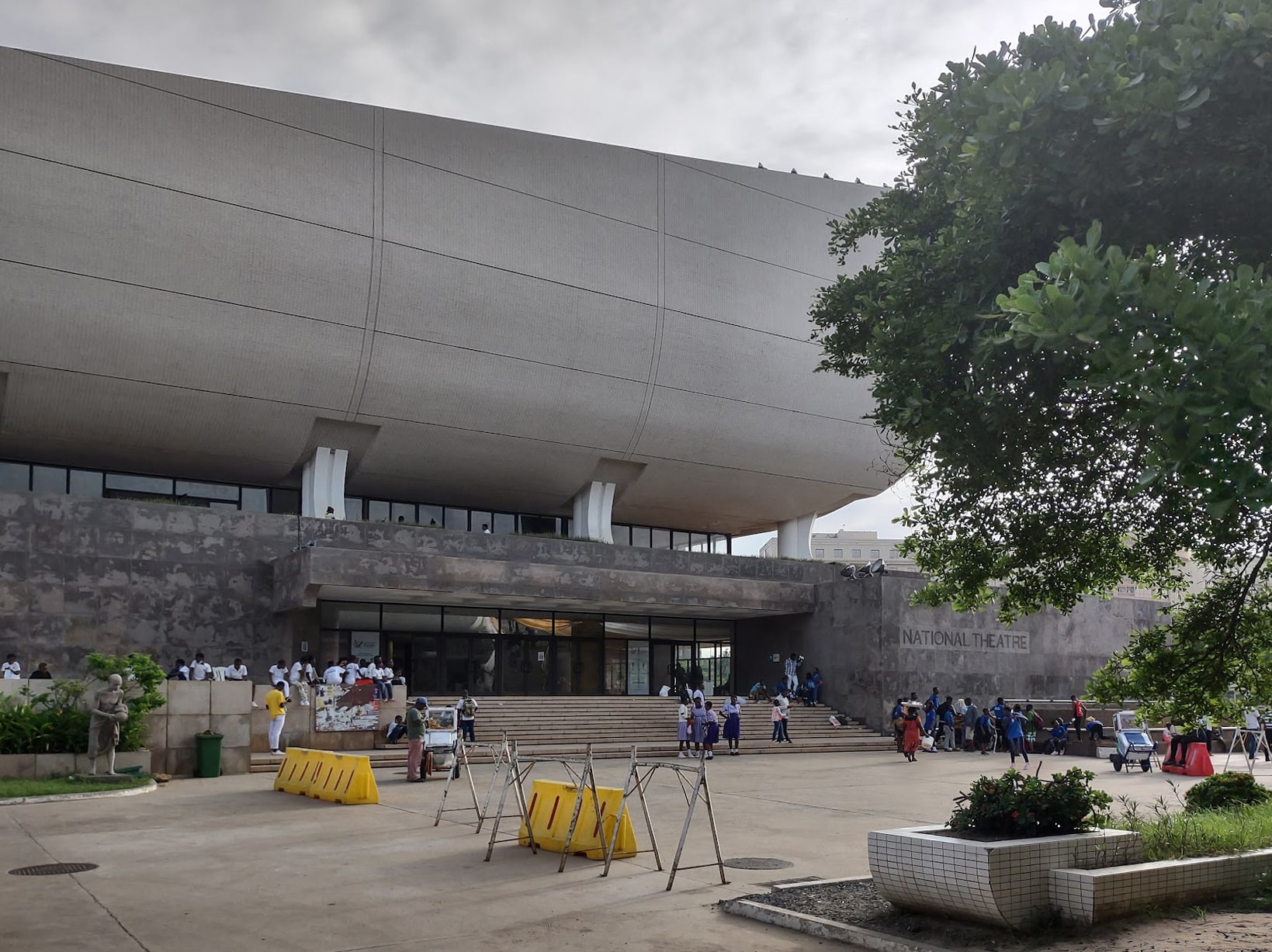
ŁS: That’s right. Gifts, as such, come with an aura of singularity: the gifting of a building is staged as an event in which the donor’s unique generosity meets the receiver’s unreserved gratitude. Yet gifted buildings are not unique; they are common. In Accra, Lagos, Dakar, Addis Ababa, Beirut, cities of the Gulf, Tashkent, Almaty, and Ulaanbaatar, one sees examples from spectacular to mundane, extravagant to genuinely useful. These examples connect to longer traditions of philanthropy, diplomacy, and charity. But their numbers have been growing exponentially since the period of decolonization.
They include schools and universities, clinics and stadiums, office buildings, industrial plants, and whole districts of blocks of flats. They resulted from colonial developmentalism and diplomatic efforts across Cold War divides, including the rivalry between China and the Soviet Union that began in the 1960s. Western institutions have been active too, and for a long time; consider, for instance, Carnegie libraries in early-20th-century South Africa. Islamic rulers and charities have for centuries donated hospitals and mosques, and this practice has expanded since the 1970s, notably by means of gifts from oil-producing countries. Gifted buildings, in other words, are indicators of geopolitical reshuffling. Consider the Ottoman-style mosques built in Accra and Pristina, in 2021 and 2019 respectively, which point to an increasing Turkish economic and political presence in West Africa and the Balkans.
Architectural gift-giving also occurs in the “former West.” Of course, philanthropic funding has shaped European and American cities since the early 19th century, and the Cold War was fought in Europe via architectural gifts too. But the role of philanthropy in the funding of architecture seems to have expanded in inverse proportion to the dismantling of the welfare state. A recent example is the controversy around the Garden Bridge, which was offered as “a gift to the people of London” by a charity supported by prominent members of the Conservative party. 2 Under mayor Boris Johnson, £45 million in public money was spent on this project before it was abandoned. 3 I am interested in the ubiquity of these gift-based transactions; in the ways that they reveal promises and threats in urbanization processes today.
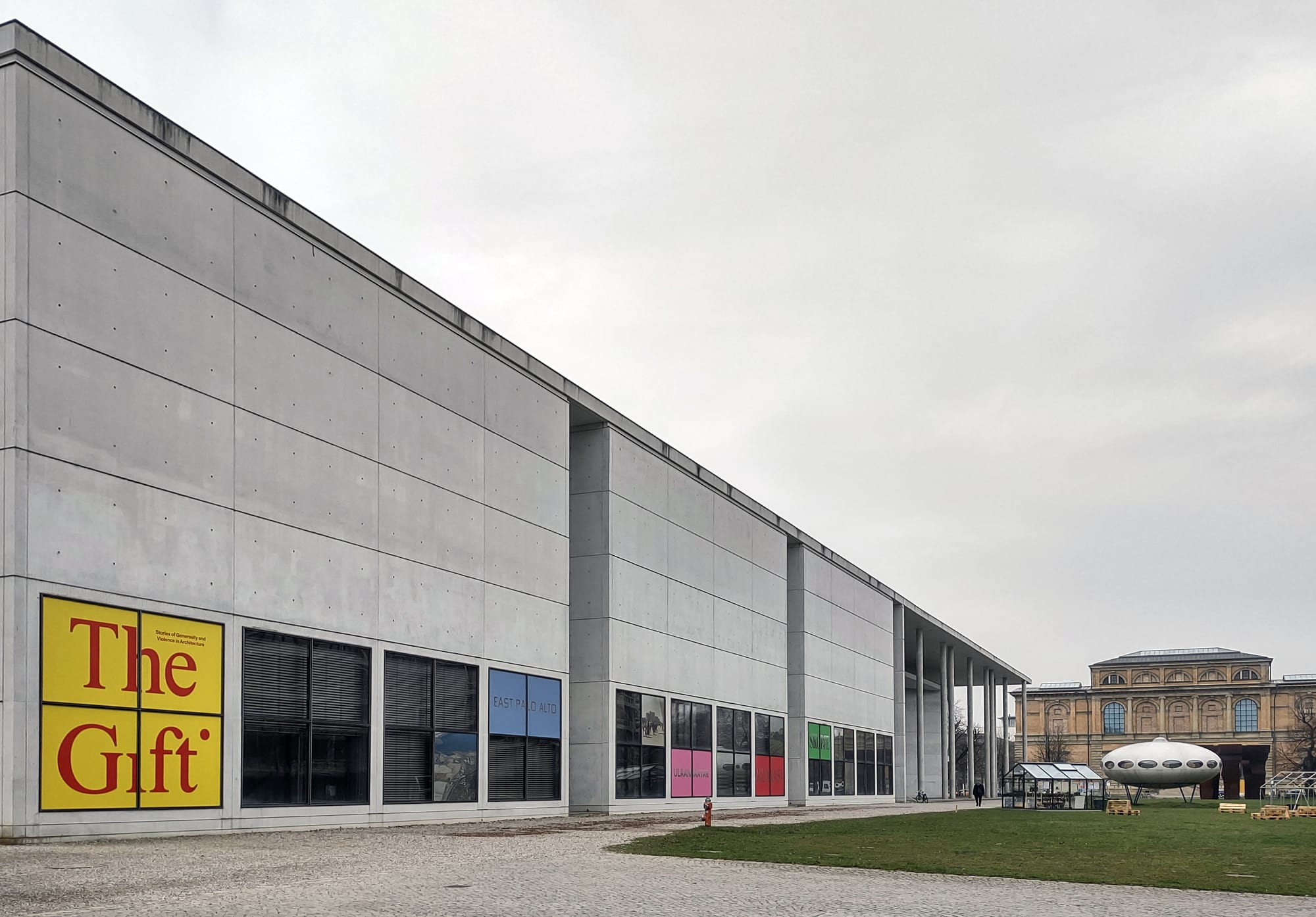
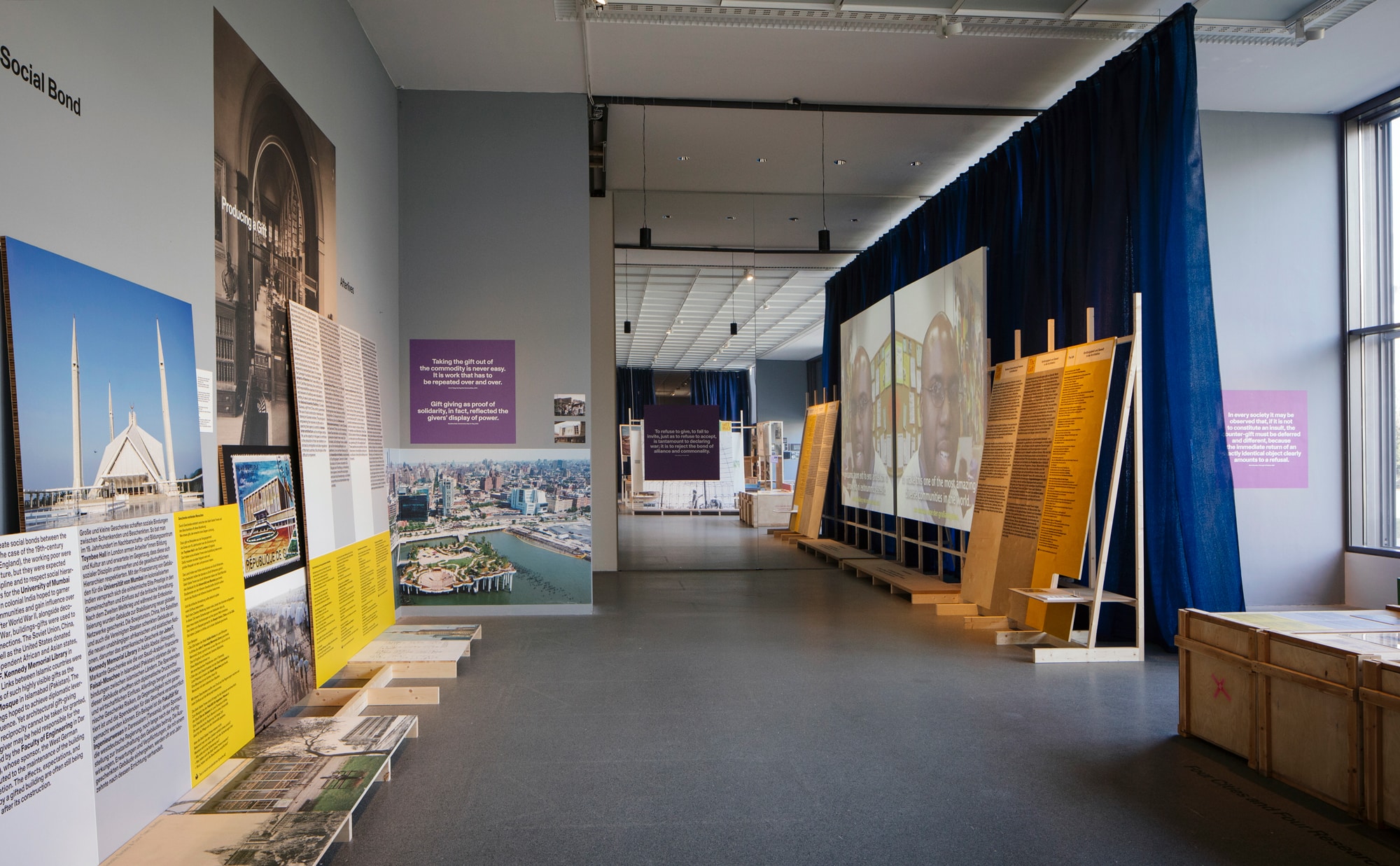
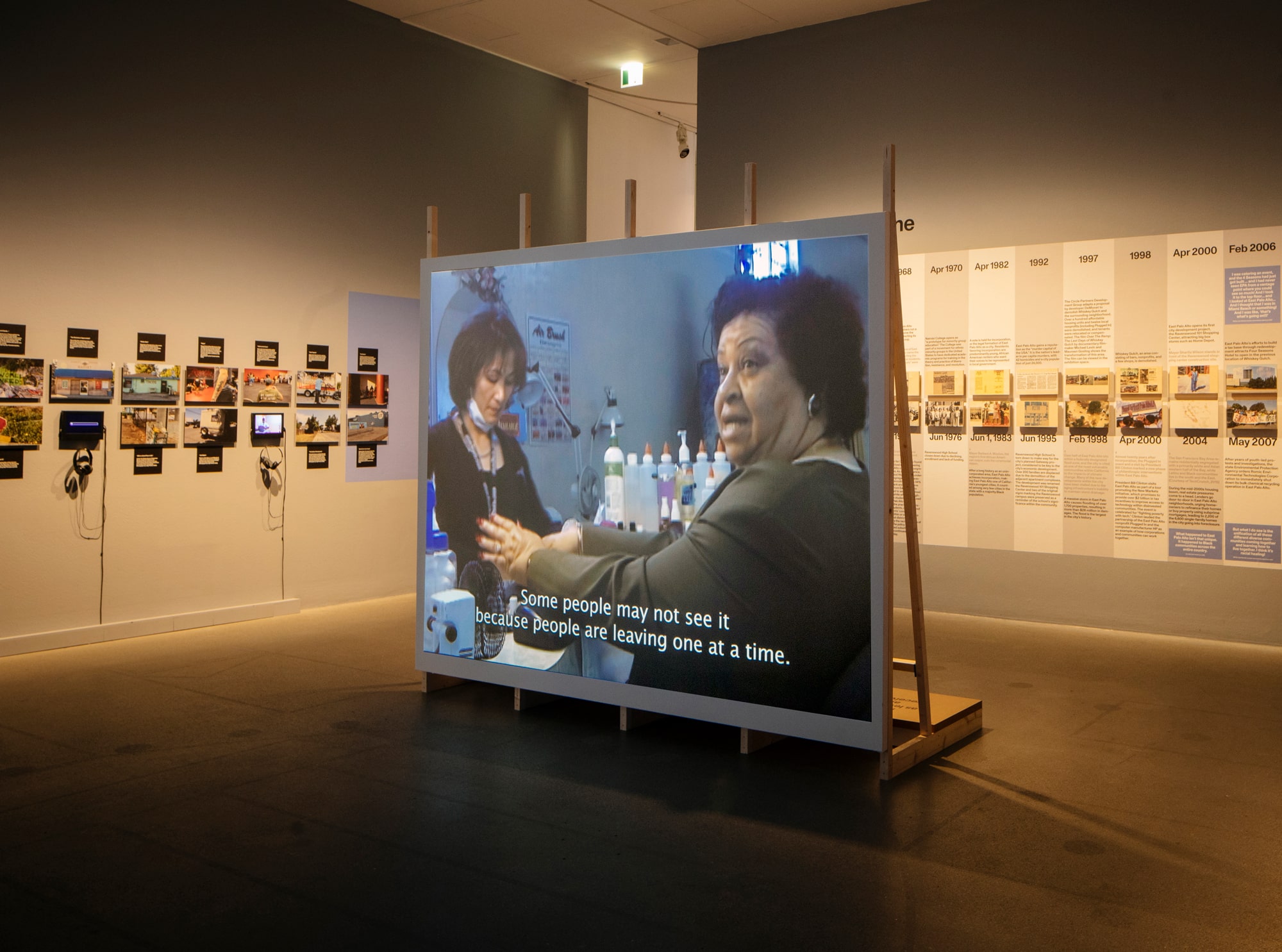
Such forces of urbanization are the focus for the exhibition in Munich. The show tells four stories, each researched in collaboration with local scholars and communities. 4 The first starts with the earthquake that in 1963 destroyed Skopje, the capital of the Socialist Republic of Macedonia, in what was then Yugoslavia. Countries from Africa, Asia, and South America donated buildings as part of the recovery, making it clear that architectural gifts did not simply move from north to south. The second story focuses on Kumasi, in the Ashanti region in Ghana, where in the early 1950s — under pressure from the British colonial government — the king of the Asante people granted land to the College of Technology. But this land was not empty; people farmed there, gathered firewood, buried their dead. The college (today a university), has recognized its obligation to support these communities, and to this day negotiates regarding investments in water infrastructure, roads, streetlights, and support for the neighboring schools.
The third city examined is Ulaanbaatar, the capital of Mongolia, which was shaped by competitive gift-giving between China and the Soviet Union. There is a district of blocks of flats donated by the Soviets that is known as “Brezhnev’s blue gift,” because the facades are blue. The original inhabitants have passed their apartments down to their children and grandchildren, transforming a diplomatic gift into an inheritance. And the fourth city is East Palo Alto in Silicon Valley in California, located between the Google campus, the Meta headquarters, and Stanford University. The community and the municipality there are engaged in uneven negotiations with tech-philanthropists, such as the Chan Zuckerberg Initiative, which funded a primary school. In this way, the town has become a laboratory for philanthro-capitalism, or charitable interventions understood as investments. Their success is measured by so-called social returns, for example an increase in the number of people who have received a certain type of training.
FR: These four contexts seem so various. Do they exemplify particular typologies?
ŁS: We selected the examples to represent urbanization processes as impacted by, respectively, humanitarian, developmentalist, diplomatic, and philanthropic gifts. It’s true that they are different. But broader discussions about gift-giving are helpful to understand the shared social dynamics.

FR: Of course, the motives for and afterlives of all gifts are complicated and context-specific; a gift, whether international or interpersonal, might arise out of altruism, or anxiety, or a desire to show off; it might elicit gratitude, resentment, disappointment, delight. How are these vicissitudes and typologies inflected when the thing given, the thing received, is a building — or a piece of land on which to build a building?
The question is not only who builds the building, how, with what, but who pays for its upkeep? Who has the right or obligation to renovate or otherwise alter it, or sell it?
ŁS: Anthropologists have explained in great detail how gifts create social relationships through a sense of indebtedness. 5 But I am also interested in how relationships created by gift-giving inform the ways in which a building is assembled (that is, produced) and held together over time (or reproduced). The event of giving a gift of any kind reorganizes what comes before, and sets the terms for what comes after. An overarching question then becomes: how does gift-giving, in anticipation and in memory, shape decisions about architectural production — the program, design, construction materials, building technologies, and construction labor — and about architectural reproduction — the building’s social and material afterlives? Not only who builds the building, how, with what, but who pays for its upkeep? Who has the right or obligation to renovate or otherwise alter it, or sell it?
The variety of construction materials and machinery, the vast amount of paperwork, and the large number of people involved in the production and reproduction of an architectural gift set it apart from gifts in our daily lives — and indeed from gifts as described in most anthropological literature. In the context of architecture, the gift economy — the exchange of gifts and counter-gifts — intervenes into, merges with, and disrupts other social and political economies that assemble a building and keep it together over time. These include the exchange of commodities for money, and the exchange of rights for obligations.
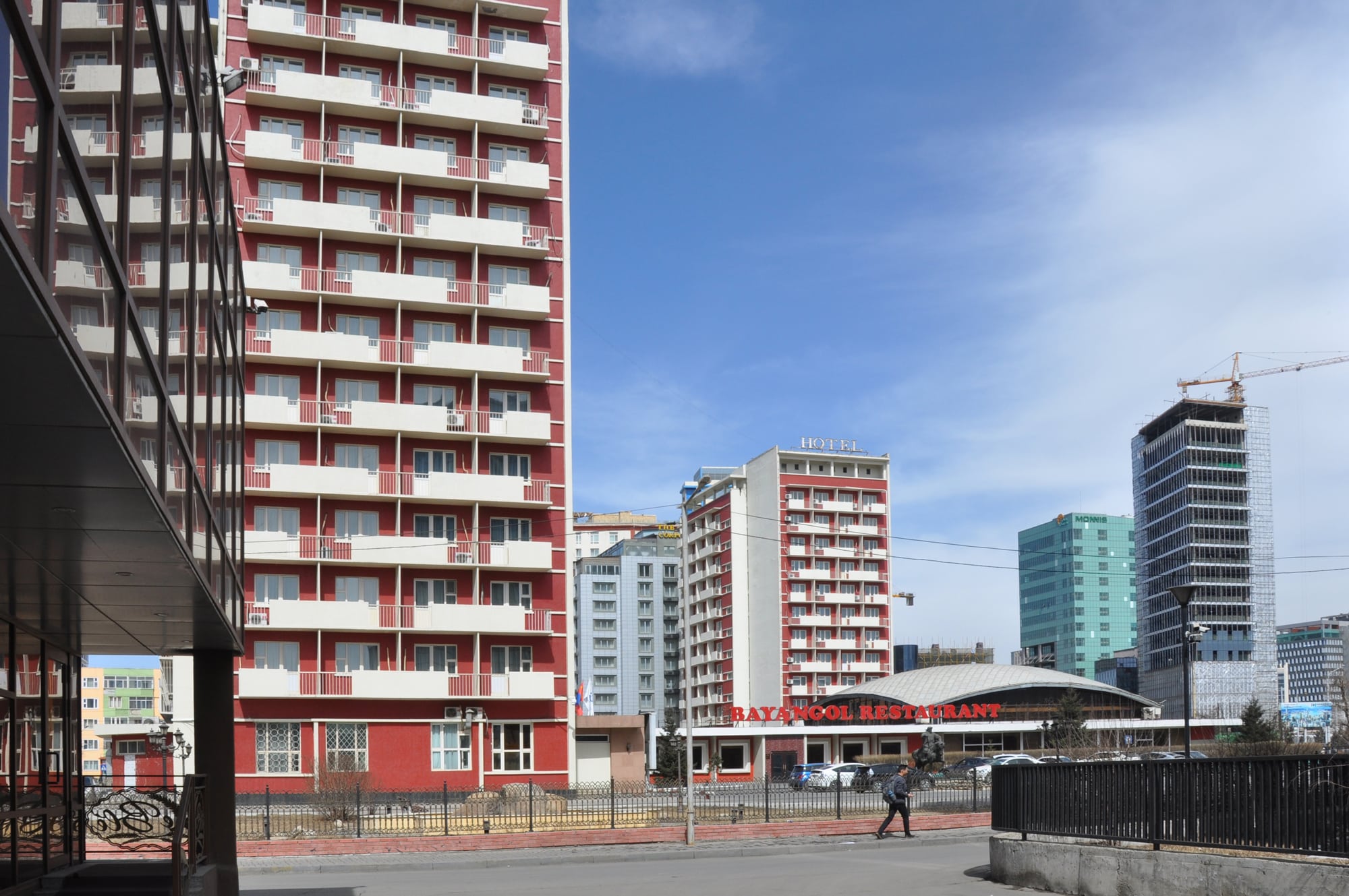
Perhaps the most striking example that brings together these modes of exchange — gifts, market-driven sales, and transactions based on rights and obligations — is the contract for a gifted building. Consider the contracts for two districts that were donated to Ulaanbaatar during the 1960s and 1970s, one by the Chinese, the other by the Soviets. These contracts specified obligations for all parties involved, including the Mongolian government, who agreed to pay for some construction materials and to provide a certain amount of labor. Such contracts translate the assumed spontaneity of a gift into transactional and enumerative relationships. But the element of the gift never quite disappears. To paraphrase a Russian saying, in every gift there is a grain of a gift.
FR: We’ve been discussing nation-to-nation gifting since the Cold War. But you’ve also mentioned the deeper historical roots of these exchanges. How would colonial building programs apply — or if not, why not? I’d also like to ask about institutionality. Is it always a nationally or internationally scaled organization that gives, and that receives? Government to government; or religious body to religious body, or philanthropic organization to municipality?
Scholars have sometimes distinguished between individual gifts and collective gifts. Architectural gifts are always collective.
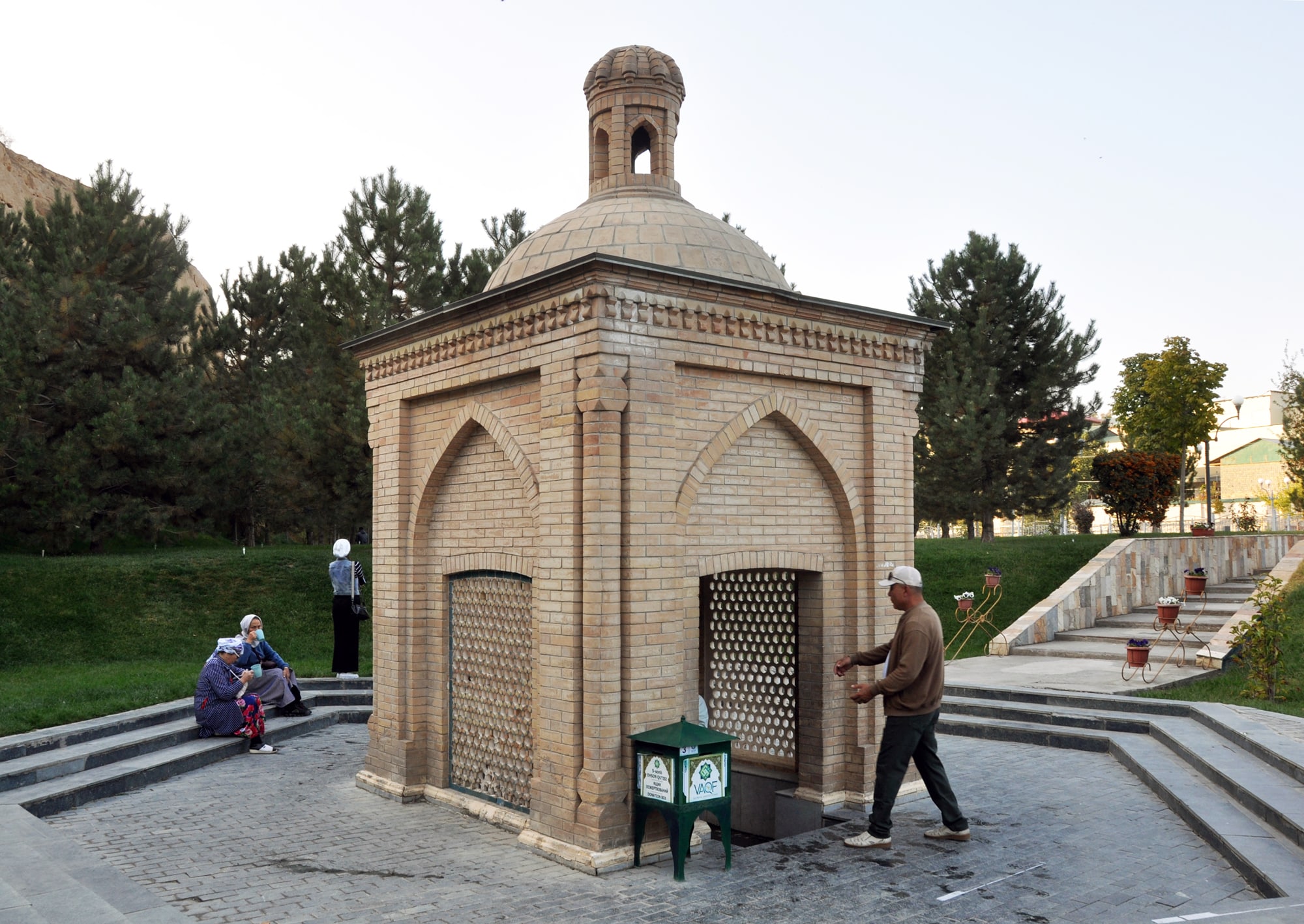
ŁS: Architectural historians have written extensively about Anglo-American philanthropy in the 19th and early 20th centuries, including studies of philanthropic housing, and ways in which philanthropists impacted the development of certain architectural typologies, such as libraries. This impact changed with the shift from personal to corporate philanthropy. 6 As Abigail Van Slyck has explained, a personal bequest was likely to be expressed in an individualized design, and the reader in the library, for instance, was made to feel like a guest of the philanthropist. By the early 20th century, organizations such as the Carnegie Foundation were working with type plans for libraries, and giving them in quantity to this and that city or town. 7 In Islamic countries, endowments or awqaf — which funded public baths, fountains, hospices, schools, and the like — were frequently seized by colonial administrators, and integrated into a racialized system of social welfare, for example in French Algeria. Such seizures should be seen as an aspect of colonial modernities. 8
Histories like these point out how architectural gifts represented, enforced, and reproduced a particular normativity for their users — as “good workers,” “good citizens,” and “good consumers” defined in terms of religion, class, gender, and race. Anthropologists of architecture (as distinct from historians) have added to this work by studying the afterlives of gifted buildings, and the persistence or rupture of social bonds between givers and receivers across regime changes, such as the end of 20th-century socialism. 9
FR: Going back to my question about institutionality, and the fact that any idea of disinterested generosity can only be radically curtailed — if not entirely crushed — by its journey through not one but two national governments, not to mention assorted other powers that would have to be involved — design and construction firms, school and hospital administrators, et cetera. Are we at a point where the whole idea of “gift” is a metaphor? Or a misnomer? At best a fig-leaf? In these contexts, does the tension between “architecture” and “gift” create a category mistake?
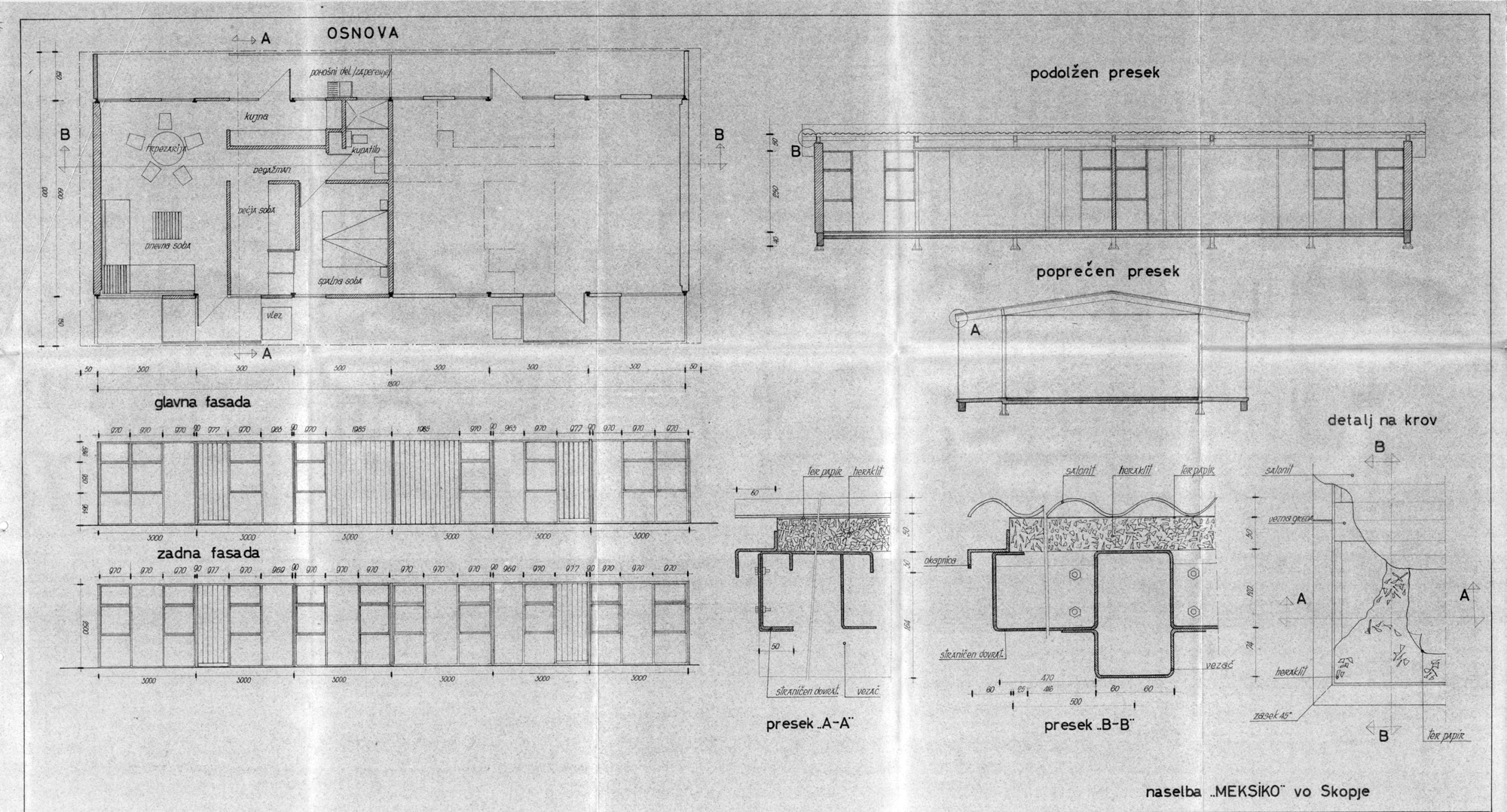
ŁS: Scholars have sometimes distinguished between individual gifts and collective gifts. 10 Architectural gifts are always collective. In fact, as you say, there are many collectives involved, which blurs the understanding of who is the giver and who is the receiver. Think, for example, about the bungalows donated by Mexico to Skopje after the 1963 earthquake. They were given by the Mexican government on behalf of the people of Mexico, as the plaque still in place reminds us. But so many other actors were involved in the design and construction: from architectural offices, donors of construction materials, to laborers, often volunteers who considered their work a gift, too. In turn, the bungalows were received by the government of Yugoslavia and the city administration of Skopje, which selected families and allocated houses. So who exactly are the givers and receivers?
There cannot be exact equivalence. (How much political goodwill is a hospital worth?) And there must not be; otherwise, gift-giving becomes trade.
This brings me to your main point. While individual gifts may be disinterested, gifts between collectives are not. Marcel Mauss argued that every gift requires a counter-gift, and while this is too restrictive, it is heuristically useful. 11 The reason to work with the category of the gift in architecture is less to debate questions of disinterest or generosity, since a collective gift always creates obligations. The point is to get at the dynamics of these obligations. Let me give two examples. A monetary transaction is based on the social fiction of an exact value equivalence mediated by money. In gift-giving, there is never an exact equivalence: not only because there cannot be one (how much political goodwill is a hospital worth?); but also because there must not be one. Otherwise, gift-giving would become trade. There is no equivalence, but instead a sense of ambiguity and excess. Similarly, while in a market transaction the mutual obligations of both parties are fixed in the moment of their exchange, there must be a delay between the bestowal of a gift and a return or counter-gift. That delay must be neither too short nor too long — in order, again, not to appear transactional. Talking about gifts allows us to study the ways in which those involved negotiate this non-equivalence and non-synchronicity. We can then ask how such negotiations inform the production and reproduction of the buildings in question.
FR: Could you say more about how the architectural gift affects the experience of a city for its inhabitants? Of course, it will make a difference if your city did not have a hospital or mosque or university, and suddenly it gets one. At the same time, we’ve all been in buildings named for this or that benefactor without giving a second thought to the relationships undergirding the gift at the time of its giving. It’s also true that such naming practices, and the symbolic sanction they extend to the named person, are precisely at issue in the contemporary movement in the U.S. to decolonize university campus buildings and other structures that were named for or founded by slaveholders.
Are there corollary dynamics in the international examples you’ve studied, where an architectural gift needs to be, as it were, cleansed of its past as a gift that turned out to be poisoned?
A gift reveals itself in crisis — when the building needs repair and the donors are called on, or in regime change, when the future of a site is thrown into question.
ŁS: A gift reveals itself in a crisis. This may happen when the building needs repair and the original donors are called on, as was the case in the 1980s with the Faculty of Engineering in Dar es Salaam, a 1970s gift from West Germany. 12 Another type of crisis is regime change. In the wake of such upheaval, the status of a gift as a gift is often brought back to people’s attention, and the future of the site is thrown into question. This happened when the government of independent India turned to Britain to negotiate the fate of statues depicting imperial figures, notably Queen Victoria, that had been donated by various British institutions to a range of cities in the Raj. 13 The gifted character of a building can also help its users to resist — rather than to intensify or complete — the regime change. For example, in the 1990s, after Vietnam shifted its economic policies from socialism to a mixed economy, inhabitants of a district in the city of Vinh, where the apartment blocks were a gift from East Germany, resisted privatization, and argued that the government had no claim over these buildings’ future. 14
FR: If I understand correctly, these seem like two different circumstances. In one, a local group works to protect its independence from the overarching administrative body. In the other, the local entity seeks intervention. But were tenants in Vinh successful? Did West Germany come back and fix the Faculty of Engineering in Dar es Salaam?
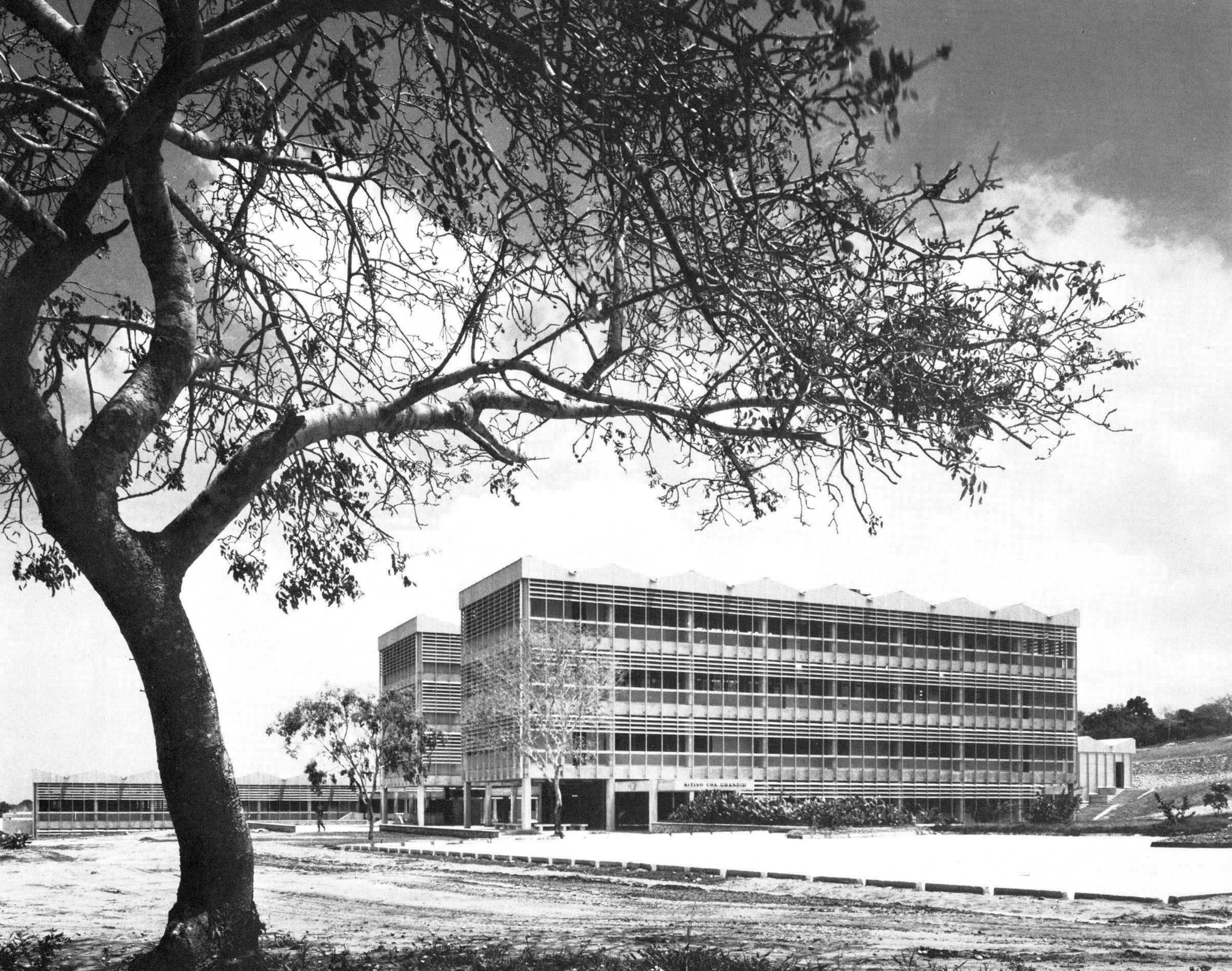
ŁS: In the mid-1980s, West Germany commissioned a study to find out who was to blame for the poor state of the building in Dar es Salaam, followed by recriminations flying back and forth. 15 In Vinh, residents were not able to stop the changes, though they did gain some say over them. 16 Yes, these examples are different. But in both cases a group claimed the status of receiver, and appealed to the moral economy of gift-giving in an instrumental way.
However, that moral economy can itself be questioned when, as you say, the collective reevaluates what binds it together. Gifted buildings can then become mediums through which to negotiate shared values, for instance when protesters at a university bring forward a funder’s past as a slaveholder. In the case of buildings with significant public value, I read such protests not so much as attempts to reject the gift, but as something more fundamental: a retroactive refusal to accept the donor’s title to it. The gift was never theirs to give.
FR: If I steal something and hand it on to someone else, I have not offered a gift.
ŁS: Exactly. In the moment of crisis, bonds between givers and receivers may be reactivated, mobilized to gather resources for the future reproduction of the building. But, in such moments, the moral economy out of which the gift emerged may be put on trial. And this reexamination may change the building’s future.
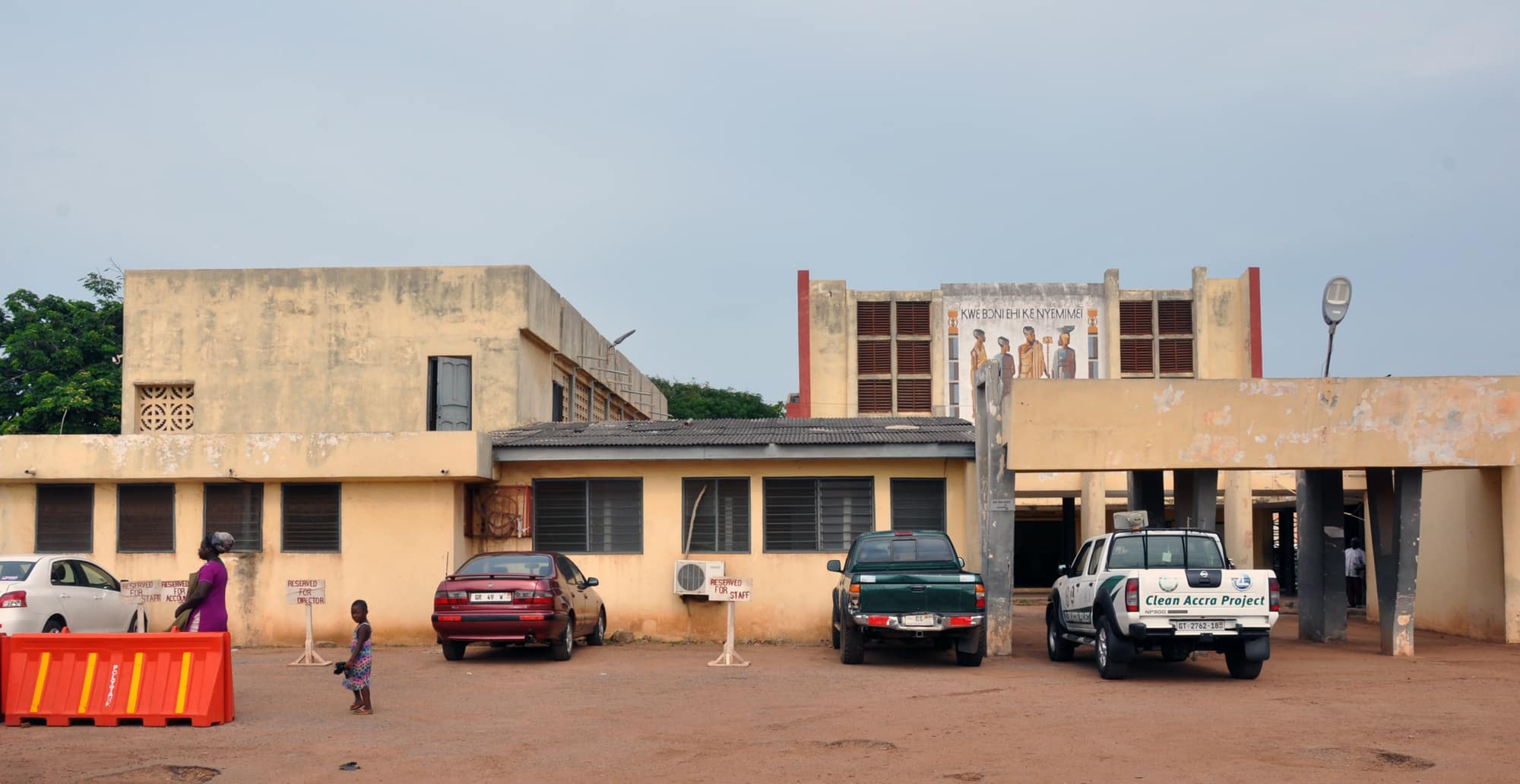
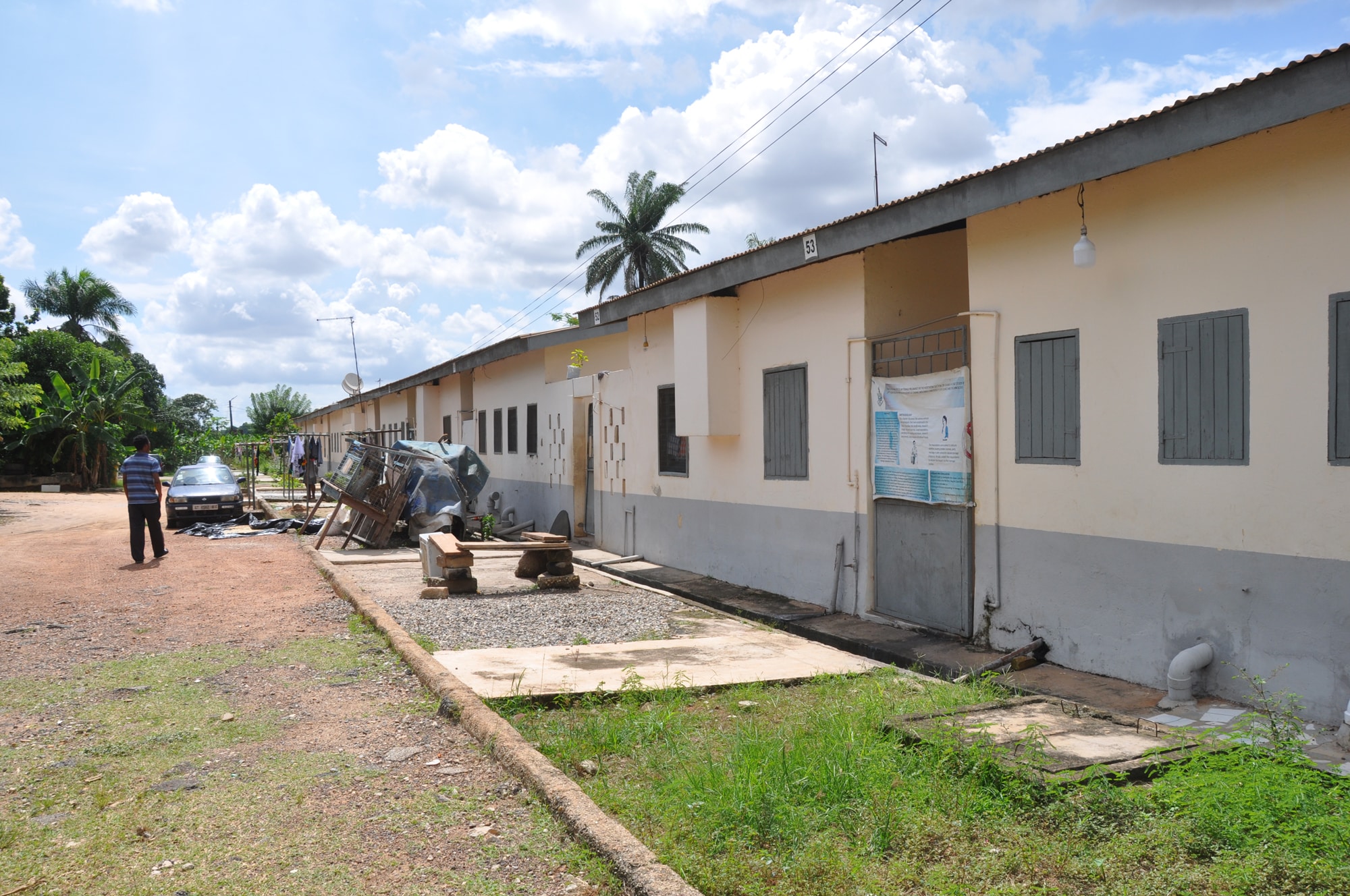
That reinterpretation of past and future is evident in all four stories in the exhibition in Munich. For example, in Kumasi, the communities who had used the land on which the campus was founded draw the university’s attention to the pressure it exerts on housing, traffic, and infrastructure around the campus. When the communities negotiate investments in water, electricity, and road networks, or when they ask the university to support community schools and health facilities, they look to the past gifting event to help them imagine a collective future. In legal terms, the land was not a gift but a lease. Yet all parties, including the university, the king, the communities, and their chiefs, frequently called it a gift. Each group had specific reasons to do so, but in this way people who had no role in negotiating the lease have been able to raise claims to compensation. This continues today: as one man, whose parents were farmers, told me, “the university continues to use our land, so they need to continue to support us.” 17
Calling something a gift turns it into a magnifying glass for relations among parties to that gift.
FR: In effect, the University of Science and Technology takes on the role of the British colonial government, and community members take on the role of the post-independence Ghanaian government? “You built this thing; now it’s up to you to maintain it”? I know it’s not a perfect analogy, but phrasing it that way does highlight how slippery, how changeable, relations are when their fulcrum is a gifted building whose production and reproduction, as you have described these, alter over time — politically as well as functionally or economically.
ŁS: The university is a state institution, and in this sense you are right that it exemplifies a continuity between the colonial and post-independence state. But no institution is homogenous, and higher administrators may see things differently than, say, technicians on staff. This multiplicity of voices is even more evident in the communities. Groups in towns surrounding the campus have various, sometimes competing claims and expectations. Not everybody feels represented by the chiefs and the queen mothers when they negotiate with the university on behalf of the communities.
FR: Calling something a gift turns it into a magnifying glass for relations among parties to that gift, and also inside the classes of “receivers” or “givers.” This alone makes the hermeneutic useful, since such nuances are easy to elide, or to miss entirely.
ŁS: Yes.
FR: A broader question arises here about items that slip in and out of gift relations and commodity relations. Anna Tsing gives the example of a matsutake mushroom — which might have been picked by an immigrant Lao forager living off the grid in a barter-based community in rural Oregon, and then sold along a network of buyers, traders, and retailers until it winds up as a delicacy in Japan, where it’s typically given, on special occasions, by those seeking to apply what Tsing calls “the relation-making force of the gift.” 18 Not to mention the interspecies collaboration of which the matsutake is a fruit, since it grows in disturbed, deforested environments in synergy with its host, red pine. Mushroom and pine and picker and buyer and trader and gift-giver form what she describes as an assemblage, or “open-ended gathering” in which “patterns of unintentional coordination develop.” 19
Do these terms seem apt for architectural gifts? What do such slippages or unintentional coordination patterns look like at international architectural scale?
ŁS: This slipping in and out of gift and commodity relations is very significant when architectural gifts are concerned. I have already mentioned the bartering system in global socialism as ambiguously situated between gifts and commodities — and, related to this, how the production of architectural gifts undermines those seemingly clear-cut distinctions between gift and market exchange.

Consider the Palace of Culture and Science in Warsaw, the so-called “Gift of Stalin,” whose opening in 1955 was met in Poland with public pronouncements of gratitude and private expressions of hatred. The two governments agreed that the building was to be constructed from resources provided by the Soviet Union, which would deliver the design and much of the technical staff, and pay for construction materials, workers, and the transport of both. The Poles agreed to make available the transport infrastructure and prepare the construction site, as well as housing for the Soviet employees. Polish enterprises were also required to sell construction materials and labor to the Soviets at below state-regulated prices. In this way, the gift intervened into the Polish state-owned construction industry. But the industry benefited in other ways, for example by adding to its stock of construction materials the strong-but-light brick specified by the Soviet design. 20
Thinking about gifts undermines entrenched geographical dichotomies, such as those between ‘Global North’ and ‘Global South,’ or ‘centers’ and ‘peripheries.’
All this affected the production of the Palace. To emphasize the idea that the building was not just a state gift but a gift from the Soviet people, collaboration on all levels — from architects to workers — was represented in the Polish media. In order for the gift to be accepted by the Warsaw public, Soviet architects embellished the design with details from Polish renaissance and baroque architecture. Polish artists and craftsmen were commissioned to contribute to the interiors. Crucially, the Palace was built on land expropriated by the Polish government in the center of Warsaw, turning this site at the heart of a city that had been destroyed by war into a public property. In the words of Michał Murawski, the Palace became “a material device for the consolidation of the social effects of the expropriation of private property.” 21 The Palace impacted the development of the city center, and continues to do so long after the end of socialism in Poland. In this way, the building became a Maussian “total social phenomenon.” 22 But this totality has had less to do with planned coordination across the centralized socialist economy, and more with the consequences of the original gift as traversing “religious, juridical, moral … economic, and … aesthetic” phenomena — in Tsing’s words, as an “unintentional coordination.” 23
FR: Let me ask a question about pedagogy. How do the hermeneutic, and the history, of architecture-as-gift fit into curricula, whether that’s for architectural historians, or historians of the eras and regions involved, or in contexts having to do with international relations, infrastructural projects, or even studies of altruism and generosity?
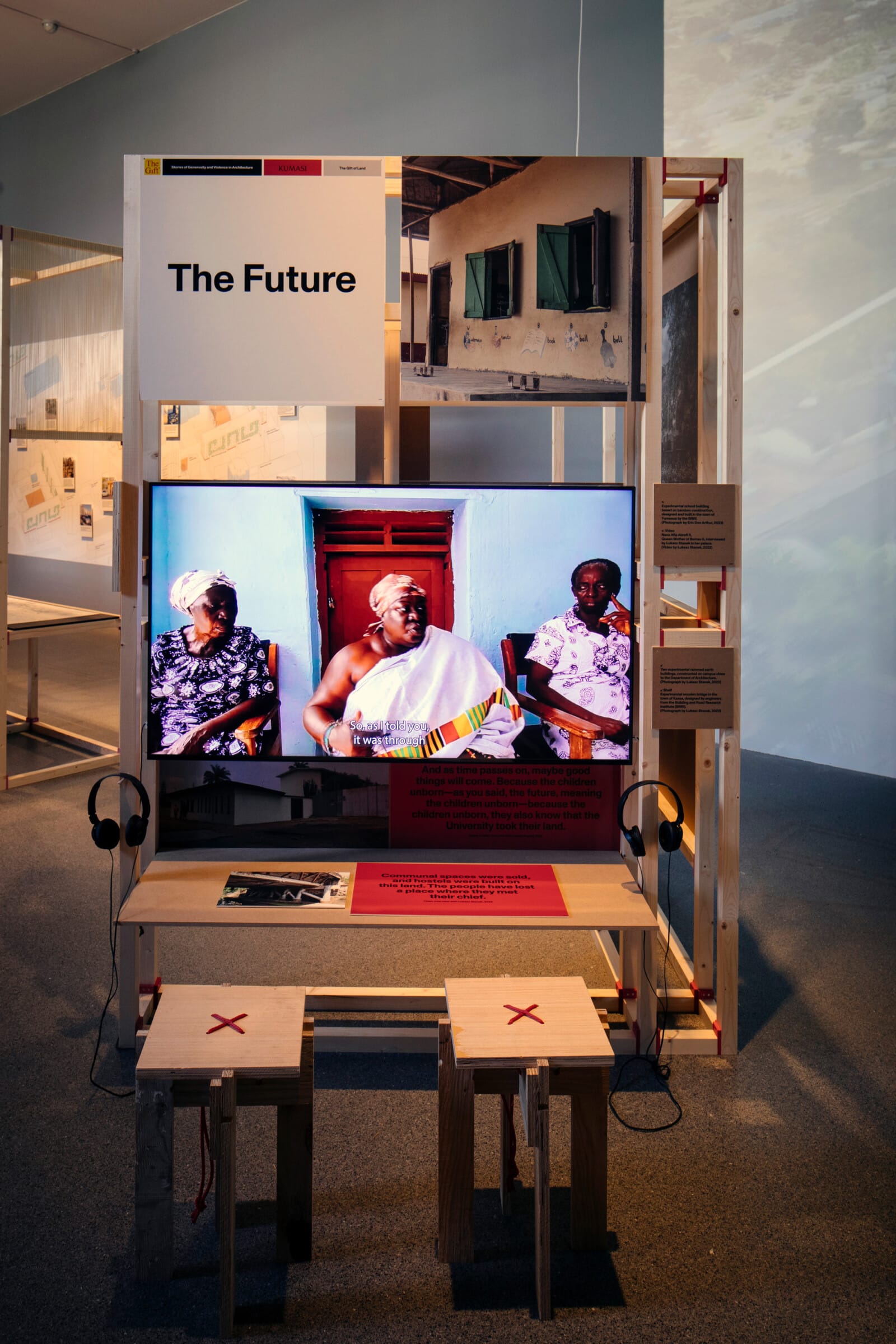
ŁS: Pedagogy has been part of the project from the beginning. Thinking about gifts has reshaped my teaching of architectural history. It foregrounds the multiple directions in architectural exchanges, and undermines entrenched geographical dichotomies, such as those between the “Global North” and the “Global South,” or “centers” and “peripheries.” It highlights the multiplicity of actors who produce and reproduce buildings — clients, funders, architects, technicians, engineers, contractors, laborers, users — while pointing simultaneously to their unequal roles in this process.
By showing how they negotiate the gift economy with other modes of exchange, this discussion helps to denaturalize economies of architectural production more generally. Such negotiations around program, design, materiality, technology, and labor continue after completion of the building, in the phases of its reproduction: as maintenance, renovation, modification, or neglect. This perspective on gifts supports the rethinking of architectural practice beyond the production of new buildings — and such rethinking is urgently needed at schools of architecture.
FR: Yet you’ve said that a gifted building, to qualify for inclusion in your category, must have been intended from the first as a gift. Doesn’t the turn to adaptation and reuse disrupt this qualification? Do we need a new discussion of buildings gifted for their second lives?
ŁS: True, this would be an important revision of the project. At the same time, this supports what we discussed earlier: that the gifting of an extant building draws attention to its past and provokes questions about the giver’s title to the building in the first place. The study of such gifts would help us to rethink reuse as a practice that is simultaneously, and necessarily, both projective and retroactive.


If you would like to comment on this article, or anything else on Places Journal, visit our Facebook page or send us a message on Twitter.