

The elders spoke of how they used to greet the land when they came here, the mountains, the dwelling places, and the paths, but I dare not. Just where do I belong? What is my home? I have discussed this with other grandchildren of forcibly displaced people. What part of our new Sámi herding grounds and settlements can we call ours? I feel at home on the edge of this land, in places where I know nobody else longs to be, says one person. I don’t feel very attached to the place where I live, says another. I can’t say I’m unhappy here, but I lack a deep connection.
As the Finno-Sámi poet Áillohaš said, we carry our homes in our hearts. Can you do that if you were forced to leave? Do I have the right to mourn for a place that has never been mine?
Do I have the right to mourn for a place that has never been mine?
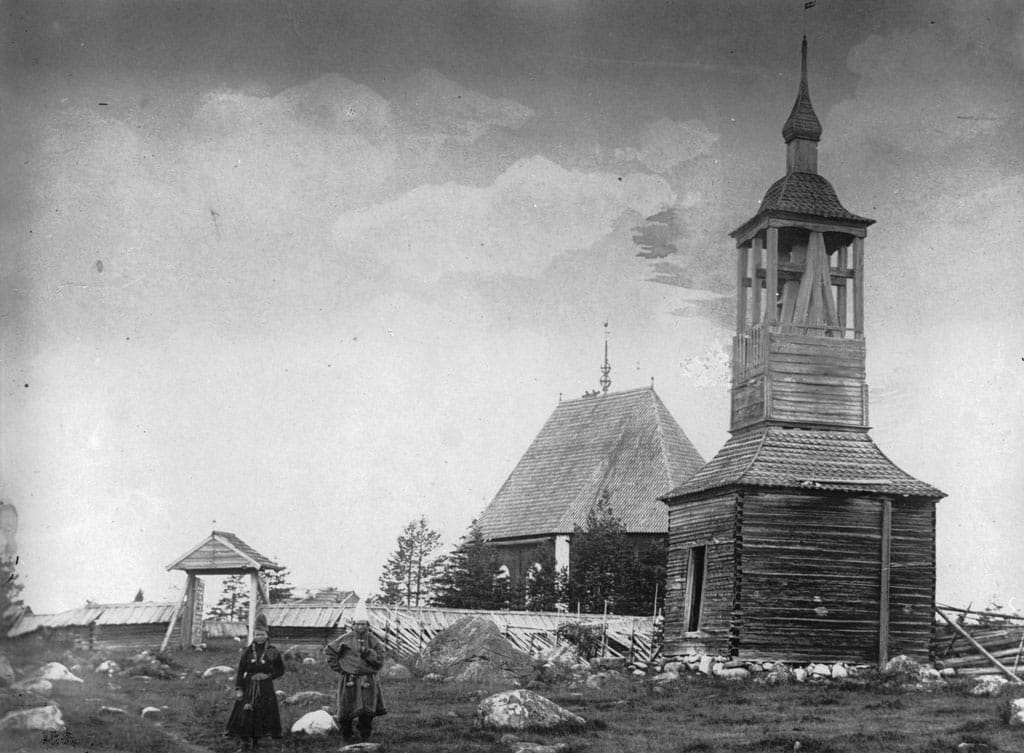
More than a hundred years have passed since the first forced relocations. That was when members of our family drove their reindeer over the strait to the mainland for the last time. The place where they lived has stood empty since. It is a place that whispers to those of us who know, who come here from time to time. But to most it means nothing. There is no awareness of the people who once lived here.
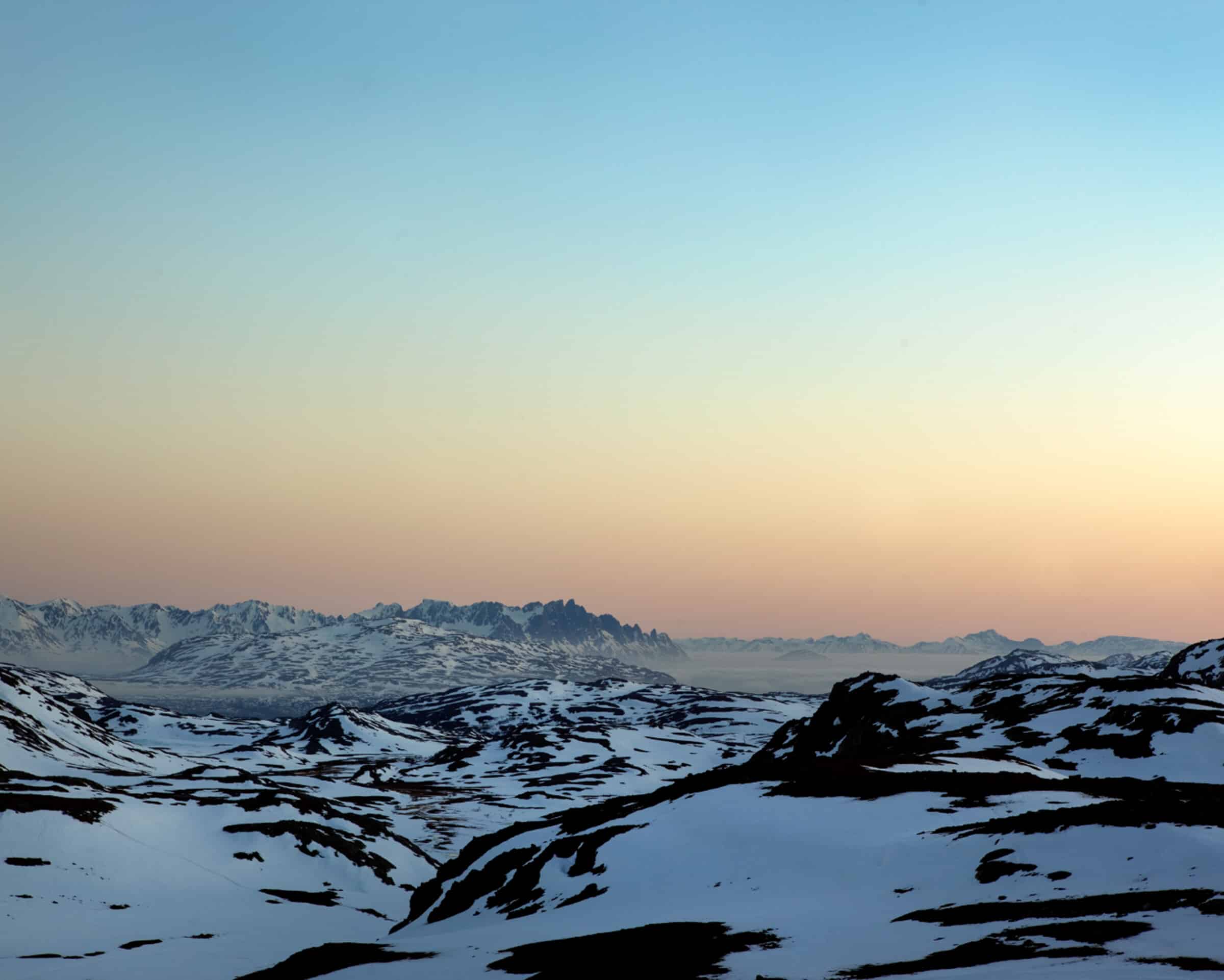
Sweden didn’t stop forcibly displacing Sámi people until the 1950s. The displaced Sámi were relocated to areas that crowded other Sámi, so that more displacement was necessary. These waves of displacement opened wounds that in some cases have healed, but in many others, remain as deep as ever. Ongoing legal battles make the past ever present. The forced migrations continue to tear Sámi society apart from within, so that it’s impossible to go forward, to feel truly at home.
That is Sámi history. Tiny shifts in vegetation, a slightly raised patch of earth, goahtis razed to the ground. 1 Our story is the plaque never erected, the chapter left out of the history books.
The Border
I would prefer this essay consist solely of people’s stories, but it is hard to understand these stories without speaking of borders. Sámi elders refer to borders constantly. It was borders that turned their whole lives upside down.
Natural boundaries have always existed, following the edges of marshes, valleys, forests, and mountain ranges. The new borders of the Nordic nations cut across all natural systems. They cut through pastureland, family ties, and transhumance routes that had been in use for thousands of years. When land is partitioned, people are separated. An account of the forced displacements starts precisely: in 1751, with a border.
The Sámi had lived in Norway for generations, but they weren’t perceived as belonging.
The Stromstad Treaty of 1751 established the border between Norway — which was then part of Denmark — and Sweden — which then included Finland. These countries decided to deal with the Sámi, who had lived since time immemorial on a land without borders, by drawing up an addendum to the border treaty, the Lapp Codicil. The Codicil acknowledged the Sámi as a separate people with land rights. It granted them the right to fish, hunt, and herd reindeer, as they always had and to continue their seasonal migration patterns. Every autumn, the Sámi followed their herds as they moved to inland winter pastures. In spring, reindeer and people return to the coast and stay near the water for the extant of summer.

Over time, however, the Sámi’s right to live as they had always lived came to an end. During the 19th century, the borders were closed little by little, and the reindeer herds forced into smaller areas. The slow process of encroachment reached its culmination in 1905, when Norway became an independent nation. The new country declared that only Norwegian-speaking Norwegians would live in Norway.
Sámi crossing the Swedish-Norwegian border with herds of reindeer made government officials see red. Even though the Sámi had lived in Norway for generations, they weren’t perceived as belonging. Norway made other plans for the land where the reindeer graze. It would be devoted to saeters or used to grow crops.2 “The nomadic way of life places a burden on the country and the settled population, and is hardly in keeping with the interests and the order of civilized society.” These are the words of Labor Party leader Christian Holtermann Knudsen, spoken in the Norwegian Parliament, and he is not alone in these sentiments. The Sámi’s husbandry practices are described as the “plague of reindeer.” Reindeer herding is viewed as a dying, backward way of life, on its way to extinction. It certainly doesn’t fit Norway’s image of itself, as a new independent country.


In 1919, Sweden and Norway resolve the problem with the Reindeer Grazing Convention. The two countries agree to empty the reindeer pastures along the coast. They close off islands and peninsulas, and various other areas so as to limit reindeer numbers. Although the convention ostensibly concerns only reindeer — stipulating precisely how many are allowed to cross the Sweden-Norway border — it determines in effect how many Sámi communities will be dispersed.
The authorities don’t seem to realize that people who migrate from one place to another aren’t rootless.
“Obviously, they thought it was easier to displace Sámi reindeer herders than settled farmers,” says Patrik Lantto, a history professor who has studied the Swedish Lapp Authority. Because the Sámi are nomadic, the Swedish authorities seem to think they can simply be moved to any random place. In the eyes of officialdom, every land is the same to a nomad, and reindeer herders are reindeer herders, no matter where they live. The authorities don’t seem to realize that people who migrate from one place to another aren’t rootless.
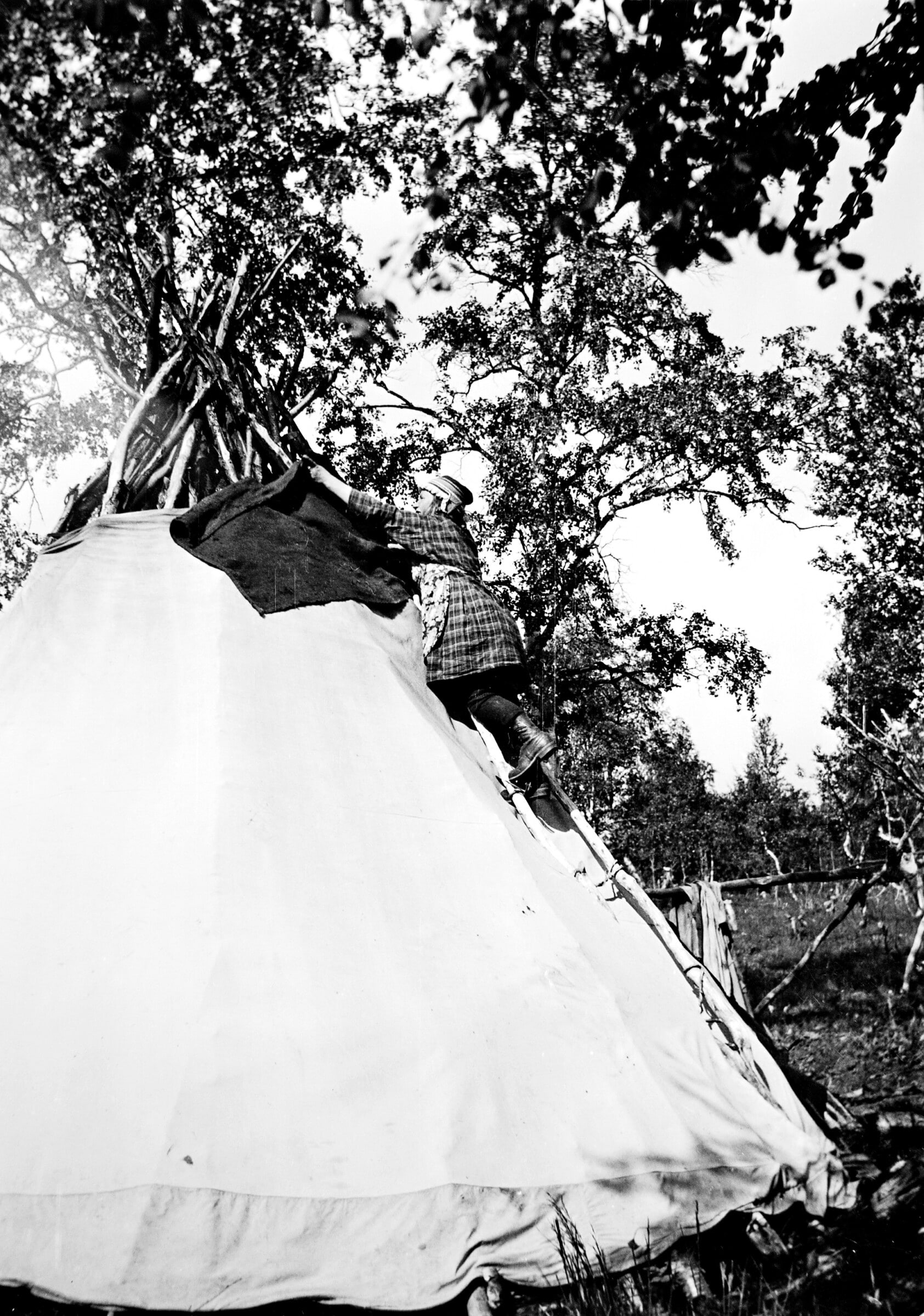
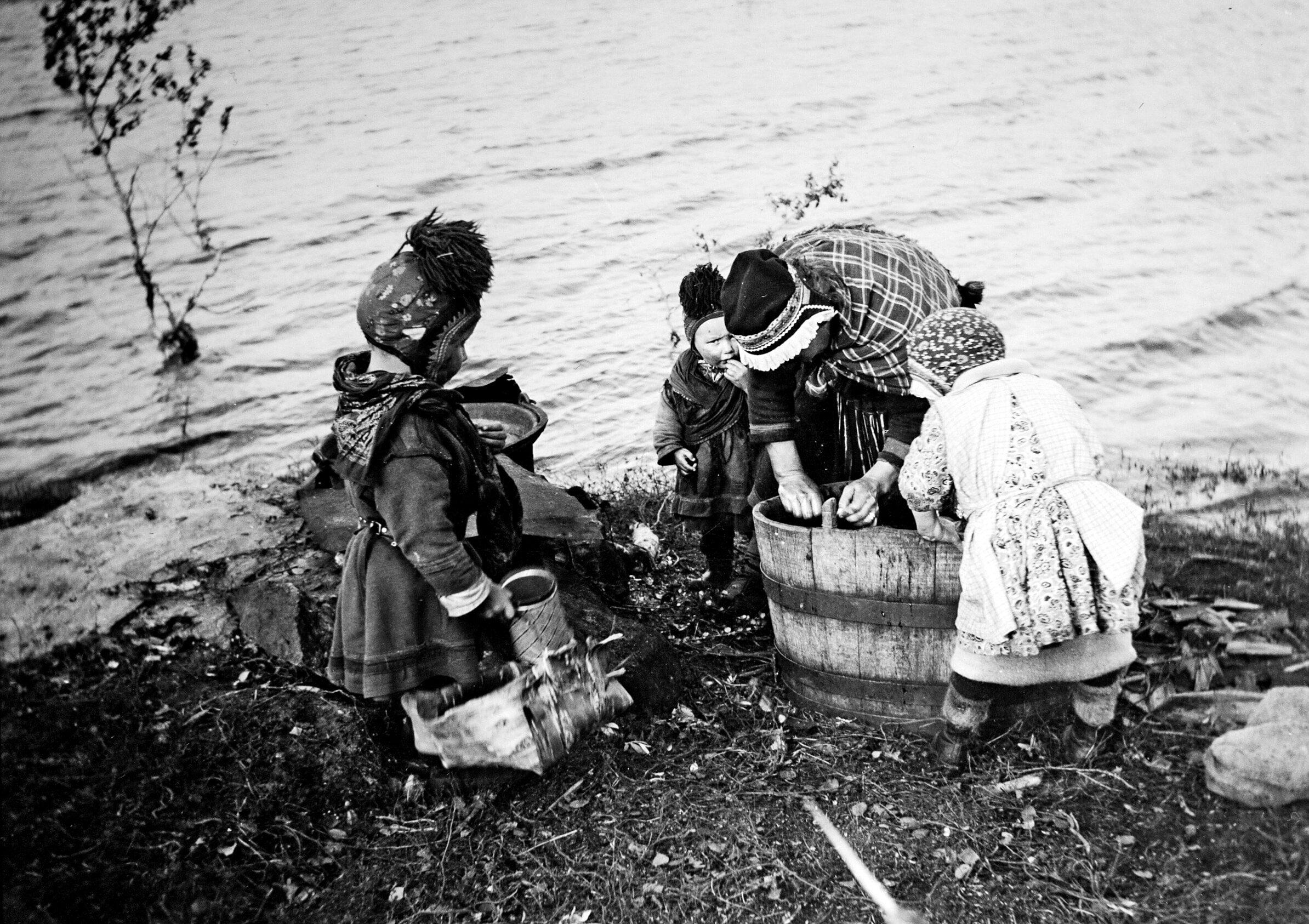
The convention is signed by the foreign ministers of Sweden and Norway in February 1919. The convention is printed on fine paper and bound between covers of the same mid-blue as the fabric of a gákti. 3 The convention’s 202 paragraphs won’t take full force until 1923, but the displacements begin immediately. Throughout the 1920s and into the early 1930s, the Swedish County Administrative Boards resettles hundreds of reindeer herders by force. The convention states that the relocations are to be carried out in line with the wishes “of the Lapp population,” but in reality, the people have no say.
In the Sámi language, this gives rise to a new word: bággojohtin, forced displacement. The older generation later call themselves sirdolaččat, meaning “the displaced.”
From the 1919 Reindeer Grazing Convention:
Norway has expressed the wish to reduce, as far as possible, the burden that the pasturage of Swedish reindeer places on the county. … Sweden takes the view that the requisite reduction in the reindeer stock … could be achieved by having a number of Lapps and reindeer relocated from these areas to more southerly parts … where it appears that there is sufficient room.
How much do the Sámi know about the convention? Very little. It is a legal document drafted in Norwegian and Swedish, and never translated into Sámi, the language spoken in the region for thousands of years. If the Sámi had understood what was happening, they never would have left children behind with relatives or abandoned their belongings, as many families did. “We never had time to say goodbye,” I hear people say in interviews.
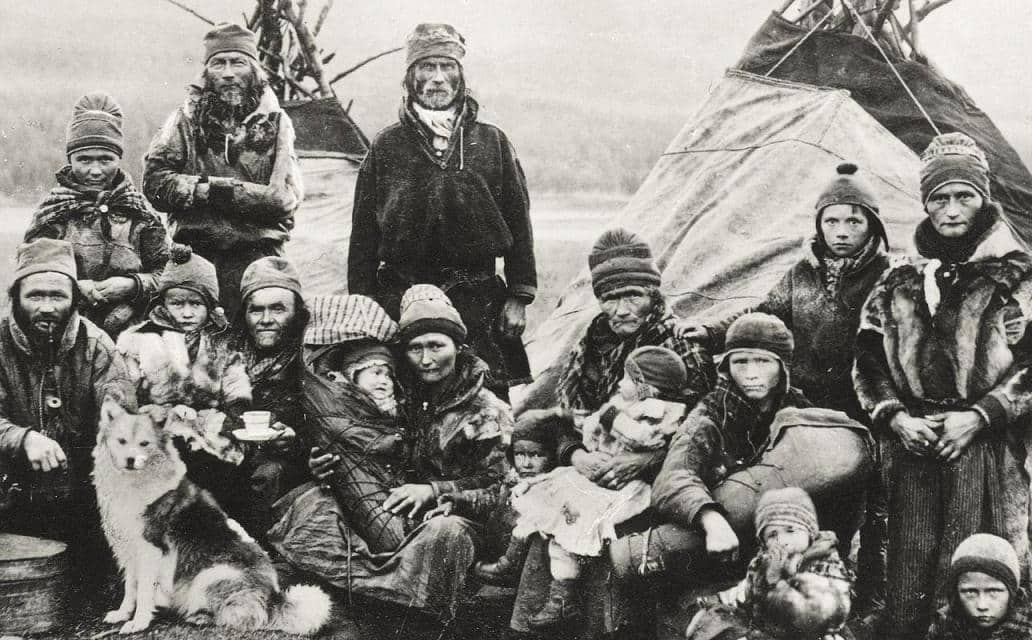
In my own heritage, it was the family of my áddja, my mother’s father, who was relocated by force. And that of my váre, my father’s father. And every branch of my husband’s family as well, with the exception of his maternal grandmother. (She fell in love with a man who had been forcibly resettled and moved south to be with him.)
Our children were born into a network of displaced families. This history is woven into their very sinews. They are growing up with other children who are nearly all from the same background. People who have been separated by force stick together over generations.
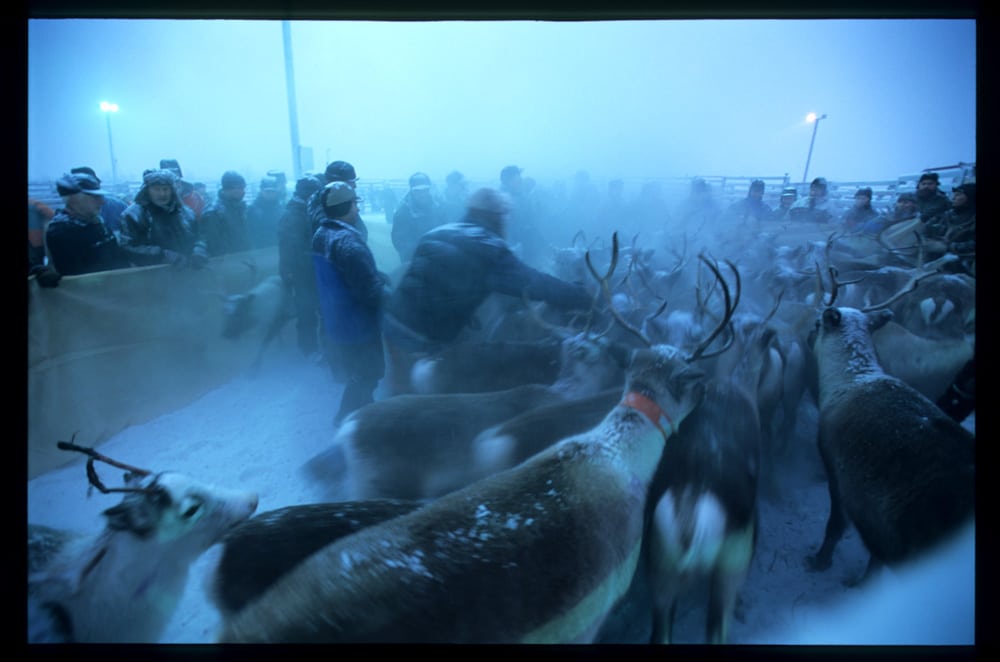

The Journey
Hurre Liisa Sára (Sara Harnesk), forcibly relocated to the Sámi community of Sirges:
It was a real caravan. Reindeer after reindeer … we arrived here in 1923. I was ten years old. … In 1922 the County Governor came to Karesuando and told us when we were to leave. They had letters of application, they’d taken names. We weren’t allowed to go to Kvaløya island. … the Norwegians had vetoed that. So the only option was to send us farther inland into Sweden.
There was weeping and wailing. … It was terrible when you think about it! All the way, on the journey down here to the area around Kiruna and other places, they did nothing but weep and bid farewell to bushes and trees and stones.
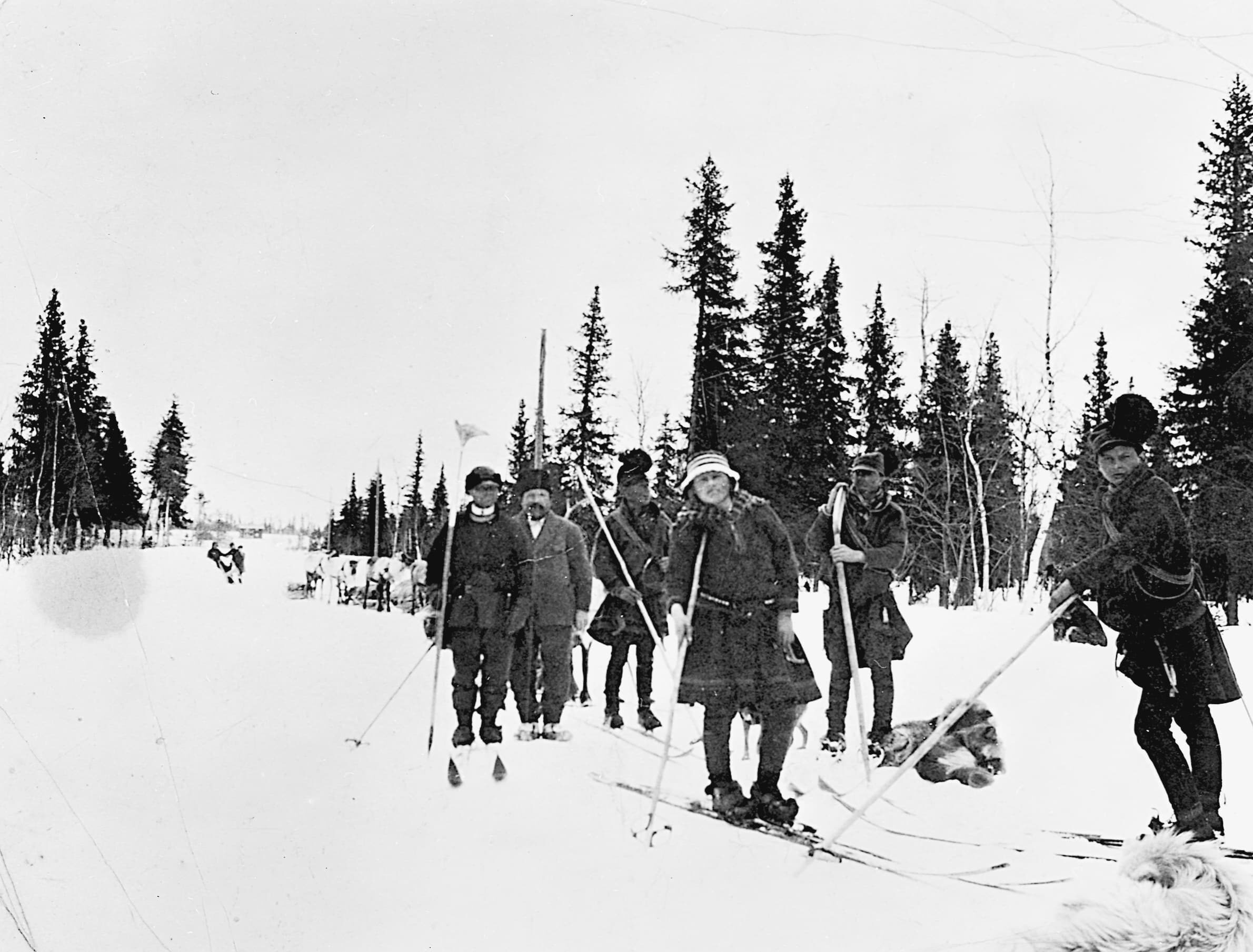
Story of Iƞggá Biette (Per Tomasson Skum) and Čuoigi Elle Gáren (Helena Skum), retold by the author:
Iƞggá Biette curses. He’s experienced many spring migrations, each different, but this is something new. The reindeer are nervous and hard to control. They are losing tired calves because the young animals lag behind. And if you take your eyes off the reindeer for an instant, they turn back.
Now it’s pouring and the snow is turning to slush. The ground has become soggy and porous. The animals’ hooves sink into the mush, and the rivers are wild torrents. . . . Partapouli [the cousin with whom they’re traveling] sets off in pursuit of some runaways and returns empty-handed. “They made off over a river,” he says. Forty animals gone.
If you take your eyes off the reindeer for an instant, they turn back.
Another 60 disappear in Gargnäs. Partapouli returns with 20; he couldn’t track the rest. Iƞggá Biette curses the state of the snow, eaten away by the downpour.
Another 40 females disappear. Partapuoli returns with a few, but the reindeer are heading north immediately, as if following ropes set out to guide them. Iƞggá Biette asks the Lapp inspector for permission to let the females calve in a place where they can keep the herd together. He shakes his head: they have already been assigned calving grounds. Iƞggá Biette knows those grounds to be unsuitable.
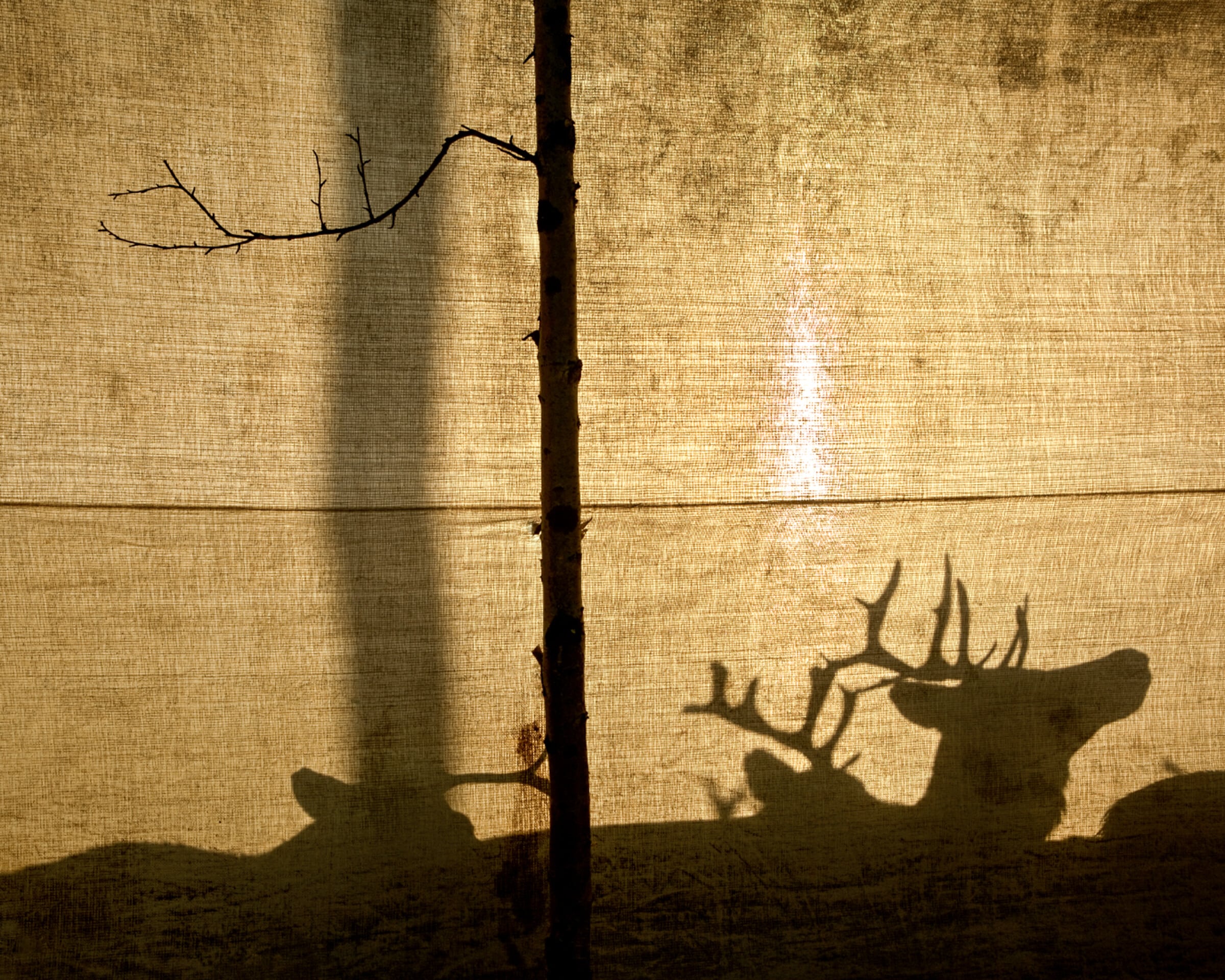
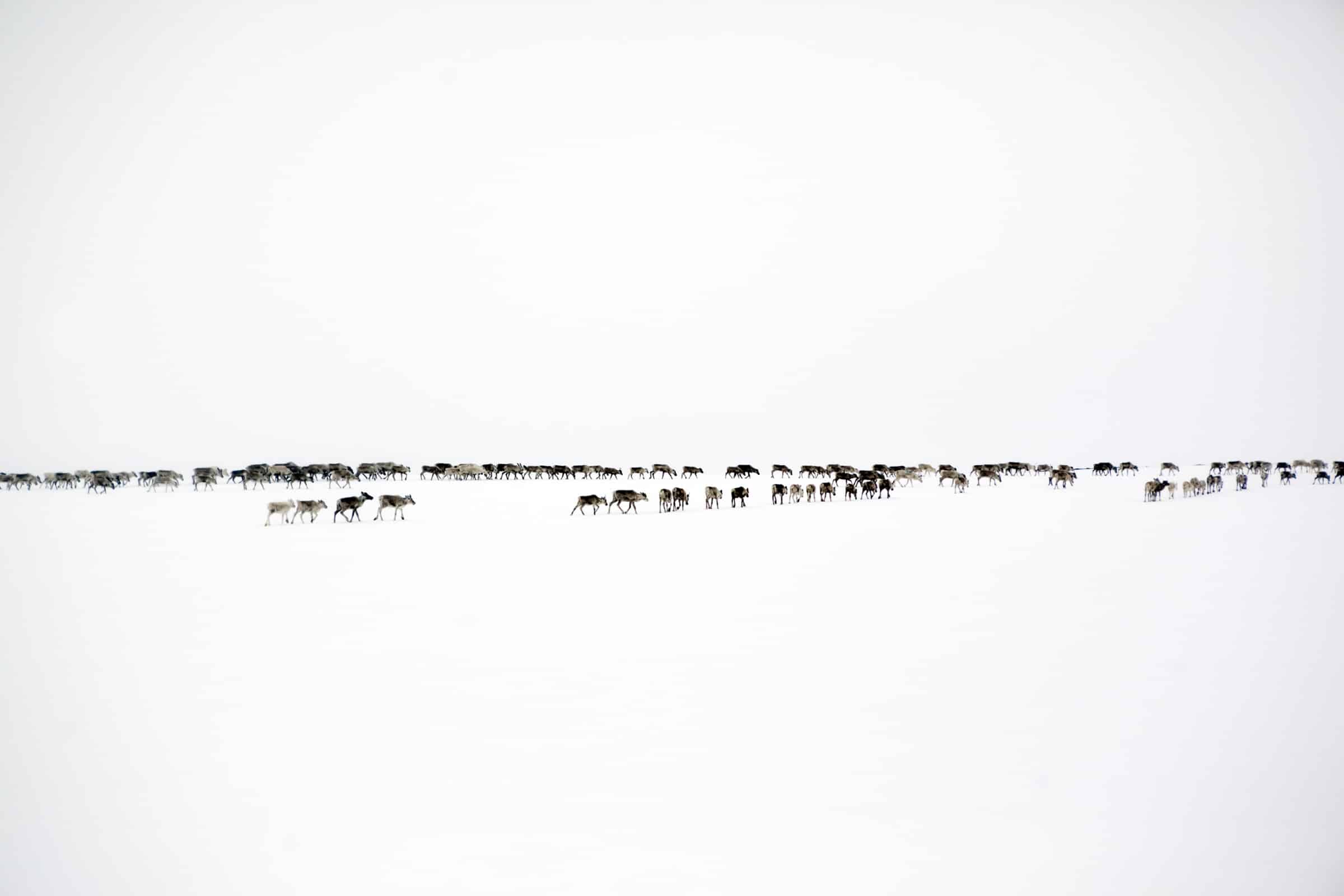
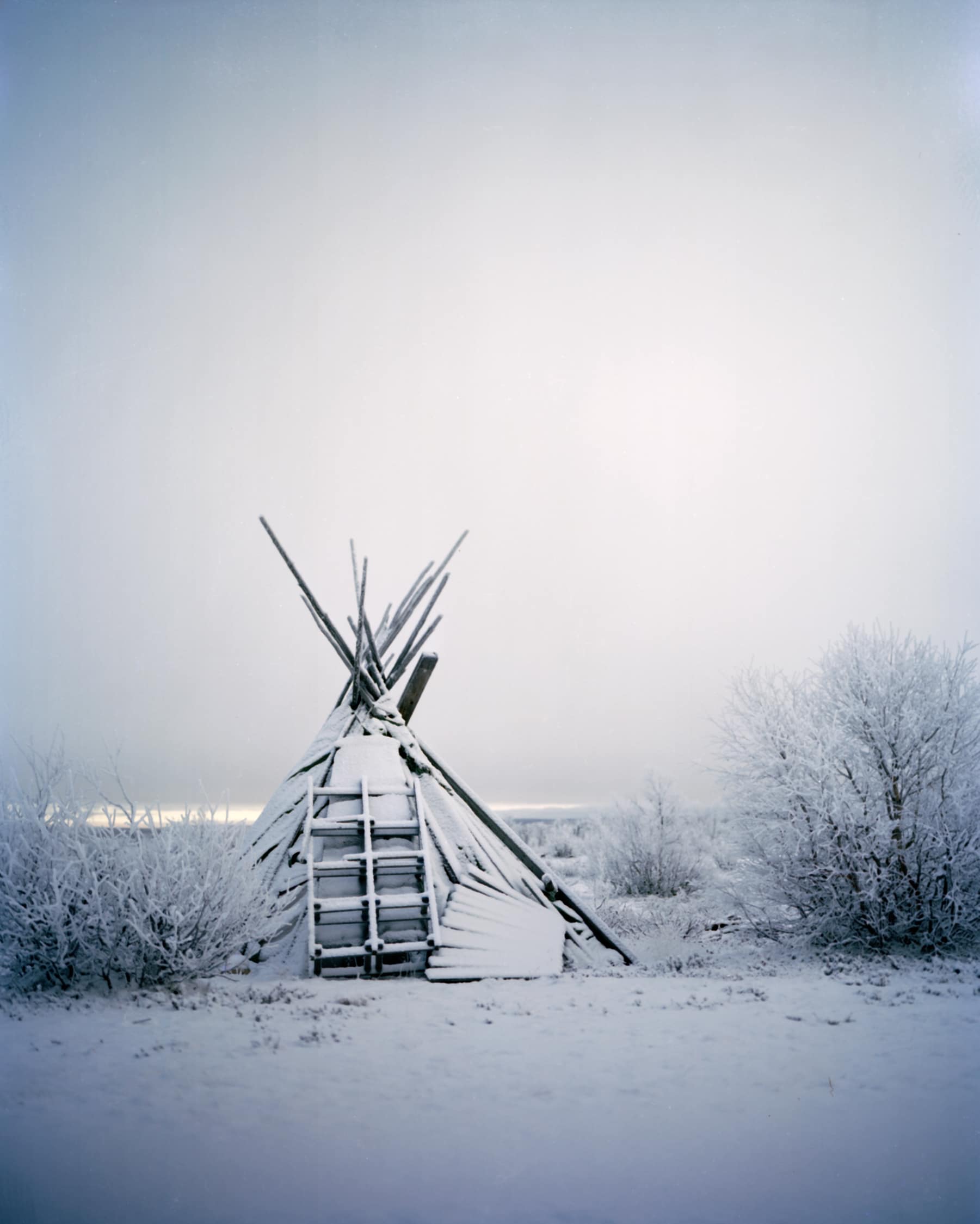
Erika Larson, from the series Sámi–Walking with Reindeer, 2007-2011. [Courtesy the artist]

Erika Larson, from the series Sámi–Walking with Reindeer, 2007-2011. [Courtesy the artist]
Erika Larson, from the series Sámi–Walking with Reindeer, 2007-2011. [Courtesy the artist]
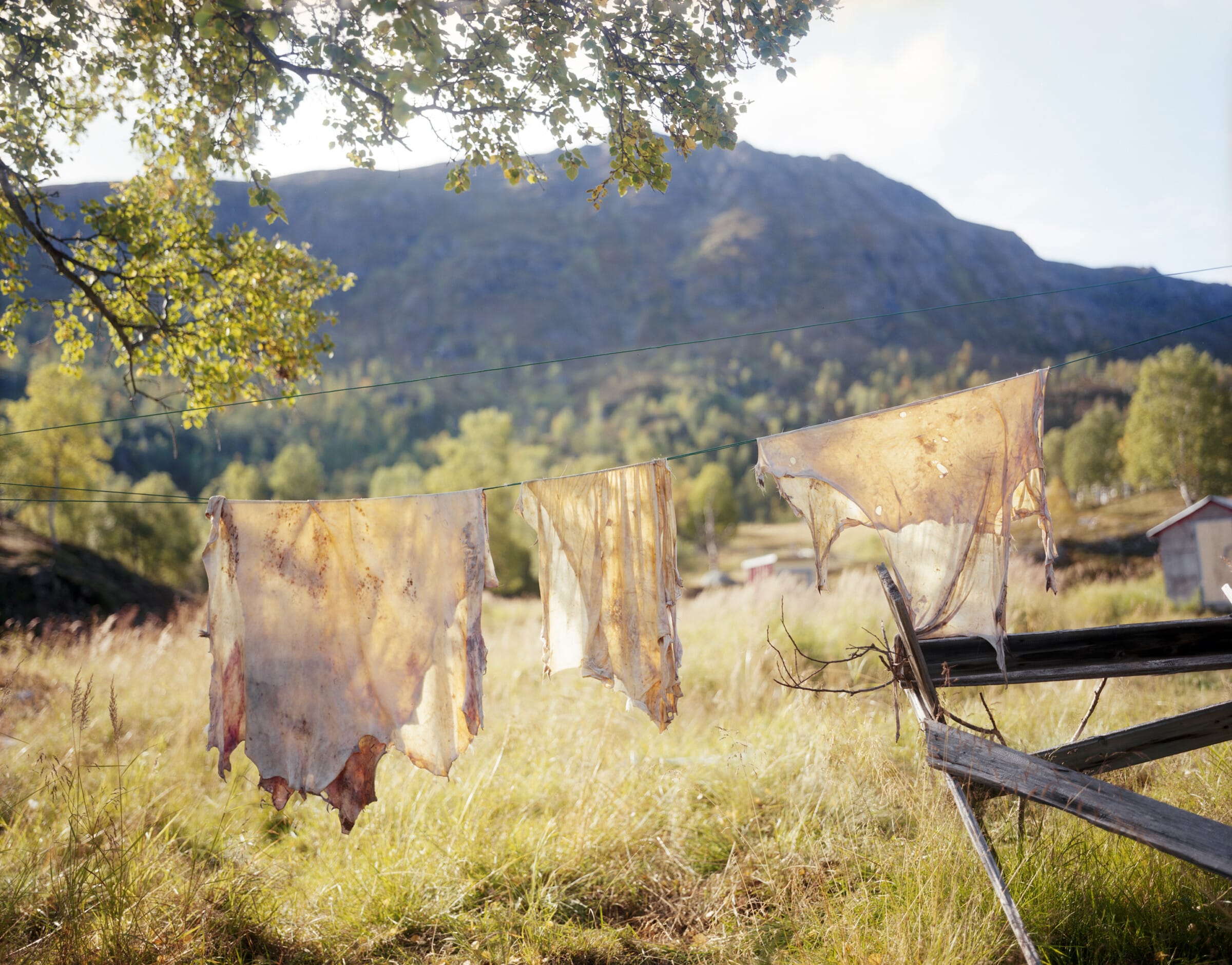
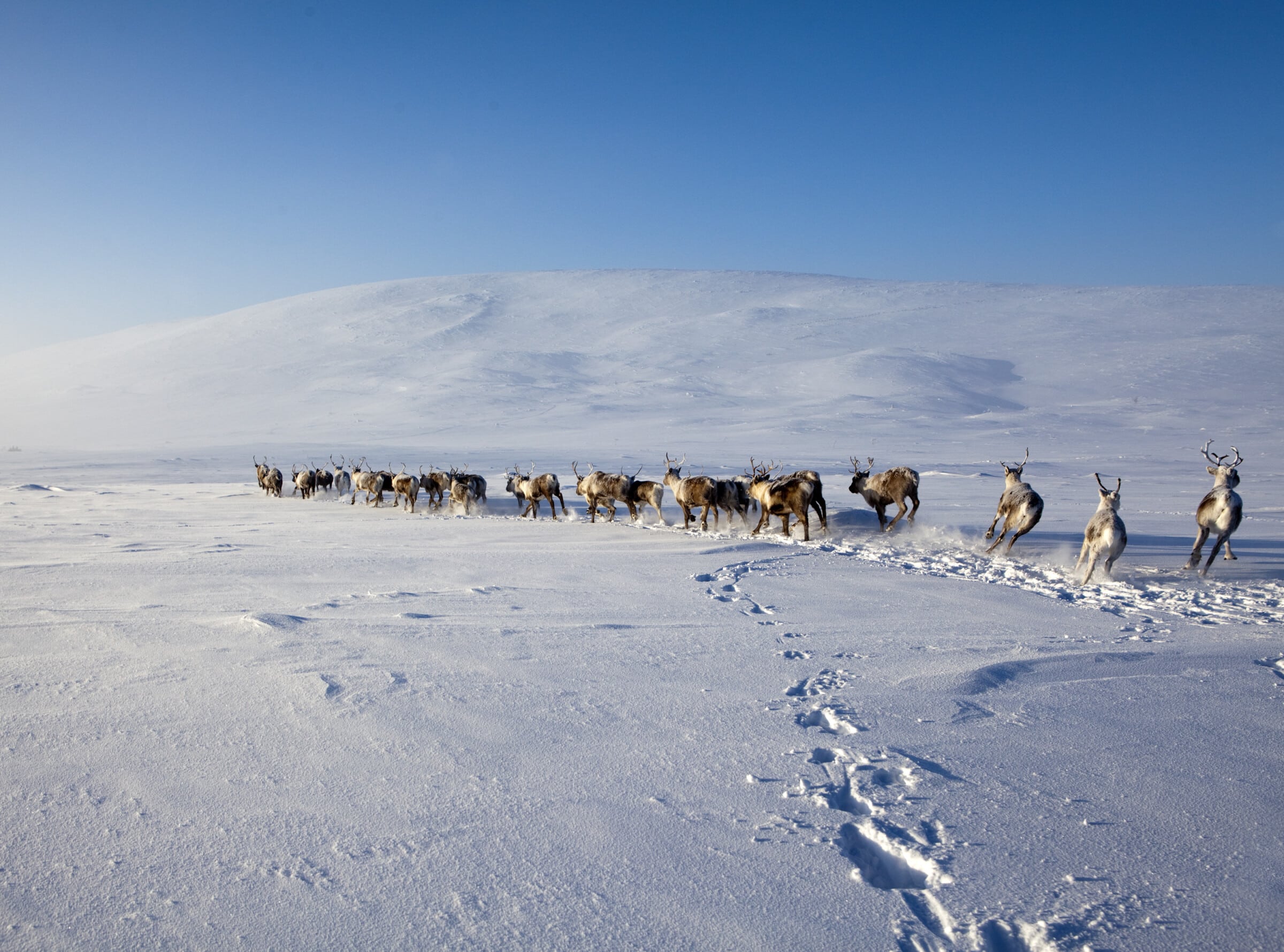
David Bacher, from the series The Reindeer People, 2012. [Courtesy the artist]
David Bacher, from the series The Reindeer People, 2012. [Courtesy the artist]
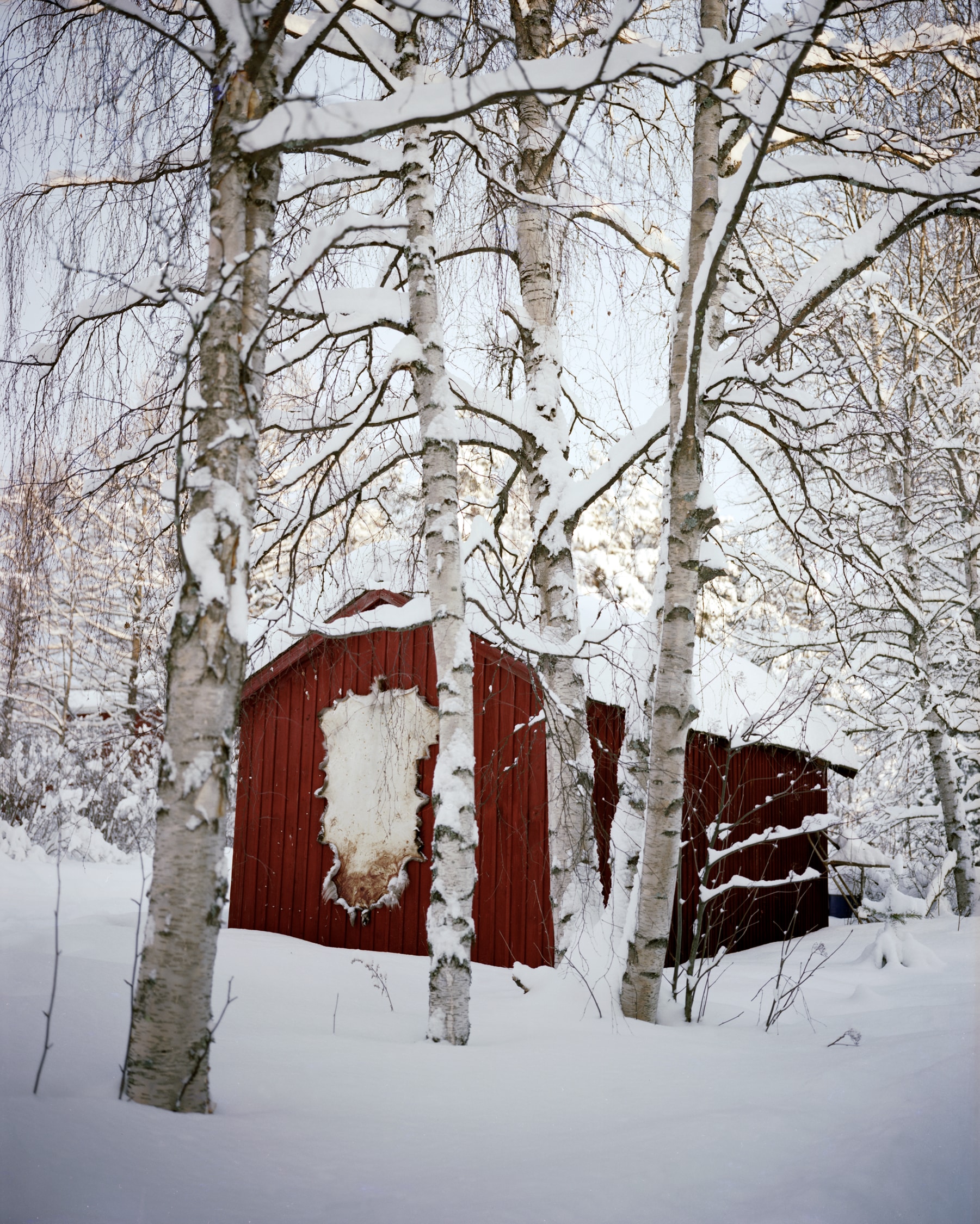
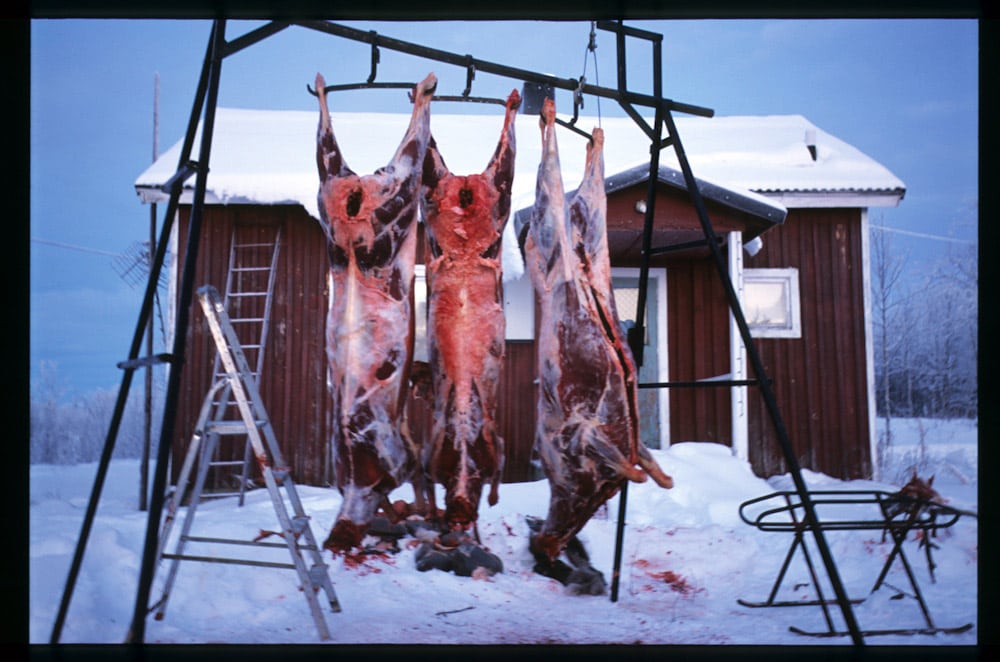
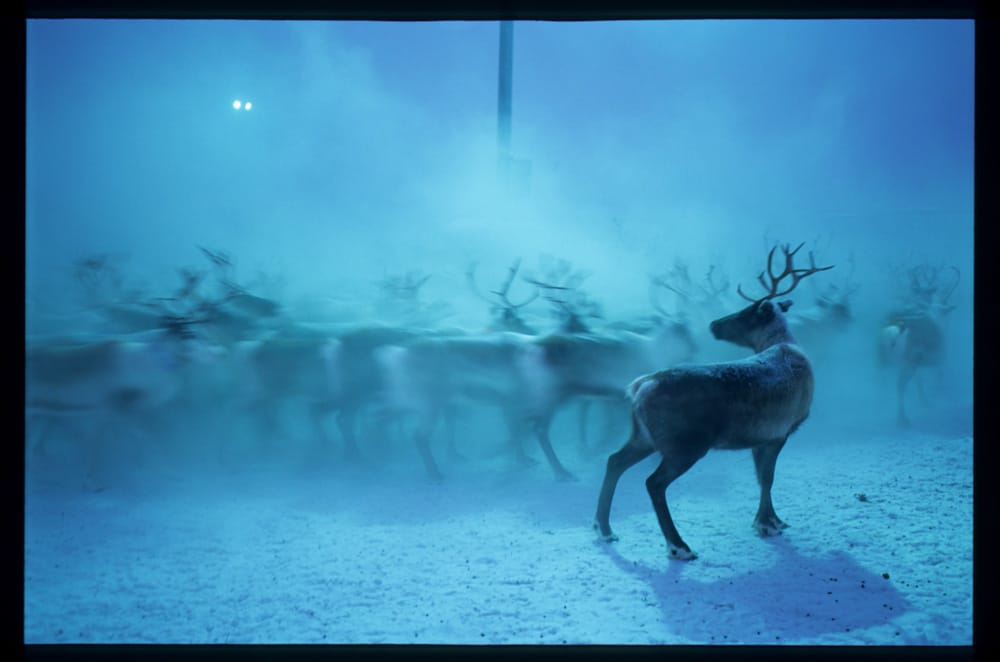
In the first week of May, they lose 250 more reindeer more while crossing the Vindelälven River. Heavily pregnant females have disappeared, meaning they’ve lost several years’ worth of income. There’s hardly a herd left. When they finally arrive in Gávtsjávrrie, they tell the story:
The poor creatures made off in all directions. Geldings, bulls. All of them headed north. The geldings grunted, and off they went. Then they were gone. They know they’re strangers in this land, you see. They’re bent on going back to their own country.
Letter from Per Gustafsoon Idivuoma (Övre Soppero) to authorities, March 1926:
I have been left with only eight draft reindeer, with which I hope to reach my summering grounds, with some help from friendly neighbors. But it is quite a different matter to travel all the way to Arjeplog. For that I would need at least fourteen draft reindeer. If I had known this when I was ordered to reduce the size of my herd, I would have been able to train the reindeer that have now been slaughtered and eaten, so I would have had them as draft animals.
My wife is so weak that she may lose what remains of her sanity if she is forced to move to a new country against her will. At this stage in the year, this will ruin us completely, and she will have a breakdown and possibly need hospitalization.
We were banished, that’s what it comes down to.
The severe storms that have hit this region have compacted the snow so badly that many of the weaker reindeer are bound to perish on such a journey. In view of the above, I hope that you, in your capacity as County Governor, will understand that I am in a very difficult predicament. It is impossible to find anyone to help us on this migration, and if, contrary to all expectations, any such person or persons were to appear at the last moment, many of the reindeer in my small herd would die along the way anyway, and I would arrive at my destination a ruined man.
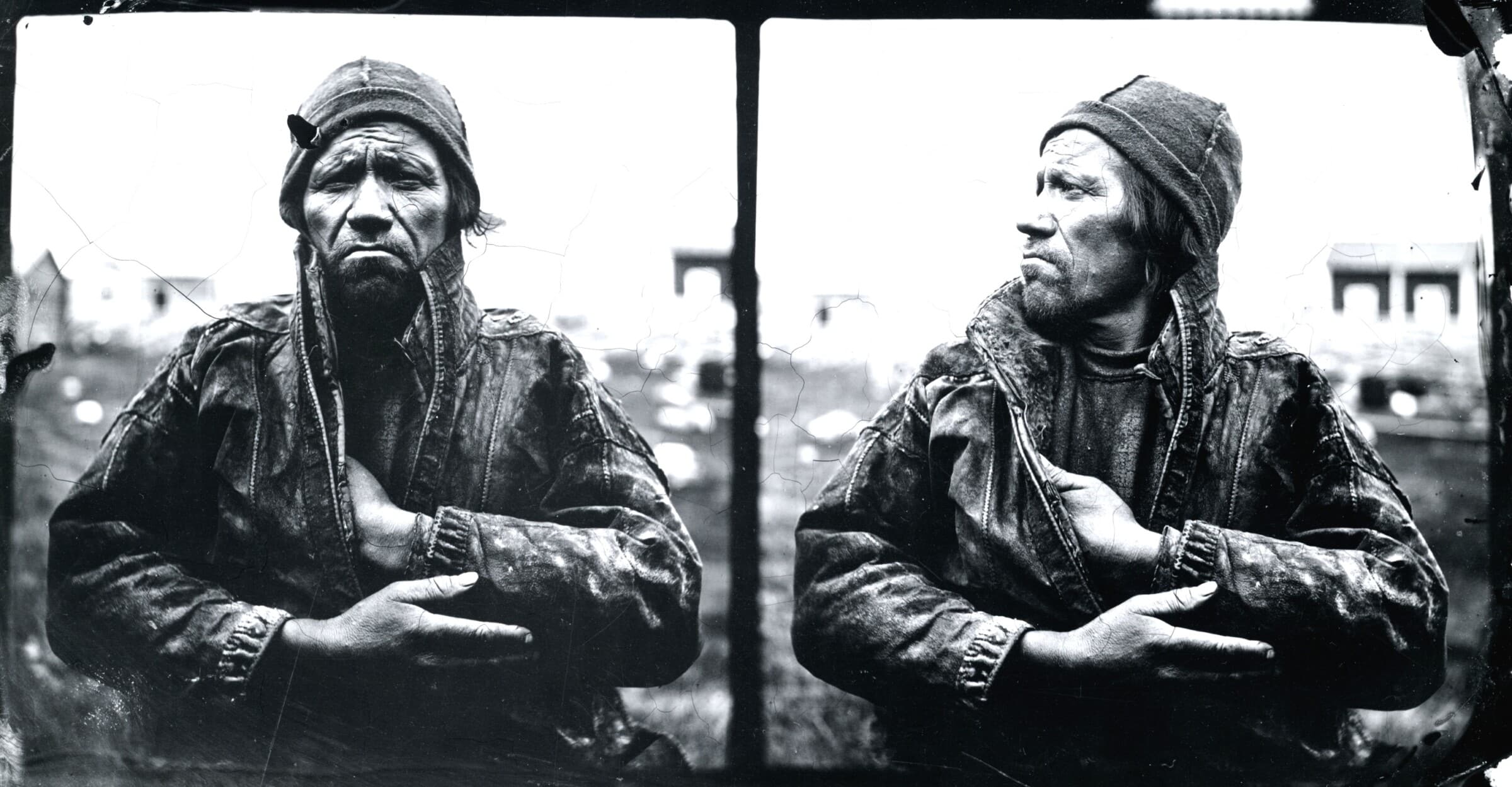
If I do not move to a new location, but instead try to stay here with my reindeer until next year, I shall be fined 200 kronor. In other words, I shall be ruined in any case.
I therefore respectfully appeal to you, as County Governor, to take pity on me and authorize me to spend next summer beyond the fence in Saarivuoma: between Korvijärvi, Juulusjoki, and Soitjutangi, to be precise, where there have been no reindeer for the past few years, or, alternatively, farther north.”
Reply from G. Malm, County Governor, May 1926:
The County Administrative Board would remind you that you were already warned by the Lapp bailiff in November 1925 that you were among the people for whom relocation was deemed appropriate and who were therefore required to submit an application for such relocation. There would have been no need to raise the objections you have brought up concerning difficulties in obtaining help with the journey and a shortage of draft reindeer — objections whose basis in reality the County Administrative Board is unable to judge — had you prepared for your relocation in a timely fashion. …
You should therefore resign yourself to the inevitability of a move.
Story of Dillá-muore (Margareta Utsi), retold by the author:
They continue their journey up the slopes of Juobmo. Their sweat is pouring as they urge the reindeer over the land where the snow has already melted, driving them onward and upward. The ráidus strain and tip, weighed down with meat to last the spring and summer, gunnysacks full of flour, salt pouches, and ten-kilo sacks of sugar and coffee beans. 4 They also carry stewing pans, summer clothes, and boxes containing silver and other valuables. Never before has Dillá led such a heavily laden ráidu. They swap the pack reindeer around so that those that have worked hard get lighter loads next time. Back home, it’s their custom to leave provisions in the places they know they’ll always return to. But this time, the ráidus are loaded with uncertainty.

Before their departure, the local storekeeper sold off everything he could. “After all, you don’t know what there is where you’re going.” Some bought eight hundred kilos of flour, one hundred kilos of coffee. And pine tar — far more than they should have bought, given the need to spare the reindeer.
The smell is different here — no salt water, no seaweed.
It is midsummer when Dillá first sees her new summer dwelling place on the shores of a lake: low land with promontories and inlets. The long scree slope of the mountain overlooking the lake casts a shadow over the land early in the day. Tentative young birch leaves shimmer like newly burnished silver. To the east of a river in full flow, glacier-clad peaks stand straight-backed.
Dillá walks about, taking in her surroundings. She’s looking for springs and useful stones. The smell is different here. No salt water, no seaweed: instead, there’s an odor of last year’s withered leaves and the scraps of mold left when the blanket of snow melted away.
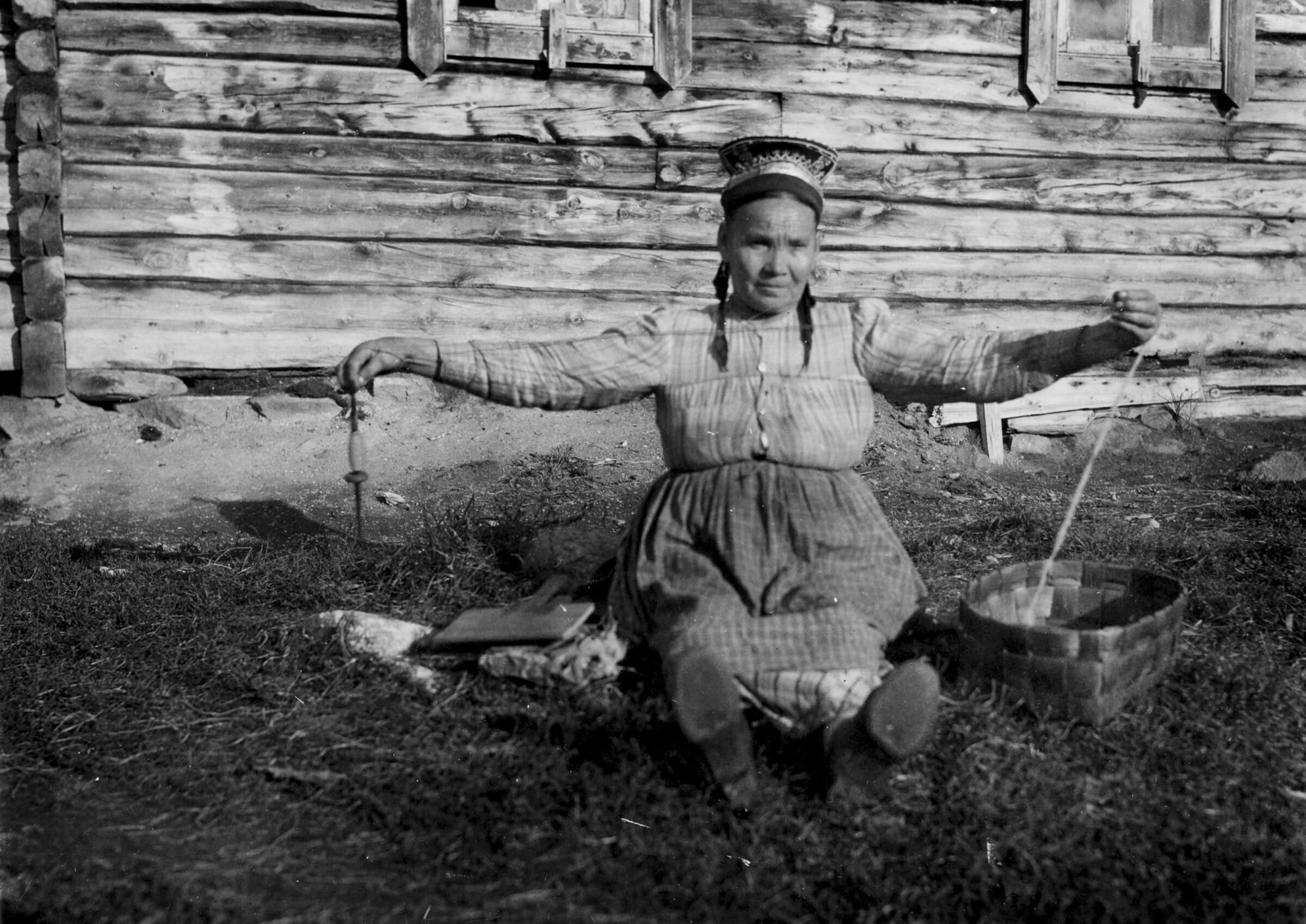
The children romp about, shooting off into trees and up mountain slopes. Dillá patches worn-out leather soles and weaves shoe bands for everyday use. A pipe dangles from her mouth, and she wears her cap pulled low over her forehead, covering her dark hair. She feels more and more ungainly as time passes, and her gait is now a heavy waddle. The other women keep an eye on her, never leaving her alone for very long.
One of the women is sure they have come to a land of bears. There are cairns of scree. Predators’ lairs. It’s so stony that you don’t even know where to sit down.
She barely sees [her partner] Mihkel Biera. The men are marking the calves up in the mountains and keeping watch day and night over the herds. They’re terrified of losing reindeer. The animals are accustomed to swimming in the sea. If the men don’t keep watch over the headlands around the lake, the reindeer will set off swimming northward and be lost.
The story of Máreha Biette Biera / Unna Bieraš (Per Blind):
I wasn’t quite full-grown when we arrived here, but nearly. I was fourteen. Joined in with everything. We were strong skiers back then; we could ski for days at a time. Hearrá sivdnit! Good God! We used to ski behind the herd, alongside the ráidu that carried our goahti. It all went well; my parents were tough herding folk, they had what it took to work with reindeer. We traveled straight from Rostu to Balvatn. … We had such a good life in Rostu — if only they’d let us be.
We were banished, that’s what it comes down to, isá ja joná eahki. We tried for several years to get permission to go back, to Árjepluovve or Johkamohki, but they wouldn’t let us. They said there was no room.
It was shabby all right, the way they treated our parents. My parents didn’t want to come here — they had a home, after all. … But Sámi people back then were so afraid of the officialdom. They thought they had to do as they were told, that they couldn’t stand up against them. … That’s just the way things were.
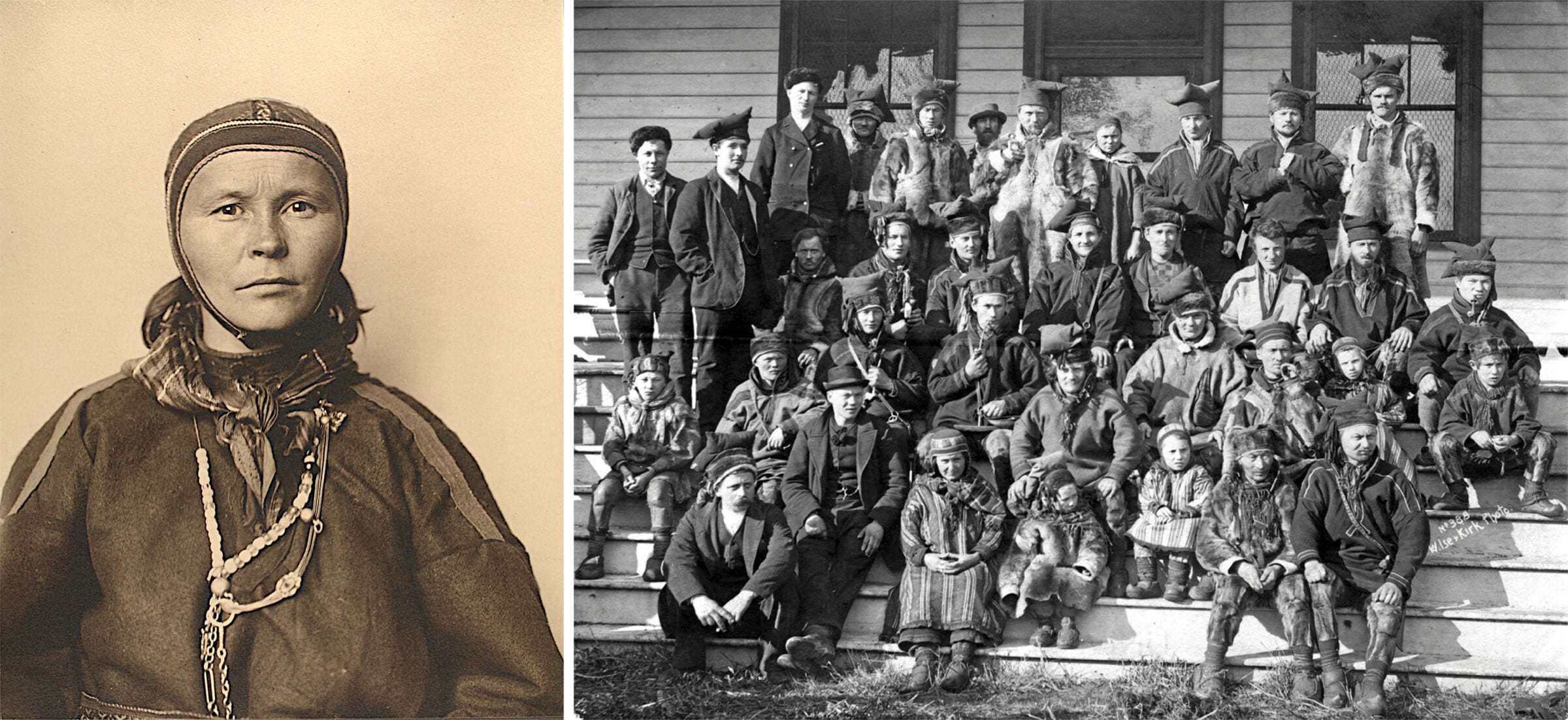
(left) Kirsten Nilsdatter Bals, Ellis Island, 1907. As part of the US War Department’s Reindeer Project, Bals was relocated from Kautokeino, Norway to Alaska, where it was hoped the Sámi would teach Iñupiat and Inuit reindeer husbandry [Photo Augustus F. Sherman, New York Public Library Digital Collections] (right) “Sámi reindeer herders of the Lapland-Yukon Relief Expedition” photographed in Seattle en route to Alaska, 1898. [Photo Anders Beer Wilse, University of Washington Libraries, Special Collections, SEA2667]
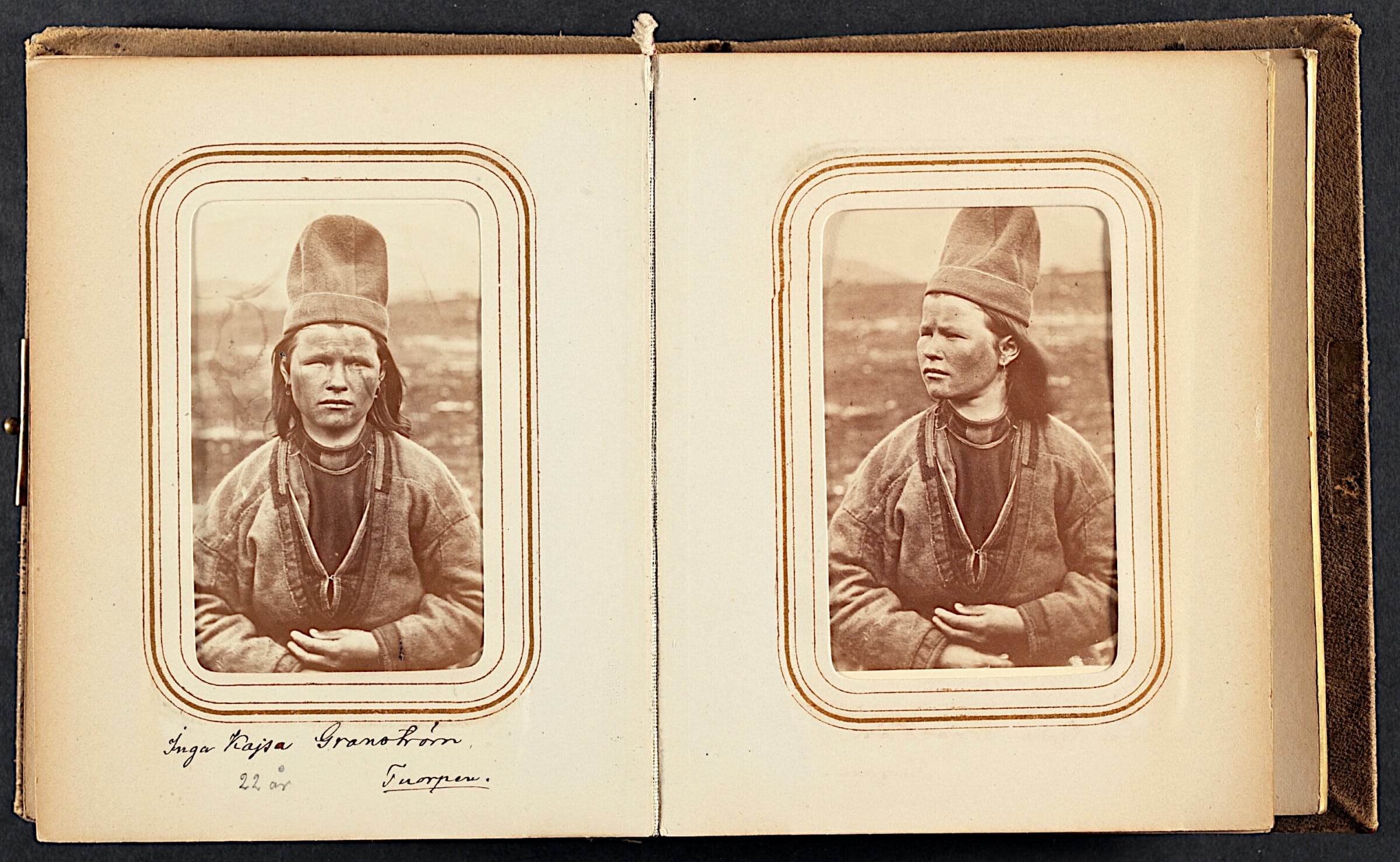
Pages from a photo album by Lotten von Düben. In 1868, von Düben accompanied her husband Gustaf von Düben on a “Lappland” ethnographic expedition. Inga Kajsa Granström in Tuorpon Sámi village, 1868. [Nordiska Museum, public domain]
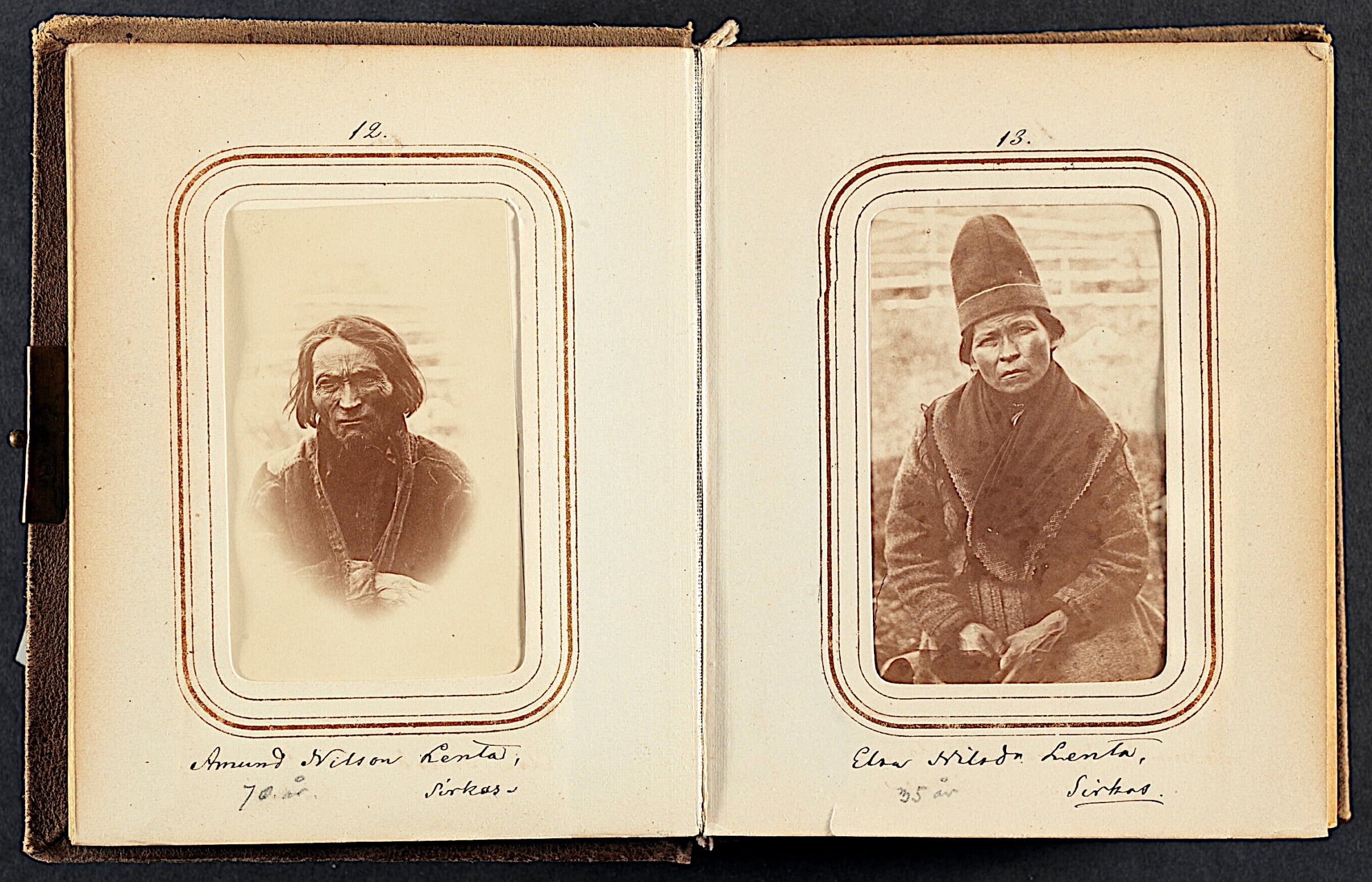
Pages from a photo album by Lotten von Düben. In 1868, von Düben accompanied her husband Gustaf von Düben on a “Lappland” ethnographic expedition. Amund Nilsson Länta (left) and Elsa Nilsdotter Länta (right) in Sirka Sámi village, 1868. [Nordiska Museum, public domain]
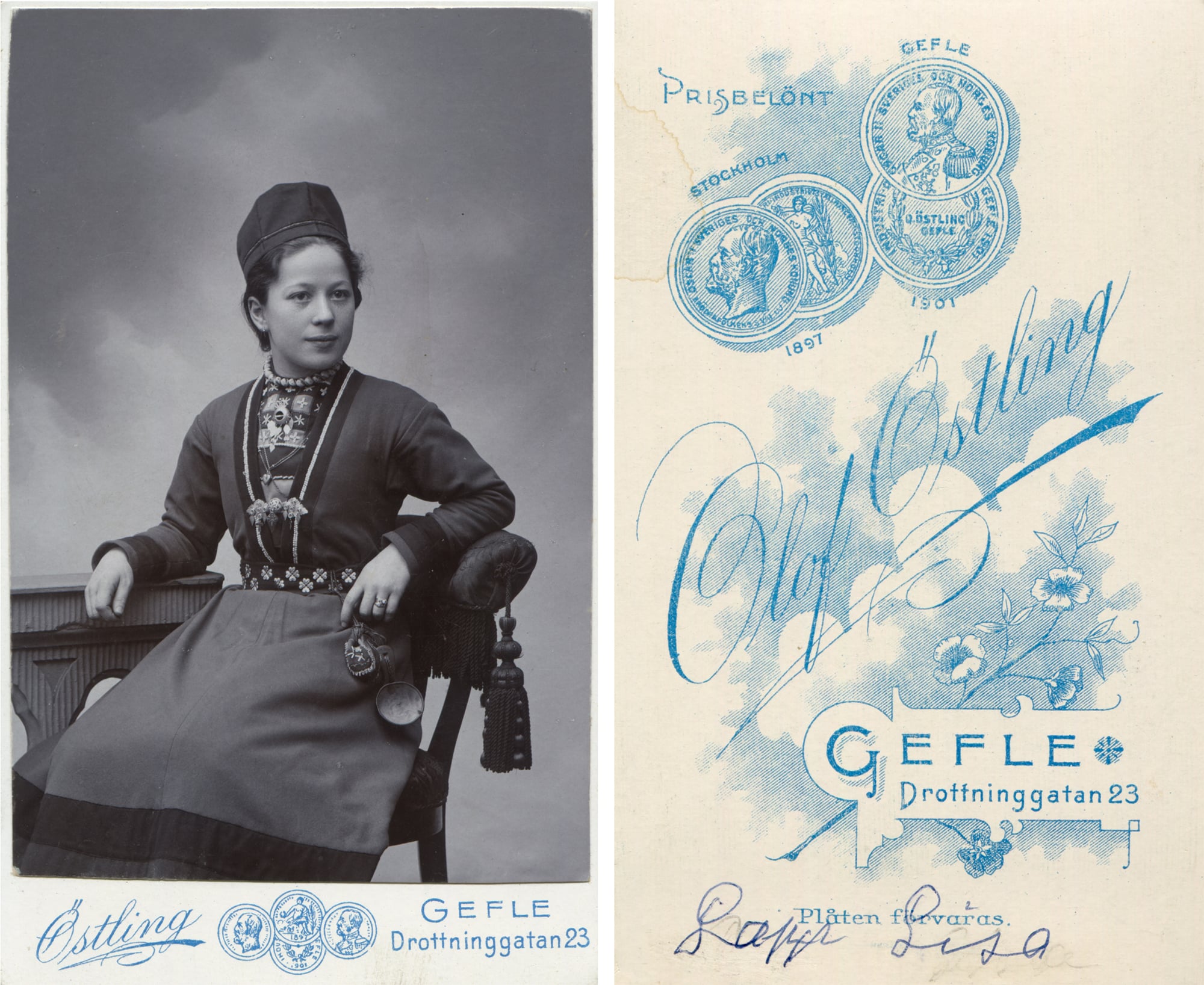
Studio calling card portrait of Sámi singer Lis Thomasson (1878-1932), known as “Lapp-Lisa.” [Courtesy Patrick Bradley]
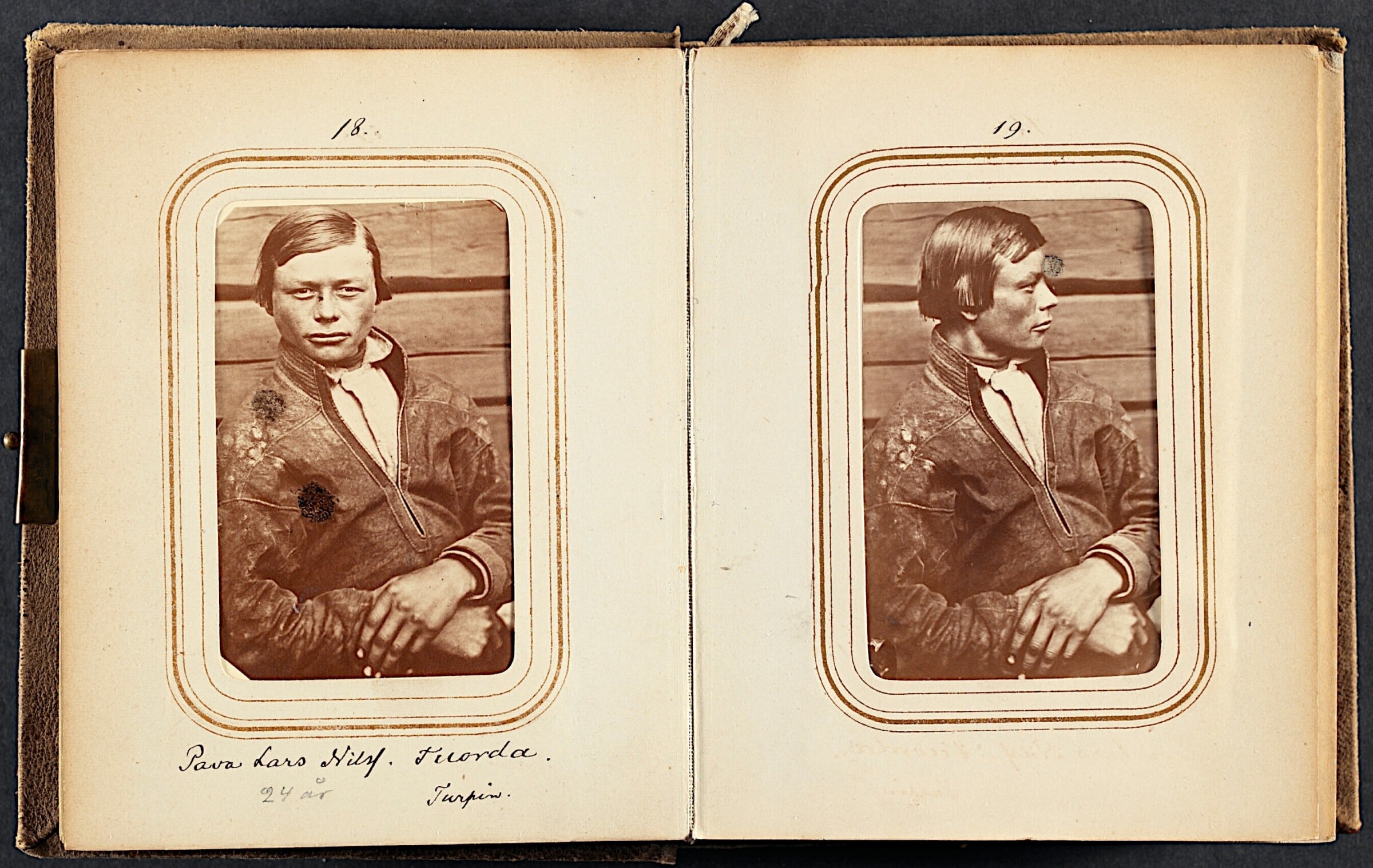
Pages from a photo album by Lotten von Düben. In 1868, von Düben accompanied her husband Gustaf von Düben on a “Lappland” ethnographic expedition.Pava Lars Nilsson Tuorda, Tuorpon Sámi village, 1868. [Nordiska Museum, public domain]
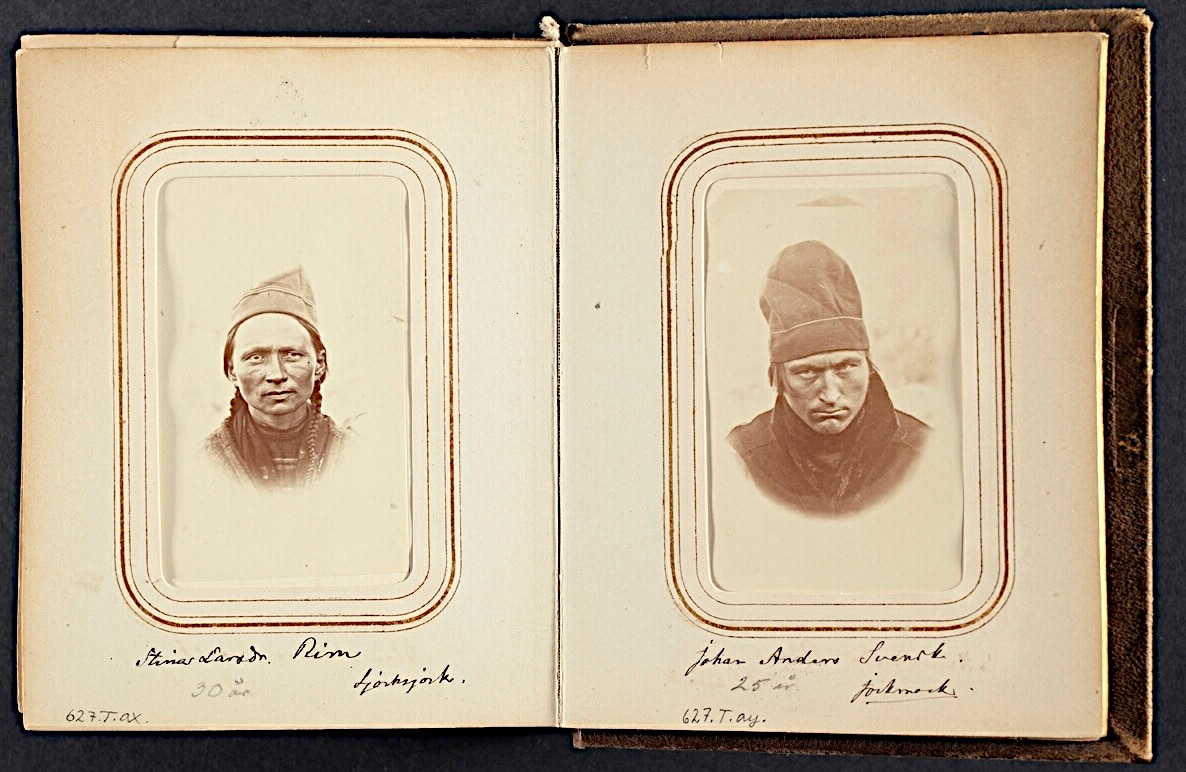
Pages from a photo album by Lotten von Düben. In 1868, von Düben accompanied her husband Gustaf von Düben on a “Lappland” ethnographic expedition. Stina Larsdotter Rim in Sjokksjokk (left), and Johan Anders Svensk in Jokkmokk (right), 1868. [Nordiska Museum, public domain]
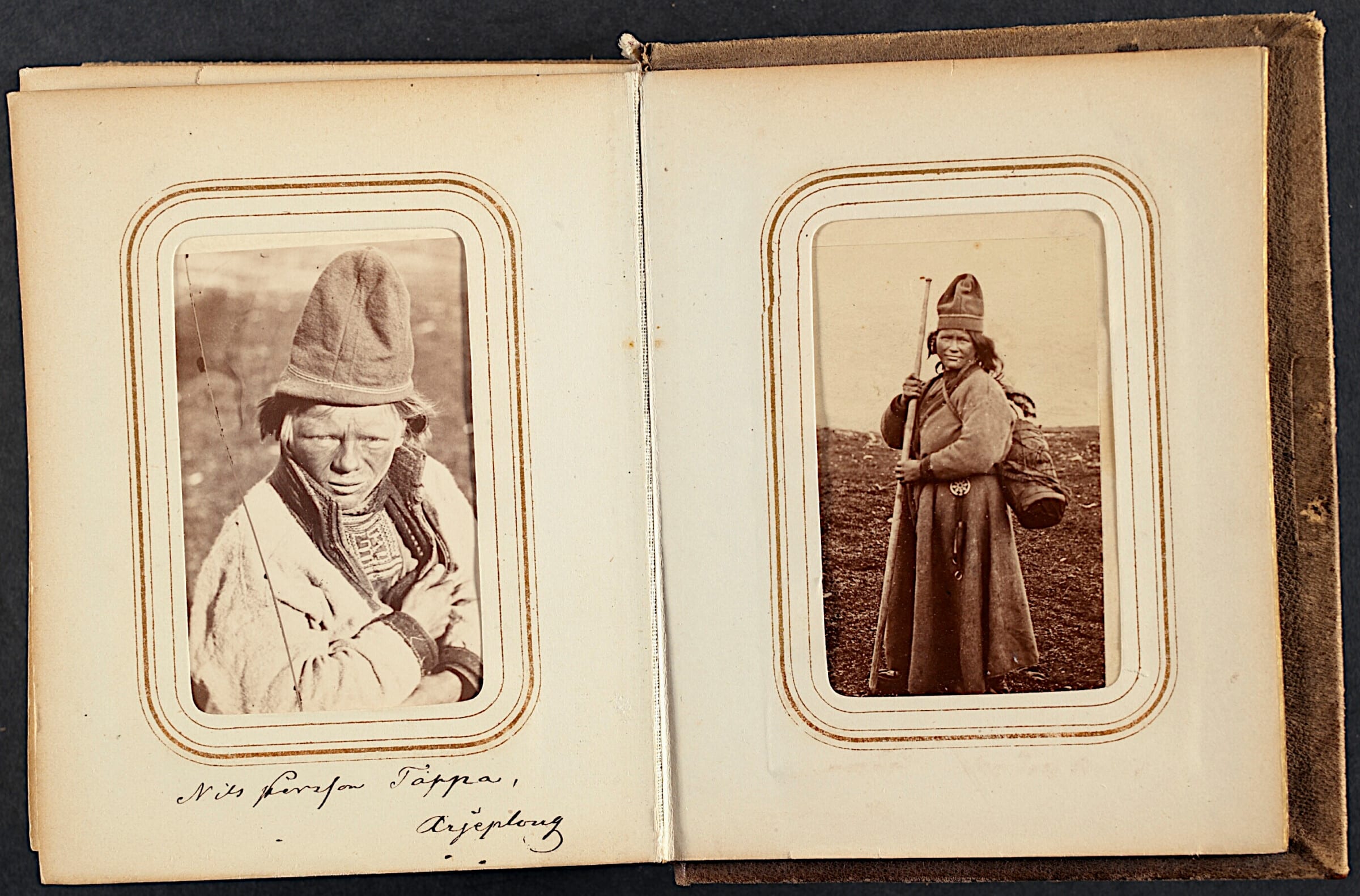
Pages from a photo album by Lotten von Düben. In 1868, von Düben accompanied her husband Gustaf von Düben on a “Lappland” ethnographic expedition. Nils Persson Tappa in Arjeplog (left), and Eva Brita Mulka Tuorpon Sámi village (right), both 1868. [Nordiska Museum, public domain]
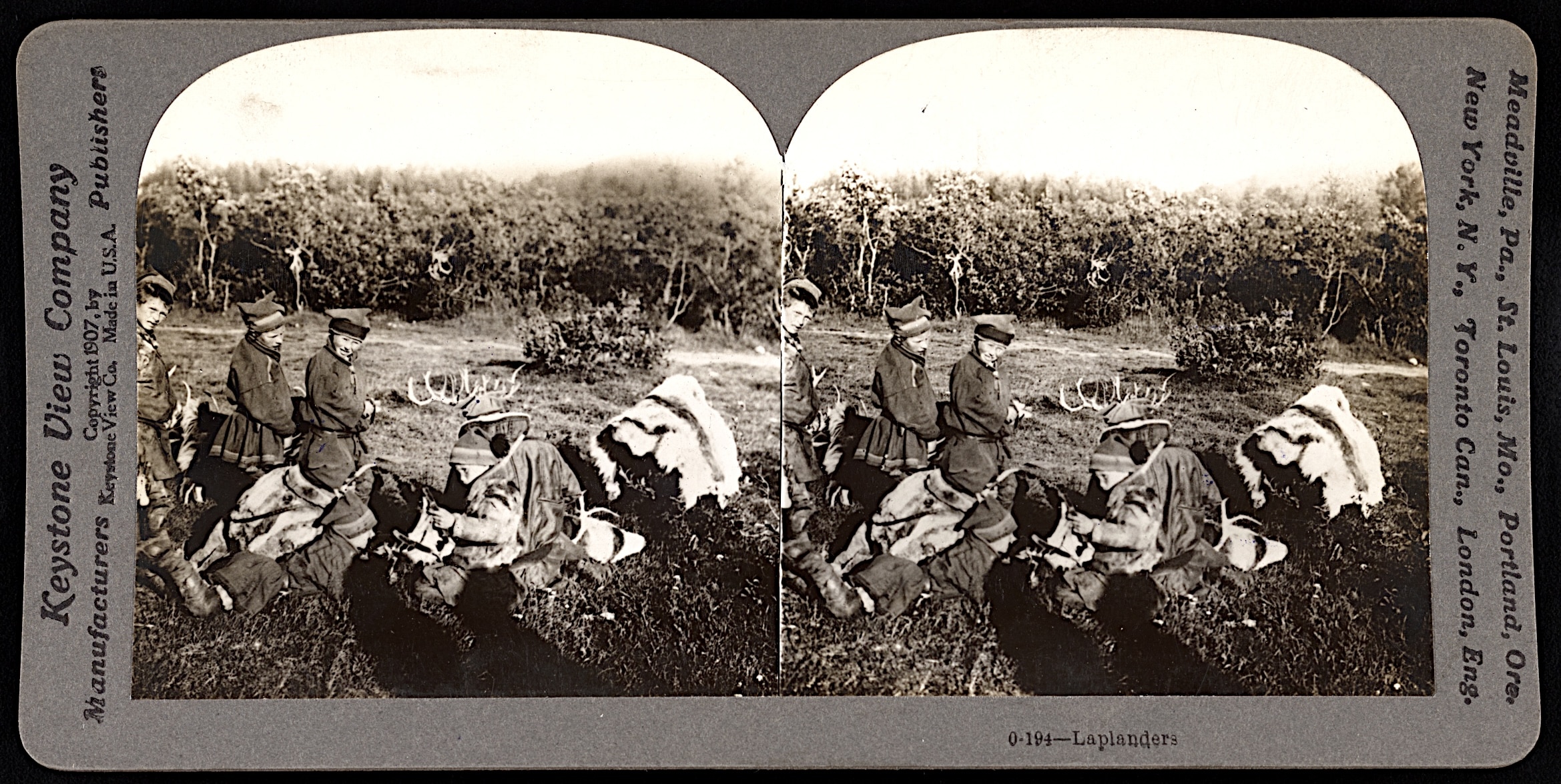
Sámi children milking reindeer, stereoscope by Keystone View Co., 1907. [Library of Congress]
The Grief
The story of Váikko Elle Susá (Elle Susanna Nordqvist):
They wept. That’s what eidde told me. 5 They said farewell to the places where their goahtis had stood, and to the poles that had supported them, the Lord help us. They should have got some sort of compensation, that’s what I think. The mountains up there are so flat, and here they’re so ugly. I’ve heard there are such lovely flowers up on Bealčán, in the north. My aunt on Mam’s side used to cry when she thought of Bealčán. So fond of flowers, she was. They said farewell to them, too.
It was the bailiffs who decided everything, Lord help us. They were so afraid of those bailiffs.
Very few people took their joiks with them. 6 One of the consequences of the forced displacements was that the joiks fell silent.
In the stories I listen to from the time before the displacements, people joik when they meet the mountains. They joik in greeting. They joik when taking their leave.
The joiks fell silent.
They give thanks for the pasture, the summer, the wind. They ask the land for its permission. They have a story and a name for even the tiniest little brook. Everyone knows that reindeer herding demands a close relationship with the land. You have to know even the smallest features.
The story of Sunná Vulle Nihko Heaika (Henrik Päiviö):
They’d joik whenever they met and while they were out among the reindeer. Whenever they saw a reindeer they’d start to joik. … Joiking was just part of life, you could say. It’s part of the way you work. … When there’s a special feeling in your heart, you have to joik.
But I don’t know if they had a joik for these mountains. Did they joik here at all? … I’ve never heard that they did. Everything was unfamiliar. They’d joik a mountain peak here or there, I’m sure. They’d joik a person now and then. But you know, when you’ve been driven out of your own land, where your parents and your ancestors grew up, everything seems alien. This place is a haunt of wolverines, they used to say. It’s so rocky, there’s so much rock everywhere. … The old ádját called it the lair of the wolverine. 7
Author interview with Sire Omma, speaking about her elderly grandmother Ánne Márjá Omma, forcibly displaced in 1920:
Omma: All I knew was that she had lived in Norway. She rang Susanna and me and asked if we could drive her to Norway, to help her go back. When we said no, she tried to get staff from the old people’s home to take her. When they didn’t help either, she just waited for a chance to leave, and then off she went. They found her between Kabdalis and Kitajaur. All loaded up, she was, with a walking pole. She was just bent on going there.
Labba: To Norway?
Omma: Yes, it was always Norway…
Labba: What did she say?
Omma: Just that she wanted to go home.
Gátriina Lásse, speaking of her grandparents, forcibly displaced in 1919:
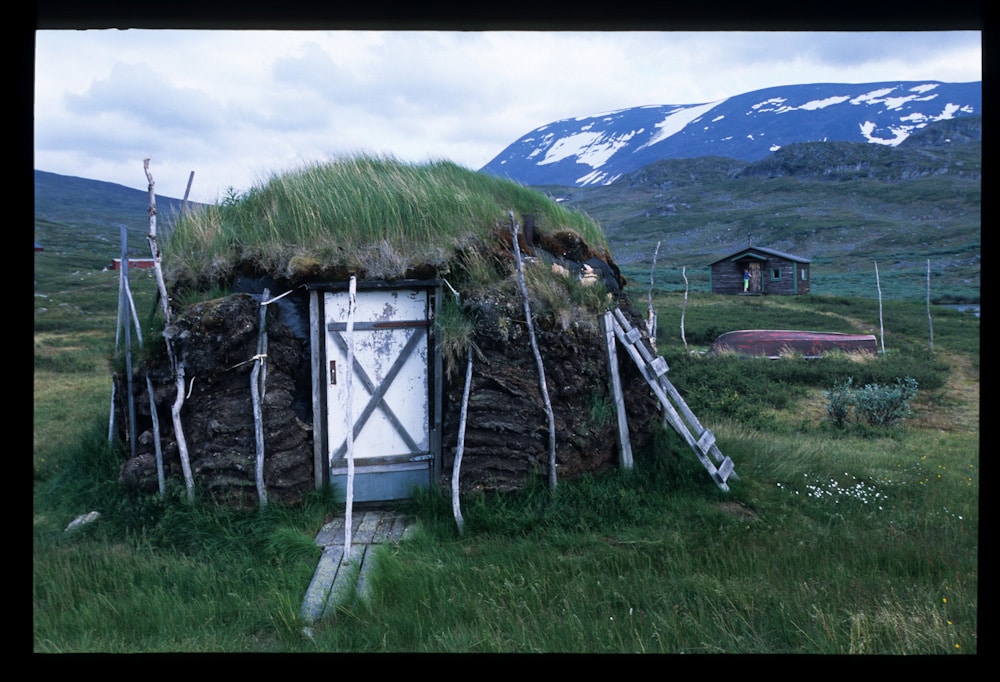
A home is a home. Peat goahtis and goat huts and milking paddocks and migration routes. All the work they’d put in was left behind. … Their homes were left empty, and rotted away. The earth took back their things. … But you know, they never really wanted to let anyone see them cry. Instead, they’d go up into the hills and wander about. They didn’t want the children to see. … Their island had stayed in their memories as the most beautiful place on this earth.
Three years, say the elders, that’s how long it takes for reindeer to get accustomed to new lands. The displaced Sámi had to watch over their calving reindeer day and night to make sure they stayed in the new country. Reindeer are creatures of habit. Like migrating birds, they were accustomed to returning in spring to their calving grounds and the scent of grass along the coast.
Tales are told of reindeer on the southern shore of Duortnosjávri longingly gazing northward, but unable to cross the sealike lake. Reindeer were found throughout Norrbotten county, all the way to Jáhkotnjárga and the other peninsulas along the Atlantic seaboard whose ear markings indicating that they belonged to displaced families.
After 1923, the Lapp Authority had zero tolerance for reindeer turning up in the wrong place at the wrong time of year. Reindeer that managed to return to their old haunts were sometimes shot.
My research follows the displaced people on their way south. Often I can track their path through church registers, now digitized. The church gave them names that sound more Swedish. Márggu Ántte Jouná, for instance, is listed as Jon Andersson Blind. As time passes, children and grandchildren are increasingly dispersed, as if by the wind, throughout Sápmi. 8 Branches are split, family trees uprooted. Many people lose their only protection. Family ties are the most precious thing anyone can have, apart from reindeer.
The pastures supposedly available in the south are already in other hands. The Lapp bailiff promised room for thousands of reindeer, but there isn’t room. Other reindeer are already on the land, and those herders are angry about the influx of people and animals.
Conflicts smolder between those forced to move south and those who don’t want to share their pastures with new arrivals. Neither of these groups was warned of the other. As early as 1922, the Lapp Authority writes that “the dislocation has resulted in disturbances and disruption.” The “disturbances and disruption” continue today.
The story of Heigása Nilssá Márge (Margareta Omma):
My father didn’t want us to live here. I don’t know where he wanted us to go, where we were supposed to go, but he was dead set on moving. We were never supposed to learn the names of the mountains here. I still don’t know the name of a single valley. We weren’t supposed to settle down, we weren’t supposed to accept that this was our home. My parents didn’t want to be here.
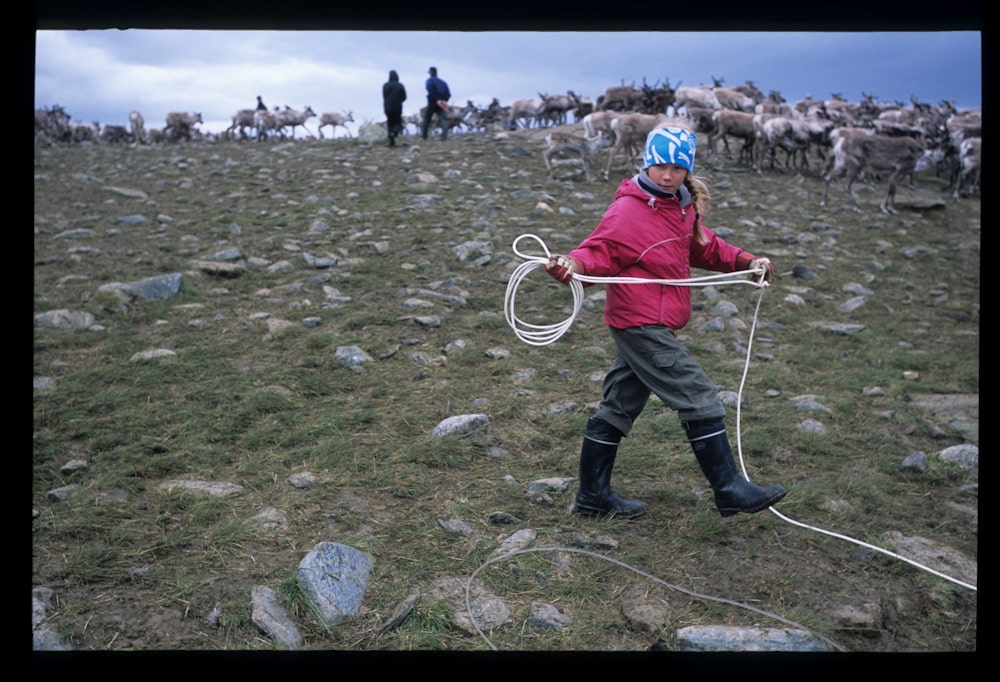
I understand now that I can live anywhere. … I’m not sure if that’s the result of trauma or what, but I just can’t put down any roots. Maybe that’s the wrong expression. What I mean is, I’m not afraid of moving somewhere else, or traveling. Nigá Blind used to say: Wherever the reindeer go, I go too. I’ve never worked with reindeer in that way, but I can go anywhere too.
One of the most frequently quoted Sámi proverbs says that the downy birch doesn’t break in two; it merely bends. You bear your hurt alone, for breaking down won’t make daily life any easier. Your tears should fall on your shawl unseen. This philosophy of life revolves around the word birget — surviving, coping. Each year the reindeer must survive the winter: that’s what matters, not people’s feelings.
I grew up surrounded by all this, yet I still wonder how they coped. Week after week, month after month, year upon year — alone.
Defá Biette Iƞgá (Inga Idivuoma), relating the words of her parents about the last autumn they spent in Norway before displacement:
We remember how we joiked that last fall. There was liquor, and we made a fire and sent the reindeer herd to the Swedish side of the border, while we stayed on for a celebration. We thanked Norway and its high peaks, the sea, the boats, the people. Some wept. We thanked the fine mountains where we’d thrived with our reindeer. We gave thanks to everything. And I don’t believe we’ll ever return. … May the rocks of Norway echo with our joiks, echo with our thanks, and pass them on to future generations.
What would I have done if I’d been the one who was here for the last time? If I had known I would never return? Some Sámi say that the land passes on our thanks to those coming after us. I believe it also receives our thanks to those who lived before us. Hardly any of the elders in this book are still alive to continue telling their stories.
Váikko Elle Susá (Elle Susanna Nordqvist) to the author:
Just put that in your book, will you? Our story. It’s all true.


If you would like to comment on this article, or anything else on Places Journal, visit our Facebook page or send us a message on Twitter.