
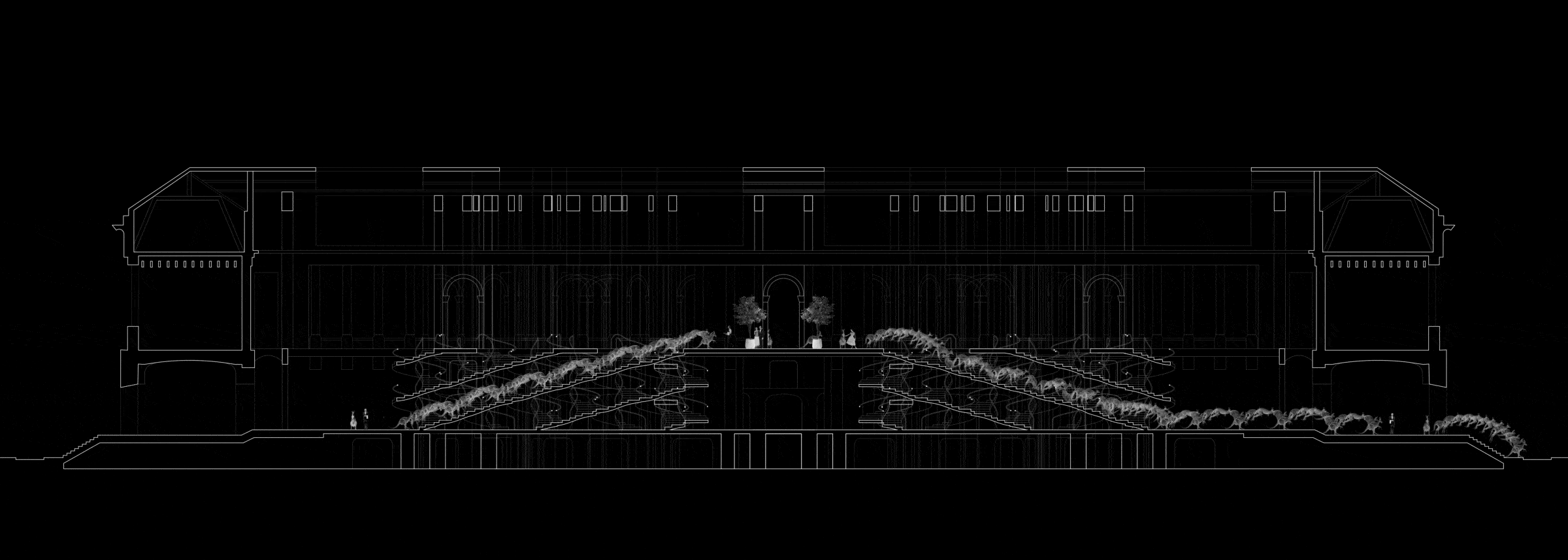
“Immediately upon entering through the front door” — and so the curtain is drawn, with a deft variation on the once-upon-a-time invocation.
The main character has arrived, as has the reader, in Primo Levi’s “Buffet Dinner” (“Cena in piedi”), one of the most lovable and painfully hopeful 20th-century fairy tales I ever have read. The story captures an enigmatic, acrobatic literary choreography, as do Bernheimer and Le’s designs. 1
From the opening words, we know we are not in the real world and are prepared to accept things we might not in a presumptively rational space. Here we are safe to consider difficult and exciting things we would prefer not to acknowledge when we are conscious. But fairy tales are not dreams. A story is an occasion at which we are party to public speech.
As he enters the party Levi has conjured, the main character feels immediate unease and regret.
Innaminka!
The protagonist’s worries heighten when he spots a butler and our worries heighten with his, for Levi refers to this figure more precisely as “a butler of sorts.” So fleet is Levi’s gift of characterization that the reader’s identification with Innaminka has happened by Sentence Two.
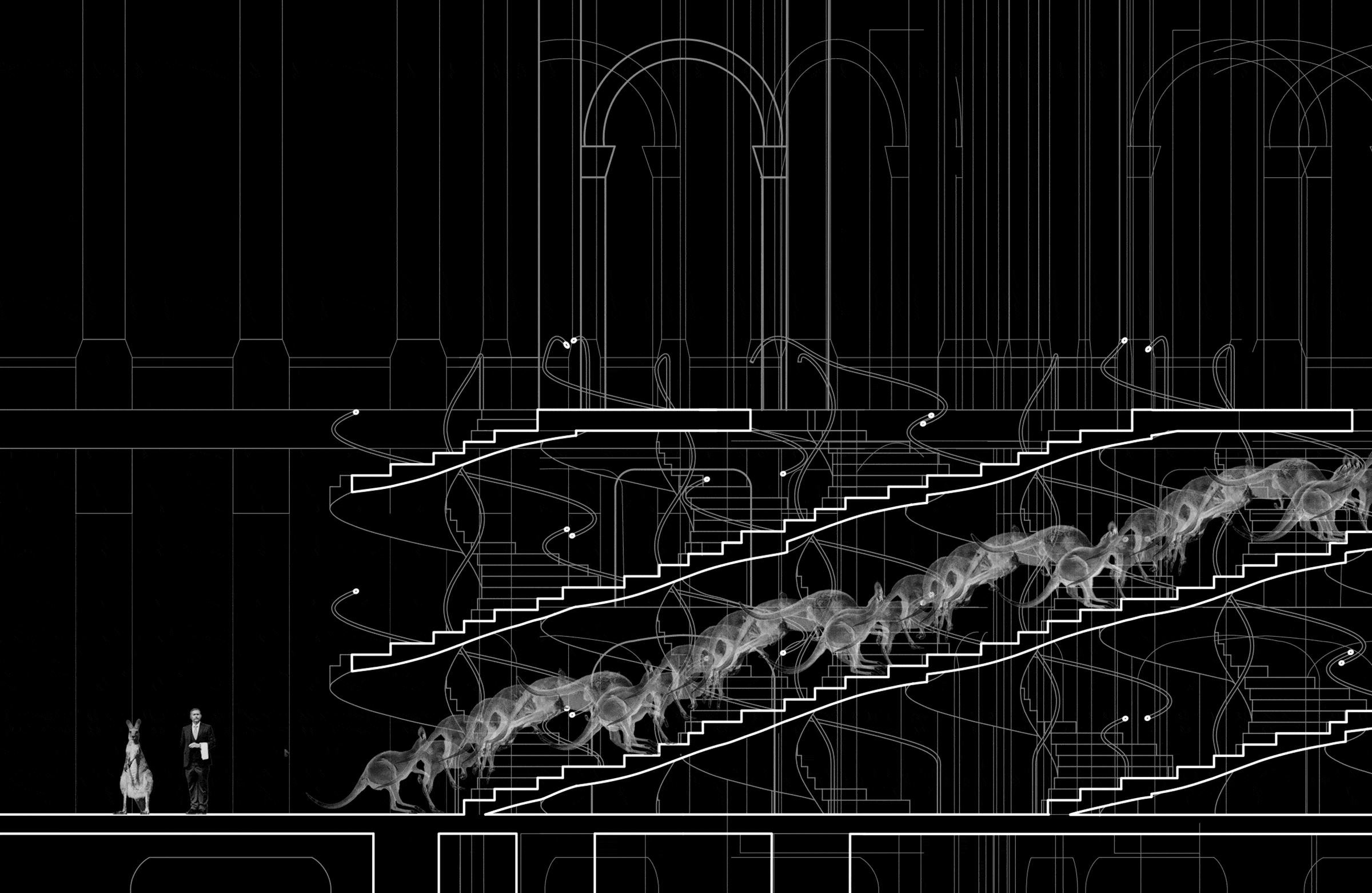
In the posh world of this story, a butler is there to retrieve coats from the guests. Innaminka is not from the posh world; and the story is not really this world. He is horrified to consider what would happen should this butler of sorts insist upon taking his coat. His coat is “part of his body.” Levi, with an ethics and a poetics worthy of the Brothers Grimm, does not flesh out this fantasy (so to speak) for the reader. It’s a dreadful idea we accept willingly, even with pleasure. It’s an animal story! Or is it?
In a matter of three sentences, we are all turning in circles together.
Innaminka feels dizzy.
He tries to “appear indifferent” as he attempts a staircase (not built for his kind) which leads into the gathering place. On the walls are paintings, “some depicting human or animal forms, some depicting nothing.”
Is Innaminka human, animal, or nothing? Levi never directly ties him down to a species, though he refers to “the triangle of white fur that kangaroos are so proud of.” He is a being embodied in the narrative voice. We overhear a remark: “Can’t you see he’s a male?” He has no pouch. But there are no talking animals depicted in this fairy tale.
Unless you count the human guests, of course. They prattle on with careless (or is it carefree) indifference about … nothing, humans, animals. Gallingly, in the story’s first vignette, a woman remarks in Innaminka’s earshot that his kind is “almost extinct.” Small talk, is it called? The thin, sleepy, anxious hostess tells Innaminka she has heard a lot about him. He suspects that, even if she is kind, she says that to all the guests. She wanders off as soon as she realizes he cannot speak.
Even the buffet itself is not very appetizing. Peas in brown sauce. Though he is tempted by orangeade and canapés, their journey from table to mouth is a mess. He’s no good at this buffet thing. But the partygoers would be terrible jumpers, Innaminka consoles himself. Still, he concedes, throwing them an ethical bone, “maybe they were good at other things.” Maybe … maybe not.
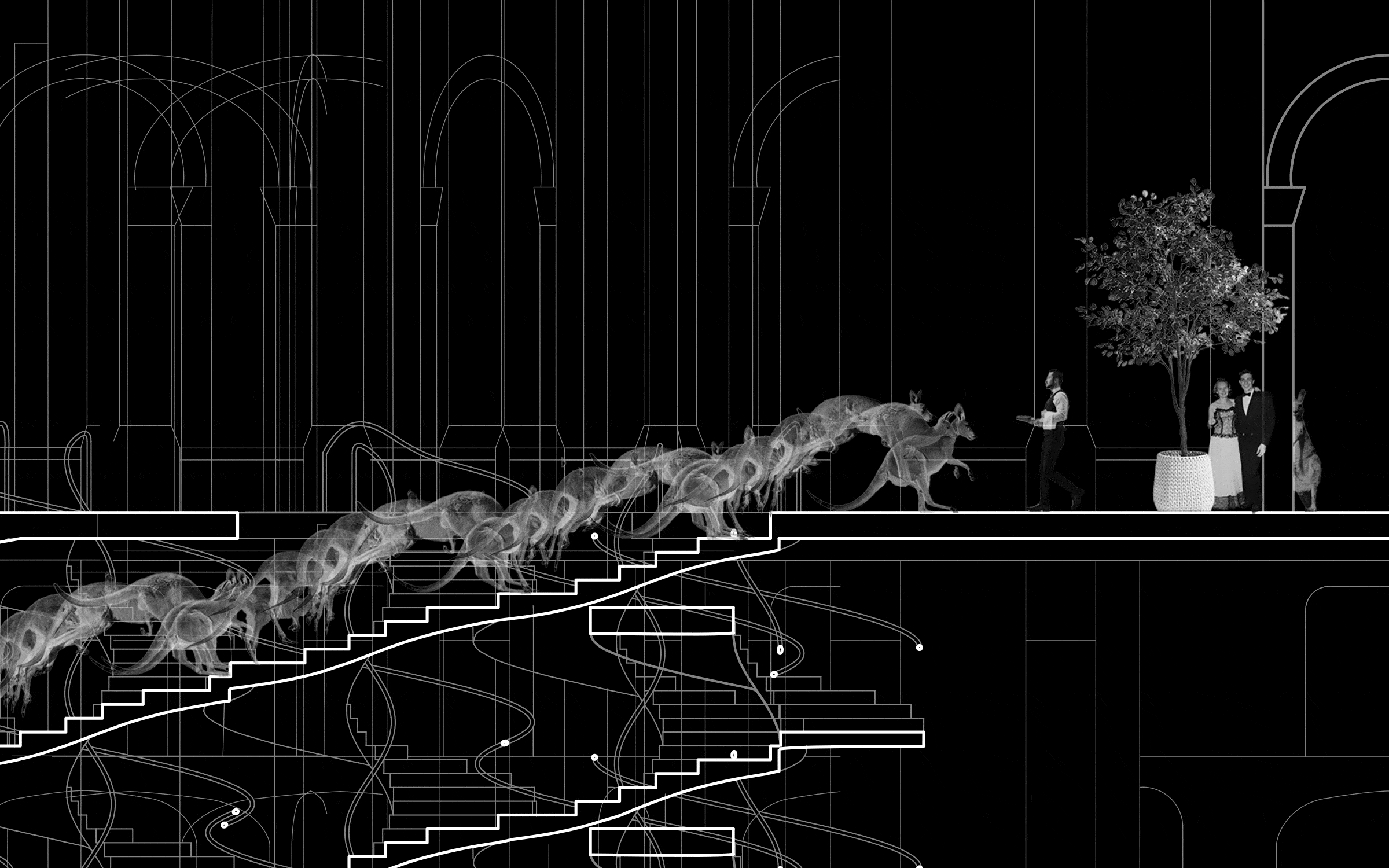
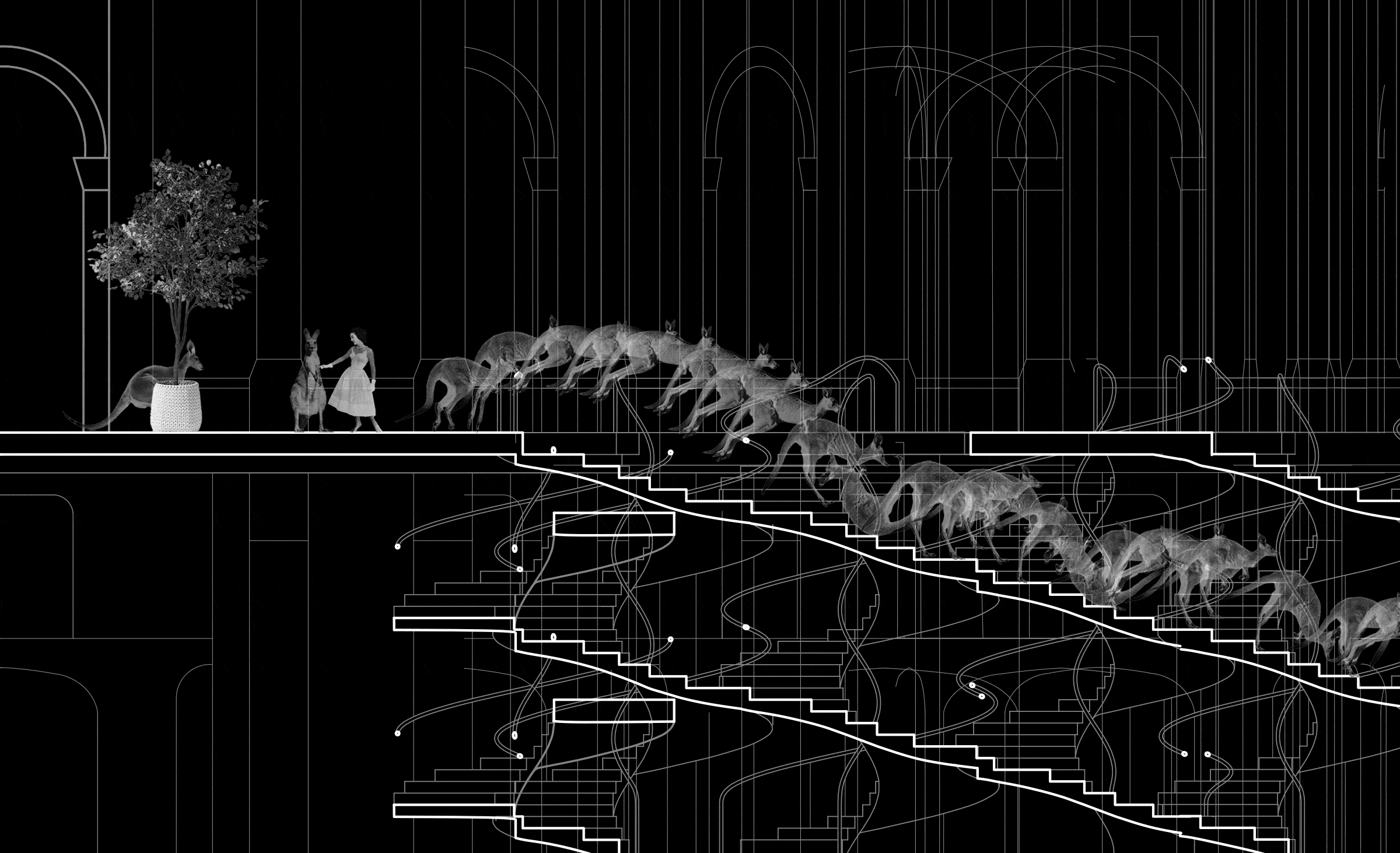
Feeling an urgent need, he approaches a potted plant; he pees, nibbles some leaves. When a young woman begins to caress him, and confesses her unhappiness to him, he relaxes at last. The woman has had a bad encounter. She caresses, caresses, caresses. The woman is talking to herself. A brutal man emerges from the “seething” party, drags her back into its numbers. Alone again.
Innaminka’s over it. Wouldn’t you be? And so, with a leap over the table, a leap down the stairs, he escapes “Buffet Dinner”:
Under the expressionless gaze of the doorman, he took a deep, voluptuous breath of the damp, grimy night air and immediately set off along Via Borgospesso, no longer in a rush, with long, happy, elastic leaps.
The rich — who stroke your fur while speaking of your extinction — don’t really give the Id a good time. Not even with a lavish buffet. This is not what’s desired.
A fairy tale seeks to “realize the denouements that are forever being reached,” as psychoanalyst Ella Freeman Sharpe wrote of those wishful stories all sleepers imagine, in her excellent 1937 book Dream Analysis.
Andrew Bernheimer and Ann Le of Bernheimer Architecture have explored Innaminka’s evening from arrival to departure in a most appropriately playful, embodied, dizzying series of renderings. In the interview below, they describe their design inspirations, mechanical considerations, process, and loving attention to a kangaroo. To Primo Levi.
— Kate Bernheimer
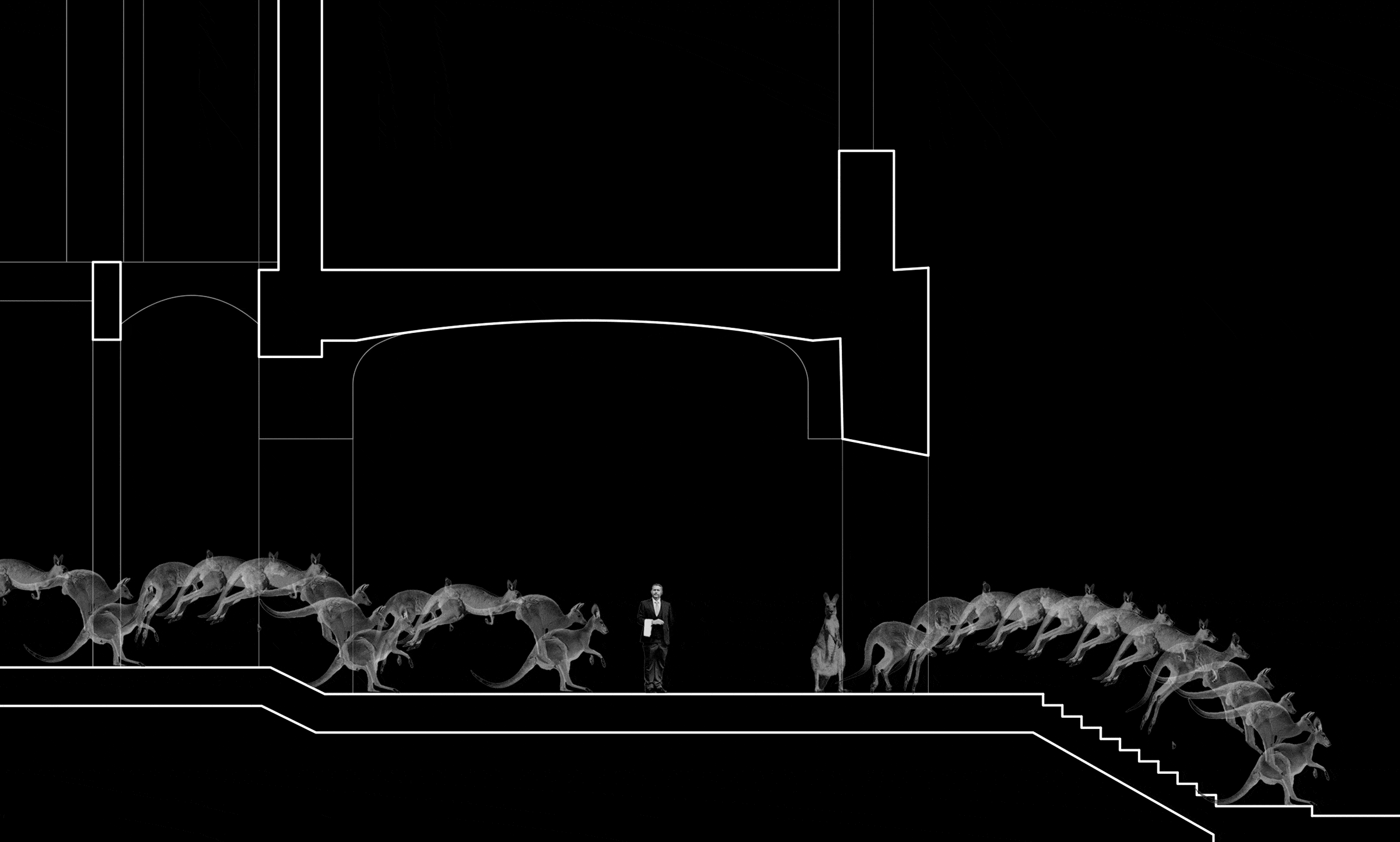
Kate Bernheimer in dialogue with Ann Le and Andrew Bernheimer
Kate Bernheimer: When you read fiction, do you instinctively visualize characters’ movements in spaces and places?
Ann Le: I do! There’s a part of me that tries to anticipate or predict what will happen, and I often visualize spaces in a story; even if the story isn’t descriptive, I’ll still imagine the places, taking hints wherever I can.
KB: Your work here is far more than a set design for a dinner party in a building on Via Borgospesso. You render the arc of the story, and capture the lithesome quality of Levi’s style and affect. Where did you begin?
Andrew Bernheimer: Beyond the twist of the main character being a kangaroo, the story is full of spaces and actions, and so our initial thought was about how to draw a figure in motion. We were inspired by the photographs of Eadweard Muybridge (who photographed a kangaroo in his series of movement images) and Harold Edgerton. Their visual studies of animals and people offer a sense of fluidity that most architectural delineations do not — it’s not the job of the architectural drawing, typically, to project action.
KB: What architectural language is relevant to this story?
AL: There are some key architectural terms that describe the space, and how the kangaroo moves through — simple things like stairs. But also, the descriptions of the character’s movements give important spatial hints, like relative heights.
KB: Can you tell me a bit about the wonderful two-dimensional kangaroo toy that you acquired to work with?
AL: The toy, to me, is an architectural model. It has joints that allow movement; it’s modular, and can create infinite combinations.
KB: In Levi’s infinite combinations, the kangaroo gets dizzy. That sensation endures, even though the story also depicts a series of crystalline moments. Your linear designs help me understand this unusual point of view, in which bewilderment does not contradict clarity, if you will.
AB: The tale is not a straight line — the kangaroo comes in, goes up, wanders, hides, pees, goes back down, hops out into the Milan streets. It’s more a loop than a line. But we drew a linear, continuous architectural space. So, while the images and events of the story can be separated into vignettes, the drawing encompasses the entire space of the story, read left to right.
Per this concept of “reading” a drawing, the section drawing isn’t a technical section. It’s not a set of instructions for assembly (as many section details are), and it doesn’t articulate space volumetrically (as the drawings of Paul Rudolph or Lewis Tsurumaki Lewis do).
KB: This reminds me of LTL’s designs for “The Death of Koschei the Deathless,” where the architects render an obsessive nesting of forms within forms, spaces within spaces.
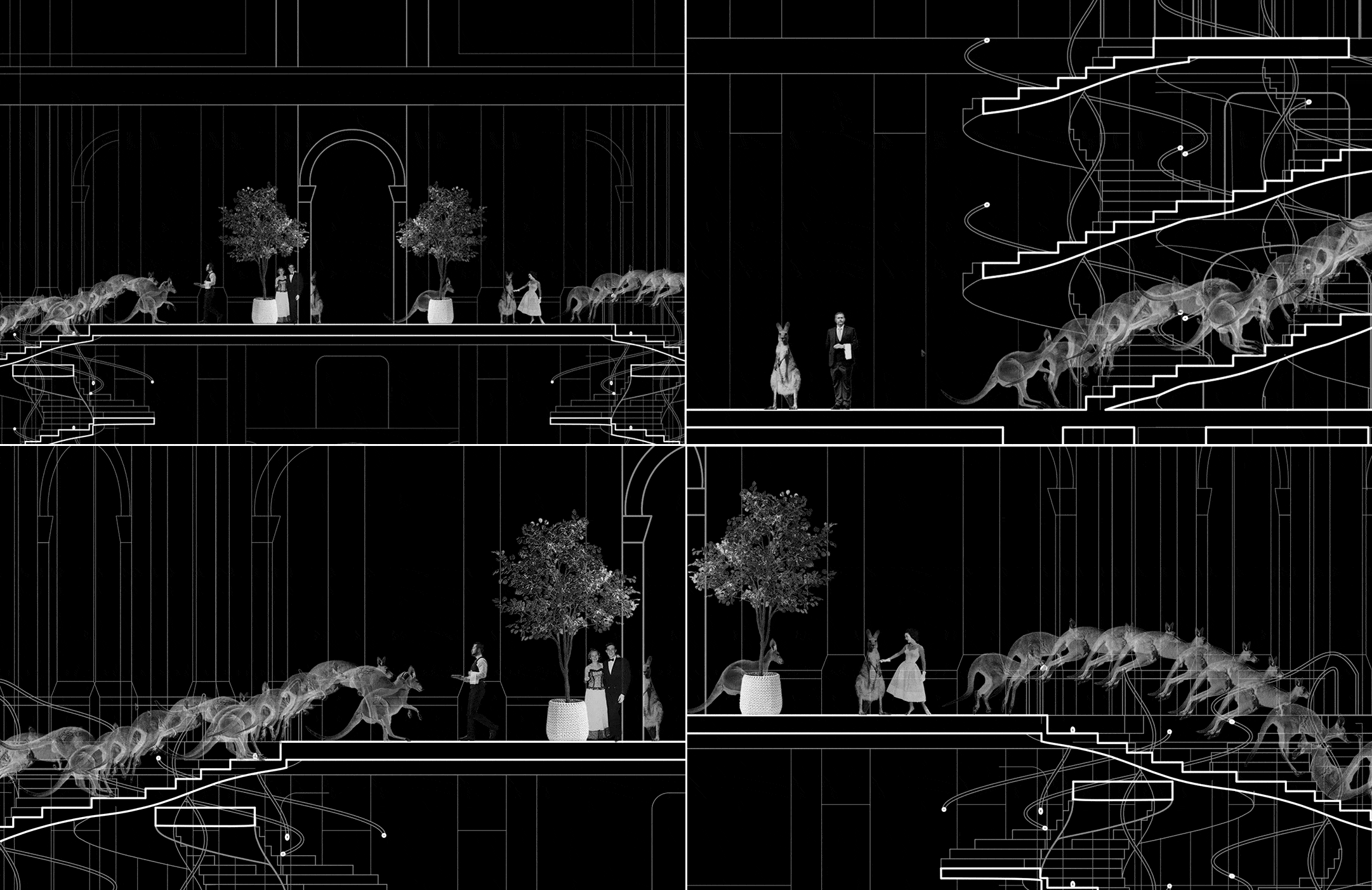
AB: In this case, the section is a storyboard.
KB: It’s also a character study. That is, I sense a deep affection for the kangaroo, who is the star of the space. Which is a bit of an architect’s snub to the client you might have imagined, but didn’t: the enigmatic hostess. You’ve designed the space for someone who doesn’t belong in it, and escapes from it.
AB: The main character is insecure. Inverted main-character syndrome, perhaps? And how often do we architects get to use kangaroos in our drawings? In that way, the “otherness” of the kangaroo (in an ornate Italian home, no less) is very clear. We are happy to celebrate this otherness.
KB: The story celebrates this otherness too. I think Levi would very much like that it makes you smile. Is there anything you imagine architects might take away from all this, for “real world” designs?
AL: Fairy tales exist between fantasy and reality, and I think there is a part of fantasy that can be idealistic and playful, that can be used in architecture to push the boundaries of the status quo. Play is essential to practice. Architects and designers call it “iteration,” teasing and working through ideas in version after version. But I often use the terms iteration and play interchangeably, because to play is to recreate, over and over again.


If you would like to comment on this article, or anything else on Places Journal, visit our Facebook page or send us a message on Twitter.