

Each species affects the soil in a way disadvantageous to itself and thus paves the way for different species to replace it.
— Professor Henry Chandler Cowles
8/14
3 p.m., overcast
1) Common tern
2) Yellow warbler
3) Downy woodpecker
4) Empidonax flycatcher (least?)
5) Eastern wood peewee
6) American redstart — female
7) Tufted titmouse
8) Creeper? Marsh wren?
9) Kingfisher
10) Chickadees — black-capped
11) Bluejays
12) Cardinal — female (red beak)
13) Swallows?
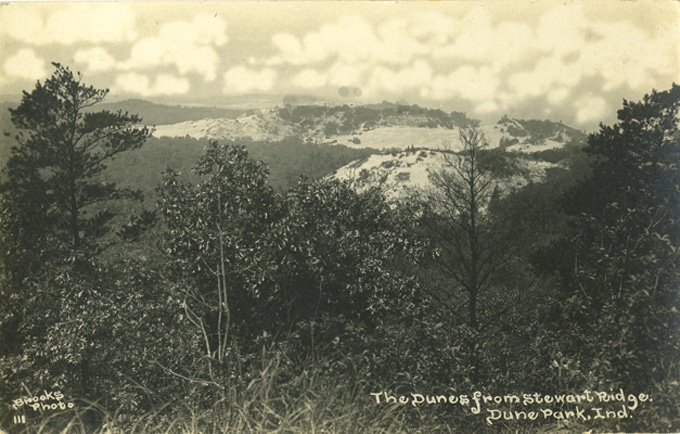
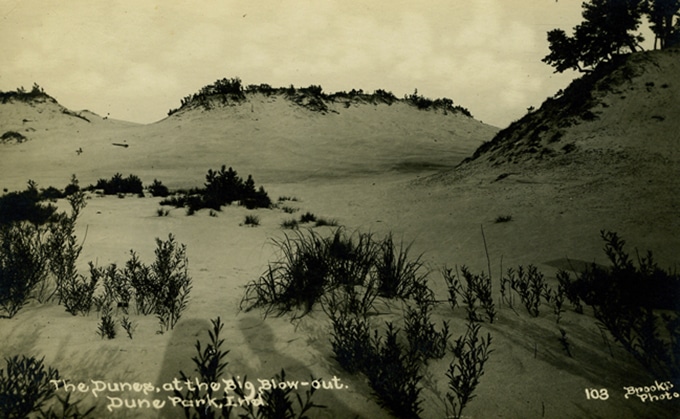
Shoreline a stretch of almost pure white, piled up into dunes — from small swellings to proto-mountains, but most about three stories high. Like accumulated foam off Great Lake, but hot under sun, and hard. A great white buffer.
Shoreline a stretch of almost pure white, piled up into dunes — from small swellings to proto-mountains. Like foam off Great Lake.
After dunes: grasses, then patches of milkweed, then grove of trees — small, quivering, waxy-looking leaves, yellowish bark. Poplar? More likely Balm-of-Gilead, so called because its buds have sticky resin once used for healing. “Is there no balm in Gilead; is there no physician there?” (Jeremiah 8:22). Old spiritual: “There is a balm in Gilead / To make the wounded whole. / There is a balm in Gilead / to heal the sin-sick soul.” A species of forgiveness. (Except summer, so no buds/balm.)
Trees increase in size as you (they) move inland. Past dunes, past shadow of dunes, forest “dominated” by oak. Most seem to be white oak, enormous, some near a hundred feet. Says they can live centuries, grow nearly as wide as tall (!?). Good for lumber and shade; drop small acorns — green ovoids with brown caps — on once-white sand.
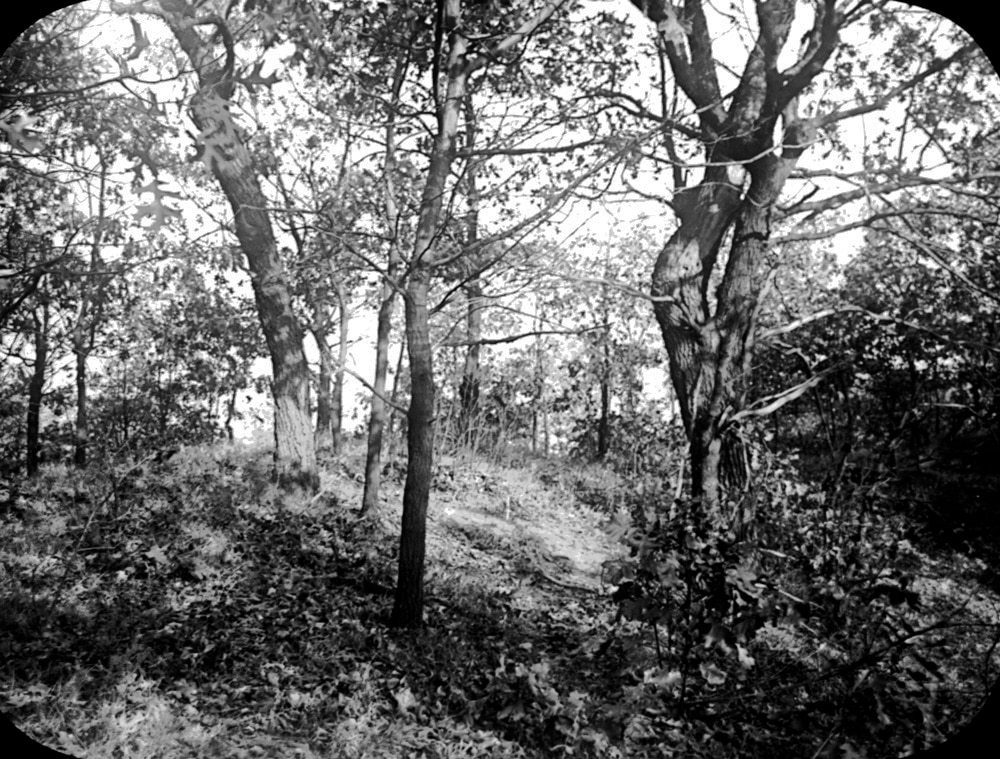
Shoreline patrolled by red beaks and slit eyes of common tern; lighting on sand, they cackled — small sharp calls — like little white jack-o’-lanterns. But most birds (listed above) seen around one white oak topped in windstorm: dry brown leaves chicked slightly as birds moved past. Around trunk, dense undergrowth with wildflowers, from orange of butterfly weed to black-eyed Susan and common tickseed (like black-eyed Susan, but yellow-eyed). Also, blue harebells scattered over sandier soil, and pink phlox-like plant which is, I think, soapwort.
(“I think” = me walking through landscape, searching, picking, later carrying back to compare with field guides.)
Wild bergamot: clusters of lavender pea-like flowers, tiny, looking like thistle but soft, raggedy. Grow in calcareous soil: limey or chalky. Ergo, soil inland of dunes must be calcareous? Named bergamot after town in west Turkey — Bergamo — where a citrus plant smells like this flower but isn’t. Making the name a sort of New World mistake. Or, nostalgia for Old.
The urge to name — enormous, unstoppable. Is it the urge to put things in order, into what we call perspective?
In underbrush, a pair of yellow patches brilliant and speedy enough to be butterflies: some kind of warbler that seemed to bicker — or mate — “pairing” among green bushes. Small, a little round, they looked the way sweet tastes. Sugar-and-butter birds.
The urge to name — enormous, unstoppable. Is it the urge to put things in order, into what we call perspective? Or the urge to know, to extract meaning? If the latter, to name which warbler is to help identify place. And time. How parts of world fit together. That, anyway, is the hope.
Field guides, then = collections of hope. Assembled from observations made over decades, centuries. Cumulative body of knowledge that connects flash of yellow to not just these but other people and times.
So, what does it mean to not name?


After letting buzz of mosquitoes and small flies settle, tried to concentrate on what lived in inland woods. Downy woodpecker rattled dead oak; black-capped chickadee did same (in miniature) against stem of small plant. Should be a phrase — “chickadee curious.” Cock their black helmets and chitter-gossip in buzzing stillness.
Dunes exist because whole area being lifted. Over ten thousand years, surface of earth rising, liberating itself.
Two flycatchers, recognizable by — among other things — intense head-to-side scanning. As if surveying sky. Actually, spotting insects (I guess) against gray clouds. Then would swit off — and back to branch, bug in beak. Smaller flycatcher very proper looking: green-gray, four inches or so, with white-streaked tail. He/she stood in chest-out, tuxedo pose. Perhaps least flycatcher, Empidonax minimus.
Higher up, in limbs of another oak, eastern wood peewee — one of “tyrant flycatchers.” So named because “aggressive insect-eating New World birds.” Wheeled off to snap at nothing, at molecules (said I, gnats circling my head), then “aggressively” returned.
Down in bushes, a female American redstart (I think) with bright yellow wing squares and yellow chevron in tail. Says here “start” from old English steort = tail. She, too, a flycatcher, but did that nervous pop-and-go that warblers do: birds that are mostly blurs.
Back up in oak, tufted titmouse ate greenish caterpillar. Bird had twitching gray body, peach-colored tufts beneath wings, round black eager eyes, crest that kept rising and falling.
Last bird seen: some wren-like creeper. Heard rattle of marsh wren but way high in oak. Could have been anything, anyone.
evening
Gray mist off Lake Michigan — pervading damp inside and out. Sat in basement of concrete house, checking guides, M. typing above. Crickets in wet grass out both windows.
Evening, walked east along beach towards high dune. Seemed to make no progress — distance stayed distant. Lone kingfisher flew between big darkening masses of sand, its white-ringed neck stretched forward as if reaching for something, searching. Its small shape blended into salt grass and dusk, disappeared.
8/15
2 p.m., sunny
Dunes exist because whole area being lifted. Or, more accurate, rebounding. Over ten thousand years (since last glacier melt), surface of earth rising, liberating itself. Think of present geography as continuing sigh-and-release after long weight (wait) of ice.
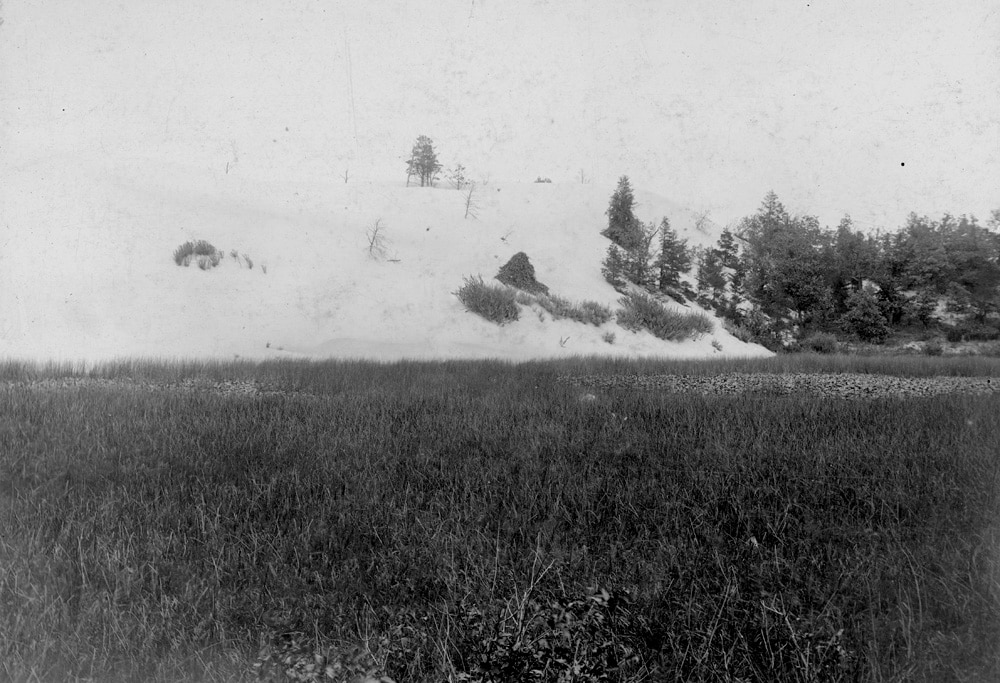
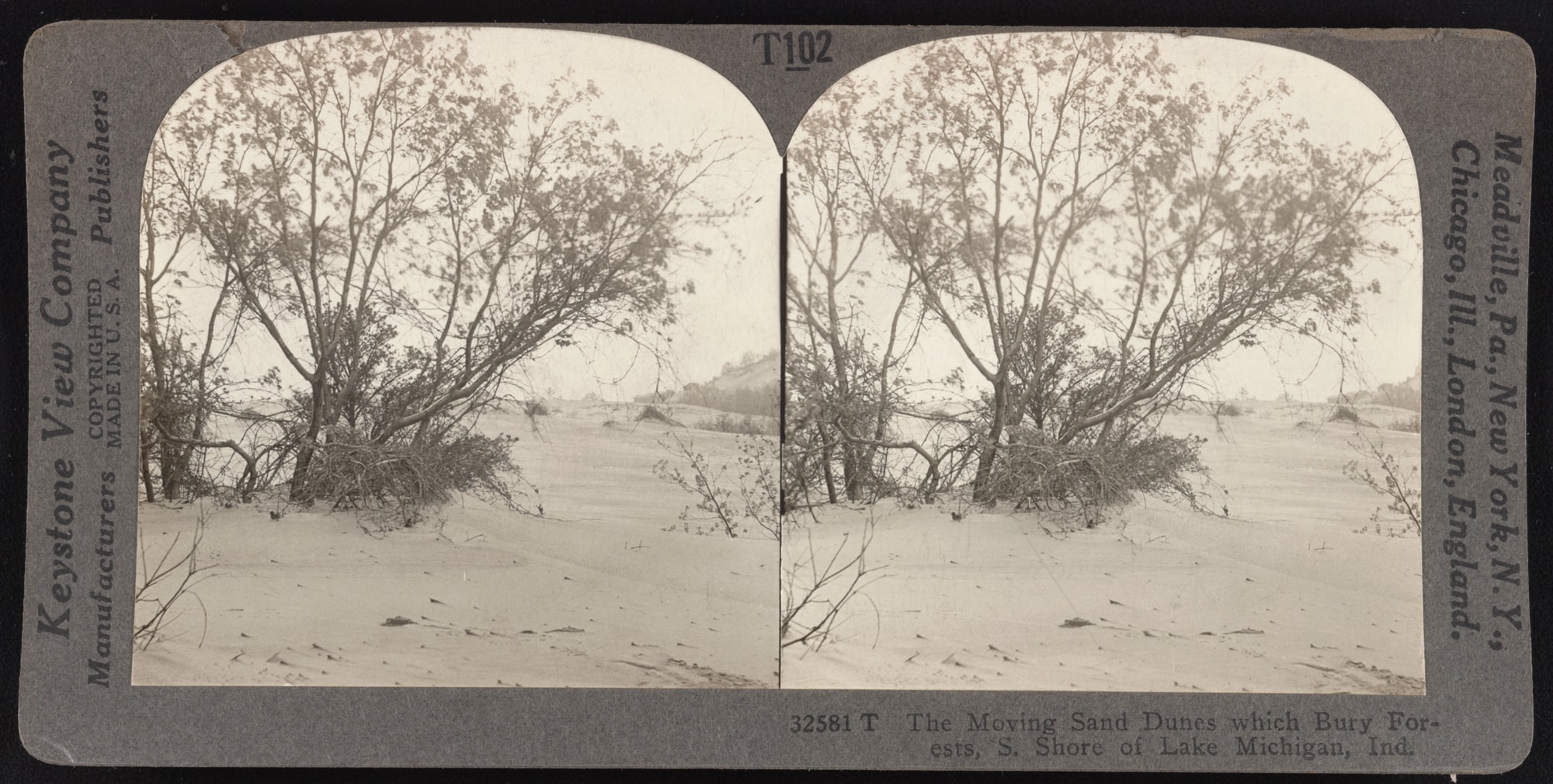
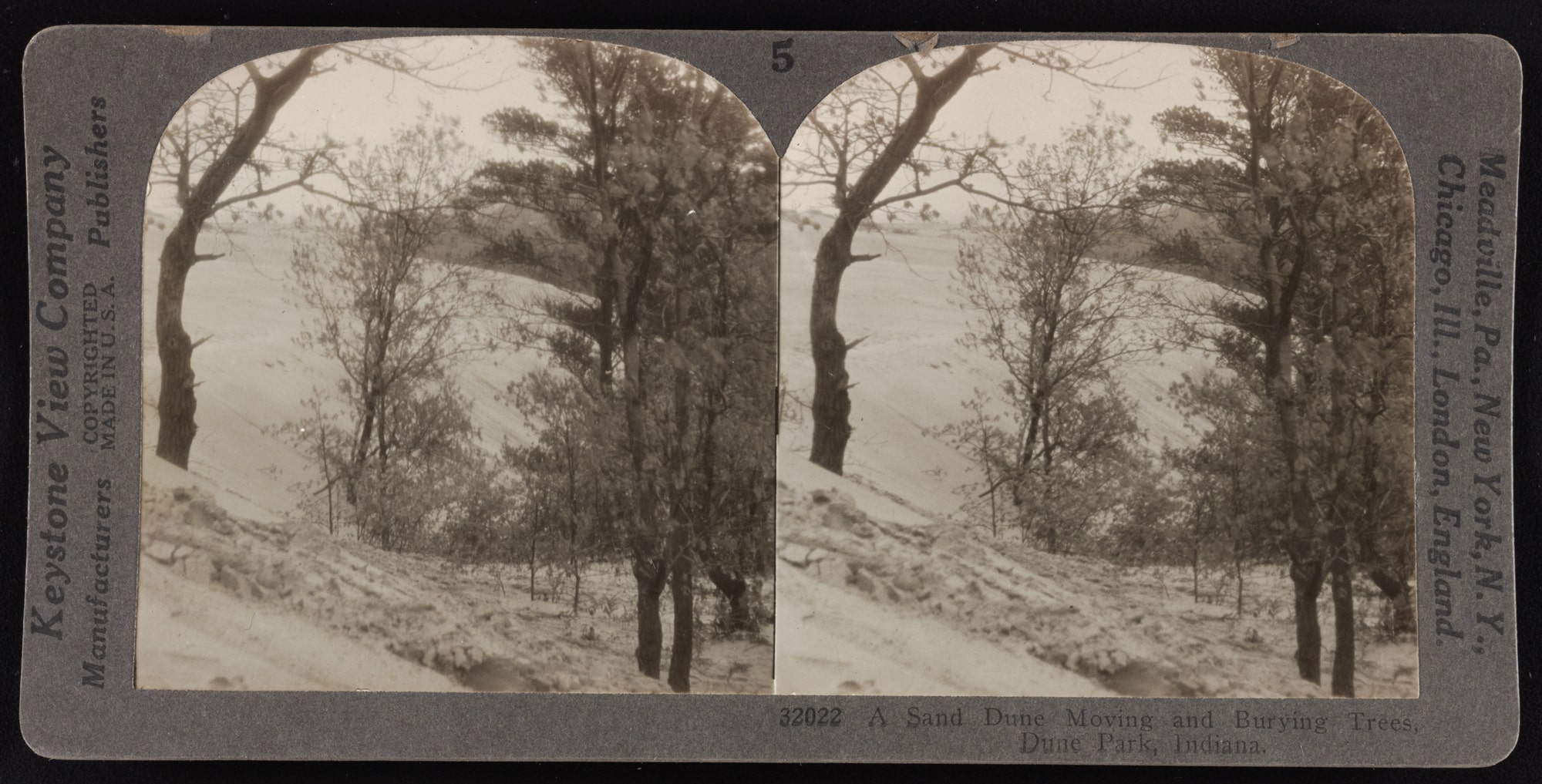
One result = sand coming up from underneath Lake Michigan, washing ashore to form dunes, constantly moving. Can “see” them heading inland, slowly swallowing trees.
No sign of birds midday. Maybe too bright? Walked down quiet road parallel to shore. More oak forest with low-lying shrubs. Lots of soapwort or bouncing Bet: pinkish flowers in bunches out of cone-like green buds. Classified as herb, native to Europe and southwest Asia, invasive here. Rub two leaves together: makes green, soapy foam. “Bouncing Bet” from up-down motion — like pink washerwomen cleaning clothes. An immigrant.
People follow game, which changes with climate; people follow climate. History as waves of invasives.
Uphill, in opening beneath big oaks, little blue flowers peeked out of green casing. Two bright blue petals form awning, beneath which two tiny yellow flowers — and beneath them, pale beard and white whiskers (stamens) with what looked like seeds at ends. Whole display only about an inch, smaller than your thumb. Asiatic dayflower. Latin = Commelina communis: community plant, named for the Commelina brothers. Two were renowned Dutch botanists (the two blue petals); one died young before making mark (pale third petal). Introduced to U.S. as groundcover, now spreading as creeper that takes over disturbed areas. Only blooms for one day (dayflower) but forms colonies (communities), rooting from stem. Invasive flower in invaded land.
Near here, first Europeans “discover” groupings of earth mounds. Inside, “arrowheads of obsidian, like glass, that speak of commerce with ancient Mexico …. ” Hopewell culture, circa 100 A.D. For 7,000 years before Hopewell, shore occupied by hunter-gatherers: taking small game, berries, seeds. Even earlier, as glaciers melted, unnamed hunters of giant mammoth, ancient bison. People follow game, which changes with climate; people follow climate.
“Natives” whom Europeans found = hunters, farmers of beans, squash, corn. Driven out by settlers (a kind of climate change?) who plowed under ancient mounds “as the space was needed for farming …. ” 1 Today, town gone, farms gone, mounds gone: all part of national park. History as waves of invasives.
8/16
7:30 – 8 a.m., sunny & windy
Wind strong enough to keep oaks and poplars shimmering. Used to more three-dimensional, rougher salt air near port city. This = placid, plain, potable. Lake air, midwestern.
Another tufted titmouse. Again eating small grub, yanking off bits of green flesh. Carnivore with blue feet, white underbelly, round staring eye, little gray hangman’s cap. A thug among chickadees.
Along broken oaks (tornado hit not long ago), flock of starlings. With spotted chests, looked like gawky, not-too-bright city cousins, never been outdoors much.
Warblers too fast to identify: flash of yellow/black, instant of chatter.
Glacier = bulldozer, bulldozing moraine, which then acts as dam or divide. North, the great lake; south, water drains into floodplain.
By driveway, spike of sky-blue flowers: five rounded petals with long protruding stamens. Polemonium reptans, Jacob’s Ladder. Jacob “lighted upon a certain place and tarried there all night …. ” Dreamt of angels going up and down ladder. “Surely the LORD is in this place, and I knew it not” (Genesis 28: 10-19). What to make of landscape named for and permeated by religion? A settlers’ taxonomy?
Jacob’s Ladder = phlox. One guide says only grows in New York /Vermont — and there, only in mountains. Other guide says midwestern Jacob’s Ladder prefers light shade or dappled sun; “flowering stalks develop from the upper axils of the compound leaves.” (That’s what I meant by spike.) Prefers “bases of bluffs, shaded banks of streams.” Where it falls asleep and dreams its ladder.
6 p.m.
Walking beach, spotted four big birds flying west above dunes. Great blue herons? Soundless.
Farther down beach, sand gave way to thick slabs of gray clay, slippery. Whole veins of it where waves took away sand covering. Geologists say last glacier pushed in clay (and gravel and dirt), creating Valparaiso Moraine: kind of ridge here at southern edge of lake. Glacier = bulldozer, bulldozing moraine, which then acts as dam or divide. North, the great lake; south, water drains into Kankakee floodplain. M. and I stand at ancient, slippery edge.
Moraine borderland contains “over 1,400 different vascular plants species … spread out over 15,000 acres of dunes, marshes, woodlands, river, and bog.”
Big pink clusters = Joe Pye weed. Fields of it; some kind of midwestern emblem. Named for Indian healer from New England (“Jopi”) who supposedly used as cure-all. Grows where moist; brings bees, butterflies. As common here as sun.
Plant I thought baby’s breath (brilliant name for little white flowers used in wedding bouquets) more likely flowering spurge (not so brilliant?). Leggy green tangle topped by tiny flowers. Thrives in sand and heat and lack of fresh water, hence one of first species to “colonize” dune.
To colonize, in this case = to co-develop. Dunes rule out plants that need soil/water, but spurge “adapted.” Little green tangle holds dunes together till other plants get root-hold. All evolution = co-evolution? If so, is it evolution or communism?
Spurge has odd sexual apparatus. Looks like pretty (tiny) five-petalled white flower with yellow-green center. But white “petals” (if I follow) actually tissues: appendages of nectar-producing glands. Real flower — the sexual arena — in yellow-green center. Both male and female parts clustered there.
“Spurge” = late Middle English borrowed from Old French espurge, to cleanse. (Baby’s breath = purgative?) Also known as “Devil’s Milk” because of semi-poisonous sap. (Scare headline: DEVIL’S MILK COLONIZES SAND MOUNTAIN)
Inland, among fallen oak leaves: smooth false foxglove. Inch-long yellow flower, cone-shaped, protruding off high green stem. Which “always” grows near oaks. (Always?) Technical term = hemiparasitic; can live independent but depends on food from host, oaks.
(Need to know more. Can live alone, but chooses to marry?)

8/17
a.m., overcast
1945: end of World War II, eve of Cold War. U.S. Army proposed NIKE missile bases for “line-of-sight” anti-aircraft defense. Radar to track enemy bombers, then NIKEs to blow up commies (invasive species?) before they reach (seed?) targets.
1957: base opened in dunes to protect Gary, Indiana steel industry.
1974: closed after Soviet Union switched from bombers to intercontinental ballistic missiles.
1979: main building — one-story cinder block — became headquarters for Indiana Dunes National Park.
Inside, exhibit highlighting “father of American biology,” Professor Henry Chandler Cowles. Cowles credited with “discovering” plant succession here in dunes. Or, rather, credited with proposing theory.
Cowles born eastern seaboard 1869 to farming family. At Oberlin College, Ohio, fell in love with midwestern landscape. Graduate studies in geology, University of Chicago. For research, took interurban rail line down lakeshore from Chicago, through Gary, out here to dunes.
But doesn’t key principle of progress — succession leading to climax — still prevail? See social standing; see capitalism.
Botany at that time (per Cowles) “consisted merely in collecting plants and discovering their names.” He followed, instead, Danish scientist who saw patterns in plant growth. Cowles’s 1898 Ph.D. thesis “The ecological relations of the vegetation of the sand dunes of Lake Michigan.” “Emptiness” of dune landscape helped highlight. So, flowering spurge, as colonizer, roots in and “stabilizes” sand. When spurge dies, leaves organic matter in sand = start of soil. From spurge, then, to foxglove to low brush to cottonwood and pines, finally white oak “climax forest.”
Per Cowles, climax forest = vegetation’s “ultimate common destiny.” “Each species [spurge, for starts] affects the soil in a way disadvantageous to itself [adds loam] and thus paves the way for different species to replace it [foxglove to oak].” Clean, neat, inevitable pattern. “Primitive” lays groundwork (in this case: actual ground) for “higher” types. Colonizing, that is, leads to civilization. White oak as ultimate/king. A theory of empire?
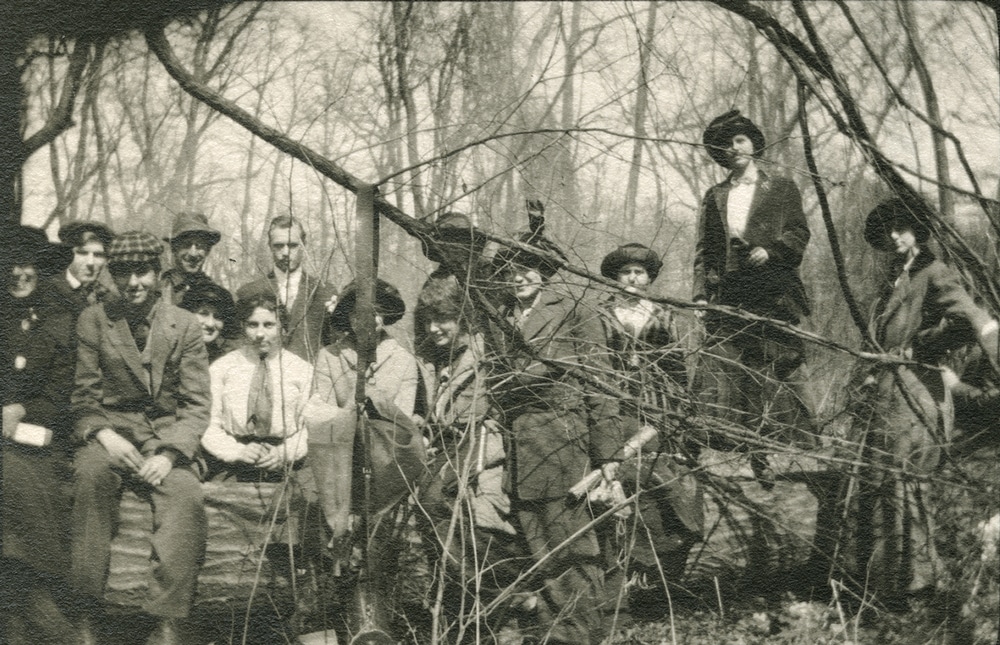
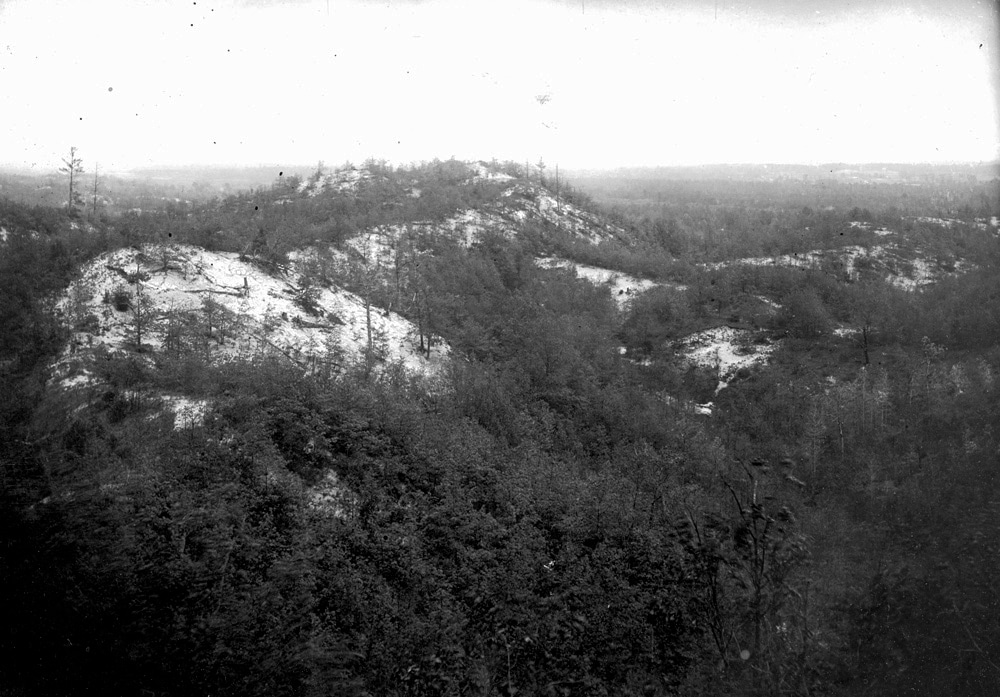
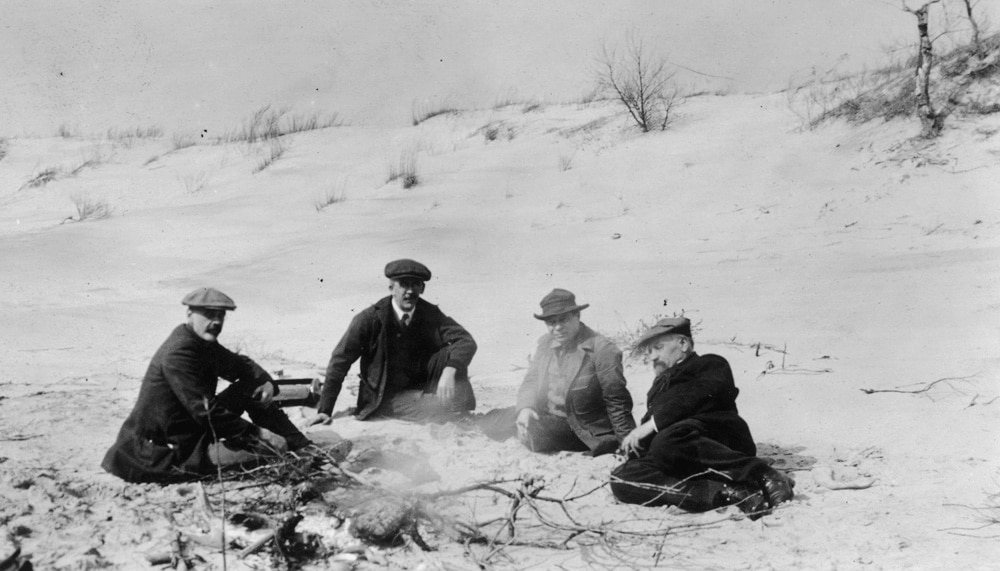
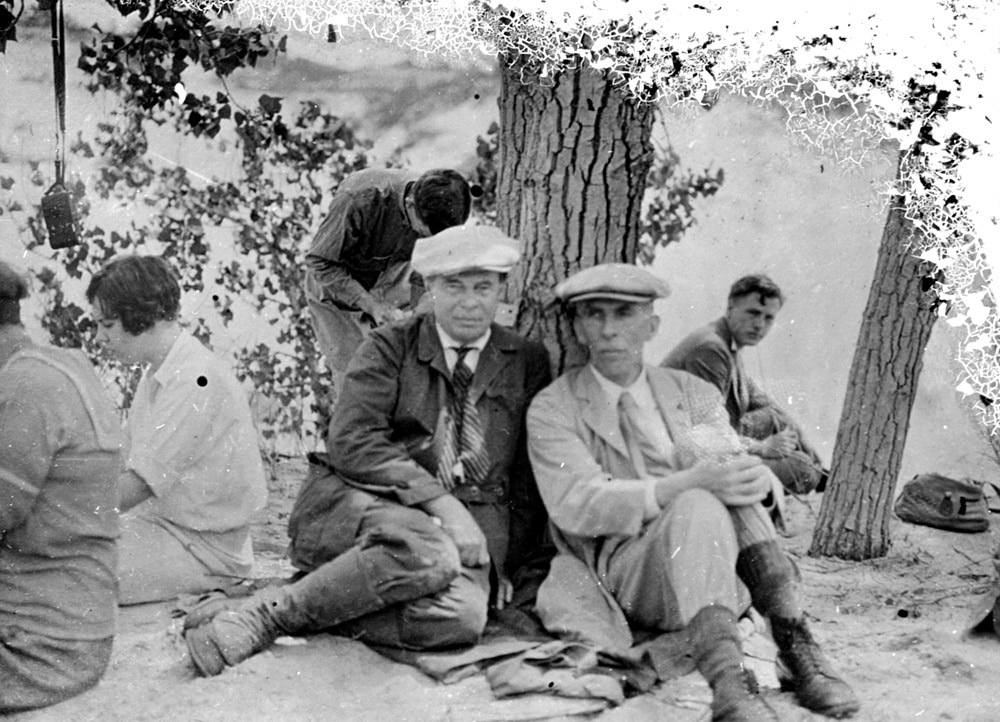
Cowles and students documented research with black-and-white glass slides. “Dunes Advancing” = what look like big snow drifts overtaking dark forest. Others include closeups of plants in sand. One of Cowles himself in suit and gray burglar’s cap, standing beside cottonwood tree broken by advancing sand. A picture of early 20th century progress.
Current science has backed off Cowles’s theory: sequences not that fixed, climax forest not that stable. “Empirical evidence invalidates the chronosequence-based sequences inferred in these classic studies.” 2 Dunes, for example, support more complex plant life than spurge. (Parallel = “primitive” Hopewell culture more complex than presumed?) But doesn’t key principle of progress — succession leading to climax — still prevail? “Lower” species subordinated to and working towards “higher?” See social standing; see capitalism; see how we see spurge.




If you would like to comment on this article, or anything else on Places Journal, visit our Facebook page or send us a message on Twitter.