

When I was seventeen, I left my tribal nation, the Leech Lake Reservation, and Bemidji (“Where the Current Flows Sideways”), Minnesota — the town near which (but not in which) I was raised — and, accompanied by my mother, drove east to attend college. I vowed never to come back. I thought of Bemidji as disconnected from the world, an exception to or cutout from the older, more potent, more real world to which I was headed. We drove through Wisconsin, Illinois, Ohio, and Pennsylvania before arriving in New Jersey. Along the way — while we took turns driving, and my mother smoked cigarette after cigarette — we passed through cities large and small. Duluth, Eau Claire, Madison, Baraboo, Chicago, LaPorte, Maumee, Youngstown, Pittsburg, Harrisburg, Trenton: towns named after settlers or the places they’d left, and towns named after Indians or in Native languages where there were no Indians at all.
Memory’s map has me leaving Minnesota only once. It’s complicated to want to return to a place I didn’t like to begin with.
Then we were there: Princeton; the town itself small alongside the gothic-inspired campus buildings, the majority of which were older than any structure in the state of Minnesota or on the reservation; small on the bluestone-paved paths; small, finally, inside the vast smugness and certainty that Princeton is the center of the world — that it is the marrow, if not the blood, of the Republic. It didn’t take long before I missed Leech Lake, and the trees and lakes and river that define it as much as the people do. I even missed Bemidji. It wasn’t much longer until I vowed to come home. And while memory’s map has me leaving Minnesota only once, permanently, I can’t help feeling that I’ve been returning, over and over, ever since. It’s complicated, though, to want to return to a place I didn’t like to begin with.

Every time I come back to Bemidji — and last spring was no exception — I’m struck by how smug it is. I can see why Princeton feels that way about itself, but am at a loss to see how a place like this does: the sidewalks (where there are any) are cracked and uneven. The buildings, old and new, are temporary-feeling, provisional like a half-made bed. They don’t rise very high (the tallest is Tamarack Hall, a dorm on the campus of Bemidji State University, which at twelve stories towers over the town), and most of them, but especially the houses, feel more like they’re sinking into the ground than rising from it. I didn’t grow up in town, though. I grew up on the western edge of the Leech Lake Reservation. The nearest home was the beaver lodge in the lake. Bemidji is eight miles to the west. There is a town the same distance to the east, Cass Lake, which is on the reservation. But Bemidji drew us toward itself, because, as a border town, it had more going on than Cass Lake did. More stores, more schools, more banks, and the Paul Bunyan Mall. My grandmother Luella brought me there in 1977, when it opened. We sat in her Cadillac while she reapplied her makeup. Even then, she was so beautiful it made your eyes hurt. Very brown and lithe and elegant with a perm that sprang up in frozen surprise, above her ears. “Well,” she said as she thickened her mascara in the rearview mirror, “we’re in the big time now.” I, small and pale and nervous, agreed with her. But because it was a border town, I also felt that the place didn’t much care for me or my grandmother or Indians in general.
Bemidji is physically surrounded: Leech Lake Reservation to the east, White Earth Reservation to the southwest, Red Lake Reservation to the north.
Bemidji — which advertises itself as the “first city on the Mississippi” (not because it was the first built on the river — that would be Cahokia, a prehistoric city at the confluence of the Mississippi and Missouri rivers that, around 1100 BCE, covered six square miles and housed between 15,000 and 20,000 Native people — but because it is the first city on the river as counted in miles from the headwaters) — is a border town. Triply so. Bemidji is physically surrounded: Leech Lake Reservation to the east, White Earth Reservation to the southwest, and Red Lake Reservation to the north. There are seven Ojibwe reservations in Minnesota, five in Wisconsin, one in North Dakota, and many hundreds to the north, in Canada. The combined Indian population of the three reservations around Bemidji is about 40 thousand people. Much larger than that of Bemidji, at around ten thousand people.
When I was kid, I saw only one Indian in a public-facing job, at Lueken’s Village Foods. There might have been one or two others — a counselor at the high school, a classmate who worked in a bakery, a nurse — but that’s about it. There’s a particular mentality, the dimensions of which I have long ago given up charting — because the mentality goes far beyond mere racism or the narcissism of minor differences — expressed in a town that won’t hire, and guards itself against, the Indians who could quite easily overwhelm that town, if not its mentality. The result? Layers, of a kind. A deep, hidden register carrying the unique flavor of shame. But at the waterfront, the town has seen fit to memorialize all this itself.
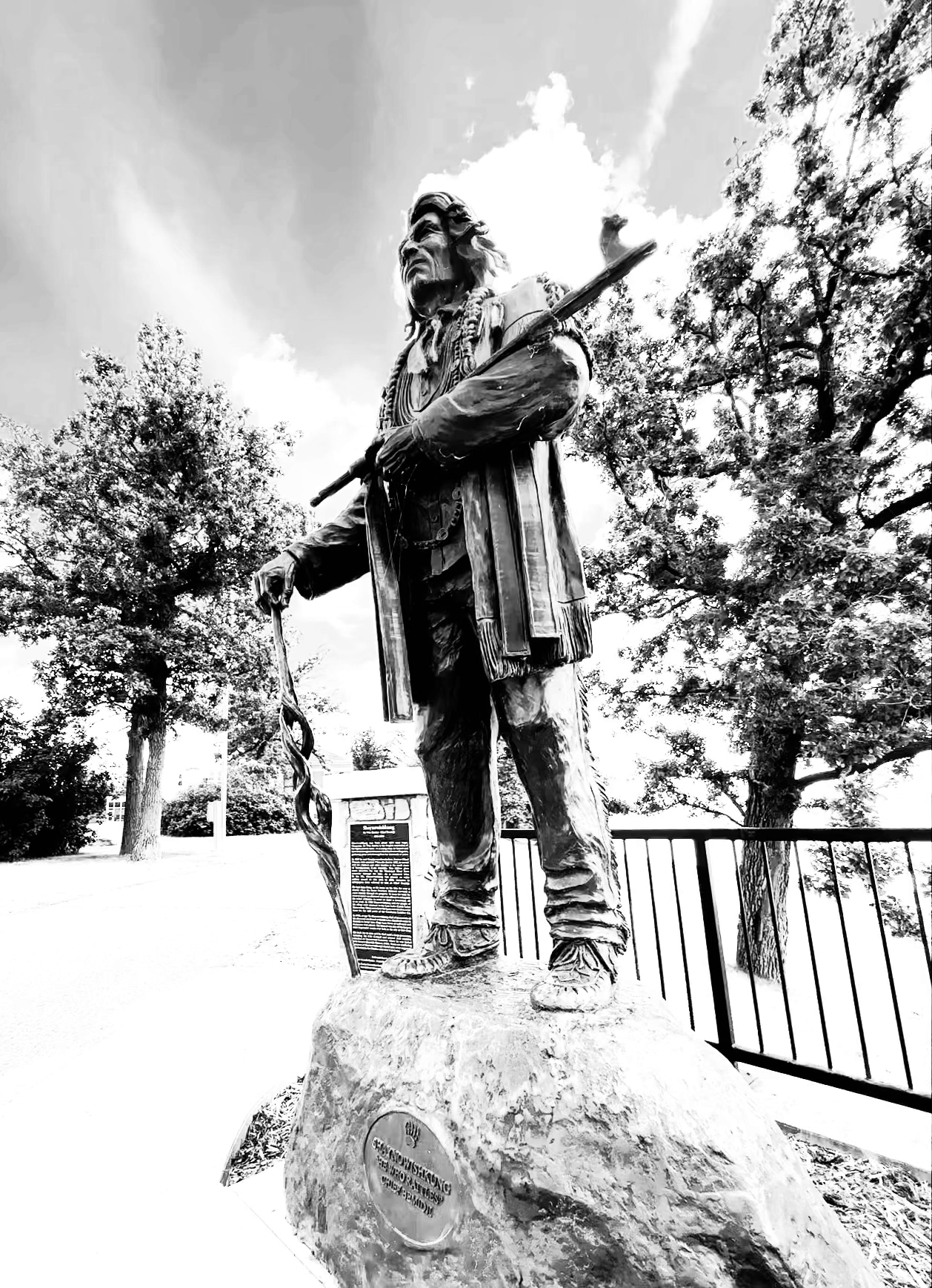
With his back to the lake is a statue of Chief Shaynowishkung (He Who Rattles). The bronze statue replaced a crude, cartoonish cement statue of the same man. To his right is the old Carnegie library. To the right of that used to be (but is no longer) the bandshell put up by the Izaak Walton League (a conservation organization), and to the right of that is an old sewage main surrounded by a railing where, in the dusk of some evening, I drank Black Label beer with my friend Shylan and thought — at age 20 — that I had become a very big man.
Theft is the heart of our town, if not our nation, and guilt, that thick liquid, is the blood. The heart beats, and the blood flows.
Shaynowishkung was born in 1834 near Inger, not far from my family’s ancestral village of Bena, pop. 143, in the center of what would become the Leech Lake Reservation, established by the Treaty of Washington in 1855. (It was initially three smaller reservations, but these were consolidated, then reduced again, and again, by treaty and congressional act, into the shape the reservation has now.) In 1882, Shaynowishkung moved with his family to the spit of land between Lake Bemidji and Lake Irving and set up a village there, within the confines of the consolidated version of the Leech Lake Reservation. There were wild rice fields along the shores at Irving, and the Mississippi, all 300 yards of it as it runs between Lake Irving and Lake Bemidji, served as a choke point for sturgeon, walleye, and whitefish. About a decade later, the Great Northern Railroad surveyed a line right through his village. Despite every attempt to stay, Shaynowishkung and his people were moved to Cass Lake. The reservation was reduced, a mill was constructed, and Bemidji was incorporated in 1896. When the old man died in 1904, he lay in state in the courthouse built on his land, visited by the mayor who lived on his land, honored by city council members who lived on his land. Flags were flown at half-mast on flagpoles anchored in his soil. And maybe that’s the root of both the smugness and disdain I feel every time I come here: the townspeople know — or if they don’t know, they feel — that they are here because, not so long ago, their families stole the land and put us in the ground to do so. Theft is the heart of our town, if not our nation, and guilt, that thick liquid, is the blood. The heart beats, and the blood flows.
It’s easy not to think of Bemidji as a border town. Given our national obsession with immigration, we have gotten in the habit of understanding only places like El Paso and Brownsville and Calexico as border towns, because they abut an international border — even though we don’t typically think of Bellingham or International Falls or Buffalo the same way, and they also border a foreign country. People think that, since Bemidji isn’t close to Mexico and not that close to Canada, it cannot be a border town at all. But it is. Bemidji sits on the edge of not one but three sovereign nations, with their different but related histories.
For that matter, at one point, every city and town in the United States stood at a border. Boston, New York, Detroit, Des Moines, Miami, Kansas City, Albuquerque. Even Los Angeles, San Francisco, and Seattle, though their borders were to the east rather than the west. Bemidji —before it was Bemidji, when it was still Shaynowishkung’s village — was a border town between the Ojibwe and Dakota, who were in the region before we were. Every place was, at one time or another, or (if we do away with time altogether) is still a border town. It depends on who you are and where you’re standing. But, for a long time, this feeling was lost to me about all these places, and about Bemidji, specifically. Until I came home with new eyes, and to be perfectly honest, with new love. There’s nothing like new love to make you think, to see, differently.
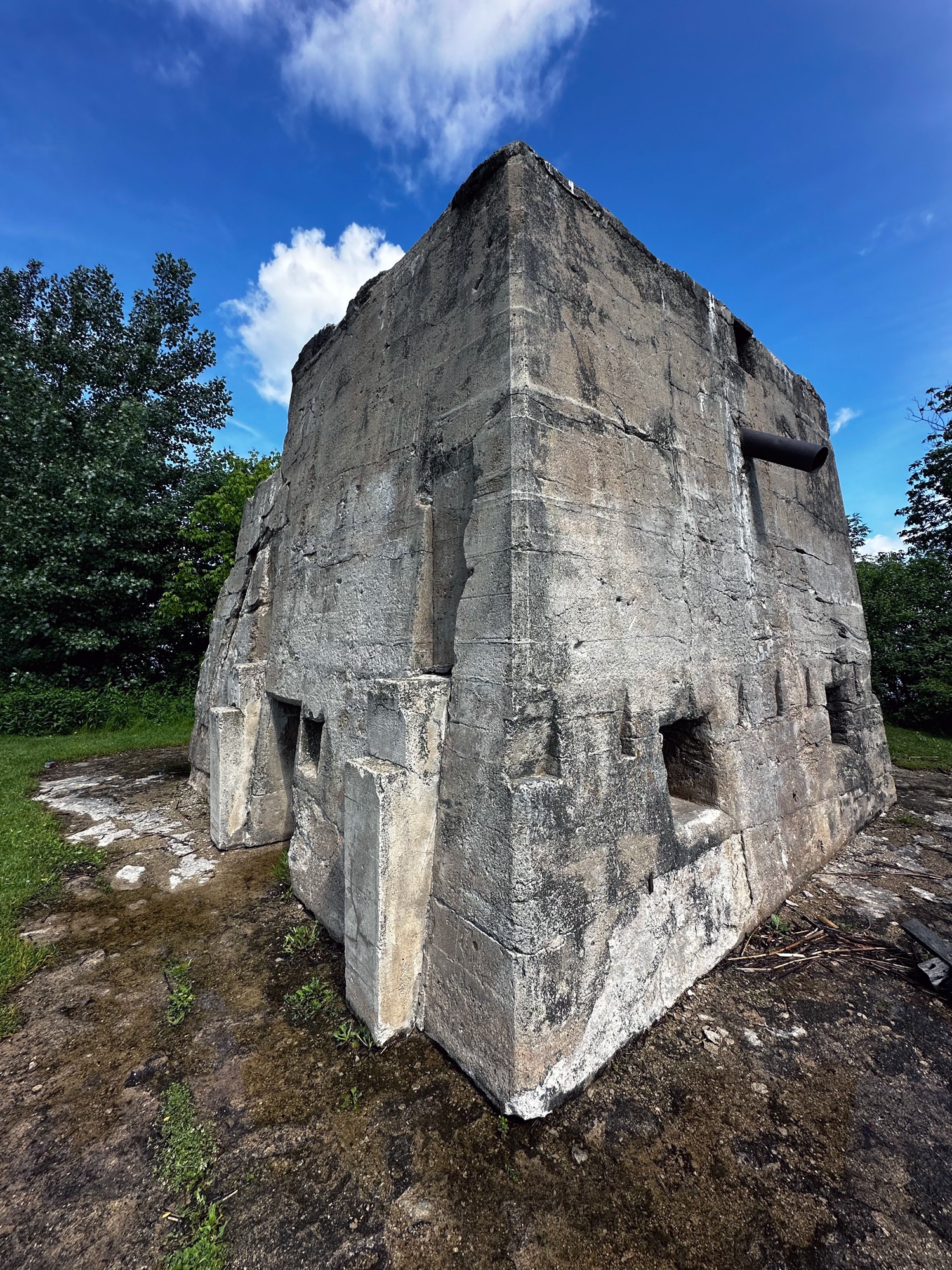
BZ, for whom Bemidji was new, and I, for whom it was not, parked at the Doubletree Hotel, which didn’t exist when I was a kid. The Doubletree, ironically, is next door to the ruins of Crookston Lumber Mill Number 1, which in many ways was the reason Bemidji came to exist, and whose mission it was not to double trees but to process what loggers had cut down. The mill at one time employed thousands of men and was promoted as the largest in the nation, producing millions of board feet per year. Then it burned. More than once. Mills had a tendency to do that, filled as they were with slab and sawdust. All that’s left are ruins, a few cement casements that housed the saw engines.
Before the fires, shortly after the turn of the last century, the mill grew so big that employees split off from the Crookston Mill to start their own.
A. Gould and J. M. Richards, who recently severed their connection with the Crookston Lumber company and are now members of the new Bemidji Lumber company, last Saturday evening gave a banquet to the employees of the Crookston Lumber company, as a sort of farewell to their former co-laborers. The banquet was given at the Hotel Markham, and consisted of a splendid spread of six courses, served in an elaborate manner. When the dishes had been disposed of, speech-making and storytelling was in order and there was a general social good time and splendid good fellowship. 1
Other mills followed. In Akeley, Grand Rapids, and Cass Lake. You can’t see it now — when all we have is second and third growth — but the whole region is good for only two things: pine trees, and water. Or rather three things, if we count racial hatred.
In the early 1900s, down the street from the Markham, there was a Chinese laundry. The laundry is gone, although Chinese folk (not many, but some) remain. In place of the laundry are a pawnshop and a hotdog stand, both repackaging the junk of the past, although in different ways. They share a wall if nothing else. The Markham is gone, too: razed to make way for downtown “redevelopment” when I was in high school. By that time, in the late 1980s, the hotel was seedy. On the ground floor was the Blue Ox Lounge, where my best friend’s dad played guitar and sang on the weekends. That man is gone, too. And so, by any measure, is the friendship. BZ and I stopped at these ruins too. Nothing more than small cement pyramids in which you can see the slots where timber framing had once been set. I stood on the ruins. Then we walked through the Doubletree from lake- to street-side, in an effort to fool the front desk into thinking we had a reason to park there, and along Lake Bemidji toward downtown.
My mother was just beginning her law practice — the first Native law office in the state — and my father was a stay-at-home dad. Neither was terribly happy.
We passed the old Mr. Steak, which later became a Bonanza and now is a fancy restaurant called Sparkling Waters. Back when it wasn’t fancy, and steaks cost five dollars, our family would very occasionally eat there (my parents didn’t make a lot of money and we only ate out two or three times a year). My mother was just beginning her law practice — the first Native law office in the state — and my father was a stay-at-home dad. Neither was terribly happy. The last time we went to Mr. Steak, my older brother and I got squirrelly, so our father ordered us to play outside in front of the windows fronting Paul Bunyan Drive and the lake. It was on the lawn there, as we wrestled, that I tried to pick up my brother from behind. I failed at that. My attempted suplex throw became, instead, a Heimlich Maneuver. In full view of all the White people trying to look past us to the lake, my brother’s meal came up onto the grass. He stared forlornly at what looked like dogfood, then looked up at the sky, God, the Great Spirit, whatever, and lamented, “Now I’m hungry again!”
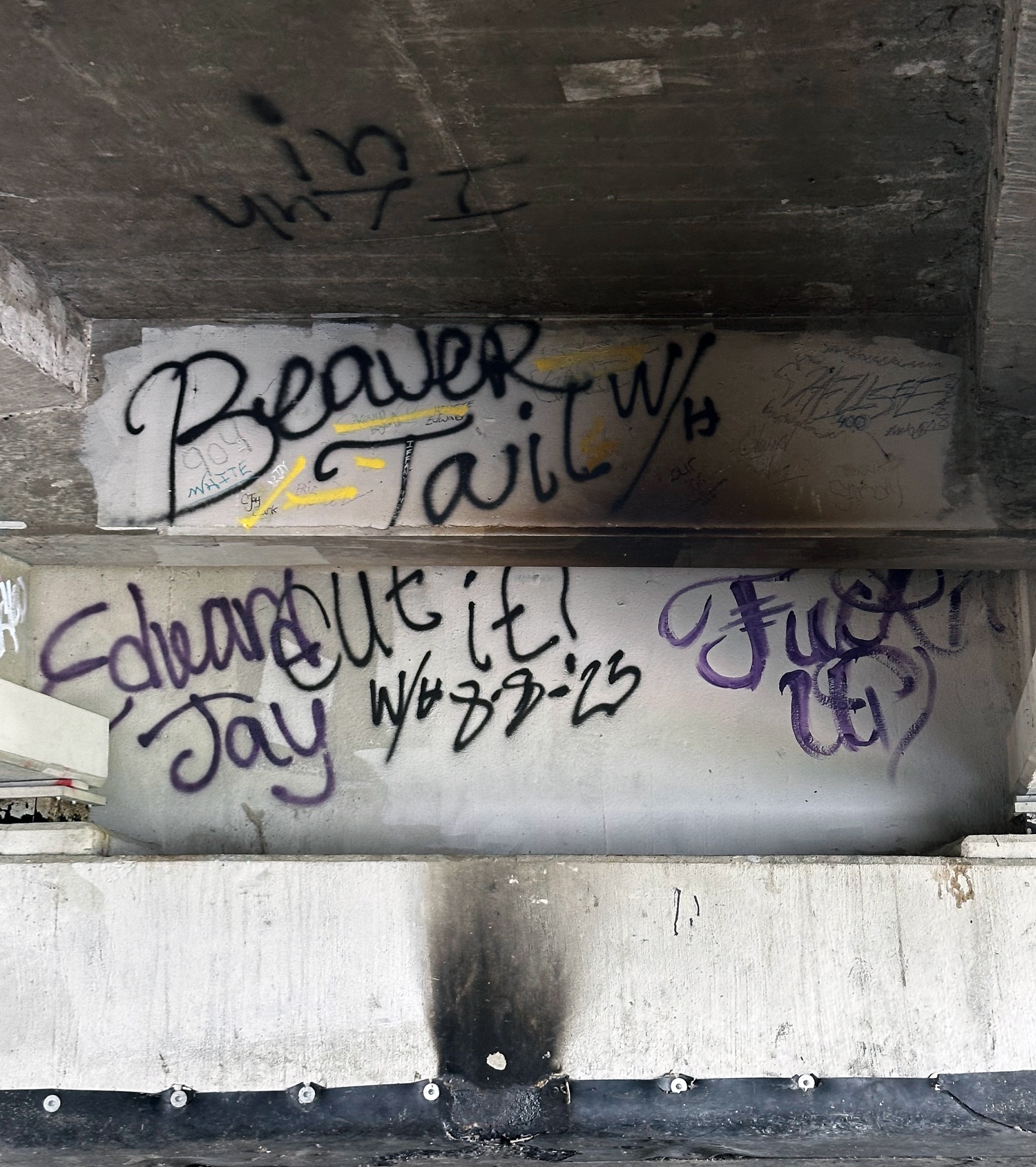
In recent years, when they redeveloped Paul Bunyan Drive, they added a bike path along the shore. Rather than turning inward, as it had, the town managed to open up to its best parts. People, I think mostly my people, judging from the art, tag the paved bed of the path.
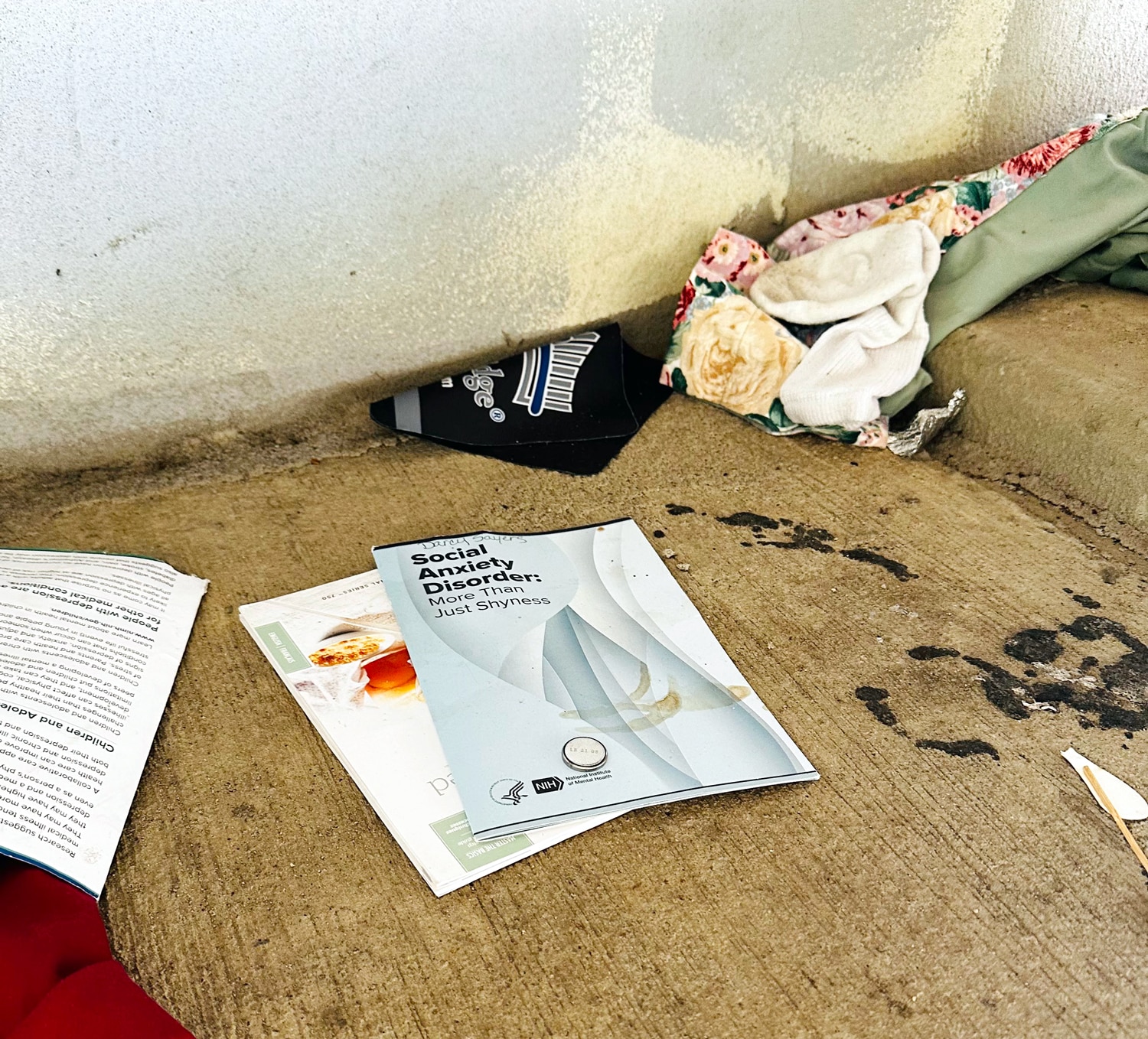
BZ and I cross the Mississippi on the car-bridge part of Paul Bunyan Drive, and hook to the right under the bridge, toward the older, derelict bridge and the railroad bridge. People often live here, at least during the warmer months (this is northern Minnesota). Mostly Ojibwe people, who are unhoused or quasi-unhoused. They tag there, too. As we passed under the bridge, I saw where someone had been camped out — blankets, plastic totes, and a pamphlet from, I think, the Indian Health Service, offering help regarding Social Anxiety Disorder.
Nothing and nowhere is empty, and no one has lived long in place without the arrival of some kind of colonizer.
To our right, a stone’s throw from the river, is a store that keeps changing, and changing ownership. When I was growing up, it was a Pamida (like an even worse Kmart). In 1988, the store expanded closer to the water, and 22 graves — Dakota graves, as it turned out — were discovered, although it’s likely there were many more. My tribe had for centuries been migrating inland from the eastern seaboard, following a prophecy to travel to where “food grows on water.” We did as we were told, and made it to a region rich in wild rice, which grows (or grew) abundantly along lake and river shores. Nothing and nowhere is empty. The Dakota had been a woodland tribe living in what is now Wisconsin and Minnesota until we began pushing them westward. Nothing and nowhere is empty, and no one has lived long in place without the arrival of some kind of colonizer. We were that to Dakota homelands and peoples. The Dakota had been our traditional enemies, and we were probably the ones who put them in the ground under what would become Pamida, late in the 18th century or early in the 19th. Since, in 1988, it was private land, and the federal Native American Graves and Repatriation Act had yet to be passed, it was up the store owners to figure out what to do. After an assessment, they put the bones from the 22 graves back and built out the store on top of them. So it’s always with some satisfaction that I watch the discount chains that have succeeded Pamida going out of business in their turn. The ground is unsettled, and so it fits that commerce is equally unsettled.
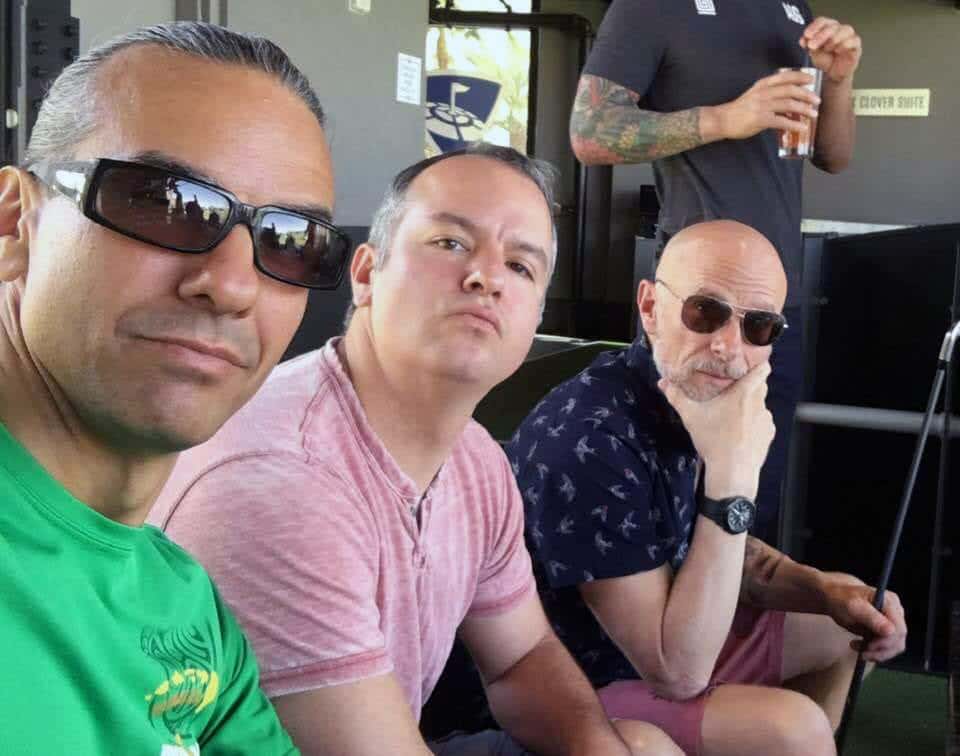
We pass over the bones and under the bridge, and we see some of my kin on the defunct railroad bridge that crosses the river closer to Lake Irving. There are three men and one woman. I later find out that the woman, maybe 25, maybe not, is the one with the reading material under the bridge. They ask us for smokes, which we don’t have, so we walk to a tobacco store (where the Markham Hotel once stood), buy some, and backtrack. These four hang out on the bridge often. At least, I see them there often. My younger brother is an ER doc at the only hospital in town. He tells me that one of the “bridge guys” (from Red Lake Reservation) regularly comes into the ER. When he’s sober, he asks, “hey, ain’t you Anton’s brother?” (Our older brother Anton is something of a celebrity around town. Famous for his books, his work in preserving the Ojibwe language, and his very Indian good looks). When he’s not sober, he yells, “Fuck you, White man!” I kind of like this, about both the man and my brother.
Across from where the Pamida used to be stand the statues of Paul Bunyan and Babe the Blue Ox.
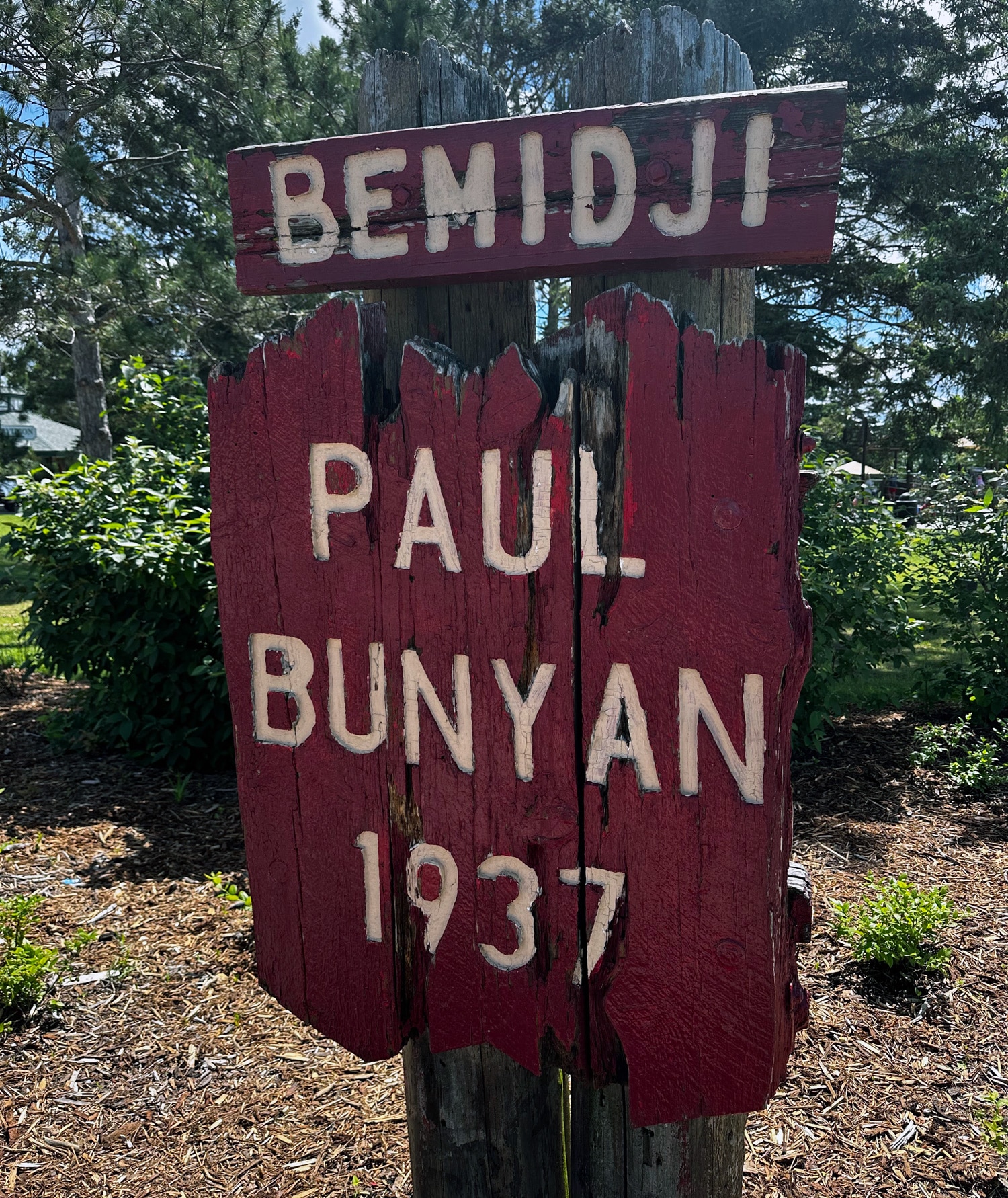
The statues were unveiled in 1937, at a winter carnival meant to bolster local tourism — the woods having been logged out. Before Paul and Babe were erected, what became the Bemidji Waterfront Park was the site of the armory, which had in turn been built after town fathers had razed a huge prehistoric burial mound. Other mounds were found later, at Diamond Point Park near Bemidji State University. None of it really mattered, at least not to the town. It didn’t matter to Bemidji in 1937 that these were Native people from whom the town had taken the land. Or that, despite its best efforts, there were Indians standing there in 2024, alive and breathing.
It didn’t matter to Bemidji that, despite its best efforts, there were Indians standing there in 2024, alive and breathing.
When I was young, it felt that the city — all ten thousand souls — was so anxious about our existence that it tried to erase us. I, from an early age, bought what they were selling: that we were inconsequential, poor, worthless, worthless because we were poor; that somehow our poverty was our own fault. It took a long time to hear the origin rather than the echo: that the town’s anxiety had more to do with our strength, our presence, our cultural and material wealth. To do with consequence rather than inconsequence.

There was that one employee at Lueken’s. My crush who worked in the bakery. The nurse. One school counselor. And, now that I think about it, one cashier at Northern National Bank. At the beginning of my freshman year, there were a lot of Indians in my class from Leech Lake, White Earth, and Red Lake: Graves, Whitefeather, Sayers, Goggle Eye, Wakanaabo, Spears, Beaulieu, Mitchell, Michaud. Big families. Lots of kids. But, one by one, many of them disappeared. Transferred to different schools. Dropped out. Moved. I didn’t know. I did know that my school seemed only too glad. In seventh grade, my science teacher was talking about Israel for some reason. “Hey, David, Israel is having problems with A-rabs.” I shrugged. I couldn’t figure out why he addressed this to me. “A-rabs. Right, David? Isn’t that what you Jewboys call them?”
Later that year, there was an eclipse, the beginning of which I missed because of an excruciating headache triggered by my skull fracture, which had been caused a few years earlier by my lunch lady, who was late for work and ran a red light. When I eventually got to school on the eclipse day, the same science teacher took me outside. While I tried to see the sun through the pinhole viewer I had made, he whispered a string of bigoted things I can’t quite remember now, likely because my head was pounding so hard. He needn’t have worried: there were only 1.5 Jewish families in town: the president of Bemidji State University (that was the 1) and our family — half Jewish from my father’s side and Native from my mother’s. We were the .5.
It would be easy to laugh, I suppose. If it wasn’t so hard to love this town. It practically begs for my affection. But it’s so awful in so many ways, so cruel.
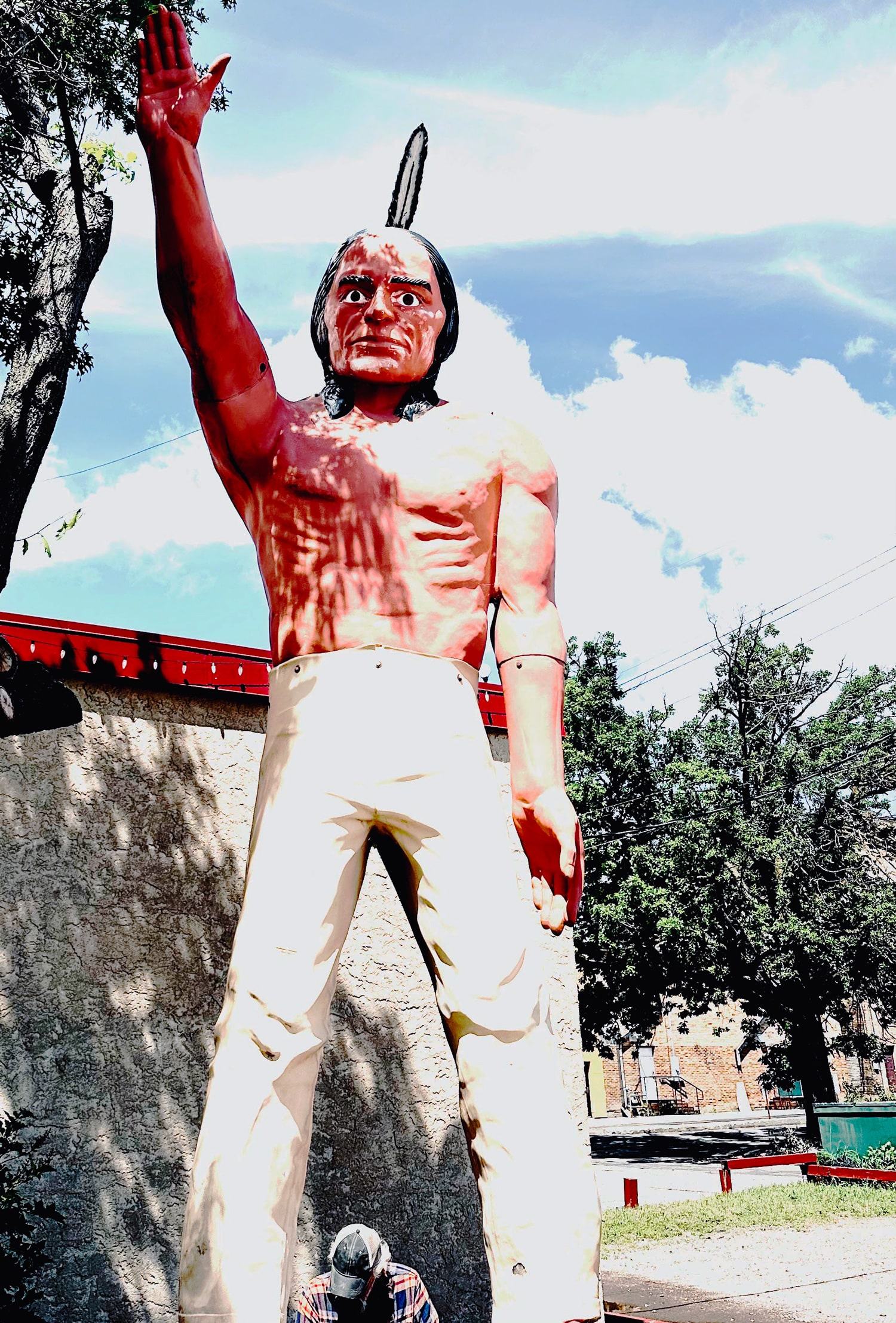
Later, in high school, my band teacher, who was likely drunk at the time, told the class (in which I wasn’t the only Indian) that all Indians were drunks and on welfare and should go back to Canada where we came from. I raised my hand. “Canada? We’re all from Canada?” I asked. I got a B for the semester. Marked down for nothing, as far as I could tell. That, anyway, was the general disposition towards us. Minnesota — as imagined by itself, and worshipped in A Prairie Home Companion and other parts of popular discourse — is nice. Lutheran nice. The Minnesota of quirky Scandinavians and hotdish and the State Fair. Minnesota Nice. But there’s that smugness. The certainty that they are somehow better, kinder, more into God, more liberal, more whatever. I think the only Indians the city was comfortable with were relics. Or silent. Like the iron Indian outside Morell’s Chippewa Trading Post. (“Chippewa” is an outdated corruption of Ojibwe.) There he stands. Facing east with his hand raised. As if to halt Paul Bunyan and Babe, who stand just across the street, facing west.
It would be easy to laugh, I suppose. If it wasn’t so hard to love this town. And it is, for me, hard to love. It practically begs for my affection. But it’s so awful in so many ways, so cruel. We head north and west, the way that Paul Bunyan seemed to want to go but couldn’t. Past Kenny’s Amoco, which hasn’t been run by Kenny Merschman for a long time, and hasn’t been an Amoco either. It’s now a Clarks, run by Kenny’s son Alan and grandson Scott. In the early 2000s, my older brother, along with a group called Shared Visions, started a community project hoping to get 20 businesses to change their signage to bilingual English/Ojibwe. In the first month and a half, over 60 businesses signed on. You can order coffee in Ojibwe at the Cabin Coffeehouse. The hospital where my younger brother works has signs in Ojibwe. So does Kenny’s. A sign to the right of the front door reads “Welcome” and “Boozhoo.” I still take my cars there. We pass Kenny’s. Just past the old Izaak Walton League bandshell, we pass the little cement-and-stone structure that houses the entrance to the sewer system. Where, many years ago I had my second beer and fourth or fifth kiss with my friend Shylan. And then we’re past downtown and into the neighborhood between the old town center and the empty lot where my high school once stood.
The houses are small. Most of them nothing to be smug about. Ernest Hemingway’s fourth wife (and eventually his widow) Mary Welsh grew up in one of them, at the corner of Bemidji Avenue and 12th Street.
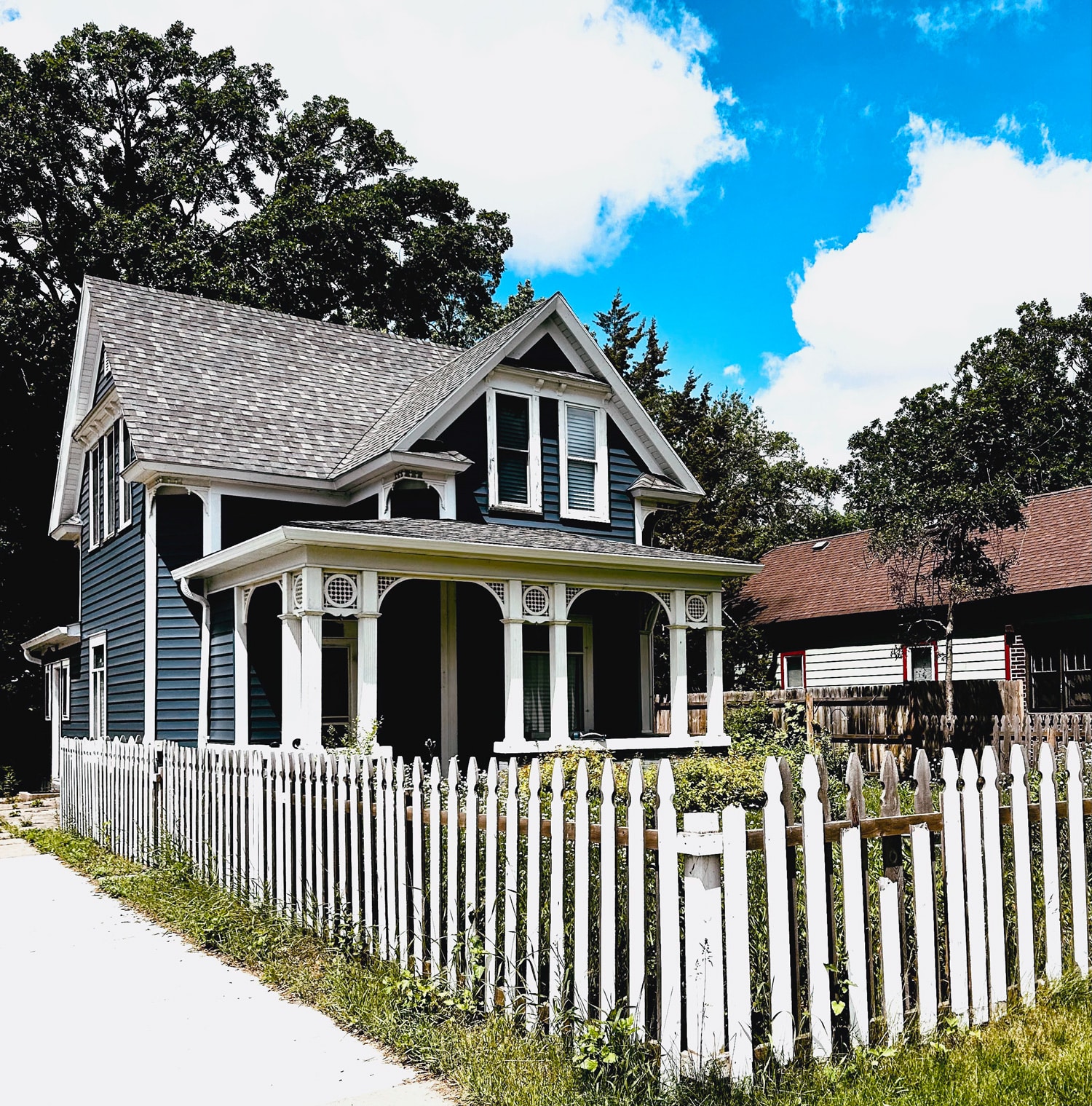
After a while, I stopped taking pictures. So did BZ. We were tired. And capping on the town wasn’t as fun as it had been when we started. I stopped — not suddenly, not all at once, and quite likely not permanently — feeling so angry. Stopped feeling so cheated by what it had done to me and my people going way back. I stopped, too, trying (in my mind at least, because I lack the energy or the will to do it out loud) to make my fellow citizens pay for their love. My affinity for Bemidji, for towns like it, for border towns in general, has been hard won. I’ve had to walk through the ugliness of our unjust country, through the waves of Whiteness and self-satisfaction and sanctimony; through generations of business owners who followed us around the stores when I was younger, and teachers who thought I wasn’t worth teaching, and the parents of my friends and my so-called friends themselves who were jealous of my successes, however small. I had to endure all of that just to acquire some measure of calm and affection for my town and my country. Much less love for it. I had felt (and will likely feel again — because feelings take about as much practice as being a citizen does) that my townspeople should have to make the same journey as I did. That they should suffer and struggle and lose only to gain, again, their love. They should, as I did, pay for their affection. But that feeling dropped away when I stopped taking pictures. Or I stopped taking pictures because the feeling lessened its hold on me.
My family were free to think about the town however they wished. Because it no longer had, if it ever did, control over us.
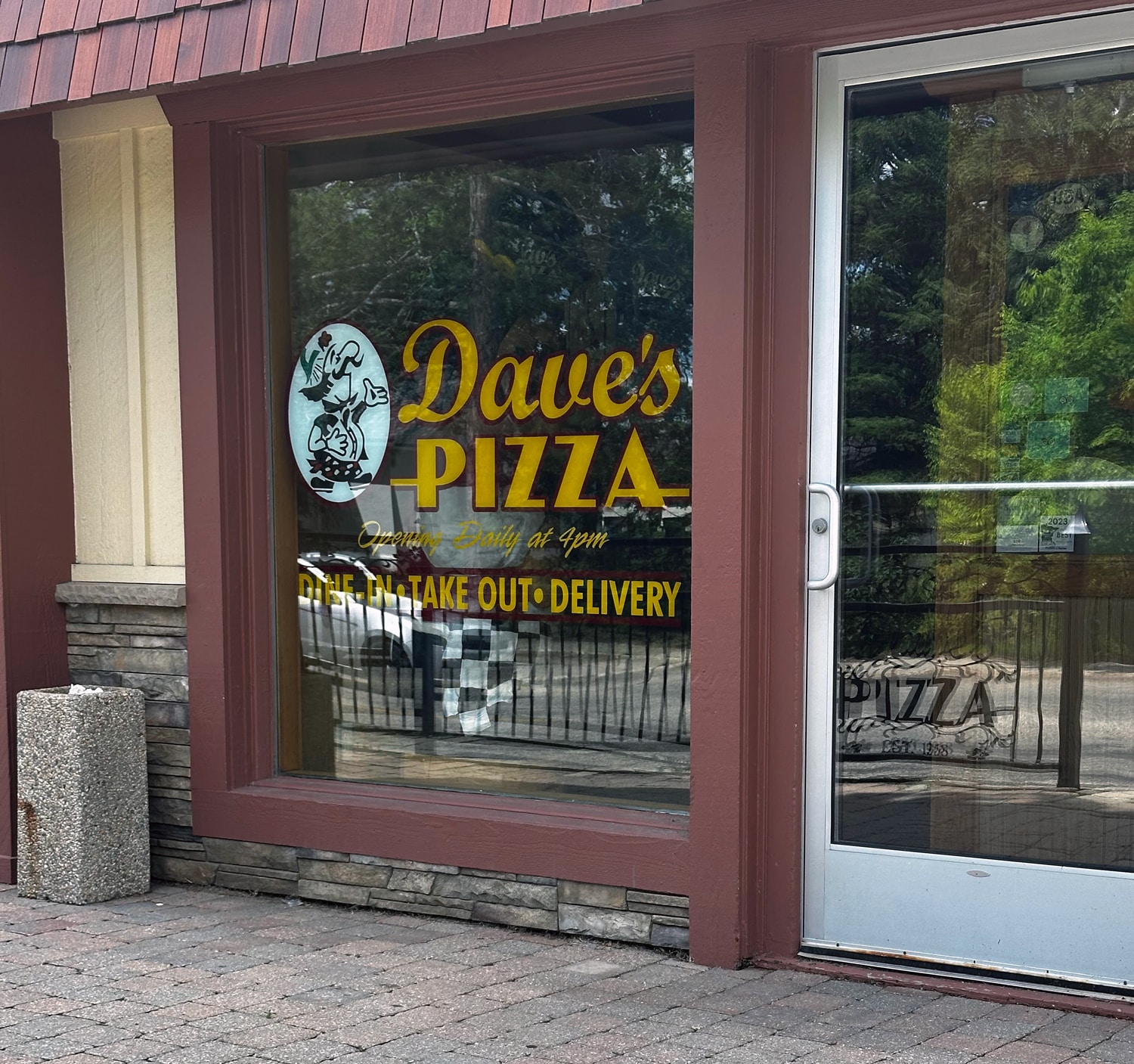
We walked past Dave’s Pizza, where not long ago my kids and their cousins were raucously eating dinner and a table of White people sneered and shook their heads and said to one another “those Indians,” and where I respected them enough to speak to them directly and say that they should eat someplace else at five o’clock on a Friday evening if a bunch of kids eating pizza were too loud for their tastes, and that if they had something to say about Indians, they should say it to my fucking face. We passed the Episcopal church, where I had never wanted to go and where I wouldn’t have been welcome. This was, at one time, the border of the city, because even border towns have borders that run up against newer iterations of the same. This is where the old Bemidji once gave way to pine trees, and after those were cut down, to fields, and after those were built up, to the mechanics of commerce — strip malls, the actual mall, doughnut and pizza shops. We were at the corner of Paul Bunyan Drive and Irvine Avenue. If you follow Irvine due north, you will arrive at the Red Lake Reservation. If you follow Paul Bunyan Drive, you will eventually touch the northern edge of the White Earth Reservation. Businesses have sprung up past this old border. Pizza Hut, a liquor store, car dealerships, a County Kitchen — where, in 1985, members of an anti-government group, an offshoot of the John Birch Society called the Posse Comitatus, were arrested by undercover agents before they could blow up the banks and take over the federal building and kill everyone on a long but literal “hit list.” This is, regrettably but clearly, also Minnesota Nice. Everything about the Posse Comitatus was poorly thought out and poorly implemented. So poorly that the sting operation (run by the father of a high-school friend) was able to get them all in a single afternoon. When my father told me about the arrests, he added, somewhat gleefully, that the list included him and my mother.
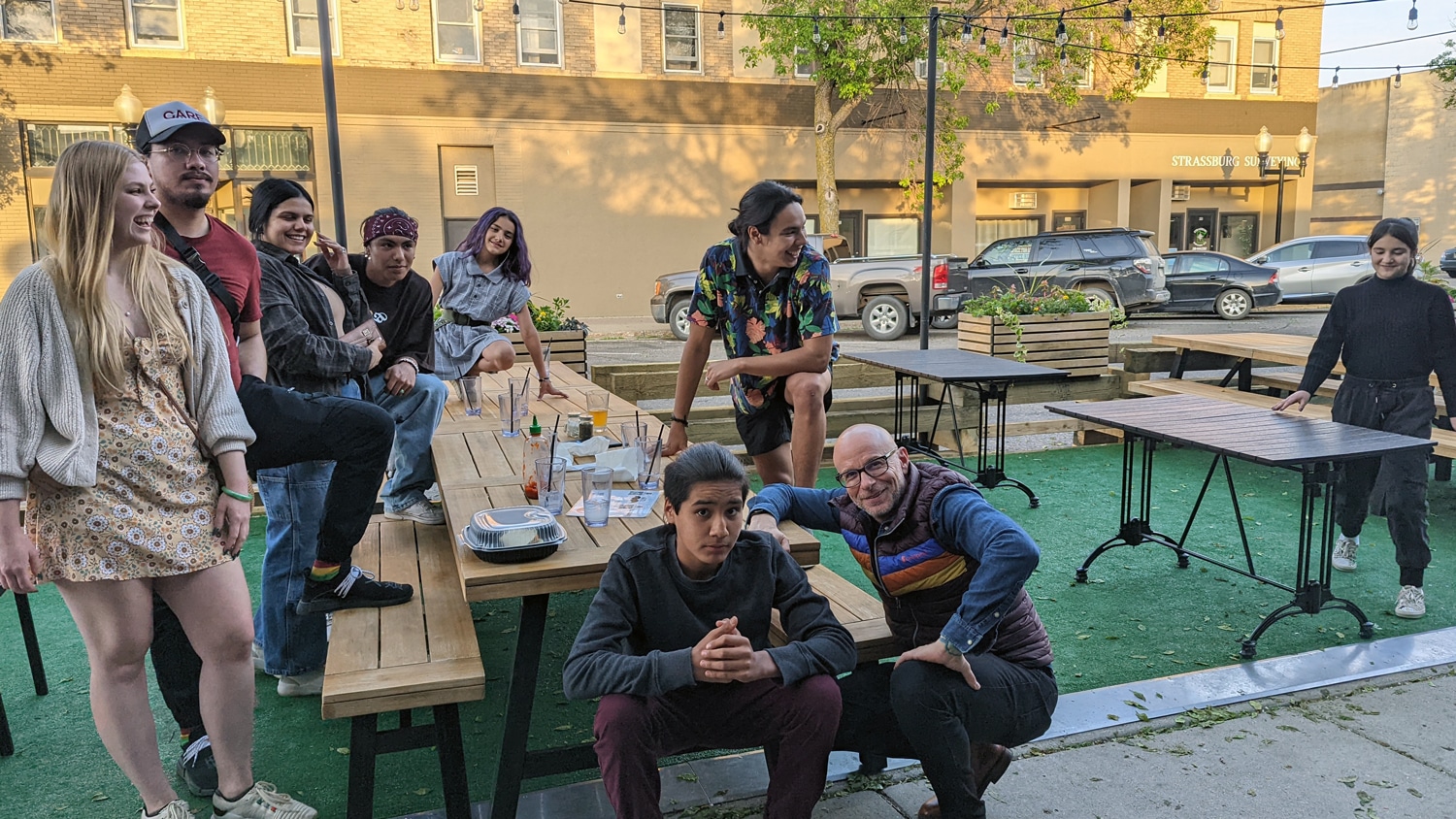
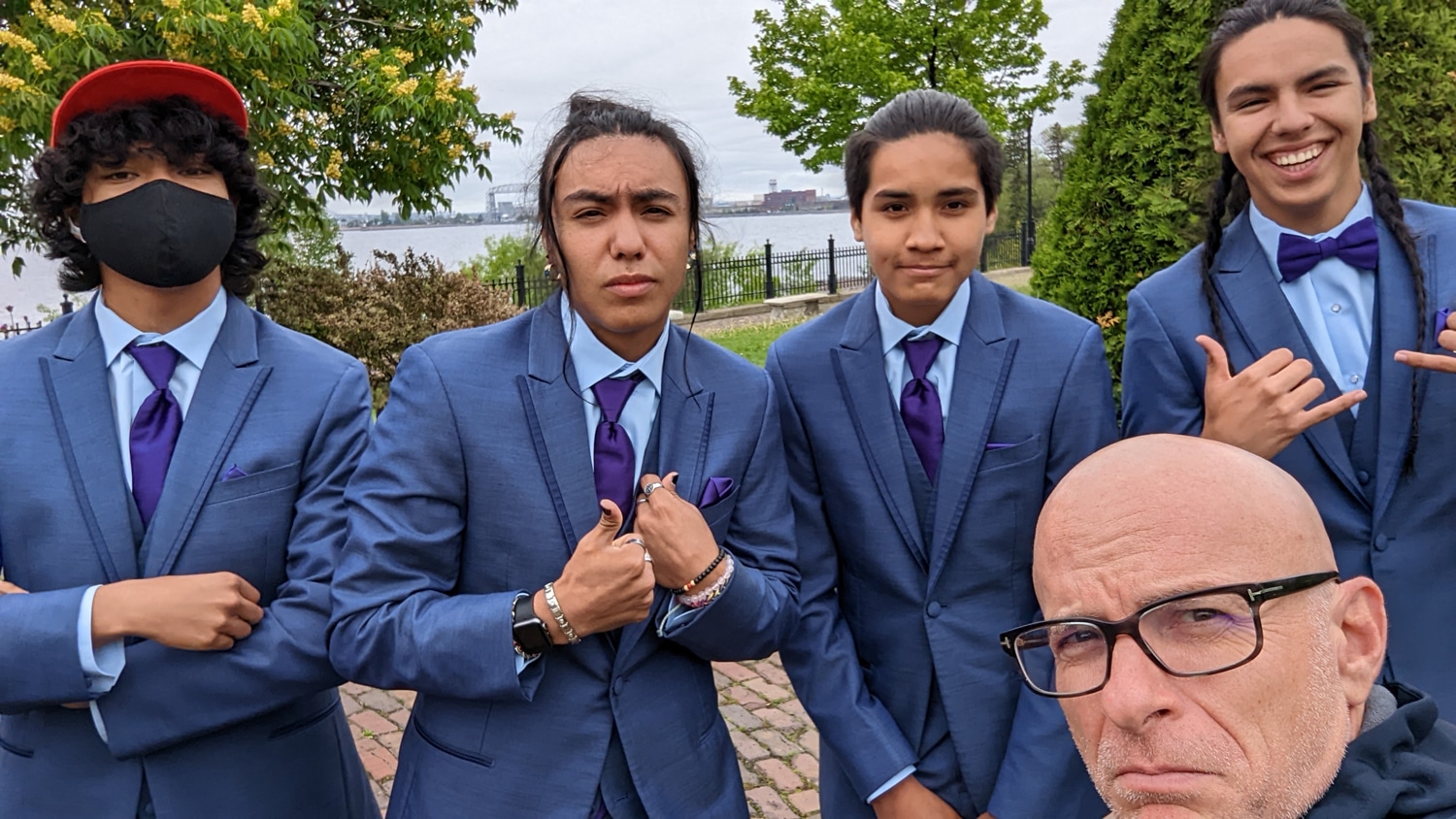
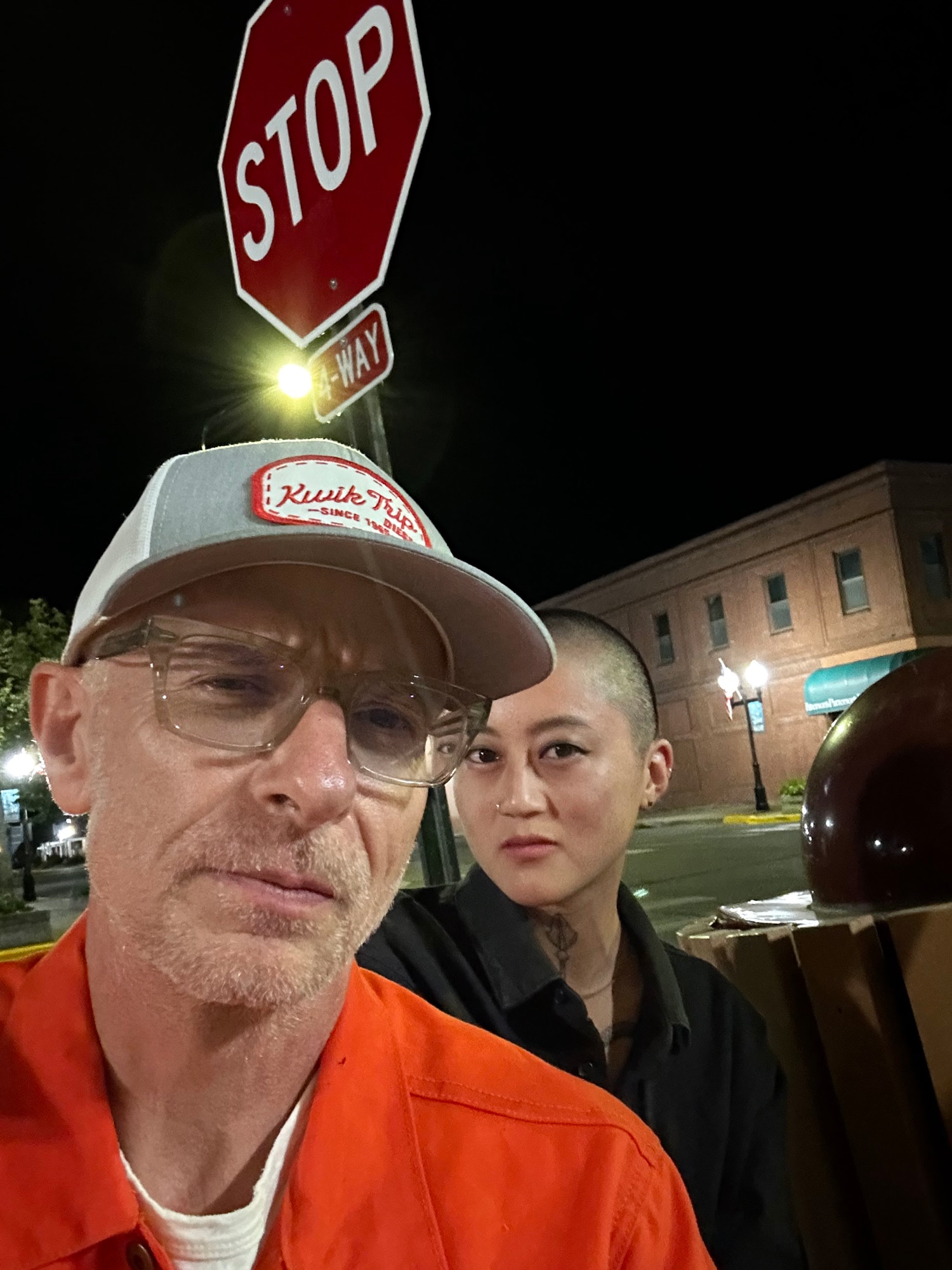
We walked past the McDonald’s where just before the start of 9th grade my best friend accidentally threw away all his money for new school clothes and had to dig through the garbage in front of our richer and more popular classmates and where, a few years later, I would go almost daily to order food from yet another girl with whom I thought I was in love. We were tired now, very tired. But we finally made it to Simonsen’s Market: something like a truck stop with a café attached. My sister-in-law was already there. Shortly, my niece and her boyfriend showed up. Then my nephew, who I thought was on the East Coast, but he had to come home to get his official “certificate of Indian blood” from the tribe. Another niece and another nephew arrived.
Soon — because this is how my family rolls — we were about eight to the table and outnumbered the other patrons. We were loud, of course. We smiled and laughed and teased each other. The other people didn’t say anything to us. Didn’t even look. Or maybe didn’t dare. Occasionally, someone would ask BZ what they thought about Bemidji. My family weren’t too concerned about BZ’s answers. They were free to think about the town however they wished. Because it no longer had, if it ever did, control over us. We, individually and collectively, and in fits and starts, had come to define it, not the other way around.


If you would like to comment on this article, or anything else on Places Journal, visit our Facebook page or send us a message on Twitter.