

The original Won Kok Restaurant was the late-night anchor of Los Angeles’s Chinatown, staying open until 3 am nightly, and even later on Saturdays. I first stumbled in about a decade ago, after a fetish-themed performance at Human Resources, a nearby art space. The content of that performance is lost to time and my waning memory, but finding Won Kok — I was tasked with seeking out a place that was open late, hospitable to large groups, and served booze — proved to be the true revelation that night. I somehow managed to convince a hungry assemblage of art queers, including Ron Athey, to check it out after the show, despite knowing very little about the food.
Finding Won Kok proved to be the true revelation.
After midnight and a surfeit of Tsing Tao and crispy, head-on prawns, I ended that first Won Kok excursion feeling happy and satisfied, especially because I was surrounded by my queer family and sitting beside the person I was newly dating. (She would eventually become my wife.) While I was absorbing the scene in my well-fed haze, I noticed something else remarkable. Nearly everyone around us was also, like me, Filipino. I didn’t think much about it then, but in the ensuing decade it became increasingly clear that this was the rule at Won Kok, not the exception, particularly with the late-night crowd. I grew curiouser and curiouser. Why were my people — the gays, the brown folks, and specifically the Pinoys — so drawn to this place? Why did it feel so spiritually near, given that it wasn’t created by us, or representative of “our” cultures? Who and what activated this accidental ambience of belonging?
Filipino Buying Style
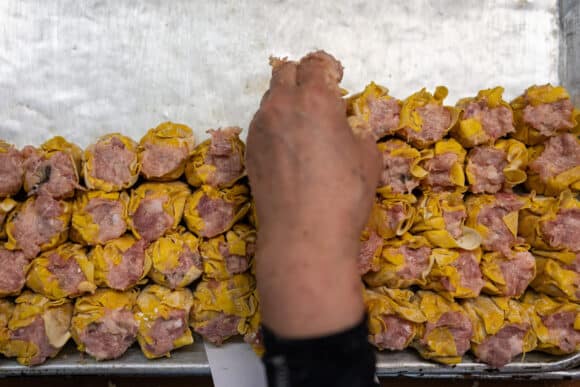
That first encounter inspired me to try Won Kok for lunch, a habit that’s continued with some frequency in the years since. I’d pop in to eat solo as a treat, before or after trips to the gym, or after haircuts at ProjectQ, a queer salon and non-profit mutual aid org nearby. 1 Basically I’d use any excuse to pick up a “snack” of four pieces of siu mai, just $1.25 a piece. Dense and shrimpless, Won Kok’s siu mai bear a strong resemblance to one of my Proustian madeleines: the pork hash I first tasted in 1978 at Ala Moana in Honolulu. My mom and I moved to Hawai’i from the Philippines that year.
I eat one of the glorious dumplings and it all floods back.
Surrounded by adults in a place that felt familiar, but also utterly distant from home, it was a lonely time in my childhood. The isolation was soothed by a sense of discovery and delight in every new taste and every new bite, from Leonard’s malasadas, and extra crispy Kentucky Fried Chicken, to that pork hash that lives on in in the texture and simplicity of Won Kok’s siu mai. Each time I eat one (or four) of these glorious dumplings it all floods back — the loneliness, but also the childhood awakening of my palate that helped ameliorate the loneliness.
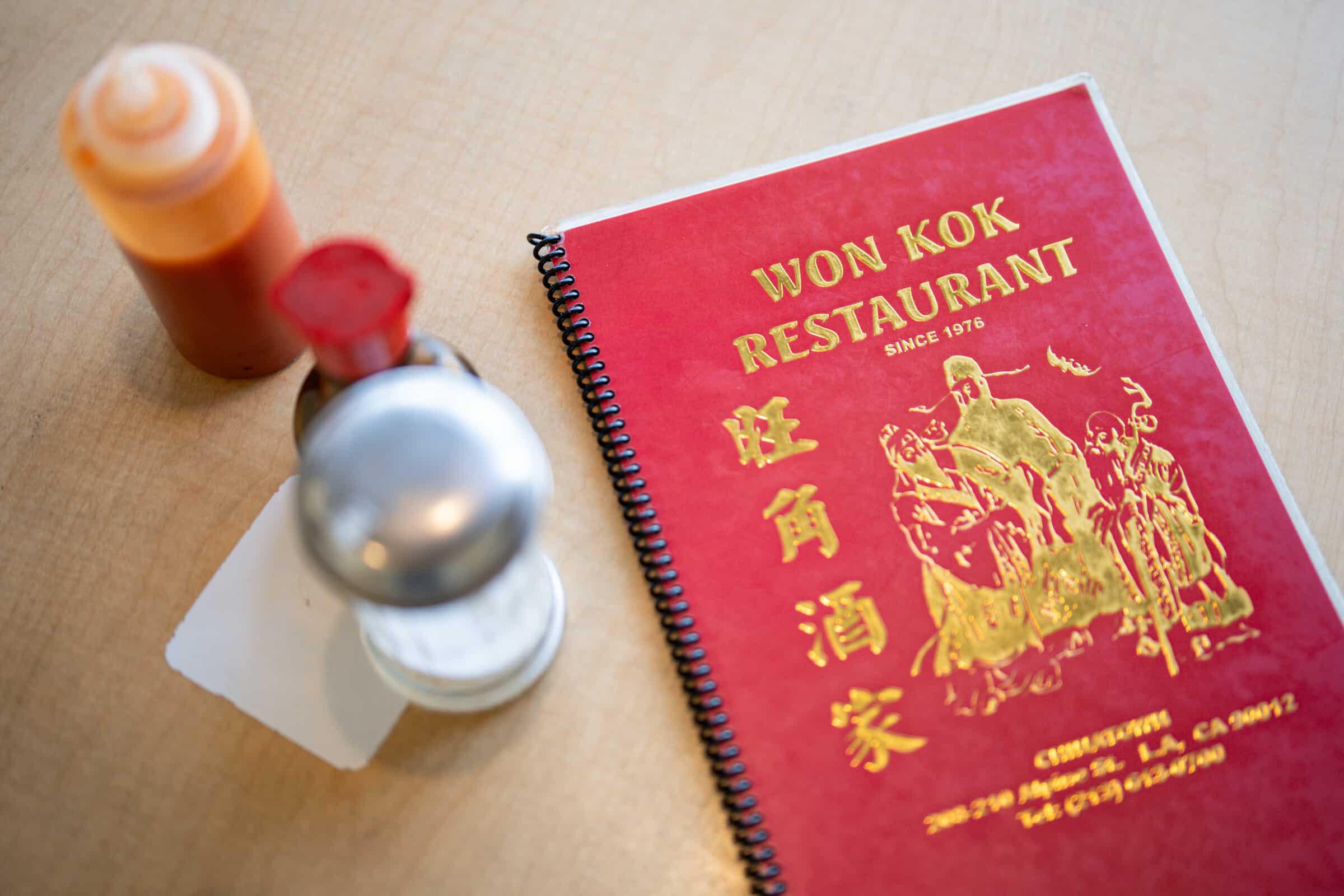
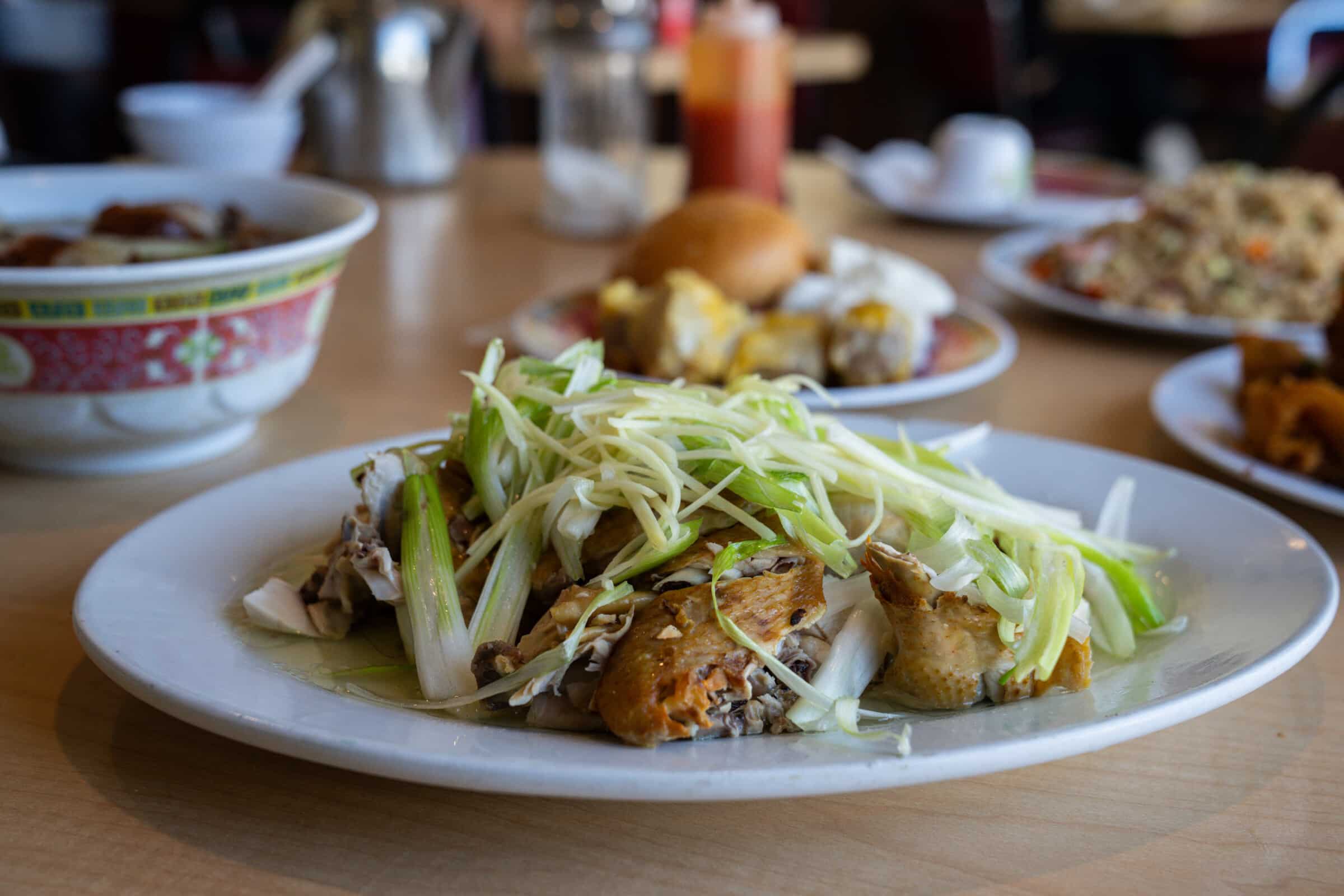
Eventually, I developed the habit of bringing my own Tupperware to Won Kok so I could sample multiple dishes for lunch, consolidate the rest, and carry it back home for dinner with my family. There’s typically enough food in two or three à la carte Won Kok dishes to stretch from lunch to dinner to lunch the following day. My usual orders consist of ginger and green onion chicken, the spicy salty pork chops (which through the years, have come closer to resembling Filipino lechon kawali in all its fatty, crispy decadence, except that Won Kok’s version is adorned with a swoosh of chili oil), one of the varieties of hand-pulled noodle soup, a protein with black bean sauce, and flat bundles of chow fun glistening in cornstarch-thickened gravy. Won Kok’s two pork bun options regularly end up in my to-go stash as well, typically as a last-minute impulse purchase. One version of the bun is baked and brown with a glinting, egg-washed dome; the other is steamed, white, and spongy, much like the Filipino siopao — a transliteration of cha siu bao, the Cantonese name for these buns — an edible totem of Chinese, Filipino, and American cross-cultural entanglement. 2
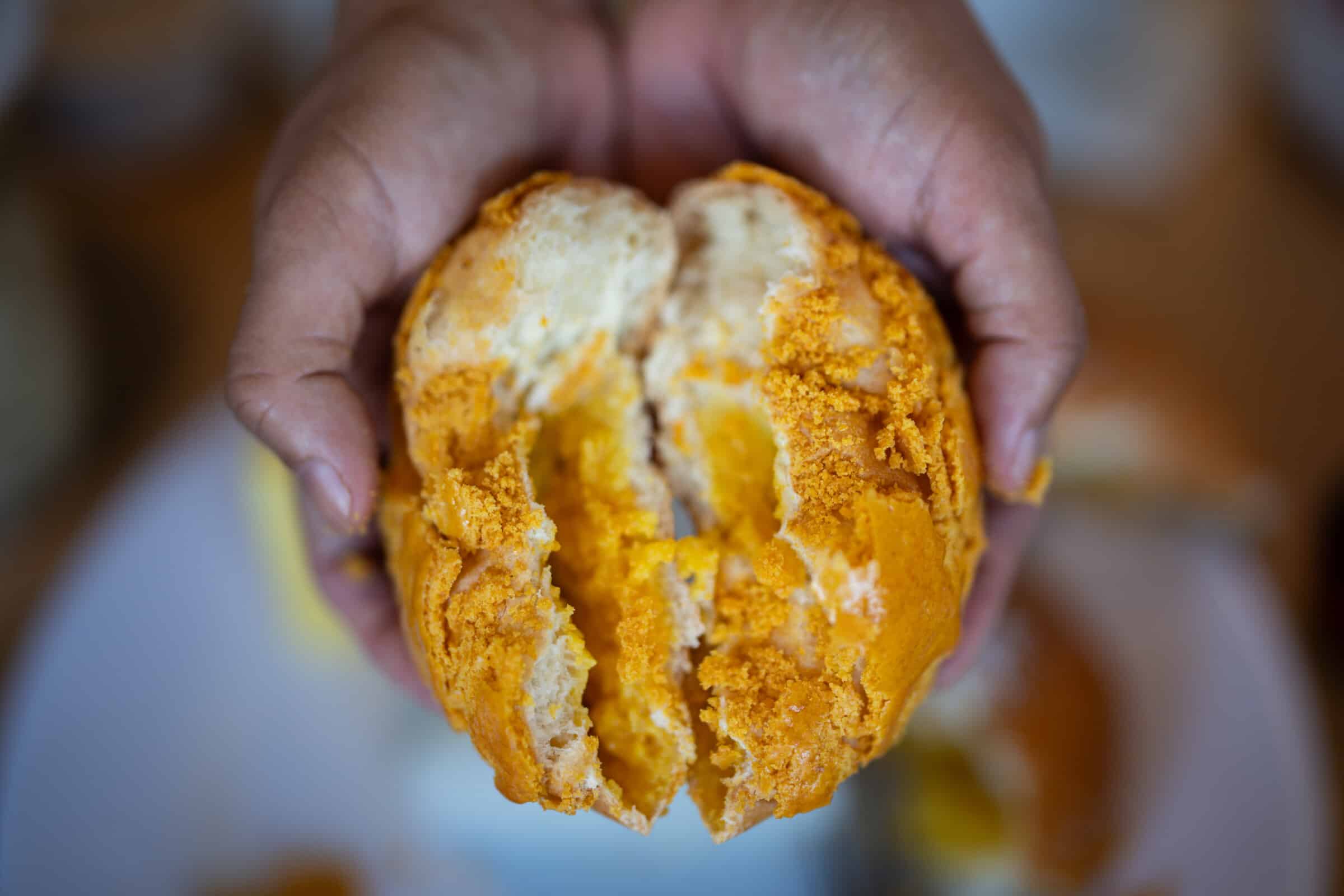
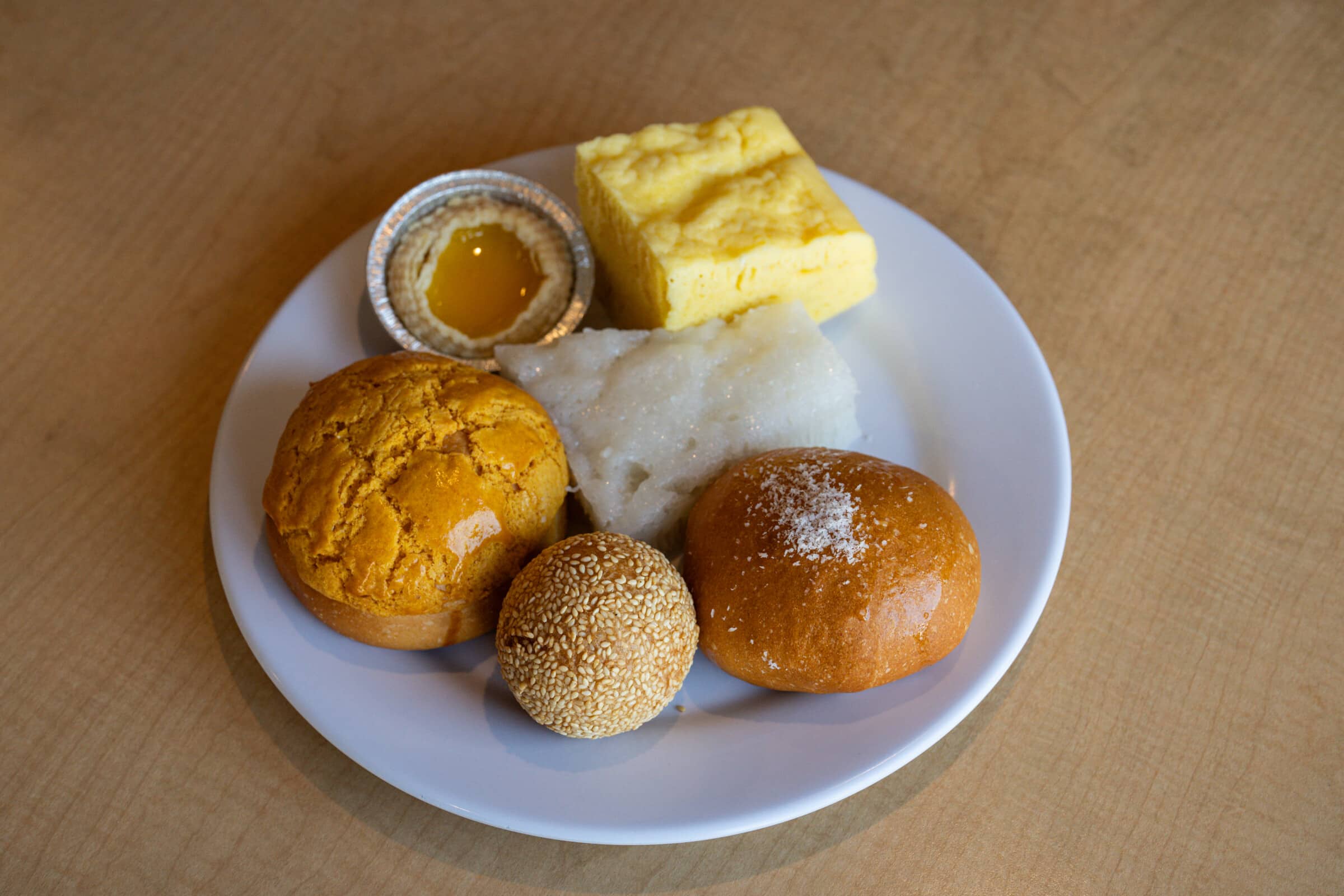
Buying food in bulk is ordinary at Won Kok. Other customers have described it to me as the “Filipino buying style,” which basically means to buy a lot. Indeed, many of the restaurant’s other Filipino customers order as I do when I’m by myself, but multiply their quantities exponentially based on the number of family and friends they anticipate feeding on any given day. These large orders come flooding in from the moment the dim sum window opens at 9 am, on through the peak lunch and dinner hours. I can’t even begin to count how often I hoped to beat the crowds by queuing before 9 am, only to find titas and lolas already huddled in line in their baggy sweatshirts, hats, and fanny packs, waiting to procure a massive haul of siu mai and pork buns.
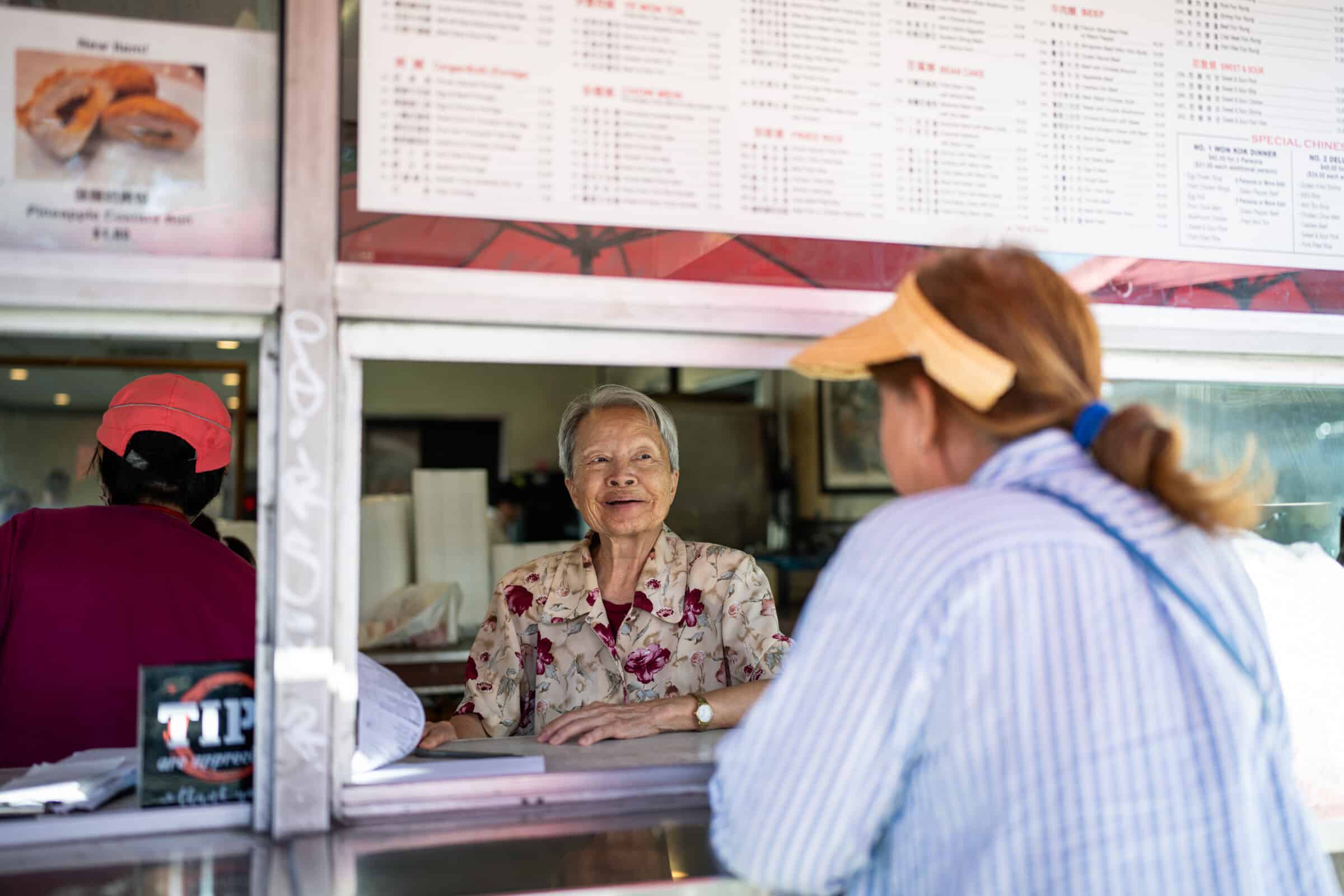
Most of my research for this essay consisted of eating at Won Kok — not much of a stretch from my regular habits — but fortuitously, during one such meal I realized that my waiter was Alvin Hom, the son of Wok Kok’s owners, and the restaurant’s manager. We got to talking about the place, and he told me that Filipinos were among the restaurant’s first patrons when Won Kok opened in 1976. A largely after-midnight crowd, Filipino customers came when their nursing shifts ended at the nearby Good Samaritan Hospital; or after they closed up the downtown parking lots where they worked as attendants. Pinoys would also stop by, Hom noted, after late nights out gambling or singing karaoke, carrying that party atmosphere into the restaurant.
Filipinos were among the restaurant’s first patrons.
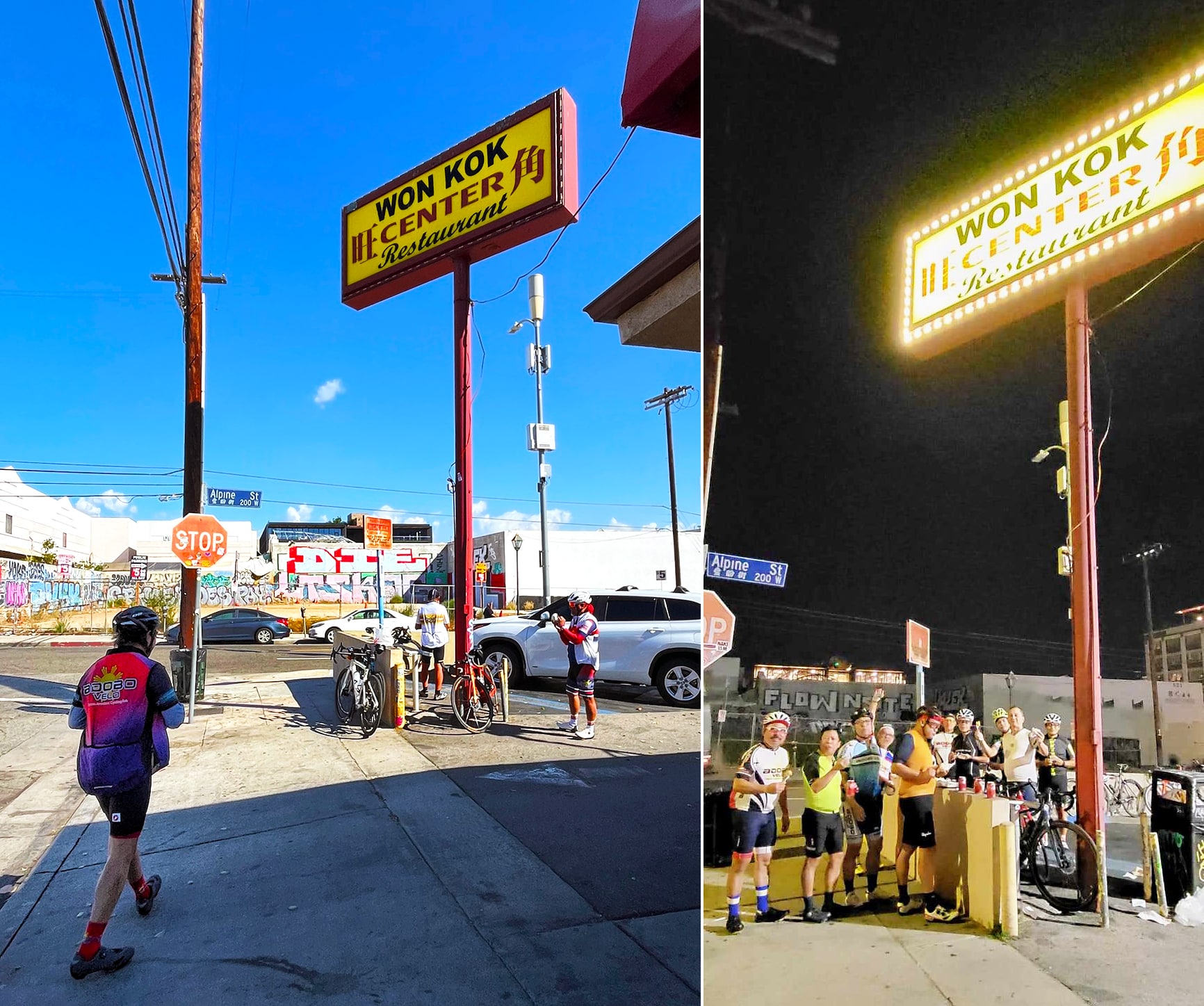
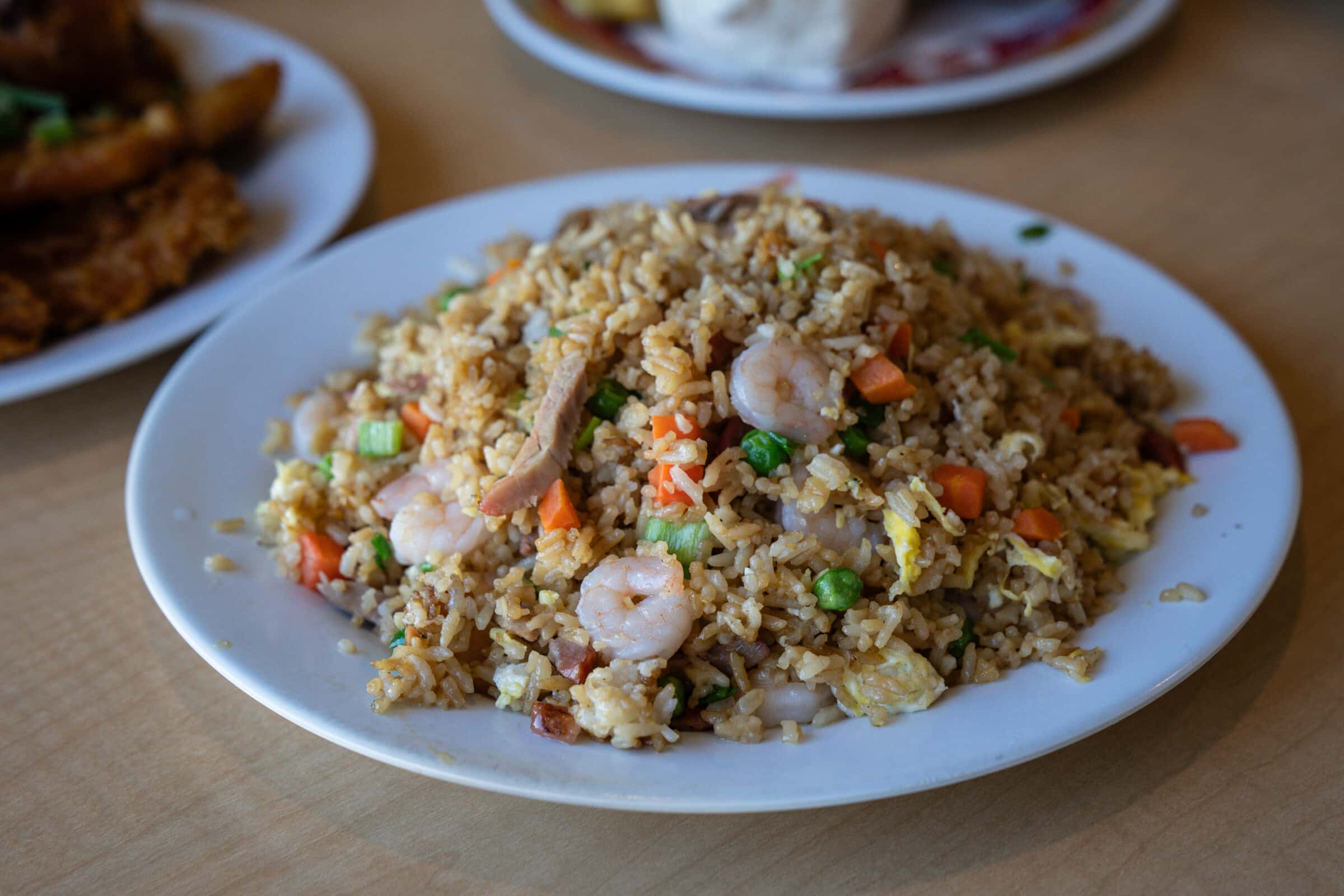
Now the restaurant closes at nine, so there are fewer post-shift night nurses and parking lot attendants, but other Filipino customers come in their stead. One group of Pinoys eats at Won Kok every Sunday after bicycling across Los Angeles together, starting in Eagle Rock, a historically Filipino neighborhood in northeast L.A. During my own many lunches, I’ve eyed the other tables closely and noticed that the combination fried rice, the spicy salty shrimp, and the crispy fried pork chops are almost always on tables occupied by my kababayan. There is, in other words, a noticeably Filipino approach to the menu, and the dim sum seems to be the gateway order, from the pork buns to Won Kok’s rice cakes, which resemble the scandalously-named Filipino dessert puto.

Won Kok’s manager and maître d’ Michael is a tall, dapper Chinese man who sports a pompadour and a strangely formal waistcoat and tie, though lately he’s been mixing it up with a chambray look. He’s been greeting customers in multiple languages, including Tagalog, for over thirty years, to the point that he’s become something of a local celebrity.
There’s something special about a place becoming a hub for your community without being intentionally designed that way.I understood the depths of his customer service panache when I walked in one afternoon and he said “kumusta kayo?” after clocking my Filipinoness. Between Michael’s greeting, and the pork buns that feel familiar but aren’t the same, and the Filipino buying style (made possible by the restaurant’s affordable prices), it’s little wonder Filipino customers are among Won Kok’s most loyal, myself included. There’s something special about a place that becomes a hub for your community without being intentionally designed that way, coalescing instead through the slight rhyme of its flavors and textures with your own.
Prosperous Corner
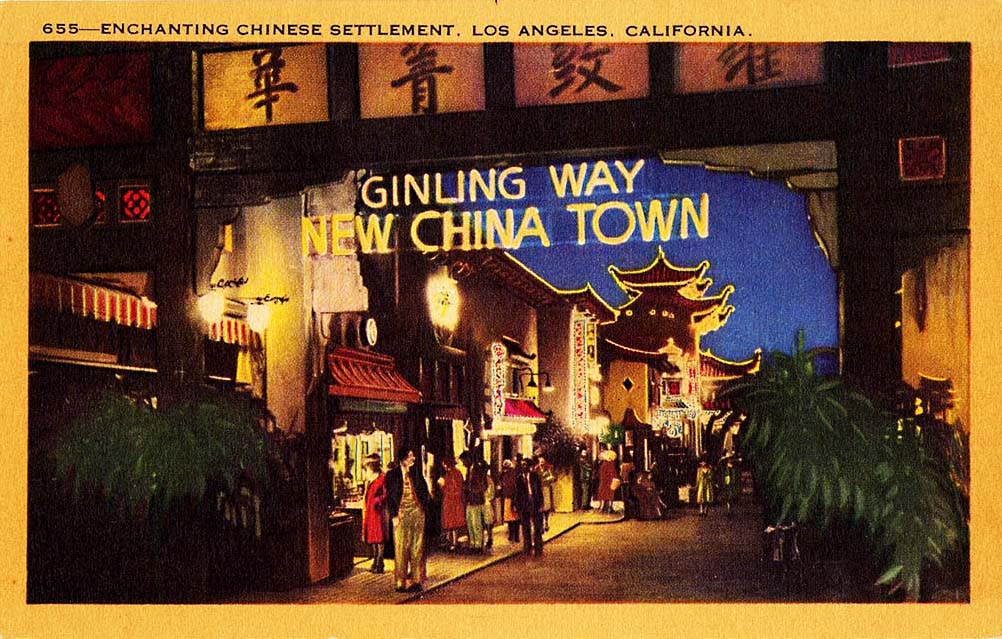
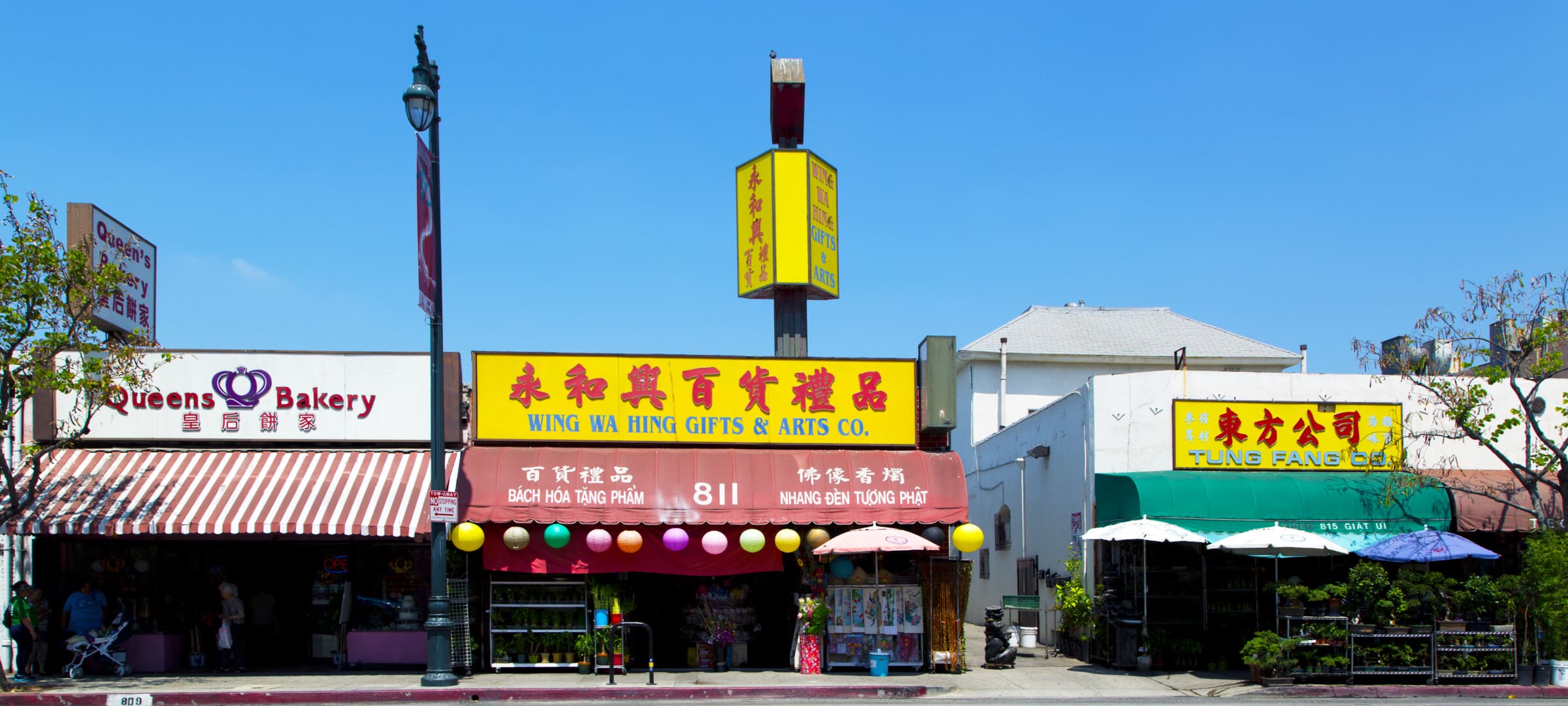
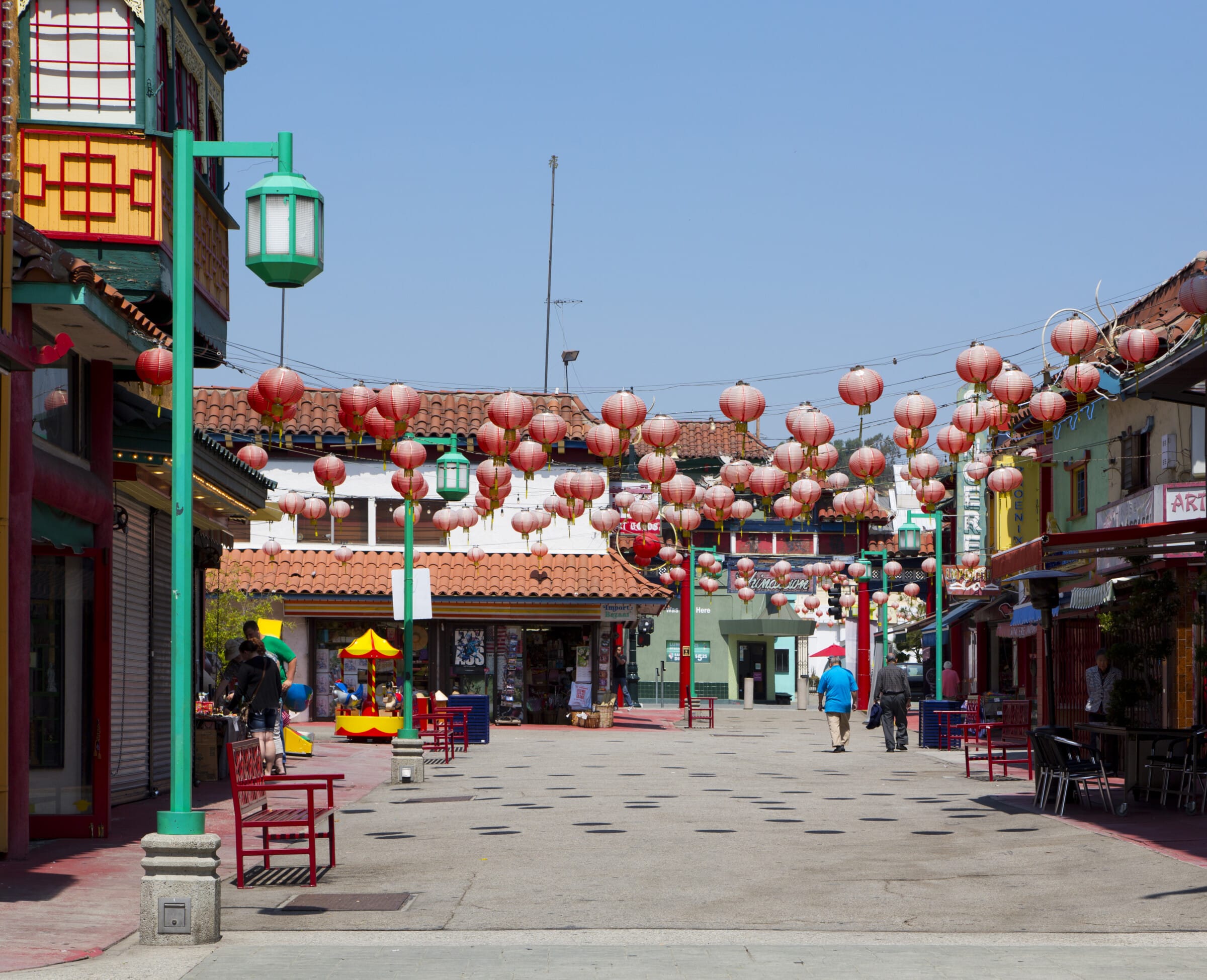
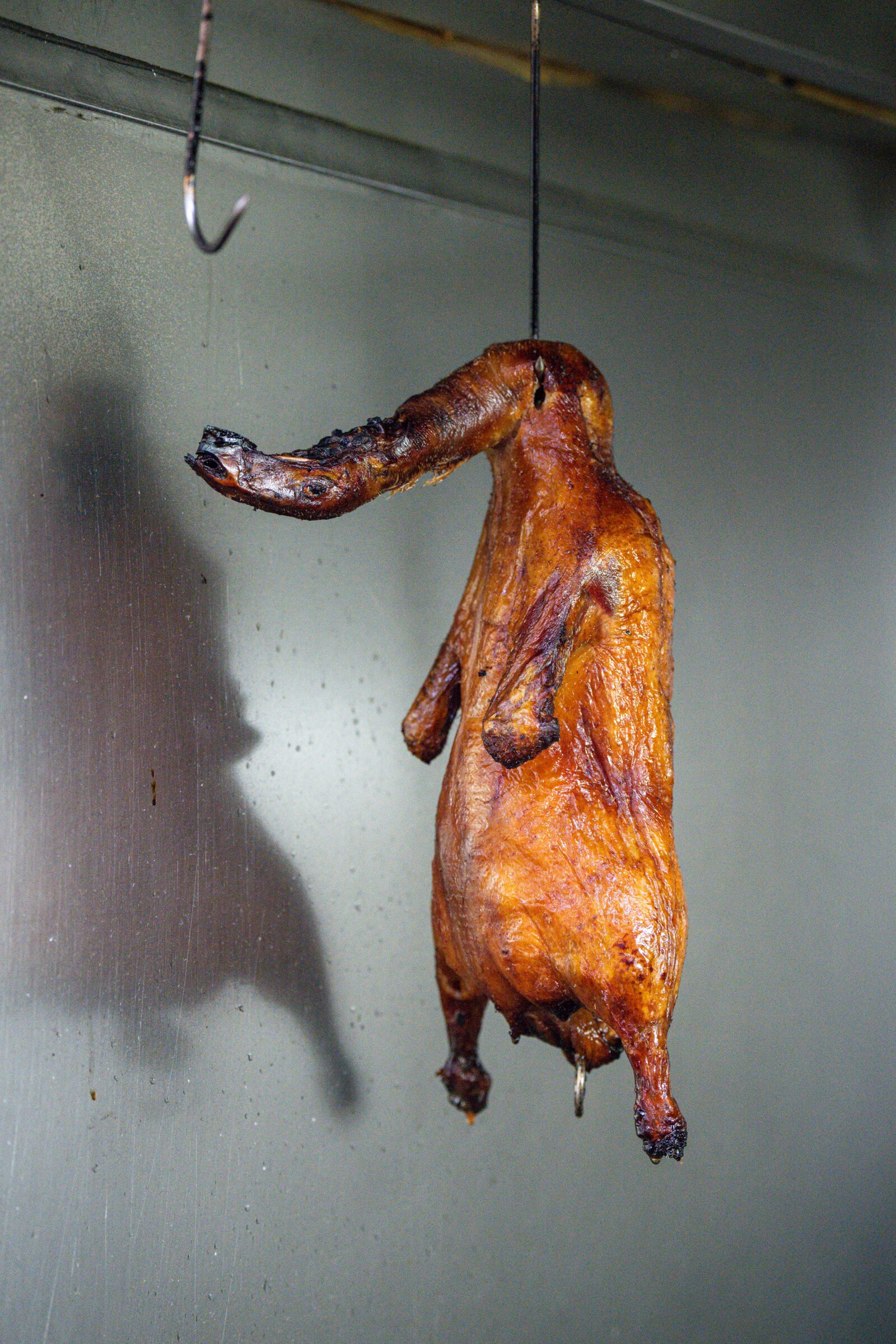
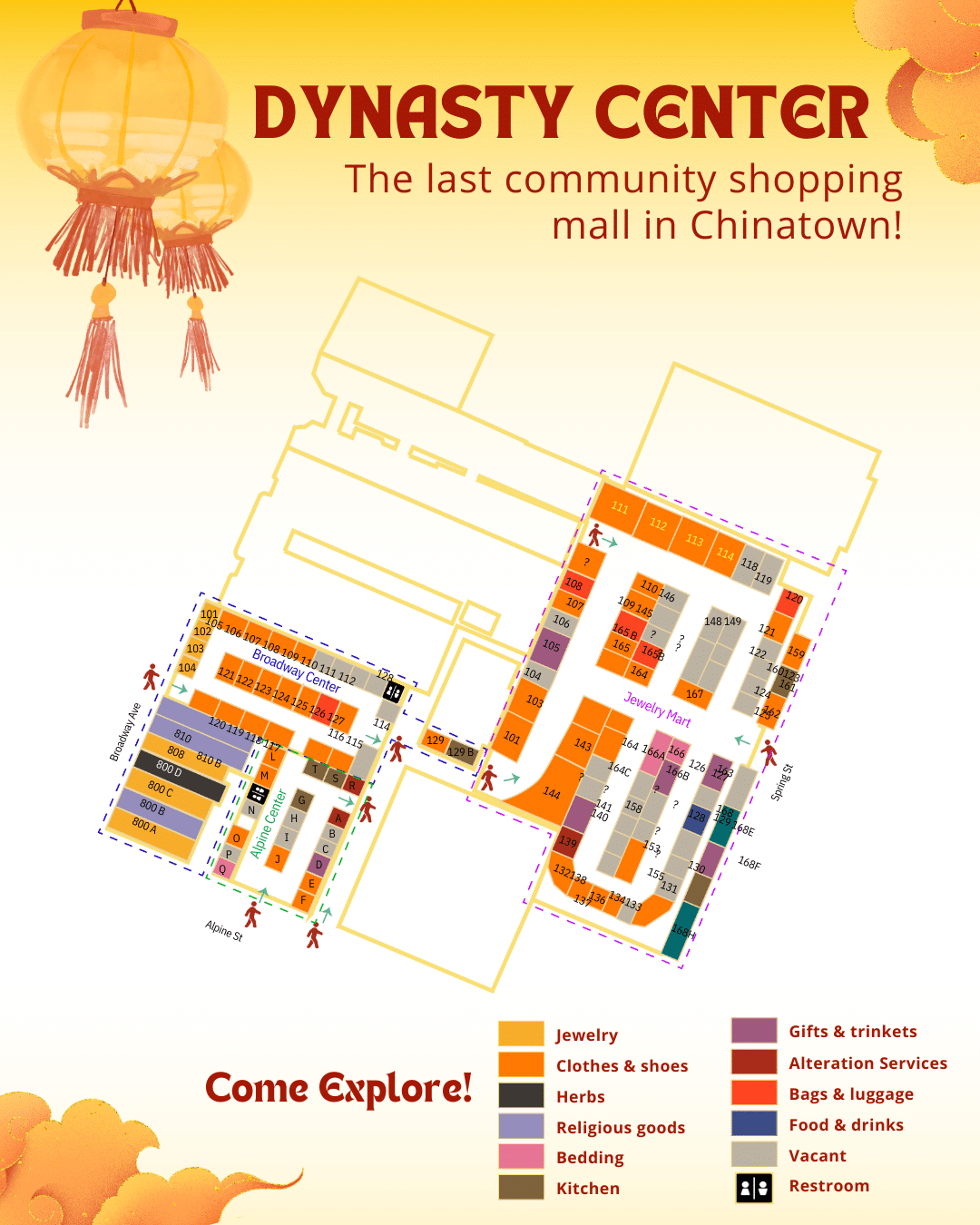
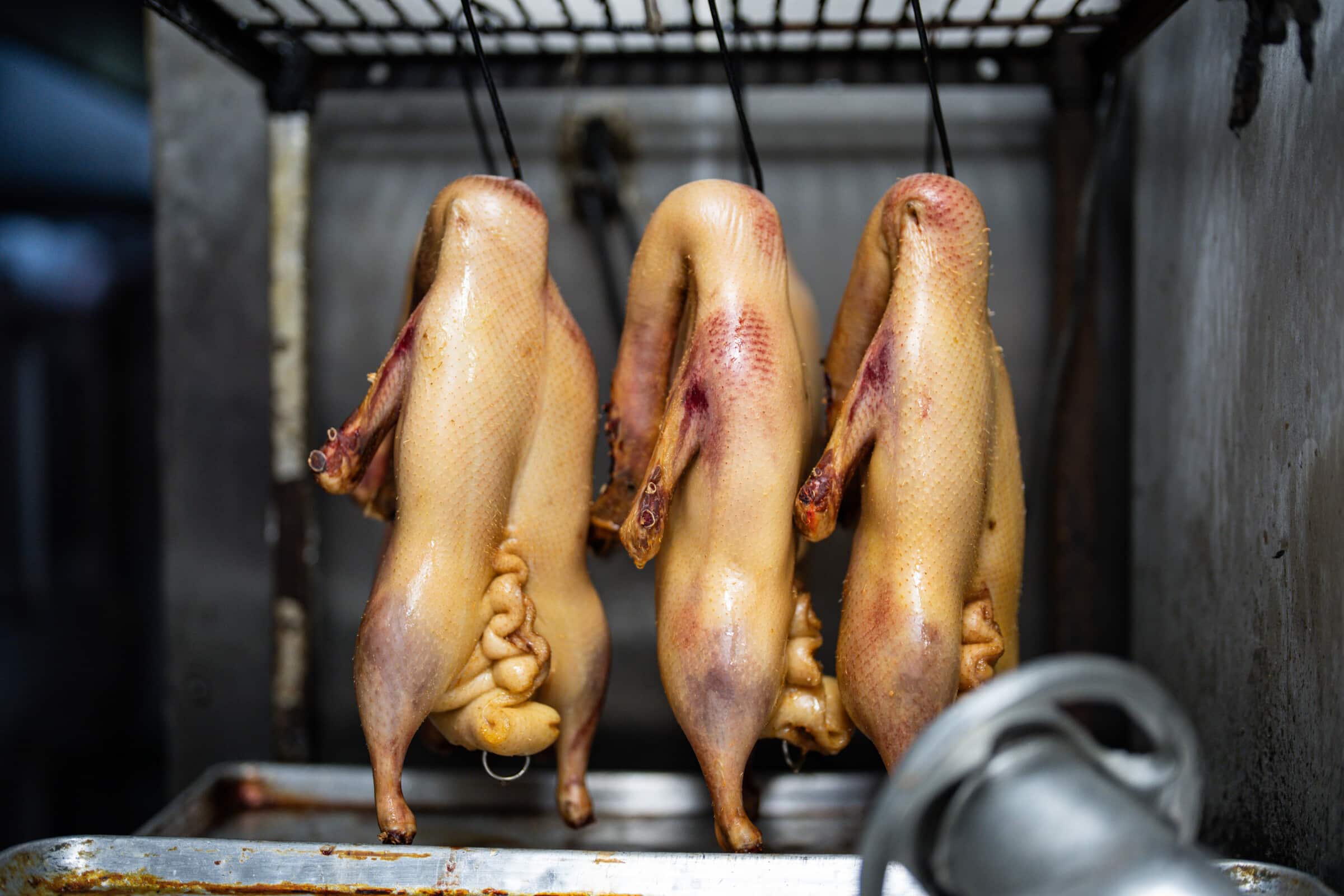
Won Kok sits on Alpine Street in Los Angeles’s Chinatown, where it spans the entire length of a city block, bridging New High and Spring Streets, tucked away from the more bustling action on Broadway. Broadway is where you’ll find the souvenir shops, peddling the same paper lanterns, money plants, and plastic slides, cheek-by-jowl with restaurants that entice their customers with brown lacquered Peking duck and slabs of BBQ pork dangling in the window. Won Kok stands pretty much on its own without any of these trappings. The building is surrounded by parking lots and directly across the street from an indoor shopping mall, now threatened by gentrification, called Dynasty Center. 3
Won Kok’s official address is actually a range of addresses, 200-210 Alpine. If you walk the length of the building, you’ll notice the numbers 202, 206, and 208 affixed over large plate glass windows. You might be tempted to assume these windows are entrances and try to walk right through, as I’ve seen people do, but they’re not. They’re remnants of the building’s history as a strip mall that once contained several other businesses before the restaurant took over the entire structure.
The restaurant began as a business plan addendum.
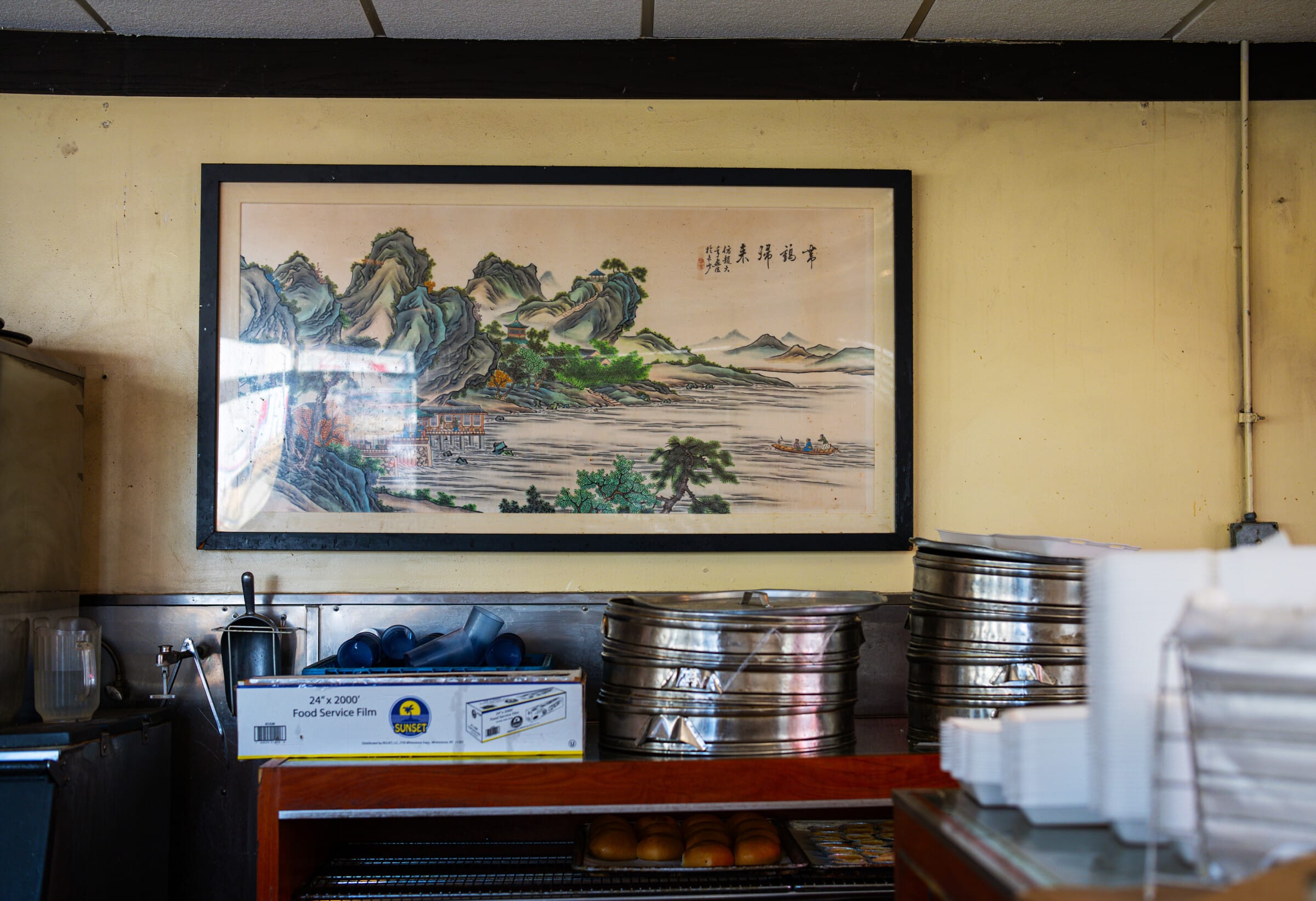
Another remnant of the strip-mall era is the blinking sign hovering high over the tiny parking lot that says “WON KOK CENTER” in stout block letters. The word “restaurant” appears underneath in a dainty font, almost like an afterthought.
The restaurant actually began as a business plan addendum. In 1973, the OPEC oil embargoes began to wreak havoc on a U.S. economy that had come to depend on overseas oil. Vincent Hom, an immigrant from China with a knack for working on cars, was leasing a repair garage at a Chevron gas station on Alpine and Broadway. But then Chevron closed the station, and he was forced out of his lease.
The crisis closed a door but opened a window. Vincent had established a loyal clientele at Chevron, and he wanted to stay in the business. His wife, Sylvia, had a steady job working at a bank. If there weren’t any garages to lease nearby, why not build their own? Together Vincent and Sylvia began to eye a large empty corner lot a few blocks away.
They cobbled together loans. …Vincent designed the simplest, cheapest building possible.It wasn’t an especially promising location. At the time, a barrier stood at the end of Alpine Street preventing through traffic. The surrounding structures were large, imposing warehouses and there were no pedestrians. The lot was overtaken with weeds. Nonetheless, the Homs saw an opportunity.
After several exchanges and discussions, the Homs presented their Beverly Hills property broker with an embroidered picture and a gold and jade bracelet for his wife. These gifts deemed them trustworthy to the White loan officer, and the Homs were granted a lease to buy the lot. 4
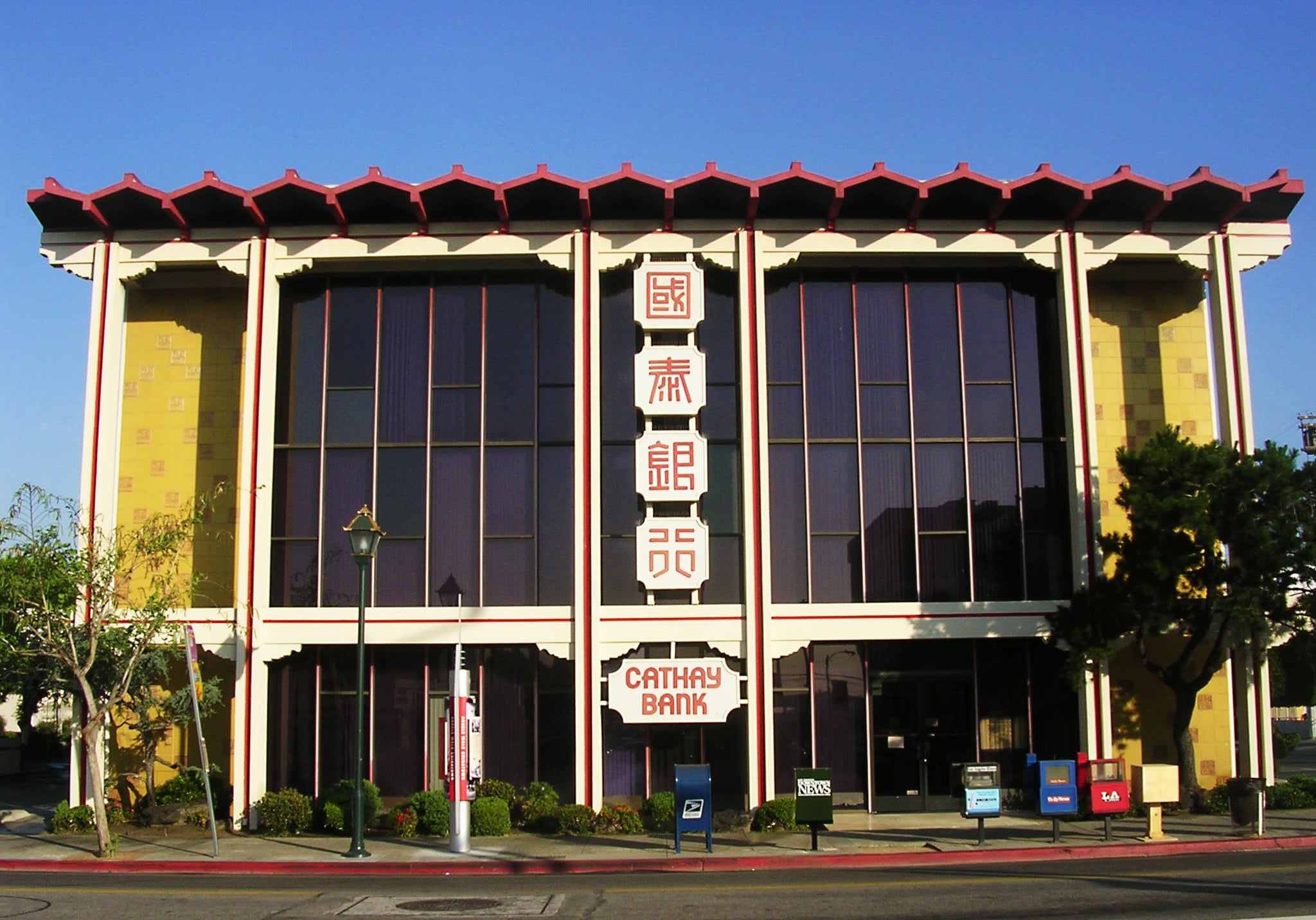
They still needed money, however, to build the auto repair garage of Vincent’s dreams. They cobbled together loans from family members, including an aunt and uncle in Panama who financed a large chunk with a ten percent interest loan, and a rapid two-year rate of repayment. Cathay Bank covered the rest, despite what their son Alvin described as the loan officers’ “healthy skepticism.” They had no additional funds to hire an architect, but Vincent had taken two semesters of drafting at Trade Tech. He designed the simplest, cheapest building the family could afford.
Vincent situated his auto repair shop at the east end of the lot, and to the west he built four additional units, all connected. Vincent’s garage was to be the anchor business, and another unit was given over to his father, who ran a newspaper stand that sold candy and soda to the neighborhood kids. Vincent designed unit 210, at the far west end of the block, as a small restaurant at the behest of a would-be business partner and tenant. Then that person bailed. According to Alvin, “Dad approached his cook friends in Chinatown. … but nobody wanted it.” 5
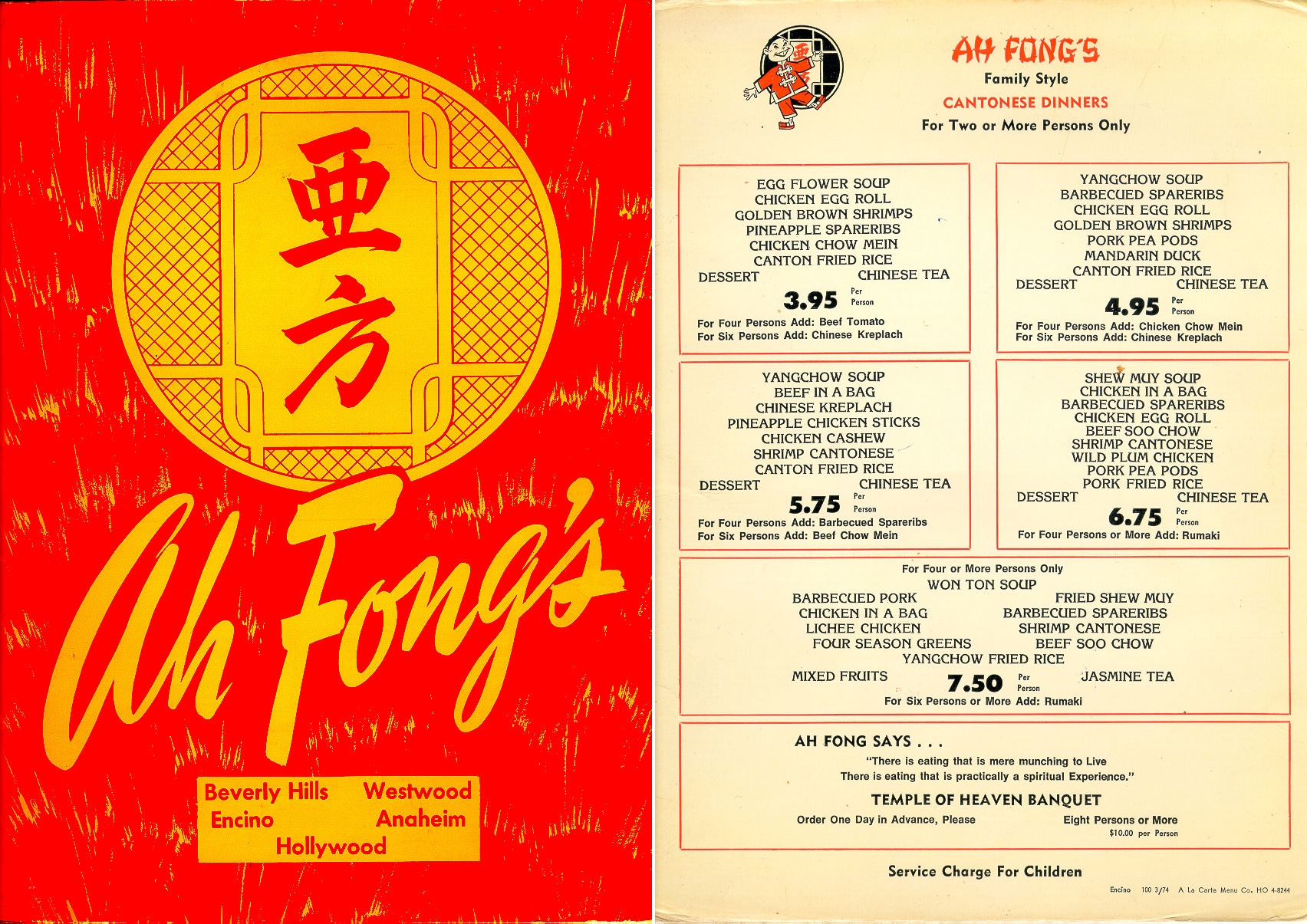
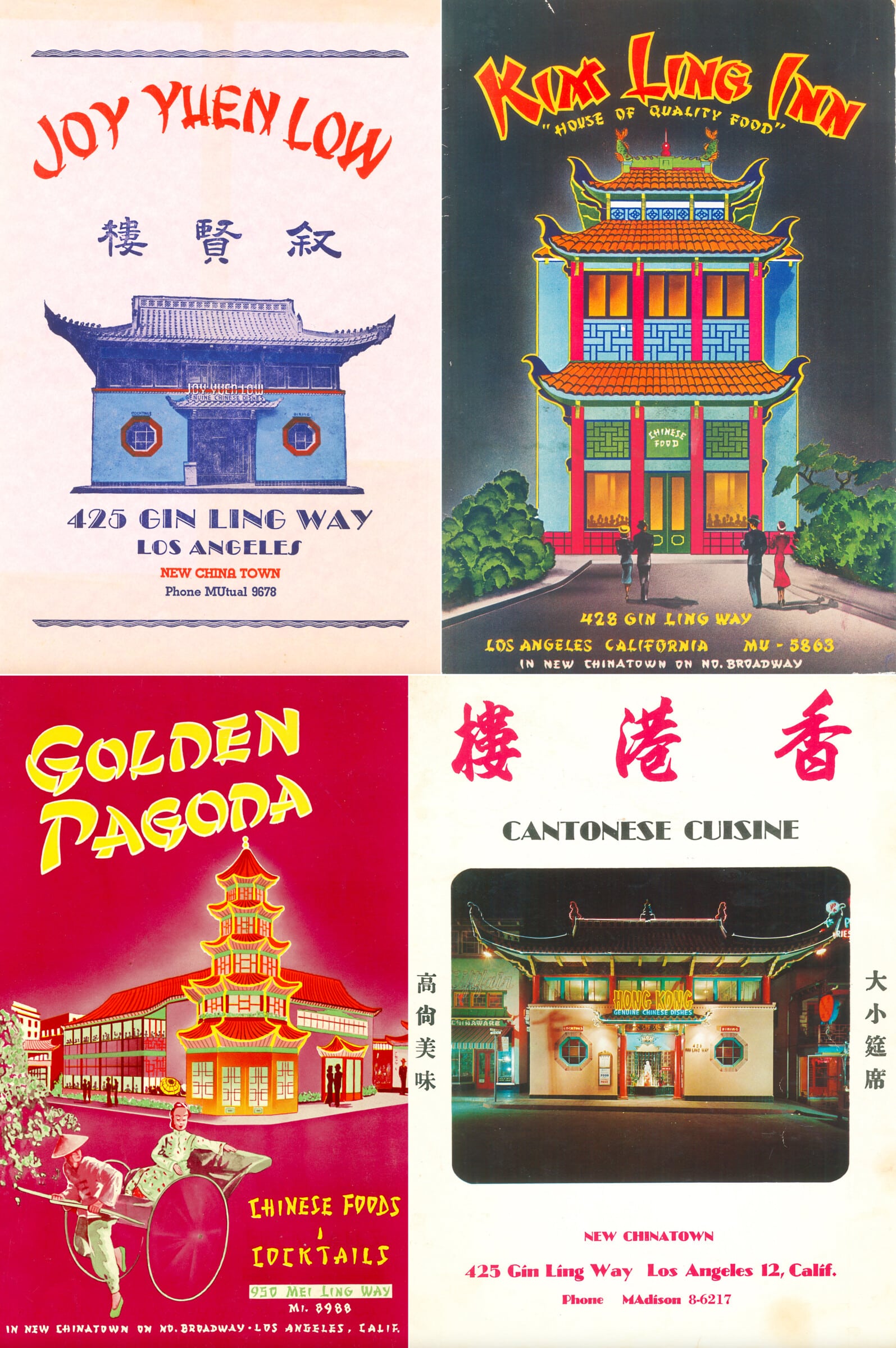
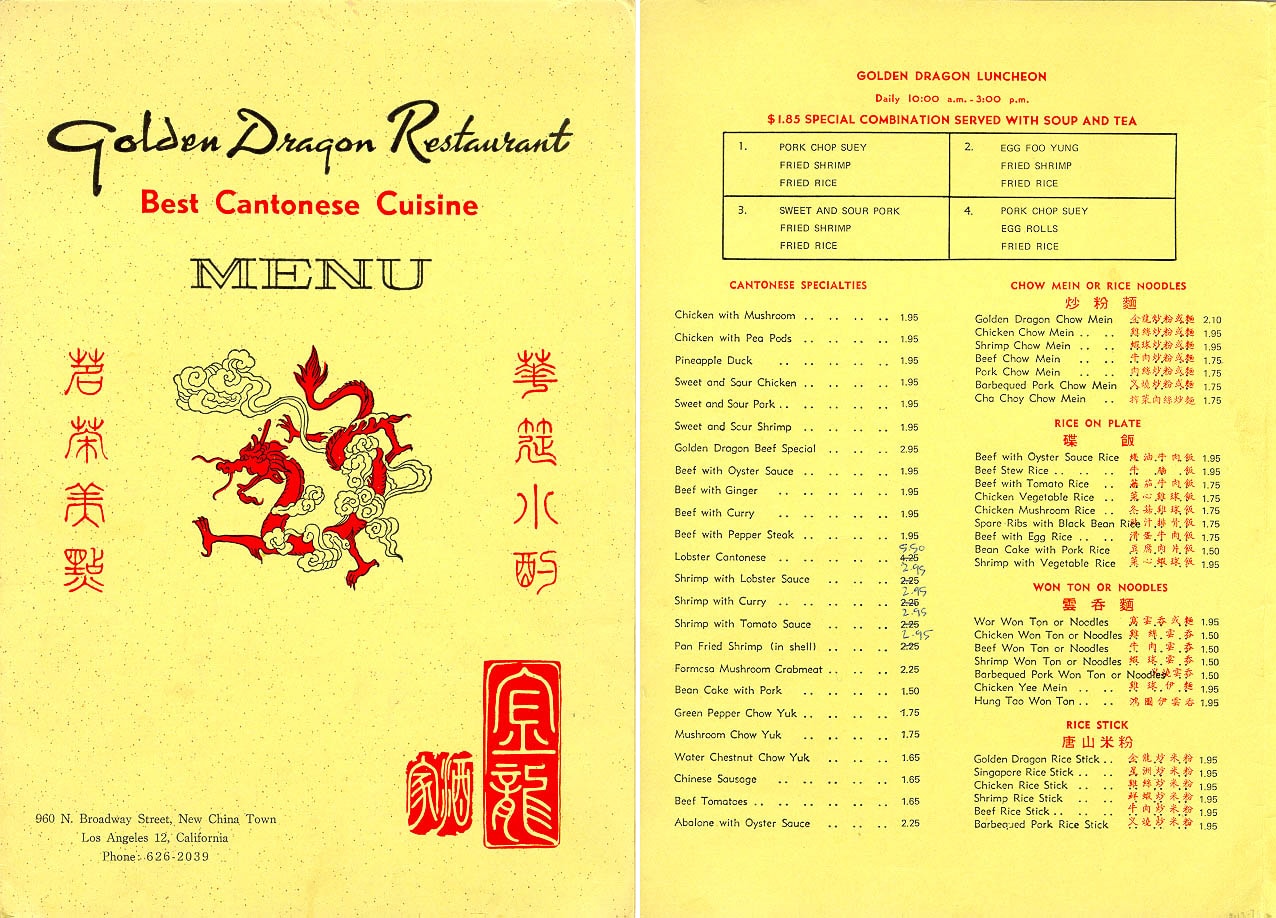
It was Sylvia who decided the Homs should run the restaurant themselves. She recruited staff from Vincent’s auto repair clients — many of whom were cooks and servers — and procured a secondhand cash register from a pal named Seto. Then there was the question of menu. In the late 1970s, there were fewer debates about culinary authenticity, and specialized regional fare was just starting to become a thing in the San Gabriel Valley.
They decided to serve the American Chinese favorites that were ubiquitous at the time.
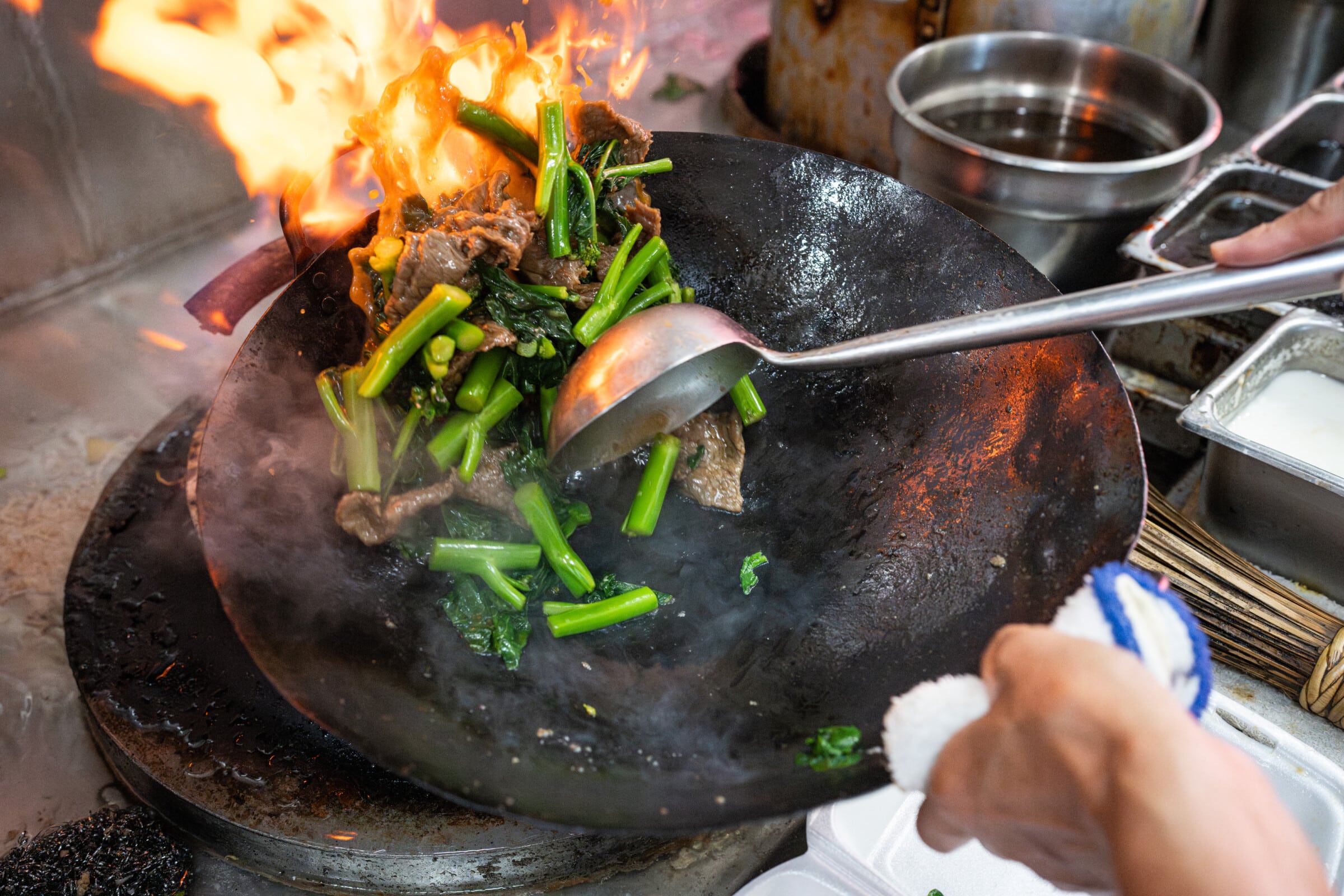
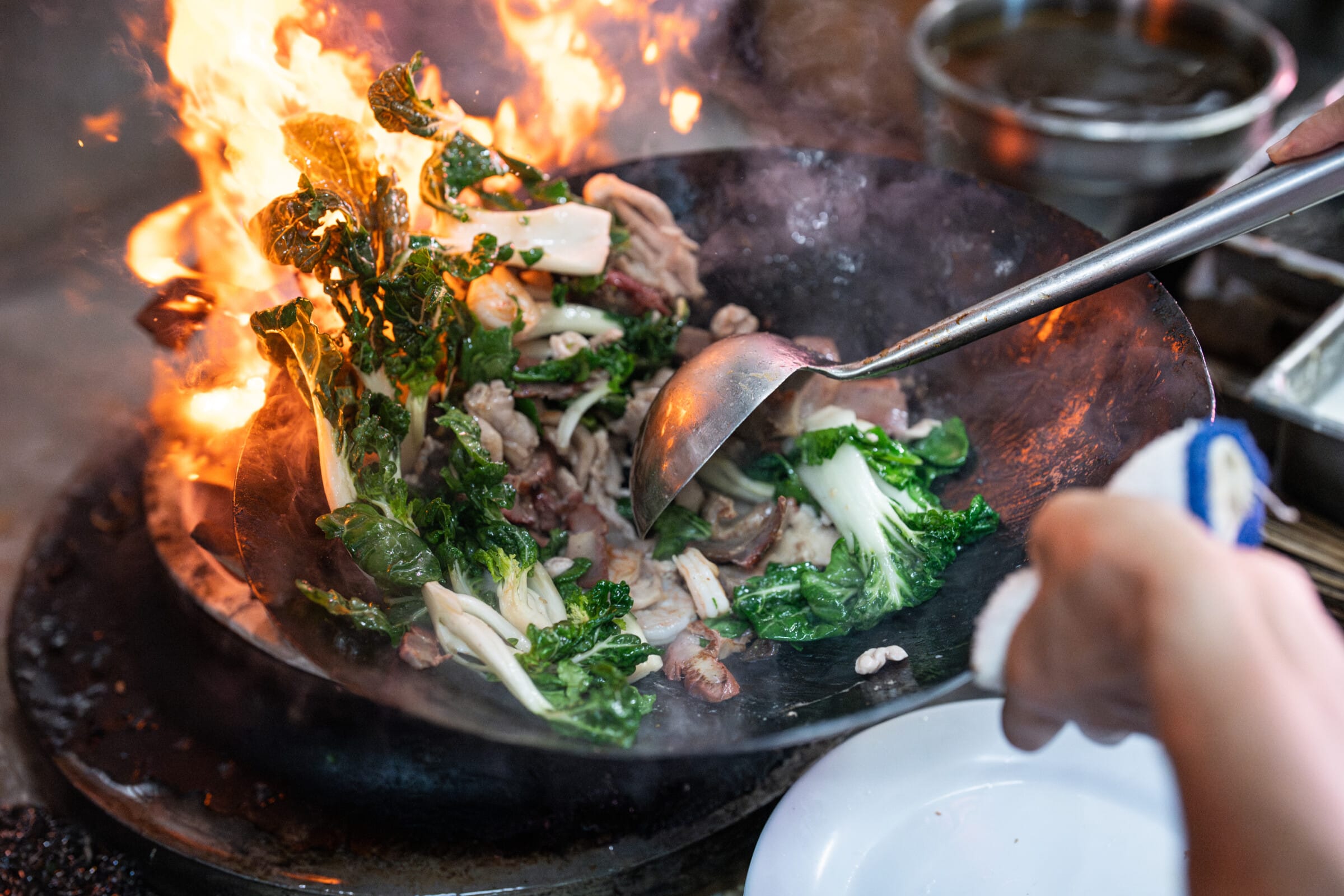
The gang decided it made the most sense to serve the American Chinese favorites that were popular and ubiquitous at the time: beef with oyster sauce and broccoli, fried rice of all varieties, sweet and sour pork, walnut prawns, assorted spicy salty proteins coated in rice flour and deep fried. The menu included a few nods to Won Kok’s Cantonese origins, most notably, the pork belly braised with mustard greens in brown gravy, and the steamed, salted bone-in chicken with ginger and green onions. All of these dishes are still on the menu. Even the half portion of the chicken ($13) lasts several meals.
The Broadway Palace
As the corner strip mall gained its footing, Vincent Hom’s status in Chinatown began to rise. He was made president of the Chinese Benevolent Family Association, and the Hom family moved to a comfortable home in the San Gabriel Valley, an area touted as “the first suburban Chinatown.” 6 Except it wasn’t the auto repair business that was the basis of Vincent’s success, but the restaurant. Business was booming. An influx of new Chinatown residents, Vietnamese refugees, became regulars, as did Filipinos from adjacent neighborhoods. By 1982, Sylvia had left her job at the bank and was working at Won Kok full time. Her business acumen was instrumental in completing the purchase of their leased land. When Won Kok’s hundred square feet of prep space proved inadequate, the restaurant expanded into units 208 and 206.
This time they went big.
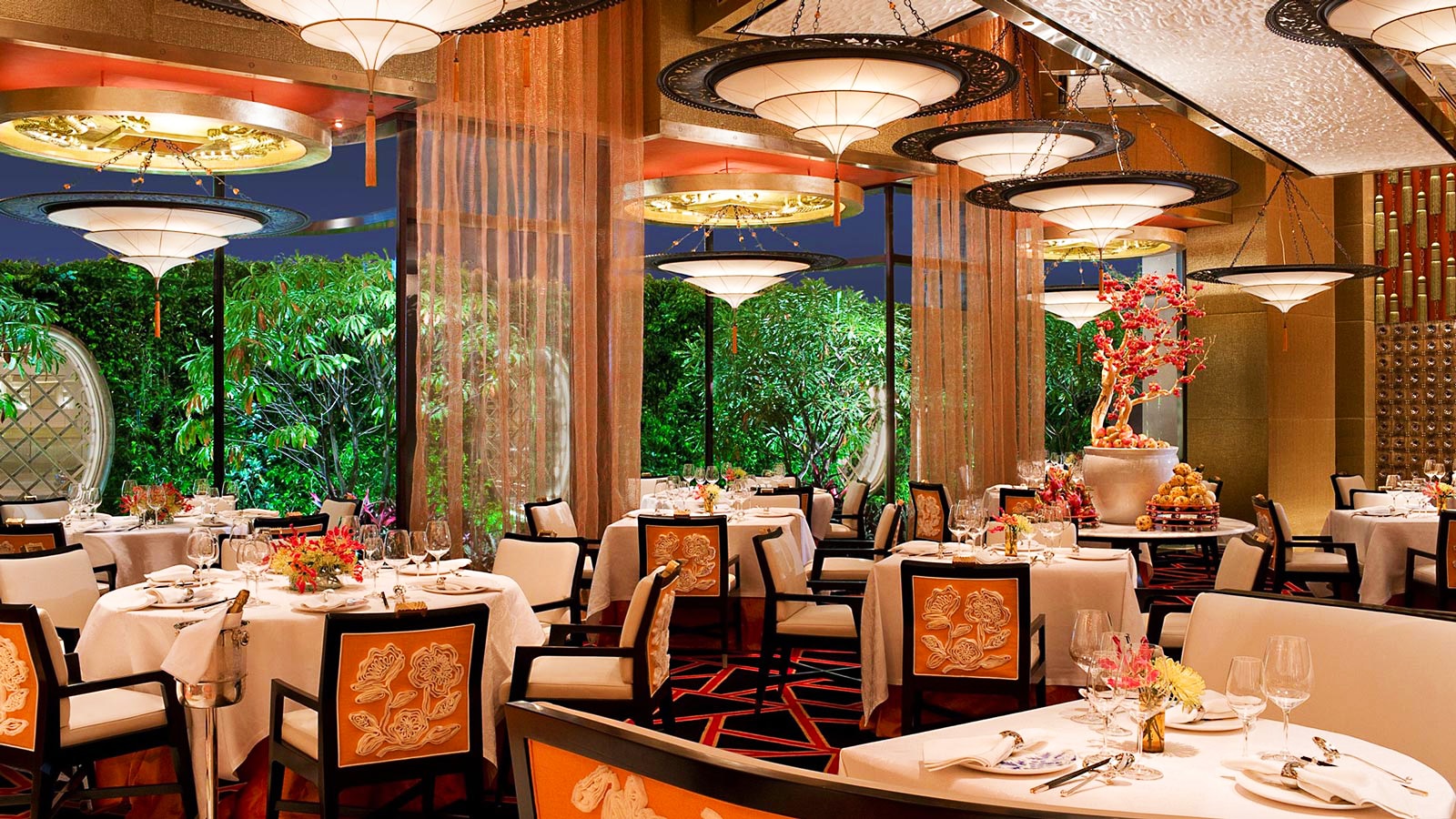
Success led the Homs to invest in a second restaurant. They chose a building about a mile and a half away, just outside of Chinatown proper, in the neighborhood of Lincoln Heights. 7 This time they went big. The three-story Won Kok Palace opened in October of 1984. The atmosphere was opulent and grand, with dramatic mirrors, chandeliers, and crisp white tablecloths. Vincent built an office on the upper mezzanine ringed by private banquet rooms. The tables were spaced with a luxurious berth for maneuvering dim sum carts. Vincent had connected with some of Chinatown chefs that were dumpling specialists, and he wanted to bring them into his burgeoning empire.
At the end of the month, on October 30, 1984, the Homs threw a grand opening fête. The party was attended by over 500 people, including the city councilman, various local officials, and Chinatown community luminaries. Depleted after all the revelry, Vincent decided to sleep in his office that night, along with a relative. 8 In the early morning hours of October 31, the building caught fire. The relative managed to squeeze out a rooftop window, and was rescued by firefighters. Vincent, who was a larger man, died in the conflagration at the age of 43. Won Kok Palace was destroyed.
The blaze was arson.
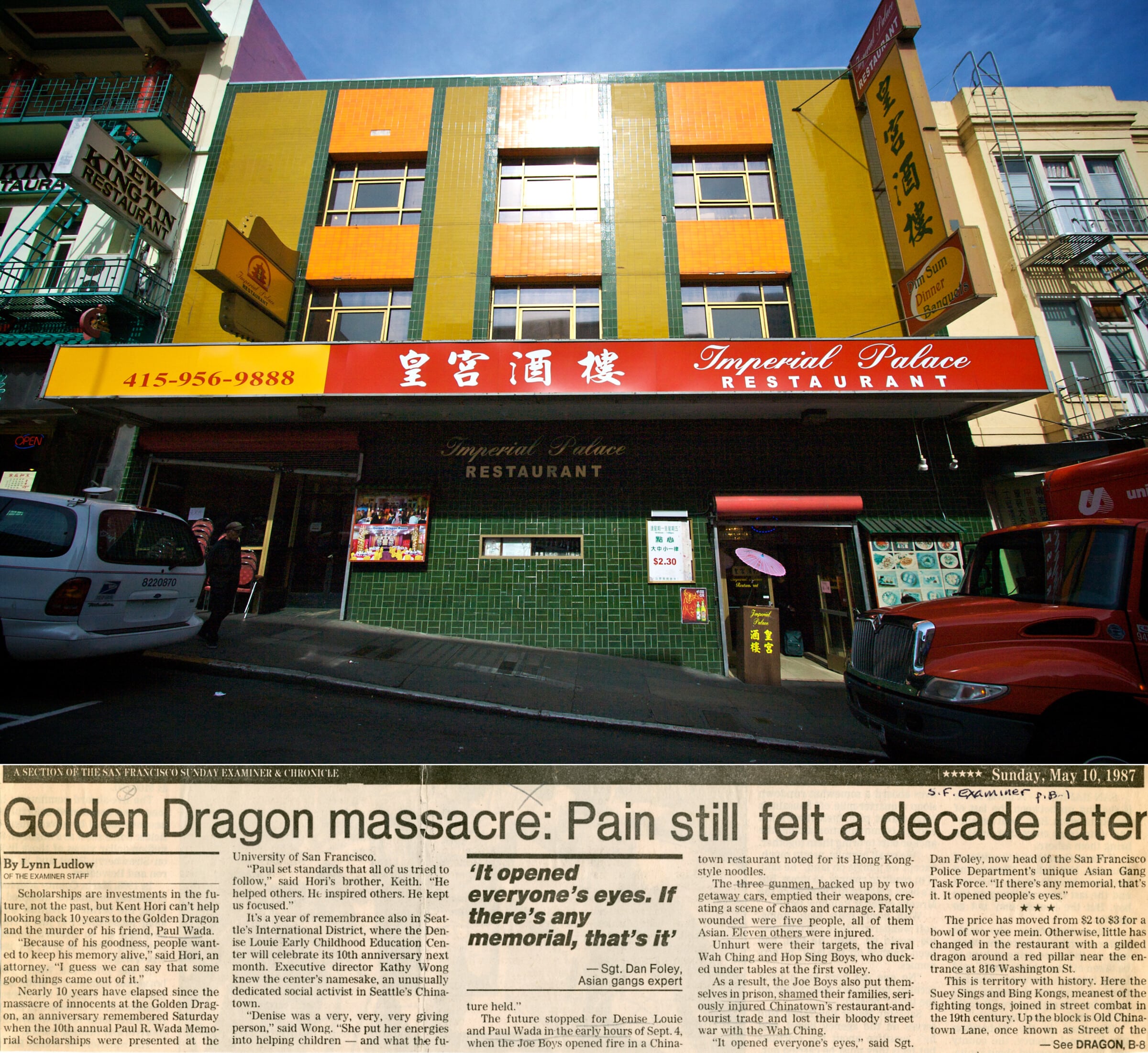
The police decided the blaze was arson, and announced a $75,000 reward for information. 9 None was forthcoming, then or now. Alvin told me that rumors circulated about his father’s ties to crime syndicates, specifically the Wah Ching gang that had migrated south to Los Angeles from San Francisco. “My dad might have known some people in the Golden Dragon Massacre,” Alvin speculated, referring to the 1977 mass shooting in San Francisco’s Chinatown. It was all based on rumors, and he refused to conjecture further.
Rising from the Ashes
Newly widowed, with three young children and two properties to manage, Sylvia Hom came into her own. In Alvin’s telling, his mother “began to shine.” Wok Kok Palace miraculously retained some of its structural integrity, so Sylvia decided to rebuild. She kept the dim sum, the seafood specials, and the elegant touches — cherry paneling, silk cushion seats, gilded emblems of dragons and birds — but she added dance and music, ultimately creating a social club for her milieu of Chinese retirees. The restaurant opened in 1989 as New Won Kok, and, as The Los Angeles Times reported, “dancing [was] on the menu.” 10
Dancing was on the menu.Patrons would gather at large, round tables with lazy Susans in the center, fortifying themselves for long nights of cha-cha-cha and fox trots. Sylvia even hired dance instructors to give the regulars lessons. “She loved that place,” Alvin told me. “It was so fancy, and so nice. It was her entertainment outlet, and she had all her friends come.”
Sylvia was quick to understand the appeal of karaoke, which was relatively new to the U.S. A Burbank bar named Dimples started karaoke as early as 1982 — they call themselves “the first karaoke bar in the Western Hemisphere” — but the song books and 8-track cassettes were unwieldy, and the trend didn’t catch on right away. Even the legendary Smog Cutter in Virgil Village didn’t begin hosting karaoke until about 1993. (Café Brass Monkey in Koreatown started up around the mid-1990s).
Sylvia made a place for elder Chinese nightlife and ameliorated her own grief at the same time.
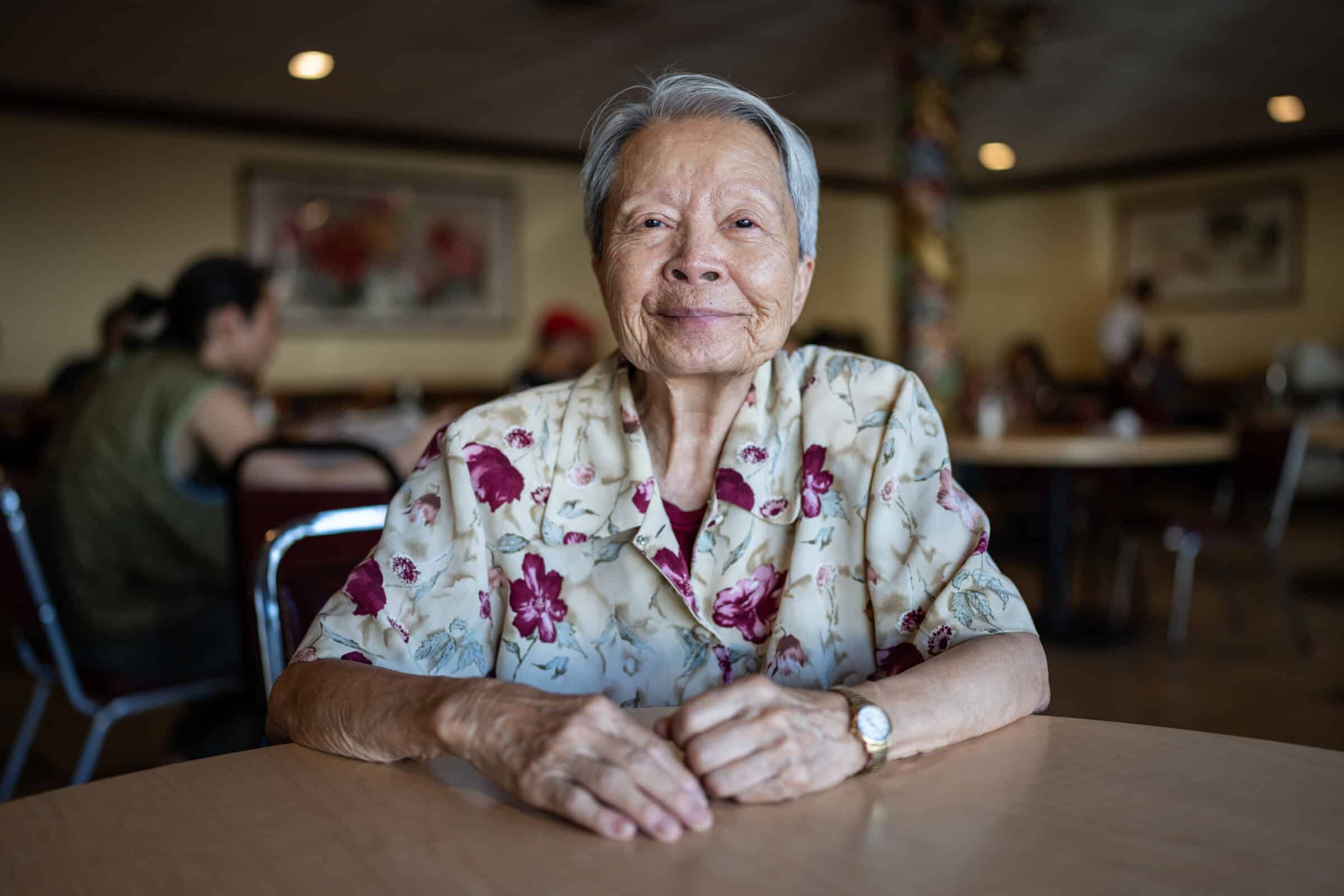
Sylvia outfitted New Won Kok with lights, a dance floor, and a sing-along sound system in the early 1990s. The repertoire included everything from Chinese opera to Sinatra standards, and the crowds, sometimes up to 80 people, would swing-dance along. Sylvia made a place for elder Chinese nightlife and ameliorated her own devastating grief at the same time. In a 1994 Los Angeles Times feature about New Won Kok, she explained how the restaurant had lifted her depression:
“Chinese people now know how to enjoy life,” said Hom. “In the old days, even if we hit 60, we still worried about saving money. All we did was stay at home and buy property. Now, we’re taking care of ourselves. We realize life is too valuable not to enjoy. … I was depressed for two years, but then I decided that my life had to go on,” she said. “I don’t make much money doing this, but I don’t care because I’m happy on these three nights because I’m dancing and singing.” 11
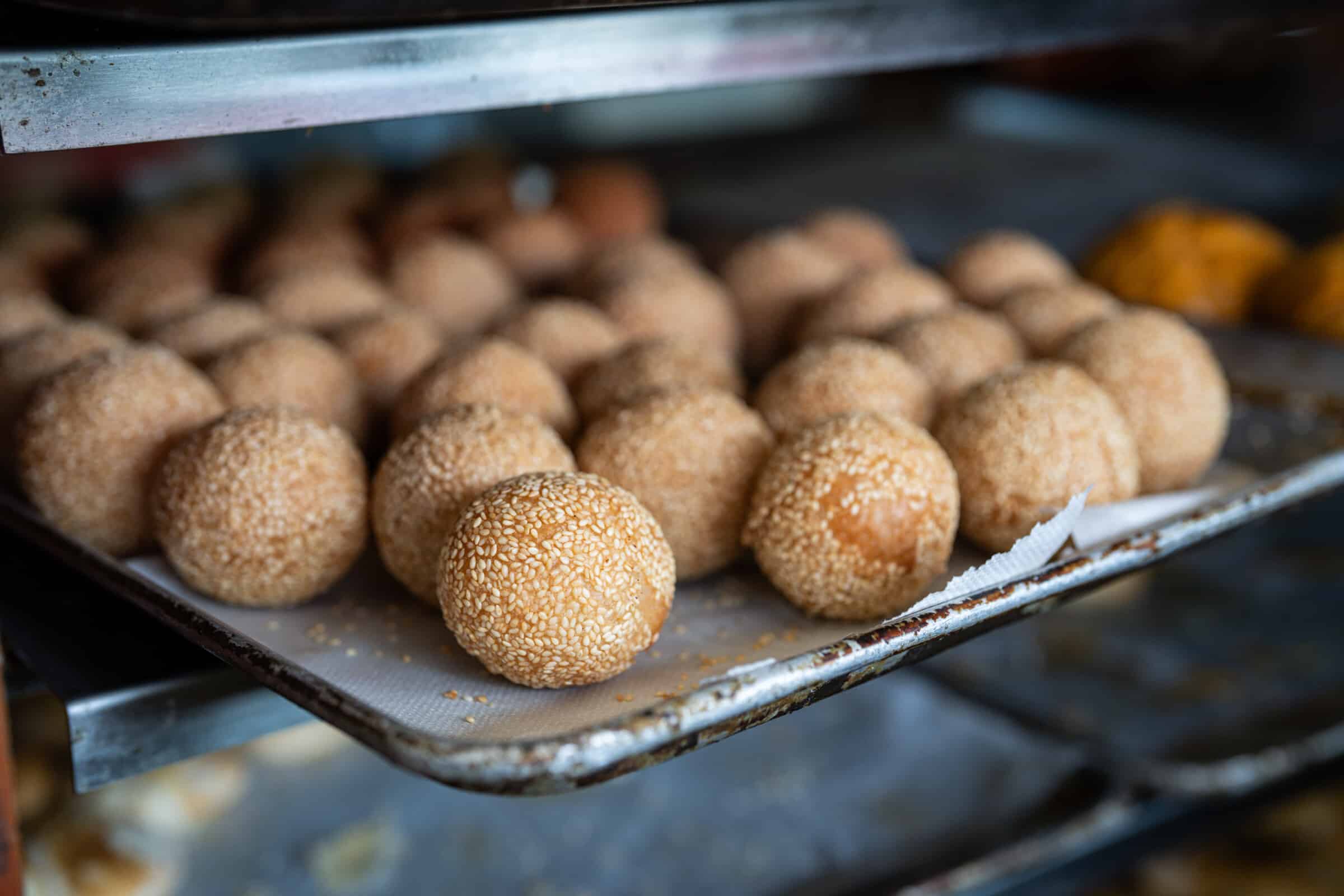
Meanwhile, Won Kok Center back in Chinatown continued to thrive, with steady support from a community of regulars. The defunct railroad tracks were finally removed, and commercial expansion opened the dead end. Alpine Street became a thoroughfare with much increased foot traffic. Sylvia’s standards were exacting, and her rule “iron-fisted,” which helped make the restaurant a great success. When New Won Kok began to falter — it struggled to find steady clientele amongst its mostly Latinx neighbors — Sylvia shifted staff to Won Kok Center and created a takeout dim sum menu. The restaurant eventually absorbed all the units in Vincent’s original strip mall, including his garage, the business that started it all. These days, the former garage is used to prep handmade dumplings, pork buns, custard tarts, and sesame balls.
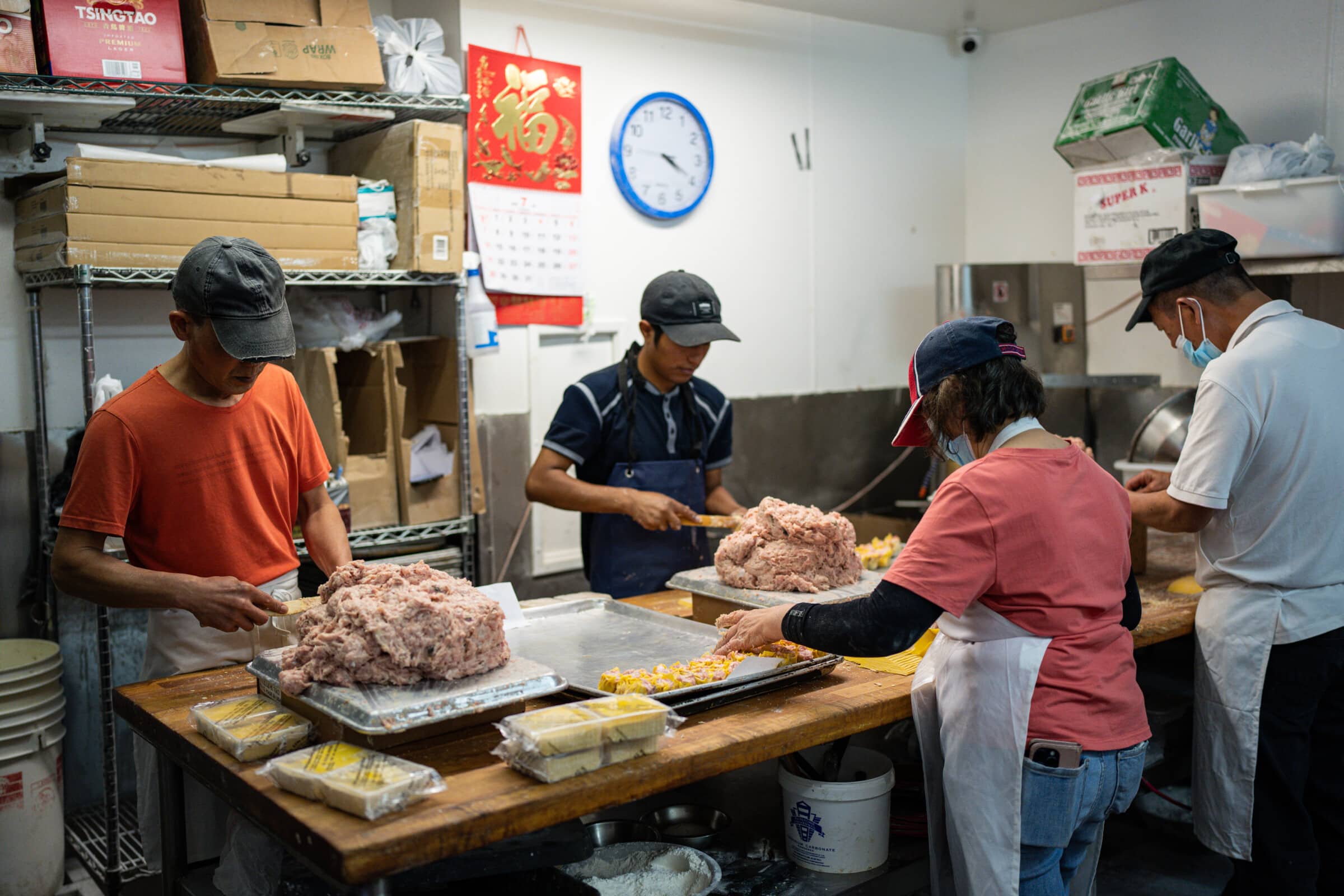
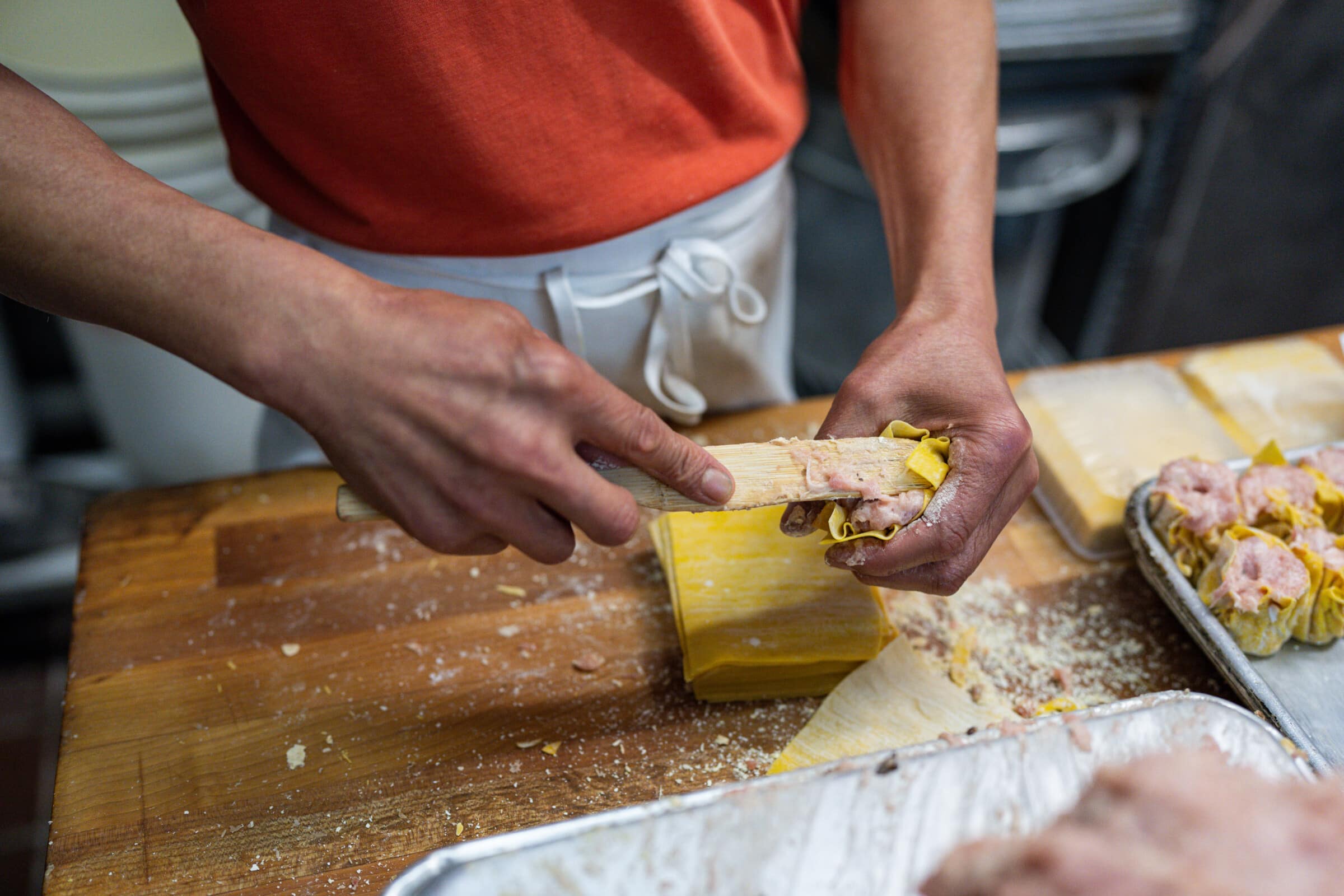
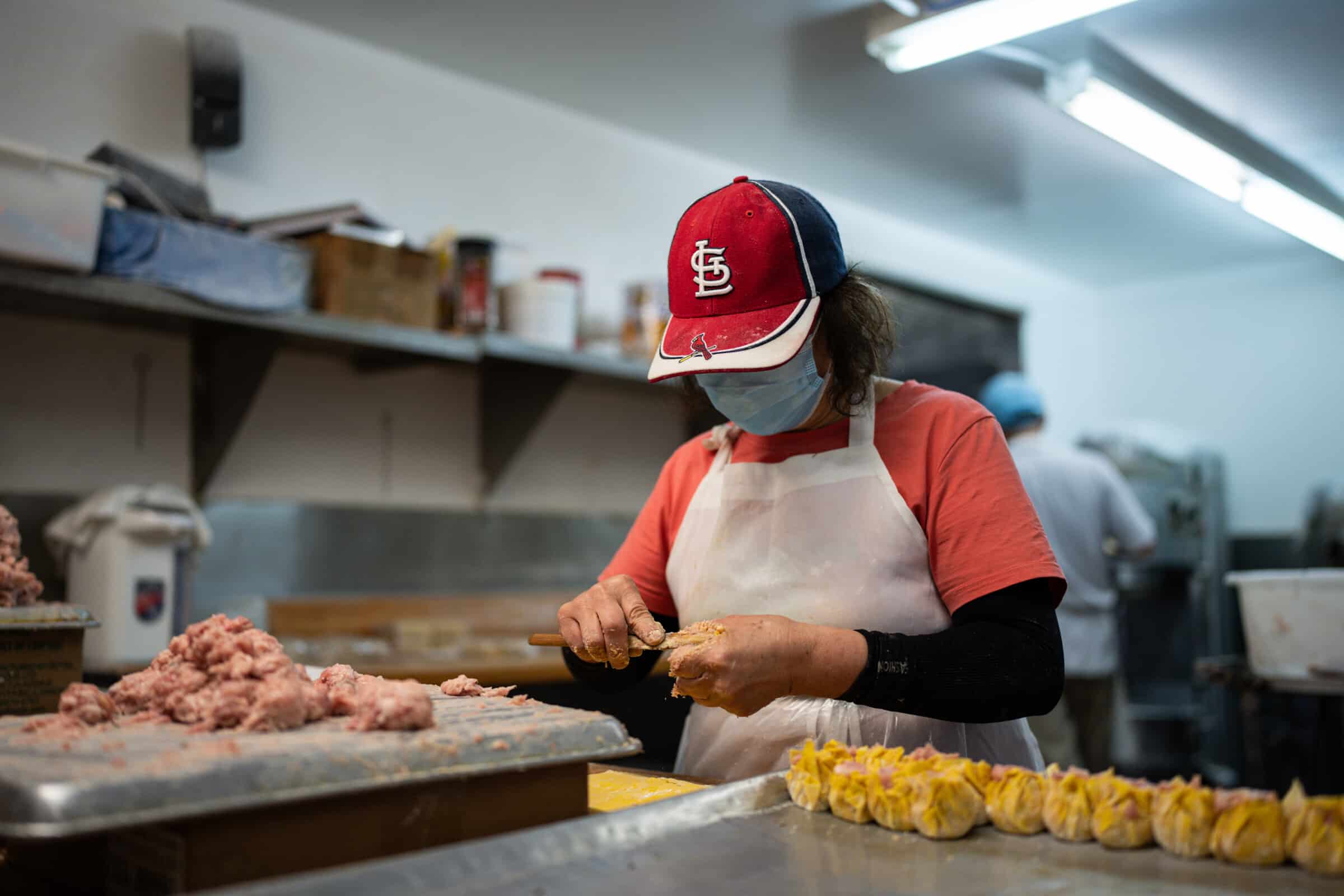
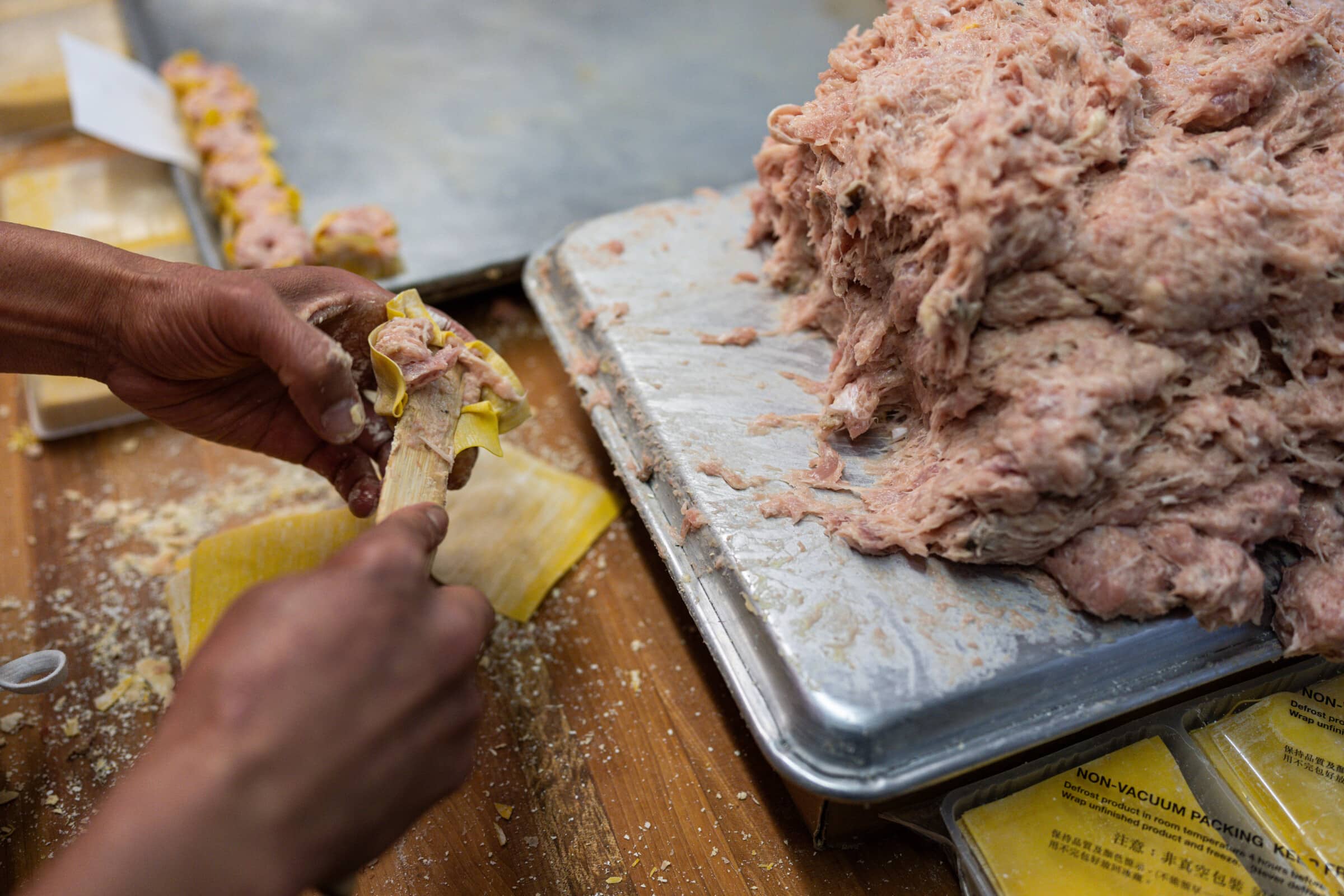
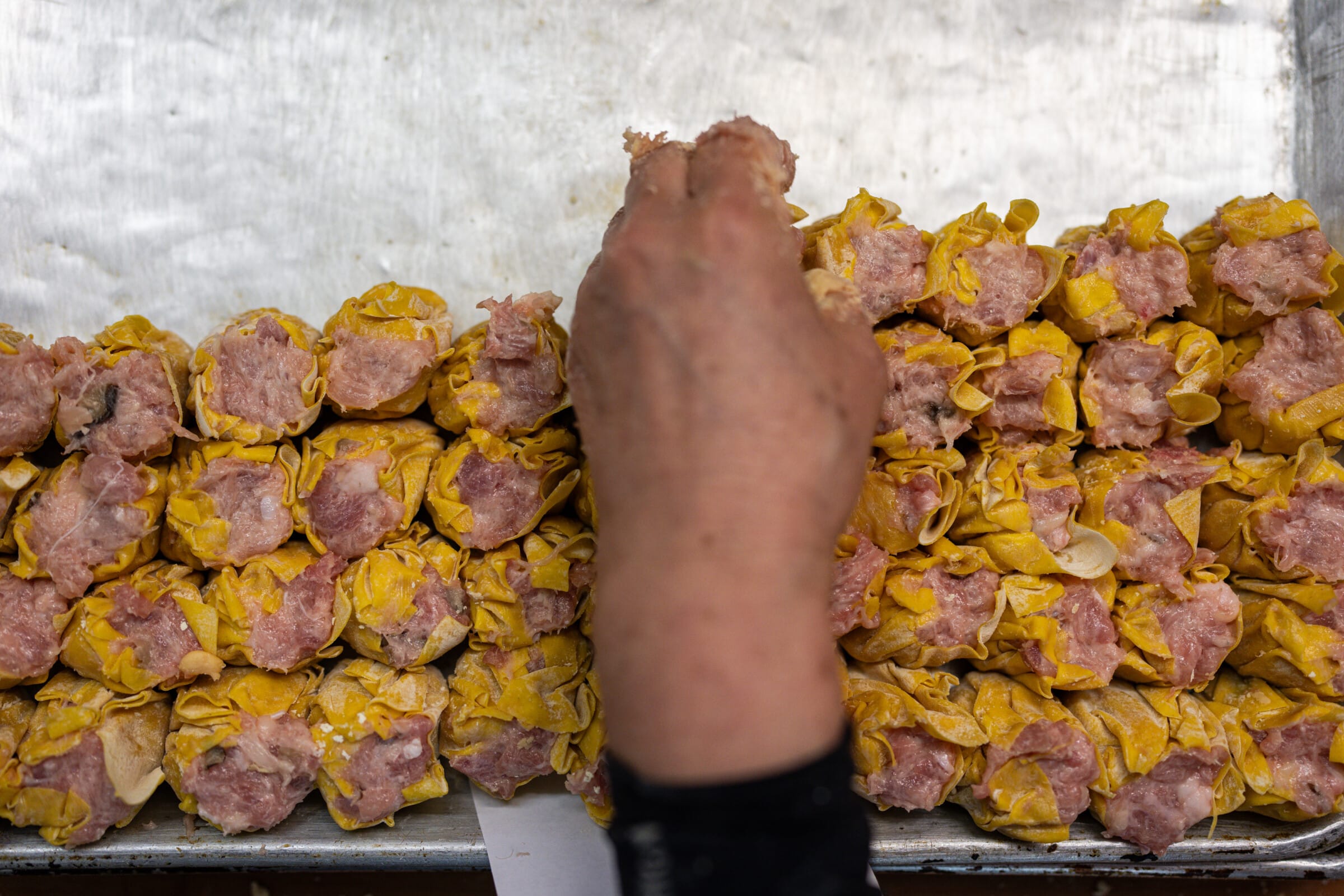
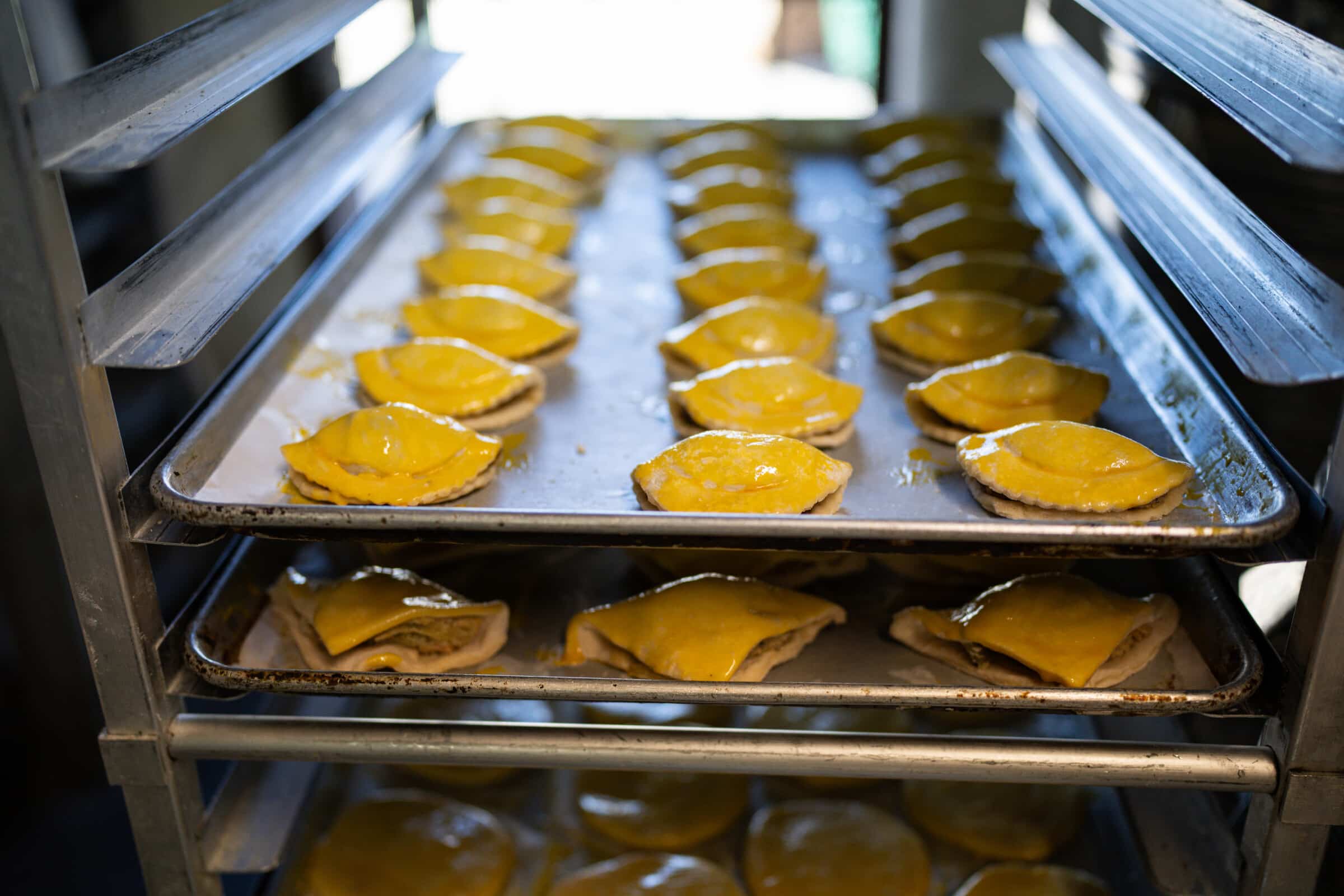
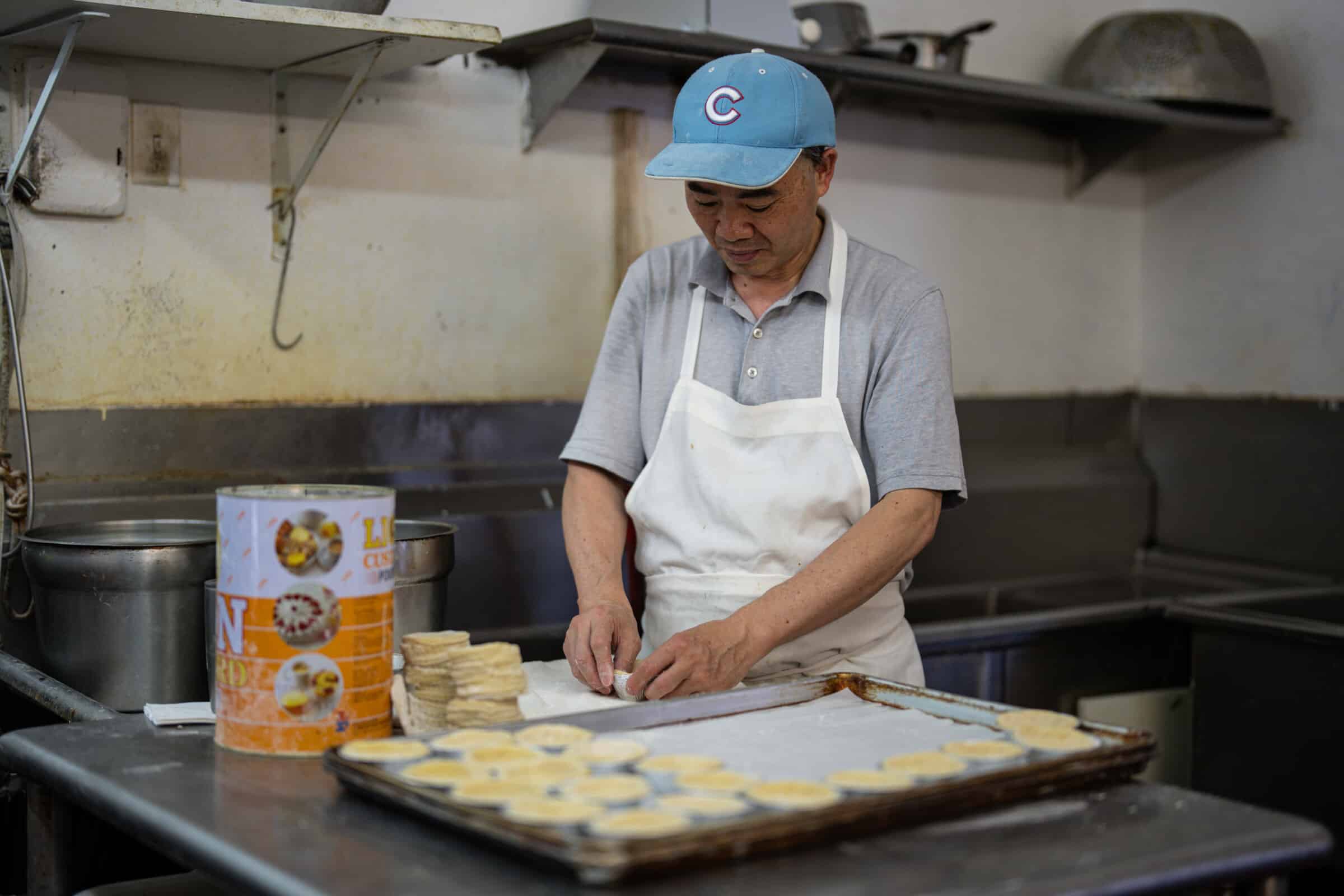
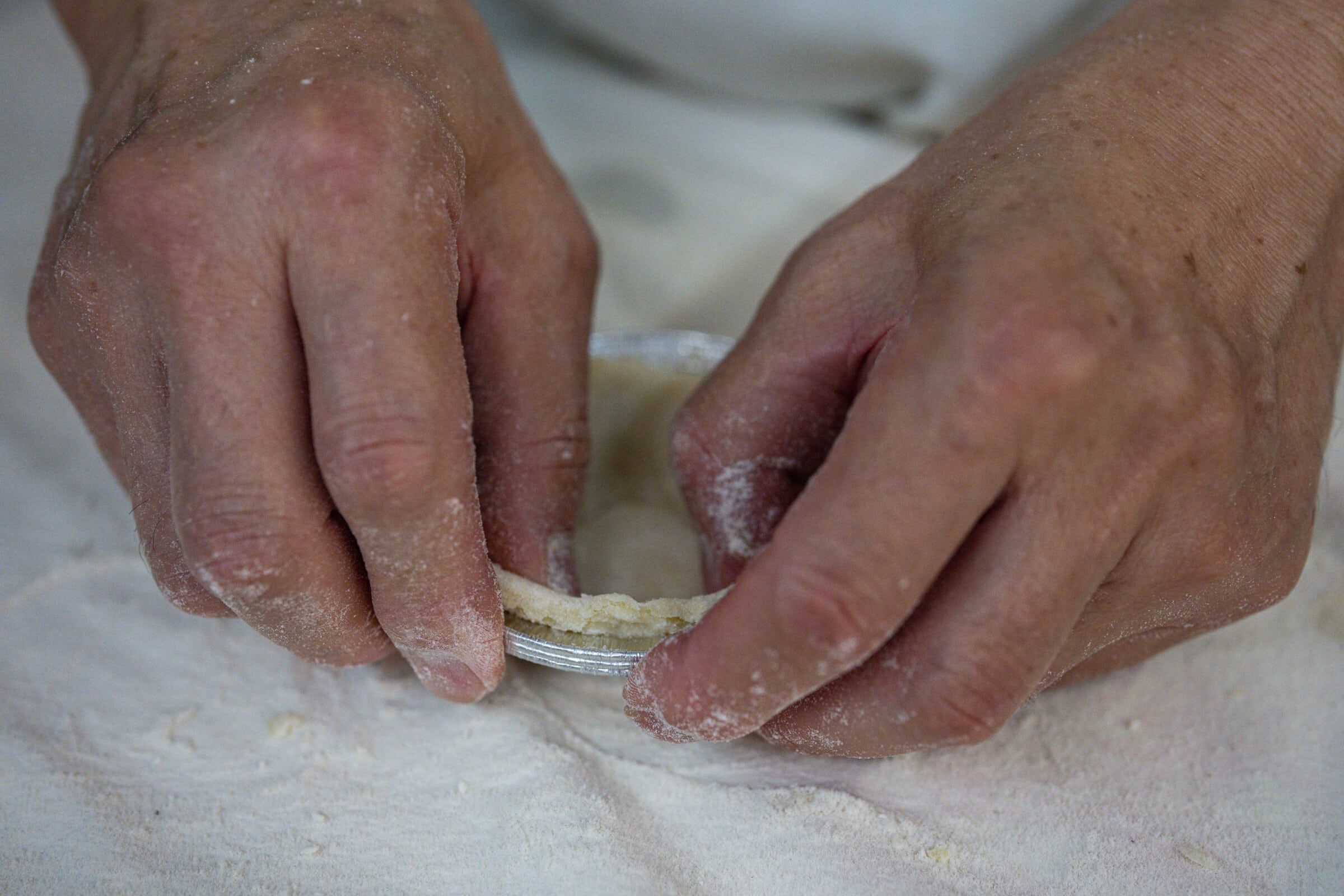
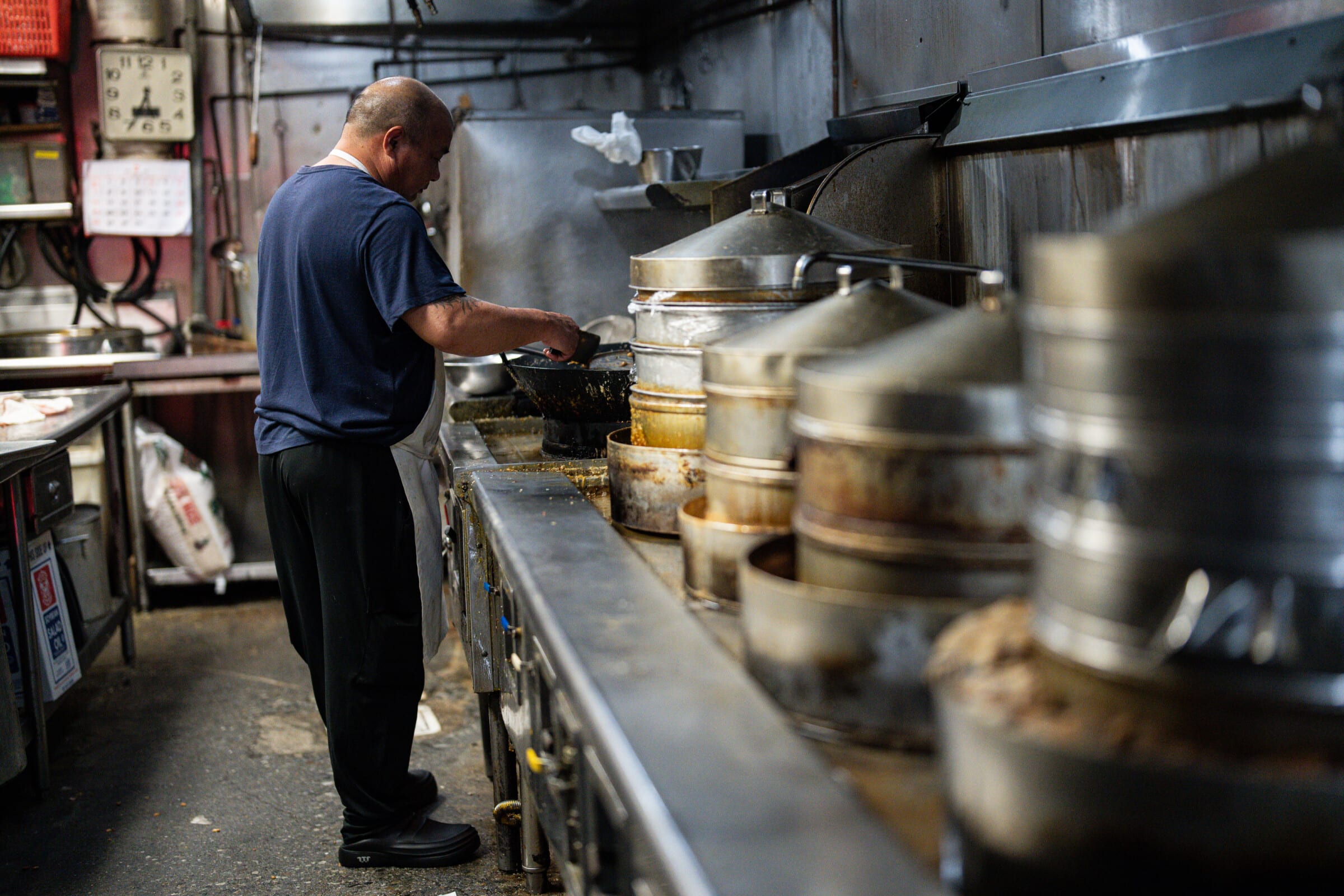
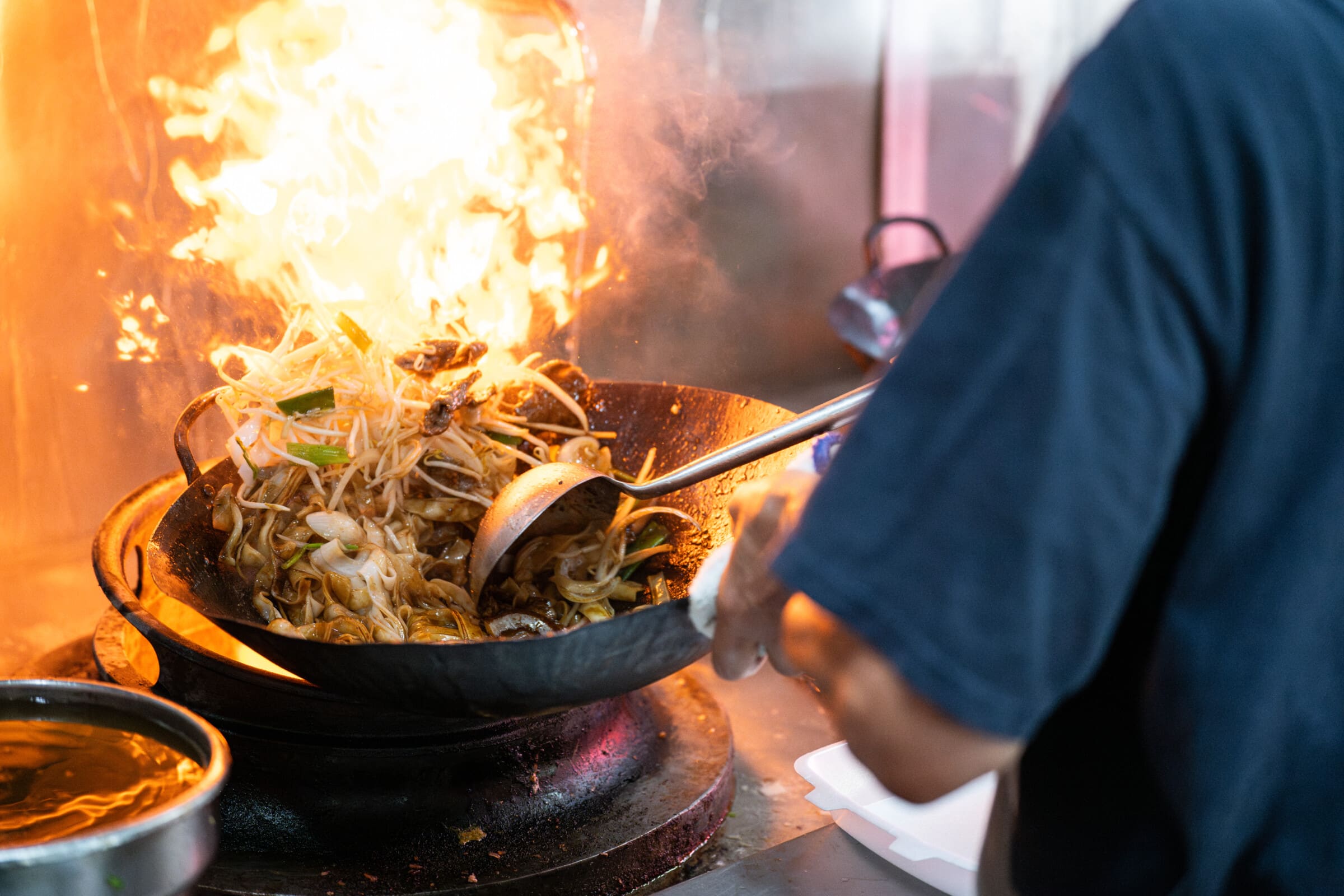
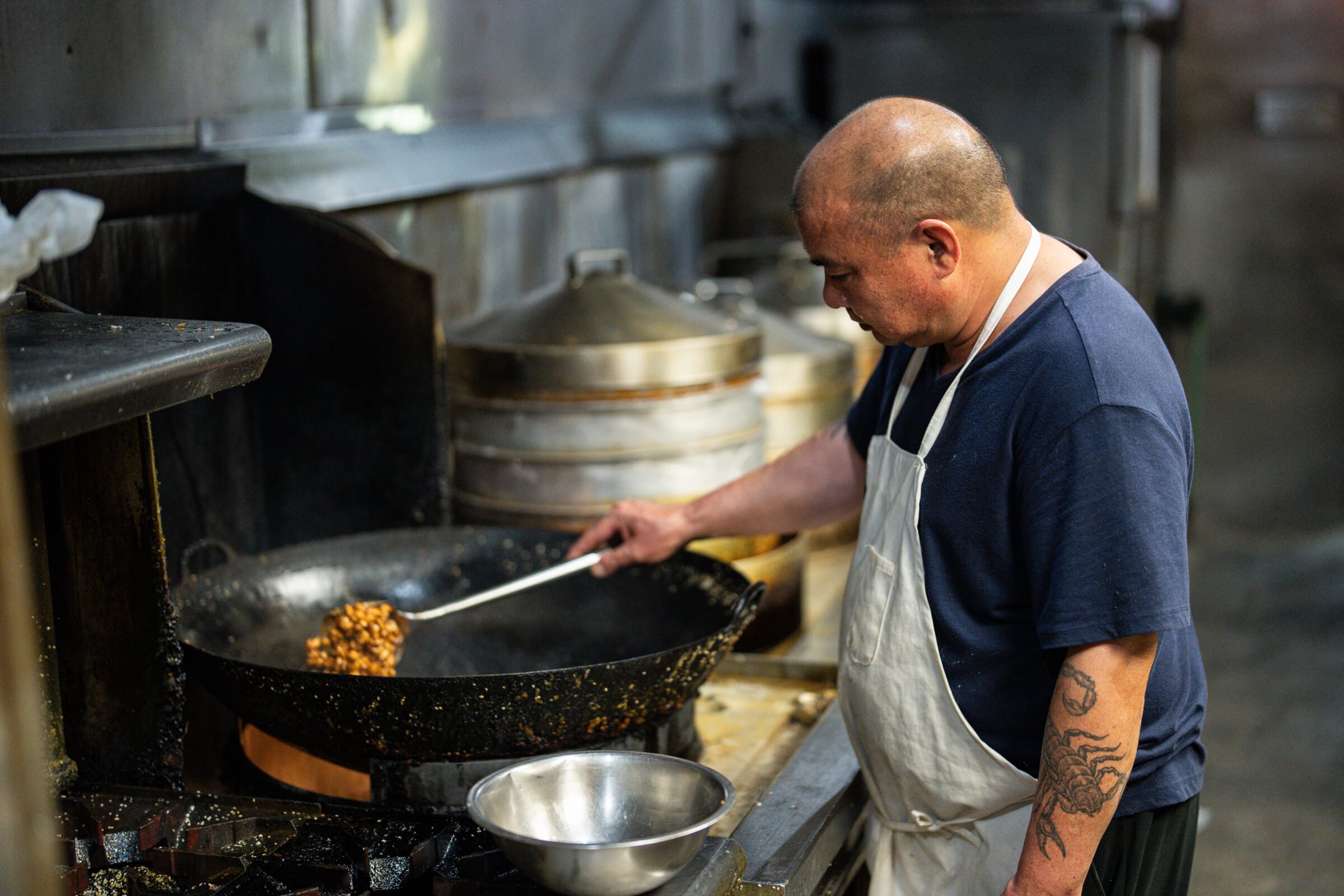
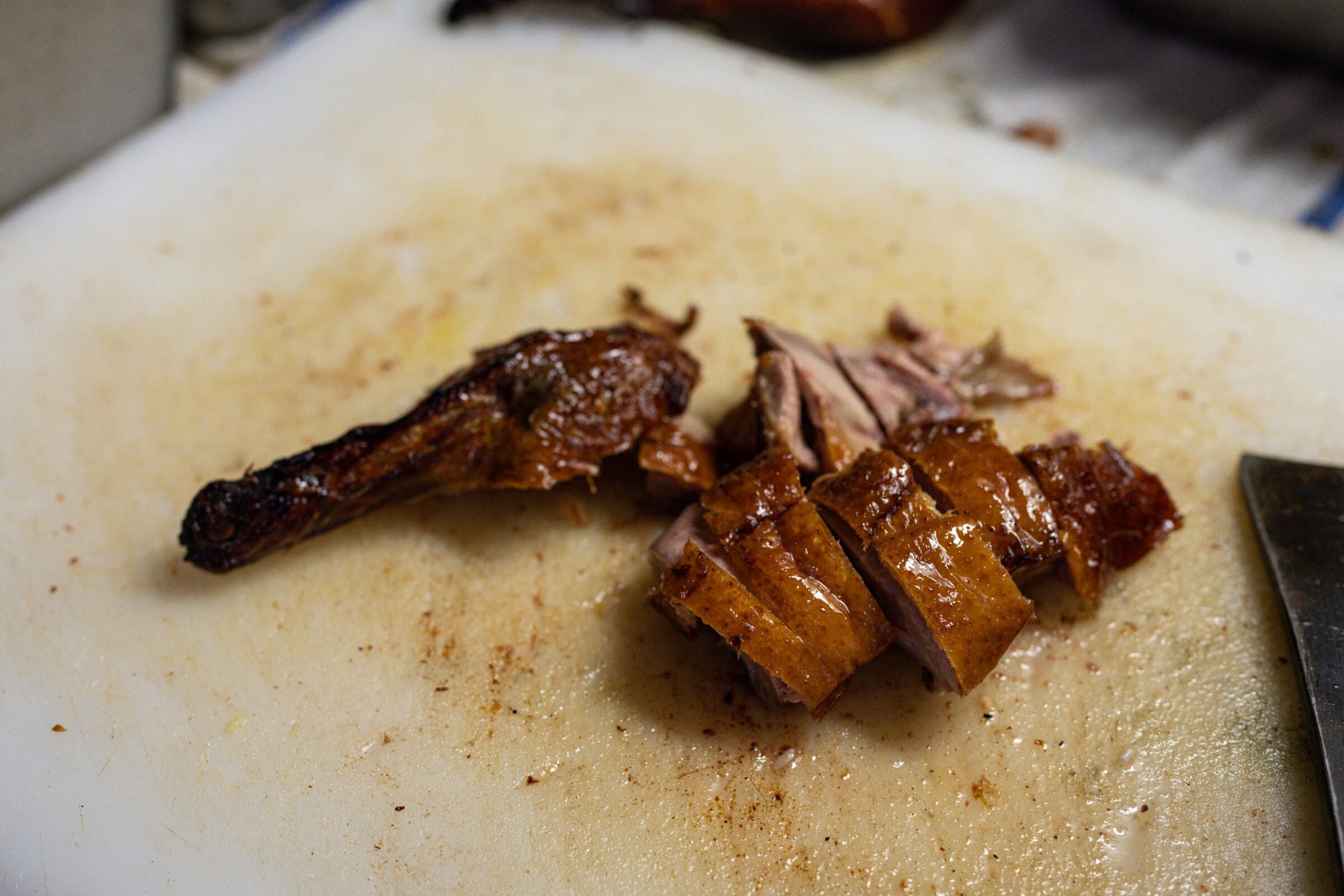
Regulars know you can order dim sum as supplements to your sit-down meal, but most Won Kok dim sum is sold through a sidewalk takeout window that became Tik Tok-famous during the pandemic. (The window, though always structurally there, was opened for takeout as a pandemic measure.) The treats are meant to be taken away and enjoyed elsewhere, though that often means eaten in the parking lot, which has a bustling social history all its own, with decades of revelers and night owls. One of Alvin’s neighbors confessed that it was in the Won Kok parking lot that he first consummated his relationship with his wife.
The sidewalk takeout window became Tik Tok-famous.
Epochal shifts have transformed the global restaurant industry since Won Kok opened in 1976, and there’s been a few changes at Won Kok too. During the Covid era, the restaurant started closing much earlier, at 9pm. The pandemic shutdown contracted their employee base, and even after the pandemic measures abated, it was hard to hire new workers to take the later shifts. 12 There was another change in 2023, following the Homs’ visit to Cuba, when they saw that even Havana’s oldest restaurants had switched to computerized point of sale systems. They decided to follow suit, though their original manual cash register still sits on the laminate counter that’s been there from the beginning.
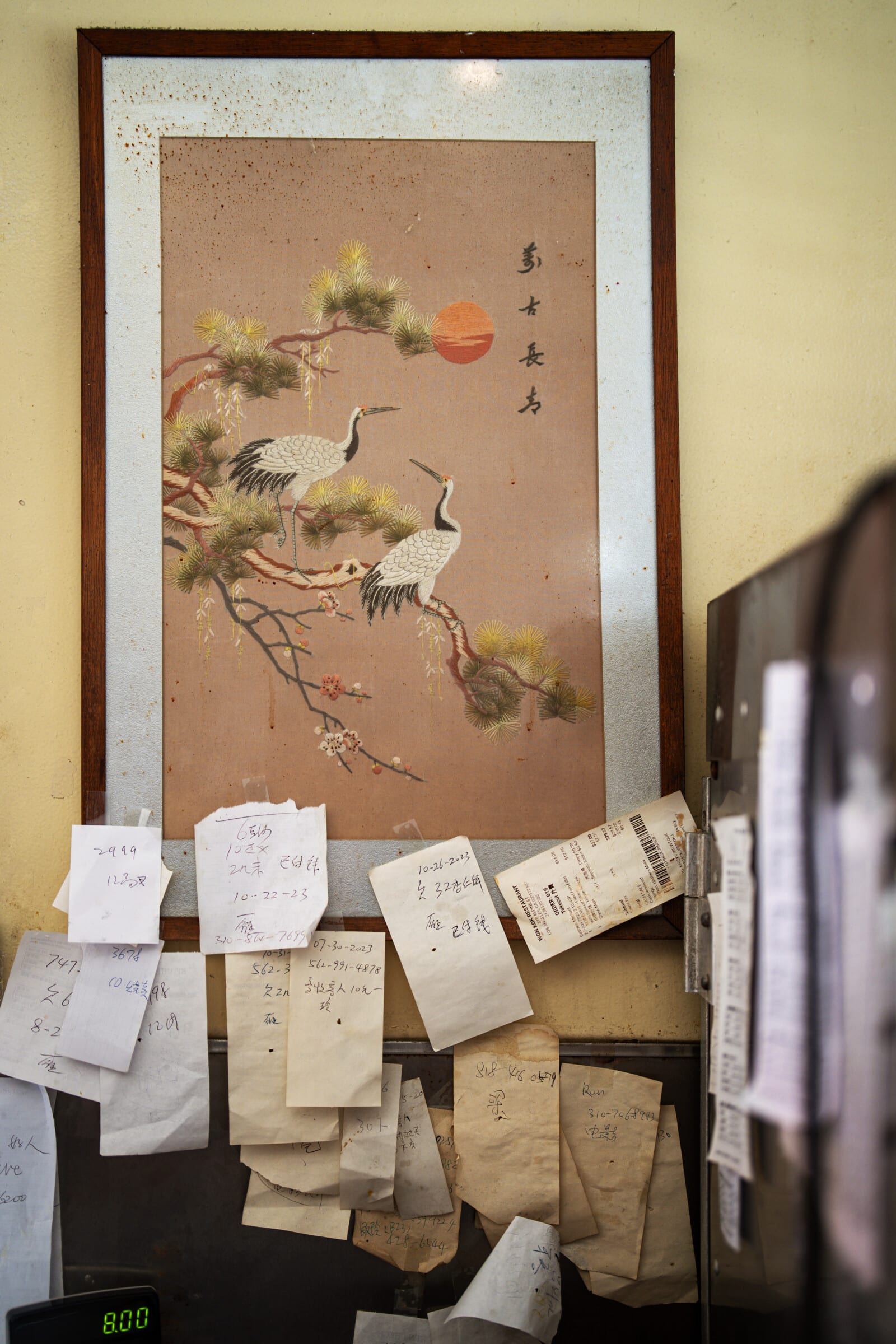
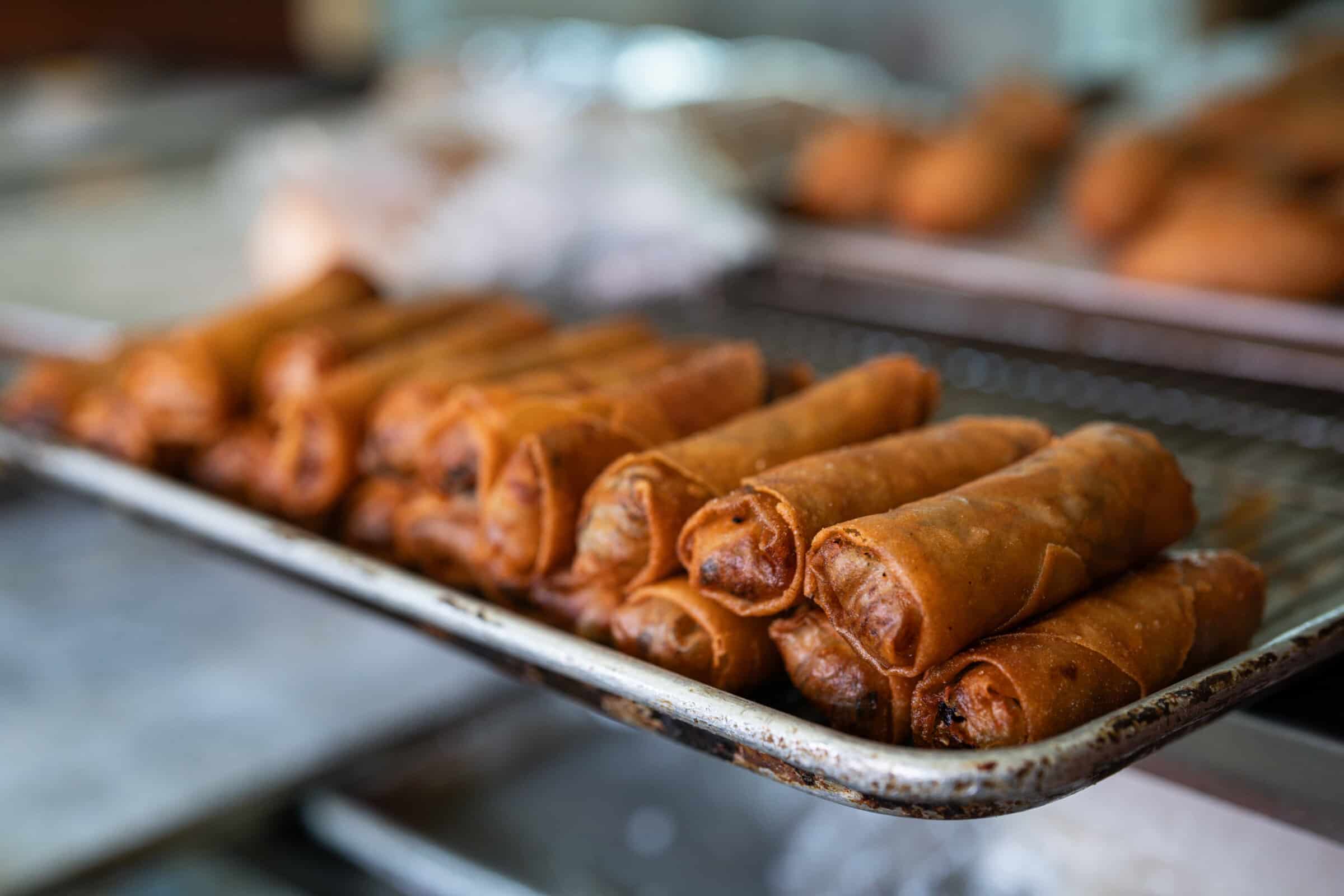
But in most ways, Won Kok carries on today much as it always has. Sylvia is still in charge, though she tends to manage from her home, watching the surveillance cameras. Her son Alvin is devoted to the restaurant. The same cooks have been working their tried-and-true magic for 40 years. They still serve those old-school, burrito-sized egg rolls that everyone who grew up in the 70s and 80s fondly remembers. In fact, many of the original recipes remain on the menu today, with only the slightest of adjustments. The fact that the Homs so wisely bought land protects Won Kok from the market forces and unforeseeable calamities that otherwise destroy small family restaurants.
Postscript: Grief, Full Circle
On a rainy Sunday night in late February 2024, I left the house for the first time in weeks to meet a friend at Won Kok. I almost didn’t go. A month earlier, my wife and I lost one of our two beloved companion species, our darling Lily cat, in a particularly traumatic and unexpected way. As childless lesbians, our cats are essentially our kids — the special beings with whom we’ve chosen to share our lives. Beyond nursing our own grief, Sarah and I were tending our surviving cat Corky, Lily’s littermate brother, who expressed his mourning in howling outbursts.
I felt like part of the world again.
Nonetheless, I hastily threw on my vintage, glow-in-the-dark Phantom sweatshirt and met up with my friend Andrea, who I call “The Fonz.” We stepped into Won Kok. I was enveloped in its familiar hum, smelling the foods that I’d always turned to for comfort — I felt for a moment like part of the world again. The guy behind us was asking his server about ABBA, the waitstaff bustled by with Melmac platters in that familiar pink “Oriental” pattern, and I could hear Tagalog. Generous heaps of Cantonese noodles, egg foo young, and prawns with their heads still on, tentacles flecked with crisp rice flour were bustling past. I ordered the spicy salty pork chops slathered in chili oil. My go-to.

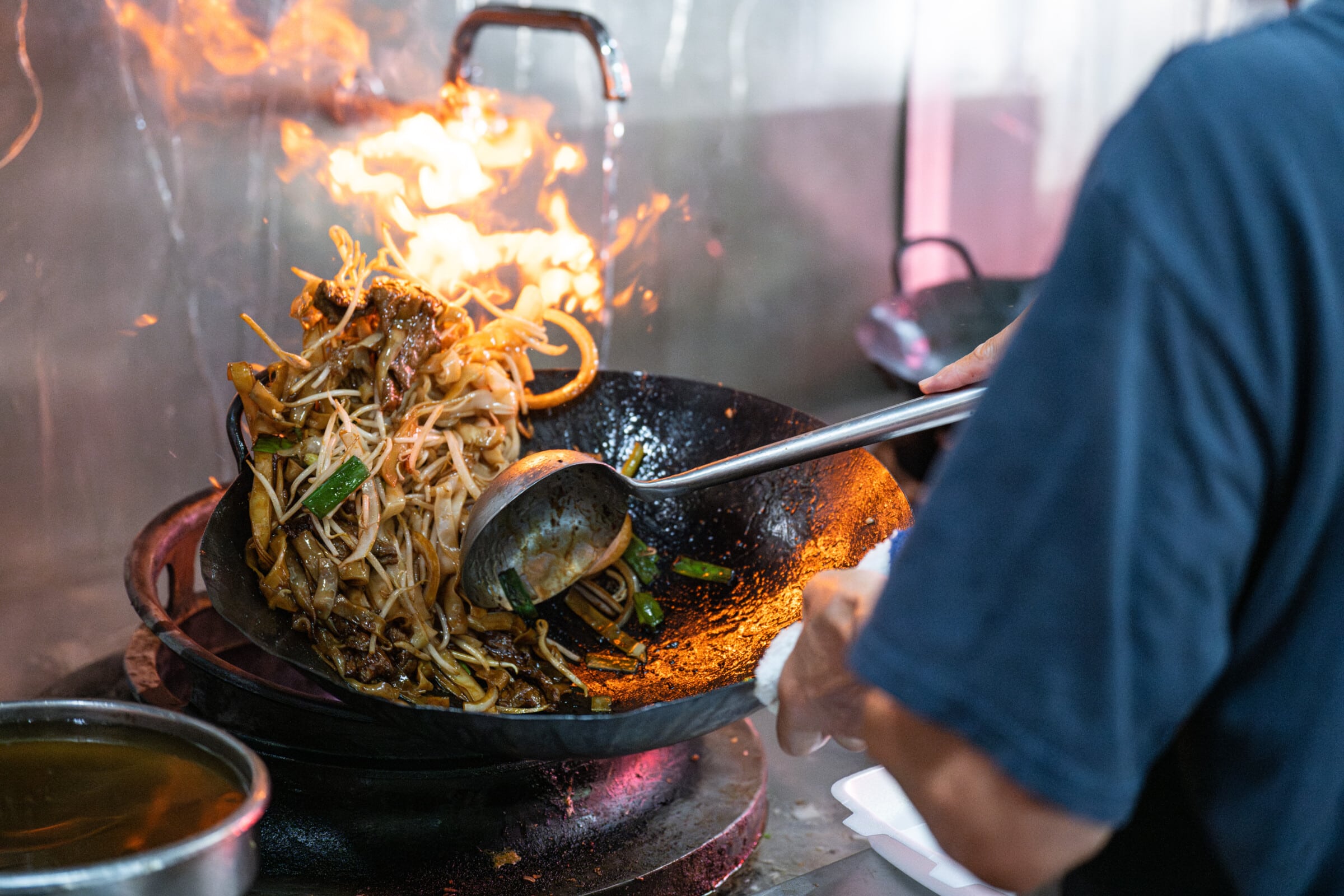
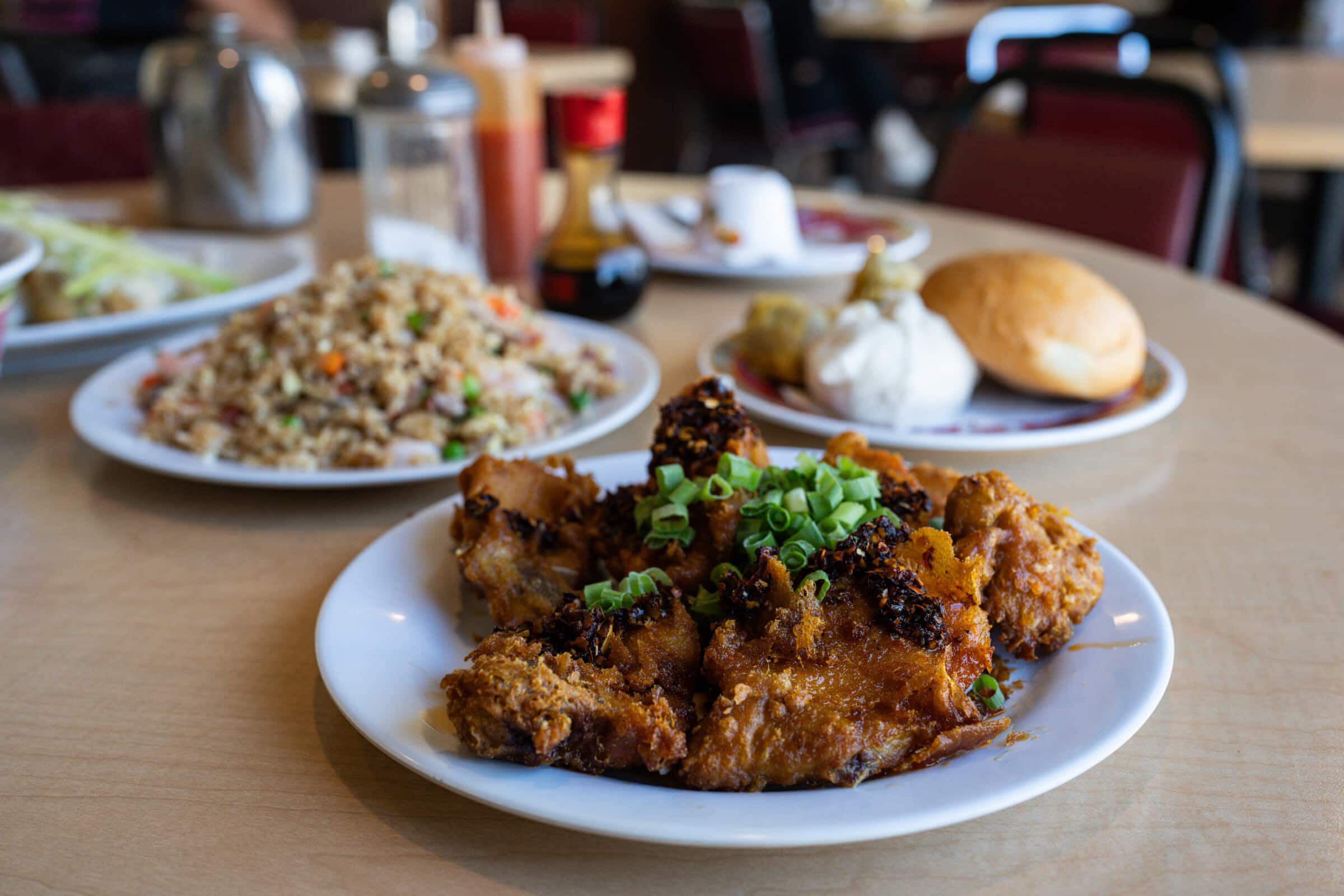
As I finished eating, a voice behind me asked, “Do you like Phantom of the Opera?” I mumbled, “Who, me?,” before remembering my shirt. The curious stranger was a Latino man in his late fifties, otherwise focused on cooling the broth of his wonton noodle soup. He didn’t really seem like the Phantom-loving type, and it turns out he wasn’t. “I saw it 40 times, but hated it,” he teased, with a hint of drama. And then he slurped a plump wonton.
Our conversation continued longer than it should have, and what we said about the merits or failures of Phantom doesn’t really matter — it’s the fact that we took time to say anything at all. Of all Won Kok’s successes, this is the one that feels most precious: the Homs created a place where “stranger intimacies” flourish, where people of color and queer folk across all walks of life feel at home, and where grief is soothed, if only for the time it takes to finish a bowl of noodle soup. 13


.jpg)
If you would like to comment on this article, or anything else on Places Journal, visit our Facebook page or send us a message on Twitter.