
The final player was a soft-spoken Negro architect from Newark. He told them what he did for a living, to uncomprehending stares.
“Black architect?” Wright said. “I didn’t know they let us do that.”
— Colson Whitehead, Crook Manifesto, 2023
In architecture, fiction will replace function. (“Form follows fiction.”)
— Bernard Tschumi, “Manifestos,” 1978
Opening Notes: Black, Architect
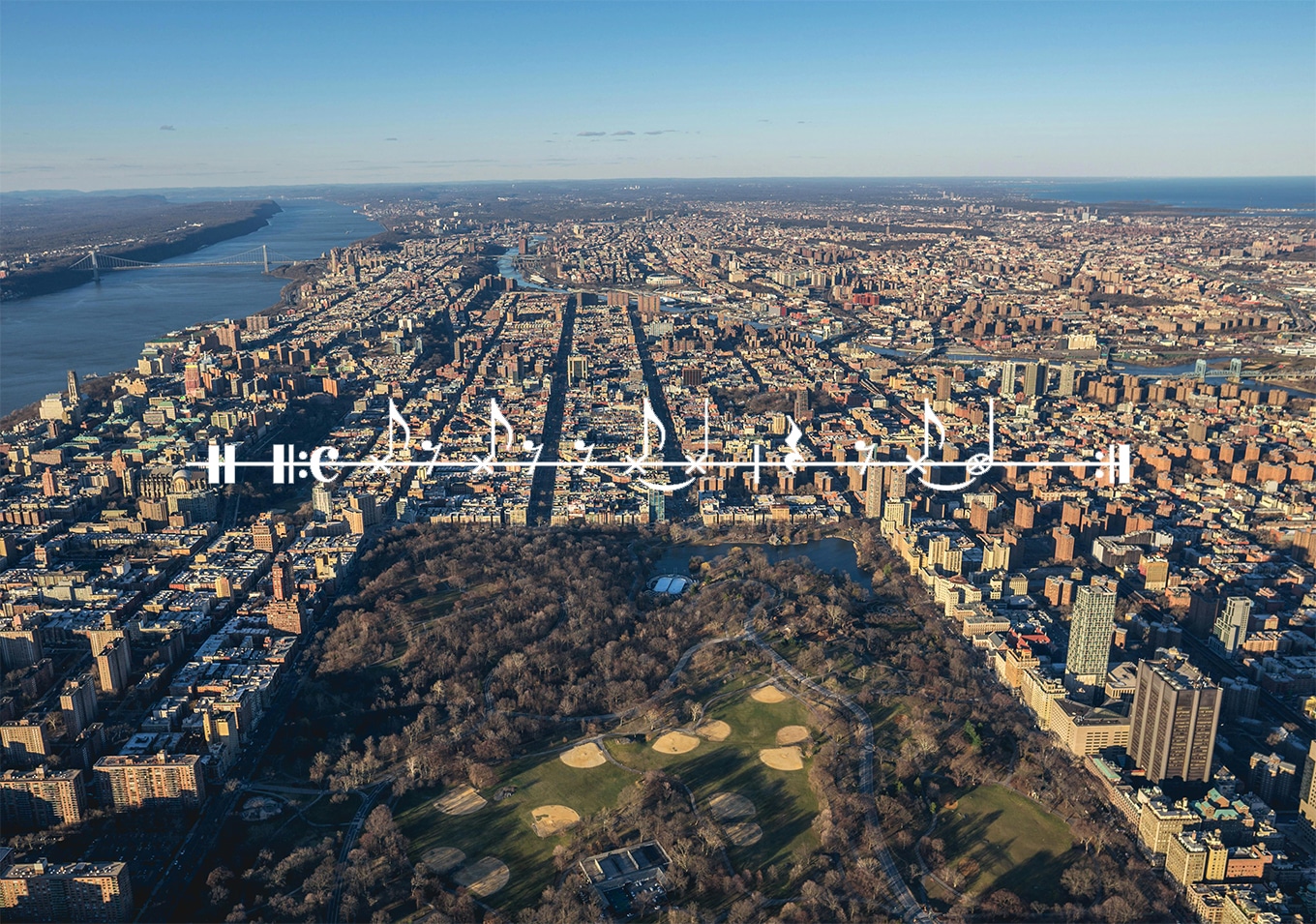
Leave it to Herbie Hancock, composer of some of the most indelible opening notes in jazz history — see 1962’s “Watermelon Man” or 1964’s “Cantaloupe Island” for confirmation — to craft an arresting first line for a form letter, even preceding said letter’s greeting:
THE FOLLOWING SHOULD BE OF SPECIAL INTEREST TO ALL WHO ARE INVOLVED IN BLACK MUSIC 1
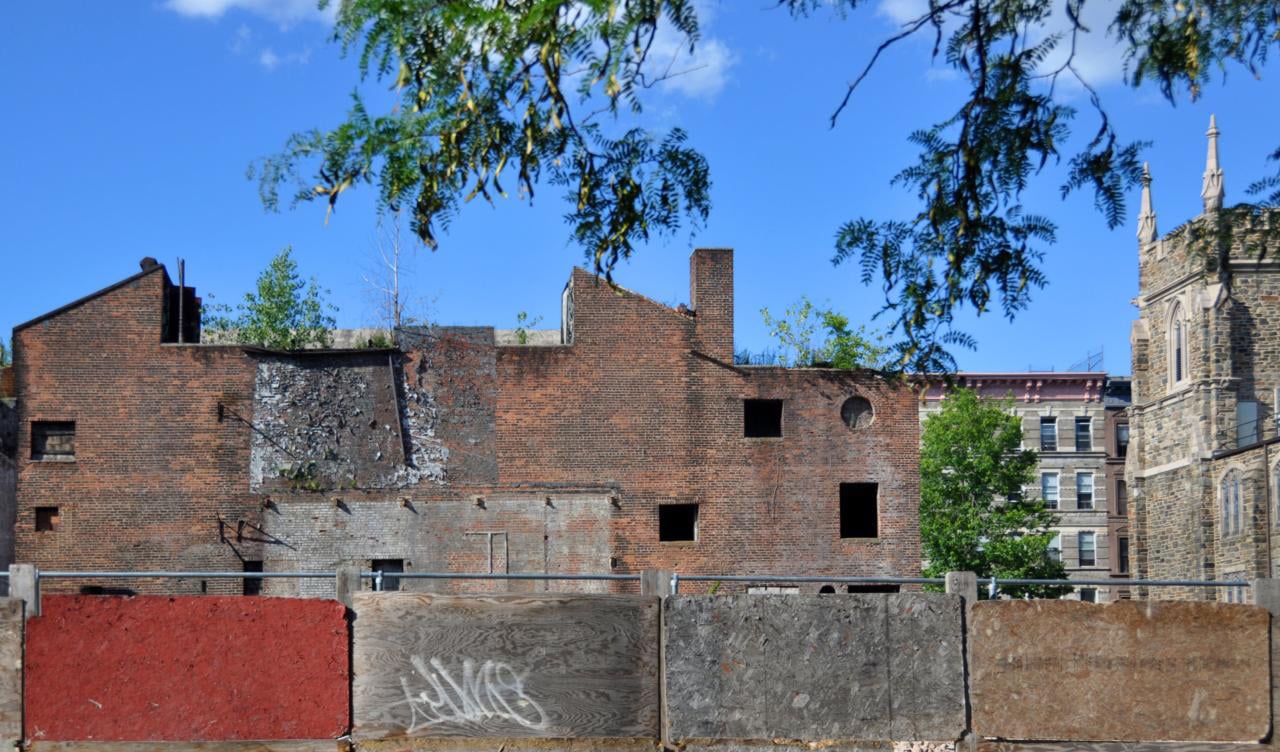
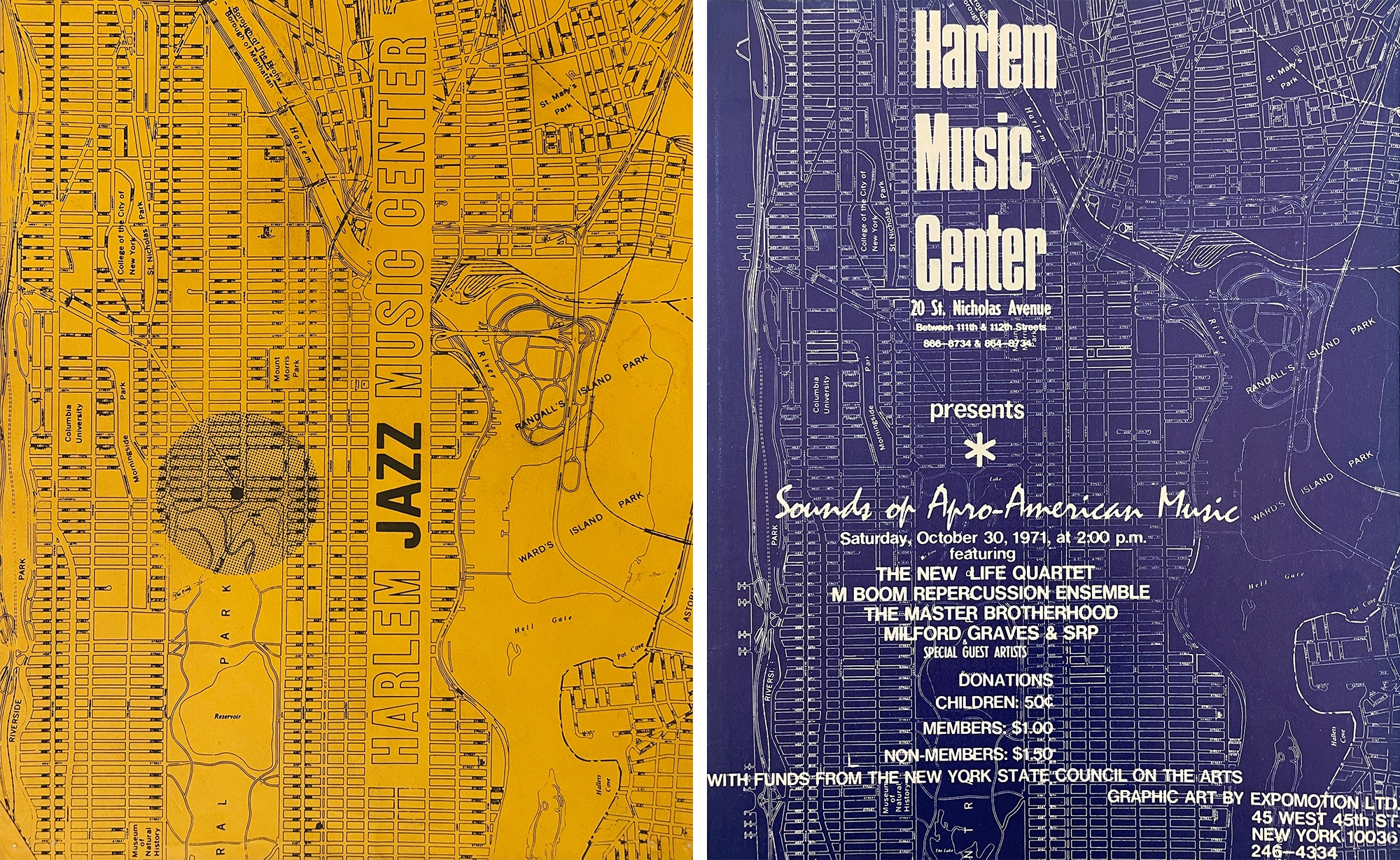
Next came the salutation: “Dear Fellow Musicians.” Hancock was writing from the lofty position of president of the board of directors at the Harlem Music Center, an organization his letter described as “a home for various organizations designed to spread the word of our music to the community, state, country and world,” which would also “serve as a universal monument to Black Music.” Less elevator pitch than liturgical overture, Hancock’s missive summoned his audience to share in a vision — to collectively design a space where music, and life, and everything in between could flourish. With the greatest confidence that a “multi-million-dollar building” would be erected “in a few short years,” he invited readers to walk through the imagined place that his words promised: “Let me tell you what the HARLEM MUSIC CENTER means to you.”
The man responsible for this sweeping vision was the African American architect and city planner W. Joseph Black.
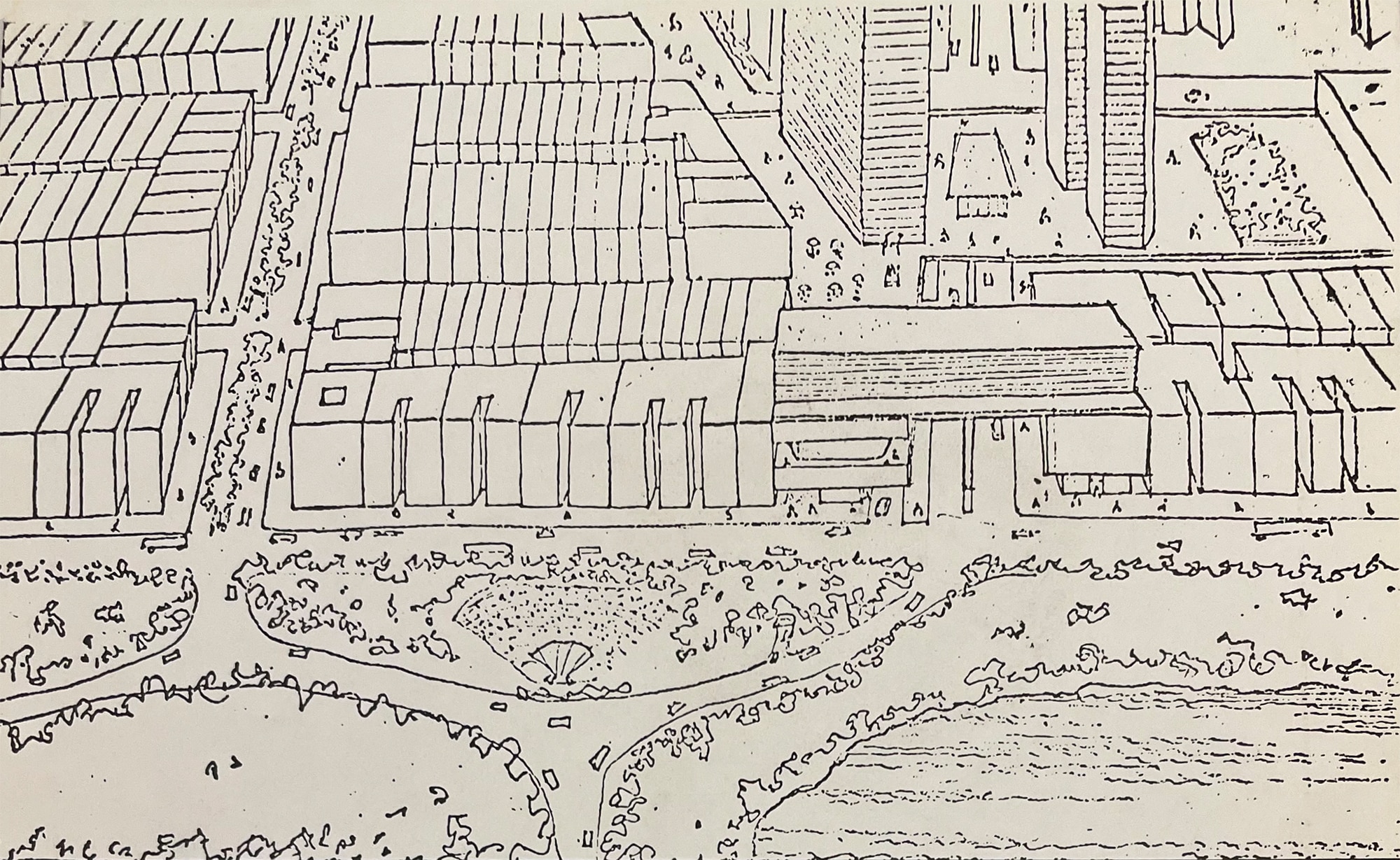
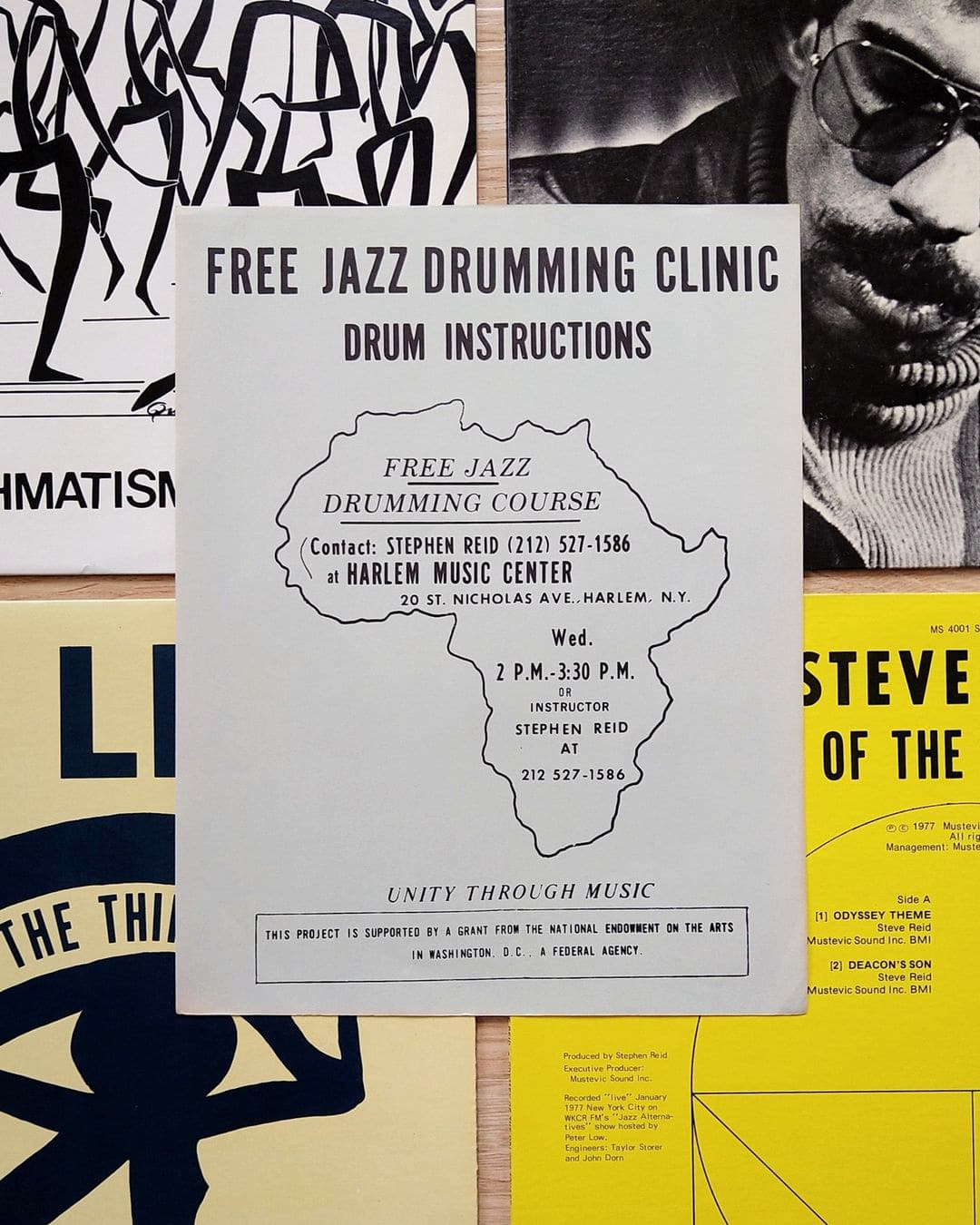
Concert halls, rehearsal rooms, archives, libraries with books and records and tapes; recording equipment including synthesizers and modulators, as well as film and television equipment; classes on structure, improvisation, music history, and professionalization; workshops, jam sessions, lectures, and demonstrations; an information center to provide resources on gigs, agents, managers, attorneys, publishing, and record companies; even a museum. Comprehensive hardly begins to describe the program for the center: also planned was a mixed-income housing complex with 250 units each of low-income, moderate-income, and middle-income housing, plus a residential hotel. A commercial complex with a shopping mall and a pedestrian arcade. Offices and studios for rent. Services catering to residents, such as a 24-hour childcare center and a health clinic. An underground parking garage with direct access to the residential, commercial, and cultural amenities, and a link to public transportation. The whole complex would be linked via open-space development — terraces, courtyards, pedestrian malls — to Central Park’s northern border, a few hundred yards south. This was no mere monument to someone’s vanity, or a mausoleum for a cultural form thought long past its currency, but a holistic — and wildly ambitious — institution that dared to imagine taking pastoral care of its broader communities while incubating present and future knowledge. Given its scale, and geographic centrality to the neighborhoods just north of Central Park, this was truly — as advertised in the brochure accompanying Hancock’s letter — a “Gateway to Harlem.” The man responsible for the sweeping vision was the center’s founder and executive director, the African American architect and city planner W. Joseph Black.

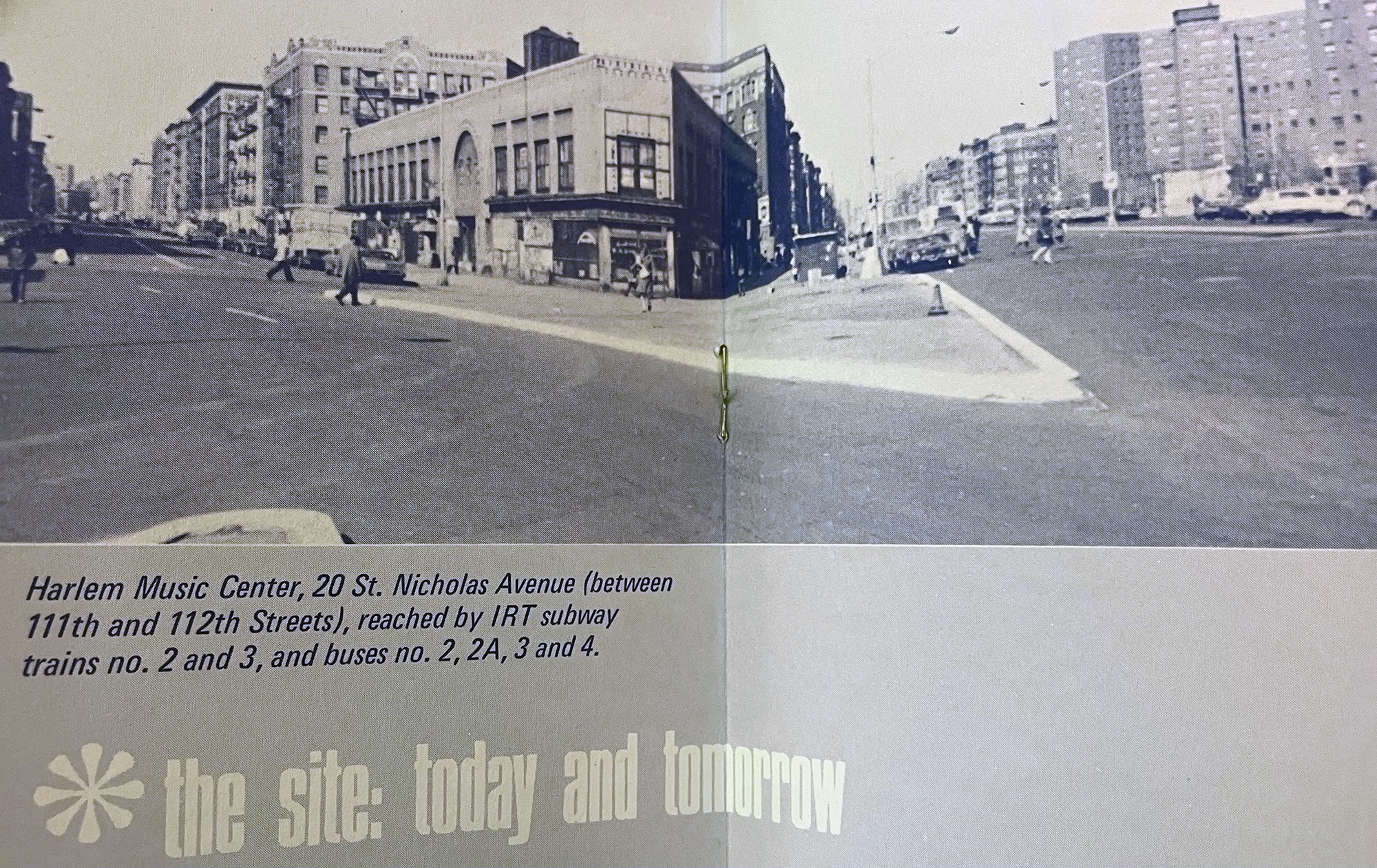
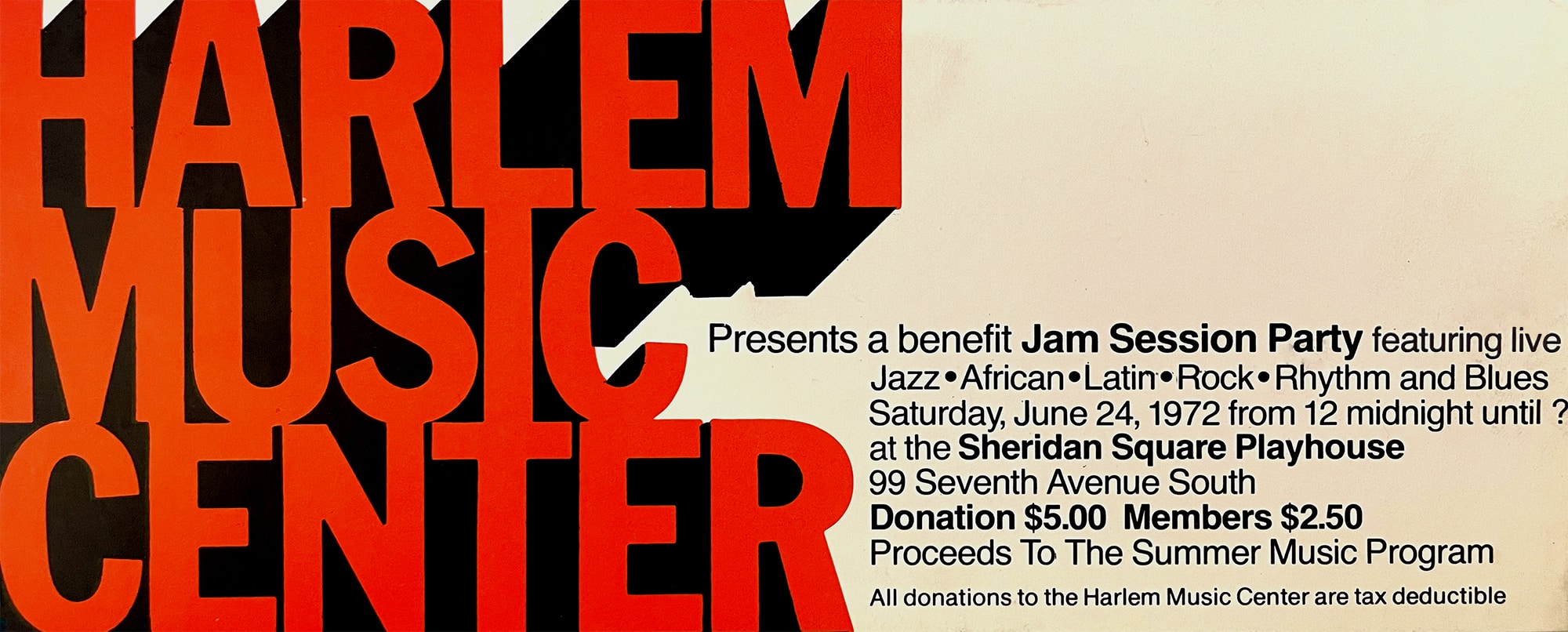
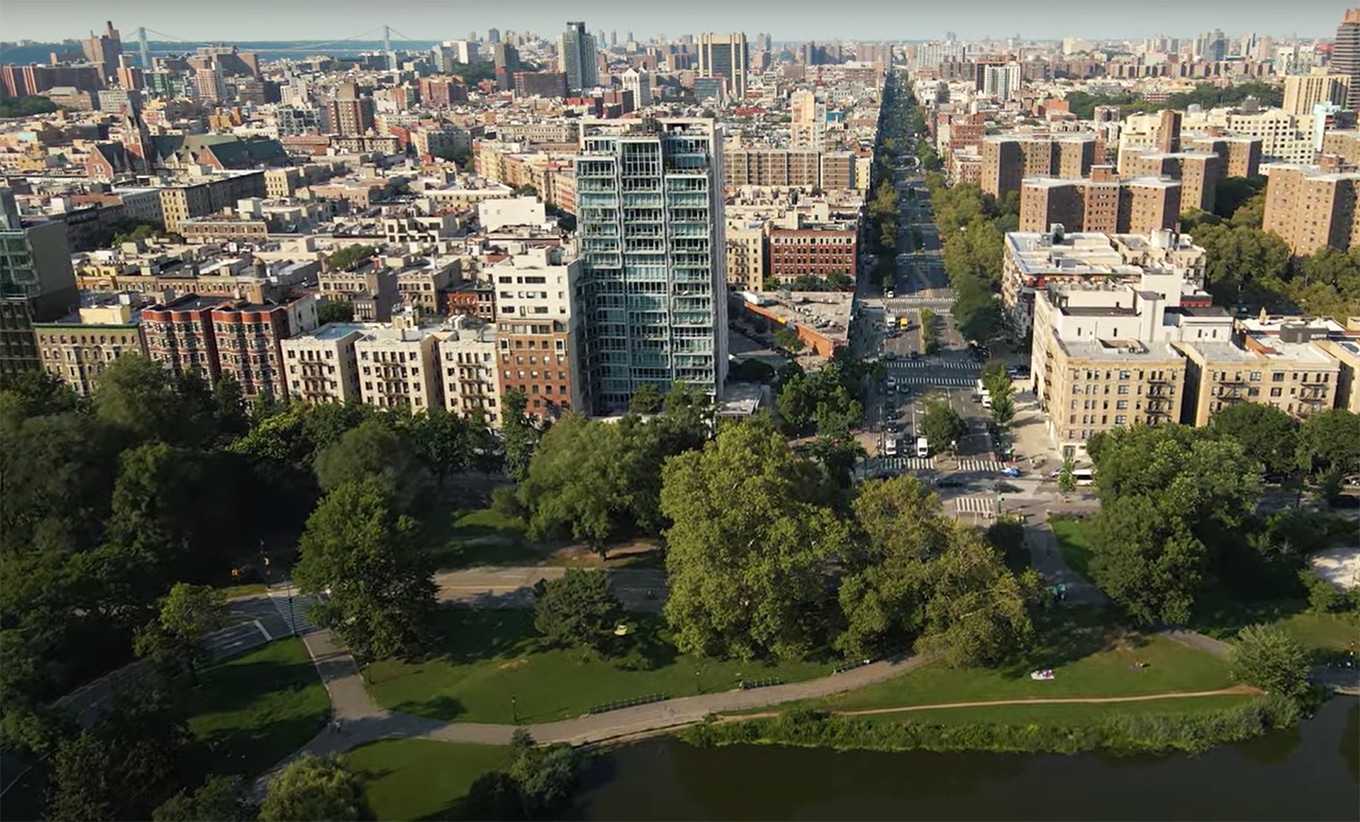
By the time of Hancock’s dispatch (1970 or 1971; the letter is undated), the Harlem Music Center had existed, in preliminary form, for a year or two. Black had established it, in 1969, in a second-floor loft overlooking the park at the intersection of Lenox and St. Nicholas Avenues, two of Harlem’s busiest thoroughfares. A 1971 “Talk of the Town” piece in The New Yorker haughtily described the location as “a triangular, damaged building on a triangular block”; “a fire had gutted the first floor of the triangular building, and much of the second as well.” The same piece quoted Warren Smith, a percussionist and the treasurer of what was also called the Harlem Jazz Music Center, whose ambitions matched Hancock’s:
We are devoted to the perpetuation of black art, to keep it from being systematically snuffed out by mass media,” Smith said. “If you listen to WLIB or one of the other stations that play black music, you hear John Coltrane play maybe once a day — no more. It is very, very hard for musicians who haven’t compromised. Maybe they died before they could compromise. But we are not about to let this music die. 2
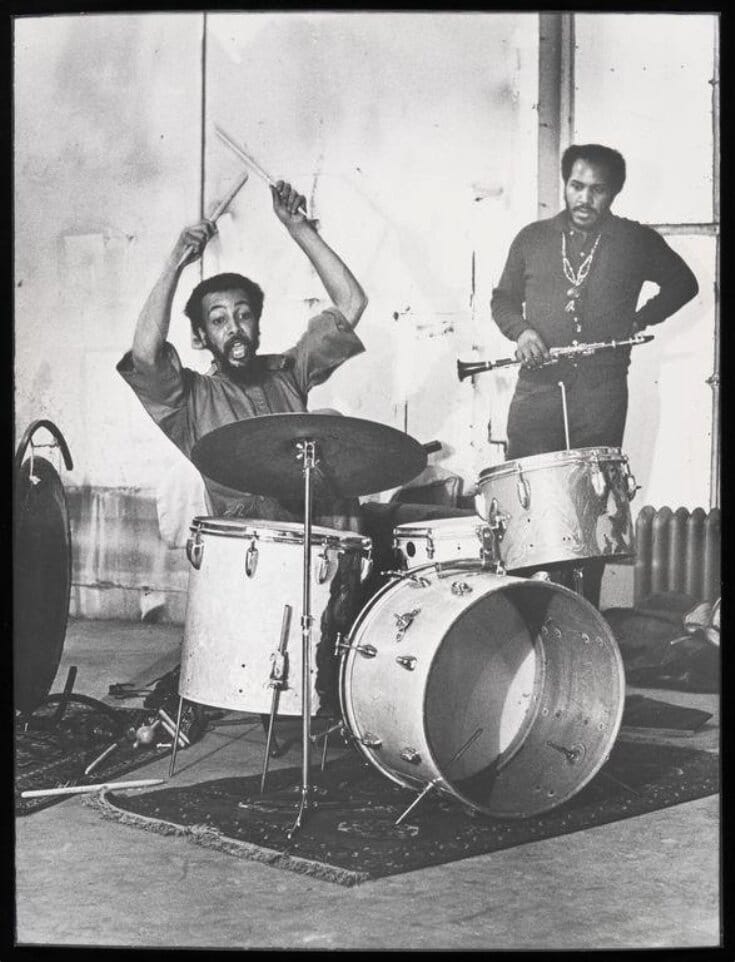
It was this urgent devotion that attracted lodestars such as Count Basie, Dave Brubeck, Miles Davis, Duke Ellington, Gil Evans, Dizzy Gillespie, Nat Hentoff, Milt Jackson, Sergio Mendes, Gordon Parks, and Nancy Wilson to the center’s advisory board. In the face of what they saw as existential threats to Black art and those who make it, board members knew that great investment was needed. Hence Hancock’s imperative mode as his letter closed:
PLEASE, if you are concerned about the rip-off of your talent, the lack of knowledge and respect the Black Community as well as the rest of the world has for our highest form of expression, the necessity of a practical system for creating and reviving work, the necessity of handing down our legacy to our young, the importance of launching a HARLEM MUSIC CENTER, developed by you, don’t hesitate to read the enclosed brochure and fill out the accompanying membership form. 3
The brochure posited that “music has been Harlem’s most vital resource in its development as the cultural capital of Black America,” and argued that there had long been a need to establish a home in Harlem for “jazz and other forms of music evolving from the American experience.” Music was, to the organizers of the Harlem Music Center, not merely a medium of expression, but pivotal in the social, economic, cultural, and spiritual life of Black folks — and not only in Harlem, but across the globe. The remit of the center explicitly incorporated this expansive idea, noting that the “unique feature” of the institution would be “its function as a home for black music of the world,” and that those “interested in music indigenous to Africa, Asia and Latin America would attend workshops directed by accomplished musicians in their field.” 4
Music, an art defined by its relation to time, here expressed a spatiality: the ability to create not merely a sense of home, but its reality in brick and mortar. In his 1966 essay collection Black Music, the Black nationalist poet Amiri Baraka had argued that “the blues impulse,” jazz, and other forms of Black music, contained “the direct expression of a place.” 5 The Harlem Music Center would be, in accordance with Baraka’s conception, more than a mere building where such expressions could live. It would give tangible, architectural shape to an art form that the poet already saw as having spatial dimensions. In the face of historical displacement and dispossession, music would foster material and civic abundances for the Black community, resources commensurate with the cultural plentitudes the music itself suggested.
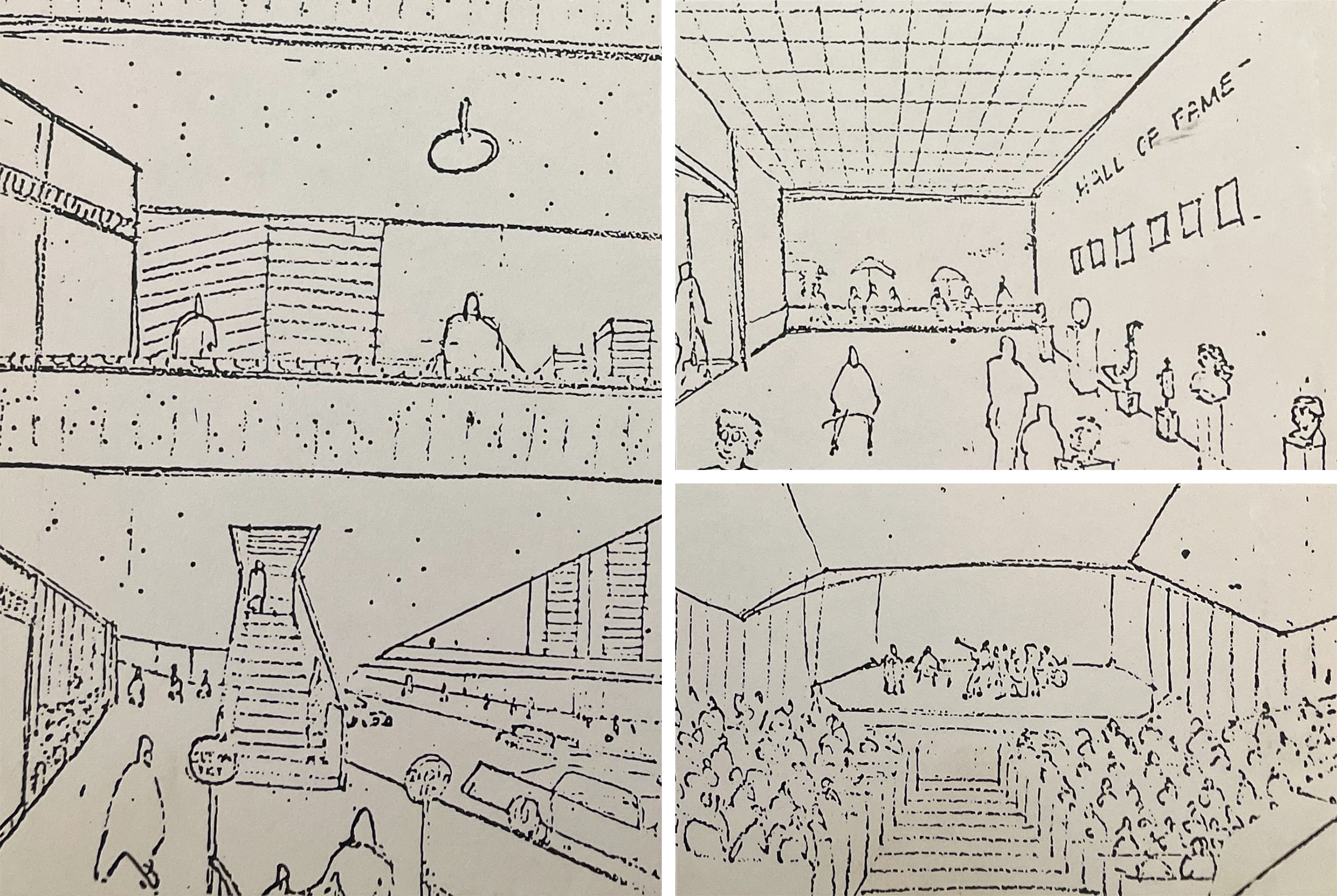
America has rarely loved Black folks as much as it has loved Black culture. 6 The Harlem Music Center was an attempt — significantly, by Black folks themselves — to build a space that would allow Black people to continue to make and sustain not merely the culture for which they are renowned, but more importantly, to make and sustain a community that would allow them — in the absence of such care elsewhere — to love and care for themselves.
But the Harlem Music Center was never built.
Joseph Black had envisioned his complex not only as a cultural resource, but as the even-more-ambitious Gateway to Harlem, with its residential towers, commercial offerings, pedestrian walkways, and green space. Though by the time of Hancock’s letter, Black’s monumental Gateway plan had been endorsed by city planning committees and community boards, a combination of funding shortfalls, questions over land acquisition, and competing neighborhood interests impeded and finally thwarted its execution. The original Music Center, in its rented second-floor loft at St. Nicholas and Lenox, operated for approximately five years.
The Harlem Music Center was an attempt to create a space that would allow Black people to love and care for themselves. But the Harlem Music Center was never built.
Despite these major setbacks, Black’s ambitions as an architect were not limited to establishing new institutions for Harlem. Architecture, for him, was far more than a public art composed of lofty ideas, “interesting urban shapes,” and “form-building exercises.” He argued as much in a 1968 article in Architectural Forum titled “The Renewed Negro and Urban Renewal”: “Urban studies should instead search for the essential character of a community — the values and content — from which can emerge an urban design satisfying the economic needs and social goals of the community.” 7 That the Harlem Music Center sought to embody these principles is evident. At the same time, Black’s expansive view of architecture was expressed through writing and research that could speak to, and for, the needs and potentials of the Black community, while articulating those needs and potentials to elite design audiences and the broader White world.
It was not only this Architectural Forum article that furthered Black’s agenda as a writer. Across his distressingly short career, the written word seemed to him essential in the making and remaking of place. His archive, chock full of letters that reveal a young architect and scholar on the grind in search of commissions, consultancies, and academic appointments, is testament to Black’s twin devotions: designing buildings and neighborhoods, and writing about buildings and neighborhoods. For every letter that concerned his work as an urban planner or designer, there are two or three discussing articles he’d published on design philosophies, or outlining long-term research and writing interests. Consequently, two other projects consumed his time in the era when the Gateway to Harlem was snarled in red tape.

The first of these, Visions of Harlem: Past, Present and Future, was an exhibition and catalogue to be sponsored by the Museum of Modern Art, as a celebration of the neighborhood’s history and architecture from the 17th to the 20th centuries. After a series of delays, the show did open at the Studio Museum in Harlem in 1974, and traveled the following year to the American Institute of Architects Gallery in Washington, D.C. But the catalogue was never completed. The second text-based project, Black Builders of America, was meant to be another comprehensive volume, produced in collaboration with the African American architect Richard K. Dozier. According to Black Enterprise magazine, Black Builders was “believed to be the first study of the contributions that architects, engineers, planners, developers, and craftsmen have made to American growth.” 8 This astoundingly ambitious undertaking was also left unfinished.
His expansive view of architecture was expressed through writing and research that could speak to, and for, the needs and potentials of the Black community.
The first segment of Visions of Harlem was to cover the period from 1660 to 1960, considering Harlem’s pasts as a Native American enclave, a Dutch settlement, a residential suburb, and a locus of Black American culture. The second part of the show and planned catalogue concerned the present, from 1960 to 1970, exploring Harlem’s physical facts on its streets, while the third part imagined the neighborhood’s future, from 1970 to 2000, featuring speculative plans by architects and planners. W. Joseph Black had been researching the subject for years when Arthur Drexler, director of Architecture and Design at MoMA, wrote in January 1970 to say that funding had been secured for an exhibition at the museum. Black hired a research assistant, commissioned a photographer, and rented a Harlem storefront from which to collect material and inform residents about his research, all paid for by MoMA. 9 But no exhibition was forthcoming. The exact reason for its disappearance from MoMA’s schedule — Black’s perfectionism or paralysis, or an unspecified about-face by the museum — is unclear. Letters between Drexler and Black detail various manuscript deadlines missed, although desire remained on both sides to go through with the project, and it appeared multiple times in museum press releases detailing upcoming shows. It wasn’t until September 1974 that Black wrote to Drexler asking MoMA to release its claims on his work so that he could bring Visions of Harlem to the Studio Museum, and find a new publisher for the catalogue. 10 The show opened in November of that year. Materials for the book went back into Black’s files.
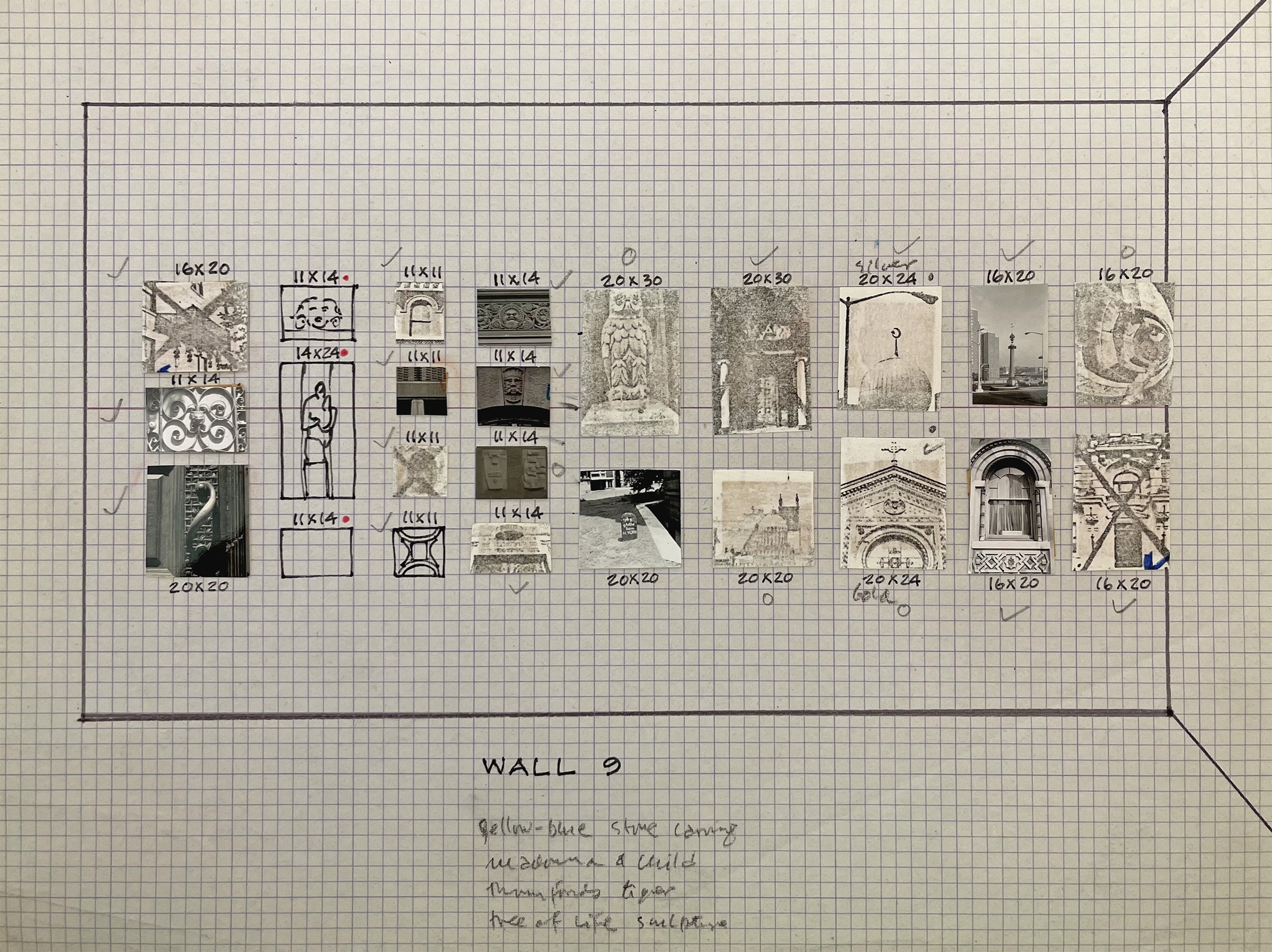
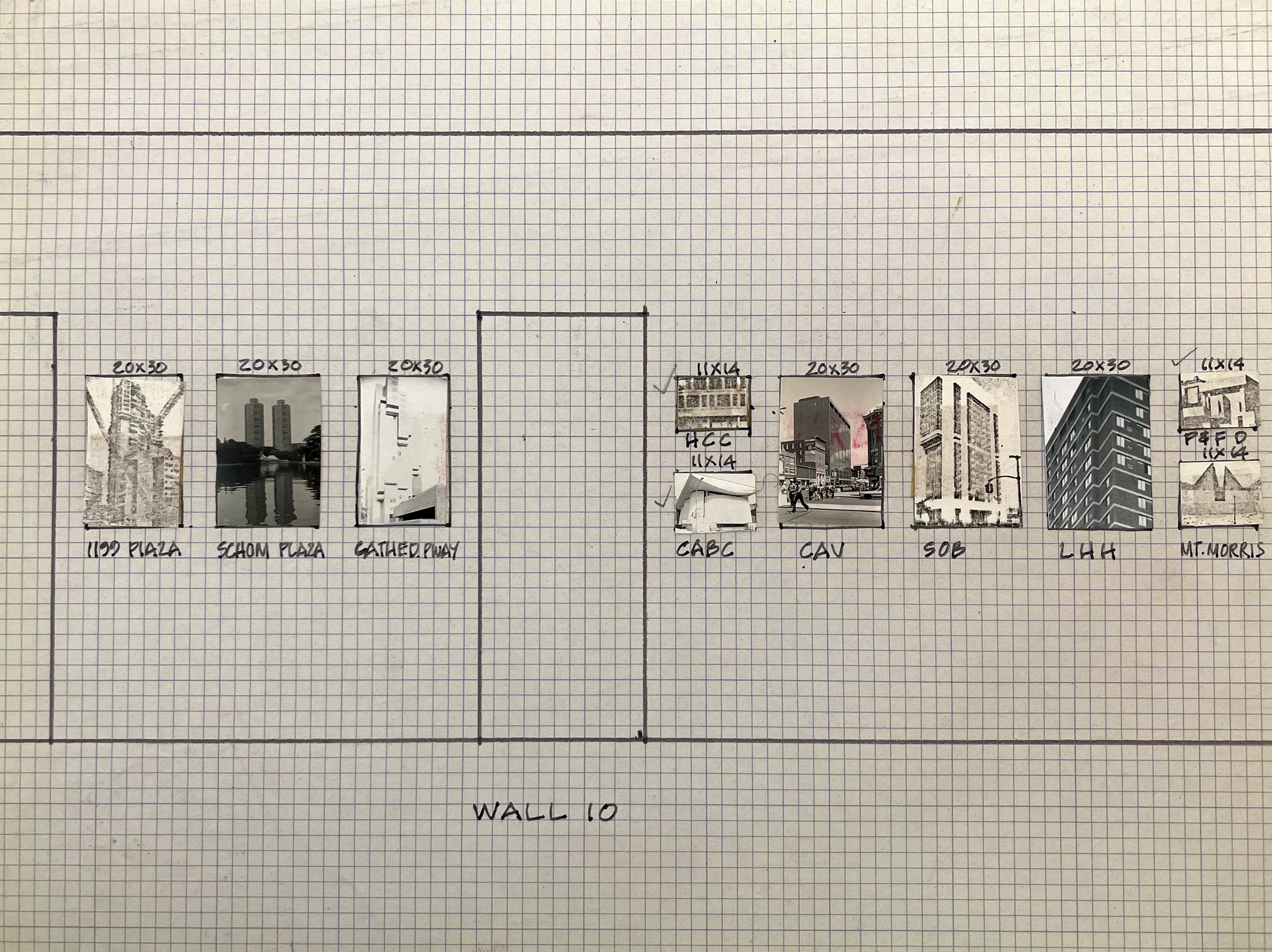
The concurrent historical study Black Builders shared with Visions of Harlem a magisterial vision of the past, proposing to examine the construction of the country from the earliest colonial incursions to the authors’ present in the 1970s. Focused on the many known and unknown Black builders — a more inclusive category than “architects” — in American history, Black and Dozier’s compendium was also to be divided into three periods: 1619 to the Civil War (Dozier’s specialty); Reconstruction to World War II; and the postwar period to the 1970s (where Black’s expertise lay); plus an epilogue considering the “future role of Blacks in building America.” 11 The study was intended to address silences regarding the importance of race to built space by examining not only obscure or undiscovered Black architects, but by redefining what it meant to be a “builder” in the first place. In Black and Dozier’s estimation, bricklayers, carpenters, and metal workers were as important as contributors to America’s physical development as were architects, engineers, and planners. Black took extensive research trips through the south and the midwest to gather information and photographs, and polled working African American architects and design professionals regarding their past and future endeavors. The book proposal received a grant from the National Endowment for the Arts in 1973. But in the next few years, it languished.
Perhaps the time that Black could have given to Black Builders, Visions of Harlem, and the next stages of development for the Harlem Music Center was devoted instead to his students; he moved to Washington in 1975 to teach at the University of the District of Columbia, in the Department of Community Planning and Development. He held the job through 1976. The next year, at age 42, Black died of cancer.
Or maybe the transhistorical enterprises that he (and Dozier) had envisioned simply proved too unwieldy. Black’s papers survive, housed at the Schomburg Center for Research in Black Culture in New York. But, tragically, the projects that would have taken material form in our world, the buildings and the books, exist now only as impressionistic fragments, faint glimmers of planned structures and in-progress scholarship. Without an exhibition catalogue as guide, Visions of Harlem is difficult to reconstruct. As little more than a successful NEA grant proposal, Black Builders remains similarly vestigial. 12
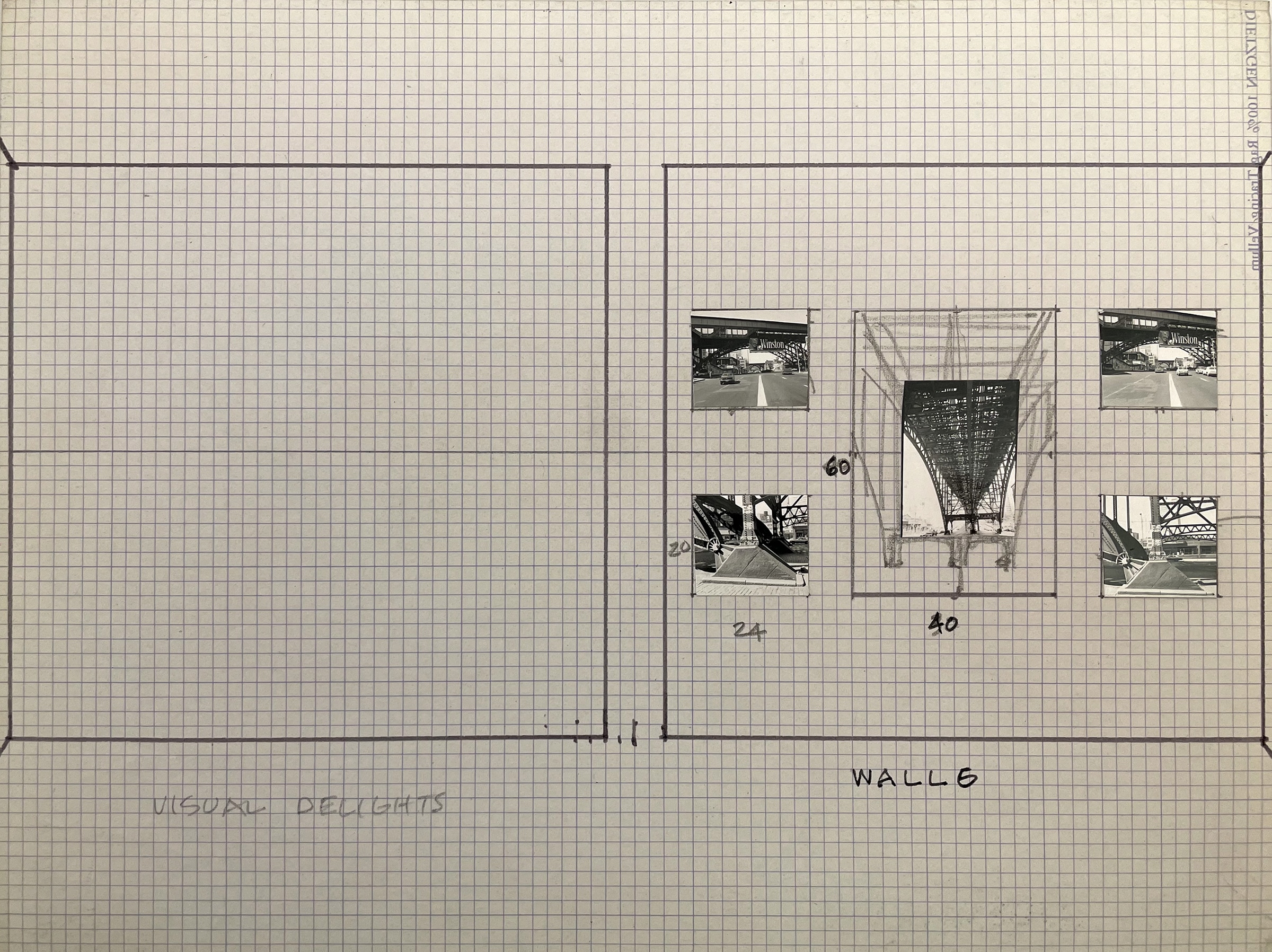
What alterations might these masterworks, brought to full material form, have wrought in our present world? How much farther, and how much faster, might our understandings of Black contributions to the American built environment have advanced, had this history been better known for the last 50 years? How many Black space-makers might have had their contributions and innovations preserved in ways analogous to the protections for musicians that were to be offered by the Harlem Music Center? How many more Black pathfinders might have entered the design professions, bringing sensitive and ambitious plans to how many streets and neighborhoods, cities, towns, and rural spaces? What did we miss by losing not only the full built form of the Gateway to Harlem, but the published volumes Visions of Harlem and Black Builders of America?
All these losses, for me, carry equal weight, precisely because, for Black, research and writing about building held as much transformational potential as design and construction. Indeed, it might be true that, for Black, such a duality did not exist. Perhaps, for him, writing and spatial thinking were one and the same. This is what most excites me about the work of W. Joseph Black, however interrupted, deferred, or unfulfilled: its duality or hybridity in media and genre, along with its enduring ambition and fertility, despite its incompletion. The irresistible aphorism “writing about music is like dancing about architecture” has been attributed at times to artist Laurie Anderson, singer David Byrne, and musicians Elvis Costello, Miles Davis, and Thelonious Monk, among others. The sentiment may be due for alteration, as writing and thinking about music might indeed help us to write, or dance, or sing about architecture. But I want to propose an additional, though related notion, inspired by the legacy of W. Joseph Black: writing about architecture is also a method of practicing architecture — that is, by thinking it.
I want to propose a notion inspired by the legacy of W. Joseph Black: writing about architecture is also a method of practicing architecture — that is, by thinking it.
And so, perhaps, having taken onboard this view of “form following fiction” (as Bernard Tschumi suggests), we can dwell not only with the unfinished works, two- and three-dimensional, that Black offered to us, but also broaden still farther the category of spatial thinkers in writing. Perhaps we can turn our attention to the page in an even wider sense, to include in a discussion of architecture and its latent or conjectural possibilities the work of essayists, poets, memoirists, and novelists. I’ve mentioned Amiri Baraka, and will refer in what follows to Ralph Ellison, Saidiya Hartman, Fred Moten, Kevin Young, and others. But the writer who, in my view, best exemplifies the performance of spatial thinking in textual form is the novelist Colson Whitehead. As I read him, Whitehead has long been fascinated by urban history, architecture, and the official and unofficial infrastructures of cities. In many ways, I understand Whitehead’s novels as carrying to fruition the interdisciplinary work that W. Joseph Black imagined for himself, but could not fully realize.
The Unfinished, or the Architecture of Invisibility
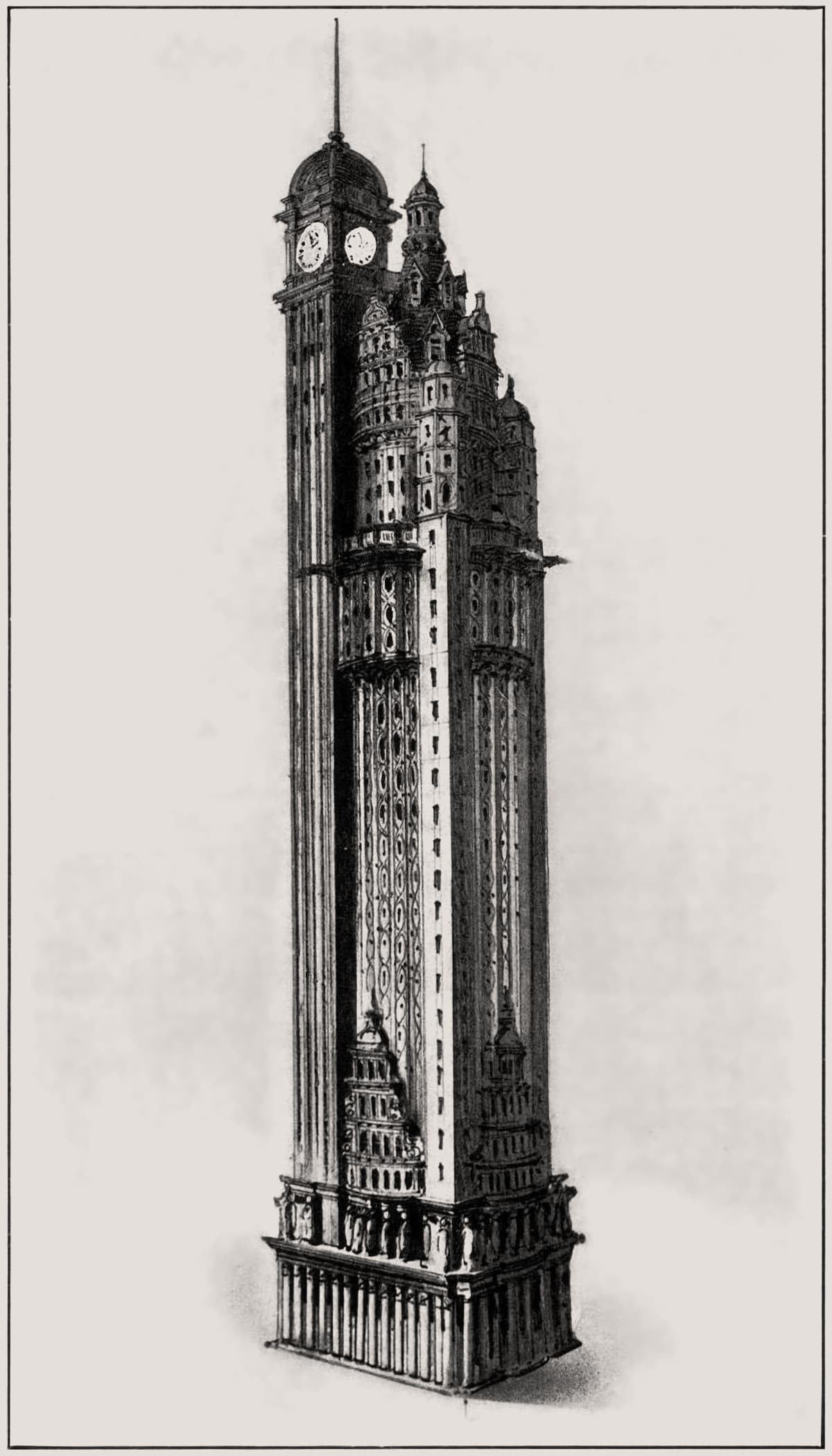
For the architectural student, the idea of the unfinished — and especially, the unrealized — holds a special allure. The unfinished implies lack or imperfection. Yet in that indeterminacy lies the potential for consummation, and, moreover, the nagging feeling that such projects deserve completion. The unrealized arguably carries still greater wonder, suggesting an explicitly visionary existence, available only in imagination; a fabulous thing in the original sense — a fable, a legend, something we might long for that cannot, or should not, attain physical presence. The design student may sit in darkened lecture halls, entranced by images of Etienne-Louis Boullée’s Cenotaph to Newton (1784), or Claude-Nicholas Ledoux’s idea for a utopian city around the saltworks at Chaux (1773–1806) — and luxuriate in the romance of the impossible, or the merely improbable. Perhaps one studies Antoni Gaudí’s plan for the Hotel Attraction in Manhattan (1908), or Frank Lloyd Wright’s drawings for the Mile-High Illinois skyscraper (1957), and theorizes what might have been, or still could be, albeit in different form. After all, what are romanticized works of unfinished or unbuilt architecture if not compelling fictions?
Perhaps we can turn our attention to the page, to include in a discussion of architecture and its conjectural possibilities the work of essayists, poets, and novelists.
Yet notions of impossibility and improbability, the unfinished and the unrealized, bear different valences for Black architects, builders, and students. Impediments for Black designers are rarely as simple as a lack of daring or resources on the part of skittish patrons. Rather, the forces arrayed against Black achievement in architecture are (perhaps ironically) often structural, grounded in racism and anti-Blackness. The unfinished and unrealized works of Black architects are dreams deferred — and doubly so. Rarely do these visions live long even in cultural memory, or attain fame even as imaginings of a world that never was.
From grand designs like the Harlem Music Center to comprehensive works of research like Black Builders of America, the history of Black architecture is littered with examples of the structurally stymied or unfinished, many of which will never be known. At the very least, they may be discovered years later in the archives. Although, let us remember, such stories are told only by those who have been able to call themselves “architect” — or “citizen,” or fully human for that matter. As the architect and historian Mabel O. Wilson reminds us, “it is critical to consider that enslaved black people, humans classified as property, built several of the nation’s most important civic buildings: the Virginia State Capitol, the White House, and the U.S. Capitol.” 13 Black builders — as Black and Dozier’s book would have demonstrated — have been with us since before the inception of the “nation.” They simply have not been regarded or remembered as such.

According to the latest U.S. census figures, Black Americans account for around thirteen percent of the population. But, in the present day, only two percent of American architects identify as Black. 14 The African American architect and professor Robert Traynham Coles delivered a noted lecture in 1989 (published the same year as an essay), in which he deemed the Black architect “an endangered species,” because “those who are practicing are cut off from the mainstream of society that controls the resources that are necessary for architecture, just as the black community is isolated from those resources.” 15 We know too well the heartbreaking tale of Paul Revere Williams (1894–1980), perhaps the most successful Black American architect to date and the AIA’s first Black fellow, who learned to draw upside down, to avoid the indignity of White clients not wanting to sit beside him at a table. In 1970, when W. Joseph Black was active in the profession, there were approximately 50,000 architects in the United States. Around 1,000 were Black; less than 1,500 were women-identified, and 95 percent were White males. 16 Since 1963, when Ada Louise Huxtable became the first full-time architecture critic for a major newspaper, there has been only one African American — Lee Bey — in a similar position.
For those who do manage to practice, there remains the problem indelibly articulated in 1952 by Ralph Ellison’s nameless narrator in Invisible Man: “I am invisible, understand, because people refuse to see me .… when they approach me, they see only my surroundings, themselves, or figments of their imagination — indeed, everything and anything except me.” 17 Black builders of all kinds might be said to practice an architecture of invisibility. They exist, but are refused the recognition that allows for the fullest realization of a professional identity. They build, but usually inside borders long policed by racist thought and practice, and largely at the peripheries of what is considered mainstream. This is the case not only because, in architectural design as well as in architectural criticism, the presence of Blackness itself remains near-spectral. It is also because readings of Black designers’ works have focused less on their concerns with explicitly spatial matters than on the aftereffects of slavery and the pursuit of civil rights. Black architects, critics, and theorists labor in a kind of Ellisonian invisibility because there have been, and continue to be, historical and systemic impediments to growing their ranks, and those who do practice struggle in all manner of ways to be truly seen.
The unfinished is a repository of irresolution. But it is also a haven for reparative rest.
“Invisibility” was, for Ellison’s narrator, an untreatable condition, an unresolved state of being that could be both gift and curse — rendering a person hypervisible (as the transdisciplinary scholar Saidiya Hartman has noted), yet denying them the rights of citizenship, let alone the free play of imagination — as in W.E.B. Du Bois’s enduring metaphor of “double consciousness.” As Ellison’s unnamed Man observes, “it is sometimes advantageous to be unseen, although it is most often wearing on the nerves. Then too, you’re constantly being bumped against by those of poor vision.” Invisibility gives its bearer “a slightly different sense of time, you’re never quite on the beat .… Instead of the swift and imperceptible flowing of time, you are aware of its nodes, those points where time stands still or from which it leaps ahead. And you slip into the breaks and look around.” 18
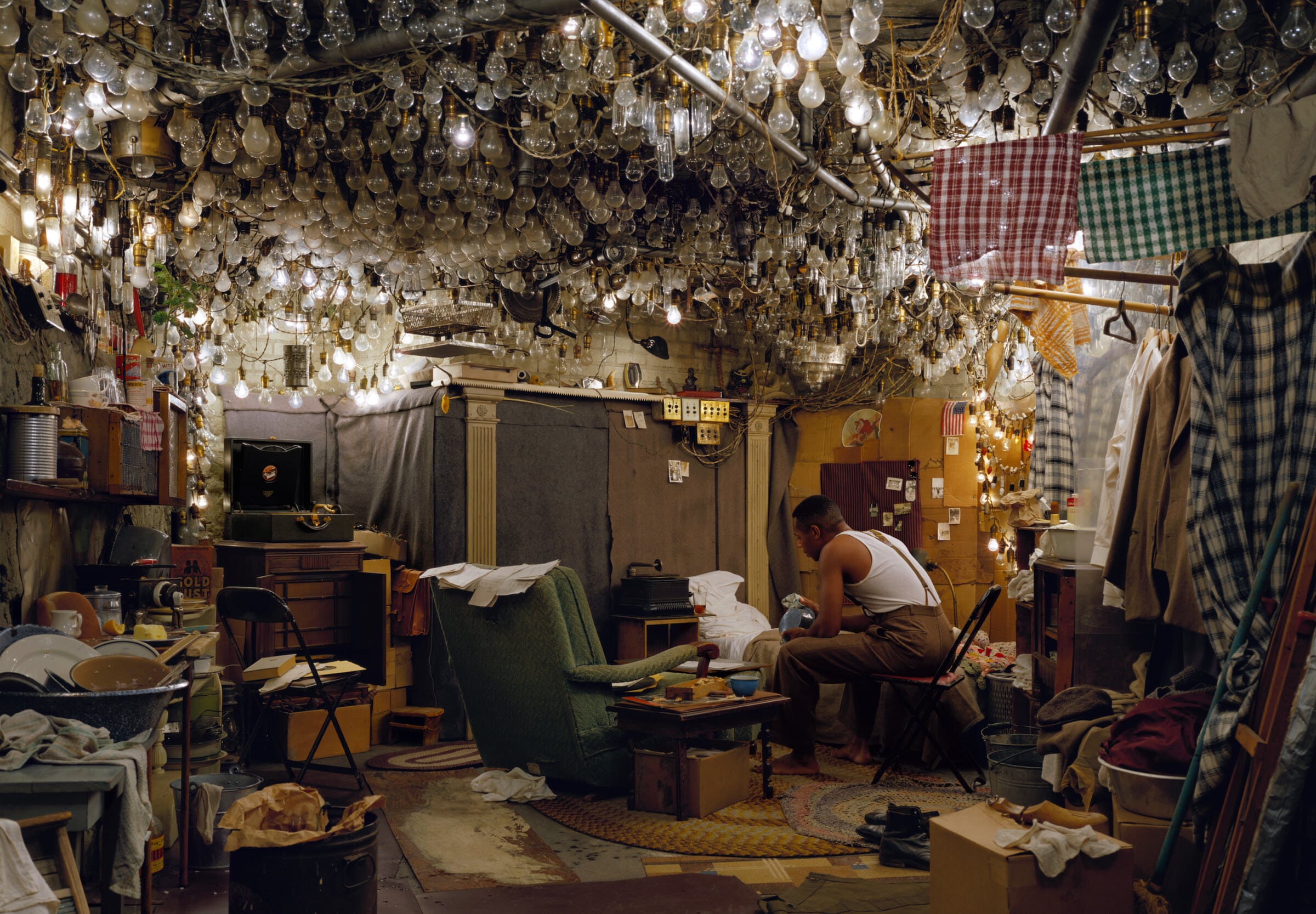
As countless scholars and critics, including Baraka, have observed, it is these movements “in the break,” moments of syncopation, modulation, and blue notes, that mark Black American music as a distinctive creation. The poet and theorist Fred Moten has riffed brilliantly on the capaciousness of “the break,” elaborating it as a space where “black radicalism is set to work.” 19 The Black architect, too, resides in the break, in the space of the suspended or unfinished. We might see this interstitial zone as a place of unfulfillment. But, following Moten, this locus of invisibility is also a source of political power and potential.
Might we, then, conceive of “the unfinished” as both a condition and a place, a discursive, imaginative site? The unfinished in this sense is a repository of the irresolution in which Black architects have historically found themselves and their projects. But it is also a haven for reparative rest, in which is retained the possibility of completion. The “architecture of invisibility” is in this sense both a mode and a mood — an affliction, and a location for retreat and redress; a node outside time, where deserving projects await long-delayed formation, and creators await discovery.
Might we, then, conceive of ‘the unfinished’ as both a condition and a place, a discursive, imaginative site?
Needless to say, writing can dwell in this space too. In his 2013 volume The Grey Album: On the Blackness of Blackness, poet and archivist Kevin Young sketches his notion of “the shadow book”: “a book that we don’t have, but know of, a book that may haunt the very book we have in our hands.” The Grey Album enumerates examples — the “Africana Encyclopedia by Du Bois, the second novels of Jean Toomer or Ralph Ellison.” Young’s focus in these passages is the unwritten shadow book, and he identifies such un-texts with a kind of haunting, a psychological block resulting from personal, and/or societal, obstacles. In the case of the African American writer, this haunting often takes on tragic proportions, seeming “too much like the life denied him or her, the black literature denied existence.” 20
The incompletion of W. Joseph Black’s Visions of Harlem and Black Builders of America may or may not have been caused by writer’s block — the reasons may be more practical, if no less devastating: lack of funds, lack of time, illness. Yet these are, to me, unwritten shadow books: treatises on Black space and Black architecture, intended to make visible the contributions of Black Americans to the history of American design and urbanism, that were themselves denied realization, rendered invisible.
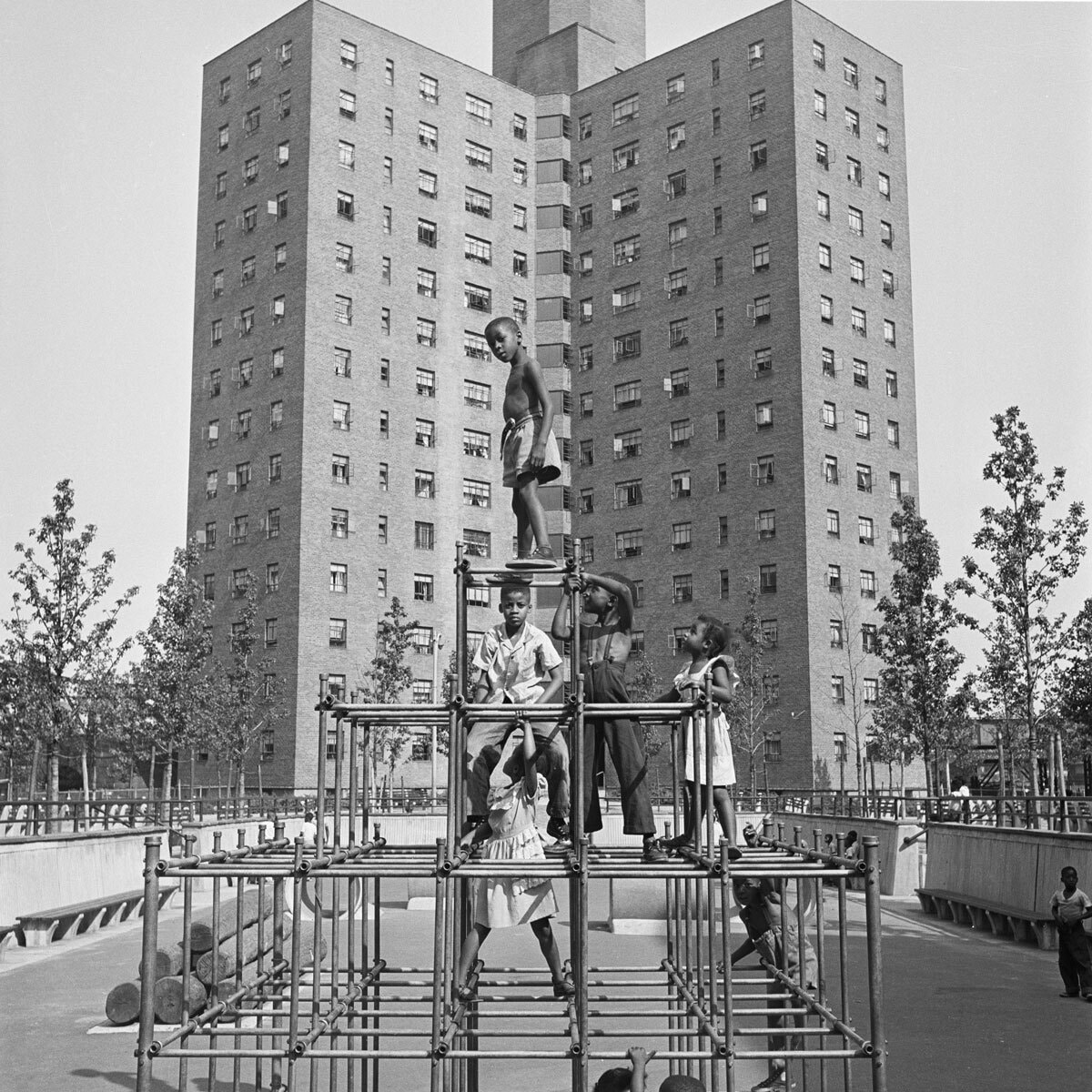
It’s this relationship between the unrealized and the imagined, the literally absent and the metaphorically plenteous, that allows us to think about the creation of worlds accomplished by writers alongside the speculative designs and constructions proposed by architects — and a fortiori by an architect for whom writing was an essential aspect of spatial practice. Black’s shadow books to me exemplify the ways in which we might look beyond architecture and architectural history and criticism as such, toward the more expansive category of “building.” And, more particularly, towards writing as a realm in which spatial creations rendered as writing may indeed be finished, even if those writerly creations are unrealizable as concretized structures in daily experience. As fiction writers show via their stock-in-trade, writing is an arena in which world-building plans, no matter how ambitious, can be “complete.”
It is possible, in other words, to finish a book about impossible things.
It’s this relationship between the unrealized and the imagined that allows us to think about the creations of worlds by writers alongside the proposals of architects.
This is where the work of Colson Whitehead touches on that of W. Joseph Black. Whitehead’s career comprises a multi-genre atlas of engagement with, and theorizing of, the urban, constantly imagining models for the ways in which Black folks engage, navigate, subvert, or assert control over their built environments. From the exploration of elevators, verticality, and racial uplift in The Intuitionist (1999), to the meditations in The Colossus of New York (2003) on the routine joys of Manhattan life; from Apex Hides the Hurt (2006) and its questioning of relations between nomenclature and place, to Zone One (2011) as it reanimates the post-apocalyptic novel, and the literal house of horrors, a reform school, that begat a peculiarly American amnesia in The Nickel Boys (2019), Whitehead assembles universes with a liberty that Black builders like W. Joseph Black were rarely offered. In this way, Whitehead’s writing makes a blueprint, not only for an African American literature that reflects spatial practices and architectural potentialities, but also for a literary — and architectural — scholarship sensitive to the implicit and explicit ways that African American authors and designers have always and already made the built environment a core concern of their work.
Whitehead’s commitment to imaginative or metaphorical literalism leads him to design a world where the elevator is acknowledged as the technological marvel it is, allowing city people to take up residence in the sky; it licenses him to depict the Underground Railroad as perhaps all U.S. schoolchildren first imagine it: an actual railroad running under the earth, a secret infrastructure that physically carries the enslaved out from bondage. Making tangible the visions of what seems impossible allows Whitehead to imagine the “Negro architect” from Baraka’s hometown of Newark at the poker game in Crook Manifesto — a character who could, for all intents and purposes, have been W. Joseph Black. Indeed, some readers will recognize that Black, as a very real historical figure, a polymath and dreamer, designer, teacher, writer, and impresario, could easily be a Colson Whitehead protagonist. If Black wasn’t real, Whitehead would have had to invent him.
A Library of Black Builders
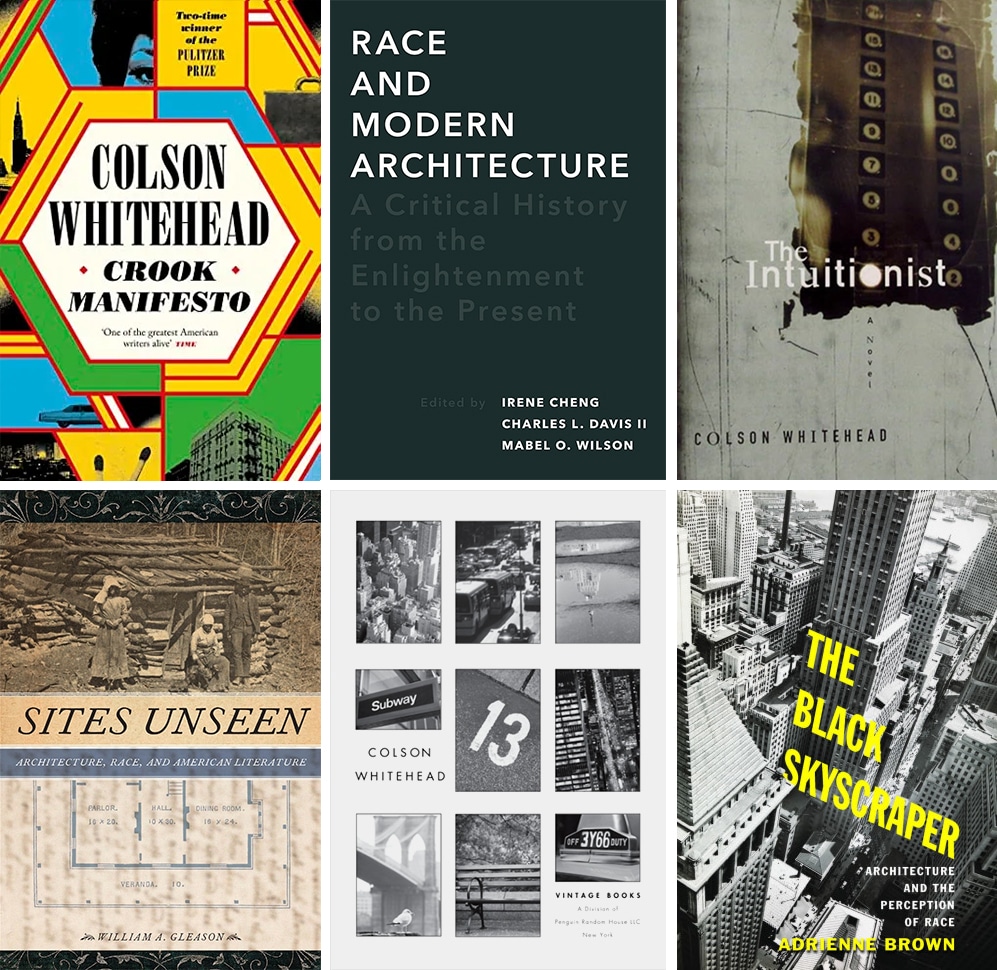
If we are to better understand “the imbrication of race in modern architectural history,” as Wilson and her co-editors Irene Cheng and Charles L. Davis II invite us to do in their introduction to Race and Modern Architecture: A Critical History from the Enlightenment to the Present (2020), then “we must not only incorporate previously excluded building practices, but we must also look to the heart of the canon, deconstructing that which appears universal, modern, and transparent.” 21 Part of that deconstruction — or reconstruction — involves looking beyond typical archives and sources. W. Joseph Black and Richard K. Dozier’s version of Black Builders deserves to be written. But for the time being, perhaps we might take up their prompt and look beyond the title of “architect” to see where other types of “building” — and what kinds of “builders” — have emerged over time.
Much contemporary scholarship on architecture and race has focused (brilliantly) on asking how race has shaped design and built space. This is the explicit charge in the collection edited by Cheng, Davis, and Wilson. William Gleason’s Sites Unseen: Architecture, Race, and American Literature (2011) explains that “the built environment is always shaped in some way by race whether such shaping is explicitly acknowledged or understood,” and Adrienne Brown’s The Black Skyscraper: Architecture and the Perception of Race (2017) extends Gleason’s literary investigations to look at the high-rise as a mediator, symbolically as well as actually, for racialized experience. Such explorations might usefully be linked to a broader “spatial turn” in the humanities — the embrace of urban history, environmental studies, and geography as tools for understanding sociality and culture. Questions of race are inextricably questions of space and place. So it is not surprising that, often, the novelist or memoirist has as much to say about such questions as does the scholar or the architect. How, then, has African American fiction, speculative or otherwise, been shaped by the American built environment? To turn the question around, how have Black writers dealt, aesthetically and materially, with matters of built structure, urban history, even architectural theory? What might a library of these literary Black builders look like?
How have Black writers dealt with matters of built structure, urban history, even architectural theory? What might a library of these literary Black builders look like?
We might think, for instance, of New York City’s Riverton housing projects as the focal point for some of James Baldwin’s most finely-honed rage in his 1960 essay, “Fifth Avenue, Uptown: A Letter From Harlem.” We might consider how Robert Park and the Chicago School of Urban Sociology became part of the American literary scene through their interactions with novelists like Richard Wright and Saul Bellow; in his essay “The City,” Park proposes that sociologists like himself are “mainly indebted to writers of fiction for [their] more intimate knowledge of contemporary urban life.” 22 In 1965, the poet June Jordan collaborated with R. Buckminster Fuller on Skyrise for Harlem, an unrealized plan for rebuilding Harlem that has attracted much recent public attention; Jordan’s young adult novel His Own Where (1971), in which the fifteen-year-old protagonist Buddy creates a spatial and emotional refuge for himself and his crush in Bed-Stuy, Brooklyn, has its fervent devotees. How might we read the work of, say, Paule Marshall or Ann Petry as constituting the same kinds of care for Caribbean immigrant communities in Brooklyn and Black neighborhoods in suburban Connecticut, respectively? How do the novels of Chester Himes help us understand the layout of Los Angeles, and Black folks’ navigation in and around spaces of labor and play that welcomed or shunned them? The opening line of Toni Morrison’s Beloved (1987) implicates a house in the novel-length haunting that ensues: “124 was spiteful.” Bryan Washington’s Lot (2019) animates the city of Houston in short stories that allow neighborhoods to speak through their residents, while the five boroughs of New York become sentient in N.K. Jemisin’s The City We Became (2020).
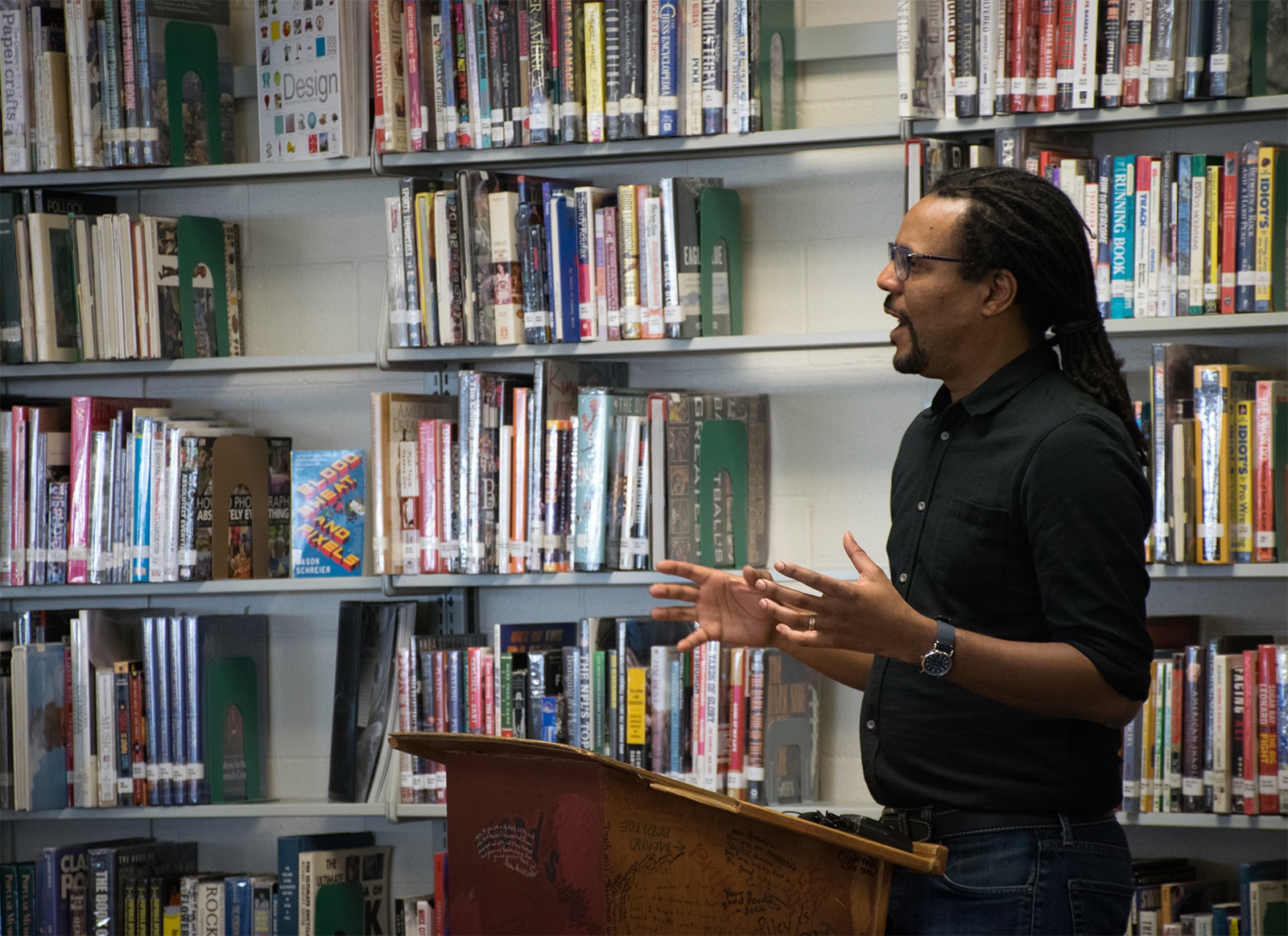
It is Whitehead, however, who to me best embodies the notion of a literary Black builder, so often grounding fictions upon the deep-seated schist of tradition that allows for complex urban worlds to be constructed. Like an architect’s studied citations of historical styles, Whitehead — whose own signal texts include works by Ellison and Ishmael Reed — reinscribes a literary inheritance through his own allusive gestures.
If, for instance, we take the guiding spatial and architectural metaphor of The Intuitionist — verticality and uplift — and write it onto the spectrum of African American literature, we might see that corpus as an edifice built intertextually, a literary skyscraper where each text furnishes building blocks for the next; a tower of babbling where each book exists in conversation with its forebears, and with those to come. The Intuitionist recasts a well-told story of the acquisition of literacy — borrowed from ancestors such as Frederick Douglass and James Weldon Johnson — albeit transformed into a tale about competing crews of occult elevator inspectors, who learn in distinct ways to “read” the machines that help, or fail to help, city-dwellers rise. Ellison may be seen as a shadow influence on the surreal subterranean world imagined in The Underground Railroad, which trades the verticality of Whitehead’s debut novel for a horizontality that also struggles towards a literal kind of freedom. In either case, Whitehead’s ever-expanding output serves as a platform upon which future literatures can be constructed. 23
In many ways, I understand the novels of Colson Whitehead as carrying to fruition the interdisciplinary work that W. Joseph Black imagined for himself.
Whitehead’s engagement with urban history and a streetwise version of urban theory are rarely more explicit than in his most recent novel, Crook Manifesto, the second of a trilogy-in-progress set in Harlem in the 1960s and ’70s — the era of W. Joseph Black — which follows the life and times of Ray Carney, a furniture store owner and part-time fence for stolen goods whose flirtations with the criminal world bring him, by the end of Harlem Shuffle, to success made manifest in built form, in a dwelling on Harlem’s famed Strivers’ Row. Whitehead’s nameless Black architect appears only once in Crook Manifesto, at a poker game right before the game is robbed. But this character expresses in a few lines almost everything I want to argue about the plight of actual Black architects like W. Joseph Black. Another card player remarks to the architect that he didn’t know being a Black architect was possible. The architect (“soft-spoken” though he is) retorts, “They don’t let me do shit … I take it.” Almost as an aside, Whitehead’s omniscient narrator offers more detail: “He had designed two hospitals and a nursing school. That was his angle, medical facilities.” 24 Humor is often the best vehicle for truth — a maxim Whitehead implicitly reasserts with each new project — and the wise-cracking Newark architect echoes the very real critiques advanced by Robert Traynham Coles in his landmark lecture and essay “Black Architects — An Endangered Species”: “Their clients are not the IBMs, the G.M.s, the G.E.s. Those who are in practice have a special practice which is focused on public works because of the lack of access to private resources.” 25
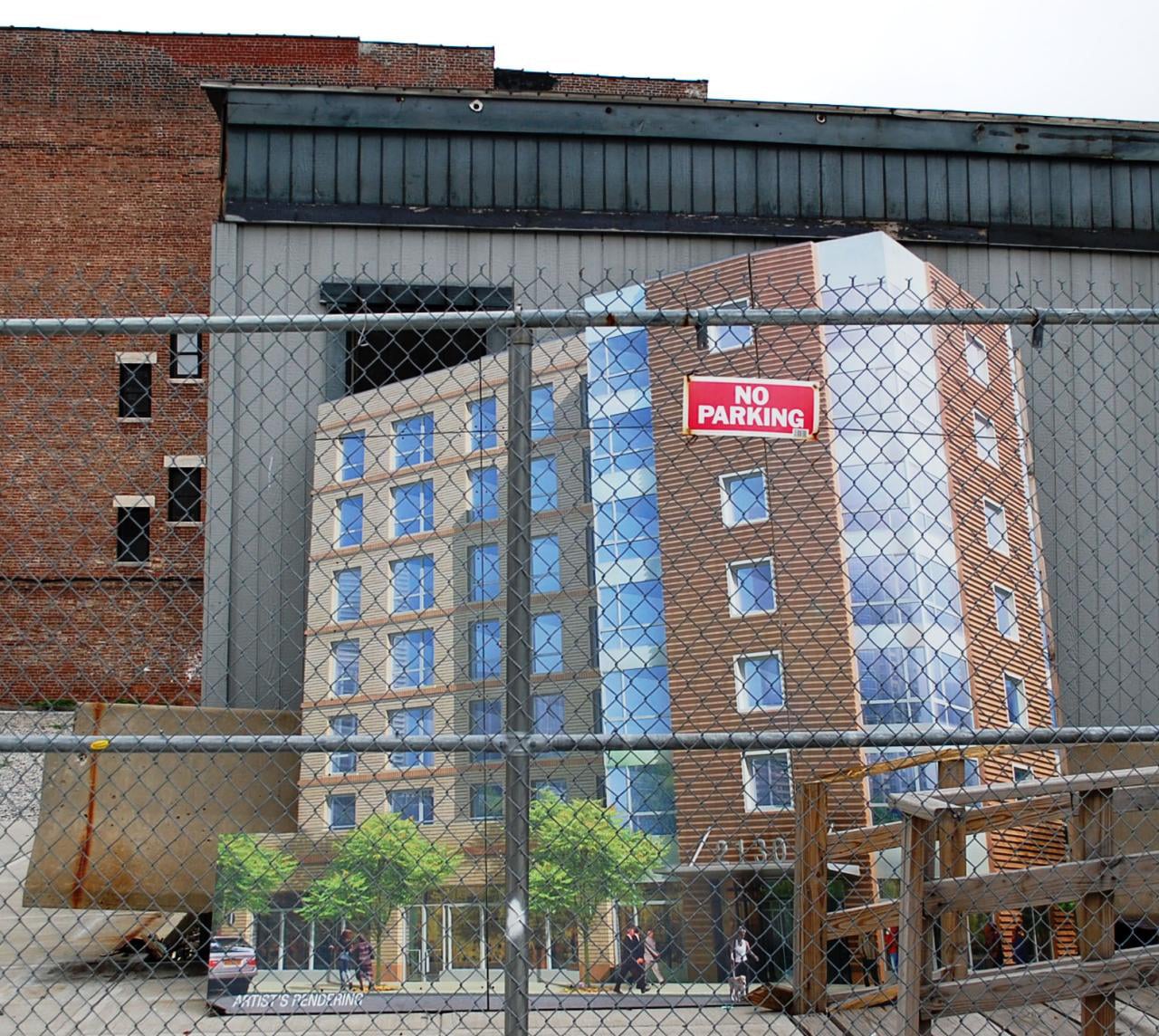
Lack of access is common, then, to the Black architect (fictional or actual) and the gently crooked urban dweller, who is forced to work just outside the law in order to survive. Whitehead defines his novel’s “crook manifesto” mostly via his character Pepper, a charismatic enforcer who is Carney’s friend and sometime mentor. For Pepper, violence is governed by a sense of virtue: “A man has a hierarchy of crime, of what is morally acceptable and what is not, a crook manifesto, and those who subscribe to lesser codes are cockroaches. Are nothing.” 26 Crook Manifesto is shot through with instances where this criminal code is shown, moreover, to be more than merely moral or personal, governing urban space and one’s movement through it. On the novel’s first page, Carney muses: “The straight and narrow — it described a philosophy and a territory, a neighborhood with borders and local customs. Sometimes when he crossed Seventh Avenue on the way to work he mumbled the words to himself like a rummy trying not to weave across the sidewalk on the way home from the bars.” 27 On a trip downtown to settle a score, Pepper thinks to himself:
He had to admit it — the first time he saw Herald Square, years ago, before the war, he was impressed with the white man’s skyscrapers, the white man’s towering apartment buildings, the glass-walled restaurants, those big stores crammed with all the stuff he couldn’t touch. A few miles uptown, Harlem was beginning its slide, in burned-out tenements full of ghosts and stores that never reopened, the schools without schoolbooks. Herald Square had caught up in the years since. It always catches up — the consequences of how you’ve chosen to live, and people all over the city were choosing poorly. 28
As if delineating his own experience “slipping into the breaks and looking around,” Pepper remarks on the ever-shifting territories of criminal empires: “Those whose livelihoods and survival were determined by the new geography of power — criminals — maintained maps of where it was safe to go and where it was not safe to go …. Best to keep track. Civilians registered these transitions as routine phenomena; they were in fact local expressions of higher-level forces.” 29 In yet another subtle rewriting of Ellison, what are criminals like Pepper if not “invisible men” in one sense or another, working between or beyond what is legal?
Whitehead’s Black characters write — and realize — daily manifestos of urbanity that help them to survive and thrive.
Crook Manifesto defines for its readers the many ways in which its Black characters write — and realize — daily manifestos of urbanity that help them to survive and thrive, to make meaning or menace. Witness the minor character Leon Drake, an arsonist who acquires a “supernatural acquaintance with his home turf” of Harlem: “every storefront, which sidewalk grates clanged underfoot, the alleys, fire escapes, the getaway exists through basement doors and their distance from the street, which tenements hit max occupancy and which townhouses had rotted through, the proximity of fire hydrants and fireboxes.” 30 Imagining a spectral private city spread over the extant one, conjuring its destruction rather than its construction, the philosopher-arsonist operates with a freedom that a Black architect or planner rarely enjoyed. All the while, Whitehead the master builder writes both cities into being — the day-to-day 125th Street of 1971, or 1973, or 1976, and the city of ash that Leon feverishly imagines — as visions of Harlem endlessly overlaid upon each other. In one of the book’s most stirring passages, Carney’s friend and lawyer Calvin Pierce casually explains 50 years of urban history, including the “urban crisis” to which urban renewal was directed, in a couple pages of dialogue:
Before the current fiscal crisis and all the cutbacks, Pierce said, there were decades of urban renewal projects that obliterated communities and industrial zones in the name of progress. “Ramming the highways through, bulldozing so-called slums, but they were places people lived — black, white, Puerto Rican. Knock down the factories and warehouses, and you wipe out people’s livelihoods, too. The white people take advantage of those new highways out to the suburbs and flee the city into homes subsidized by federal mortgage programs. Mortgages that black people won’t get. And the blacks and Puerto Ricans are squeezed into smaller and smaller ghettos that were once thriving neighborhoods. But now those good blue-collar jobs are gone. Can’t buy a house because the lenders have designated the neighborhood as high-risk — the redlining actually creates the conditions it’s warning against. Unemployment, overcrowded tenements, and you get overwhelmed social services. It’s started — the breakdown.” 31
This is writing that acknowledges the lived effects of shortsighted planning policies, disinvestment, redlining, White flight, and a host of other conditions — none of which was solely responsible, but all of which combined to create the Harlem that W. Joseph Black wanted to celebrate, and the Harlem about which he wanted to disabuse outsiders. It is the same Harlem that Colson Whitehead brings to life on the page, the Harlem for which the novelist reconstructs a social history that his necessarily shady characters — builders of a particular kind — understand as governed by structural and political forces that might, themselves, be crooked.
Joseph Black: A Mark Made on the Page
“What is a central character of the Black community as a basis for planning?” 32 This question was at the heart of W. Joseph Black’s design philosophy, and the concept of the Harlem Music Center was developed in part as a solution to it. For Black, the “cultural character of Harlem” was the “primary source of its contribution to the world.” As he told the artist and educator Esther Rolick in a 1971 interview, “people from Harlem by and large — apart from its strong laboring force — are people who are in the creative fields, who have in fact contributed to the cultural fabric of the world, and jazz has been probably the most celebrated aspect.” 33 Black looked at Harlem in the late 1960s and early 1970s as a case study, showing that housing accounted for approximately 80 percent of buildings, with only “marginal commercial development,” and “zero cultural institutions” that could compare to a hub like Lincoln Center. 34
‘What is a central character of the Black community as a basis for planning?’ This question was at the heart of W. Joseph Black’s design philosophy.
Black was both a student and a scholar of Harlem, but he was born in Carthage, Texas, in July, 1934. He was raised in the Lawndale area of Chicago, and cited the influence of works by Frank Lloyd Wright, Louis Sullivan, and others. He began an undergraduate degree in architecture at the University of Illinois at Chicago but transferred to Columbia University in 1958, and it was in New York City that he completed his bachelor’s degree in architecture in 1965. He also attended the Columbia University School of Architecture, earning a Master’s of Science degree in urban planning in 1971. Black traveled extensively as both a student and a professional, having in 1965 been awarded the James Stewardson Travelling Fellowship by the AIA, which allowed him to study Islamic architecture in the United Kingdom and Europe; on his own, he undertook a grand tour of historical architecture in Germany, Scandinavia, North Africa, Egypt, Sudan, and Ethiopia. Black was fluent in Spanish and Portuguese, and held architectural and planning positions in Africa, Europe, and Latin America. Once a settled citizen of New York, he took up many consultancies in addition to his work with the Harlem Music Center: between 1968 and 1973, he served as a consultant to the Harlem office of the New York City Planning Commission, the New York Model Cities Administration, and the New York State Urban Development Corporation. Such governmental appointments gave him special insight into the functions of municipal agencies, and allowed him to study Harlem’s planning needs in comprehensive detail. 35
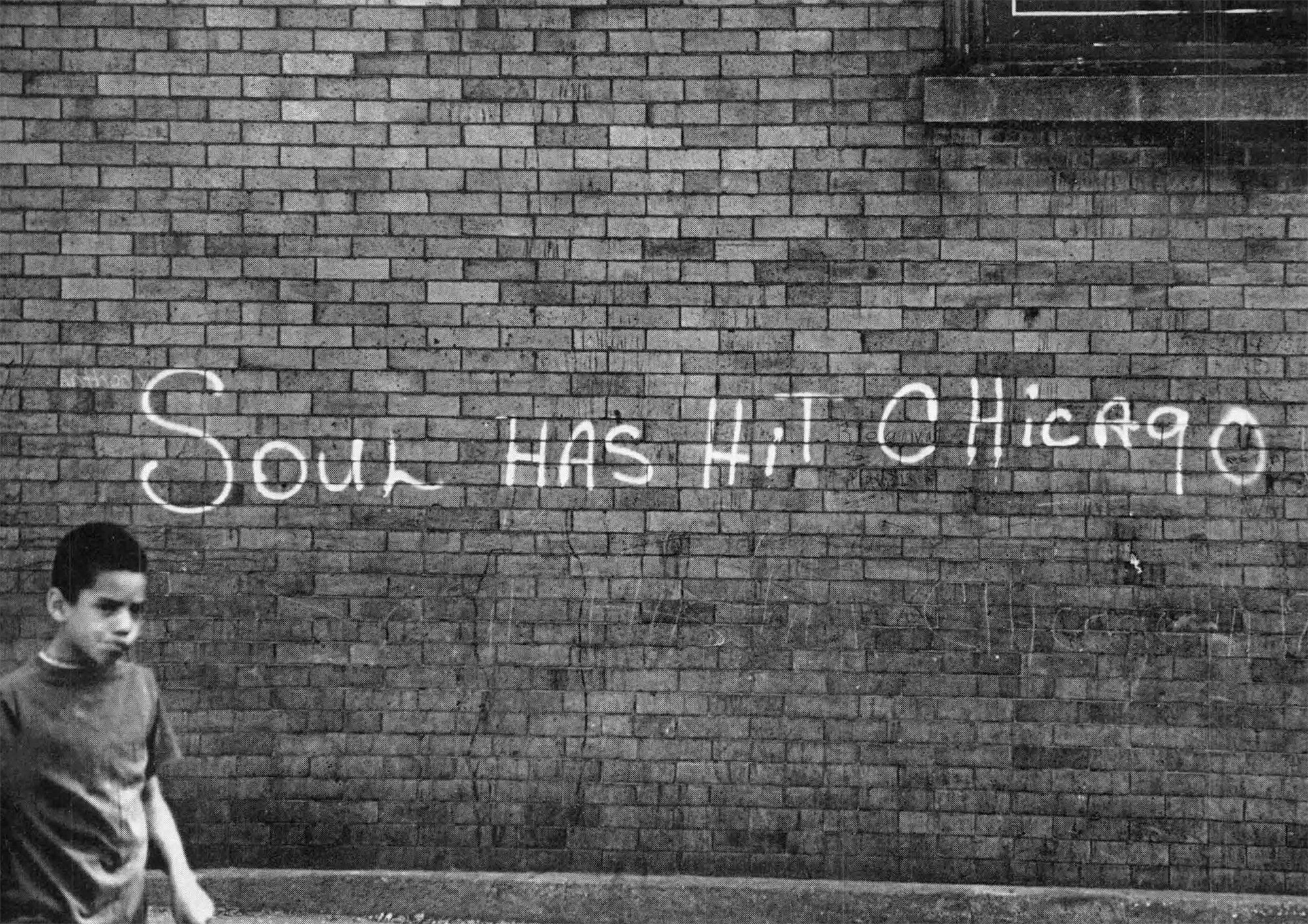

Two articles by Black, both published in 1968 in Architectural Forum, drew inspiration from — and for — the community he had known in Lawndale, while helping to define the approach that he would later bring to the Harlem Music Center. In “The Renewed Negro and Urban Renewal,” Black called on architects and planners in ringing modernist tones to “develop new principles of architecture and planning in order to make any contribution towards solving the crises of the cities and [help] to formulate programs for the future of the Negro in urban America.” 36 He championed research into Black culture and values that far exceeded typical planning studies or policy papers, which might outline large-scale urban development to improve housing conditions or the like. In doing so, he tried to offer insights that outside observers might fail to grasp:
Racial integration is often thought to be the foremost goal of Negroes on the way up economically and on the way out of the ghetto. But black people today are far more concerned with identifying their cultural roots and building on the inherent qualities of the black community from which they derive cultural nourishment, social acceptance, and personal fulfillment. The highest priorities of the black community are to improve their condition of life, to gain respect, and to develop their potential in spite of the enormous burden of racial prejudice and social injustice.
Black demanded that those tasked with commissioning studies and developments do better; he argued that plans for a community should at least understand that community (without going so far as to say that such plans should come from that community): “Urban studies should instead search for the essential character of a community — the values and content — from which can emerge an urban design satisfying the economic needs and social goals of the community.” 37
The second essay that Black published in the tumultuous year 1968 was titled “A Farsighted Study and Some Blind Spots: The Park-Mall Concept.” In it, he observed that “residents of the community are rarely impressed with the statistics, models, and eyewash that architects use to gain the praise of politicians and fellow architects.” Rather than such blandishments, Black suggested that the intelligence and desires of Black neighborhoods be respected and activated. “What they do expect,” he exclaimed, “is to have a piece of the action! Rightly, the black community is now insisting on becoming involved at every level of the decision-making, programming, planning, and rebuilding of their communities. They too want safer, more attractive and humane environments, responsive to their needs and giving their lives more meaning.” 38 For Black, the built environment should emerge from what amounts to a community character study. Urban studies was, at its heart, cultural studies, and intimate knowledge of a people’s needs and lifeways should govern urban design.
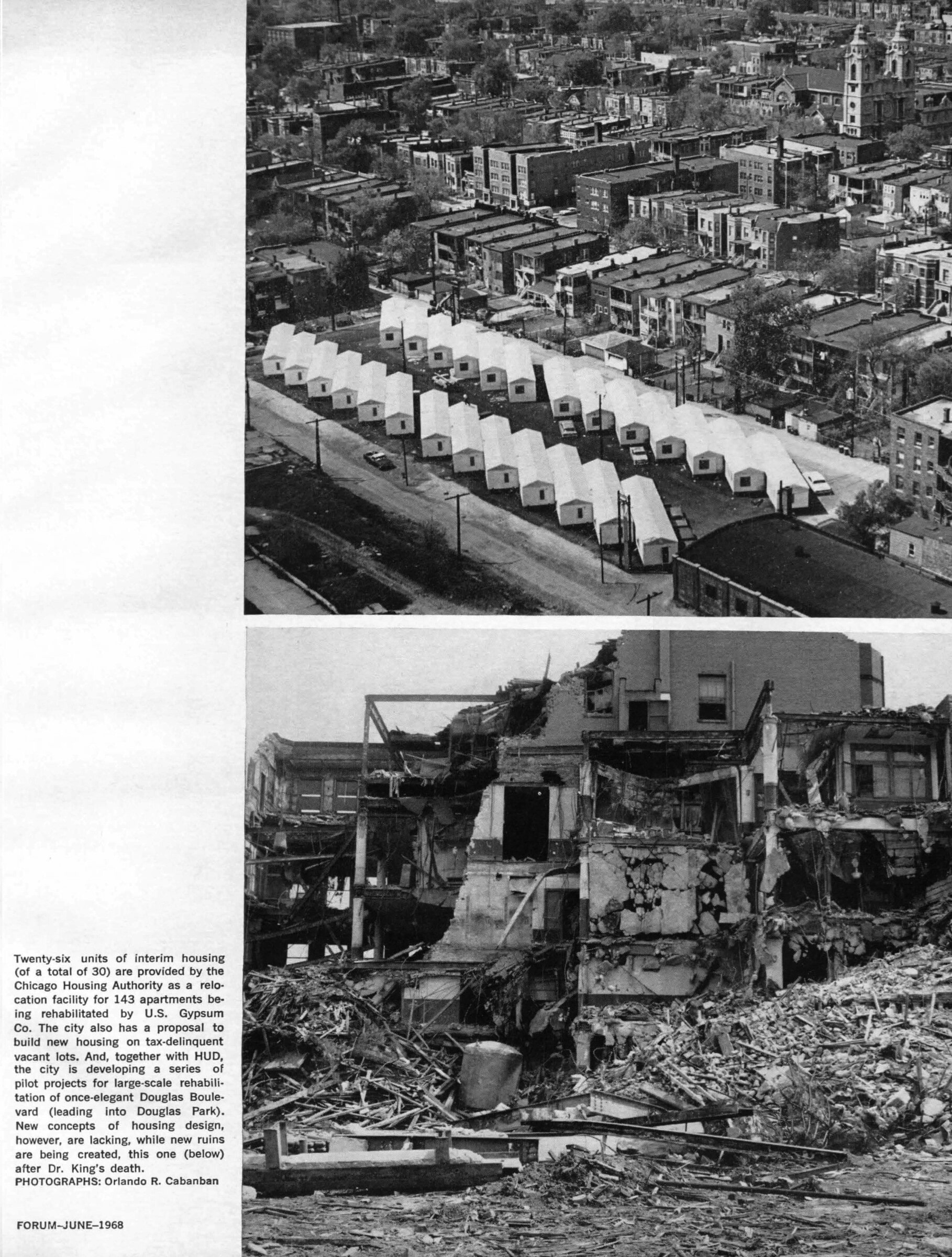
Black’s philosophy emerged from a contested period in American history when urban renewal and modernist planning more broadly were attacked from both the right and left, as activists began to champion participatory urban planning as part of a movement towards liberation, self-determination, and community control. Brian D. Goldstein’s masterful history The Roots of Urban Renaissance: Gentrification and the Struggle over Harlem (2017) attests to the value that architects like Black found in Black cities: “Instead of seeing their predominantly low-income neighbors as problems to be excised through large-scale clearance, they turned the equation of urban crisis on its head, arguing that the existing community in places like Harlem provided the very basis from which revitalization could occur.” 39 Spaces and places like Harlem were sites of bountiful cultural ferment.
I suspect that what writing offered was urgent, argumentative potential, a capacity to render real that which was, for whatever reasons, unbuildable.
Black’s career was given a boost in the same pivotal year 1968, when he was awarded the Brunner Award from the Architectural League of New York, for a proposal that contained the DNA of multiple projects, including the Harlem Music Center, Visions of Harlem, and Black Builders of America. The honor, as well as the grant of $5,000, allowed him time to work on the Gateway to Harlem, which had begun as his graduate thesis at Columbia. In many ways, the Gateway served as Black’s architectural and planning manifesto. Elements of the project can be glimpsed in — and perhaps gleaned from —his articles, the studies he completed in his consultancies for city agencies, and in his correspondence. This blurring of one undertaking into another may also account for structural resemblances between Visions of Harlem and Black Builders of America.
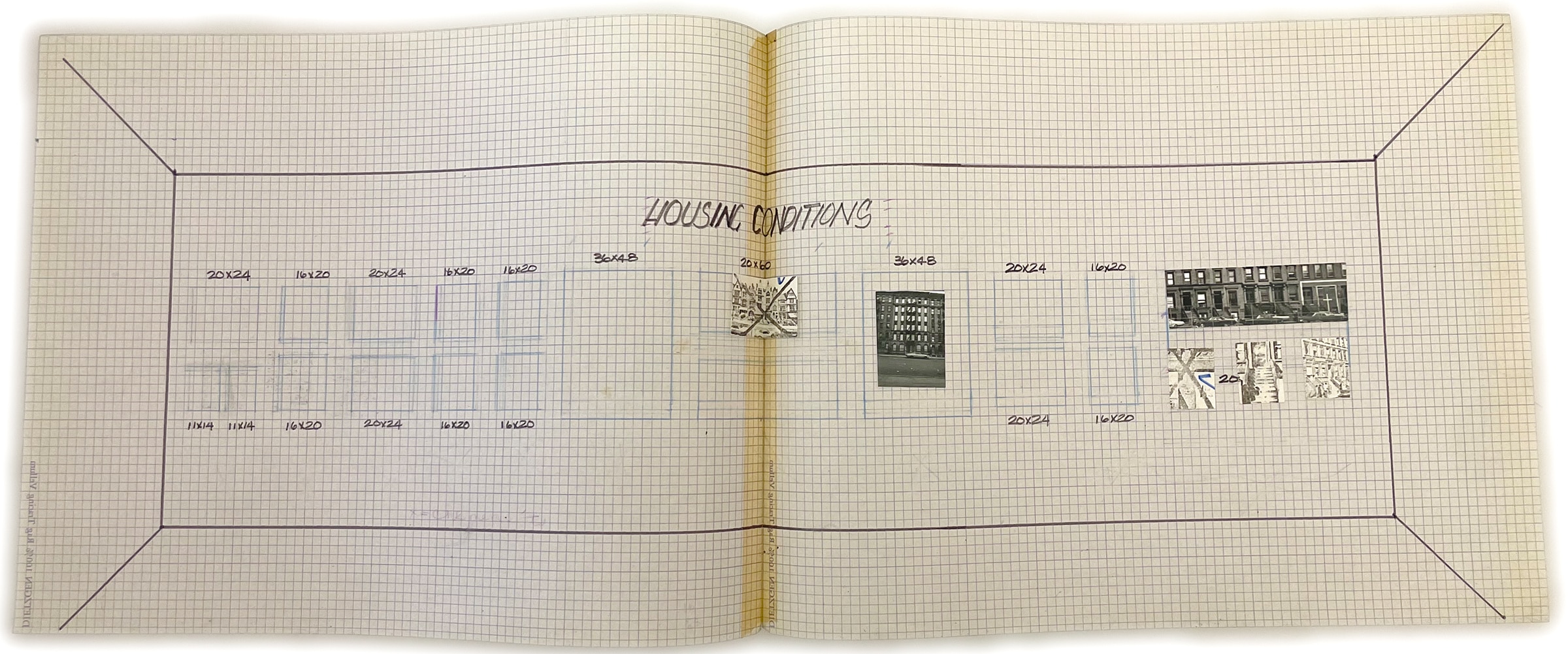
As Mabel O. Wilson observes in her article “White by Design” (2019), which examines the history of Black designers and architects as represented at MoMA, Visions of Harlem could have been a landmark show — especially after the much-maligned Harlem on My Mind at the Metropolitan Museum of Art, which had opened in January 1969. 40 The version of Visons that exists in Black’s papers at the Schomburg testifies to his desire to unseat negative perceptions of the neighborhood, and replace them with a promising vision of a built space that could be transformed, if only the culture and character of its population could be made central. “To ask ‘Why is Harlem such an important place in human geography,’” Black writes, “is to be interested in knowing what makes it one of the most fascinating ethnic communities of the world.” Indeed, the exhibition seemed primed to erase the imaginary Harlem that existed in the minds of White outsiders, and to offer an alternative — not simply Harlem as it was, but also as it could be — as understood by those who resided in the place itself.
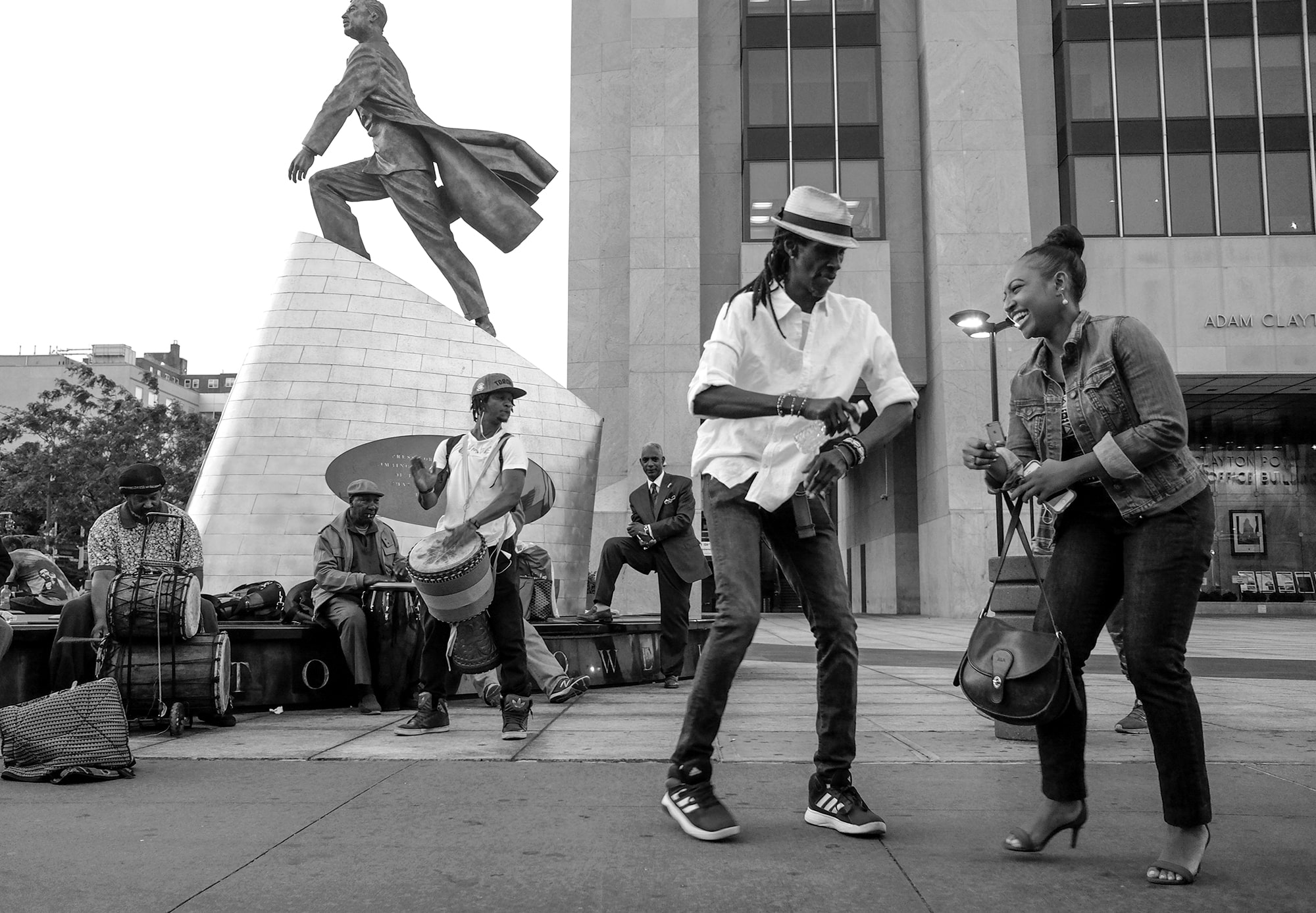
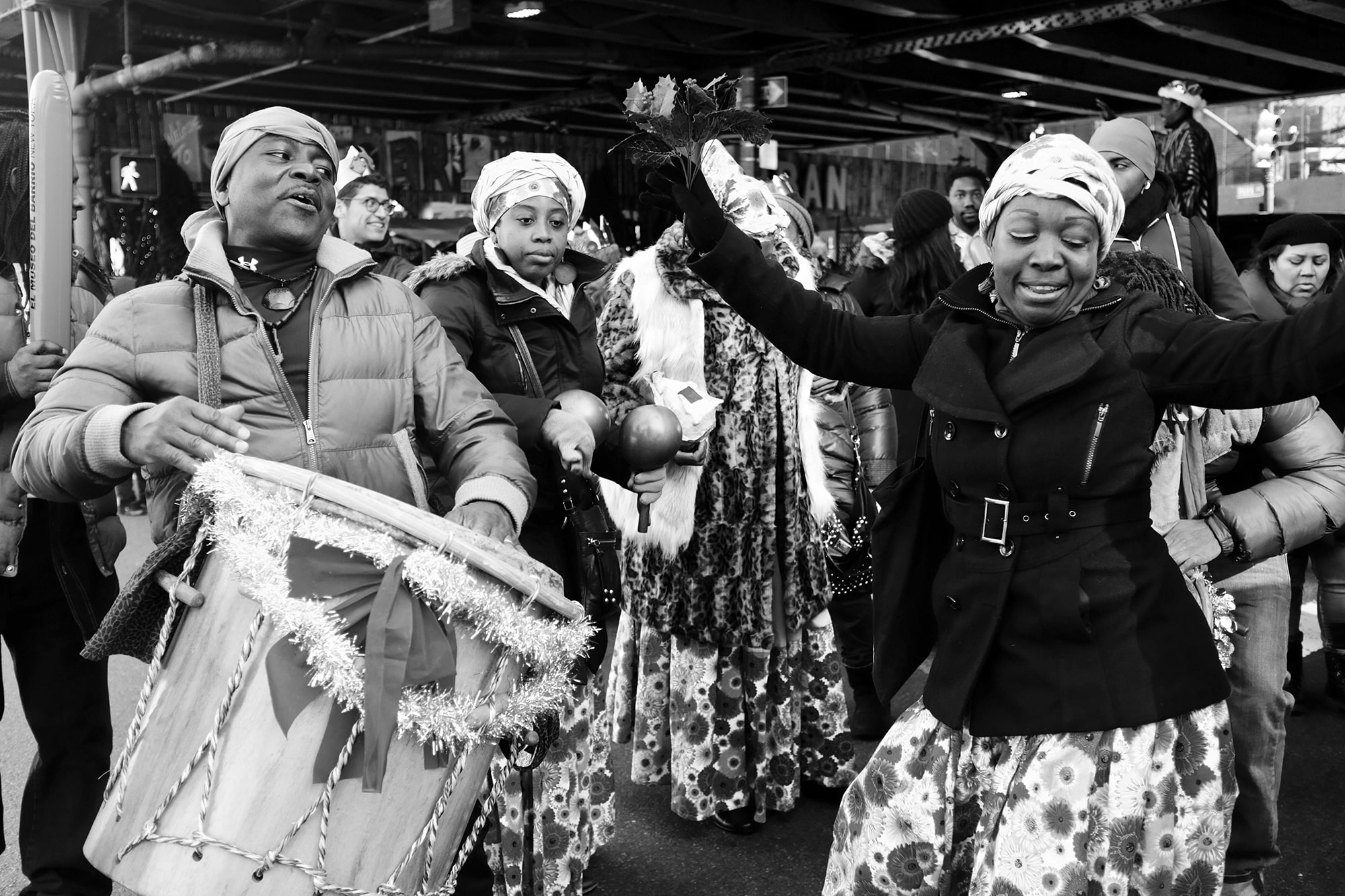
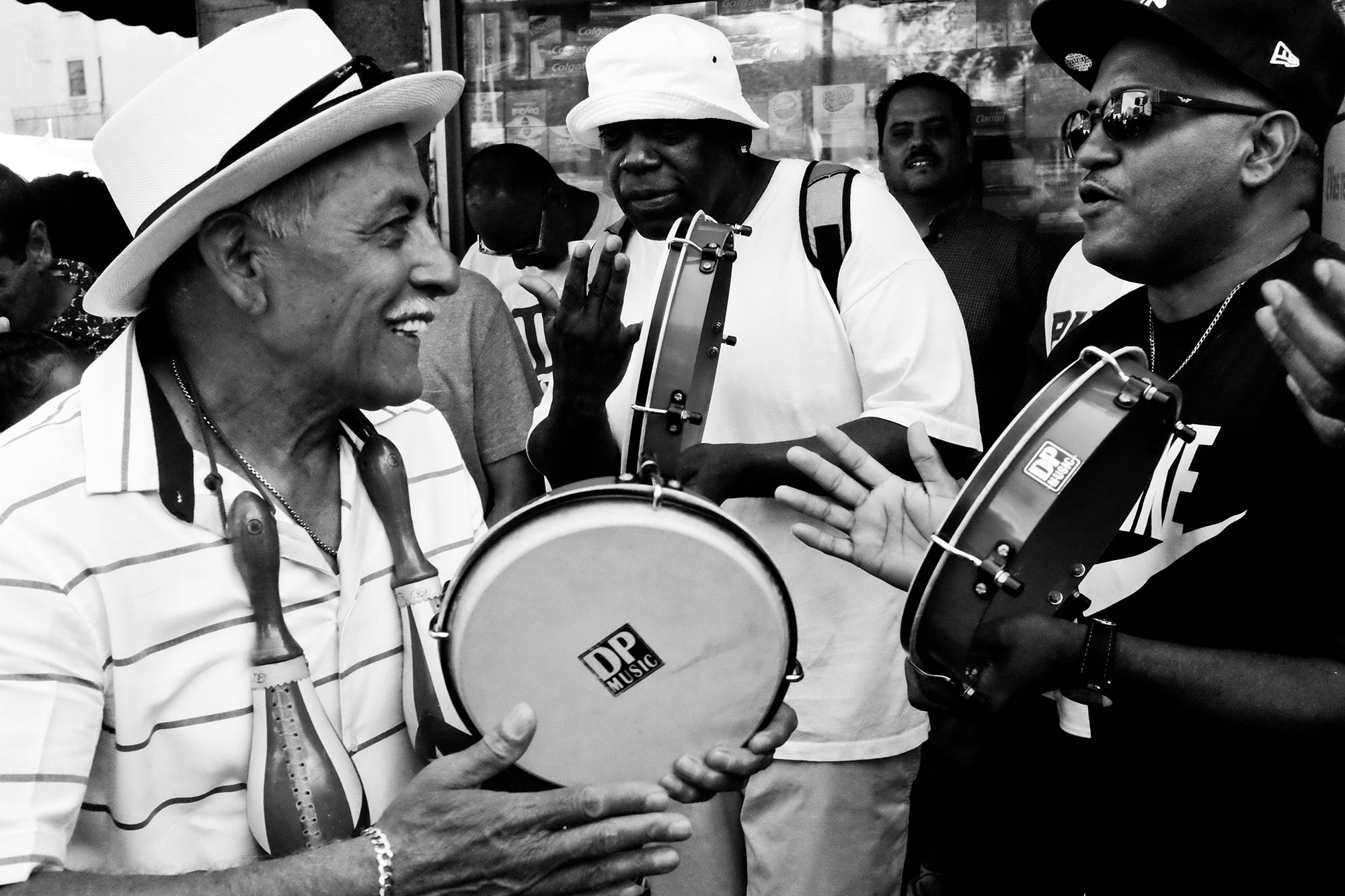
It’s significant that Black insisted on an exhibition catalogue juxtaposing illustrations and text — perhaps recalling the well-known 1955 collaboration between poet Langston Hughes and photographer Roy DeCarava depicting daily life in Harlem, The Sweet Flypaper of Life. This suggests to me, again, that Black saw something in writing that urban planning and/or architecture — much less a museum exhibition — could not encapsulate. Given the impassioned tone in what remains of Visions, I suspect that what writing offered was its urgent, argumentative potential, its capacity to render real that which was (for whatever reasons) unbuildable. This was a tension Black knew all too well from his time as a planning consultant. Not only that, but one could indeed construct the most sensitively designed and harmonious building in Harlem, and still there would exist claims that Black and Brown residents did not deserve to live within its walls. W. Joseph Black was invested in changing minds; this ambition stood at the heart of the Gateway, as well as the Harlem Music Center. If those projects could not go forward, his mark would have to be made on the page.
W. Joseph Black was invested in changing minds. If built projects could not go forward, his mark would have to be made on the page.
In one sense, Black argued that the truth of the neighborhood was as invisible as Ellison’s narrator. “Beyond the many myths about Harlem are contrasting realities that offer a better description of the people, places and character of this unique subcity of New York,” he wrote in what might have been an introductory essay for the planned Visions volume. “Best known for its negative aspects and only little understood for its positive qualities, Harlem has experienced many important changes that justify a new look at its past, present, and future developments.” 41 Exploring multiple aspects of New York’s Black Mecca, Black considered Harlem’s natural landscapes and manmade alterations therein; the “spiritual center” and second home that the Black church had long provided; Harlemites’ penchants for fashion and play; and of course the rich architectural history of blocks like Strivers’ Row. The exhibition was a testament to dreams unrealized and roads not taken.
Black and Dozier’s Black Builders of America did not center in the same way on an identifiable location. As noted, the pair won a National Endowment for the Arts grant in 1973 “to research and document Black Builders of America” — a group they defined as “craftsmen, architects, engineers, planners … developers.” The authors hosted a press party in 1973 to celebrate their grant at Black’s Riverside Drive home, distributing a press release touting their book-to-be as “the first study of its kind.” The release went on to note that their study would “trace the history of blacks involved in the building trades and architectural profession as well as describe their present role in the planning and development of our physical environment.”
If we take anything from his example, we might bolster our understanding of the unfinished as a resource.
As outgrowths of their research, Black and Dozier intended to provide educational resources to schools, as well as to produce another museum exhibition. Interestingly, the press release also notes that a film version of the project was planned to coincide with the 1976 bicentennial celebrations. There is evidence that Black met with Charles “Chiz” Schultz (a noted White producer of African American cinema and television, whose credits included Bill Gunn’s 1973 film Ganja & Hess; he would go on to produce Bill Duke’s 1989 TV-movie adaptation of A Raisin in the Sun, starring Danny Glover) about planning a televised special. This was in 1974, when Black’s MoMA show was still on the museum’s books. Schultz’s notes from the meeting suggest that the TV program would have capitalized on a press tour that Black had planned around the MoMA exhibition.
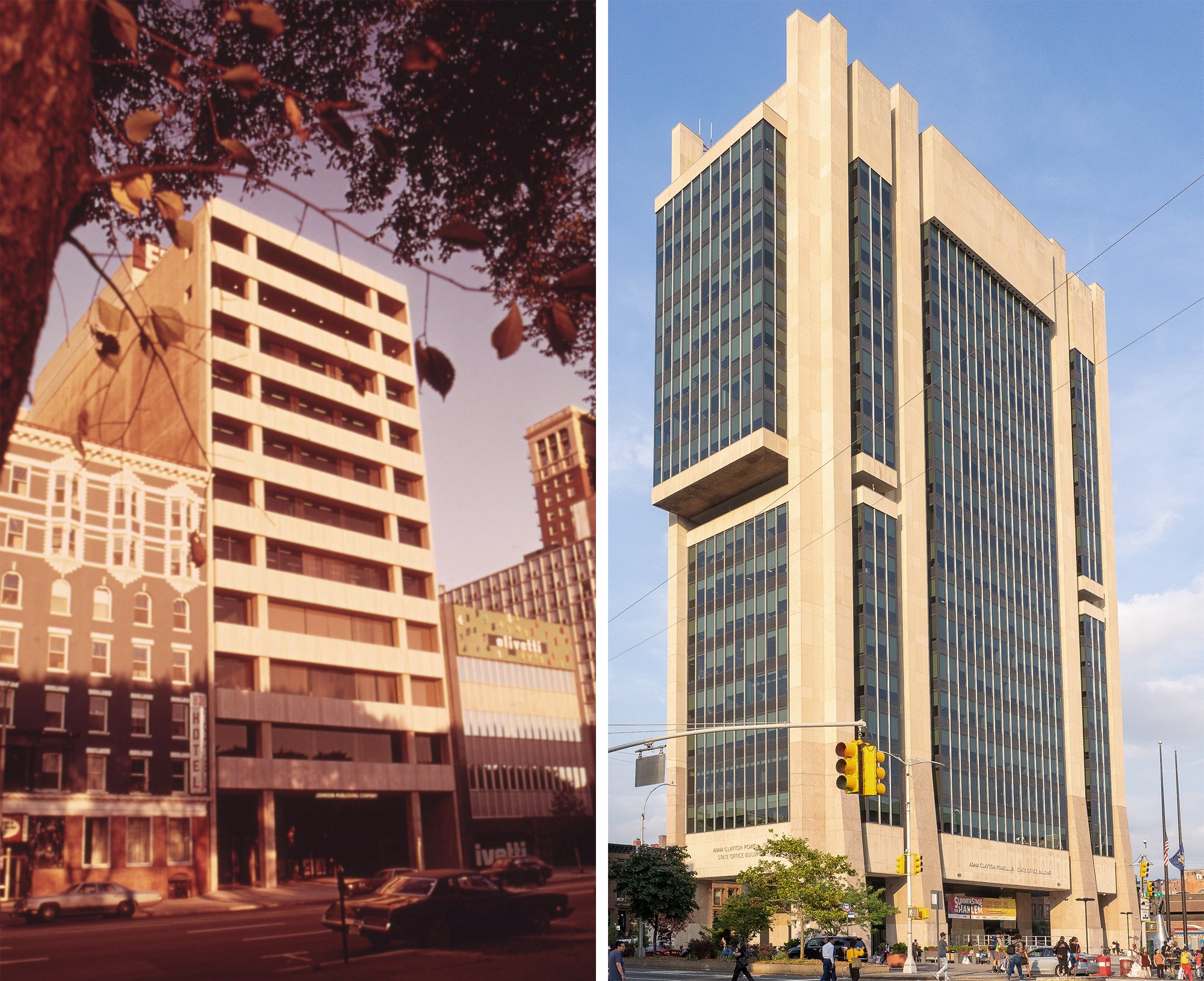
It is reasonable to conclude that the disappointment of these frustrated projects had a ripple effect on Black’s career, if not that it created an emotional obstacle to further production. Dozier went on to write two well-regarded articles: “Black Architects and Craftsmen: A Historical Survey” in 1974 for Black World, and “The Black Architectural Experience in America” for the AIA Journal in 1976. But we know much less about the outcome of the Black Builders collaboration. One glimpse of its promise survives: Black submitted a proposal to the Smithsonian Institution in May 1975 for a “national and international traveling exhibition of approximately 150 photographs and drawings” intended to recognize the “important work of unknown and known Black builders from the earliest to the most recent developments,” in time for U.S. Bicentennial exhibition programs the following year. Black’s proposed exhibition chronicles aspects of African architecture that influenced early American architecture, from the ruins of Dahomey temples to landmarks in Charleston, S.C., and the work of contemporary Black architects from Vertner Tandy to Donald L. Stull. The proposal was received warmly, but the available funding was to support travel, and Black still had much research to do — too much, unfortunately, to accomplish before his death in 1976. 42
We should expand our notions of who and what Black builders and Black building can be — and, indeed, of what it means to ‘build’ in the first place.
There are of course distinctions to be made between places that have seen historical and structural underdevelopment, visionary plans for redevelopment that never advanced past conference rooms and community board meetings, and myths and urban legends that interrupt our spatial sense — all of which can render our understandings of the realities of place unfinished in one measure or another. Black’s relationship to Harlem as a place and an idea touched into all these strata of the unfinished. But if we take anything from his example — funneling the energies of one deferred project into the next; channeling the disappointments of one’s urban planning manifesto into fuel that could charge other kinds of projects that might affect an even greater audience — we might bolster our understanding of the unfinished as a resource. Black lived for only 42 years. But he stored an archive of architectural and literary inspiration that researchers like myself can return to, time and again. Perhaps it is left to others, like us, to complete such unfinished life’s work in whatever ways we can.
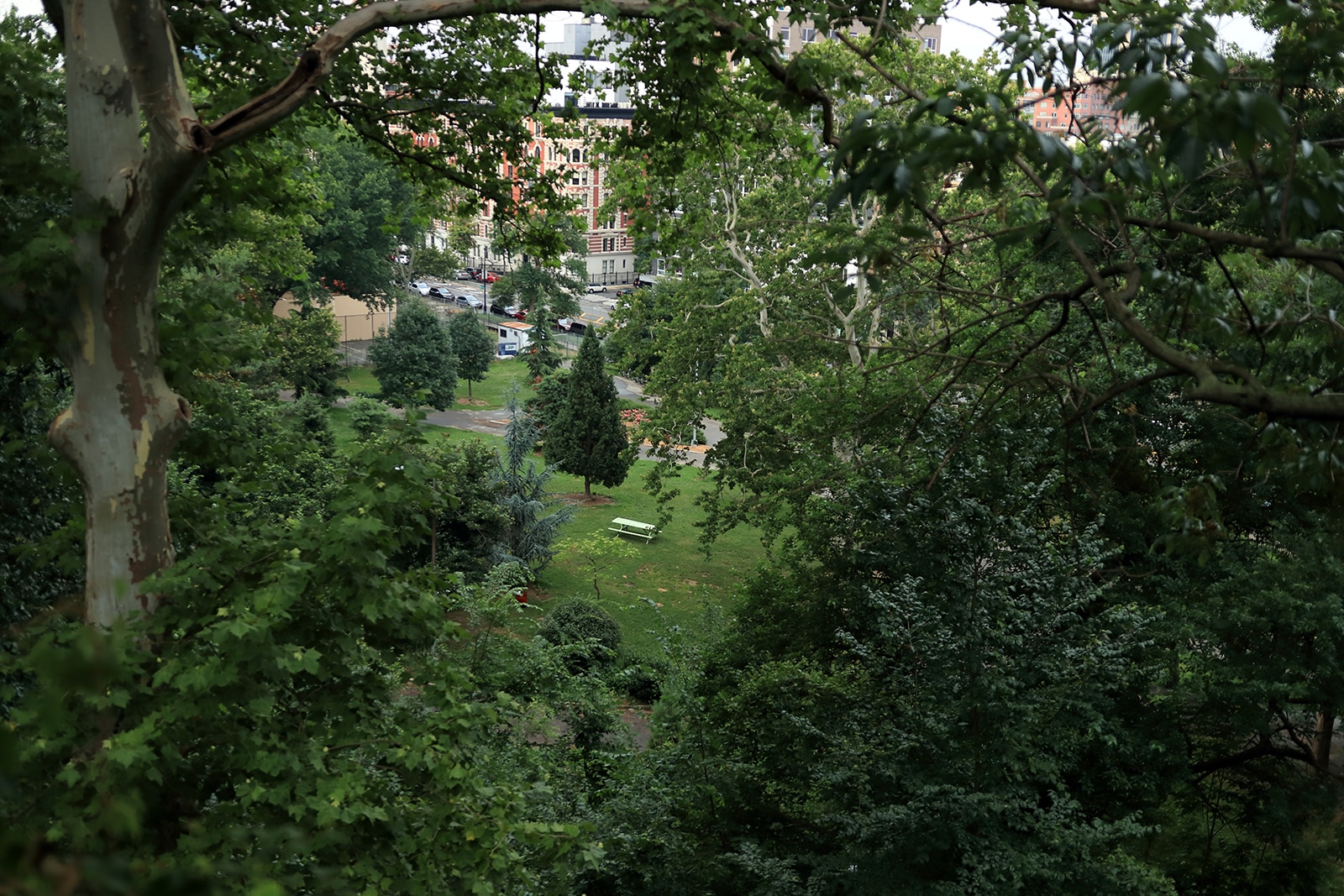
In his 1968 Architectural Record critique of the “Park-Mall Concept,” a master plan for the Lawndale neighborhood in Chicago, Black noted that the study had many strengths, particularly its systematic approach to organizing new forms of vehicular and pedestrian circulation. His criticism is characteristic of his approach to the Harlem Music Center: the largely top-down proposal lacked the community engagement that Black believed was necessary for success, not to mention the fact that the report and its writers lacked even passing knowledge of the Black communities for which the proposal was designed. Black’s conclusion urgently articulates his planning philosophy. At the same time, in calling out the disturbing ease with which important work can be neglected or lost to history, it prefigures the near-loss of his own life’s work:
Very little documentation exists on the character of the Black community as a basis for planning. Although numerous studies have explored the effects of crowding on white mice, nobody has carefully analyzed the attitudes of Black men concerning open space — analyzing, for example, how the streets of the ghetto serve as living rooms of the community. The dynamic quality and spirit in the ghetto are lacking in more affluent areas of American cities. Efforts to reshape the physical environment should not lose sight of the human and cultural resources that are vital to the economic growth of underdeveloped and overexploited communities. Design formulas created in graphics studios and computer centers will help little to stimulate social interaction, economic integration, and political progress unless one adds the ingredients of intuition and respect for the life style and requirements of people from different cultural backgrounds .… It is difficult to determine if the political machinery of Chicago will encourage the team’s proposals to be carried out, or if this is merely another study to collect dust on the shelf. 43
W. Joseph Black on the page is consistent with W. Joseph Black as a designer of spaces: eloquent, passionate, hopeful, knowledgeable. In the few recorded interviews that exist, he comes across much the same; one simply has to imagine these published paragraphs recited in a slightly nasal though commanding baritone, each word elocuted within an inch of its life.
However, in Black’s correspondence, we sometimes see the confident professional allow, for just a moment, a glimpse into more personal feelings. In 1968, for example, writing to the Ford Foundation, he reflected on the political revolutions through which he was living:
As a Negro, I feel that I have a deep understanding of some of the causes of the riots which are not fully explained by the tons of literature that has been produced since they occurred. I see the Black revolution as one against the social, economic, and physical confinement to sub-standard housing and cancerous communities which offer little latitude and only limited personal mobility. Black people are rebelling against not having the opportunity to achieve their maximum potential, to have a sense of personal fulfillment and freedom of choice. 44
In another letter dated later the same year, to Charlie L. Russell at Onyx Publications, which in 1968 supported a gathering known as the Onyx Black Cultural Conference, Black describes something of his intellectual underpinnings, his fears, as well as his dreams for a future that was still uncertain:
I strongly believe that the future of the Black man in urban America will largely depend on establishing a dialogue to determine how his social, economic, and political goals can best be achieved. I fully agree with Harold Cruse that the best way to achieve these goals is by means of a cultural revolution. Culture is the one thing that we’ve got and it is the best vehicle to get what we want. It seems apparent that the foremost goals of the Black man are to improve his living conditions by building on the inherent qualities of the Black community from which he derives spiritual nourishment, social acceptance, and personal fulfillment. His ultimate goals must be to create his own opportunity to develop his maximum potential, to exercise freedom of choice, and to gain respect for his cultural values. Perhaps the greatest challenge of the Black man in urban America is to guide the development of some new principles of urban living which will generate new urban forms, architecture, and open space designs which relate to the needs of the residents of the community. 45
Harold Cruse, whose remarkable intellectual history, The Crisis of the Negro Intellectual, had appeared the year before, also argued for the centrality of African American institution-building to the process of achieving equality in the United States. That is, African American freedom, however one defines that word, required African American cultural institutions — like the Harlem Music Center. “The special function of the Negro intellectual,” Cruse wrote, “is a cultural one.” 46 This is a belief with which Colson Whitehead concurs, ultimately defining the future of his protagonist Ray Carney not as tied to institutions per se, but resolutely centered in the self: “The City tried to break him. It didn’t work. He was a genuine Manhattan schist, and that don’t break easy.” 47 Thus Whitehead inverts a notion born in slavery — the Black body as infrastructure — and recovers it as a marker of strength upon which communities can be built.
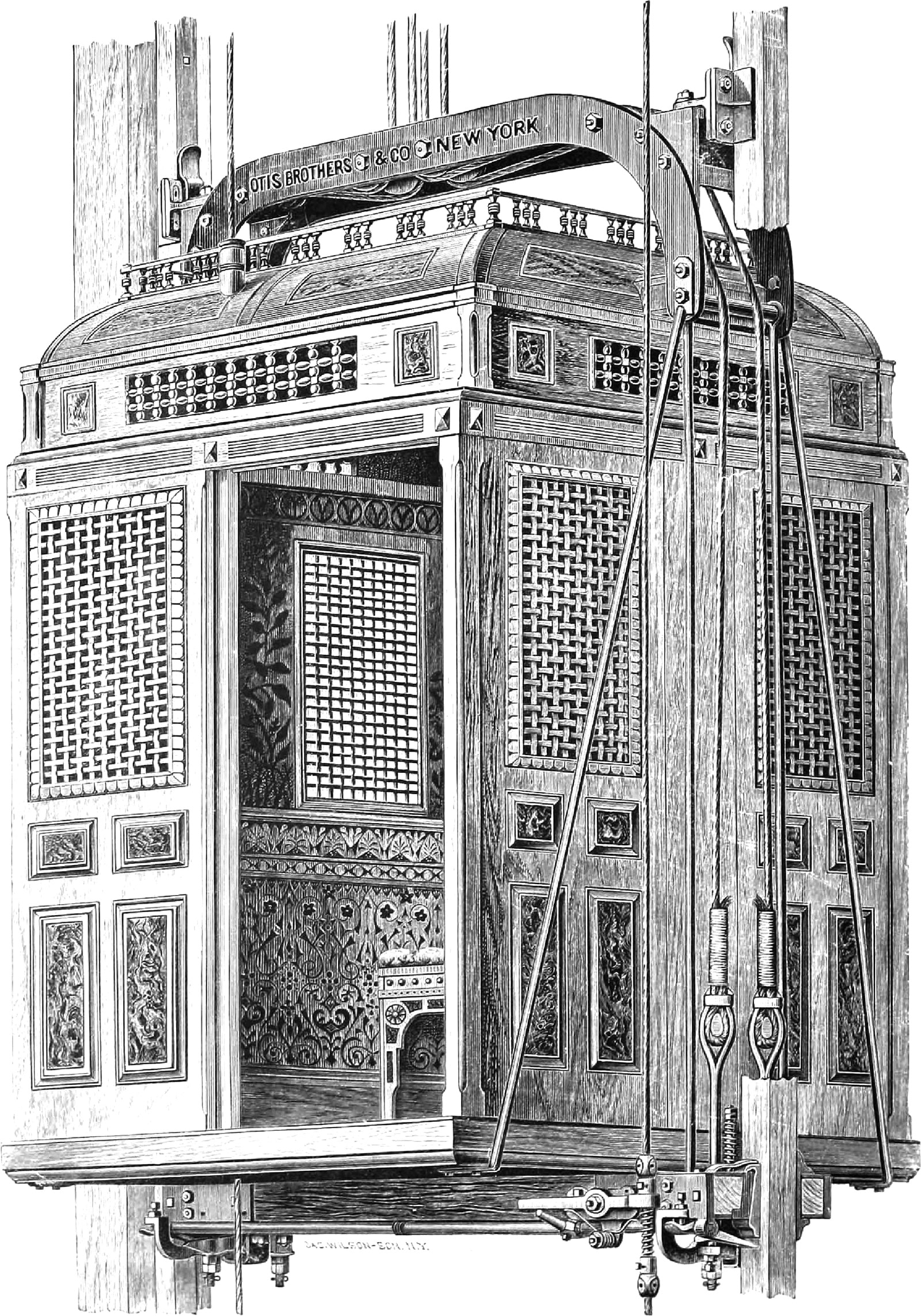
The unfinished, as exemplified by the Harlem Music Center and the Gateway to Harlem complex, offers speculative visions of present and future places denied to the Black communities for which designers conceived them, and to the rest of society as broader beneficiaries. To ask, again, the question that animates my interest: how many works by Black architects, planners, builders, and other dreamers lie dormant, still, in archives, or tossed by the wayside in frustration, never to be lauded as great works of even speculative imagination? If the unfinished means differently for Black builders than it does for those unmarked by structural racism, then we must attend more closely to the projects and careers of Black builders who never came to be, and/or those whose achievements we have never been allowed to know. As Mabel O. Wilson’s work reminds us, we ought to more actively consider the many heretofore unrecognized Black builders of America. As the career of W. Joseph Black makes clear, we should also expand our notions of who and what Black builders and Black building can be — and, indeed, of what it means to “build” in the first place. As Whitehead observes in The Colossus of New York, “architects lay psyche in steel and concrete.” 48



#/media/File:Maiden_Voyage_rhythmic_ostinato.png)
If you would like to comment on this article, or anything else on Places Journal, visit our Facebook page or send us a message on Twitter.