
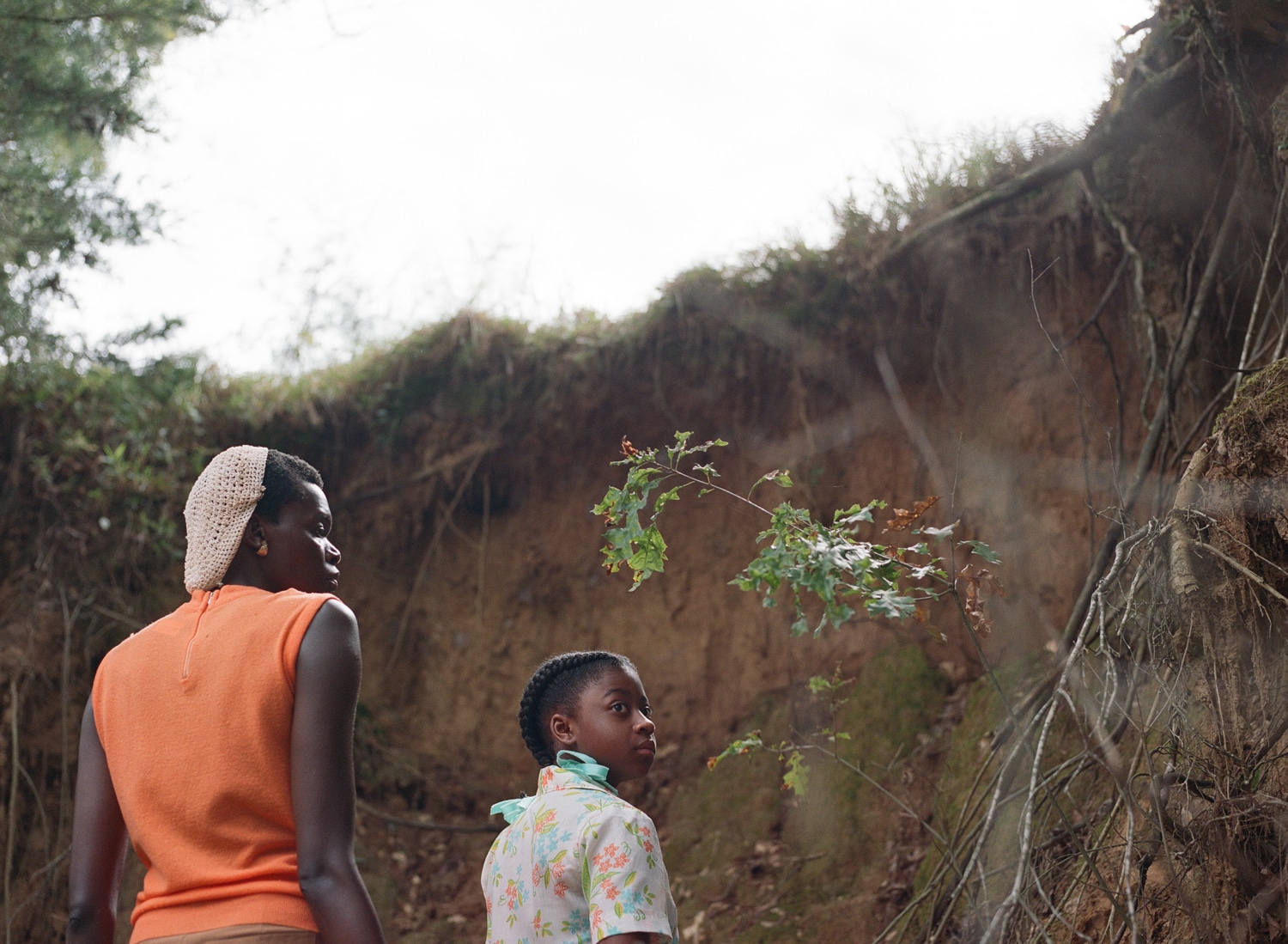
By the roadside, on my own land, a bank of clay rose in almost a sheer perpendicular for about ten feet, evidently extending back some distance into the low, pine-clad hills behind it, and having also frontage upon the creek. There were marks of bare feet on the ground along the base of the bank, and the face of it seemed freshly disturbed and scored with finger marks, as though children had been playing there.
— Charles W. Chesnutt, “Lonesome Ben,” 1897/1900
Betty: My mom used to put a little bit of dirt in my hand. “This you,” she said.
Mack and Josie (as a chorus): This you.
Betty: Dirt and water. Her mama had said the same to her. When it rain … it’s like it’s singing to you. You can smell it in the air. Taste the rain in the dirt.
— Grandmother and granddaughters in the feature film All Dirt Roads Taste of Salt, written and directed by Raven Jackson, 2023
If the young Charles W. Chesnutt ever had a craving for clay-dirt, he would have had to search for the yellowish-red clay at the bottoms of white sandy hills in a region that slopes downward toward the Atlantic Ocean. 1 Though born in Cleveland, Ohio, to free Negro parents right before the Civil War, Chesnutt grew up from the age of nine in Fayetteville, North Carolina, nestled between the Piedmont Plateau on the west and the Coastal Plain on the east. In 1897, Chesnutt wrote the short story “Lonesome Ben.”
“Lonesome Ben” is a “conjure tale,” or narrative centered on folk magic wielded by the enslaved and poor Black masses. In the story, the eponymous protagonist eats clay-dirt. Chesnutt, a legal-stenographer turned writer, became the first biographer of Frederick Douglass and one of the most acclaimed Negro writers of the early 20th century. Belonging to the pantheon of Negro men of letters alongside figures like Booker T. Washington, Chesnutt’s voice shaped the masculine timbre and aesthetic sense of the Black public sphere. However, if one approaches “Lonesome Ben” obliquely and attunes oneself to its off-road margins, one can discern the presence in the story of a Black feminine oral tradition. Whenever I read the passage describing a clay bank scored by children’s fingers, for example, I imagine a scene from Raven Jackson’s 2023 feature film All Dirt Roads Taste of Salt. In Jackson’s movie, Black women and girl children collect clay from an embankment by the side of a road in Mississippi. Synaesthetically, Jackson and her cinematographer Jomo Fray express the way rain smells of soil, the sensation of pinching clay with one’s fingers, the weight of gathered dirt in a palm, and the gesture of bringing earth into one’s warm mouth.
Synaesthetically, they express the way rain smells of soil, and the gesture of bringing earth into one’s warm mouth.
Dirt eating at clay banks is a centuries-old Black diasporan tradition, and its afterlives extend into the present: the literary clay bank of Chesnutt’s North Carolina repeats (with a difference) in the filmic clay bank of Jackson’s Mississippi, and the two reactivate one another across time. The ways that Black geophagic imaginations express themselves are as diverse as the sites where geophagy occurs. Yet those in pursuit of just the right kind of clay often find it where the ground has been cut to allow a road through. The roadside is not the same as the crossroads; it is not a symbol for the point where oppositional forces, dimensions, and conflicting desires collide to force an individual to make a decision. The roadside cut is, rather, a location where knowledges and relations that span geological time and furtive cosmologies become available, tangible — ingestible.
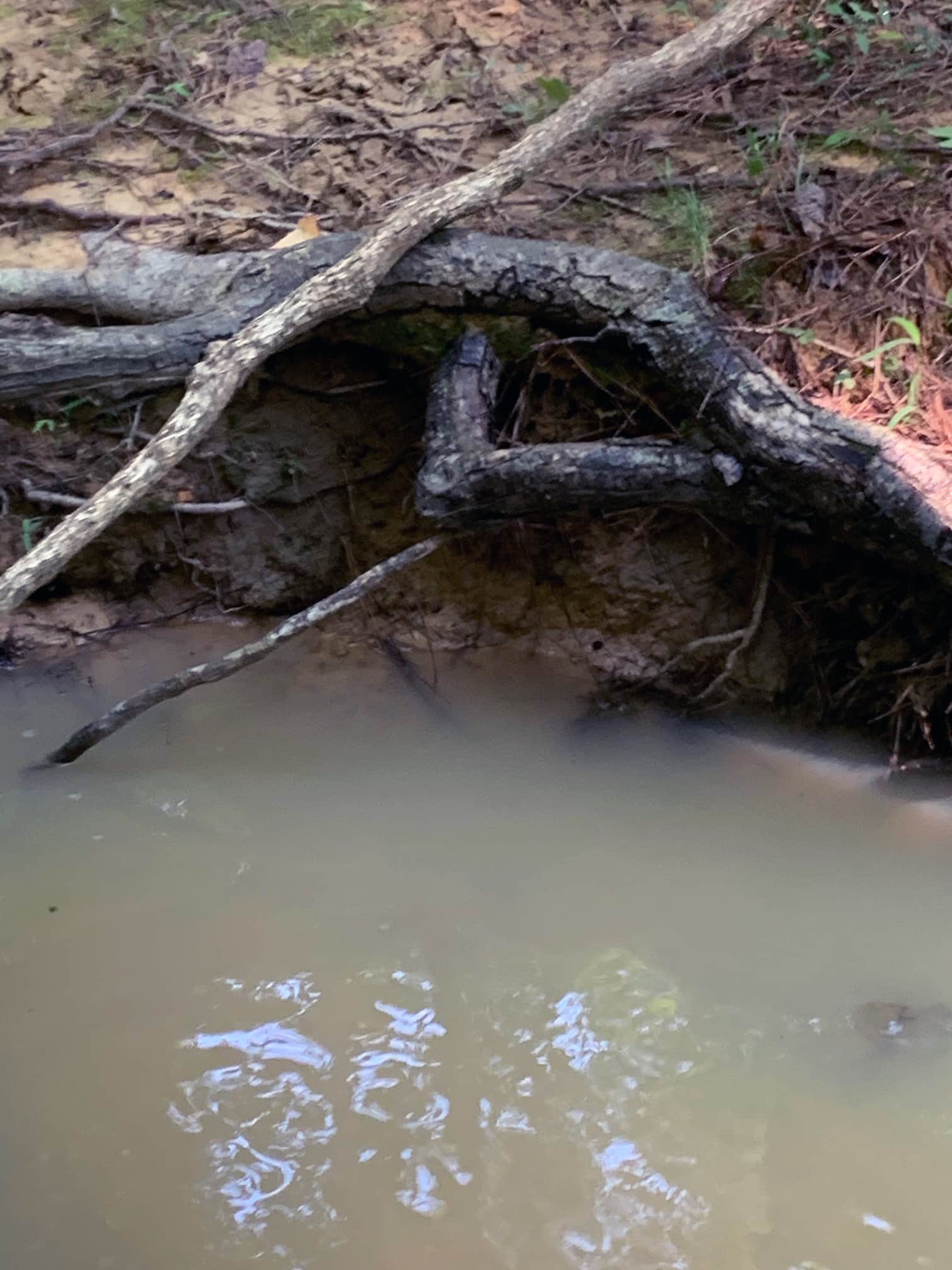
Depictions, invocations, and traces of this place emerge through a range of media: not only in short stories and film, but in memoir and visual art; in epidemiological, sociological, and biological literature; in the documentation of curative practices. Tracking geophagic desire reveals the continuities and ruptures of this gustatory habit, and in what follows, I read various acts of dirt eating intertextually. However, given the variety of contexts where and when clay-dirt eating (re)occurs, ascribing any one meaning or diagnosis to the act becomes impossible. Accordingly, while this essay functions as a partial genealogy of historical Black dirt-eating practices, it also asks where we are likely to encounter representations of this history, and on what terms. What are the gendered and aesthetic conditions under which stories of Black geophagia are told? What is allowed to emerge, or is precluded from emerging, in such narratives? What remains lopped off, cut into, seemingly unspoken or unthought?
Geophagic attunement encourages a momentary respite from exploitation, to enable a focus on Black desire for and knowledge of the earth.
Geophagic attunement encourages a temporary turn away from summing up Black people’s relationship to terra as defined solely by alienated labor. This momentary respite from exploitation — of both humans and the land — enables a focus on Black desire for and knowledge of the earth. The Black geophagic imagination helps us to reorient understandings of Black ecological subjectivity. And this intimate connection to the soil conjures, in turn, a pivot toward the source of being, which we might also call the Black maternal. Dirt eaters practice a denigrated Black maternal art that respectable social codes would teach them to detest. Dirt eating announces an errant Black feminine, or what Black studies scholar L.H. Stallings would call a queer “gustatory perception.” 2
When I first read “Lonesome Ben,” I was already deep in the process of reading about geophagia’s reputation as an aberrant practice in the American south. My imagination was alive with other accounts of Black people eating clay, often at a bend in the road. It has thus been difficult, when I consider Chesnutt’s story, not to imagine it interlaced with other scenes. 3
In addition to Jackson’s film, for instance, I find myself summoning a passage from Charles Blow’s 2014 memoir Fire Shut Up in My Bones, in which young Charles and his brothers visit a particular roadcut in Gibsland, Louisiana:
When my brothers and I finished our digging in the junkyard, we climbed into the ditch across the street and dug for a treat. We flaked off pieces of edible clay dirt that smelled to me like dry earth at the beginning of a fresh rain and tasted like chalk soaked in vinegar. Folks said it was good for you. Settled your stomach. Staved off illness. All I knew was the taste was addictive, and that ditch — where the curve of the road cut deep into the ground and exposed the strata — was the only place in town where that dirt could be found. Best of all, it was free. 4
The place where a slice into the land exposes edible clay, and its layers of geological time, is known by scholars as a “geophagical pit.” Such pits can be found on floodplains, but uplands are prime places to find clay deposits undisturbed by the flow of rivers and streams, or the disruptions of flooding. Most geophagical pits are gouged into natural or human-made elevations like bluffs, terraces, or roadsides. Roadcuts especially are by definition easy to travel to, and provide almost immediate access to the clays of choice, exposed at the subsoil level.
Geographer Donald E. Vermeer and his colleague Dennis A. Frate, a medical researcher, illustrate their 1975 article “Geophagy in a Mississippi County,” with a black-and-white photograph. In the foreground, a stretch of white-ish dirt road meets the dark earth of an embankment where the roots of three oak trees are exposed. In the background, a hill with trees recedes toward the bright horizon. In the caption, the authors note that, at the site, they could make out “a footworn path [that] connects the pit and the road.” 5 This is a geophagical pit — a mise-en-abyme inside which histories gather, repeat, overlap, compound so that absences I identify at one creek-edge or roadcut can be filled in at another, becoming present there as a trace or specter. Each clay bank’s silence, each site’s unfinishedness, provokes in me ideas of relation, activating a dialogic space in which this or that clay bank intensifies another’s rich content. As repositories of sought-after clays, geophagical pits refract and reflect not only geological but also regional predilections and differences.
This is a geophagical pit — a mise-en-abyme inside which histories gather, overlap, compound, becoming present as a trace or specter.
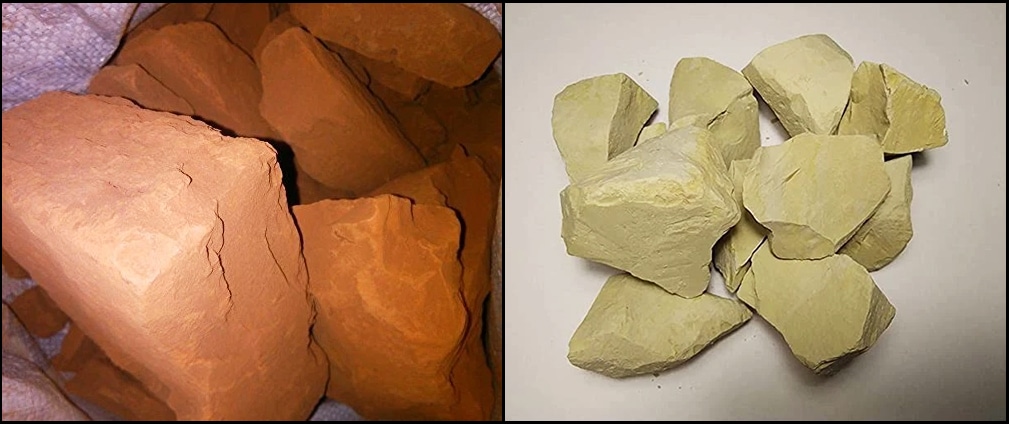
Blow does not tell his readers what the clay looked like at the ditch where he and his brothers foraged, though he does note its pleasingly sour flavor of “chalk soaked in vinegar.” But in Gibsland, Louisiana, also known as Bienville Parish, the clay would have been reddish. According to the Munsell System of Color Notation for soils, red clays contain iron oxides rich with hematite. 6 Hematite, whose name derives from the Greek for “blood,” would have produced the metallic, iron taste, deliciously sour, that brought the Blow boys close to the marrow of whatever they hungered for. Indeed, as Vermeer and Frate explain, “all edible clays are chemically acid, and that quality may impart a sour taste to them.” 7 Clay soil is a textural class composed of “40 percent or more clay, less than 45 percent sand and less than 40 percent silt”; the less sand the better, since clays with smooth textures feel good on the tongue. Edible clays are often reddish, as the Gibsland deposit was; they may also be gray, brown, yellowish, or some variegated mix. Some of the more sought-after clays are deposited beneath tree roots, where clay particles travel down root channels to concentrate in the subsoil. 8
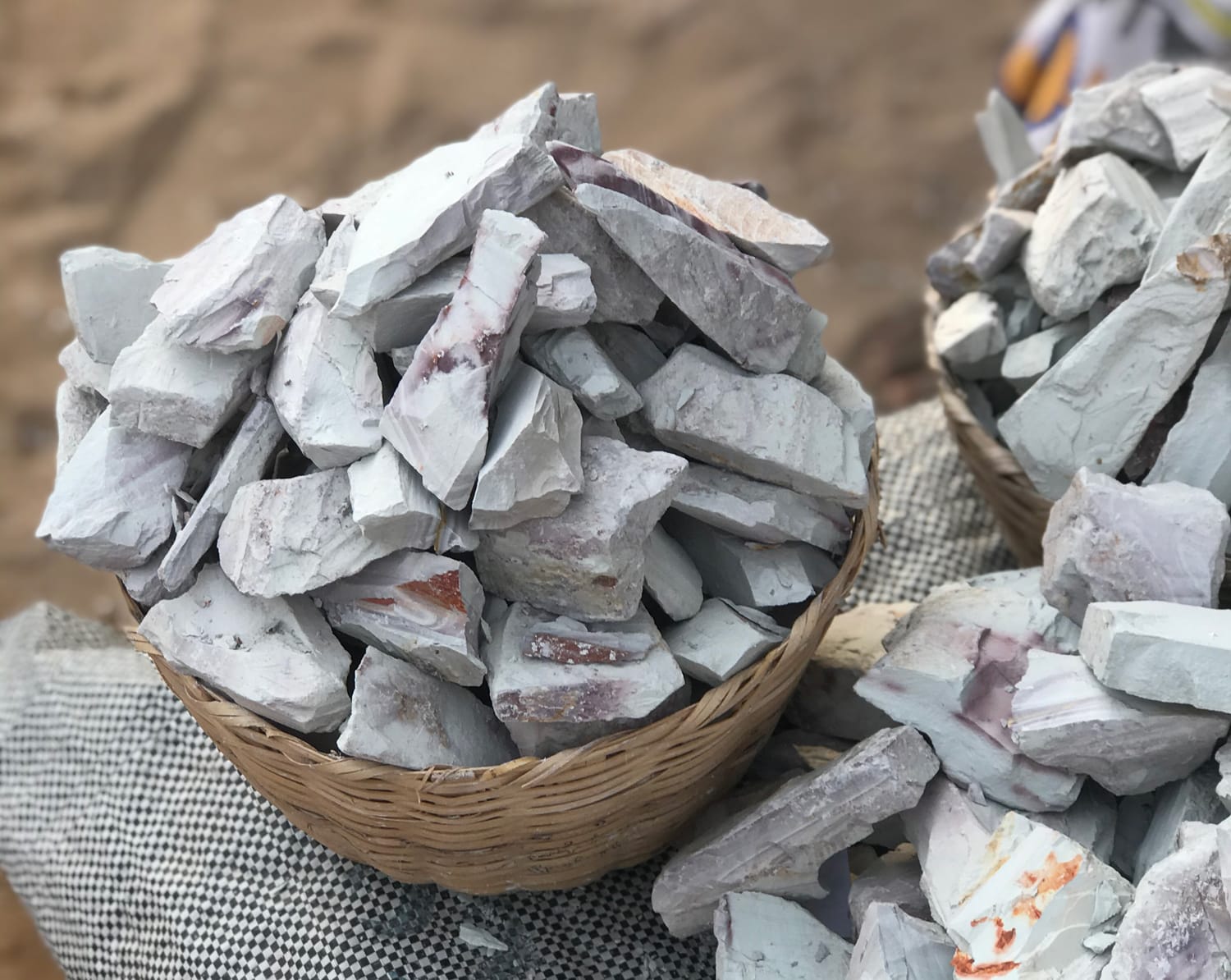
Despite the discernment with which dirt eaters select their prized locations, the act has long been deemed base, animalistic, nonproductive. At the level of representation, it remains a site of crisis and indeterminacy. For while geophagic subjects appear throughout Black diasporan literary traditions, dirt eaters rarely appear in the visual field. As a surveilled and pathologized habit, dirt eating has often brought punishment — sometimes very severe. Therefore it has been practiced in hush harbors, under the cover of overhanging tree branches or in the dark of night.
The feminist scholar Jennifer Christine Nash argues that the visual realm and its western archives have long been conceived by Black feminists as prone to violence against Black women, an understanding that has tended to render the entire regime of the visual suspect. 9 In this light, it is not surprising that the Black geophagic tradition and its representations have been rooted in the literary. As a repressed locus for unmanaged and wanton desires (like jealousy, addiction, sexual promiscuity), dirt eating is not to be gazed upon too long — or at all. 10 The inhibition of the visual may reflect historical policing of the practice of dirt eating. Yet engaging geophagia in writing, oral traditions, and ritual reveals ephemeral sites where practitioners attempt to evade the surveillance systems that police and punish Black people for indulging in dirt eating.
Taming the “Dirty” Appetite
Geophagia is a form of the larger disorder known as pica, defined by the Diagnostic and Statistical Manual of Mental Disorders (5th Ed.) as “persistently and compulsively eating nonfood substances that are non-nutritious.” (The word “pica” derives “from the Latin for magpie, a bird with indiscriminate eating habits.” 11) The condition has been explicitly gendered since antiquity. Hippocrates is credited with one of the first descriptions: “if a pregnant woman feels the desire to eat earth or charcoal and then eats them, the child will show signs of these things.” 12 A Roman textbook, De Medicina, compiled in the era of Emperor Tiberius (14-37 C.E.) suggests skin color as diagnostic for geophagia: “people whose colour is bad when they are not jaundiced are either sufferers from pains in the head or earth eaters.” 13
In medieval Europe, the doctor and midwife Trotula of Salerno “dealt with geophagia as a common but treatable problem” for an expectant mother: “but if she should seek to have potter’s earth or chalk or coals, let beans cooked with sugar be given to her.” 14 Accounts of women and pubescent girls engaging in geophagia proliferated in the 16th and 17th centuries. Alexander von Humbolt observed pregnant women among the Otomacs in what is now Venezuela eating a red clay that appears to have been comparable to what David Livingstone observed being consumed by both slaves and wealthy citizens in Zanzibar. 15
In the West Indies and the British colonies of North America, dirt eating “was often viewed as a matter of great concern among plantation owners, in that slaves who were addicted to geophagia became progressively more lethargic and debilitated until they eventually died.” 16 During the 18th century, Scottish physicians practicing in the West Indies were writing and circulating case reports and articles about their experiences treating dirt eating among Negroes. In 1746, James Grainger, a Scottish-born practitioner working in St. Kitts, published an essay in which Negro dirt eating is discussed alongside other “conditions” like absconding and laziness. 17
The disease was characterized as an African problem, and the behavior and its adherents became critical sites for surveillance and intervention.
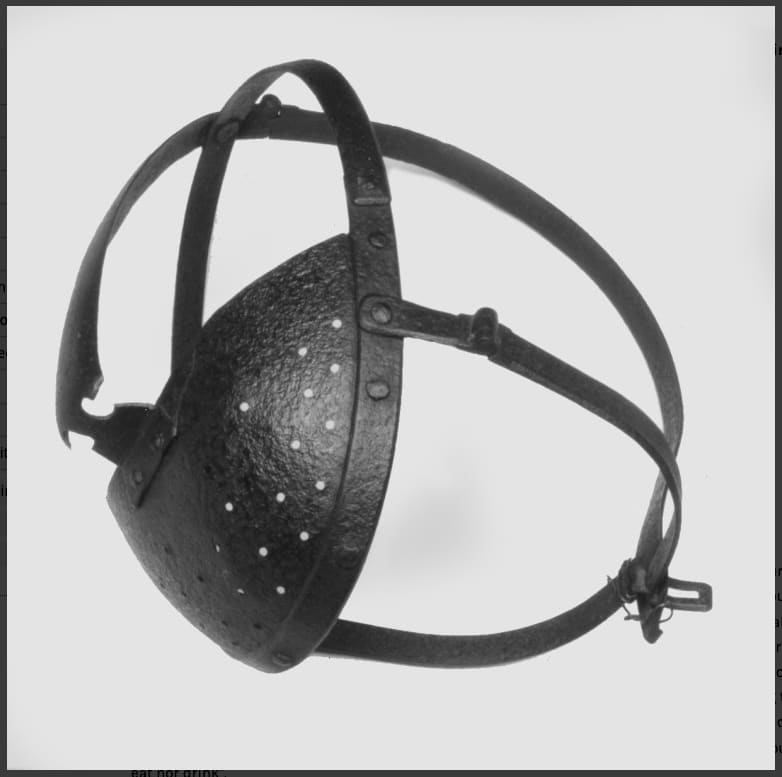
When physicians serving the planter class in the antebellum south observed “weight loss, wasting of muscle, loss of appetite, and general debility” in the enslaved, they diagnosed Cachexia Africana or the African wasting disease. In the early 19th century, this syndrome (and to a lesser extent its cognate Mal d’Estomac) was identified as a sickness that exclusively affected Africans in the Americas. In this sense, it was a political danger. The disease was characterized as an African problem, and the behavior and its adherents became critical sites for surveillance and intervention: “plantation owners went so far as to have face masks fitted to prevent the slaves from eating earth.” 18 American physicians like Samuel Cartwright, who invented and diagnosed Drapetomania, the disease of the mind that caused slaves to abscond, also studied and attempted to treat Cachexia Africana. 19
Whether the disease was pathologized as physiological or mental, its source was often located in the recesses of the Black maternal. In Medicalizing Blackness: Making Racial Difference in the Atlantic World, 1780–1840 (2017), historian of science Rana A. Hogarth notes that 19th-century physicians like James Maxwell
provided a range of overlapping etiologies for the disease, which included enslaved mothers’ inability to feed and care for their children. This gendered view of Cachexia Africana merely reflected a long-standing impulse to pathologize enslaved motherhood. Among the constellation of potential causes, Maxwell singled out mothers as the chief agents setting in motion the desire for eating dirt. 20
Plantation physicians tended to interpret Cachexia Africana as destructively feminine, inherited through the mother, as in the infamous legal doctrine of partus sequitur ventrem, defining enslaved status as a “condition that follows the womb.” Dr. John Imray hypothesized in 1843 that “if children did not contract the disorder in the womb, they were liable to acquire it “by the mere force of example.” 21
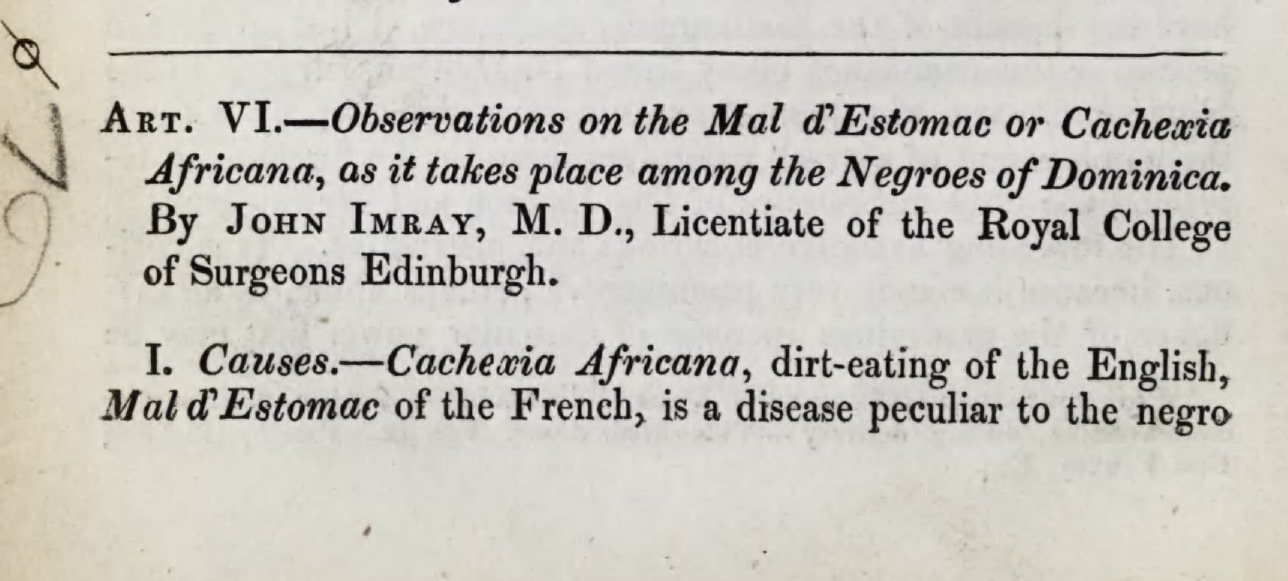

Hogarth depicts a grisly scene to explain the lengths to which figures like Maxwell and Imray would go to deter dirt eating:
For physicians, dissecting patients who expired from Cachexia Africana offered the benefit of improving their knowledge of the disease while also sending a message of prevention through intimidation. The clinical benefits of dissection in cases of Cachexia Africana were secondary to the unequivocal punitive repercussions the practice carried. Thomson suggested as much, writing that “ — children on the estate should be taught to hold the subject in abhorrence. I … recommend that everyone who dies of this practice should be opened, and the body not allowed to be given to the friends for burial, but interred in some spot, as a warning to others.” 22
The threat or promise of punishment, before and after Emancipation, forced Black dirt eaters into the shadows. In the 20th century, efforts continued to mitigate dirt eating among African Americans in order to ensure a productive labor force, albeit under the auspices of governments promulgating hygienic behaviors, rather than as openly sadistic forms of torture. Gender studies scholar Barret Bell traces the interdisciplinary efforts of postwar social scientists to understand the practice in the American south. Focusing on the funding and circulation of a 1942 article titled “Geophagy (Dirt Eating) Among Mississippi School Children,” by Dorothy Dickens and Robert Ford, Bell argues that sociological researchers were crucial to efforts at both federal and state levels to ensure a fit body politic during the war, and in so doing to “secure a laboring class.” 23 As recently as 1999, The Dispatch in Lexington, North Carolina, presented dirt eaters like Rena Bronson of Macon, Georgia, as deviants posing a potential threat to public health. 24
The threat or promise of punishment, before and after Emancipation, forced Black dirt eaters into the shadows.
Other than Raven Jackson’s All Dirt Roads Taste of Salt, I have encountered only two onscreen depictions of Black people eating dirt, both by non-Black content creators: Eat White Dirt (2015), a documentary short by Adam Forrester, and the Showtime drama Yellowjackets (2022–2025). The 25-minute exposé-style documentary Eat White Dirt focuses on Black women in Georgia who (like Bronson) are addicted to white dirt, or kaolin clays. The documentary’s approach could be described as anthropological in its reliance on White experts and academics who provide context for the curious Black female subjects, Tammy and Tatianna, who eat for the camera. These women are the only people shown consuming the clay; though the phenomenon has been described by numerous scholars as universal, no poor White dirt eaters are depicted in Eat White Dirt. Indeed, the documentary light-heartedly opens with a clip from a 1988 episode of the sitcom Designing Women, where the character Suzanne Sugarbaker, played by Delta Burke, attests with “God as her witness” that southerners have never eaten dirt. 25


The Showtime series Yellowjackets, which premiered in 2021, revolves around the teenage survivors of a plane crash. Members of the New Jersey high school championship girls’ soccer team find themselves stranded in the wilderness, forced to resort to cannibalism to survive. In four separate episodes spanning two seasons, a Black lesbian character named Taissa Turner, played by Jasmin Savoy Brown, is shown eating dirt, at night, in a fugue state. At times, her dirt eating is accompanied by other gruesome acts, like the killing of small animals.
In Season One, Taissa eats dirt for the first time and is confronted about it by her teammate, Lottie. Teenage Taissa denies it, incredulously: “what the actual fuck!” Yet the episode ends with adult Taissa outside her house, again in a fugue state, with dirt in her mouth and blood on her hands. Taissa’s “primitive” performances link to her teammates’ cannibalism and witchcraft. Yet Taissa is the only dirt eater. Even within the Yellowjackets universe of aberrant appetites, dirt eating has its perverse provenance with Black lesbians.
Black Geophagic Writing Traditions
Compared to these examples, literature emerging from the Black geophagic tradition is not as overdetermined by discourses of pathology. Yet pathology haunts and nibbles at its edges. Black people have been entering dirt eating into oral and written records for a long time, and in her 1990 poem “The Dirt-Eaters,” Elizabeth Alexander meditates on the epistolary tradition of Black people asking relatives in the south to send good dirt up north:
Never ate
dirt
but I lay
on Great-
grandma’s
grave
when I
was small.“Most cultures
have passed
through
a phase
of earth-
eating
most pre
valent today
among
rural
Southern
black
women.”Geo
phagy:
the practice
of eating
earthy matter
esp. clay
or chalk.(Shoe-
boxed dirt
shipped North
to kin)26
Accounts in contemporary novels like Geographies of Home by Loida Maritza Pérez (2000), The Known World by Edward P. Jones (2003), and Queen Sugar by Natalie Baszile (2014) also meditate on the Black geophagic imagination as it shapes Black sociality across the diaspora. Characters eating dirt in works like these are often queer, or flouters of convention who trouble the aesthetic orders that scaffold common sense. Scholars like Yomaira C. Figueroa-Vásquez remark on the dirt-eating trope as representing an erotic Afro-femme power in the Spanish Caribbean — an understanding borne out in Geographies of Home, where the character Rebecca is an Afro-Dominican reeling from the multiple effects of destierro, or what Figueroa-Vásquez theorizes, in her discussion of Pérez’s novel, as a violent ripping from the earth.
Rebecca recalls her teen years in the Dominican Republic, when she would sneak out of the house to a quiet place and masturbate while chewing a bit of greenery, “the movement of her hands massaging the tender flesh between her thighs; the bitter taste of a blade of grass tucked between her teeth.” 27 Of the erotic relationship that Afro-femmes and women have to the land, Figueroa-Vásquez writes, “Many of the women in the novel, especially those who are prepubescent or pregnant, express a craving to consume earth, dirt, and land. In fact, destierro is tied to women’s bodies and to the development of their erotic selves.” 28
In A Dirty South Manifesto: Sexual Resistance and Imagination in the New South (2019), L.H. Stallings argues that this eating of dirt, this nibbling and sucking of blades of grass or tree branches, transgresses and reorganizes the human hierarchy of the senses:
Eating dirt is an embodied practice that existed before medical boards and cartography and the treatments and treaties constructed out of them. Yet, compelled by the land’s refusal to be metaphysically alienated from flesh, these dirt eaters pass on knowledge and minerals about an older system so that their descendants may know something more about the world than what dated treaties, proclamations, and certified disorders can tell them. Though economically empowered white communities arduously invent religions or national identities out of opposing dirt, as well as create industry out of possessing it, when Black and Indigenous people, or poor queer whites, insist with effortless sensorial action upon the value, worth, and natural connection of dirt to living beings, it becomes geophagia, an illness or crisis to be healed or overcome. Nevertheless, what dirt tastes like or the sensation that it evokes, gustatory perception and pleasure, is not what settler colonialism has alluded to in its articulation of geophagia as a mental disorder. 29
Like Stallings, I have spent time thinking about Black geophagic traditions that rebuff social norms dictated by settler-colonial notions of purity, health, productivity, and order. Alongside Stallings, I approach Black geophagic writing traditions as queer, in that they move away from capitalist and plantation orders that seek total control of Black people’s bodies, right down to their appetites. Following Stallings, a native of Durham — and thus in homage to this Black North Carolinian lineage — I read “Lonesome Ben” through a queer Black feminist genealogy.

Charles W. Chesnutt was an ambitious young person determined to raise his station in life. He disciplined his tongue to speak both French and German. But it was minstrelsy’s Black vernacular that he made famous in his stories, through a recurring character named Uncle Julius. In “Lonesome Ben,” Uncle Julius tells the tragic story of the eponymous dirt eater.
In “Lonesome Ben” by Charles W. Chesnutt, the character Uncle Julius tells a tragic story of the eponymous dirt eater.
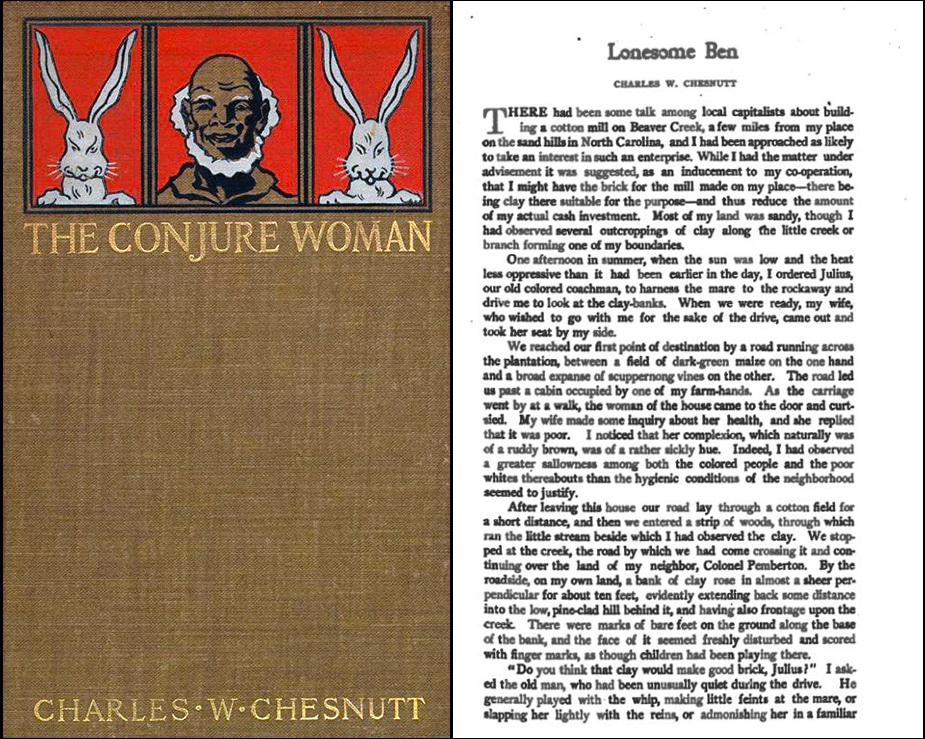
The story was curiously left out of Chesnutt’s successful collection The Conjure Woman, published by Houghton, Mifflin in 1899; it was published the next year in the magazine Southern Workman (March 1900). 30 Richard H. Brodhead, who edited a 1993 edition of The Conjure Woman, proposes that the omission might have represented, on the part of Houghton, Mifflin’s editors, a censuring of “Chesnutt’s more overtly subversive visions.” 31 On the flip side, Brodhead notes, the excision could have prevented a caricature of the Black dirt eater from circulating. Certainly, the U.S. publishing industry at the turn of the 20th century was struggling to situate and sell Black writers and Black literature. When editors cut “Lonesome Ben” from The Conjure Woman, they may have been attempting to resist reproducing some of the more degrading stereotypes circulating through minstrelsy. What they would not have considered is the complexity of what literary scholar Jarvis McInnis has called the “minstrel mask,” worn with a trickster-like aplomb by writers, performers, and public figures like Chesnutt or his contemporary Booker T. Washington as an idiom or grammar of modernity. 32
Chesnutt’s story goes like this: The White northerner John is surveying his recently acquired southern property for brick-making clay, and Uncle Julius — who has lived on the land his whole life — takes John and his wife Annie to inspect a deposit that might be ideal. The creekside embankment is described, from John’s point of view, in dramatic (even cinematic) terms.
After leaving this house, our road lay through a cotton field for a short distance, and then we entered a strip of woods, through which ran the little stream beside which I had observed the clay. We stopped at the creek, the road by which we had come crossing it …. By the roadside, on my own land, a bank of clay rose in almost a sheer perpendicular for about ten feet, evidently extending back some distance into the low, pine-clad hill behind it, and having also frontage upon the creek. 33
As John and Annie observe the site, and its geophagical pit, from their carriage, Uncle Julius tells them the story of “po’ lonesome Ben.” Ben is enslaved by Master Marrabo McSwayne, and Ben is addicted to whiskey. With great effort, and under threat, he abstains for a year. Then he falls off the wagon, and decides it will be best to run. Ben mourns the impending loss of his wife, Dasdy, and son, Pete. His second child, a daughter, is mentioned only in passing: “Dey wuz a little gal too; Ben didn’ pay much ’tention ter de gal.”

I find the fleeting and dismissive remark about Ben’s daughter curious in the context of 19th-century fears about Cachexia Africana as a female ailment. I will return to this digression. For now, back to Ben:
Guided by the North Star, he flees. But, on a cloudy night, Ben gets turned around and finds himself back on the plantation’s outskirts. He stays there as a fugitive, a maroon living in the woods. To stave off hunger, he eats clay by the side of the road near the creek — at the very bank, Uncle Julius tells John and Annie, where they are seated in the “rockaway,” or carriage. Ben stays alone, eating clay, for a month. Then, one day, he runs into Dasdy:
He waited ’til she got close by, an’ den he stepped out ’n de woods an’ come face ter face wid her. She didn’ ’pear to know who he wuz, an’ seem kinder skeered.
“Hoddy, Dasdy honey,” he said.
“Huh!” she said, “’pears ter me you’er mighty fermilyer on sho’t acquaintance.”
“Sho’t acquaintance. Why, doan’ yer know me, Dasdy?”
“No. I doan know yer f’om a skeercrow. I never seed yer befo’ in my life, an’ nebber wants ter see yer ag’in.”
The next morning, Ben watches for Pete, and the child seems to know his father’s voice — but cannot recognize his face. (I ask the reader to note that the daughter does not appear on the road where Ben meets first his wife and then his son — or at all in the story after the first mention of her existence.)
Ben stays as a fugitive, a maroon living in the woods. To stave off hunger, he eats clay by the side of the road.
Soon, Marse Marrabo himself encounters Ben, and fails to recognize him. In fact, McSwayne turns him away. Confounded, Ben seeks his reflection in the creek, and discovers that his complexion has changed from black to yellow. Chesnutt’s narrator, Uncle Julius, dwells at length on the fact that the creek-side clay that Lonesome Ben consumed was yellow like his new face. (The yellow clays of Cumberland County, North Carolina contain the mineral goethite, another iron oxide that can range from yellow to yellowish brown.) 34 A bullfrog croaks that he has “turnt ter clay! turnt ter clay! turnt ter clay!” 35
Ben despairs that no one knows him, that he has no family, and has become unrecognizable to himself. Uncle Julius tells his listeners:
He ’mence ter wonder whuther he wuz libbin’ er not. He had hearn ’bout folks turnin’ ter clay wen dey wuz dead, an’ he ’lowed maybe he wuz dead an’ didn’ knowed it, an’ dat wuz de reason w’y eve’body run erway f’m ’im …’til one day, w’en he went down by de crick fer ter git a drink er water, he foun’ his limbs gittin’ so stiff hit ’uz all he could do ter crawl up on de bank an’ lay down in de sun. He laid dere ’til he died, an’ de sun beat down on ’im, an’ beat down on ’im, an’ beat down on ’im, fer th’ee er fo’ days, ’til it baked ’im as ha’d as a brick. An’ den a big win’ come erlong an’ blowed a tree down, an’ it fell on ’im an’ smashed ’im all ter pieces, an’ groun’ ’im ter powder. An’ den a big rain come erlong, an’ washed ’im in de crick, ’an eber sence den de water in dat crick’s ben jes’ as yer sees it now.
Critics like Brodhead have interpreted “Lonesome Ben” as a story about the ills, perverse appetites, and violences promulgated under the institution of slavery; literary scholar Jennifer Fleissner agrees, suggesting in addition that Ben’s addiction to river clay (as distinct from his addiction to whiskey) gestures toward a Black diasporan nostalgia. Hankering for home, for family ties — on the plantation, and to some extent in Africa — Ben works through this yearning by eating dirt. Such interpretations are certainly compelling. I submit, also, that this is a fraught story about fugitive foodways off the plantation, which dole out more days but do not nourish.
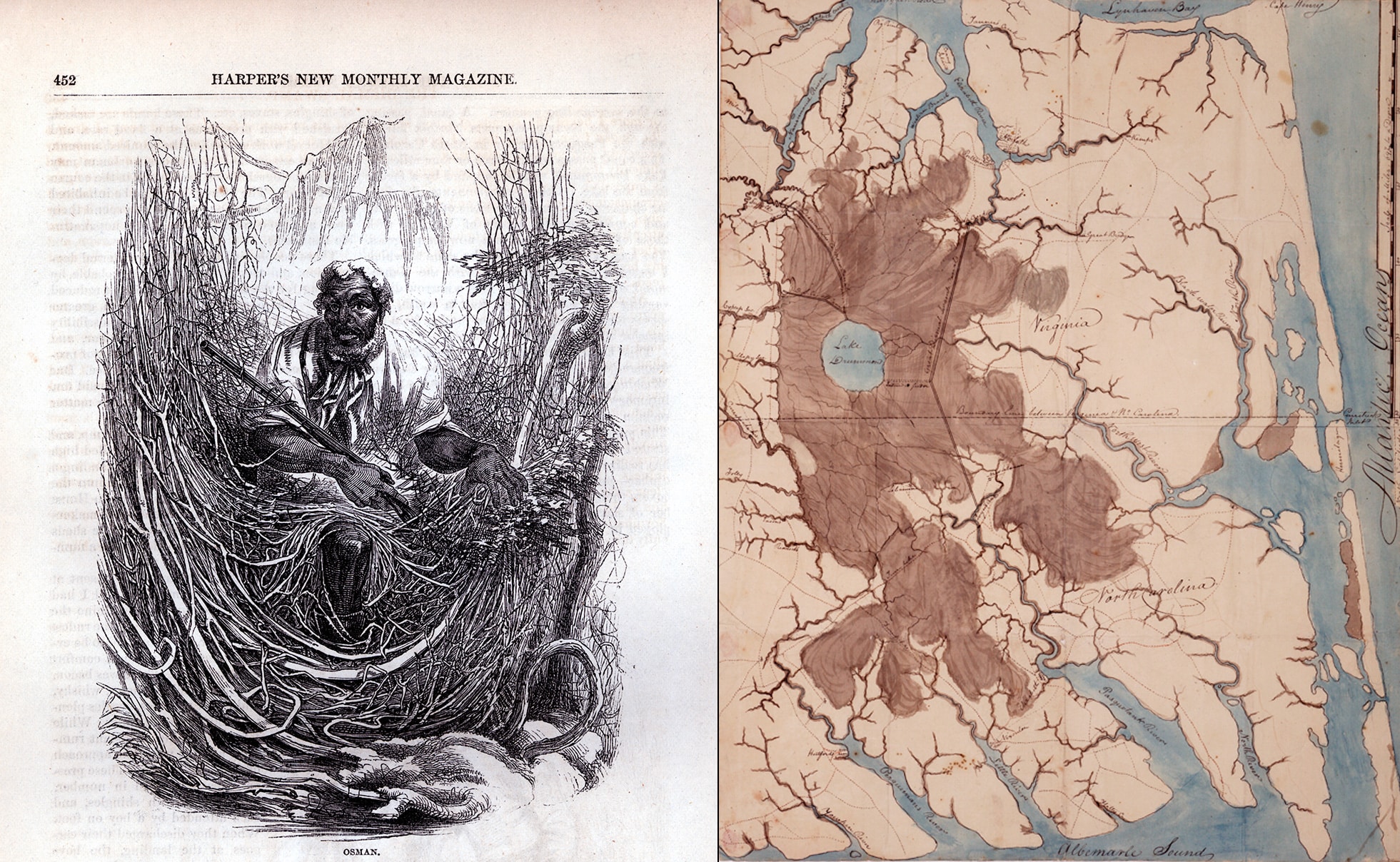
Chesnutt’s tale about constrained margins of maneuver could serve to illustrate Black feminist interrogations of liberal notions about agency. Ben’s flight from the violence of Marse Marrabo sends him into isolation, a form of social death. This freedom that requires alienation or death is strikingly similar to the freedom that Harriet Jacobs describes in her 1861 memoir Incidents in the Life of a Slave Girl, in which she remains hidden for seven years in a garret, safe from her abusive master yet unable to see her children. Ben’s appetite for or overindulgence of clay as a maroon could reflect a melancholic excess born out of the always impoverished and insufficient choices — even in flight — available under the institution of slavery.
While living as a maroon, Ben considers facilitating his family’s escape; he decides that he will try and “’suade ’em ter run erway wid ’im an’ dey could all get ter de No’th.” I return to Ben’s thoughts of his family for two reasons. I want to query the invocation and simultaneous absenting of his girl child in the story. I also want to discuss Ben’s appetite for dirt vis-a-vis discourses linking dirt eating to Black women on plantations, and in so doing to think about this gendered appetite in relation to the “little gal,” Ben’s daughter.
I want to discuss Ben’s appetite for dirt vis-a-vis discourses linking dirt eating to Black women on plantations.
Given that geophagia was thought to be an inheritance that mothers passed down, making daughters doubly suspect, how is it that Ben’s daughter is disappeared? Why wouldn’t she emerge as a dirt eater? Wouldn’t Ben have had, in this way, a unique relationship with her? Perhaps his daughter’s dirt-eating proclivities tempted him? While their mothers may have learned to suppress deviant behavior and hide their geophagia, girl children would be deemed less rational, less clearly discerning regarding where and when to eat clay, or not — and thus would pose a particular threat. Perhaps Ben was disavowing a “female within” that haunted him? 36
Literature can cloak the geophagic act in metaphor, rather than rendering it in the flesh — perceived in Judeo-Christian thought as the location of the profane. While Chesnutt’s story disappears the Black girl who is Lonesome Ben’s daughter, eliding her presence at its literary clay bank, Raven Jackson’s film works against both literary modernism and second-wave Black feminist practices of dissemblance that eschew the visual, to bring Black female children and the sacred feminine practice of dirt eating back into the visual register. Readers of “Lonesome Ben” are prevented from encountering a geophagic daughter. But I find this missing figure in Jackson’s cinematic depiction of the roadside clay bank. In All Dirt Roads Taste of Salt, the “little gal,” Ben’s daughter, reappears for me.

Visualizing the Smell and Taste of Dirt-Rain
I listen to my mother talk to her mother on the phone.
“It was lightning,” my grandma Hattie says. Telling me of a time she went out to dig for some clay dirt, and how rain and the rich smell after the drops would ignite her craving for it.
— Raven Jackson, “Petrichor is the rich smell of earth after rain,” Stories from a Place Where All Dirt Roads Taste of Salt (2024)
As a poet and filmmaker, Jackson re-construes dirt eating as a birthright, a ritual that Black women pass down: All Dirt Roads Taste of Salt depicts a multigenerational form of sacred sociality against the plantation order, conducted at the geophagical pit. Moreover, although her vision of taking earth into the (Black, female) body is beautifully realized through the cinematic image, Jackson’s project also takes literary form. Published by the production company A24 as a companion to the film, Stories from a Place Where All Dirt Roads Taste of Salt is a collection of writings by Jackson herself, along with contributions by the actors, writers, and crew members who worked with her. In a chapter titled “Petrichor is the rich smell of earth after rain,” the filmmaker interviews her mother and aunt in order to gain a better understanding of their love for dirt eating. 37
As a poet and filmmaker, Raven Jackson re-construes dirt eating as a birthright, a ritual that Black women pass down.
All Dirt Roads Taste of Salt is Jackson’s first film. Shot in Jackson and Vicksburg, Mississippi (although the setting is never named), the movie resists conventional narrative, with little dialogue and a dreamlike, nonlinear plot. The viewer sees, hears, and perhaps can imaginatively taste and smell the world through the character Mack (short for McKenzie), a girl whose family and community appear to move with the ecologies of the rural southern town where they live. An immersive, almost omnipotent force is the river. Viewers experience with Mack her communing with the water and mud of the riverbanks; her connection to fish and other nonhuman life; her relationship with childhood friend and later lover Wood; her closeness to her sister, Josie, and their father, Isaiah; and her adoration and eventual loss of her mother, Evelyn. Mack grows up, gets pregnant, and gives her daughter to Josie to raise. Finally, at the end of the film, Mack and her daughter Lily reconnect through the sacred inheritance of dirt eating.
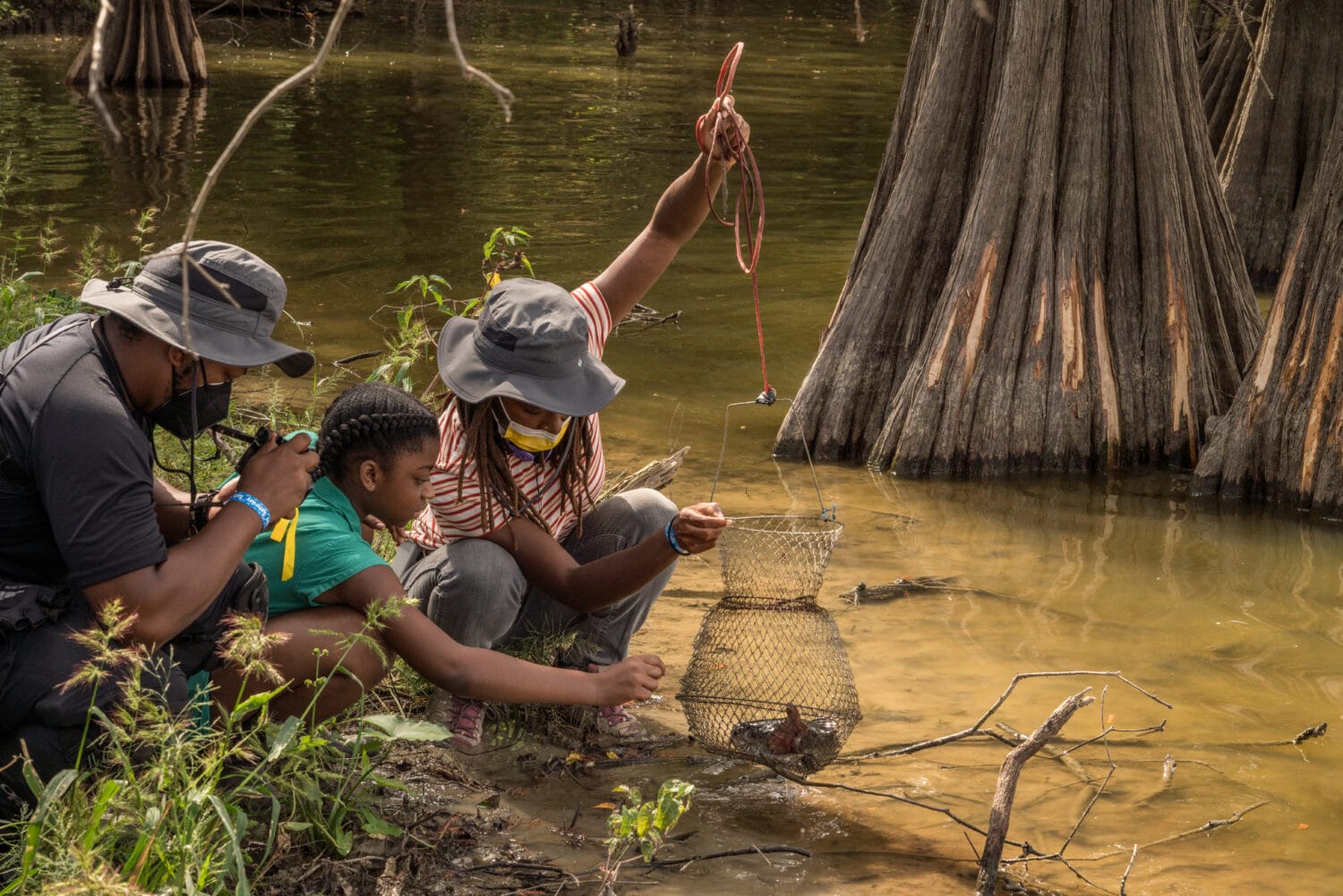
Three times in the film, at the beginning, middle, and end, the collection and consumption of clay are given sustained attention. All Dirt Roads Taste of Salt opens with the sounds of crickets chirping, water gurgling, and frogs croaking against a black screen. The first image shows a child’s brown hands. The small fingers stroke the gills and scales of a fish as its body expands and contracts. The camera then focuses on the child’s hands grasping a fishing rod. The first human voice to be heard is that of a man giving instructions — “not too quick” — as we watch the slow-then-fast movements of reeling in a fish. Two minutes and 51 seconds into the film, no human faces have appeared.
When a human face does come into view, the camera frames a profile shot of the child Mack, who is holding the red string of a fish trap. The camera lingers on her pensive expression as she looks at the fish and traps, perhaps sketching out an ethic for herself. We hear her father chide, “you better not be letting those fish out.” After this stern directive, he announces, “bout to rain.” On cue, thunder rumbles. The view tightens on Mack’s fingertips in the mud of the riverbank. Water, dirt, and human body intermingle.
Shot in Jackson and Vicksburg, Mississippi (although the setting is never named), the movie resists conventional narrative.
The thunder gets louder, and we cut to a view of small brown hands reaching into a sky-blue shoebox with a white interior, filled with clumps of clay dirt. The clay is notably reddish-brown, invoking not only the iron-rich hematite of the clay bank, but a maternal blood rite. The small brown hands are removing twigs, leaves, grass. The crew filming All Dirt Roads Taste of Salt worked on location less than ten miles from the Mississippi River. East of the river, outside the Delta region in Hinds County, urbanization has caused the incursion of trace plastics into the soil. The contemporary dirt eaters depicted in the movie would thus have to develop the art of finding just the right geophagical pit. In this, they would not be alone.
According to Dickens and Ford, the researchers commissioned by the Rockefeller Foundation for the 1942 study whose aim was to prevent Mississippi schoolchildren — future laborers — from eating dirt, “the dirt in the Delta is ‘no good’ for eating …. Negroes who now live in the Yazoo-Mississippi Delta are said to ask Negroes who live in the hills of Mississippi to send a bag of ‘good dirt.’ Perhaps they acquired the habit when they, too, lived in the hills where clay was abundant.” 38
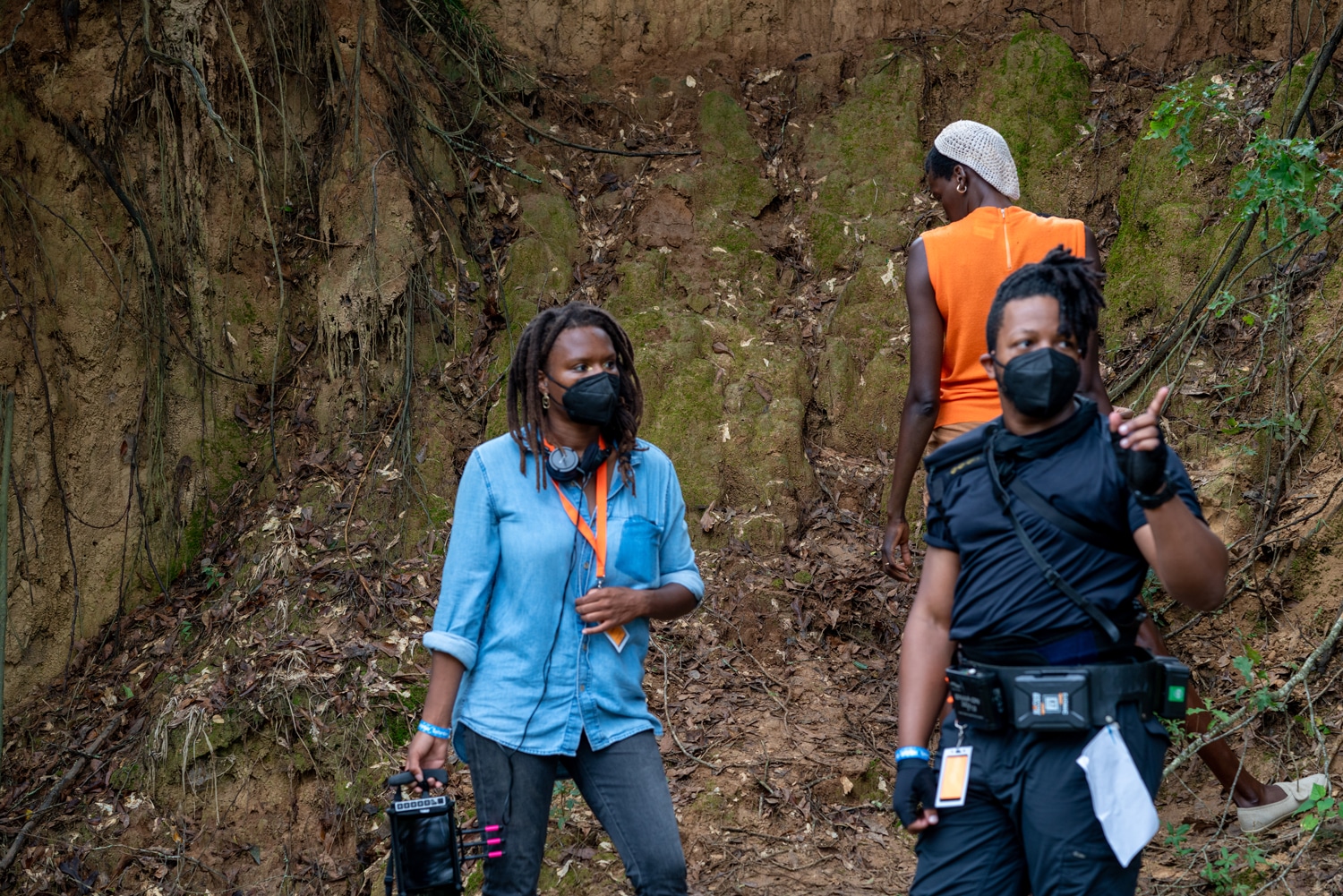
At six minutes and 53 seconds into Jackson’s film, a new scene: a woman in a patterned house dress with a red umbrella is seen walking away from the camera. Soon, three Black women appear at a clay embankment on the road after the rain. The bank rises perhaps fifteen feet, or the combined height of the women’s body lengths, above the road. Tree roots are exposed in the cut, and trees droop over the top of the bank above the women’s heads. For more than ten seconds, the camera lingers on the women working to collect clay. The tree branches shield them as if in modesty, even as the immodest roots bare themselves to anyone on the road. The clay at the bank is red, different than Chestnutt’s yellow clay but similar to that the Blow brothers ate — a repetition with a difference.
In Stories from a Place Where All Dirt Roads Taste of Salt, the filmmaker talks with her mother, Sophie, and her aunt Necie about where to find the best dirt:
Raven: Did y’all have favorite banks?
Necie: No, it was just one big, long bank, where we lived in the country. And we just dug a hole anywhere. That’s about the only place we got it from then. 39
Later in the conversation, Jackson asks:
Raven: How would you know the right bank to find it?
Necie: A lot of times, we would go to the bank with our mother. She would be at the bank getting her some too, and all the cousins would be there. So, we knew what it would look like. 40
In 1975, when Vermeer and Frate conducted one of the few field studies of geophagy in the rural south, specifically Holmes County, Mississippi, they found that certain “geophagical pits and their use become associated with specific communities …. Sites are local and serve small segments of the black population within the county.” 41 At these cherished locations, gendered kinship networks exercise their unique communal relationship to that portion of earth. Specific forms of looking and learning are passed on among women and girls at geophagical pits.
In the film, Mack and her mother, Evelyn, collect reddish-brown clay at the bank while a younger girl — not Josie — looks on. The figures press themselves close to the wall-like road-cut. Mack’s gaze is cast down, attending to her collecting, while Evelyn digs with a silver serving spoon. The only sounds are insects trilling and small lumps of clay falling into the shoebox. The littler girl looks attentively at Mack and Evelyn. It is a serious look; unjudgmental. Aware that she is being studied, Mack, an older initiate, looks back. Mack has reached a new stage of dirt-knowing, dirt-development, dirt-maturity — a different stage, that is, of perception. For almost a full ten seconds, the camera stays close to Mack’s face as she gazes back at her observer. It feels like a pedagogical moment, in which young girls learn “dirt rites.” And it is here that I place “de gal” or Lonesome Ben’s daughter — with her kin.
Mack has reached a new stage of dirt-knowing, dirt-development, dirt-maturity — a different stage, that is, of perception.
This watching and studying, though dangerous, is how the community of clay eaters learns to collect what they crave: how to comport themselves, when to be quiet, when to look at each other, and when to cast their eyes elsewhere. In such watching, an appetite is developed. Lessons at clay banks function as moments when Black girls who eat dirt learn about what the feminist literary critic Hortense Spillers calls “intramural” or intra-communal forms of Black [femme] seeing and understanding. Looking while collecting (and eating) dirt is risky — and intimate. 42
Jackson and her aunt discuss such dirt-pedagogy:
Raven: How did y’all become aware of the eating of clay dirt? From watching adults around you
Necie: Yes, watching our mother, our aunties, and grandmothers eat it. They had been eating it a long time. I’m sure we was eating it before we even knew what it was, and I’m sure we was liking it for us to go up there to the bank and get it ourself. 43
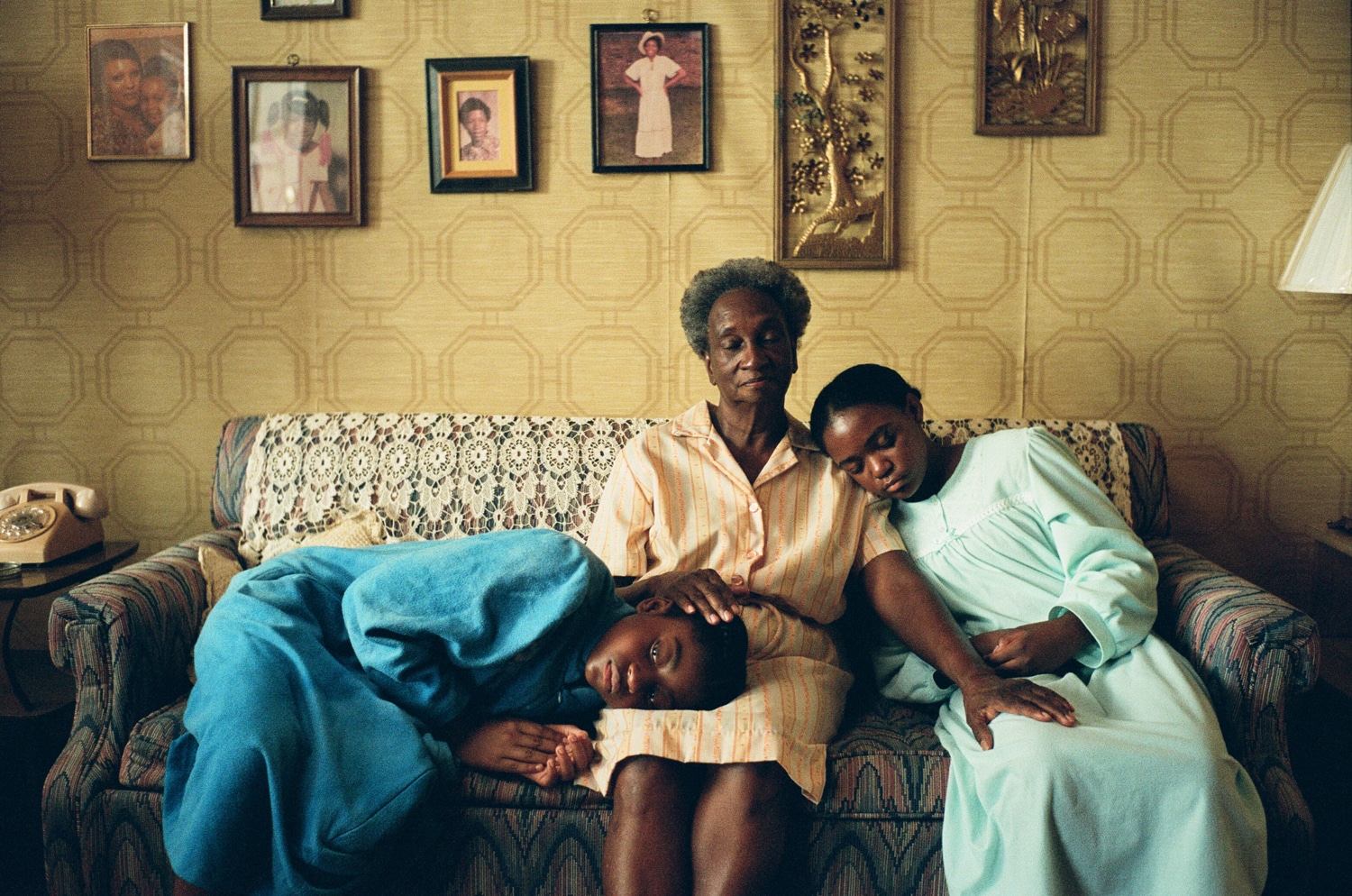
The next geophagic scene in Jackson’s film takes place after Evelyn’s death. The two girls, Mack and Josie, are at their paternal grandmother’s house, seated on the couch. Their grandmother Betty holds a white handkerchief on her lap; in the handkerchief are lumps of reddish-brown dirt. Each grandchild has placed a hand on one of Betty’s thighs; the camera holds on the view of her lap, keeping her face off-screen. Betty begins to tell a story, then initiates a ritual of dirt-eating. Evelyn has taught the girls to dig. Now, for about a minute and a half — one of the longest sequences with dialogue in the film — the grandmother introduces the girls to the sacred feminine ritual of eating what has been collected. We still cannot see her face.
Betty: My mom used to put a little bit of dirt in my hand. “This you,” she said.
Mack and Josie (as a chorus): This you.
Betty: Dirt and water. Her mama had said the same to her. When it rain … it’s like it’s singing to you. You can smell it in the air. Taste the rain in the dirt.
Mack: Like earth?
Betty: Yeah, baby. Like earth. Rich. So rich. When I was pregnant with your daddy, it was lightning one day. Too dangerous to be out there. But I was at the bank digging.
Mack: Did the lightning get you?
Betty: No, Mack. You gotta find the right bank and dig for it. It’s not just any dirt.
Grandmother Betty places one piece of clay each in Mack’s and Josie’s palms. Betty moves her own hand with the dirt in it out of the camera’s view. The sound of a bite is audible. The children mimic her, and only crunching sounds can be heard. The ritual in the domestic sphere resembles a eucharist: “This you.” It is a mother or “mudda” tongue.
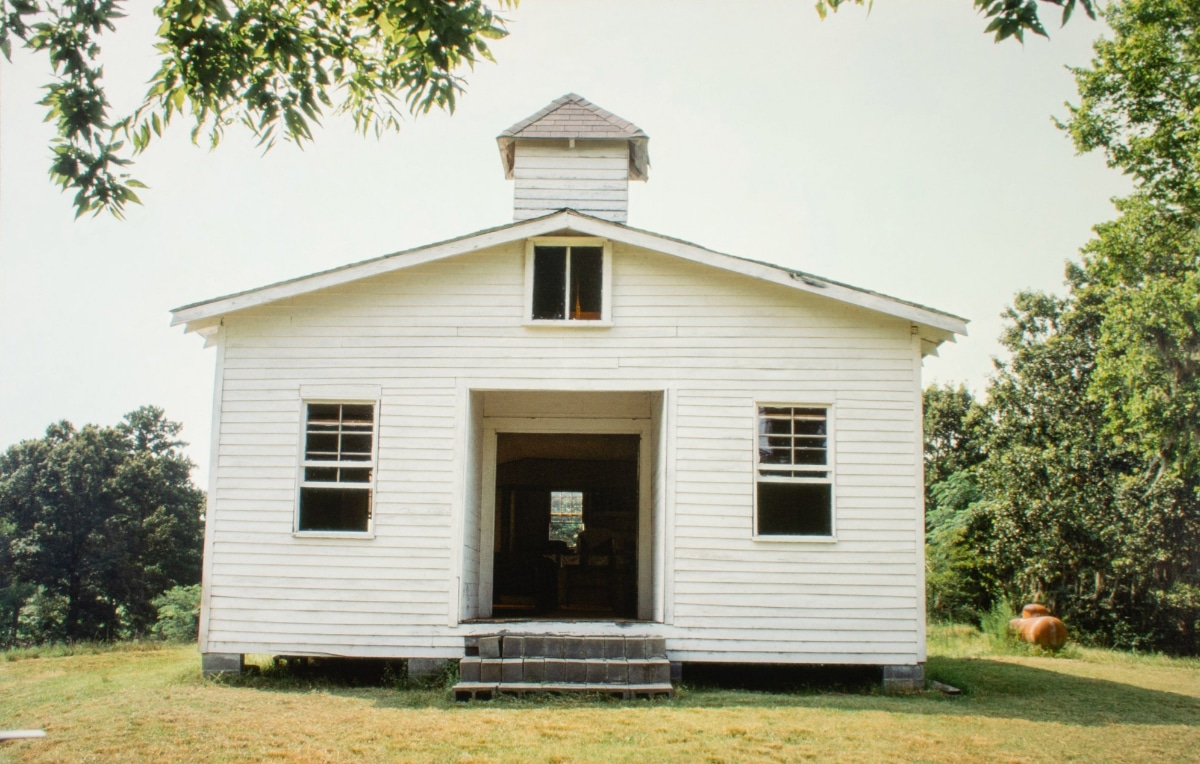
The last scene of the dirt-eating triptych shows the initiates, Mack and Josie, digging with sticks, conducting the ritual themselves at the bottom of another shallow embankment; as the shot widens, a church can be seen at the top of the low hill. (The scene was shot outside the historic Rose Hill Church in Vicksburg, which William Ferris photographed in the 1970s. 44 ) The girls are wearing their Sunday best, blue dresses with white trim, their hair adorned with ribbons. The colors are mournful and ceremonial, the crisply ironed attire contrasting with the raw backdrop of earth and grass. Josie’s back is to us, but we see her hand go to her mouth. Mack watches Josie, hesitates, then puts a clod into her own mouth. Mack eats dirt in full view of the camera.
Like the ongoing processes of grief, Black practices of geophagia and the appetites that drive them are open-ended, mercurial, and often wayward.
This third scene and its mournful meal take me back to a moment when I had the urge to eat my mother’s ashes, as I was transferring them from the crematorium’s packaging into her urn. Dirt eating has often been on my mind since her passing. 45 Like the ongoing processes of grief, Black practices of geophagia and the appetites that drive them are open-ended — mercurial, and often wayward. Just as Mack’s and Josie’s mother, Evelyn, returns in the moment of her death to the mud (dirt and water) on the banks of the river, the daughter that Mack and Josie share, Lily, is proclaimed to be born of the same elements. Still in a hospital gown after giving birth, Mack declares to the newborn: “You made of dirt. You know that? And water. Lily.”
While dirt and water seem to be bound in a dialectical cycle of life and death, dirt eating is more difficult to bundle into any legible or practical Black land-based politics. Eating the earth does not valorize the labor of land stewardship, and its stealth practices at the sides of roads do not make claims to Black ownership of clay banks. As unfinished sites, Black femmes’ roadsides geophagical pits open portals to geological time, offering up, in morsels, ancestral forms of sociality that contain millions of years of earth-knowing.
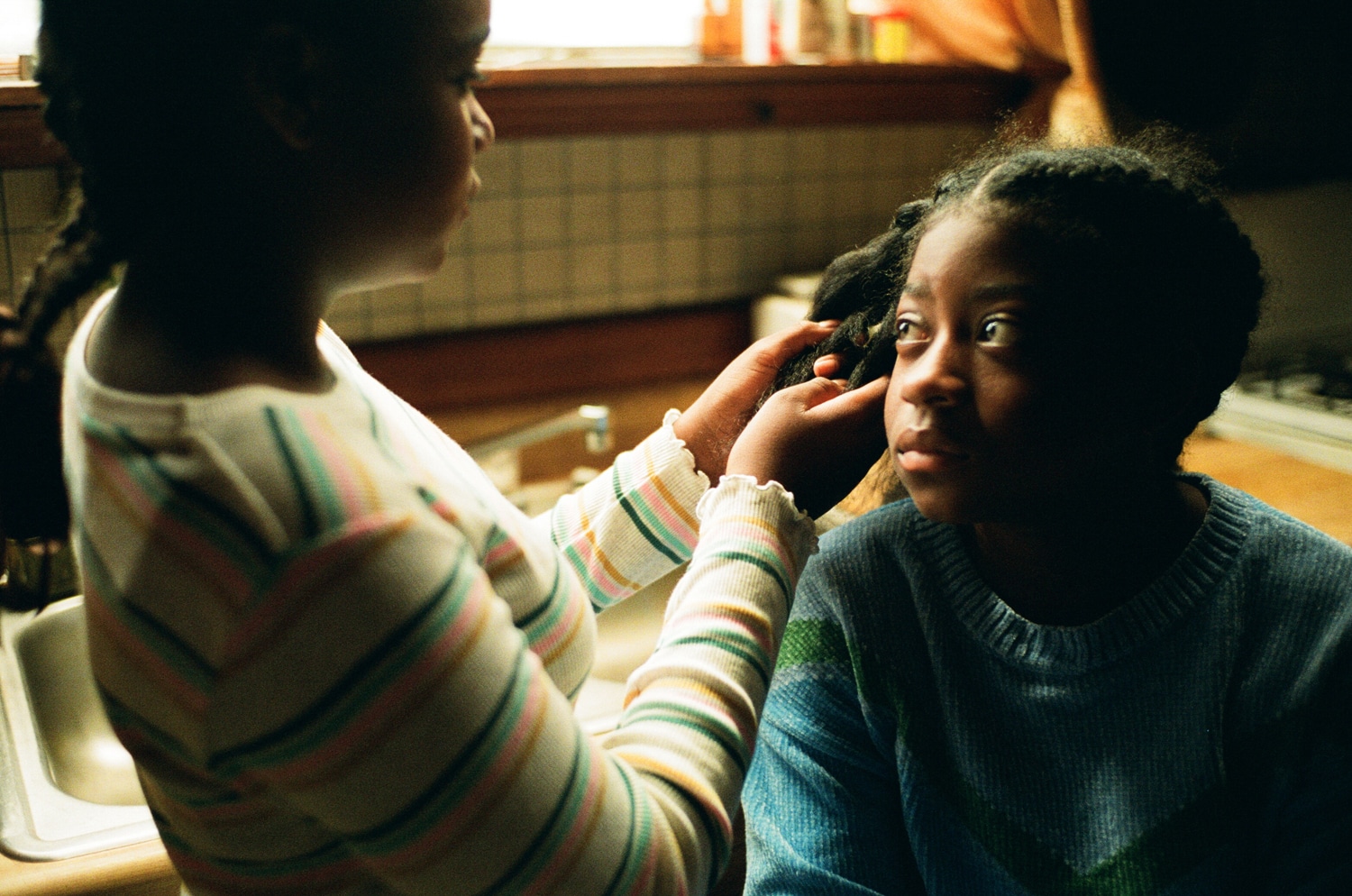
The clay of roadsides and riverbanks, where Mack mourns her mother Evelyn; where Mack and Josie could be said to conceive Lily with the clay; where Charles Blow and his brothers find sustenance; and where Lonesome Ben eats, offer cosmologies or theories of the universe which can be ingested and known through ritualistic forms of intimacy that start with the mouth. Moving across (a stretch of) a Black archive of dirt eating that often keeps the visual at bay has forced me to develop a softer gaze. A more oblique form of regard emerges that perceives from the corner of the eye rather than one that seeks a direct line of sight. From the places that are corners, ditches, and sides of roads, where time and soil erode, deposits of clay reveal themselves along with other kinds of appetites and beginnings.




If you would like to comment on this article, or anything else on Places Journal, visit our Facebook page or send us a message on Twitter.