
Nathalie Jordi spent the years before Hurricane Ida pursuing an ambitious venture: building out a hotel in an old church campus in New Orleans. Residents of the Marigny can be protective of the neighborhood’s historic character, but she won them over. Hotel Peter and Paul was a triumph, earning accolades from the local preservation trust and the Michelin guides. 1
Then the lights went out.
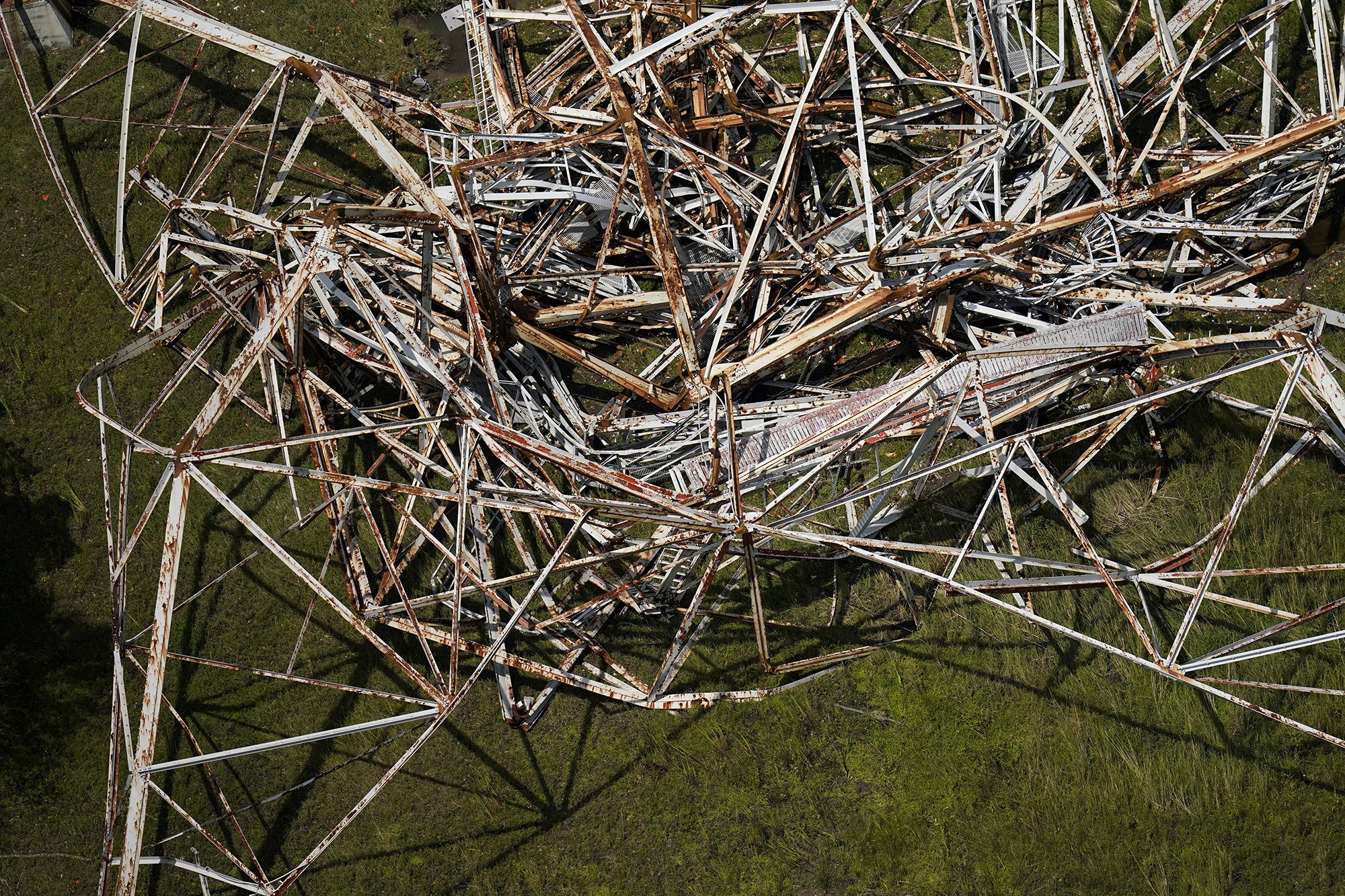
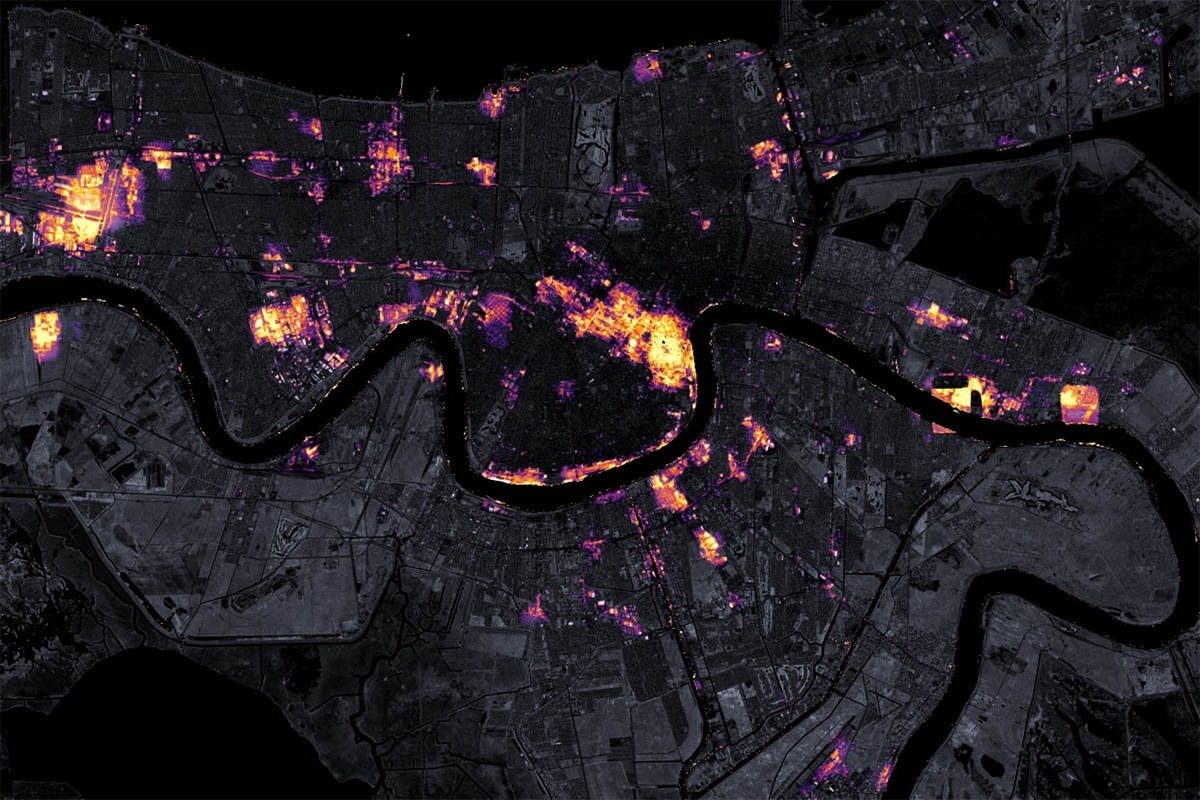
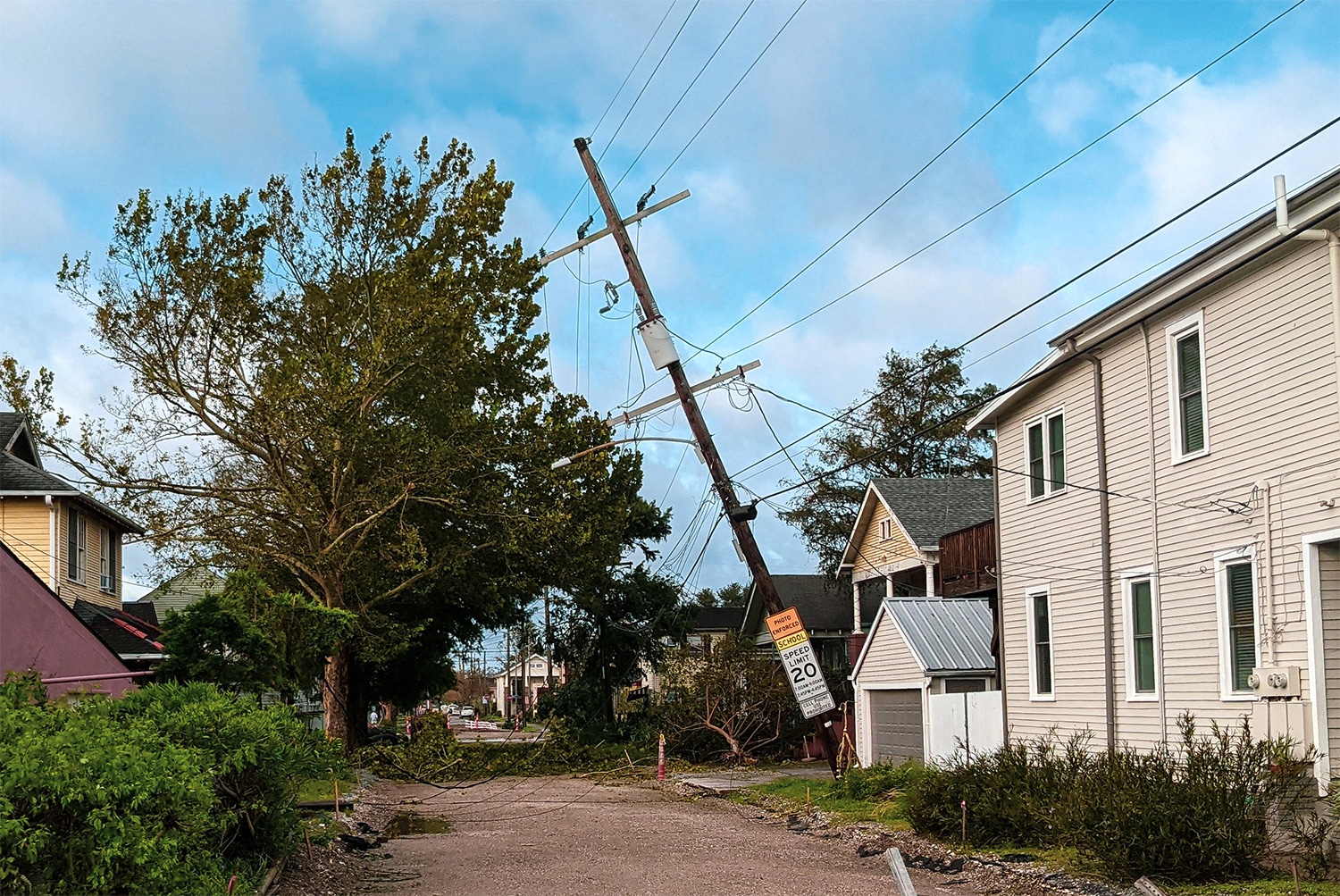
Ida reached New Orleans on August 29, 2021, as a Category 3 hurricane, though winds near the city never exceeded 120 miles per hour. Local electrical infrastructure is supposed to resist a storm of that strength, but on this day — the sixteenth anniversary of Hurricane Katrina — all eight of the incoming transmission lines failed, including, most spectacularly, a toppled 400-foot tower alongside the Mississippi River. Disconnected from the grid, New Orleans went without power for ten days. 2 Jordi found herself with fourteen guests stranded in a darkened city, as a heat wave bloomed. It was “a pretty radicalizing moment,” she said. “Like, ‘what am I doing in luxury hospitality?’ It was very existential.”
Disconnected from the grid after Hurricane Ida, New Orleans went without power for ten days.
New Orleanians know they live in a precarious place — one of the most climate-vulnerable cities in the United States — but every disaster presents new risks. This time, the levees held, and the flooding was not severe, but at least twelve people died because of the power outage: from overheating in apartments without air conditioning, from choking on the fumes of diesel generators. 3 Many more lost access to food, communications, and medical care. After everything the city’s people had been through — after all the lessons learned from Gustav, Rita, Katrina, Cindy, Ivan, Lili, Isidore, and Georges — why did their survival depend on eight rickety old transmission lines? 4 The power company offered rote apologies but could not say when service would be restored.
There’s a lot the utility won’t answer for, in fact. Louisiana suffers more blackouts than any other state: in an average year, 553 outages lasting longer than eight hours. 5 With dangerously hot days projected to triple over the next few decades, New Orleanians need to find ways not just to keep the water out but also to keep the power on. 6 And that’s true for everybody in the United States. New Orleans is not an outlier but an example of the nation’s increasingly fragile power grid. “We’re the canary on the coastline,” Jordi said.
It’s a collective problem that demands a public solution. But people here, like most Americans, get their electricity from a for-profit utility whose main incentive is making money. 7 These investor-owned utilities, or IOUs, have a reputation for charging high rates to captive customers, and Entergy New Orleans stands out for actions that are “beyond the pale,” according to one former federal official. 8 The company’s biography is part noir, part corporate thriller — a cautionary tale about power, both electrical and political.
That dark week marked the beginning of a social movement that has become a political cause.
But in my reporting on how New Orleanians are responding to climate change, I found another, more hopeful story, too. In the aftermath of Ida, Jordi saw people caring for one another, sharing food and generators, checking on elderly neighbors. Some locals with solar panels and batteries opened their homes so that others could take refuge from the sweltering heat. When the storm passed, Jordi began volunteering with a nonprofit seeking to scale up this activity — creating a network of community hubs that ensure everyone has access to power, no matter the state of the grid. “We’re doing it ourselves,” she said. That dark week marked the beginning of a social movement that has become a political cause.
The grid we know today has been shaped by a peculiar conundrum: Unless you have a way to store it, electricity must be consumed the moment it is generated. In the wonky world of utilities, this is known as “instantaneous balance,” and it means that when a city needs more electricity — on a hot summer day, say, when everyone cranks their air-conditioning — new supply must be conjured immediately.
One solution is to add a “peaker plant” that can be turned on when more power is needed. In 2016, Entergy New Orleans asked for permission to build one of these on the city’s eastern edge. Internal demand estimates soon changed, but rather than cancel the project, Entergy resubmitted the application with a new rationale: that the gas-powered plant would add resilience after a storm. 9
In this sense, the Ida blackout was not just predictable but predicted. Katrina had left parts of the city without power for weeks in 2005, and Gustav had knocked out all but one transmission line in 2008. 10 Entergy suggested its new plant could be “blackstarted” after a storm, coming online quickly and independently of other sources, which would be “a tremendous benefit if New Orleans is electrically ‘islanded’ from the rest of the interconnected transmission grid.” 11
Watchdog organizations argued otherwise, noting that peaker power is expensive, and that solar panels and batteries were emerging as a cheaper, greener solution. But Entergy had a secondary motive. As a regulated utility, it would be allowed to pass along the full cost of construction to customers, plus eleven percent. The company was guaranteed a profit, even if the new plant was never turned on. 12
Michael Isaac Stein had recently moved to the city as an aspiring journalist interested in climate change. He was assigned by The Lens, a nonprofit newsroom, to cover a public meeting about the proposed plant. “A procedural vote in a very long process to get permitting,” he told me. “It wasn’t anything huge, but I was young, and they were like, ‘Yeah, you can handle that.’” 13
At a meeting to approve a new Entergy plant, a crowd showed up in identical bright orange shirts: ‘Clean energy. Good jobs. Reliable power.’
Stein figured that if anybody bothered to show up, they would be activists opposed to the project. He was surprised, then, to find 85 people in identical bright orange shirts with a slogan professing support: “Clean energy. Good jobs. Reliable power.” Obviously, few people spend their Monday evenings at public regulatory meetings, and even fewer lavish praise on an investor-owned utility. So Stein was curious. When he tried to interview the plant’s supporters, they directed him to a man named Gary, who claimed to be the leader of the Council for Responsible Governance.
Six months later, following a tip that one of the supporters was a local actor, Stein published a blockbuster story in The Lens. Gary was not from New Orleans; he had been hired by a Beverly Hills company, Crowds on Demand, to recruit the orange-shirt cadre with promises of cash — $60 per meeting attended, $200 for delivery of a pre-written speech, and, rather comically, a pizza party at a Dave & Buster’s franchise near City Hall. 14

By then, though, the ruse had already succeeded; the city council had voted to approve the gas plant, and the utility had begun construction. The council launched its own retroactive investigation, which unearthed a trove of damning communications. “This is a war,” the Entergy New Orleans CEO texted, greenlighting a $28,000 expenditure on actors. (Victim to autocorrect, he described them as “foot shoulders.”)
A Beverly Hills company, Crowds on Demand, had recruited the orange-shirt cadre by promising cash and a pizza party.
All told, Entergy had spent a million dollars on its lobbying effort, seeking a potential profit that Stein estimated at $120 million. 15 The city eventually fined the energy company $5 million for these misdeeds but allowed construction to continue. 16 And so the New Orleans Power Plant, as it is officially known, was completed in 2020.
Fifteen months later, Hurricane Ida arrived. This was the foretold moment, the reason for the peaker plant’s existence. But for a full day after the storm — and then a second full day — the plant sat idle and unused. Across a darkened city, New Orleanians were on their own. 17
Devin DeWulf typically evacuates for hurricanes, but as Ida intensified more quickly than anticipated, he and his wife decided to stay. Thanks to their home’s solar panels and batteries, “we just hunkered down and rode it out,” DeWulf said. “I got to see, hour by hour, what was going on in my neighborhood.” 18
He saw that pretty much anyone who could afford to leave had left, and those who stayed needed resources — electricity most of all. Many of his elderly neighbors were sitting outside on a 100-degree day since the shade was cooler than inside their homes. DeWulf invited one neighbor over to charge his oxygen machine. He ran an extension cord to another’s refrigerator. “And my front porch was like a charging station, so anyone in the neighborhood could come and charge whatever device they wanted,” he said.
Then he got a phone call from a restaurant. “They were like, ‘Hey, we’re about to throw away all this food from our walk-in, can you magically help us? Can you do something with this food?’” DeWulf declined. He didn’t want to cross a city strewn with downed powerlines and debris. But that gave him an idea for the next storm. What if the restaurant had its own solar panels and batteries? What if every restaurant did? There could be a network of community hubs with off-grid power. DeWulf, an artist who had experience running a nonprofit Mardi Gras krewe, launched a new program to build out this type of infrastructure. He called it Get Lit, Stay Lit.
In the days after Ida, a group of pastors came up with an idea for the next storm: What about installing solar panels on churches?
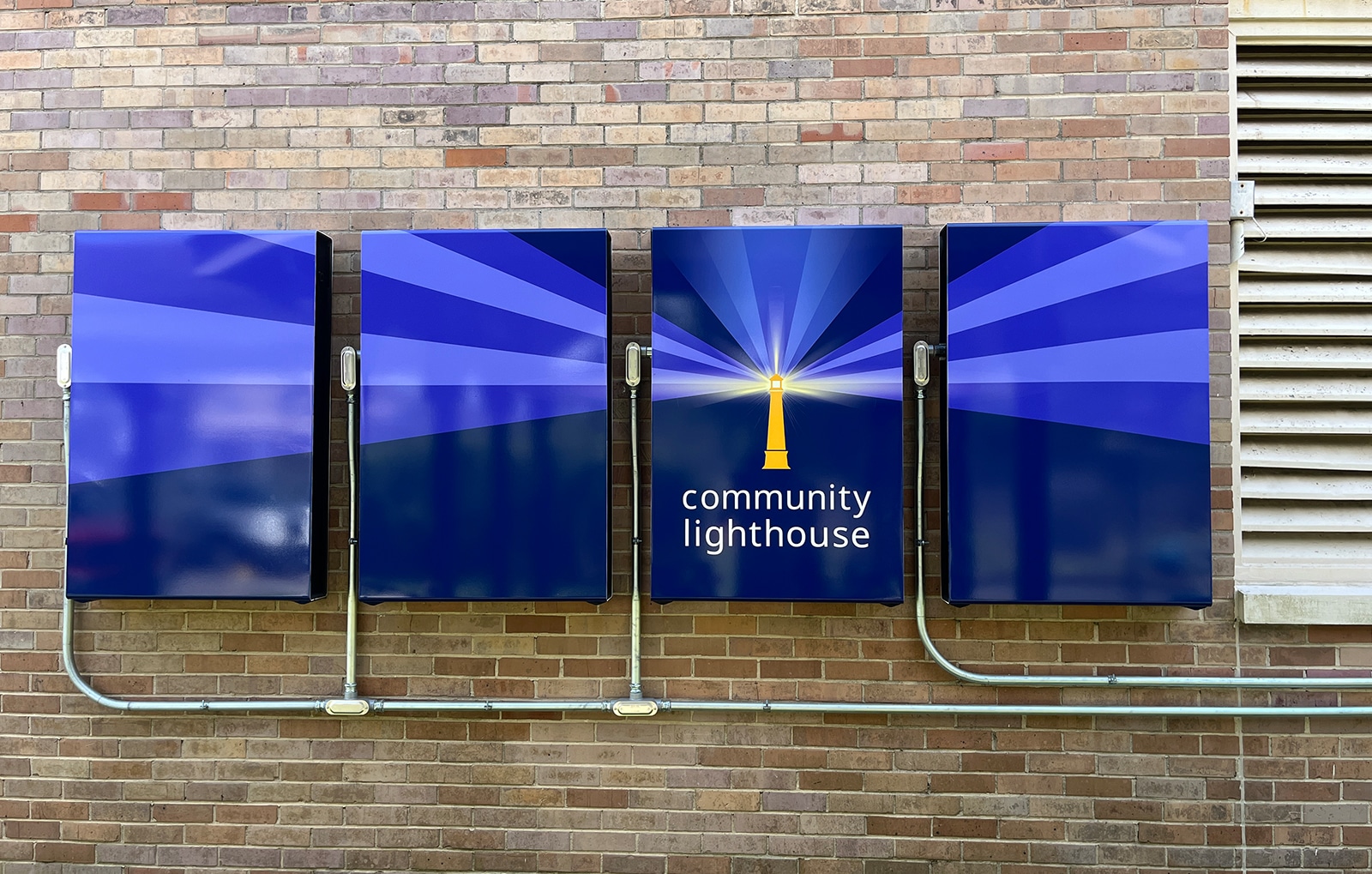
DeWulf was not alone in this thinking. In the days after the storm, a group of pastors gathered on a Zoom call hosted by Together New Orleans, a nonprofit alliance of faith and labor organizations. Many of the pastors had evacuated and were trying to help parishioners from a distance, but they couldn’t find enough diesel generators. Someone offered an idea for the next storm: What about installing solar panels on churches? They came up with a name, “Community Lighthouses,” and eventually settled on an ambitious goal: Everyone in the city should be able make it to a Lighthouse with a 15-minute walk. “The community is taking back power,” pastor Gregory Manning later told me. “We cannot wait three weeks for Entergy to get the power on.” 19
To be fair to the utility, it was three days after the storm when they sent a triumphant text message: “First lights overnight on the way to recovery!” The peaker plant was finally online, providing electricity in pockets of the city. But why did it take so long to fire up a plant that was supposed to have blackstart capability? 20
Did it really make sense that a for-profit company should have a monopoly on the city’s electricity?
“We could have done it, we were prepared to do it,” an Entergy executive told The New York Times. “It just wasn’t the best choice.” That is something of an understatement. He explained to the reporter that running the power plant without repairing local lines to customers could have rendered the facility inoperable. 21 By the time the utility had readied the grid for peaker power, the first of the eight transmission lines leading into the city had been fixed. It actually took a day longer to restore power than after Hurricane Gustav. 22 So what was the point of this expensive new plant? The CEO insisted the utility hadn’t lied to the city council. “I don’t know what they understood at the time,” she told the Times. “There’s a lot of misinformation out there that led people — not us — to believe that it would somehow power the whole city.” 23
As frustration mounted, Helena Moreno, the council president and chair of the utility commission, decided she’d seen enough. She announced plans to investigate not just the immediate crisis, but also the company’s entire approach to serving New Orleans. Did it really make sense that a for-profit company should have a monopoly on the city’s electricity? 24
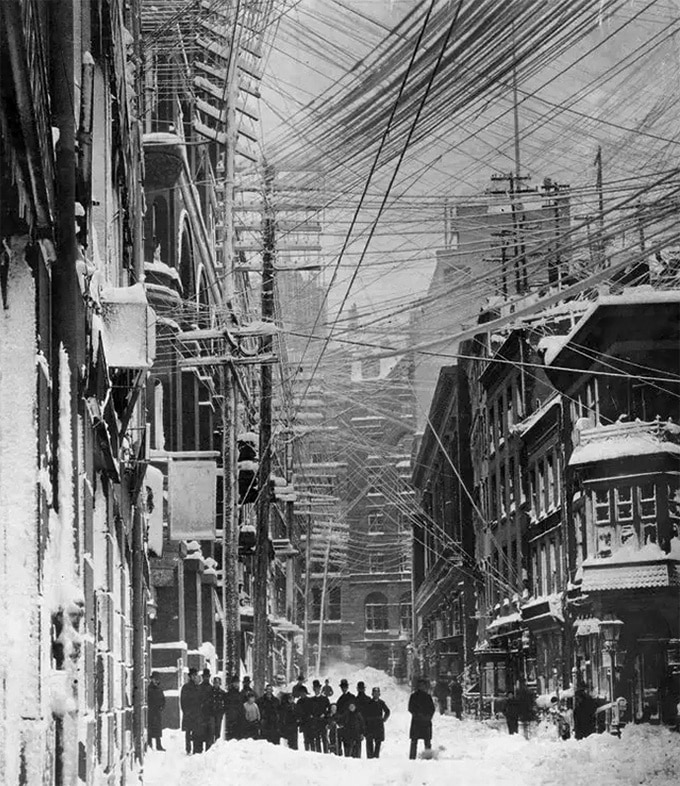
It wasn’t always this way. In the late 19th and early 20th century, dozens of companies sold some form of electricity in New Orleans. 25 Competitors sprung up everywhere, which created a chaos of wires and left many companies in ruin. Some cities, like Los Angeles, decided to solve grid redundancy by creating public utilities, and in rural areas, customer-owned cooperatives later became a common approach. But in 1922, New Orleans followed a trend that swept the country, granting exclusive franchise to a new, private company to provide local power. Thus New Orleans Public Service, Inc., or NOPSI, was born. 26
This is still the way most Americans get their power. Investor-owned utilities serve about 72 percent of the country.
This is still the way most Americans get their power. Investor-owned utilities serve about 72 percent of the country — 110 million customers — according to 2017 data. 27 These companies are premised on a simple bargain. They get guaranteed service territory, and guaranteed profit, while accepting rate caps imposed by local regulators. Generally, they are allowed to charge the full cost of providing service plus a percentage on top. In this system, the people who buy the electricity became “ratepayers,” a bland but revealing word: We are cogs in a money-processing machine.
Most of us are also captive customers, with no good option but to sign up with our assigned utility. So why bother to investigate what they’re doing? A jumble of acronyms and jargon — NERC and FERC and RTO, base rates and kilowatt-hours — obstruct the few who try. Climate writer Bill McKibben calls this the “force field of boringness,” which turns out to be a good defense. 28 It’s hard to reform a system too boring to understand. Occasionally, though, something big can cut through the force field.
One such event came in New Orleans in the early 1980s. By then NOPSI had been acquired by a larger holding company, which adopted the exceedingly dull name of Middle South Utilities; now Middle South had started building a nuclear plant. This turned out to be a difficult and expensive job. Thanks to the unique structure of the industry, Middle South was able to pass cost overruns to the captive customers, even if the plant was not completed. Unfinished construction is simply one more cost of service. The Times-Picayune reported that electricity bills could soar by 70 percent. And so the force field burst. 29
Why bother to investigate what they’re doing? A jumble of acronyms and jargon — the ‘force field of boringness’ — obstruct the few who try.
Middle South owned three other utilities, too, which served large swaths of the surrounding states, where the news was big enough to upend at least one major election. 30 Amid the chaos, the four companies gathered to divvy up the supply of now wildly overpriced power. Just what happened in those meetings remains a back-room secret, but in the final agreement NOPSI committed to an outsize portion — a choice that concentrated the financial pain on the smallest set of customers. 31 The city of New Orleans sued the local utility, saying it should not have accepted the deal, and councilmembers began exploring a radical solution. Might the city buy out NOPSI and create a municipal utility?
But quickly conditions changed. Federal regulators deemed the purchase-power split “unjust and discriminatory” and reduced NOPSI’s obligation. 32 Middle South, for its part, went into peacemaking mode. Having spent $4.6 billion on the nuclear plant, more than five times the initial projection, the company canceled plans for a second reactor and instead launched “Project Olive Branch,” absorbing $900 million in losses to end a wave of lawsuits. 33
A few months later, in 1989, the old utility names were retired, and a new brand debuted. Entergy was meant to conjure powerful, modern words — enterprise, energy, synergy. 34 Apparently, the spell worked, since the city soon abandoned its efforts to municipalize the utility. The previous years had been rough, with an oil crash that led to job losses, outmigration, and an uptick in crime. 35 “We are a poor city,” one of the council members said, explaining why he’d changed his mind on the issue. “We can ill afford the luxury of making a wrong choice.” Another member suggested, rather darkly, that New Orleans might be better served by a reverse transaction — the city purchased by the corporation. 36

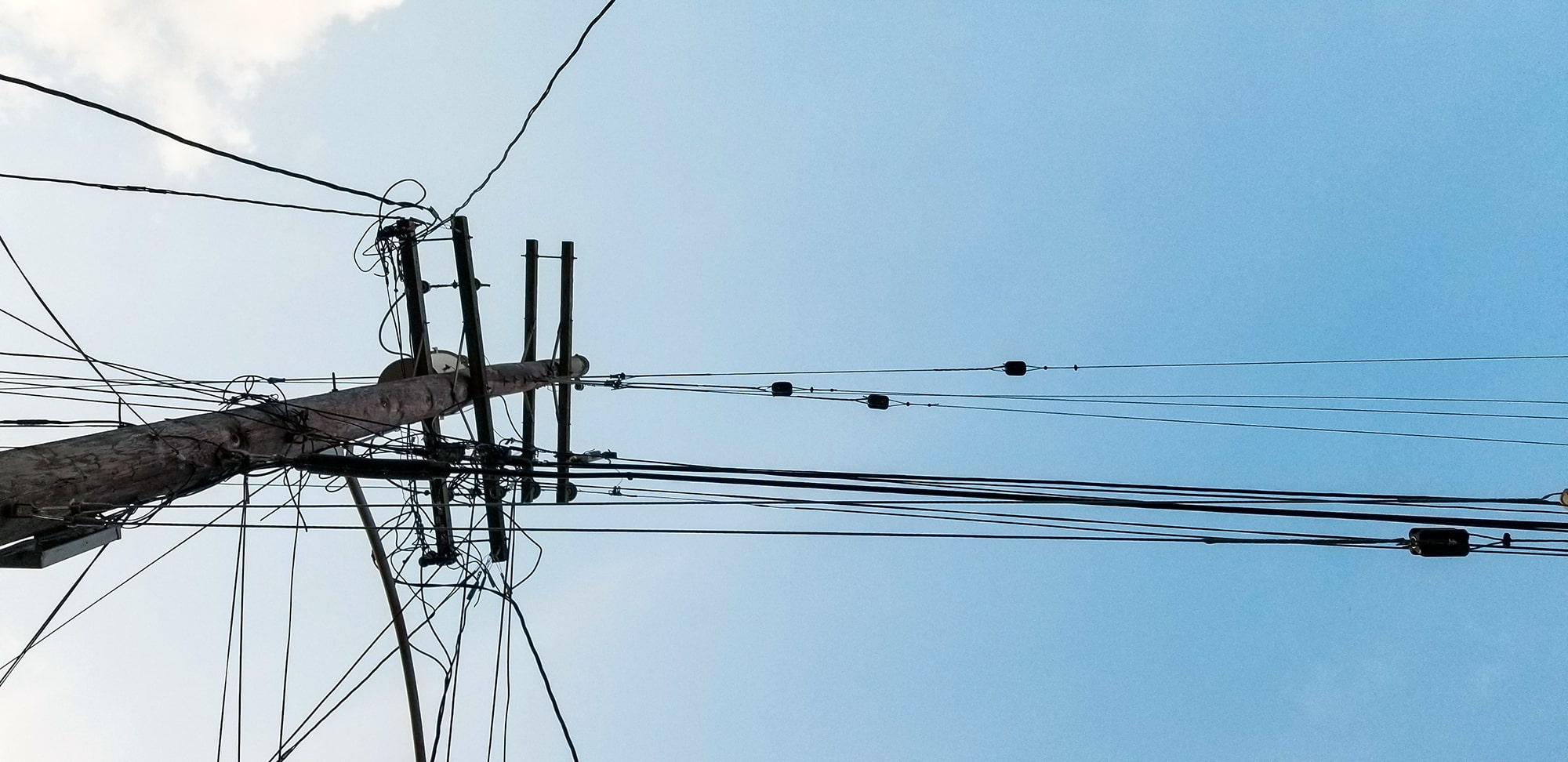
There might have been some truth to the notion that one city alone is ill-prepared to carry all its energy risk. After Hurricane Katrina, Entergy New Orleans was overwhelmed by storm damage and a fractured customer base, and it survived bankruptcy with the help of a bailout from the parent company. 37 As the years went on, though, Entergy demonstrated repeatedly why an investor-owned utility is not a good model for climate resilience. As the company cut back on maintenance funding, the frequency and duration of outages crept upwards. New Orleans suffered power losses that Entergy blamed on roving squirrels and cats, a bird flapping its wings too vigorously, and Mylar balloons drifting into power lines, among other causes. 38 (After an initial exchange of emails, an Entergy communications official did not reply to a detailed list of questions.)
Entergy blamed power outages on roving squirrels and cats, a bird flapping its wings too vigorously, and Mylar balloons drifting into power lines.
“Our distribution system is held together with bubble gum and a dream,” said Logan Burke, who leads the nonprofit group Alliance for Affordable Energy. 39 On an unseasonably frigid Mardi Gras morning in 2021, Entergy New Orleans instituted rolling blackouts to protect the fragile grid but wound up cutting power to many more customers than necessary. 40 Then came the botched response to Hurricane Ida later that year. The city council started talking about municipalization again. 41
Entergy played nice, affirming their willingness to move forward with whatever the council decided. 42 But they also signaled that a public takeover would mean “higher financing costs and additional operational expenses.” The talking points included an implicit threat: if Entergy no longer served New Orleans, the parent company might move its headquarters elsewhere, and the city would lose its only entrant on the Fortune 500 list. 43
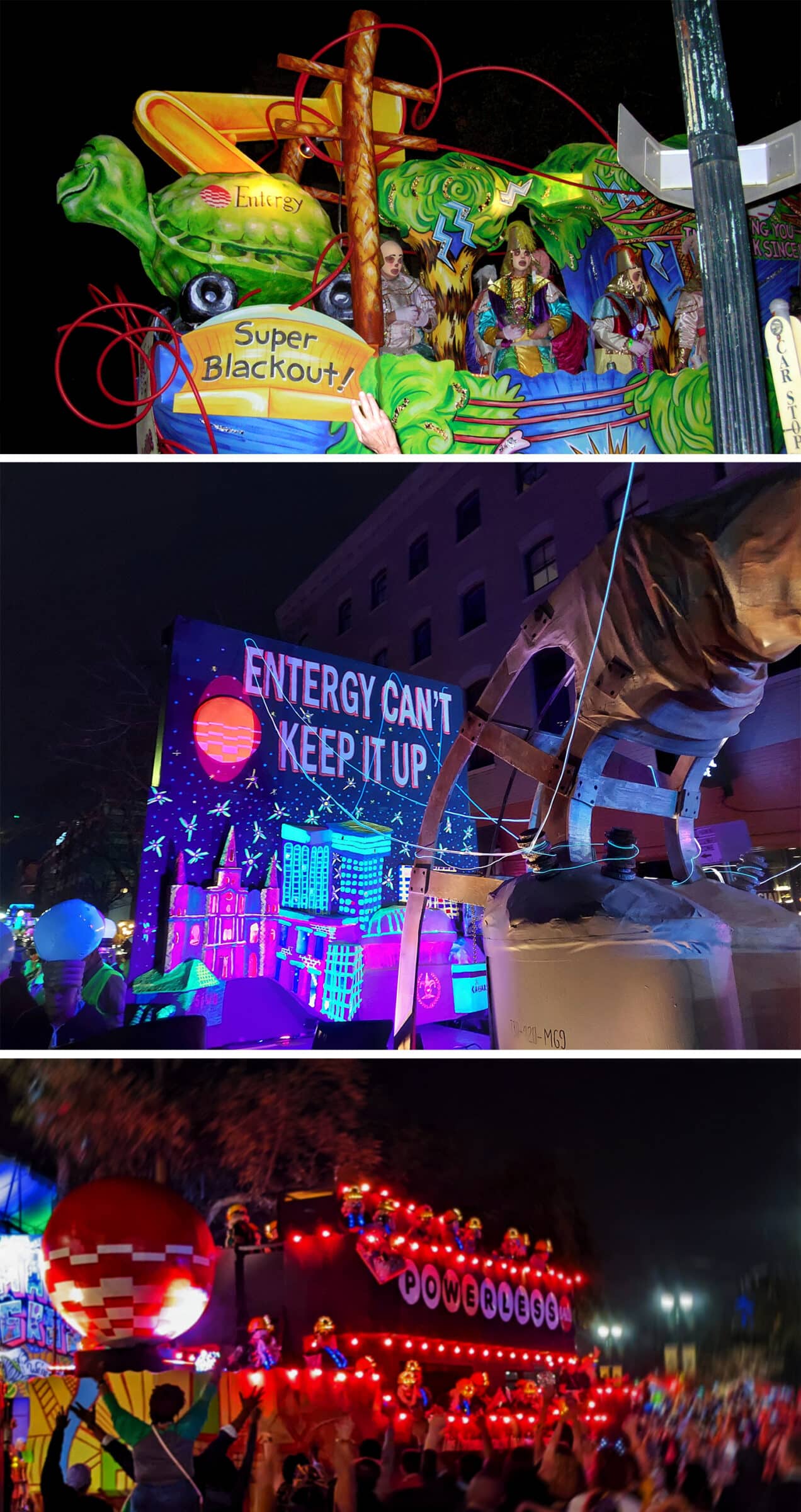
Ultimately, the city council decided to — please excuse this mouthful of a phrase — advertise a request for proposals for consulting services to study the ownership issue. 44 And that was as far as the new push for municipalization ever got, it seems. The advertisement does not appear in city records, and the Council Utilities Regulatory Office did not reply to requests for comment on the outcome.
‘Our distribution system is held together with bubble gum and a dream,’ said Logan Burke.
Entergy New Orleans, meanwhile, seemed unphased. A few months after Ida, the company reneged on a promise to spend $30 million to upgrade the power supply to the city’s antiquated pumping system. Entergy said the local utility lacked “financial stability” to take on the project. Just four days later, though, the parent company announced a $202 million quarterly payout to shareholders. Stein noted the incongruity and decided to run some numbers. He found Entergy had paid investors a total of $1.5 billion over the two previous years. 45
By then he had studied the company’s history, and he concluded that while the actor scandal that launched his career was salacious, it wasn’t uniquely impactful. He told me he thinks the utility never had an argument that should have convinced anyone to approve the gas plant. The use of actors might seem dishonest, he said, but “I don’t know if it’s more insidious than many of the other tools Entergy uses to get their way.” It’s just that those tools were buried so deeply beneath the force field of boringness they had been hard for locals to see.
Once you slip past that wall, the details can be shocking. In 2002, an Entergy analyst created a presentation with an image of a handgun alongside a list of “bullets” that would lead the company to success. One was labeled “distressed buyer” — apparently referring to a proposal that the utility strangle plants owned by rival companies by refusing to buy their power, then buying the plants themselves at a discount. 46
Such gangster-movie tactics exploit the convoluted structure of the industry. At the turn of the 20th century, there were many small grids, centered on cities or small regions, each isolated from the others. But the energy companies realized that by linking together, they could better manage instantaneous balance; as eastern cities powered down after sunset, local power plants could send electricity further west, where demand was still cranking. By mid-century, spurred by the need to keep wartime factories running, utilities had formed “power pools” — sets of regionally interlinked companies that agreed to sell one another electricity. 47
Federal officials suspected Entergy was buying expensive power from its own aging plants rather than cheaper competing sources.
Then, in the wake of the 1970s oil crisis, the grid evolved again. To reduce demand for foreign energy, Congress required that utilities purchase power from any small, domestic generating station that met certain criteria. (This law would help launch the first wave of renewable power plants, but even small fossil-fuel plants could qualify.) By promoting the creation of new plants outside the utility monopolies, legislators uncovered the hidden structure of the electricity business. It was really two businesses, and the jobs of creating electricity and delivering it to customers did not have to be done by the same firms. 48
Some states ran with this insight, passing laws in the 1980s and ’90s that required local utilities to convert themselves into transmission companies, earning a fixed rate to move electricity to customers; their power plants were then sold off to independent companies that generate power and auction it to the highest bidders. Entergy’s rebrand matched the zeitgeist, dropping the word utility, since the company “resolved to no longer think like a tradition-bound, regulated monopoly.” 49
But the rechristened company was never forced to give up that monopoly. Deregulation arrived in a patchwork fashion, and, in the South, legislatures were disinclined to tangle with the politically powerful utilities. 50 The federal government, meanwhile, backed off a plan to better control the utilities by forcing them to join punched-up versions of the old power pools. (The new name was “regional transmission organizations,” or RTOs.) In fact, the Entergy parent company grew more independent in the years after its rebrand; in 1997, amid a dispute over pricing rules, it abandoned a power pool it had helped create decades earlier. 51
The company’s biography is part noir, part corporate thriller — a cautionary tale about power, both electrical and political.
All this opened the door to manipulative practices that would benefit the company at ratepayers’ expense. Federal officials eventually grew suspicious that Entergy was buying expensive power from its own aging plants rather than cheaper competing sources. Owners of independent plants complained they were forced to “sit idle for months” while Entergy favored its own facilities. The “distressed buyer” bullet seemed to confirm the monopolistic company aimed to make competitors suffer so they would be forced to sell their assets on the cheap — to Entergy itself. 52
The Department of Justice launched a probe, which was dropped in 2012 after Entergy agreed to two main conditions. 53 One involved the company selling its transmission operations. That sale fell through the next year, and critics accused Entergy of intentionally tanking the process, choosing an option sure to be blocked by state regulators. Entergy did meet the second condition, joining an RTO. But rather than rejoining the Southwest Power Pool, which was already well connected to its service area, Entergy became a member of the Mid-Continent Independent Service Organization, which covered the upper Midwest. 54
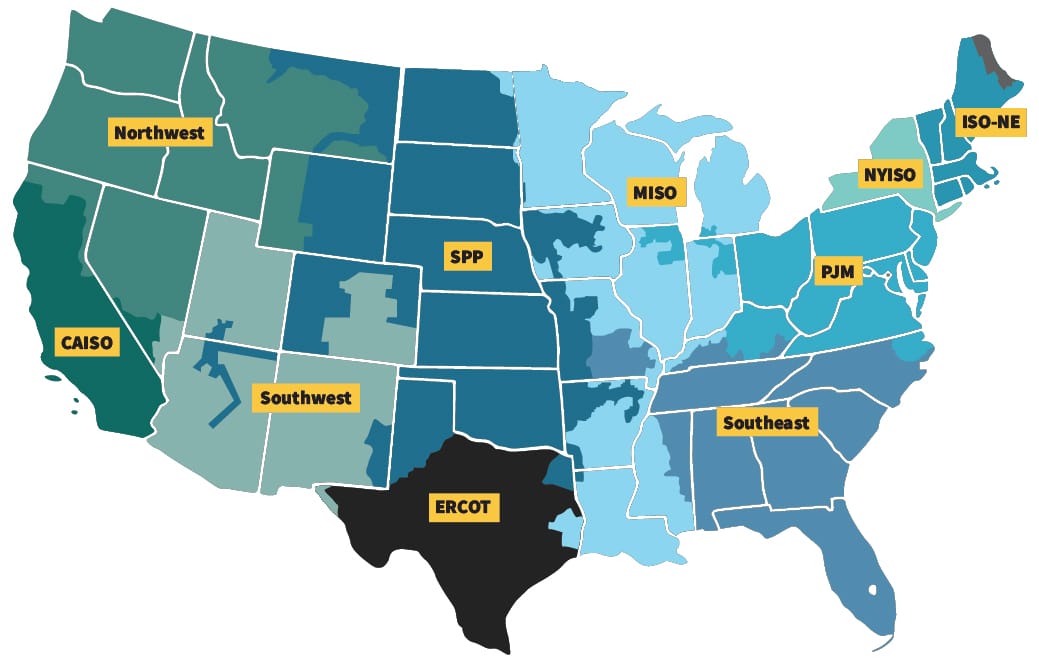
This was a canny, self-serving move. The expansion of MISO yielded an awkward, hourglass-shaped map, with a bottleneck that meant Entergy could only receive a small amount of power from the rest of the pool. Thus, it had to depend on its own plants. One of the federal regulators who approved the deal told me he now believes the conditions that prompted the 2012 investigation persist today, more than a decade later. 55
‘Candidly, we are not winning,’ said John Farrell; he doubts that pushing for municipal utilities will lead to a democratic and climate-friendly power system.
If regulation hasn’t worked, what about municipalization? New Orleans is not alone in contemplating that step. San Francisco is trying to wrest control of the local grid from Pacific Gas & Electric, and Ann Arbor is setting up a renewable-focused, city-owned utility to compete with the incumbent DTE Energy. 56 But municipalization is not an easy path. Over the past quarter century, just 22 such efforts have succeeded, said Ursula Schryver of the American Public Power Association. 57 These were mostly smaller locales where utilities put up less fight. In major markets, utilities spend huge sums to block competition. In Maine, a referendum to create a public utility failed after a campaign in which the two local power companies — both ranked among the worst in the country on surveys of customer satisfaction — spent $40 million, while public power proponents could muster only $1 million. 58
“Candidly, we are not winning,” said John Farrell, the co-director of the Institute for Local Self-Reliance. He did note that even failed campaigns can serve the public interest. In Colorado, after fending off a municipalization effort, Xcel Energy implemented one of the greenest energy portfolios in the country. Still, Farrell doubts that pushing for municipally-owned utilities will lead to a democratic and climate-friendly power system. 59
The Lighthouse movement that coalesced in New Orleans in the wake of Hurricane Ida proposes a different approach: If residents cannot find a way to reform or rein in a problematic utility, they can just create their own power. Secede from the system. Unplug from the grid.
The Lighthouse movement that coalesced in New Orleans in the wake of Hurricane Ida proposes a different approach.
The idea loops back to the earliest days of the electrical revolution. Technical constraints meant that Thomas Edison’s plants could send power no further than a mile. Energy was typically created on site, at one single factory, or one lavish home, by coal-fired machines known as “dynamos,” paid for by the homeowner or corporation. When people looked to the future, they envisioned not one sprawling, semi-public grid, but a vast landscape of small, private networks. 60
When new technologies unleashed the inexorable logic of scale, it became clear that the real money was in bigger, “centralized” generating stations that served huge collections of customers. This eventually produced the system we have today, with plants — often located far from the cities they serve — sending out power via high-voltage transmission lines that link to the low-voltage lines strung up on neighborhood streets. By the 1970s, opting out of this system was considered a strange and radical choice. But as the United States grid became increasingly unreliable — due to climate change and mismanagement, both — some entities began to defect. Think military bases, corporate headquarters, university campuses, prisons: institutions big enough to build their own power plants. 61
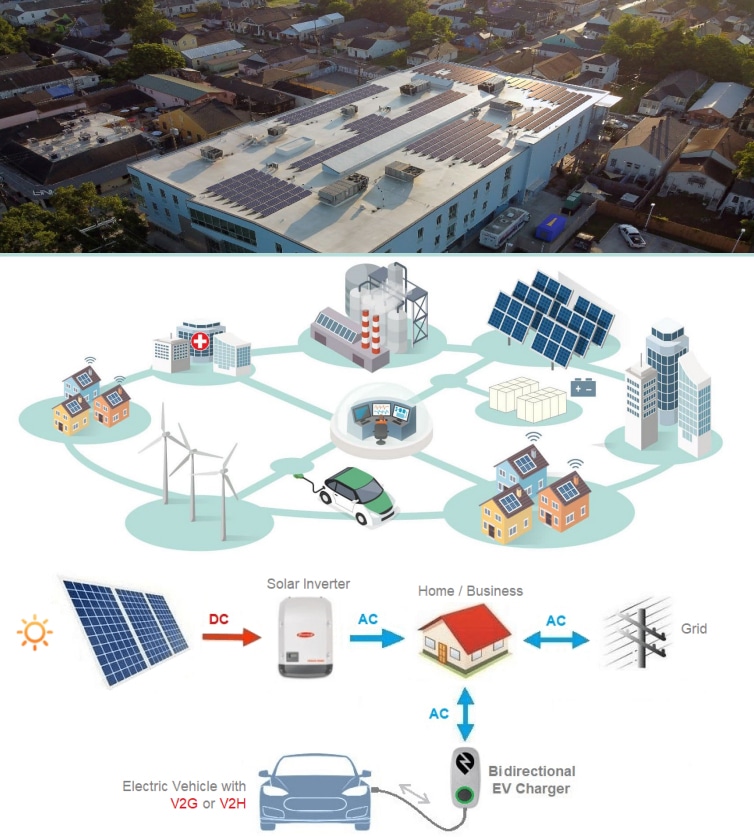
This marked the resurgence of what are now known as distributed energy resources, or DERs — small power plants scattered across the landscape. The next step toward a new energy future came around the turn of the millennium, as the price of photovoltaic panels began to plunge, followed, more recently, by batteries. Today, even IOUs facing surging electricity demand have realized the benefits of DERs, which can increase power generation within months rather than the years required for major infrastructure projects. 62 Of the 63 new gigawatts of utility-scale generation projected to join the grid this year, 81 percent will come from solar and storage. The debut of home-scale batteries a decade ago brought individual households into the trend, too; in 2024 battery storage in U.S. homes grew by almost two-thirds. 63
If residents cannot find a way to reform or rein in a problematic utility, they can just create their own power.
Entergy New Orleans has at least been willing to discuss such technologies. In 2016, the company collaborated with the city-owned sewer utility to explore whether DERs could power critical infrastructure after storms. 64 The next year, city officials conducted analysis of potential “microgrid” sites, examining clusters of buildings that could be powered by solar panels after storms. 65 But Entergy’s policies have also been a roadblock. The utility allows customers to provide themselves with solar power if the surrounding grid is down, but it does not allow any of that power to flow back into the wires to be distributed to other, nearby customers. The utility claims this would be a safety risk for lineworkers and a complication for its billing department. 66 Burke told me that when the Alliance for Affordable Energy started pushing for DERs, the response from the city council was, essentially, yeah, yeah, that’s cute, while the response from Entergy was, we don’t know how to do that. But the blackout after Hurricane Ida created a groundswell of support.
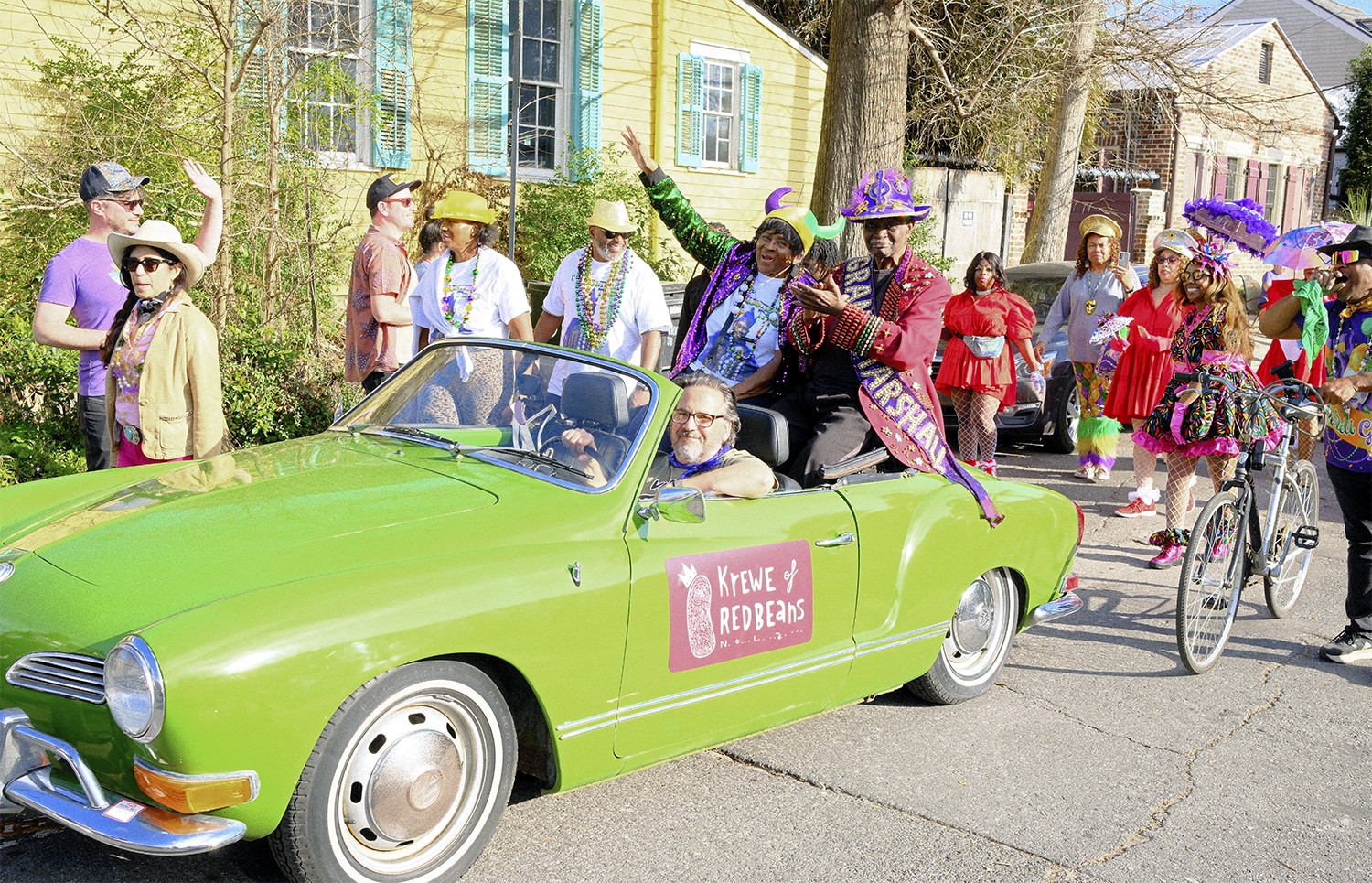
Jordi, the hotel operator, began volunteering with DeWulf’s initiative, Get Lit, Stay Lit, which has created resilience hubs at five restaurants across the city, plus one at a church and another at the nonprofit’s own headquarters. The participating restaurants, which own the panels and batteries, must commit to staying open during storms, allowing neighbors to charge their phones, and maintaining pre-storm prices on their food. 67 The project works around Entergy’s limitations by creating “nanogrids” — behind-the-meter interventions that supply one ratepayer alone.
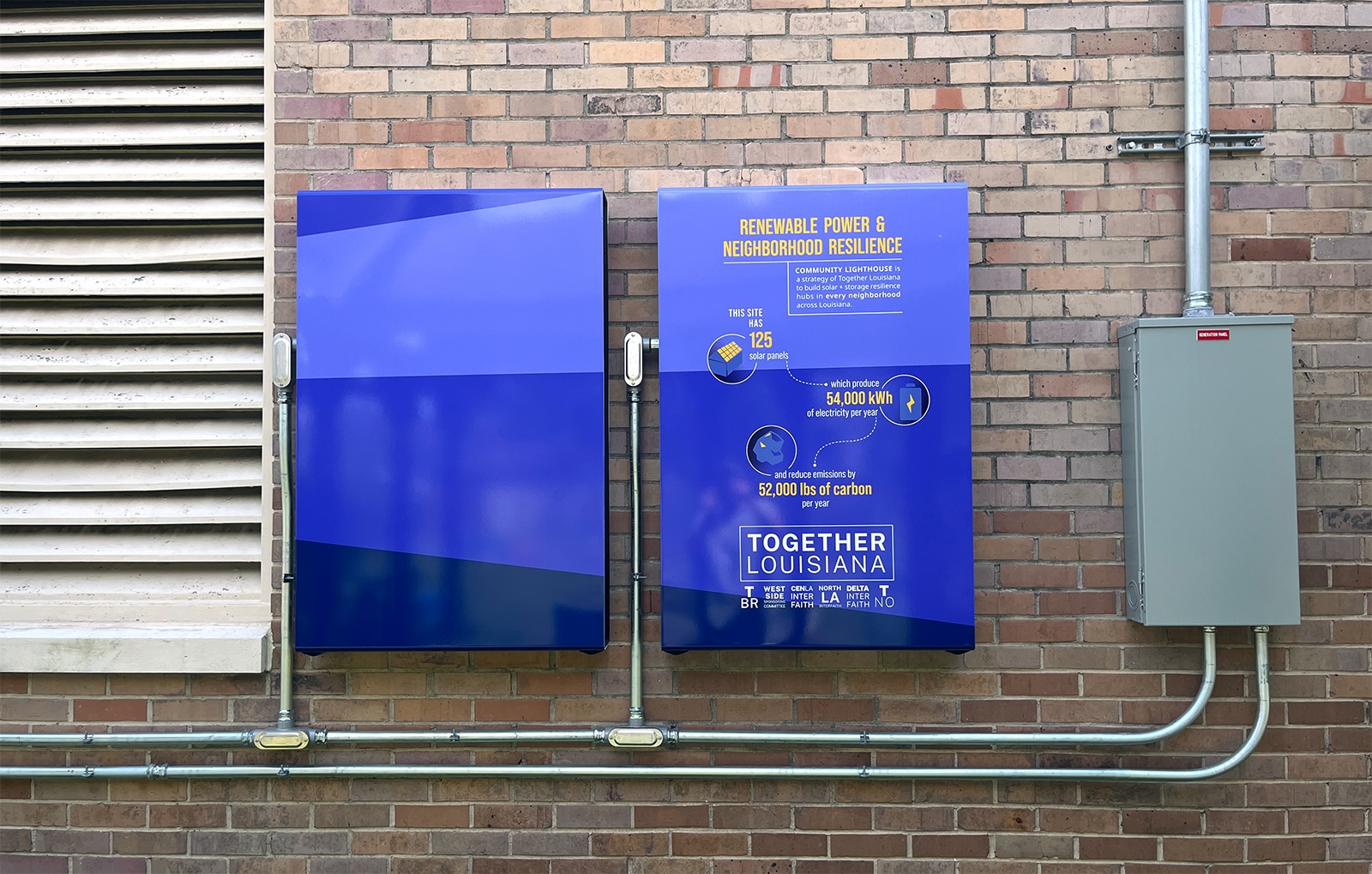
Jordi found that her experience with zoning, permitting, and project management was an asset. So in 2023 she signed on as a consultant with the coalition of churches and community groups making an ambitious push to build Community Lighthouses. Together Louisiana, a statewide umbrella organization, is coordinating efforts across several cities. To date, thirteen Lighthouses have been completed in New Orleans, while three will open in Baton Rouge before the end of the year; Shreveport has four Lighthouses completed or in the works. 68
Together Louisiana says it has already assembled the largest collection of community resilience hubs in the world.
This past fall and spring, I toured several Lighthouses. The first to be completed was at CrescentCare, a nonprofit, community-focused healthcare provider. The building used to rely on a backup diesel generator, but during the Ida blackout, “the supply chain failed,” said Reginald Vicks, the chief operations officer. 69 CrescentCare tried to get fuel trucked in, but its vendor had evacuated their own team for safety reasons. In the end, the facility lost a quarter million dollars’ worth of medicine and vaccines. 70 Today, a rooftop solar array supplies 90 percent of the peak energy needs for the 65,000-square-foot building. During a disaster, essential services can continue inside while food and other supplies are distributed in the shaded parking lot.
Together Louisiana says it has already assembled the largest collection of community resilience hubs in the world. That’s hard to confirm, but it’s clear the program is attracting attention from cities and states across the Gulf Coast. Vicks said he is writing a guide to help other health centers navigate the technical process of installing a nanogrid. It’s “not as easy as plug-and-play,” he noted. The CrescentCare system has multiple breakers and lightning protection; everything must be sequenced properly.
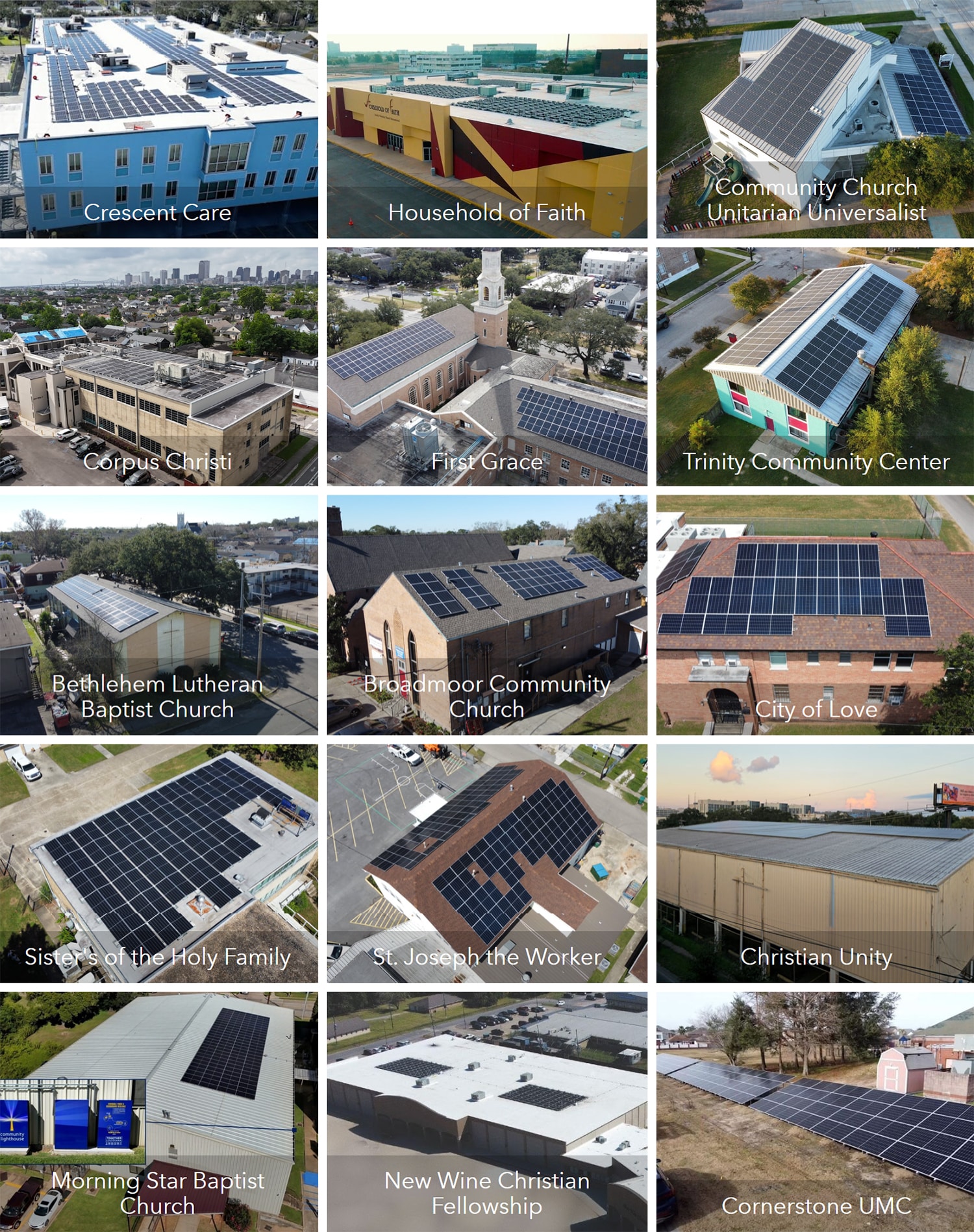
Smaller facilities tend to be simpler projects. At Bethlehem Lutheran Church, a battery that is supplied by Together New Orleans can power the church for 24 hours. “If I cut off the A/C and go down to the bare minimums, we can run it for 36 hours,” said Philip Diaz, the church’s community resilience coordinator. 71 He told me the church serves 600 “no barrier” meals every week: “Anybody who comes gets to eat.” With careful load management and enough sunshine, the church can operate indefinitely, ensuring that meals are still served no matter the state of Entergy’s electric grid.
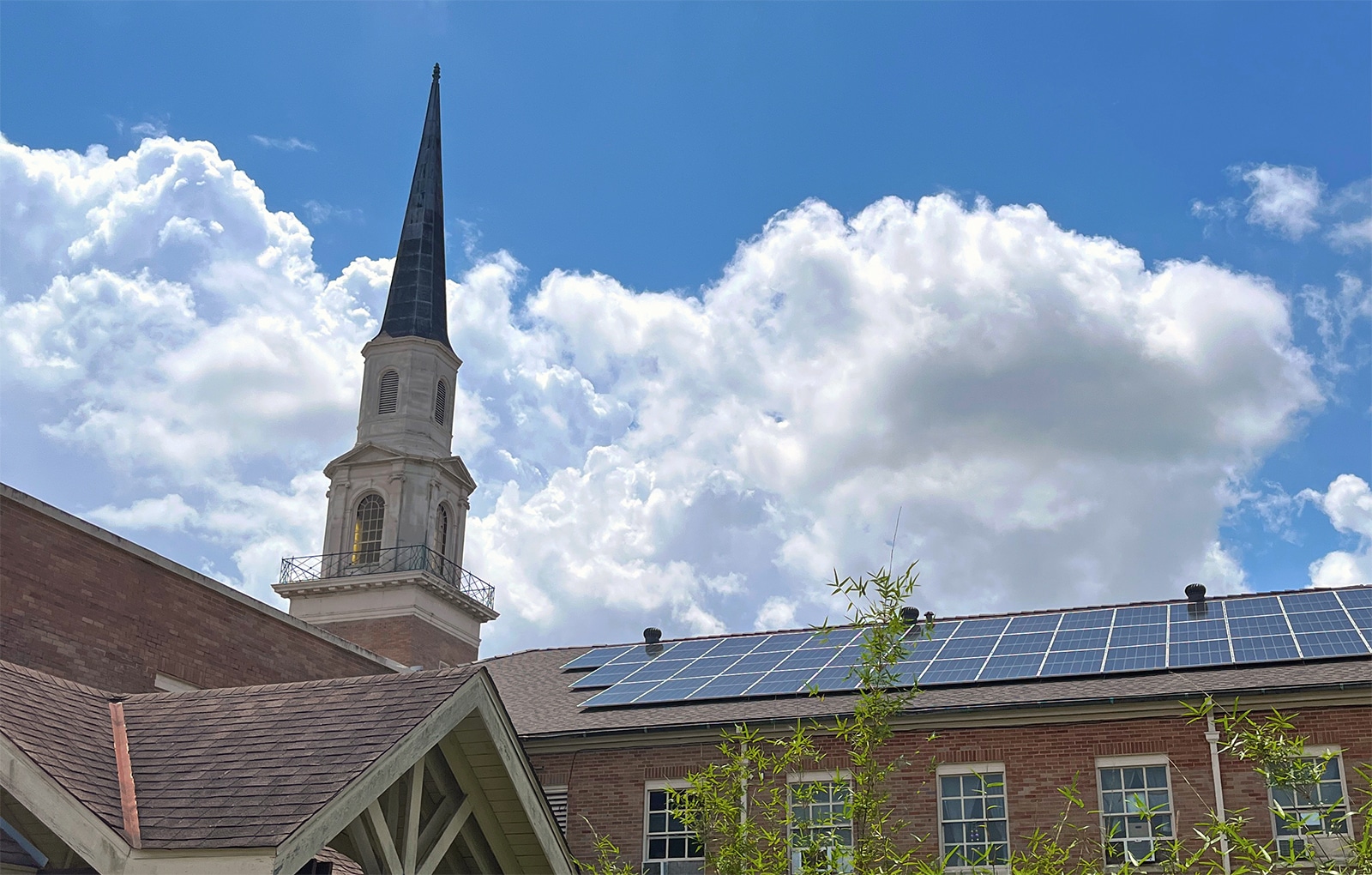
First Grace Church, in Mid-City, is a large facility — 26,000 square feet — so just one hallway and adjoining rooms are designated as a Lighthouse. 72 Pierre Moses, a renewable energy developer who works with Together Louisiana to develop the hubs, showed me a new panel installed so the corresponding circuits could be monitored remotely and turned on or off as needed. Together New Orleans owns the solar panels and batteries, and the church pays to be a part of the program. Moses said that after factoring in the subscription fee, First Grace winds up saving 30 percent on utility bills. 73 Some churches have reduced their year-round emissions by 90 percent. To Moses, this is the real promise of the project: Having the Lighthouses serve the community during a blackout is important, but that’s just a tiny sliver of the time that the solar panels are working. They’re always supplying carbon-free power. Storm resilience is, as Moses put it, just a “magical byproduct” of addressing climate change.
Still, that is plenty of magic. The system had its first test last September, when Hurricane Francine knocked out power for 50,000 customers in the city. 74 Together New Orleans sent out text messages to a list of more than 150,000 phone numbers, alerting residents that nine Lighthouses were open, including four running entirely off the grid. One hundred volunteers provided 1,800 meals and served 2,300 people needing help, according to an action report by the organization. 75 “When we opened at nine o’clock, there was a person coming with a cell phone cord charger with this look of panic on his face,” said Manning, who pastors at Broadmoor Community Church.
The system had its first test last September, when Hurricane Francine knocked out power for 50,000 customers.
There were some challenges. Diaz said that at Bethlehem Lutheran, he did not have enough people to effectively manage the space as a cooling center. But, overall, the test run was successful. The city used one Lighthouse to distribute oxygen tanks; Salvation Army parked food trucks out front; food banks took advantage of the refrigeration. Moses, who lives near First Grace, stopped in and found that as visitors calmly went about their lives, it was easy to forget that a hurricane had just rocked the city.
This spring, Together Louisiana aimed to address the staffing shortage by training a group of “Lighthouse Keepers.” About a hundred people showed up at New Wine Fellowship, a nondenominational church on a highway strip an hour west of New Orleans, including parishioners from various houses of worship, as well as members of the International Brotherhood of Electrical Workers, who are creating a Lighthouse at their Baton Rouge union hall. New Wine is inside a converted old K-Mart; the prospective volunteers gathered in chairs on the sanctuary floor, carpeted in bland grey, in front of a wide stage. To begin the morning, Neil Bernard, the pastor of New Wine Fellowship, recalled how the space had sheltered 800 refugees for months after Hurricane Katrina. “We’ve been doing sheltering and being a Lighthouse for some time. So I’m honored to be able to host you, and we’re grateful that you’re here,” he said.
Inside an old K-Mart converted into a church, one hundred volunteers gathered to be trained as ‘lighthouse keepers.’
On the way in, I’d noticed signs in the lobby commemorating New Wine’s official debut as a Lighthouse in 2023. It was a showpiece for the Biden Administration: the photos showed Secretary of Energy Jennifer Granholm attending the ribbon-cutting, where she touted a $249 million grant approved by her agency under the Bipartisan Infrastructure Law. The money went to Louisiana’s Department of Energy and Natural Resources to build pilot projects promoting grid resilience, including community hubs like New Wine as well as mobile solar kiosks and energy systems at “critical” facilities. 76
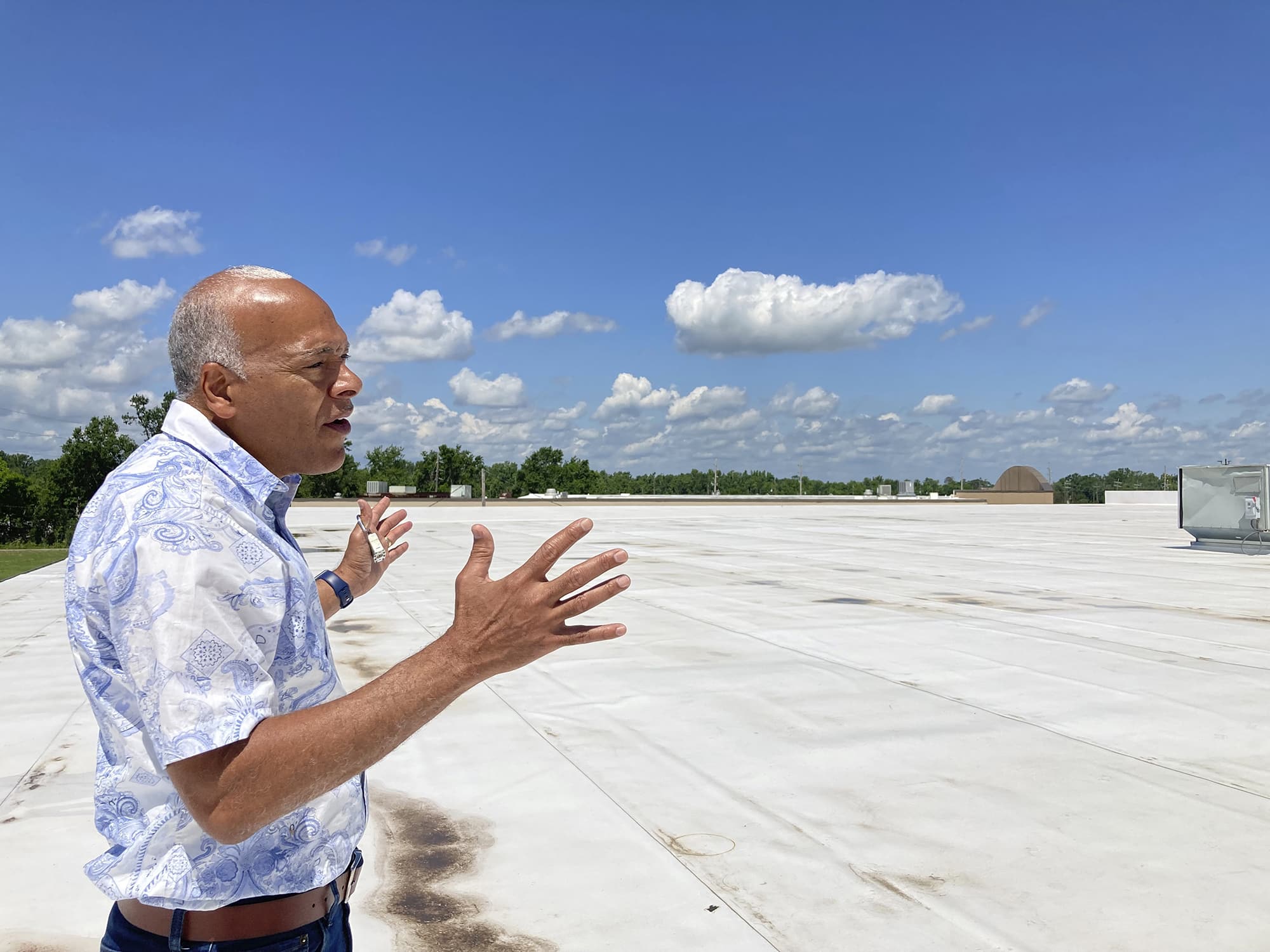
The future looks less bright under the Trump administration. The president has proposed to cancel “over $15 billion in Green New Scam funds” awarded by the infrastructure law, including money devoted to “unreliable renewable energy.” His push for tariffs has added uncertainty to the market for the kinds of batteries the hubs often use, too. When I asked Pierre Moses how he thought politics might impact the Lighthouse program, he made a kicking motion — punting on the question, in other words. Many people I spoke with noted that the industry depends heavily on Chinese production, but nobody was willing to predict what comes next. Officials from Louisiana’s Hubs for Energy Resilient Operations (HERO) Project, supported by that federal grant, did not respond to requests for comment, but the website still has live applications for funding. 77
Perhaps it helps that energy resilience programs are widely popular, with fans across partisan lines. In Wyoming, where rural ranchers face crippling electrical bills, far-right lawmakers have partnered with environmentalists to push for solar panels. 78 Republican Thomas Massie, the self-described “greenest member” of Congress, lives in a house he built himself, in rural Kentucky, powered by solar panels and a battery salvaged from a wrecked Tesla. This is a man who calls climate change analysis “pseudoscience” and has expressed fears that a quick transition to renewables might crash the industry. Going off grid taps into American ideas of individualism and self-reliance. Massie’s green power is latter-day Jeffersonianism, a rejection of any central authority. 79
‘We cannot — and I don’t mean to be ugly when I say this — but we cannot depend on the government to do anything to help us,’ said one of the pastors.
Such rhetoric plays in Louisiana, too. “We cannot — and I don’t mean to be ugly when I say this — but we cannot depend on the government to do anything to help us,” one of the pastors said at the Lighthouse Keepers training. “That’s why it’s important that we come together and begin to prepare how we are going to survive during times of intense trials and tribulations.”
I’d heard similar views throughout my reporting. Several church leaders told me they were okay with Together New Orleans remotely adjusting Lighthouse appliances during an outage — cutting off air-conditioning units, for example, if it would prolong the battery supply. But they also said they would not want the city to intercede in this way. After so many disasters, and so many lackluster responses, many people have learned to distrust the layers of bureaucracy that they call “government.”
This skepticism points toward an unanswered question at the heart of the energy resilience project: Will people use this new technology for independence or interconnection? If we take the second route, then a nanogrid hub is just the beginning. Stitch together DERs across the grid, and you can create what’s called a “virtual power plant”: Smart appliances can be automatically turned on when demand is low and supply is high; batteries in electric cars might be tapped to run more power back into the system. Through constant adjustments that move power where it’s needed, VPPs can obviate expensive, polluting peaker plants while making the grid more resilient. 80 The technology is ready to be deployed now, but only if political and economic structures allow it. Will self-reliant property owners create high-tech solar fortresses; or will they collaborate to share power across entire communities and neighborhoods?
This skepticism points toward an unanswered question at the heart of the energy resilience project: Will people use this new technology for independence or interconnection?
Despite the comments I’d heard from individual pastors, organizers at the Lighthouse Keepers training emphasized that disaster response requires collaboration — with local offices of emergency management, with sheriff departments, with the Red Cross. Indeed, the very existence of the Lighthouse network depends on millions of dollars in government support. 81 Burke, of the Alliance for Affordable Energy, which has worked closely with Together Louisiana on lobbying efforts, told me it would “dangerous” to allow the DER movement to depend only on private funding. Not everyone can build independent bunkers; not every church can afford the up-front cost of batteries. As more people generate their own power, the cost of sustaining the existing grid will shift toward people who can’t afford to secede. 82
Lately, movement leaders have made a political push in New Orleans, seeking funding for DERs that can be stitched together into a virtual power plant. Thanks to post-Katrina incentives, many homes in New Orleans already have solar panels. A new plan, developed by Together New Orleans and the Alliance for Affordable Energy, proposes that a $32 million settlement — fallout from the long-ago dispute over the nuclear plant — fund a program to help large institutional sites like churches and nursing homes install solar-and-battery systems. The nonprofits say their plan targets institutions, rather than individuals, for equity reasons. Entergy New Orleans, meanwhile, has proposed a smaller and more conservative, utility-administered program that will focus on residential customers. The city council plans to make a ruling by October. 83
New Orleans has a unique opportunity to shape the future. Almost everywhere else in the country, investor-owned utilities are regulated by state commissions. But during the nuclear power scandal, voters used a provision in the state constitution to place that authority in the city council. Local control can mean higher regulatory costs, but it also means that New Orleans — a “blue dot in a red state,” as Jordi put it — can pursue more progressive policies than might otherwise be possible in Louisiana. 84 At the Lighthouse Keepers training, Broderick Bagert, an organizer with Together New Orleans, told me he was hopeful. He said Moreno, the leading candidate in this fall’s mayoral race, would want a good DER program to be part of her legacy on the council.
The real infrastructure is us — not as individuals weathering the storms, but as a network, linked together, using our collective strength to bend the world back toward a better shape.
The training was held the day before the official start of hurricane season — the 20th since Katrina. Throughout the morning, organizers asked attendees to reflect on their past experience, and I felt that famous storm hovering over the room. One common theme was the way people stepped up — neighbors, strangers — doing whatever was needed. Rebecca Solnit has written a book about this phenomenon, A Paradise Built in Hell — a paean to the inherent human goodness that arises when disasters wash the old rules and structures away. But she does not shy away from the darker Katrina stories, including the government’s failures. When people with power fear the people they are supposed to be helping, the official response becomes a disaster in its own right. 85
The government, the grid: These are patchwork things, networks of power linked into larger networks, that through decades of assembly have been bent into contorted form. They require maintenance and updated technology; sometimes entire pieces need to be torn out and built anew. As the keepers-in-training split into groups to learn strategies they could use to help hurricane refugees deal with stress and trauma, I found a moment to speak with Together Louisiana organizer Nathanael Wills. Like others, he said the community hubs were a step toward something more. But he was not talking about technology, or climate, or emissions. He gestured, rather, toward a nearby group of trainees. The real infrastructure is us — not as individuals weathering the storms, but as a network, linked together, using our collective strength to bend the world back toward a better shape.


If you would like to comment on this article, or anything else on Places Journal, visit our Facebook page or send us a message on Twitter.