

If you wan’ go wash, na water you go use
If you wan’ cook soup, na water you go use
If your head dey hot, na water go cool am
If your child dey grow, na water he go use
If water kill your child, na water you go use
Nothing without water …
— Fela Kuti, “Water No Get Enemy,” 1975
Bar Beach in upmarket Victoria Island was where we went to “catch fun” on Sundays and public holidays when I was a child in Lagos in the 1950s. My Scottish mother, who had grown up in bombed-out postwar London when food was still rationed and everything was dull, couldn’t get enough of the African sun. She would bask for hours on end while we cavorted in the waves. When Nigeria won independence from British colonial rule on October 1, 1960, a celebratory fair came to the tiny coastal town. This was one of the few occasions when my Nigerian father came with us on our shoreline outings. As we rode the carousel and bumper cars and implored my father for just one more go on the slide, what we didn’t know was that Bar Beach’s seemingly vast expanse of pristine white sand was rapidly succumbing to the Atlantic Ocean. The erosion had little if anything to do with climate change but rather with the construction, half a century earlier, of a three-and-a-half-mile breakwater on the seabed, built to protect access to the busy Lagos harbor in Apapa, just to the northeast.
The Lagos shoreline is a lacy network of inlets, and the Atlantic ocean has been taking the city’s land. So Lagos decided to take it back.
Lagos’s shoreline is a lacy network of inlets. (As with New York, Lagos is both the name of the state and its most populous city.) The Lekki Peninsula encloses most of the Lagos Lagoon, which narrows at its western tip as it makes its way to the Atlantic Ocean among a series of smallish islands and capes, some nestled inside each other, each in close proximity. Given the geography, it’s not surprising that the Apapa breakwater had unintended consequences, the most significant being that it interrupted the natural littoral drift that deposited sand along the 100-mile Lagos coastline. The erosion was rapid, despite the federal government’s efforts to turn back the tide, so to speak, by dumping sand from elsewhere. Over six million cubic yards were deposited on various beaches in 1991, and a further three million cubic yards between 1995 and 1997. But to no avail. By the turn of the millennium, the ocean was spilling onto the highway that runs along the shoreline, threatening the offices and homes of the wealthy. The beach on which my father had celebrated his new-found freedom was sucked into the sea.


Something had to be done. The ocean was taking Lagos’s land, so Lagos decided to take it back. The decision made was to reclaim from the ocean nearly four square miles, and to defend this new landmass from future erosion with a second massive intervention: the so-called Great Wall of Lagos, a 60-foot high barrier made up of 100,000 concrete blocks of 50 tons each. Work began in 2006. When complete, the four-mile phoenix will become the “extremely ambitious and futuristic” community of Eko Atlantic, a gated district that will have its own private security, running water, and electricity, in a country famous for failing on all those fronts, and will provide “environmentally friendly housing” for 250,000 people, or at least 250,000 people with upwards of US$500,000 to shell out for an apartment (five times that for a house), which is to say few enough anywhere in the world and still less down here in the Global South. 1 Residents will even be able to avoid the city’s notoriously choked and potholed roads: private speedboats will be anchored along a six-mile-long promenade for quick getaways to the myriad beaches within easy distance — that is, before these beaches also succumb to the ocean.
The pattern is to destroy existing housing to make way for more exclusive housing, accommodating fewer people at elitist prices.
At the time of this writing, the basic infrastructure of this “Dubai of Africa” has been laid, but offices and residential buildings remain under construction, including what will become the world’s largest United States consulate: a vast facility on a 12.2-acre site “that both honors the vibrant relationship between the United States and Nigeria and communicates the spirit of American democracy, transparency, and openness,” in the words of former U.S. ambassador Mary Beth Leonard. 2 It is doubtful the developers themselves adhere to these highfalutin’ ideas. The project just happens to be overseen by two immensely wealthy Lebanese brothers, Gilbert and Ronald Chagoury, both of questionable integrity. The former has been convicted of money laundering several times over, forced to return to the Nigerian government US$66 million in one case, and an estimated US$300 million in another, all of which Chagoury was holding in Swiss bank accounts. Both men worked for the late General Sani Abacha, the dictator who is reckoned to have looted up to US$5 billion in the bad old days of military rule that ended in 1999 (but may yet return, alas, given the way “democracy” is going about things). The Chagoury brothers previously donated to Bill Clinton’s presidential campaign — illegally, as foreign nationals — for which Clinton thanked them by gracing the opening ceremony for Eko Atlantic.

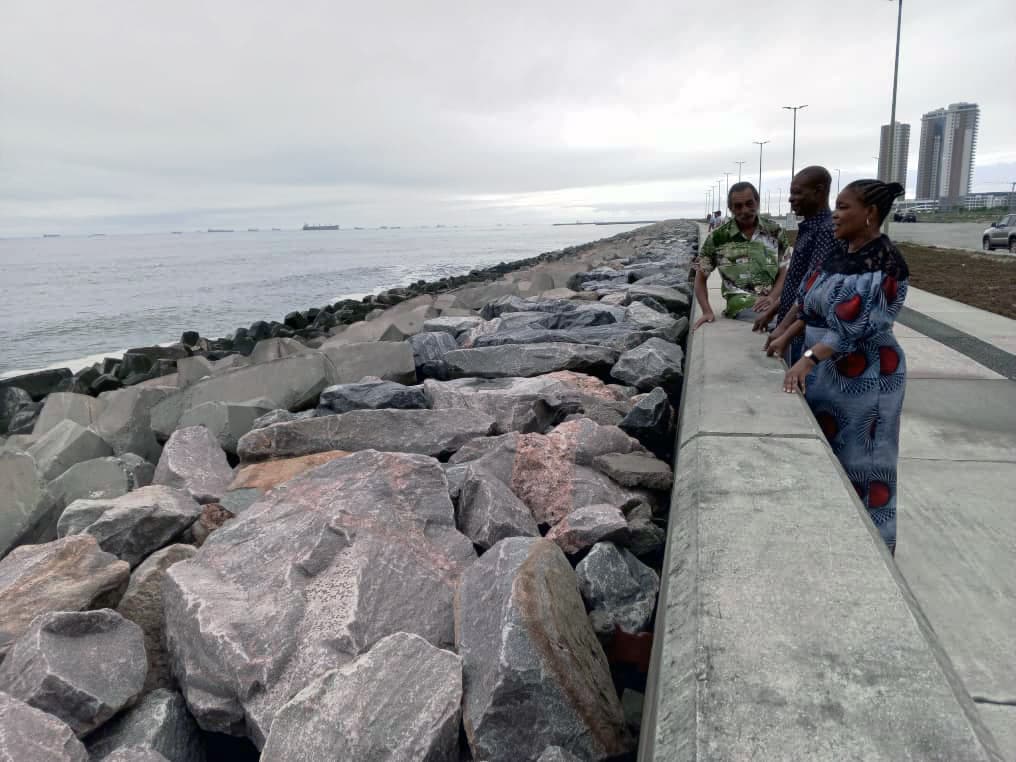
That their criminal convictions haven’t been allowed to disturb the Chagourys’ business interests, of which Eko Atlantic is just one, not only tells us everything we need to know about Nigeria’s legendary levels of corruption but also casts doubt on the Chagoury Group’s claim to have “conducted a full and comprehensive Environmental Impact Assessment (EIA), as required under the Nigerian EIA Act No. 86 of 1992,” as their website asserts. 3 At least one request to the Federal High Court by the Legal Defense and Assistance Project under the 2011 Freedom of Information Act has yet to be honored. The same nonprofit subsequently pressed suit against Eko Atlantic, alleging that “dredging the ocean and constructing buildings on the reclaimed land [will] flood the coastal areas in coming years,” thereby displacing “the rural fishing communities who depend on the ocean and surrounding waters for [their] livelihood.” The case is still in court, where it will likely remain, perhaps indefinitely.
Among those places now buried in the ocean are one community’s only hospital and mosque. Chalets on the beach have been swept out to sea.
Locals regard their displacement not as potential futurity, but as full-force reality. Three years before the suit was filed, a huge tidal surge destroyed most of the makeshift structures at Kuramo Beach, for instance, and swept sixteen people, including a six-year-old girl, out to sea. All were presumed dead, and residents had no doubt that the dredging required to build Eko Atlantic was directly responsible. Admittedly, the ocean currents have always been strong on the Lagos coastline. I was pulled under more than once as a child, and my cousin actually drowned. Powerful waves are not uncommon, especially during the rains between April and November. But none had ever been as ferocious as that of August 2012, or taken lives.
Eko Atlantic denied any correlation — “The Great Wall of Lagos … does a magnificent job of protecting the coastline” the Chagoury Group claims on its website — but a number of other shoreline communities have since made similar allegations. 5 Among the more vociferous are the people of Okun Alfa, who live about fifteen kilometers east of Kuramo, overlooking Alpha Beach on the Lekki Peninsula. According to Muftau Ayọ̀délé, an Okun Alfa spokesperson interviewed in 2023, “The community has relocated thrice because of ocean surge, the other three places are now buried deep inside the ocean, our former houses are now home to mermaids.” 6 Among the mermaids’ new quarters are the community’s only hospital and mosque. The tourists who stayed in chalets on the beach have been driven away, and the chalets swept out to sea.

Why would Lagos permit the building of Eko Atlantic at the cost of displacing entire towns? The answers are a shortage of buildable land, and an interest in using what land can be had to house the elite. The entire area of Lagos State is just 1,391 square miles, about 40 times smaller than New York State, but with four million more people. The population is currently 24 million, up from a third of a million when we were cavorting on Bar Beach all those years ago, and growing at the staggering rate of 600,000 each year. Assuming this is sustained, Lagos will be by 2050 one of the three most populous cities in the world, along with the equally coastal but geographically even smaller Mumbai.
Worse yet, just over half of Lagos’s square miles are wetlands, hence its name, which means “lakes” in Portuguese — Portugal being the first of the European seafaring nations to arrive in the 15th century, “discovering” one of West Africa’s two natural harbors (the other being what would become Freetown in Sierra Leone), from which the Portuguese exported slaves to the New World. A great deal of the “sandy land” that remains is less than five feet above sea level, which means that it will be submerged by the end of the century if global warming exceeds 3.6 degrees Fahrenheit, as it’s expected to do. In other words, not only do most Lagosians live near water; many live on top of it. The amount of buildable land far outstrips the state’s housing needs, and the government itself seems invested only in the housing needs of the rich. The pattern, thus far, is to destroy existing housing to make way for more exclusive housing, which accommodates far fewer people at elitist prices.
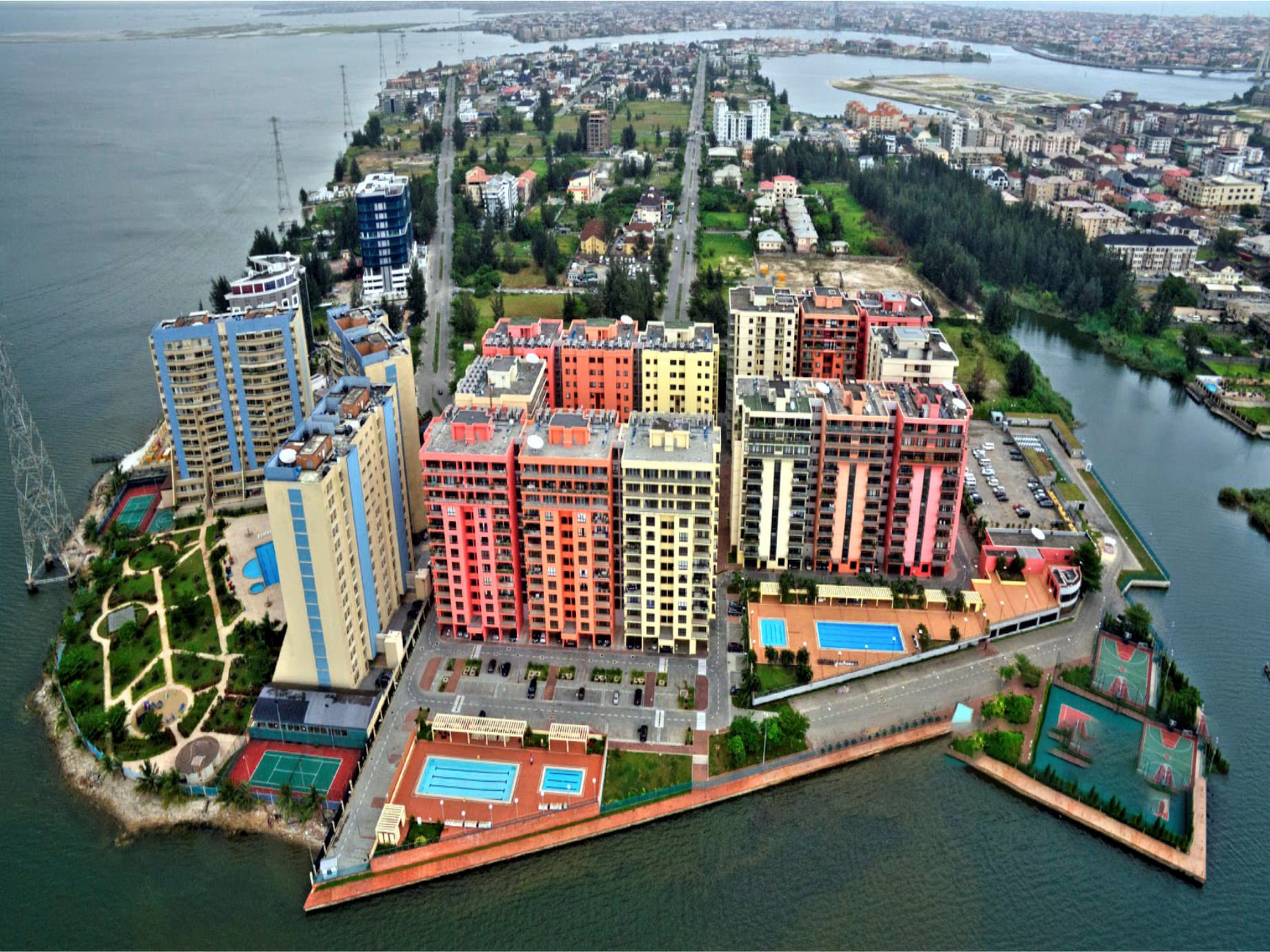
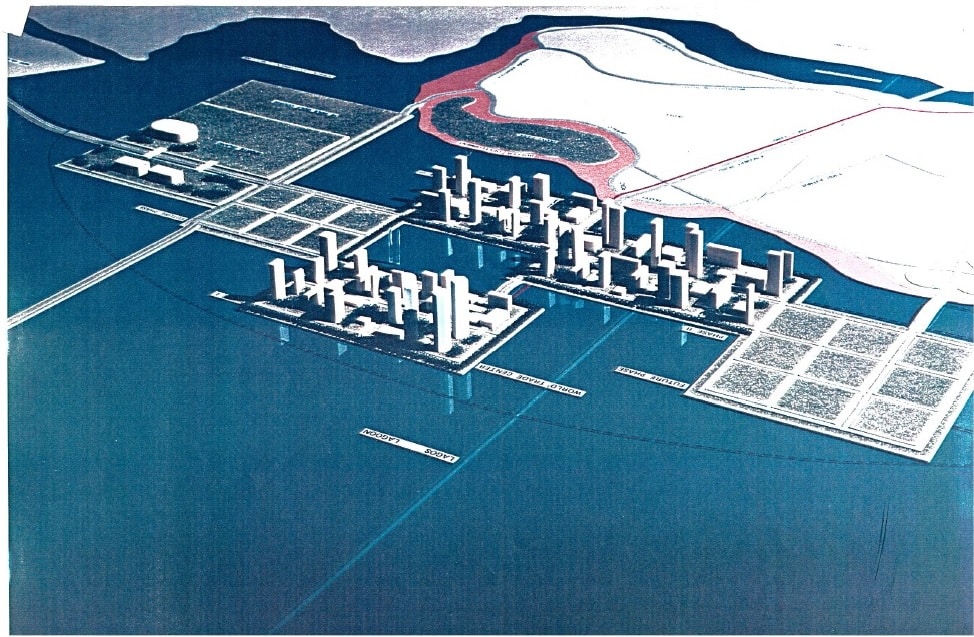
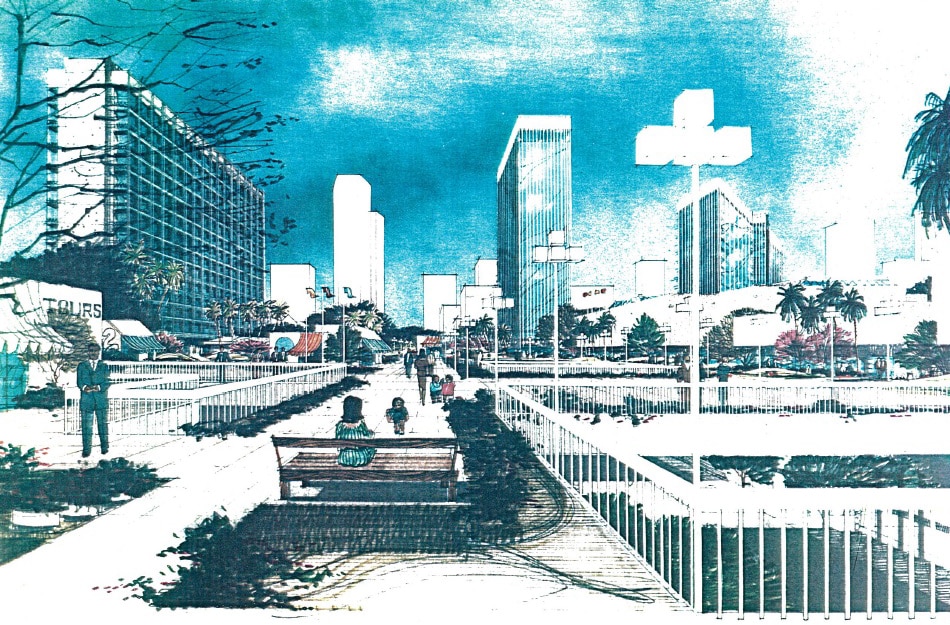
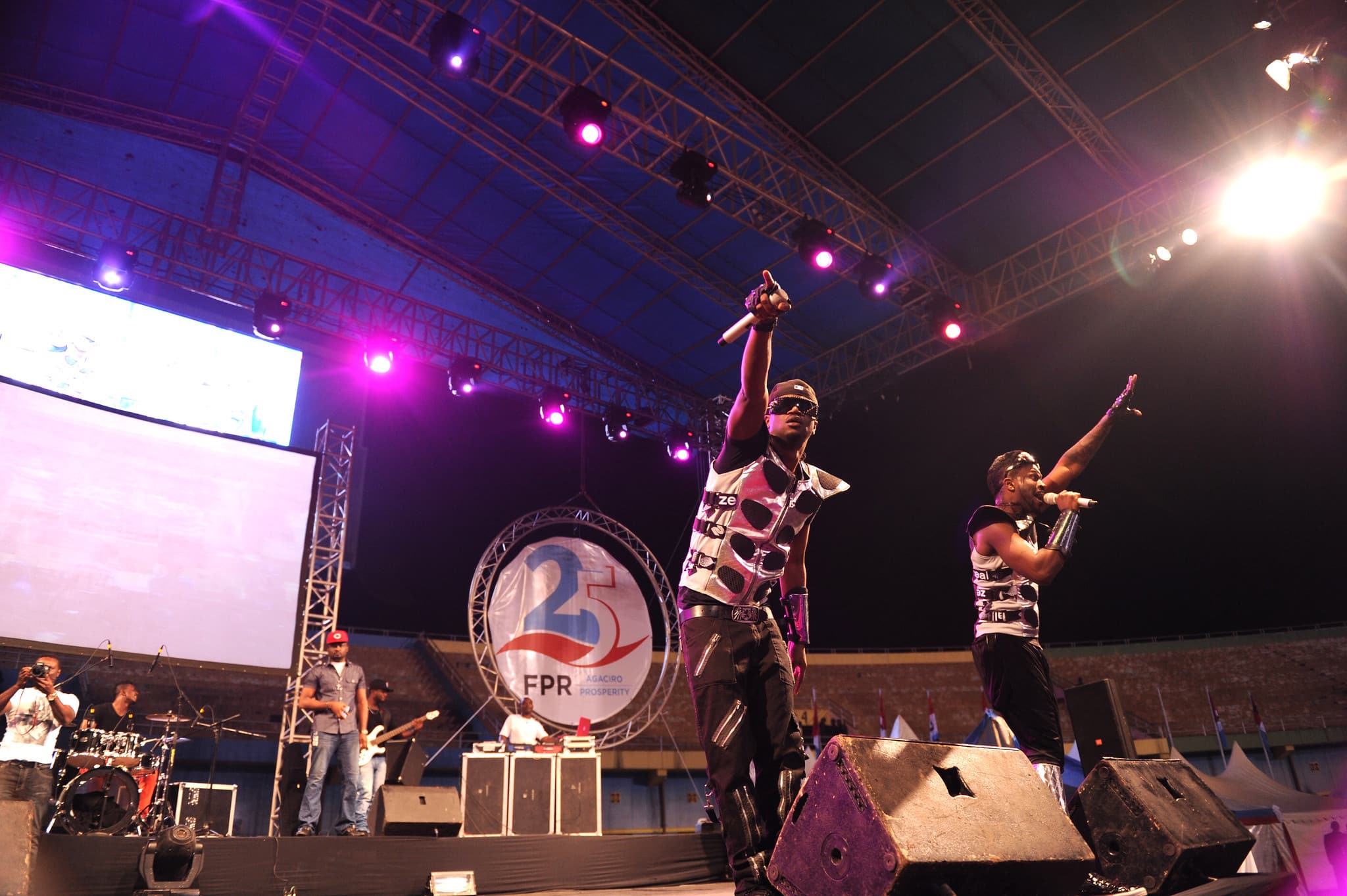
Case in point is Banana Island, for in fact Eko Atlantic is not the first city that Lagos has built in the sea. Working in partnership with the Federal Ministry of Power, Works, and Housing (a cash cow if ever there was one, by which I mean a cesspool of bribery and graft), the Chagoury Group is also responsible for this artificial plot of reclaimed land that has been called “the most expensive neighborhood in the world.” Forbes described Banana Island as “the exclusive playground of Nigeria’s obscenely wealthy,” on par with “the Seventh Arrondissement in Paris, La Jolla in San Diego, California, and Tokyo’s Shibuya.” 7 Among Banana Island’s residents are Aliko Dangote, Africa’s richest man, and Mike Adénúgà, the continent’s ninth richest, along with Nigeria’s current president Bọ́lá Ahmed Tinúbú, and Ìyábọ̀ Ọbásanjọ́, the estranged wife of a former president. This is to say nothing of the international celebrities, including Lagos-based Davido and the sibling duo P-Square, just two of Nigeria’s astonishing musical breakouts in recent years.
If Banana Island is the paragon of coastal real-estate exclusivity, the paradigmatic coastal slum is Makòko.
If Banana Island is the paragon of coastal real-estate exclusivity, the paradigmatic coastal slum is Makòko. Makòko is on the eastern side of Lagos Lagoon, just adjacent to downtown Lagos, and only a few kilometers from Banana Island. I thought it would be interesting to visit Makòko, because I’d never been, and because I imagined it to define precisely what poverty means in an aquatic state with little or no aid for the poor. (I would have liked to visit Banana Island too, but that’s only possible if someone can buzz you through the entrance gates, and I don’t know anyone who lives there.) I was used to seeing Makòko from the Third Mainland Bridge, one of three bridges that link the mainland, where most people live, with Lagos Island, where most people work. But that was from a distance, from the windows of my car.

I took the precaution of going with a friend, because I am invariably taken for an oyibo, a White, in the world’s most populous “Black” nation, courtesy of my Scottish genes (including, crucially, straight hair), and therefore presumed to be an expatriate with lots of money. I also reached out to a local called François whom I met on Facebook, who gave the impression that he ran an interesting-seeming NGO that turned out to be fanciful. François does have a website, but it’s to sell the fish his wife smokes, which we bought out of goodwill but which also looked, and proved to be, exceptionally tasty. François told us to meet him at the “roundabout,” a landmark on terra firma before you venture into the lagoon proper. No sooner had my friend and I disembarked from our Mumbai-made Bajaj tricycle, at ten on a weekday morning, than we caught the attention of two area boys — agbèròs — waiting vacantly on the verandah of an empty beer parlor for whatever the day might deliver. They insisted on escorting us to the edge of the water, just five minutes away, and then demanded N5000 (US$6.30) for their exertions, which François managed to knock down to N3000 after much haggling. François had booked a boat for our excursion, but we had rowed just a few yards before we were blocked again, this time by a dozen or so young men in two canoes that pinned us against the promontory in a narrow passage. Some of them were openly smoking weed as they demanded to know why we didn’t report to them immediately upon entering “their” territory, an infraction for which we were required to pay a N20,000 “fine.”
Here is the immediate challenge, far surpassing the threat of climate change: of Nigeria’s estimated 220 million people, more than half of those eligible to work are unemployed.
And here is the immediate challenge in Nigeria generally, far surpassing the threat of climate change. Almost half the country’s estimated 220 million people are under 24 years of age (a demographic we share with India), and more than half of those eligible to work are unemployed, at least according to government figures, which are almost certainly an underestimate. The figure is slightly less for Lagos, because its industry is more robust than that in any other state. Lagos generates about ten percent of the country’s GDP, largely through the port, which handles about 80 percent of all goods entering West Africa. Nigeria itself constitutes roughly half the population of the subregion, such that Lagos is home to whatever industries exist in West Africa, as well as the headquarters of nearly every company. That is why so many flock here, especially youth, for whom farming is the only option on offer in their home states unless they happen to be among the fortunate few employed by the government. (These jobs are also funded by Lagos, albeit indirectly; of Nigeria’s 36 states, Lagos is the only one that actually remits money to the feds.)

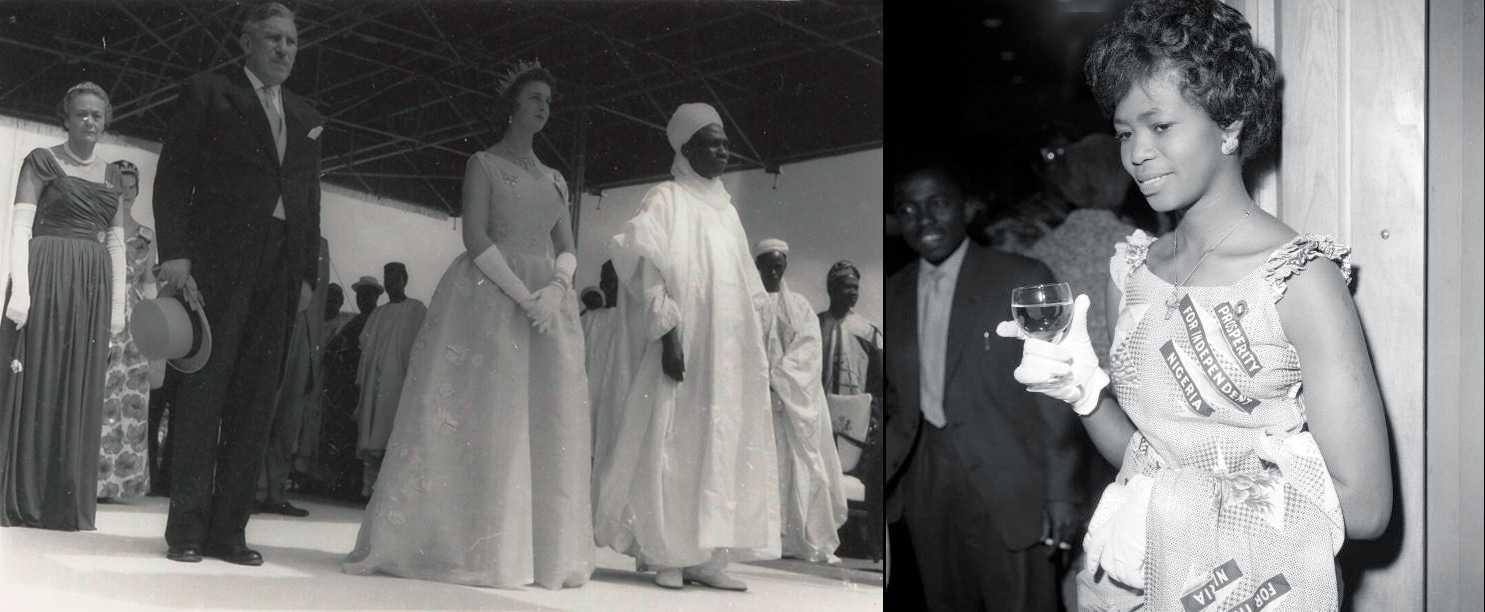
Vast numbers of jobless youth are the result of the British designing Nigeria’s economy for extraction rather than production, and then ceding control to a ruling class so predatory and crooked that the country’s wealth was exploited to a degree beggaring belief: between 1960 and 2005, an estimated US$20 trillion was stolen from the treasury by those entrusted with keys to the coffers. 8 Adding salt to the wound, the proceeds of this unconscionable thievery don’t stay in the country. Nigeria’s oligarchs fund, for instance, their children’s education in expensive boarding schools in the heartland of the former colonizing power (US$30 million per annum), along with property to the tune of US$400 million (and counting) in Dubai and elsewhere — the very same sorts of properties upon which Eko Atlantic is modeling itself. 9 In fact, so popular is Dubai, a former fishing village on a desert peninsula, that Nigeria’s former Speaker of the House of Representatives and current Chief of Staff to the President flew 100 of his relatives and friends there to lavishly celebrate his mother’s 90th birthday, even as the “masses” of Lagos go hungry — typified in the present moment by the young men beseeching us for money, which was what their bogus threats were really about. You could hardly blame them. “Man must chop,” as the local saying has it.
Vast numbers of jobless youth are the result of the British designing Nigeria’s economy for extraction, then ceding control to a predatory ruling class.
But I didn’t look flustered, and I appeared at least to be an oyibo, with what powers behind me they didn’t know. Moreover, it was too early in the day, with too many witnesses, including some older men who were beginning to take an interest in our predicament. I fixed on one of these older men and went into a spiel about how my father was originally from Abẹ́òkúta in neighboring Ògún State (patriarchy trumps everything in Nigeria: whatever your language, ethnicity, or religion, ancestry is all) and that I was therefore at liberty to travel anywhere I wanted; but that even if indeed I was a foreigner, then shouldn’t I be welcomed as they themselves would want to be if they happened to find themselves in a foreign city? I even threw in some pidgin — “Make una look me well well come tell me say I be oyibo” — which seemed to do the trick. The man laughed and said something to the boys, then told us we were free to be on our way but to be sure to visit him on our way out, which we did, parting with just N5000 for “goodwill.”

I don’t want to exaggerate the danger we might have been in. For a city where up to 70 percent of the population is deemed poor, there is little actual violence on the streets, although what goes on in police stations is a very different matter — the victims of all-pervasive poverty must be kept in check through naked intimidation to prevent them doing something about it. But for me personally, and despite my visibility, I have never been mugged in the 30 years since I returned to live here and have only ever been pickpocketed once, in an incident that was largely my fault. This is in contrast with my experience of, say, Johannesburg, which has one fifth of our population and yet where I was mugged in broad daylight in the central business district though I doubt I spent even a year total in that city, on various journalism assignments. Moreover, when François returned my visit a fortnight later and my friend and I lightheartedly recounted the incident, he was anxious to reassure me that the “elders” had admonished the “youths,” who were now suitably contrite should I want to return.
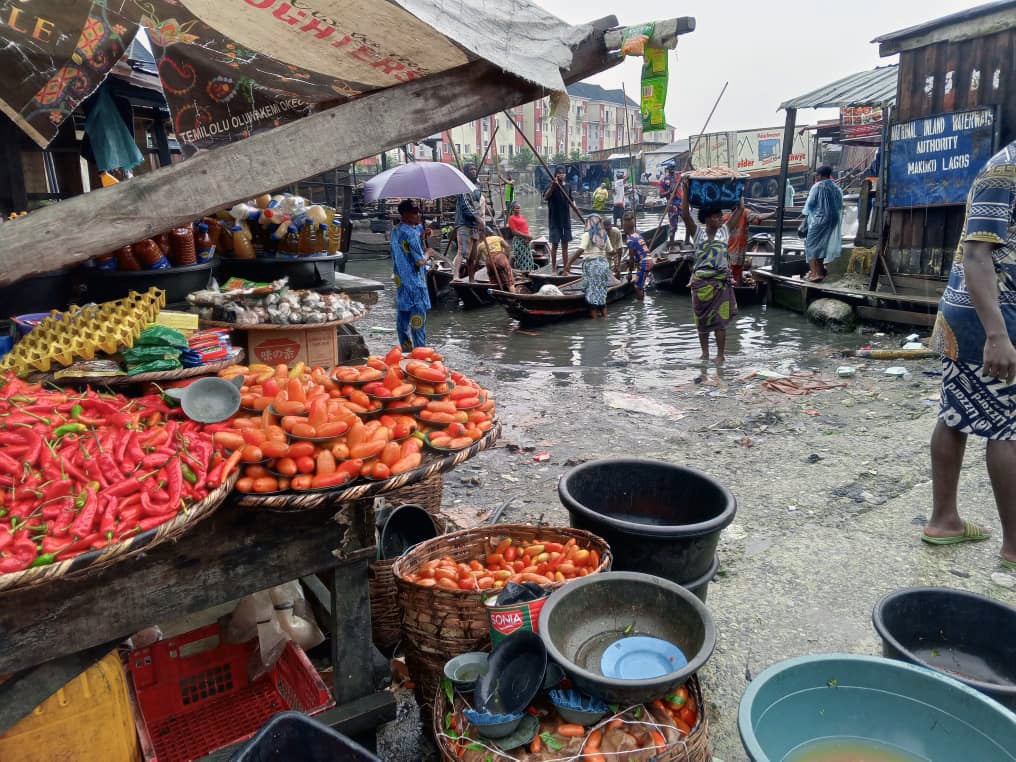
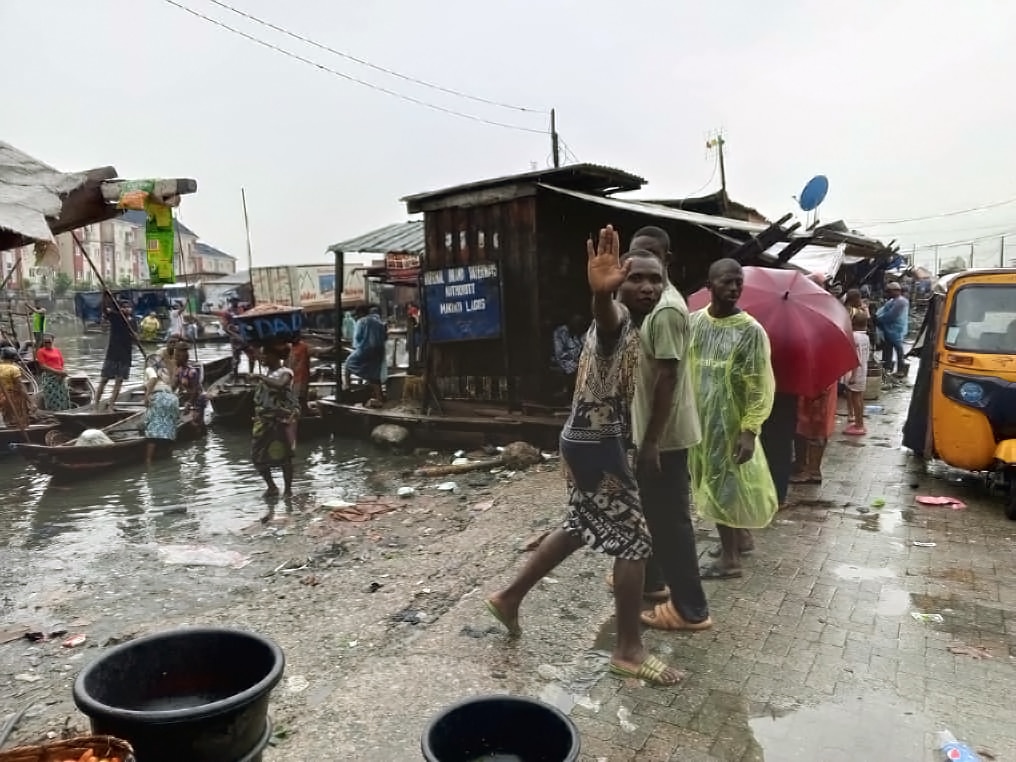
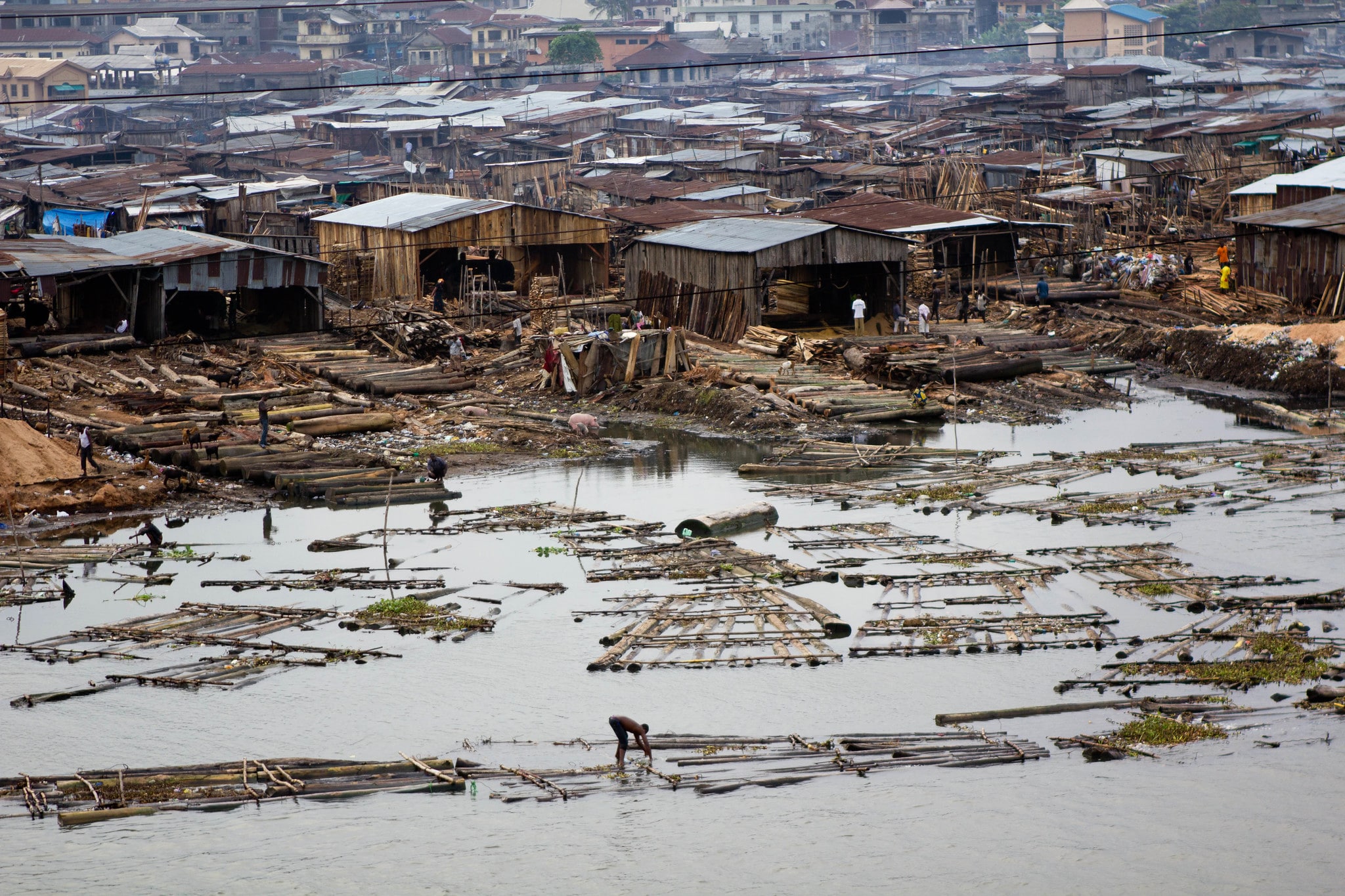
Makòko was much as it looked on the YouTube videos I browsed before setting out, including the most recent, “Inside World’s Biggest Slum in Nigeria (Insane),” which is mainly instructive in terms of its “Western” perspective, according to which the reality of how people live is unconscionable, and so it should be, but slums are also fairly common the world over, and in fact home, globally, to over a billion people. 10 For myself, perhaps overly used to “Third World” conditions, Makòko had only one surprise, which was the lack of any smell — astonishing, given that everybody did their toilet straight into the same lagoon in which the children paddled and deftly hopped from one canoe to another hawking provisions.
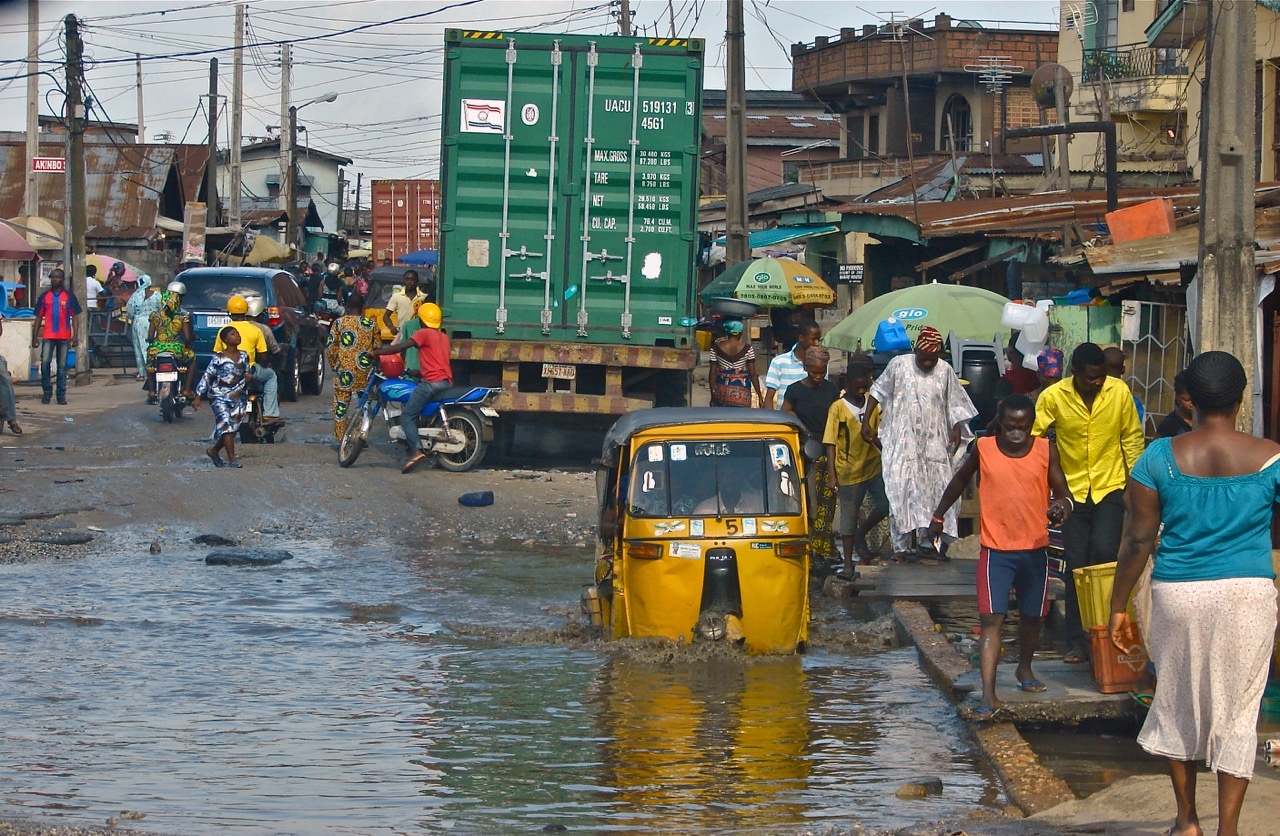
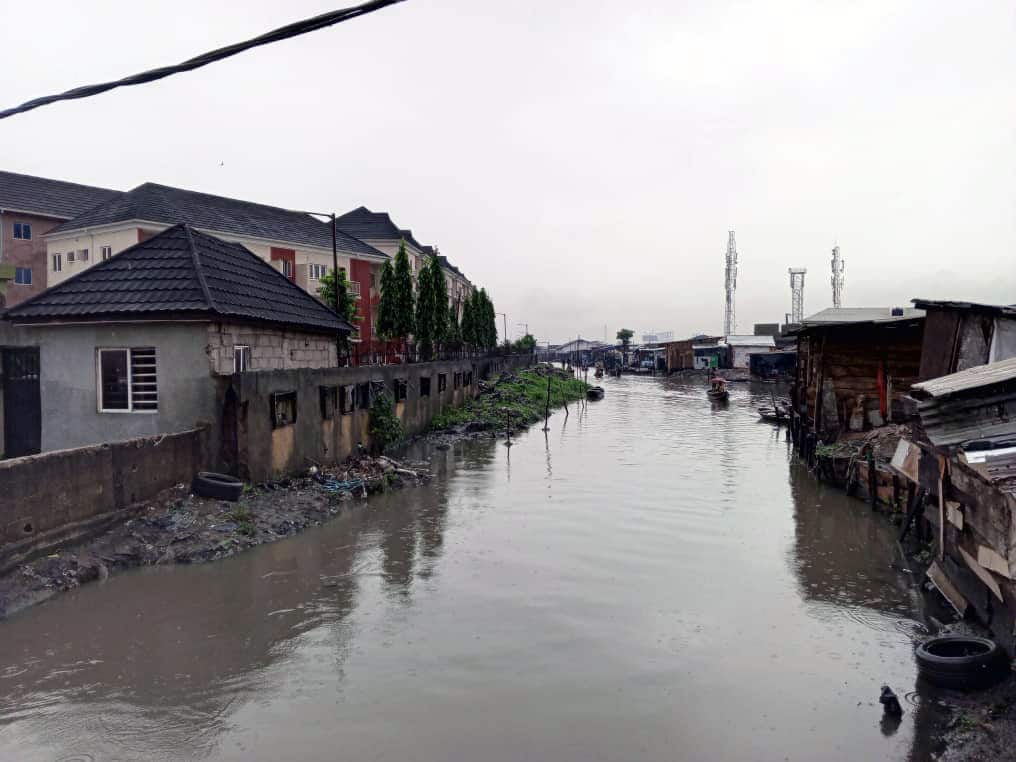
A Lagos street at high tide, 2010. [ISeeAfrica via Wikimedia Commons, under license CC BY-SA 4.0]

Transport hub near Ojuelgba overpass, Lagos, 2019. [Omoeko Media via Wikimedia Commons, under license CC BY-SA 4.0]
Makòko, 2023. [Juliet Ezenwa Pearce]
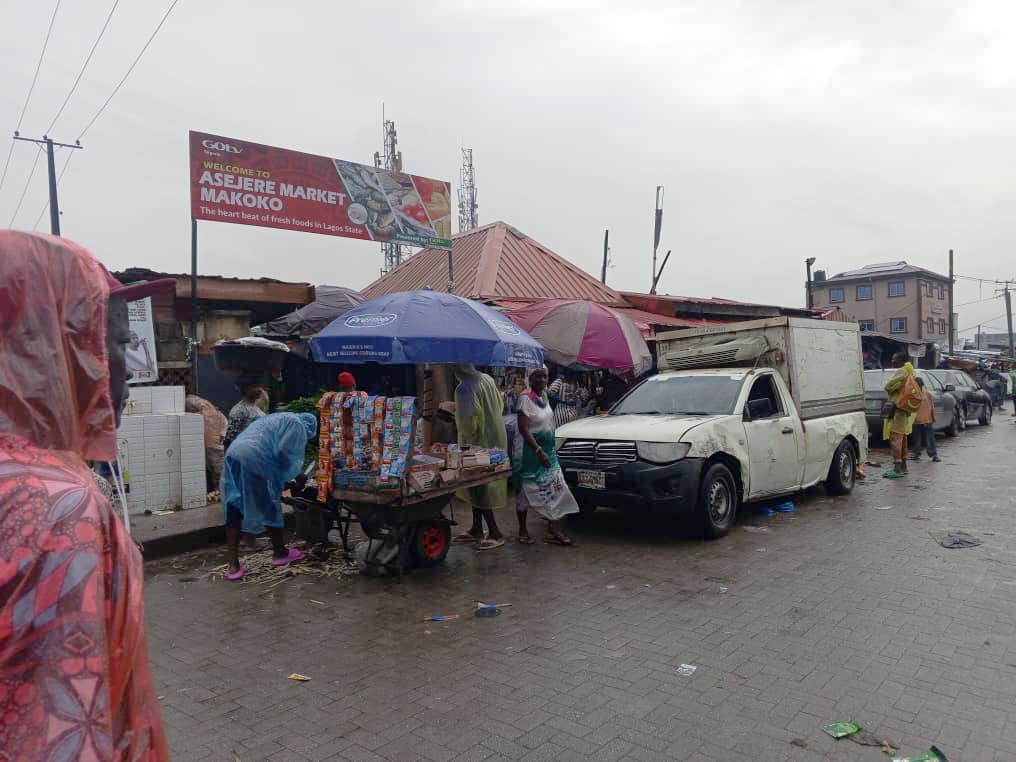
Asejere Market in Makòko, 2023. [Juliet Ezenwa Pearce]
Building rafts and bridges in Makòko, 2011. [ Stefan Magdalinski via Flickr, under license CC BY-SA 2.0]
Along the border between Makòko and an adjacent neighborhood, 2023. [Juliet Ezenwa Pearce]
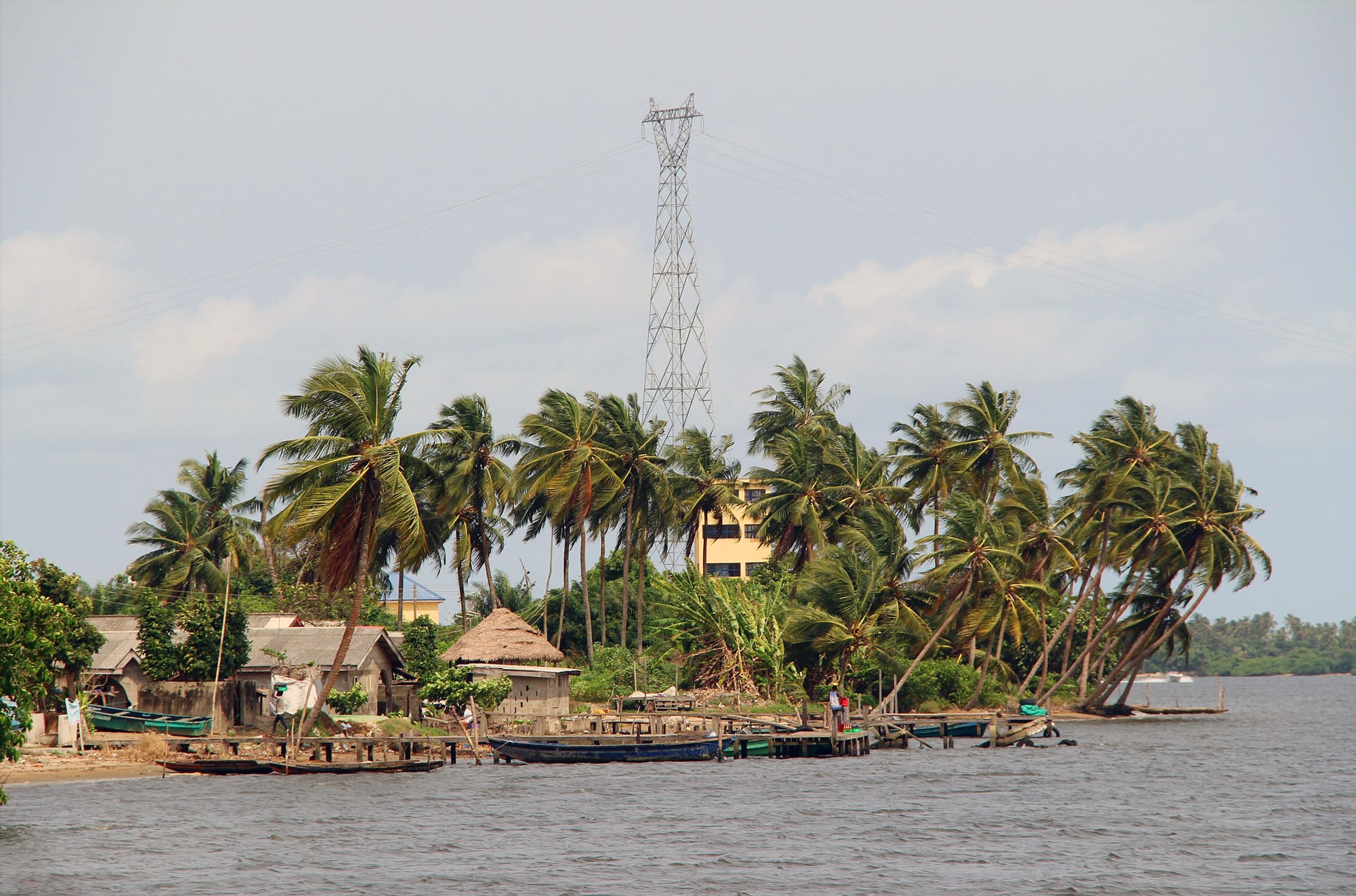
One of ten communities on Snake Island, opposite Apapa, 2018. [Godwin Paya via Wikimedia Commons, under license CC BY-SA 4.0]
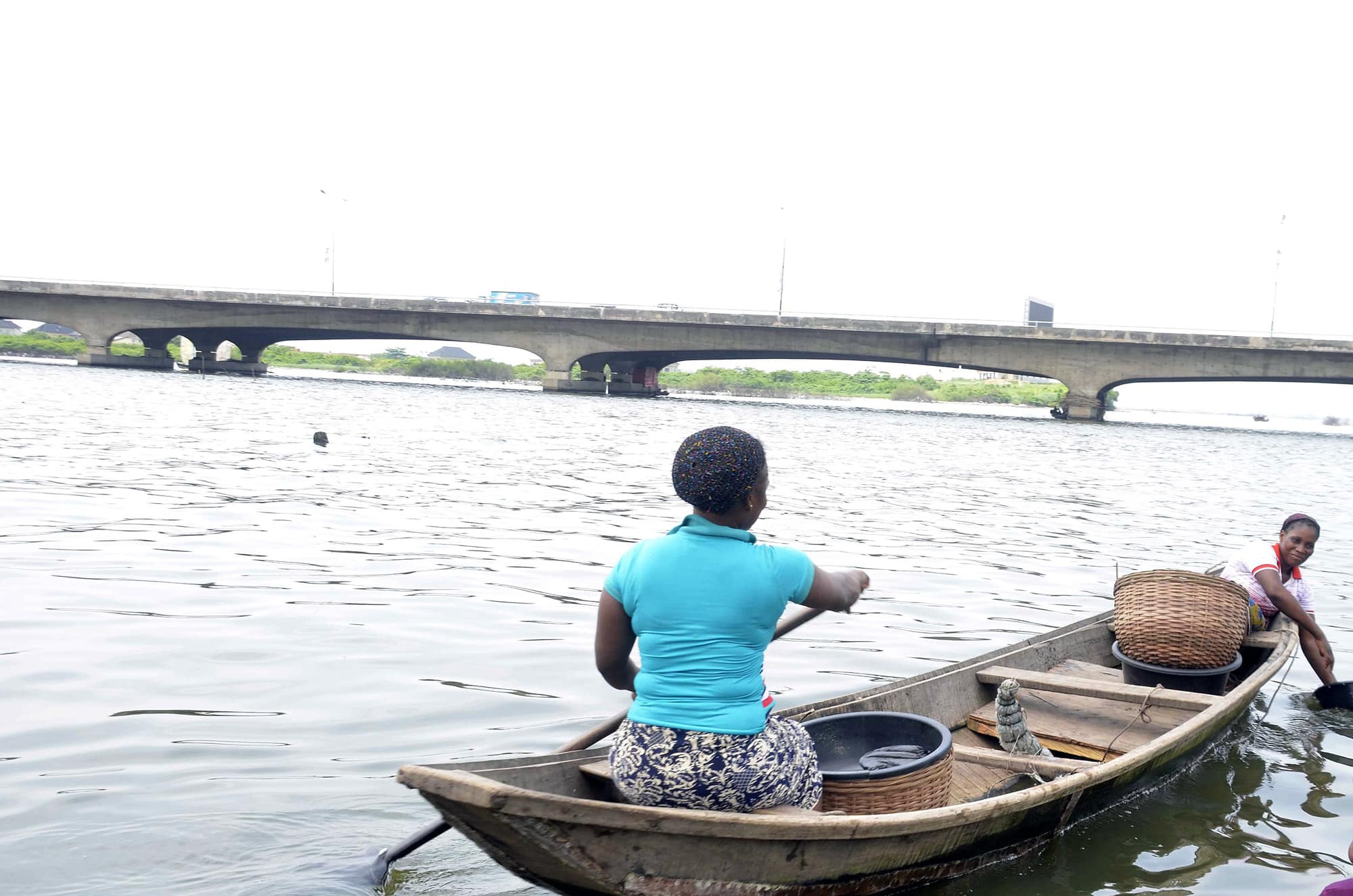
Women working near Makòko and the Third Mainland Bridge, 2016. [Agbebiyi Adejunle/Tadek Photography via Wikimedia Commons, under license CC BY-SA 4.0]
Fishing boats at Orimedu village on the Lekki Peninsula, 2010. [World Bank Photo Collection via Flickr, under license CC BY-SA 2.0]
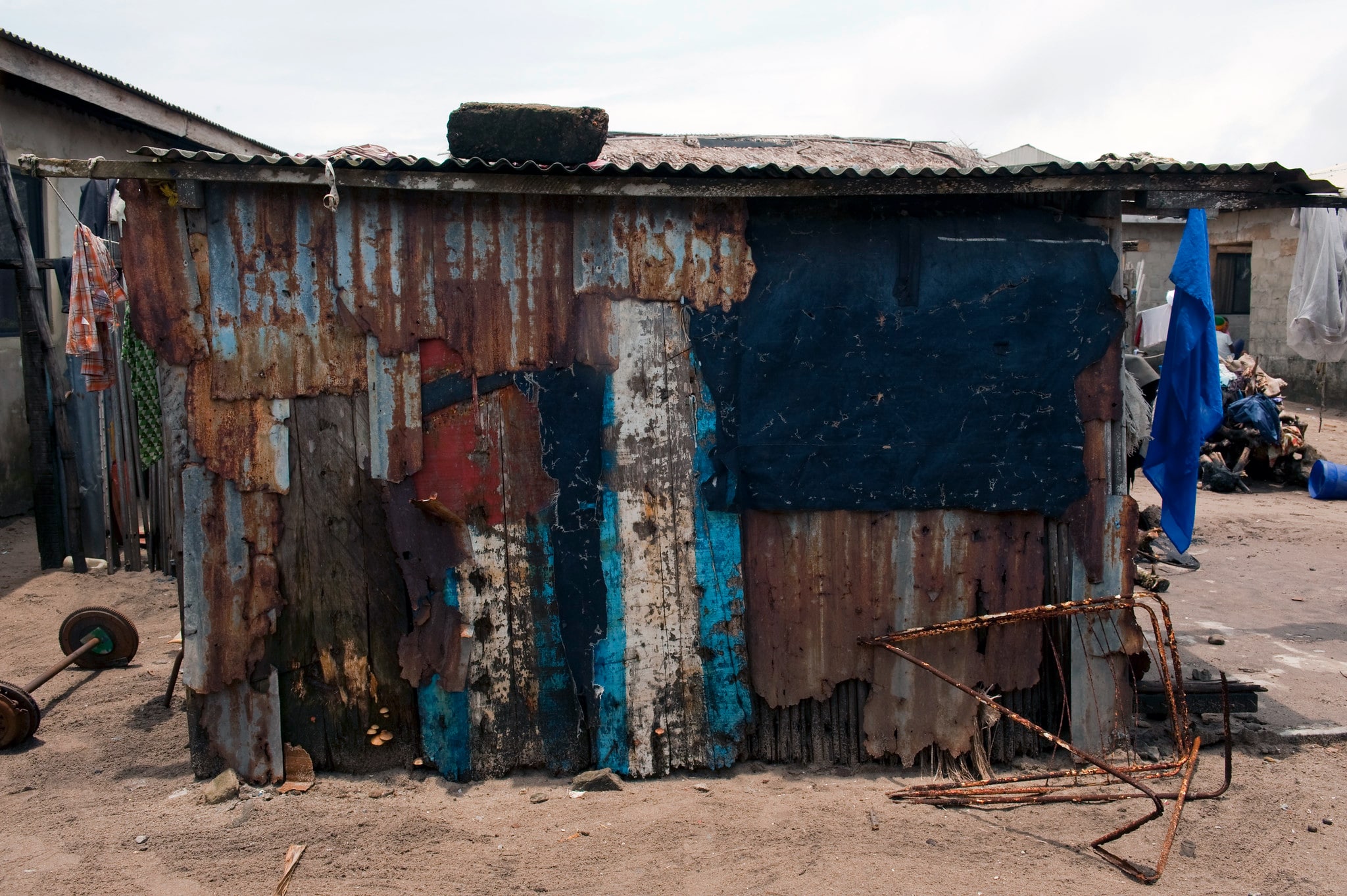
A home in Orimedu, 2010. [World Bank Photo Collection via Flickr, under license BY-SA 2.0]


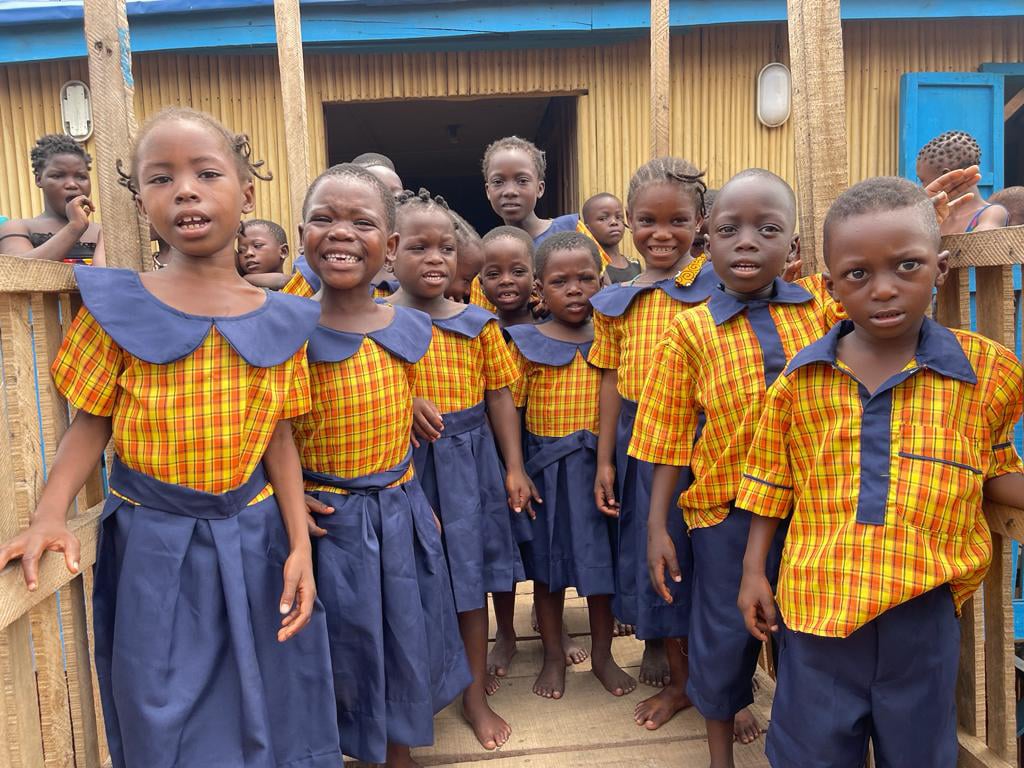
According to François, over 80 percent of these children don’t attend school. The other 20 percent attend the very basic (and modestly named) Part of Solution Primary School, which opened in 2015. (There was, briefly, another school in Makòko, the so-called Floating School, noteworthy for winning a Silver Lion at the 2016 Venice Biennale. The brainchild of Rotterdam-based Nigerian architect Kunlé Adéyẹmí, the Floating School was conceived as a “prototype floating structure”; made of wood and bamboo, it was built as an A-frame section about 1,000 square feet in area with 250 plastic barrels to keep it afloat. The bottom level comprised a playground, with classrooms on the second tier partially enclosed with louvers, and an additional open-air classroom on the roof. It could comfortably contain 100 pupils and their teachers, and included some sustainable features, such as solar cells on the roof, systems to catch rainwater, and — crucially, given the locale — composting toilets. The Biennale committee hailed it as “a powerful demonstration … that architecture, at once iconic and pragmatic, can amplify the importance of education.” 11 But, most unfortunately, by the time it received this honor, the school had already been abandoned due to signs of instability, and was shortly destroyed by a heavy storm. Adéyẹmí said this was as expected — the building was a prototype, not a permanent structure.)
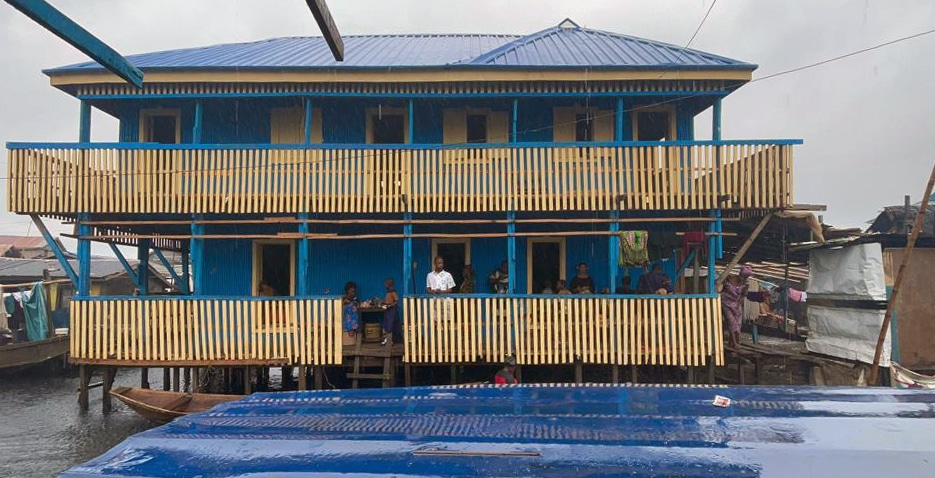

Part of Solution Primary School is two stories high, and does not float, but is rather supported by the wooden stilts common to all structures in Makòko. Like them, the school seemed to me to be fragile, but nevertheless apparently accommodates 354 students and their nine teachers. Of necessity, Part of Solution is free of charge, since Makòko parents can’t afford school fees, and therefore depends entirely upon donations for its existence, mostly from NGOs abroad but also from well-meaning Nigerians. The proprietor, Semede Sunday, hopes to expand the school, but the possibility depends on the Lagos State government’s plans for the area, and whether a new version of Eko Atlantic or Banana Island will spell the end of Makòko entirely.
Fighting evictions is mostly futile; you could easily spend whatever savings you have and a good deal of your life going to court.
The state has targeted Makòko once before. On July 12, 2012, residents were warned that any illegal structures would be demolished in 72 hours, and so it happened. The government claimed just “hundreds” of people were rendered homeless; the correct number was found to be 4,037. Then, eight years later, the state government convened a meeting with community leaders only (reporters were barred) to inform them that a private contractor had been given approval to develop the area, although the community representatives were not allowed to see the plan itself. They were told, “We are here to intimate [sic] you that that place cannot continue to be the way it is, there is going to be development and progress.” 12 Residents were given two options: resettlement in another part of the city, or compensation for those with “valid documents to their property.” There was evidently considerable tension at the meeting because it was widely assumed that some of the community leaders had accepted bribes in exchange for helping move the process along, and who could blame them? Most people believe the government will demolish anyway, so best to take whatever money is on offer. Fighting the evictions is mostly futile; you could easily spend whatever savings you have and a good deal of your life going to court, which is precisely what happened in another newly developing place, a suburb called Epe, where some twelve years ago houses were demolished in a single day, and the victims are still in court as I write this essay.
A single day is the usual timeframe for demolitions of this sort, and that single day often includes violence far beyond property destruction. The most notorious example was in July 1990 at Maroko, a slum on Victoria Island, following a week’s notice announced over the radio. When the day arrived, women and girls were raped, property was looted, and an unknown number were killed in the ensuing mayhem while fleeing across the lagoon in wooden canoes with whatever they could salvage. Others died of exposure, caught as they were in the midst of the rains. Residents of Maroko in 1990 were told the same disingenuous lie as residents of Makòko in 2020, namely that they would be relocated into public housing units. That was for the birds; whereas the master plan for metropolitan Lagos recommended that 1.4 million housing units be built between 1980 and 2000, the number actually built was 140,000. 13 (Currently, the state needs to build 224,000 units each year for the next fifteen years to tackle the housing shortage, which is not remotely going to happen, hence the proliferation of slums.)


Today, Maroko is called Victoria Island Extension, and the only poor to be seen are the servants employed in the mansions that have since sprung up. Whether the fate of Makòko will be any different remains to be seen. It’s an ominous sign that when peaceful protestors gathered outside the venue for the secretive 2020 meeting, they were dispersed by the police. François, having inherited his property from his father, does in fact possess proper evidence of ownership, but he remains understandably nervous.
Lagos’s apparently insatiable hunger for land has harmed not only its water-based towns, but also its water-based plant life, including the coastal mangroves, and the freshwater swamps along the major rivers. Ordinarily, Lagos’s expansive wetlands would help mitigate the effects of global warming, by controlling shoreline erosion, preventing flooding, recharging underground water, and nurturing biodiversity — except that they are now, according to experts, “at risk of extinction,” and this at the very moment when sea levels are expected to rise. 14
The state’s apparently insatiable hunger for land has harmed not only its water-based towns, but also its mangroves and freshwater swamps.
This particular problem might have been averted back in the 1970s when the UN organized a multilateral framework to protect wetlands. Eleven in Nigeria were recognized and brought under international protection, but none were in water-bound Lagos, which failed to provide the UN with necessary documentation, because even then the state government was obsessed with the money to be made from granting permits to real estate developers. According to Olamide Udoma-Ejorh, the director of Lagos Urban Initiative Development, the Ministry of Environment has declared that “wetland protection is something they really want to look into,” except that it is the Ministry of Physical Planning that gives out licenses and building permits, and there is no evidence that these two Ministries work in concert. 15
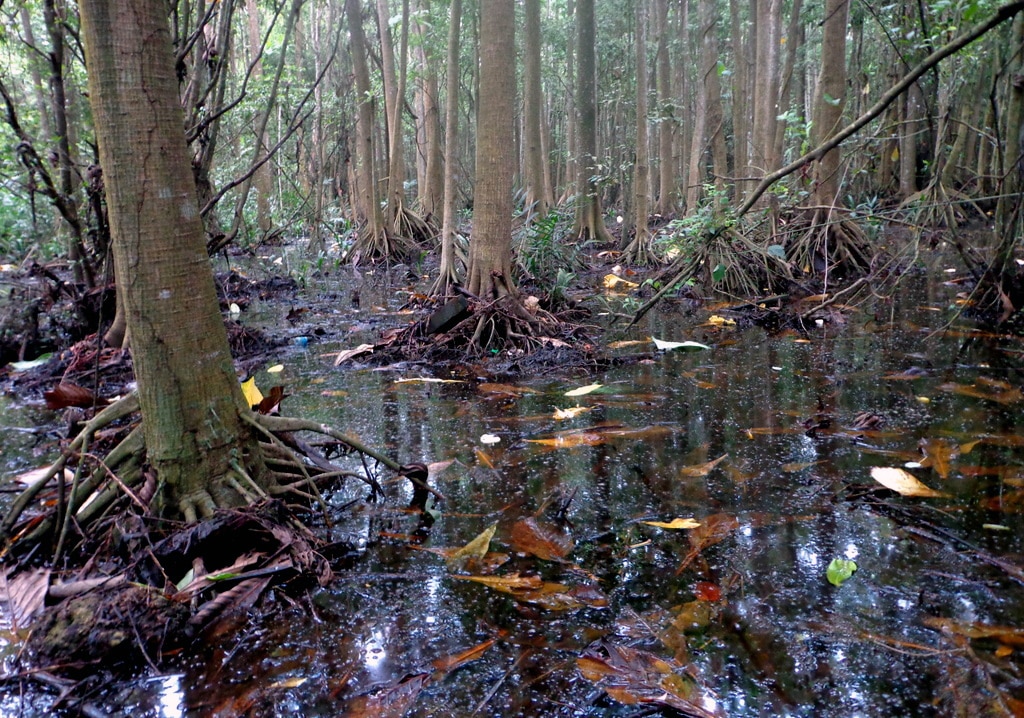
The figures are alarming. According to satellite images, tropical mangrove swamps around Omu Creek in Eti-Osa, for instance, a type of vegetation common all over southern Nigeria, were still largely intact in 2005 but had by 2021 been reduced by 60 percent. Other areas have fared equally badly. In Akoka, a suburb between the mainland and Lagos Island, the wetlands diminished by nineteen percent between 2013 and 2022, as they did over the same period in Ajah, an affluent area of Lagos Island, and in Ikorodu South, in the northeast, which shares a boundary with neighboring Ògún State. In Badagry, a border coastal town synonymous with the transatlantic slave trade, 29 percent of wetlands disappeared between 2013 and 2021. The most alarming instance is on the fast-growing Lekki Peninsula, where wetlands have diminished by 42 percent in the last decade.
The most alarming instance is on the fast-growing Lekki Peninsula, where wetlands have diminished by 42 percent in the last decade.
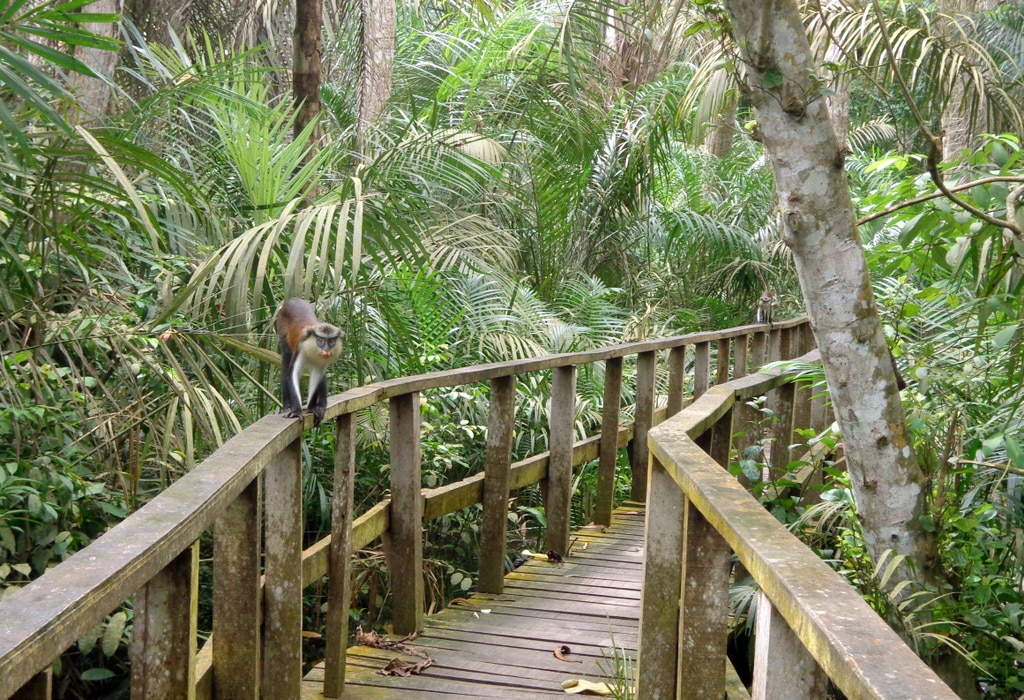
At least in Lekki there are two bulwarks against further degradation. The first is the Lekki Urban Forestry and Animal Shelter, a private venture by the environmentalist Desmond Majekodunmi on 20 hectares in what was once wilderness but is now an oasis within an expanding city. The aim is to preserve the “natural habitats in urban areas for use as a field laboratory to interact with and learn from nature,” to “address the issue of limited green spaces in urban areas like Lagos,” and to “enlighten the populace to clear the ambiguity of climate change through practical learning.” 16 The other is the much larger Lekki Conservation Centre, which promotes sustainable development and nature conservation, and is home to many endangered species, including bushbucks, Maxwell’s duikers, mongooses, chameleons, crocodiles, Mona monkeys, squirrels, snakes, monitor lizards, giant rats, and hogs, as well as an impressive variety of birdlife, all quite surreal in the midst of so much urban chaos. (The Mona monkeys are not shy around humans, as I saw for myself when I braved the Conservation Centre’s 401-meter canopy walkway, the longest in Africa.)
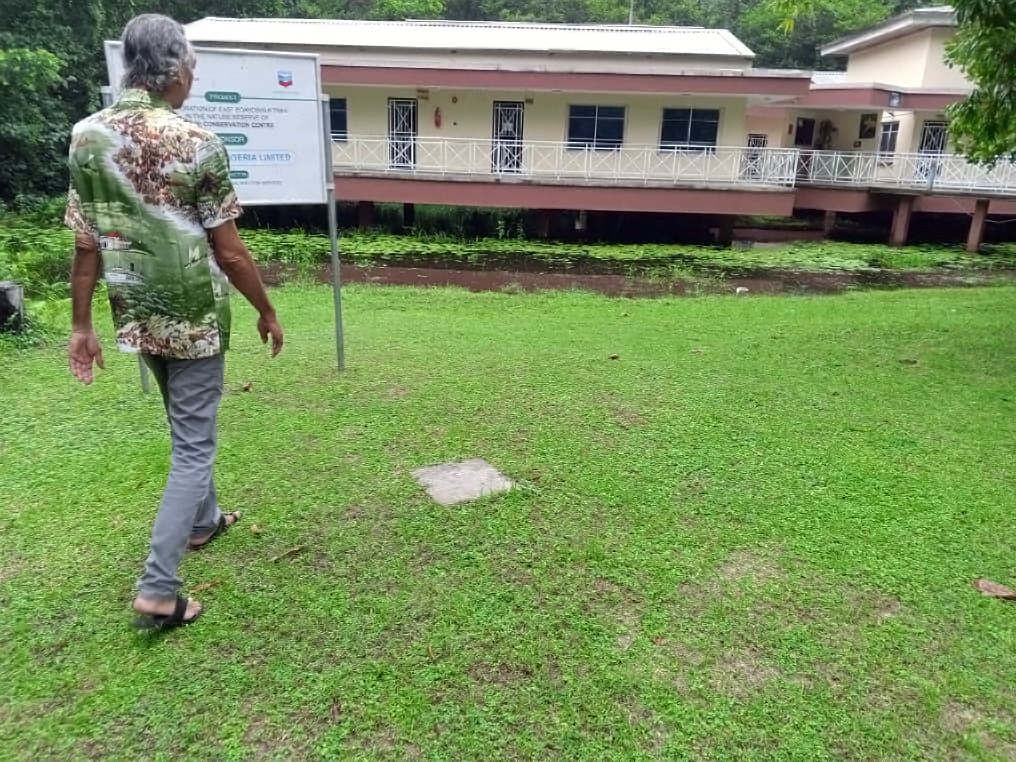
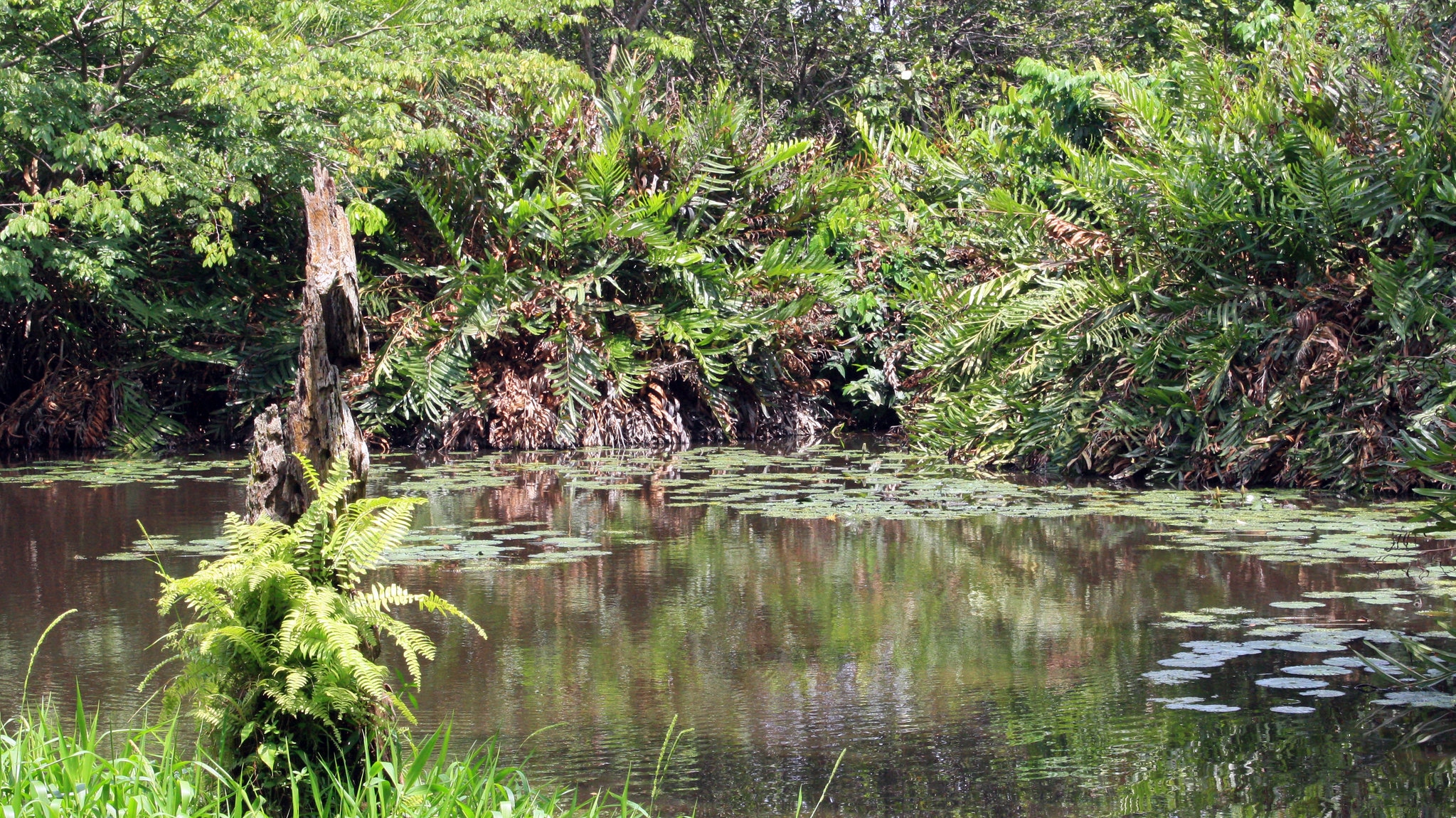
But these are relatively small-scale private ventures. The Lagos State government, which ostensibly has the power and authority to do more, has been high on rhetoric and low on action, which is the usual way with government in Nigeria, all smoke and mirrors. Speaking at the 9th Lagos International Climate Change Summit in 2022, Deputy Governor Dr. Ọbáfẹ́mi Kadri was suitably earnest. Acknowledging the reality of climate change, which is “with us here and now, affecting every community in every country, on every continent,” he recognized that “inaction in the face of devastating climate change is not an option” and that “no one will be left untouched,” especially the most vulnerable: “Women, Children, Persons living with Disabilities, the poor.” These categories of people (rendered in caps in the published version of the speech, so as to underscore Kadri’s commitment to the less fortunate among us), “are bound to disproportionately bear the brunt of extreme weather events.” 17 So what was he proposing? Not that Lagos curb shoreline development, nor that the remaining wetlands be protected, but rather that ferry services across the state, courtesy of a recent grant by the UK government under the Future Cities Nigeria initiative, “further support our efforts to provide a truly multi-modal transport network for Lagos, with consequent reduction in greenhouse gas emissions associated with road transportation.” 18
There is no well-developed network for water transport. Routes that could be a quick boat ride are instead a long, traffic-choked car ride.
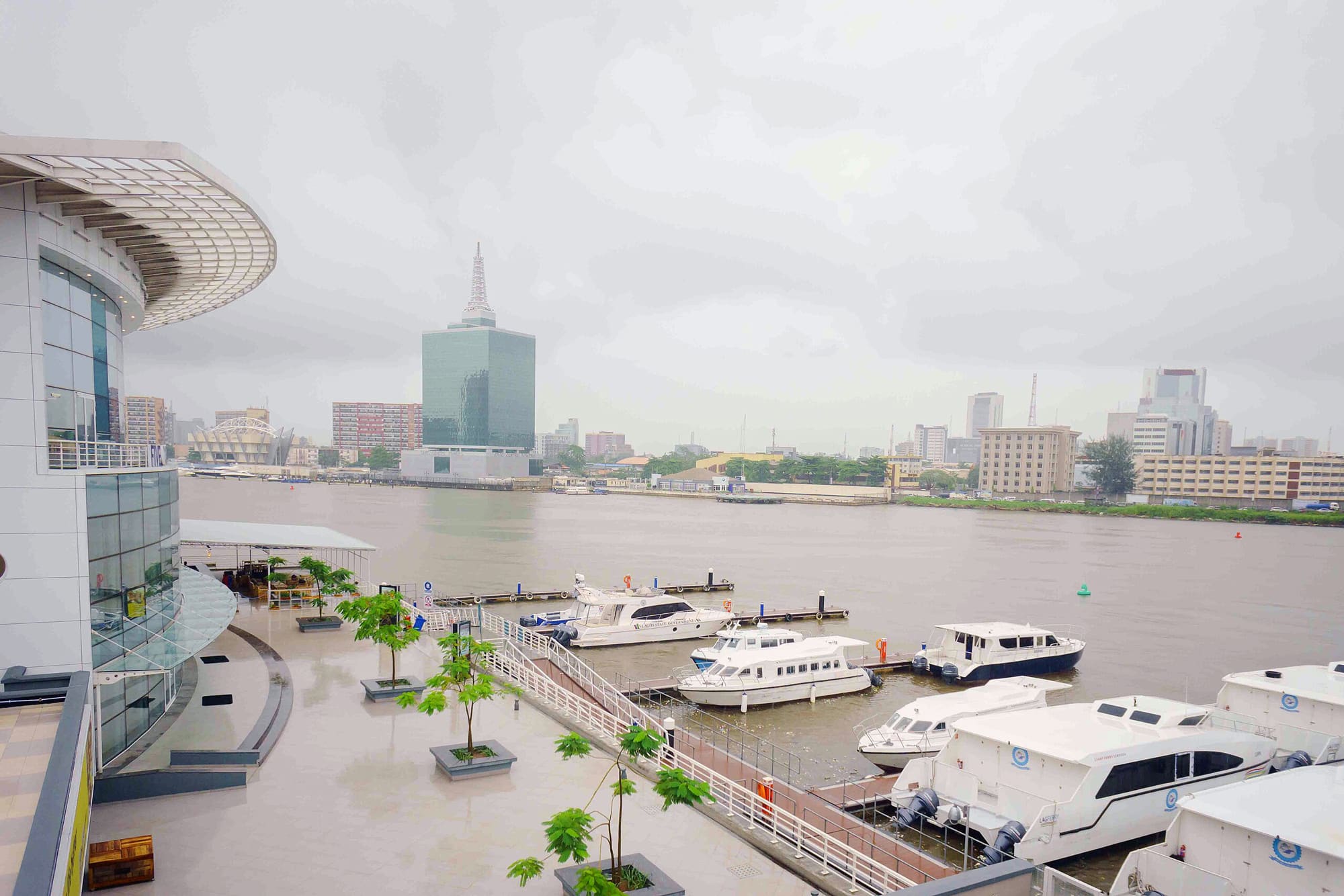
Don’t get me wrong: a ferry initiative is not unwelcome. Despite the fact that Lagos spans a great deal of water, there is no well-developed water transport network. Routes that could be a quick boat ride are instead a long, traffic-choked, jerky car ride. It’s all very confusing, because there does exist a Lagos State Waterways Authority, which boasts “more than 42 ferry routes … with 30 commercial jetties and terminals spanning across three districts.” 19 But LASWA (how we love our acronyms!) has no actual ferries. The entity is merely charged with “coordinating and managing reforms necessary for the long-term growth and development of water transportation in Lagos State,” specifically “the granting of ferry licenses and concessions for the operations of ferry routes and terminals to the private sector.” 20 I suspect the agency’s sole purpose is to siphon its share of money, but that’s impossible to confirm, as the State, as a matter of course, “doesn’t publish its detailed budget, budget implementation reports, audited statements or other critical documents needed for holistic, independent assessment.” 21 The more degraded and inadequate Lagos’ infrastructure, the less transparent the state becomes.
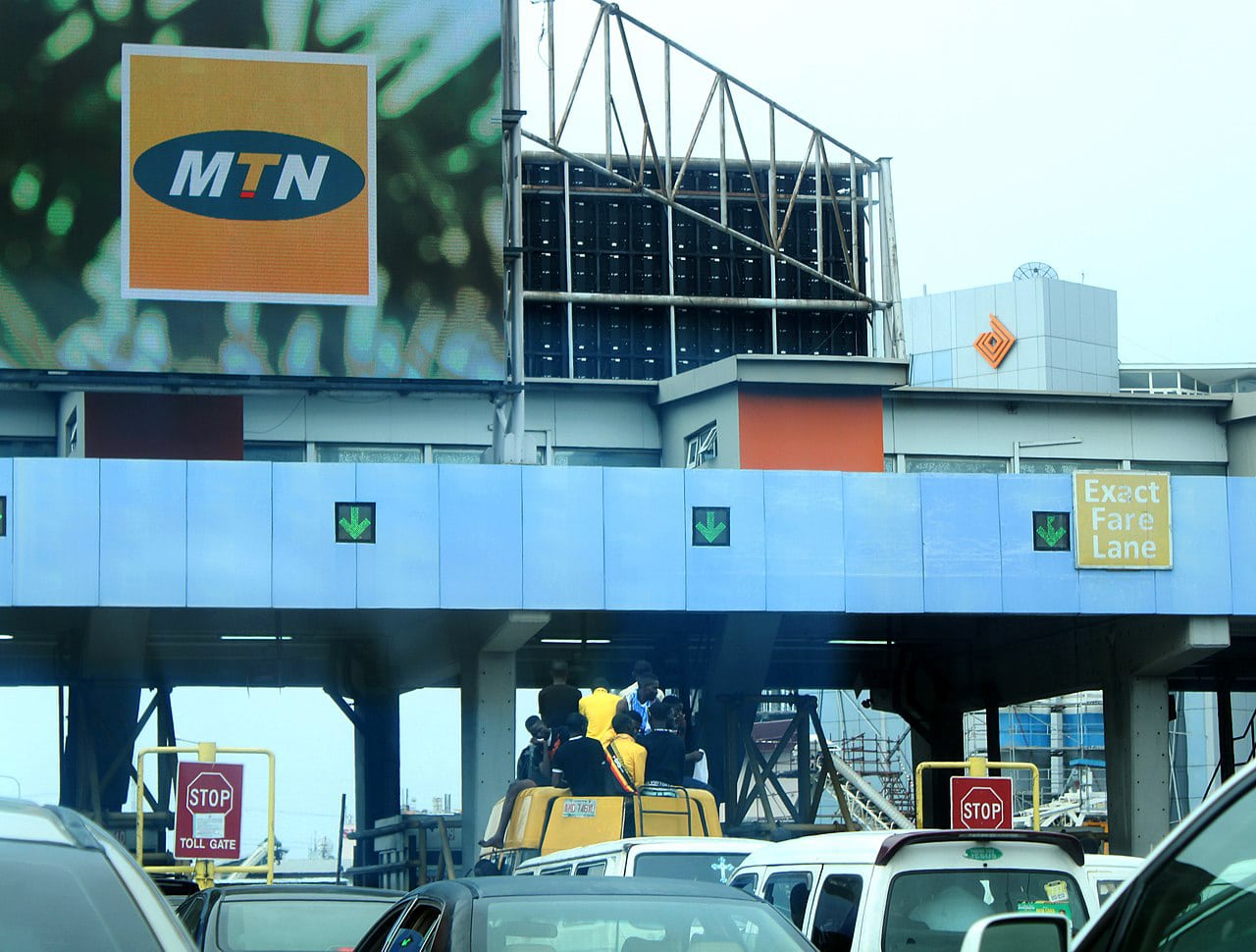
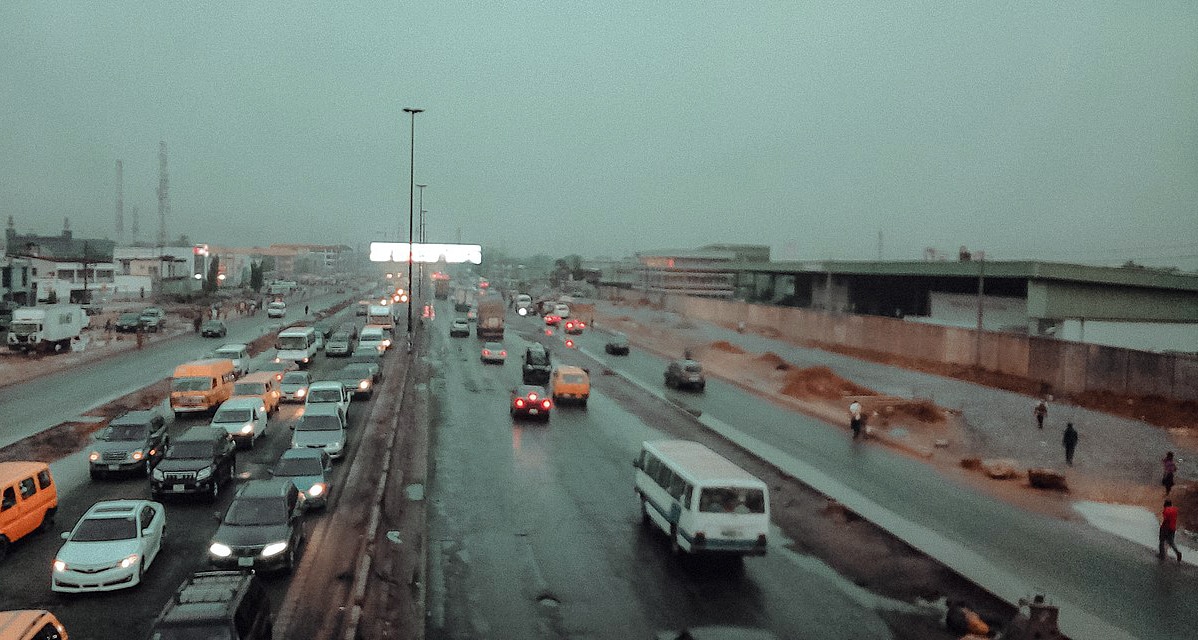
LASWA has licensed a few commercial ferries, which are poorly maintained, overcrowded, and operated by inexperienced owners who sometimes get lost in the creeks. Some even break down mid-stride, leaving passengers stranded without lifejackets, and it should be said that most Lagosians can’t swim: there are desperately few public pools and no swimming lessons to be had, except at the most exclusive schools. The result is that the vast majority of commuters, who need to travel between the port of Apapa and the central business district on Lagos Island, a distance of two kilometers across a lagoon, will instead endure, say, fifteen miles of “go-slow” on roads that are very poorly lit. Specifics on the Deputy Governor’s announcement have not been forthcoming. It’s perhaps a bad sign that Uber — which, along with other ride-sharing apps, has largely driven Lagos’s regular taxis out of business — launched a two-week trial scheme to enter the ferry business in late 2019 (UberBOAT) that hasn’t been heard of since.
What is happening is apartheid in its purest form. It is not based on the myth of ‘race,’ but on money and only money.
So, the need for a ferry service is real, yet it is entirely typical that the only concrete funding for this project should come from a foreign government — and our former colonizer, to boot — with the rest to hopefully appear from the private sector. It’s also entirely typical that ferry service is offered as a sort of panacea for other ills of climate change, ills that will certainly remain even if ferry service magically improves. 22 The point is that, as with public housing, government at whatever level — national, state, or local — cares nothing for the poor, who are the only ones in need of the ferries, not the wealthy who have their own speedboats and wouldn’t be seen dead in any form of public transport, all of which are duly ramshackle and likely will remain, even if newly provided.

What is happening is apartheid in its purest form. It is not based on the myth of “race” (there is only one race, to which we all belong, the “legend of color,” in James Baldwin’s phrase, notwithstanding) or any of the other “smelly little orthodoxies” (this time I quote George Orwell), but on money and only money. Lagos’s apartheid is simple, and universal: if you have the money, you’re in, if not, no vex, don’t be annoyed. As for how you acquired the money, Na you sabi, i.e. That’s your business.
Lagos is a waystation for many young people, and they treat the city as a convenience. It’s as if they’re visitors, not residents.
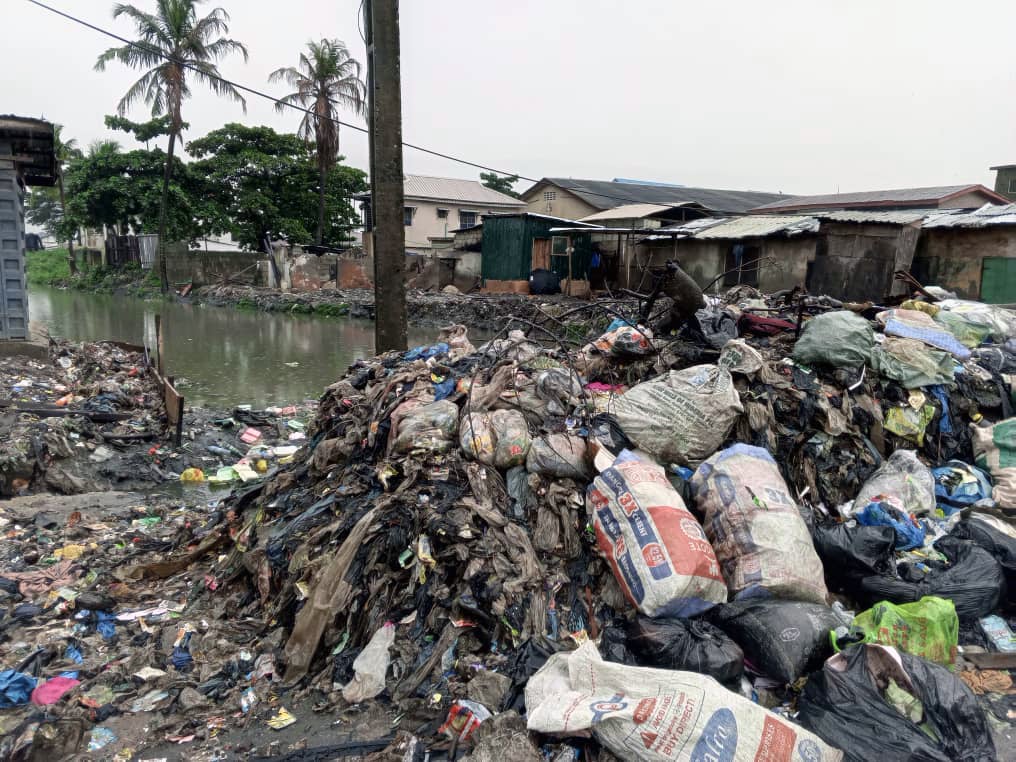
And yet one can’t leave it at just that. The people themselves must bear some of the responsibility for the state of their own environment. Take the ubiquitous, nonbiodegradable “pure water” sachets relied on by eight out of ten Lagosians in the absence of safe drinking water from the taps, which only run intermittently anyway. These plastic sachets constitute a great proportion of the 10,000 tons of nonrecyclable waste Lagos produces daily. 23 Walk down any street or drive behind any vehicle and you will see people tossing these empty packets into streets, roads, and sidewalks, and into the open gutter system, where they eventually create dams the government is tardy of clearing, to the point of causing floods. From the gutters, garbage enters the canals that drain into the Atlantic, contaminating the catfish, tilapia, and mackerel that is fished locally and sold at market.

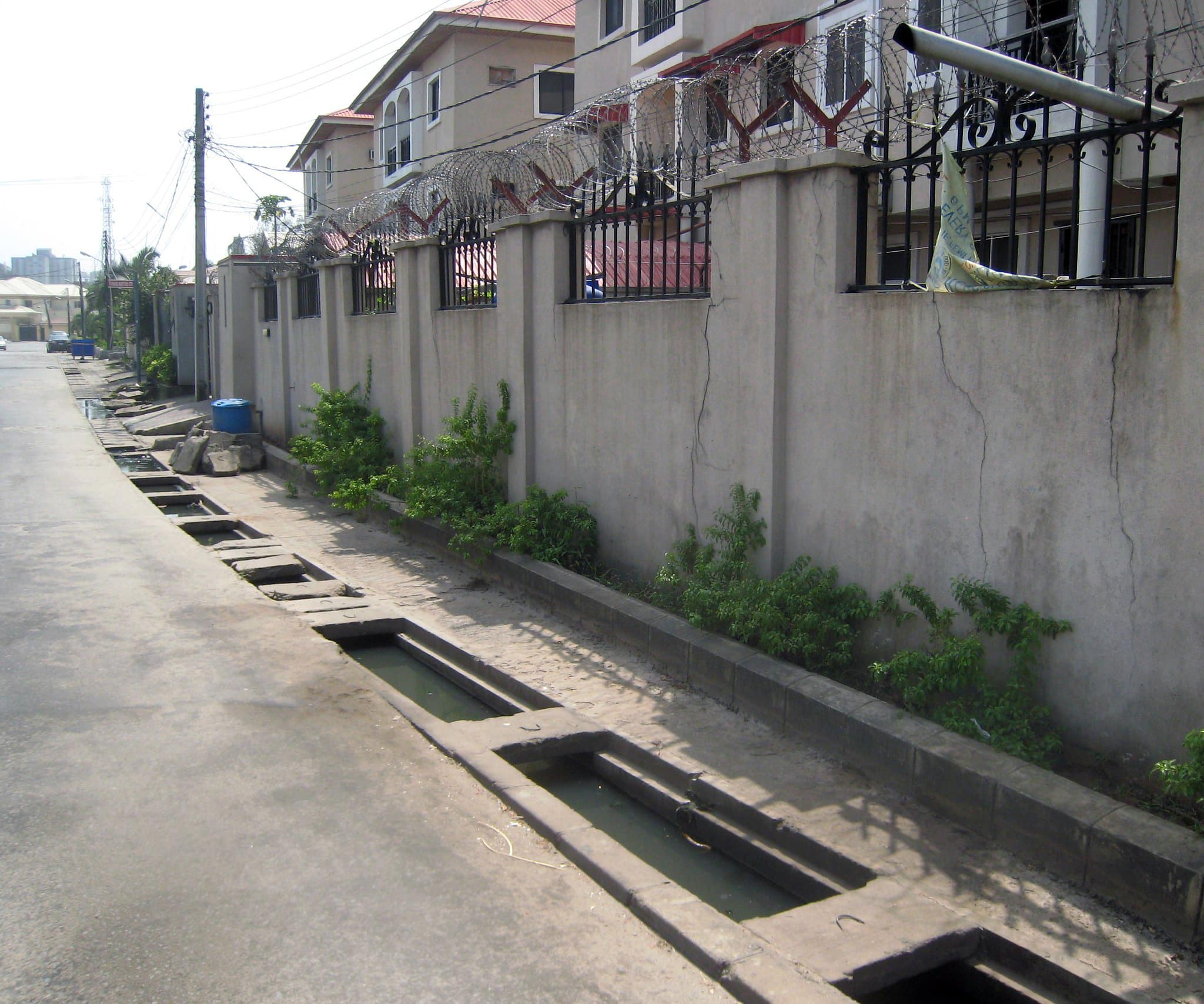
The city’s inhabitants seem strangely apathetic to this problem and others like it, perhaps because the vast majority come from rural villages to which they will one day return. Lagos is a waystation for many young people, a stop on their path to somewhere else, and they treat the city as a convenience. It’s as if they’re visitors, not residents, which is why, even when the state does initiate solutions, people shrug. In the first few years after the return to democracy, Lagos launched a large-scale tree-planting initiative to help with flooding, given that trees dramatically reduce stormwater runoff. An impressive 9.6 million trees were planted between 2010 and 2020, and yet most people scoffed. All you heard at the time was Na flower I go chop, i.e. I can’t eat them. Households were encouraged to plant at least one tree in their compound, but few complied. Indeed, in my own neighborhood of fourteen compounds, only two of us followed the directive.
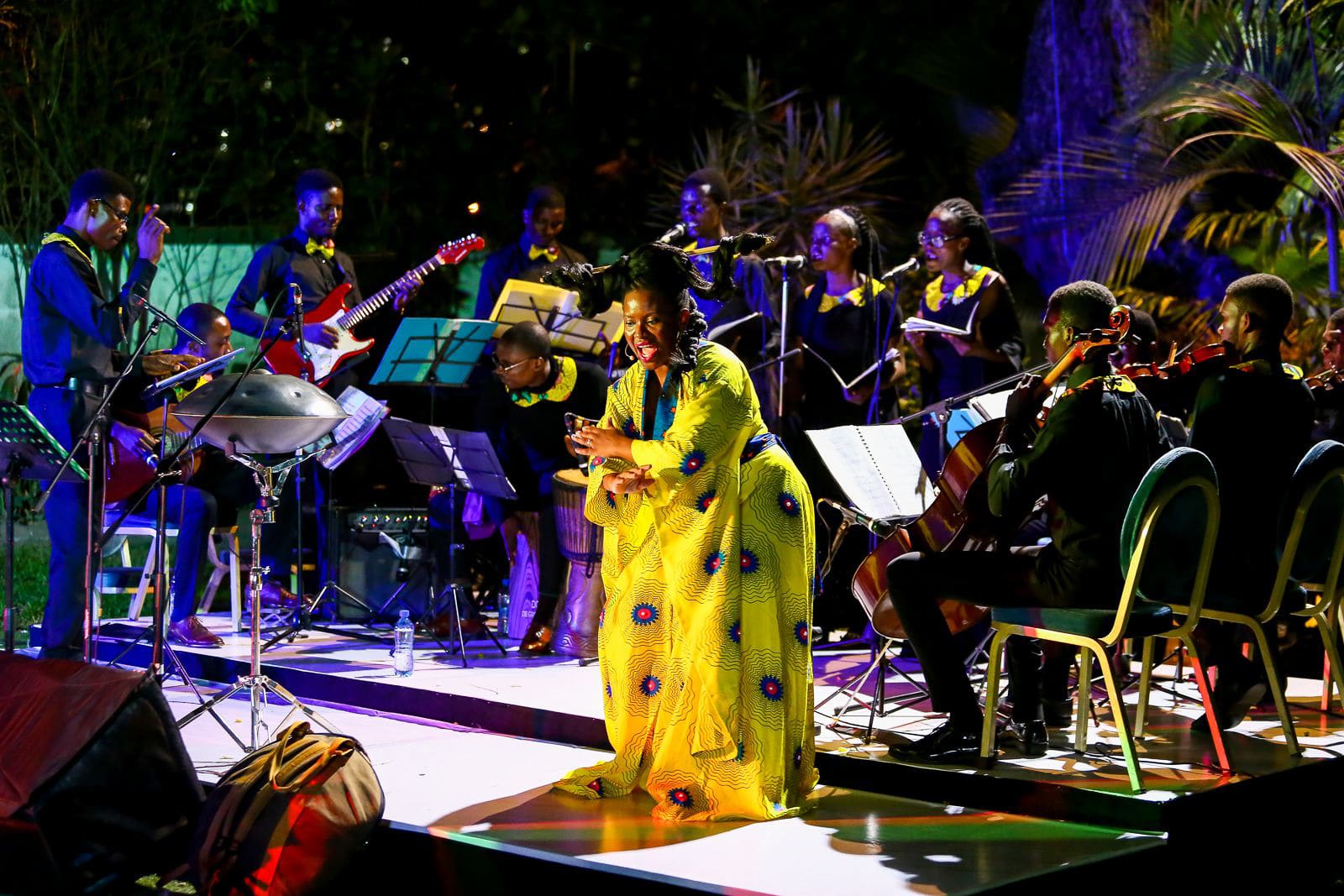
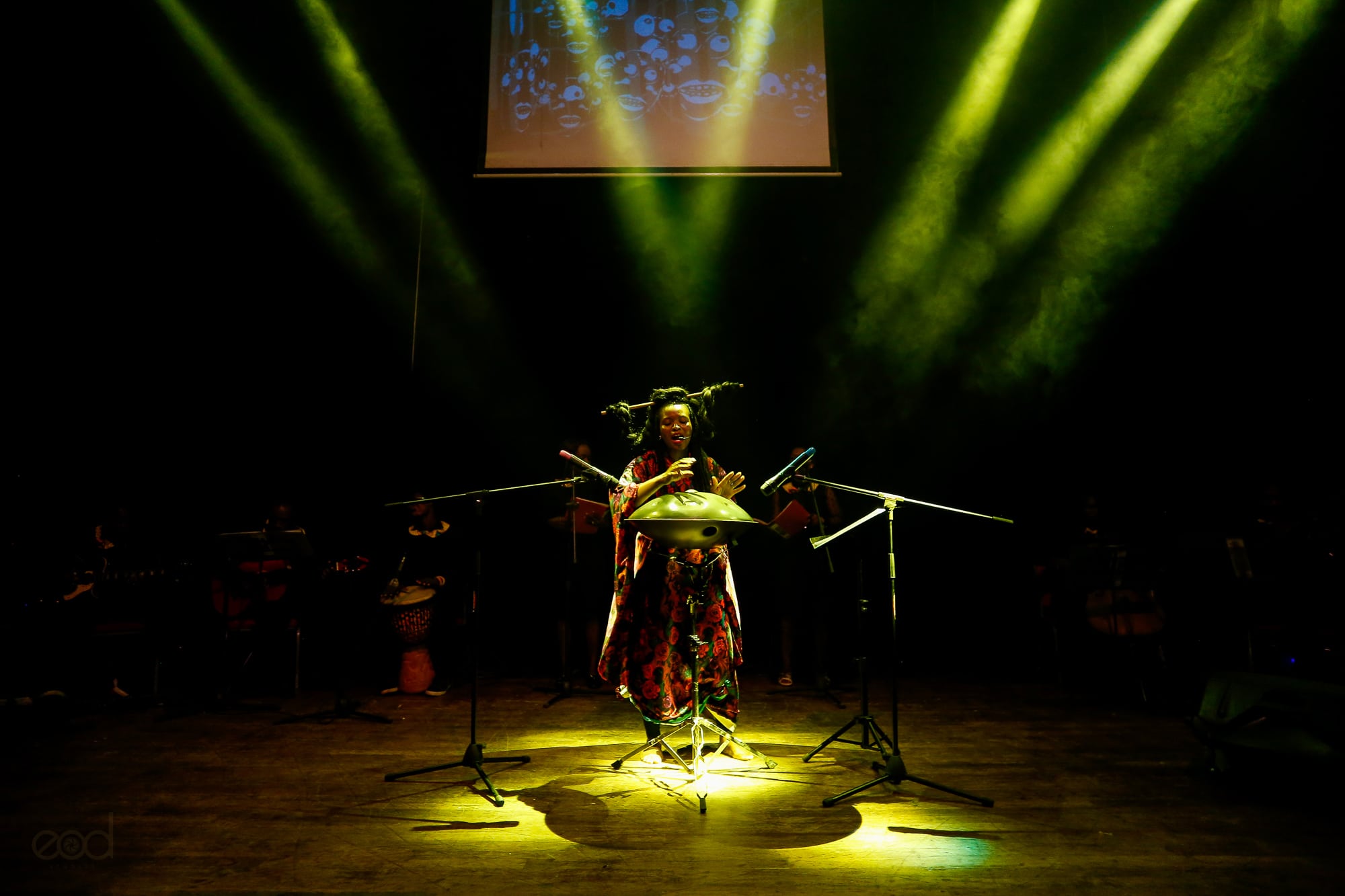
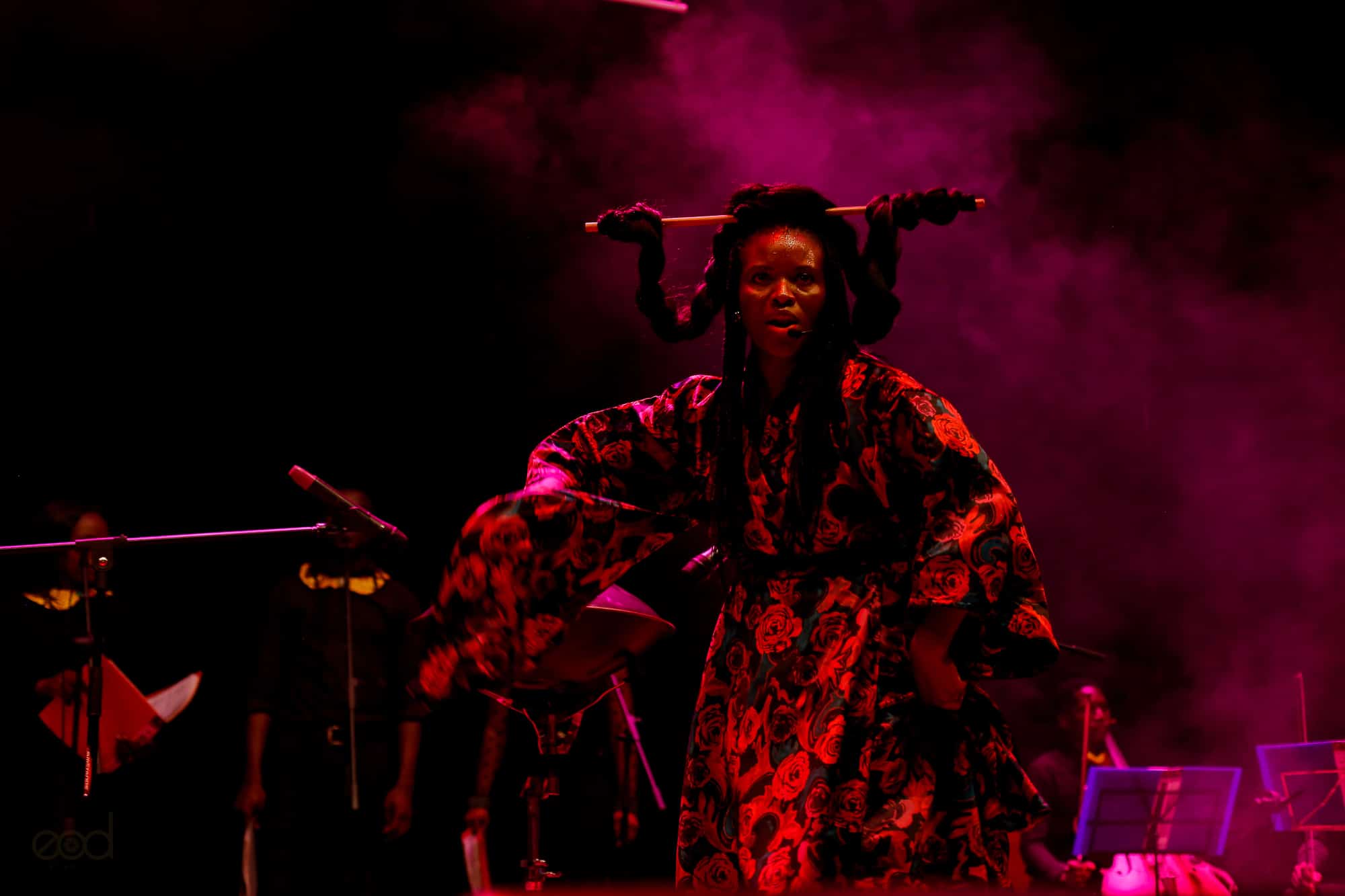
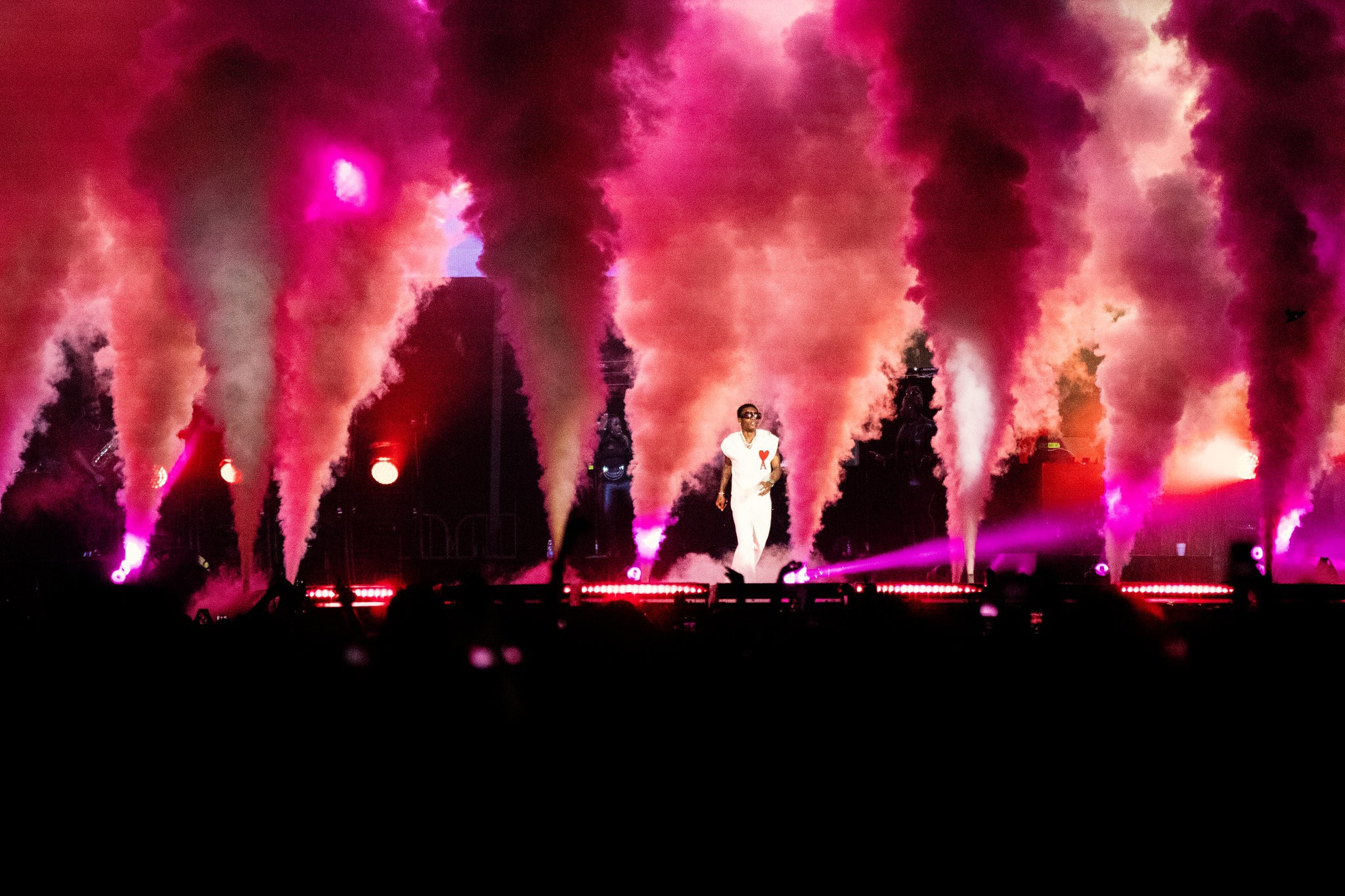
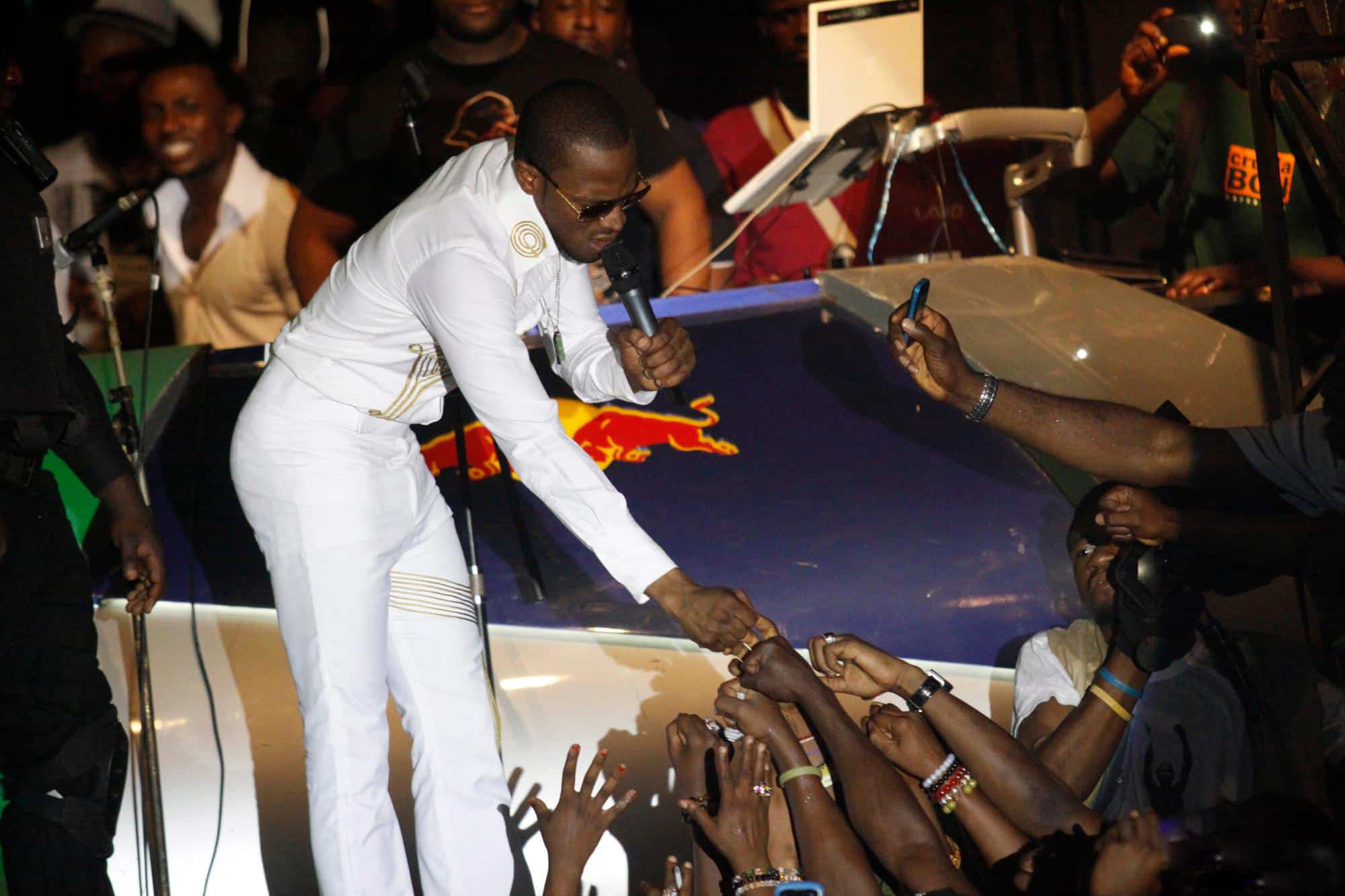
And yet, also, there is the sheer energy of Lagos that cannot be gainsaid. It is not hyperbole to say that Lagos is the creative capital of the African continent. Lagos is the headquarters of Nollywood, Nigeria’s ballooning movie industry, and I’ve lost count of the number of art exhibitions running at any given time. The Lagos chapter of the Association of Nigerian authors is by far the largest in the country. There is also a booming fashion scene, with a major international show each year. Lagos’s music scene has even conquered “the West,” including New York. The city’s explosion of creativity stands in contrast to the suffocating levels of poverty, but shouldn’t distract from it. In sum, people do their own thing and the hell with the government and their corrupt business associates.
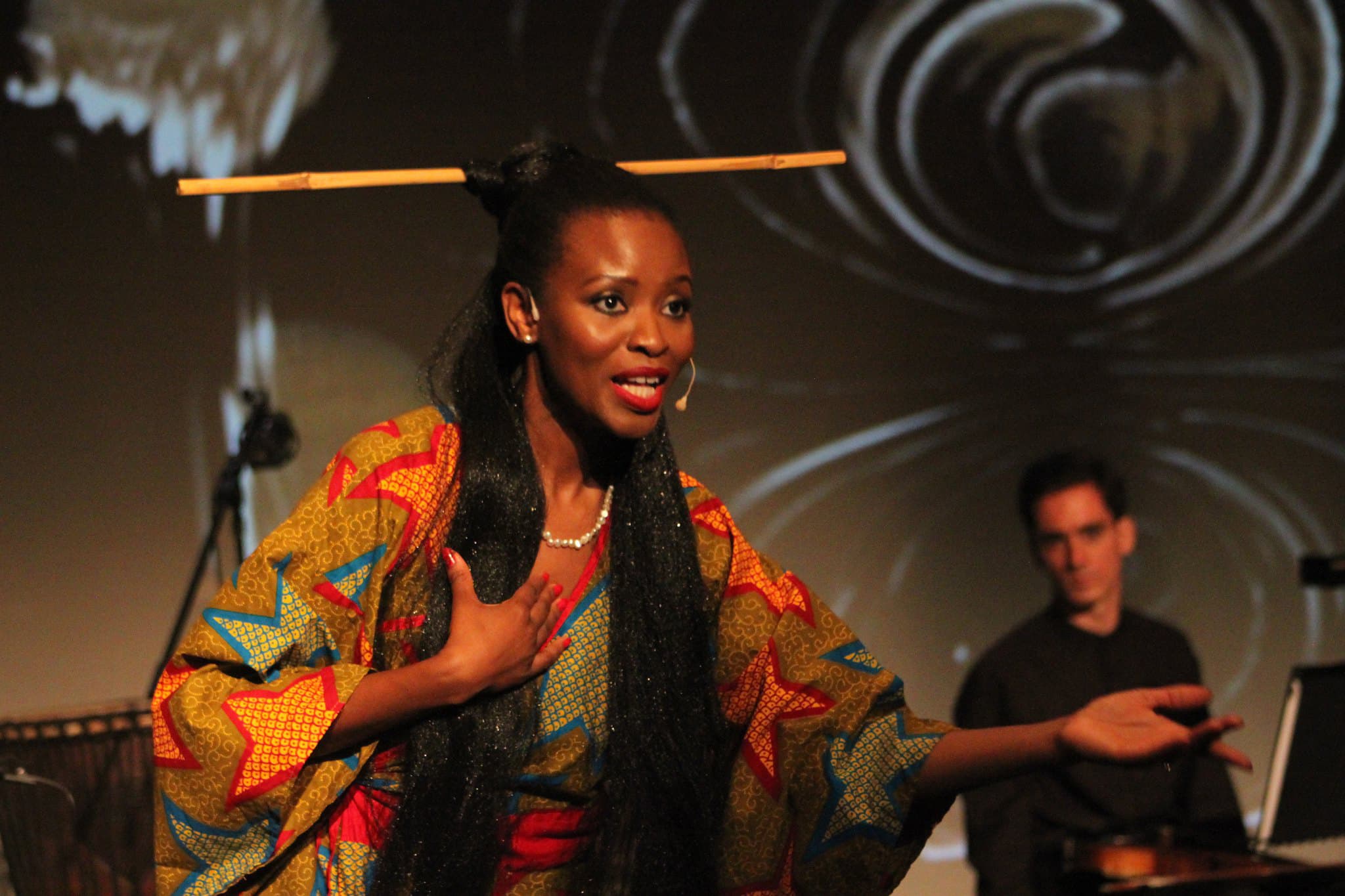
Helen Epega/The Venus Bushfires performing her work Song Queen: A Pidgin Opera at the Musical Society of Nigeria in Lagos, 2019. [Ebenezer Dada, courtesy Helen Epega]
Helen Epega/The Venus Bushfires performing her work Song Queen: A Pidgin Opera at the British Deputy High Commission in Lagos, 2019. [Ebenezer Dada, courtesy Helen Epega]
Helen Epega/The Venus Bushfires performing her work Song Queen: A Pidgin Opera at the Musical Society of Nigeria in Lagos, 2019. [Ebenezer Dada, courtesy Helen Epega]
Helen Epega/The Venus Bushfires performing her work Song Queen: A Pidgin Opera at the Musical Society of Nigeria in Lagos, 2019. [Ebenezer Dada, courtesy Helen Epega]
Nigerian music star Wizkid performing in Toronto, 2022. [Mac Downey via Flickr, under license CC BY-SA 2.0]
Nigerian rapper D’banj performing in Lagos [Sunday Alamba via Norwegian Digital Learning Arena, under license CC BY-NC 4.0]
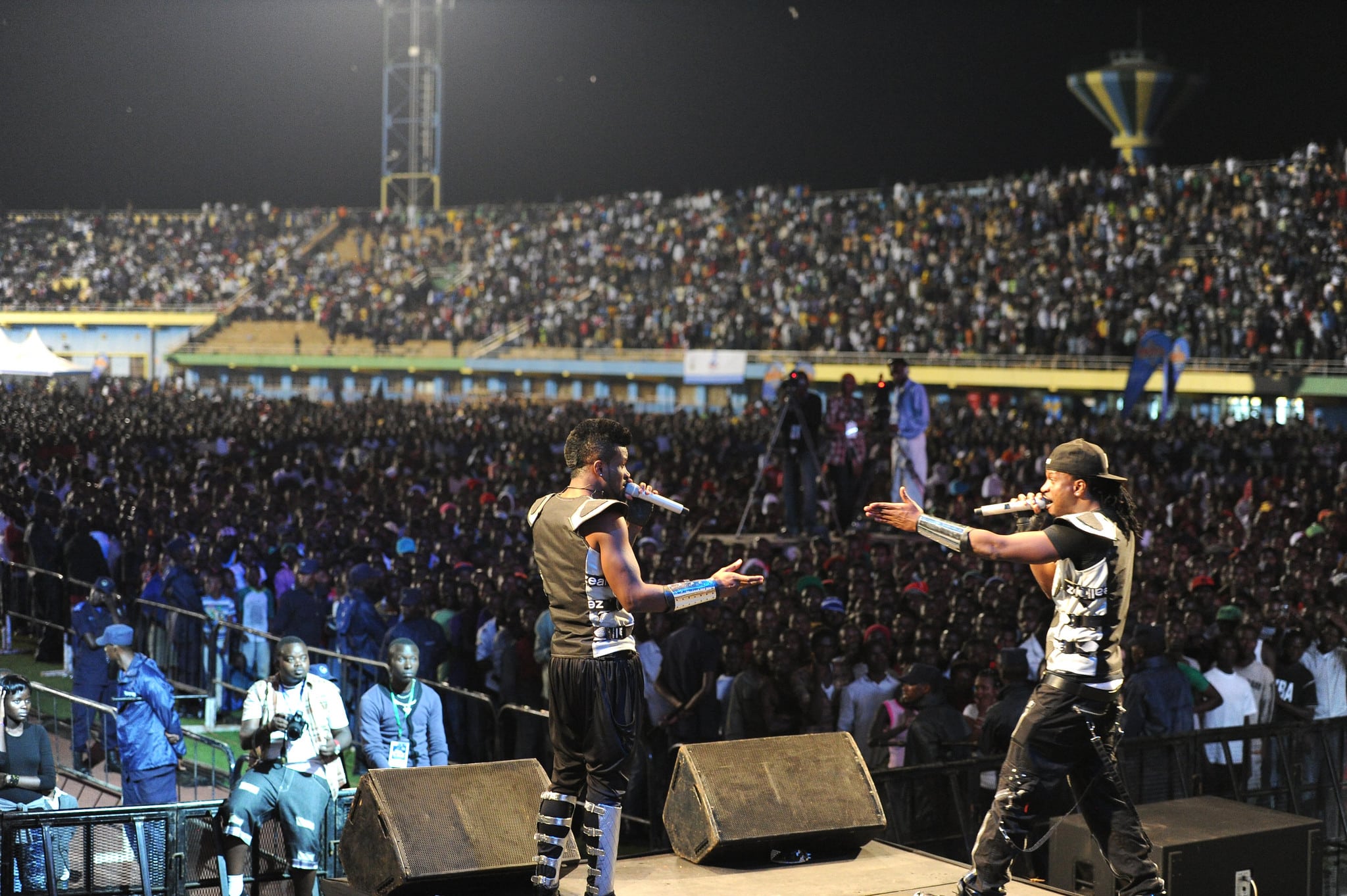
Nigerian duo P-Square (Peter and Paul Okoye) performing in Kigali, Rwanda, 2012. [Paul Kagame via Flickr, under license CC BY-SA 2.0]
Nigerian duo P-Square (Peter and Paul Okoye) performing in Kigali, Rwanda, 2012. [Paul Kagame via Flickr, under license CC BY-SA 2.0]
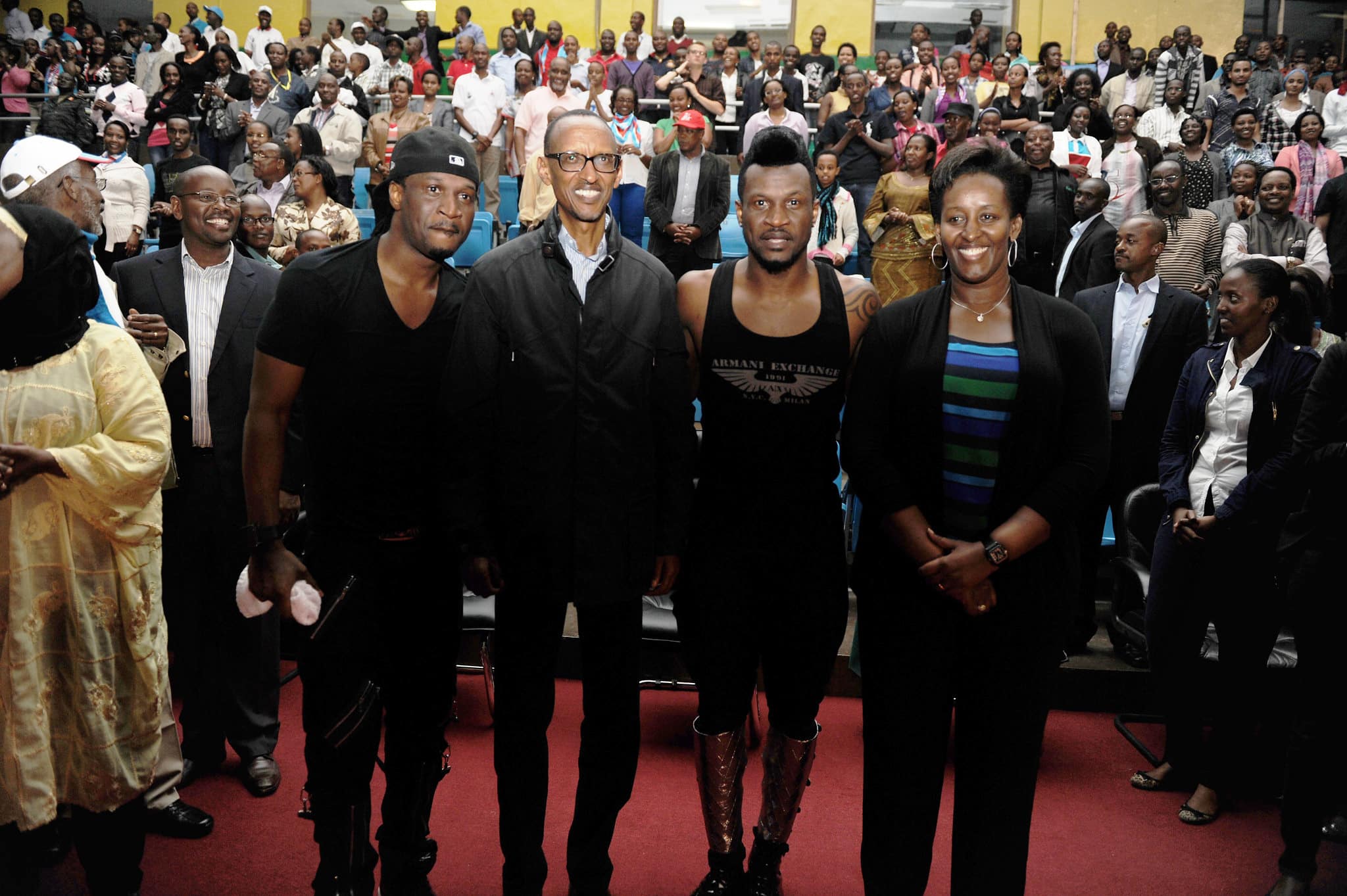
Nigerian duo P-Square (Peter and Paul Okoye) with Rwandan President Paul Kagame (wearing eyeglasses) and First Lady Jeannette Kagame, 2012. [via Flickr, under license CC BY-SA 2.0]
Nigerian singer-songwriter and producer Davido performing at the Lagos City Marathon gala, 2020. [Kaizenify via Wikimedia Commons under license CC BY-SA 4.0 ]
David Adedeji Adekele, a.k.a. Davido, 2018. [Mr Focus Chikamso via Wikimedia Commons, under license CC BY-SA 4.0]


It can be dangerous, though, when a government is perceived as completely irrelevant, dangerous first of all to the government itself. All over the country, idle young men are more and more taking matters into their own hands, kidnapping and extorting at will or, in a more positive fashion, protesting Nigeria’s Special Anti-Robbery Squad — a patrol unit that has long arrested, punished, and tortured with impunity. In late 2020, peaceful protestors were fired on with live bullets for their trouble, and twelve were killed. As the ruling class well knows, the energy of frustrated youth must go somewhere, hence the excessive violence and the ever more elaborate self-contained communities. The rich in Nigeria clearly desire protection, and that’s because they know exactly what’s coming — it was they who invited it.




_Skyline.jpg)


#/media/File:A_community,_located_on_Snake_Island,_Lagos,1psd.jpg)


If you would like to comment on this article, or anything else on Places Journal, visit our Facebook page or send us a message on Twitter.