
In the winter of 2016, an unexpected bill for overdue property taxes arrived in the mail. It came by way of my mother’s cousin’s widow. She found me on the internet.
The tax bill named my late mother, along with three of her paternal cousins, as owners of a small parcel on the island of O‘ahu.
The tax bill named my late mother, along with three of her paternal cousins, as the owners of a small parcel on the island of O‘ahu. My mother never mentioned this land to any of us — my siblings and me — before she died in the early 2000s. Growing up, we only distantly knew her cousins on that side of the family, even though Hawai‘i is a small place where relations are hard to avoid. Coming from large Hawaiian families on each side, she had been the only child of a short, tumultuous marriage. After the divorce, her father quickly moved on to a second marriage and other children. Her estrangement, however, was mitigated by her paternal grandfather, who made sure she received some inheritance: in this case, a land title shared with cousins.
The widow — let’s call her Lily — had just lost her second husband and, after locating me, called to discuss the matter of the money owed on a property she hadn’t known about either until the tax bill arrived at her California address. With two of the cousins deceased and the other two no longer interested in covering the taxes, the payments had lapsed, and so the State of Hawaiʻi had gone in search of whatever next of kin it could locate, which happened to be a former singer and stage actor originally from Iowa. Not long after, Lily followed up by email: “does it look like a nice place to have a little house?”
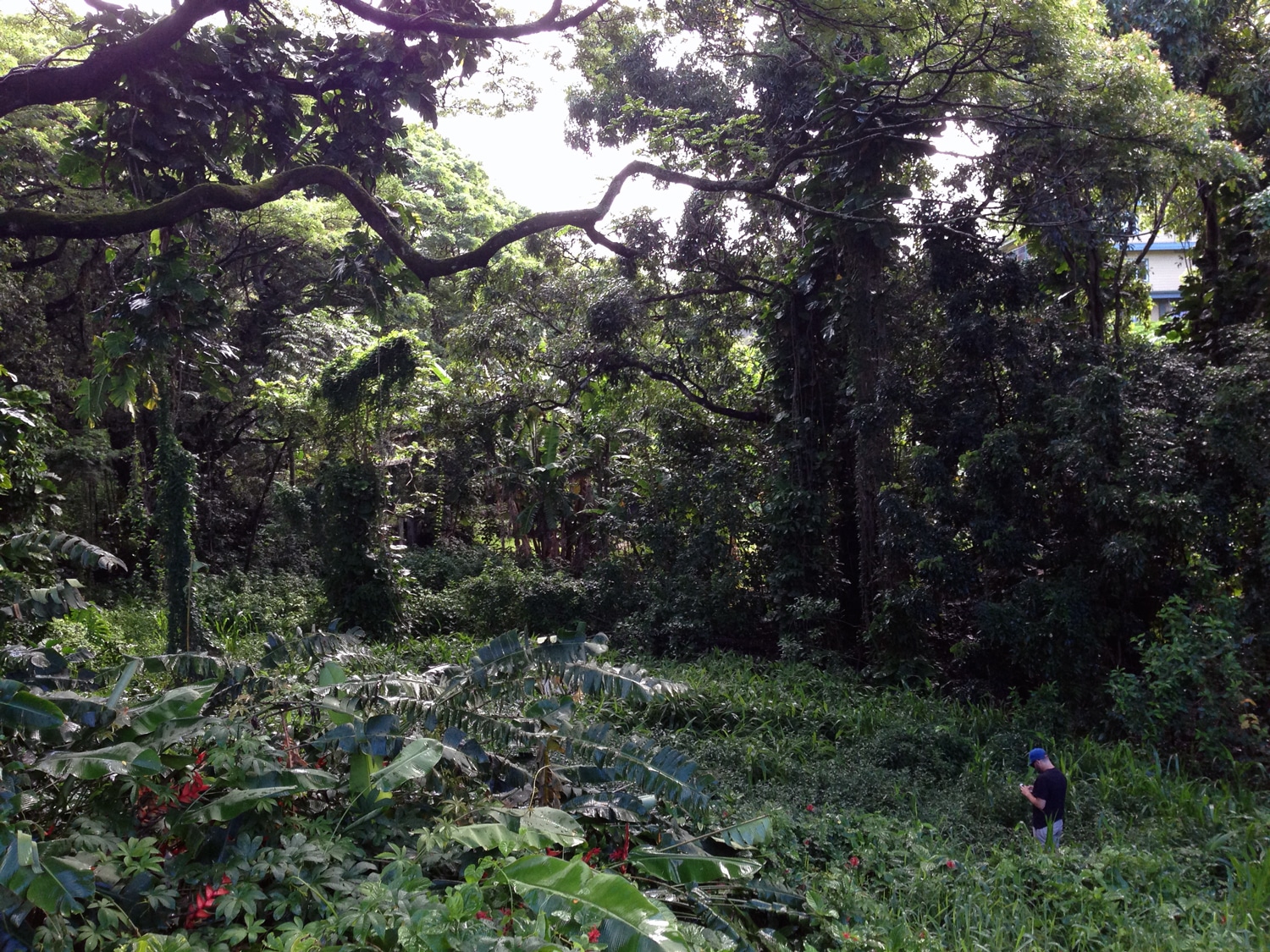
From my office in Evanston, Illinois, where I was working on a postdoc, I scraped the public records online and soon found a tax map entry corresponding to my mother’s maiden name, registering 0.05 acres of property. Tucked far back into the folds of a valley edging Honolulu, the plot is set at the end of a narrow residential street — more of a lane, really — so hidden that I have missed the turn every single time I’ve driven there. To actually get to the parcel, moreover, you have to cross another, larger piece of property owned by someone else, which completely surrounds the fraction of an acre in question. They own the doughnut, so to speak, and we have the hole.
What can you do with a plot so small that you and your siblings each stand to inherit a portion about the size of a walk-in closet?
The internet tells me that 0.05 acres is just over 2,000 square feet, which is about the size of a half-court, if you’re playing basketball, or a small retail store, or a modest two-bedroom apartment; it would be about 45 feet square if it were a perfect parallelogram, which it isn’t. The tax map key identifies the property as zoned P-2, or as general preservation land, upon which any kind of development is highly restricted. 1 What can you do with 2,000 square feet of unbuildable land? With a plot so overgrown with jungle that you have to wear the right kinds of pants to hack your way in, while praying the neighbors don’t call the cops on you for trespassing? With a parcel so small that you and your siblings each stand to inherit a portion about the size of a walk-in closet?
You hang on.
Kuleana
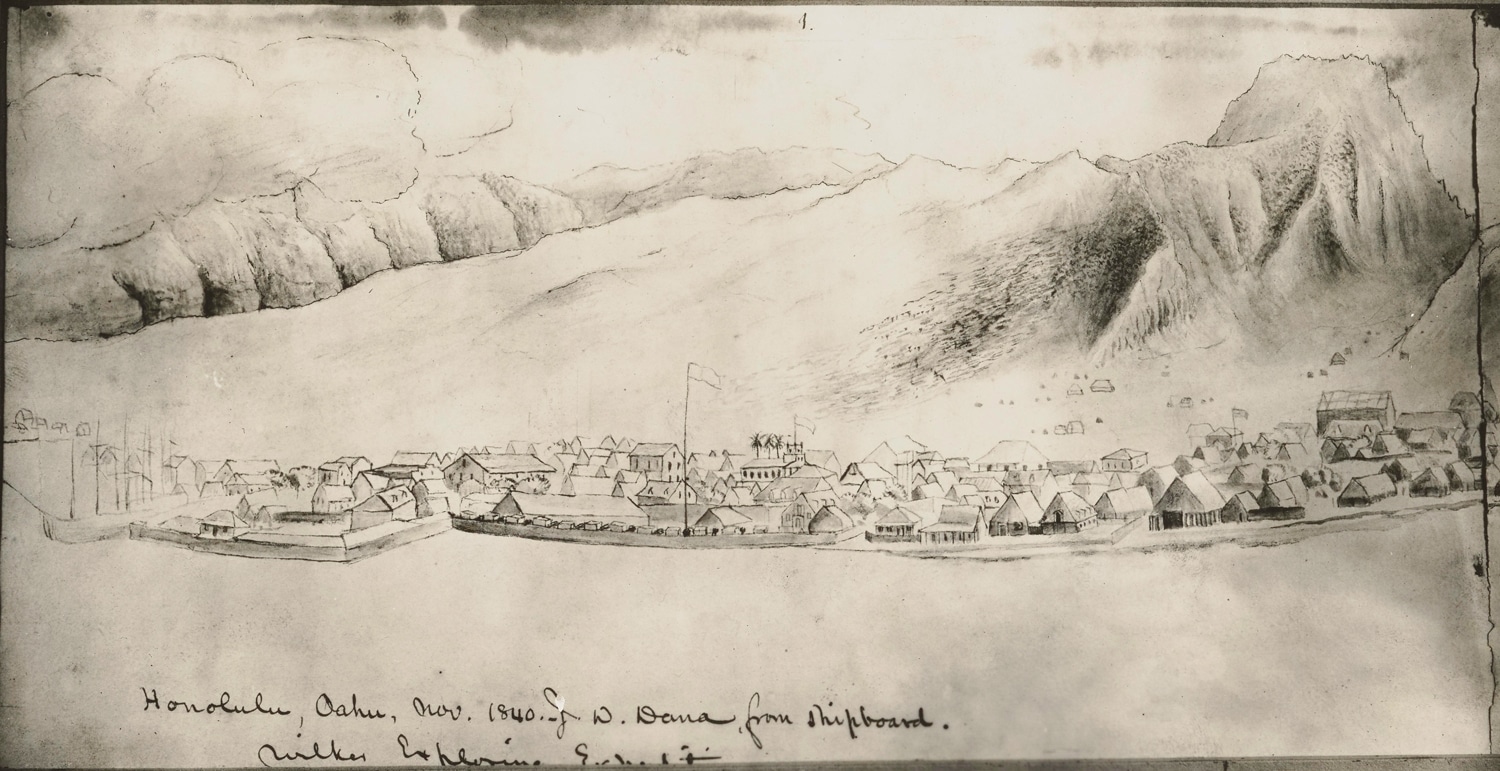
The boundaries of our doughnut hole had been formally drawn in the mid 19th century, when the Hawaiian Kingdom began privatizing land. For about half a century, at that point, foreigners had been arriving in steadily increasing numbers, bringing with them ideas about property ownership that diverged from traditional Hawaiian ideas about communal landholding. To better protect the people against western imperialist desires to acquire “unowned” territory in the Islands, Mōʻī (monarch) Kauikeaouli (Kamehameha III) began the monumental process of making property private. 2 It was called the Great Māhele (or division) and it rolled out across the span of five years and through three primary mechanisms: the establishment of a Board of Commissioners for Quiet Land Titles (also known as the Land Commission); the 1848 Māhele itself, which set aside lands for the monarchy and government; and the 1850 Kuleana Act, which enabled the makaʻāinana (or common folk) to acquire fee-simple titles.
Under the 1850 Kuleana Act, the Land Commission spent months listening to Hawaiians testify to their relationships with particular locations.
Under the Kuleana Act, the Land Commission spent months listening to Hawaiians testify to their relationships with particular locations: how long they had been tending the land, what they used it for, its boundary markers, the sites of their homes, and who else might validate their claims. 3 The Act was named in acknowledgement of the Kānaka Maoli (Hawaiian) relationships to land that were being brought into a new legal landscape of ownership; “kuleana,” an important concept in Hawaiian culture, refers to the rights, responsibilities, and privileges we hold in society, including in regard to land. The Land Commission recorded the makaʻāinana testimonies by hand in heavy ledgers, numbered and dated in long, looping cursive — an atlas of landed relations. These documents remain key references for Hawaiians tracing their genealogical and legal ties to homeland today.

Many scholars have written — and disagreed — about the significance of this major economic and epistemological shift for Hawaiians and their political sovereignty. But one thing is clear: the legal sanctioning of property relations in Hawai’i transformed land into a commodity, entering Kānaka Maoli into a capitalist system that turned ʻāina (land) into something alienable. 4 This word, “alienable,” is a legal descriptor for goods that can be sold or transferred to a different owner, though it has roots in 13th-century Latin and French words describing states of estrangement or insanity. To exchange land, then, is to become “alien,” a stranger; it is to become “not native.” 5 Families who have never sold their kuleanas hold on to them despite manifold pressures to sell or subdivide.
Nā Honua Pepa (Paper Worlds)
When I talk with people from U.S. Indian Country about kuleana lands, they immediately understand the strangeness and strain that private landholding creates. A generation after the Māhele, in 1887, the General Allotment Act, otherwise known as the Dawes Act, was established as one of multiple legal mechanisms through which the United States forced Native peoples across the continent out of communal landholding. The act’s namesake, Massachusetts Senator Henry Dawes, suggested at the time that owning property would help to make Indians more “selfish.” This, he thought, would make them more civilized. 6 The opportunity for Native peoples to gain land title, however, came accompanied by fine print. Choosing an allotment meant limited acreage for individual owners, renouncement of tribal citizenship, and the latitude to sell, privately, what had previously been held in common. 7
When I talk with people from U.S. Indian Country about kuleana lands, they immediately understand the strangeness and strain that private landholding creates.
The U.S. further greased the wheels of manifest destiny by selling the “surplus” land — that not divvied into allotments — to settlers, folding in American Indians as wards of the government, and sending funds from land sales into the national coffers. By 1934, Indigenous landholdings in the continental U.S. had dropped from 138 million acres to 48 million, leaving an estimated two-thirds of Native Americans landless. 8 Although the Māhele was formally orchestrated by the Hawaiian Kingdom, it, too, created the conditions for foreign land acquisition and Indigenous dispossession across the archipelago, as the government bent to imperial pressure. In the end, the Māhele mostly benefitted Hawaiʻi’s elite (both Hawaiian and non-Hawaiian): of the millions of acres available for distribution at the end of the 19th century, kuleana awardees received about 26,000 total. 9 By the time Hawaiʻi became a state, in 1959, these disparities had deepened. The vast preponderance of land and power was concentrated in the hands of a small number of estates and corporations; less than five percent of Hawaiʻi’s privately held property belonged to small landowners. 10

In an essay about the ludicrous and often tragic afterlives of federal allotment policy, historian Nick Estes (Lower Brule Sioux) describes the “paper world” that property laws created for the descendants of awardees, including his own grandfather, Frank Estes. In the early 2000s, Frank received paperwork from the Department of the Interior detailing his shared interest in landholdings across several Sioux reservations. “What he held in his hands was an artifact of allotment policy,” Estes writes, “a list of heirs whose claims to land, if split into individual shares, in some instances, would amount to acreage the size of a postage stamp.” 11 Some 19th-century allotments, through the process of fractionation, now have thousands of co-owners. Sometimes plots are so small that even a single inheritor couldn’t eke out a living there.
Some 19th-century allotments, through the process of fractionation, now have thousands of co-owners.
It was this exponential degradation of land claims that, in 2014, allowed Mark Zuckerberg to acquire nearly a dozen kuleana properties nested within a 700-acre estate that he created out of three large, adjacent properties on the north shore of Kauaʻi. 12 Within one — the former Kahuʻāina Plantation — were several kuleana properties, some fractionally owned by multiple individuals. 13 Zuckerberg’s lawyers worked to “quiet” or resolve any uncertainties regarding titles to these kuleana lands by identifying all the partial owners and buying up as many of the fractional interests as possible. Once the Meta CEO was a co-owner, he could legally force a sale that would go to the highest bidder: himself. In Hawai’i, such lawsuits are a typical strategy for large companies that buy up land for agribusiness. But the modus operandi works just as well to build private compounds for billionaires. As J. Kēhaulani Kauanui explains, in her excellent analysis of the Zuckerberg estate: “the privatization of communal lands through enclosure, the U.S. Government’s seizure of these lands as part of its expanding territory, or the push for Hawaiian land rights, [are] all based on a proprietary relationship to land that undergirds its objectification and commodification.” 14

Kuleana titles with multiple, fractional owners are sometimes referred to as “noisy.” To quiet those noisy titles, Zuckerberg exploited the unwieldy nature of kuleana landholdings and the 150-year gap between the original land commissions and the present day. In one case brought by his lawyers, the plaintiff was the original recipient of the kuleana title, deceased since the 19th century; in another, about 300 plaintiffs were attached to a two-acre plot — all descendants of the Portuguese plantation worker who purchased it in 1894. 15 Zuckerberg initially moved through the community quietly, working in the guise of shell companies bearing generic, but vaguely agrarian names like Northshore Kalo, which encouraged local sellers to assume they were making deals with a humble taro farmer instead of a tech giant. 16
The shell companies managed to shield the buyer’s true identity until news outlets picked up the story in 2017. After that, newspapers had a field day, quoting Hawai’i residents eager to air their frustrations about wealth inequity, Indigenous entitlements, and diminishing shoreline access. Even now, years on, Zuckerberg’s apologies for his initial tactics haven’t quelled the bitterness, nor has he fully secured his privacy. 17 Descendants of original grantees retain rights of access for customary gathering and ceremonial purposes, though this does not prevent them from being harassed by the security team that patrols the estate.
Desire
In my family’s case, we were not dealing with a billionaire, nor with 300 descendants, but we did have my mother’s cousin’s widow and her children from her first marriage, as well as our siblings from our father’s first marriage, and the families of my mother’s other cousins with whom she shared the title …. You get the idea.
The rational thing would be to purchase, rather than inherit the property. Yet I didn’t want to buy our kuleana lands. The root of alienation is insanity.
As heir to her second husband’s 500-square-foot share of our family’s plot, Lily was keen to secure her place on the title, and she emailed me regularly about the tax bill that nobody was paying. She speculated that if she paid the property taxes for all of us, she would gain stronger rights to the land. This notion turned into a steady refrain that she nudged to the top of my inbox every few months, waiting for a reply I never sent. In summer 2017, she asked me to split the total cost of the back taxes — at that time, about $1,500 — calculating back to the original inheritors’ group of my mother and her three cousins and explaining, “I assume I can pay the shares [for two] and get quarter rights to the property.” About six months later, she tried again: “I assume if I pay part I would assume some partial ownership.”
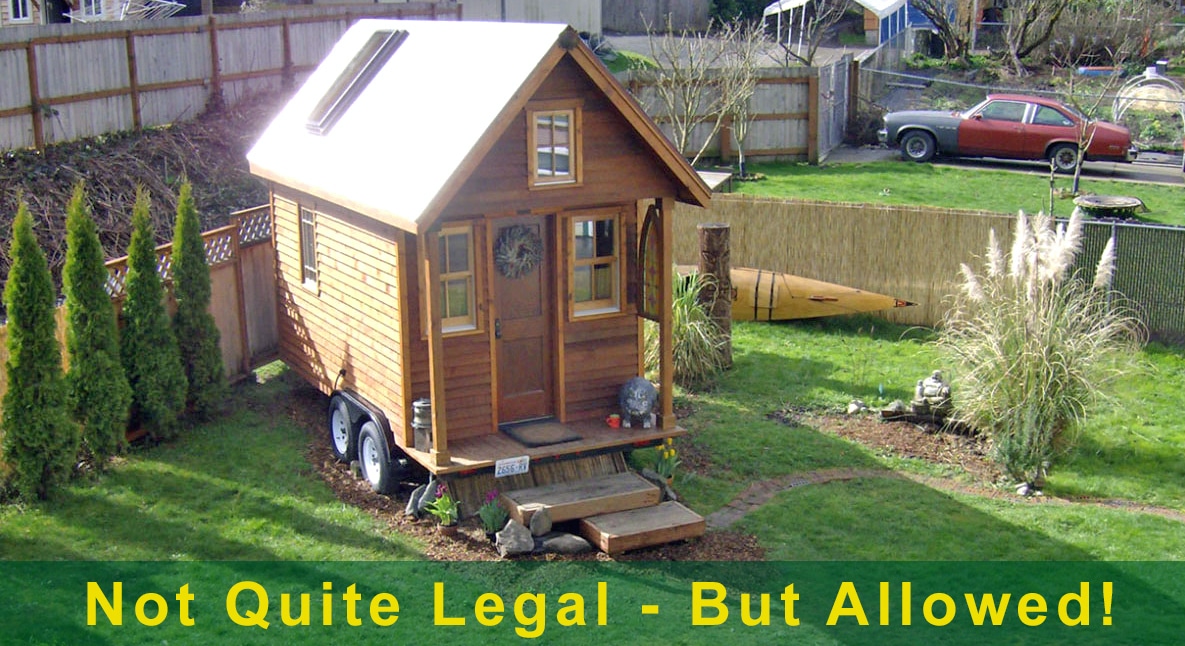
A few more months passed, at which point she emailed a photo of a tiny house on wheels with the subject line: “Would this work?” In the message, she suggested ways to bypass zoning laws governing preservation lands by installing a mobile vacation home. Met, once again, by my silence, she worked her way through further ownership possibilities. “I’m not sure what my status is as far as inheritance goes,” she ventured in the summer of 2018, “but I guess I take on the responsibility from [my husband] and [his cousin] wants me to take over his entity.” (A few years later, in 2021, this cousin would die.) She then asked for my help in locating the property on the ground, so that she could visit and see it for herself.
Unsure how to handle Lily’s interests, both literal and figurative, my siblings and I consulted a financial advisor familiar with our late mother’s estate, who had also worked with her cousins and knew about the property. Sometime in the 1990s, the advisor told us, my mother’s family had approached the owners of the “doughnut” to see if they would sell; if they had, the resulting property would have included residentially zoned acreage large enough to be developed. When the neighbors declined, the economic possibilities for our land were largely extinguished, and the parcel became a money pit — small, but a money pit nonetheless. About a decade later, the cousin who had been bothering to pay the property taxes (if you are counting, this is the fourth cousin and the last one living today) stopped.
If my siblings and I really wanted the land, the advisor suggested, the most efficient and economical course of action would simply be to wait until the property lapsed into foreclosure. Then we could try to buy it at public auction from the City and County of Honolulu. In other words, the rational thing to do would be to purchase, rather than inherit it. Much cheaper that way, since the parcel had so little market value. Yet the recommendation rankled. I didn’t want to buy our kuleana lands. The root of alienation is insanity.
Surely, holding on should not require letting go?
Economic Irrationality
The fact remained that the parcel really has no practical uses: it isn’t buildable, or accessible, or salable (except to the people who own the doughnut, who I’m guessing also understand that waiting to buy it at auction is cheaper). If you asked me what I might “do” with it, were I to add my name to the title, I really couldn’t say. I would maybe have a party, if I had the energy to clear the undergrowth. After that, someone could garden there, I suppose, but it wouldn’t be me. I don’t even live in Hawaiʻi anymore.
With their comical unconventionality, properties like the doughnut hole apply pressure to our ideas of land value as such.
Properties like the doughnut hole just don’t lend themselves to Lockean imperatives to make land productive. Instead, with their comical unconventionality, they apply pressure to our ideas of land value as such. The legal frameworks that define property produce all kinds of frictions and fictions of ownership and belonging. This is true of any kind of real estate, of course, but such “worthless” holdings make these fictions and frictions obvious.
Consider this example: in 1973, the American artist Gordon Matta-Clark purchased at auction fifteen “micro-parcels” in the outer boroughs of New York City. 18 As part of his larger body of work — consistently concerned with what his biographer calls “uselessness, fracture, and the renegade inhabitation of urban space” — the project that came to be known as Fake Estates or Reality Properties, Fake Estates plays with the creative potential of the overlooked gaps in a monumental city’s landscape. 19
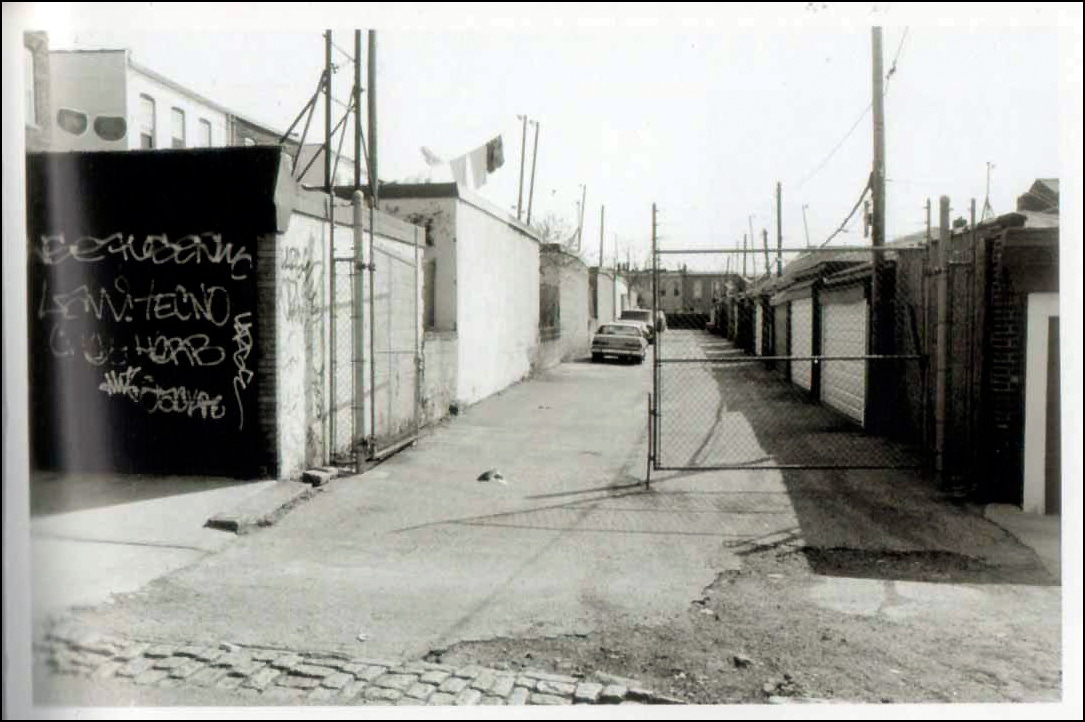
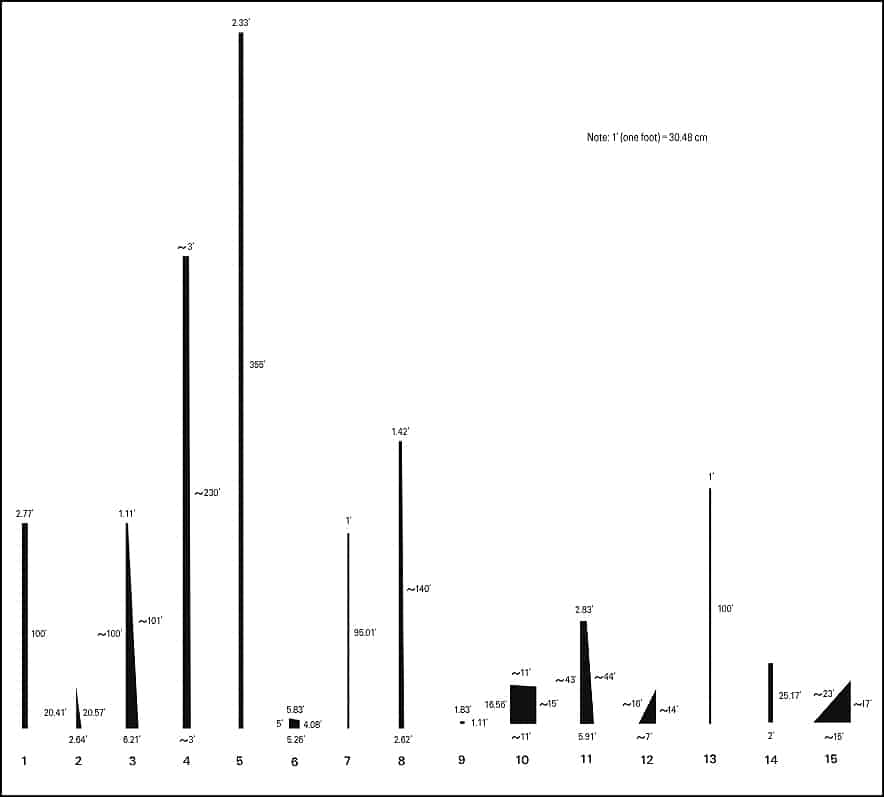
The sliver lots cost Matta-Clark between $25 and $75 dollars each, and they were cheap because no buyer could do much with them except the owners of adjacent properties, who were already using them without (in some cases) knowing that they did not own the remnant bits: 1.83 feet by 1.11 feet between buildings; a strip of curb measuring 3 feet by 230 feet; a lot that the auction catalogue warned was (like ours) completely inaccessible. 20 These were the offcuts of a city that had transformed over generations from a rural settlement into un urban grid. As rowhouses and apartments sprang up, development had set into motion mergers, apportionments, easements, and disputes over property lines that produced awkward leftovers. 21 As historian Jeffrey A. Kroessler describes:
In 1973, Matta-Clark could purchase his plots on Queens because all the city knew was, a) it was property, b) it was essential to get it off the city’s hands and onto the tax rolls, and c) it was their bureaucratic function. In truth, the transaction cost the city more in administrative overhead than it would ever recoup in property taxes.22
In New York in the 1970s, it wasn’t hard to help oneself to a tiny slice of the economically struggling city, especially if it was located in an outer borough amidst the budget crises and crime waves of the era. Those bits were for sale, and Matta-Clark scooped them up. Never fully realized as a single, coherent work in his lifetime, the project (consisting of the properties themselves, along with their photographic and legal documentation) changed hands several times both before and after the artist’s death in 1978, eventually becoming fragmented and, for a time, forgotten. 23 His friend Manfred Hecht had attended one of the auctions and purchased one group of parcels on Matta-Clark’s behalf, and thus held those properties in his own name; it was Hecht who was responsible, on paper, for the back taxes and foreclosures that eventually came due. One property went into arrears for the sum of 23 cents. 24 For Matta-Clark, the foreclosures came without urgent consequences, because the demarcation of the plots — and hence his “ownership” — amounted largely to an administrative joke. As Matta-Clark’s friend, the video artist Jaime Davidovich, explained in a later interview, “it was not like you’re buying a real piece of land; it’s a conceptual piece.” 25
The distinction Matta-Clark makes between “real” estate or actual land, and ownership as an imaginary apparatus is helpful here, insofar as it orients us toward the bureaucratic work of transforming territory into capital. (Notably, the City of New York eventually got wise to the expense of managing these odd lots and no longer sells them, meaning that the lots will continue to exist indefinitely, if invisibly, as part of the urban landscape).
For Native peoples, arbitrary impositions such as boundaries, deeds, titles, appraisals, and forfeitures can effect profound historical trauma.
For Native peoples, however, such arbitrary impositions — the real consequences of “fake” encumbrances such as boundaries, deeds, titles, appraisals, and forfeitures — can effect profound loss and historical trauma. When lapsed tax payments trigger foreclosures, in some cases, families don’t know about it until it is too late. The celebrated Kiowa scholar N. Scott Momaday, for example, lost ownership of his family’s historic 40-acre allotment in Oklahoma just a few months before his death at the age of 89, because he had changed addresses. He was battling Covid and needed elder care. The bills had not been forwarded, and after Momaday missed a legal notice published in the local newspaper, Kiowa County put his property up for public auction. 26 By the time the family understood what was going on, Momaday’s allotment — where the writer was born — had a new owner. When I read the news of his loss, I thought about the advice I had received, to await foreclosure. It didn’t seem so useful after all.
![Black-and-white printed handbill reading "Indian Land For Sale [...] Fine Lands in the West."](https://placesjournal.org/wp-content/uploads/2025/03/7_LOC_IndianLandForSale.CMS2_.jpg)
Chains of Title
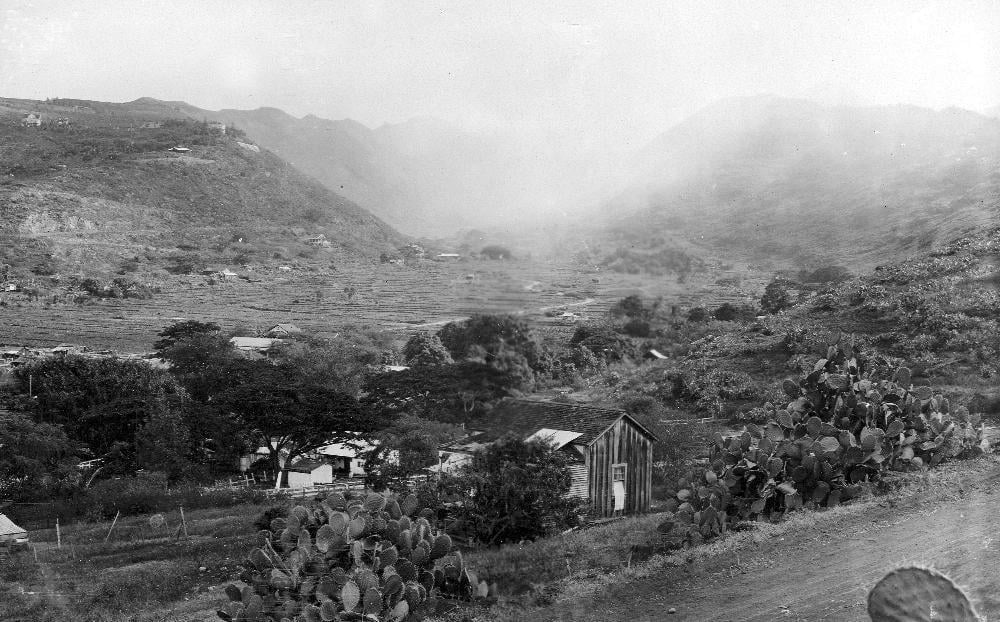
I sought additional counsel from one of the only groups who might understand why I would spend time and money on an inheritance that was so small and inaccessible. When I called the Native Hawaiian Legal Corporation (or NHLC) last April, a woman with a warm voice answered the phone. I explained my situation, and knew I was in the right place when she responded, “let’s make sure the state doesn’t get it, yeah?” The lawyer assigned to my case recommended I begin by documenting the chain of title, which would help him to determine the most expeditious legal route. I started with online searches in the records for the historic Land Commission Awards, plugging in various family names that might have been used in the 1800s. This returned nothing. Perplexed, I approached the archive from a different direction: I pulled historic maps, many drawn before modern road construction in the valley. There, I located the paths of streams and ravines that I could follow up the valleys and then, when I got my bearings, I overlaid present-day maps.
At last, there it was. A little trapezoid on the map, marked with a Land Commission Award number and the name of the awardee.
At last, there it was. A little trapezoid marked with a Land Commission Award number and the name of the awardee: Puowaina. As it turned out — hilariously, tragically — the doughnut hole hadn’t been ours to begin with. Readers familiar with kuleana land laws will likely have seen this red flag in the very first sentence of this essay: descendants of original grantees are exempt from property taxation, but later buyers of kuleana lands are not. (I learned this late, as you can see.) Puowaina’s award, No. 1804, originally consisted of two ʻāpana (parts): the doughnut hole, plus a larger plot a couple hundred feet to the east. According to the recorded testimony, he had been using the land as pasture and taro gardens since the early 1800s. His neighbor, Pilipo, did not necessarily have a historic relationship to the land he would come to own: he gained ownership of his parcel — what is today the doughnut— through a land grant award, meaning he purchased it from the government directly (the historical maps show this as Pilipo’s ʻāpana 4, so he probably bought a number of plots simultaneously).


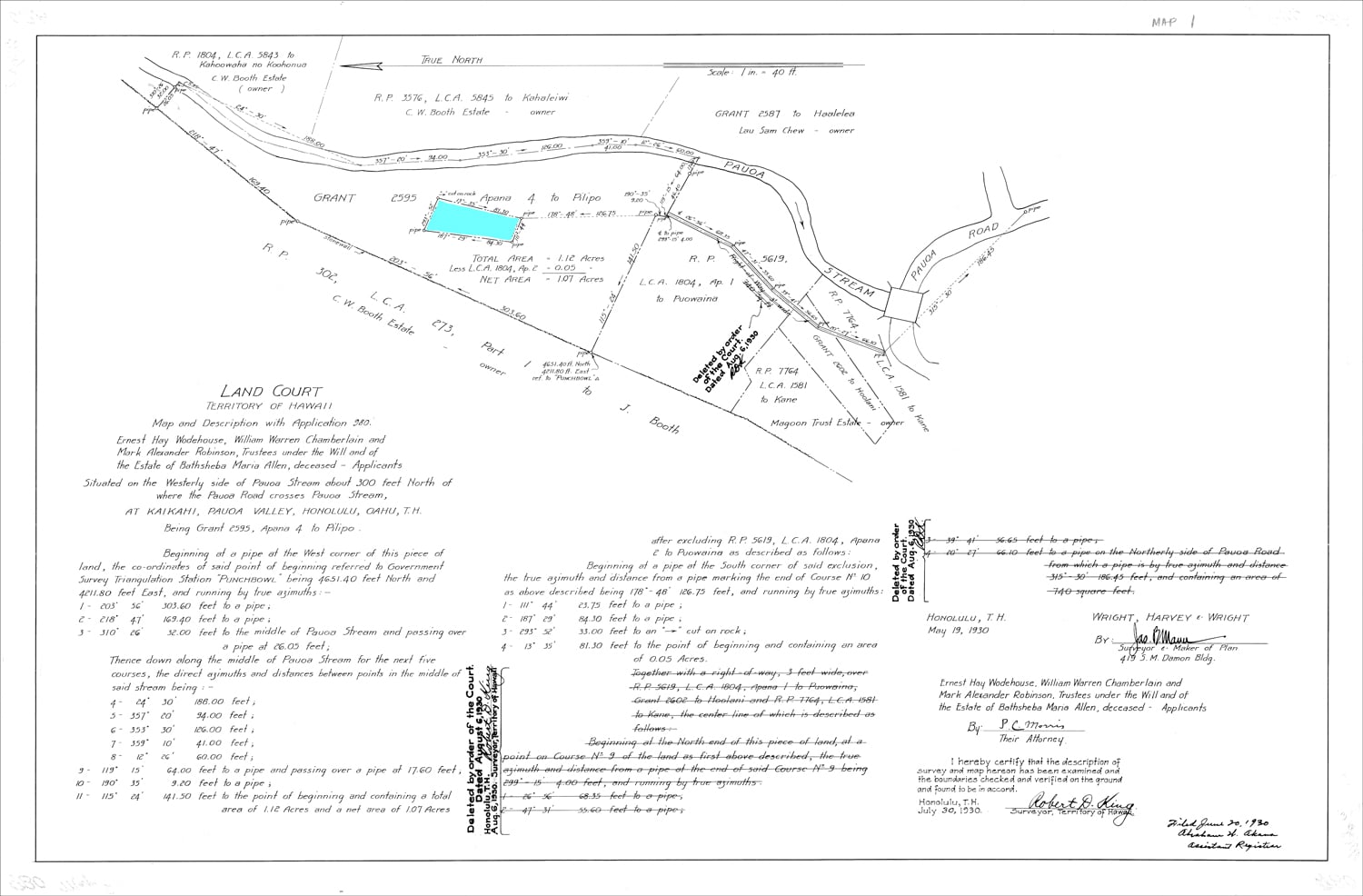
The chain of title showed that the parcel hadn’t come into my mother’s family until around 1900, its ownership having been transferred, along with the larger ʻāpana, at least six times in the decades since the Māhele. Maps from the 1930s show my mother’s family owning several properties in the area, including both of Puowaina’s ʻāpana. Over time, however, they sold what could be sold, leaving only the doughnut hole. And so the narrative I had created for myself about the land — a birthright nearly lost, narrowly recovered — was summarily replaced with the far more likely scenario that my siblings and I were left with the remaindered scrap of other, more valuable properties. For the first time it occurred to me that maybe my mother hadn’t mentioned it on purpose.
And so the narrative I had created for myself — a birthright nearly lost, narrowly recovered — was summarily replaced with a remaindered scrap.
Committed at this point, though, I signed a contract for legal representation. Our lawyer would help my siblings and me add our names to the property title using what is called a “determination of heirs.” As he explained, it was a highly unusual suit for NHLC to take on: as a matter of principle for a Hawaiian-serving nonprofit, they don’t quiet titles. Yet my family — small, one generation removed from an owner, and all in agreement — presented an intriguing case study in which some heirs would relinquish their claims without payment or contestation. But even then there were complications: my (Hawaiian) mother was my (haole) father’s second wife, and he had come to the marriage with two grown (haole) sons; she died first, which meant that everything she had went to our father, and so all five children became heirs to the doughnut hole. That was nearly 20 years ago, long after wills had been signed and assets distributed among the children of the first marriage and the children of the second marriage — who, of course, are the Hawaiian ones foolish enough to want their names on a title which will only ever cost money.
Kuleana in Theory — Ownership in Practice
Last spring, when I pitched the idea for this story, I imagined that by submission time the land would be ours, a kuleana reclaimed. My siblings and I would have established our easement across the doughnut, and cleared the 0.05 acres of jungle. It wouldn’t be easy, since the overgrowth is thick, but with any luck, we would be able to glimpse the little stream that winds along the southerly border. Facing one direction, the clearing, filled with palm grass and ginger, would stop just shy of the tangle of heliconia and monstera that keep the upland valley largely impassable. In the other direction, we’d be staring at the houses lining the cul-de-sac, the single-walled constructions of the Hawai’i working class. We would have our party and invite friends and family, crowding as many as we could into the tiny space. If we timed it right, the mosquitoes might mostly leave us alone and we’d get some shade from the monkeypod and mango trees above us. It would be celebratory and silly and brief — just long enough for a sandwich and a couple glasses of champagne.
That never happened.
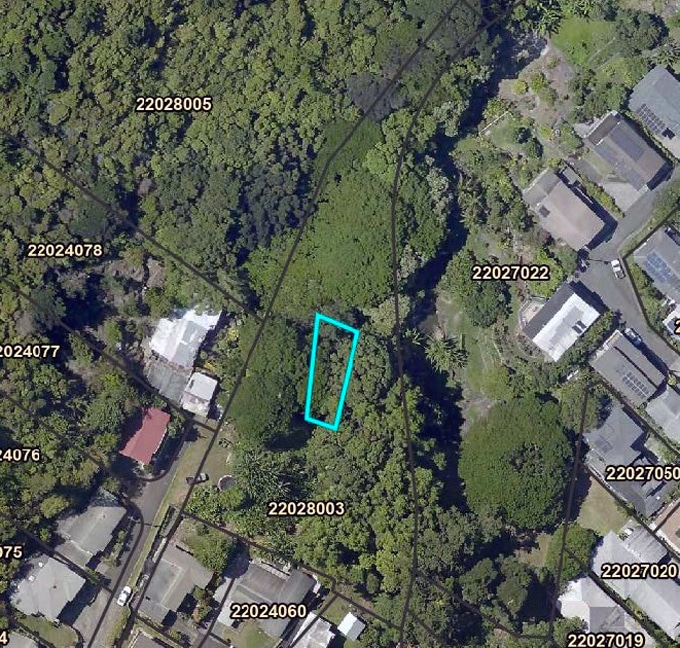
Instead, after nearly a year of patient work, we are just now submitting copies of our heirs’ agreement to the courts in Hawai’i. In it, two of my siblings (and I) ask to be added to the property title; two relinquish any claims to it. Or, as my eldest brother clarified: “If my early morning math is correct, I’ll be disclaiming interest in the equivalent of 1/1000 of an acre [or] about 40 square feet.” It will likely be a few months more until we know the decision of the courts.
I will occasionally visit, accidentally driving past the turnoff, reversing awkwardly, and sitting for a moment with this land that we hang on to.
With the money I’ve earned writing this essay, I’ll pay the accrued property taxes (thanks, Places!). And then I will keep paying the taxes when they are due, so that foreclosure never comes. If my reading of the zoning laws are correct, our doughnut hole will also keep getting in the way of the doughnut’s potential development, and so the two pieces of property, nested as they are, will remain wild in a city that has been developed to its bursting point. On my trips home, I will occasionally visit, accidentally driving past the turnoff for the lane, reversing awkwardly, parking on the grassy curb, and sitting for a moment with this land that we hang on to.



If you would like to comment on this article, or anything else on Places Journal, visit our Facebook page or send us a message on Twitter.