
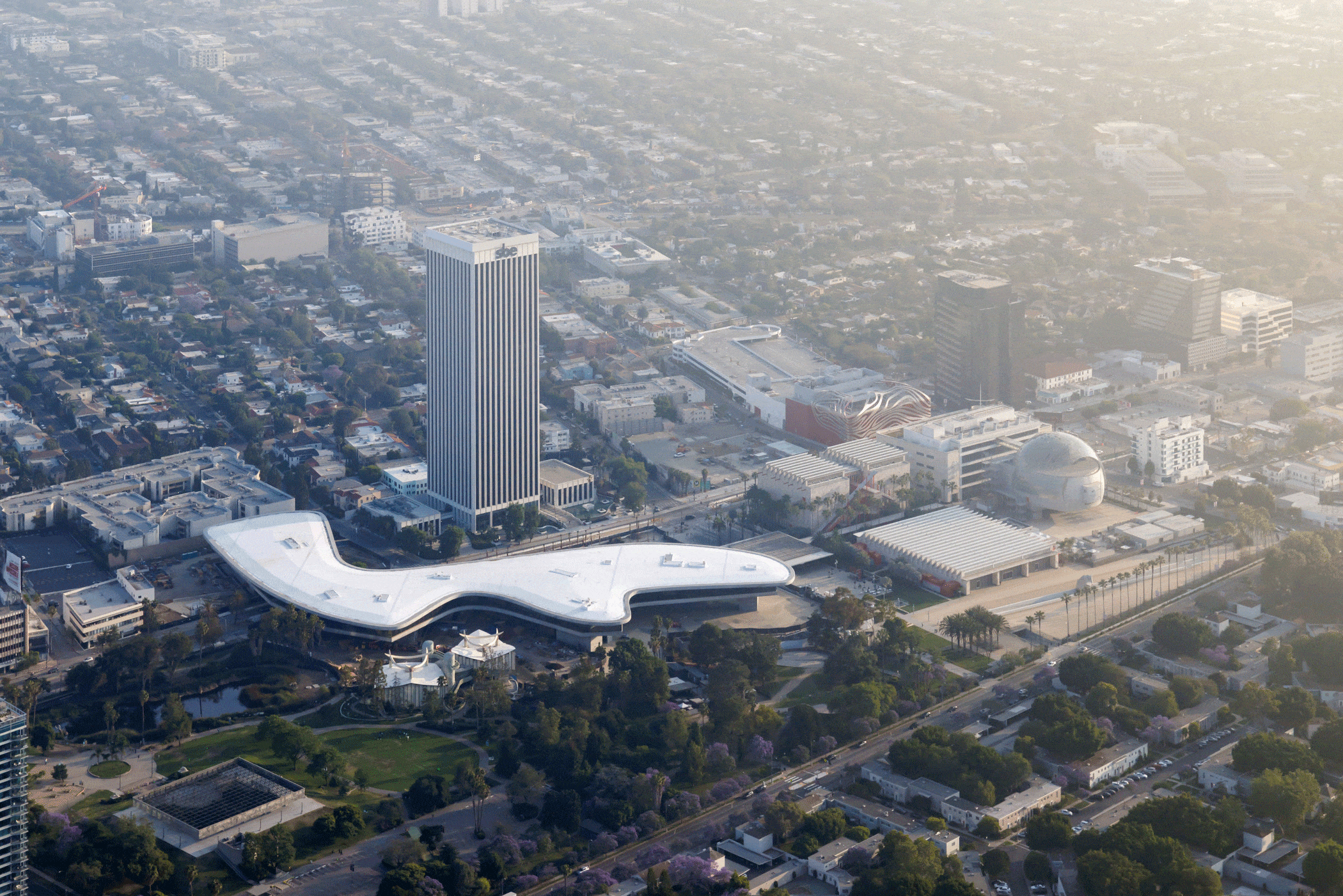
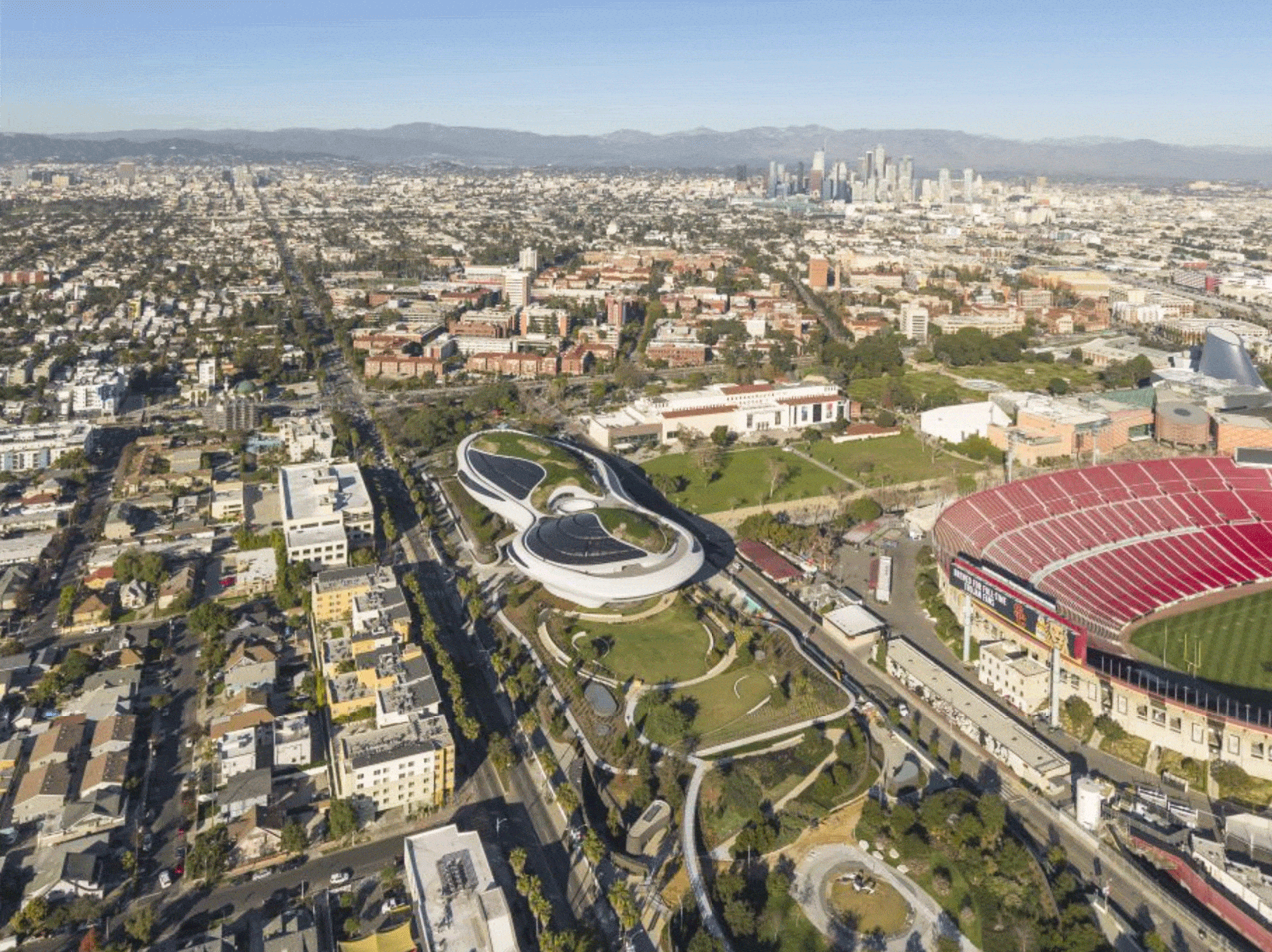
The Death Star, a freight depot in the Outer Rim, Jar-Jarchitecture: along with a new metaphysics of science fiction, George Lucas has given us a rich vocabulary to describe his new museum in Los Angeles, as well as its two closest rivals. The fluid-formed Lucas Museum of Narrative Art, designed by MAD Architects, has recently conceded a Landspeeder race for completion to Peter Zumthor’s almost infrastructural addition to the Los Angeles County Museum of Art, while the Academy Museum of Motion Pictures, by Renzo Piano Building Workshop, with its spherical and slightly sinister cinema, opened in 2021. Local Jedi will have a year or so to explore these strange craft before the blinding attention — and likely Tatooine-level temperatures — of the 2028 Summer Olympics bring all three into global regard.
The temptations of Star Wars-speak notwithstanding, these new cultural hubs demand a reckoning. Together, the Academy Museum (295,000 square feet), the David Geffen Galleries at LACMA (347,500 square feet), and the Lucas Museum (300,000 square feet) will add almost one million square feet of exhibition and related spaces to the city, within more than fifteen acres of associated real estate. 1
Did Los Angeles need a spate of gargantuan museums to ring in the first quarter of the 21st century?
Hardly.
Perhaps need isn’t the best benchmark for art museums, just as purpose may not always apply to their contents. Still, a question of necessity hovers over this trio of blockbuster new landmarks. The masterpieces and ephemera slated for display will justify their construction for most visitors; more winningly, all three museums frame novel prospects of the city, in effect curating aspects of Los Angeles into their collections. And yet these buildings are landing in a city well-versed in this brand of museological extravagance; or at least skeptical of the transformative potential of architecture-for-art, and the stolid jewel boxes that too often are the result.
The Academy Museum, the Lucas Museum, and the Geffen Galleries are not only the latest installments in the city’s formidable array of showcases for the visual arts; they are also the last for a while. As such, they bookend a six-decade frenzy of cultural striving, beginning with the opening of LACMA in 1965, and continuing with the Getty Villa in 1974, Norton Simon in 1975, the gradual establishment of the Museum of Contemporary Art from 1979 to 1987, the Hammer in 1990, the Getty Center in 1997, and, in 2015, The Broad. 2
The new museums conclude this long arc after lengthy gestations of their own. All three were beset by drift. Each was envisioned by one architect but redesigned and completed by another; the Academy and Lucas museums were planned for different sites; the Lucas even flirted with two other cities. 3 Each project pivoted in crucial ways after the 2008 recession, and the completed structures reflect multiple rounds of value-engineering and design compromises. 4 In the case of LACMA, most of the anticipatory media coverage was focused on what went unrealized, scaled-back, or built to standards less precise than desired by the legendarily exacting Peter Zumthor. 5
These new museums are so large and sprawling that each constitutes an architecture and an urbanism, with strengths and weaknesses in each register.
Like the Getty Center — completed in only fifteen years — these three new museums are so large and sprawling that each constitutes an architecture and an urbanism, with strengths and weaknesses in each register. The respective pros and cons will depend on one’s point of view. Haters tend to see these projects through one or another disciplinary lens: architects debate the timeliness or radicality of their designs, while urbanists lament how their looming presences abridge or ignore their street frontages. Preservationists (perhaps the Venn overlap of those constituencies) are united in celebrating the Academy Museum for saving the circa-1939 May Company Building, and in denouncing LACMA for tearing down the original three-building campus, designed by William Pereira in 1965. (A smaller contingent laments the loss of the 1986 addition, by Hardy Holzman Pfeiffer, as well). Some have wondered how the modestly-inventoried Academy and Lucas will make use of all their new square footage; more pointedly, others have questioned why the encyclopedic, chockablock LACMA has spent so much to wind up with even less gallery space.
Given their timing and scale, their architectural ambitions, and their modes of civic engagement, I’d like to consider these projects together. As a group, they test contemporary assumptions and ambitions for museum design, advanced form-generation, and the role of major cultural institutions. It is notable that the architectural debates and design regimens in which these designs were germinated have evolved markedly during the many years it took to complete them. I want to revisit some of their animating ambitions, and to consider if they still seem worthwhile as we move into the second quarter of the 21st century.
Arcs on Stilts
Essays on architecture in the public realm tend to telescope from the general to the specific, but here I will do the opposite. To misappropriate Clement Greenberg, who dismissed sculpture as what you back into for a better view of a painting, I confess that I often discount civic or contextual criticism as a retreat from looking carefully at buildings. There is in fact a lot of “city talk” around and about these projects; however, I am convinced that their lasting significance will hinge largely on the ways in which they challenge the discipline. And they happen to do that in common fashion: for all their differences, the Academy, Lucas, and LACMA are watershed examples of large-scale curvature as built form, each with particular ambitions regarding function, geometric complexity, and construction logic. All explore, perhaps even promulgate, a specific affront to the orthogonal, flat-plane conventions of most buildings.
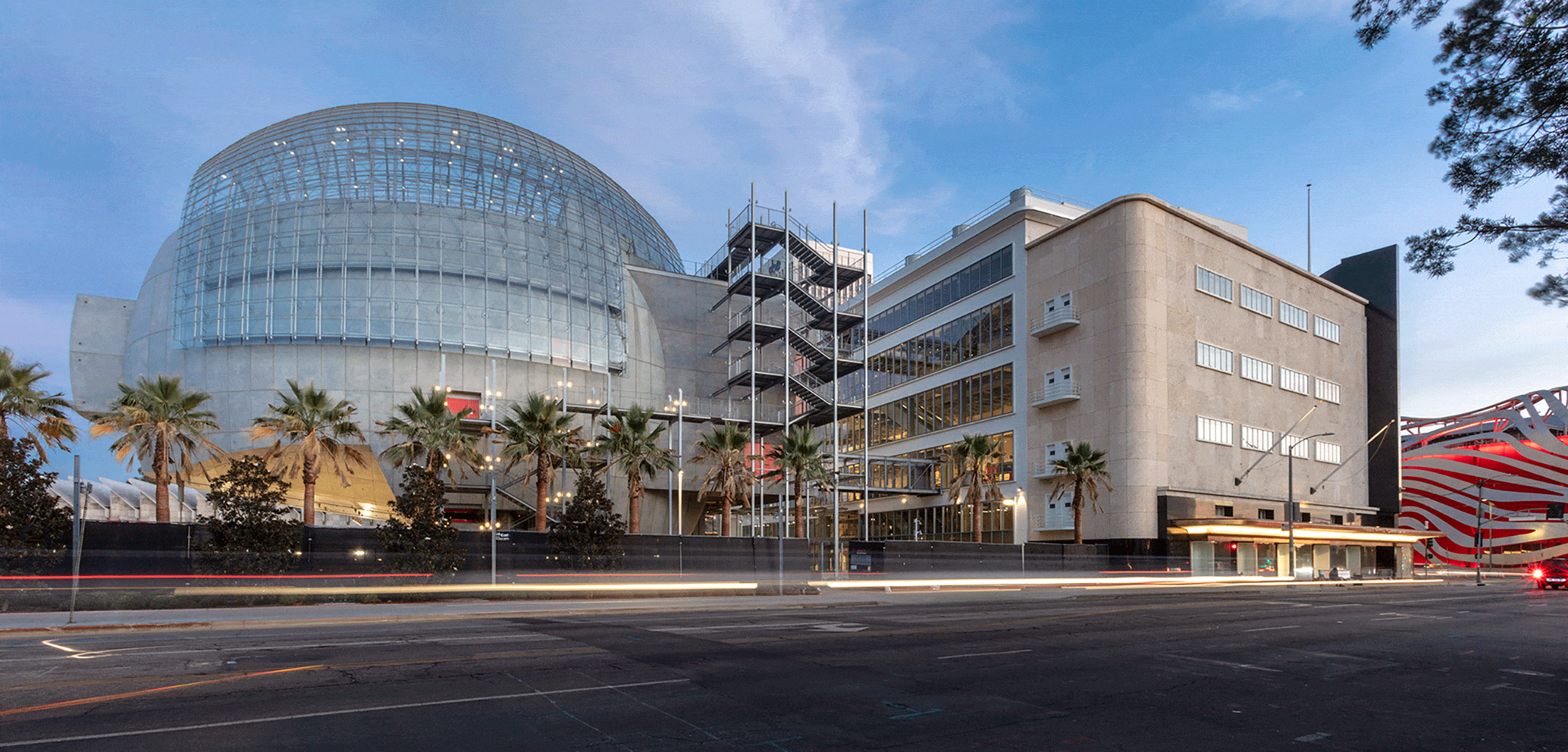
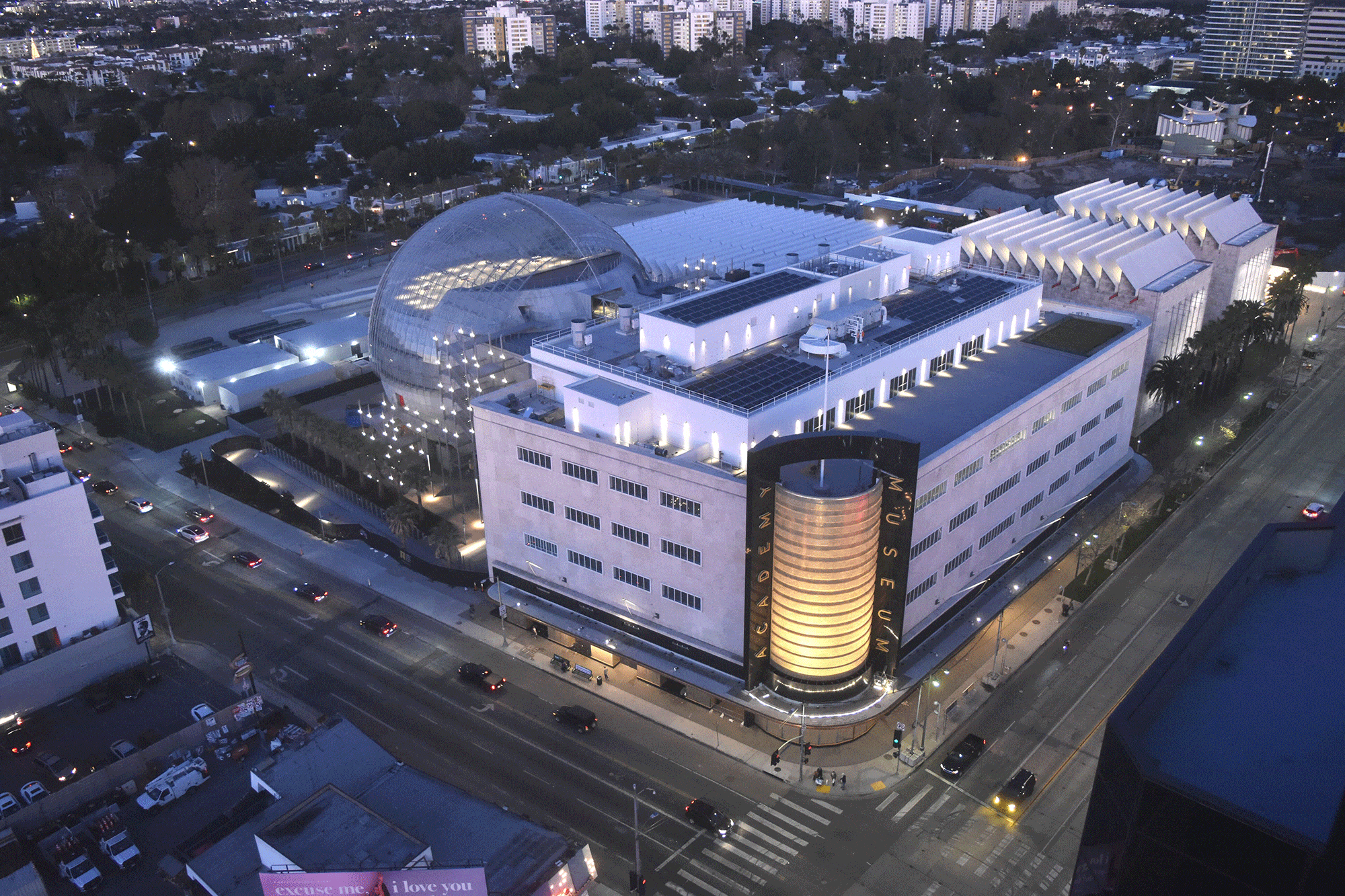
At the Academy Museum, Renzo Piano relies on radial tactics. Here, shape implies form — various circles or parts of circles govern the major design moves in both the old and new structures that comprise the complex: the renovated May Company, the art deco department store on the corner of Wilshire and Fairfax that opened in 1939 and is now called the Saban Building, and the Sphere, the steel and concrete addition with the glass-shingled roof. In a sense, the Euclidian sphere of the free-standing orb “universalizes” the elegant sweep of the May Company building, with its famous cylindrical corner, tiled in gold leaf mosaic. The museum is thus formed by part of a column, all of a sphere, and a long planar awning, all corners rounded, linking the two primary volumes.
The Academy, Lucas, and LACMA are watershed examples of large-scale curvature as built form.
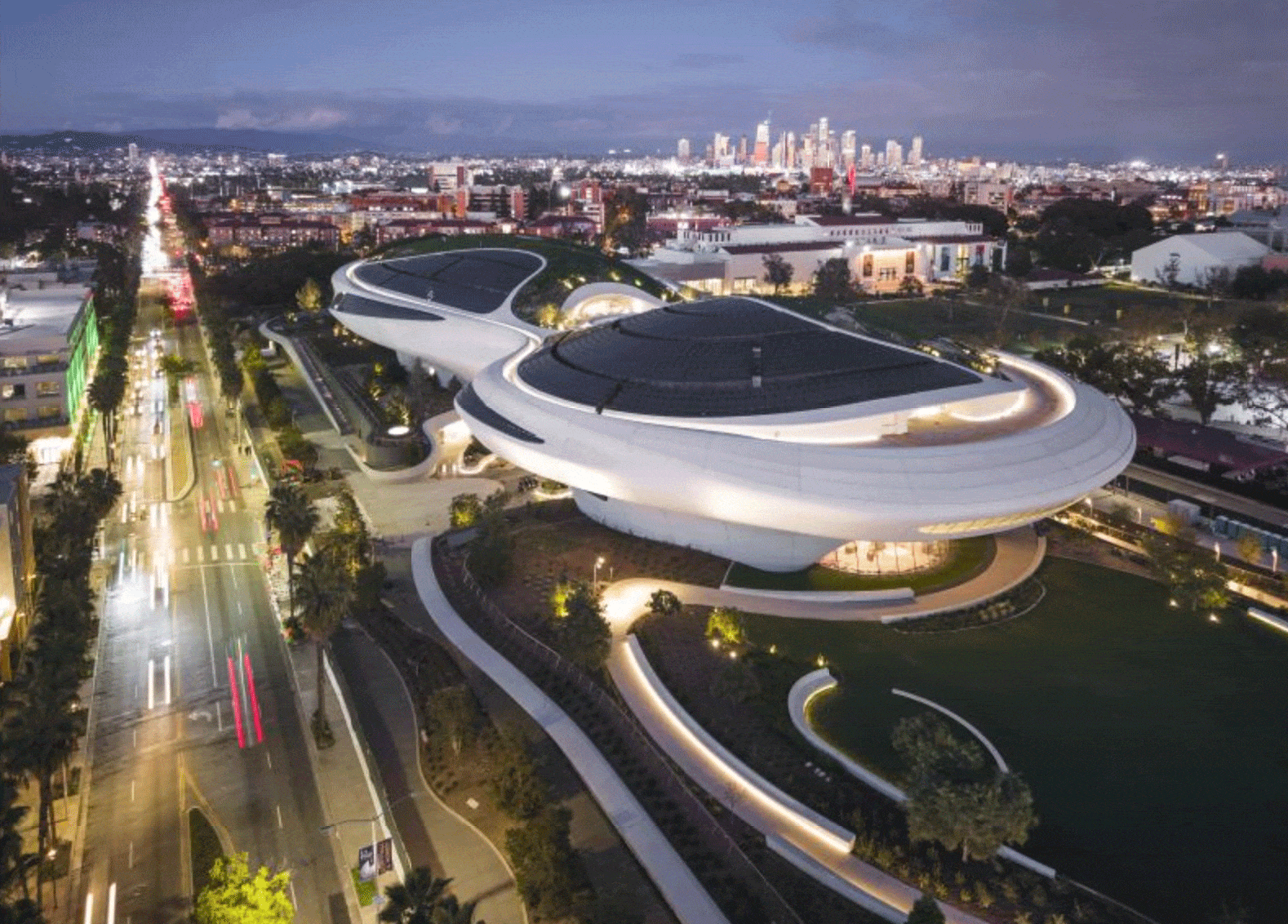
By contrast, the Lucas tests the potential for post-Euclidean, paraboloid forms to “explode the box” of normative architecture in general and museums in particular. 6 Here, shape equates with form — compound, parabolic curvatures herald a parametric newness. One effect is a proliferation of vague allusions. Do you see a futurist dolphin or post-apocalyptic sea slug? Or perhaps, as Ma Yansong, founding principal of MAD, hopes, you see clouds, recalling the stylized imagery of Chinese scroll paintings. At the Lucas, as at Frank Gehry’s Disney Concert Hall in Los Angeles, or Zaha Hadid’s Aliyev Center in Baku, compound surface curvature blurs the divide between object and building and invites a plethora of over-easy analogies and associations.
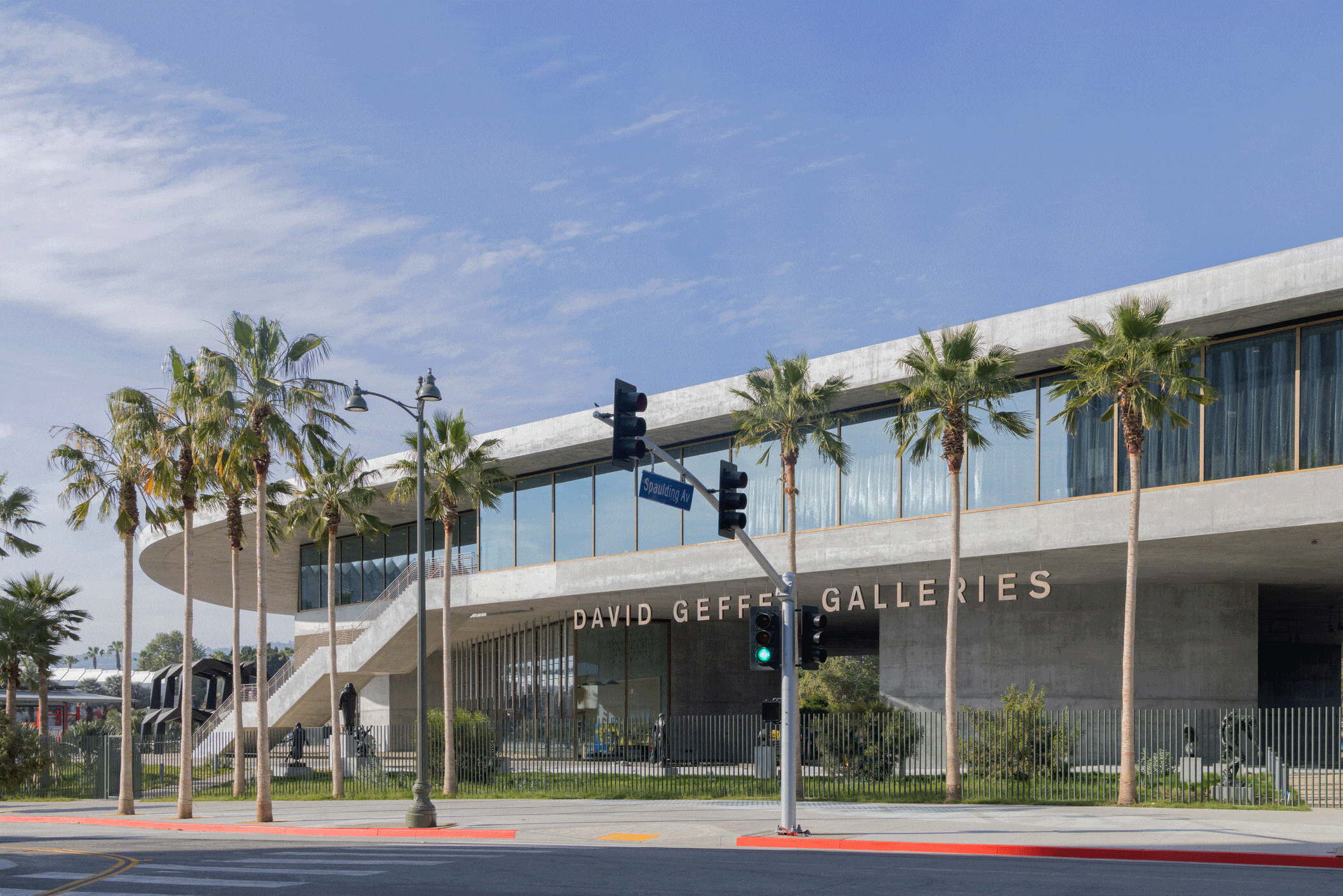
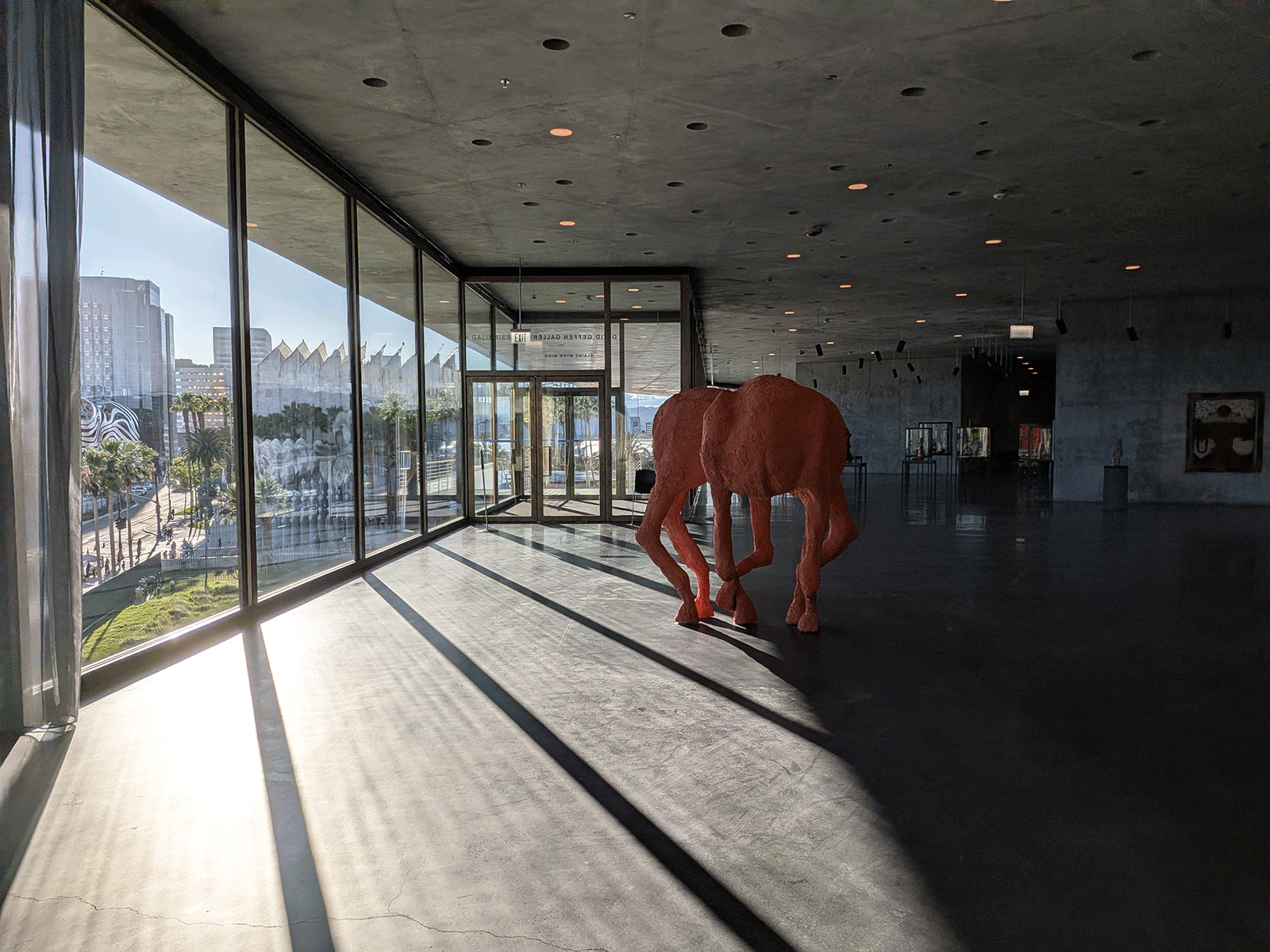
Meanwhile, at LACMA, shape counters form; loose, informally drawn floor plates, their shapes evocative of Miro or Noguchi as they span across Wilshire Boulevard, play against taut, faceted glazing and the sweeping concrete staircase. As many reviewers have noted, the squared corners of glass contrast with the deep, curving cantilever of the concrete roof. Some have wondered whether the decision to curve above and angle below was due to value engineering — to a cost-cutting move that perhaps angered Zumthor. Now, however, the differential seems to me intentional and character-defining. Among other virtues, the double-edged-ness discourages any specific symbolic reading of the whole; a “failure” of metaphor that is, I would argue, a sign of the sophistication of the design.
To invoke another formalist critic, these new museums also call to mind Michael Fried’s well-worn lament, in “Art and Objecthood,” that when art moves too far off the wall, it risks a distracting theatricality — and becomes hard to “see” amidst all the spatial relationships to neighboring works. 7 And there is a lot to see — to back into — at all these museums. None is as neatly bounded an object as, say, Frank Lloyd Wright’s Guggenheim, Marcel Breuer’s Whitney, or SANAA’s New Museum. When seen from above via Google Earth, or when landing at LAX, they impress me as startlingly informal, even formless, amoeba-like in their challenging of the grid. (Even the less amorphous Academy Museum casts an eccentric shadow into surrounding residential blocks.)
In both practical and metaphorical terms, the driving ambitions of all three projects are expressed in span. This is most evident at Lucas and LACMA, as they lift across city streets, but it’s notable too at the Academy Museum, where the most trafficked spaces are the stairs, escalators, and bridges that connect the Saban Building with the Sphere. These catwalks — mechanically forthright, seamless — are where visitors see what’s on offer, old and new, and also see one another. Here engineering prowess dictates, and sometimes supplants, architectural presence.
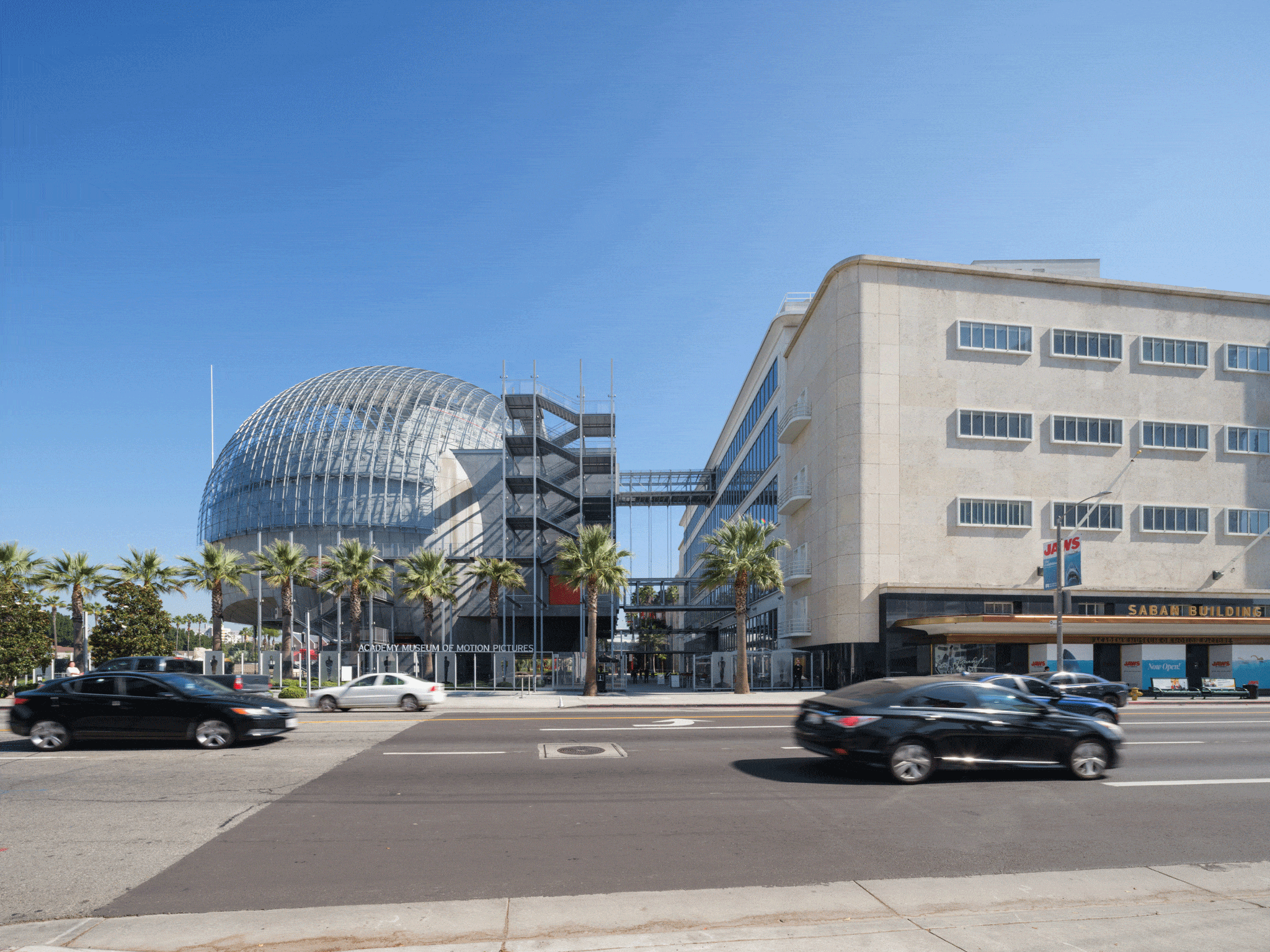
All have in common, too, a related and relatively rare design trope: all are elevated on many feet. As often as not museums rise loftily above city streets, reachable via grand neoclassical stairs (or postmodern escalators); in this way the cultural encounters within are rarefied. Instead, the Academy, Lucas, and LACMA present the utopian possibility of new forms and technologies that cheekily defy the polite, grounded expectations we bring to museums. The superstructural logic that I see in play here seems more akin to the speculative visions of Archigram or to Constant’s New Babylon than to the terrestrial realities of the Getty Center or Bilbao Guggenheim.
In both practical and metaphorical terms, the driving ambitions of all three projects are expressed in span.
In his 1971 book Los Angeles: The Architecture of Four Ecologies, Reyner Banham helped define the perception of 20th-century L.A. But it is Megastructures, Banham’s 1976 study of how complex but unified environments often substitute for traditional urban development, that better explains the city’s recent wave of museums. 8 The Academy Museum, the Geffen Galleries, and the Lucas Museum echo that more expansive, utopian ambition in much the way that the 2003 Kunsthaus at Graz, designed by Peter Cook and Colin Fournier, was the offspring of Walking City, the theoretical megastructure proposed by Archigram in the mid 1960s. That iconic unbuilt project stalked like a gargantuan marauding insect through old London; in contrast, the built Kunsthaus is deferential — a micro-mega, you could say — testing but not tearing the urbanism of the Austrian city. A similar declension is in play here in Los Angeles. The seeds of older, larger ideas — perhaps the pristine dreams of Boullée and Ledoux for Piano, the torqued fantasias of Gehry and Hadid for Ma, the discipline-altering auteurism of Constant, Koolhaas, and Tschumi for Zumthor — have flowered here at a scale that is grand by conventional measures, but polite vis-à-vis some of their vanguard precursors.
Thus do these new museums gently pique their publics, not through ostentatious materials or seriousness of affect, but by going big and making a sport of art, or at least curious stadia of its venues; in this way they seek to épater le bourgeois, tousling art world bobs and suburban mullets equally, if not lightly.
Architectures of Cinema
All three museums share more than outsized formal and constructional ambitions; all owe much to cinema, or cultural production in another (some might still claim lower) register. The Academy Museum has the movies to thank for its raison d’être; the Lucas, for its funding; the new LACMA, belatedly, for its naming benefactor, David Geffen, a partner in the studio DreamWorks. LACMA and the Lucas are both filmic in formal terms, too — LACMA in its resemblance to a spooled film reel on edge, its celluloid glazing sandwiched between the rounded planes of the floor and roof; the Lucas in its resemblance to spacecraft portrayed in its namesake’s oeuvre (and, with some apt irony, the Enterprises of the Star Trek universe as well).
The Lucas Museum of Narrative Art has a broad mandate to “tell stories” and embrace high-low Americana. Though he has many top-grossing films — American Graffiti is my favorite — George Lucas might not have been able, or perhaps inclined, to create this museum without the megaverse that is Star Wars: its triple trilogy of feature films, the metastatic expansion of its IP through animation and streaming now fueled by Disney, and the marketing and merchandizing of that vast realm. It is ironic, then, that in both its architecture and its mission, Lucas’s museum might owe as much to Star Trek and its No-Cold-War-in-Space Enterprises, fueled more by optimism than paranoia, as it does to the Manichean dynamics of the Dark Side and Resistance vying for supremacy in his galaxies far, far away.
These museums will almost certainly be understood as a grand coda for the historical decline of the film industry.
The spacecraft of Star Trek — the increasingly sinuous Enterprises, with their bulbous “bridges” peopled by an always cleverly diversified crew — contrast pointedly with those of Star Wars — typically, single-commander, rear-steerage ships, whether the grotesque off-set pyramids of the Imperial fleet or the needle-nosed X-wings piloted by indie rebel heroes. Thus in Star Wars do mostly White guys conquer the unknown, or at least the equatorial groove of the Death Star, as might medieval knights, even as they low-ride their steeds from behind like Dennis Hopper and Peter Fonda in Easy Rider. Even the Millennium Falcon is a discus with a two-pronged leading snout (though Han Solo, not the easiest of riders, sits forward not back with Chewbacca).
Arguably, for all three new museums, their debts to cinema will be the most enduringly salient features of their architecture, if not their urbanism. These museums will almost certainly be understood as a grand coda for the historical decline of the film industry, for a period no longer shaped by cinematic or even televisual production but rather by digital content creation and consumption. At the same time, many locals pray that these projects will somehow spark a renaissance of motion picture studios as a collective endeavor, and a renewed appreciation for Los Angeles’ centrality to this art and enterprise.
More than any other building type, museums index the fluctuating preoccupations of extreme wealth and industrial dominance.
More than any other building type, museums index the fluctuating preoccupations of extreme wealth and industrial dominance. The cultural import of such mid-20th-century institutions as the Museum of Modern Art, the original Guggenheim, and the Pompidou Center hinges on how they transcend the royal and aristocratic — and fundamentally residential — lineage of such European museums as the Louvre. The Getty Center, constructed on a ridge in the Santa Monica Mountains high above Brentwood, is striking in its retreat from the city. The famous “effect” of the Guggenheim Bilbao suggests the degree to which the museum sought to counter that city’s architectural norms, and to energize its tourist economy. In their various ways all these museums underscore the aspiration to democratize access to their treasures.
Look hard enough, though, and museums often reveal the origins of their benefactors; or at least, their fortunes. L.A.’s major museums have been largely the product, or legacy, of oil or real estate money. The Getty and the Hammer nod to the extractive logic of the oil industry through their fastidious lapidary cladding (mining is, after all, procedurally adjacent to oil drilling, and minerals are hedge commodities for fossil fuels). Real estate money tends to build big houses later bequeathed as museums (such as the Huntington Gardens, in the rarefied enclave of San Marino), or large, spare single-volume galleries that suggest a developer’s economy of scale (such as The Broad, on Grand Avenue, and the Resnick Pavilion, at LACMA).
In the 21st century, the fashion industry has deployed this logic to suit new cultural endeavors, often by repurposing unlikely “vintage” buildings. At the Marciano Art Foundation, created by the founders of Guess, and located two miles east of LACMA on Wilshire Boulevard, the tell is the bespoke adaptive reuse of a mid-century Masonic temple. Further afield, and in contrast to the brand’s many boutiques, the art spaces sponsored by the Prada Foundation resurrect a derelict gin distillery in Milan and an 18th-century palazzo in Venice.
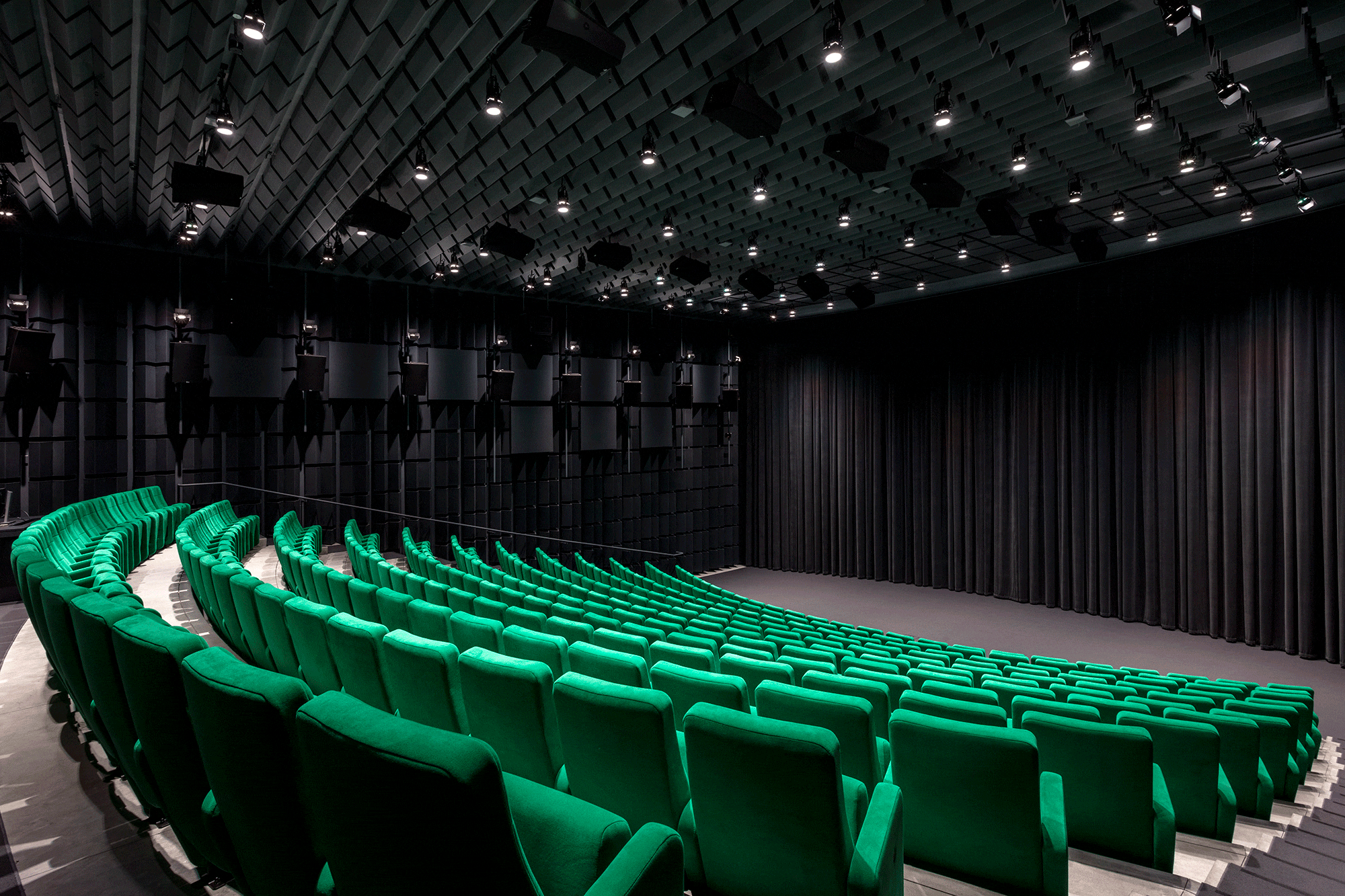
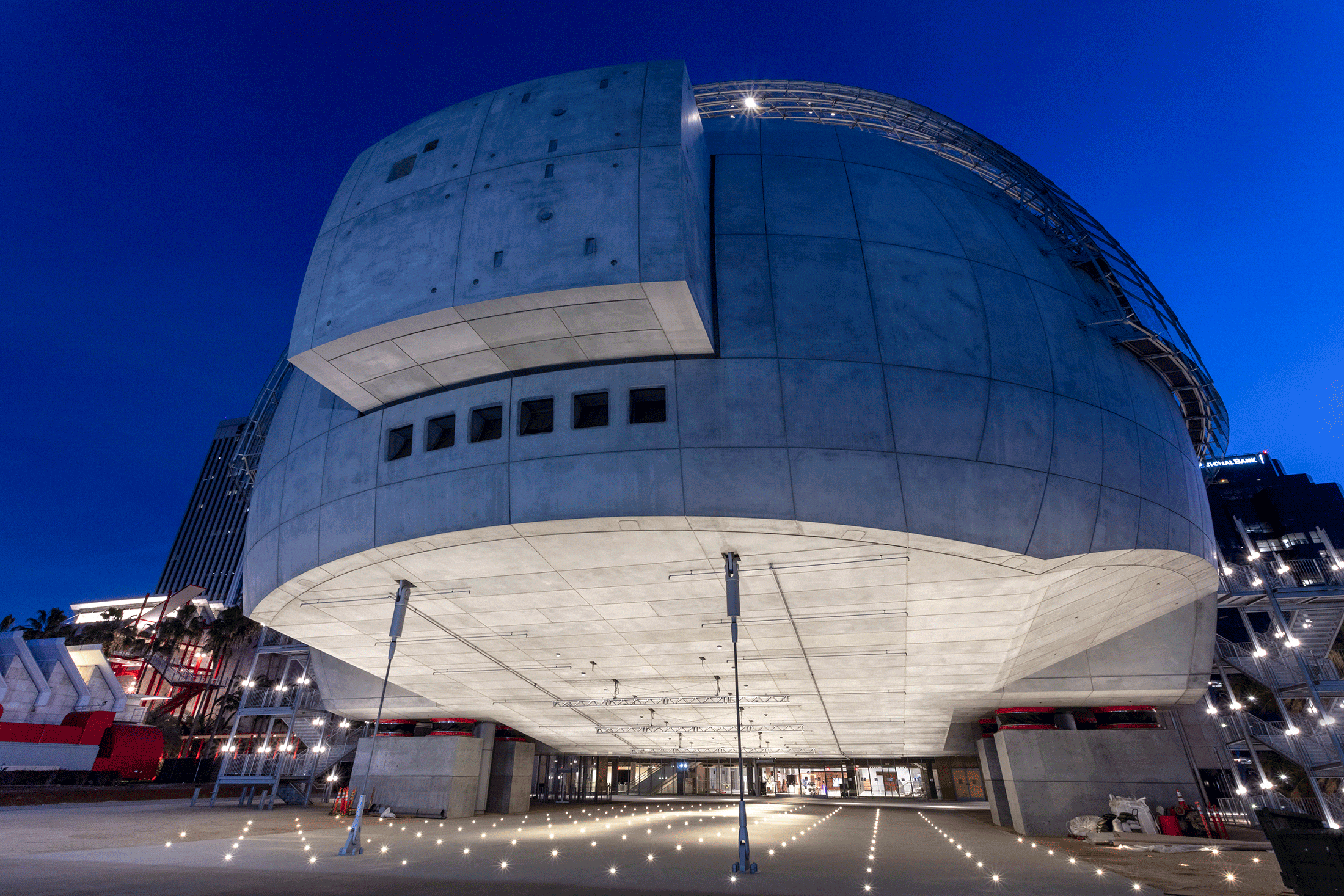
Film fortunes have been surprisingly slow to indulge in this kind of conspicuous cultural consumption, but now do so with their own habits: inside, ambiguity; outside, an oculus. Museums of cinema almost always contain dimly lit “ambient” interiors, often in the form of discrete galleries easily converted into black-box or grey-room theater space. Outside, they often feature some neutral cladding — for instance, exposed concrete or discreet panelization — interrupted by precise glazing systems that might recall either camera apertures or segmented film cells — the Academy’s glass-shingled deck; LACMA’s unspooled ribbon windows; the Lucas’s eyebrow openings. If art museums filter natural light, museums of film foreground the potentials of artificial lighting and stage-crafted illumination.
The Academy Museum delivers on a dream going back a century: to develop a film museum in the capital of movie-making.
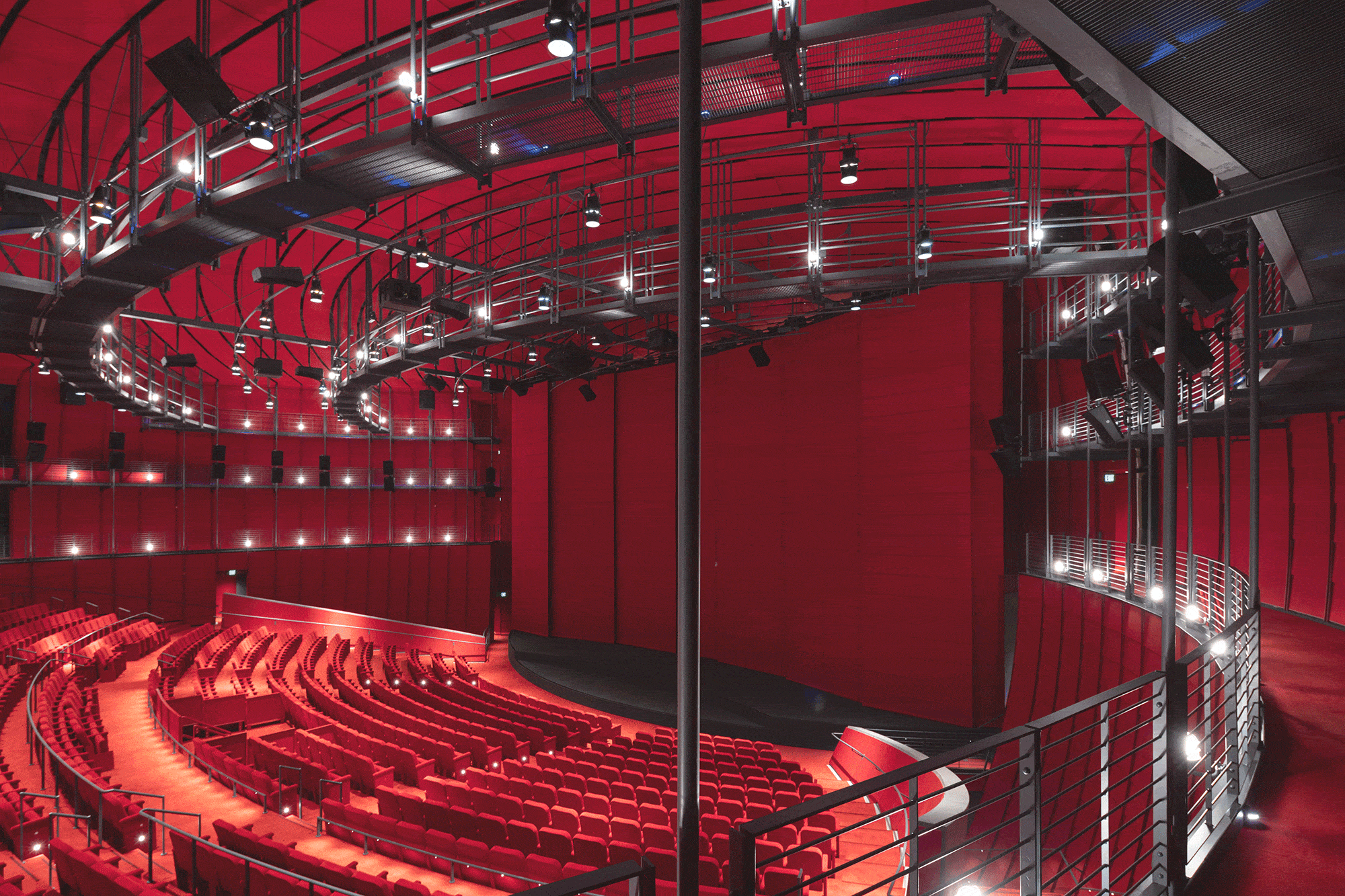
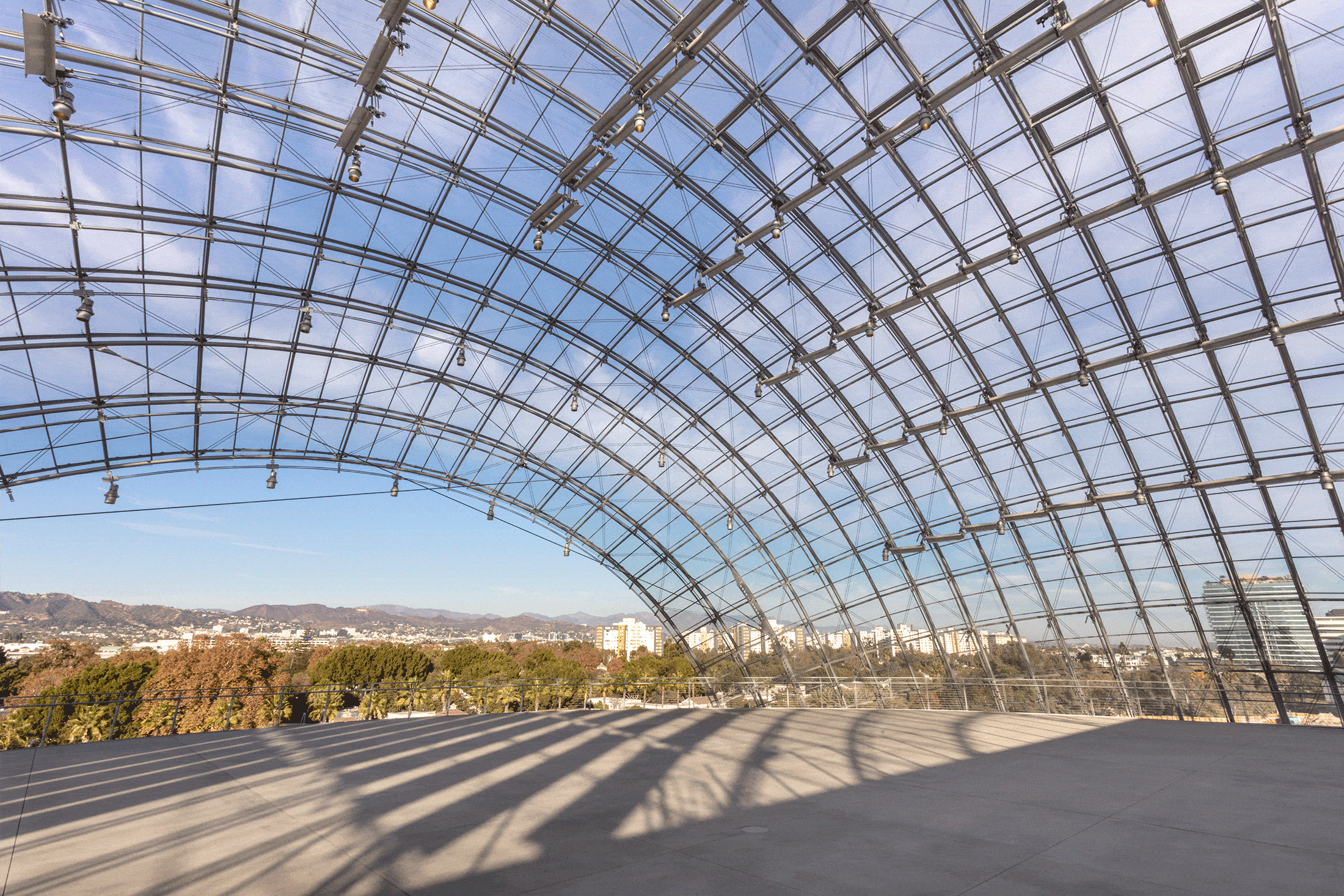
Employing these tropes gingerly, the Academy Museum delivers on a dream going back a century — to the founding of the Academy of Motion Picture Arts and Sciences in 1927 — to develop a film museum in the capital of movie-making. 9 Here one learns how the art of cinema is being commemorated, and re-temporalized, by its American practitioners and purveyors. On the south side of the complex, the Saban Building is backstage, soundstage, and false front all in one, curating the technologies and protagonists of Hollywood. Its galleries showcase numerous studio artifacts, from the Kinetoscope, the proto-projector invented at Thomas Edison’s lab in 1892; to the ruby slippers worn by Judy Garland/Dorothy in The Wizard of Oz; to the cutting-edge motion-control camera first used to film the original Star Wars. 10 Just to the north, in the Sphere, the Geffen Theater functions as a total environment for cinematic delivery and encounter. 11 It’s a remarkably capable space: within the orb, films can be screened in multiple formats — from 35 to 70 millimeter, from nitrate to laser projection — with aspect ratios optimized to suit; all of which makes the museum comprehensive in a medium-specific way. In both the new and old structures, Piano delivers instrumentation, not metaphor; he asks first, how is entertainment engineered? This approach favors the prose more than poetry of filmmaking; the one indulgence — you might say special effect — is that glass-shingled dome atop the viewing deck of the Sphere.
The orchestration of vision — inward, to the collections, and outward, to the city — animates all three museums. From atop the Academy Museum, the view is to the north, to the Hollywood Hills, where so many filmmakers live; this is neatly reciprocal with the sweeping southerly vista down from the Griffith Observatory. Meanwhile, in Exposition Park, the Lucas frames two unusual angles of the city. From its top deck, visitors can take in a long view to the south, far enough to make Watts, Baldwin Hills, and Palos Verdes the focal points, rather than city’s standard Westside eye-candy. At the same time, from its northeastern corner, an arched-brow aperture glances back at Downtown L.A. from the terrace of a mooted restaurant.
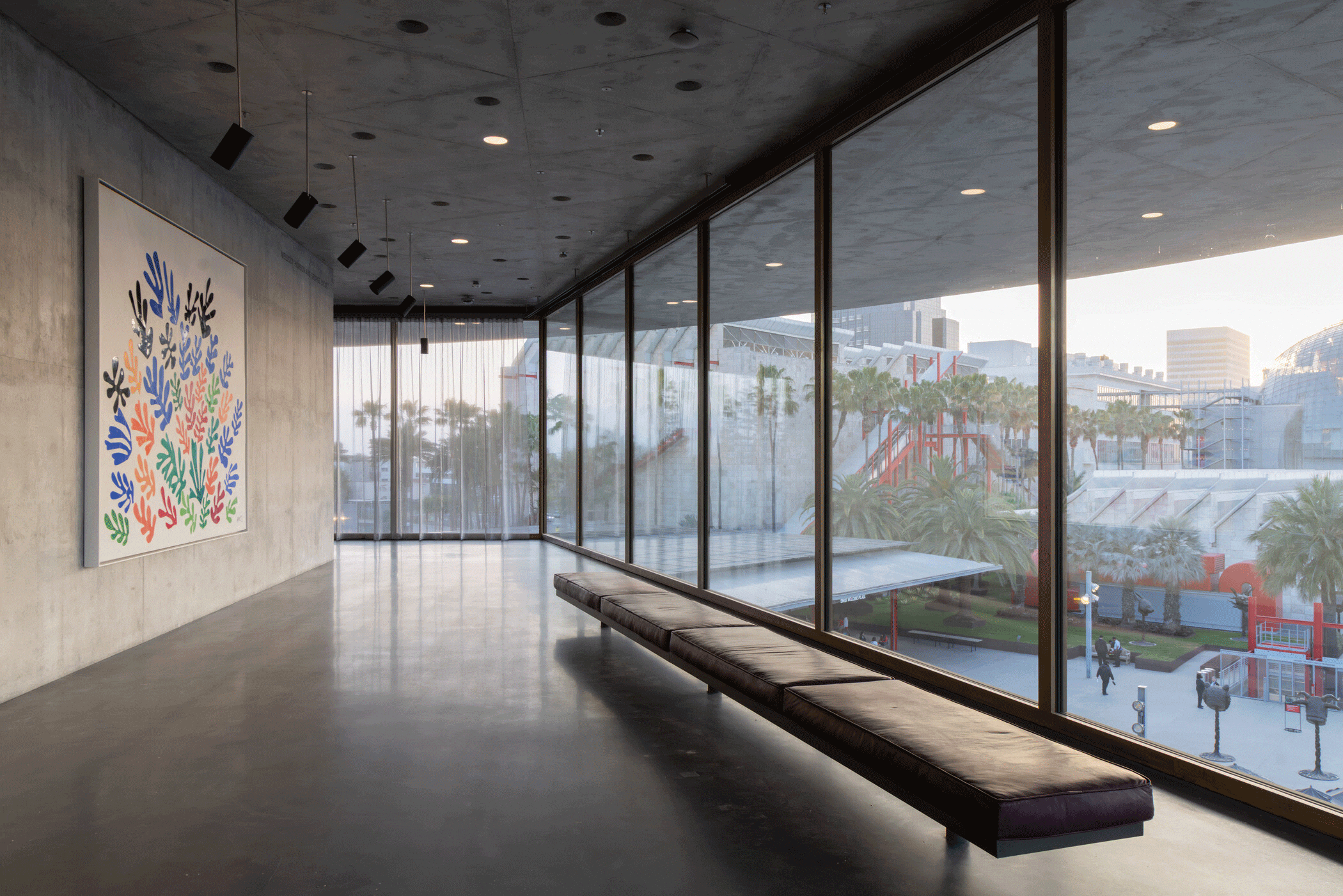
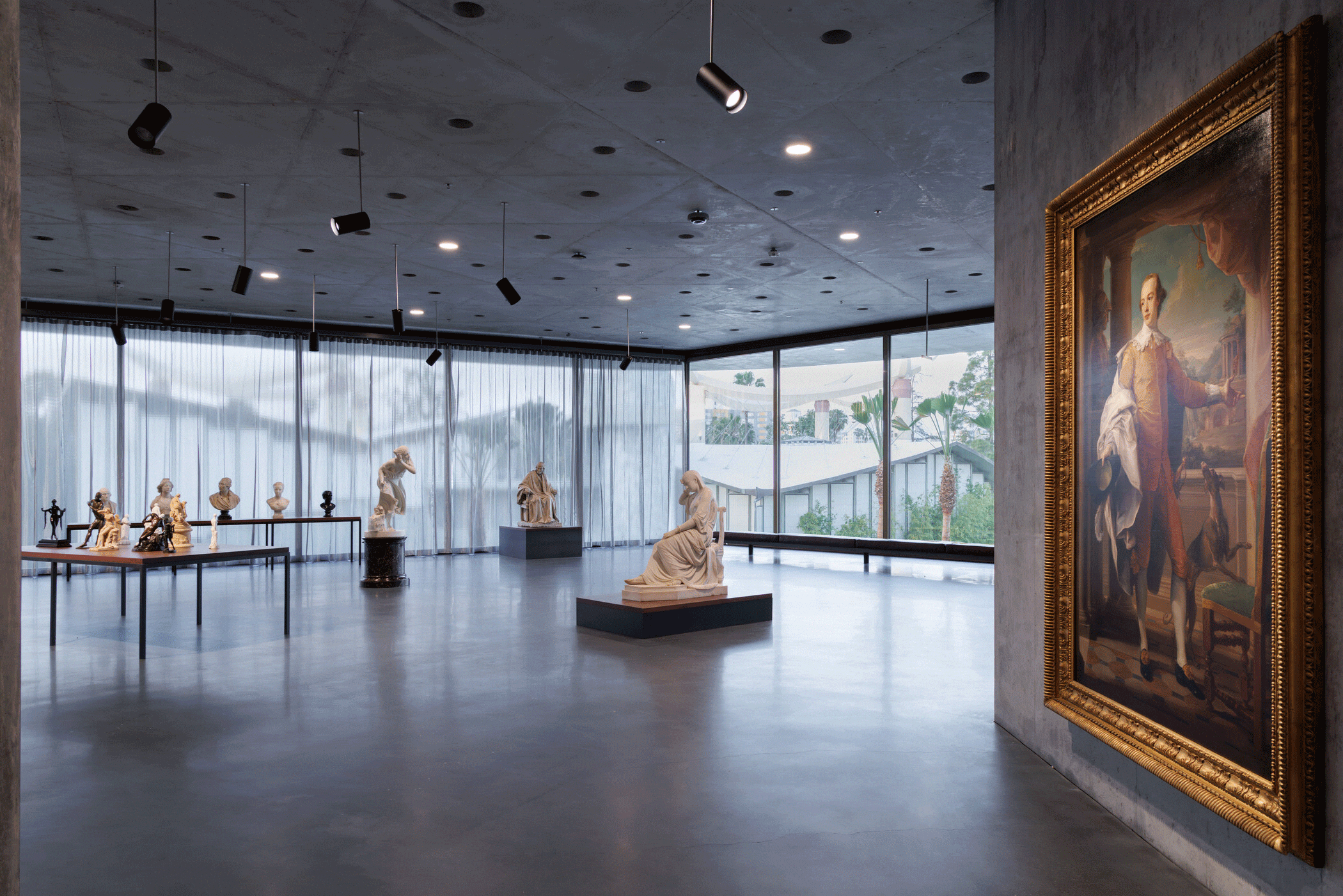
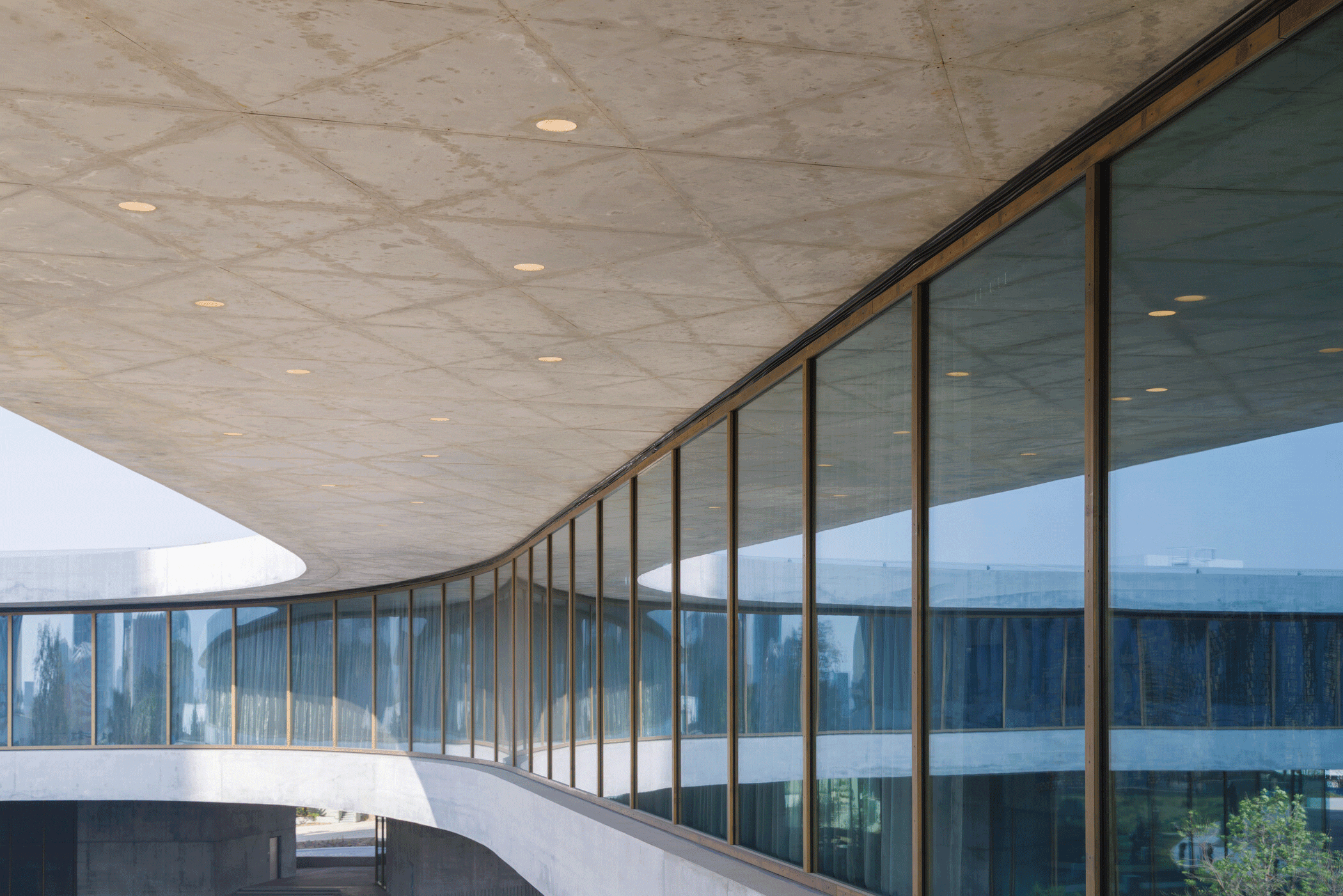
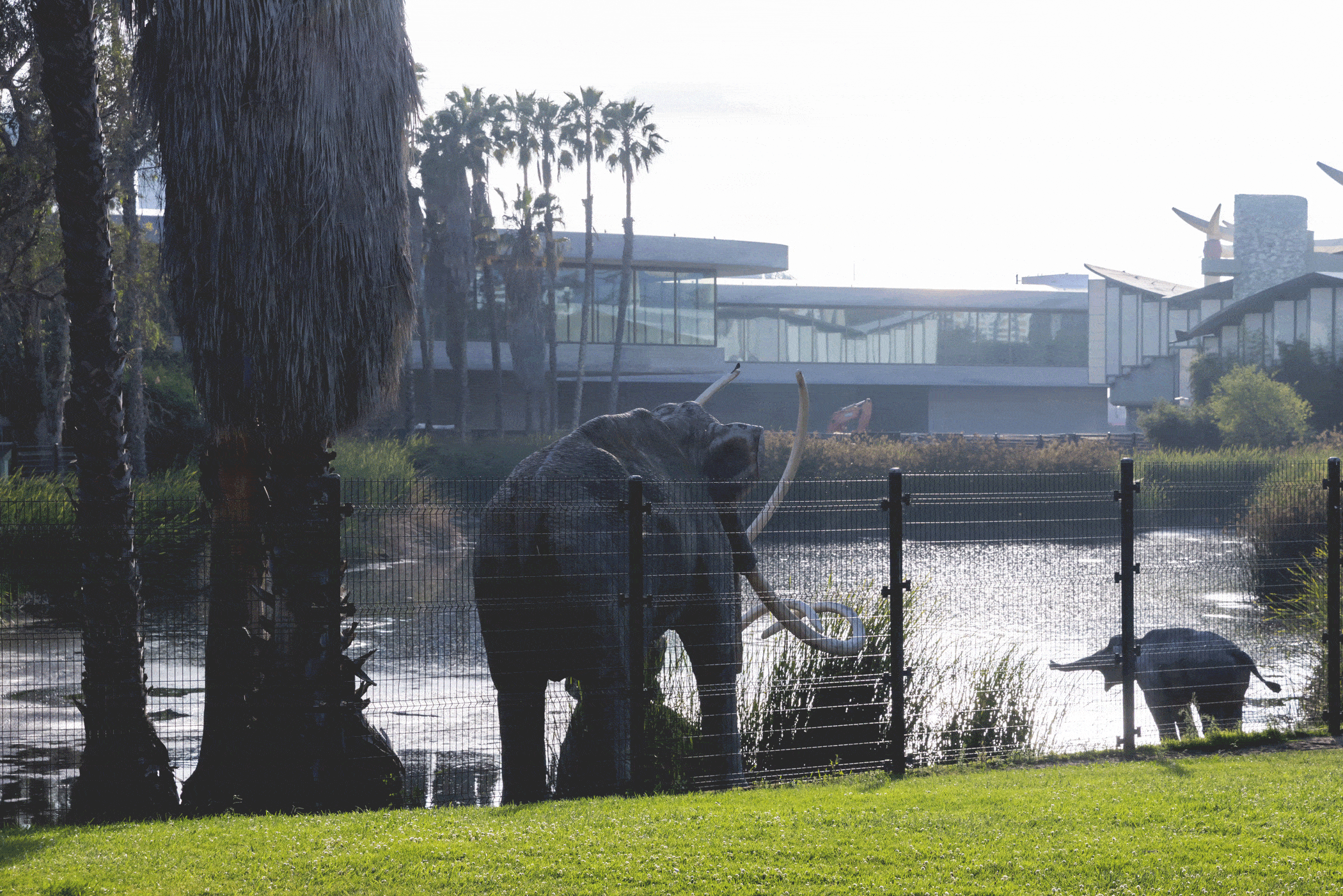
But in terms of sophisticated visuality, LACMA’s Geffen Galleries operate on another plane, defeating all easy, cardinal readings of its surroundings. On a recent visit, an architect friend noted that the faceted glazing has the effect of reframing the surrounding neighborhoods and parks as a series of shifting, elegantly composed tracking shots. In both its wide-pan terminal views from the ends of each wing, and even more in the zoomed-in views across the “waist” of the boomerang-shaped floor plan, Zumthor has bracketed LACMA’s environs — from the Wilshire corridor to the La Brea Tar Pits — in ways that no cinematographer has managed yet to do. And this, in one of the most lensed stretches of the most filmed city on earth. 12
Enclave Urbanism
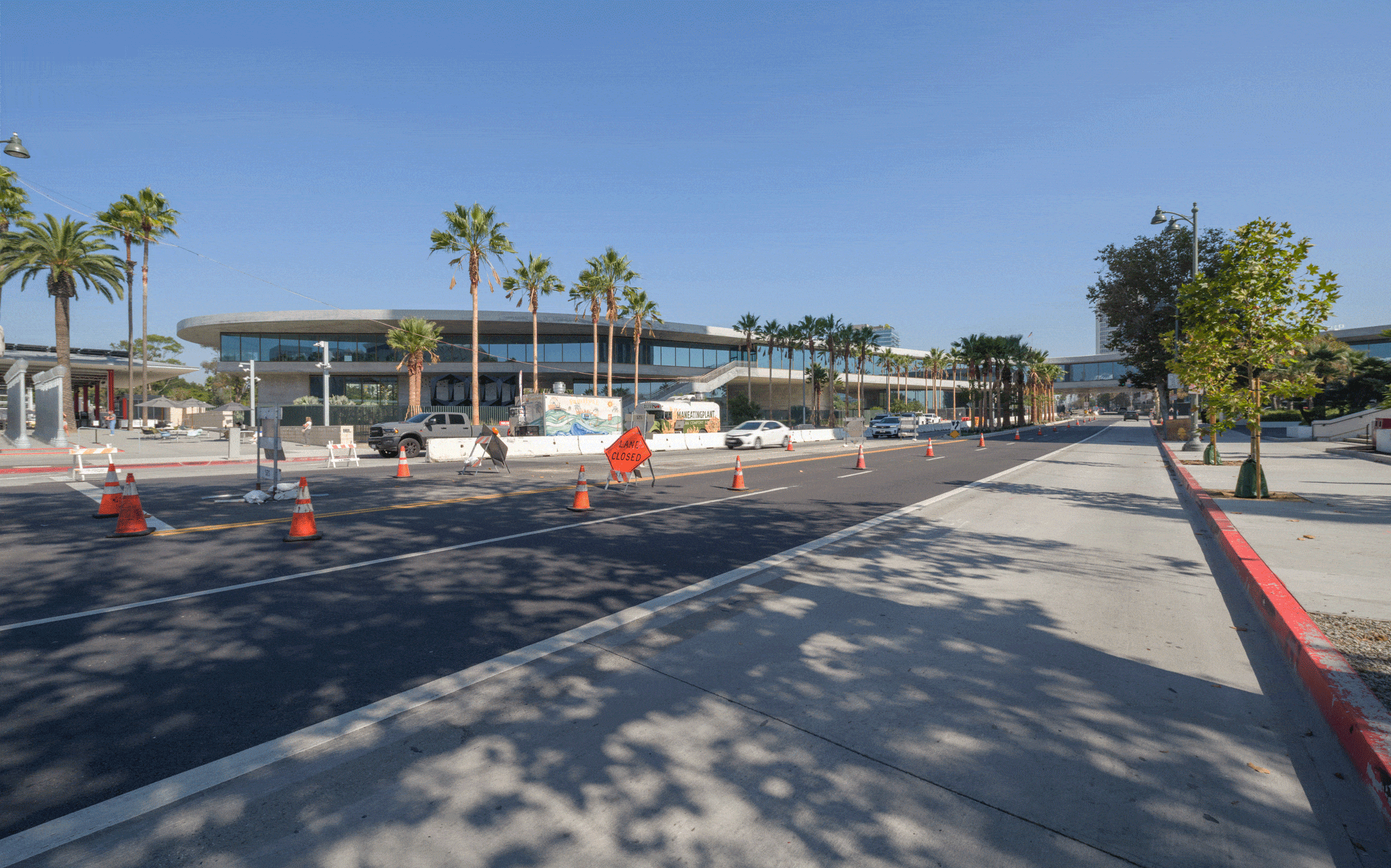
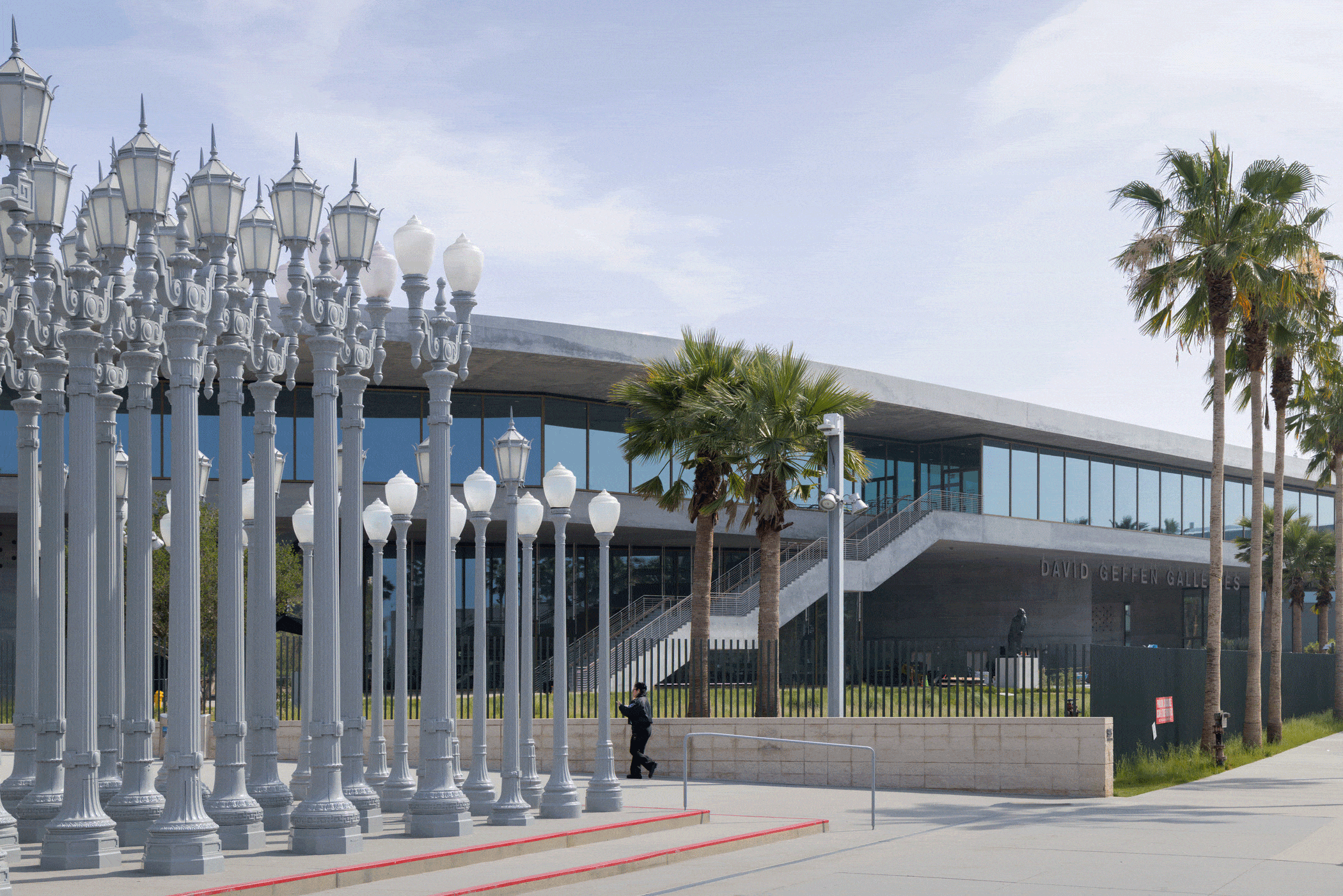
Sometimes in an art class, the instructor will ask students to draw the “negative space” around a figure, rather than the figure itself. Walking, at twilight, along that three-block stretch of Wilshire Boulevard that takes you from the Academy Museum to LACMA to the La Brea Tar Pits, one could be forgiven for caring more about the ambient pleasures of the ad hoc promenade than about the cultural landmarks themselves, or their contents. On a recent meander, I lingered under the glassy Sphere at the Academy Museum and under the 340 tons of Michael Heiser’s Levitated Mass at LACMA; continued on to the plaza joining the museum’s Broad and Resnick wings, where I admired Chris Burden’s Urban Light and savored the spectacle and irony of the kindly, selfie-seeking crowds drawn like moths to this bittersweet, (literally) brilliant work by an avowed misanthrope. I also wondered whether Tony Smith’s Smoke has been reinstalled too close to the Geffen Galleries.
One could be forgiven for caring more about the ambient pleasures of the ad hoc promenade than about the cultural landmarks.
A few miles southeast, in Exposition Park, the Lucas Museum now redefines the park’s western edge; here, as along Wilshire, there is a cluster of museums — the California Science Center, the Natural History Museum, the California African American Museum — as well as such celebrated sports venues as the century-old L.A. Memorial Coliseum, the setting for two previous Summer Olympics and soon to host the 2028 Games, and the newer BMO Stadium, built for soccer. The Lucas joins the newly expanded Natural History Museum (freshened with an addition by Frederick Fisher and Partners) to form a generous though unremarkable courtyard in the middle of the park, with nary a work of public art to distract from the promise of light sabers, Tyrannosaurus rex, and the Space Shuttle Endeavour to be found within the museums. From the park you get a good view of the recently completed Oschin Air and Space Center (designed by ZGF Architects), with its diagrid cone that will house the shuttle, and which will compete with the Lucas for formal complexity.
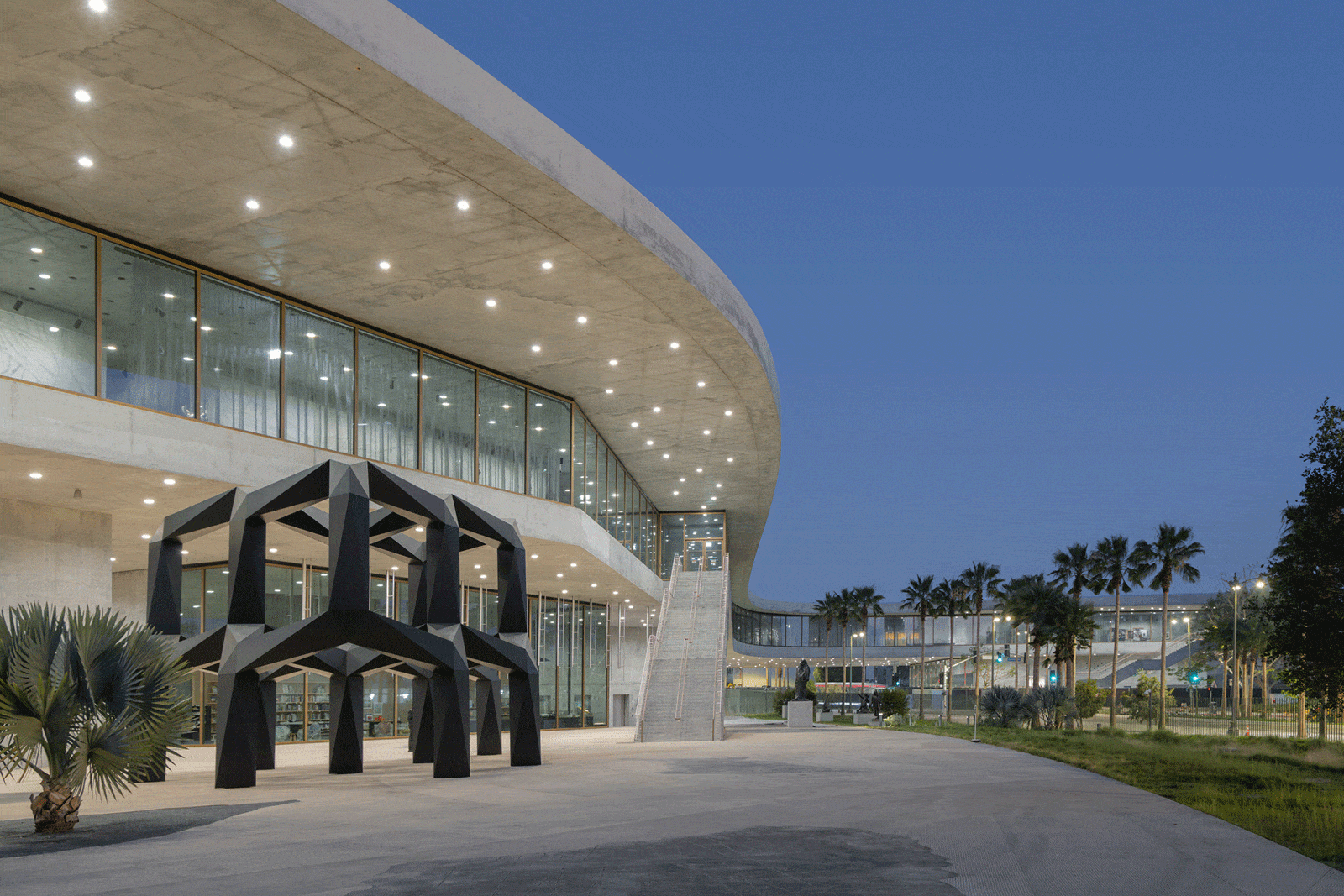
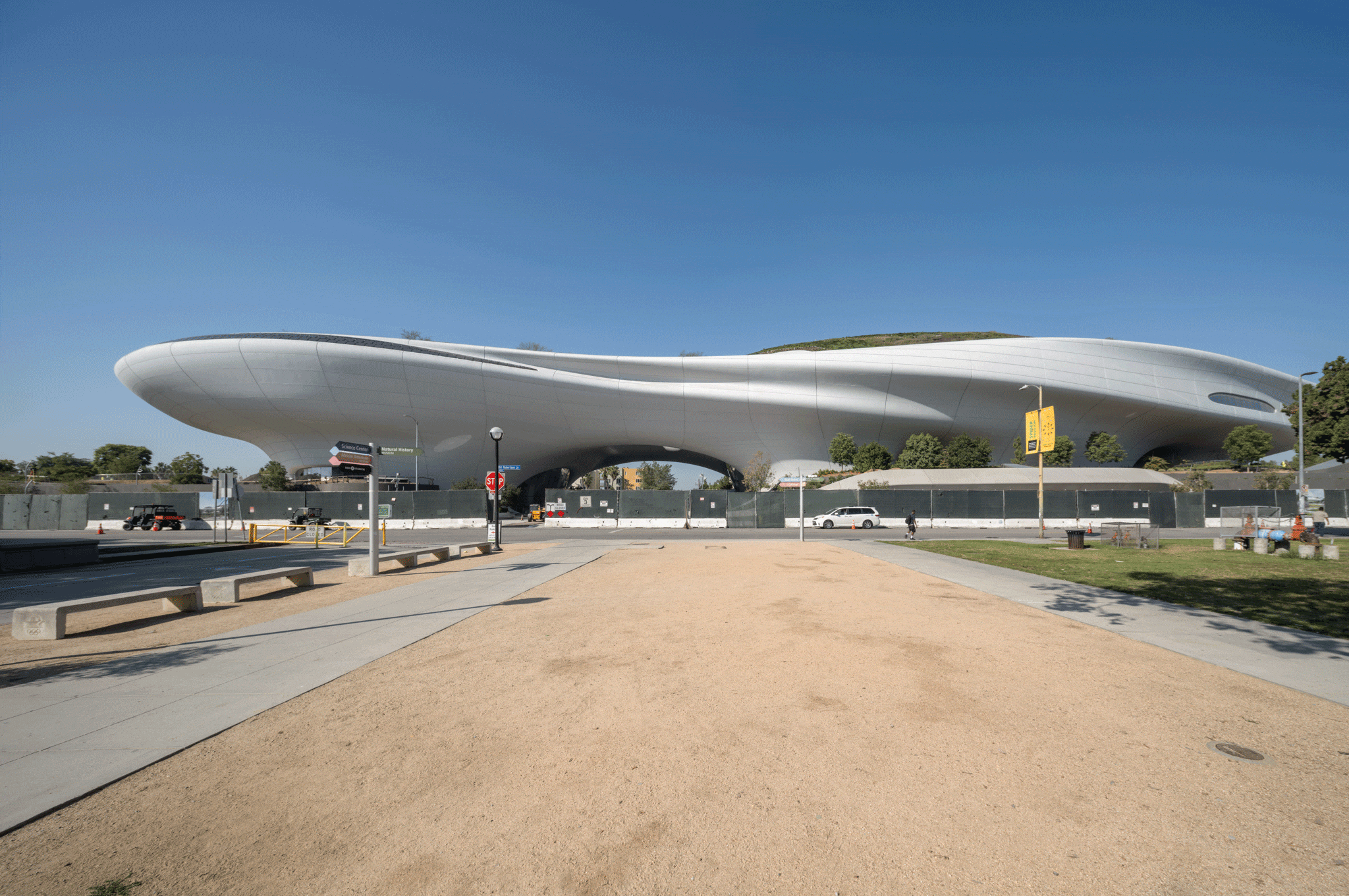
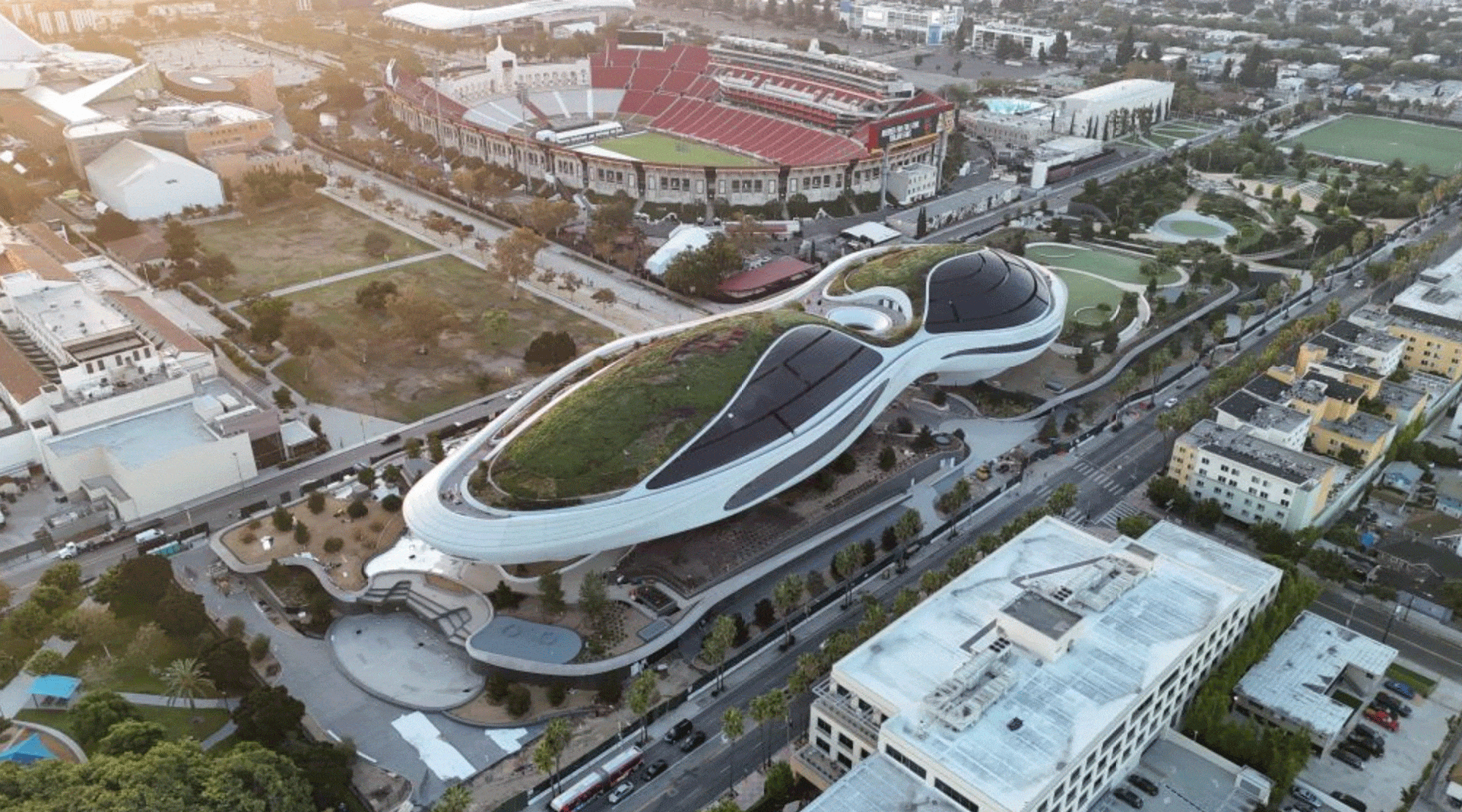
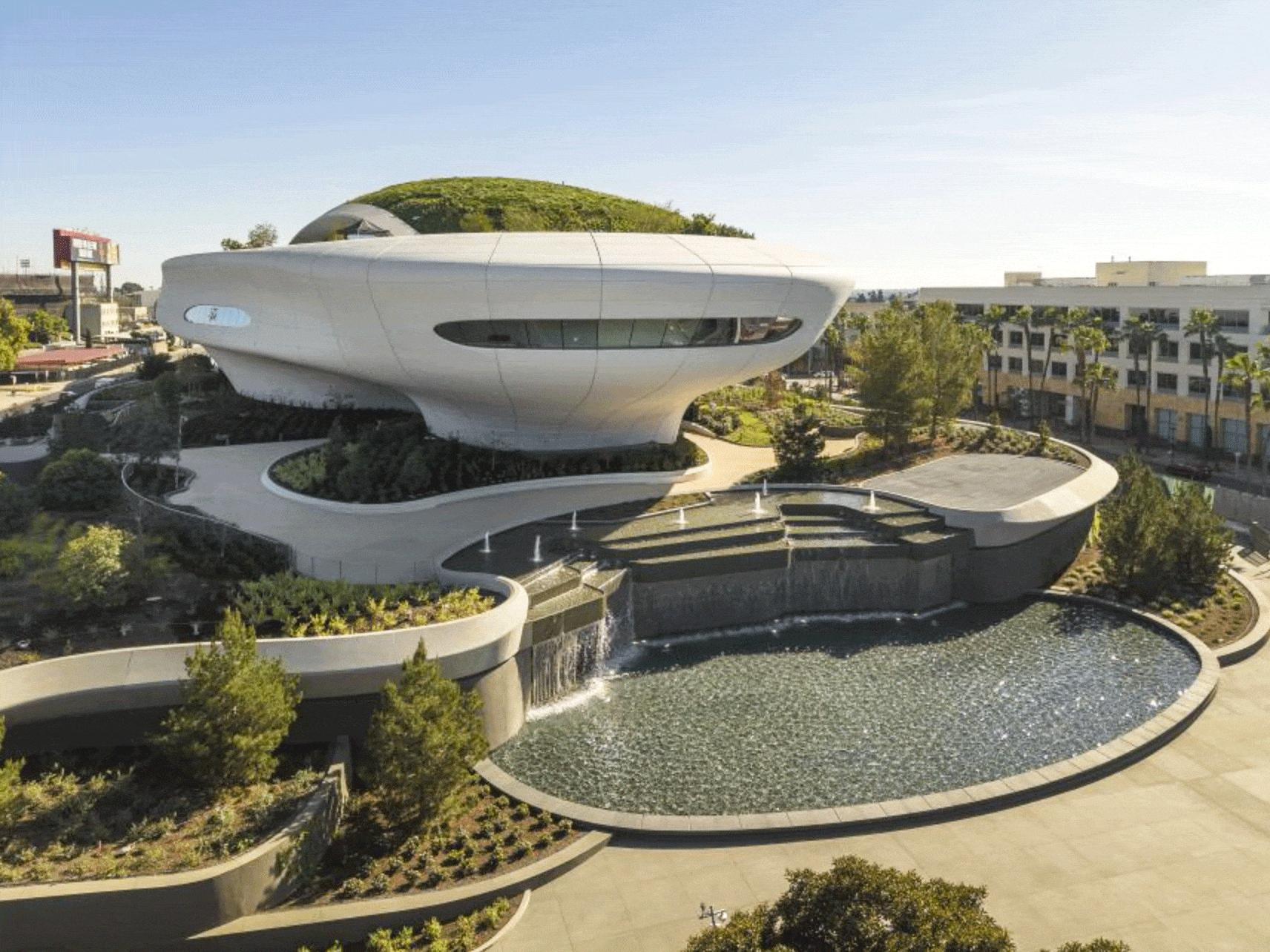
Standing amidst the assorted landmarks of Exposition Park, one wants to feel an epic rivalry playing out between the weighty architectural monuments from the early 20th century — the beaux arts Natural History Museum and the art deco Coliseum — and the newer and sleeker cultural venues dedicated to science fiction (the Lucas) and science fact (the Science Center). Alas, lost in this contest is the erstwhile Aerospace Museum, designed in 1984 by Frank Gehry, and opened in coordination with the 1984 Olympics. Along with (maybe) the Coliseum, it’s the most architecturally salient structure in Exposition Park; it’s now closed and in disrepair, used for storage, and mired in a disputed claim about landmark status. This was the project that launched Gehry’s career beyond city limits and funky houses; it will be taught in 100 years, and those who fail it now will not fare well in the telling.
Many visitors will likely savor the unexpected relief of the residual public spaces, in a city with too few of them.
Thus the demands of these urban ensembles along Wilshire Boulevard and at Exposition Park serve to challenge, or at least condition, any assessment of their new parts, grand though they may be. I want to focus on the buildings, to give their qualities and their creators their due, but I suspect many visitors will be distracted by the larger dramas, and will experience these new museums as variations within the themes of their metropolitan campuses — or enclaves, as Reyner Banham might term them — rather than as unique, freestanding elements. The new buildings are objects among other objects, but their field conditions cloud their legibility as such. Architectural historians might find the challenge akin to reading the figure-on-figure play within the Baroque intricacies of Piranesi’s Campo Marzio. There is something slightly hallucinogenic about the ground-level plans of both the four-block stretch of Museum Row along Wilshire and the four-block square of Exposition Park, a willful flaunting of orthogonal building norms, which, as in Piranesi, may or may not bear functional fruit or typological coherence.
I will also note that many visitors will likely savor the unexpected relief of the residual public spaces, in a city with too few of them. On that count, a prediction: the landscape designs of Mia Lehrer/Studio-MLA, around the Lucas, and of Weiss/Manfredi, who are currently reimagining the grounds of the LaBrea Tar Pits, will be oft-sung heroes for taming the excesses of (double cap) Museum Architecture.
Fire and ICE
I was asked by the editors of this journal: “Are these new museums what the city needs now?”
They did not mean “need” in most of the senses I’ve addressed so far. They meant, I think: Did a city decimated by the fires of January 2025, plagued by ICE goons, and sure to be targeted by the current administration in countless new ways before the Olympics — did this city need these costly new museums? Do they help recalibrate what Mike Davis described as Los Angeles’ cyclical histories of urban spectacle, leveraged over-development, and class division?
My reflexive answer is “No.” In many (perhaps too many) ways, these new buildings are neither of these times, nor built to meet them. These projects will do what museums always try to do, which is to step outside of time, in order to make some objects timeless. They will do so convincingly, or not; they will be applauded or reviled, or likely both, for their efforts.
I was asked by the editors of this journal: ‘Are these new museums what the city needs now?’ My reflexive answer is ‘No.’
Unlike earlier generations of museums, however, these new ones offer at most a taste of timelessness, while making a buffet of the city for those in the know. Fortunately, easy subway access, promised soon, will expand that demographic. Just before the millennium’s turn, the Guggenheim Bilbao was widely cheered for its galvanizing “effect” on the city’s economy and reputation. 13 But now the urban revitalization promised by new cultural institutions carries a threat; residents, especially renters, fear being priced and crowded out of once affordable neighborhoods. Art is no longer an unalloyed good neighbor. Still, these new museums will likely prove welcome civic additions (and notwithstanding the euphoria that is now greeting the new LACMA, my long bet here is on the Lucas). They might even offer us some respite from current and future turmoil — museums are, among their charms, bulwarks of idealism.
While we await their urban impacts, I’ll offer design verdicts on all three: the Academy delivers as promised (and didn’t over-promise). The Lucas takes the biggest risks, some of debatable urgency but laudable daring. And LACMA is a project for the ages, unless, somehow, its environs evolve to defy its masterful sight lines.
Last summer I went for a preview tour of LACMA’s new galleries and afterward dictated my reaction: “Contrary to my expectations, it really is an incredible building, a marvel. It echoes what Reyner Banham said about the 10/405 interchange — a kinetic sculpture? — as well as about the Theme Building at LAX. It has a particularly Angeleno kind of multivalent openness. There is a slightly dizzying, aggressive play between its outer boundary condition — more often concave than convex, like a triple repetition of the inner curvature of a boomerang — and the constellation of chiseled or faceted galleries inside. The tension is far, far better than I thought it would turn out.” 14
Happily, these three museums have ambition to spare.
Frankly, I was neither expecting nor eager for LACMA to be an incredible success. The museum has throughout its history made terrible decisions. Back in the 1960s, board chair Armand Hammer chose architect William Pereira to design the original campus — over Mies van der Rohe! Early in this century Rem Koolhaas/OMA won the commission for what would have been a truly revolutionary rethinking for an encyclopedic museum — a design in which time, geography, and medium would have governed the x, y, and z axes of art arrangement through the whole enclosure — and then the trustees balked! Instead, LACMA has routinely taken safer bets with less-than-stellar results — you be the judge of the Anderson Building, by Hardy Holzman Pfeiffer, or of the Broad and Resnick Pavilions, phoned-in by the Piano office. Nothing in LACMA’s checkered history of architectural patronage would have augured a masterwork. (Even the Pavilion for Japanese Art, designed by Bruce Goff in the late 1970s, is more strange than great — at least until Zumthor reframed it.)
Happily, these three museums have ambition to spare. Again, in their audacity and their multivalence, the Academy Museum, LACMA’s Geffen Galleries, and the Lucas Museum evoke Banham’s idea of the megastructure. Indeed, these new museums read as composite rather than single images — there is no easy way to capture any of them in one camera frame. Each registers instead as a cinematic sequence. And aptly so: to remain the world’s nexus of entertainment — the engine of our collective delights and terrors, of blockbusters and rom-coms, streamers and procedurals — Los Angeles will need to keep generating plots, imagining worlds, and shaping narratives. I hope these hard-won architectures prefigure even more original content across all the arts — high, low, and otherwise.



If you would like to comment on this article, or anything else on Places Journal, visit our Facebook page or send us a message on Twitter.