
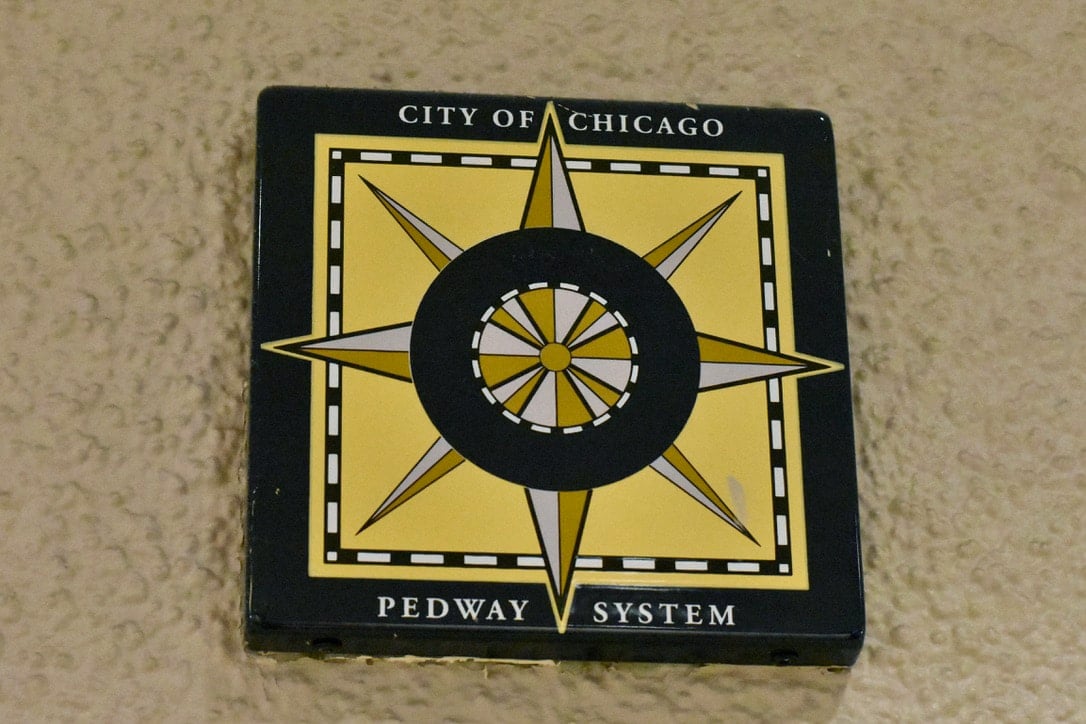
The federal government’s “Operation Midway Blitz” began last September, loosing fleets of armed, masked men, some wearing the insignia of Immigration and Customs Enforcement and some not, to abduct and antagonize in every zip code across Chicago. While the exact number of Chicagoans detained as of this writing is hazy (abductions continue), the vast majority have been held on spurious legal grounds and all of them have been apprehended by extralegal means that have infuriated the rest of us, save the very safest and coldest-hearted. When the Blitz began, I had already been spending time in the network of pedestrian tunnels beneath downtown known as the Pedway. So my initial interest had nothing to do with the long association of the “underground” with fugitivity and invisibility to the state — an alluring line of thought, certainly, but not one the Pedway much inspires. 1
In some ways, the Chicago Pedway appears to be a conspicuous failure in a city known for audacious public works.
No, I wanted to understand this haggard urban infrastructure on its own terms. In some ways, the Pedway appears to be a conspicuous failure in a city known for audacious public works. Houston and Toronto have similar systems that look sleek and stay busy. Why is ours a magnificent misfire? As I reviewed several decades’ worth of newspaper clippings, though, a different perspective suggested itself. No one, it seems, has ever been satisfied with the Pedway; it has only ever been a work in progress. The Pedway is a question that Chicago asked and left unanswered about how truly public urban space might be shaped below the streets.
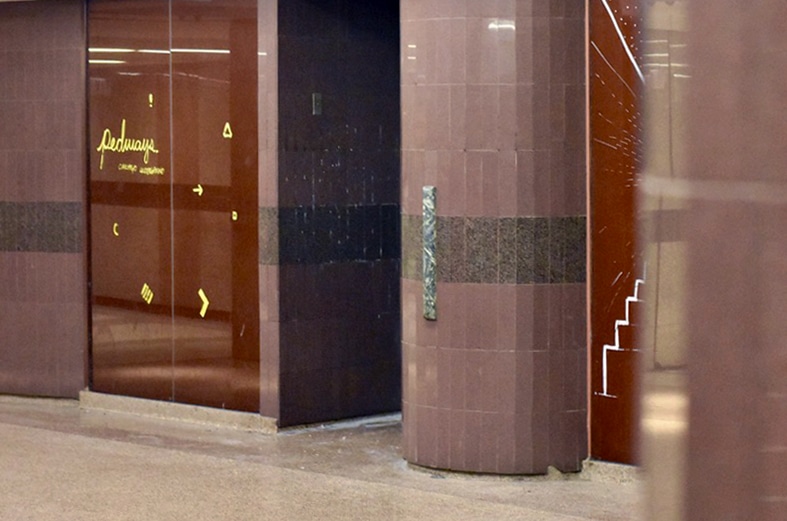
It was Louis Sullivan, father of the skyscraper and dean of the Chicago School, who advised future generations to “arrange your architecture for Democracy.” Sullivan worked in an historical moment that resembles ours in many respects: a time of naked imperial ambition; White supremacist anxiety about the nation’s “racial hygiene”; exorbitant unshared wealth; astounding technological advancements (the automobile, for example) whose social influence was only beginning to be felt. “These are the times when the old values must all be re-valued,” Sullivan wrote in his essay collection, Kindergarten Chats, published posthumously in 1934 but formulated at the turn of the century. “When they must all be weighed and judged in the balance with Democracy and, if found wanting in that balance, they must go.” 2
The City of Chicago is ostensibly thinking again about the Pedway, and vague improvements are promised in the omnibus “Central Area Plan 2045” approved last November (about which more later). In the spirit of re-evaluation urged by Sullivan, I went into the tunnels to understand what they were and what they might be — with the dubious hope that what they are now might become clear along the way.
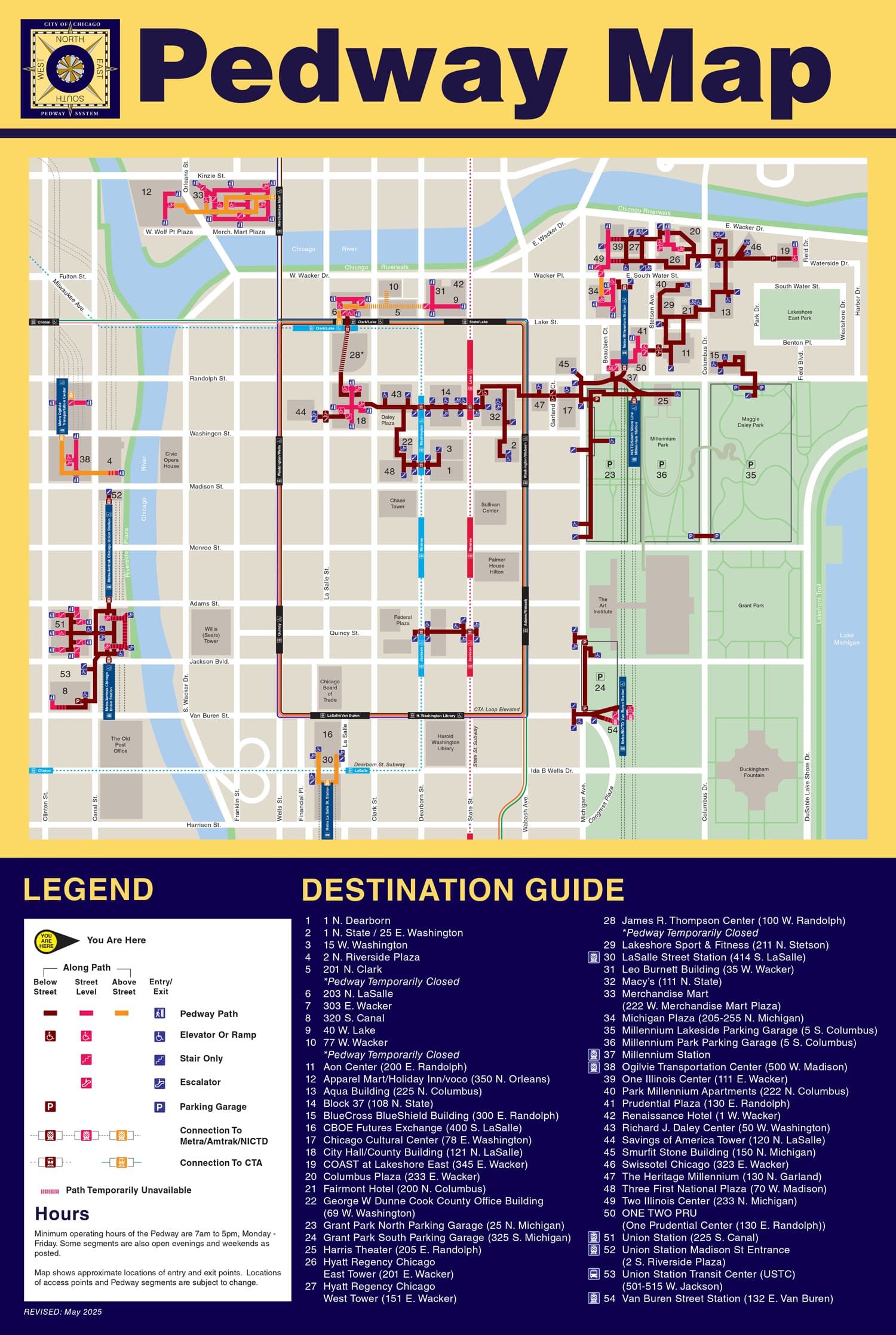
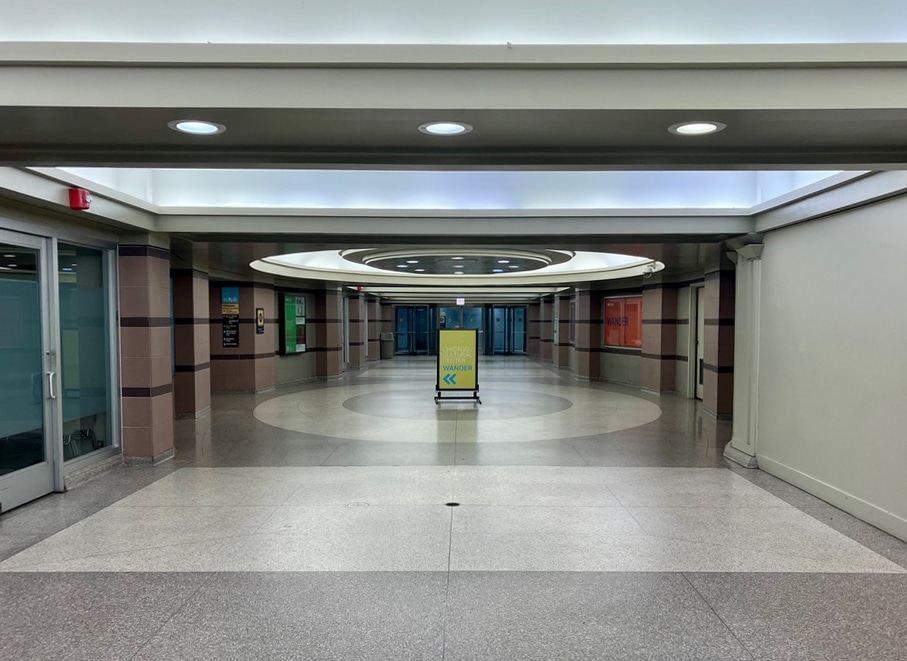
The Chicago Pedway (short for “Pedestrianway”) is a network of passages connecting more than 50 buildings across more than 40 downtown blocks. It’s neither contiguous nor meant to be traversed for its own sake, but from one end to another on its longest uninterrupted stretch, one can walk beneath skyscrapers for an hour, bobbing up periodically to ground-floor lobbies before descending again to basement level. Despite signage in some of these lobbies, and a modest presence on the Department of Transportation’s website, many Chicagoans do not know the Pedway exists. This is fine. Most have no use for it, though thousands of commuters pass through segments of it each day. Local reporters have described it as an “underground maze,” “a sometimes disjointed mass of tentacles,” and a “winding trail of mysteries.” 3
I went into the tunnels to understand what they might yet be — with the dubious hope that what they are might become clear along the way.
The Pedway was built for a downtown — that of the late 20th century — that no longer exists. But the extent to which city administrators can be said to have neglected it is debatable. Is the Pedway more forsaken than the El trains, widely perceived to be late, dirty, and dangerous? 4 Is it more poorly maintained than sidewalks after a blizzard? 5 It might be accurate to say that the Pedway’s obsolescence has been preserved. Its official map was updated as recently as May 2025, so someone is paying attention. 6 Still, the Pedway remains hidden enough to be rediscovered every few years as one of Chicago’s “best-kept secrets” by weekend-section feature writers and inquisitive Redditors. Rarely is the journey pretty, but it is a novel experience, and an instructive one.
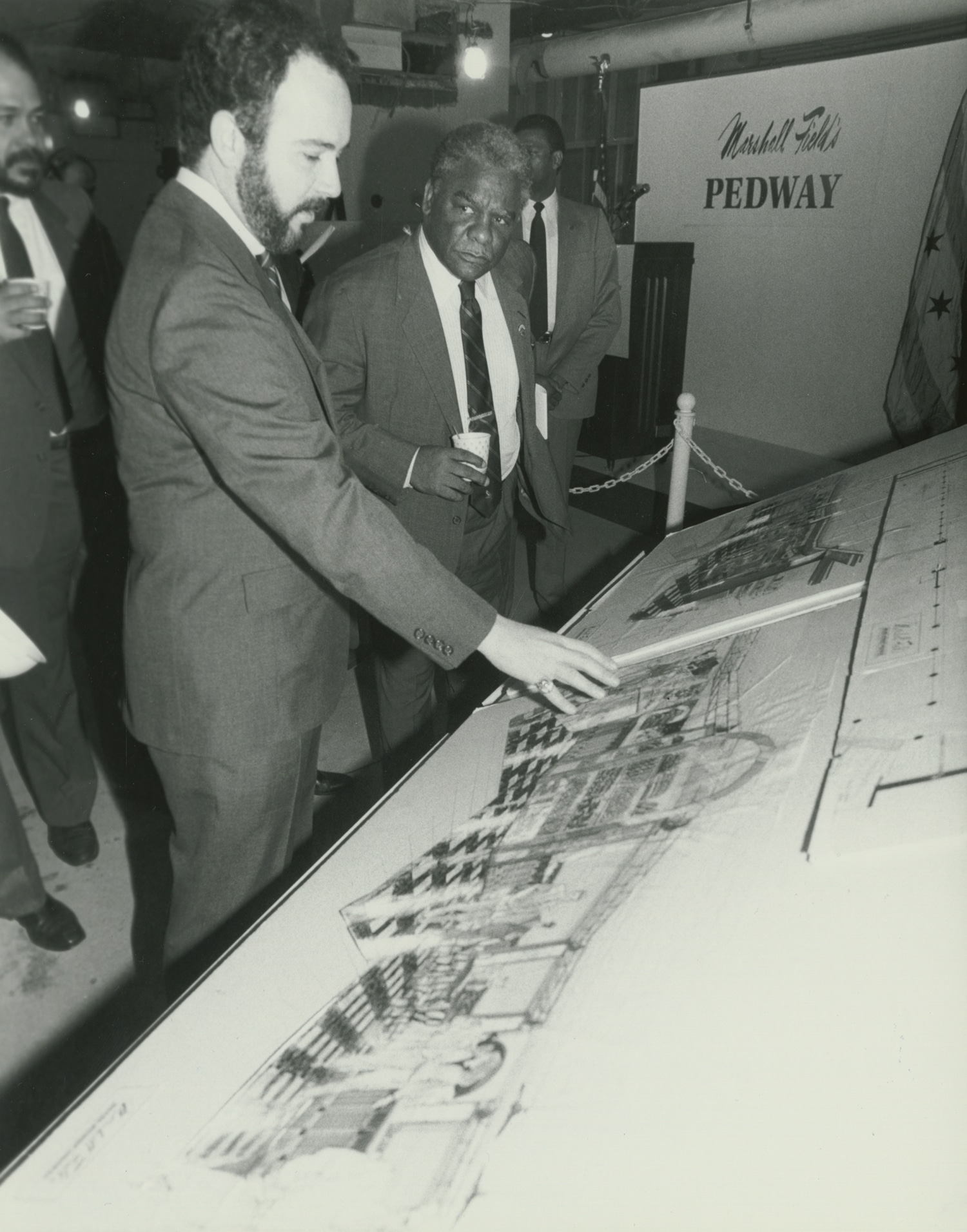
The Pedway is not actually public infrastructure, not fully. Many sections are maintained, as they were developed, piecemeal, by the private sector. The earliest portion, built by the city, dates to 1951. It was in the 1980s, during Mayor Harold Washington’s embattled yet energetic administration, that the allure of subterranean commerce inspired City Hall to plan the system we have today, with the department store Marshall Field’s leading construction of a tunnel beneath its flagship store on State Street. Washington died in office in 1987, before he could cut the ribbons on sections of the Pedway whose blueprints he had studied and approved.
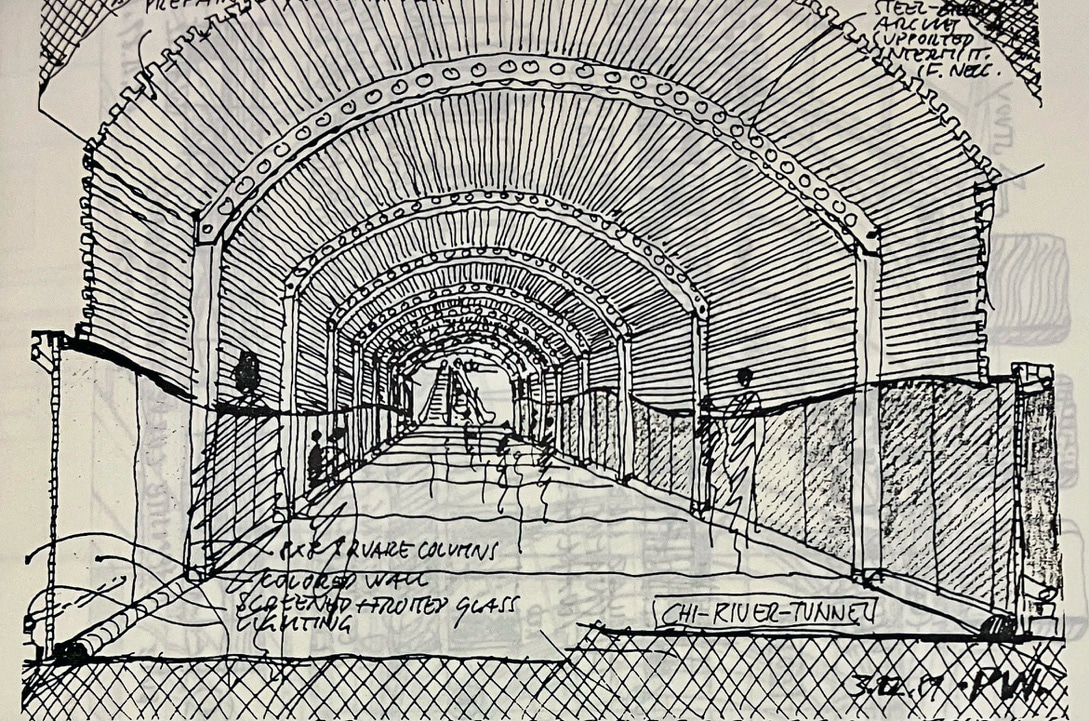
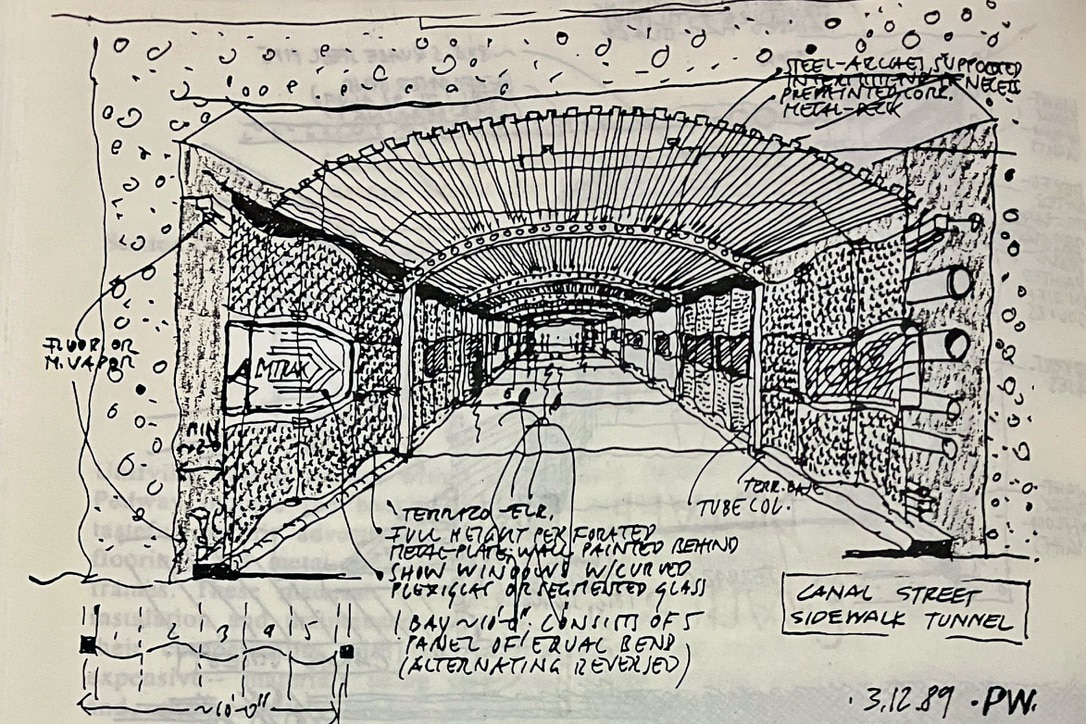
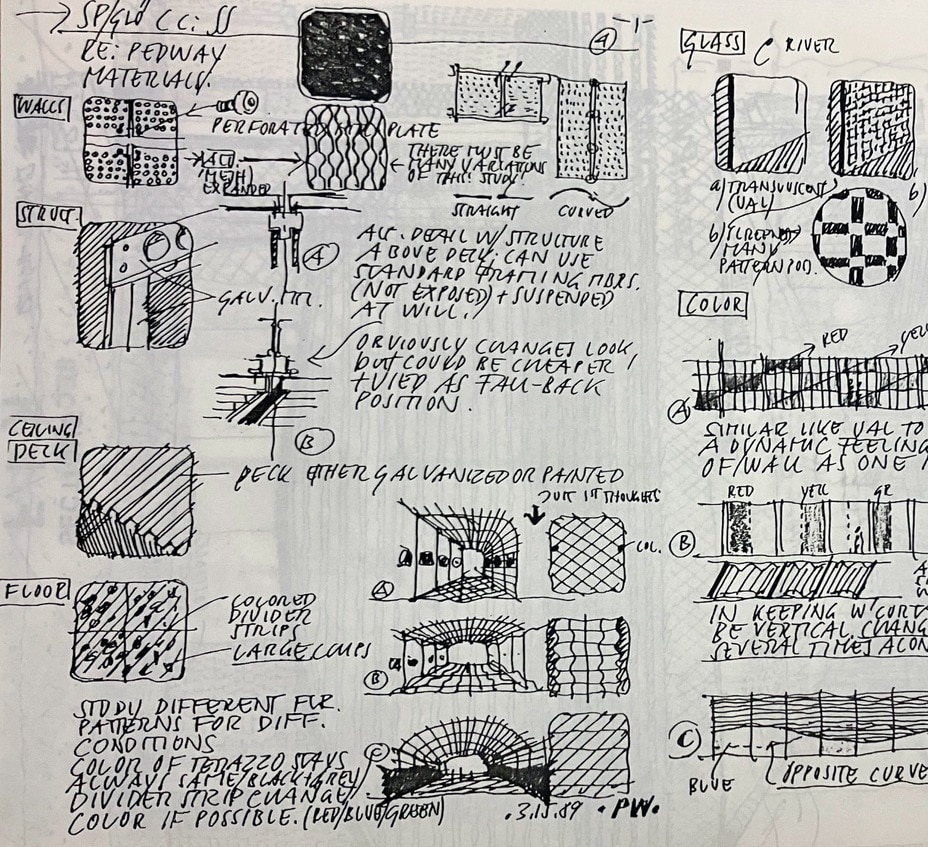
All images in this slideshow are sketches by Murphy/Jahn Architects for a Proposed West Loop Pedway Project Summary Report, June 1989. [Chicago Department of Public Works, in the collection of the Chicago Public Library]

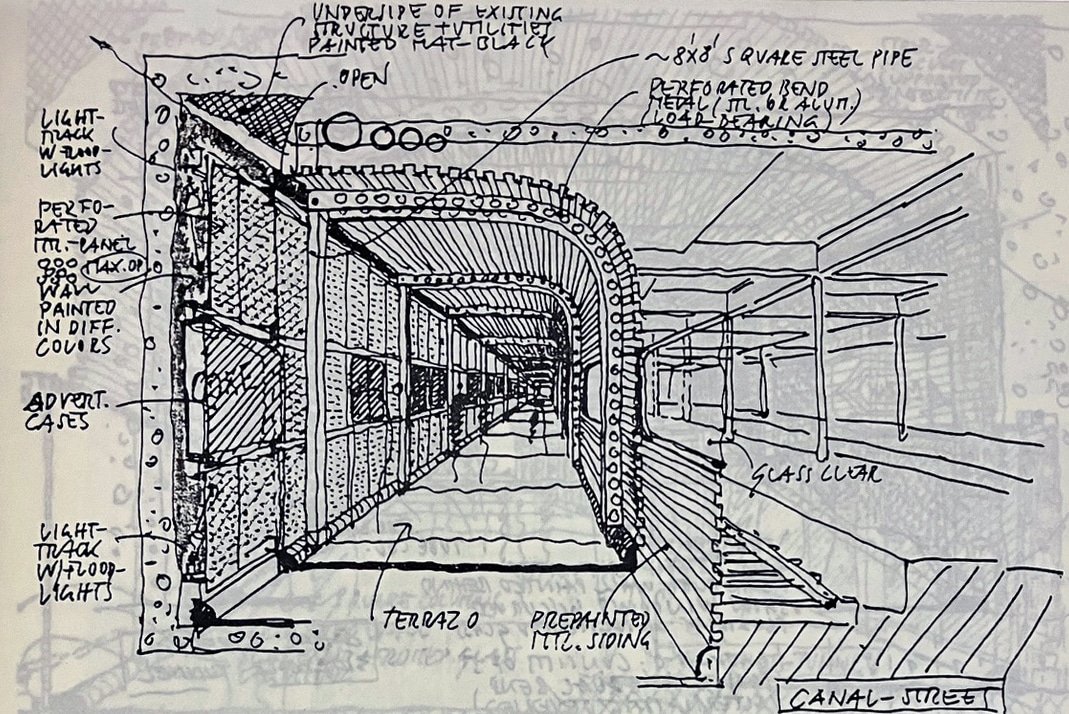
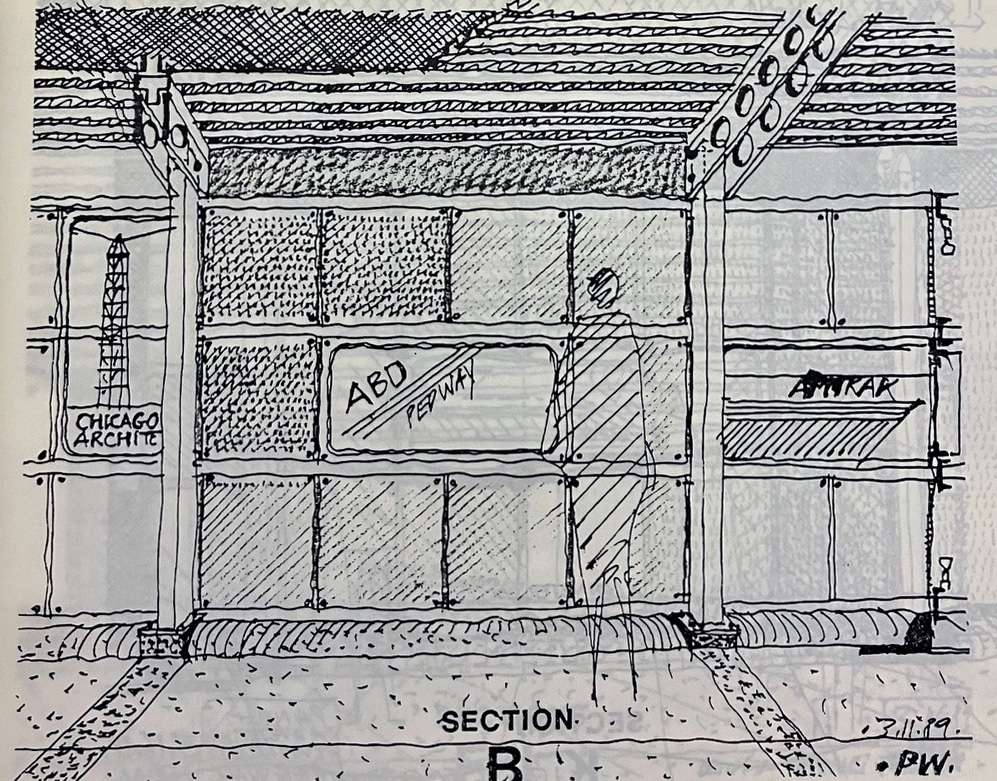
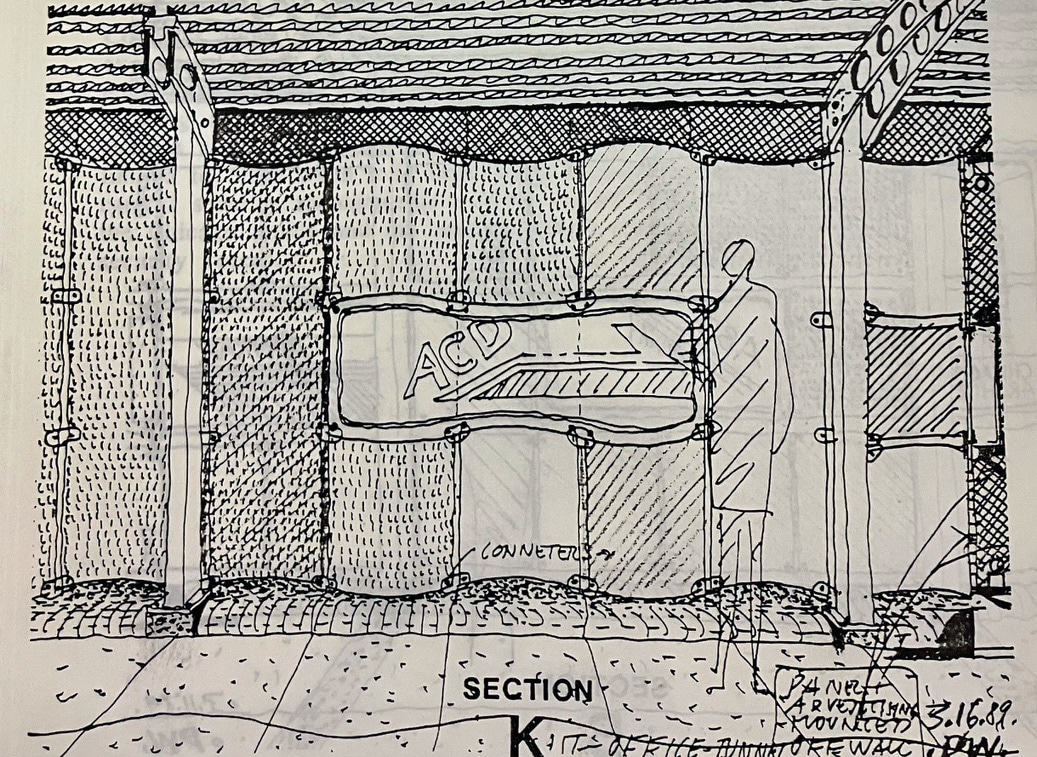
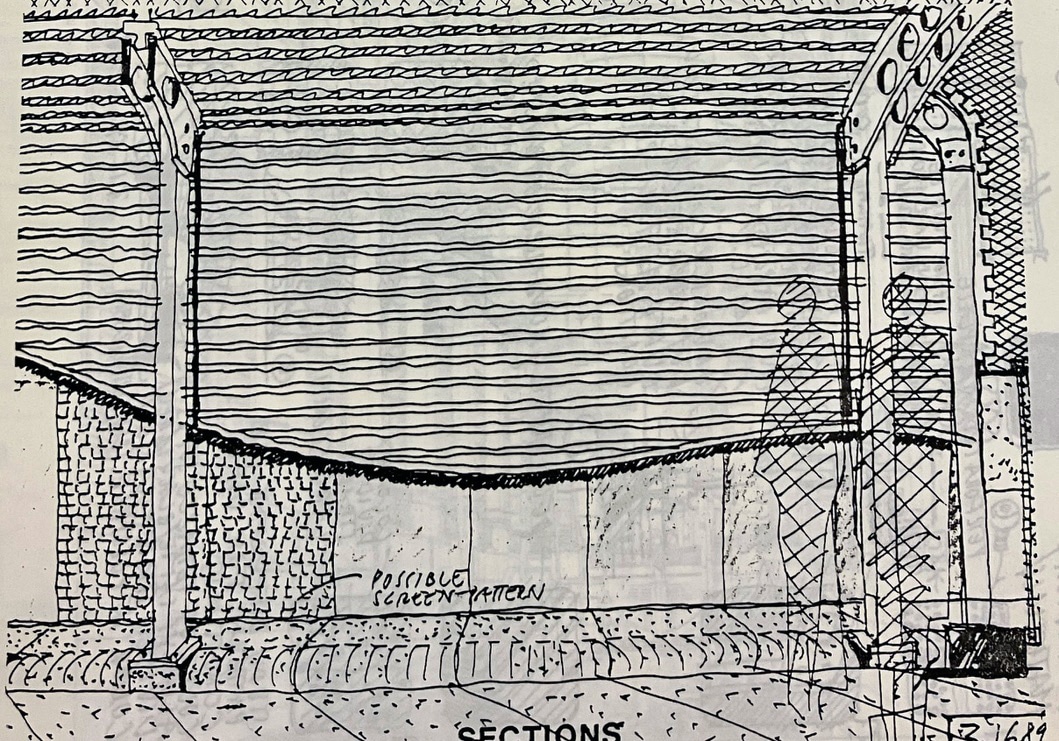
One consequence of this public-private character is that the Pedway has official hours: Monday through Friday, 7 a.m. to 5 p.m. Plenty of sections are open past 5 p.m., but linear navigation becomes trickier, and loitering impossible. Enforcement of business hours is a reason that no one appears to live in these tunnels, even in a city where extremes of heat and especially cold are the norm, and where an estimated 1,300 persons live without shelter. 7 A few may sleep in the Pedway unobtrusively, and your nose will tell you that some of its nooks are used as toilets. But the atmosphere is nothing like the subway-tunnel communes in New York City in the 1990s, or the storm drains under Las Vegas that have held perhaps a thousand residents at a time in recent years. 8
The Pedway was built for a downtown — that of the late 20th century — that no longer exists.
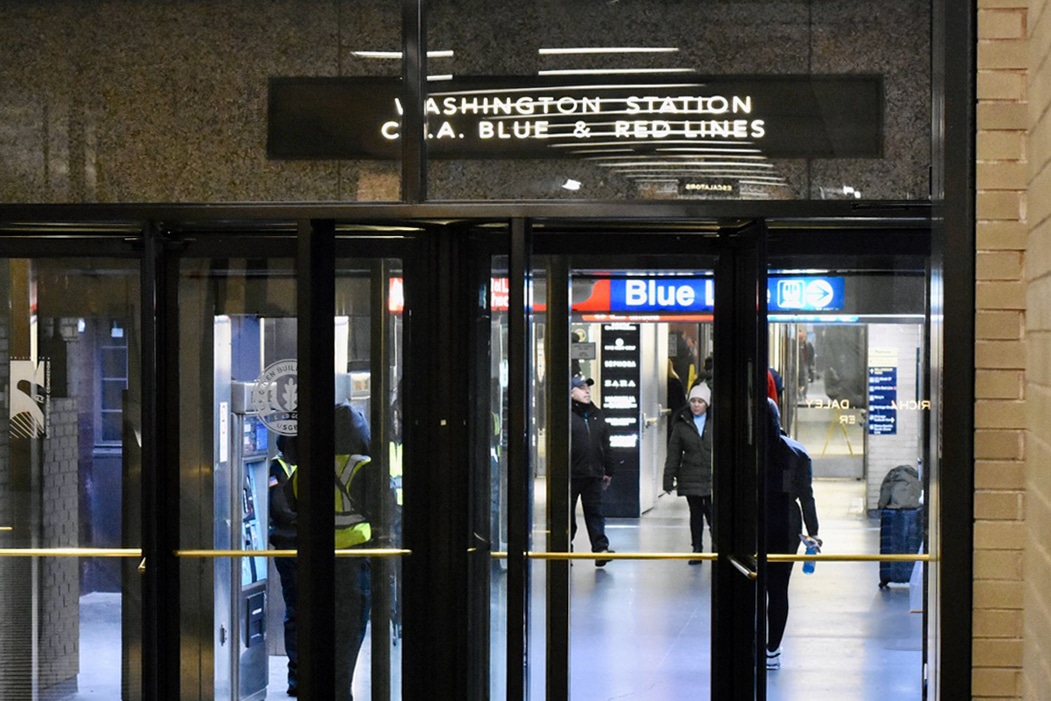
In the winter, certainly, the Pedway offers respite from freezing temperatures. Year-round, it channels commuters between transportation hubs (Metra to El; El to Amtrak); the inaugural 1951 stretch still connects El stops beneath Dearborn and State Streets, the present-day Washington Blue Line and Lake Red Line stations. (There is a disused El platform too — the former Washington Red Line stop — preserved in amber, one imagines, behind its boarded-up entries.) Other stretches facilitate access between related buildings, like the light foot traffic that joins the hotels, office buildings, and condos of Lakeshore East, a luxurious if culturally arid pocket between Michigan Avenue and Lake Michigan. The passages beneath government buildings — City Hall, the Richard J. Daley Center (which mostly houses circuit courtrooms), and the Cook County Office Building — see a steady stream of petitioners and adjudicators. The James R. Thompson Center, Helmut Jahn’s leaky panopticon, belongs to this constellation too, though its tunnel segment is closed for construction. 9 Opened in 1985 to house state government offices, the Thompson Center is in the midst of a $280 million renovation, on its way to becoming regional headquarters for Google, i.e. the consulate for another kind of government. 10
At a 1988 ceremony to mark the opening of a Pedway portion in the West Loop (near Union Station, across the South Branch of the Chicago River), Harold Washington’s successor Eugene Sawyer touted the system’s capacity to “relieve congestion at the street level.” Yet old photos and picture-postcards would suggest that Chicago sidewalks, in common with those of most American downtowns outside New York, may be less congested today than at any other time since the 19th century. Even in the late ’80s, Sawyer’s assertion may have had as much to do with boosterish aspiration as with real demand. On the other hand, your chances of being hit by a car or run down by an E-bike on the Pedway are zero. 11
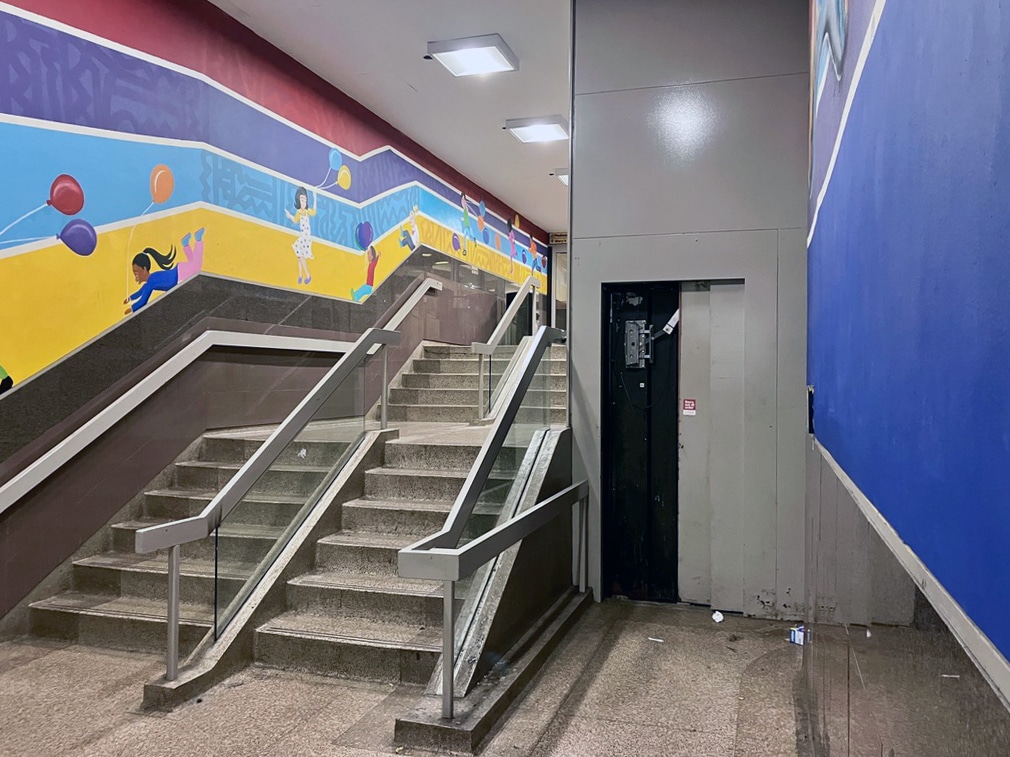
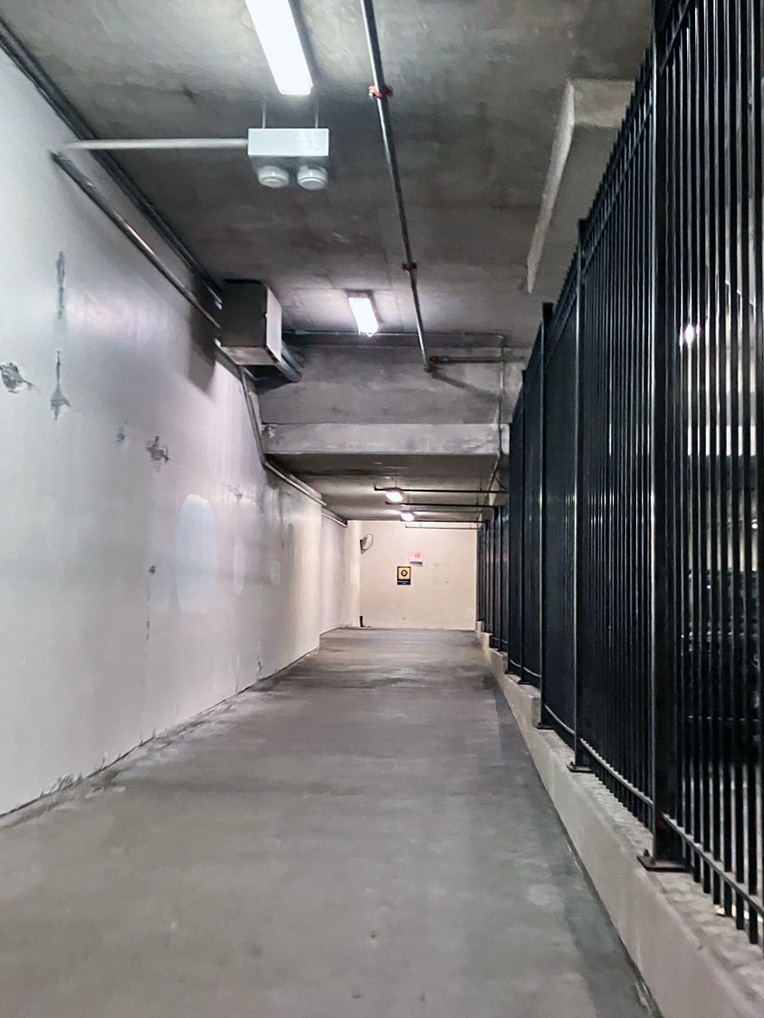
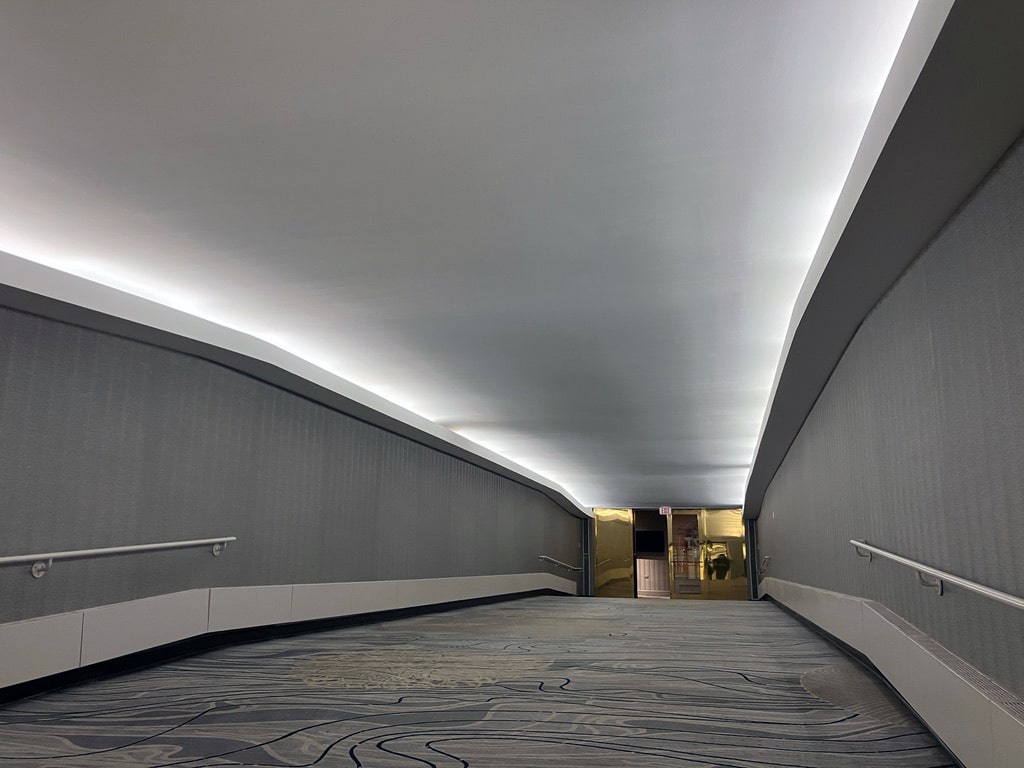
The network might have allowed people with mobility challenges to move from point A to point B without the agitation of crosswalk signals, piled-up ice and snow, and other hostile features of the street-level environment. But by no rubric could the system at large be considered accessible. 12 At one threshold, I saw a gentleman using a rollator faced with either revolving doors (impossible) or a nonautomatic double door, which a courteous stranger held open for him. Wayfinding signage is vivid in some places and nonexistent in others; anyone with even minor visual impairment would be hard-pressed to navigate for the first time.
It was the 1980s: the American shopping mall was at its apogee. A modest underground version seemed like a winning idea.
Then there is the fraught issue of commerce. The city bankrolled Pedway segments adjacent to train stations, but the public-private partnerships responsible for the rest would have been unimaginable without the stimulating prospect of rent collection. It was the ’80s: the American shopping mall was at its apogee. A modest underground version seemed like a winning idea, and there were florists, shoe-repair shops, Dunkin’ Donutses; a travel agency, a jewelry store, a nail salon; even a bar called Hinky Dink Kenna’s, after a turn-of-the-century political boss. Space that rented for $65 per square foot on Randolph Street cost $25 per square foot beneath Randolph Street, and the Pedway looked like a cheat code to bypass the constraints of downtown real estate. 13 “We hope to make this one of the major meeting places in the city,” said Marshall Field’s CEO.
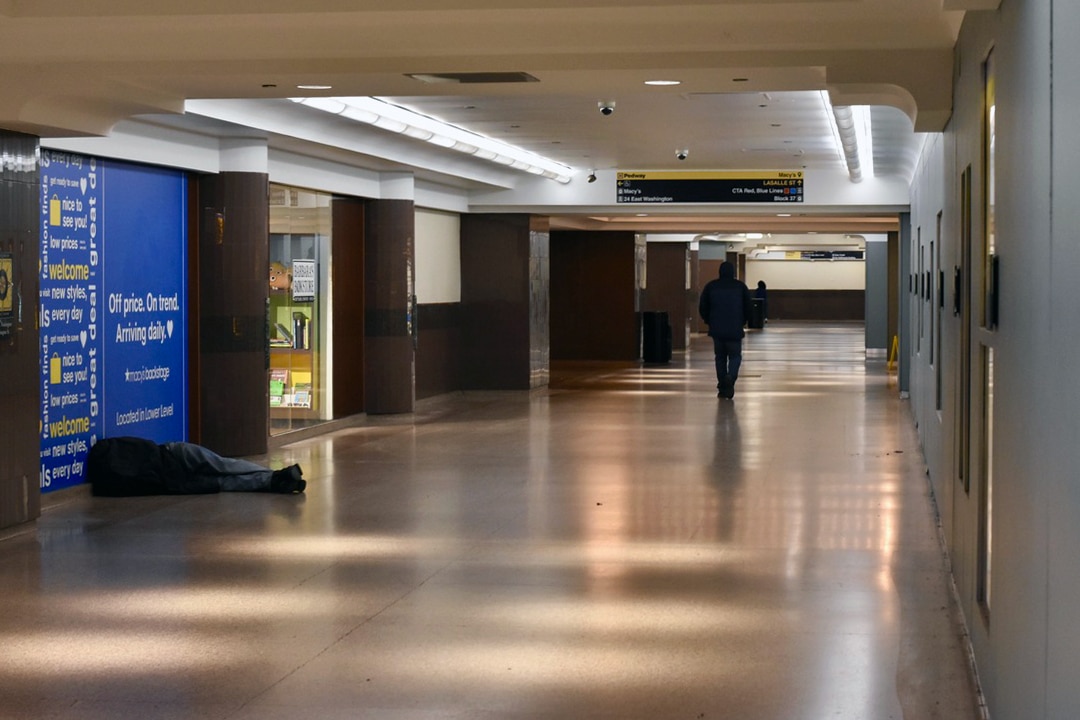
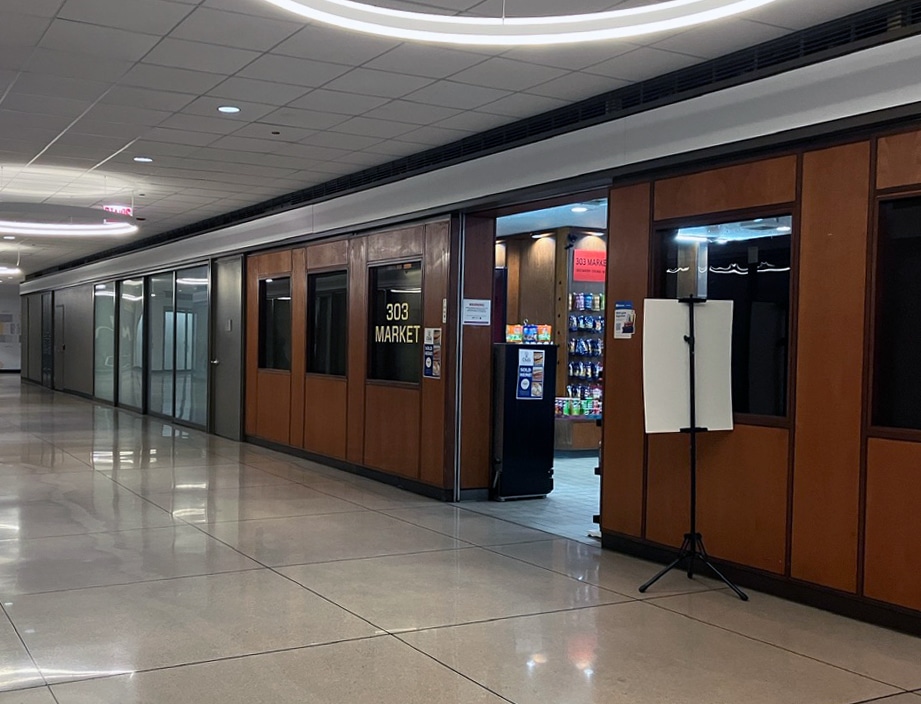
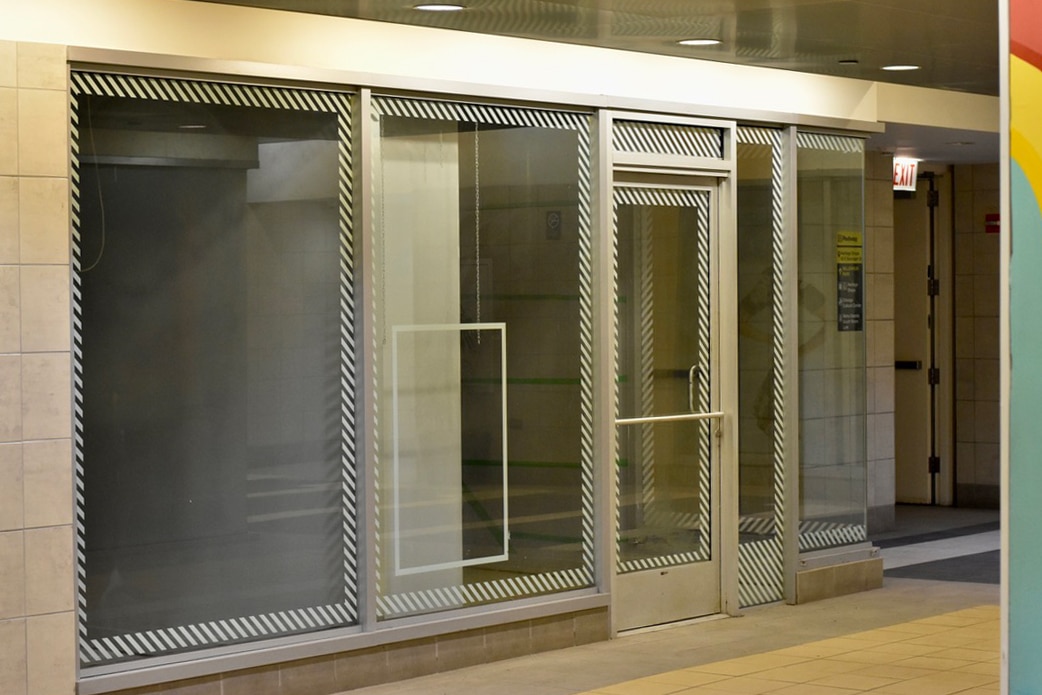
In 1992, construction workers on the Kinzie Street Bridge accidentally breached a utility tunnel and flooded parts of the Pedway, resulting in a billion dollars’ worth of remediation (equivalent to more than two billion today). 14 Flooding didn’t kill retail in the Pedway, though. The vacancies are a consequence of downtown’s general emptying-out. There are still shops and services down there — convenience stores, dry cleaners — of the sort that exist on the sunken levels of many downtown buildings. But the idea that the Pedway might become “one of the major meeting places in the city,” where one could toast a Chicago Bulls victory or the election-night win of a promising young public servant like Rod Blagojevich, is gone. (In case you don’t remember him, Blagojevich was Governor of Illinois when Barack Obama first ascended to the White House, and was convicted on federal charges stemming from efforts to sell Obama’s vacated U.S. Senate seat. “I’ve got this thing, and it’s fucking golden” was the governor’s remark, immortalized by FBI wiretaps. 15 ) In some parts of the Pedway, at certain times of day, it’s possible to find yourself completely alone, in the core of the third-largest city in the nation. Architecture critic Blair Kamin must have had this hollowness in mind when he described the Pedway as “pedestrian purgatory.” 16
Kamin’s phrase seemed pertinent as I entered the tunnels from LaSalle Street one Siberian afternoon. Recall that Purgatory and Limbo are not the same. Limbo is a waiting room — a liminal space, of which the Pedway has plenty — but in Purgatory there is a job to do.
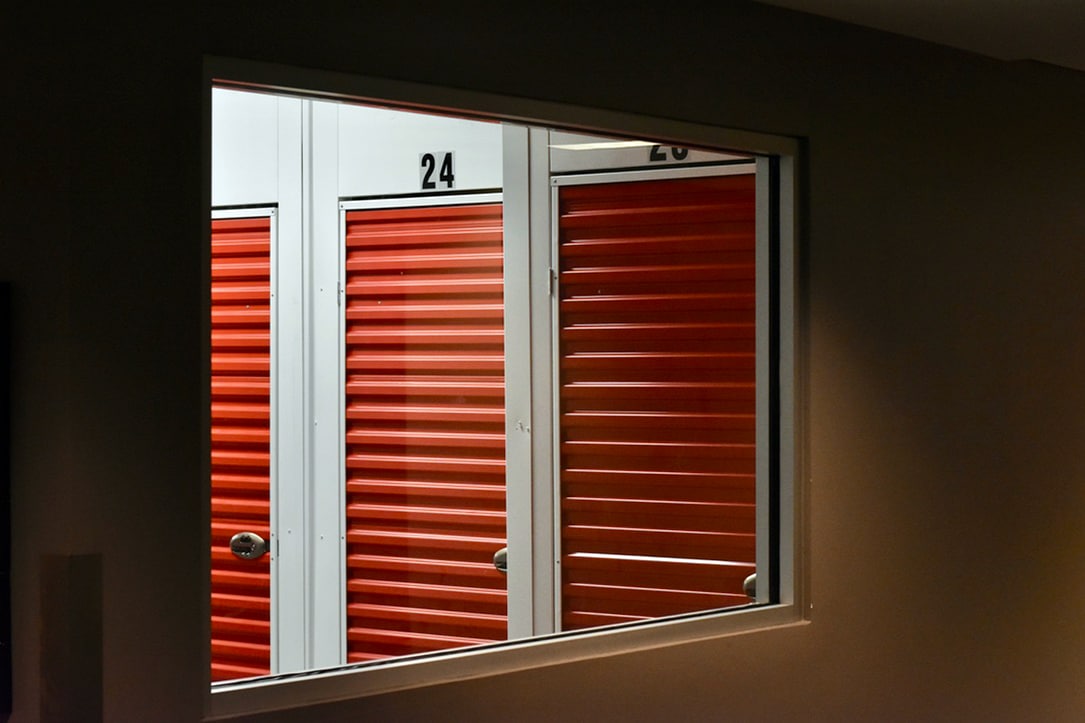
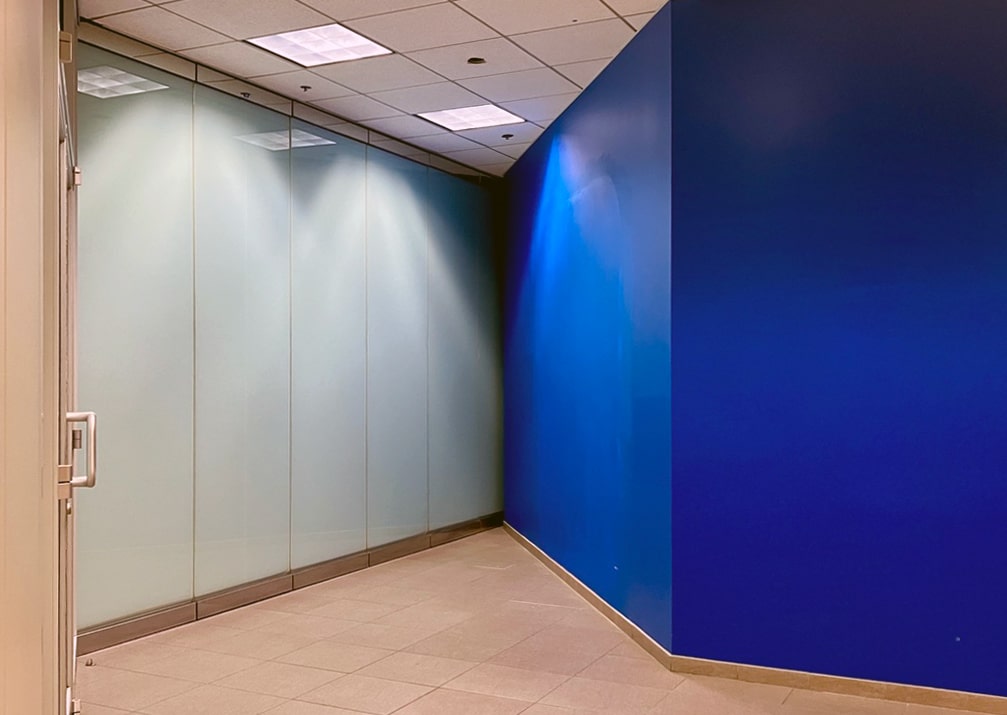
I remembered, also, the warning of an old Chicago Tribune writer: “You can get lost in it even when you follow the signs.” 17
I could do what local journalists used to do and escort you through the entire system (“Around the corner, the aroma of freshly popped popcorn will announce that you’re closer to Heaven than Hell…”). However, the disservice of such an approach would be twofold: no one walks the Pedway in its totality, and to describe it as a linear journey would be in effect to convey the bad-dream experience of wandering down an endless hallway. Such an account might, in a swirlingly drab way, befit Jorge Luis Borges or the Situationists — but psychogeographic dérives aren’t suited to Chicago in 2026, with secret police trawling among us. 18
Let me show you, instead, a few postcards from down below.
Below 120 North LaSalle
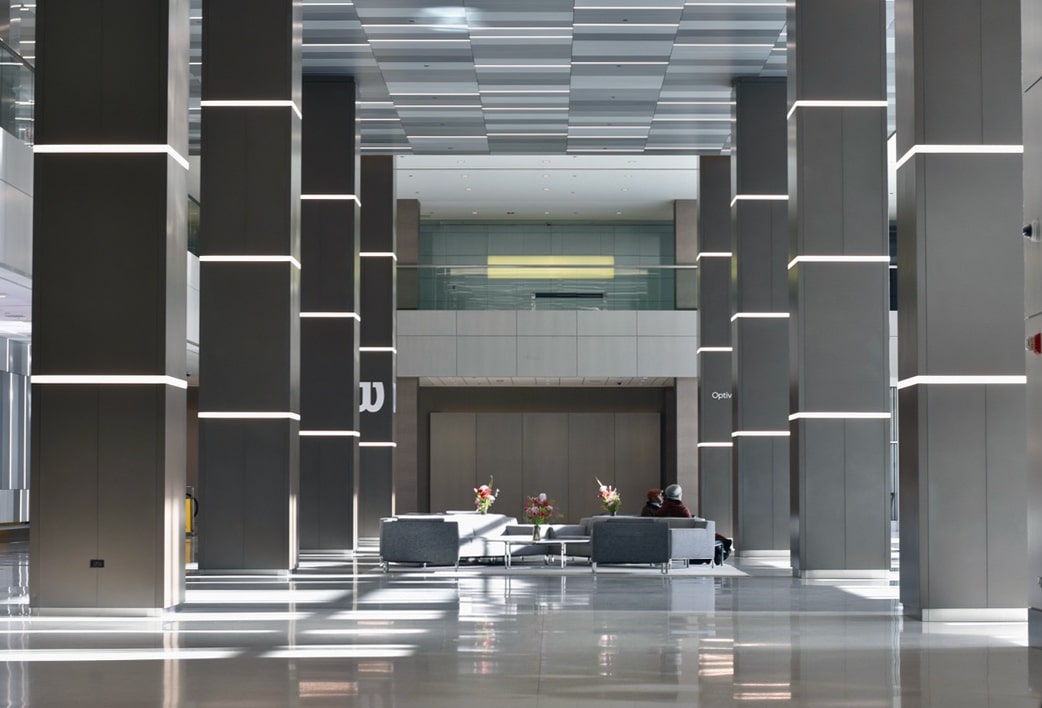
Since Google’s construction at the Thompson Center has severed the Pedway north of Lake Street and west of State Street, 120 North LaSalle is the easternmost end of the system’s longest contiguous stretch, which runs to 345 East Wacker Drive in Lakeshore East. The buildings at either end tell a story about two decades of change in Chicago architecture.
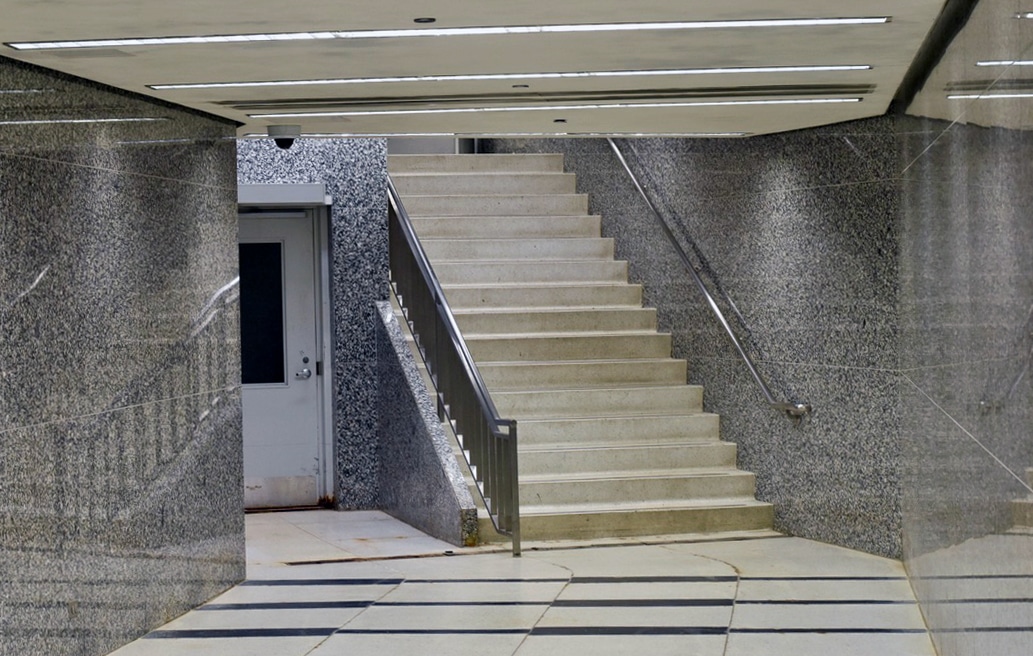
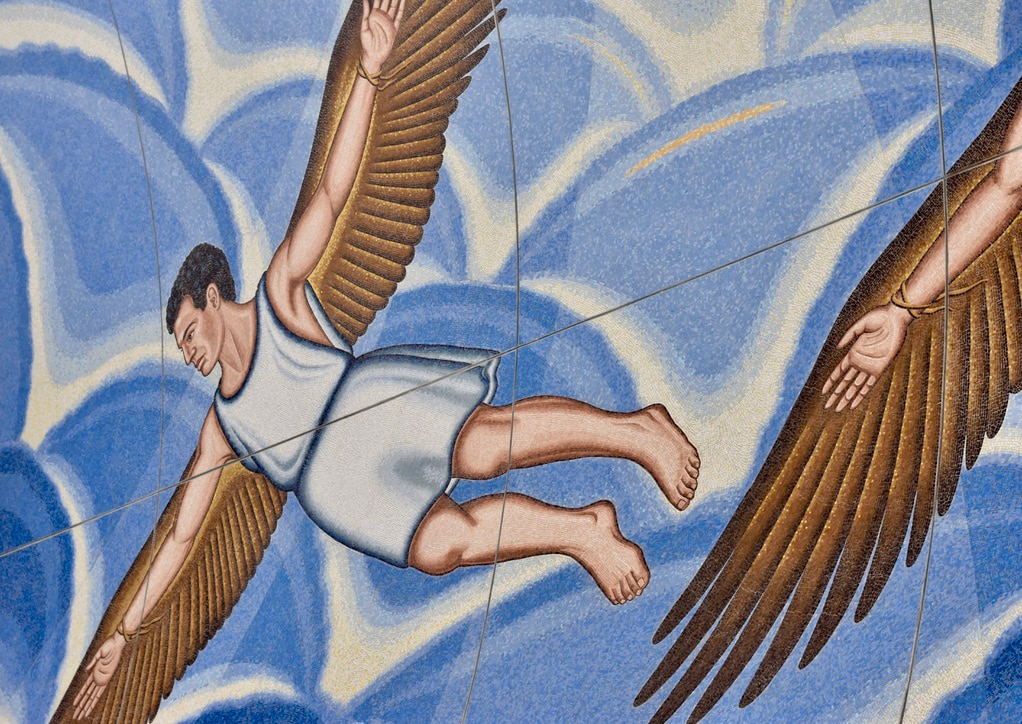
Completed in 1991, 120 North LaSalle, with its po-mo loggia, is now wonderfully dated-looking, the lobby all marble, quartz, and gold inlay. Beside the main entrance stands a subtly blazed door to the Pedway, beneath a mosaic of Icarus and Daedalus by Chicago artist Roger Brown — ominous, but never mind. That Helmut Jahn’s design incorporated the Pedway front and center testifies to the seriousness with which the network was once accommodated.
At the other end of this contiguous segment, bKL Architecture’s Coast apartment building, opened 22 years after 120 North LaSalle, looks like the magazine of a glass Glock. No Pedway welcome here: from a beige hallucination of an underground corridor you emerge, blinking, into the parking garage.
Under Macy’s, between State and Wabash
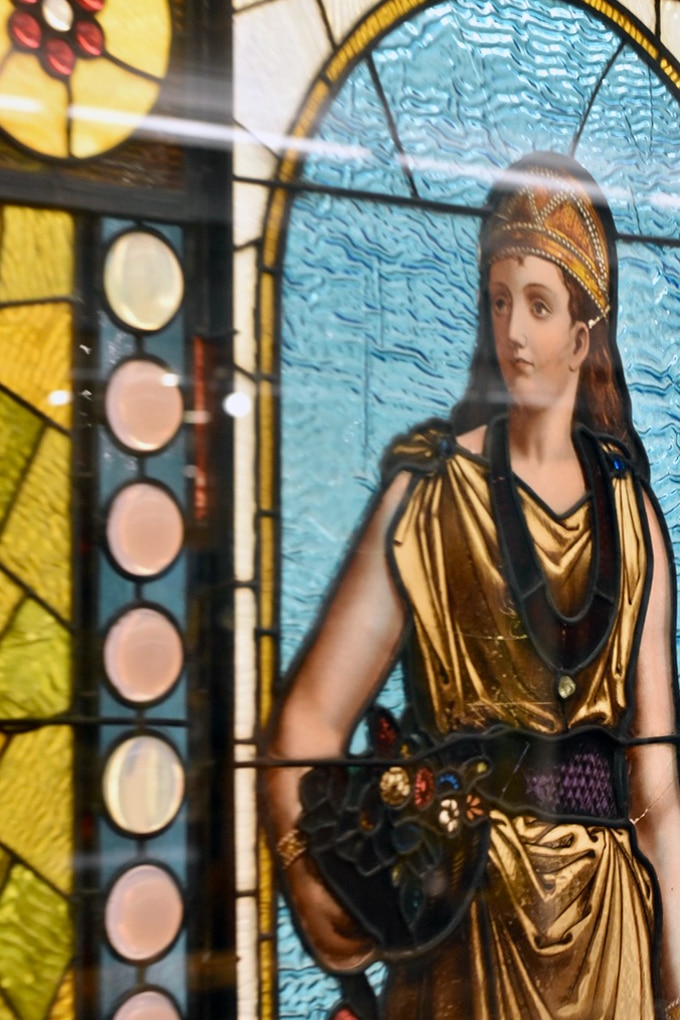
Here is the Randolph Street Pedway below the once legendary Marshall Field’s, which Macy’s took over two decades ago. If this part of the network feels the most dejected, it’s because it was intended to be the most glamorous. A permanent gallery of American Victorian stained glass installed in 2013 is still radiant, even in artificial light. One might fairly call this exhibition fusty, something that (say) the Women’s Christian Temperance Union might have sponsored. At least it outranks the generic photos in passages like the one below 303 East Wacker Drive, which may as well bear their stock-image watermarks.
In other zones, at other moments, the Pedway has inspired more interesting aesthetic uses: in 2010, artist Hui-Min Tsen conducted an experimental walking tour titled On the Trail of a Disorderly Future; and a present-day bright spot is the Golden Street gallery under 55 East Randolph, run by an artists’ collaborative, where local musicians sometimes perform in a makeshift studio. 19
Beneath the Hyatt Regency, 151 East Wacker
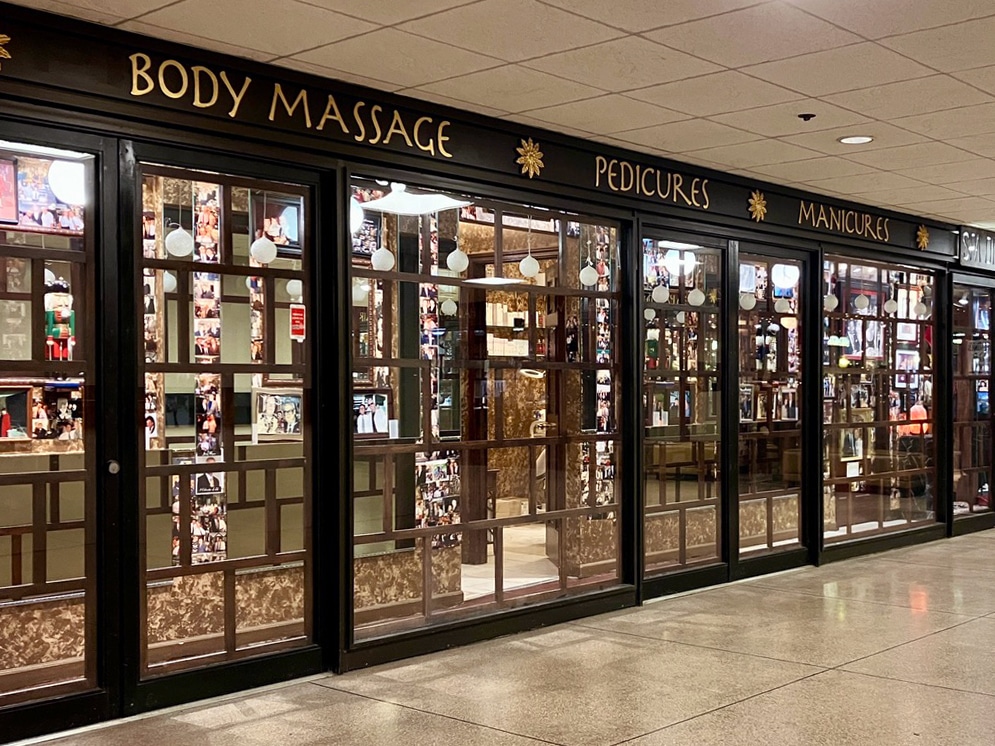
No storefront in the Pedway is more enticing than Spa Di La Fronza, with its baroque-maximalist décor and celebrity photographs papering the walls. Watch the cosmetologists as they glide through its ultra-economized space, tight as a submarine: they’ve adapted to the Pedway’s spatial constraints with great presenza.
Below the courthouse
Is the Pedway dangerous? Are you likely to be assaulted there? The short answer is “not particularly.” Incidents do occur in passages closest to El stations, usually late at night. But these episodes — which the Trump administration has rushed to exploit — aren’t characteristic. 20 Consider the host of public and private security teams whose jurisdictions overlap inside the system’s footprint. How likely you are to be questioned about your identity and your purpose in the Pedway, or harassed by law enforcement, is a different question — dependent more on the walker than the walk. Under the Richard J. Daley Center, I saw a sandwich board bearing this warning:
This property is owned and controlled by Cook County. It may not be used for civil immigration enforcement, including use as a staging or debriefing area, processing location or operations base.
Will that prohibition prove enforceable? It remains to be seen.
The Pedway is not a disgrace. To saunter through its corridors is to immerse oneself in the archaeology of downtown Chicago more viscerally than any boat cruise or walking tour could offer. It’s a glimpse of the city at its interstices: above and below ground, municipal and corporate, 20th century and 21st. But it has not been a site for open speculation about urban design for a long time. Almost four decades ago, Richard Hankett, then Deputy Commissioner of Public Works in Chicago, declared that “Pedestrianways deserve the same attention we give to streets and sidewalks.” 21 We can build new public goods and take care of them: it’s a sentiment we don’t often hear in this century.
It’s a glimpse of the city at its interstices: above- and below ground, municipal and corporate, 20th century and 21st.
It isn’t as if no one has pleaded the Pedway’s case. The most extensive audit of its possibilities was undertaken almost a decade ago by the Chicago-based Environmental Law and Policy Center, whose recommendations for improvements have gone mostly unheeded. 22 The system does appear in the city’s recently released “Central Area Plan 2045,” which claims to prioritize “accessible, resilient public and open spaces.” Commitments are made to “identify[ing] strategic locations and support for public art programmed cultural events,” and to digitize signage, upgrade entries, and “add pop-up uses in strategic locations.” A line item with no dollar amount attached allows for “Modernization, Expansion, Wayfinding, Improvement” in the tunnels. This perhaps renewed attention is heartening — and at the same time consistent with the tradition of visionless-ness where the Pedway is concerned.
After my hours underground, I can’t help but accept the Pedway as fundamentally weird. Its entwining of public and private probably cannot be disentangled, and this will always make it somewhat ungovernable. What the network does require is to be cared for, accessible, usable. If renovations come at the expense of places like Golden Street gallery or Spa Di La Fronza — scrappy, resourceful enterprises that could teach anyone a lot about placemaking — something is wrong. If the Pedway degenerates further or becomes more exclusive, more forbidding to general users or more accommodating to only the rich, the most appealing prospects for its democratic use will be lost.
Louis Sullivan died in 1924, alcoholic and broke; the cost of his funeral fell to his prosperous protégé Frank Lloyd Wright. Long before that, though, Sullivan urged young architects to resist the unabashed greed of the existing political order. “The forces you now think dominant are not at all dominant,” Sullivan warned,
they are merely symptoms, transitory symptoms that will be shaken off with surprising ease when the time comes. Bank upon democracy …. And arrange your architecture for Democracy, not for Imperialism, no matter what the cowards and the tricky trimmers and hedgers, and back-stair politicians among us are hinting at in our architecture just now. 23
Shady pols may always be with us in Chicago, but since September this city has produced examples of solidarity, determination, and physical courage that have kept the “tricky trimmers and hedgers” on their back feet. Sullivan’s is a challenging and even mysterious demand, and it’s encouraging that he trusted we would be up to the task. “Never you fear,” he wrote. “Gird up your heart!”



If you would like to comment on this article, or anything else on Places Journal, visit our Facebook page or send us a message on Twitter.