
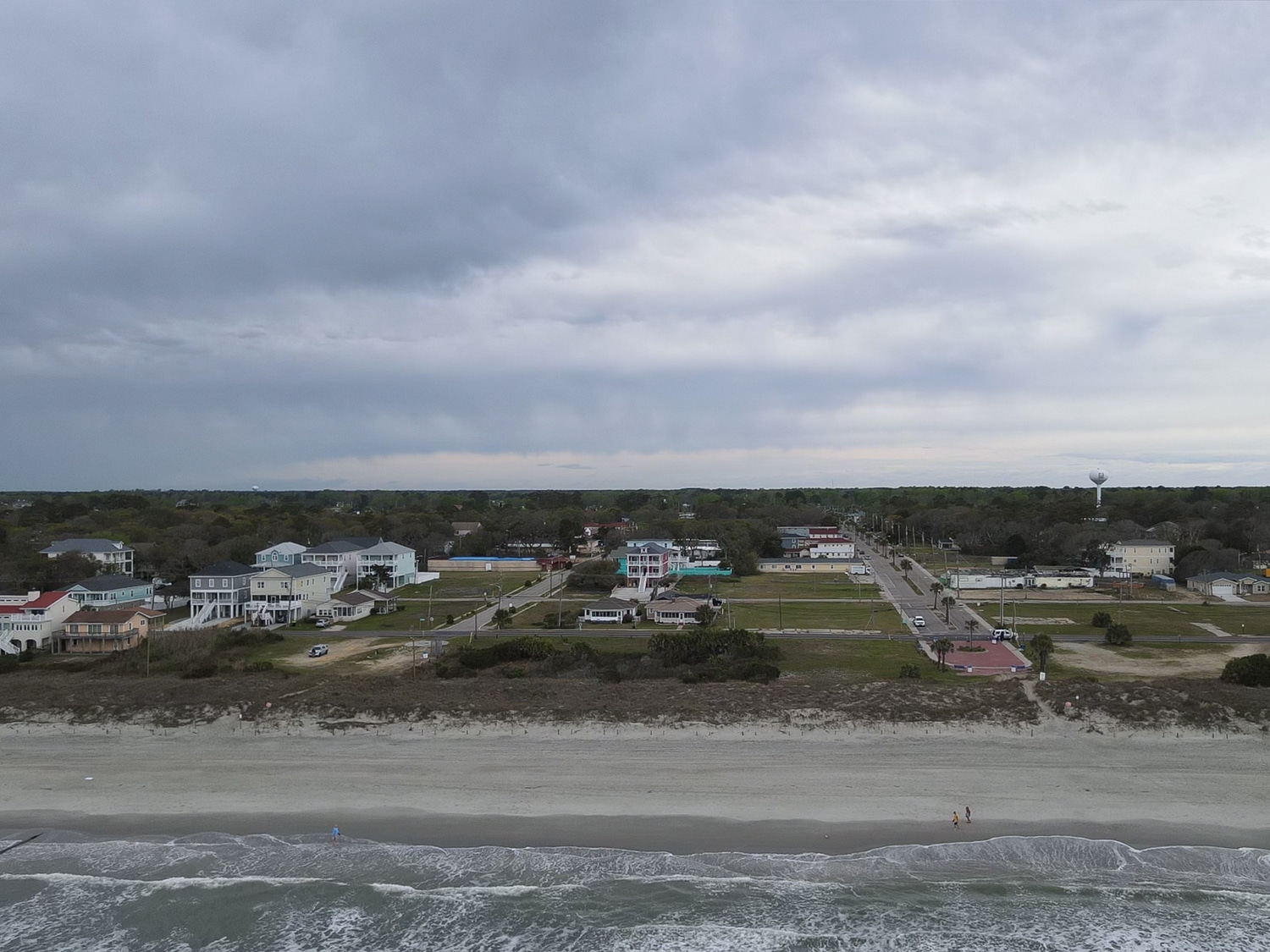
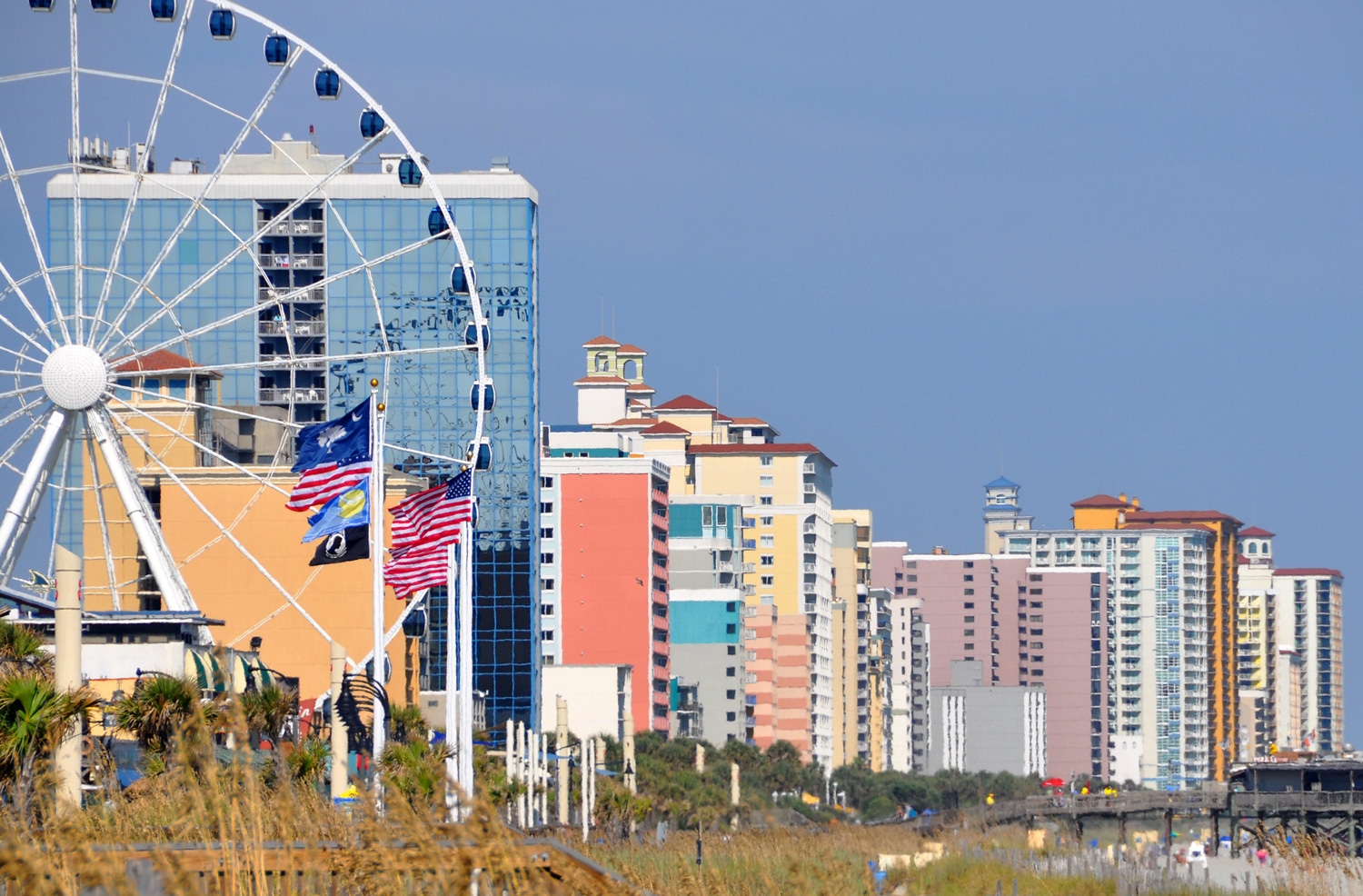
Black history. It’s past February, but I can get there from here if I walk the sandy strand south from North Myrtle Beach City proper. Along less than a mile of oceanfront ostentation, almost half an hour at a dawdling pace, alternatingly checking the surf break for scoters and the wrack line for shells of the lettered olive, past die-cut multimillion-dollar mansions, past spring-break-sin-soaked hotels and Ohioan-ready resorts erected to be toppled and/or swamped in the next hurricane, I am awash in the arrogance and lack of planning; the civically disengaged climate denial compounded by hyper-capitalism and chambers of commerce unconcerned with anything beyond the bottom line. Then suddenly, at another kind of line in the sand, a societally drawn, historically red one, the unbridled development just … stops. It’s as if someone, or something, suddenly forbade the ill-conceived plans to continue, and all the dollars dumped into the shifting dunes blew away before they could be misspent here.
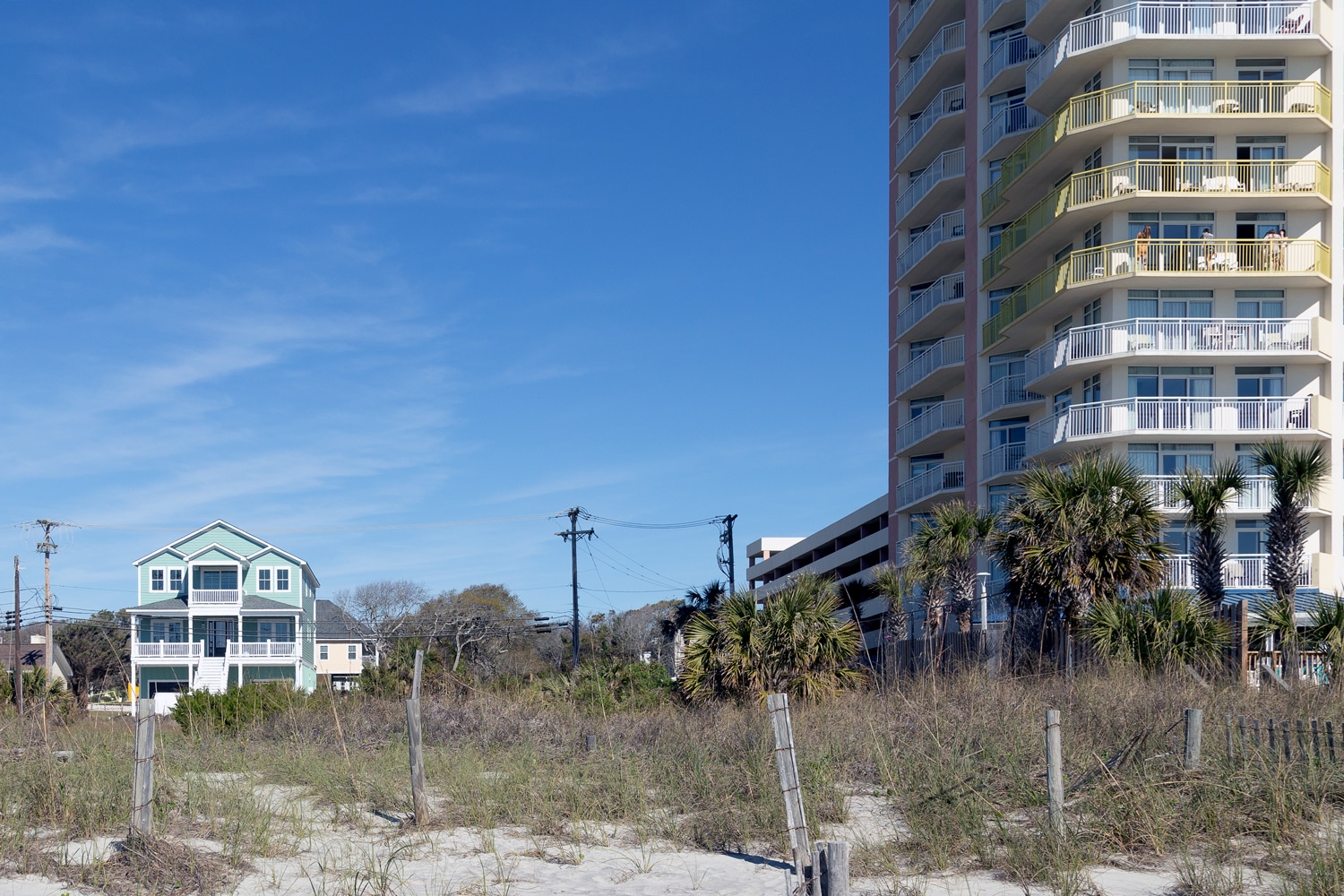
Suddenly, at another kind of line in the sand, a societally drawn, historically red one, the unbridled development just … stops.
The beach and inland shore calm down. No skyscraper-esque structures blot out the rows of single-family dwellings and old-school vacay rentals that still dominate, as they did when things were even more separate and unequal. What probably used to seem crowded to old timers is now quaint. All the rest of Myrtle Beach, North and South, is grand turismo — but here, it’s as if someone put a mute in the blaring horn, quieting things to a kind of syncopated curiosity that creates an internal confusion. Why does this place feel so different than the rest of all that Myrtle Beach, north and south, has become? This is a hidden stretch, an introverted place.

Welcome to Atlantic Beach, the Black Pearl. It lies a good piece north of “Dirty Myrty,” Myrtle Beach, where few days pass without someone throwing some party on any one of multiple town beaches: Surfside, Garden City, Murrell’s Inlet, and Litchfield in the south; Cherry Grove, Windy Hill, Ocean Drive, and Crescent Beach in the north. Atlantic Beach seldom arises in conversations about the South Carolina shore. That is, unless you’re in the company of Black folks who grew up here under Jim Crow “proper,” among the ever-present stories of past, present, and likely future racism we exchange among ourselves — or if it’s during the week when Black bikers descend to claim the Pearl as their own. Then, when you talk about beaches, possibilities are whittled quickly down to the singular spot: Atlantic Beach.
The day I stepped across the line into this portion of Black history, it felt like a step into a place I kind of owned, without a way of proving it.
The day I first stepped across the line into this portion of Black history, this quarter-mile zone of Black now bordering on Black what-might-yet-be, it felt like a step into a place I kind of owned, but without a way of proving it. It was not unlike every time I see a cotton or rice field and imagine some ancestor toiling there. By the deed of blood and sweat, I own a piece of that land. And so, I walked with a different kind of air, knowing this was (is?) our place. Several ring-billed and laughing gulls, along with an amorous pair of mourning doves, had the sand mostly to themselves. A sanderling skittered just out of the surf’s reach. The shells seemed the same as on any other beach; bits and pieces of broken dead things — shards and remains, white and other colors. The white gulls of various species (none designated by any field guide as “sea” gulls) didn’t seem put off by my presence. Colorblind? Not likely, as birds see beyond the limited spectrum we exist within. However, I did think about the free rein that birds give me, no dirty side-eyed looks because my skin tone somehow dirties the view. No, the birds allow me to be me, and so here in a place reserved by relegation, as segregation sought to do, I was comfortable enough in the legacy to wonder if the White people I saw walking the shore had any idea of the history they traversed.
This first trip to The Pearl didn’t happen as any kind of purposeful pilgrimage. The house we stayed in was located up the beach a few blocks from the zone of 20th-century segregation, ensconced in the new miscegenated realm that green money (usually) lets you into. I “discovered” the Town of Atlantic Beach, South Carolina, on a late winter/early spring trip to take part in a tradition that’s become more reunion than vacation. We (my wife Janice and I) stay with a group of friends in some gargantuan rental vacation house that will accommodate 20 or 25 people. In the past, most of our time had been spent in the montane sprawl of Gatlinburg, Tennessee, hoping for snow or at least weather cold enough to make the Great Smoky Mountains feel less like a tourist trap.
The shift to the coast had arisen with folks who’d been coming to these gatherings much longer than we had, who wanted to return to ocean views and beach walks. And so here we were, occupying for a few days space along the Grand Strand that, just a few decades before, would’ve been off limits; looking at maps online trying to figure out just where in the hell we were in the midst of the bedlam — and, more importantly, where I might find a place I could escape to in the mornings, to watch birds. The gap in the skyline looking south out of the monstrous house’s fifth floor windows gave me a reason to wander that way. If nothing else, I would be able to catch a sunrise alone, in my preferred state of introversion as the world remakes itself. Not knowing what property lines or boundaries I might have to cross, and not wanting to give anyone pause or cause for feeling threatened by my Black presence on a public integrated beach, I drove five minutes south.
I like to imagine these were folks who knew the full history of Atlantic Beach and had stood by the place proudly.
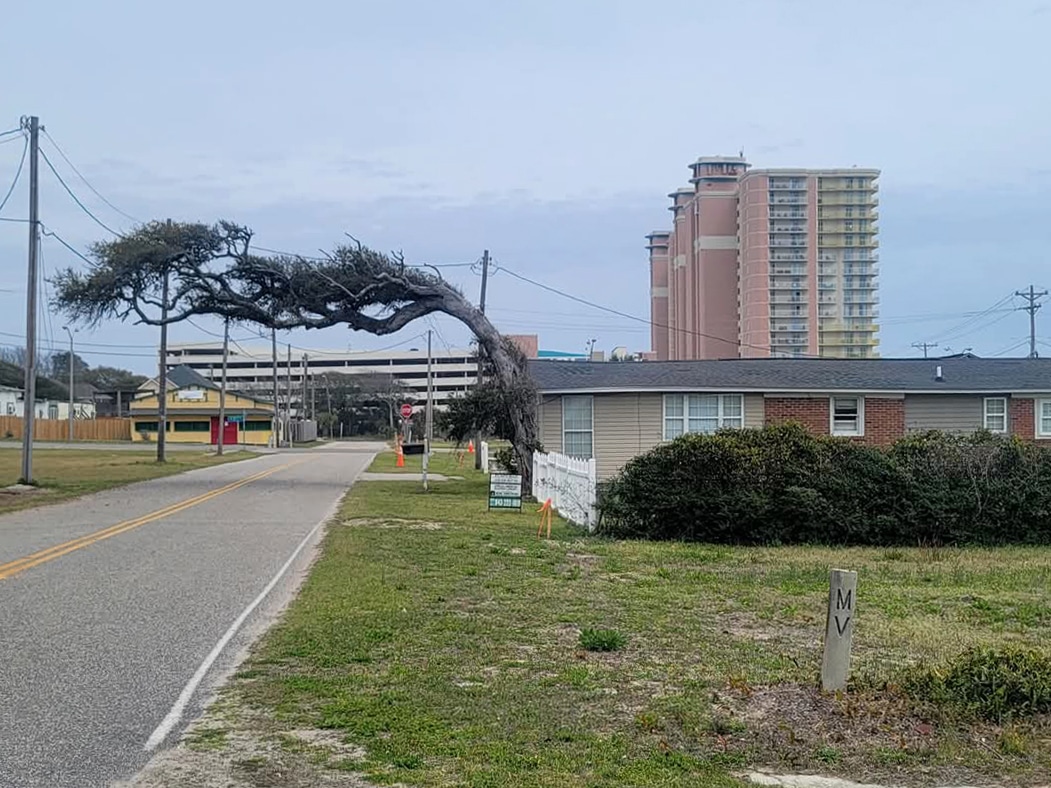
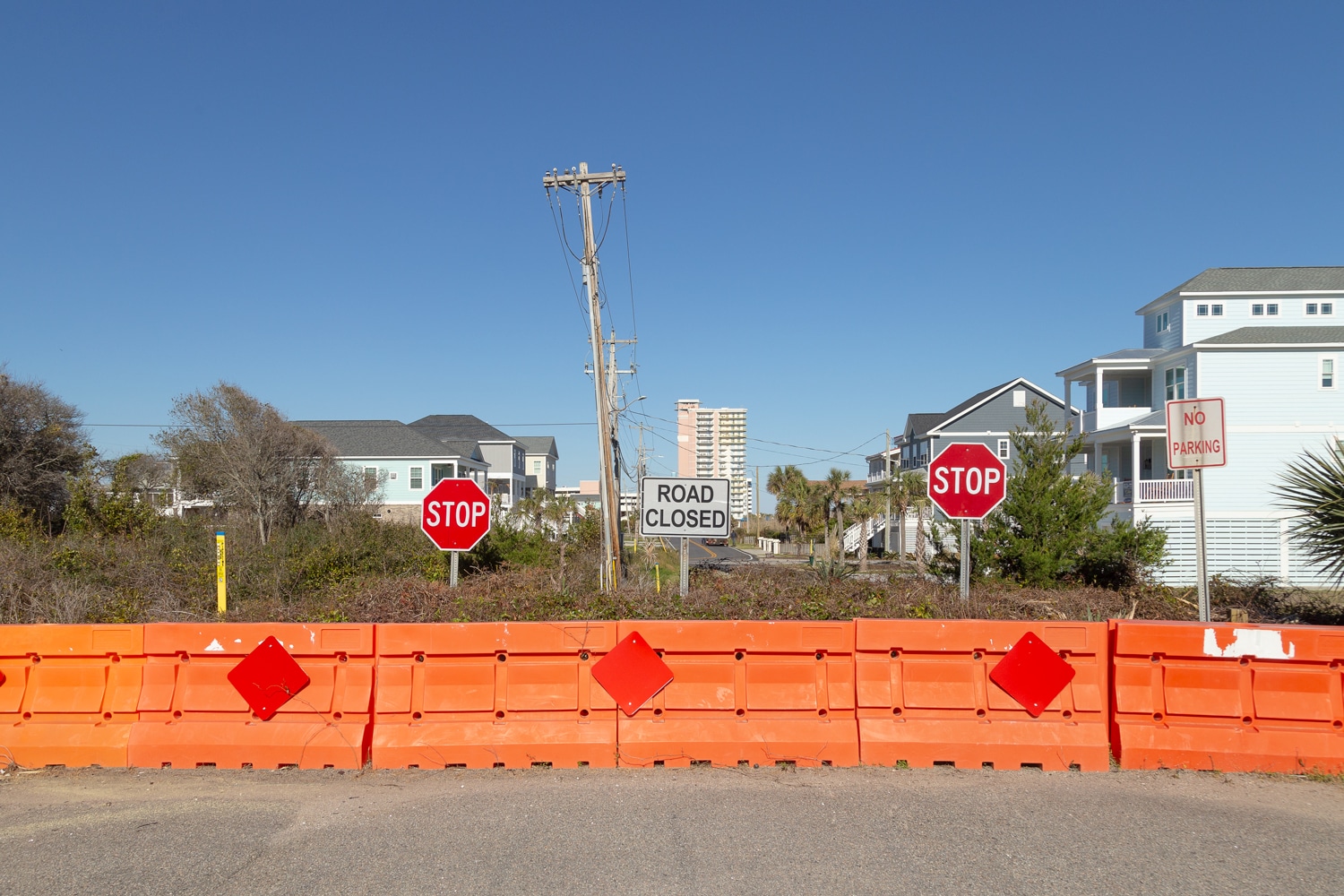
It turns out that Atlantic Beach is barely a square mile — just three blocks, from 29th Avenue to 32nd. Once inside the township’s boundaries on the day I visited the Pearl for the first time, I saw no traffic lights, just stop signs, and narrow potholed streets that might have served as a dictionary definition for “off the beaten track,” given the stone’s-throw proximity of a multi-lane highway and the neighborhood I’d just left, where road maintenance seemed a higher priority. Midcentury modern-ish houses and bungalows showing the patina of years, relentless sun, and coastal weather. Worn paint, single-level brick ranches, and a postmodern exterior feel that would have had me bet even money on shag carpet and paneling in the interiors of many of the homes. It wasn’t uninviting, though, just different from the legions of multilevel megalopolises all around.
There were legacy houses too, with family names proudly posted. I like to imagine these were folks who knew the full history of Atlantic Beach and had stood by the place proudly. I stopped by one of those little libraries people sometimes erect, a cabinet hung on a phone pole or something similar. It was different from any other little library I’d ever seen. The healthy selection of 30 or 40 books was replete with Black faces and Black writers’ names on the covers and spines. I drove by City Hall and wondered if Black faces and Black names were prominent there too. A quick query later revealed that to be the reality; Black rule is still the rule in the Black Pearl.
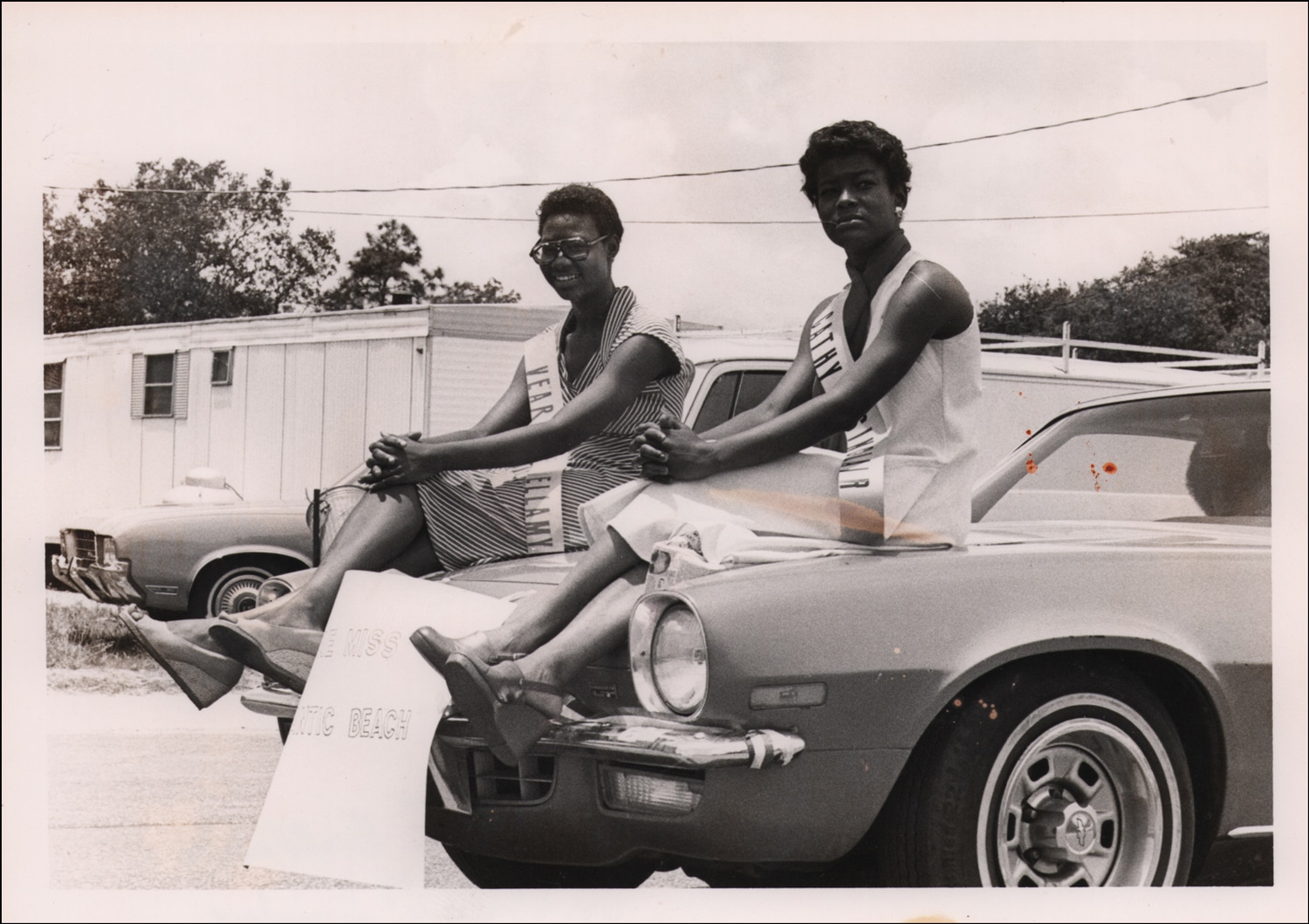
Contestants in a Miss Atlantic Beach pageant in a beachside parade, n.d. [Courtesy Atlantic Beach Historical Committee]

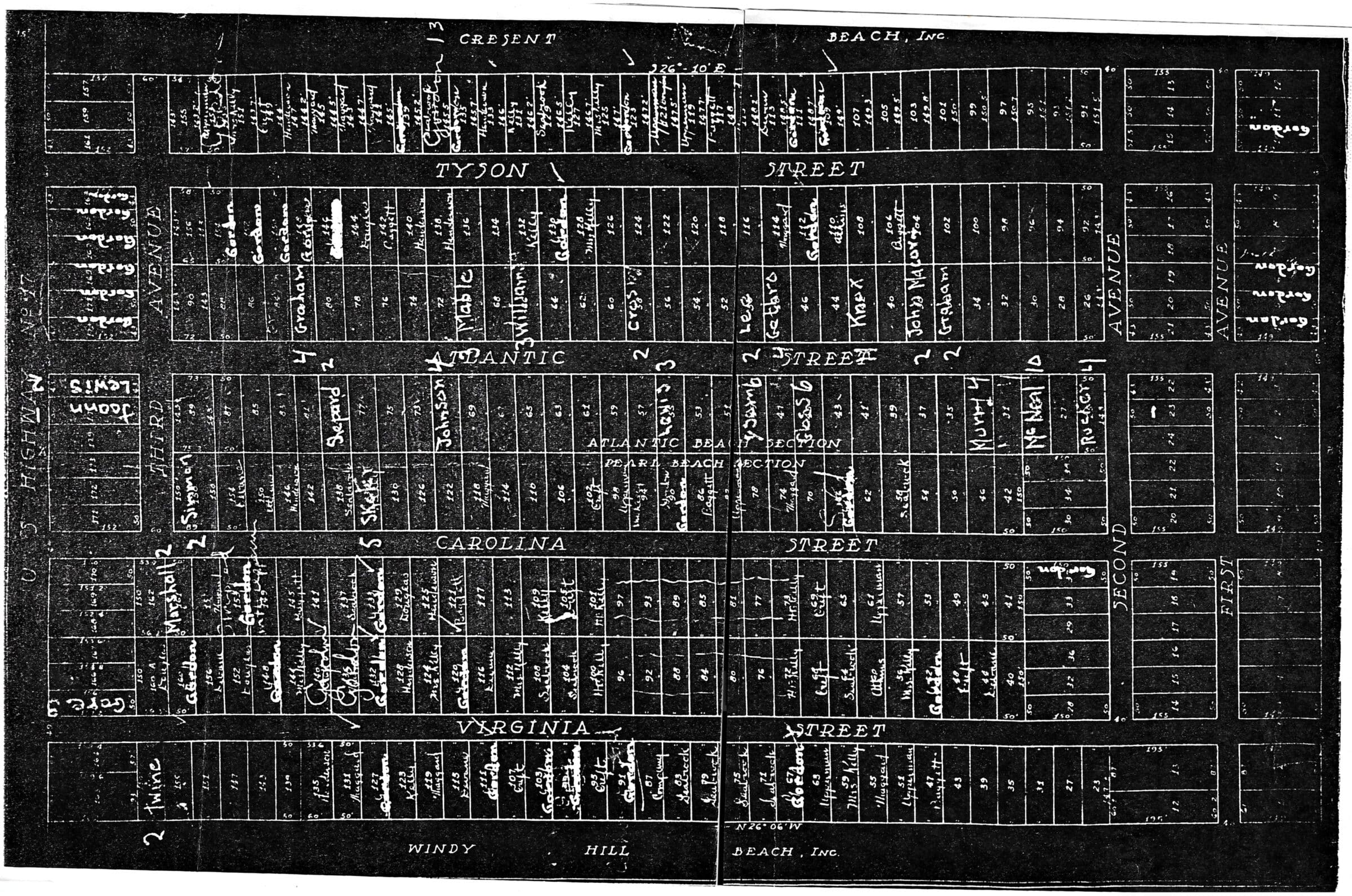
A map of Atlantic Beach, n.d. [Courtesy Atlantic Beach Historical Committee]
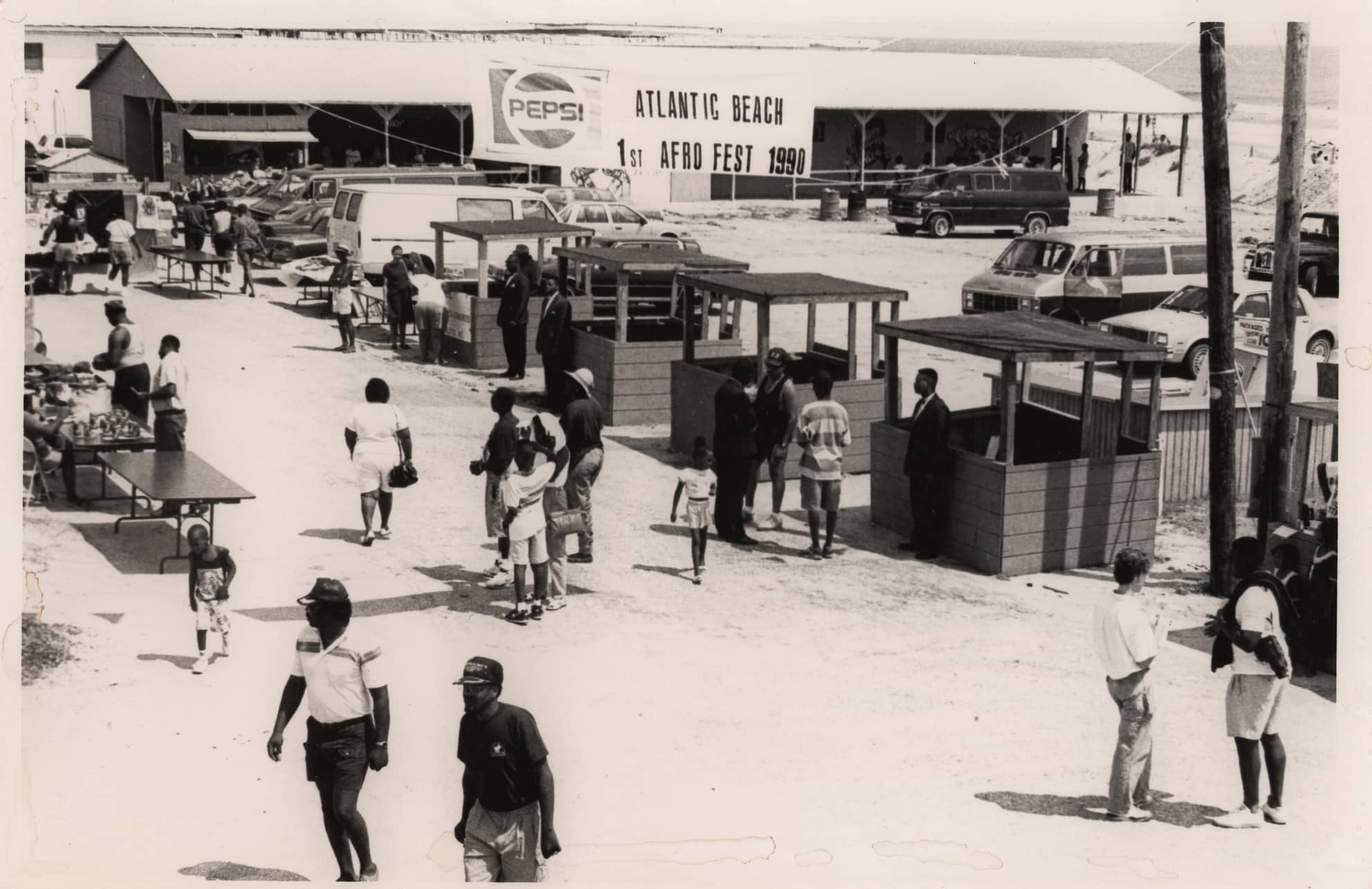
Afro Fest 1990 in Atlantic Beach. [Courtesy Atlantic Beach Historical Committee]
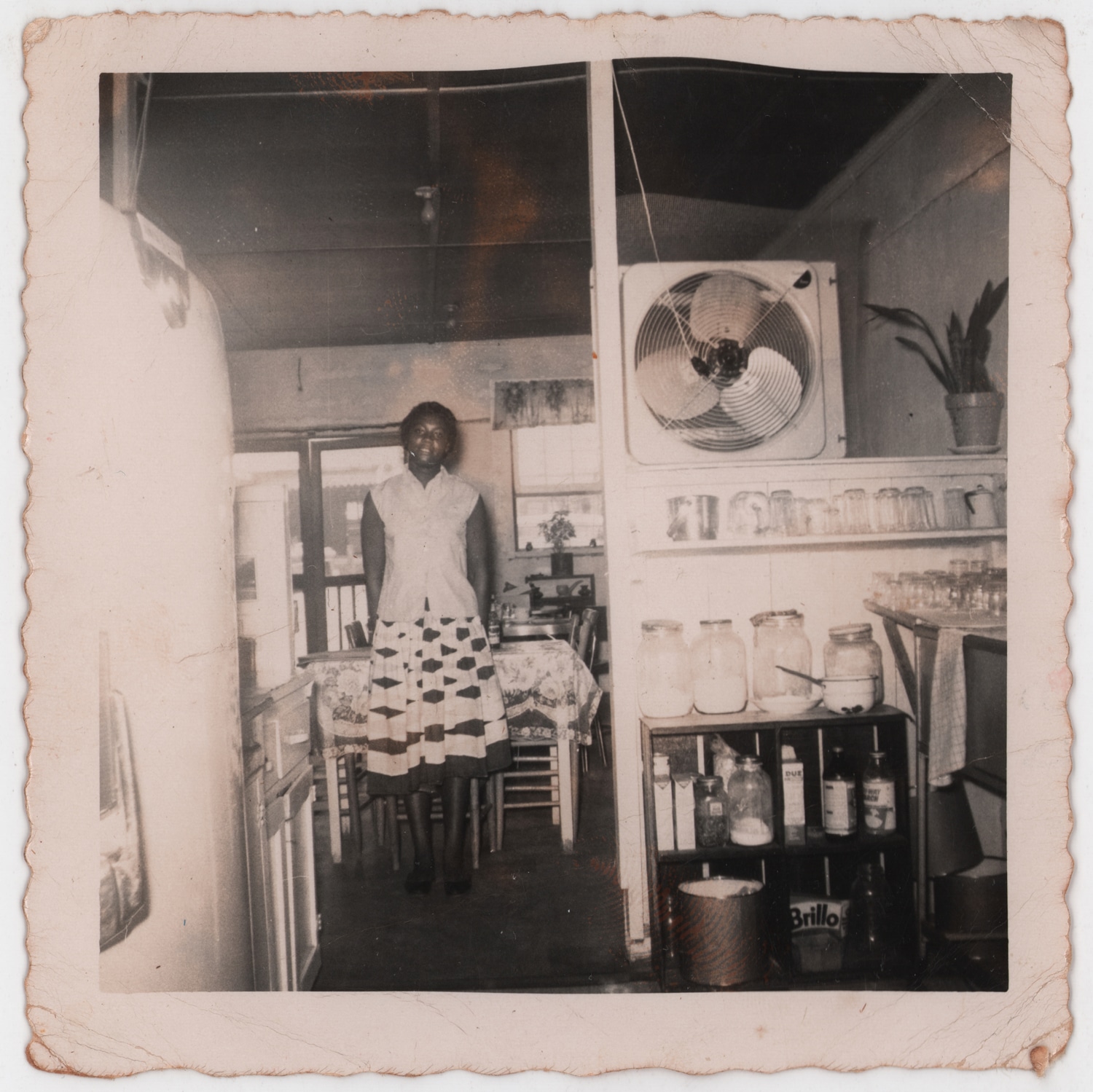
Ms. Margaret Vaught in her Atlantic Beach restaurant, 1954. [Courtesy Atlantic Beach Historical Committee]
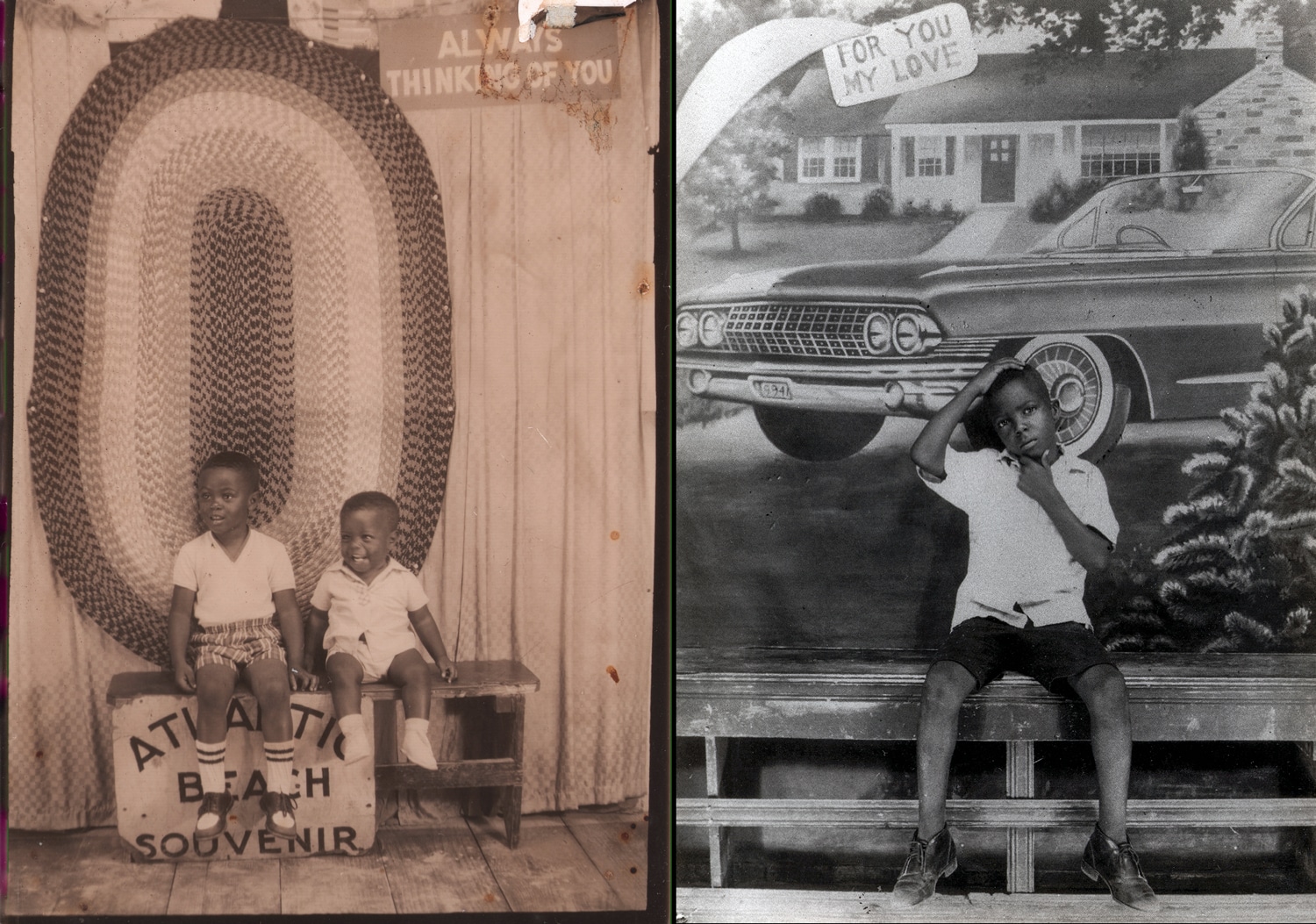
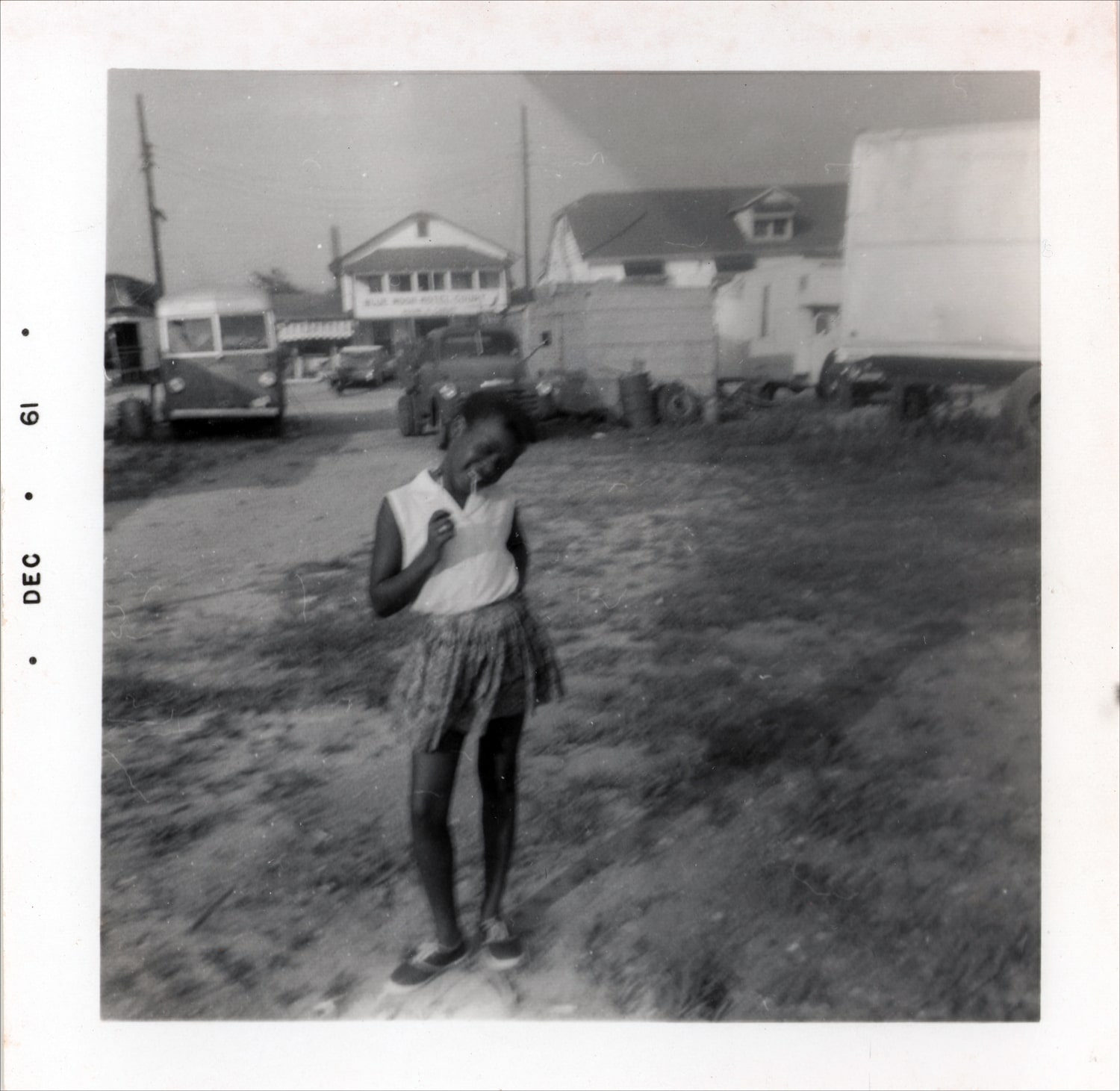
A young Atlantic Beach resident, 1961. [Courtesy Atlantic Beach Historical Committee]
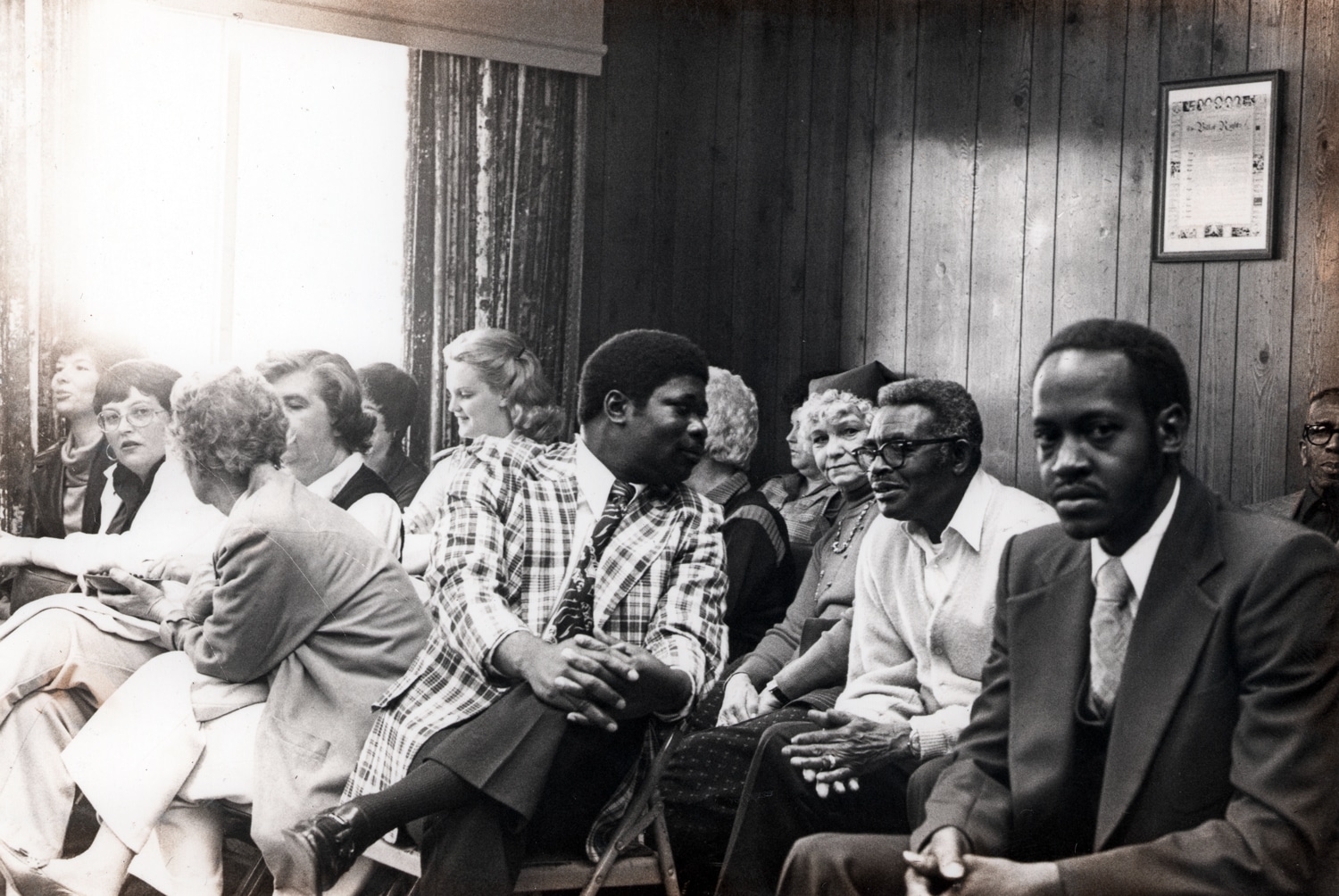
A gathering of Atlantic Beach community members in a local government meeting, 1970s. [Courtesy Atlantic Beach Historical Committee]
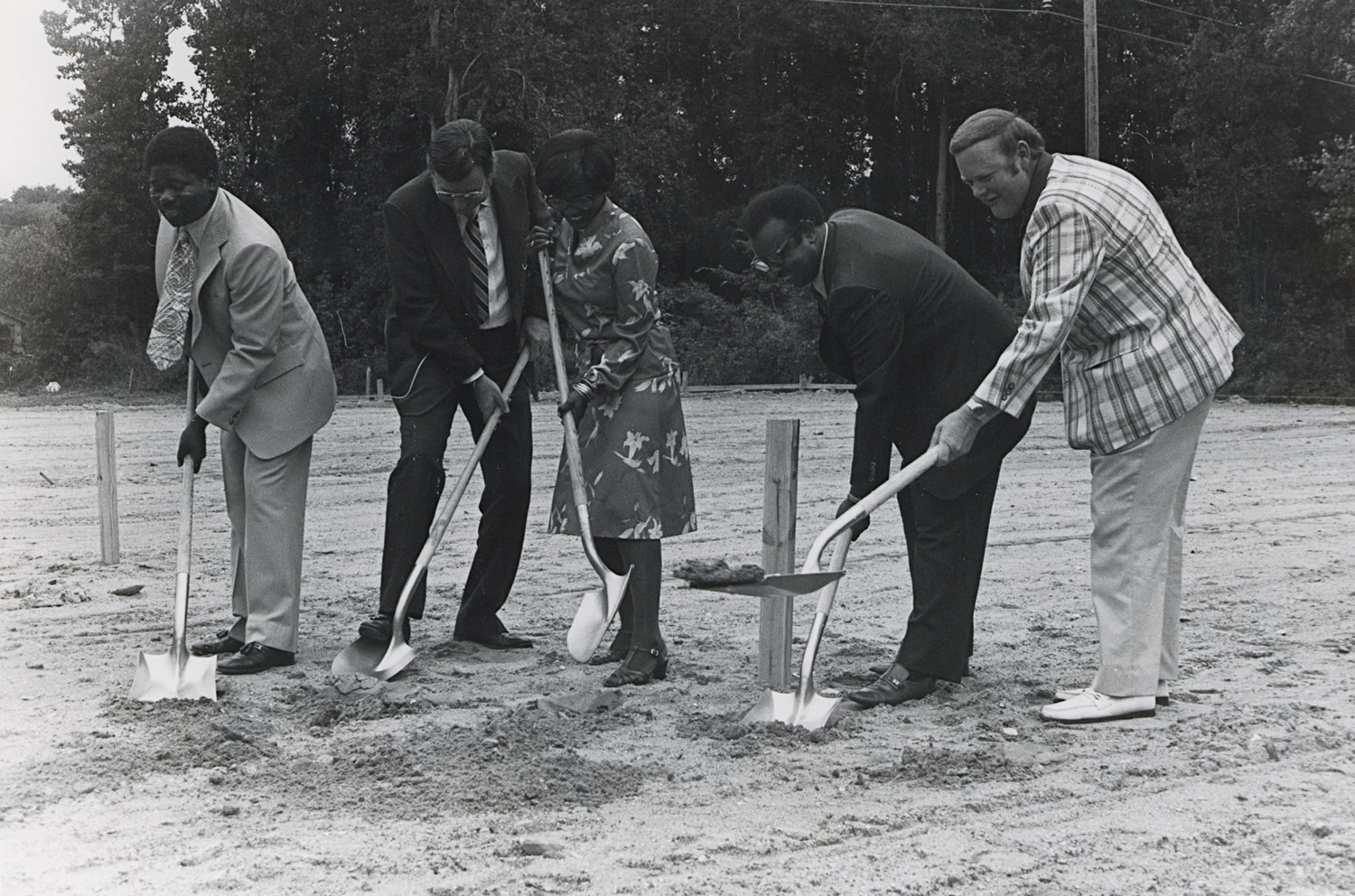
Local leaders in a groundbreaking ceremony for the Atlantic Beach Community Center, 1970s. [Courtesy Atlantic Beach Historical Committee]
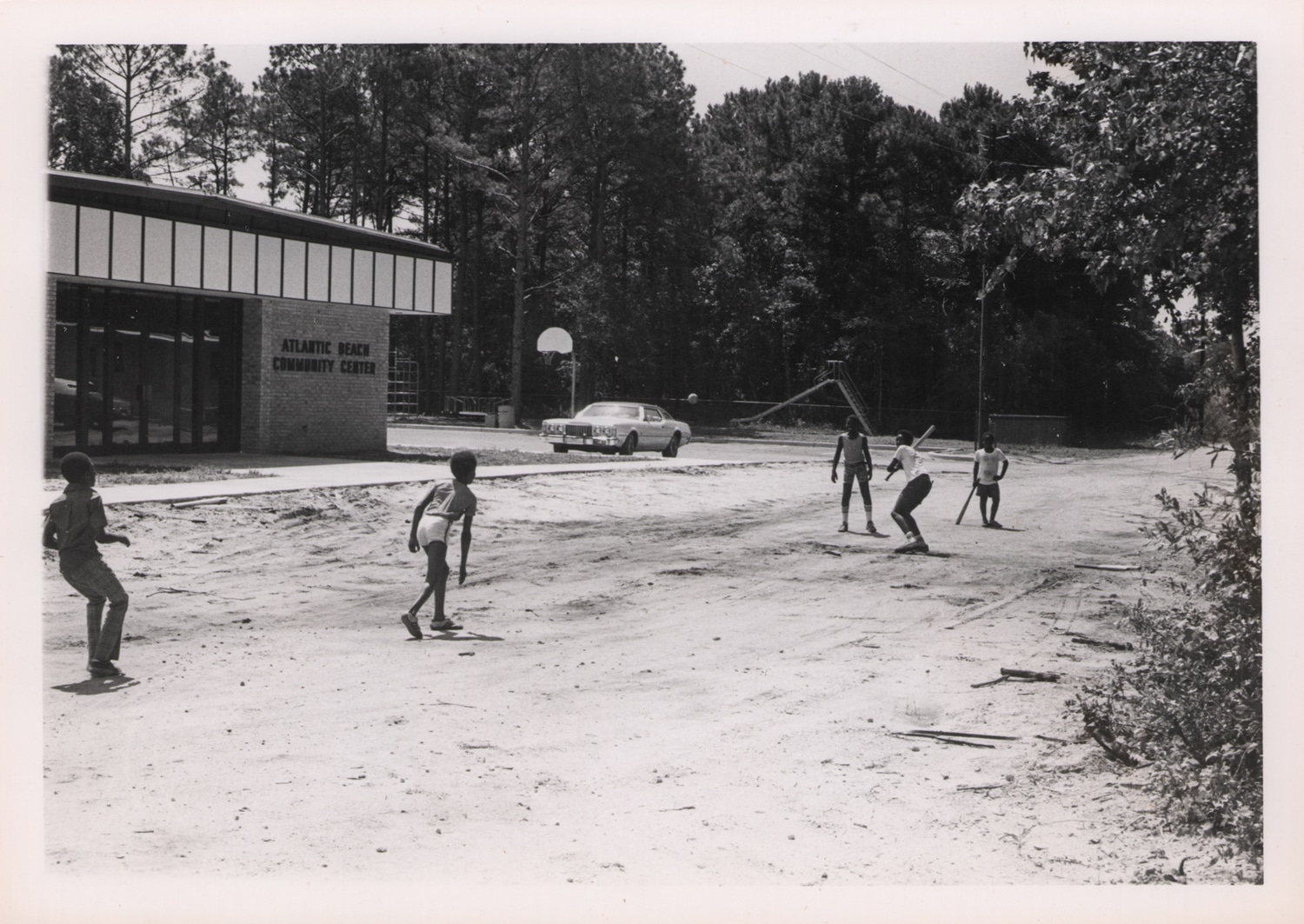
Playing baseball outside the Atlantic Beach Community Center, 1970s. [Courtesy Atlantic Beach Historical Committee]
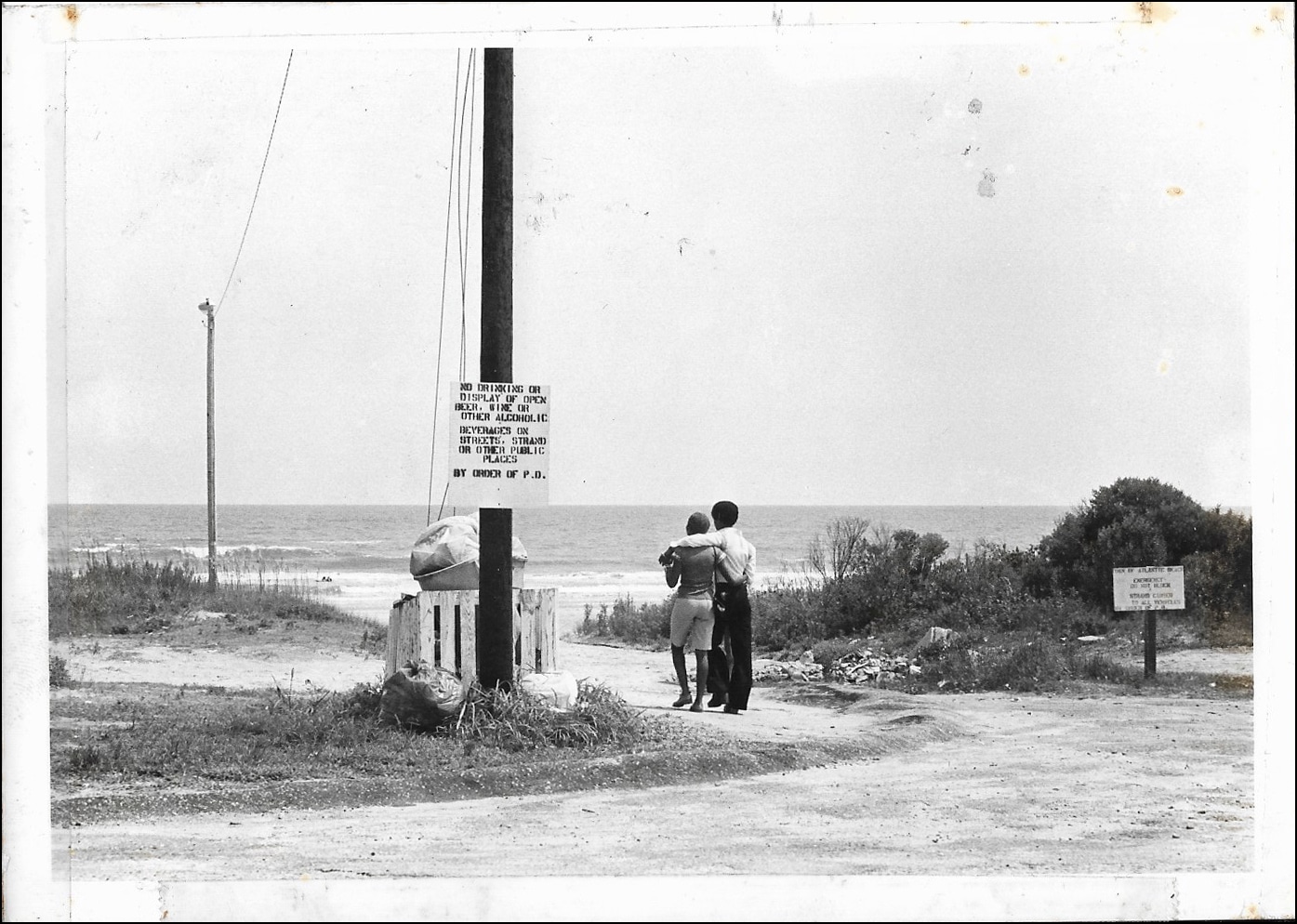
Strolling on Atlantic Beach, n.d. [Courtesy tlantic Beach Historical Committee]
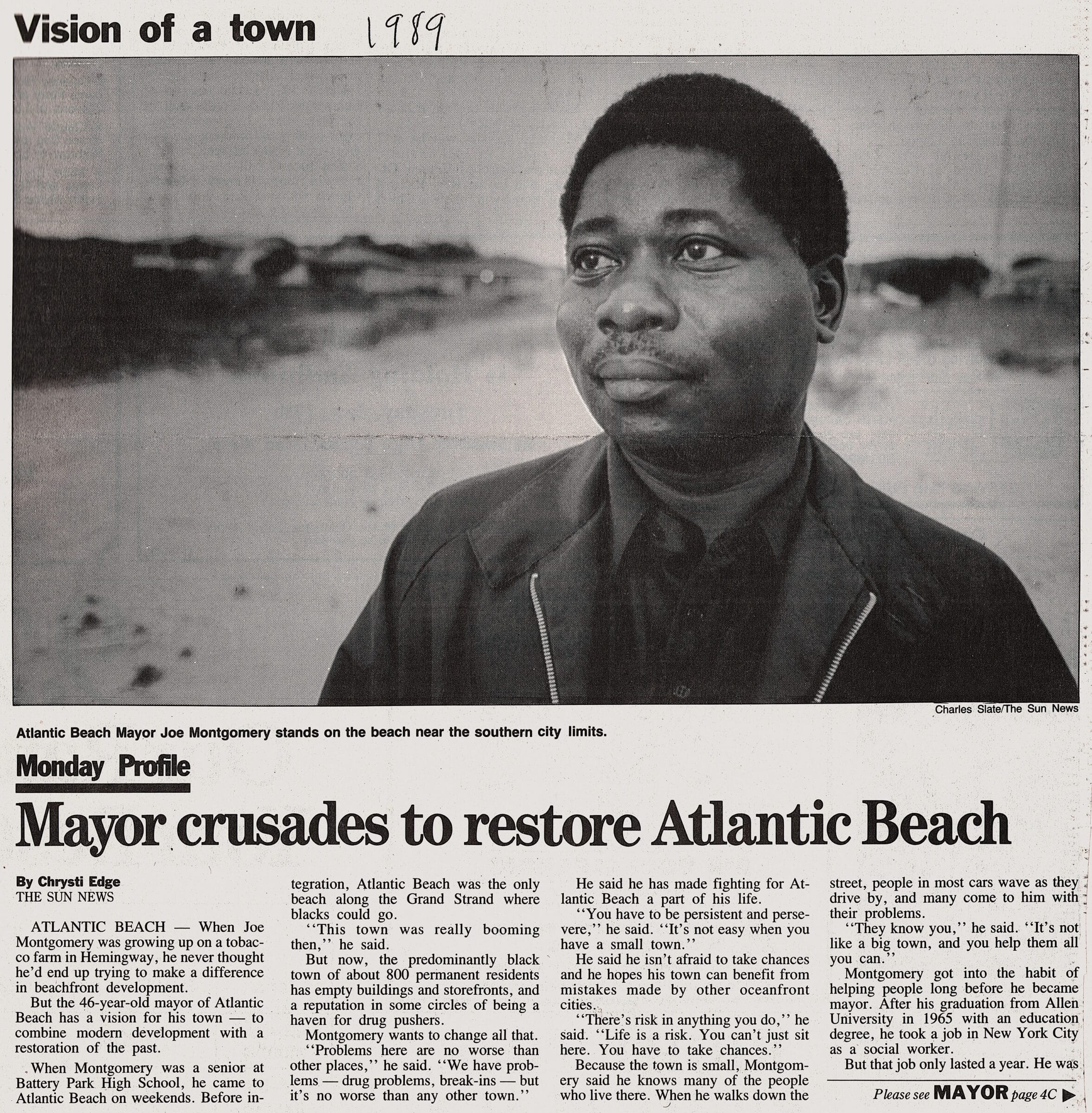
A profile of Atlantic Beach Mayor Joe Montgomery in The Sun News newspaper, focusing on his efforts to restore and redevelop the historically Black beach community, 1989. [Courtesy Atlantic Beach Historical Committee]
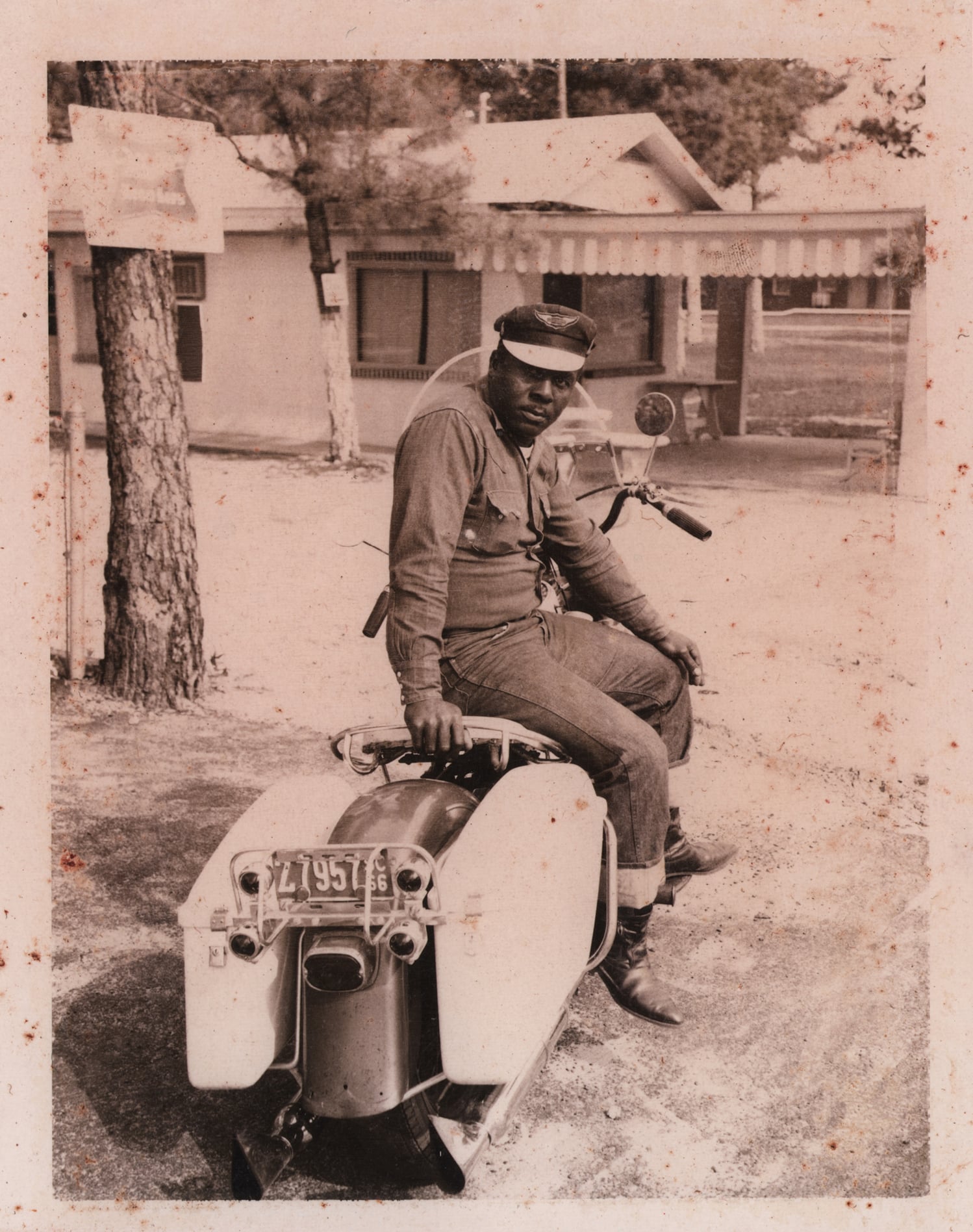
James Dewitt of the Atlantic Beach Police Department, 1970s. [Courtesy Atlantic Beach Historical Committee]
Mr. Millard Rucker, Sr. and his wife Mrs. Carrine DeWitt Rucker, 1970s. Millard Rucker served as mayor of Atlantic Beach for seven years. [Atlantic Beach Historical Committee]
Ms. Rose Rucker’s mother on Atlantic Beach, 1980s. [Rose Rucker]
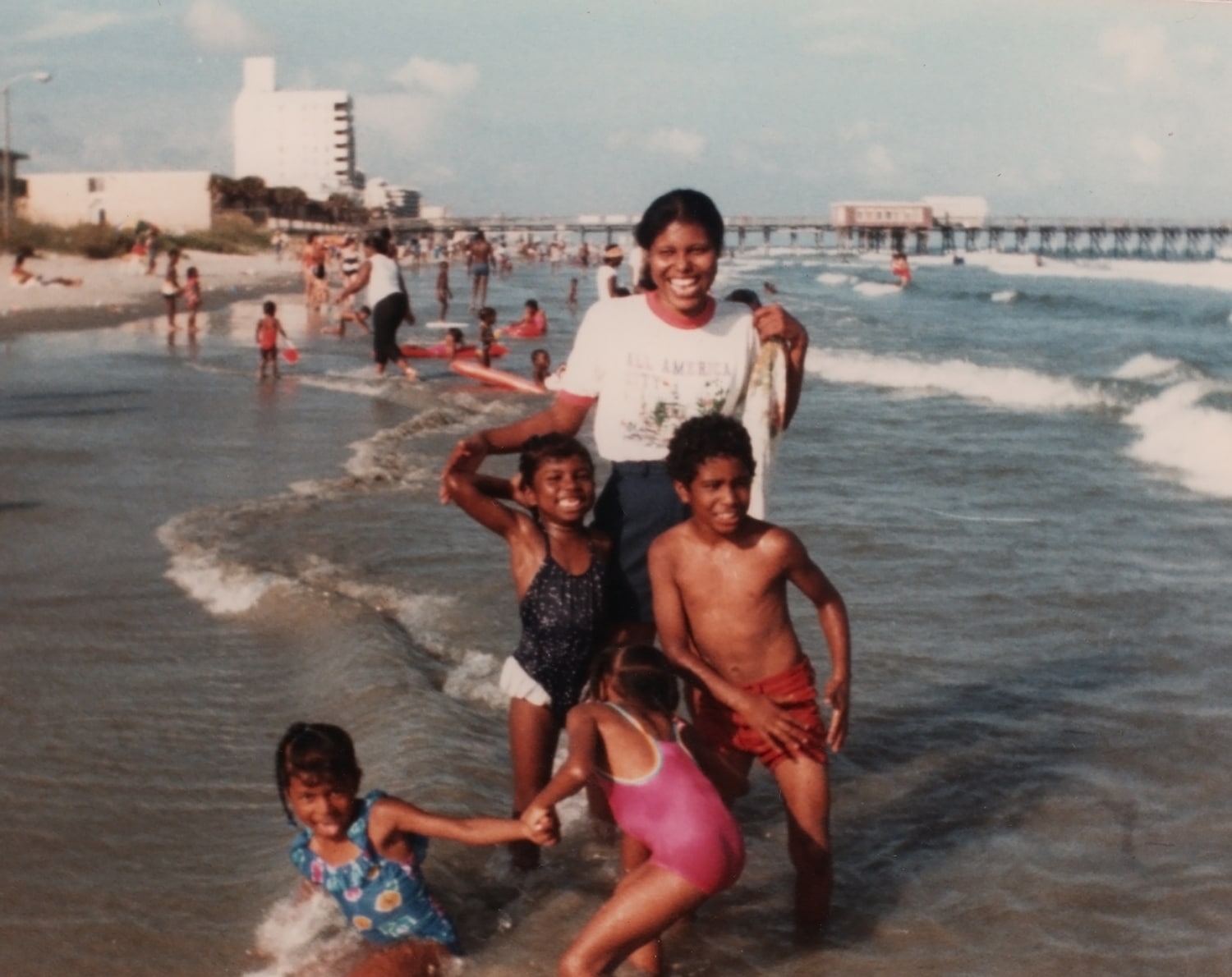
Patrella Rucker and her children enjoying the ocean at Atlantic Beach, 1980s. [Rose Rucker]
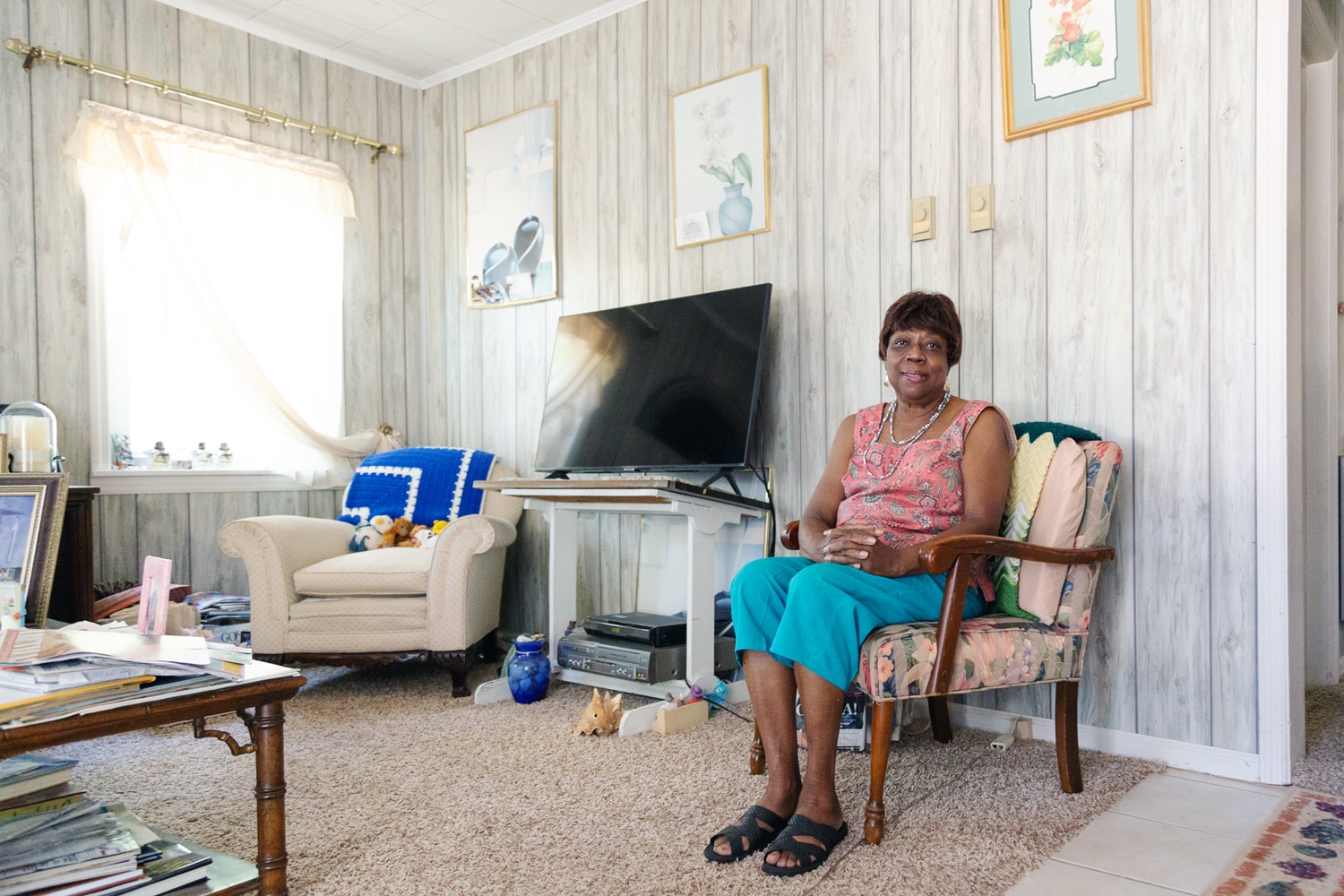
Ms. Gloria Lance photographed in her Atlantic Beach home, 2021. [Matthew J. Bailey]


Our annual retreat is a gathering of those who, over almost three decades of reunions, have become like an extended family. The time together centers around good food, good drink, and lots of talk. Most everyone is older than us by at least a decade, which puts them in their 70s plus. This means they came of age in the late 1950s and ’60s, and some remember Atlantic Beach as more than a leftover of segregation. They vacationed at the Black Pearl, the only beach where they were allowed. When I mentioned that I would be visiting, a few — like Brenda Moore, the crew’s chef and chief shit-talker, who cooks gourmet meals from which certain soul food restaurants in New York City would do well to take lessons, and slaps down a nasty game of spades (no kitty or nil) — recounted experiences restricted by society, yet enlarged by a seaward horizon with no bounds. Listening to her and others reminisce about what it used to be like to have Atlantic Beach as a refuge of sorts was like opening a history book that no governor, legislature, or patriot mother clan can ban. Sitting and listening to people who’ve lived history is how I learn best. That learning, of course, always leads to more questions.
I thought my curiosities surrounding the Black Pearl would gin up similar interest among the friends who’d lived through that era. I was wrong. Those weren’t Great Again times, and the nostalgia for those days was not necessarily good enough to reinvigorate. After all, what do we expect when we encounter violent pasts? What happens when someone calls you “nigger” or “boy” or “chief” or “boss,” and there’s no term of endearment or respect-for-station intended, only a smear to demean?
Those weren’t Great Again times, and the nostalgia for those days was not necessarily good enough to reinvigorate.
As a birdwatcher and wild-seeking wanderer, I sometimes visit places where, not so long ago, I would have been denied entry or service or told to be out of town by nightfall; where calling me out of my name would’ve been commonplace. At such times, I feel a special trepidation. It’s like the echoes of wrongs wrought hang in the air — or maybe in the trees. I think about locations I travel to now, and about Black folks who, not so long ago, had to go hopscotching across the map, guided by word of mouth and a kind of field guide to safety called The Negro Motorist Green Book. (“Carry your Green Book with you — You may need it.”) I wonder with time-tested worries now as I drive to locations once forbidden. Will someone profile me and hunt me down for being in the wrong place at the wrong time? Will some police person see my Blackness as a threat to be dealt with? Maybe some White woman won’t like the way I looked at her (allegedly) and call the authorities to report a glance.
Experts say that trauma from centuries ago can dwell in us, epigenetics as transferable through generations as eye color, height, or a congenital disease. I dare myself in heavy spaces to be as brave as my forebears were in remaining unapologetically who they were. Yet I drive through (allegedly) former sundown towns and keep on going. Some think the sundown town is, or was, a southern thing. I know better on both counts, having cancelled a gig in Carbondale, Illinois, a few years back, because I’ve read that the neighboring town of Anna claims its name stands for Ain’t No Niggers Allowed.
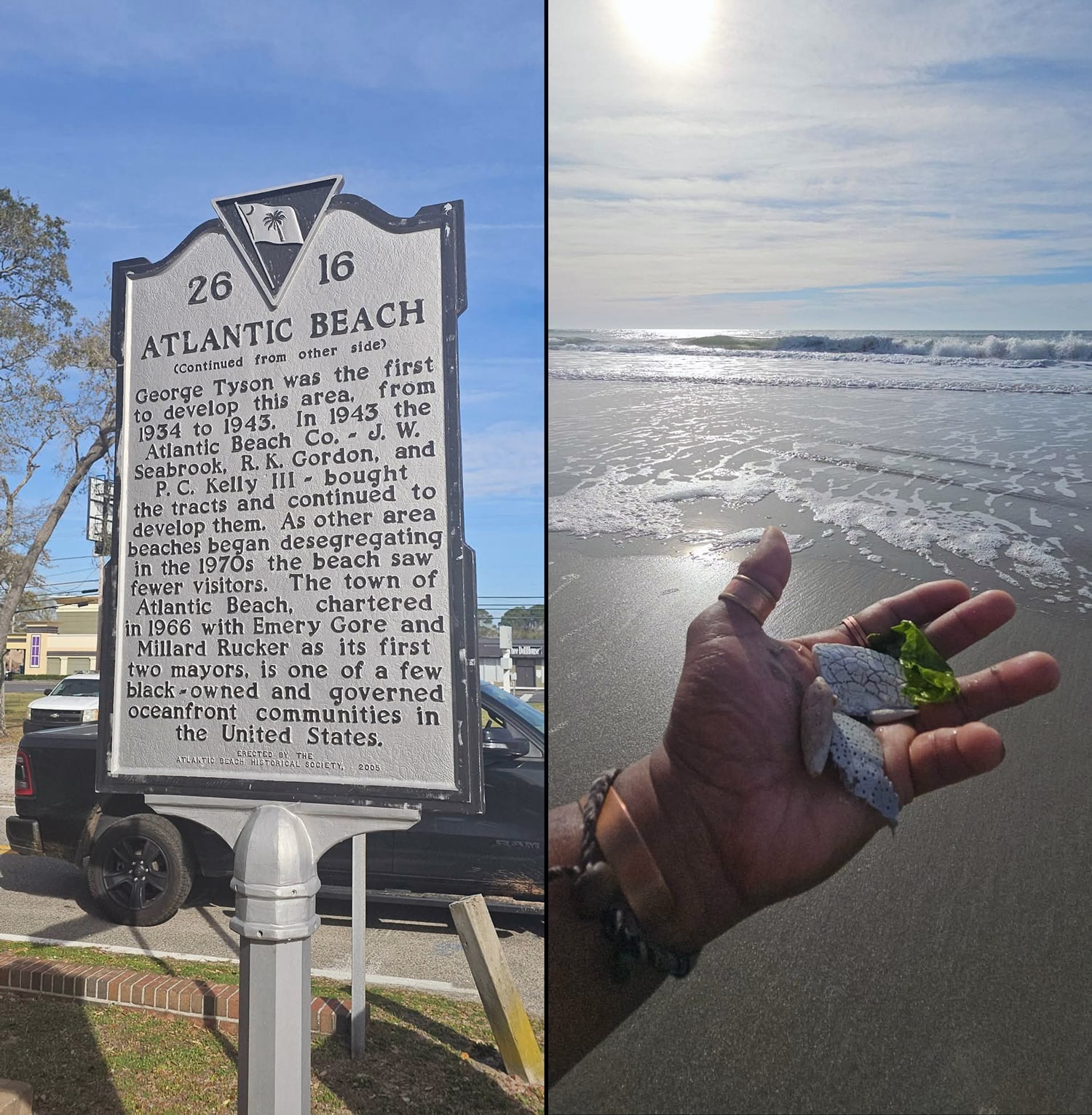
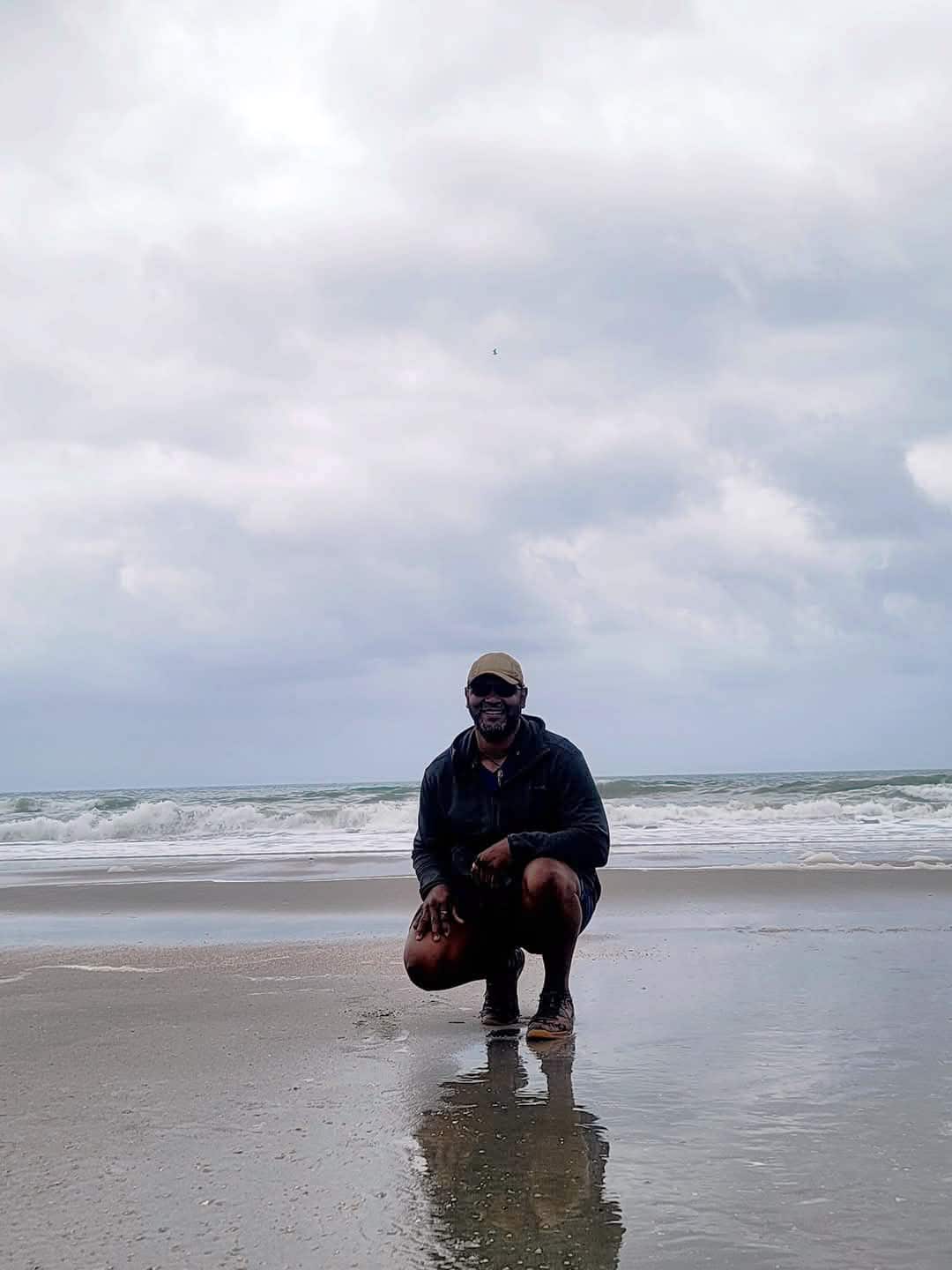
Just think on this: of South Carolina’s 187 miles of coastline, less than a mile of it was available, less than 75 years ago, to people like me. Here and now, however, and even in 1954, Atlantic Beach might have been a safe place to stop. So, I went to see what the ancestors had experienced, to witness not only the aftermath of their apartheid, but also to feel between my toes the sand they felt between theirs. Just standing suddenly in history, or on the edge of it, gave me a feeling of belonging — of a sort. This was where my presence wouldn’t have been questioned. That day, there were no lines separating my Blackness from anything else between a late winter gray sky wanting to be blue, a slate gray sea, and tawny hard-packed low-tide sand. Not a single gull demanded I retreat to some side entrance. I was unbounded except in my mind, where thoughts about the Black Pearl’s past, a past about which I had no firsthand knowledge, swirled. My friends who’d seen the Pearl in real time had seen enough, and I can’t say I blame them.
In a way, segregation answered questions with brutal certainty. Get to the designated place and “relax” among your own kind. Stay in your lane and don’t pass go. I’m not in line with that; I figure my humanness is the ticket to wander where I will; the Black Pearl is another point on a range map I seek constantly to expand. I left knowing I’d return.
Driving is sometimes the best way to size up a place. From the big, rented house, south on Highway 17, and a left turn. I doubt anyone would’ve noticed if I’d just cruised on by. But then, even today, Black folks can’t be making assumptions and rolling through just any neighborhood with impunity. On the way into the three-block Atlantic Beach enclave, I saw a sign:
ATLANTIC BEACH (AKA The Black Pearl)
CREATED OUT OF “SEGREGATION”
LEARN MORE ABOUT THIS HISTORICAL AFRICAN AMERICAN
OCEANFRONT COMMUNITY
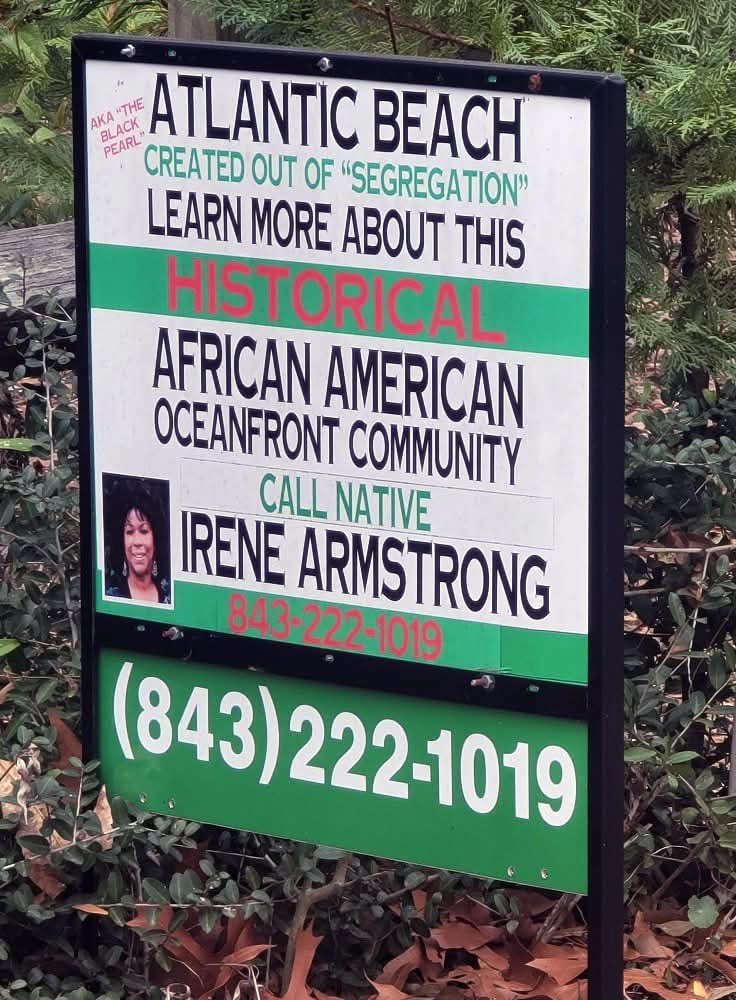
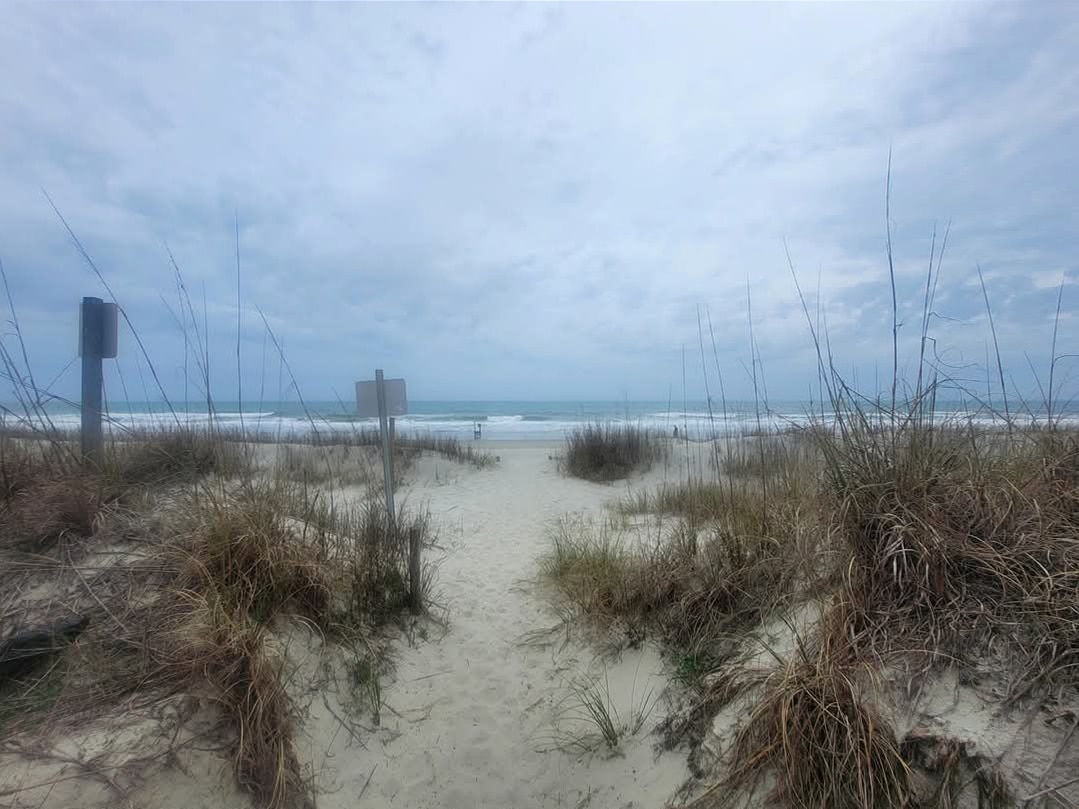
A block past the town center, I had my choice of parking spaces. The entrance to the beach was marked by someone’s intent to make nature a centerpiece: the Atlantic Beach Native Plant Garden stands on the inland side of twin-tiered dunes, a red-brick horseshoe-shaped park with a few struggling tufts of grass. On another sign posted nearby, there’s the smiling face of a Black woman who I suppose would educate me, or you, or anyone who’d call to learn more. I will call at some point. But on that day, I needed time to wander.
The Black Pearl is another point on a range map I seek constantly to expand. I left knowing I’d return.
South Carolina’s history on behalf of Black folks is mostly bitter and very little sweet. A planter class that held the U.S. Constitution hostage to chattel enslavement. The first state to secede and the first state to wage war (and thereby commit treason) against the nation. So, the segregation embedded here, including on the beaches and in the state parks where recreation was required to be separate and unequal, is particularly telling. Atlantic Beach came to be in the mid 1930s after George Tyson, a Black North Carolina businessman, sold some land to a group of fellow Black professionals who called their new holding “The Atlantic Beach Company.” With strong Gullah Geechee underpinnings, Atlantic Beach thrived into the 1970s, with Black ownership and entrepreneurship making the place a sole provider for Black beach recreation in a state segregated first by the written law and then by the unwritten. Now, with the passage of time — and due perhaps to the controversial weakening of ties occasioned by integration, which allowed us to go elsewhere as what we once owned and revered languished — the Black Pearl is known mostly for its Black Bike Fest. What’s to become of it if “progress” does find its way in?

There’s a vibe in Atlantic Beach, no matter how I approach it. Is it born, simply, of what such places can “provide” in the way of wildness — birds, or some other sensual prompt? Or am I stuck on thinking about such sites of not un-recent racism as leverage toward a better understanding of what it means, in the present, to be Black and in love with nature? I’m not sure. Birds always help distract me from what is bitter. Still, history often becomes the story I’m telling, especially in South Carolina, so close to home and hearth, where a palpable specificity clings to this not-quite-a-mile that was once the only sand and surf on the state’s coast — I repeat: all 187 miles of it— that allowed Black folks the freedom of swimming in the ocean. Collecting shells. Watching a few brown sandpipers, western or possibly semipalmated, scamper out of identifiable reach. Feeling the warmth and awe of sunsets and sunrises over Mother Atlantic.
It’s been more than 50 years since the desegregation order came. So: within my lifespan. I remember, at times like this, that one of my favorite places, Edisto Island, an hour south of Charleston, closed its state park down for years rather than allow us in. The wild-loving green ecologist within cheers for the painted buntings and shorebird nests that stand a chance here at the Black Pearl, or on Edisto. The inner Black man considers why his parents never took him to the beach. I didn’t see the ocean at all until I was twelve or thirteen years old.
The inner Black man considers why his parents never took him to the beach. I didn’t see the ocean until I was twelve years old.
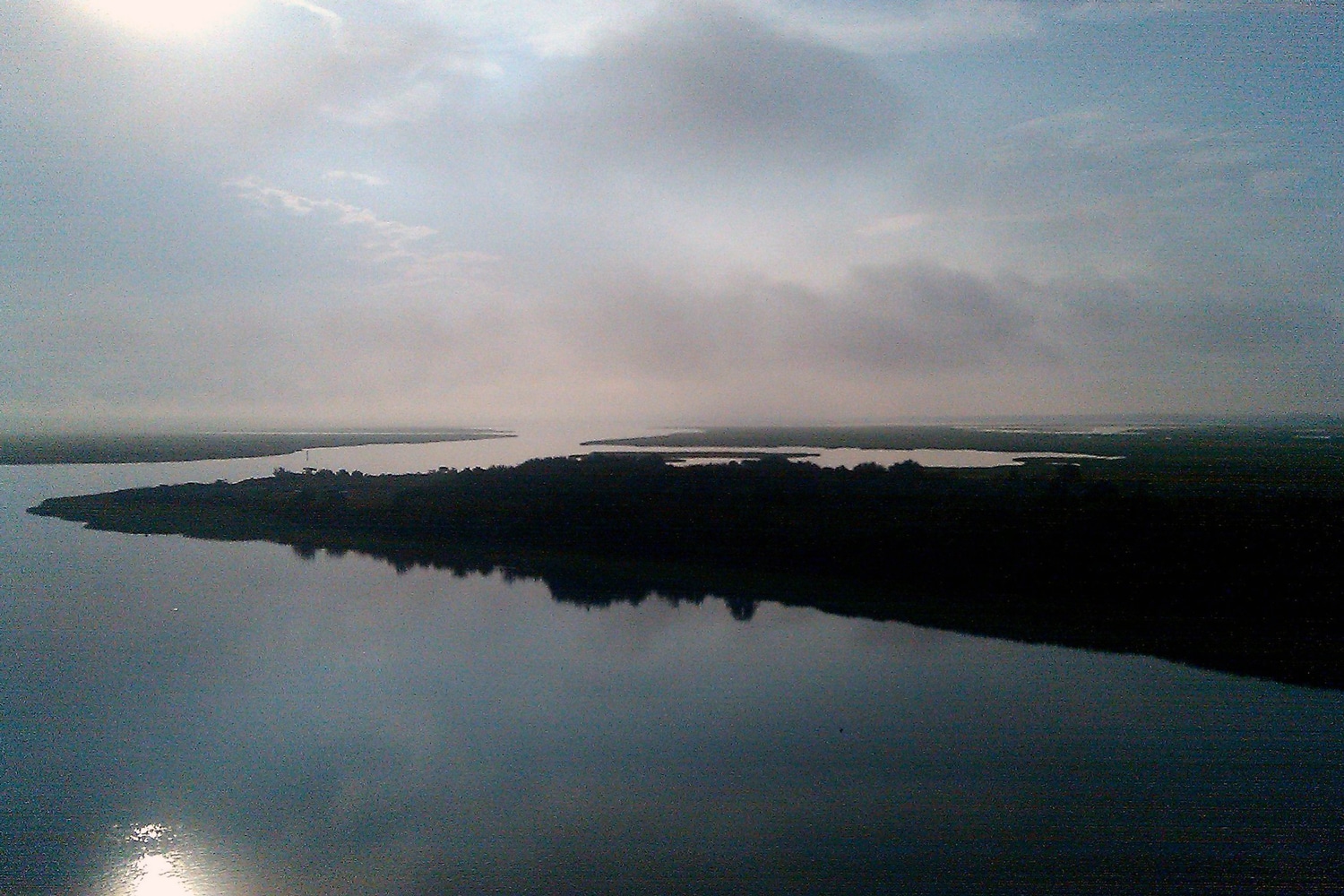
I lower my binoculars, and in the overcast morning light giving way to full sunrise, the differences are stark between Atlantic Beach and the architectural costume jewelry glimmering around it. I am only a visitor, and can’t speak for those whose daily lives are here, but I wonder about lines drawn that I can’t see, yet know exist. Assumptions are dangerous. The houses seem to just be houses. Modest by any standard. Shabby in the surrounding context. I’m not sure there are HOAs on the Pearl, but if there are, they aren’t commandeered by the usual uptight assholes. One or two multistory structures stand awaiting completion on this winter day, but while I see and hear the sound of active construction on either side of the town lines, the three-block stretch is silent save for the cries of the gulls. With no little brown lookalike shorebirds whose identities I can guess, my thinking begins to condense itself:
They said be separate,
be equal.
But go to the back or else
where WE say YOU can be.
A place for “YOUR kind”
A place away from US
where human hues won’t mix.
A special place for Y’ALL.
And so WE went to the Black Pearl,
Atlantic Beach, South Carolina
(or other places in other states with other names)
Most all of them tiny strips of
sand and surf —
leftovers. Remains.
Pools and parks for those not white.
Bits and pieces of what Jim Crow gave;
Negro-fied space under blue skies, bright sun
yet darkly manifest in shadow
by hate.
A place,
OUR place,
where at least the gulls and pelicans
did not discriminate.
I’ll bet make-it-rain money that if I Zillow real-estate values, they’ll be lower here. The red lines aren’t mapped any longer, but they exist. At the same time, I wonder how far off gentrification is lurking. If bigger houses and such are to come to the Black Pearl, it will find itself cast in the same light that other places long ignored do. Someone will see the value in what we once owned, and take full advantage.
I wonder how far off gentrification is lurking. Someone will see the value in what we once owned, and take full advantage.
I heard, or read somewhere, that Mark Twain once met a South Carolinian (on a riverboat, of course), and upon consideration, declared the man’s geographic state (or perhaps state of mind) to be the place most likely to cut off its nose to spite its face. The spite is obvious in history: to be the first state to break away from the Union, specifically to save slavery — the “peculiarity” that didn’t just beget a Civil War, but almost sank the country at its origin, because the so-called founding fathers couldn’t work freedom and liberty around that little sticking point of human trafficking. Had it been up to John C. Calhoun (senator, and vice president to both John Quincy Adams and Andrew Jackson) and his wealthy enslaving constitutional friends, Black folks would’ve hauled sand to the beach and dammed the ocean itself to grow rice and long-staple cotton. This place has come forward in many ways, yet one needs only to remember the horror of nine parishioners at Mother Emmanuel AME Church in Charleston dying at the hands of an avowed White nationalist a few years ago. They included him in their worship. He killed them for it. It was only then, after that terror, that the state government agreed to take down the Confederate flag atop the capital, which it had promoted as “heritage, not hate.” Some still resisted.
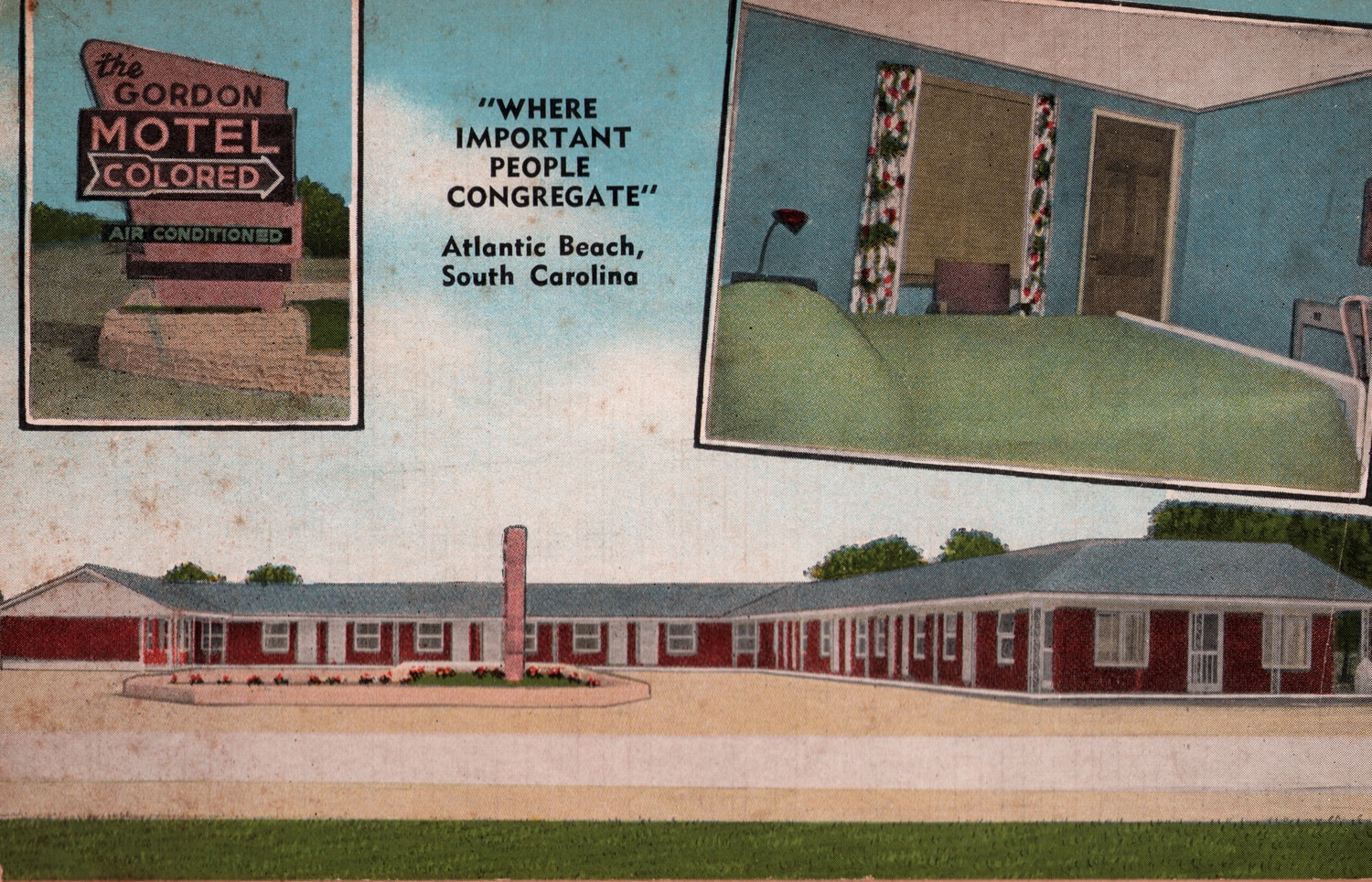
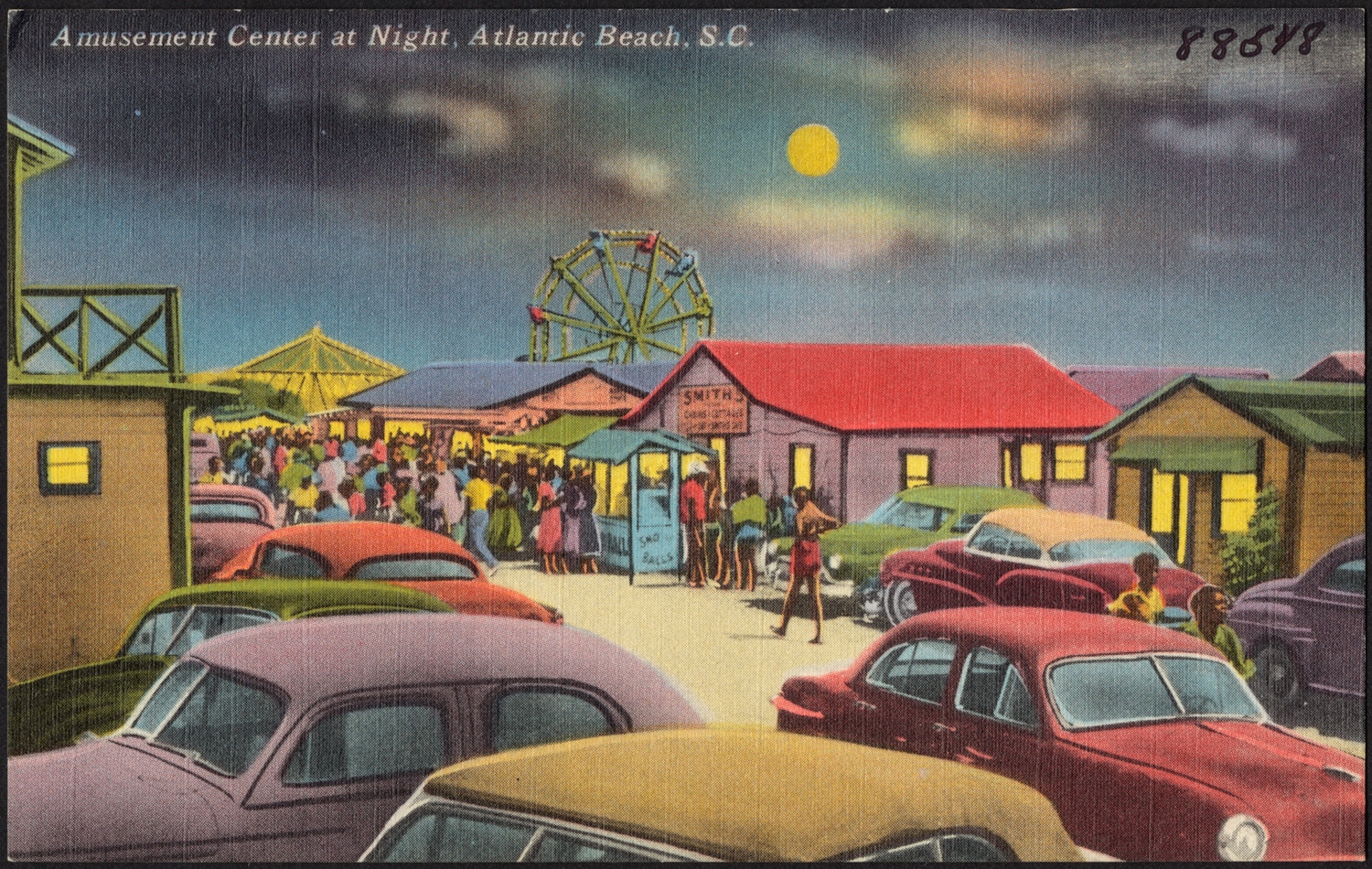
The irony seeps through the overlay of sweet tea, shrimp and grits, and y’alls; this state, geographic and existential, shrinks from the truth of history, and gentrifies right past inclusion into exclusive. One treads ground today in a bustling tourist market where once human beings traded in human beings. I visit Edisto Island, where Black folks were not allowed on public beaches or campgrounds from 1956 until official desegregation in 1965. This means that a landscape stewarded by enslaved Americans, and then primarily occupied by them and their descendants, became vetiti terram —forbidden ground — for most of the state’s “modern” history after Reconstruction. The value of Edisto as a vacation escape became evident in the postwar years, and White folks made it illegal for anyone Black to step onto the sand or dip a dusky toe in the Atlantic for fear, I suppose, of some blackness ruining the ocean.
Mind you, that watery span had already been tainted for centuries with the suffering of millions in a Middle Passage that didn’t just witness Africans hauled in the dank holds, but untold numbers of people who were thrown or jumped into the brine. In my way of thinking, the price of admission to witness the waves had been paid. Meanwhile, Black Africans grew rice, indigo, and cotton to finance a nation with free labor; nursed White babies while their own were sold away; went to war and died for a country that didn’t want them as full citizens; sang “My Country, ’Tis of Thee,” without sweetness to show Jim Crow was spite’s name, hate its game. And yes, all this crosses my mind multiple times in multiple places I call “favorite.” It’s on a loop I can’t think or feel myself out of, an amalgam of affections and apprehensions inside which I live daily.
I connect and reconnect landscape, wildness, and human history because they are linked inextricably.
Whether in the Lowcountry rice fields hoping to hear black rails calling, or back home in the Upcountry in a tiny lake cabin that I own, within hollering distance of a well-known sundown town, or at my own university, watching blackbirds swirl in murmuration over a plantation-turned-campus that remains reluctant to fully recognize its sordid past, I connect and reconnect landscape, wildness, and human history because they are linked inextricably. These days, down here as elsewhere, wildness is withering. The birds I seek are often present, or not present, only because of what humans have done, and are doing, to alter nature. I can watch birds and steep myself in the bits of wildness I find hanging on. But in none of these places does the human toll just fall away from my thinking.
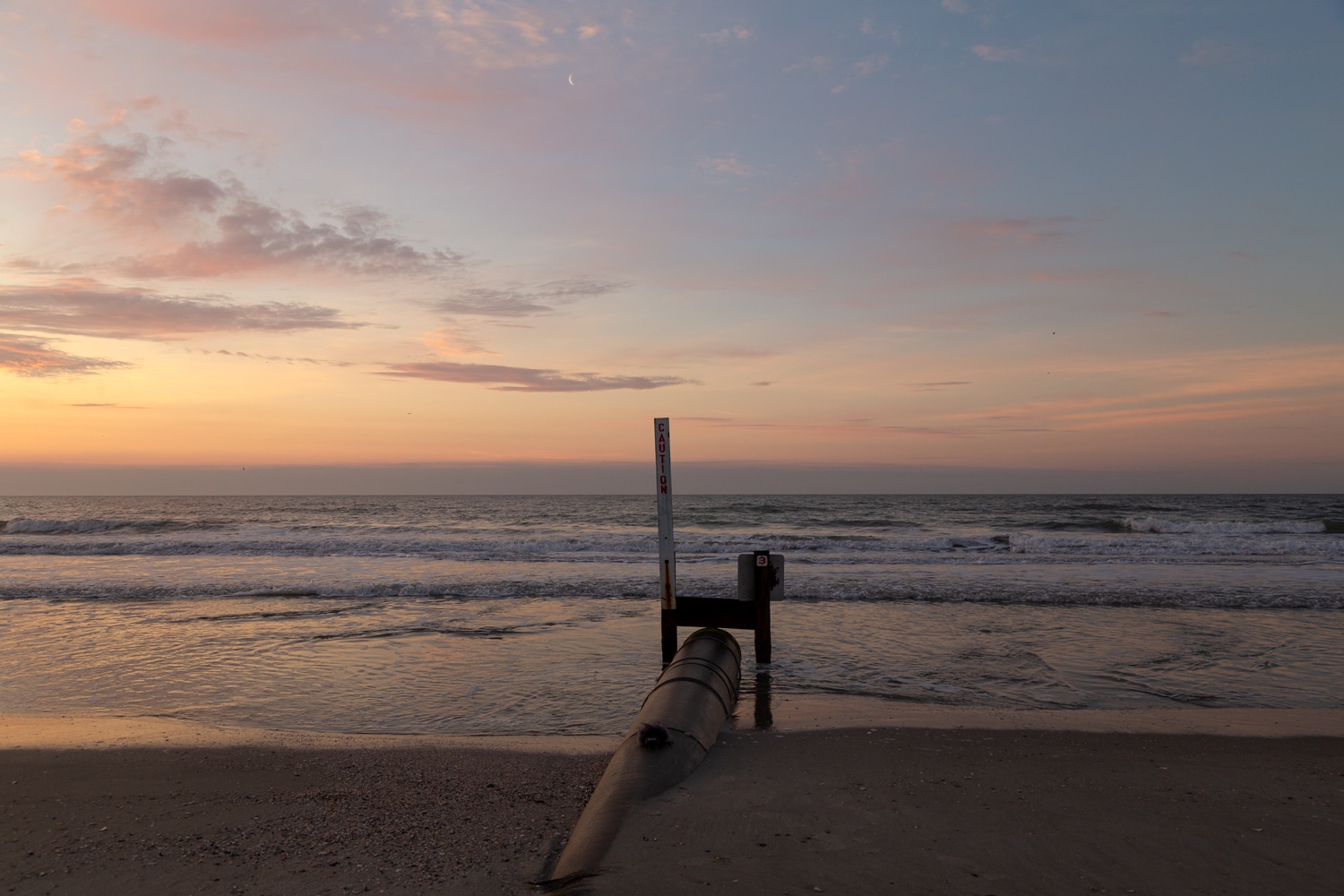
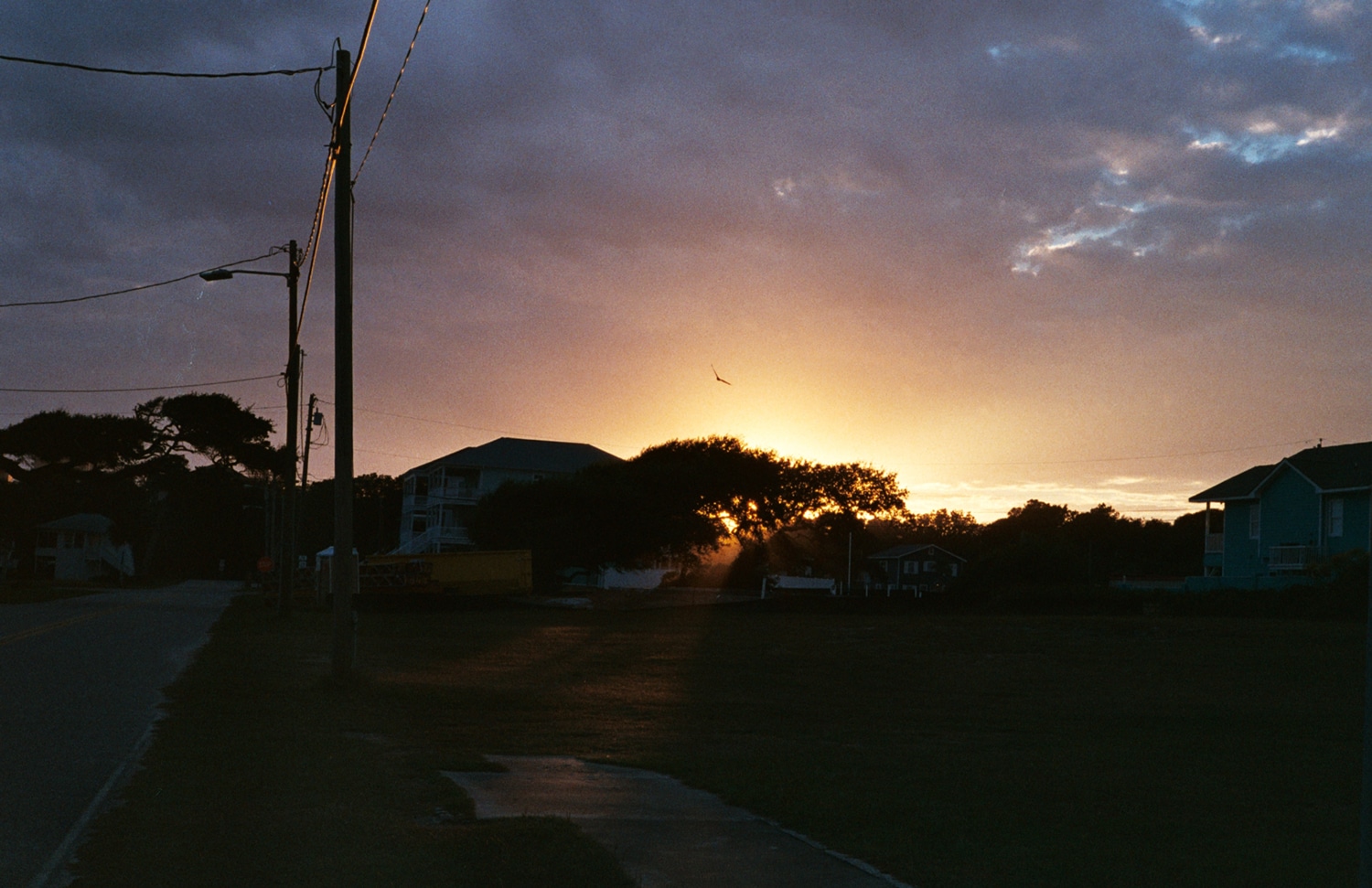
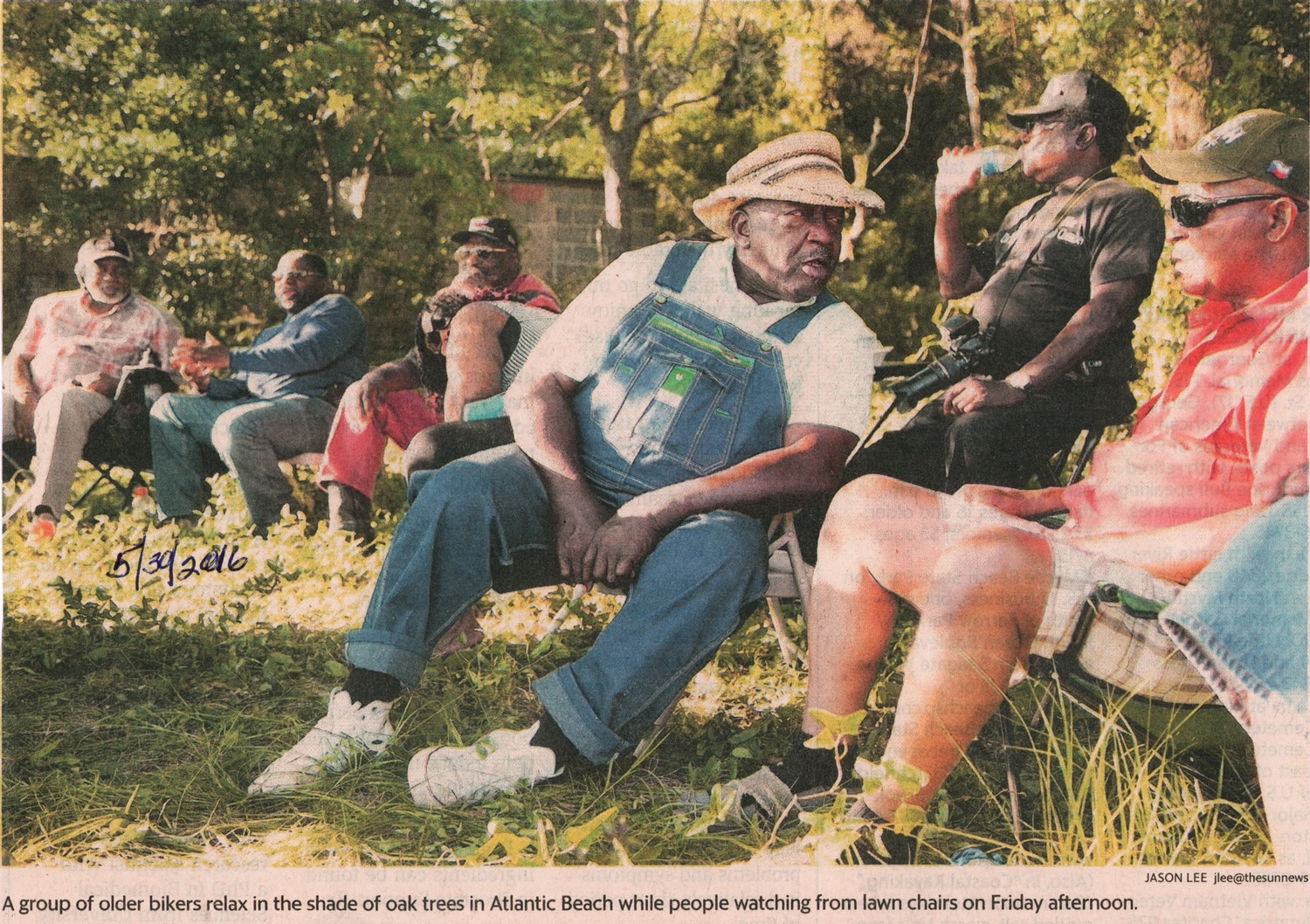
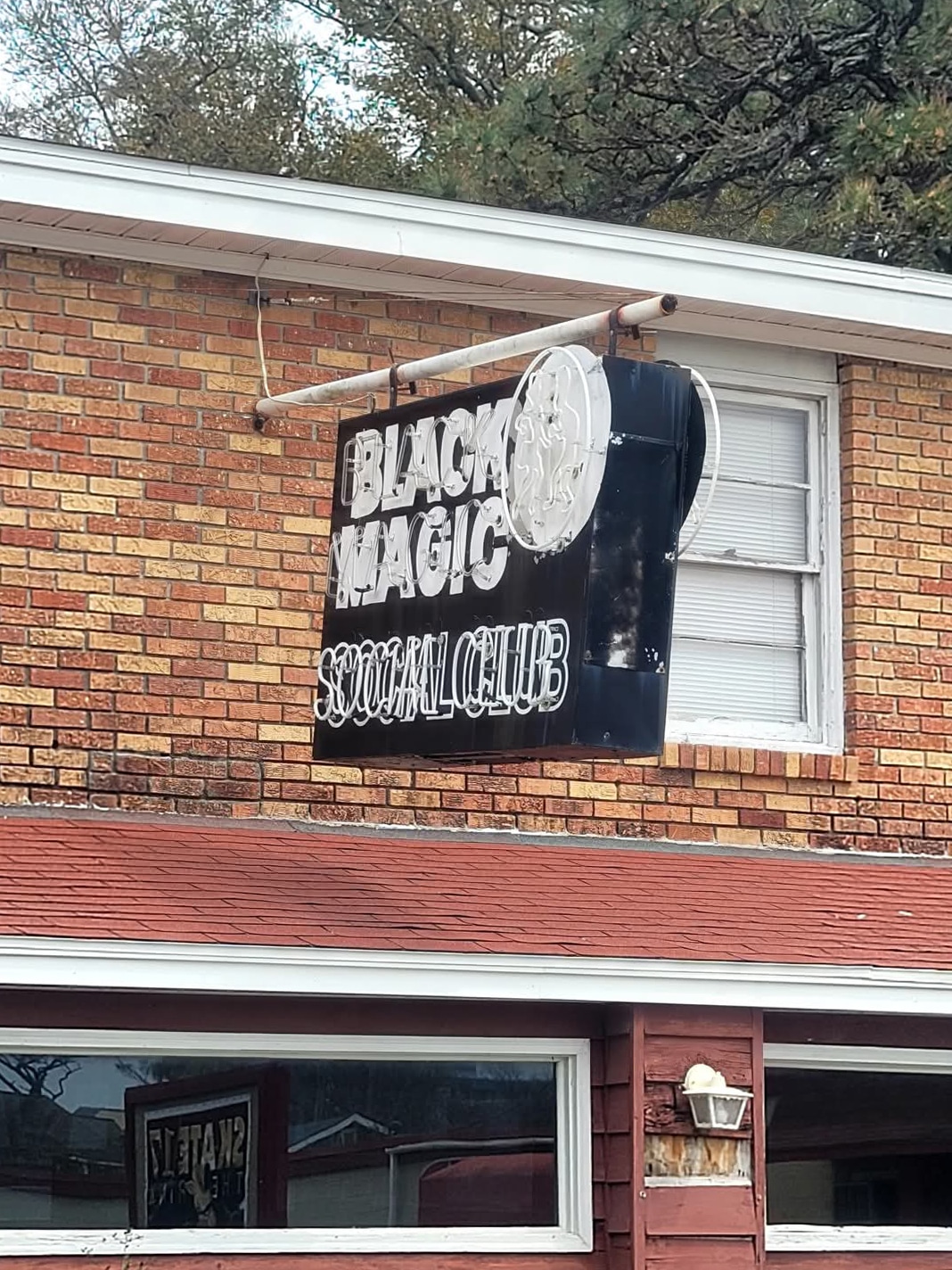
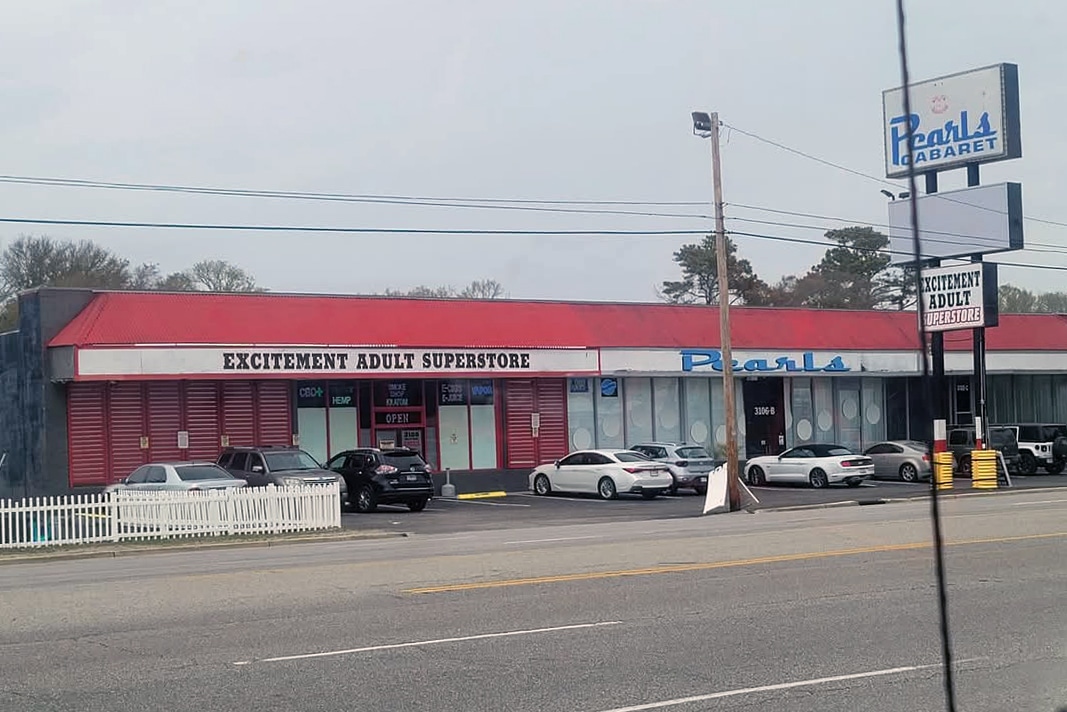
I haven’t had Mark Twain or anyone else walking Atlantic Beach with me to offer opinions on nose self-removal, bird identification, gentrification, or anything else. The Black Pearl survives. Black biker’s week comes; people move in by the thousands and, word is, the party is nonstop. Across Highway 17, standing at the historic sign that tells me where I am, I see entertainments of sorts: Thee Doll House presents opportunities to pay for one’s lust, as does an adult bookstore a couple doors down. The area seems desert-like in the absence of any place to buy whole food, or indeed anything at all of purposeful substance.
The morning grows toward midday and the temperature rises beyond what early spring should feel like. I return to my truck, peck a few more lines to tack onto the poem on my phone, and post it on social media with a few pictures. When I drop stuff like this for public consumption, it feels like I’ve executed some “teach the White folks how you feel about being Black” lesson. Post a status like that, and you open the box of race-and-racism. Pandora likely cringes at the thought. But this is history, and I can’t help myself from being myself.
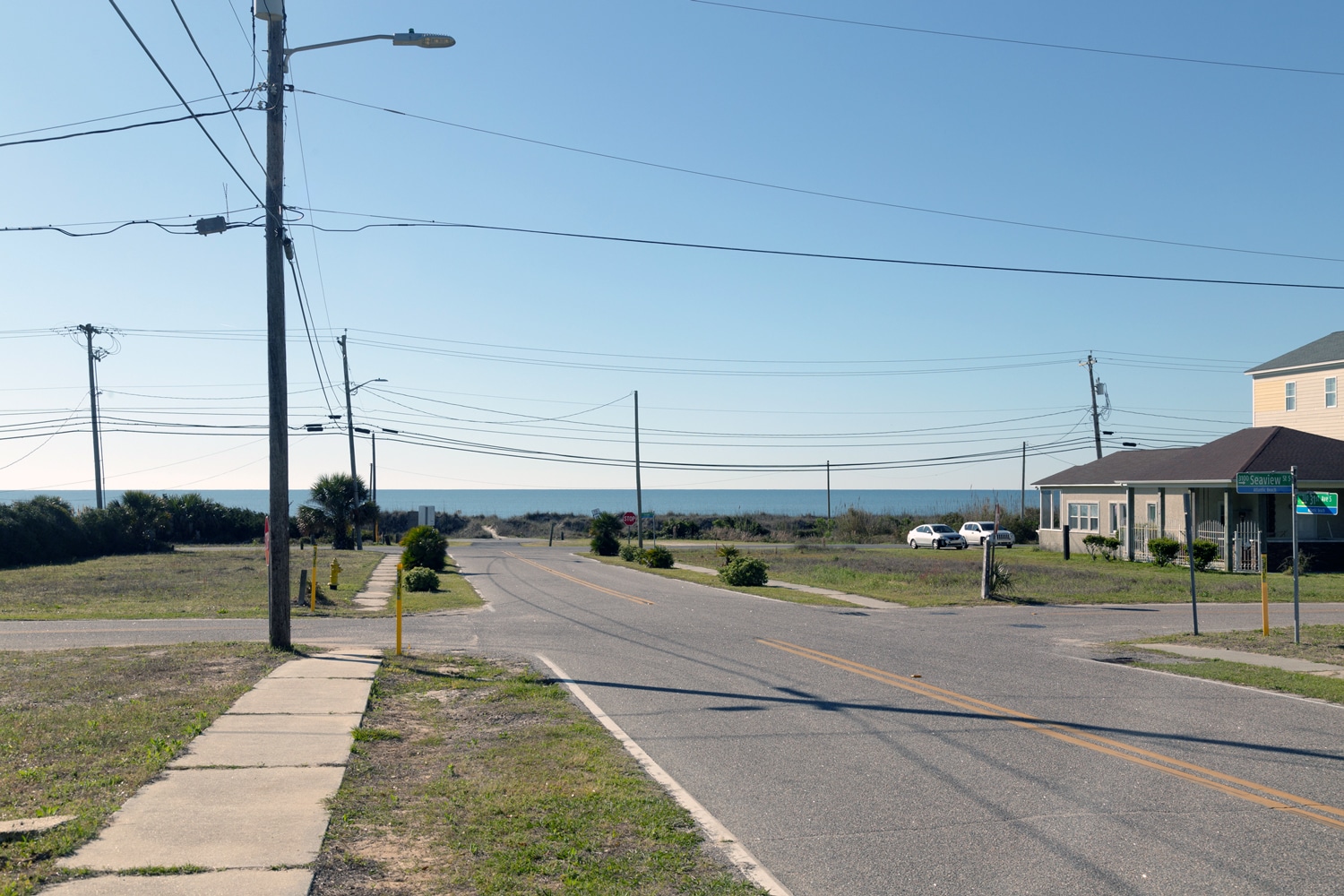
I went to Atlantic Beach looking for a story. Maybe some black or white birds would make the connection to segregation easy, maybe a gull harassing a crow; you know, some “birds of a feather” trope. But no overwrought allegory presented itself. I did keep a bird list. Beyond the ring-billed gulls and mourning doves, there were two dozen or so American robins. A red-headed woodpecker, blue jay, yellow-rumped warbler, a sortie of brown pelicans, a turkey vulture, a few Forster’s terns. I heard the shrill calls of a killdeer as I sat sorting pics for the social media post. A mockingbird took center stage on an electric line and hit the play/repeat button. An eastern bluebird perched nearby. A skein of black scoters headed north. One lone double-crested cormorant — known by some as “the nigger goose” — did seem lost. Sociableness is its rule.
Maybe next time I’m down, I’ll return to see how this place is bearing up under the unrelenting pressure that will ultimately squeeze the Pearl to powder. I do know that controversy is brewing over what progress should mean for a place stuck in time.
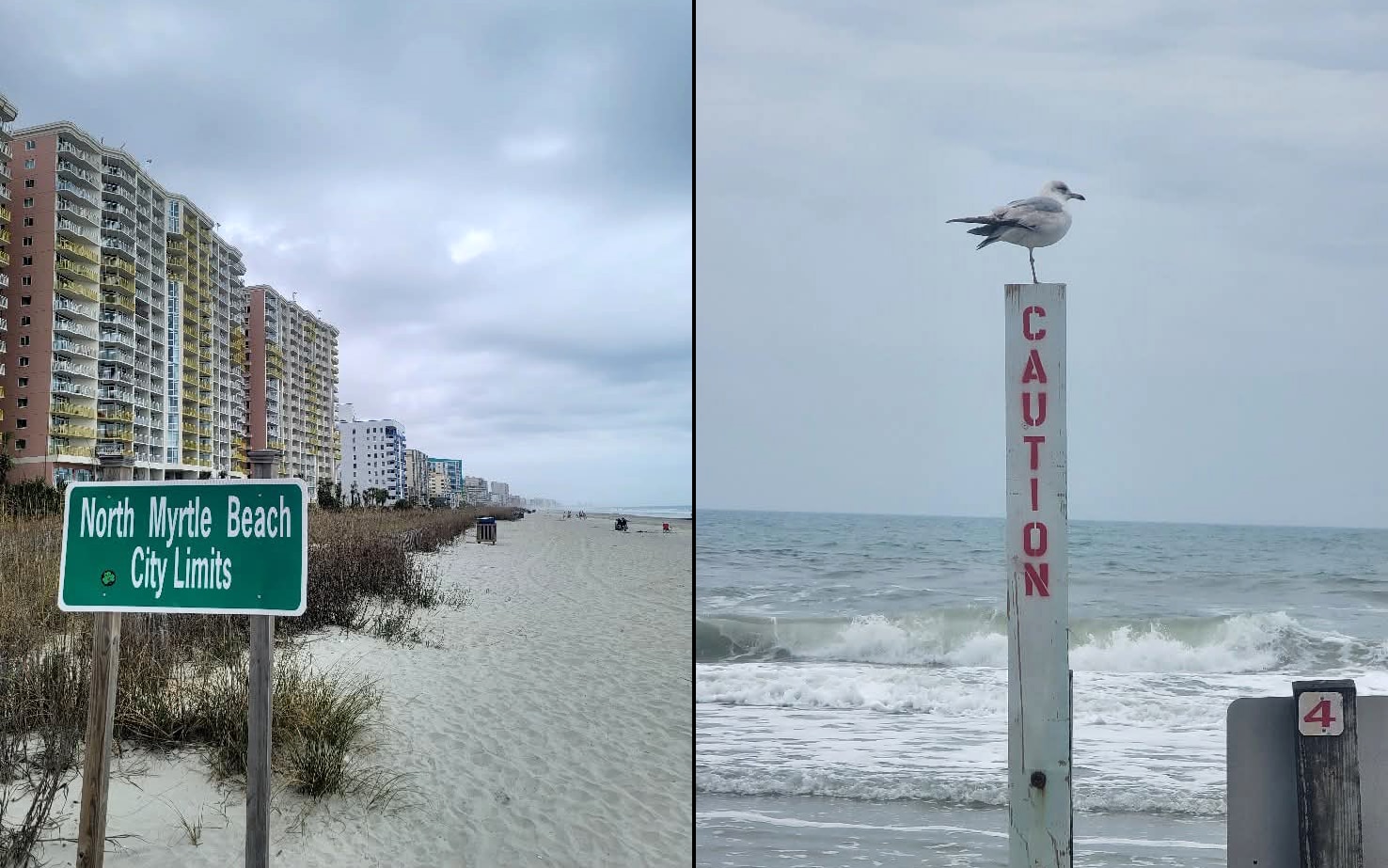
I’m not sure what brews underneath the convergence of history, politics, and personality in Atlantic Beach. Do an internet search and things begin to boil a bit with controversies conjuring up legal issues and lawsuits. I’m sure it’s the usual American story of supply, demand, greed, legacy, maximize profit margin at all costs, and leave the disenfranchised behind to pull themselves up by their sandal straps. All of this compounded by skin color makes predicting anything complex and then frighteningly simple. Black Americans are afflicted by many of the same symptoms of buy, sell, and sell-out as any other Americans. But then, we’ve got less capital and cushion to rely on, so it makes any proposition that’s commonplace for the majority a conundrum for us.
But then, what does it mean to treasure a thing? Do we covet its buried value? Or do we reveal and hold it up for the highest bidder to claim?
I wonder, sometimes, how an oyster feels when it’s pried apart to get at the effects of invasion. A pearl comes into existence because of an irritation deep within the oyster. Over time, the gem grows, layer lain on layer. The unpleasantness that produced Atlantic Beach has waned in some ways, yet the fact that the Pearl sits as it does, with little care and a dulled shine while everything around it gleams, speaks to the inequities that remain. But then, what does it mean to treasure a thing? Do we covet its buried value? Or do we reveal and hold it up for the highest bidder to claim? Is it better to take the pearl and hoard that gem, or eat the shellfish’s flesh and grow stronger on it? I suppose one can do both. But one thing is certain, the oyster always loses.


If you would like to comment on this article, or anything else on Places Journal, visit our Facebook page or send us a message on Twitter.