
I sit down to write this story looking at a Zapatista doll beside my desk, which I purchased 30 years ago in San Cristóbal de las Casas in Chiapas, the southernmost state in Mexico.
The state of Chiapas has one of the highest poverty rates in Mexico, and some of the richest Indigenous heritage.
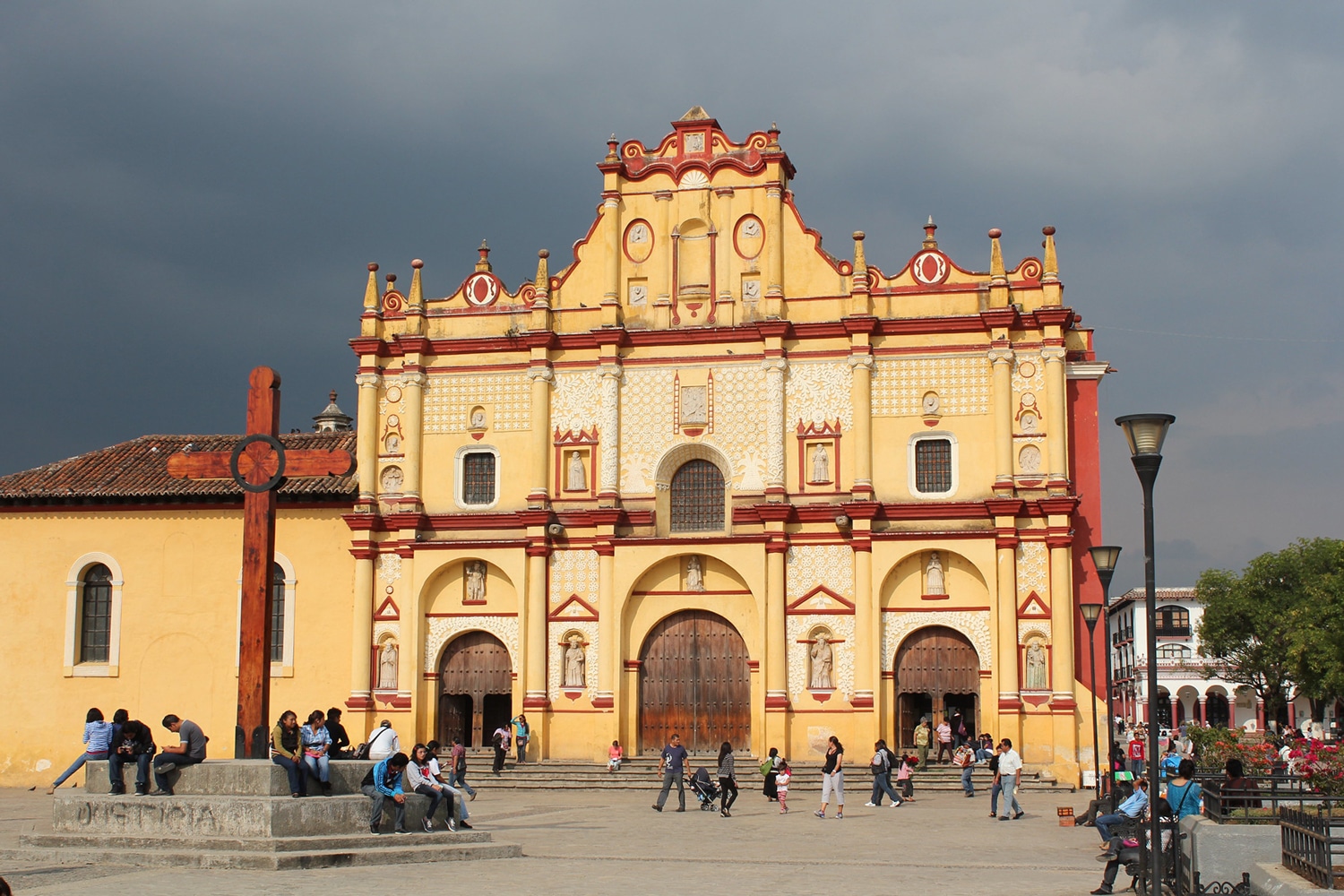
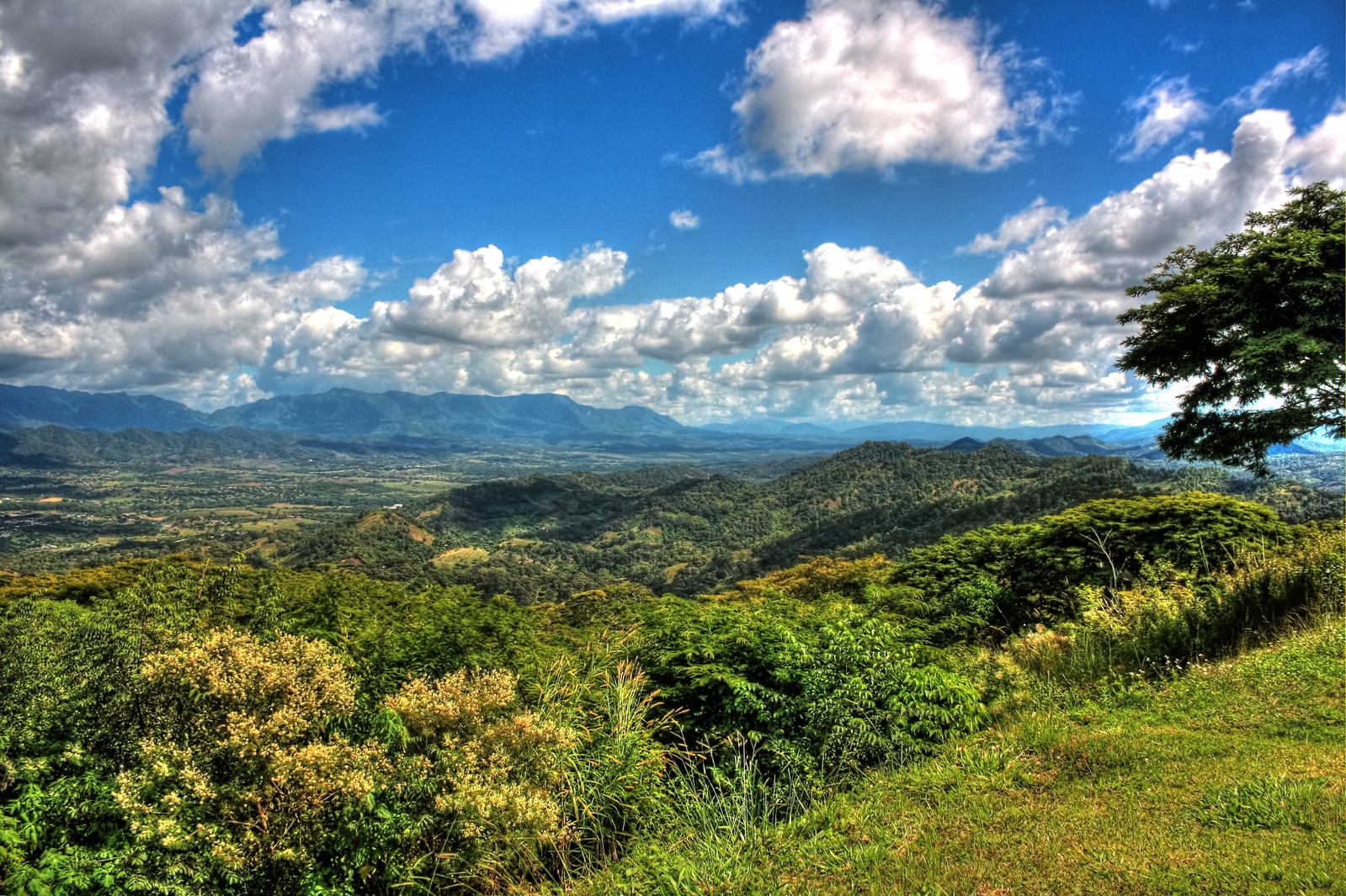
It was September 1994 when I first visited the town of San Cristóbal de las Casas. The Zapatista uprising had occurred nine months prior, a military and later political movement protesting the Mexican government’s North American Free Trade Agreement with the United States, as well as its historical indifference toward the country’s Indigenous population. The state of Chiapas, which — then, as now — has one of the highest poverty rates in Mexico, also boasts some of the richest Indigenous heritage. It is home to Tzotzil, Tseltal, Tojolabal, Ch’ol, and other Mayan communities. The Zapatistas had taken control of several cities, including San Cristóbal, and after a ceasefire was declared, they retained dominion over a number of municipalities which to this day function as autonomous regions. Tensions were still high when I landed in Tuxtla Gutiérrez, the state capital, where the airport was heavily guarded by the army.
My first memory of San Cristóbal is the chilly weather I encountered. Located in the highlands, the small city often experiences cooler temperatures than the rest of the region, especially at night and in the early morning. I remember the quiet of the picturesque town, the smoke rising from chimneys, and the seemingly uneventful daily life in the markets and plazas, countering the images I had in my mind of a military uprising.

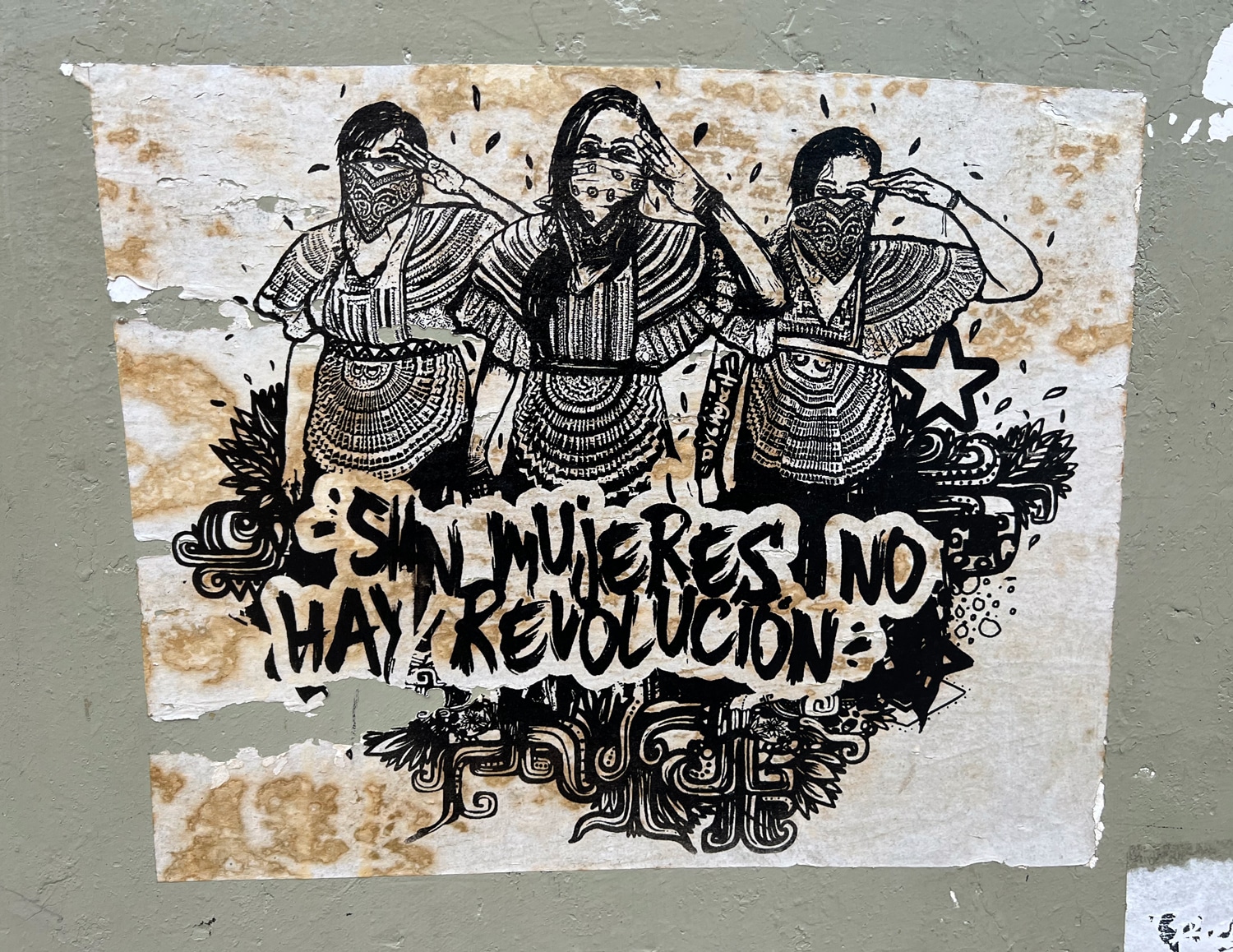
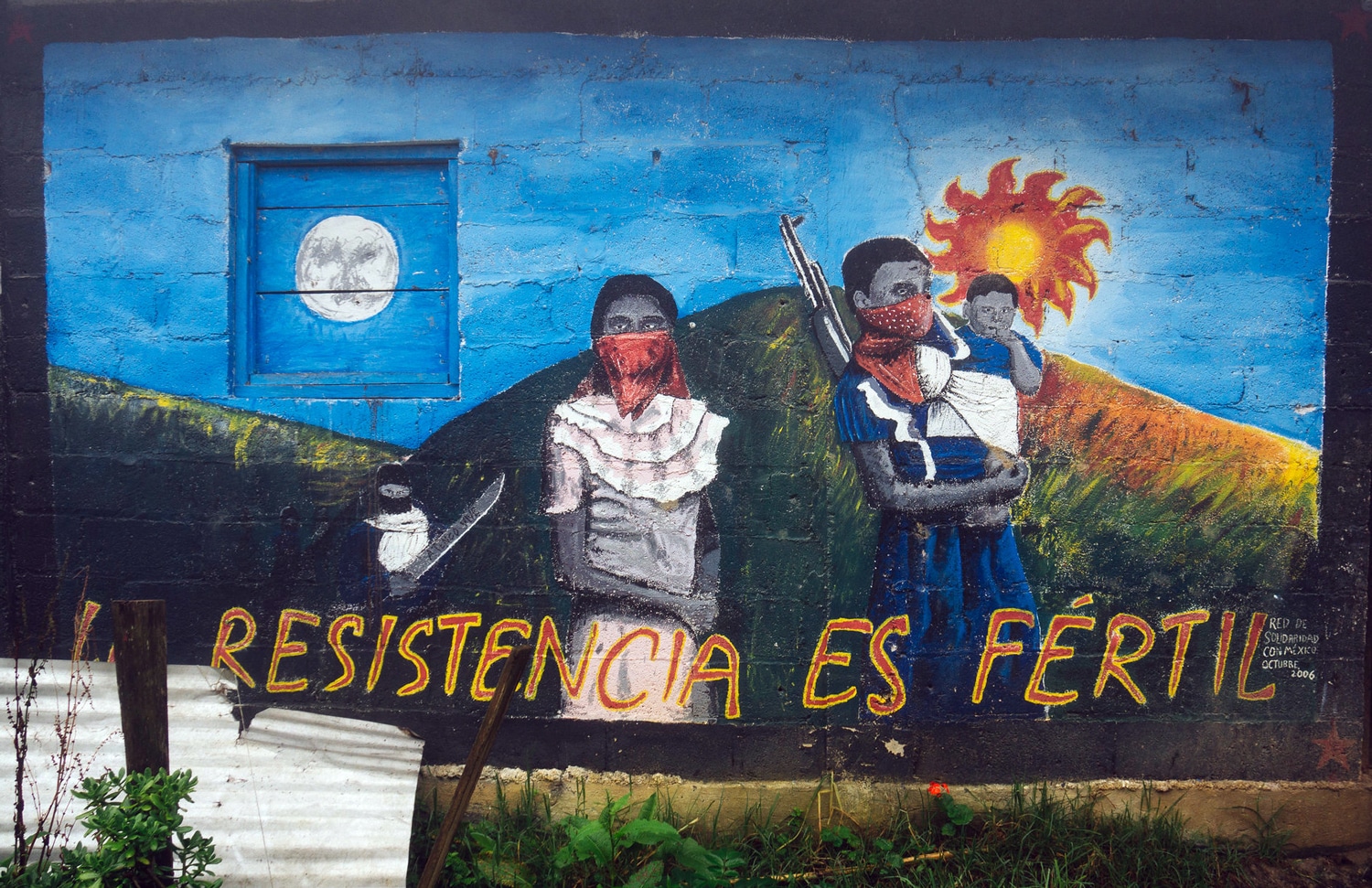
I was traveling with Encarnación Teruel, my supervisor and head of the performing arts program at the Mexican Fine Arts Center Museum in Chicago. We were interested in showcasing Indigenous theater from Mexico, and had learned of a group in Chiapas that was starting to get attention in the theater world there. Our interests were likely not dissimilar to those of many outside visitors. The Zapatista conflict, which was a reminder of the inequities that Indigenous communities in Mexico have endured for centuries, generated an outpouring of sympathy and curiosity, as well as a great desire to support Indigenous culture; Zapatista fighters had adopted the name of the Mexican revolutionary Emiliano Zapata, because the core motive of his struggle in the 1910s was to return the land to those who worked it, as in his motto La tierra es de quien la trabaja.
Myriad ethical questions come into play when an outside ‘expert’ arrives in an unfamiliar context to ‘help’ disenfranchised populations.
Ironically, while a primary motive for the Zapatista uprising was enactment of NAFTA, the aligned neoliberal cultural initiatives of the period (which included the Fideicomiso para la Cultura México-Estados Unidos, an endowment established by the Rockefeller Foundation and the Mexican government) established a financial framework for grants in the arts that allowed people like us — curators and other cultural producers in the United States — to direct funds toward the Indigenous communities who had mounted the protest. I, for one, was clearly a hapless cultural tourist in my own country, and as someone working for the first time in an American museum, largely unaware of the myriad ethical questions and concerns, well known by anthropologists and ethnographers, that come into play when an outside “expert” arrives in an unfamiliar context to “help” disenfranchised populations. Such questions have often emerged over the course of my career as artist, educator, and writer.
A particular configuration of socially engaged art — also referred to as “social practice” — emerging in the early 2000s, centers on response to complex ethical and aesthetic issues such as these. Social practice draws on and adapts a collection of artistic modes, including public art, performance, and activist approaches that date back to the 1960s. The impulse behind this way of working, particularly in its earlier phases, was a desire for direct human interaction, as opposed to virtual communication via online technologies — which, even before the rise of social media, were seen as alienating by those of us exploring participatory and collaborative ways of working. The forms taken by social practice art depend on a given artist’s background, including environmental science, education (as in my case), and design, as well as community organizing, political activism, or advocacy. The work is therefore often multidisciplinary, and strongly predicated on process. As such, it doesn’t easily conform to a predetermined schedule. A social practice project can take days — or years.
Also paramount to socially engaged art is its local context. In the globalized 1990s, the trend developed of international artists traveling to disparate locations to develop short-lived projects nominally involving on-the-ground communities. By the turn of the last century, these habits were increasingly criticized in the art world as akin to cultural tourism or what I call “parachuting” — dropping in from above on a rushed and muddled artistic “mission.” Some artists instead favored the creation of long-term engagements with communities they knew well and/or to whom they were deeply committed, by virtue of being locals themselves or via other strong personal ties. This commitment, and the promise of bringing a transformative experience to a community, eventually took on alternate names, e.g. “creative placemaking.” But the core impetus remained the same.
Social practice art work is often multidisciplinary, and strongly predicated on process. A social practice project can take days — or years.
As the art mainstream began to recognize such forms, two issues to contend with were, first, the challenges of exhibiting projects predicated primarily on process, which do not necessarily yield discrete aesthetic objects; and second, how to frame a way of working that exists in a gray zone between the artistic and the social. Artists working in this way are often temporarily (mistakenly) seen by institutions and foundations as miracle workers, who can by the force of their personalities perform the “outreach” to “underserved communities” that the organizations themselves have failed to effect. 1 All these topics are at issue in the story I want to relate.
In Chiapas that September, Encarnación and I met first with members of Sna Jtz’ibajom (The House of the Writer, in Tzotzil), a grassroots organization created in the early 1980s. Through them, we learned of a theater company, FOMMA (Fortaleza de la Mujer Maya, or Strength of the Mayan Woman), a women’s collective; we would eventually bring members of both groups to Chicago to participate in our performing arts festival.
One member of FOMMA was an up-and-coming Tzotzil photographer named Maruch Sántiz Gómez, who later became well known in Mexico for a series of black-and-white photographs titled Creencias (Beliefs, 1998), documenting ancestral beliefs in her community (for example, placing two clay pots by a doorway in order to bring home a lost dog). 2 I was to meet Maruch again, many years later.
But my most salient memory of that visit is discovering the rich traditional textiles made in San Cristóbal.

It was in San Cristóbal that I first encountered a paradox faced by Indigenous makers when seeking to preserve traditional crafts, and, by extension, the lifeways materialized in those crafts: while Indigenous artists and artisans rightfully pursue autonomy and self-determination, they also face the very real need to survive financially. This often means satisfying tourist economies, producing commercial objects that represent an idealized or limited image of their cultures.
Indigenous makers face a paradox when seeking to preserve traditional crafts: while pursuing autonomy, they need to survive financially.
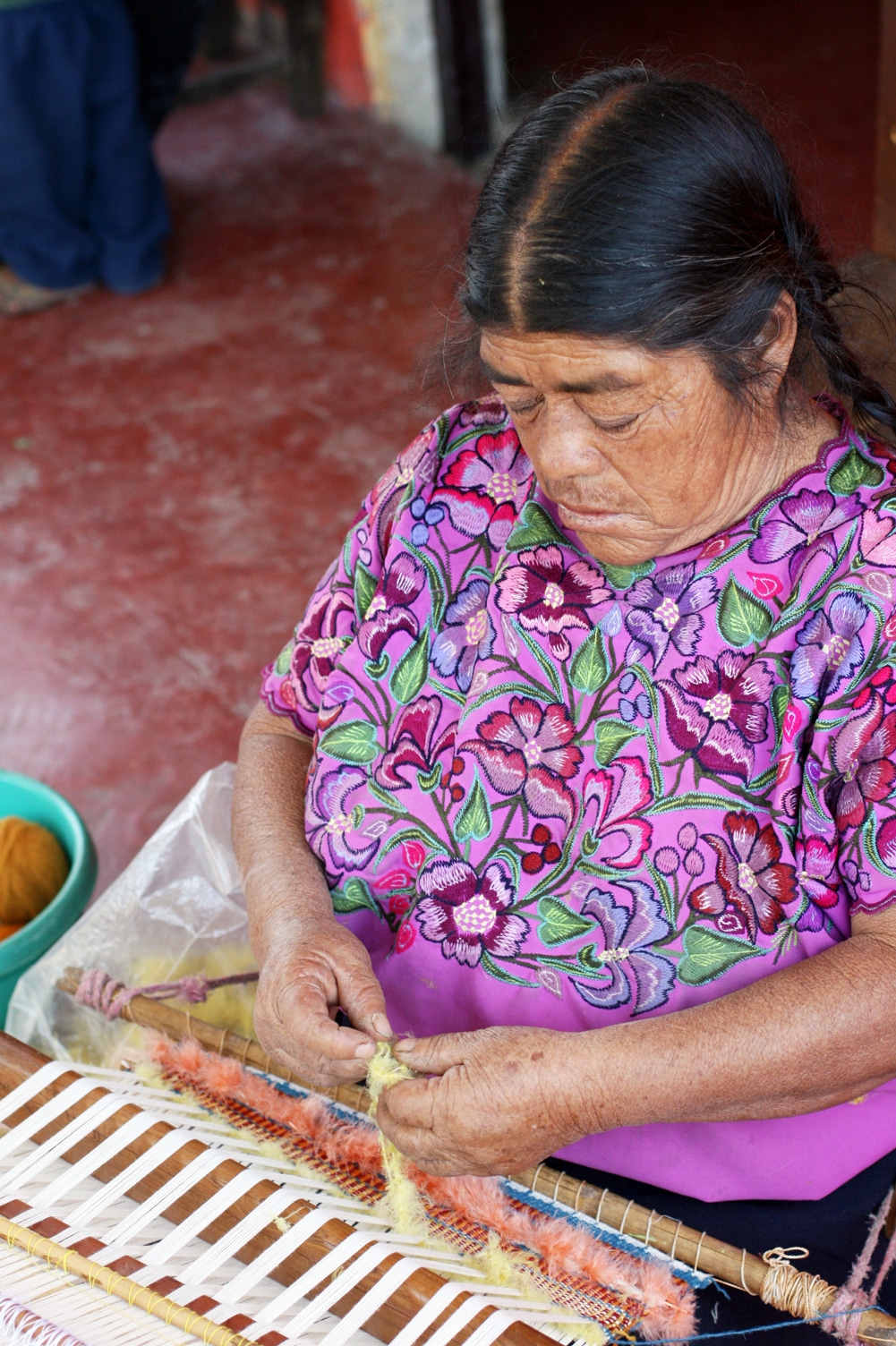
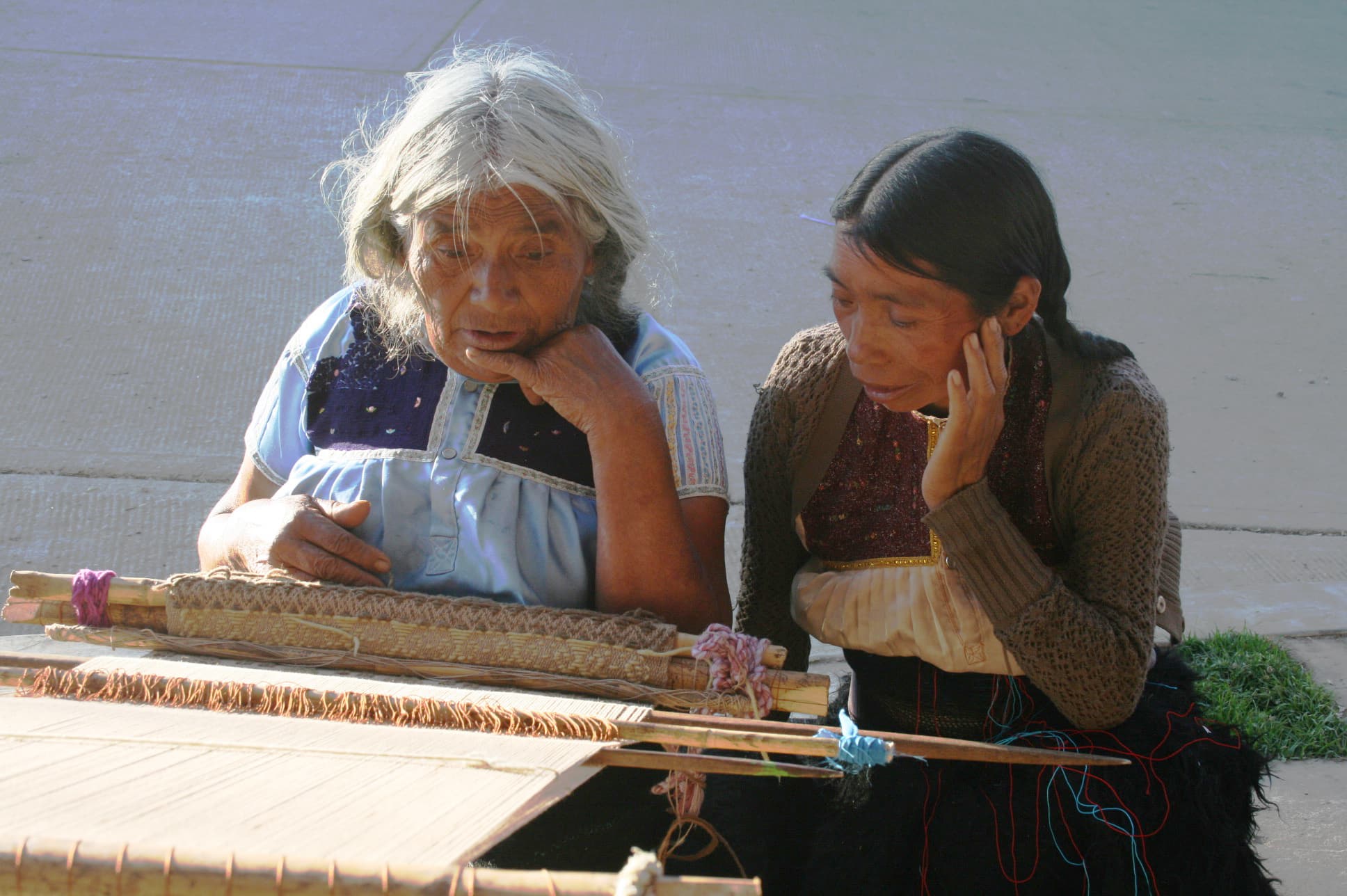
Another local organization that Encarnación and I visited was Sna’ Jolobil (or The House of the Weavers, in Tzotzil), which was founded in 1976 by Indigenous artisans to revive techniques for weaving and embroidering the huipil, the traditional garment worn by Indigenous women all over Mexico and Central America. The rich displays of colorful textiles evidenced thousands of hours of work. Yet these textile arts, we were told, had become endangered, given that inexpensive commercial clothing was then arriving in towns across Chiapas. Under pressure from cheap mass-produced goods and an emergent tourist market, traditional embroidered geometric figures — which often represent aspects of the earth, water, and skies — were devolving into generic decorative patterns, and traditional natural dyes — extracted from insects, bark, flowers, seeds, and minerals — were being replaced by synthetics.
It was in this context that I acquired my Zapatista doll.
Shortly after the uprising, a first wave of international observers, mostly from the press, had arrived to witness and report on the situation. Never wanting to lose an opportunity, Mayan artisans had attempted to sell their handicrafts, including textiles and traditional dolls, but had not been very successful. A Catalan reporter named Joachim Ibarza claims that it was he who first suggested to a local weaver that she make a Zapatista figure, which she did. These sold so well that, as recently as 2021, Mexico News Daily described the dolls as “a symbol of rebellion once known worldwide.” 3
In his classic study The Devil and Commodity Fetishism in South America (1980), anthropologist Michael Taussig writes:
In capitalist culture this blindness to the social basis of essential categories makes a social reading of supposedly natural things deeply perplexing. This is due to the peculiar character of the abstractions associated with the market organization of human affairs: essential qualities of human beings and their products are converted into commodities, into things for buying and selling on the market. 4
Taussig’s explanation of the commercial drive as it impacts ideas of cultural identity and self-representation was not something I would read until many years later. However, I remember being acutely aware, in 1994, of local artisans’ eagerness to produce objects for us, the tourists, that seemed to satisfy a preconceived image we had of them — as long as we could pay.
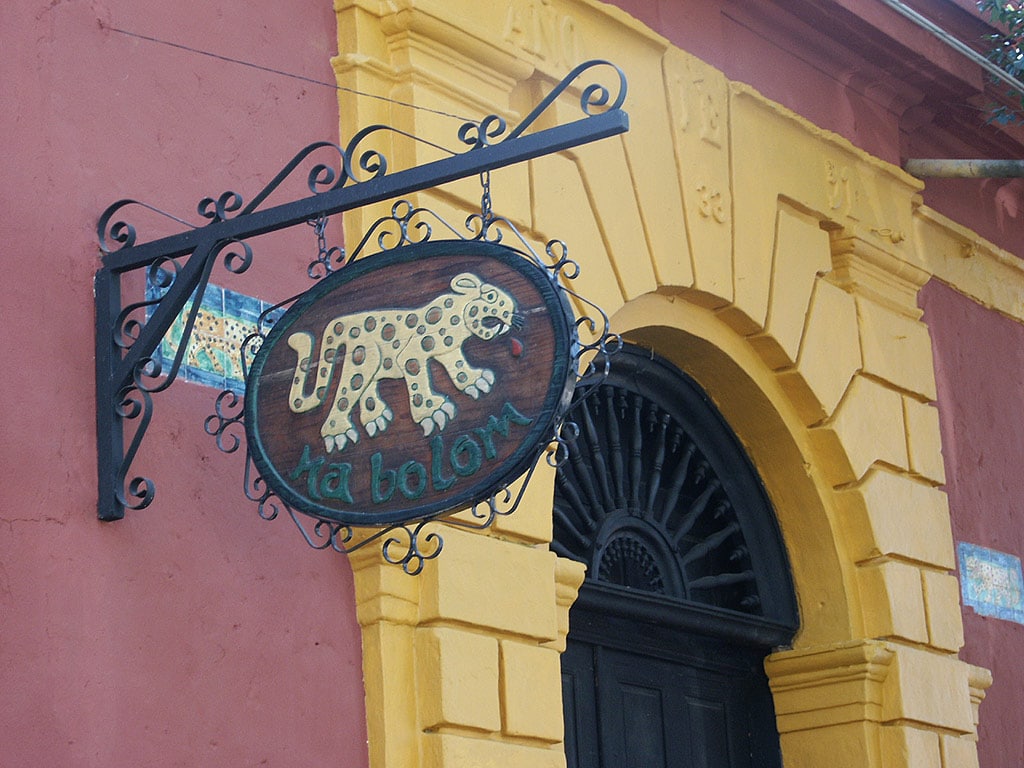
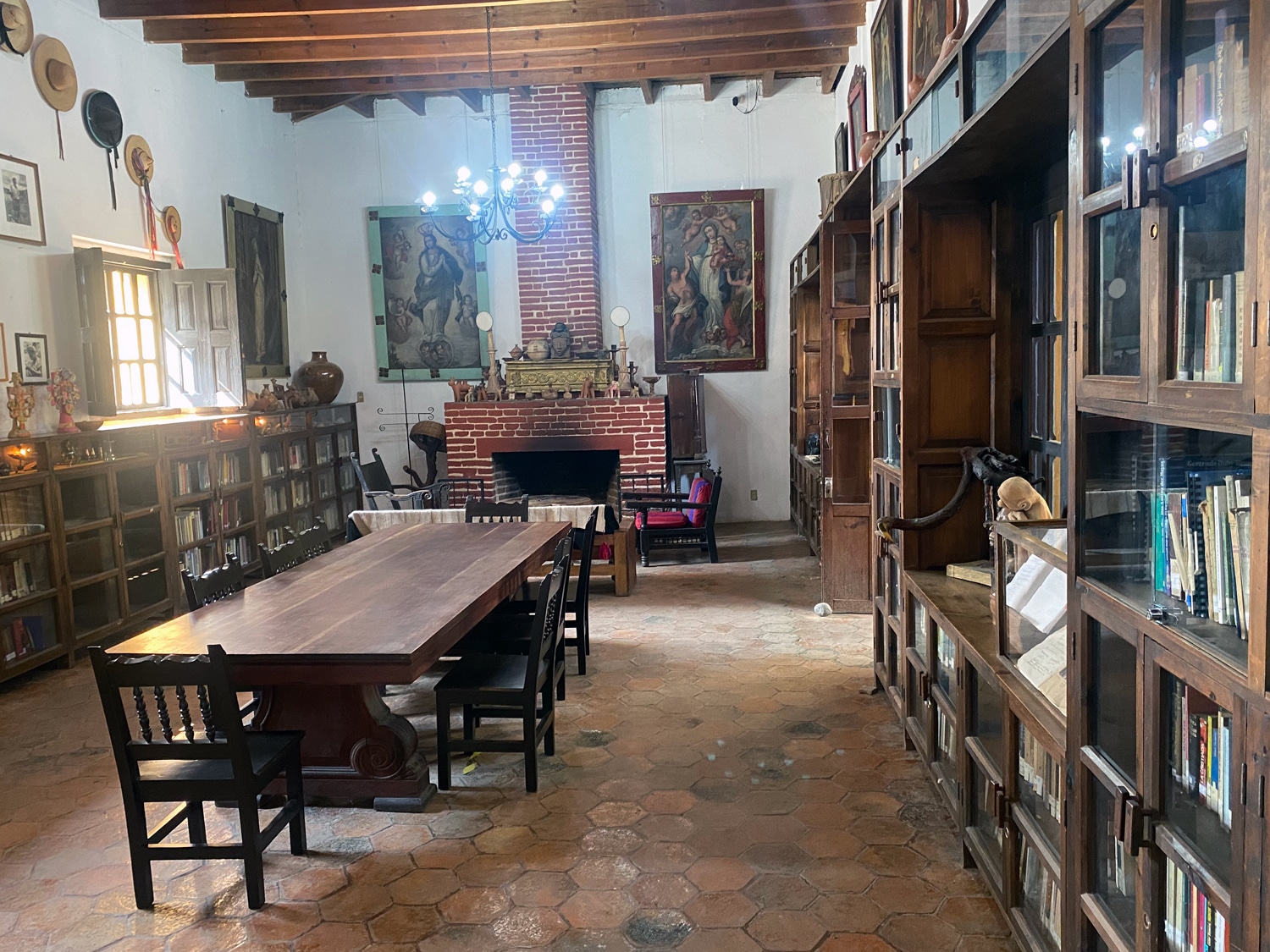
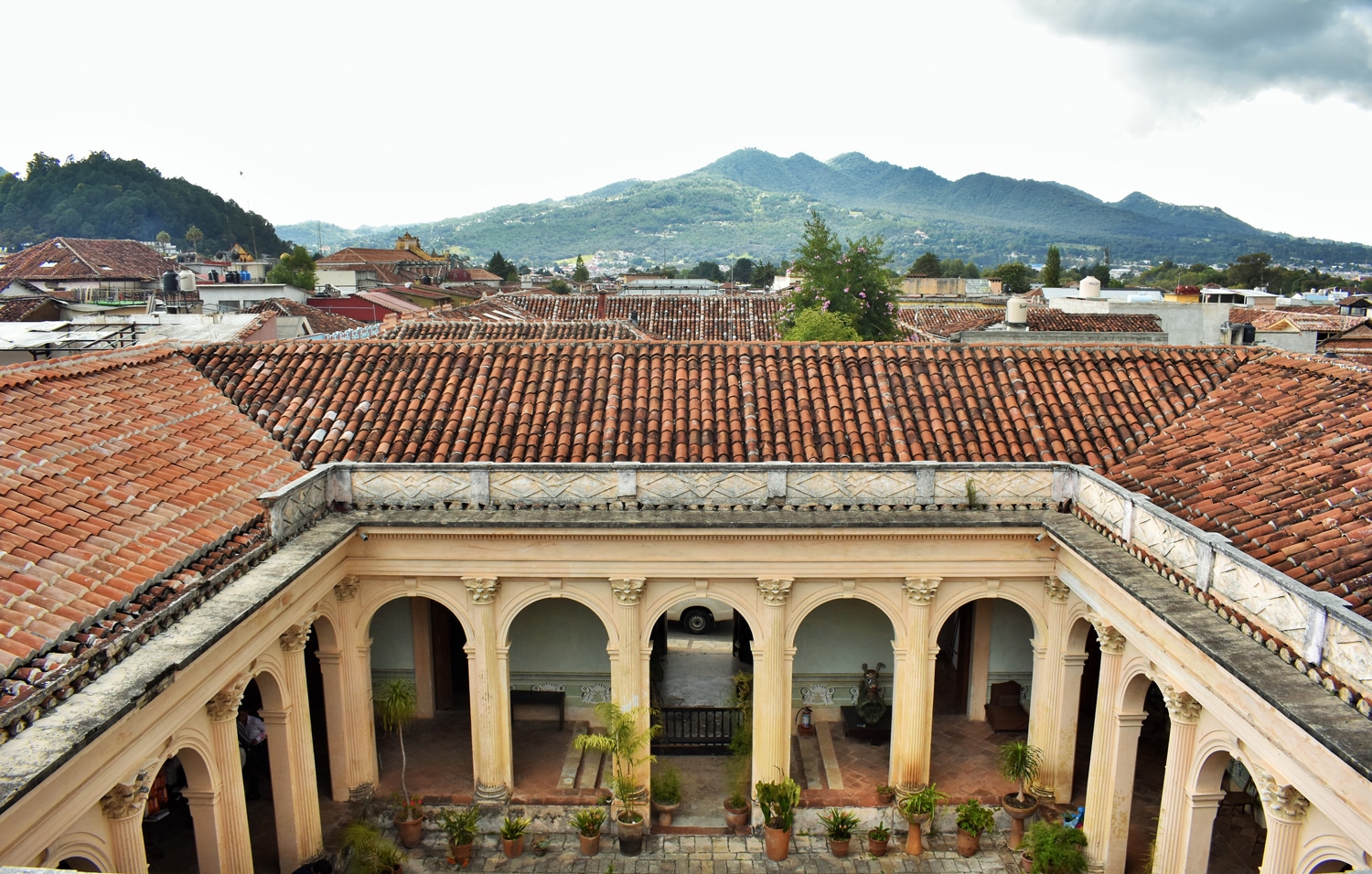
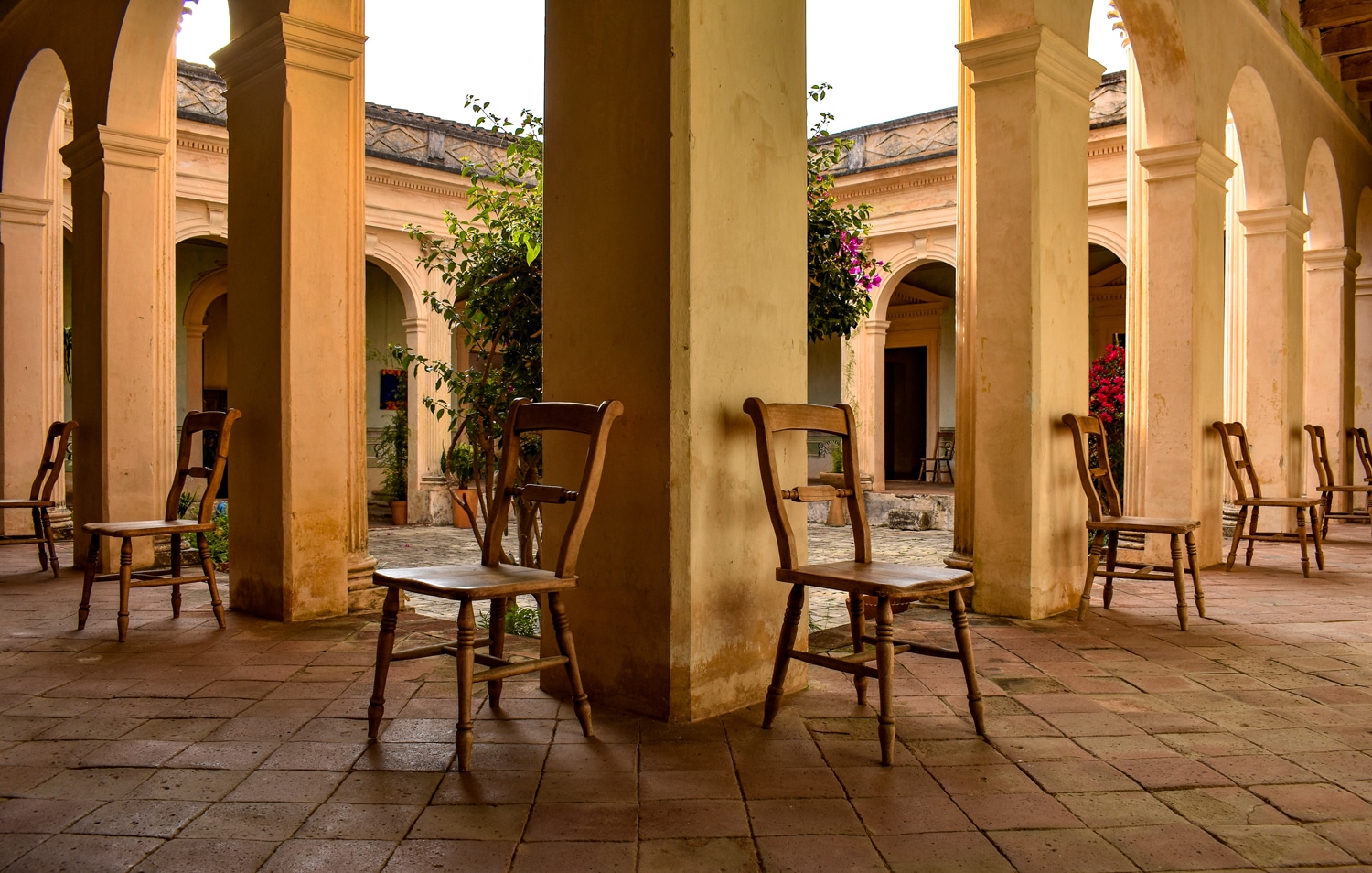
Casa Na Bolom, or (in a composite of Spanish and Mayan) The House of the Jaguar, is a 19th-century building near the center of San Cristóbal, a large stucco structure boasting traditional neoclassical and colonial elements, including high ceilings and internal courtyards with columned walkways. Now a museum, hotel, and center for Mayan arts, Na Bolom in its present incarnation reaches back to 1919, when a young Dane named Frans Blom arrived in Mexico. As an employee in the oil industry, his task was to perform a geological survey of the southern states of Veracruz, Tabasco, and Chiapas. Traversing the Lacandón jungle in southern Chiapas, near the Guatemalan border, he encountered a series of Mayan ruins, which he began to document in a set of drawings. Blom eventually moved to Mexico and became a noted archaeologist.
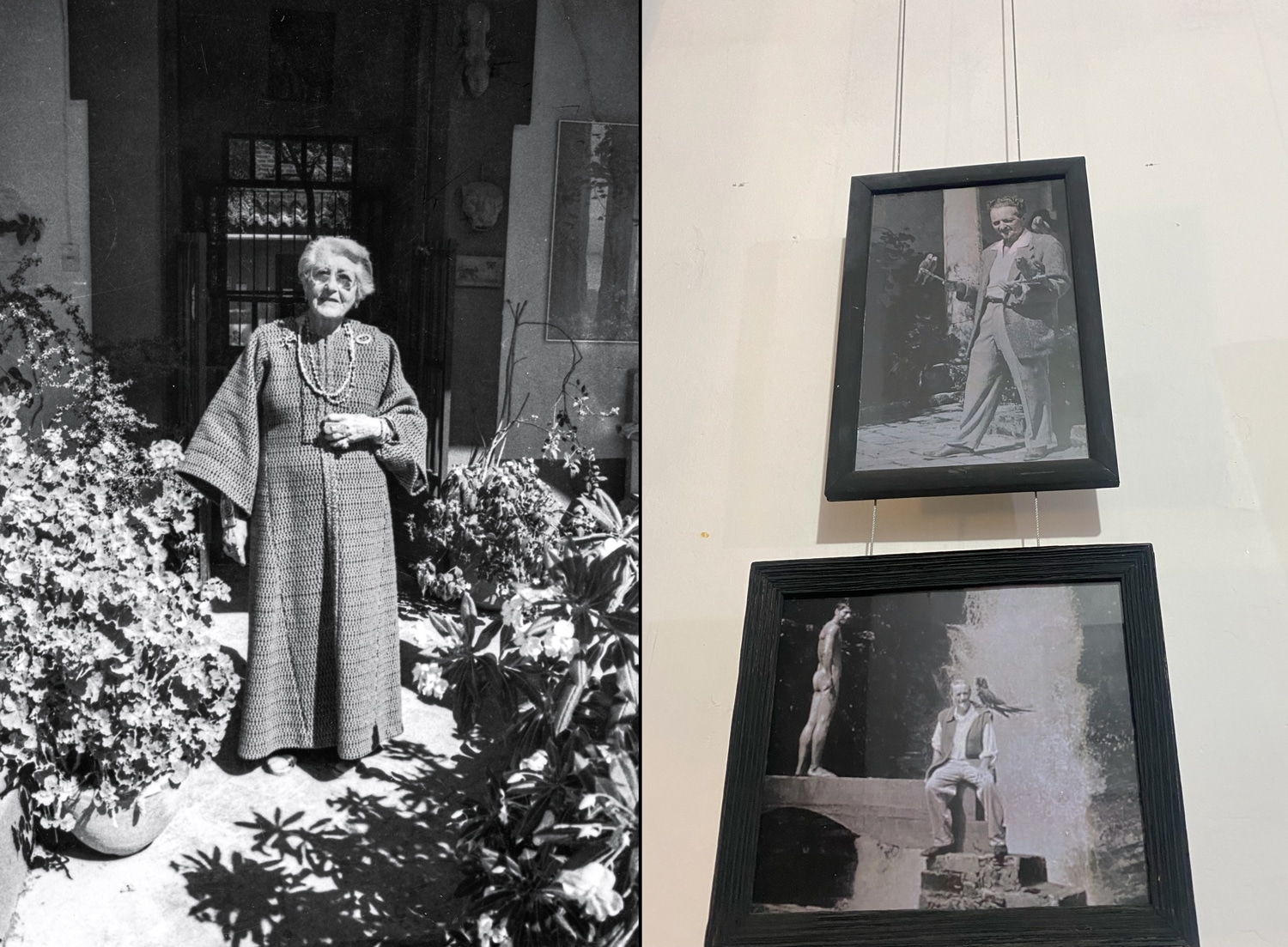
Archeologist Frans Blom and anthropologist Gertrude Duby purchased the house that would become Casa Na Bolom — The House of the Jaguar — in 1950.
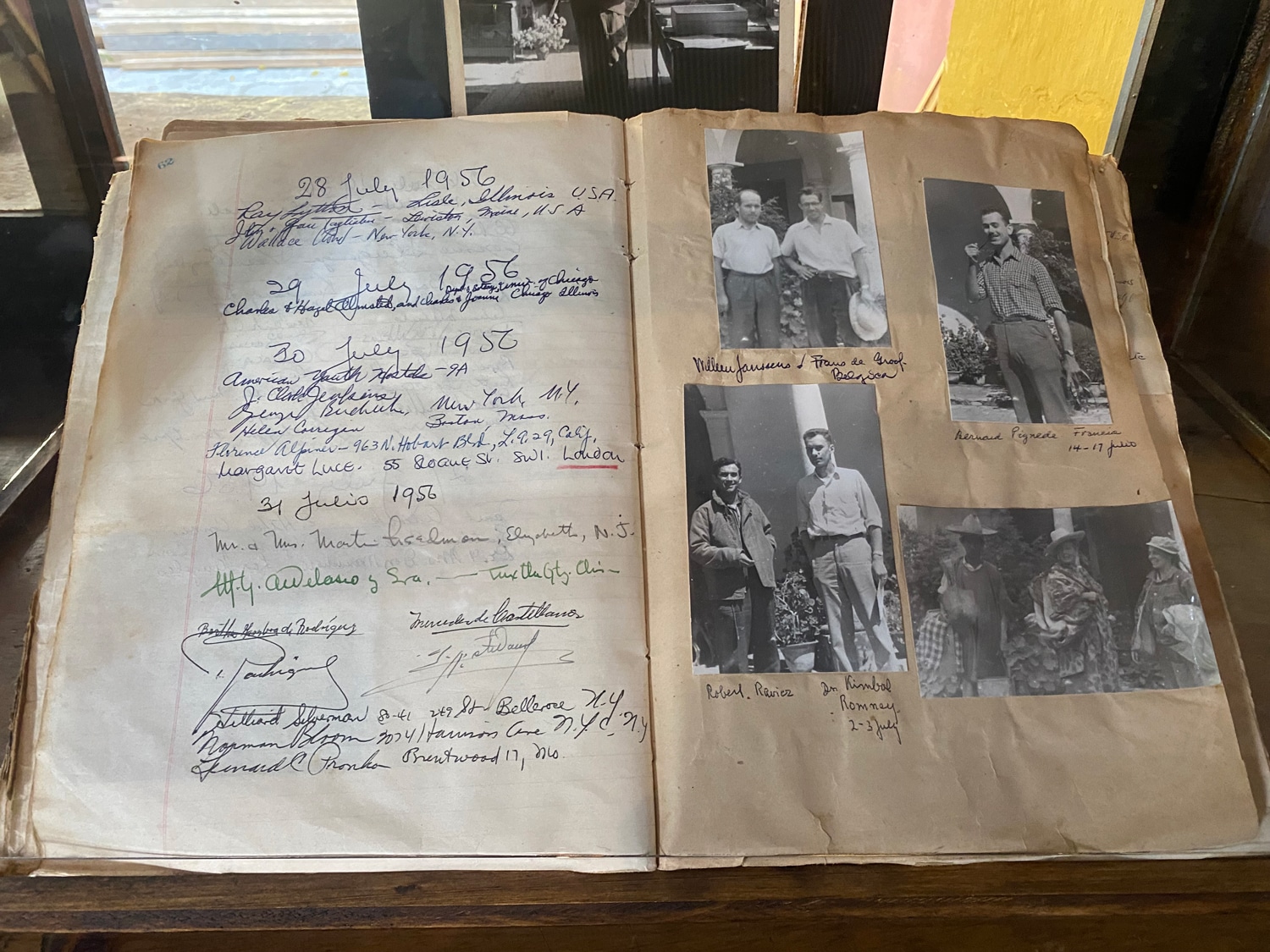
In 1943, during another expedition, he met Gertrude Duby, a Swiss journalist and social anthropologist who had been hired by the Mexican government as a social worker to study the conditions of the Lacandón people; a few years later, they would marry. In 1950, with a small inheritance from her mother, Duby and Blom purchased what would become Casa Na Bolom, which had been constructed as a seminary in 1891. In order to support their research, they adapted the building as an inn for paying guests. Despite the cultural richness of the region, the tourist industry in Chiapas was then meager in comparison to that in other parts of Mexico. This was due in part to the fact that natural attractions like Sumidero Canyon and the Agua Azul waterfall had not yet been developed for visitors, and now-famous archaeological sites like Palenque were still being excavated. But for Blom and Duby, the gamble paid off, and guests arrived at Na Bolom from every corner of the world, among them archaeologists, intellectuals, and artists. The House of the Jaguar has served the dual function of hotel and cultural center ever since, distinguishing it from all other cultural organizations in Chiapas.
Impoverished, isolated, and fiercely independent, with a complex topography that encompasses the Sierra Madre de Chiapas, the Central Depression, the Central Highlands, the Eastern Mountains, and the Northern Mountains, Chiapas has long had a more or less disconnected relationship with the nation’s central government. One of the last to join the Mexican union in 1824, the state has always seen itself as having a distinct identity — due both to its rich Mayan traditions, and to its largely marginalized economy. To this day, its official name is the Estado libre y soberano de Chiapas, the Free and Sovereign State of Chiapas. Yet tourism at last expanded along with the international awareness promulgated by the Zapatista uprising. Weaving families established deals with tour operators, paying a percentage on the sales brought in by tourist buses. As this income became increasingly important, and expediency and quantity became central to local producers, simplified patterns and artificial dyes became commonplace in traditional textile arts.
As tourist income became increasingly important, simplified patterns and artificial dyes became commonplace in the traditional textile arts of Mayan weavers.
These dynamics had been developing for decades when, in 2022, the director of Na Bolom, Patricia López, invited me to visit San Cristóbal de Las Casas once again. She wanted me to meet Carlos Barrera Reyes, a socially engaged artist from Mexico City who had at that point been working for fourteen years with weavers in the area. His long-term aim was to revive the Mayan tradition of using natural dyes, and he had been developing a socially engaged art project that would soon culminate in an exhibition. López wanted me to look at the project, with the possibility that I could one day develop my own project with Na Bolom.
I was moved by the invitation. I am not only a socially engaged artist who has written extensively about the form, but a White Mexican national who came to study art in the United States at age eighteen. I have lived in the U.S. almost twice as long as I lived in Mexico. And yet, in my peripatetic practice, I have been centrally interested in the very questions raised by Carlos’s work in San Cristóbal, asking how those of us who are somewhat removed from, but culturally connected to a certain place can help grassroots communities to generate new insights about themselves.
Carlos’s path into art in general, and social practice art in particular, was circuitous. He had studied business relations at the Instituto Politécnico Nacional in Mexico City, and marketing at New York University, while also working at the Mexican Cultural Institute (a branch of the Mexican Consulate). He returned to Mexico City in 2005 to study fine arts and design, taking classes at the Academia de San Carlos under the professional weaver, artist, and scholar Leticia Arroyo, an authority on natural dyes. He had also learned about the huipil embroidery tradition. In Chiapas, he had observed in the tourist market that very few garments were made with natural pigments, because the processes are arduous, and the average buyer did not discern the difference. He became interested in helping Indigenous communities to re-learn the use of these dyes. His socially engaged art project would center on the offering of free natural-dye workshops.
The socially engaged artist Carlos Barrera Reyes became interested in helping Indigenous weaving communities re-learn the use of natural dyes.
In 2008, Carlos went to stay at Casa Na Bolom. He was interested, initially, in contacting weavers in the nearby community of Magdalenas, which had an important tradition of periodically producing a new huipil as an offering for the statue of their local Virgin Mary. He considered that, since the community would likely engage with him only on commercial terms, the best way to move his project forward would be to commission them to teach him to make a huipil. He would learn to make the garment, and in the process have an opportunity to share his knowledge. The combination of local knowledge and tradition, and his own professional understanding of natural dyes, could, he hoped, be beneficial for all.
By his own admission, this first trip was a failure: the mayordomos or church stewards essentially sent him away. The weavers in Magdalenas, Carlos told me, “were not interested; they thought they would waste too much time.” Hoping to try another community, he learned of a woman named Sebastiana Gómez Pérez, a highly accomplished artisan in the nearby town of Tenejapa. Arriving there, he asked for Gómez in a textile shop, and followed the directions he received, but could not find her house. It started to rain. He gave up once again.
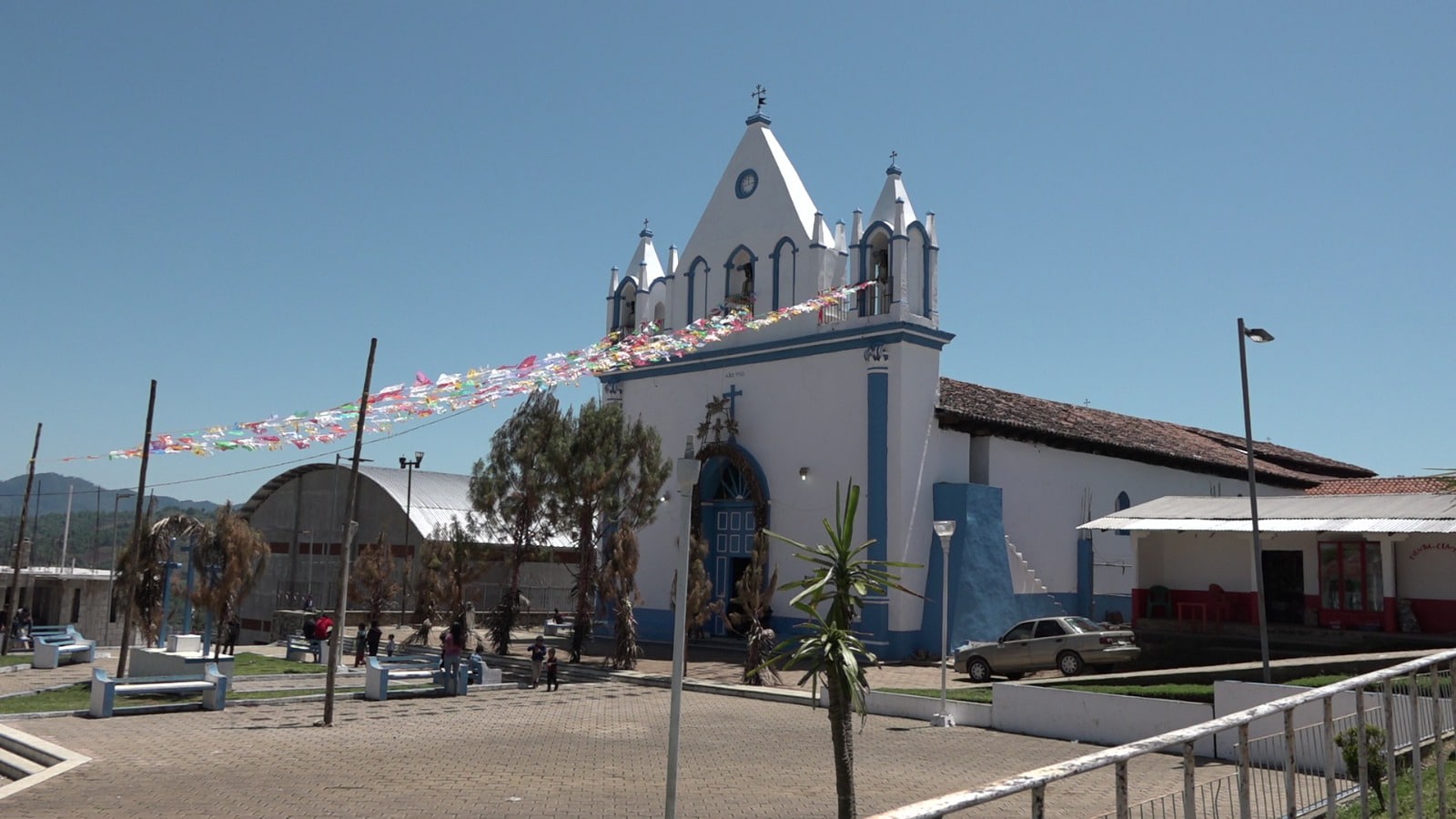
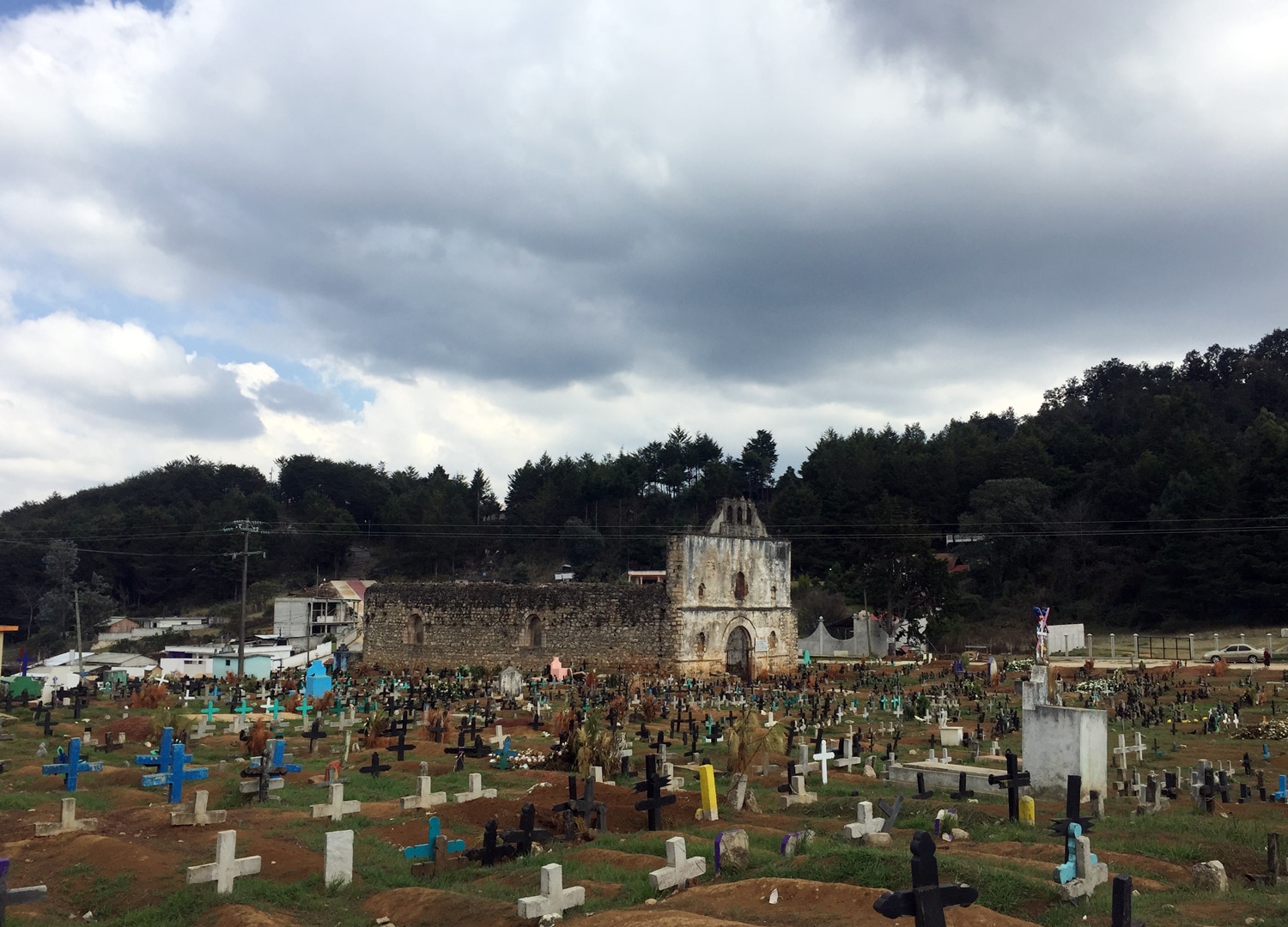

Chacoma, Tenejapa, Chiapas, 2022. [Beatrice Consagra Bretton]
The artist’s stories of his early visits to these isolated places remind me of a famous story by the Mexican writer Juan Rulfo, “Luvina” (1953). The narrator, a retired professor, is talking — drunkenly, at a bar — to an interlocutor who may or may not be imaginary about his arrival, many years prior, as a young teacher, in the forlorn village of Luvina: “I had my strength. I was full of ideas … you know that we all come loaded with ideas. And one goes with that currency along to apply it everywhere. But in Luvina that did not work out. I attempted the experiment and it fell apart…” 5
Fortunately, in this case, the tale took a more positive turn. Telephone communication in Chiapas was still haphazard in the early 2000s, and many remote areas had no signal. But “the advent of WhatsApp in Mexico changed everything,” as Carlos told me. (The app is designed to work in places with slow or unreliable internet connection.) He was able to message Sebastiana. She did not speak Spanish, so he had to communicate in what he calls his “pseudo-Tzotzil.” The weaver was noncommittal, warning him that it was dangerous where she lived.
In 2017, Carlos moved to San Cristóbal full time, as an artist-in-residence at Casa Na Bolom, where a large collection of historic textiles was in need of conservation.
Undeterred, he purchased a kilo of raw cochineal, Dactylopius coccus — an insect coveted for the carmine pigment extracted from it — and brought it to her. He told Sebastiana that he wanted to commission a purple huipil dyed with cochineal: “I requested purple because it is a tricky color.” It was a test, as he later told me; he wanted to spark her attention, and to create an opening for further conversation. Six months later, Sebastiana’s brother called to tell Carlos that they could not make the purple huipil, because the woman who made dyes for them did not know how to make that tint. “I know how to do it,” Carlos told them. “I can show you.”
In 2017, he moved to San Cristóbal full time, as an artist-in-residence at Casa Na Bolom. Knowing of his expertise, the center’s directors told him that they had a large collection of textiles (originally belonging to Gertrude Duby and Frans Blom) that were in dire need of conservation. They offered a long-term residency if — concurrent with his work on the ceremonial huipil and the dyeing workshops — he would commit to helping them with the collection, culminating in an exhibition. Carlos accepted.
Even then, in order to truly develop this multipart endeavor, he needed further advice from someone with detailed knowledge of the region’s weaving traditions, and there was no one more knowledgeable than Chip Morris. Walter F. (Chip) Morris, author of the famed ethnographic study Living Maya (1987) and an authority on Maya textiles, was still alive and residing in San Cristóbal. Morris had arrived in 1977 as a “young gringo Hippie,” and played a key role in research into and rescue of the meanings in ancient textiles of the Maya. 6 According to Carlos, Chip spoke perfect Spanish and Tzotzil, though he spoke quietly, mixing in English. “You have to go to San Juan Chamula,” Chip instructed. There, Carlos was to find a certain María Patishtán Lícanchiton, another expert weaver. Chip gave directions similar to those Carlos had followed when he first arrived in Tenejapa: “Tell the cab to let you off next to the old church. On the right side of the church, you will see the textile store. Ask there.”
Arriving in San Juan Chamula, Carlos found not one but three textile stores near the church, so he asked for María in all three. The shopkeepers eyed him suspiciously.
“Why do you want her?”
“I will tell you where she is, but you shouldn’t go.”
“She is a witch. She will invite you to walk in the woods where a snake will bite you, and she will steal your soul.”
He proceeded anyway. María was elderly, with cataracts clouding her eyes a striking milky white. Carlos commissioned her to make a sample telar, or loom, for the exhibition he was planning at Na Bolom, and to weave on it with dyed yarn he had brought. She began immediately, out on the curb in front of him.
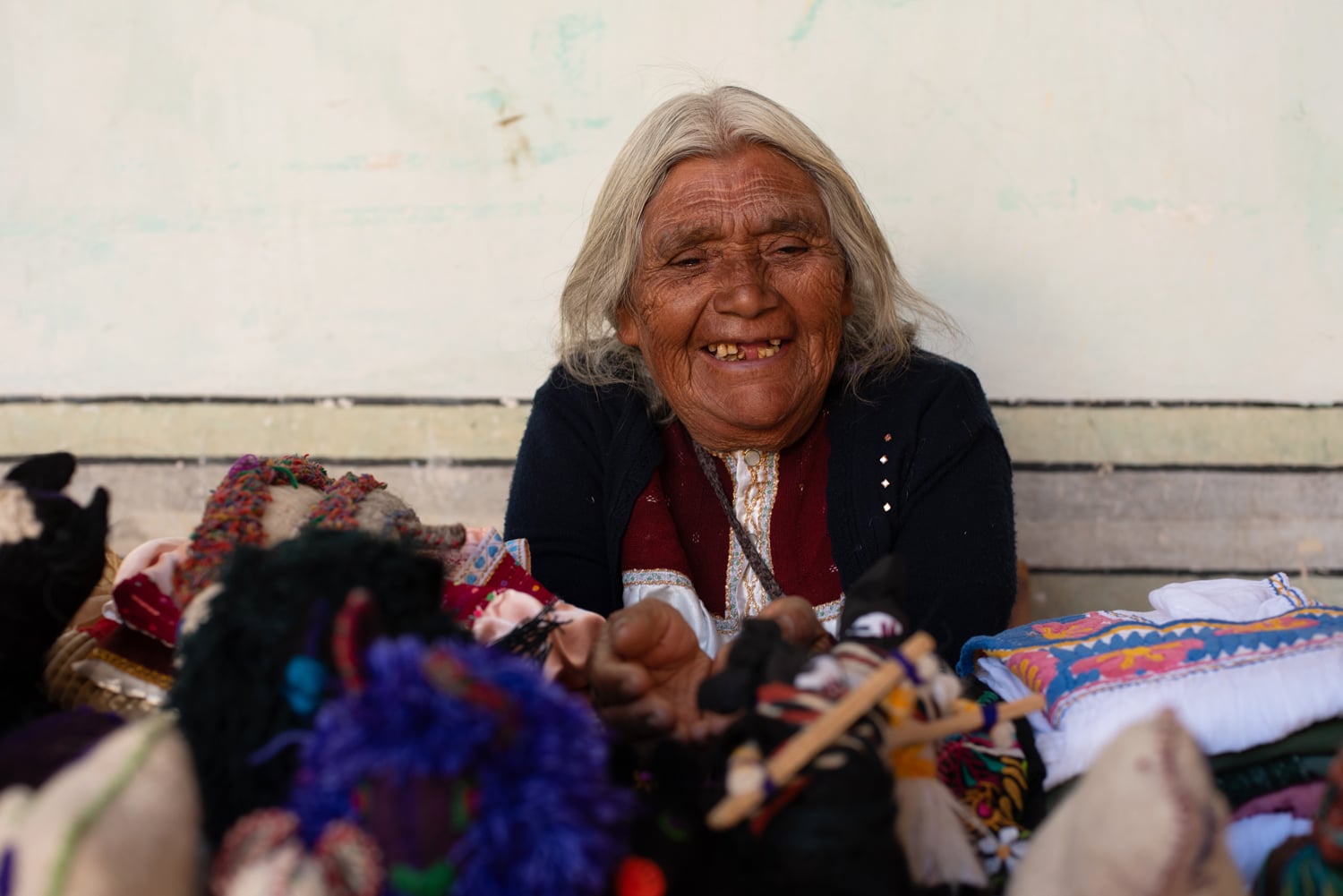
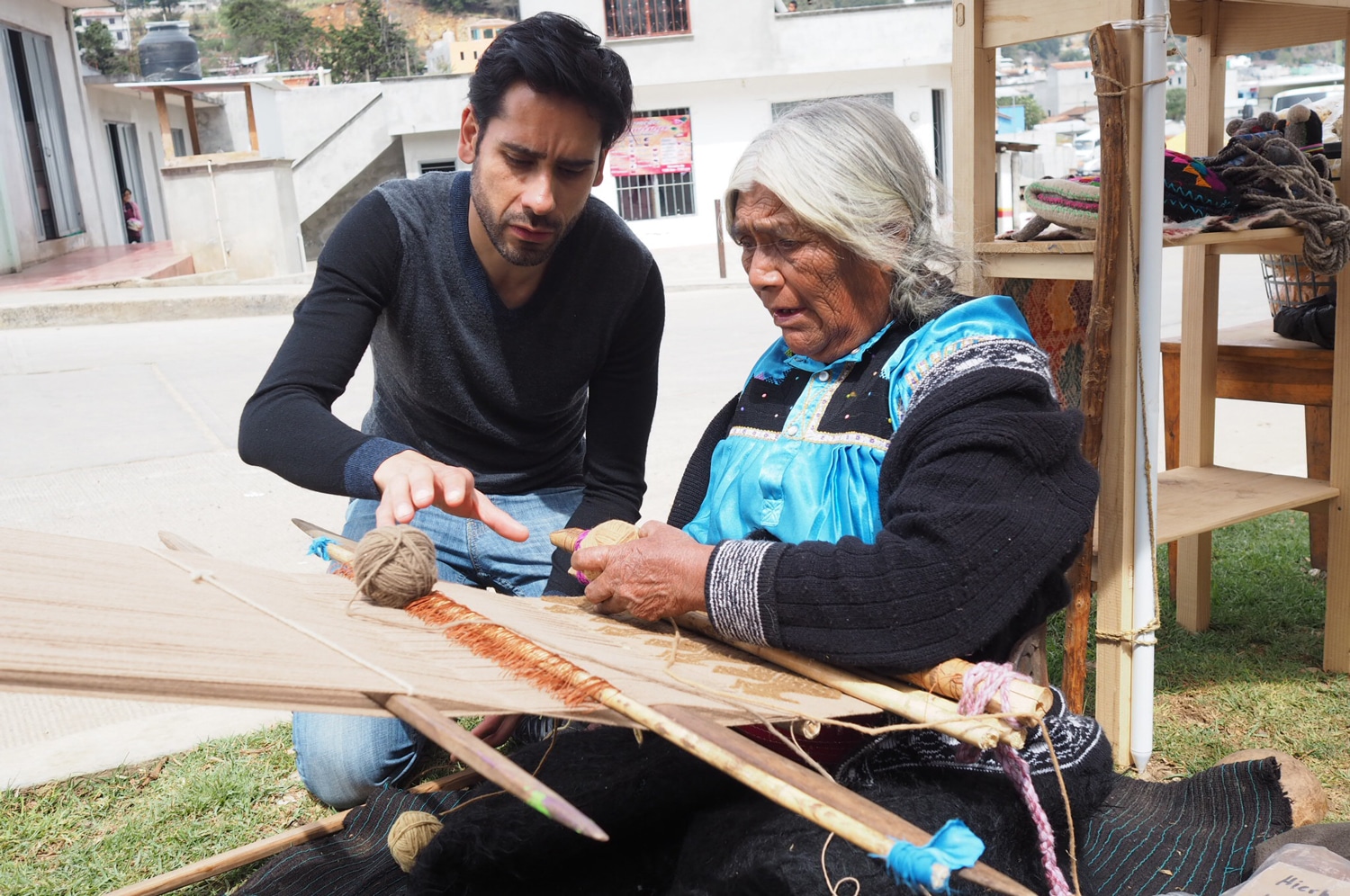
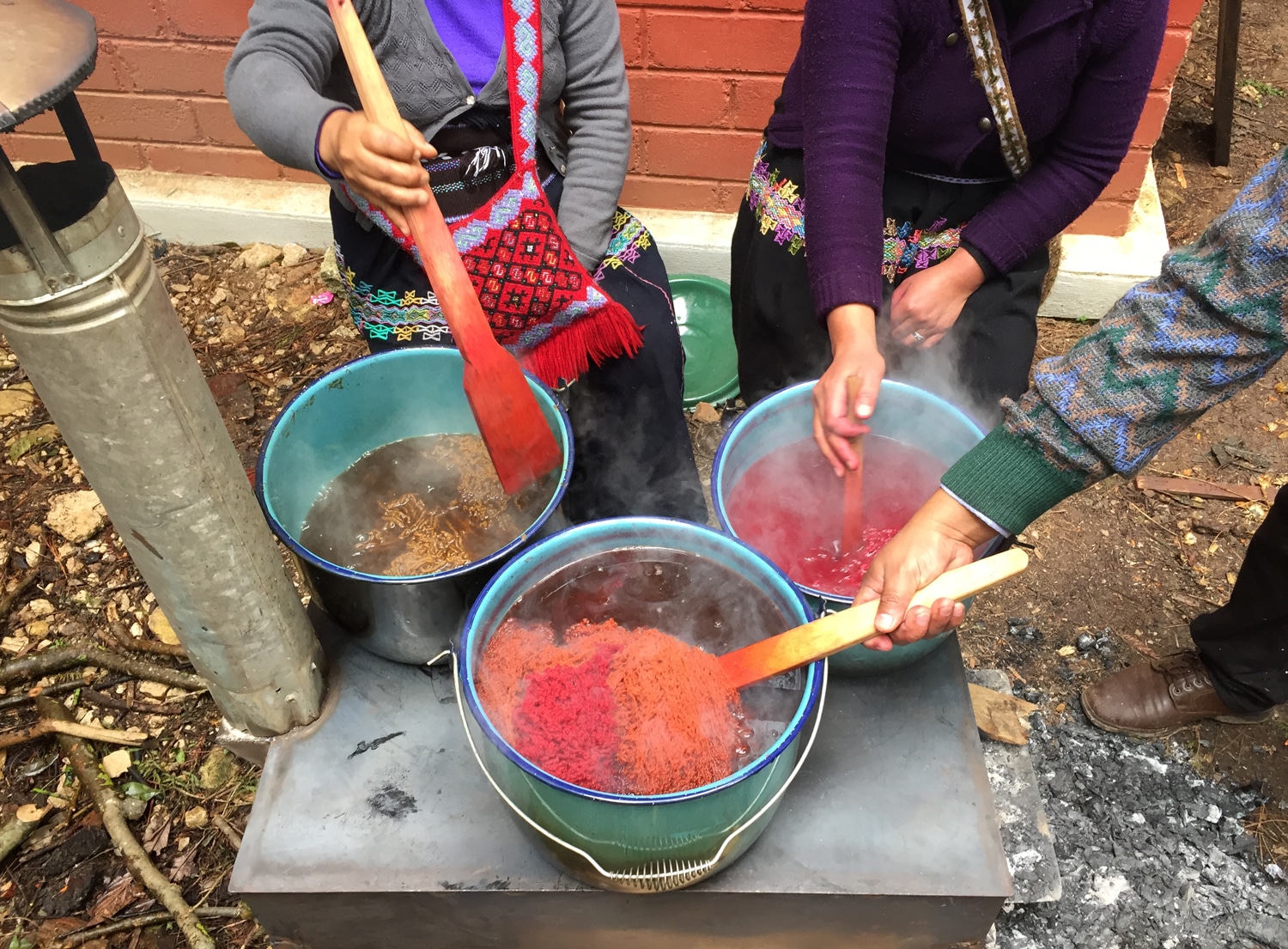
Over the next few months, they got to know each other, communicating through María’s son, and Carlos offered to teach them to use natural dyes. María knew where to procure the required natural materials, and invited him into the woods to pick plants. Anxious, Carlos initially said no. But, he said, soon he realized that “there is a great deal of envy among the weaving community, and they spread stories in order to eliminate the competition.” Carlos gave his first workshop outside María’s house, preparing dyes over a wood fire. (While gas is available in some Chiapas households today, most communities continue to cook with wood, which is cheaper and more steeped in tradition.)
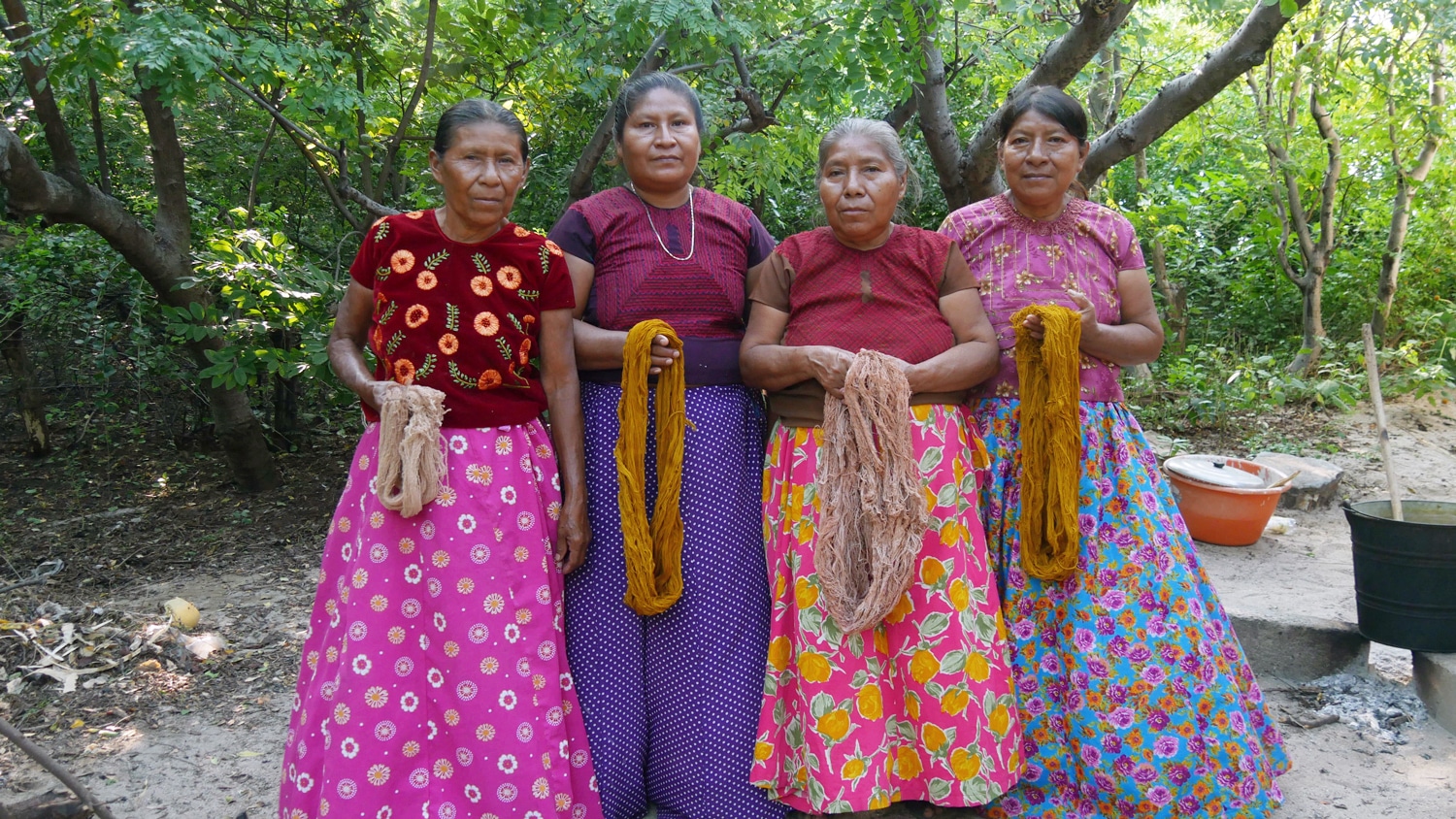
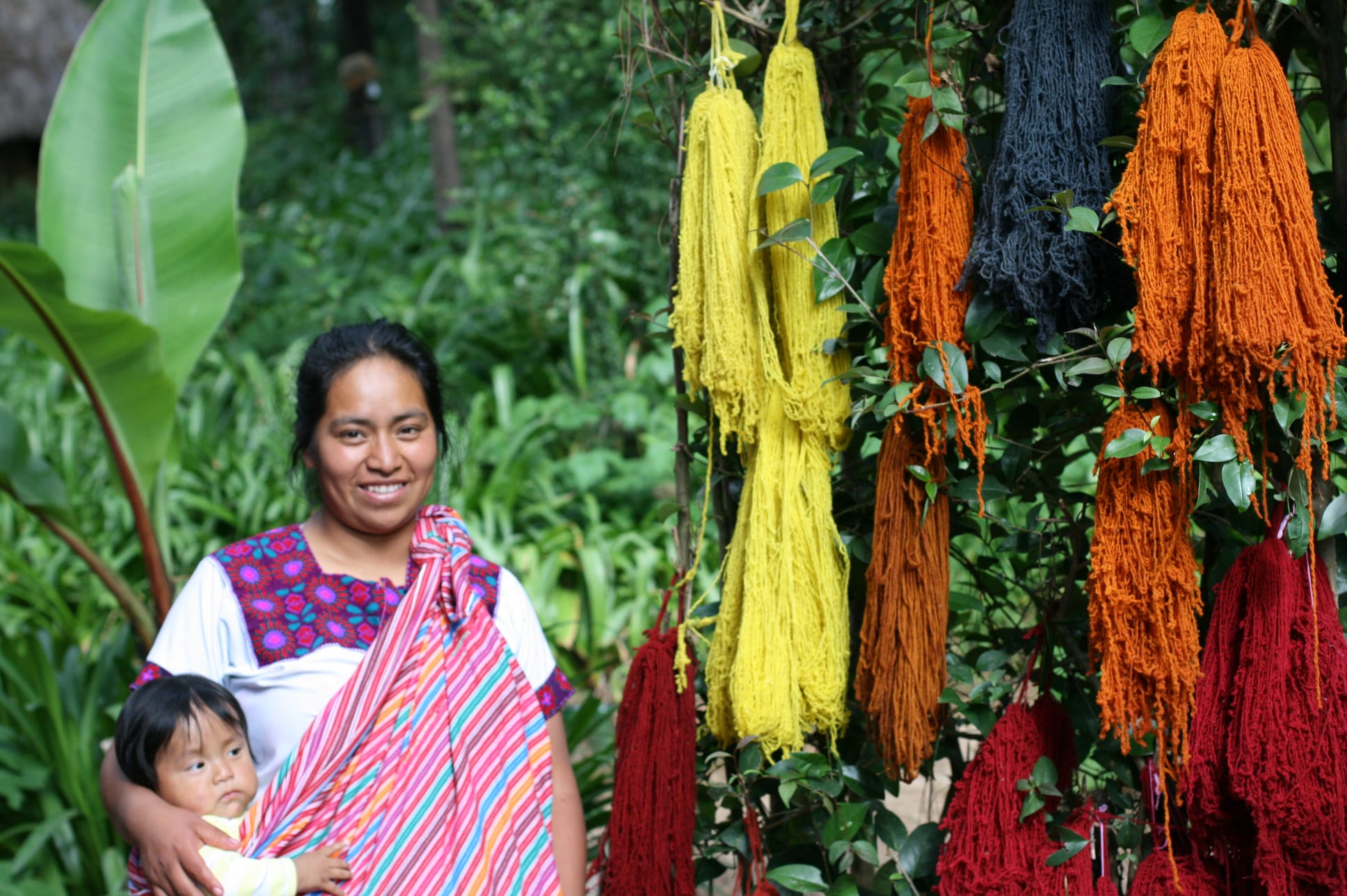
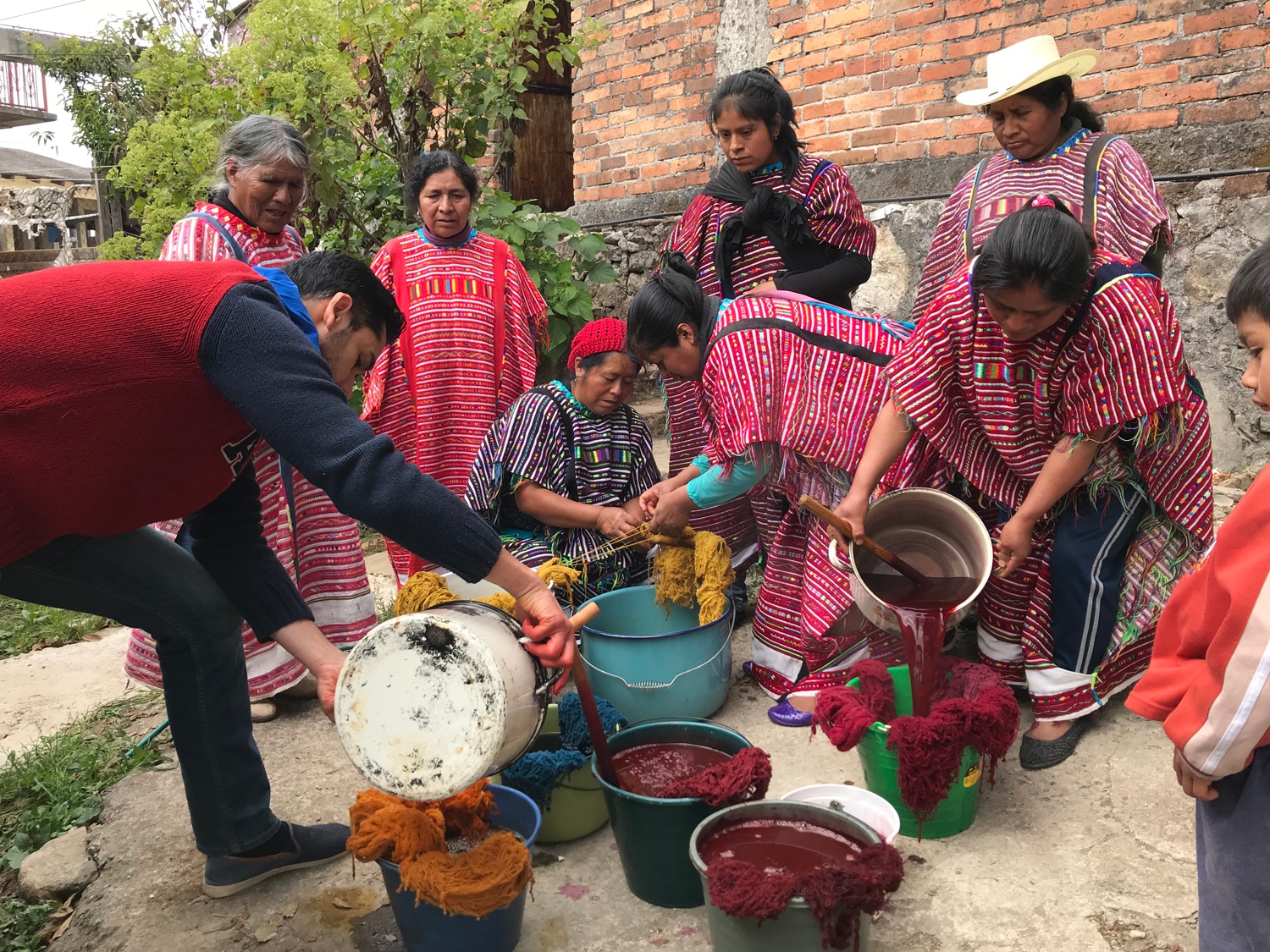
In each dyeing workshop, Carlos taught the production of basic colors: grana cochinilla (fuchsia), barba de león (yellow) and añil (blue).
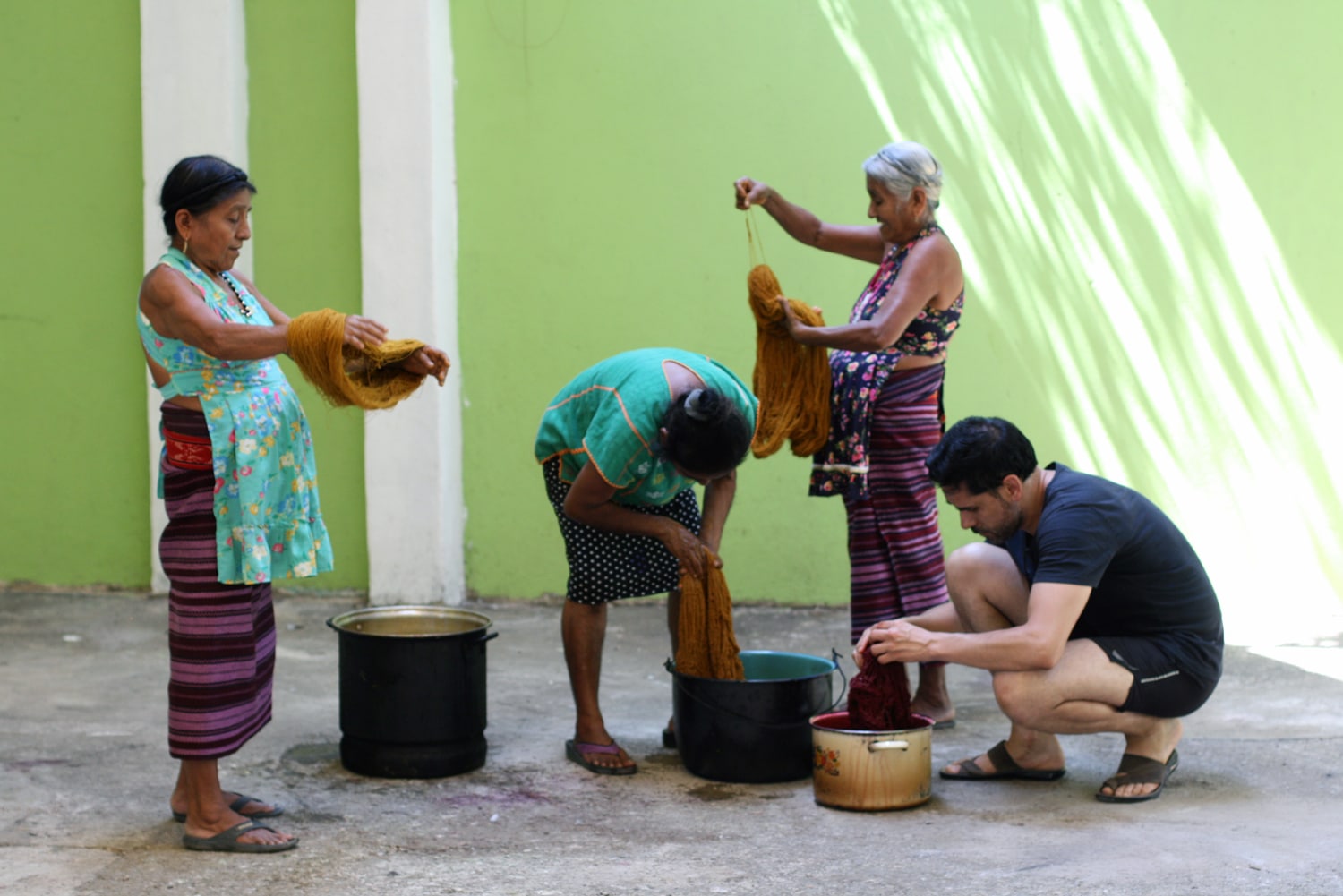
Between 2008 and 2023, Carlos traveled to twelve Indigenous communities in Chiapas to teach them how to dye. Workshop participants were almost exclusively women, young and old, as weaving is traditionally a women’s art — although a few men gradually joined as well. The artist’s main objective was to convince these artisans to produce huipiles to be included in the exhibition he was planning for Na Bolom. In contrast, the main interest in most of the communities was to make goods for tourist consumption. So, the group pursued both objectives. In each workshop, Carlos taught the production of basic colors, including grana cochinilla (fuchsia), barba de león (yellow) and añil (blue).
In 2019, Carlos arranged for the weavers to participate in the Feria Maestros de Arte, an exhibition of Mexican folk arts held each year in the town of Chapala, in the state of Jalisco. This annual event is “organized by foreigners for foreigners,” as he explains, with visitors (and buyers) from Europe, Canada, and the United States. Oaxaca had always won first prize in sales. This time, for the first time in nineteen years, Chiapas dominated. “When we came back to Chiapas, I had become very popular,” Carlos jokes. Now, instead of journeying in turn to each remote community around San Cristóbal, he hosted workshops at Na Bolom. From 2017 to 2023, he offered three per year, each lasting a week. Participants “would bring kilos and kilos of wool to dye.”
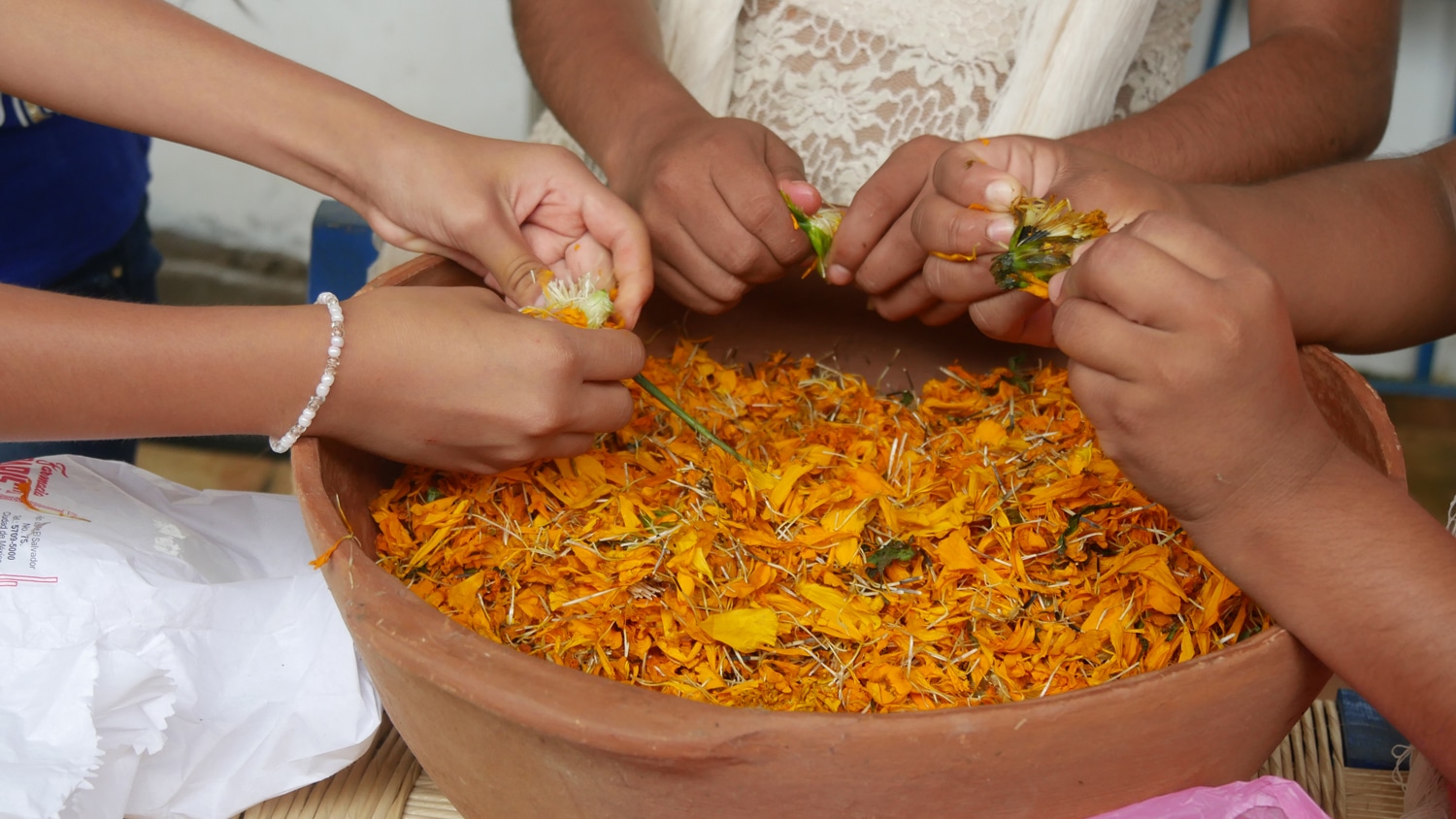
Dyeing workshop participants in San Pedro Amuzgos, Oaxaca, preparing cempasúchil or marigold (Tagetes erecta), 2018. [Beatrice Consagra Bretton]

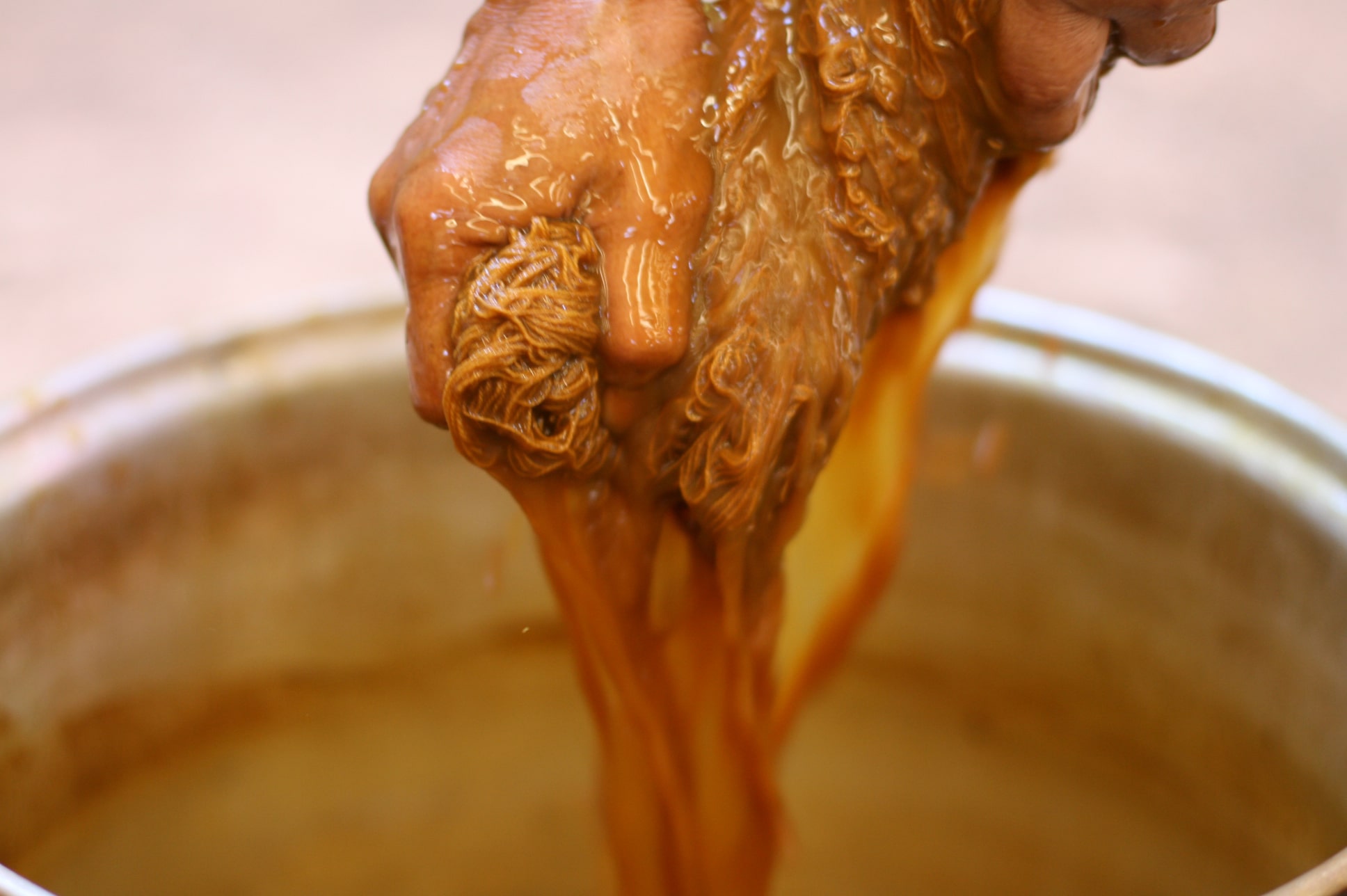
Dye made from pericón (Tagetes lucida), produced in a natural dye workshop. Pinotepa de Don Luis, Oaxaca, 2021. [Carlos Barrera Reyes]
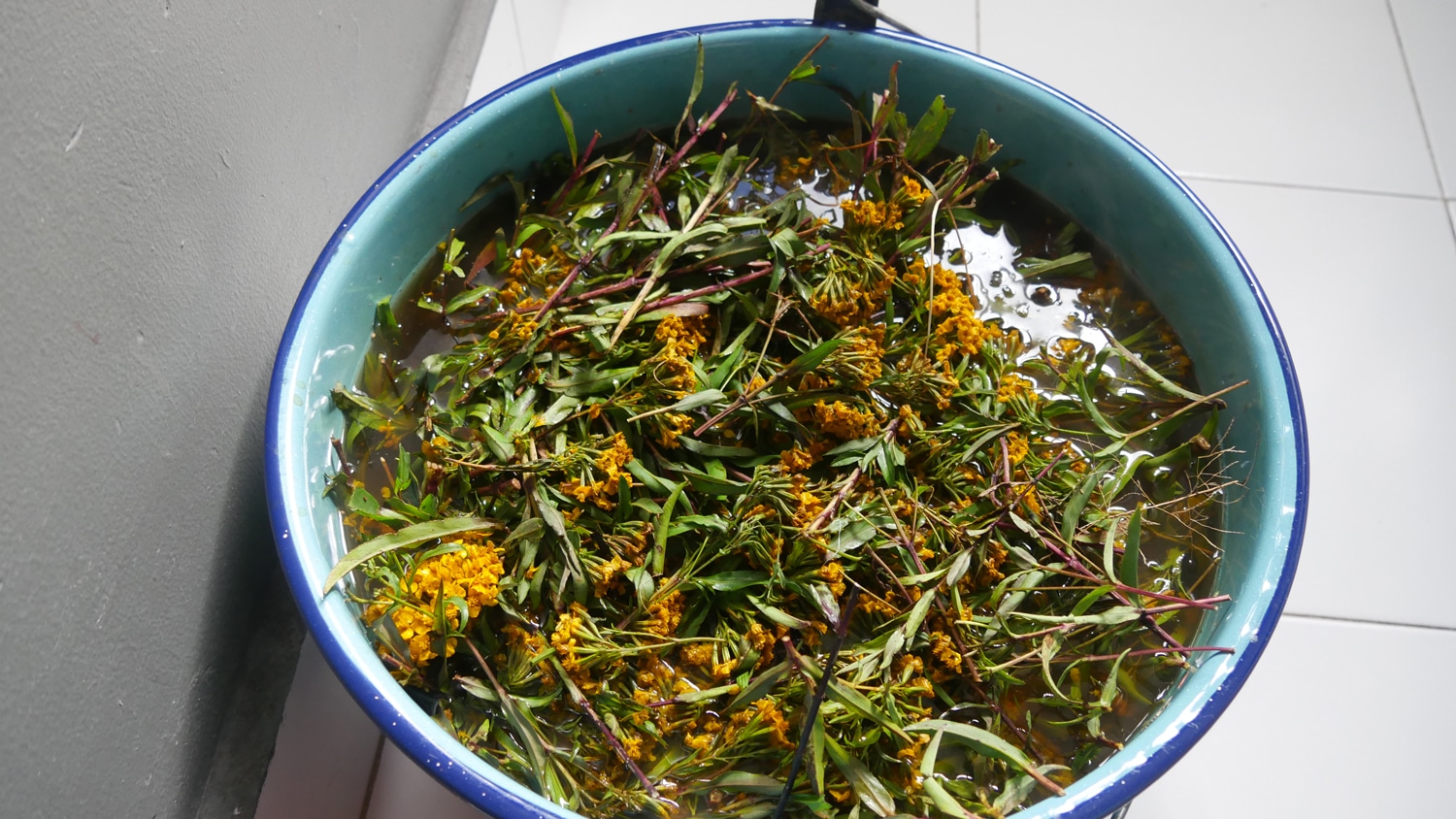
Leaves and flowers of pericón (Tagetes lucida), prepared for use in a natural dyes and textile workshop at the Faculty of Arts and Design, UNAM, Mexico City, 2018. [Carlos Barrera Reyes]
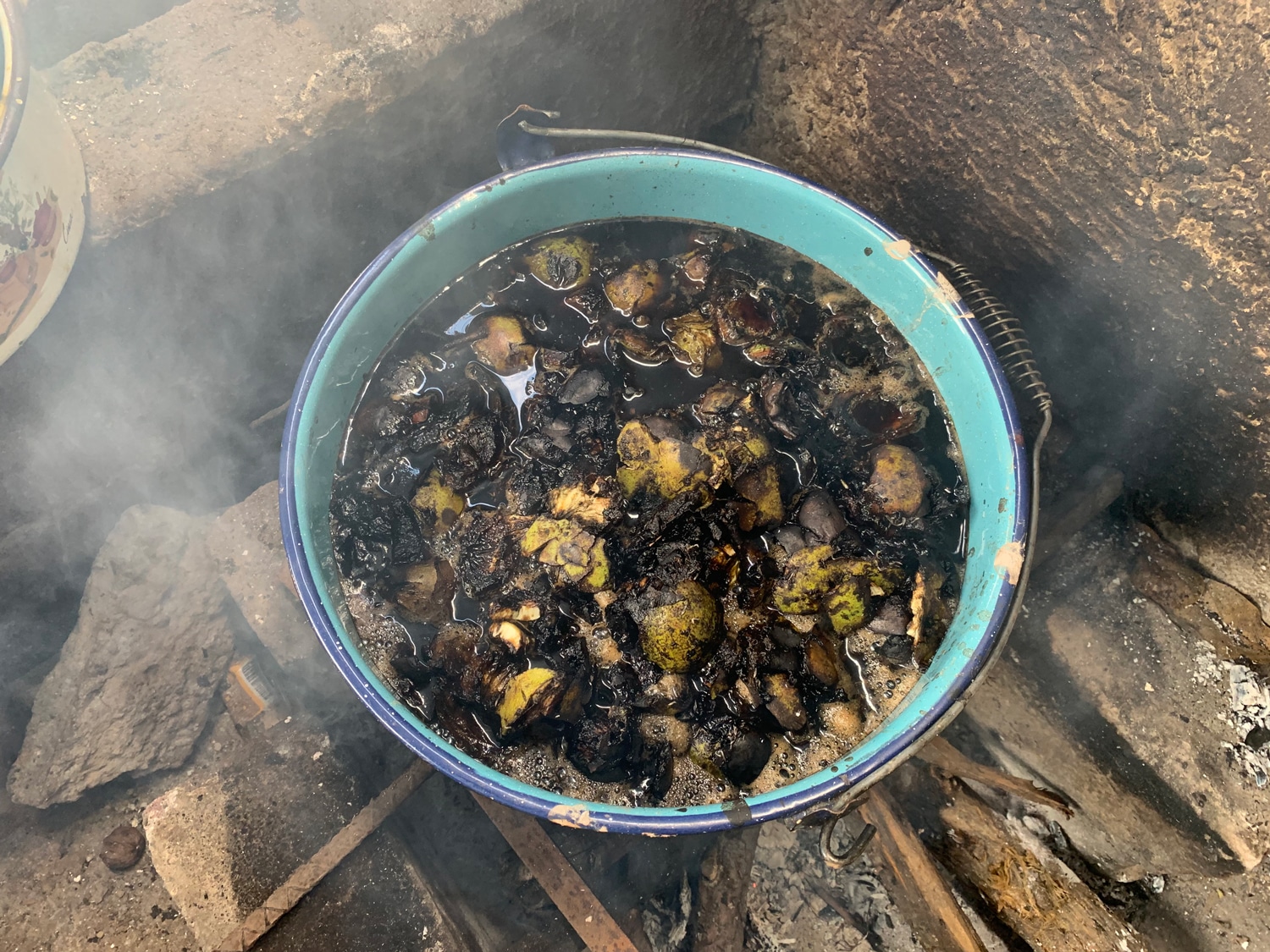
Nogal americano or shagbark hickory (Carya ovata) being prepared for use in dyeing workshop at Hueyapan, Morelos, 2021. [Carlos Barrera Reyes]
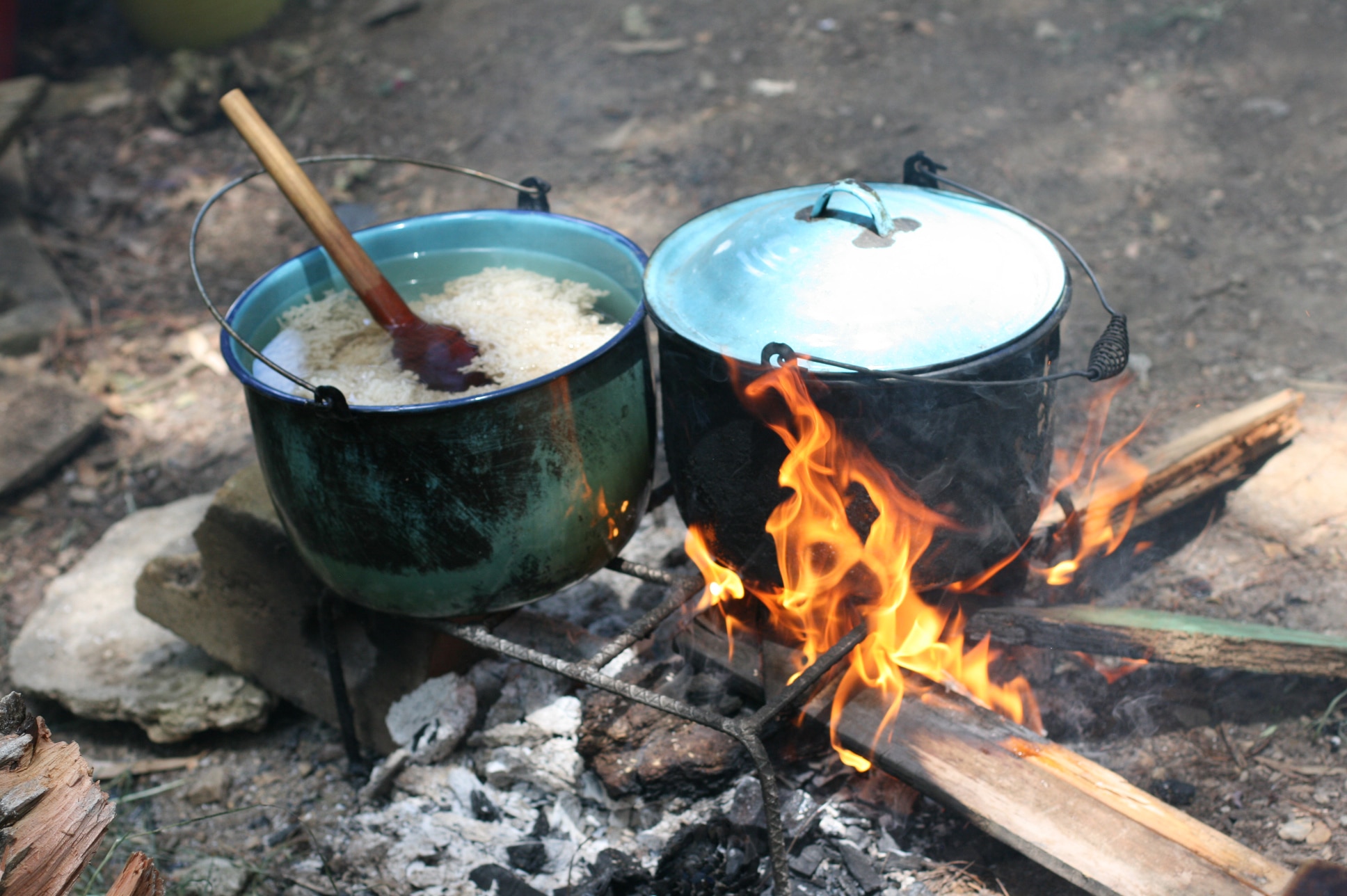
Mordanting wool (preparing fibers to accept dye) in a natural dye workshop. Casa Na Bolom, San Cristóbal de las Casas, Chiapas, 2019. [Carlos Barrera Reyes]
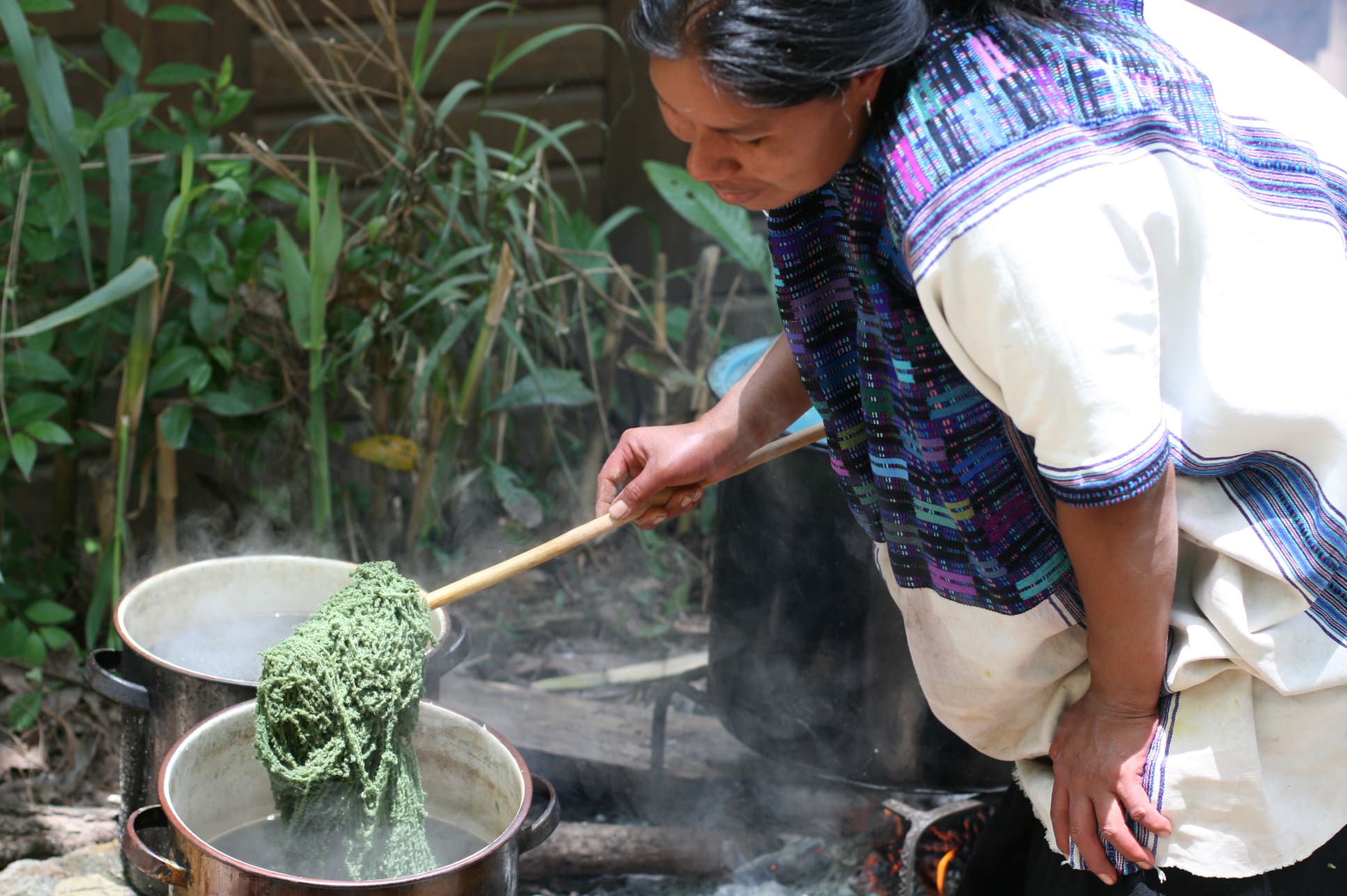
Patricia Guzman Ruíz dyeing wool with zacatlaxcalli or dodder (Cuscuta tinctoria) and indigo (Indigofera suffruticosa), in a natural dye workshop at Casa Na Bolom, San Cristóbal de las Casas, Chiapas, 2019. [Carlos Barrera Reyes]
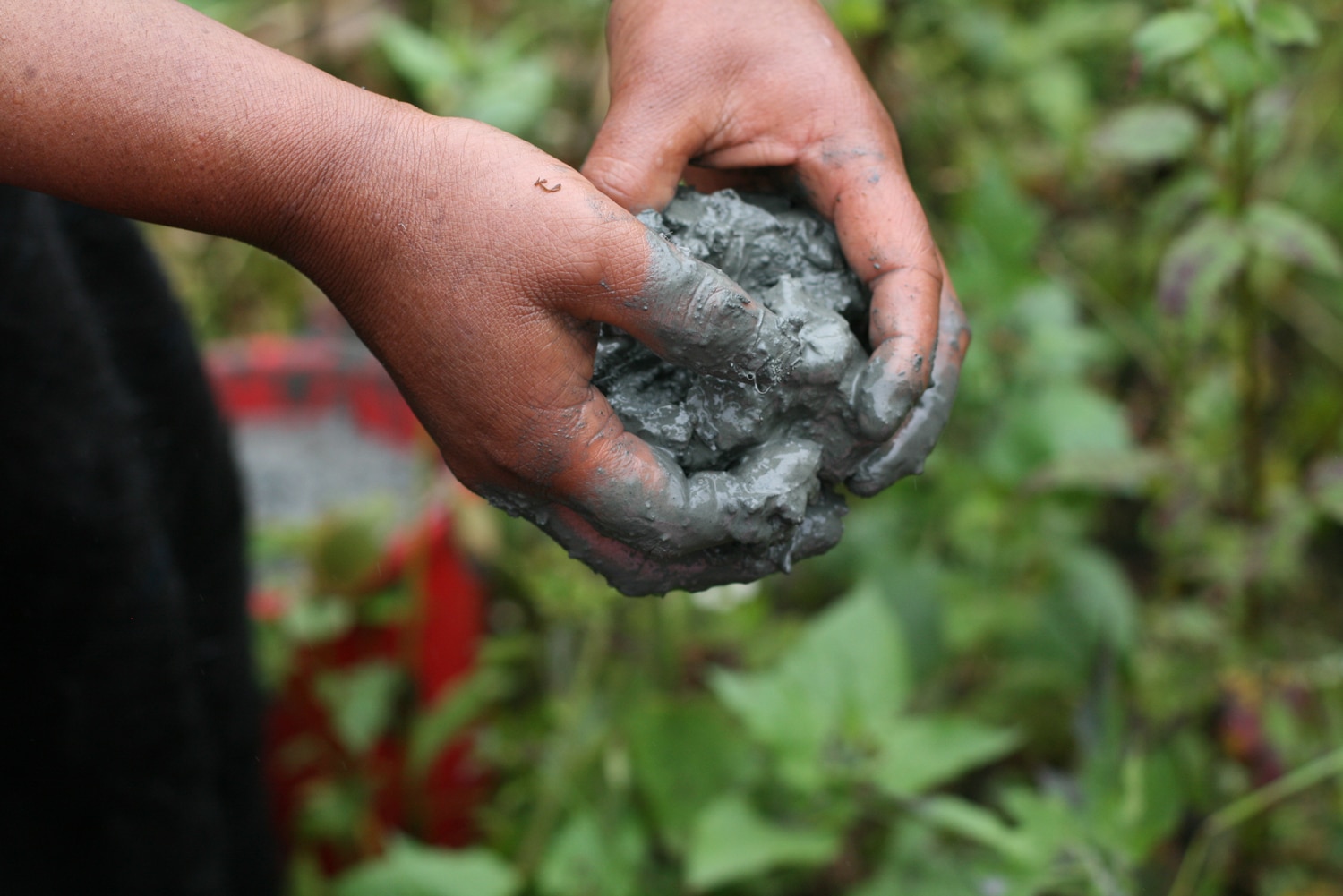
Antolina López, collecting lodo negro or black mud in San Juan Chamula, Chiapas, 2022. [Carlos Barrera Reyes]
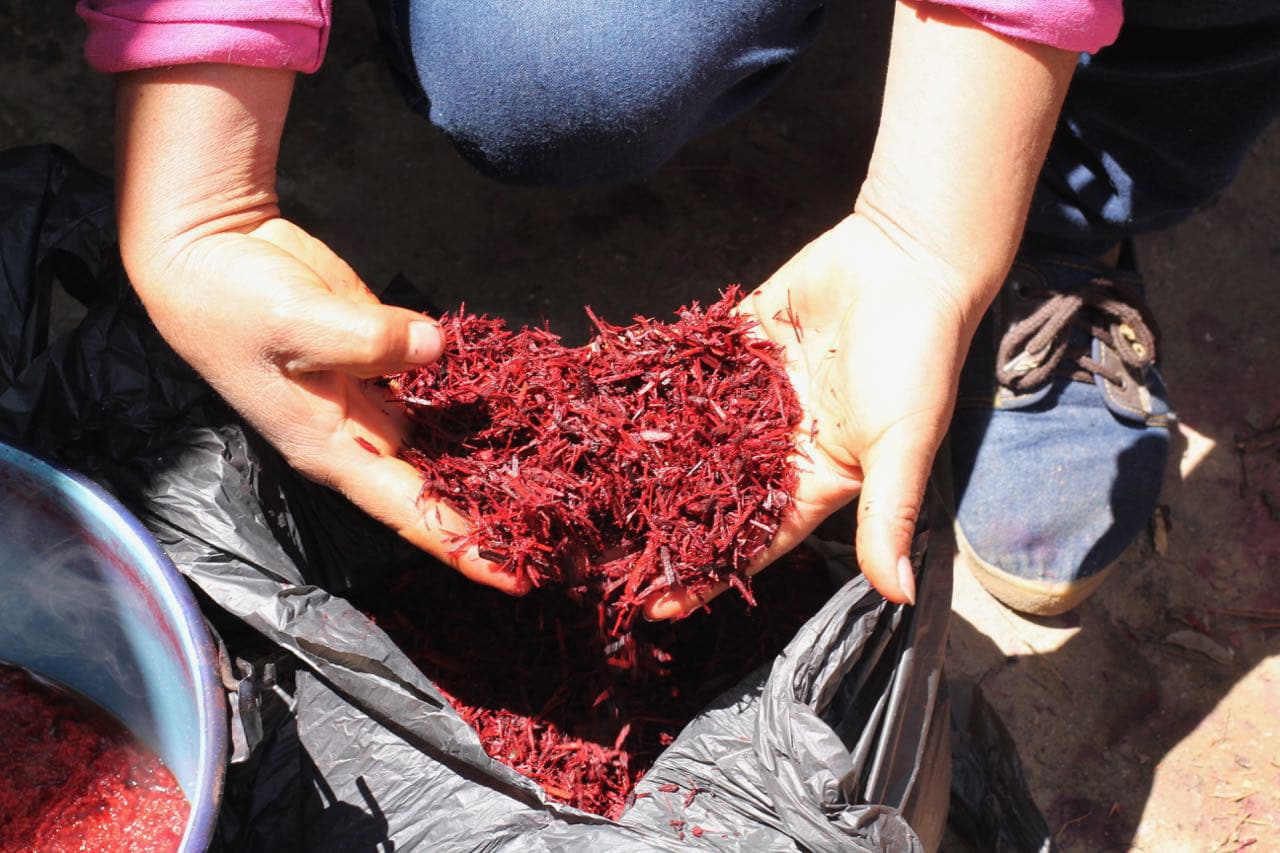
Palo Brasil or Mexican logwood (Haematoxylum brasiletto) being prepared for use in a natural dye workshop. Casa Na Bolom, San Cristóbal de las Casas, Chiapas, 2019. [Carlos Barrera Reyes]
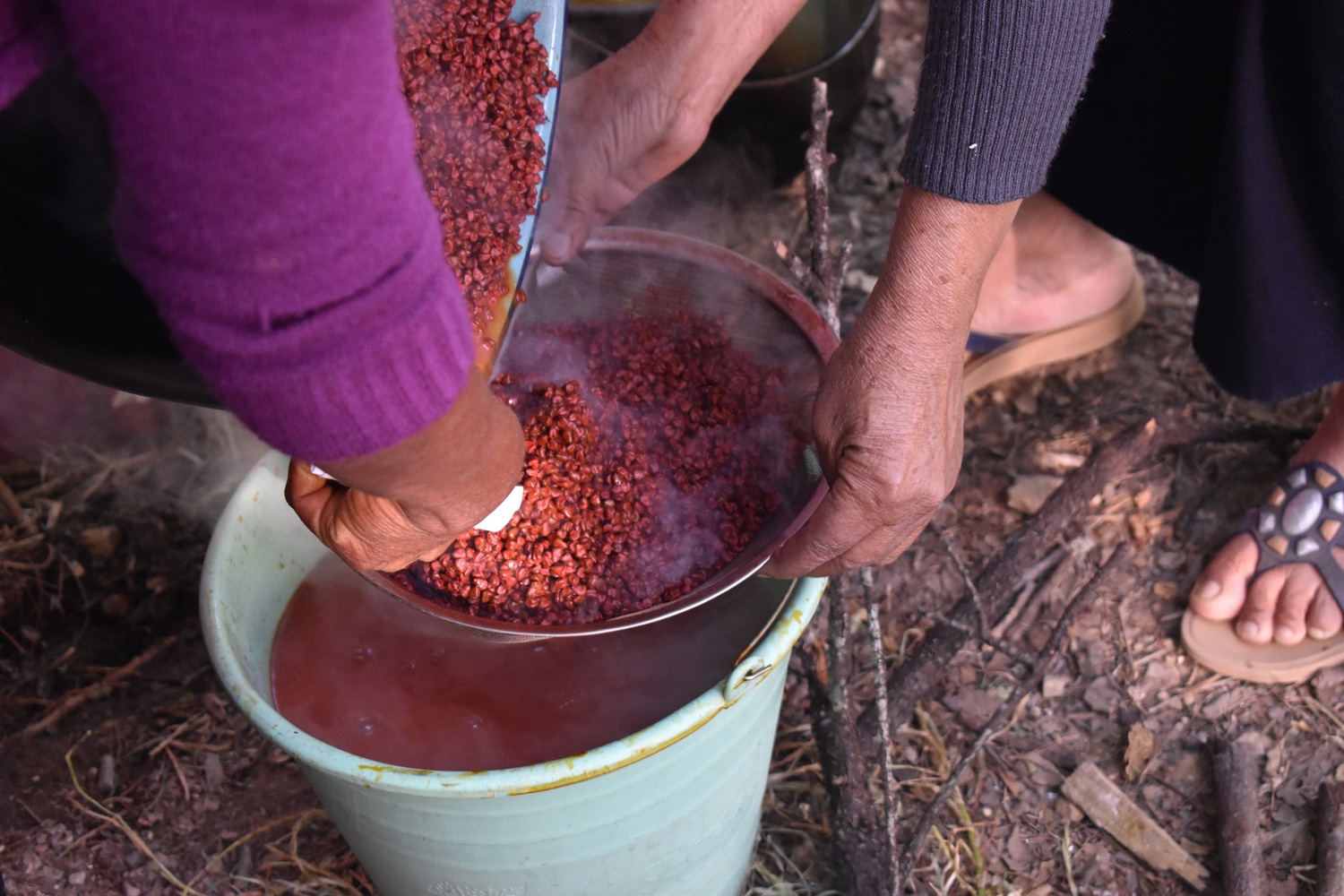
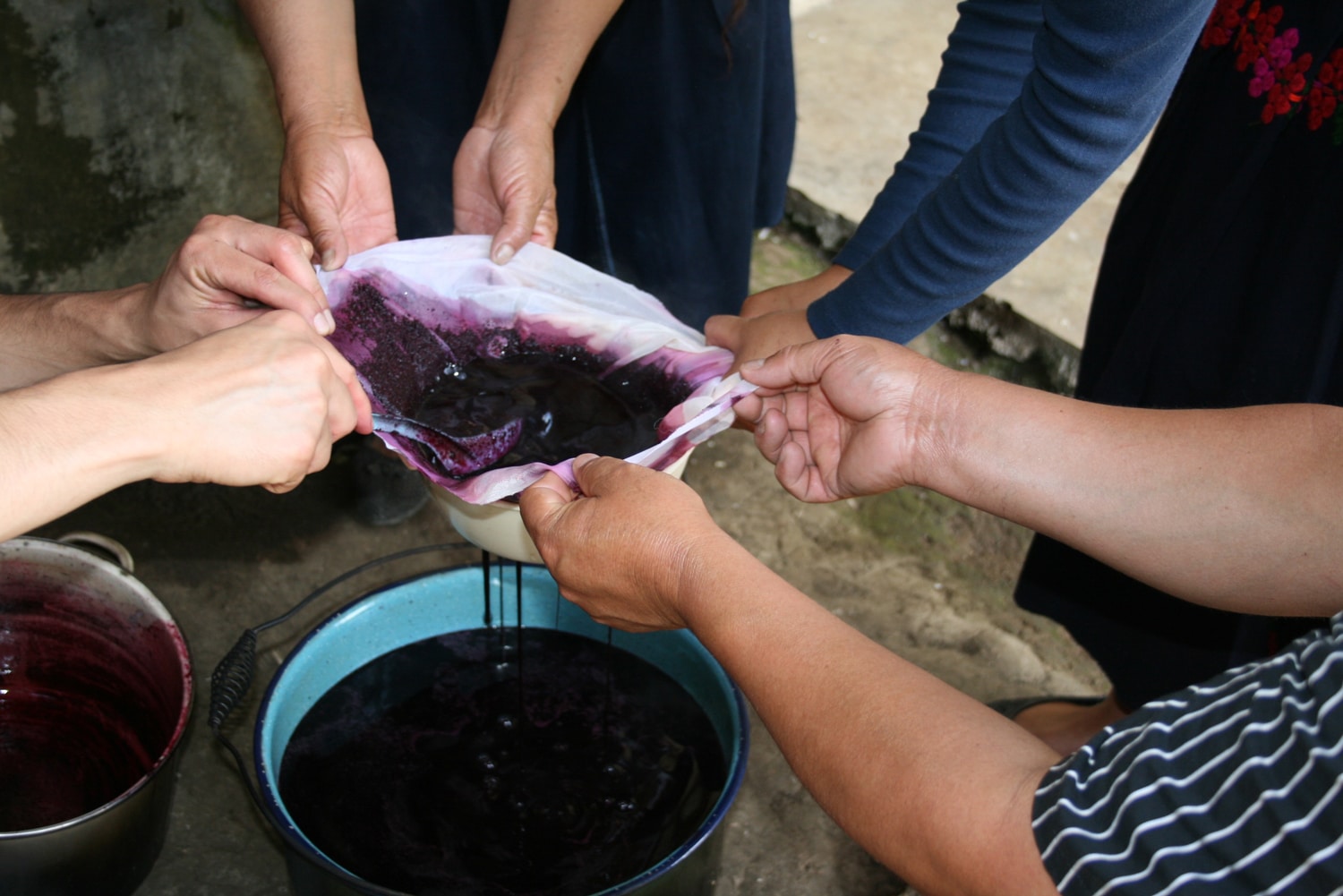
Workshop participants straining achiote or annatto (Bixa orellana) in a natural dye workshop at Casa Na Bolom, San Cristóbal de las Casas, Chiapas, 2021. [Carlos Barrera Reyes]
Rosa Gómez Meza, Juan Gómez Pérez, Sebastiana Gómez Pérez and Carlos Barrera Reyes straining grana cochinilla or cochineal (Dactylopius coccus) at a natural dye workshop. Tenejapa, Chiapas, 2018. [Briguitte Ordoquy]
Cecilia Gómez Díaz and her daughter Nishim attend a natural dye workshop at Casa Na Bolom in San Cristóbal de las Casas, Chiapas, 2019. [Carlos Barrera Reyes]
Perhaps the climactic moment of Carlos’s collaboration with the Chiapas weaving communities took place the same year as the fair in Chapala, in 2019, when he was invited by a mayordomo in Magdalenas to collaborate on producing a ceremonial huipil for their effigy of the Virgin. 7 Eleven years after his first approach, when he was turned away, the community was seeking him.
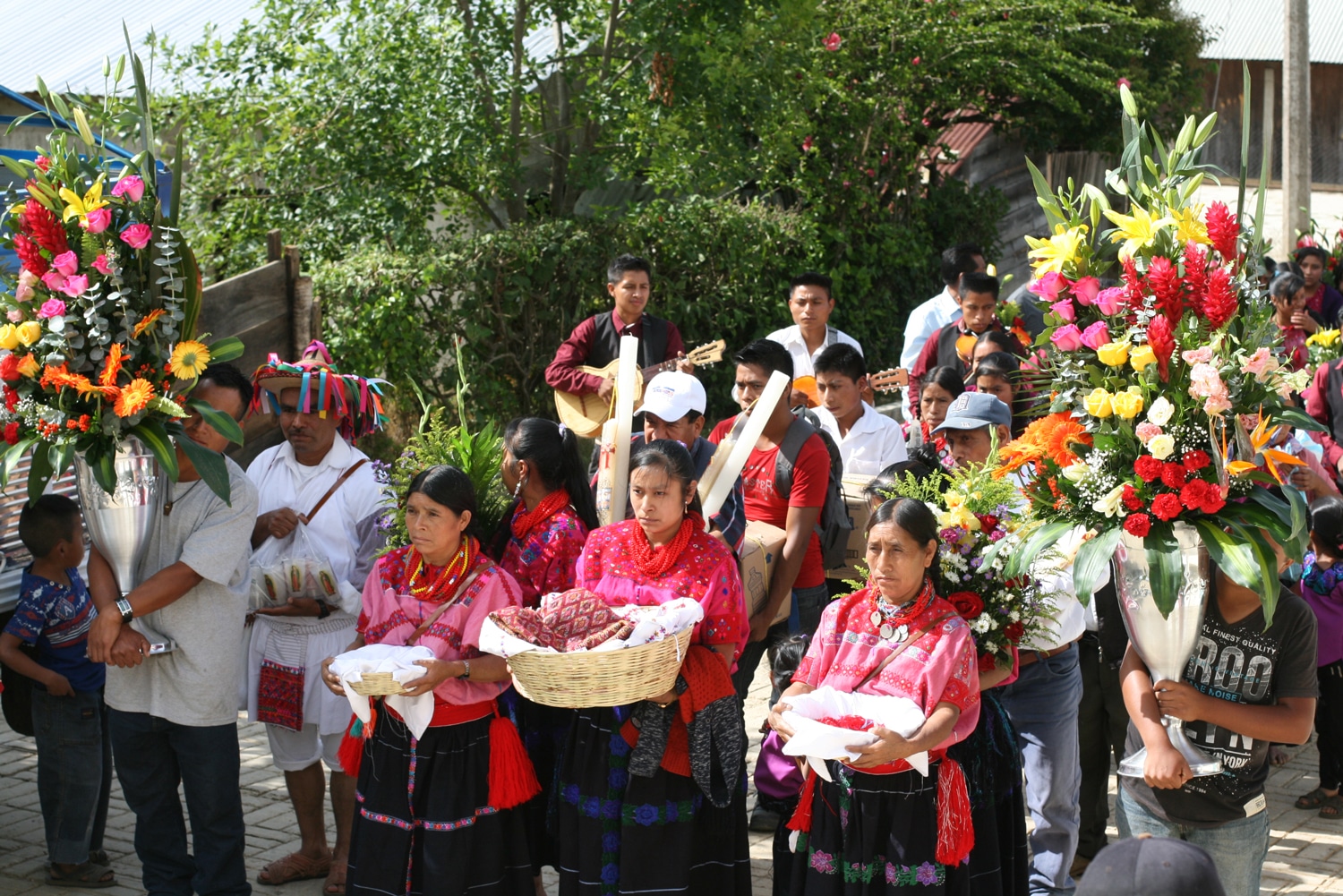
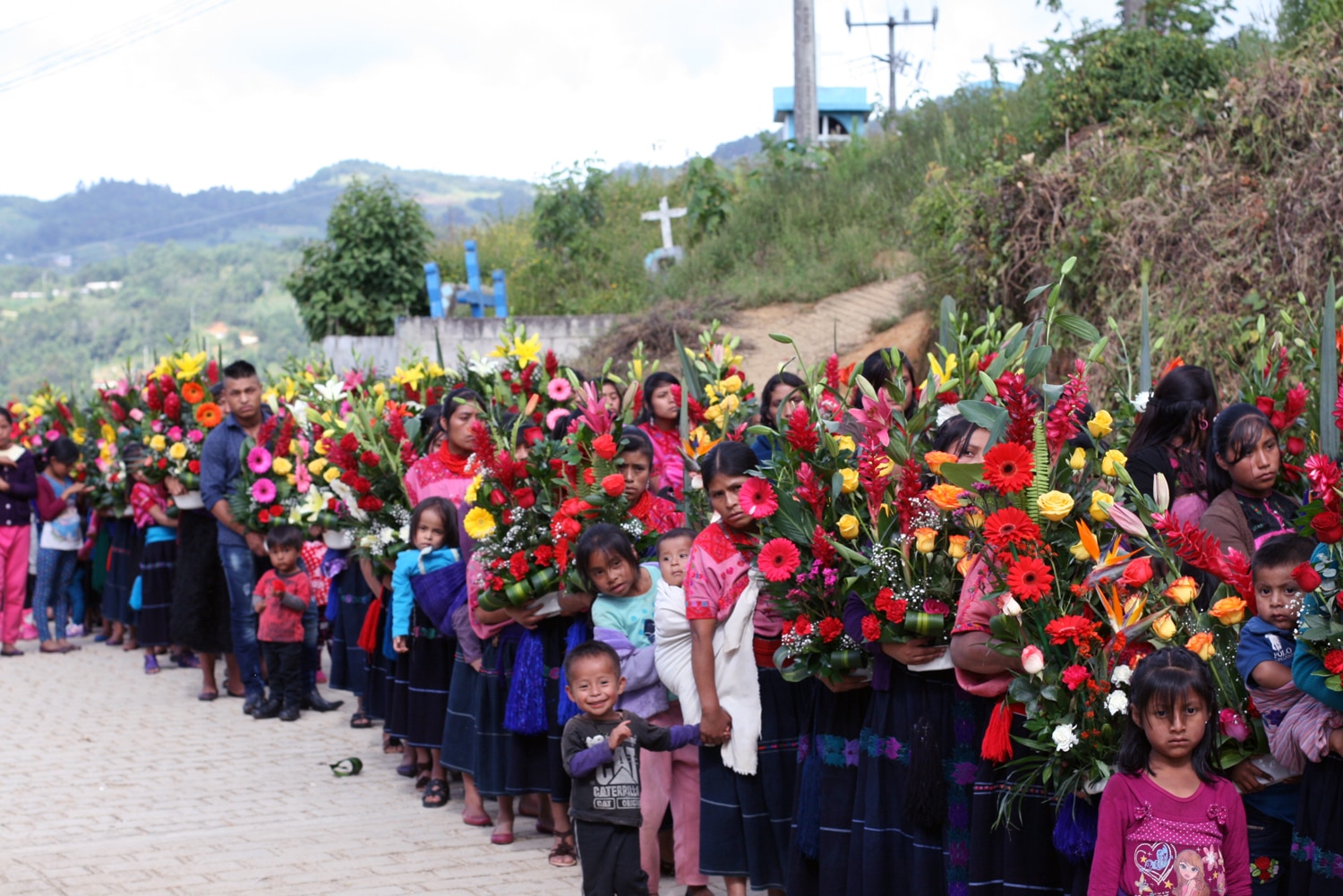
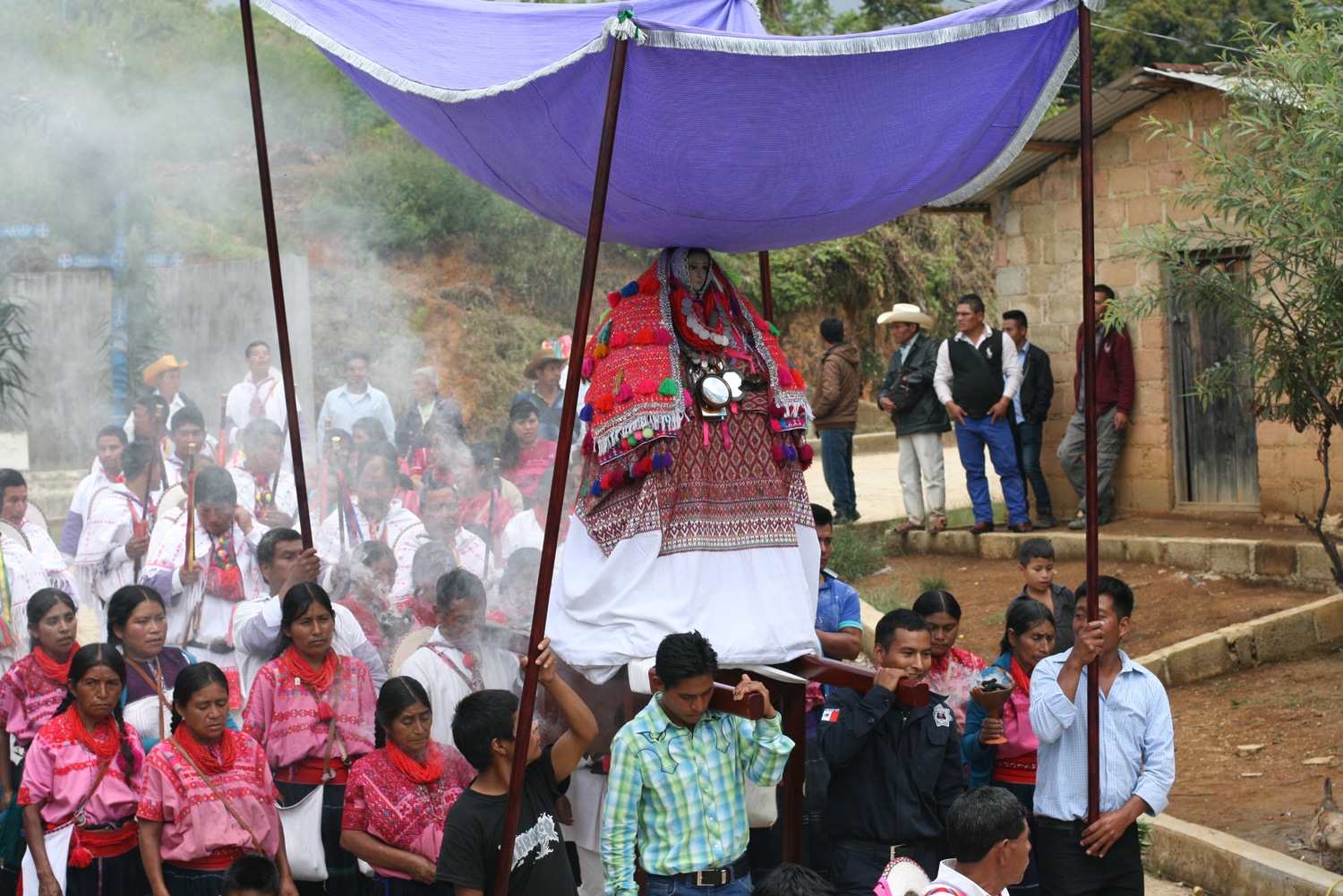
Two effigies reside in the church in Magdalenas, and Carlos inquired which would wear the garment. “Nak’lom,” the steward replied, or “La que se queda” (“She who remains”); the other, Xam’bil or La que camina (“She who walks”), is sometimes taken out of the building for religious processions. But the huipil was for the statue located permanently in the church. The Fiesta de Santa María Magdalenas is celebrated annually from July 22 to July 24. The decision to offer a new huipil or not in a given year depends on whether a family volunteers to make one, including the procurement and production of materials, which, aside from the wool, include the natural elements needed to produce the dyes — an expensive and labor-intensive task that typically involves many months of collective work. When Carlos arrived, two female elders from the same family had taken on responsibility for managing production of the garment: Juana Pérez Gómez, and her mother-in-law Patricia Jiménez Santiz.
Perhaps the climactic moment of Carlos’s collaboration with Chiapas weaving communities was producing a huipil for a local effigy of the Virgin.
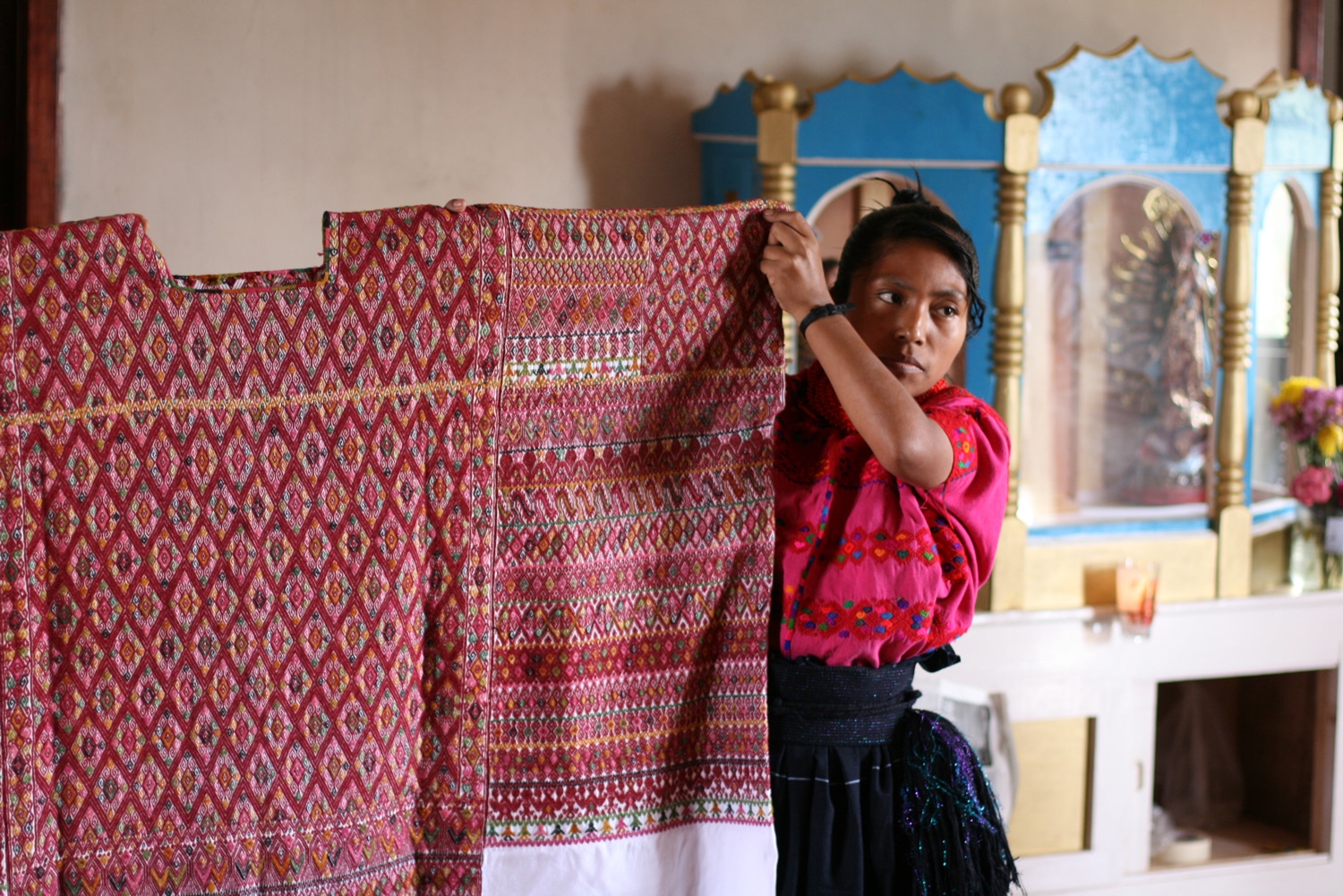
The Magdalenas weavers told Carlos that, in recent years, the quality and character of the huipil offered to the Virgin had been unsatisfactory, and they wanted to create something in accordance with the best quality and authentic iconographic tradition. To save time, Carlos provided the wool, and took it upon himself to do the dyeing in Mexico City. Still, family members had to work day and night to meet the ceremonial deadline. The selection of iconography was in essence collaborative, although the community relied on suggestions from Carlos as a touchstone. He in turn was guided by another of Chip Morris’s studies, Symbolism of a Ceremonial Huipil of the Highland Tzotzil Maya Community of Magdalenas, Chiapas (1987). The huipil that would later inspire the Tenejapa weavers, Morris writes, was one of the most complex he had ever encountered.
For the new huipil for Nak’lom in Magdalenas, Carlos chose red (made with palo Brasil), pink (a second wash of palo Brasil), yellow (barba de león, or Cuscuta sp.), green (muicle or Justicia spicigera with barba de león), black (black clay with yerba amarga or Glinus oppositifolius), and orange (liquen, a species of lichen known as Usnea subfloridana Stirt). At some point, Pérez, Jiménez, and other members of the family proposed to change the pattern and also to extend it from the body of the garment to the sleeves. The result was spectacular: a vast, intricately embroidered huipil. The ceremony of presentation to the Virgin involved a procession to the church, and another through the town in which the ambulatory statue, Xam’bil, wore the huipil.
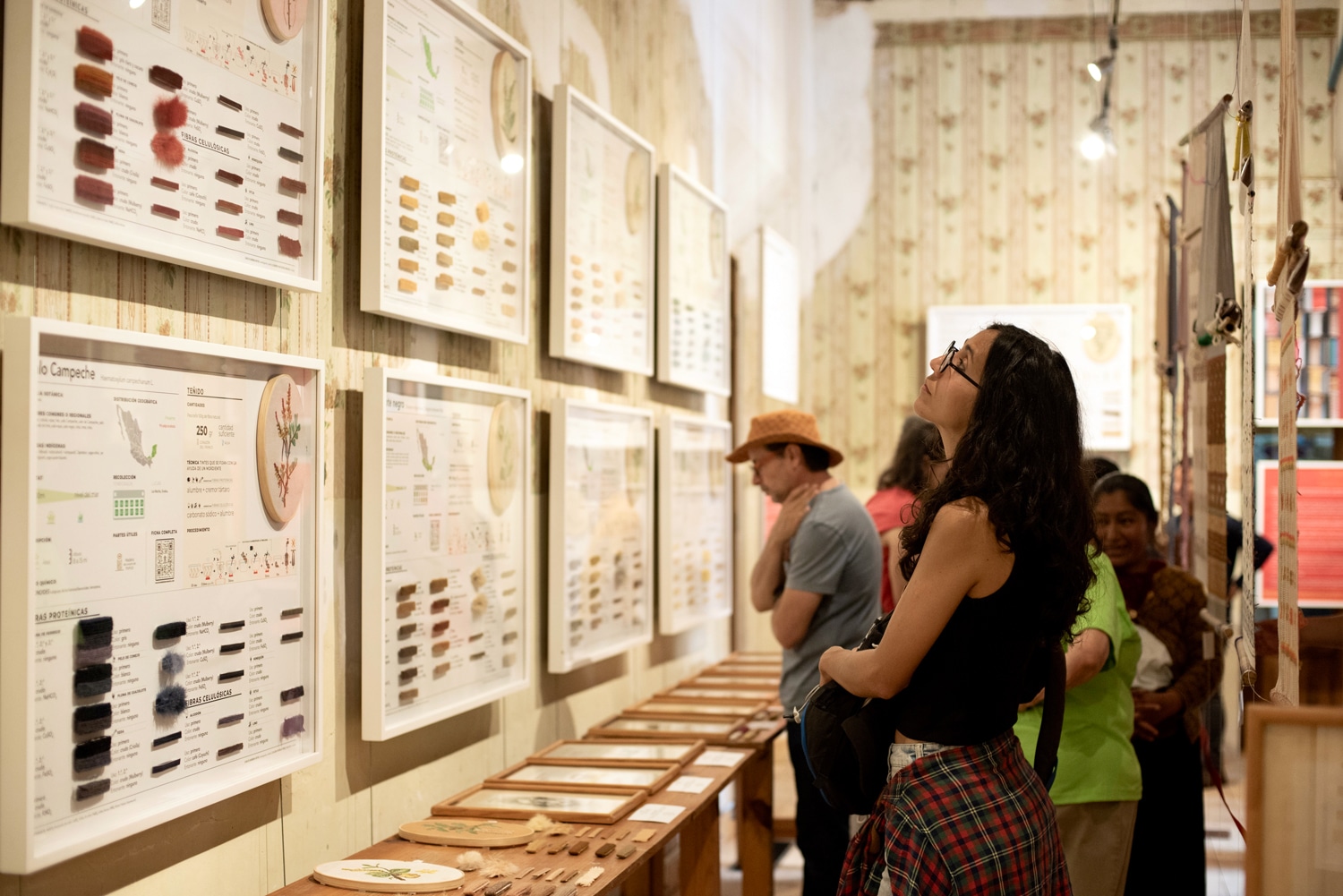
Throughout this process, Carlos was also working with myriad organizations — foundations, universities, museums, and art centers — to produce the exhibition that he had long planned, “Los Colores de la Tierra,” as well as a series of ten smaller shows drawing from Na Bolom’s historical collection. 8 “Los Colores de la Tierra” was mounted at La Enseñanza, a cultural center in San Cristóbal associated with Na Bolom, opening in March 2024. (I was lucky enough to attend. 9 ) The exhibition featured weavings from seventeen Indigenous communities in Chiapas, as well as from thirteen villages in Oaxaca, where Carlos had been teaching workshops since 2018, and served simultaneously as an educational exposition on natural dyes, a special opportunity for sales and purchases, and a documentary account of the process by which the recent weavings had been produced, in particular the ceremonial huipil from Magdalenas.
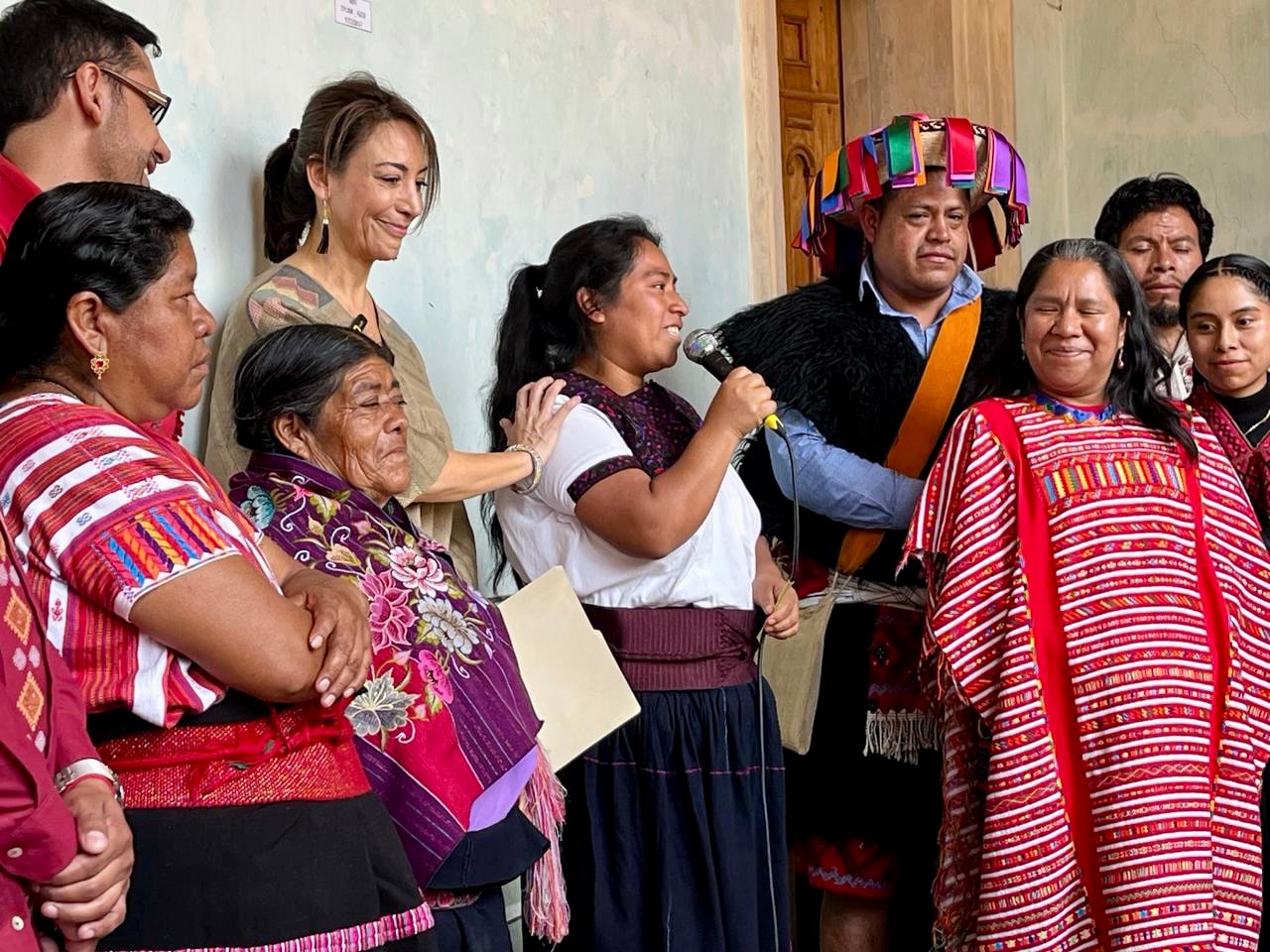
A series of public conversations with the artisans followed the exhibition opening at La Enseñanza, a cultural center associated with Casa Na Bolom.
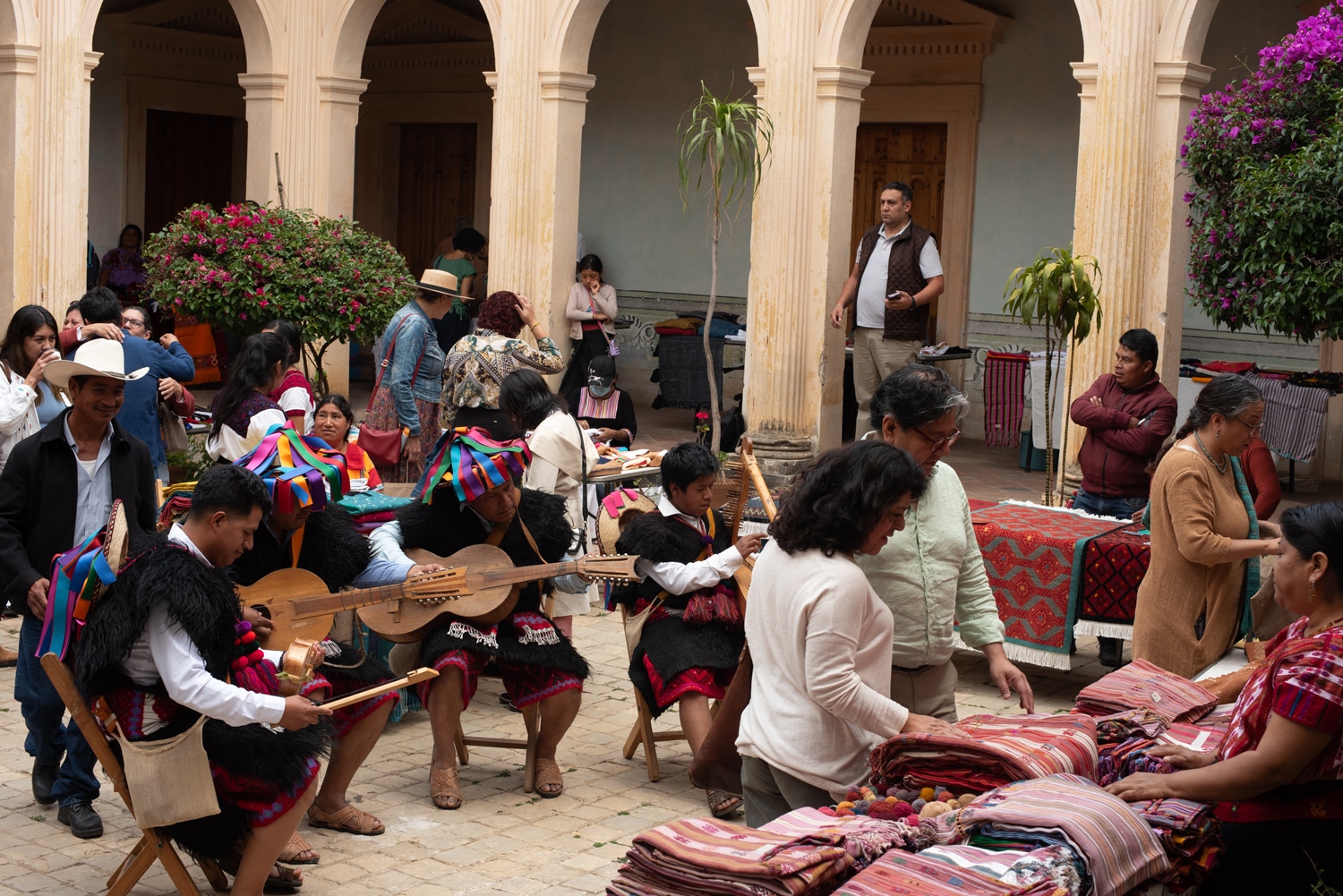
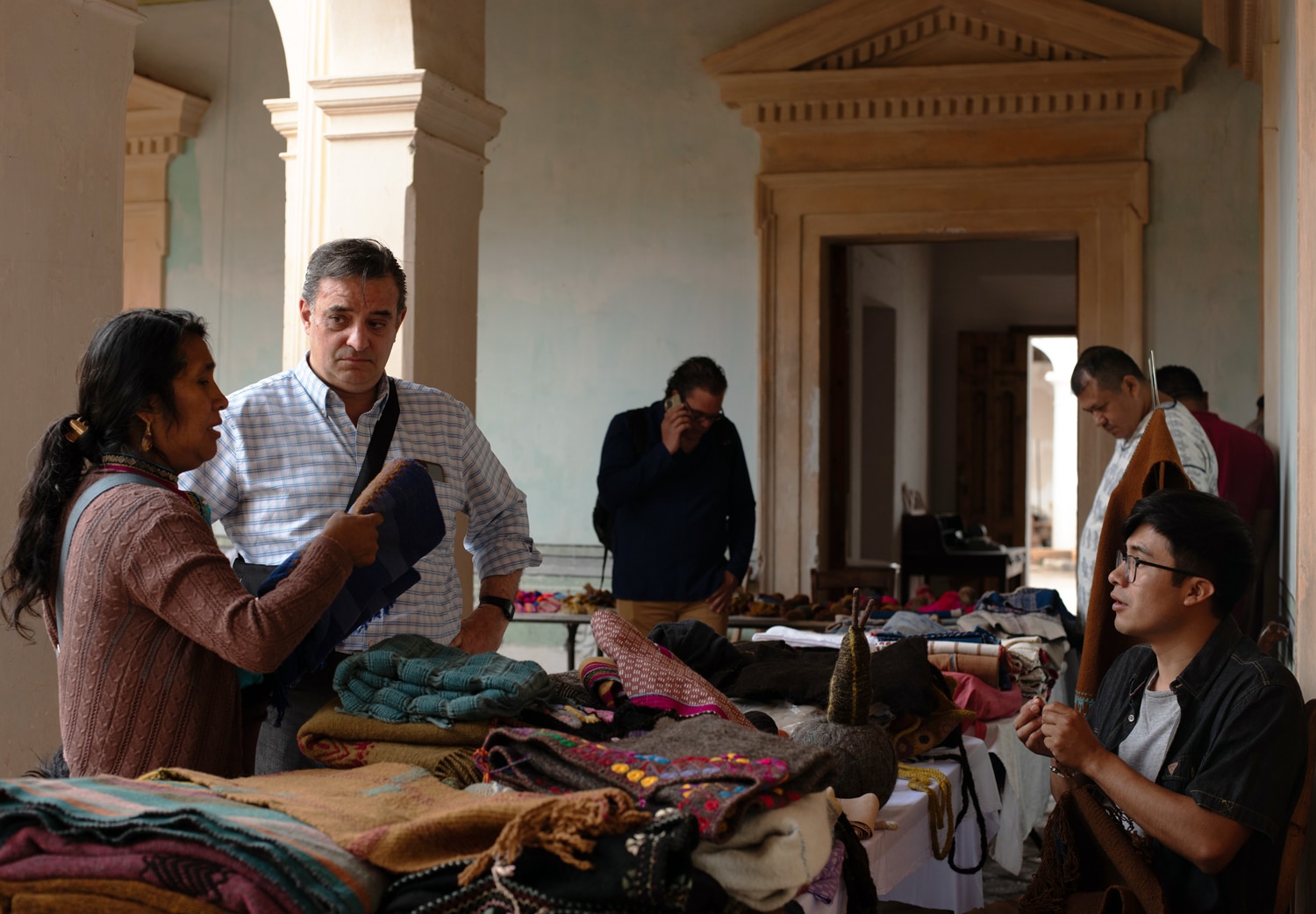
The festive gathering transformed the patio at La Enseñanza into a craft market with live music. Browsing through the wares, I inquired about a few beautiful pieces with a young man tending a display. He turned to his mother, asking her something in Tzotzil. She looked familiar: it was Maruch Sántiz Gómez, the photographer I had met 30 years ago in San Cristóbal. She had participated in workshops with Carlos, and told me that she had left photography and, by extension, the contemporary art world, to focus on her craft practice. Inquiring further with her on this point, I found that she did not appear to have hard feelings; she had simply decided to exert her energies elsewhere. Regardless, it was for me a bittersweet conversation. Indigenous artists in Mexico occupy a difficult place in the international contemporary art world, which — even if it is seduced by some Indigenous production — ultimately includes exclusionary, racist, and classist elements that make it very hard for an Indigenous Mexican artist to navigate.
A series of public conversations with Indigenous weavers followed the opening, which were illuminating both in terms of the challenges in making natural dyes, and in terms of the external, homogenizing perceptions of Indigenous weaving practices.
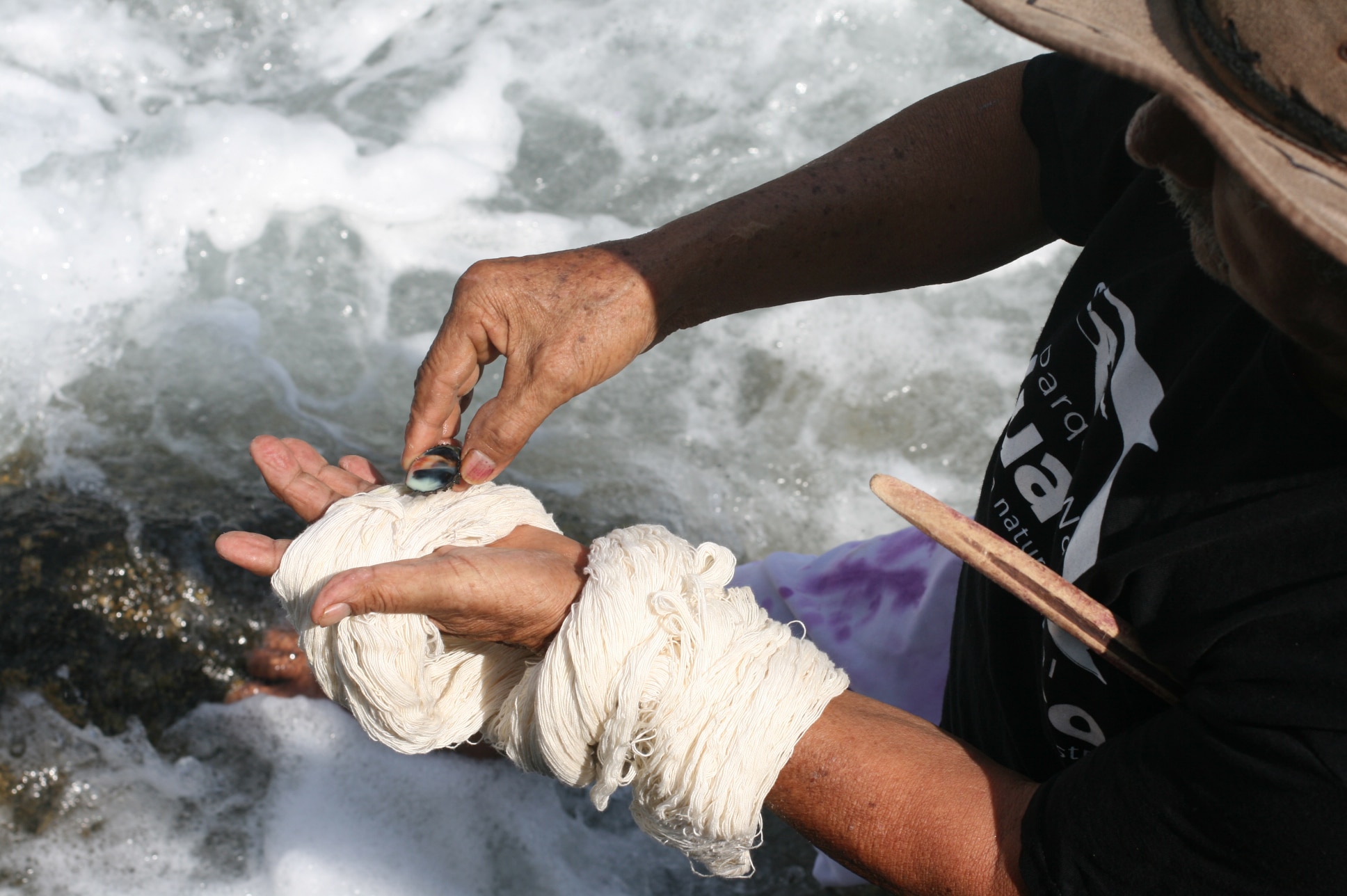
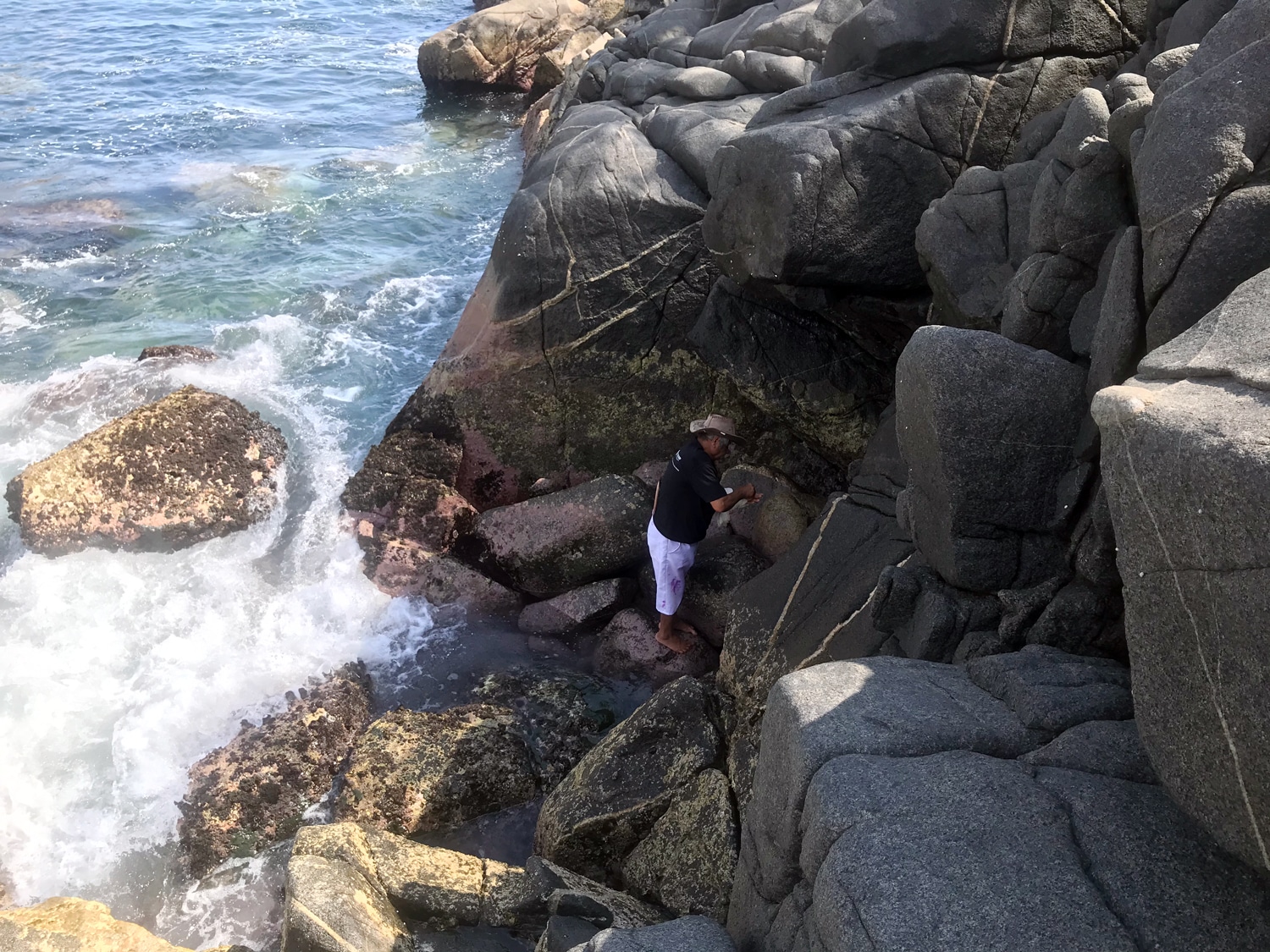
Don Luis Habacuc Avendaño, an 83-year-old Mixteco weaver from Pinotepa de Don Luis, in Oaxaca, described the arduous process of procuring a valuable pigment from the Tixinda or caracol púrpura (purple snail), an almost extinct mollusk only found in the coastal waters off Puerto Ángel. Don Habacuc has been working with caracoles since he was a child, when it would take eight days to walk from Pinotepa de Don Luis to Puerto Ángel. The dye is extracted on the spot from the living snails, which are then returned to the rocks from which they came. It takes 300 snails to obtain enough colorant to make a skein of yarn about eight inches long, with a weight of 250 ounces, which in the present day sells for about $250 USD.
But perhaps the most revealing talk that day was by Yatahli Rosas Sandoval, from the Triqui community of San Andrés Chicahuaxtla in Oaxaca. Sandoval spoke about the patterns used in huipiles and their complex origins and significance. Some motifs, such as the butterfly, have names and “apellidos” (“surnames,” or modifiers); there are “mariposas águilas,” “mariposas tortugas,” (“eagle butterflies,” “turtle butterflies”) and the “mariposa madre” (“mother butterfly”), “which always goes in the front.” She explained how, after the Mexican Revolution in 1910, makers of huipiles began to depict Zapatista and Carrancista soldiers and soldaderas (women fighters). But Rosas rejected the desire to “decode” every pattern in a huipil — including letters of the Roman alphabet, which are sometimes added for ornamental purposes — as if it were a text with a secret meaning. “Sometimes I am asked about the meaning of a particular letter in the huipil, and I reply, the letters do not signify anything, they are only letters!”
We as outsiders give great value to a purportedly circumscribed meaning, but Indigenous weavers choose their figures for a variety of reasons.
Her admonition returned me to the larger question of how, as outsiders, curators and scholars (like myself) are tempted to impose fixed, even magical readings on traditional crafts and practices. In reality, while any iconography has a genealogy, meanings also change. “It’s the condition of those Indigenous communities to be the romantic figure of what we want to see,” as the Swiss anthropologist Beatrice Bretton, who was also in Chiapas for the exhibition opening, put it. We give great value to a purportedly circumscribed meaning, but weavers in Chiapas and Oaxaca choose their figures for a variety of reasons. For some families, a given symbol might represent corn; for another it represents a tree, and so forth. Meanings also change between communities. Symbols are markers of local identity, but can also acquire political meaning, such as the patterns that emerged after the Mexican Revolution. The fact that Indigenous cultures (in Mexico, as elsewhere) are constantly evolving can challenge the outsider’s ideal of “helping” a community to regain ancestral traditions. For artists like Carlos, the specific challenge was to give participants the benefit of his research, without pressuring them to incorporate this knowledge into their weaving practices going forward.
I asked Bretton how, as an anthropologist, she understood the Indigenous communities’ response to Carlos as an artist. “I am not sure if many understand his artistic dimension,” she replied, “but they see him as a friend, as someone interested and involved in their lives.” While some families, in her view, have maintained only a transactional or commercial relationship with Carlos, for others it has gone much beyond that. “He would attend their ceremonies and family gatherings, and developed very strong bonds with them.”

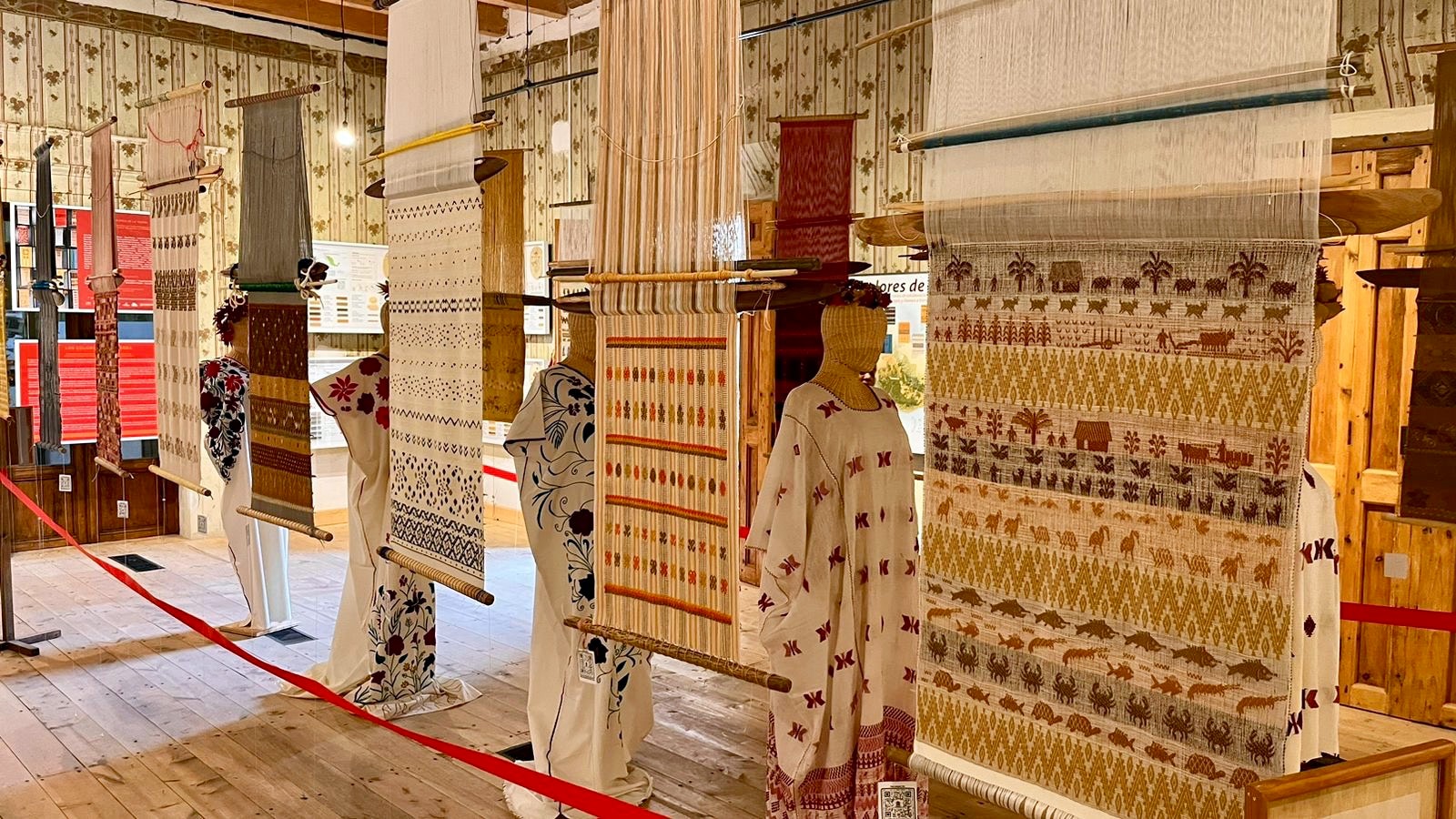
“Los Colores de la Tierra,” organized by Carlos Barrera Reyes at La Enseñanza in San Cristóbal de las Casas, 2024. [Carlos Barrera Reyes]
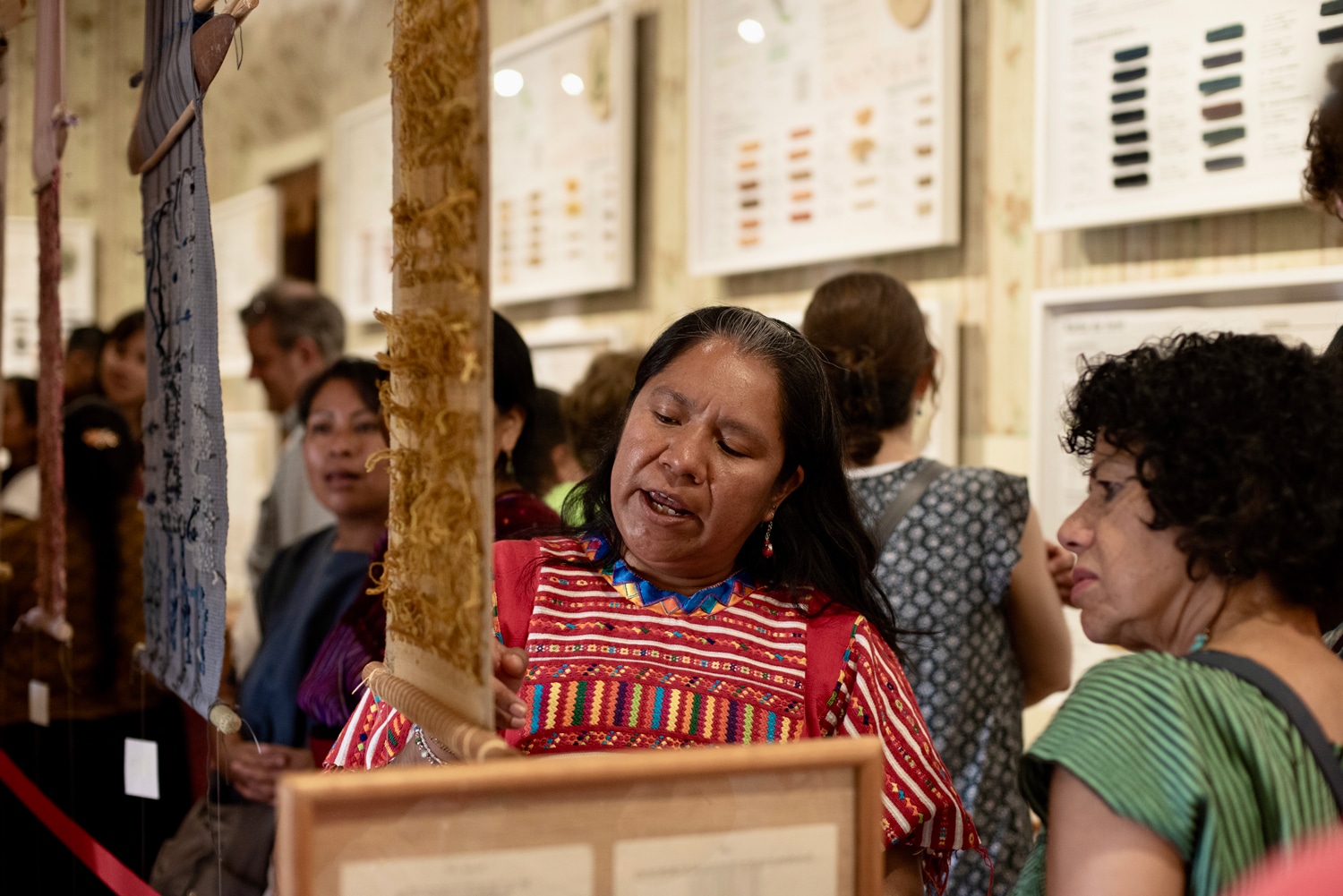
Viewers at “Los Colores de la Tierra,” installed at La Enseñanza in San Cristóbal de las Casas, Chiapas, 2024. [Carlos Barrera Reyes]
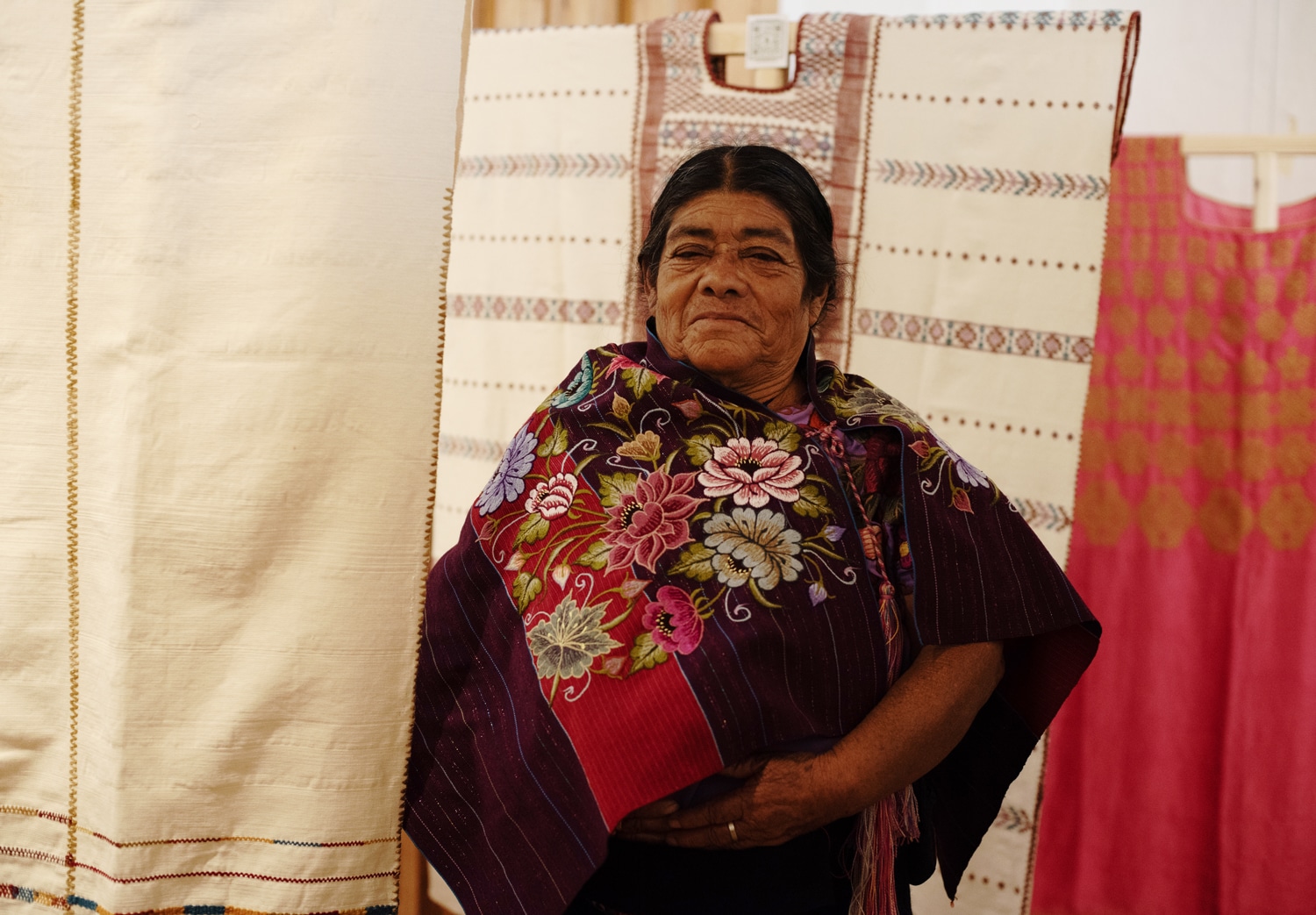
María Santiago beside the ceremonial huipil she made for the exhibition at La Enseñanza in San Cristóbal de las Casas, Chiapas, 2024. [Carlos Barrera Reyes]
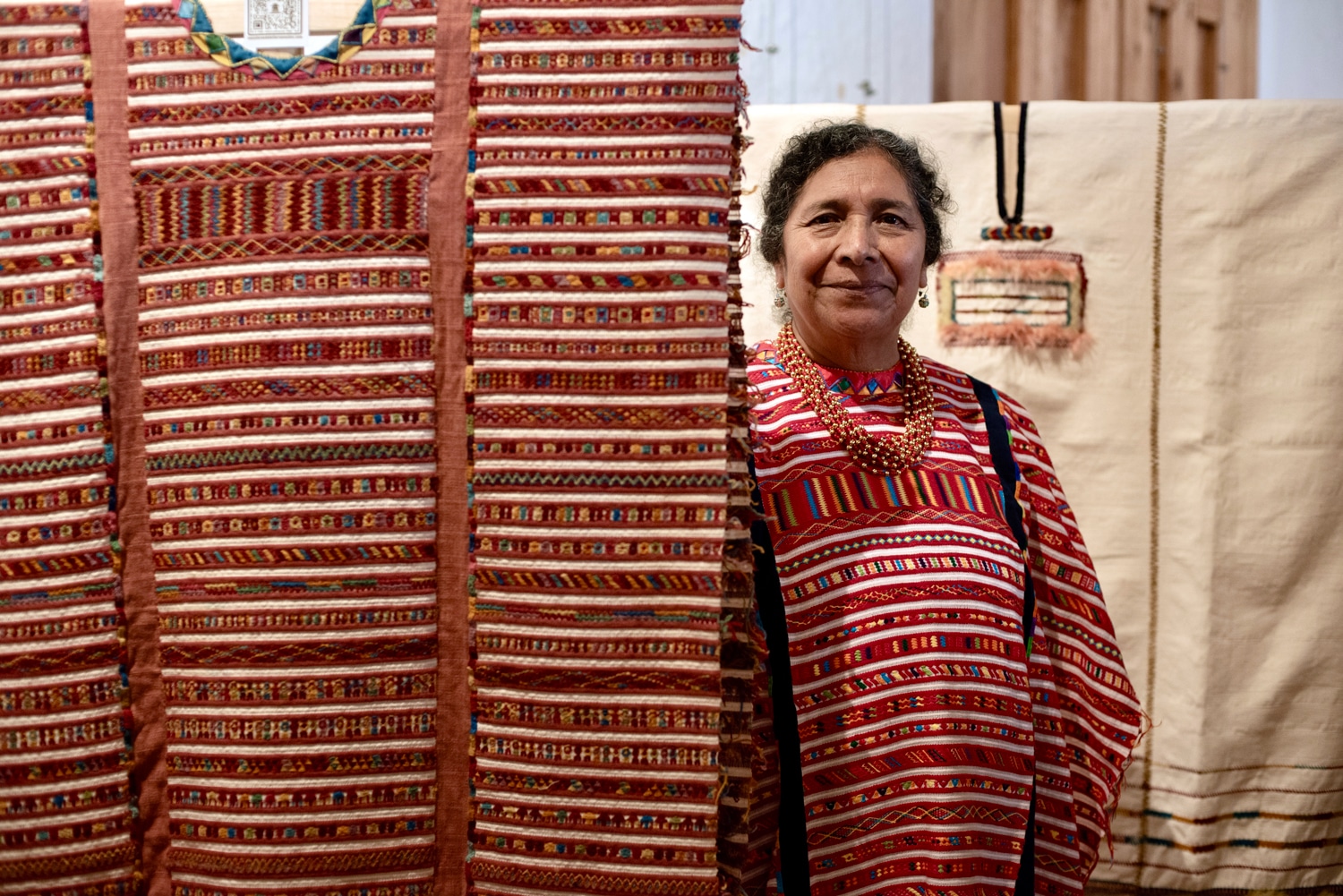
Victoria Otilia Sandoval Cruz beside the ceremonial huipil she wove for the exhibition “Las Colores de la Tierra.” La Enseñanza, San Cristóbal de las Casas, Chiapas, 2024. [Carlos Barrera Reyes]
Yatahli Otilia Rosas Sandoval explains the iconography of her weaving made with zacatlaxcalli or dodder (Cuscuta tinctoria), on display in “Los Colores de la Tierra” at La Enseñanza, San Cristóbal de las Casas, Chiapas, 2024. [Carlos Barrera Reyes]
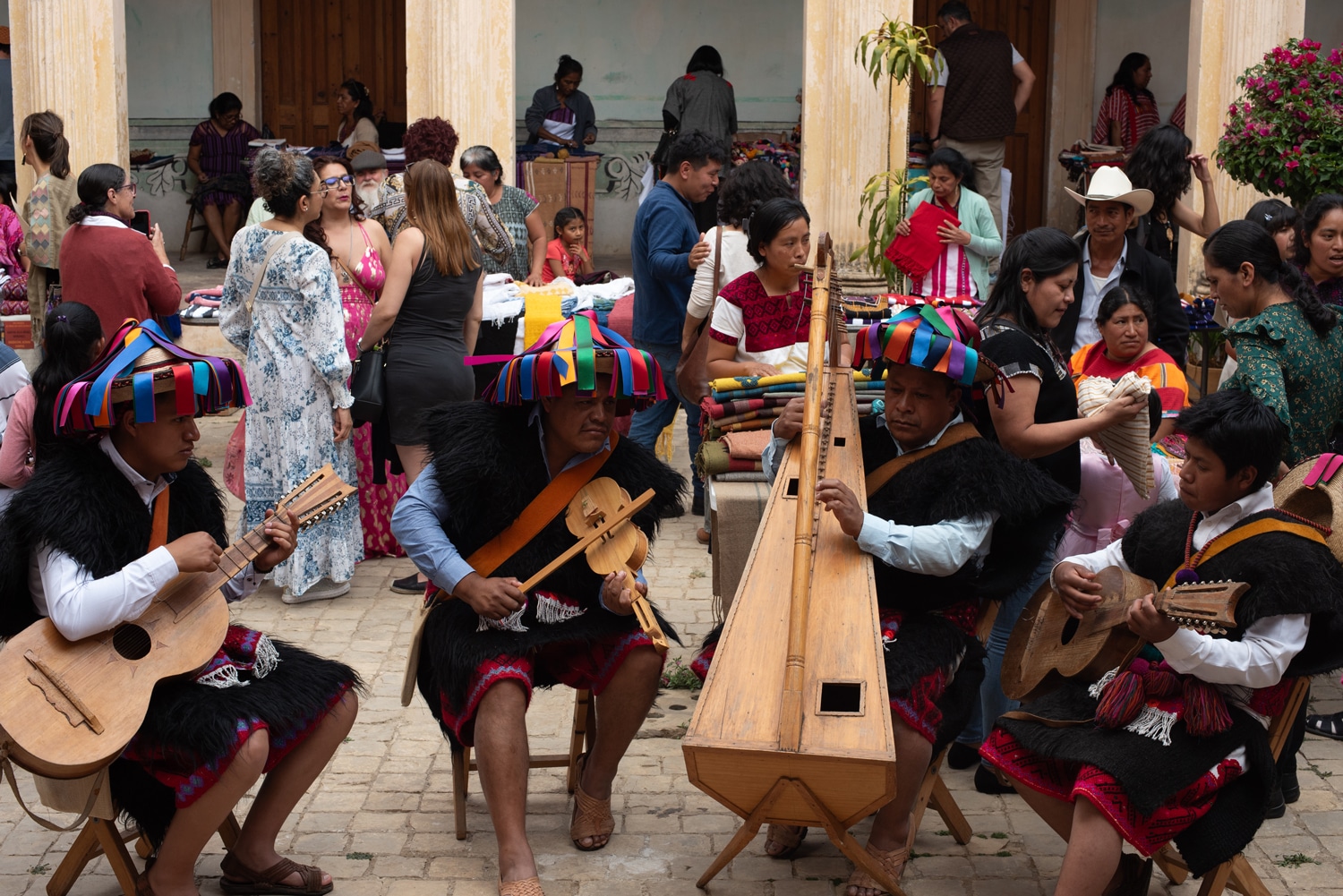
Musicians performing at the market accompanying the exhibition “Los Colores de la Tierra,” 2024. [Isabel Mateos]
The market accompanying the exhibition “Los Colores de la Tierra,” 2024. [Isabel Mateos]
Maruch Santíz Gómez speaking with Pablo Helguera at the market accompanying the exhibition “Los Colores de la Tierra,” 2024. [Isabel Mateos]
Another anthropologist, Rachel Barber, who was also at the opening for “Los Colores de la Tierra,” described how Carlos was able to turn from his original, idealized notion that weavers would be interested in learning natural dyeing because of a desire to revive their heritage, to understand instead that the salient point, from the weavers’ perspective, was that re-acquiring this knowledge would help them commercially. “This is not to say that the artisans have a purely commercial investment in their own work,” as Barber noted. But, when it comes to collaborating across cultures, it is important to listen to what members of the community are themselves interested in, and to help them pursue these goals. Carlos’s project, and the challenges he faced in working with these artisans from cultural backgrounds and economic positions very different from his own, illustrates the important understanding that a collaboration is not about achieving some perfect fusion of values. Collaborative relationships are, rather, opportunities to pursue goals that can be very different; that conflict and coincide; that must necessarily, mutually adapt.
Collaborative relationships are opportunities to pursue goals that can conflict and coincide; that must necessarily, mutually adapt.
And what was the experience like from the perspective of the weavers themselves? I spoke with Cecila Gómez Díaz, from Chonomiaquiló, located in the municipality of San Andrés Larrráinzar, approximately 25 kilometers from San Cristóbal. She told me that, when she was nineteen years old or so, she had started to be interested in textiles, and to notice that the traditional natural-dye methods used by previous generations of her family were getting lost. “I was aware that using chemicals is bad for nature and for the environment, and I also felt that it was important to protect ancestral knowledge,” she recalled. Sharing these thoughts with a friend in 2016 or 2017, Cecilia learned about Carlos’ workshops in Na Bolom. Soon, she says, “I was arriving home with a bunch of pots and asking my mom to let me use the kitchen so I could do some dyeing. She would look at me perplexed, wondering what was up with me.”
Carlos typically taught two weeklong workshops per year, and Cecilia attended for four or five years. “Carlos is very patient,” she told me. “It took a long time for us to really assimilate the information. At the end of each workshop, the poor guy was exhausted — we were between fifteen and eighteen participants.” In Cecilia’s view, the greatest challenge was to figure out the iconography of each textile. The artisans would plan their designs on millimeter graph paper, drawing references from books by Morris and Marta Turok, another noted expert on Mexican folk arts, as well as from historic Maya stelae, such as the famous Piedras Negras stela number 36, dating to 667 CE in what is now Guatemala. Cecilia was also keen to add uncommon elements to her designs, and not merely to reproduce familiar iconography. When her family took on the job of making the ceremonial huipil for the Virgin in Magdalenas, “I was nervous,” she remembered. The status of the weaving demanded rigorous adherence to tradition, such as the requirement that the garment should not be hemmed (When a textile is woven on a loom, there is no need to hem it. “Some weavers cut the fabric because it is easier and cheaper —Carlos later explained to me — “but if you are making a ceremonial huipil, cutting it would be considered a serious mistake, and even a tragedy”).
The experience for Cecilia was lasting and profound, and she has pondered if and how she might share with others the experience that Carlos gave to her: “A friend saw my work and asked me to give workshops to women in the Altos de Chiapas.” Cecilia hesitated, because she had not taught before, and was unsure about charging for the workshops, “because Carlos never charged us.” Carlos always made a point of offering his workshops for free; he wanted to empower participating weavers, more than to turn them into entrepreneurs — although he knew, of course, that the resulting products could help them generate revenue. All he asked was a place to sleep, sharing meals with the communities whose guest he was. Later, when the weavers began to profit from their work, he asked them to cover the cost of their own materials. Nevertheless, he had to pay upfront many costs related to the project. (“It has been so expensive,” he said to me, “often I wonder how the hell did I pull it off?”) Speaking with Cecilia, however, he convinced her to be remunerated for her labor as a teacher.
“Los Colores de la Tierra” presented extraordinary objects, all emerging from a collaborative process that would have been impossible had it not been for the persistence and laser-focused energies brought to bear by Carlos Barrera Reyes over almost two decades. But even with a few documentary videos (produced by Bretton and Barber) included in the exhibition, the sustained social ingenuity that it took to produce the works on display remained invisible to the public. This speaks to the fact that the very format of the art exhibition is often inadequate to properly present the complexities of a social process.
The field of socially engaged art is about the construction of collective experiences, and collective experience is not a salable object.
Consider the huipil for the Nak’lom of Magdalenas. Carlos documented its production and the procession toward the church with videos and photographs. But the crucial moment when the huipil is placed on the effigy is not documented, as Carlos reasonably felt it would have been disrespectful to do so. In addition, as is traditional, after a few years, a new huipil will be made as a new offering, brought to the altar, and placed on top of the existing one, permanently covering it. The saint wears perhaps ten layers of huipiles, a record of many generational festivities. “When there is no more space for a new huipil,” Carlos explained to me, “they remove the oldest one and store it, and every year, before the festival, all the huipiles worn by the Virgin are removed and washed — except for the oldest ones, which are protected in storage chests in the church.” He added that the huipil he and the Magdalenas weavers made is now stored in one of these chests too, because the mayordomos consider it too valuable even to be placed on the stationary Virgin.
Such circumstances present a challenge for the international art world of institutions and biennials. The field of socially engaged art is about the construction of collective experiences, and collective experience is not a salable object.
“I need to recognize that, during this journey with the communities, many times, particularly in the beginning, I put aside my artistic vision and instead focused more on social work,” 10 Carlos reflects in a 2021 essay about his work. The invitation to Magdalenas made him realize how, “when I got involved with so many communities and perspectives, somehow the initial reason that had brought me to Los Altos de Chiapas, the ceremonial huipiles, had dissolved.” Later in this essay, he adds:
I should point out that time was a great ally; in this same way, the natural dye process became a glue that held the project from all sides, allowing the exchange of knowledge, the return of natural dye to the communities, allowing each one of us to make different decisions, either for craft fair competitions, sales, or ceremonial pieces. 11
Time is not always a valued currency in the art world, largely because of the influence of the market. We function in a fashion system where expediency, the changeover of seasons, and the excitement of the new are dominant. Unless the artist makes a concerted effort to “package” a project in a way that can circulate in traditional exhibition channels, such projects rarely receive much curatorial or art-historical attention.
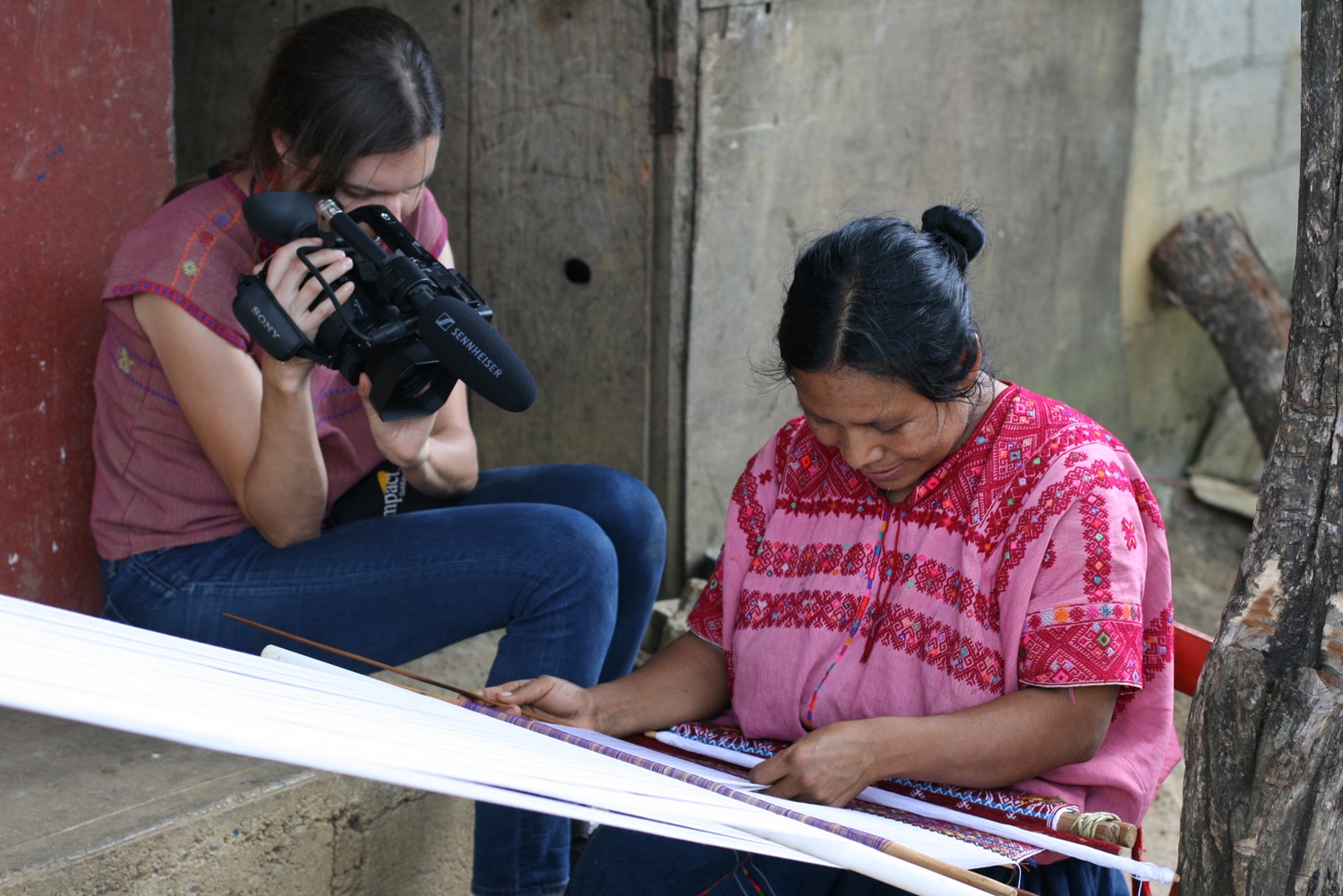
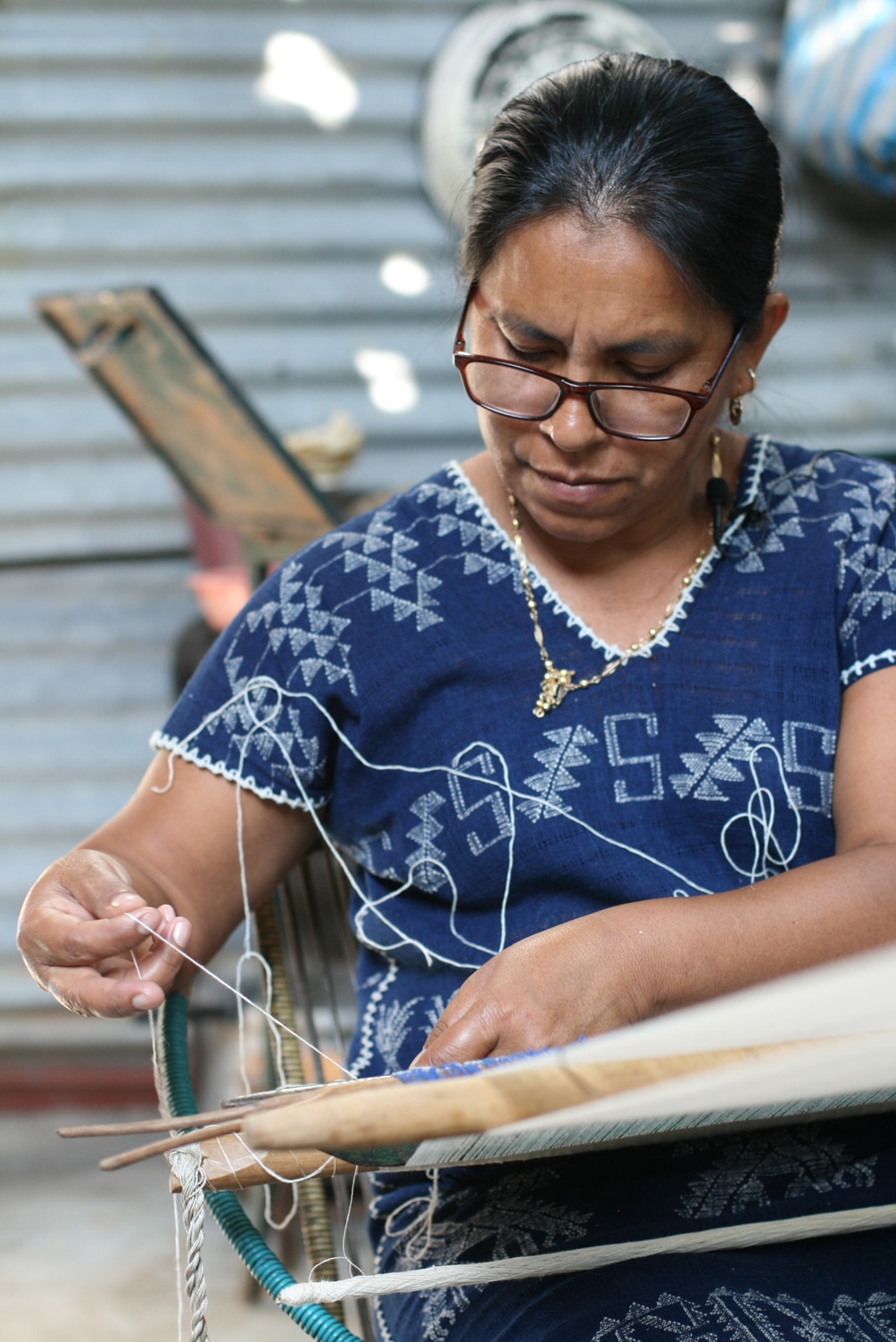
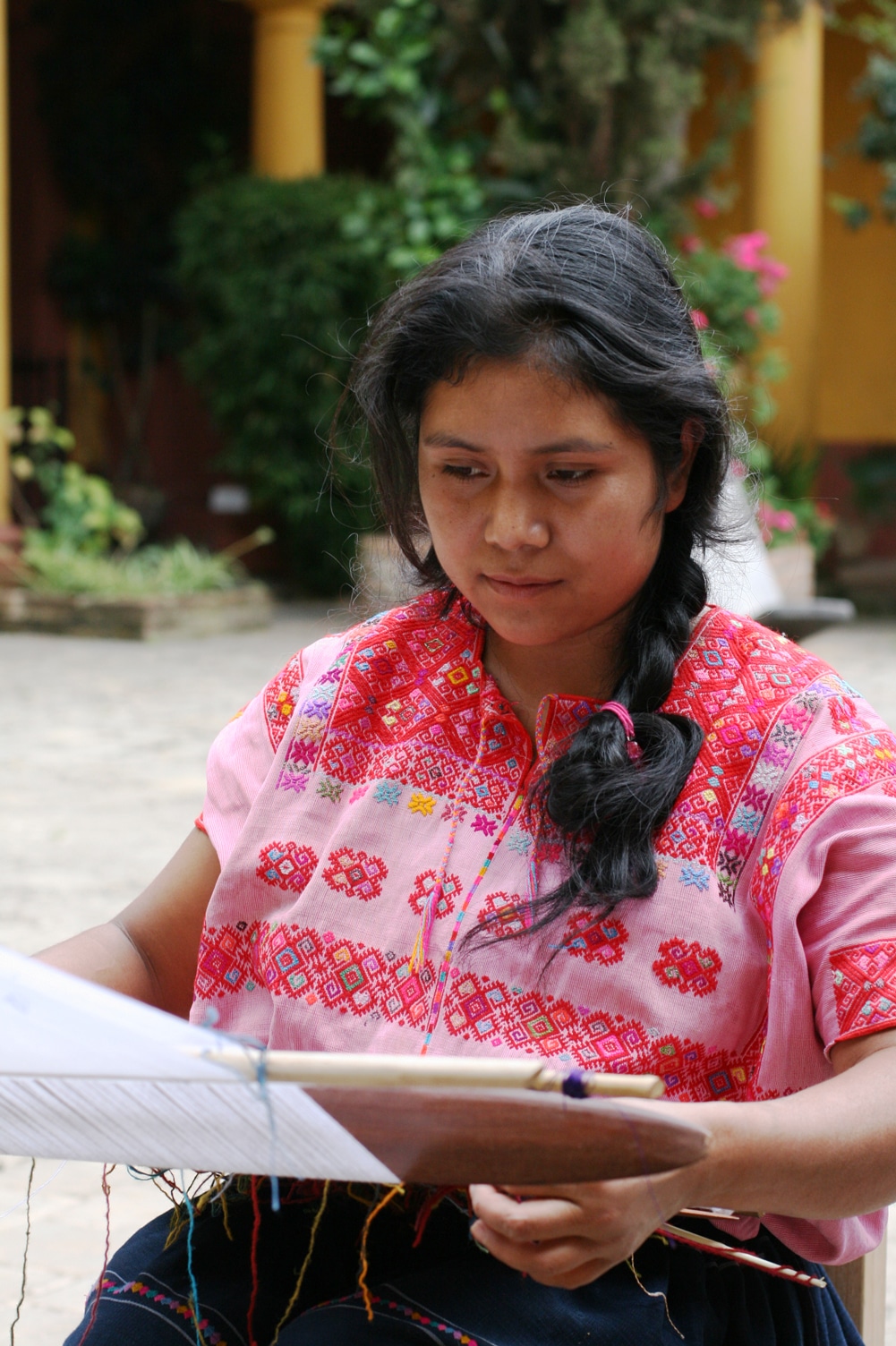
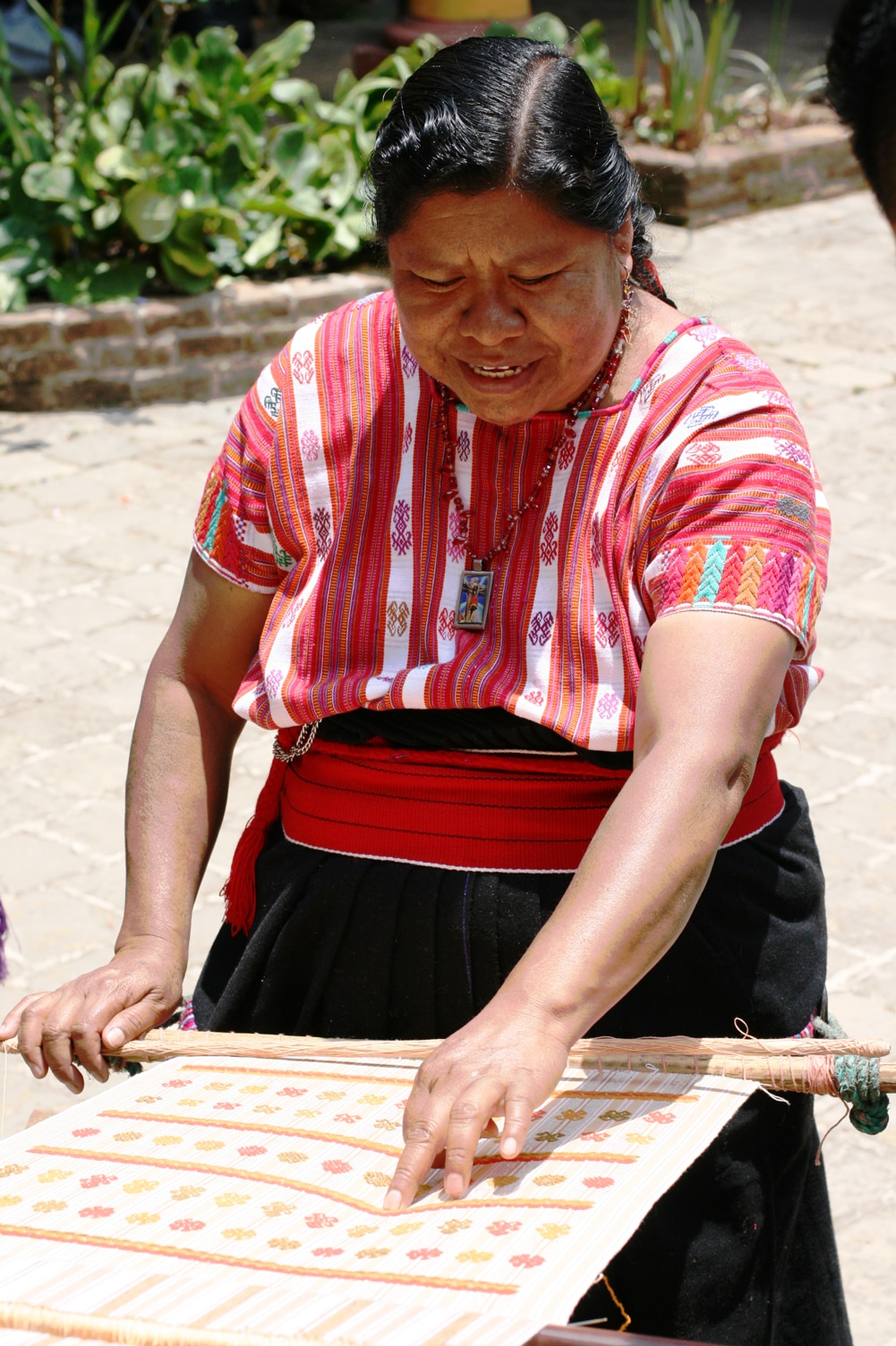
Martha Julia Méndez Hernández weaves a ceremonial huipil while Rachel Barber documents the process. Magdalenas, Aldama, Chiapas, 2022. [Carlos Barrera Reyes]
Rosa Gómez Meza weaving with thread dyed with grana cochinilla or cochineal (Dactylopius coccus). Chacoma, Tenejapa, Chiapas, 2022. [Carlos Barrera Reyes]
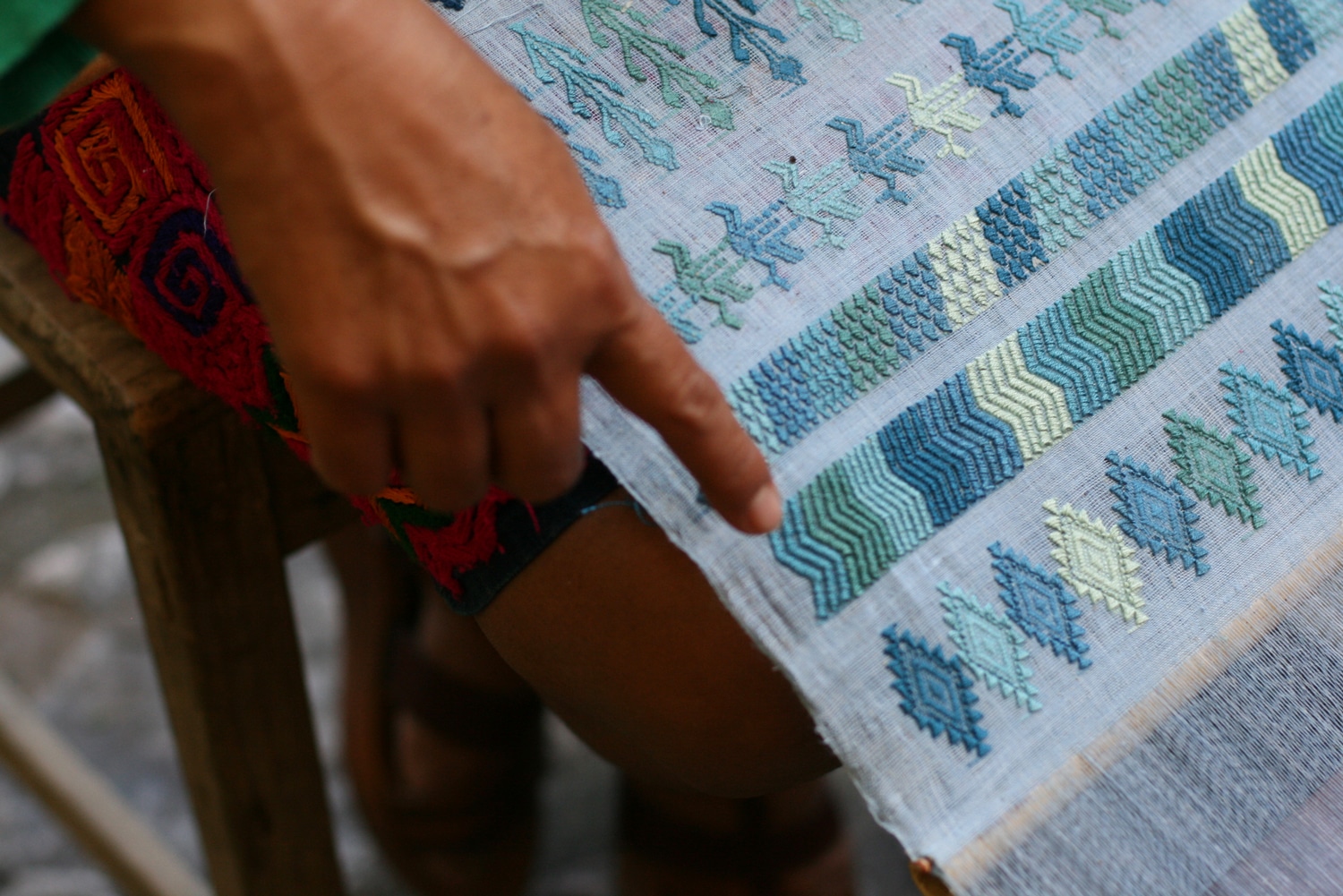
Nieves Martínez Bautista shows a weaving with thread dyed with guapinol (Hymenaea courbaril). The motif she is pointing out is known In the Triqui language as yahui ati i (“star butterfly”). San Martín Itunyoso, Oaxaca, 2022. [Carlos Barrera Reyes]
Francisca Díaz Ortega shows a textile woven in cotton dyed with zapote negro (Diospyros digyna). San Juan Cotzocon, Oaxaca, 2022. [Carlos Barrera Reyes]
Fidencia Pérez Hernández shows a weaving in progress in wool dyed with lichen (Usnea subfloridana). The brown diamonds represent the universe, in a style that Tzotzil weavers from the town of San Andrés Larráinzar in Chiapas call spejel luch. La Enseñanza, San Cristóbal de las Casas, Chiapas, 2022. [Carlos Barrera Reyes]
Yatahli Otilia Rosas Sandoval weaving in thread dyed with zacatlaxcalli or dodder (Cuscuta tinctoria). San Andrés Chicahuaxtla, Oaxaca, 2019. [Carlos Barrera Reyes]
María Luisa Mendoza Vázquez showing her weaving with añil or indigo (Indigofera suffruticosa). Casa Na Bolom, San Cristóbal de las Casas, Chiapas, 2022. [Carlos Barrera Reyes]
Angélica María Vázquez Pérez weaving with wool dyed with sacatinta (Justicia spicigera). Chenalhó, Chiapas, 2017. [Carlos Barrera Reyes]
Pascual Vazquéz Hernández weaving with wool dyed with cempasúchil or marigold (Tagetes erecta). Zinacantán, Chiapas, 2021. [Carlos Barrera Reyes]
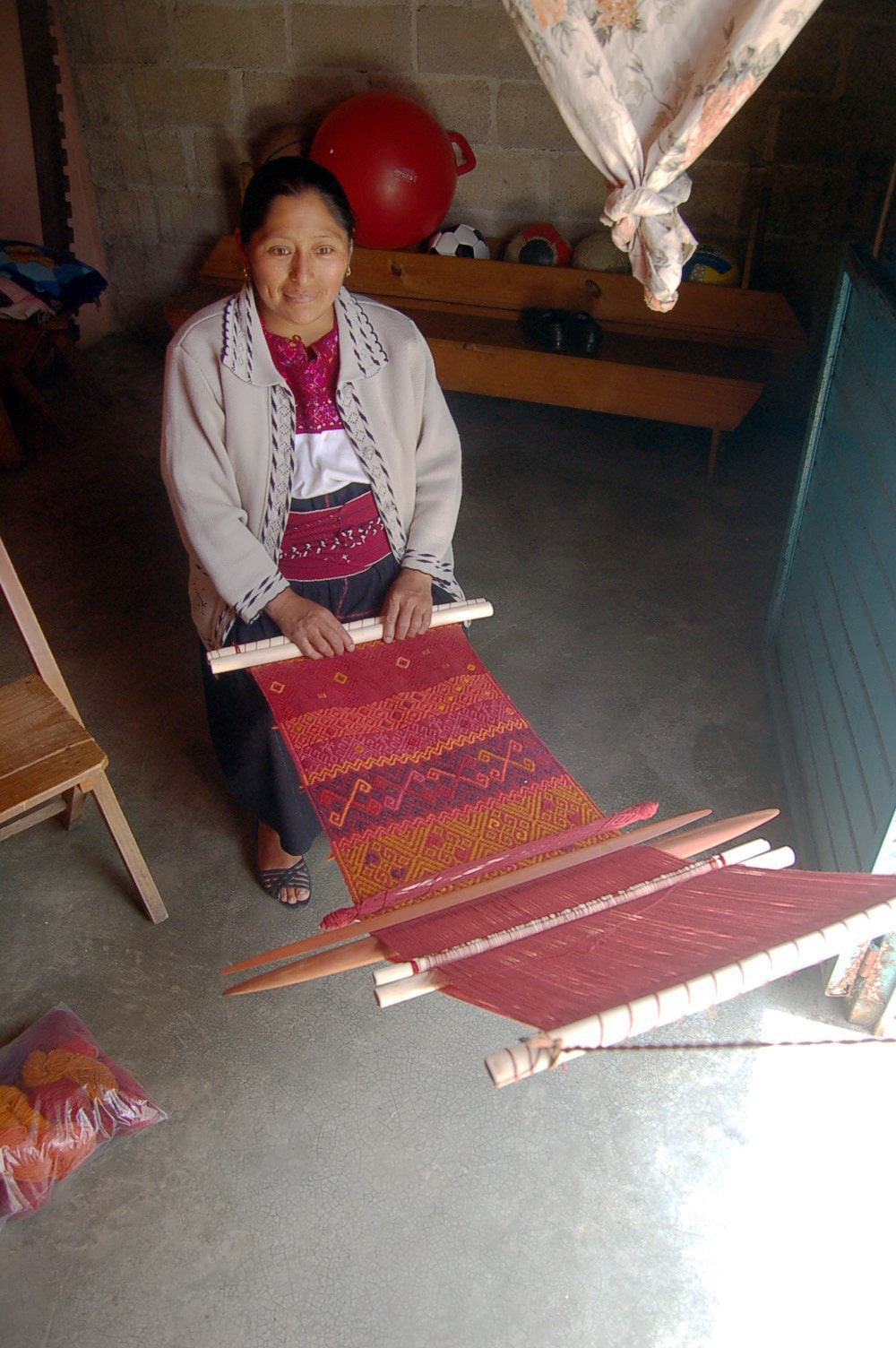
María Méndez Hernández weaving a ceremonial huipil for the exhibition “Los Colores de la Tierra.” San Pedro Cotzilnam, Aldama, Chiapas, 2019. [Carlos Barrera Reyes]
Ángela Pérez Gómez showing weaving dyed with achiote or annatto (Bixa orellana). Casa Na Bolom, San Cristóbal de las Casas, Chiapas, 2019. [Carlos Barrera Reyes]
Rosa Gómez Meza weaving with wool dyed with grana cochinilla or cochineal (Dactylopius coccus). Zinacantán, Chiapas, 2022. [Carlos Barrera Reyes]
Fidencia Pérez Hernández showing weaving dyed with palo Brasil or Mexican logwood (Haematoxylum brasiletto) still on the loom. San Andrés Larráinzar, Chiapas, 2017. [Carlos Barrera Reyes]
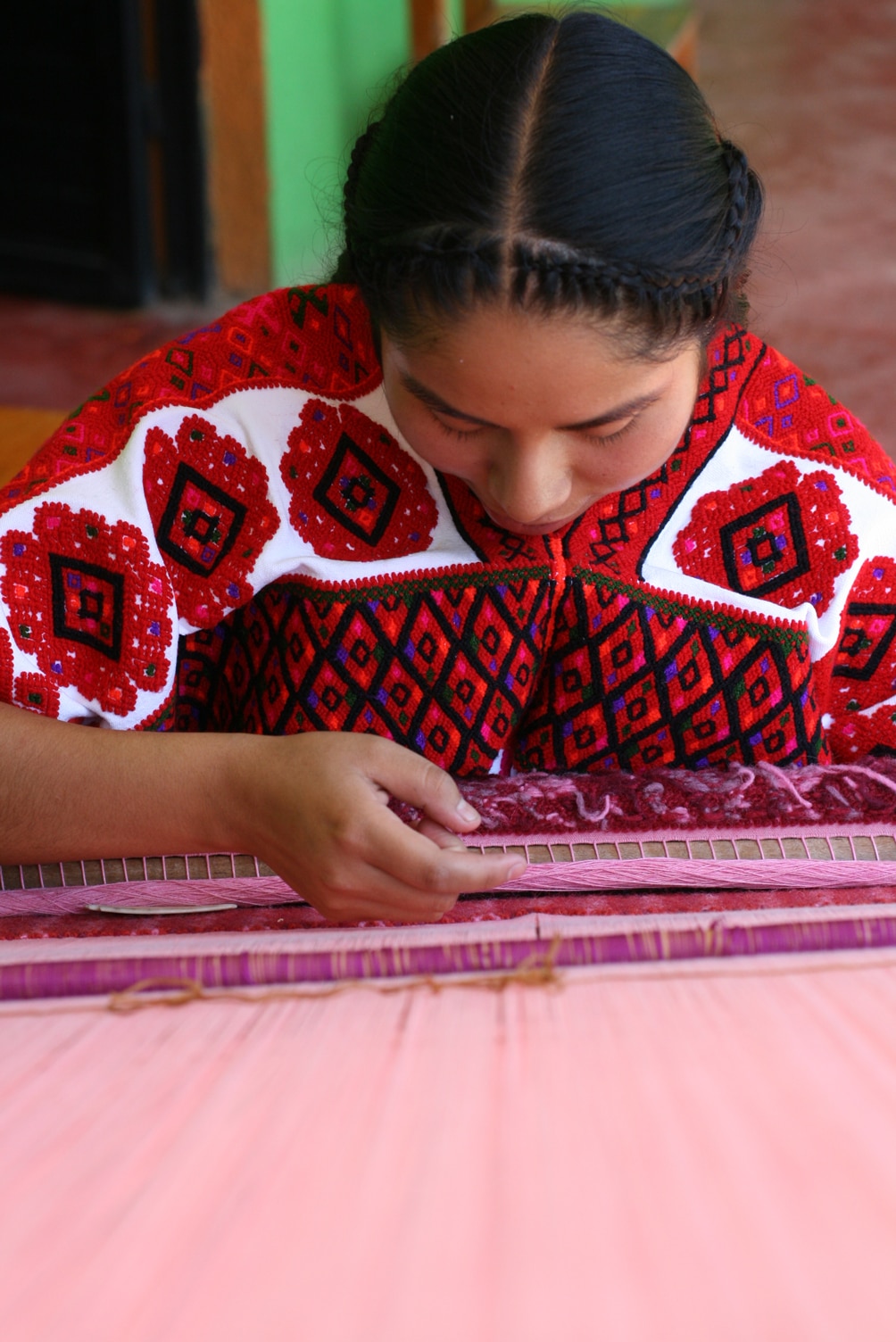
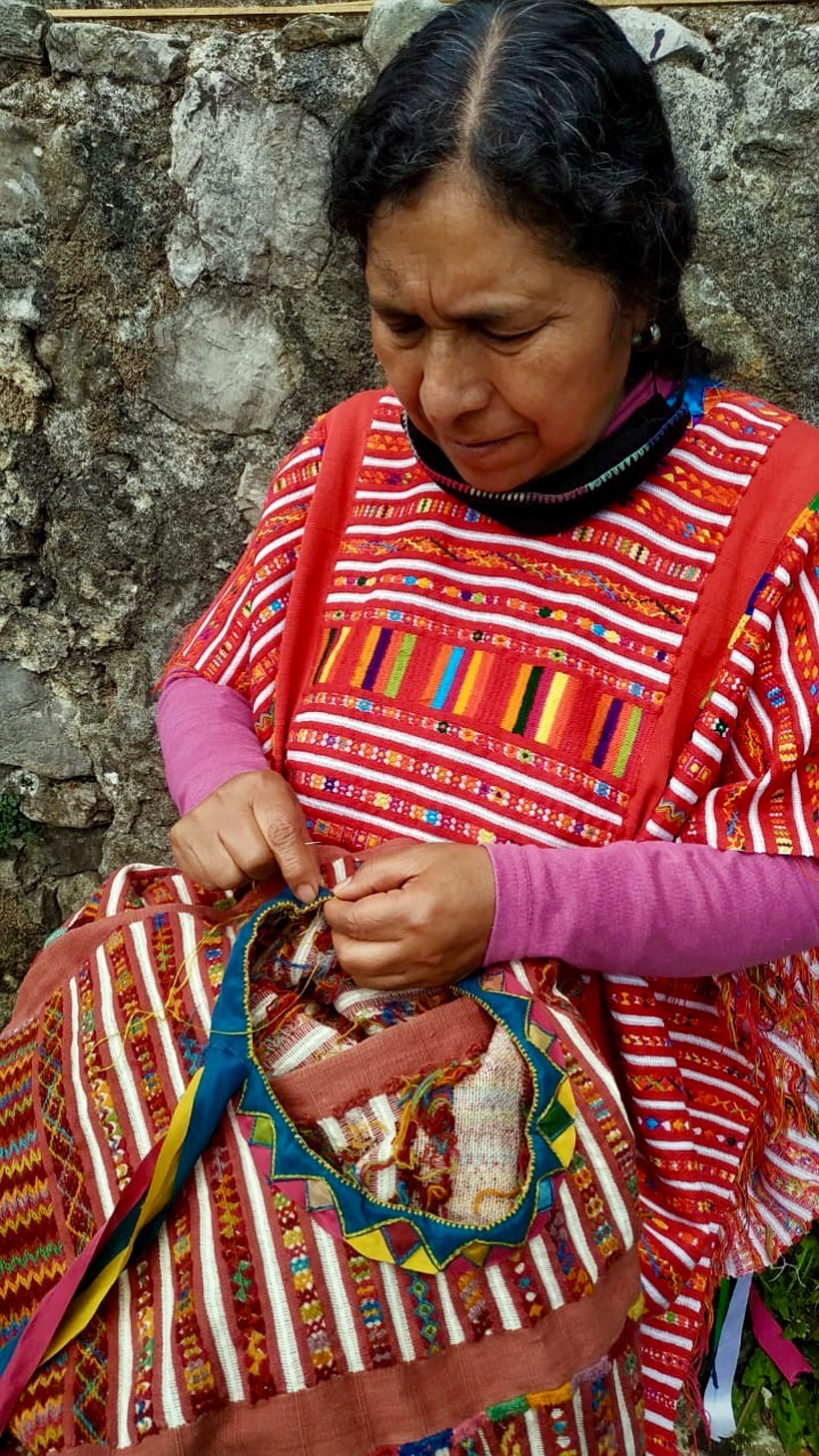
Victoria Otilia Sandoval Cruz embroidering the collar on a ceremonial huipil for exhibition in “Los Colores de la Tierra.” San Andrés Chicahuaxtla, Oaxaca, 2021. [Carlos Barrera Reyes]
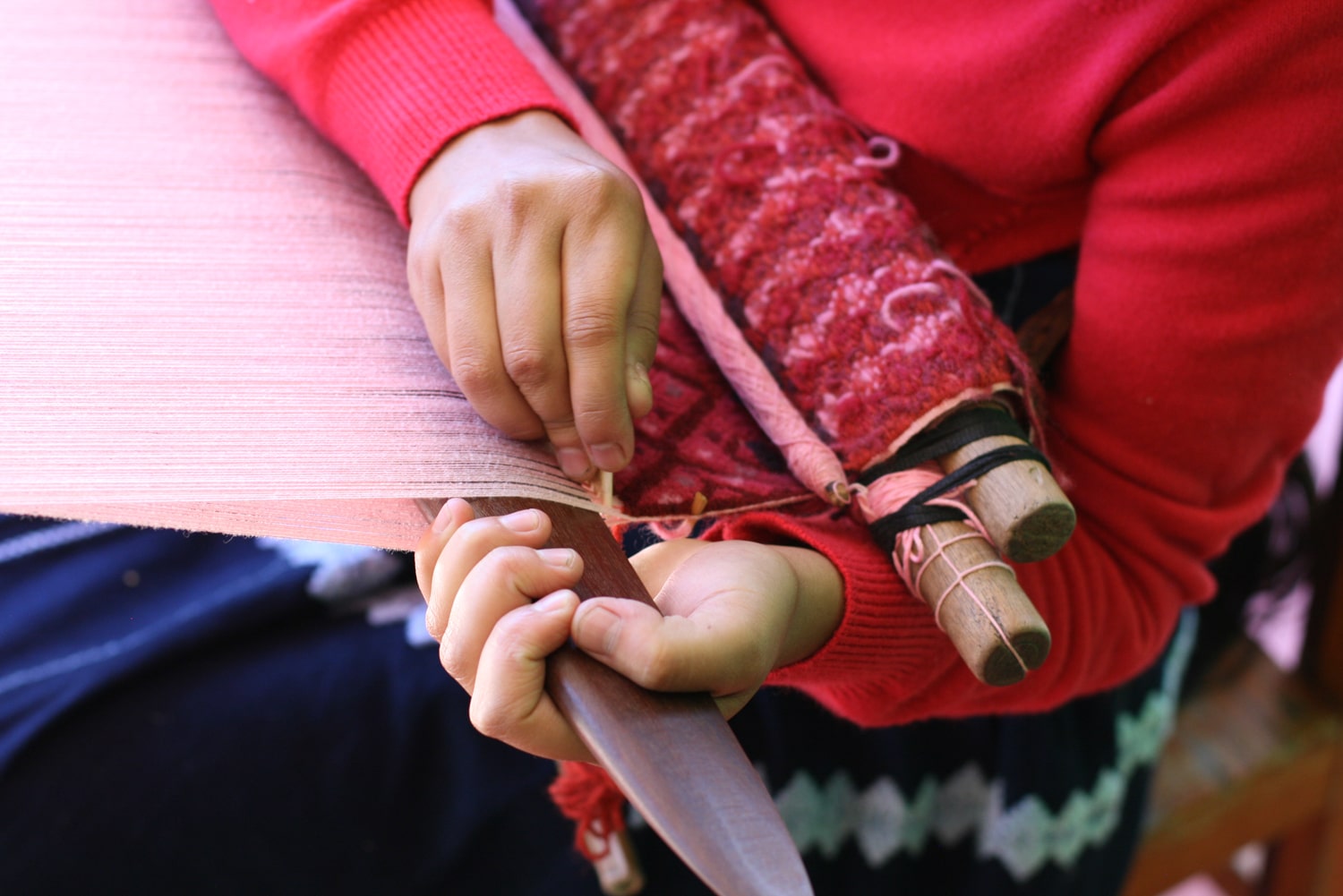
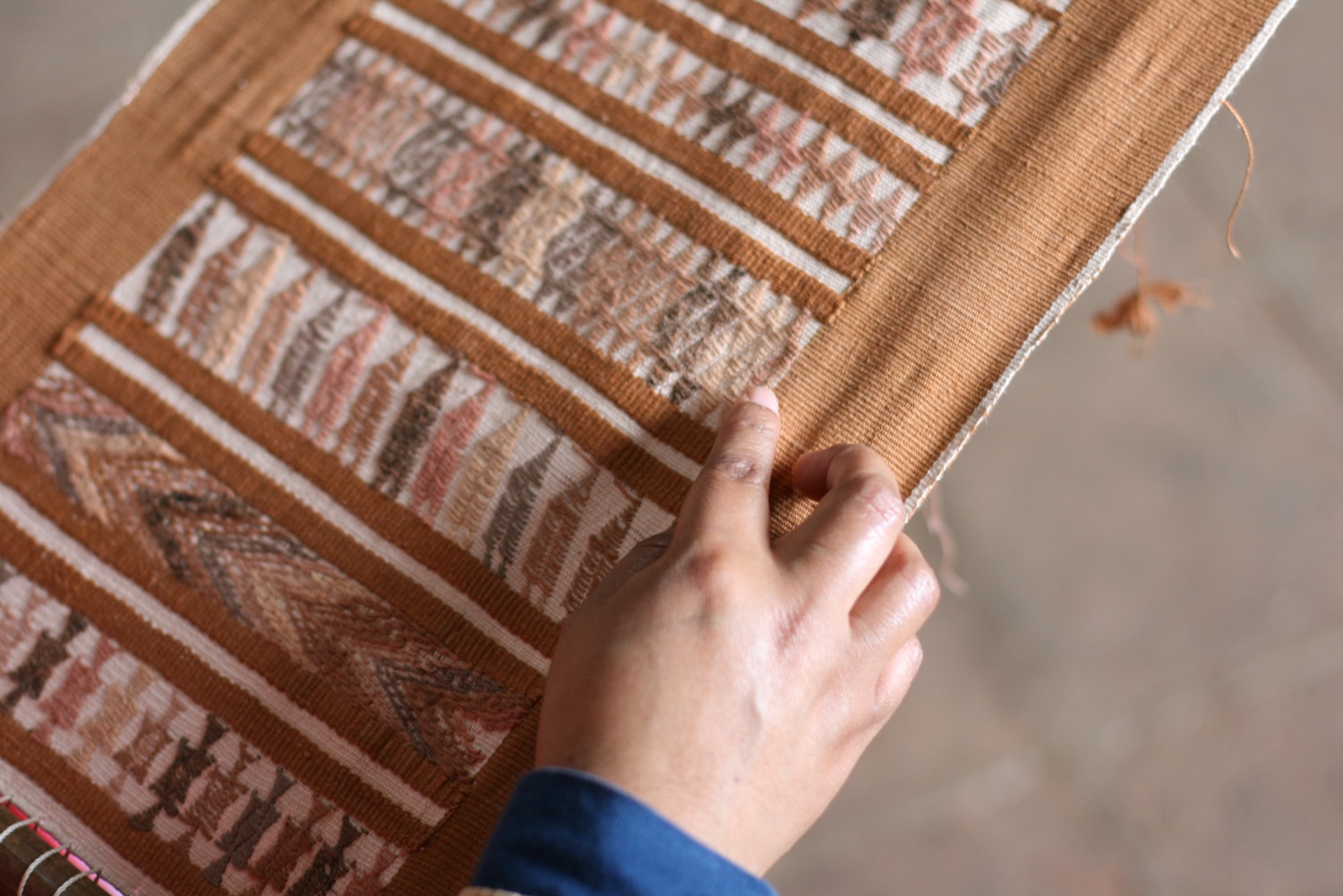
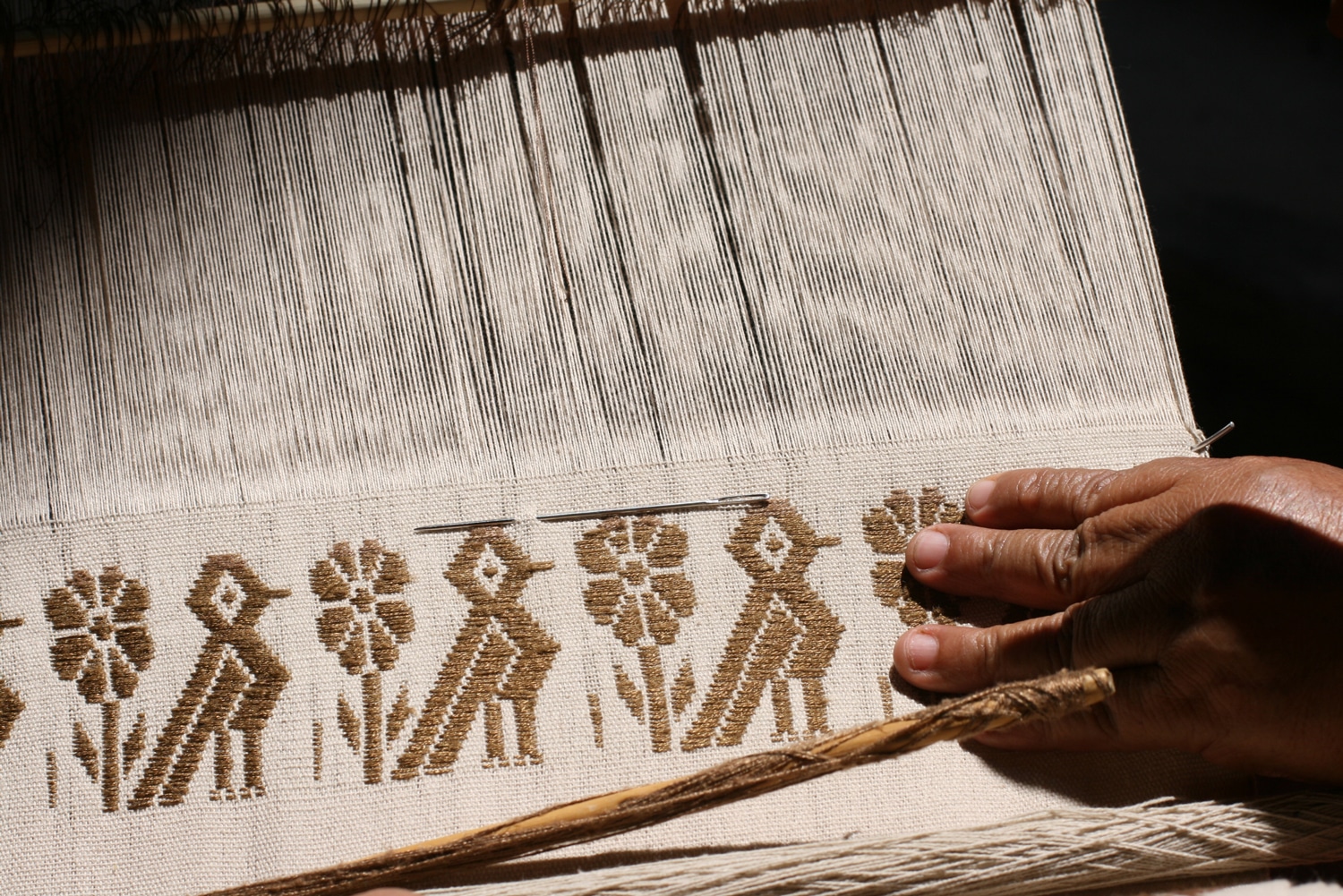
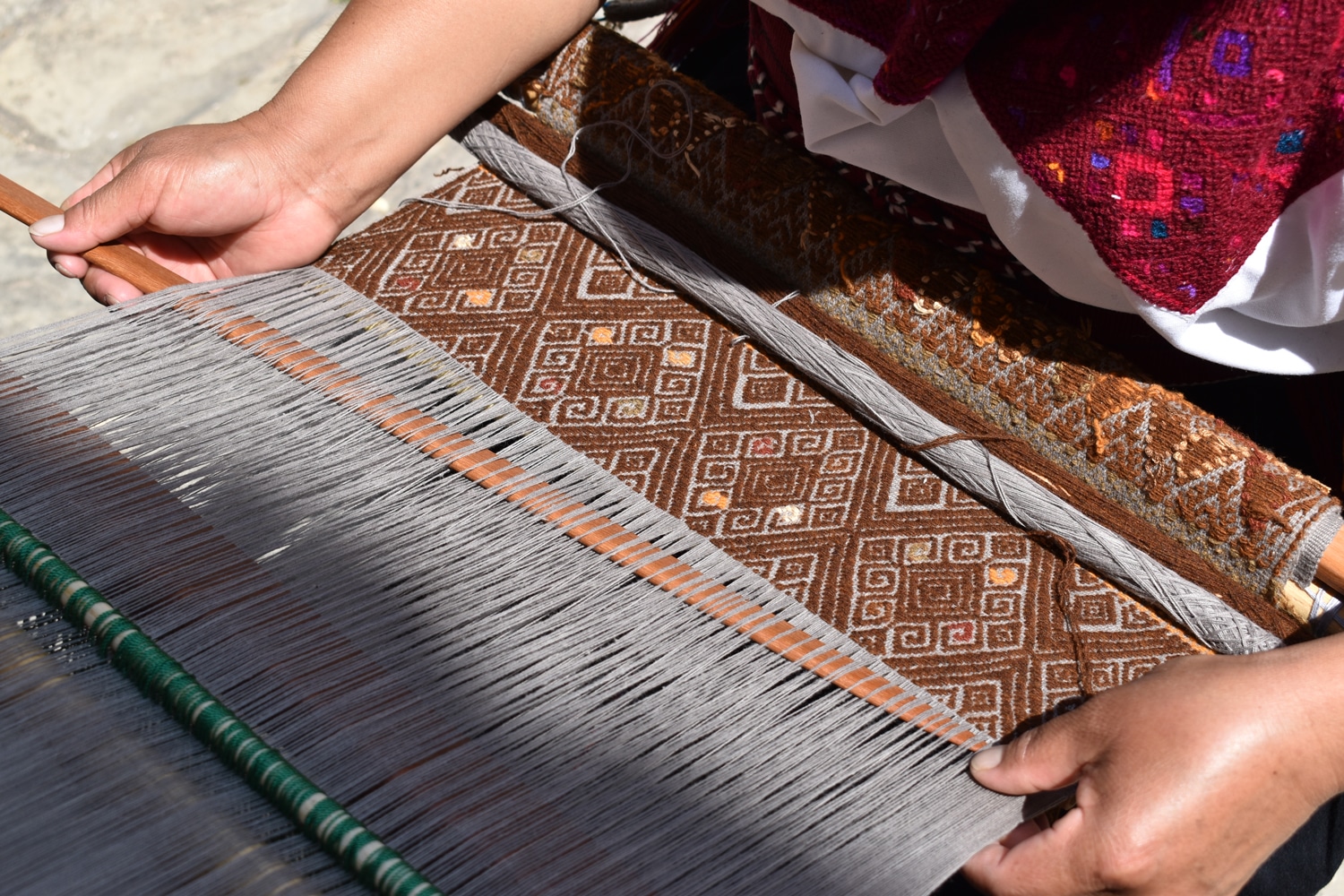
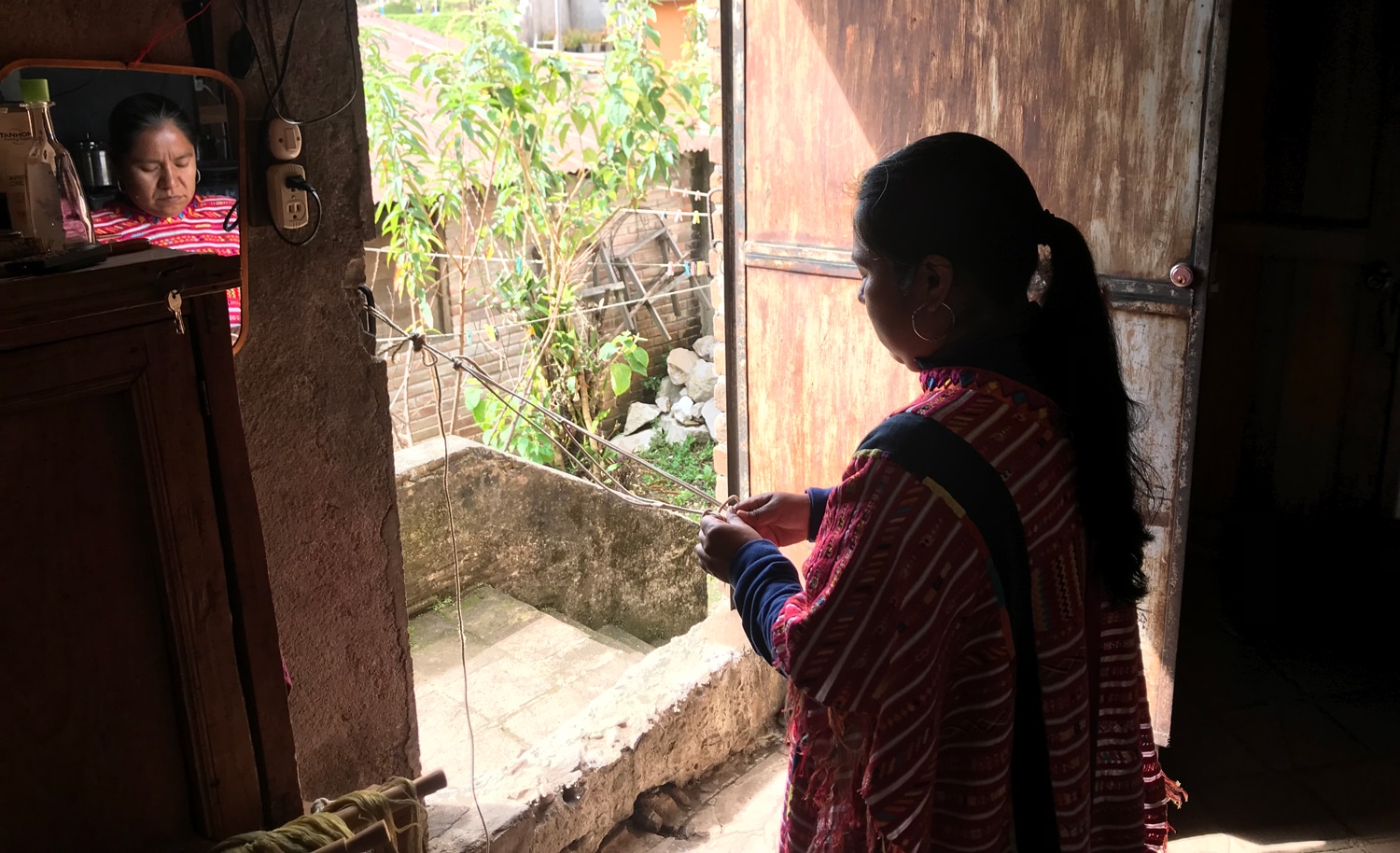
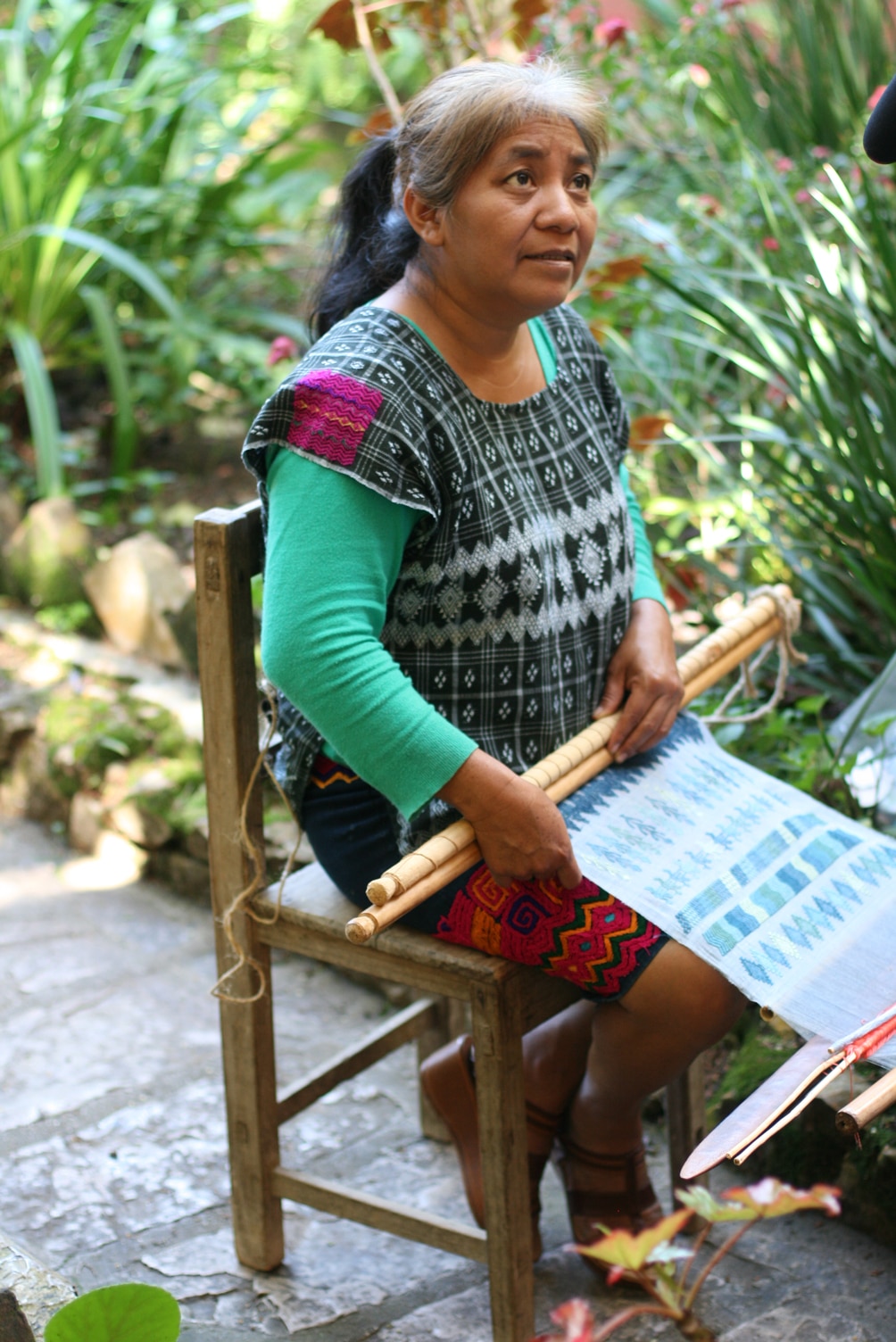
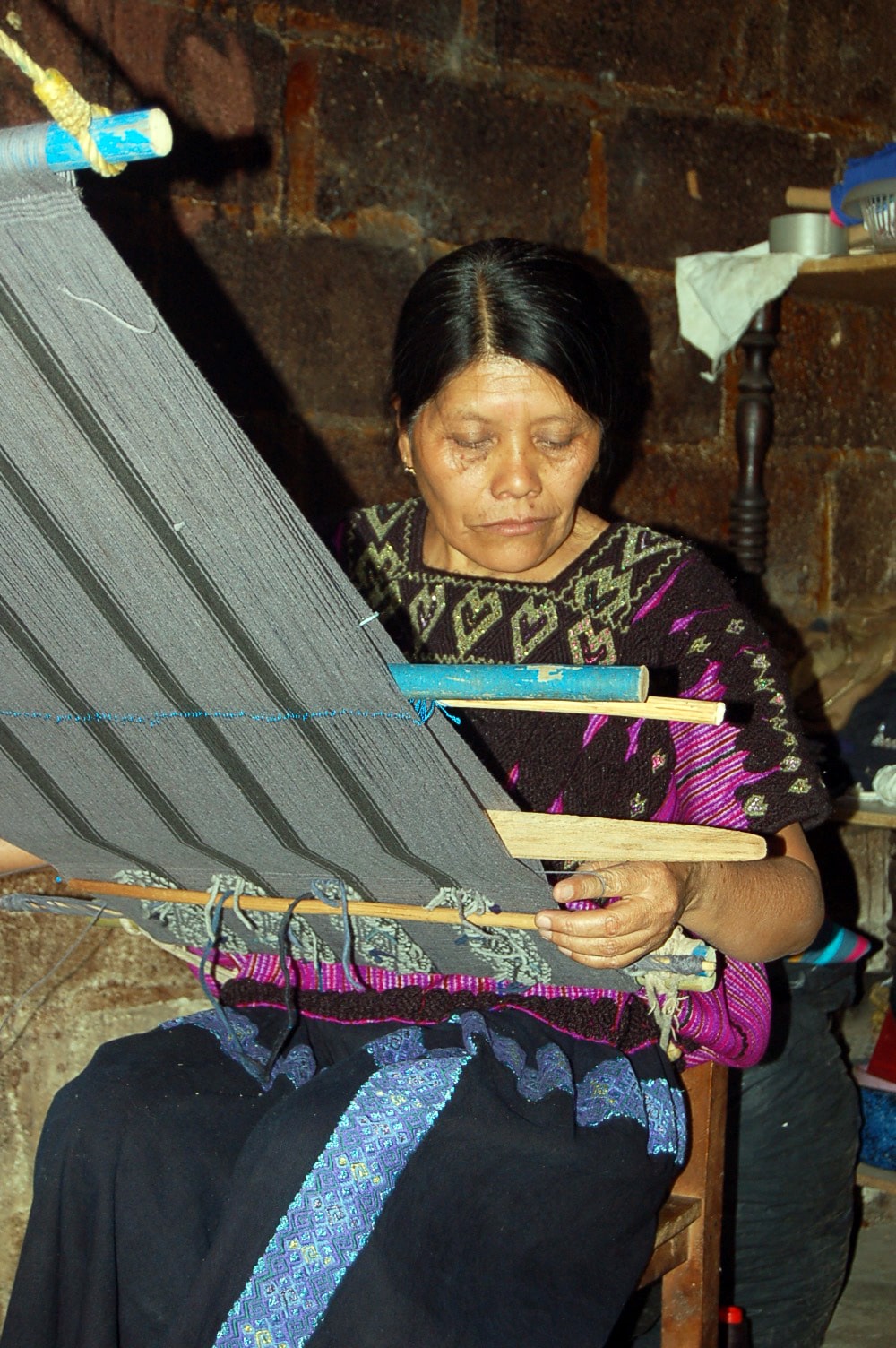
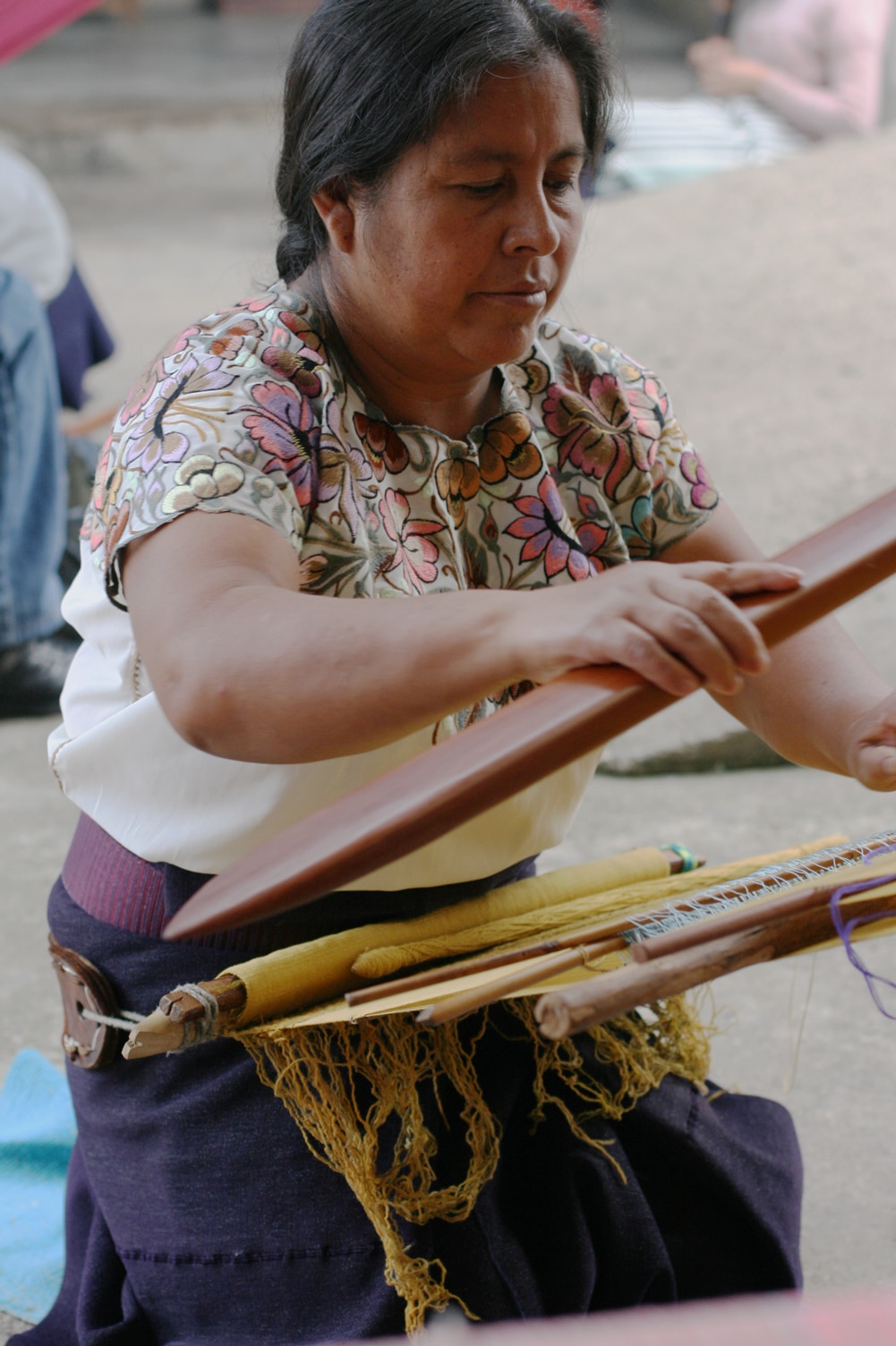
As a socially engaged process, however, the degree of human investment by an artist like Carlos, who worked for seventeen years with the weavers in and around San Cristobal de las Casas, is exemplary — and not only in Latin America. In social practice, time investment becomes currency, and the work of influential socially engaged artists like Rick Lowe (instigator of Project Row Houses in Houston, a community-driven arts initiative in Houston that between 1993 and 2018 revitalized abandoned houses to support artists and engage local residents), or Jeanne van Heeswijk (founder in 2005 of The Blue House, an ongoing participatory project that has transformed a Rotterdam house into a cultural and social space) would not have been possible without a long-term, patient human investment in a specific locale. 12 Such engagement is hard to quantify or document. So, my reading of Carlos’s project is that it is not yet concluded. Even the exhibition represents not a final summation of the experience that constitutes the artwork, but a component of it.
Even the exhibition represents not a final summation of the experience that constitutes the artwork, but a component of it.
I have often spoken with Carlos regarding the ethics of social practice and the power dynamics that emerge when an artist works with a community — even more delicate when an educated, middle-class, mestizo artist from the capital enters into dialogue with a rural, Indigenous community. As Rachel Barber told me, “There is a great deal of mistrust to begin with: why is this person coming here? What does he want? And Carlos spent many years building trust and conveying his own vision for the project and listening to the artisans and what they cared about.”
The paternalistic dynamic in these circumstances is unavoidable, even if both parties want to resist it. “It was not that I wanted to be paternalistic,” Carlos remembers, “but they were used to it, and they position you in such a way so that you play that role.” It was thus a situation in which Carlos, as the artist, needed to assume his assistive role and show his personal investment toward each community in order to gain their trust. To the weaving communities, as the years went by, he ceased to be a mere business collaborator or instructor, and became much more a part of their families, joining in social events and seasonal gatherings. He helped the weavers gain agency, and, through the educational experience, become independent; this required also that at some point they would not rely on him to address their needs. As he says, “I also learned to set my limits.”
I am looking again at the Zapatista doll on my desk. It is an object that an Indigenous woman in Chiapas made because someone like me, a tourist, would purchase it. Yet by acquiring this idealized image of Indigenous autonomy as represented by the Zapatista revolutionaries, I am also supporting a local industry.
[Carlos Barrera Reyes]
I see the maker of that doll as a fellow artist; I recognize, in my own tendency toward fixed readings of her work, the way in which viewers on international exhibition circuits might see and codify my own work, motivated by comparably unexamined expediencies, be they scholarly or market driven. We as readers of culture seem to make these reductive moves instinctively, despite our understanding that all identities evolve, along with interpretations of them, over generations; as fashions come and go; as social and political climates alter; as new styles and approaches develop. The art world always seeks to possess artworks, whether through physical ownership or symbolically, through anecdotes, biographical narratives, or academic interpretation. I thought about my sadness when I heard from Maruch Santíz Gómez that she had left contemporary art. In reality, she had only left my art world, leaving aside external frames that had been imposed on her.
The real value of Carlos’ project in Chiapas cannot be seen unless you travel to the church in Magdalenas. And, next year, when the huipil is covered by the new garment, although it will still exist there, it will no longer be visible to anyone — yet again, perhaps, resisting conventional forms of readability.




If you would like to comment on this article, or anything else on Places Journal, visit our Facebook page or send us a message on Twitter.