

On the first day of his second term, the 47th president of the United States signed an executive order called “Promoting Beautiful Federal Civic Architecture,” which instructs the General Services Administration — the independent agency that oversees the operations of the U.S. government — to “advance the policy that Federal public buildings should be visually identifiable as civic buildings and respect regional, traditional, and classical architectural heritage.” 1
This two-paragraph directive has the architectural community in high fret. The American Institute of Architects declared that it is “extremely concerned” about any attempt “to mandate official federal design preferences, or otherwise hinder design freedom.” 2 The Society of Architectural Historians has expressed similar alarm: “we oppose the imposition of any mandated architectural style.” 3 The Washington, D.C. chapter of Docomomo, a nonprofit that advocates for the preservation of modernist heritage, put it even more forcefully. “Design excellence stems from openness, creativity, and public engagement — not from imposed uniformity. … We believe that federal buildings should reflect the diversity, innovation, and evolving history of American design — including the significant contributions of the modern movement.” 4
The executive order on ‘Promoting Beautiful Federal Civic Architecture’ has the architectural community in high fret.
In their statements, all these organizations make pointed and approving reference to an earlier government directive called “Guiding Principles for Federal Architecture.” These principles were drafted in 1962, at the request of the 35th president of the United States, as part of what was, on the whole, a utilitarian report from the modestly-named Ad Hoc Committee on Federal Office Space. Charged with addressing the “lack of adequate, permanent modern facilities for Government agencies,” the committee, comprised of cabinet-level appointees, submitted a fifteen-page report recommending the construction of “twelve new Federal buildings.” Notably, a key goal was to enhance “the career attractiveness of the Federal service.” The “Guiding Principles,” which consist of just a few paragraphs, contain the most aspirational language of the report. They advise that public buildings be constructed “in an architectural style and form which is distinguished and which will reflect the dignity, enterprise, vigor, and stability of the American National Government.” More prescriptively, they also advise that “the development of an official style must be avoided. Design must flow from the architectural profession to the Government, and not vice versa.” 5
Although his name appears nowhere in the report, the “Guiding Principles” were written by a young Daniel Patrick Moynihan, then an assistant to the Secretary of Labor, who co-chaired the committee. Moynihan would soon rise to become a long-serving and very influential senator from New York, and as senator he shrewdly deployed his increasing political power to insist upon exacting design standards for federal buildings. As the sociologist Nathan Glazer wrote: “He was unique among the members of the U.S. Congress in his high estimate of the role of architecture in government, and in his support for high achievement.” 6
It is, to say the least, a long and depressing distance from the “Guiding Principles” to “Promoting Beautiful Federal Civic Architecture”; and, one might add, from the optimism of John F. Kennedy and his idealistic and professional “New Frontier” to the malice of Donald J. Trump and corruption of MAGA-world. On one level, Trump’s executive order is preposterous, a jab at liberal elite taste and a sop to the architectural fundamentalists at a D.C.-based organization called the National Civic Art Society, whose all-male, all-White board has deep connections to the conservative networks driving the second-term agenda. Trump signed a similar executive order near the end of his first term, to little effect, and it seems unlikely that this latest order will result in any neoclassical federal edifices any time soon; although the controversial plan to replace the East Wing of the White House with a gaudy new ballroom — designed by an architect who serves on the NCAS hoard — is being dutifully flogged by administration apparatchiks. As I write, the rubble of the neoclassical wing — constructed in 1902 during the administration of Theodore Roosevelt, and enlarged in 1942 during the administration of Franklin Delano Roosevelt — is, apparently, being carted off to a scrap yard in Maryland. 7
Clearly the executive order is less about aesthetics than about power, and on this level it is dangerous.
Clearly the executive order is less about aesthetics than about power, and on this level it is dangerous. In a prescient essay in this journal following the January 6 attack on the U.S. Capitol, Reinhold Martin warns against minimizing the import of the executive order or the machinations of the National Civic Art Society. “It is tempting to dismiss the NCAS as a hapless vanguard of opportunists taking advantage of the far-right resurgence to foist their cultural fundamentalism on an unwitting public,” he wrote. “In itself, the project to Make America Classical Again is merely embarrassing; but in context, it can be understood as only the latest episode in a more organized anti-democratic performance. As such, it sets the cultural stage for a political drama that has only just concluded its opening act.” 8
The executive order on federal architecture — which was followed this summer by a lengthier and more proscriptive screed about classical style 9 — can thus be understood as a coded threat. To this point, what is far more concerning than the potential revival of the classical orders in the capital is the specious deployment of architectural rhetoric to denigrate not only particular federal buildings but also the agencies headquartered in them. In this way a long-running and enervated style war between neoclassicists, on the one side, and modernists, on the other, has become a front in the larger war on our democratic institutions. Yet again, the real estate developer in chief is proving to be less a builder than a demolisher.
Spouting claptrap about “civic beauty,” and brandishing the symbolic chainsaw of the so-called Department of Government Efficiency, the administration has claimed that certain federal buildings are obsolete, and this past April it published a list of buildings described as “assets identified for accelerated disposition.” 10 The most conspicuous entries on this list are headquarters of executive branch agencies that Trump seeks to diminish or eliminate.
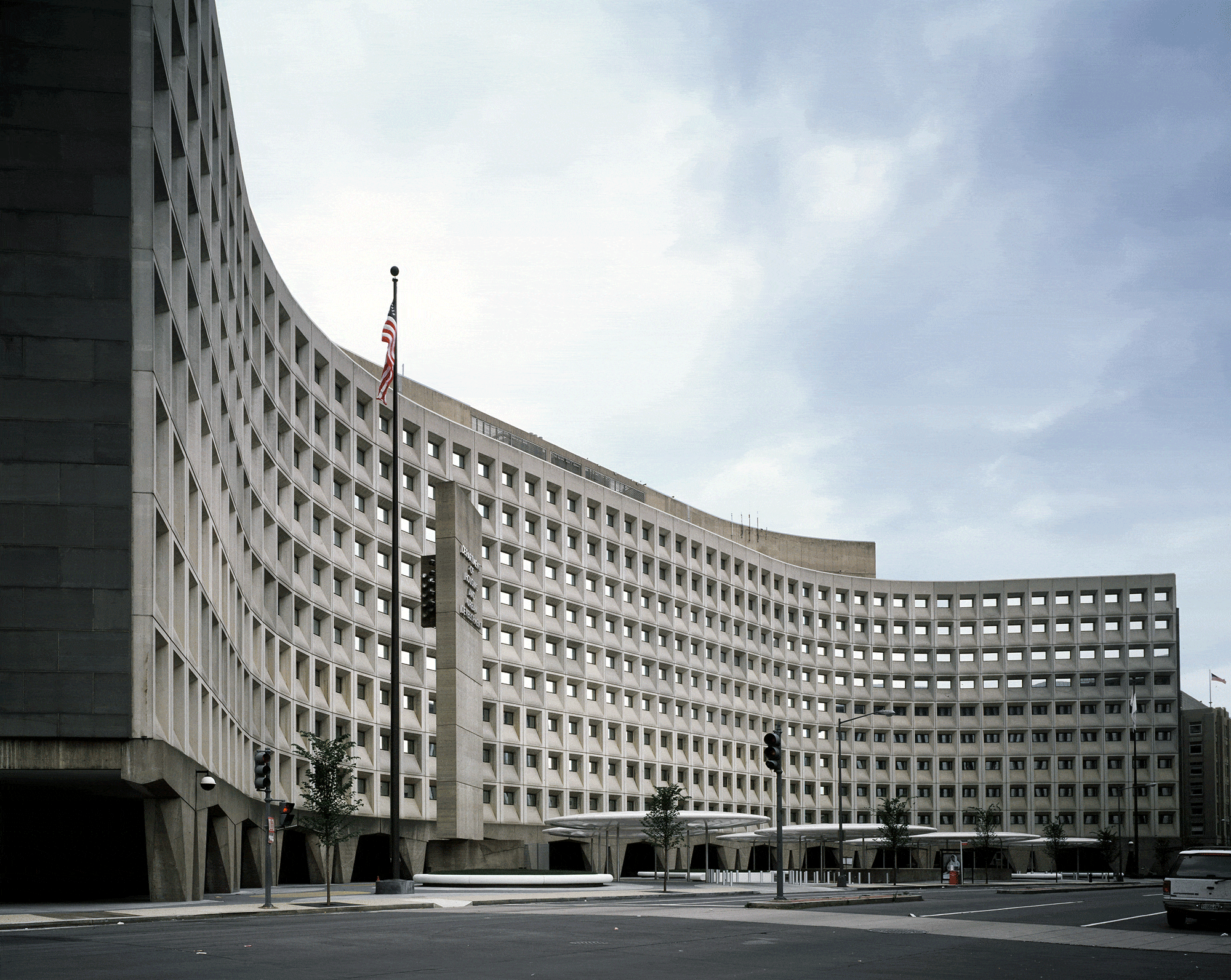
Spouting claptrap about ‘civic beauty,’ the administration claims that certain federal buildings are obsolete.
A striking case in point is the Robert C. Weaver Building. Designed by Marcel Breuer, the building has been the longtime headquarters for the Department of Housing and Urban Development; in 2002 it was named to honor Weaver, the first Secretary of HUD and also the first Black Cabinet appointee. 11 Freestanding on a block southwest of the Capitol, the concave facades of the ten-story, exposed-concrete structure recall Breuer’s celebrated headquarters for UNESCO, in Paris. Writing in the New York Times, Ada Louise Huxtable described the HUD building as a “handsome, functional structure that adds quality design and genuine 20th-century style to a city badly in need of both.” And, she added: “It treats the problem of bureaucracy directly and comes up with dignity.” 12 At the dedication ceremony in September 1968, Lyndon B. Johnson applauded the new headquarters and its “bold, modern, and excellent design”; the 36th president of the United States also praised the agency staff for their “diligent and constructive attention to one of the great problems of our time — housing our people.” 13
Now the 57-year-old building, which has served the national government across ten administrations, is being put up for sale, and HUD has announced that its several thousand D.C.-based civil servants will be relocated to an office building in Alexandria, Virginia. 14 Scott Turner, the current HUD Secretary — a former pro football player who served a couple terms in the Texas State Legislature — opined on Fox News that the headquarters was the “ugliest building in D.C.” 15 Meanwhile the secretary is overseeing severe reductions to his agency’s budget and staffing, and housing activists fear that millions of people will lose their homes. 16 It is painfully apparent that the “disposition” of its headquarters, accelerated or not, underscores nothing so much as the current administration’s disrespect for the democratizing mission of HUD — and its own striking lack of attention to what is still, alas, one of the great problems of our country.
But at least the Weaver Building is unlikely to be demolished; Breuer’s masterwork is listed on the National Register of Historic Places, which gives it some degree of protection. Other federal properties remain far more vulnerable. One that especially appeals to me is the James Forrestal Building, which enjoys neither landmark status nor the pedigree of a famous architect. Designed by the New Orleans firm Curtis and Davis, and constructed in the late 1960s, the building originally housed military personnel (its namesake was the first Secretary of Defense). Since 1977, it has been the headquarters of the Department of Energy.
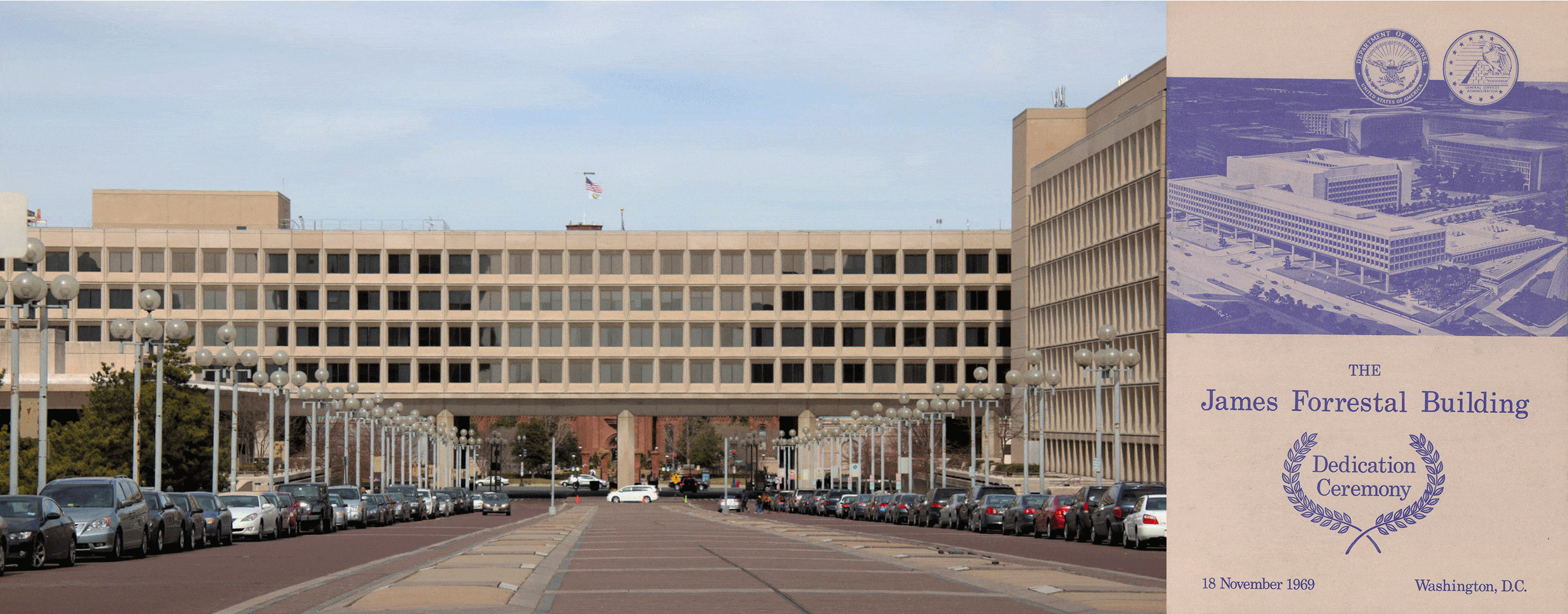

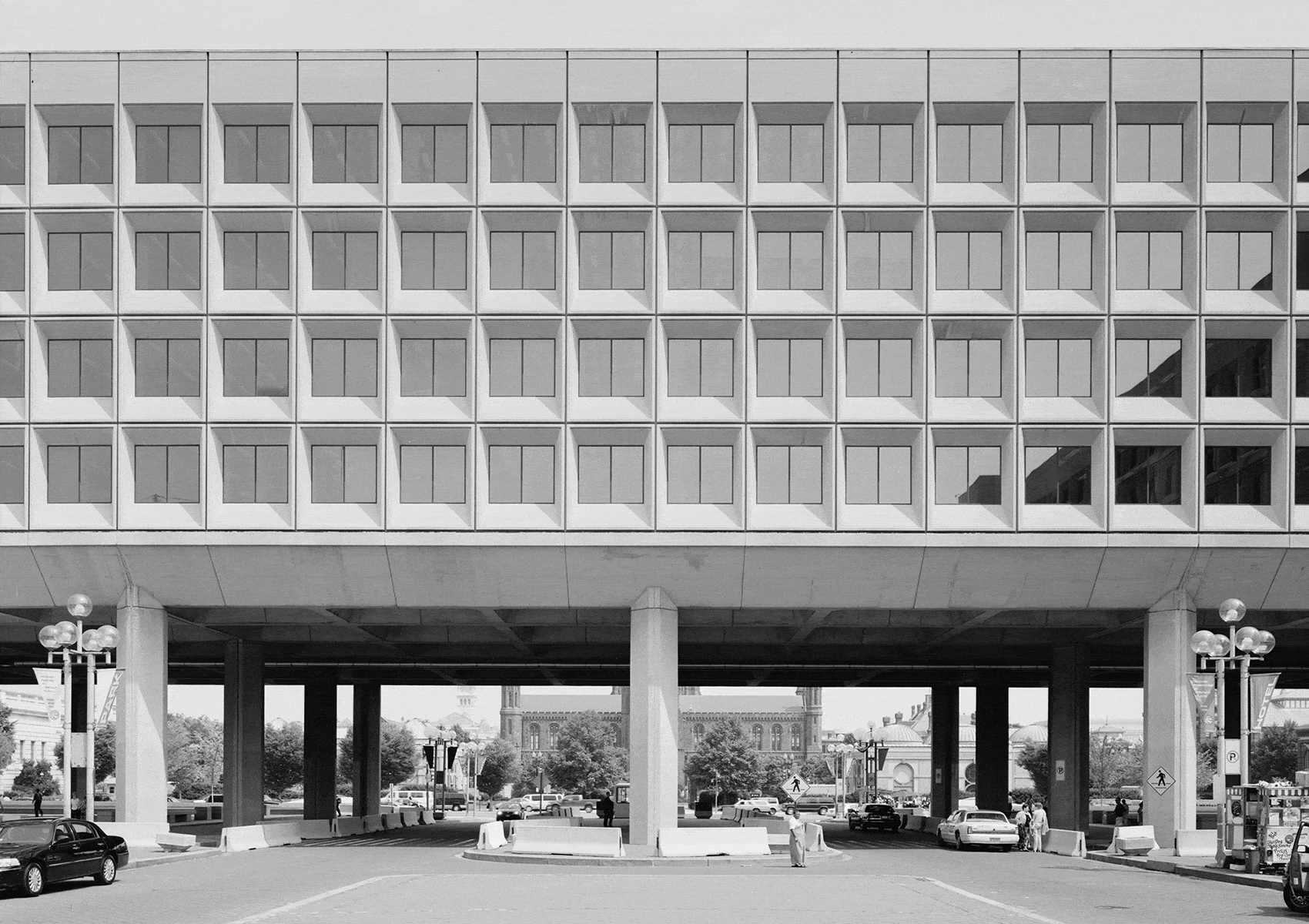
Spanning two blocks along Independence Avenue and bridging across 10th Street SW, supported by an enfilade of columns that elevate the concrete structure 35 feet above the ground, the Forrestal Building has long piqued the capital’s neoclassicists. “Here’s one federal building we could — and should — scrap” ran the headline of an incoherent opinion piece in the Washington Post by Victoria Coates and Justin Shubow. 17 The authors make the predictable aesthetic objections, describing Forrestal as “a Brutalist superblock building with an unrelentingly repetitive facade — the embodiment of faceless bureaucracy.”
But with their full-throated call to demolish Forrestal — to commit the environmental crime of pulverizing nearly 1.7 million square feet of solidly built space — Shubow, the National Civic Art Society’s president, and Coates, a vice president at the Heritage Foundation (the think tank that produced Project 2025), conjoin their animus toward modernist, and particularly brutalist, architecture with politics. The “real problem,” they disingenuously assert, is that the Forrestal Building is somehow preventing the DOE from fulfilling what they characterize as its “compelling unified mission: to be the technological and resource arm of the burgeoning new cold war between China and the United States.”
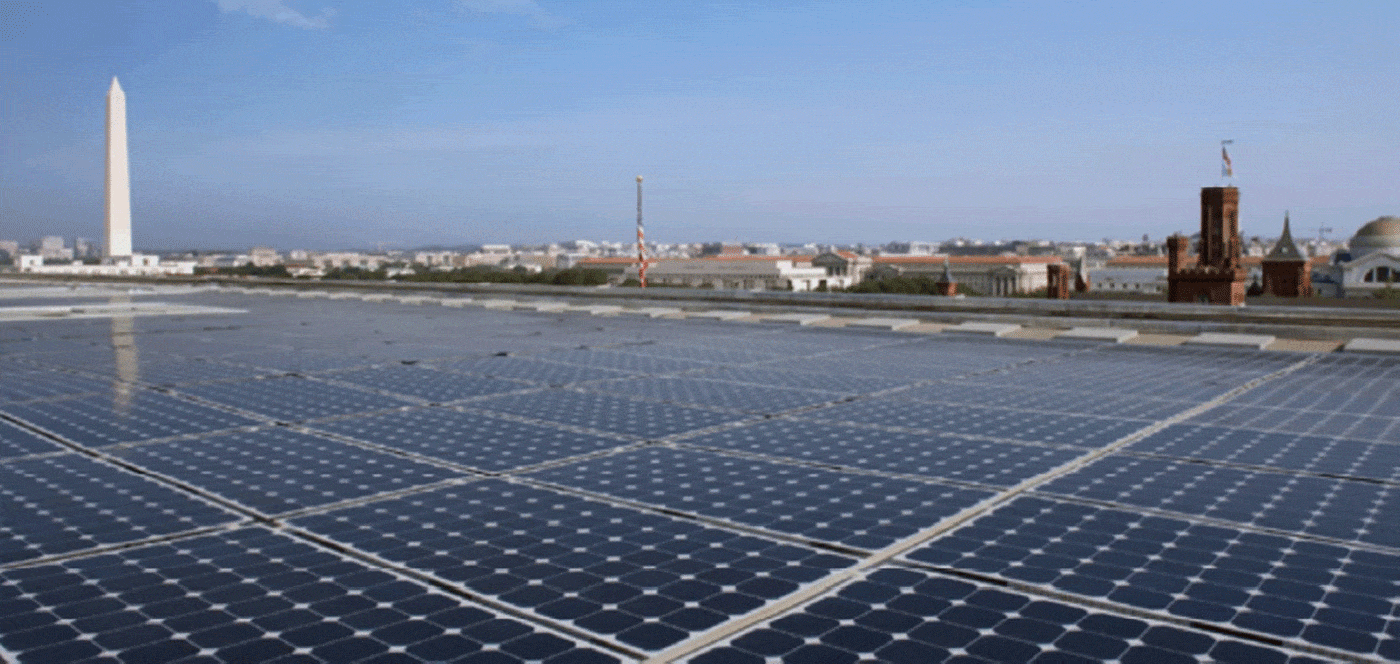
The Trump playbook is clear: demonize the building and its architecture as a surrogate attack on the agency it houses.
This notion might seem merely laughable; but it takes on a more ominous portent given that the DOE is now aiming to defund hundreds of clean and renewable energy projects across the country. In a social media post on X, Russell Vought, Trump’s budget director, and a lead author of Project 2025, denigrated the Biden-era projects as part of a “Green New Scam … funding the Left’s climate agenda.” 18 Shubow and Coates, not to say Vought, seem to have missed the many news stories reporting on China’s growing dominance of clean energy markets. As the New York Times put it: “There’s a race to power the future. China is pulling away.” 19 Trump is destroying the agency’s ability to compete with China (or any other nation), in corrupt service to the fossil fuel industry (the current DOE secretary, Chris Wright, was previously CEO of a fracking company). The DOE may indeed need new or renovated quarters, but that is beside the point. The playbook here is the same as with HUD: demonize the building and its architecture as a surrogate attack on the agency it houses.
The completion of the Forrestal Building — facing the National Mall, across from the old Smithsonian Castle — marked the optimistic arrival of modern architecture in the monumental core of Washington. It would soon be joined by the Hirshorn Museum and Sculpture Garden, designed by Gordon Bunshaft; the East Building of the National Gallery of Art, by I.M. Pei; the Hubert H. Humphrey Building, designed by Marcel Breuer to house the Department of Health, Education and Welfare (now Health and Human Services); and the D.C. Metro stations, designed by Harry Weese.
These modernist structures hardly constitute a rupture of the monumental tradition of the federal city.
It seems important to emphasize that these modernist structures hardly constitute a rupture of the architectural tradition of the federal city. I first visited the Forrestal Building soon after it was completed (I was in college studying architecture). Back then the building struck me as a laudable modernist response to the capital city’s monumental classicism. A uniform grid of elegantly proportioned precast concrete window panels atop a tall colonnade: a pure classical composition in modernist garb. I continue to be impressed by the building’s dignity, and its deferential participation in the monumental procession of Independence Avenue, with museums to the north and federal offices to the south. As downtown Washington has filled out with twelve-story structures (a function of the legal height limit), it is refreshing to encounter the mere four stories of Forrestal, floating above the pedestrian plaza, generously set back from the street to create a respectful forecourt to the Smithsonian across the avenue. The James Forrestal Building may be the quintessential “background building” for monumental, classical Washington.
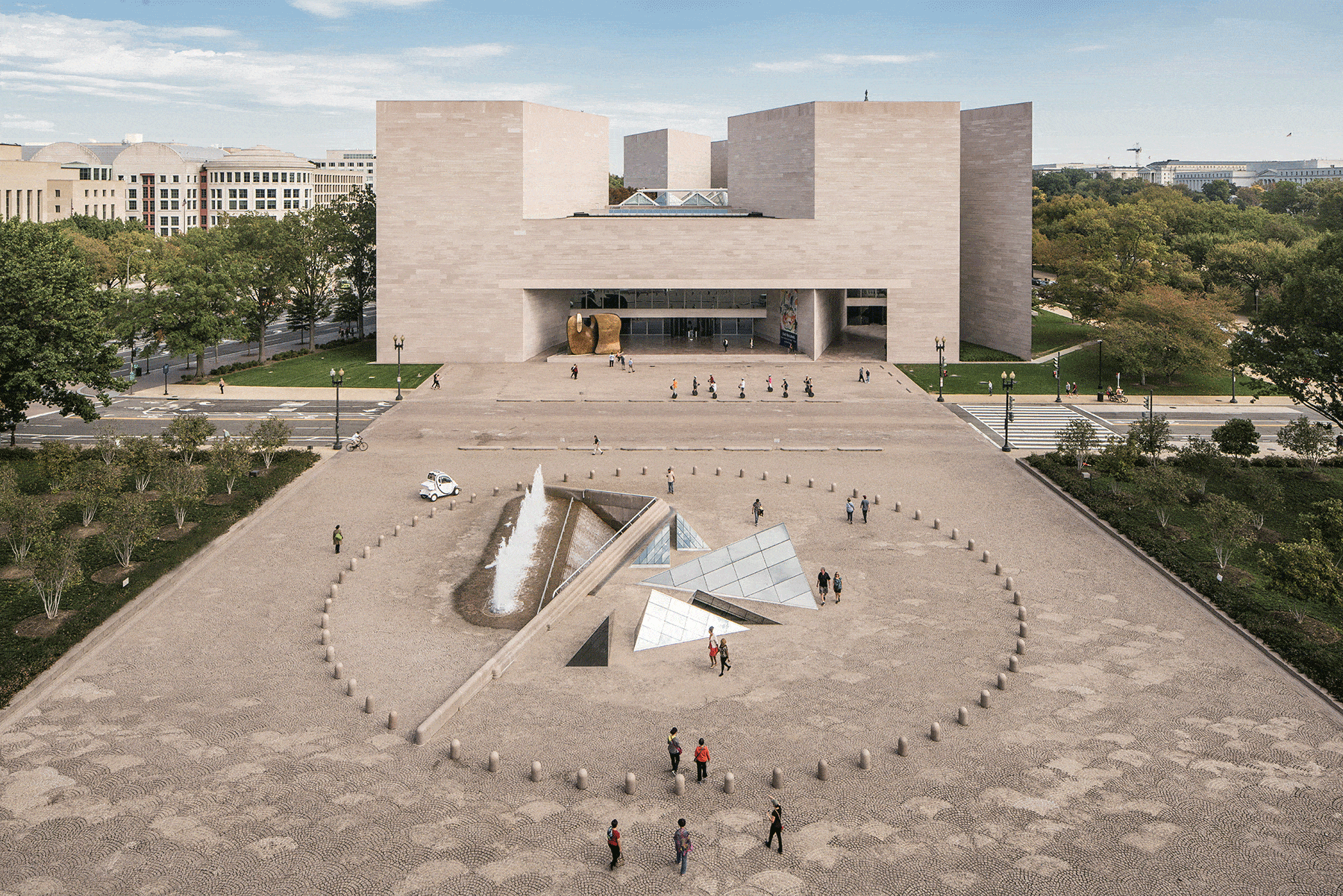
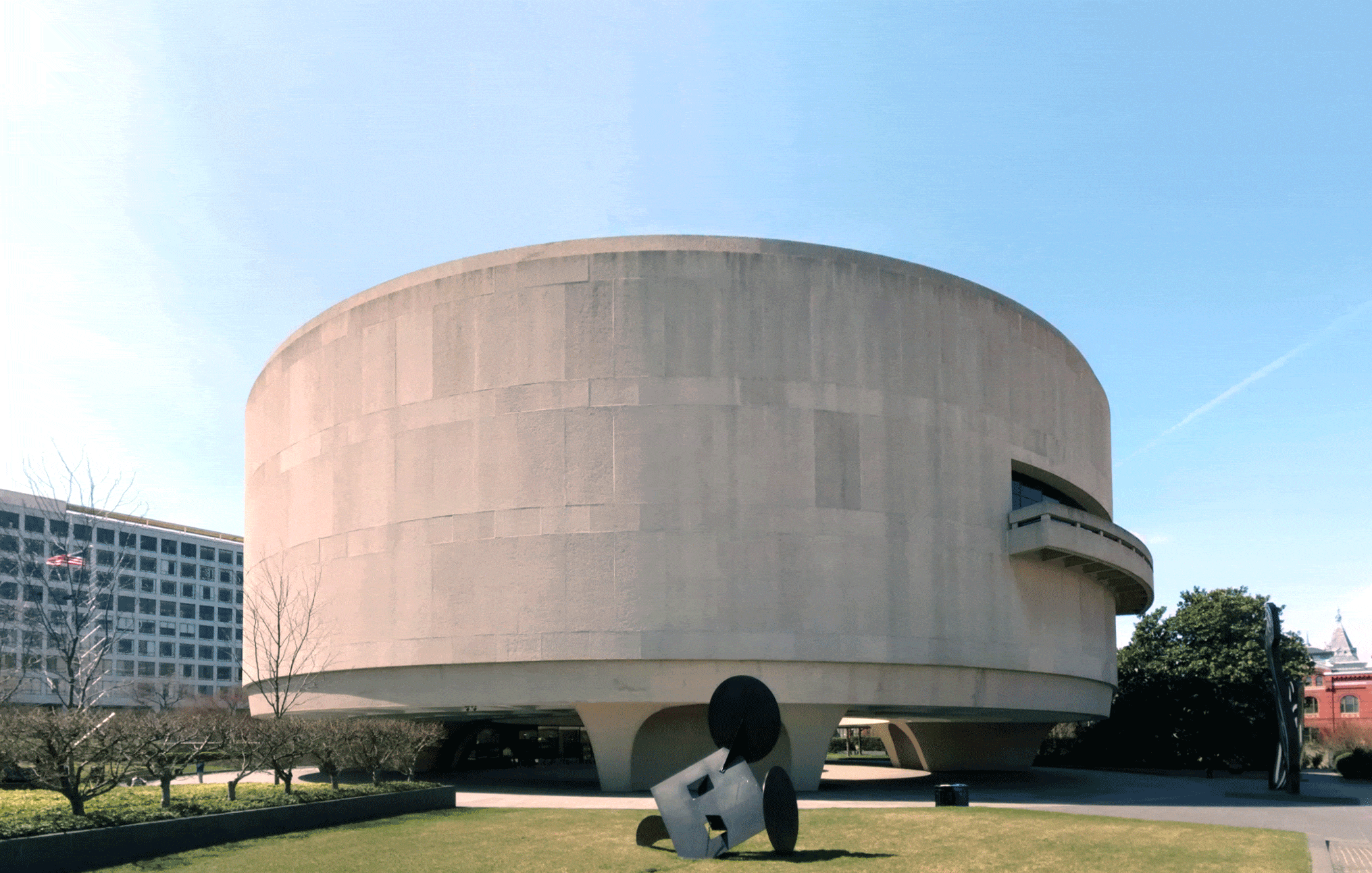
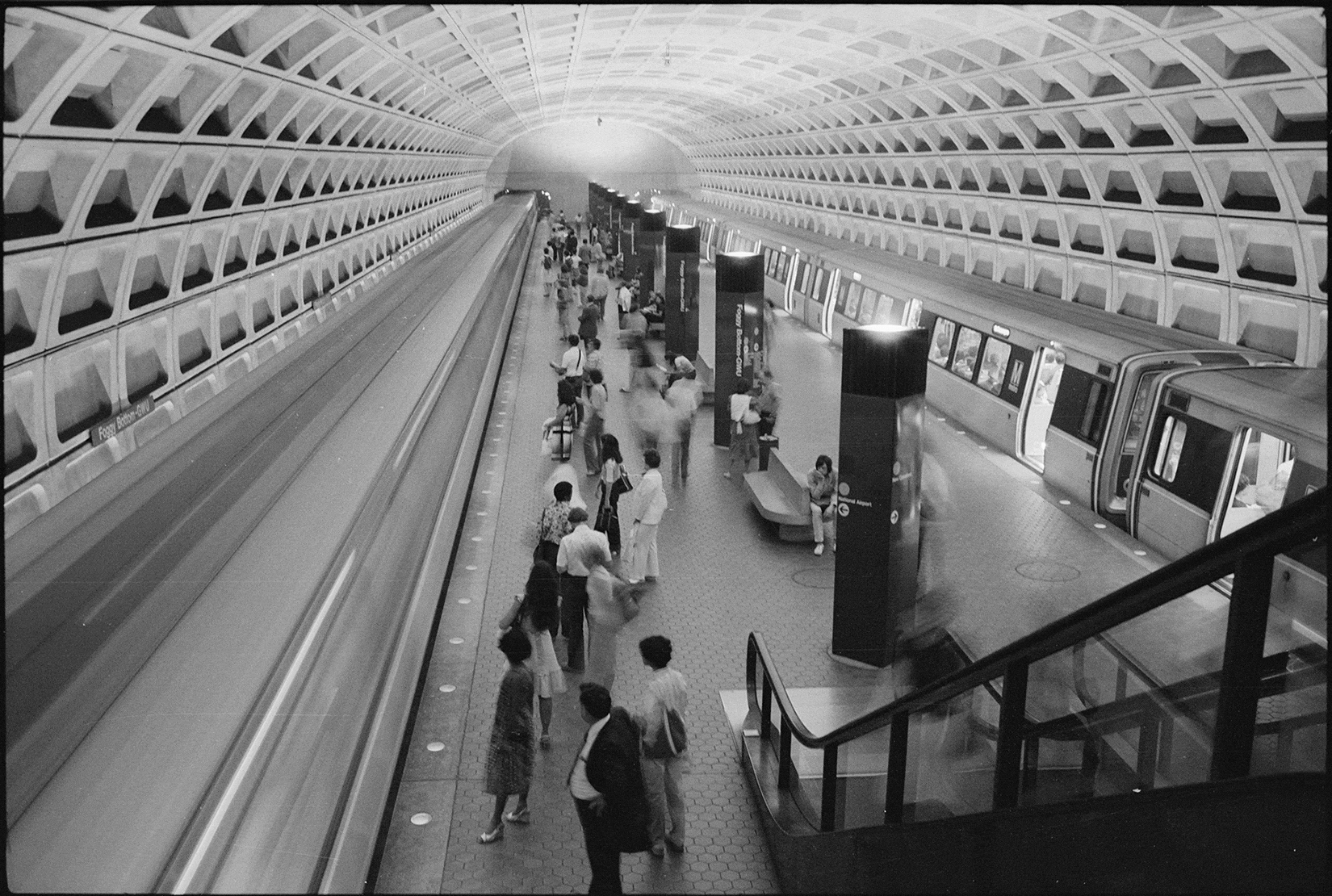
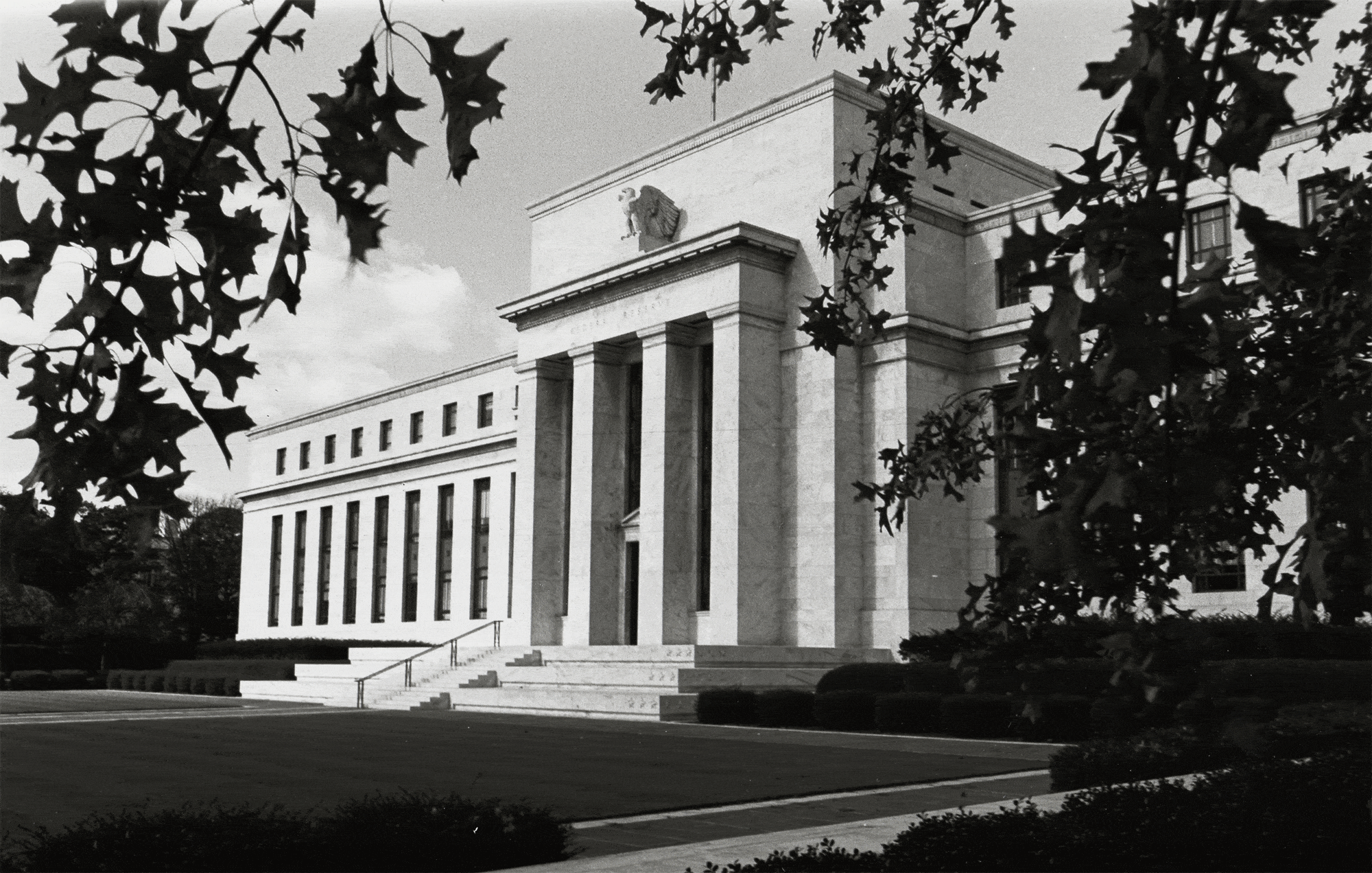
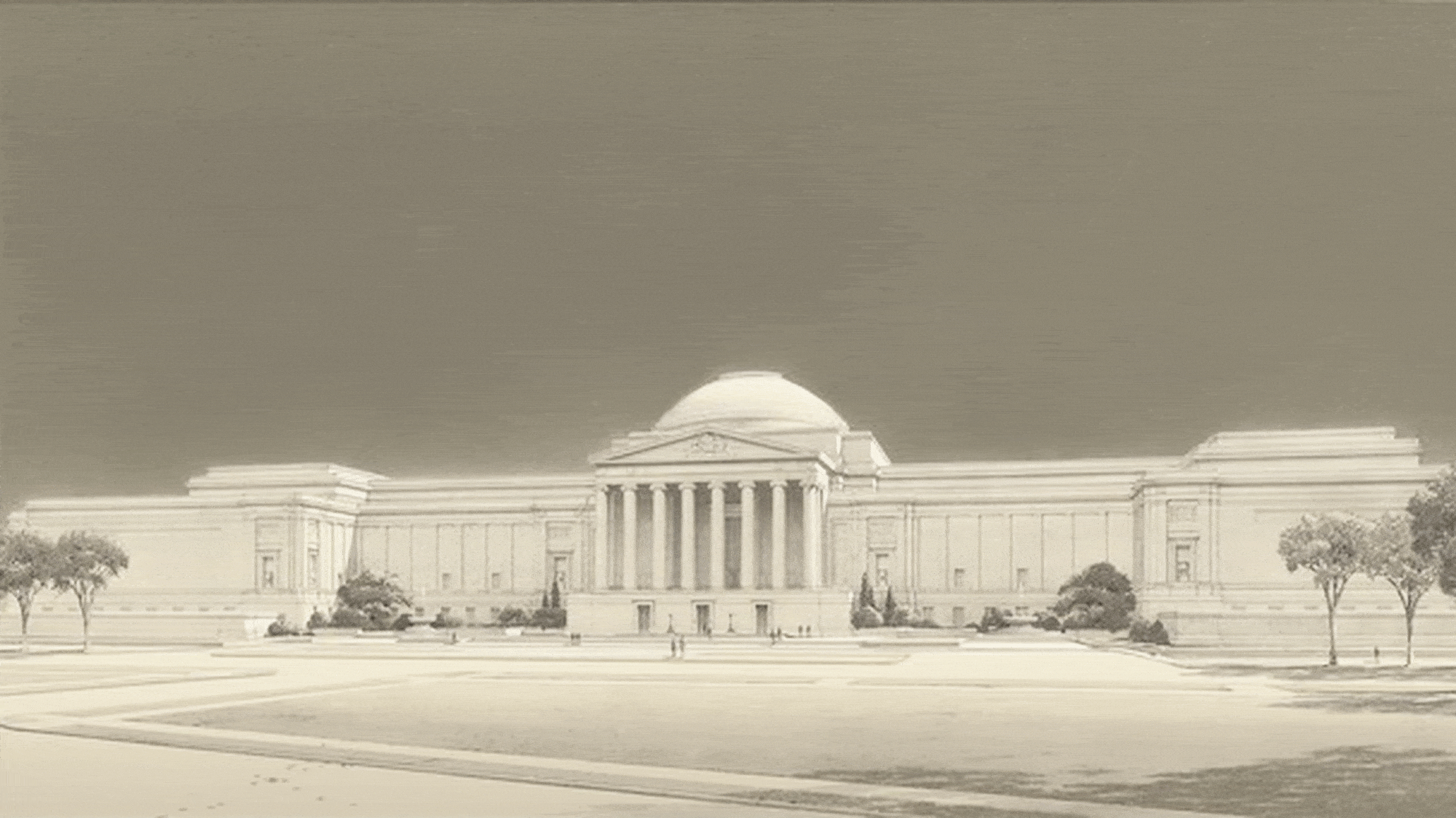
I was born in Washington, and I can still remember feeling awed, as a child, by landmarks like the National Gallery of Art, the National Archives, and Jefferson Memorial. Later, as an architecture student, I came to revere the refined, stripped-down classicism of Paul Cret’s Folger Library and Federal Reserve: neoclassical buildings constructed in the interwar decades of the 20th century. It is precisely because of my fondness for this tradition that I applaud the modernist or brutalist buildings that so respectfully coexist with, and complement, their predecessors. Of course, not all Washington’s brutalist buildings are good — the J. Edgar Hoover FBI Building is a pox on Pennsylvania Avenue — and there are more than a few clunkers among the city’s classical monuments; the 1965 Rayburn House Office Building, across from the Capitol, is a ponderous pile of marble. 20
Not just the buildings but their programs — fair housing, public health, environmental protection — are under attack.
The Weaver and Forrestal Buildings were featured in Capital Brutalism, an excellent exhibition recently on view at the National Building Museum. The show’s curators, Angela Person and Ty Cole, do not ignore the public disaffection for the style; as they write, with dry understatement, “Public reaction to many Brutalist buildings has been divided.” 21 The divisions have been particularly sharp in Washington, where new presidential administrations bring new attitudes toward the federal real estate portfolio, which invariably intersect with politics. The modernist buildings that shaped the postwar capital city — Weaver and Forrestal, the Hirschorn and the National Gallery East Building, to name the most notable — were constructed during the 1960s and ‘70s. These same decades witnessed the lofty democratic aspirations of JFK’s New Frontier and LBJ’s Great Society, and the founding of new federal agencies — HUD, HHS, EPA, DOE, USAID — that marked a high point for liberal social democracy in the United States. Can it be a coincidence that not just the buildings but their programs — dedicated to fair housing, public health, environmental protection, humanitarian aid — are under attack today?





If you would like to comment on this article, or anything else on Places Journal, visit our Facebook page or send us a message on Twitter.