

In everything, there is design; in a cloud, in a fingerprint, on the sand or the sea, set in motion by the wind. It is also present in a chair, a glass, a weaving. It can be natural or human-made, but there is design in everything we perceive.
— Clara Porset, 1949 1
The title of the exhibition, Crafting Modernity: Design in Latin America, 1940–1980, at the Museum of Modern Art, suggests one of its principal themes. Designers in Latin America in the middle of the 20th century introduced modernism to people and industries in their respective countries with keen awareness of international trends and at the same time respect for centuries-old Indigenous and Iberian-colonial artisanal traditions. What’s more, it was at once nationalistic and pragmatic to deploy local materials and traditional fabrication techniques in the modernizing project.
It’s equally telling that the show is subtitled “Design in Latin America” and not “Latin American Design” — a distinction that conveys the importance of place while also hinting at the cosmopolitan character of the mid-20th-century regional scene. Indeed, several key figures came from elsewhere. Just as Mies van de Rohe, Walter Gropius, and Marcel Breuer altered the trajectory of North American architecture and design after emigrating to the United States, so too did European-born artists like Lina Bo Bardi, Martin Eisler, Mathias Goeritz, Gertrud Goldschmidt, and Gerd Leufert put their imprint on Latin America. Often as not they benefited from the more welcoming immigration policies of South American countries, compared to those of the U.S., in the years leading up to World War II.
To be sure, most of the work in this dazzling show is by designers native-born to the six featured countries: Argentina, Brazil, Chile, Colombia, Mexico, and Venezuela. These nations saw rapid industrialization and urbanization, under political systems both democratic and autocratic, during and after the period when war devastated Europe and Asia and reordered global power. In the museum, a large wall graphic diagrams connections among the artists and designers in South America, North America, and Europe who influenced Latin America. This sort of graphic is very MoMA, recalling Alfred Barr’s famous 1936 diagram of the origins of abstract art, and similarly illustrating that the evolution of modernism in Latin America was anything but linear.
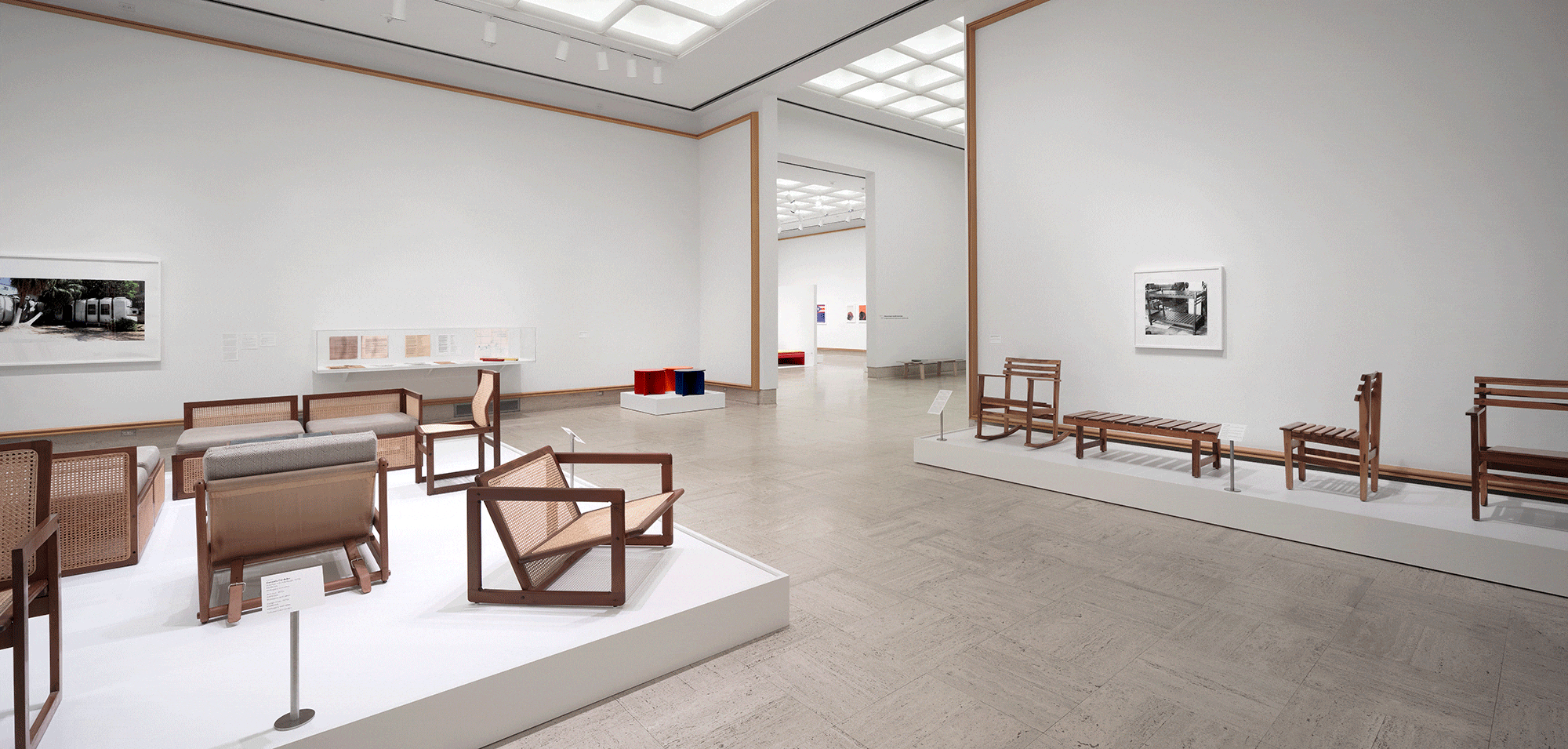
The exhibition foregrounds furniture while interweaving architecture, graphic design, ceramics, product design, and photography to conjure the era’s modernizing zeitgeist.
With its focus on furniture and decorative objects, Crafting Modernity is a welcome counterpart to the museum’s earlier show, Latin America in Construction: Architecture 1955–1980. 2 Yet it often felt like the undernourished stepchild of that magisterial exhibition; it was full of beautiful objects but lacking rich expository content. This perhaps explains why the museum did not produce a catalogue, which would have been a significant contribution to scholarship. That complaint aside, the organizers, including guest curator Ana Elena Mallet and curatorial assistant Amanda Forment, effectively foreground the furniture while expertly interweaving architecture, graphic design, ceramics, product design, and photography to conjure the modernizing zeitgeist of the era; to illustrate, in the words of the Mexican-Cuban designer Clara Porset: “Design is only a result; its purpose is to cooperate in raising the general standard of living by bringing efficiency and artistry to one’s daily circumstances.” 3
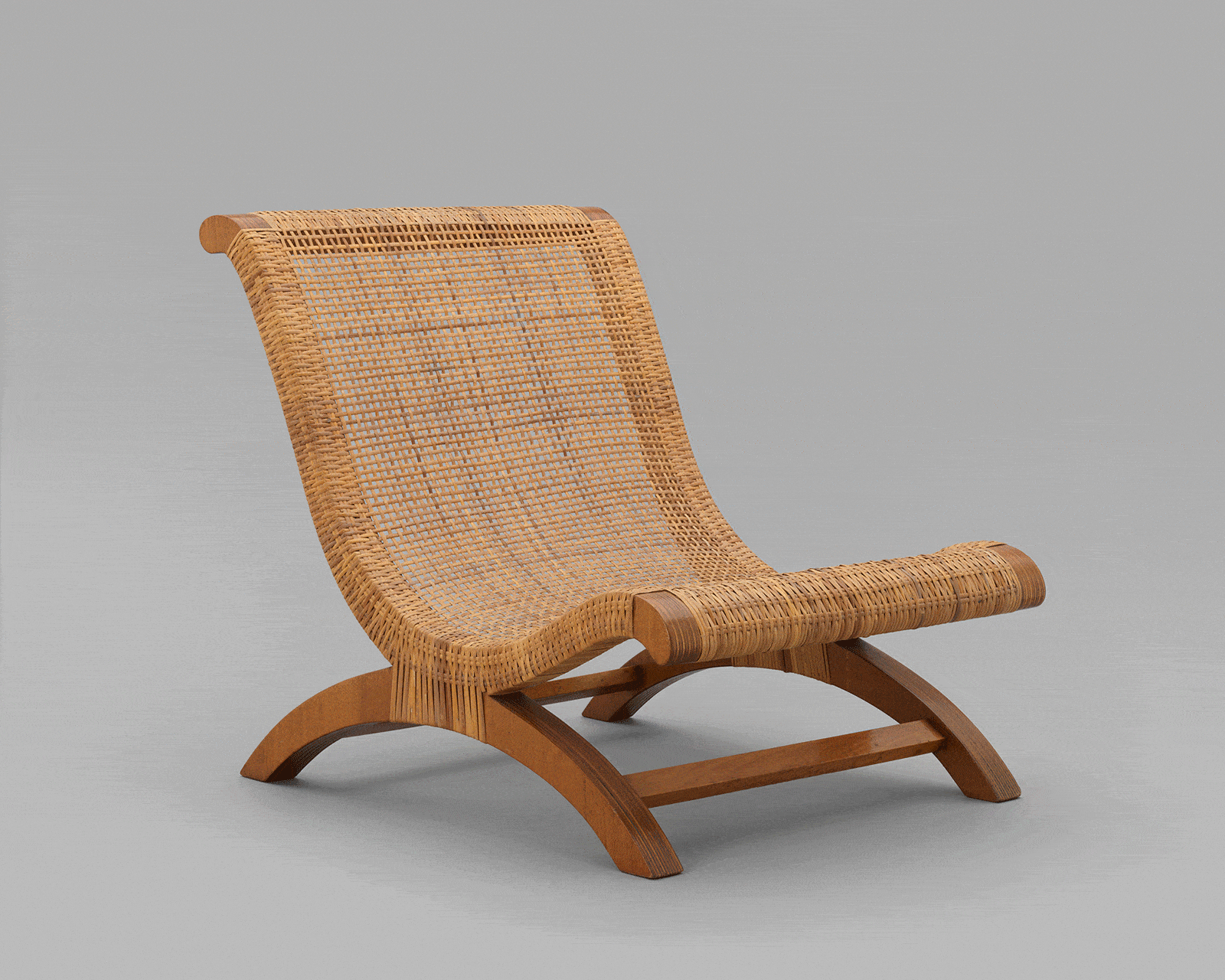
Clara Porset, Butaque, 1957; laminated wood and woven wicker. [Gift of The Modern Women’s Fund. © 2024 The Museum of Modern Art, New York]

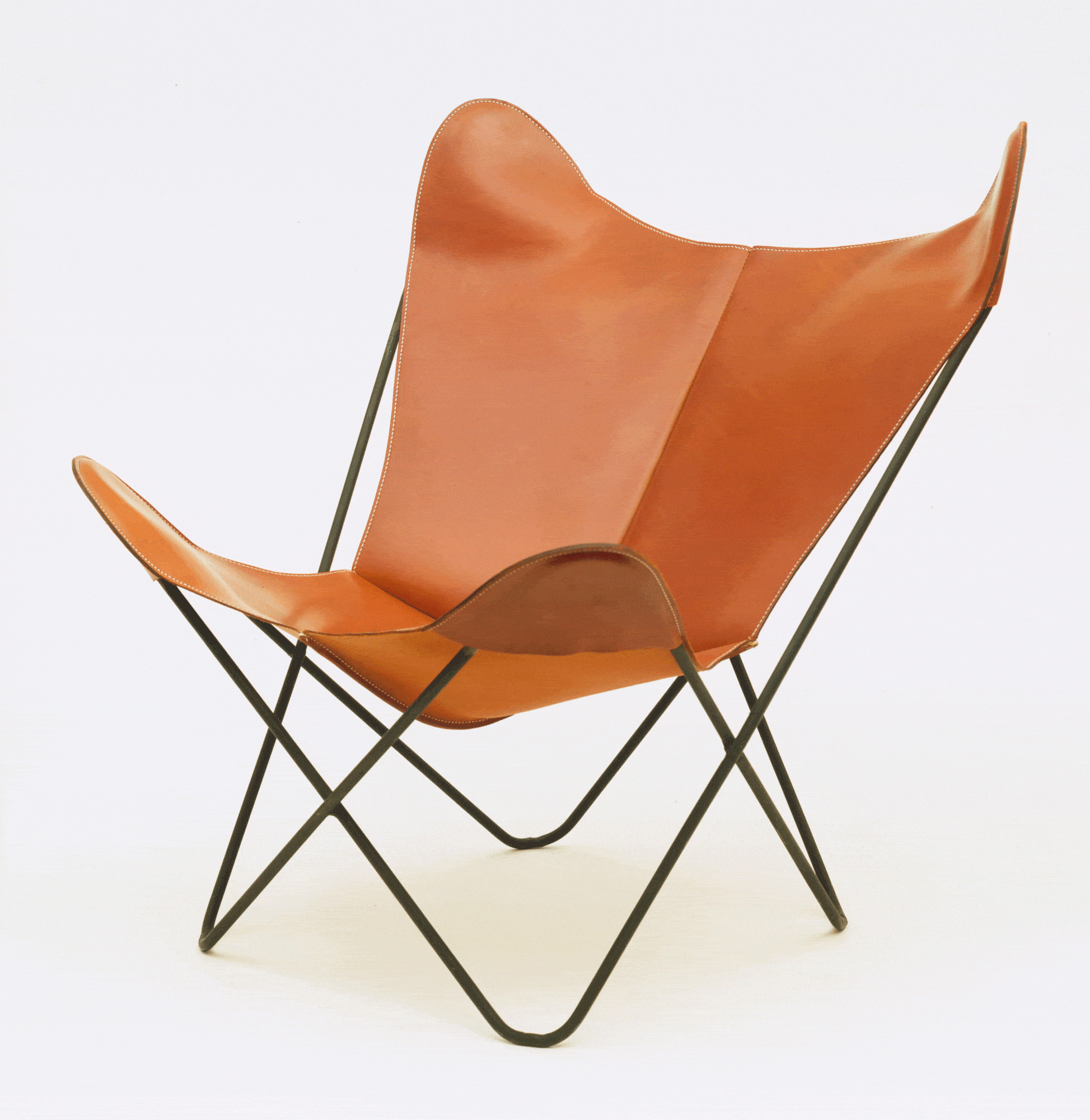
Antonio Bonet, Juan Kurchan, and Jorge Ferrari Hardoy, B.K.F. Chair, 1938; painted wrought iron and leather. [Museum of Modern Art, Edgar Kaufmann, Jr. Digital image © 2024 Museum of Modern Art]
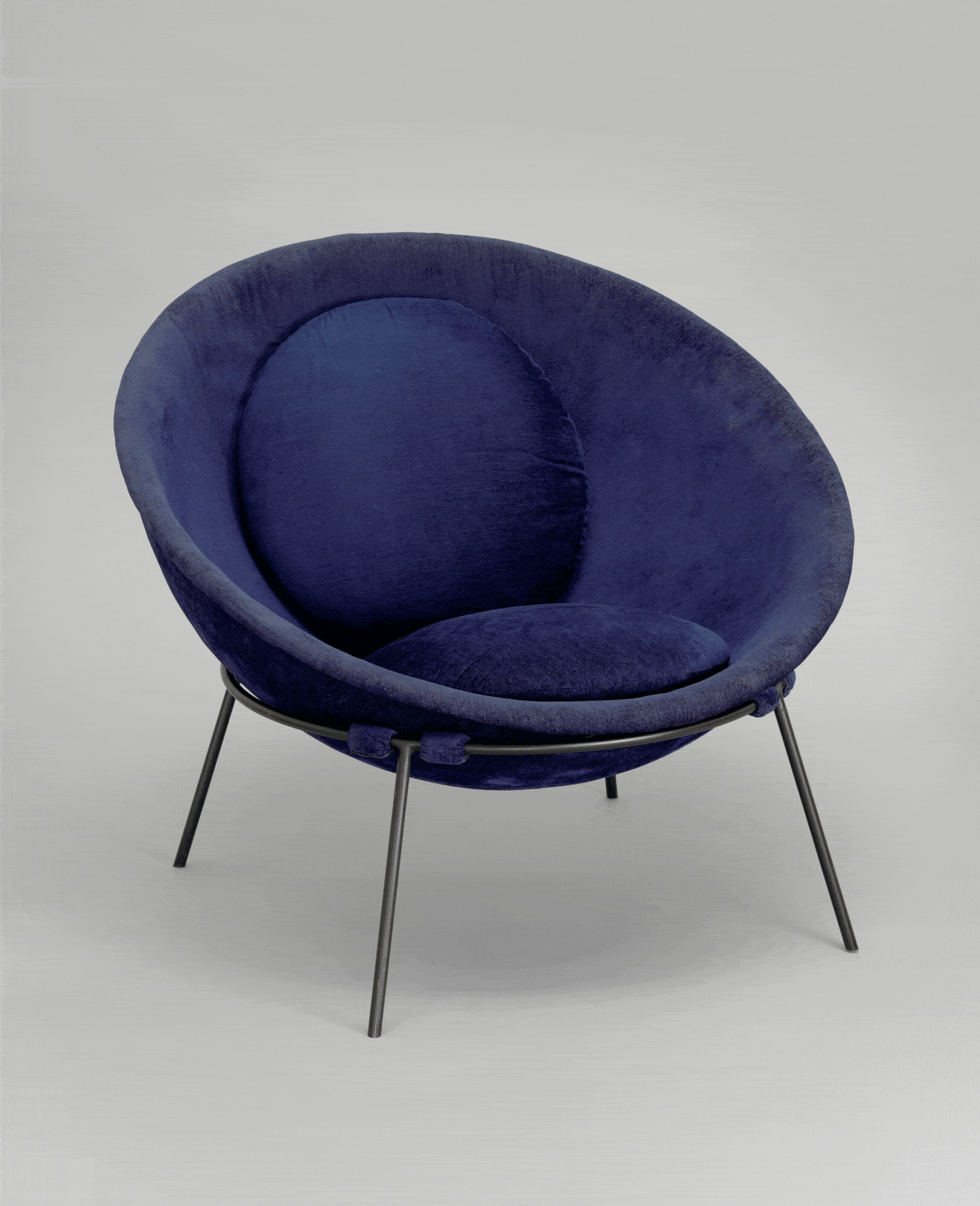
Lina Bo Bardi, Bowl Chair, 1951; steel and fabric. [Museum of Modern Art, Committee on Architecture and Design Funds. Digital image © 2024 Museum of Modern Art]
Michael van Beuren, Klaus Grabe, and Morley Webb, San Miguel Chair, 1939–1947; wood and leather. [Private collection. Courtesy Museum of Modern Art]
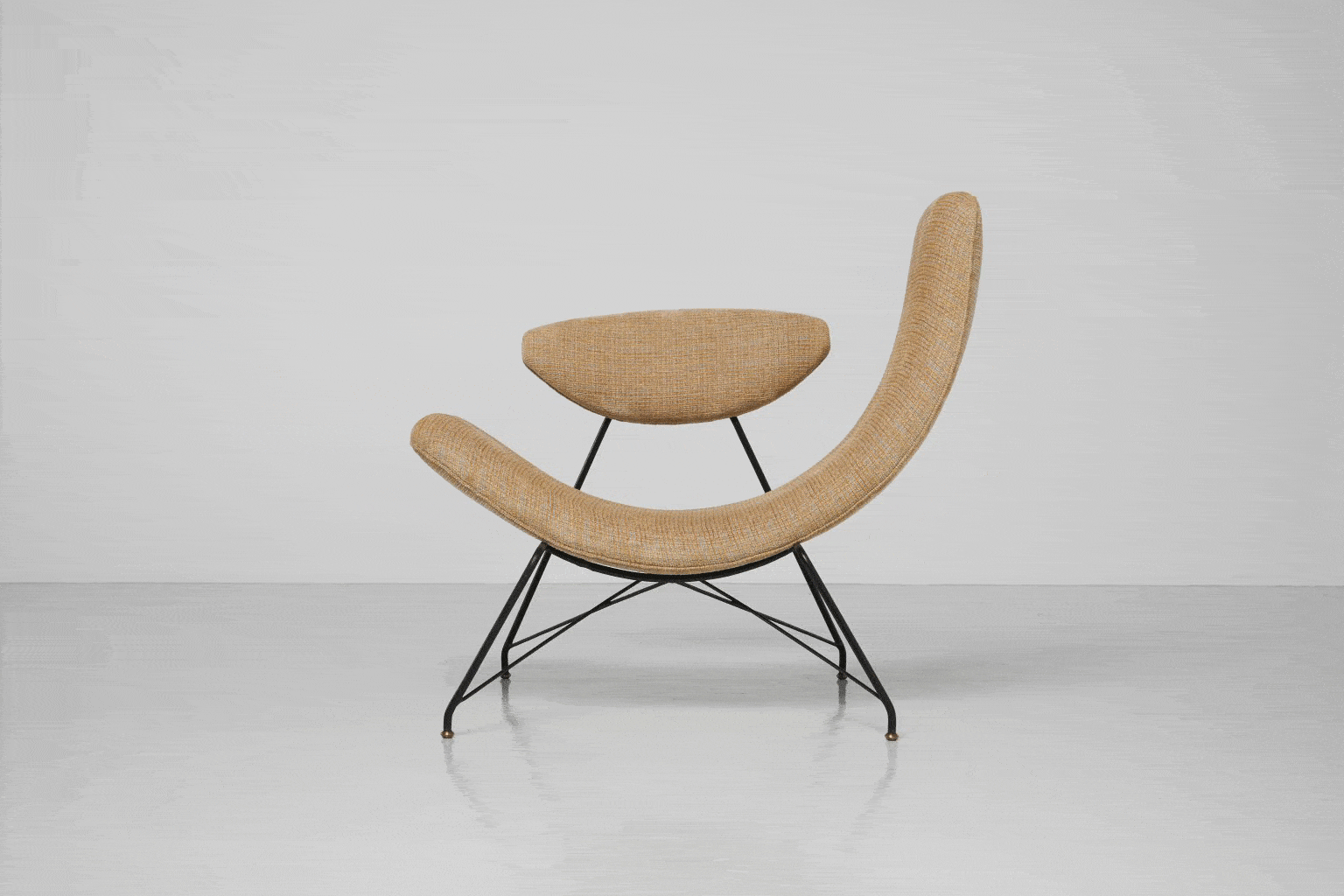
Martin Eisler, Reversível (Reversible) Chair, 1955; upholstered wrought iron. [via MMD]
Juan Baixas, Puzzle Chair, 1975; wood and canvas. [Museum of Modern Art. Gift of the Juan Ignacio Baixas Archive. Digital image © 2024 Museum of Modern Art]
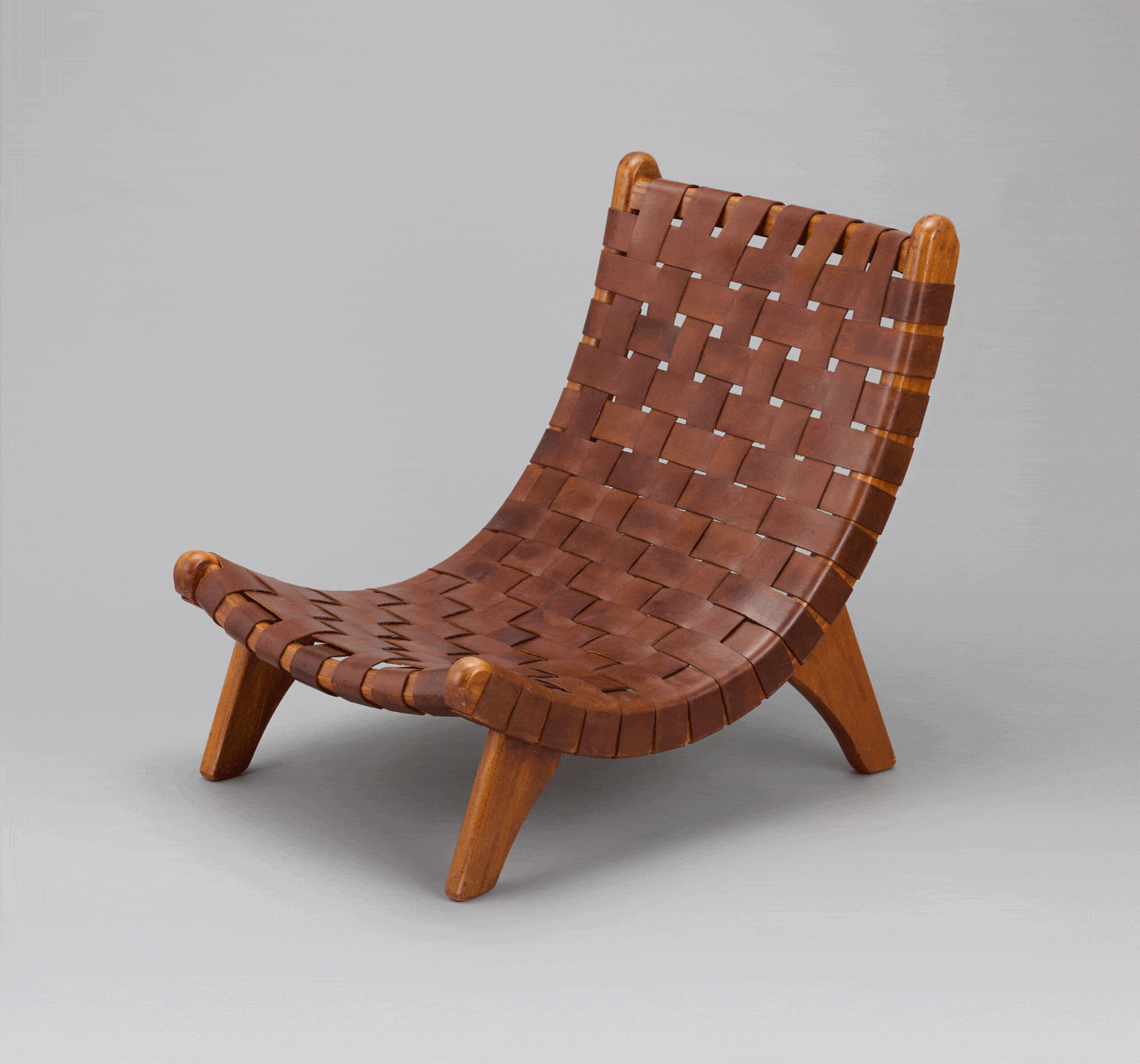
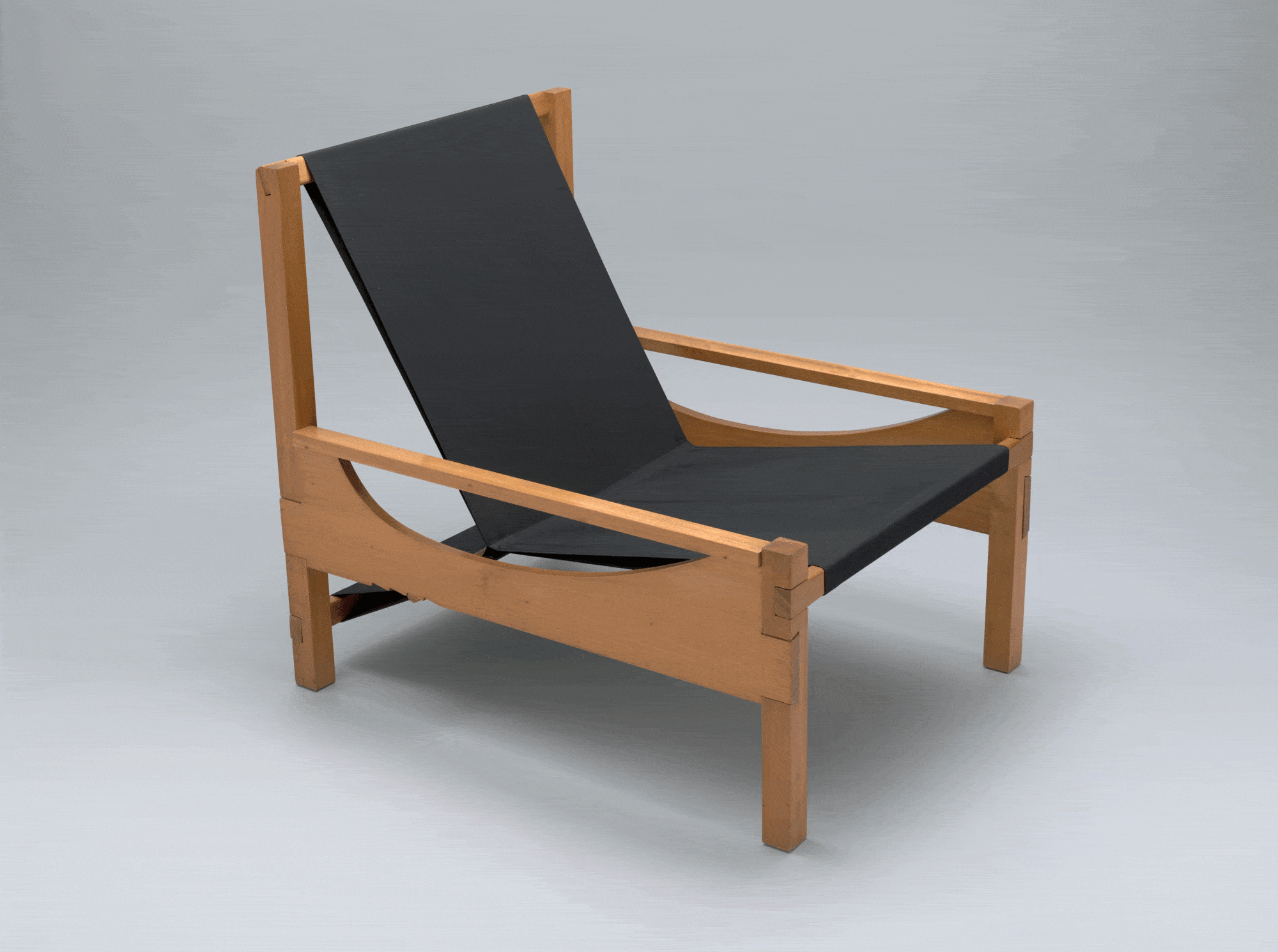
The objects in the opening section, “The Home as Laboratory for Modern Living,” seem assembled to illustrate Porset’s point; for one thing, they suggest that a raised living standard meant having great chairs to sit in. As it happened, the design of seating provided designers the opportunity to make connections between modern living and traditional forms. A stand-out example is Porset’s iconic Butaque, a low-slung lounge chair made of laminated wood and woven wicker; its shape is derived both from the indigenous dujo, or duho, common to pre-Columbian societies in the Caribbean and Mesoamerica, and from the X-shaped folding chairs brought to the hemisphere by Spanish colonists. Other chairs are similar in form, including the San Miguel Chair, by Michael Van Beuren, Claus Grabe, and Morley Webb, who worked in Mexico; the Rib Chair, by Martin Eisler, in Brazil; and the sensuously recumbent Alacrán (Scorpion) chaise, by the Mexican designer Manuel Álvarez Bravo. I only wish I could have stepped up onto the display platforms and tried out these inviting chairs.
The design of seating provided designers the opportunity to make connections between modern living and traditional forms.
Some designers looked beyond traditional forms and materials for inspiration. Martin Eisler’s Reversível (Reversible) lounge chair is an elegant contraption with an upholstered wrought iron frame that allows for two seating positions; it recalls the Bowl Chair by the Italian-Brazilian designer Lina Bo Bardi, an infinitely adjustable, cushily upholstered hemisphere set loose into a steel frame. And a high point of the exhibition was the close examination, with supporting documentary materials, of the B.K.F. Chair, a 1938 collaboration between Antonio Bonet (Spain), Juan Kurchan (Argentina), and Jorge Ferrari Hardoy (Argentina). With its leather seat slung over a wrought iron frame, the B.K.F. (the designers’ initials) became a symbol of relaxed modern living; the various knockoffs are marketed as the Butterfly Chair.
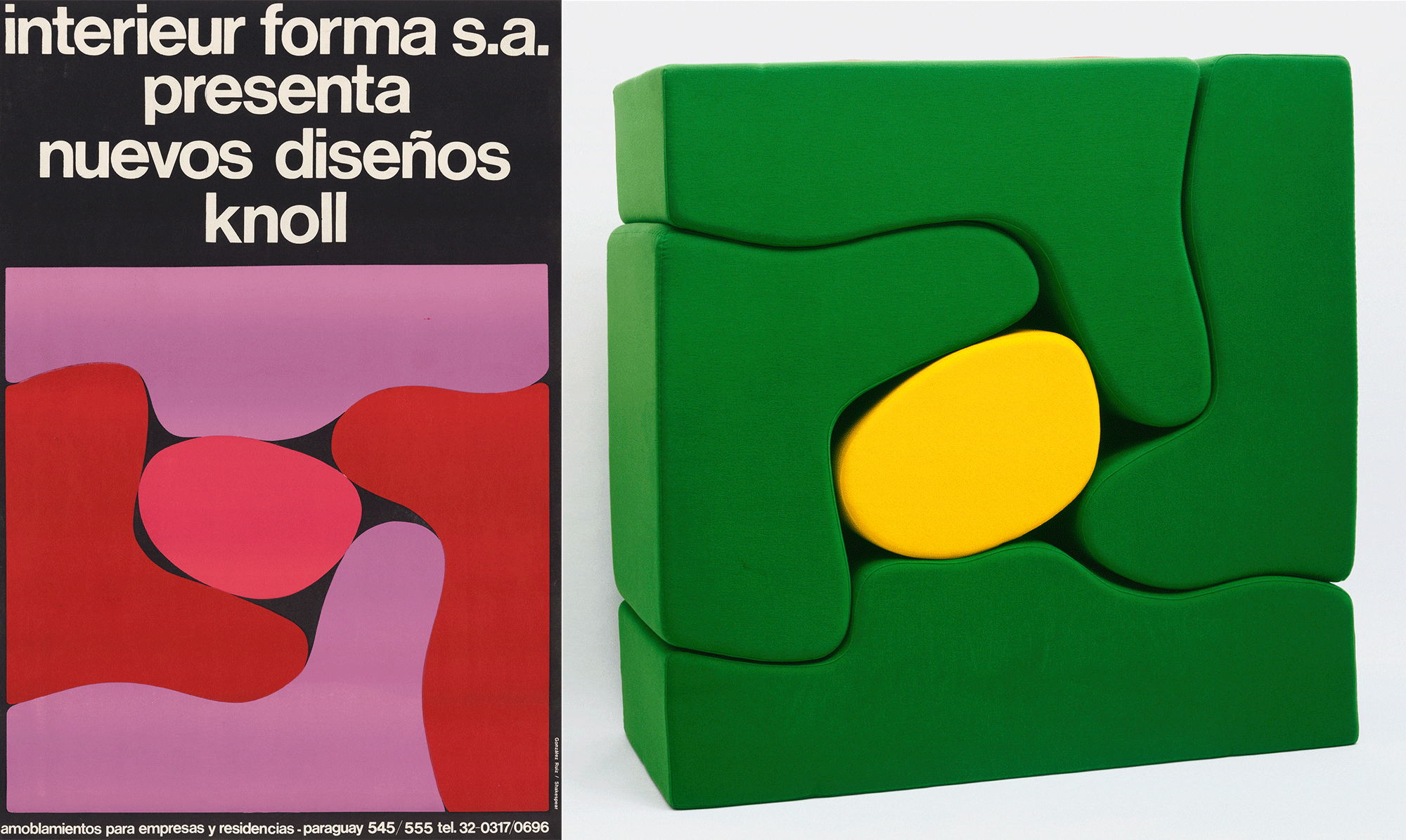
![Left: Jorge Zalszupin, Putskit oranizer, ca. [via Apartamento] Right: Robert Napoli, Noblex television, ca. 1975. [via ARQA]](https://placesjournal.org/wp-content/uploads/2024/08/Freeman-Latin-America-7.gif)

I appreciated the projections of period photographs of interiors; in these images we could see Porset’s furnishings in houses by Luis Barragan and Enrique Yáñez; Lina Bo Bardi’s own house, Casa de Vidro, in São Paulo; and the ubiquitous B.K.F. chair in assorted homes and hotels. Yet to my eyes the exhibition became somewhat diffuse as it moved into the 1970s. This blurring of focus might well track the dissipation of postwar energy and optimism, and the slide into political and economic troubles in some countries.
In this light the final section, “From Local Workshops to National Industries,” might well have been titled “International Industries.” During this period Latin American designers were finding opportunities to work for large international corporations like Knoll, Herman Miller, and Olivetti, and the results were such celebrated products as the Malitte lounge furniture, by the Chilean artist Roberto Matta; the Noblex television and Giulia radio, designed by the Argentinian Roberto Napoli; and the mod 1974 Putskit wall-mounted organizer, in brightly colored plastic, by the Brazilian designer Jorge Zalszupin. Some curatorial selections in this section were confounding: why, in a show about Latin America from 1940 to 1980, were we shown a flashlight designed in 1985 by the New York-based Emilo Ambasz and made in Italy? (Perhaps because it’s for sale in the MoMA design store? 4)
Crafting Modernity does not include design from Cuba. This is understandable. Cuba is a comparatively small nation, and in the mid 20th century it was still overwhelmingly (and lucratively) dependent on the sugar industry. The island had not yet experienced the industrialization that was shaping its larger neighbors to the west and south, and most consumer goods were imported, usually from the United States. There is another, more logistical explanation as well: museum loans from Cuba are extremely difficult due to the U.S. commercial embargo and to laws that allow U.S. citizens to claim possession of artwork and other assets expropriated by Fidel Castro’s government. (More on this later.)
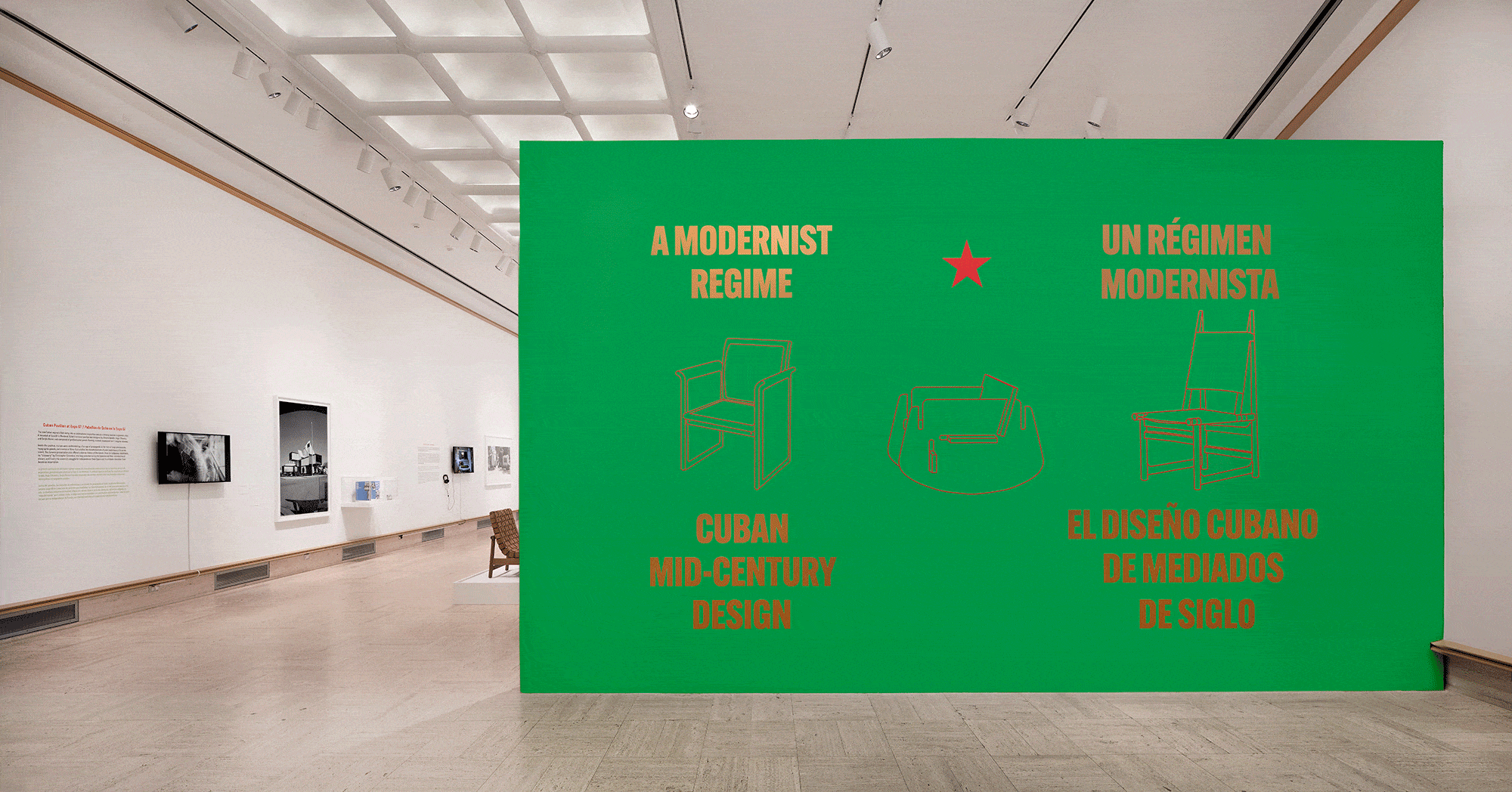
The revolution stimulated an efflorescence of avant-garde energy in architecture, music, dance, literature, and product design.
Happily, the absence of Cuba at MoMA is richly offset by A Modernist Regime: Cuban Mid-Century Design, a deeply researched and beautifully presented show at the Cranbrook Art Museum. Curated by Abel González Fernández and Laura Mott, this tightly focused exhibition examines design in Cuba in the two decades following the revolution that brought Fidel Castro to power in 1959. The triumph of the insurgents against the kleptocracy of Fulgencio Batista and the promise of a socialist democracy stimulated an efflorescence of avant-garde energy in architecture, music, dance, literature, and — the focus at the Cranbrook show — furniture and product design. Taking command of industrial production, the socialist government sought to diversify and modernize the economy. One of many outcomes was the promotion of domestic furniture production, partly for nationalistic reasons and, after the imposition of the U.S. embargo in 1962, partly from necessity.
The work of Clara Porset links the two exhibitions. In Crafting Modernity, Porset is identified as a Mexican designer; a legitimate claim, since she lived and worked for many years in Mexico City. Yet Porset was Cuban, and she never forsook her identity or ties. Born in 1895 into an affluent family in Matanzas, she was educated in Havana, New York, and Paris; in her youth she became committed to left-wing politics, and ran afoul of the repressive regimes of Gerardo Machado and then Fulgencio Batista. By the mid-1930s she had chosen to exile herself, first in New York and then in Mexico City.
Porset thrived in her new home, artistically, professionally, and socially. As Ana Elena Mallet writes, “Mexico enabled her to be a pioneer and to develop as a designer, as well as to venture into other fields fostered by the period’s incipient culture of design: writing, teaching, organizing exhibitions, and promoting design as a discipline.” 5 Porset mingled with the country’s creative elite, established a prolific practice, and married the Mexican artist Xavier Guerrero, a member of the communist party, with whom she collaborated on projects. Crafting Modernity features a pair of composite drawings of furniture for a country house, credited to Porset and Guerrero; in 1941 their design won the top prize in a competition sponsored by MoMA for “Organic Design in Home Furnishings.” 6
Like many leftist Cubans living elsewhere, Porset returned to her native land soon after Castro’s triumph. Exhilarated by the opportunity to participate in shaping the fledgling socialist state, she proposed that the new government establish a department of design “to investigate Cuban folklore, increase the value of artisanal craft, and stimulate industrial design.” 7 In these years Porset completed several projects; the most significant was the design and production of over 2,000 pieces of furniture for the Ciudad Escolar Camilo Cienfuegos, a small city in the province of Matanzas. Three wood chairs and a school bench — exquisite pieces of rustic minimalism — are displayed at Cranbrook. Ultimately, disputes over the direction of a school of industrial design caused Porset to return to Mexico in 1965; she died there in 1981, never having returned to Cuba.
After Porset’s cameo appearance, the star of the Cranbrook show is Gonzalo Córdoba. Born in Argentina in 1924, raised in Cuba, and trained as an architect, Córdoba had, by the 1950s, established an estimable practice in Havana, designing interiors and furniture for private clubs, hotels, and restaurants. Just before the revolution, he had been commissioned to design furnishings for a new resort in the Cienega Zapata, a wild wetland in the center of the island. In 1959 the Castro government took up the development of this project, the Centro Turistico Guamá, a complex of faux-indigenous thatched structures that can be considered a precursor to what’s now labeled ecotourism. This project yielded Córdoba’s most famous suite of furniture; notably, the celebrated Butaca Guamá, a curved wooden frame set into a rectilinear cradle, with seats of either rattan, wicker, or leather strapping. At Cranbrook, a grouping of chairs, table, and bench from the Guamá resort are arranged on a platform adjacent to a 1960 version of Porset’s Butaque, providing a welcome opportunity for close comparison. 8


In 1966 the Castro government established a furniture enterprise called Dujo Muebles (Duho Furniture); named after the aforementioned Indigenous chair, this new entity was the centerpiece of the state’s Plan Especial de de Exportaciones de Muebles y Artesanías (Special Plan for the Exportation of Furniture and Handicraft). Under the leadership of Córdoba, Dujo became a showcase for Cuban talent; operating, in effect, like a capitalist enterprise within the socialist system, it produced furniture and decorative household items like bowls, trays, and flatware for the quasi-luxury local market — hotels, government ministries, diplomatic quarters — and for export.
Dujo Muebles had a showroom in Miramar and was conspicuous at design fairs in Paris and Milan.
Dujo Muebles had a showroom in the affluent Miramar district of Havana and was conspicuous at design fairs in Paris and Milan. At the center of the Cranbrook exhibition, a selection of Dujo furniture is staged to replicate a retail display. Most of the pieces are Córdoba’s own designs, but there are also some by less well-known designers, including L. Rosado, A. Peralta, and Maria Victoria Caignet (Córdoba’s wife), all rendered in a palette of native hardwoods, leather, animal skins, rattan, and wicker. As described in a 1960s Dujo catalogue, this collection represents “a fortunate convergence of … the rich inheritance of the fine Spanish craftsmanship developed in Cuba during her long colonial past … here influenced by the new trends inspired by genuine folkloric concept and national traditions. These elements have contributed to a contemporary design which does not deviate too much from the classical traditions.” Hardly an avant-garde manifesto.
Over the course of the 1960s, as private businesses and properties were nationalized, upper- and middle-class Cubans emigrated in large numbers; this left few citizens on the island who could afford to shop at Dujo Muebles. In the mid 1970s, to better serve the domestic market, the government set up the Departamento de Diseños y Proyectos de la Empresa de Producciones Varias (Department of Designs and Projects of the Various Productions Company), known by the acronym EMPROVA, and also under the directorship of Córdoba. The furniture and accessories designed by EMPROVA were distinctly more modern in style than the production of Dujo. With clean lines, and free of folkloric motifs, these are the furnishings most likely to be found in a typical Cuban home or second-tier hotel.
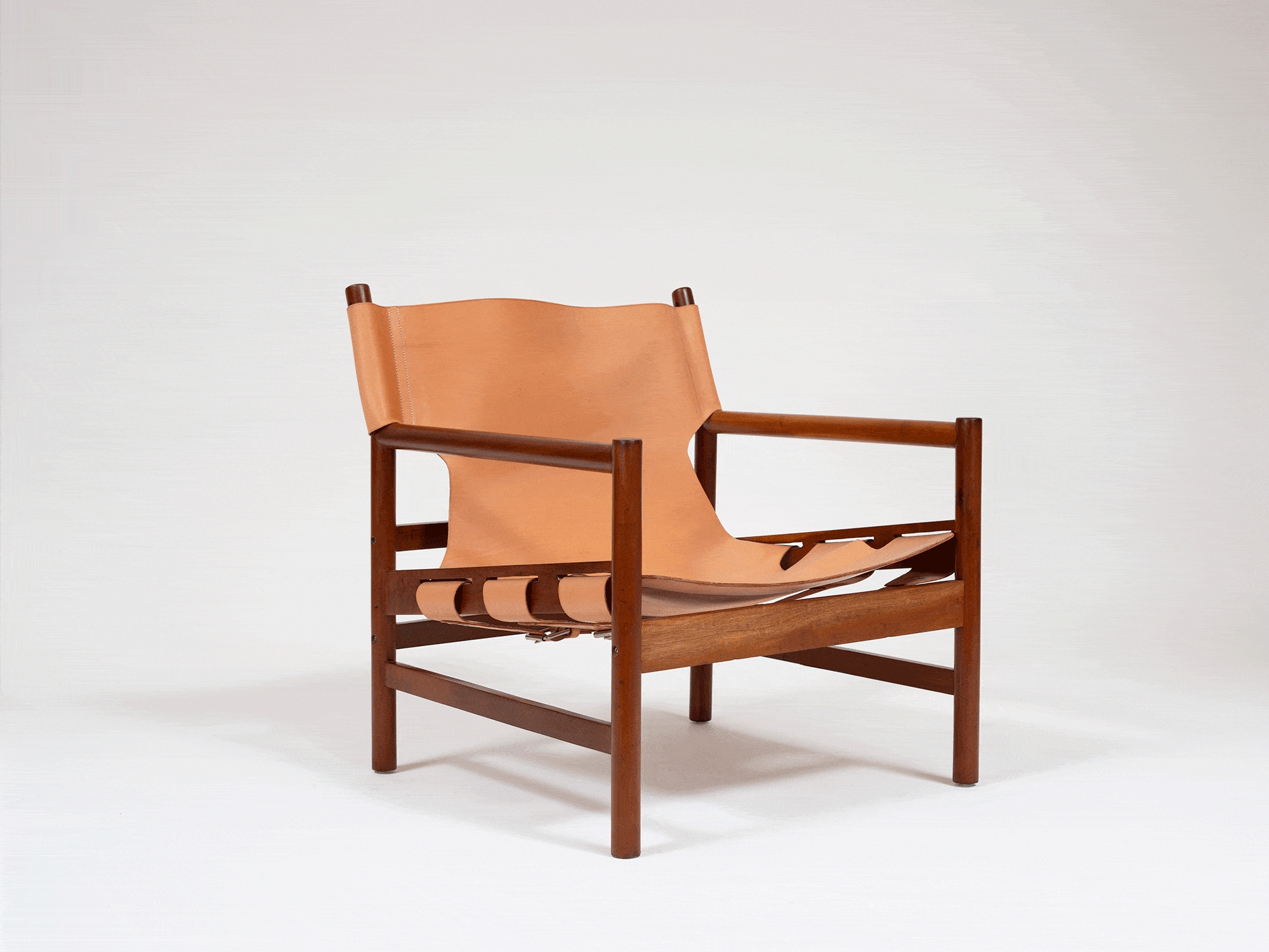

The Ministry of Light Industry was charged with producing prototypes of furniture that could be mass-produced from inexpensive and local materials.
More radical in form and ideological intent was the output of the Ministerio de Industria Ligera (Ministry of Light Industry), created in 1967 and charged with producing prototypes of furniture that could be mass-produced from inexpensive, locally available materials. One favored material was particle board made from bagasse, the crushed cane that is a by-product of sugar manufacturing. The Cranbrook curators reconstruct a display room originally created in Havana in 1971; enclosed by a MueblePared (Furniture Wall), the display features platform beds and a Yab-Yum Lounge Chair, by Heriberto Duverger, all built of bagasse board with colorful lacquer finishes. A nearby display spotlights a line of children’s furniture called Jigsaw; designed by Maria Teresa Muñiz Riva, it’s an ingenious system consisting of slotted particle-board panels that can be assembled into chairs, tables, or desks.
Jigsaw, which was used to furnish several schools, was the only furniture sponsored by the Ministry of Light Industry to enjoy a substantial production run. The components displayed at Cranbrook reminded me of the Puzzle Chair, designed in 1975 by the Chilean architect Juan Baixas, which was displayed as a kit-of-parts in Crafting Modernity; both designs underscore the contemporary interest in economy, portability, and accessibility. And although different in materials and aesthetic effect, the Red Cord Chair, designed in 1971 by Reinaldo N. Togores, suggests a similar vision of light, inexpensive components as ideal housing elements for the new socialist country; at Cranbrook, we see a photograph of the chair installed in a mock-up of architect Fernando Salinas’s modular, prefabricated Multiflex Housing System.
![Left: Installation view, Cuba Dispersa (Cuba Dispersed), a companion exhibition of posters from the early revolutionary era. Right: Liliam Dooley, Libertad Para Luis Manuel (Freedom for Luis Manuel). [Courtesy Liliam Dooley]](https://placesjournal.org/wp-content/uploads/2024/08/Freeman-Latin-Amerixa-22.gif)
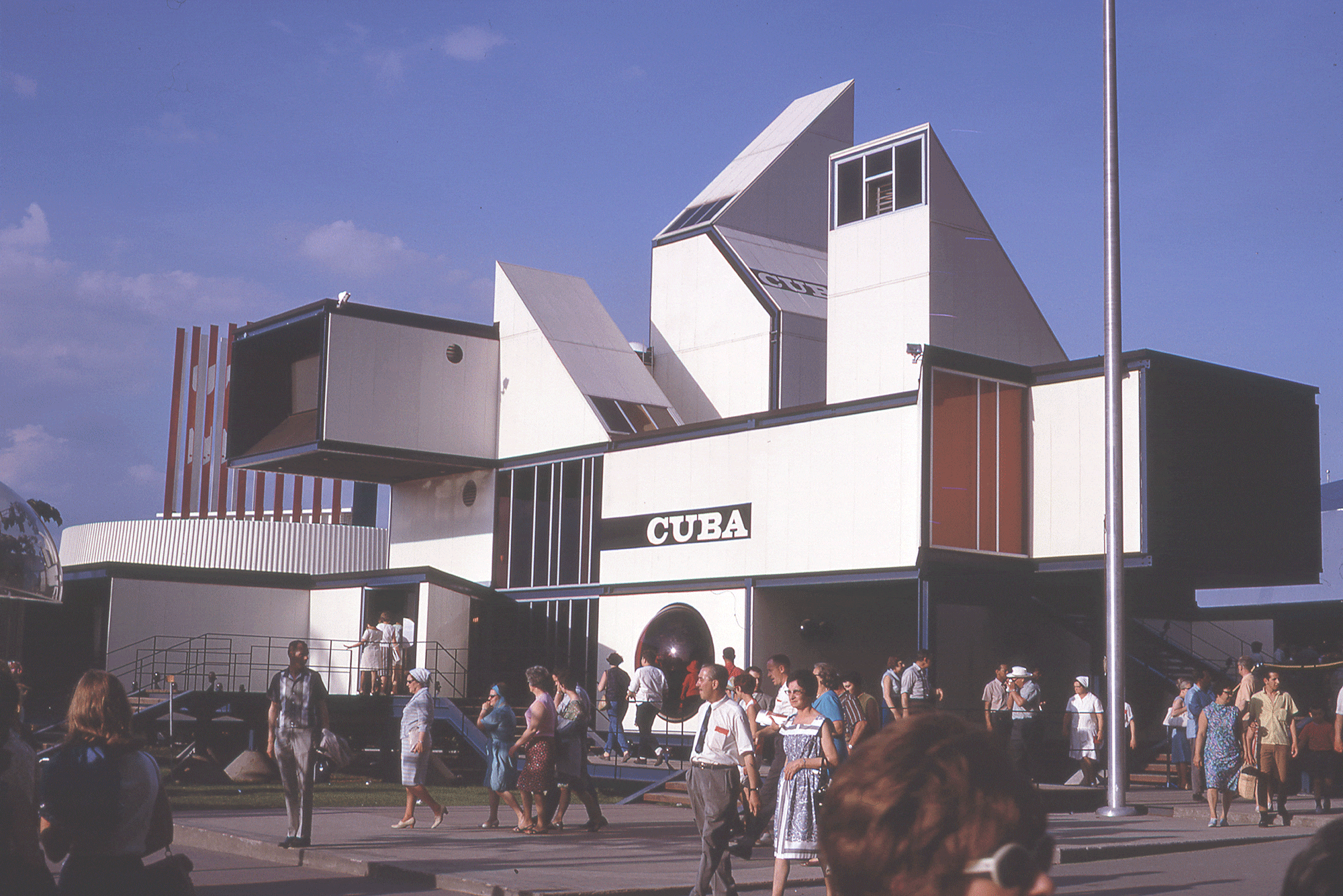
It’s fair to claim that Castro’s regime was “modernist,” and the curators are thoughtful in establishing context for the creativity of post-revolutionary designers, with photos of contemporaneous buildings and film clips of events. I particularly enjoyed the newsreels from the Cuban pavilion at Expo ’67 in Montreal; designed by architects Sergio Baroni, Hugo D’Acosta, and Vittorio Garatti, the building is a startling assemblage of geometric volumes made from prefabricated panels, enlivened by supergraphics and revolutionary propaganda photos. In a side gallery, Andrew Blauvelt, director of the Cranbrook Art Museum, has installed a collection of posters for the Organization of Solidarity with Peoples of Asia, Africa, and Latin America, or OSPAAL, showcasing Cuba’s remarkable graphic designs from the 1960s and ’70s.
I wish the exhibition had provided more background on Cuban design before the revolution; this would have underscored the continuity of important trends.
Still, I wish the Cranbrook exhibition had provided more background on Cuban design before the revolution; this would have underscored the continuity of important trends. 9 In fact, modernism, and modernity, had arrived in Cuba well before the revolution. In the middle decades of the 20th century, Cuba’s cultural elite and thriving middle-class embraced modernism in architecture and other arts; in doing so they were asserting the island’s status as a progressive nation (much as their counterparts were doing in other Latin American countries). Enriched by a wartime spike in sugar prices and a postwar boom in tourism, Havana was transformed by the construction of sumptuous hotels, elegant apartment buildings, and extensive neighborhoods of modernist houses, designed by stellar architects like Mario Romañach, Frank Martínez, Max Borges, and Antonio Quintana. To outfit their sleek new residences, Cubans purchased modern furniture, some fabricated in local workshops but most imported from the United States. Contemporary Cuban magazines carried advertisements for American-made furniture, appliances, lighting, and plumbing fixtures. Knoll had a showroom in the upscale Vedado district of Havana; like the nearby U.S. automobile dealerships, the island outpost did tremendous business.
Earlier I mentioned the scarcity of Cuban furniture in the United States and the difficulty of securing museum loans from Cuba. So when I entered the Cranbrook gallery, I wondered: Where did all this stuff come from? The answer was printed on every label: the artifacts were provided by Cuban Modern, a private collection assembled over many years by the Cuban artist Marco Castillo, one of the founders of the arts collective Los Carpinteros and now based in Merida, Mexico.
Castillo’s commitment to Cuban midcentury modernism, especially from the early post-revolution years, is both scholarly and artistic. Imagery and artifacts of midcentury industrial design have informed Castillo’s own work, as seen in an adjunct exhibition at Cranbrook aptly titled Marco Castillo: The Hands of the Collector. In turn, this segues into Ahora Nunca (Now Nothing), a presentation of work by six contemporary Cuban artists, none of whom are currently living in Cuba. Perhaps inevitably, this small but potent presentation becomes a bitter commentary on the suppression of artistic freedom under the current Cuban regime — and a lament for the optimistic period when a cultural avant-garde and a young socialist government found a brief productive synchrony.




If you would like to comment on this article, or anything else on Places Journal, visit our Facebook page or send us a message on Twitter.