
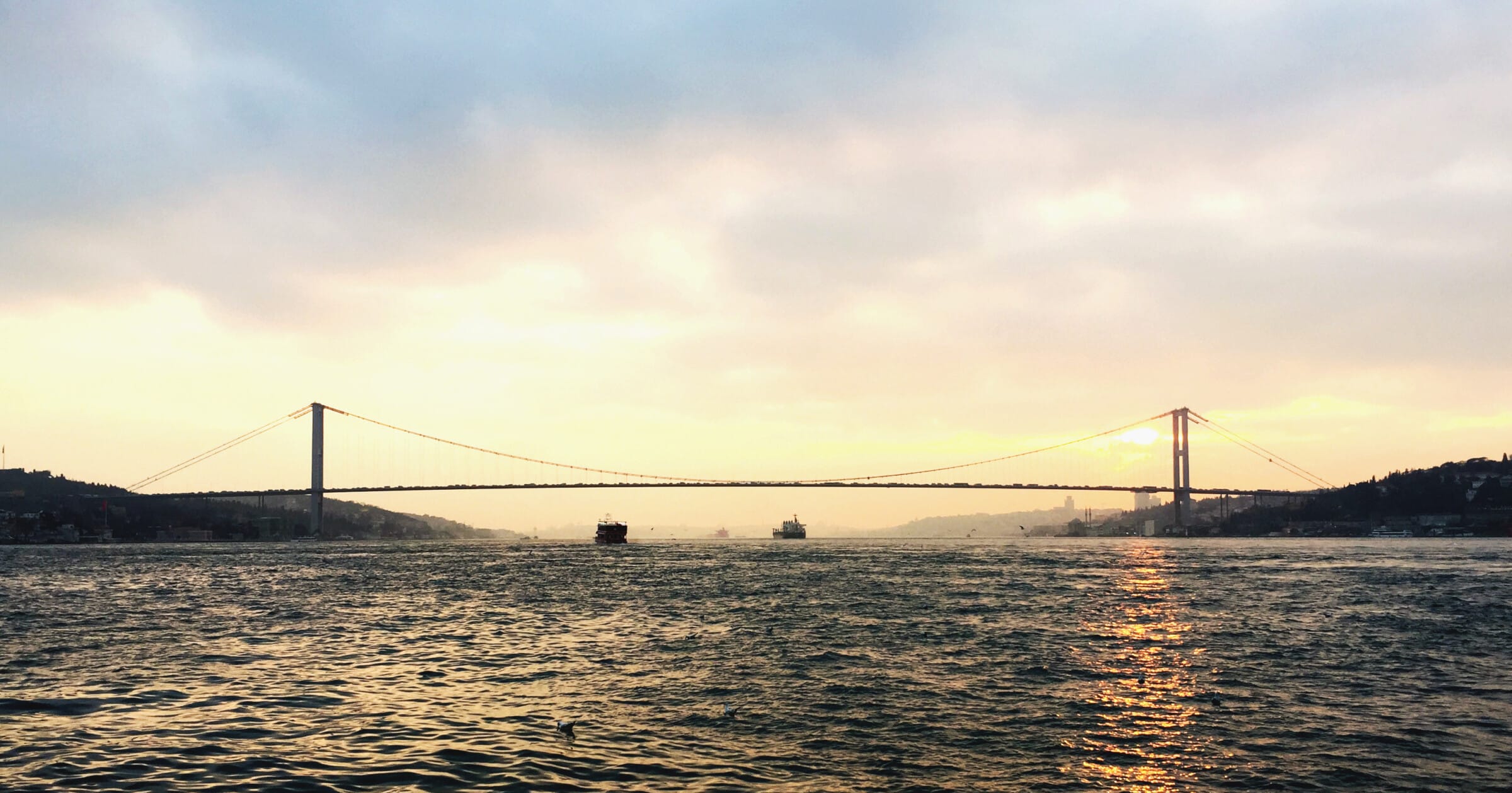
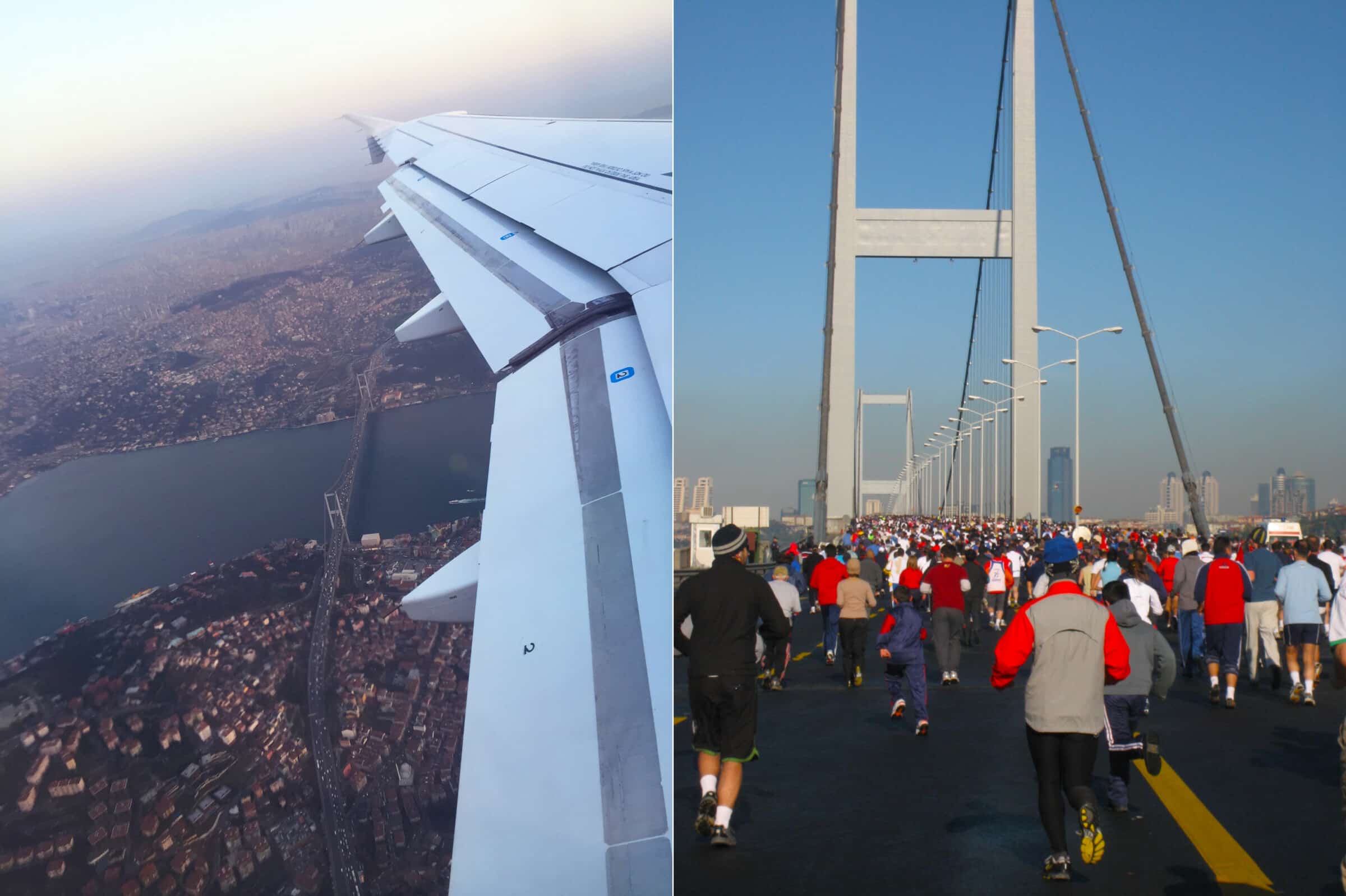
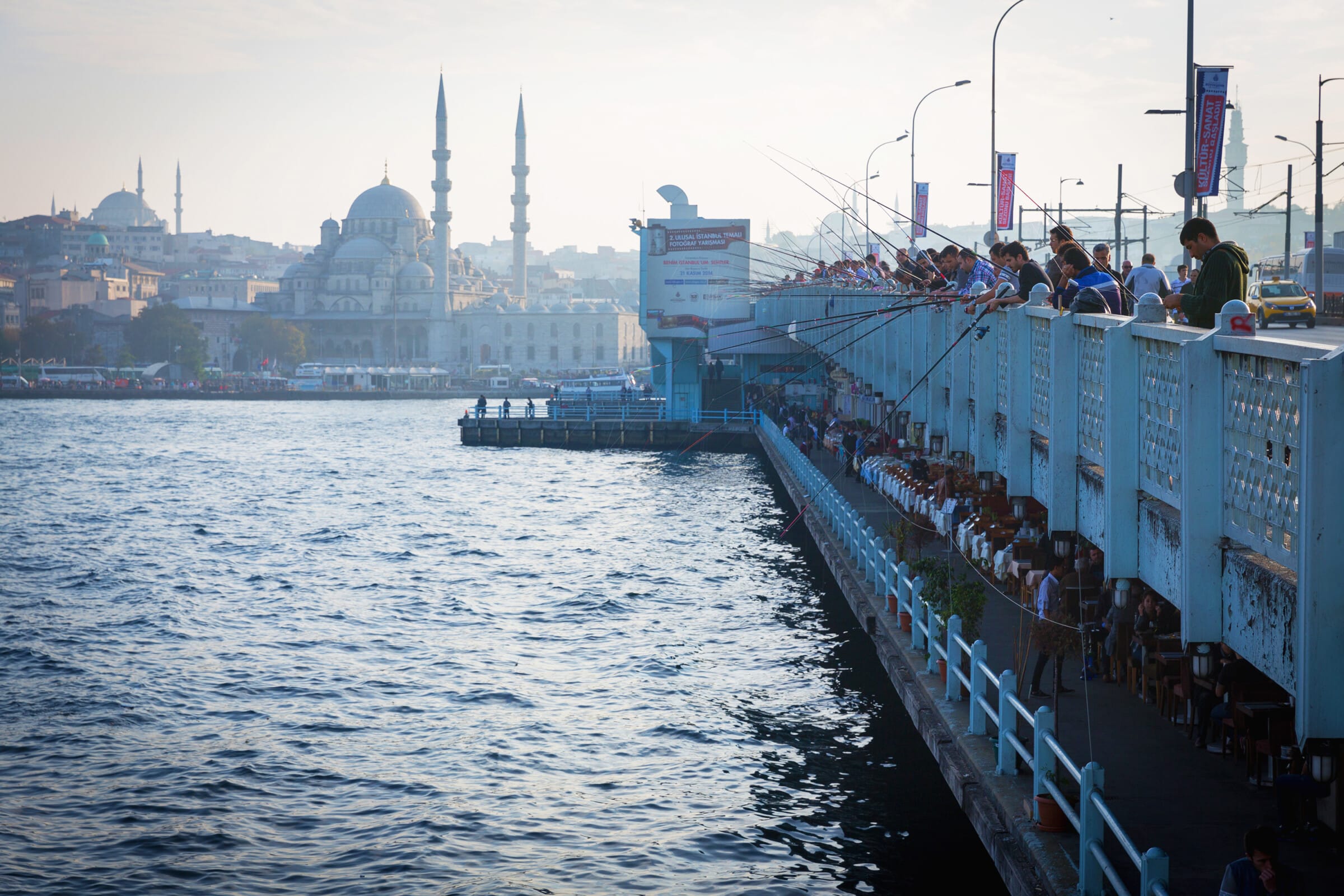
Unless you are a runner in the Istanbul Marathon, or a maintenance worker, or perhaps a police officer, or, in the most unusual of circumstances, a putschist attempting to stage a coup, you cannot walk across Istanbul’s Bosphorus Bridge. 1 You can, of course, drive across it, or be driven, by motorcycle, taxi, minibus, presidential motorcade, or tank. You can also pass underneath it, perhaps on one of the city’s ferries — a Şehir Hatları ferry, for instance, which will take you from Eminönü pier, just next to the Galata Bridge, up to the Black Sea villages of Anadolou or Rumeli Kavağı. Standing on the deck, you would see the underside of the Bosphorus Bridge, and then watch it recede in the distance as you moved from the shores of Asia to the shores of Europe, the City of the World’s Desire revealing itself to you in Thracian and Anatolian glimpses. If not a public ferry, you might pass beneath the bridge on an oligarch’s yacht or a fisherman’s boat, floating for a beat beneath the bridge’s nearly mile-length span, the call to prayer from a hundred mosques sounding as another sea, behind, over, and all around you. You can also, of course, fly over this bridge — as a drone will do, or a seagull, or a human, seated perhaps on a commercial flight, descending to Istanbul’s sprawling new airport to the north.
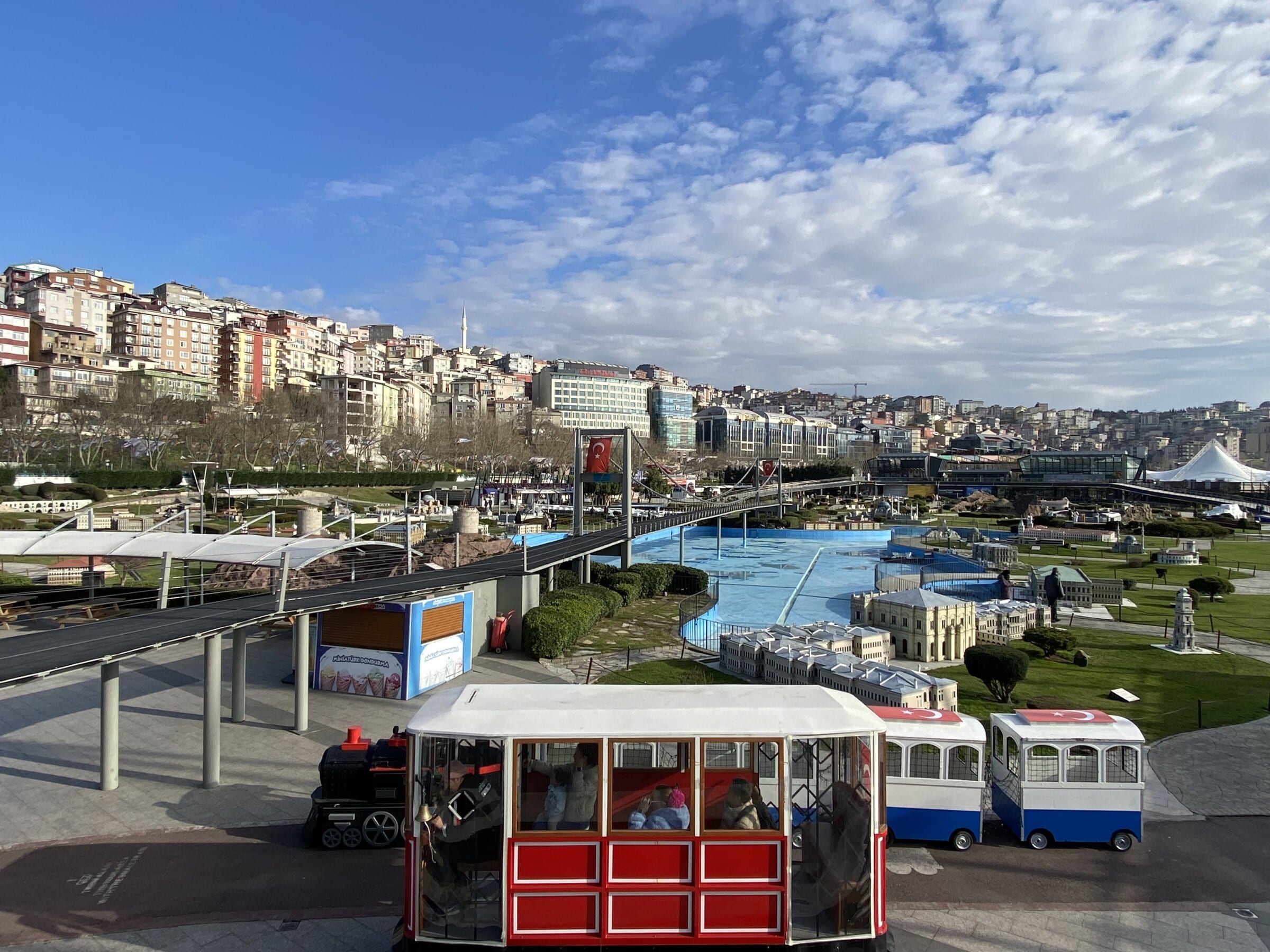
There is, however, another Bosphorus Bridge. This other bridge is perched in a park, situated between the slowly gentrifying neighborhood of Kasımpaşa and the calm, lazy waters of the Golden Horn Estuary, another of Istanbul’s famous waters. This other Bosphorus Bridge can be strolled. You can stop on it — traffic be damned — and pose for selfies, even look down between its thin suspension cables to take a picture of a battered, model ferry beneath your feet. The ferry is tethered by wire fastened at opposite ends of a pan of clear blue water in a shallow concrete pool, meant for the purposes of this display to represent the Bosphorus, but with none of the Bosphorus’s marine grace, or sea-spray, or mean currents. (In fact, you can pilot this ferry, pedaling furiously at a wheel that will propel the boat in a long straight line.)

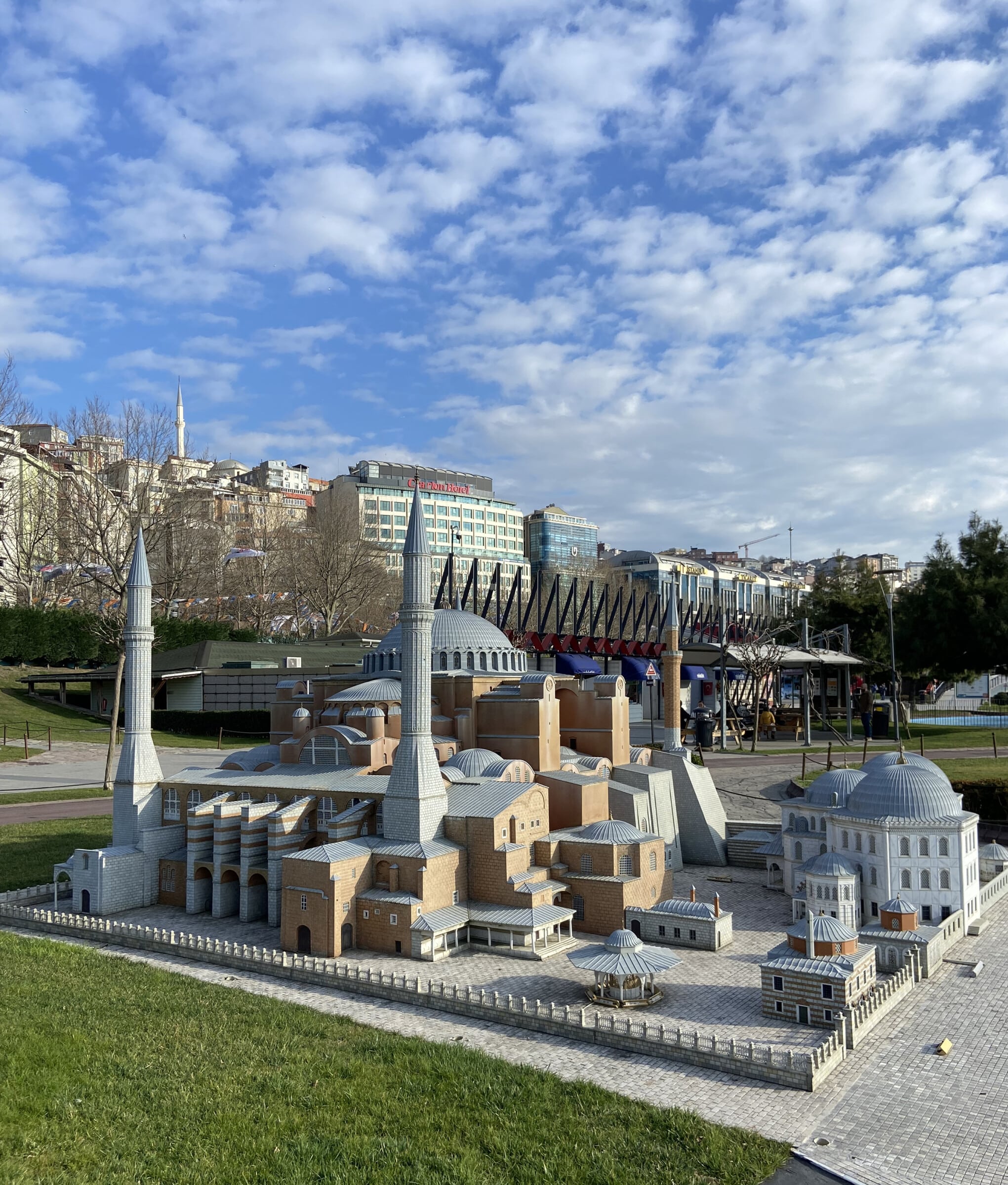
Standing atop this bridge, you can survey the Anatolian and Thracian domains of Istanbul, Türkiye, and the Ottoman world at your leisure. As you face south, immediately to your left is a miniaturized Atatürk airport (its 1:1 analogue, away on the Sea of Marmara, is no longer in public use), with model airplanes tidily parked on a fake runway. Nearby is a little Hagia Sophia, a Lilliputian Blue Mosque, a tiny Maiden’s Tower, a compact Northern Sea Field Command Center. You can stroll quickly, casually, from this bridge to all of these Miniatürk sites, as well as to an ersatz Mount Ararat (the real deal is almost 1,000 miles to the east), an ersatz Atatürk Dam (eleven days of non-stop walking over 600 miles southeast), an ersatz Dome of the Rock (a flight of four and half hours to Ben Gurion Airport, plus a taxi ride), a Temple of Artemis (seventeen+ hours by bus to Selçuk), and even an Altar of Zeus (four hours and ten minutes driving to Pergamon, and much longer if you want to see the booty looted from Pergamon, now at a museum in Berlin).
This miniature world is Miniatürk — the largest miniature theme park on the planet. (“Epic” according to its marketing department.) The landscape here is peculiar. Miniatürk contains the many extents of a world — its history, narratives, political terrain — except all has been geographically and cartographically re-organized — “re-worlded” is the word I would use — and also shrunken. Miniatürk’s buildings, infrastructures, and monuments appear at 1/25th scale (so says the brochure), and in no particular order.

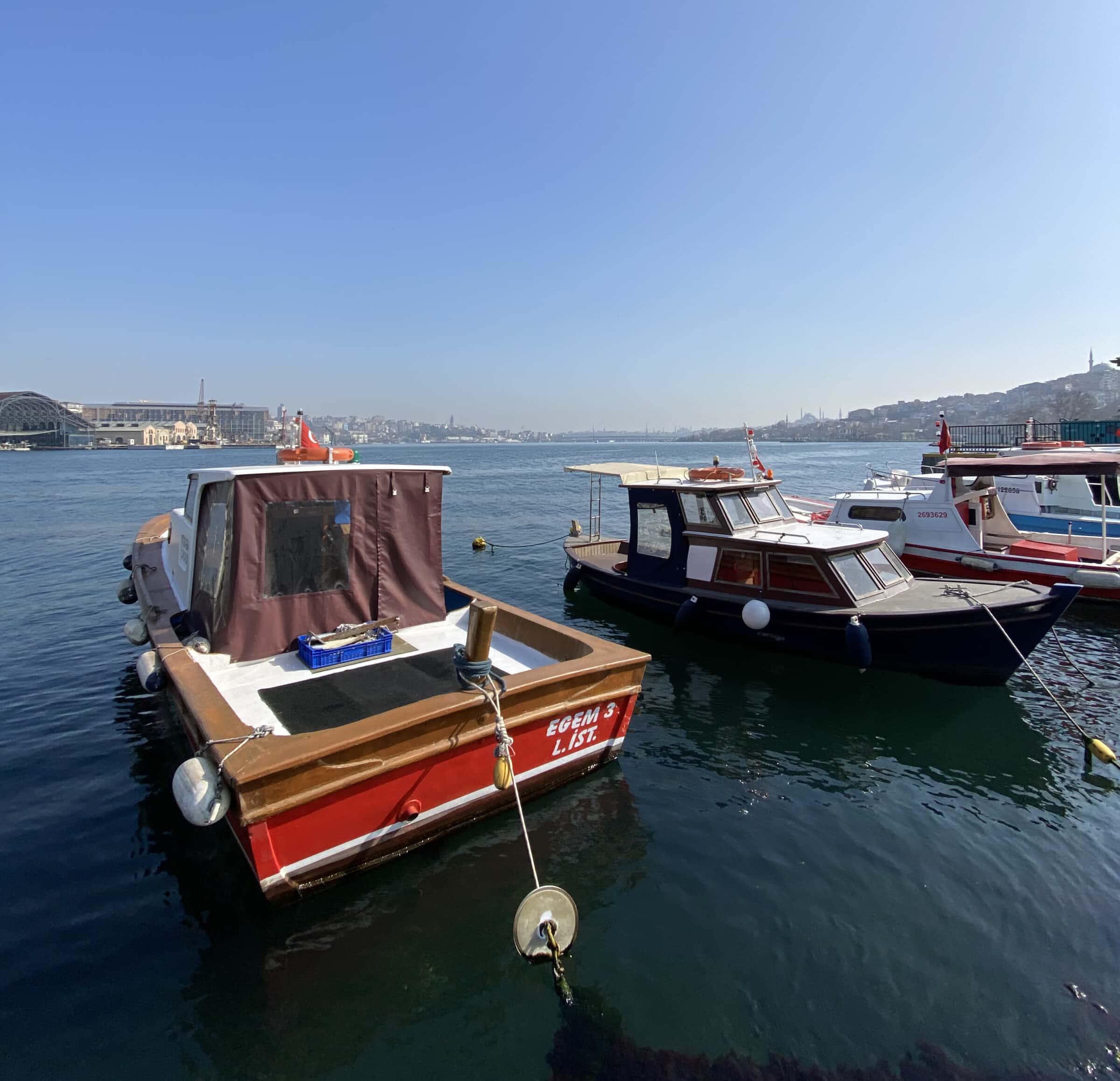
I was beguiled by Miniatürk the first time I saw it in 2007, a few years after it opened. With my undergraduate architecture and landscape architecture students, I took the painfully slow Golden Horn ferry from Üsküdar, on the Asian shore, around Seraglio Point, and under the Galata Bridge. We’d had a busy, tiring morning, and as we ping-ponged across the Haliç in a slow vector, fueled by cheap, hot tea, I was struck by the sudden quiet that comes when a boat moves away from the hectic Bosphorus piers.
This miniature world is Miniatürk — the largest miniature theme park on the planet.
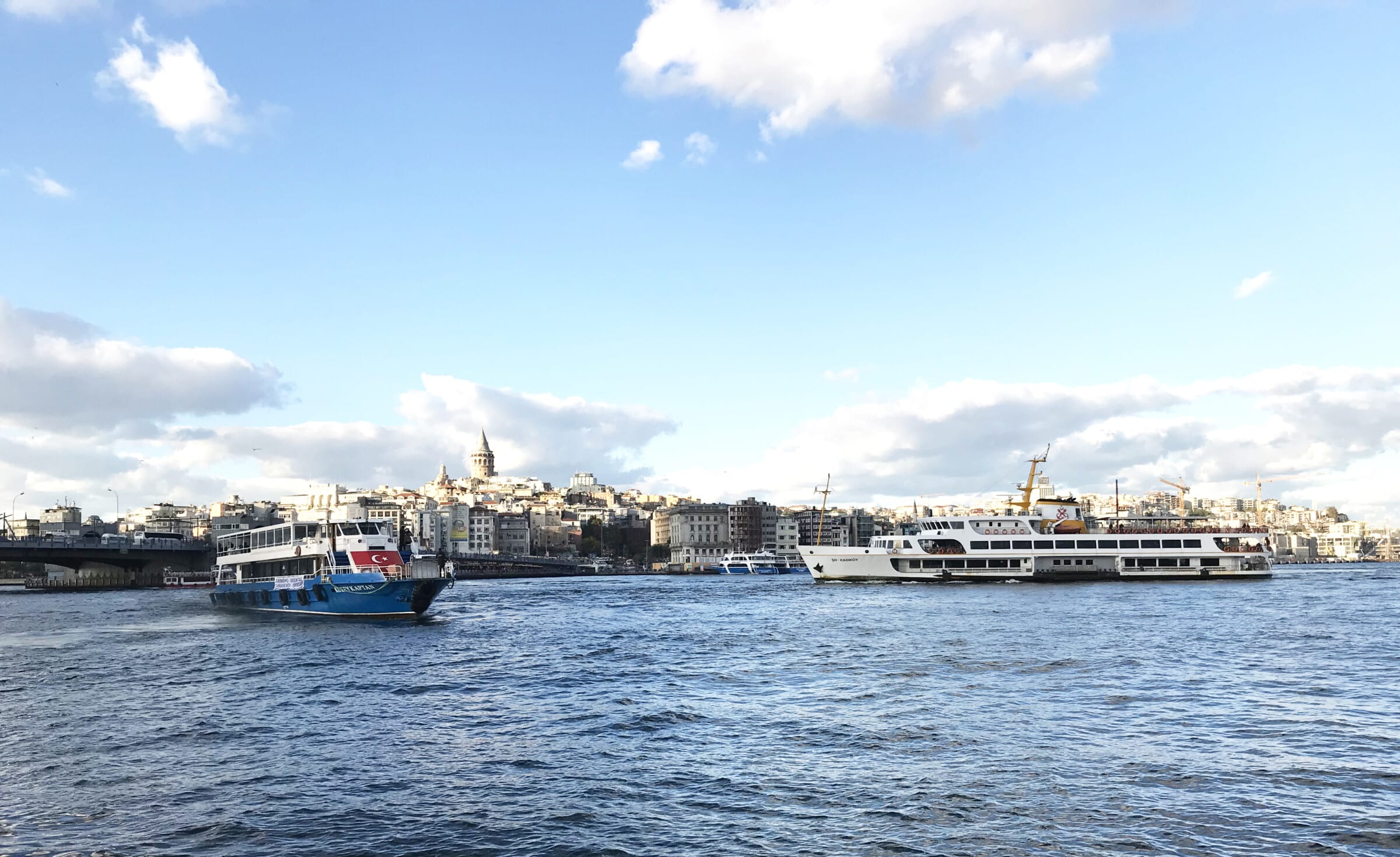
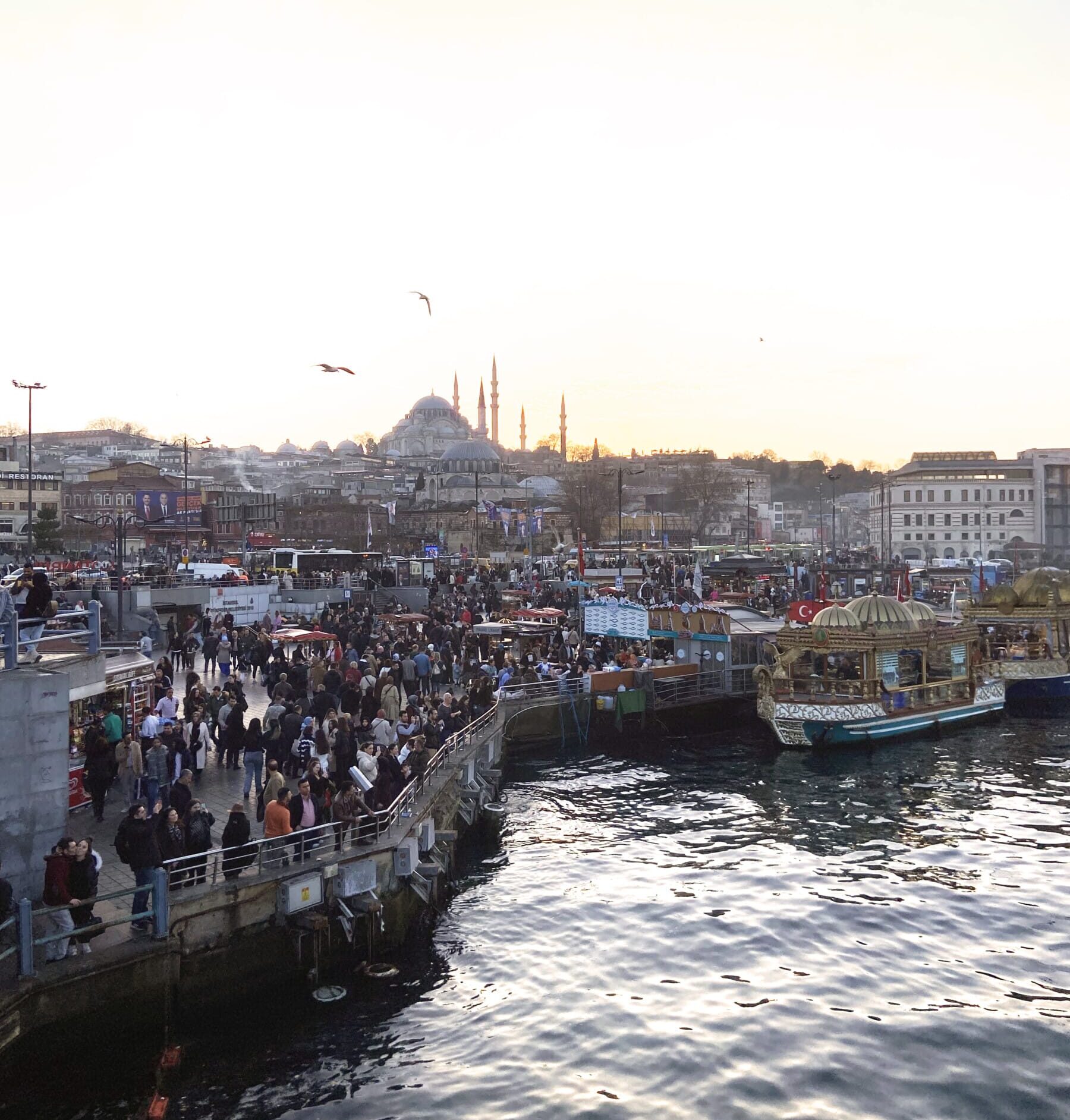
I know all the ferry stops by heart now: Karaköy on the north side of the Golden Horn, with its shoreline fish market and the bustle of the Galata bridge overhead, a view of the witches-hat-capped Galata Tower poking up from the press of buildings that line the slope up to Taksim Square; Kasımpaşa, with its low, dark wood ferry station and flush of blue-collar workers, rushing to work; across to Fener, from which fragments of the ancient Theodosian Land Walls are visible, as well as the stately, white-painted metal of the Bulgarian St. Stephen Church, sitting in an overgrown, weedy garden; and then to Balat, where on a high hill towering above the water is the lavish brick Phanar Roman Orthodox Lyceum, more commonly called the Red Castle or the Red School. From Balat, the ferry crosses the Horn again, docking on the north side at Hasköy Station, set against a low green park, then back to Ayvansaray on the south, and then back across to Sütlüce — at which point we finally disembarked to catch a bus that would take us the rest of the way. (The ferry makes one last stop, at Eyüp, one of Istanbul’s oldest and most sacred areas, before reversing direction and heading back to Asia via the same route. Then repeat. And repeat.)
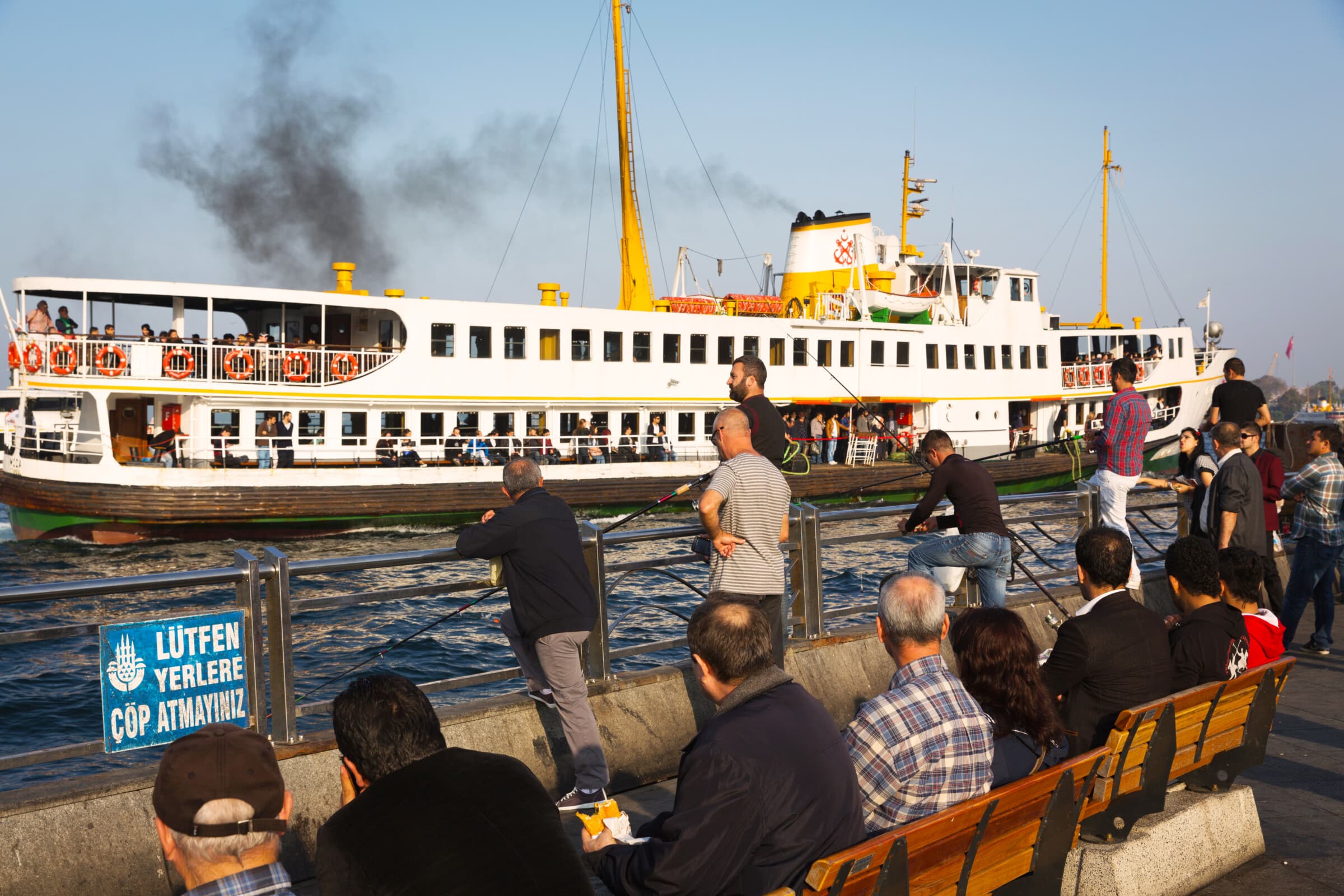
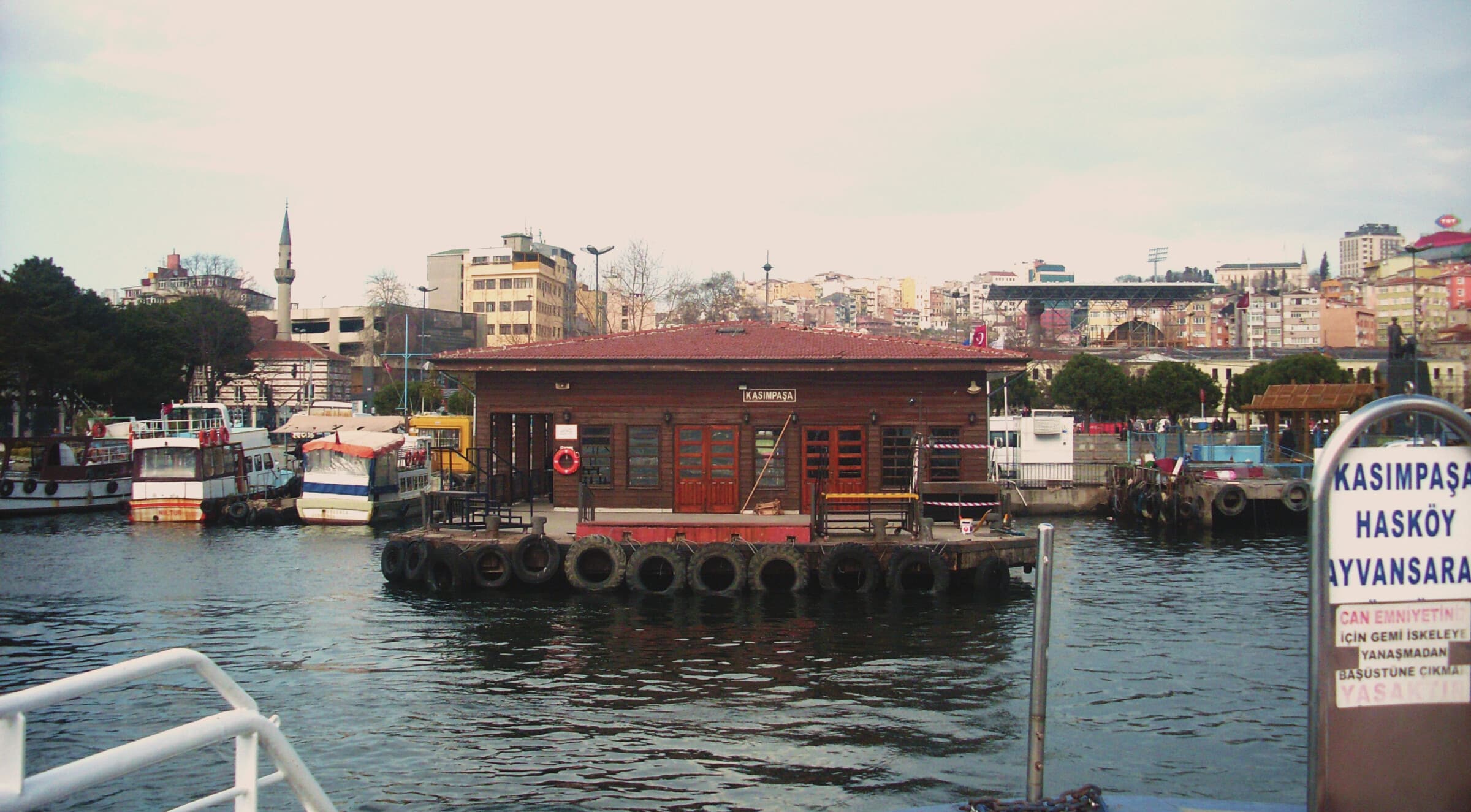
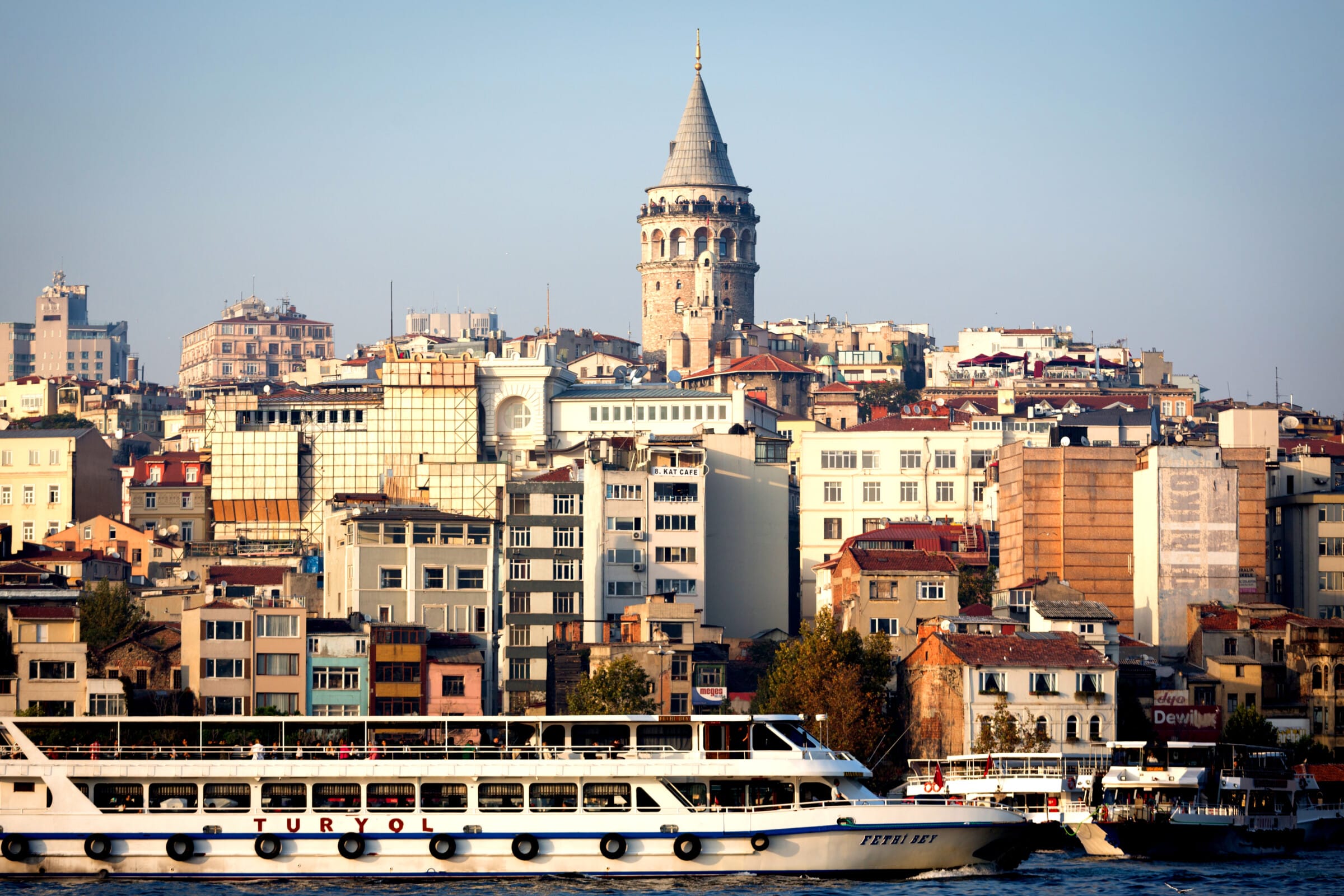
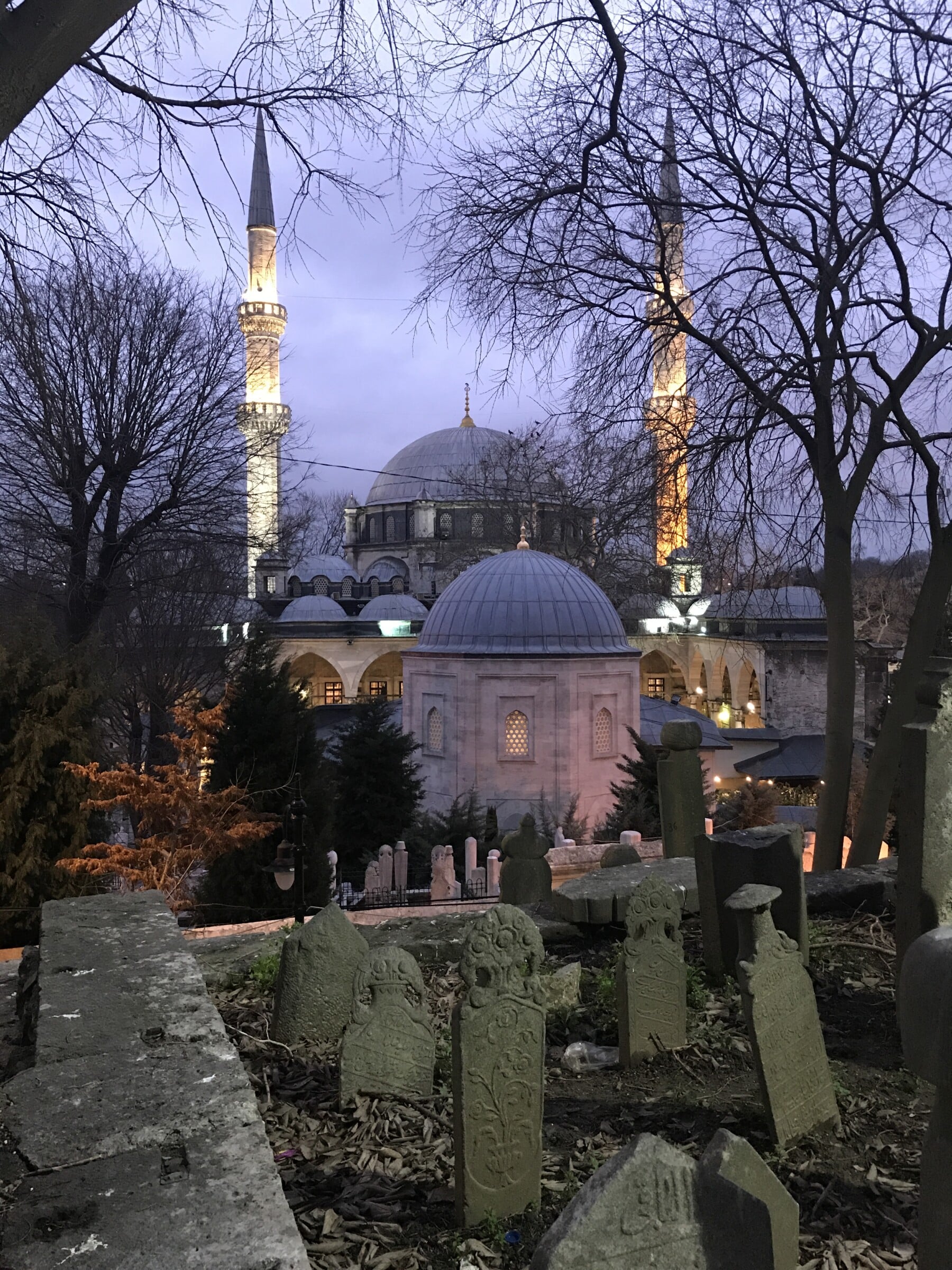
Many of the buildings and monuments that mark this route — the Galata Tower, St. Stephen, the Red Castle, Theodosian walls, the mosque of Eyüp — are on display at Miniatürk, where they take a very different aspect. Encountering them at Miniatürk, one is struck — at least I was struck — by what’s missing, which is all the frenetic energy of life and urbanity and density and “city-ness” that surrounds their real-world analogues. Miniatürk’s 1:25 scale simulacra sit quietly in an idyllic green park, on clear patches of manicured lawn, in a somnolent landscape bounded on one side by the busy traffic corridor of İmrahor Caddesi, and on the other by the unhurried waters of the Golden Horn, serene as the Buddha. 2
There is nothing serene or languorous about the actual city of Istanbul — that is, unless you know where to look, and where to hide. There are pockets of serenity: the courtyard of a mosque in a neighborhood far from the water and tourists, or in the late evening when the city’s hard edges are worn a little smoother, or when a feral cat jumps onto your lap over your morning çay (tea) and börek. But on the whole, Istanbul is a profoundly active city — busy, thick, entangled. It takes forever to go places, and provokes immense frustration.
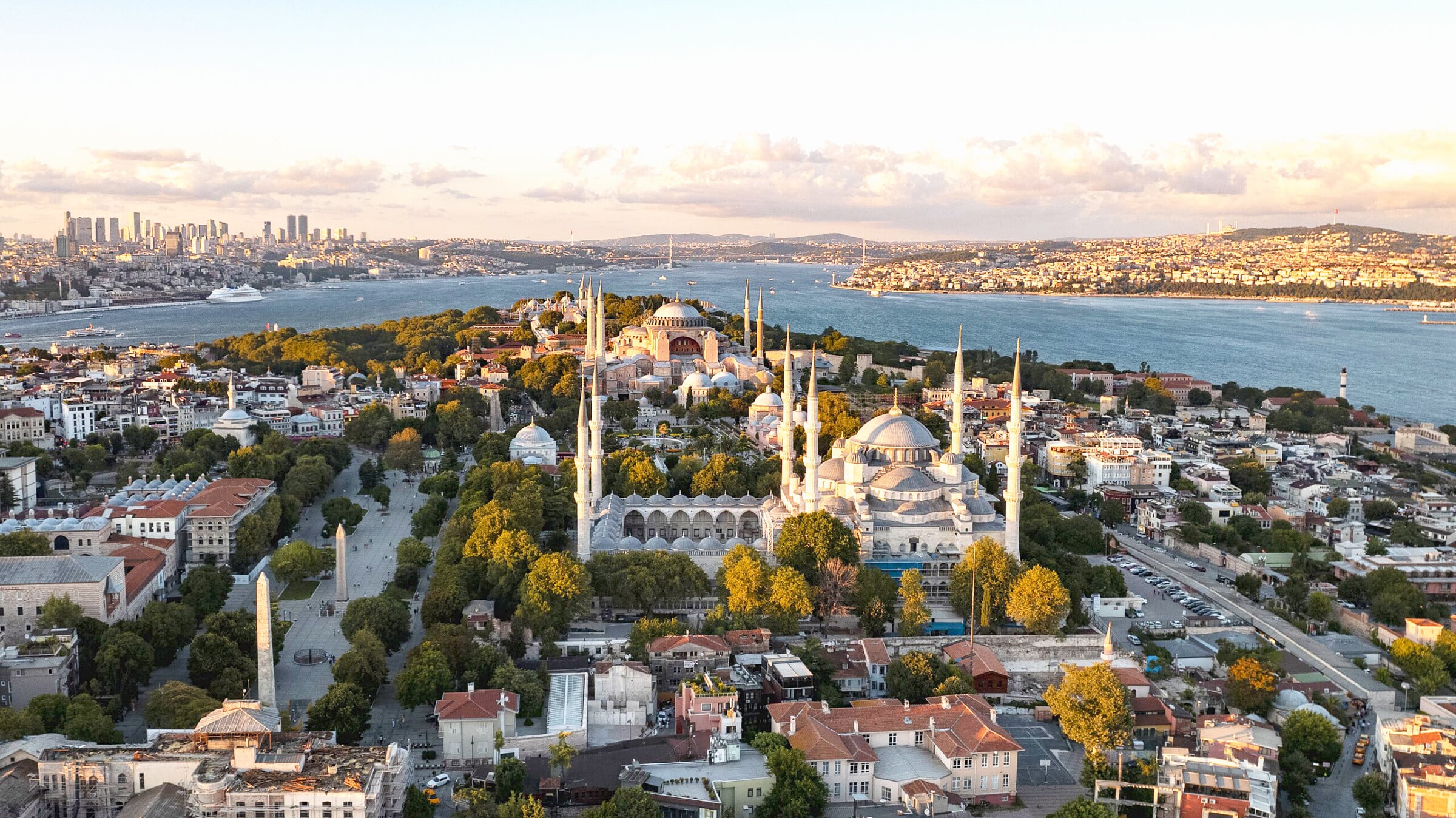
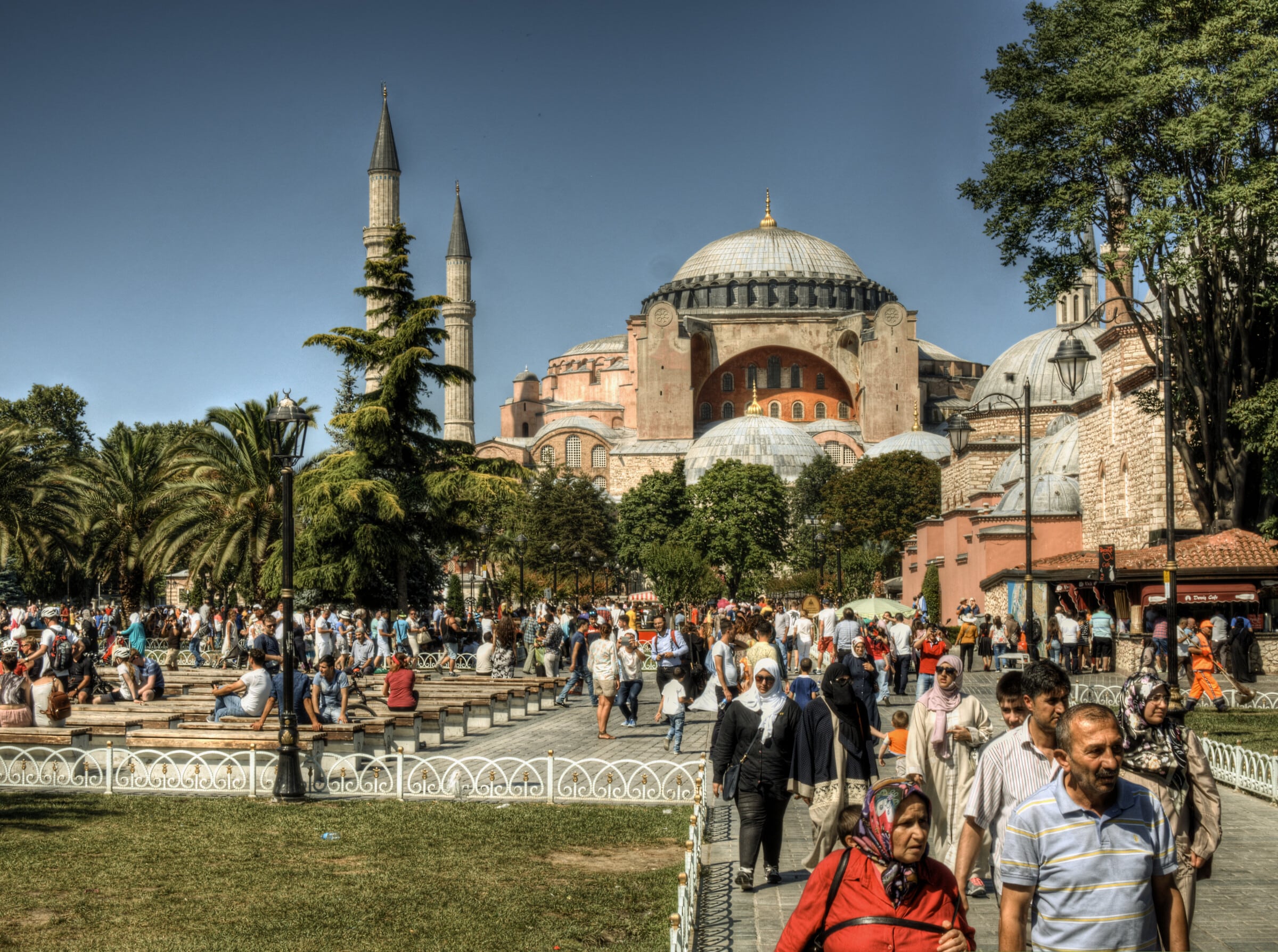
It’s also, of course, the most beautiful and exhilarating and lovely city on this tiny blue dot of a planet. Moving in and through and across Istanbul is an exercise in staccato depression and delight. It contains without question one of the best interconnected transit systems in the world, transporting Istanbullus across water, underneath water, along tiny roads and alleys and highways, through granite rock on underground funiculars, or above granite rock, as at Eyüp, where you might travel on a cable car from coastline to hilltop cafe over a cascading cemetery of white stone and green pines. Of course, such travel can take forever, and I’d forgotten how patience-testing it is, moving across this forever city, cutting across byways and markets, stopped by dead-ends. Directional cues are not straightforward in Istanbul, ever. This is not the case at Miniatürk, where a stamped concrete path bordered by red bricks guides you through a place that is less than the city, but also more than the city. Miniatürk meanders, in effect, through many cities — many geographies, many time periods, many histories, politics, and myths too — and all the while, you never leave Istanbul.
Miniatürk meanders through many cities — many geographies, many time periods, many histories, politics, and myths too — and all the while, you never leave Istanbul.
On this most recent trip in February 2024, my flight to Türkiye had been re-booked through Newark and I was crammed into a window seat for a nine-hour journey from the airport flower of the Garden State direct to Istanbul. I arrived jetlagged, irritated, and shocked at the inflation of the lira. The next day, it took me an hour and half to get to Miniatürk, though it’s only about three and a half miles from my little apartment near the Galata Tower. I mapped out the trip. Walk, then bus, then walk. I presumed my metro card from a previous stay was functional for public transit, but the only machine to check my balance was buried in the byzantine corridors of the Şişhane metro station. I shouldered my way through an intensely maddening crowd at the Galata Tower, noting that Büyük Hendek (“Big Trench”) Street had become an Instagram influencer’s paradise: ranks upon ranks of eager glitterati posed for pictures, with soft lighting and tilt-shift filters, framed by densely-packed Republic-era buildings and the Tower as a backdrop. I walked through the busy intersection at Şişhane, looking out at the Golden Horn and its ferries, the cranes at the Tersane shipyards, the southern shore of the Golden Horn, and the sunlit ridge of the Fatih district in the distance.
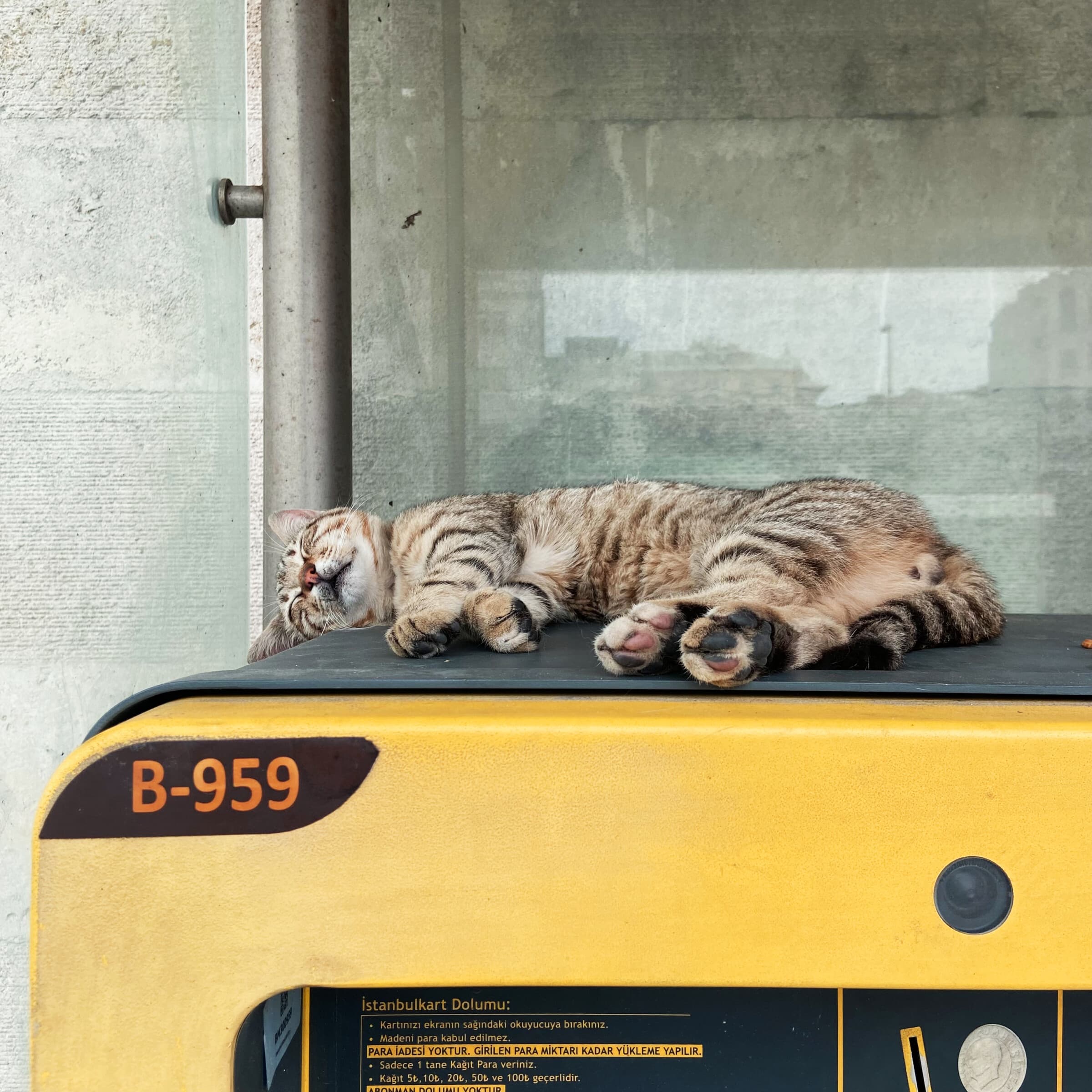
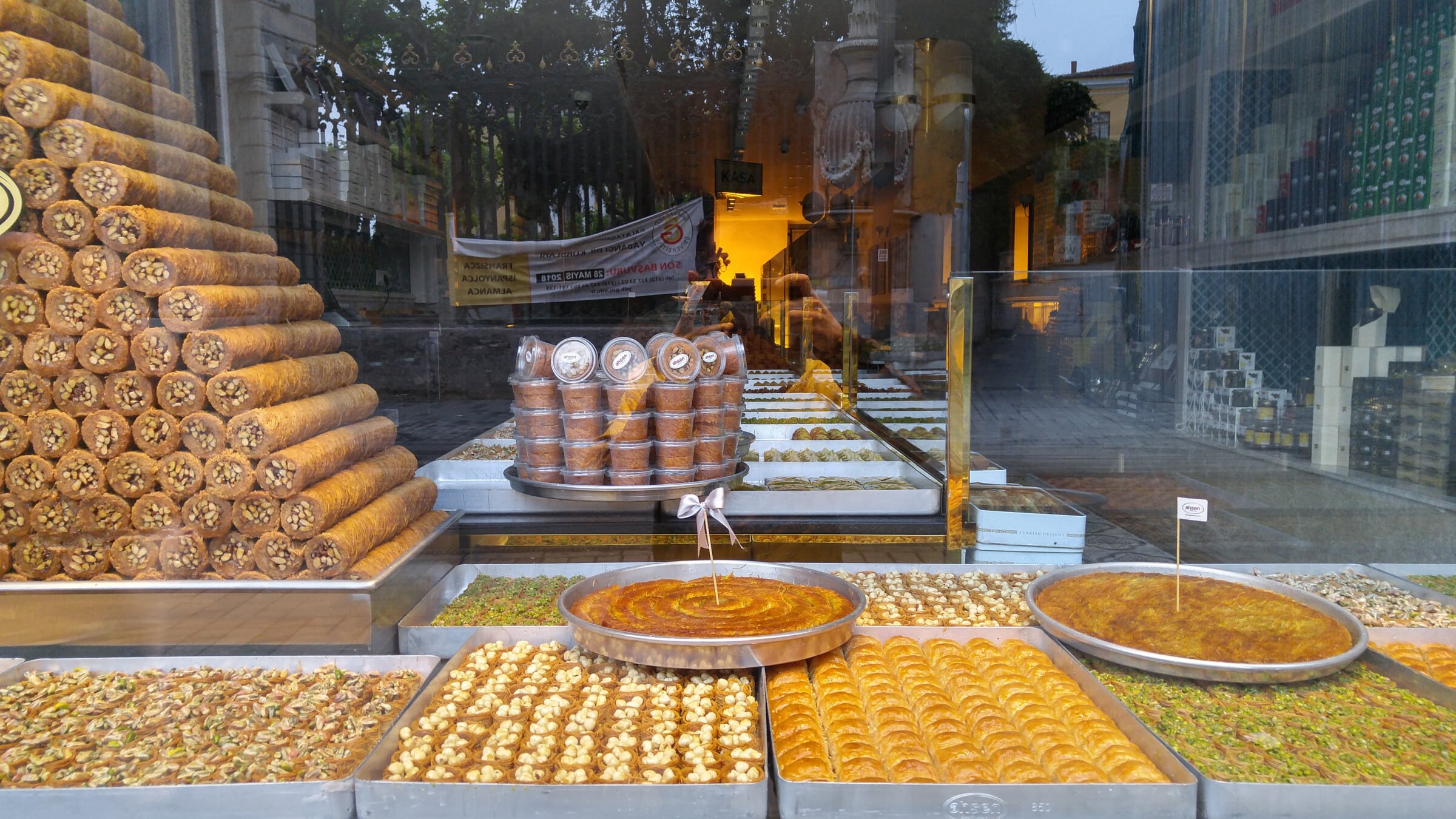
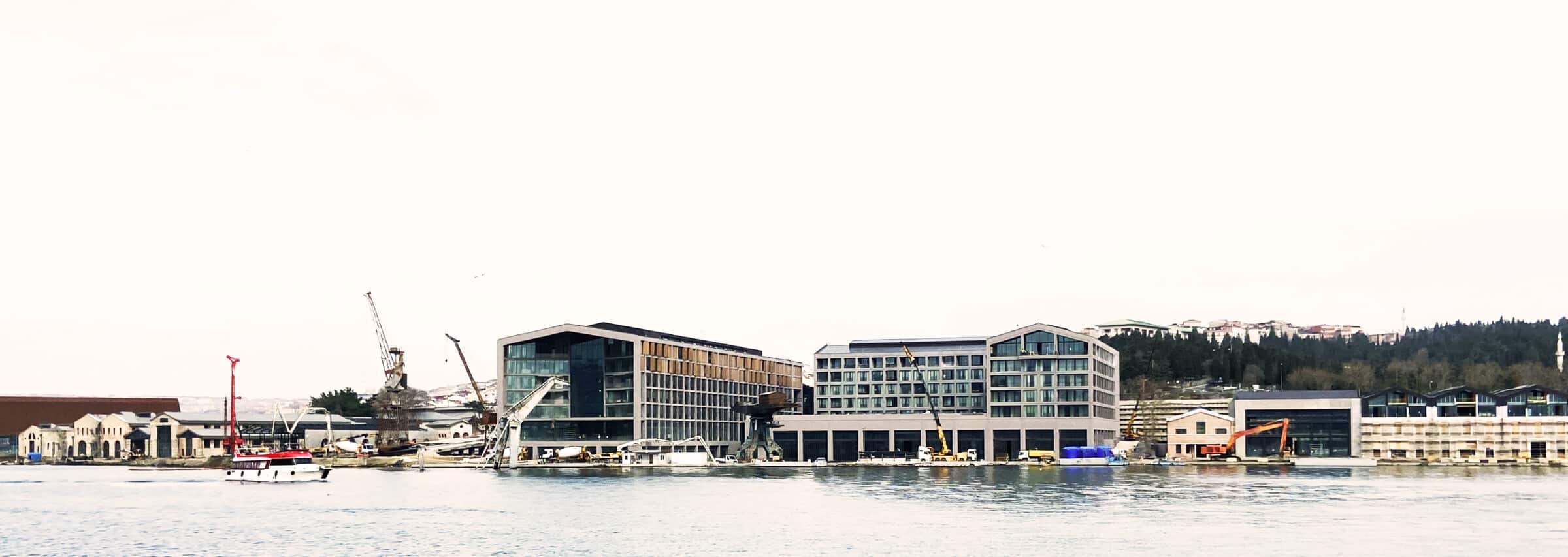
Eventually, I found a bus stop at which busses appeared to be stopping. Sweating profusely and swearing sulphurously, I waited on a tiny sidewalk breathing lungfuls of diesel, exhaust, and kebab smoke. A bus finally showed up, a screeching yellow and black box belching diesel fumes. The operator had the calm professionalism of an F1 driver pulling into a pit stop; a nazar bonçuk (a yellow, blue, and white evil eye) pendant swung above his head. The bus’s destination was unclear; the usual digital scrolling route marquee wasn’t working. From a curb bizarrely high — almost knee height, so definitely not up to code — I stretched onto the door platform, all my bad Turkish forgotten. Instead of asking, “Miniatürk’e gidiyor musun?” (“Do you go to Miniatürk?”), I bleated, plaintively, with perspiration sheeting down my face, “Miniatürk’ünüz var mı?” (“Do you have Miniatürk?”) as if I was at a bazaar, or a baklava or candy store, asking for Turkish delight. The bus driver blinked and looked at me for a short while, then nodded affirmatively and replied, “Ve dünya.” And, the world.
The bus to Miniatürk barreled through the neighborhoods on the north side of the Golden Horn. From Şişhane, the route winds its way through the Beyoğlu Belediye (Beyoğlu municipality), historically known also as Pera — old ‘Stamboul’s Genoese and Venetian district — through the working-class neighborhood of Kasımpaşa, past a beautifully and recently restored nineteenth-century building, originally the Ottoman Empire’s naval headquarters and now the navy’s Northern Sea Command Center, and then inland a little, so as to experience some of the city’s infrastructural chaos. The bus spends some time — occasionally hurling at breakneck speeds on a suddenly clear road, or slowed to a barely-moving crawl by Istanbul’s traffic — in Kasımpașa’s downtown hub, then onto an industrial zone of automobile shops and fabricators, which are the modern-day reincarnation of the 16th-century Imperial Arsenal shipyards that stretched along the old shoreline of the Golden Horn.
We sped past an enormous active construction zone of rapidly-assembling and expensive waterfront apartments that will soon be available to purchase, and past an old hillside cemetery. The road eventually flattens out near the shore of the Horn, and stays close to the water for the rest of the drive. Views to the left reveal rough but loved shoreline parks, glimpsed between old and new buildings; and to the right, teahouses, kebapçısıs, and offices, foregrounded by a topography that slopes upward in the first of a series of many hills. We passed the industrial Rahmi M. Koç Transport Museum, featuring sportscars, airplanes, trains, an olive oil press, a submarine, and more, housed in two converted warehouses. The exhibitions include a massive moored boat, one of the venerable Garden Class ferries, the Fenerbahçe, which was built on the River Clyde in Glasgow in 1952, and has now retired to the lethargic waters of the Horn. 3
We dashed beneath the high, blue-painted steel frame of the D100 highway, where industry gives way to sports clubs and the Golden Horn Congress Center — a weirdly domed red-orange convention space that was formerly a slaughterhouse, and then finally, a screeching halt at Istanbul Ticaret University, which is also the Miniatürk stop. I wedged myself off the bus — the only passenger deboarding — as a phalanx of university students piled in. I was now on the main road of İmrahor Caddesi, which is a busy thoroughfare, but quiet compared to the hum and bustle of where I started. At first, it’s all concrete and glass university buildings, insurance offices, and the Clarion Golden Horn Hotel, but then I crossed the street over a green median and walked a short while until there it was, marked by a simple sign, barely visible: Miniatürk.
Nothing in Istanbul is straightforward, including bus routes and city paths and many other things.
Because nothing in Istanbul is straightforward, including bus routes and city paths but many other things besides, and because Turks love events, politics, and drama, Miniatürk actually opened three times. The first opening was on April 23, 2003, the second on May 2, and the third on May 29. Newly-elected Prime Minister Recep Tayyip Erdoğan, who previously served as Istanbul’s Mayor, was the guest of honor at the second opening, but it was the third and final opening that was the largest and most momentous, the reason being that May 29, 1453 is the anniversary of the Fall of Constantinople and its capture by Mehmet II following a 53-day siege. Five-hundred-fifty years on, 1453 holds an emphatic place in the social and political psyche of Türkiye — the year of Byzantine lament, the collapse of Christendom in the East, the instant of Ottoman lionization, and so on — such that there was special significance in unveiling Miniatürk on 1453’s 550th anniversary.
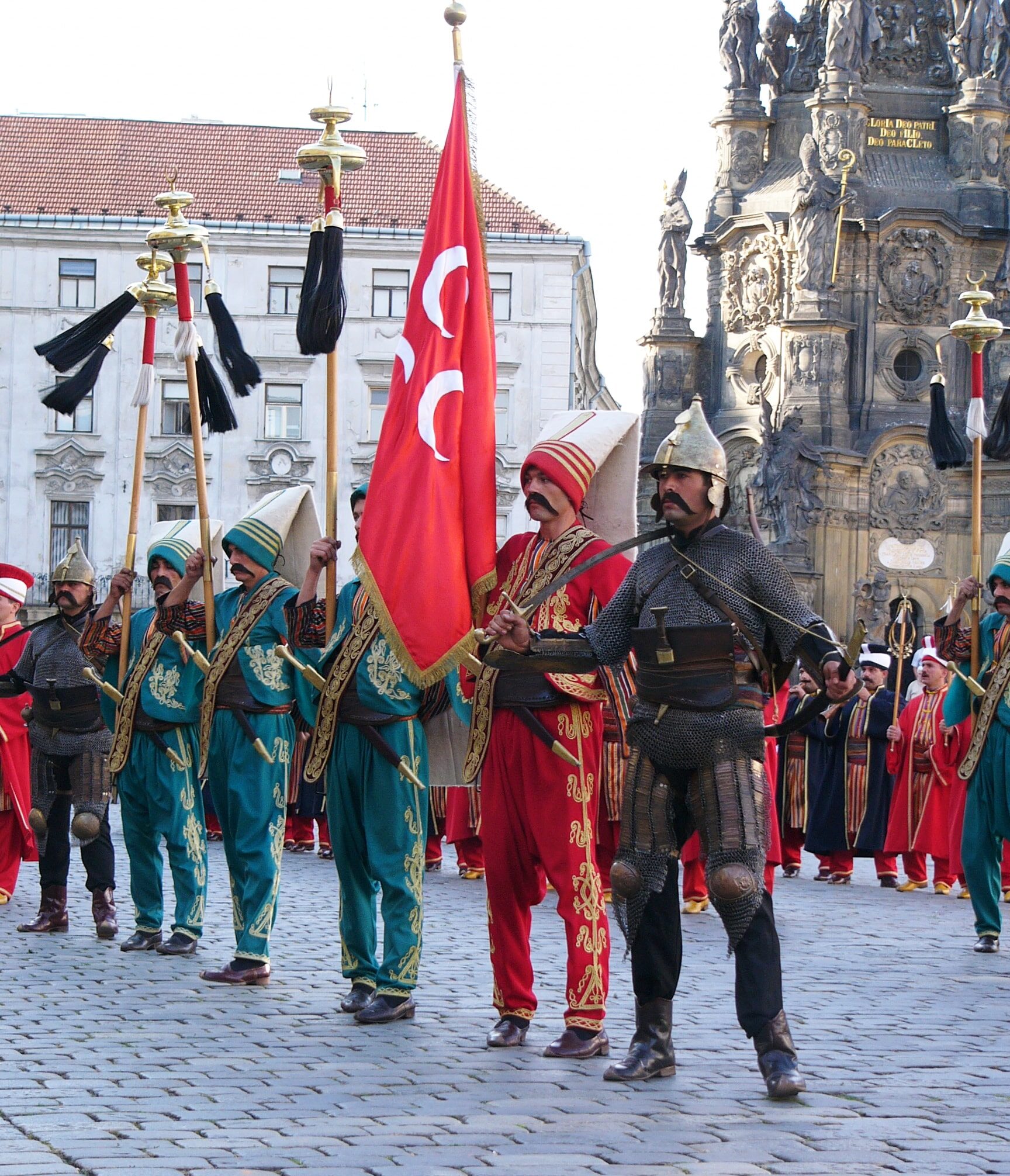
Türkiye’s regular turn towards that day in 1453 speaks to the shifting, unstable meaning of the events it commemorates in contemporary social and political discourse — events criticized and weaponized by opponents of the ruling federal AKP party, then wielded in turn. It’s precisely this instability that makes ripe fodder for spectacle-type events, which use celebration to collapse and distract from counterarguments and plural characterizations. For instance, the 560th anniversary of the conquest of Istanbul was the date chosen to lay the foundation stone of the Yavuz Sultan Selim Bridge, with much fanfare, and on the 564th anniversary of the conquest, 1,453 trucks “mov[ed] at a fixed speed,” over a runway of the New Istanbul Airport, then under construction. 4 (In addition to commemorating the conquest of Istanbul, the event was designed to break the Guinness Book of World Records category for Longest Truck Procession.) The Panorama 1453 History Museum, which opened in 2009, is dedicated to 1453, and located in the same part of the city, just beyond the city’s Theodosian walls, where it used to be common, each year on May 29th, to see re-enactments of the conquest. Grandstands were set up, and locals and dignitaries watched modern day jannisaries storm the walls (in costume) while mehter bands played martial music. 5
All this, really, to say that Miniatürk is another kind of celebratory memorial, and its third opening in particular was framed as a continuum of conquest. The grand inaugural fête on May 29th was also consistent with Türkiye’s habit of marking infrastructure — walls, museums, airports, bridges — with commemorative dates, as if to embed conquest not just in the political imaginary, but directly in the built environment. Miniatürk itself is one example, and it conveniently contains the other examples as well.
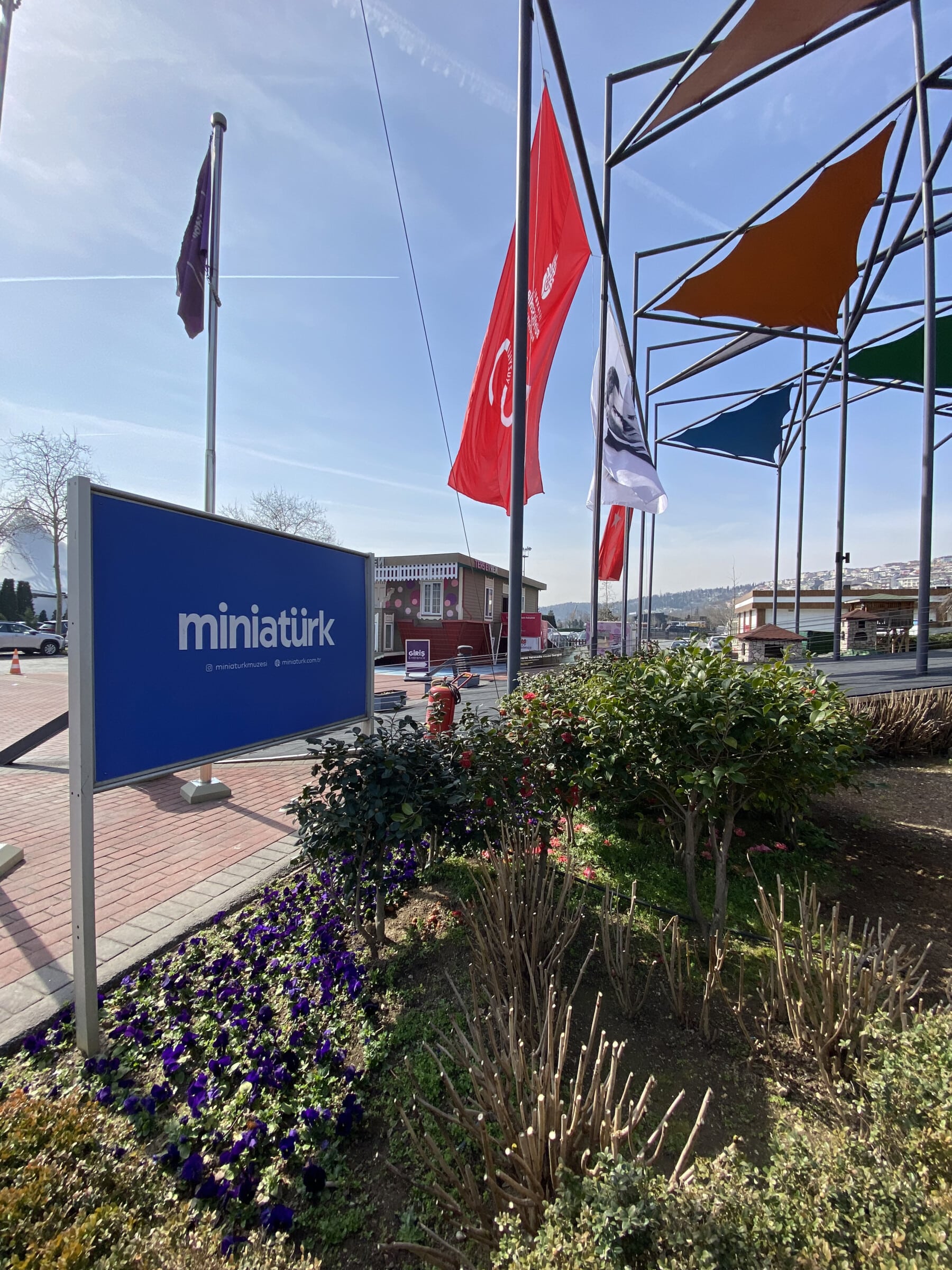
I turned left off İmrahor Caddesi, 180 degrees into a parking lot, then right towards the entrance of the park, which is sandwiched between İmrahor Caddesi (“The Stablemaster’s Street”) and the Golden Horn. As I moved toward the water, I saw an upside-down house. No, seriously. An upside-down house — part of the park, perhaps, though I wasn’t quite sure, and didn’t remember seeing it when I first visited Miniatürk in 2007. I also heard lots of youthful screaming coming from inside, and saw a group of very bored parents loitering around empty strollers and wagons; one father was fast asleep on a bench, an unlit cigarette in his hand. I opted to skip the children and their upside-down house; I was here for the park. Finding the entrance required another right turn, and then, finally, there it was.
The entrance to Miniatürk begins with a padded rubber ramp, set beneath a tall grid of thin steel columns holding aloft triangular red, orange, green, and blue tensioned sails. Flanking the upward sloping ramp on either side are two miniature granaries, each with a moving watermill and millstones. The signage indicates that the granary on the left was a gift to the park from the Black Sea coastal city of Giresun, which produces hazelnuts, and the granary on the right from the city of Rize, which produces tea. Situated between this modest nod to Türkiye’s agricultural north is the ticket booth. I paid for my ticket with an American Express card, grabbed a brochure, and slid through the turnstile onto an expansive viewing deck.
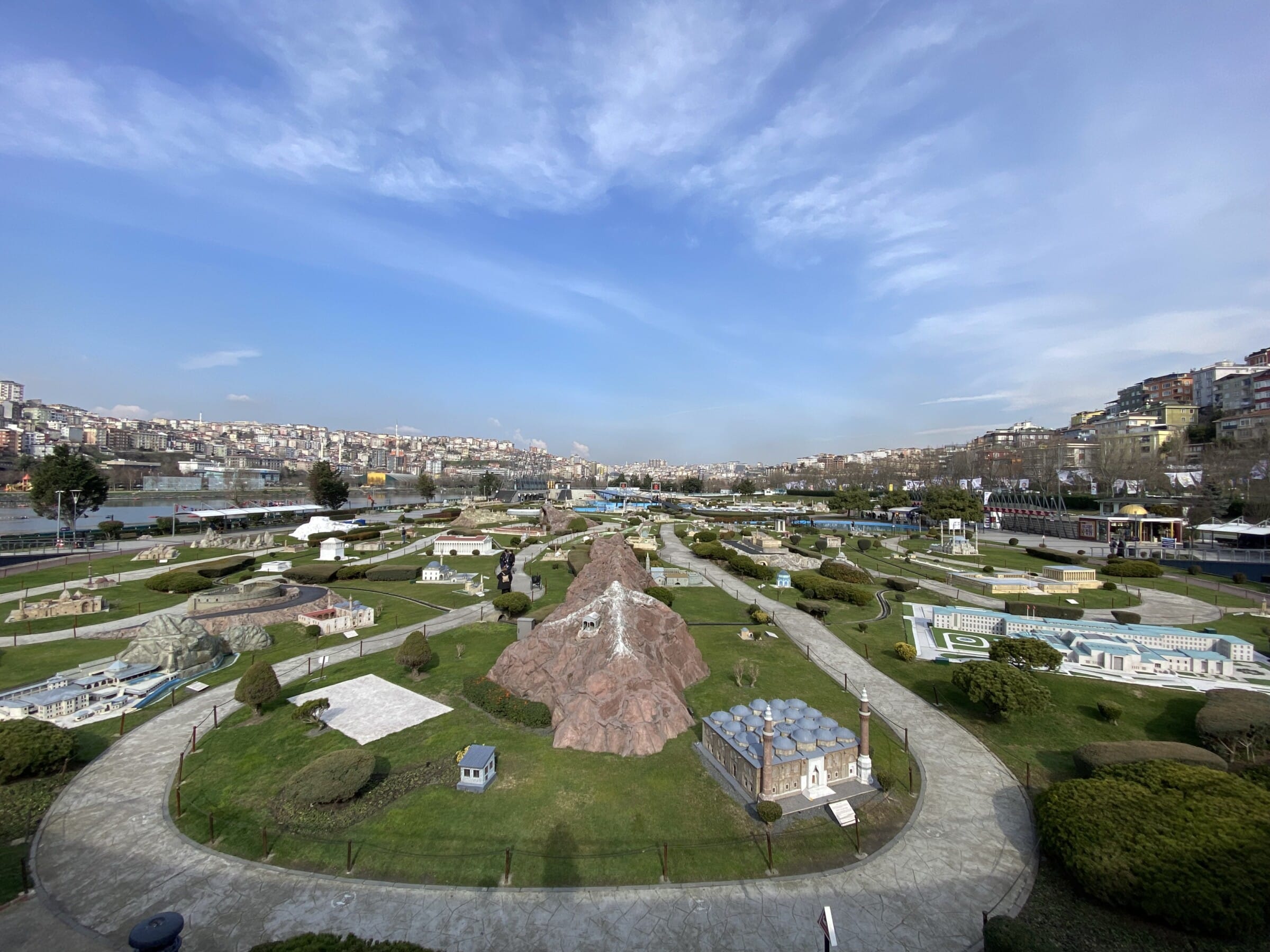
View of Miniatürk, 2024. [Ozayr Saloojee]

View of Miniatürk, 2024. [Ozayr Saloojee]
View of Miniatürk, 2024. [Ozayr Saloojee]
View of Miniatürk, 2024. [Ozayr Saloojee]
View of Miniatürk, 2024. [Ozayr Saloojee]
View of Miniatürk, 2024. [Ozayr Saloojee]
View of Miniatürk, 2024. [Ozayr Saloojee]

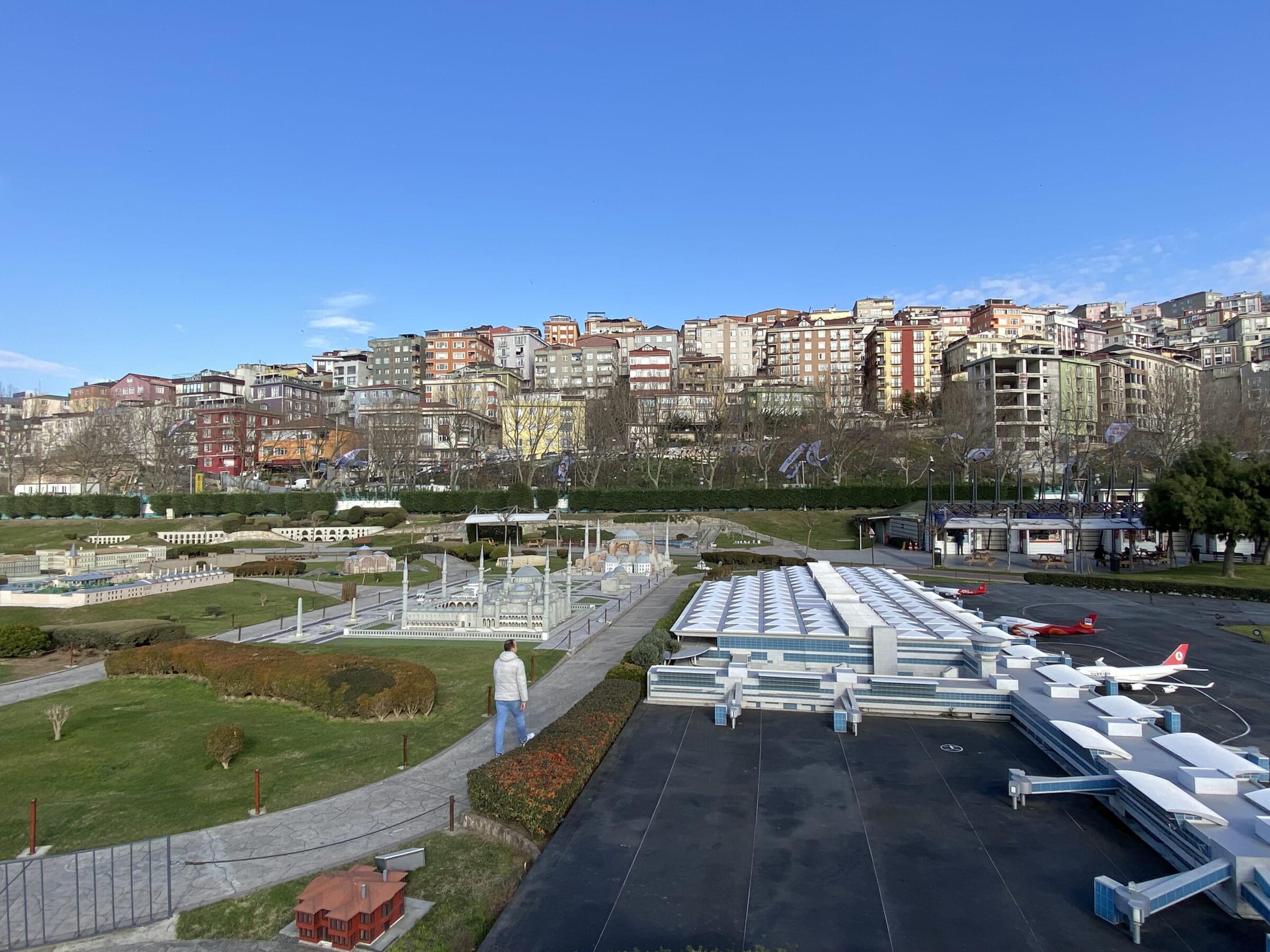
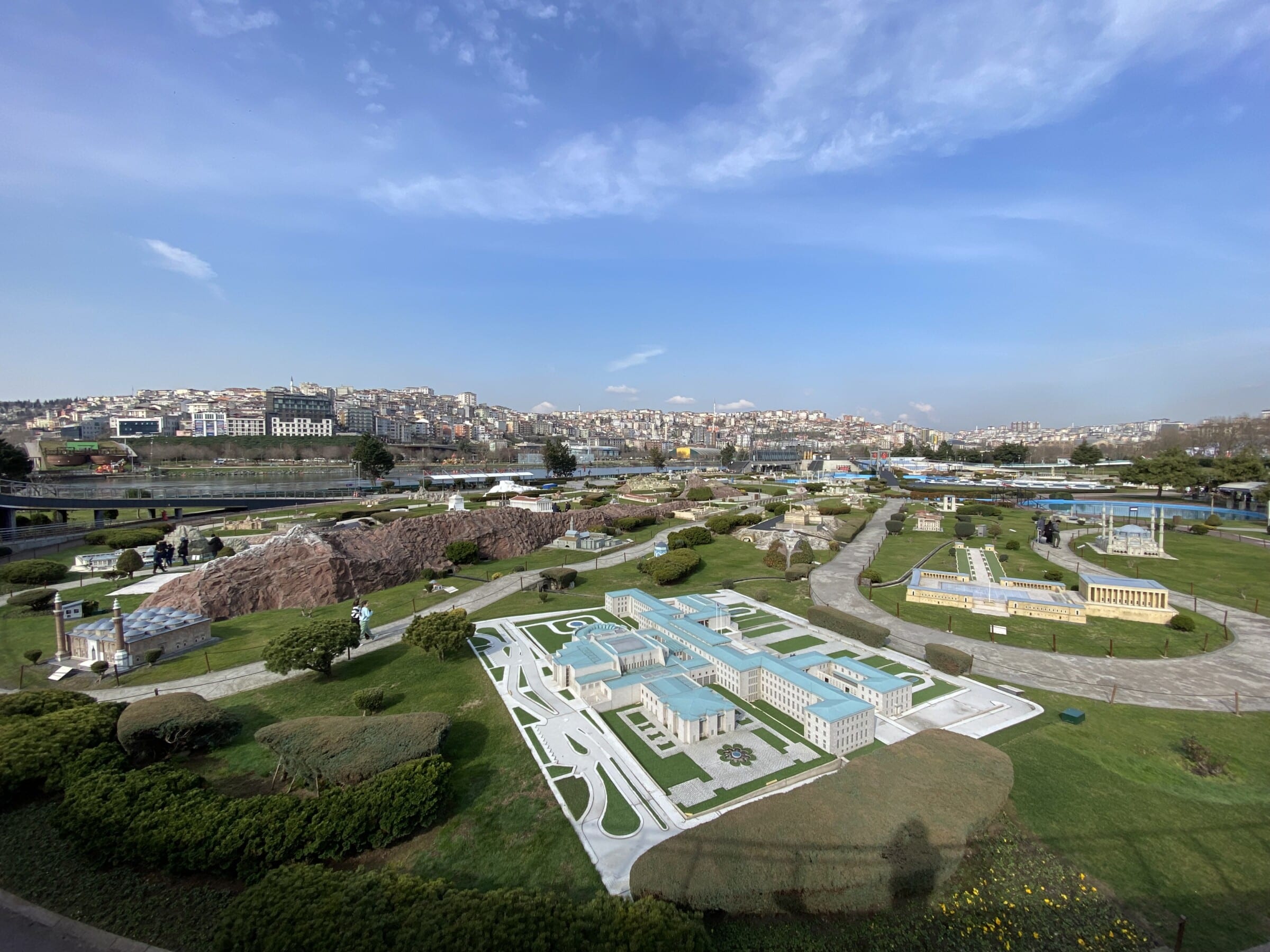
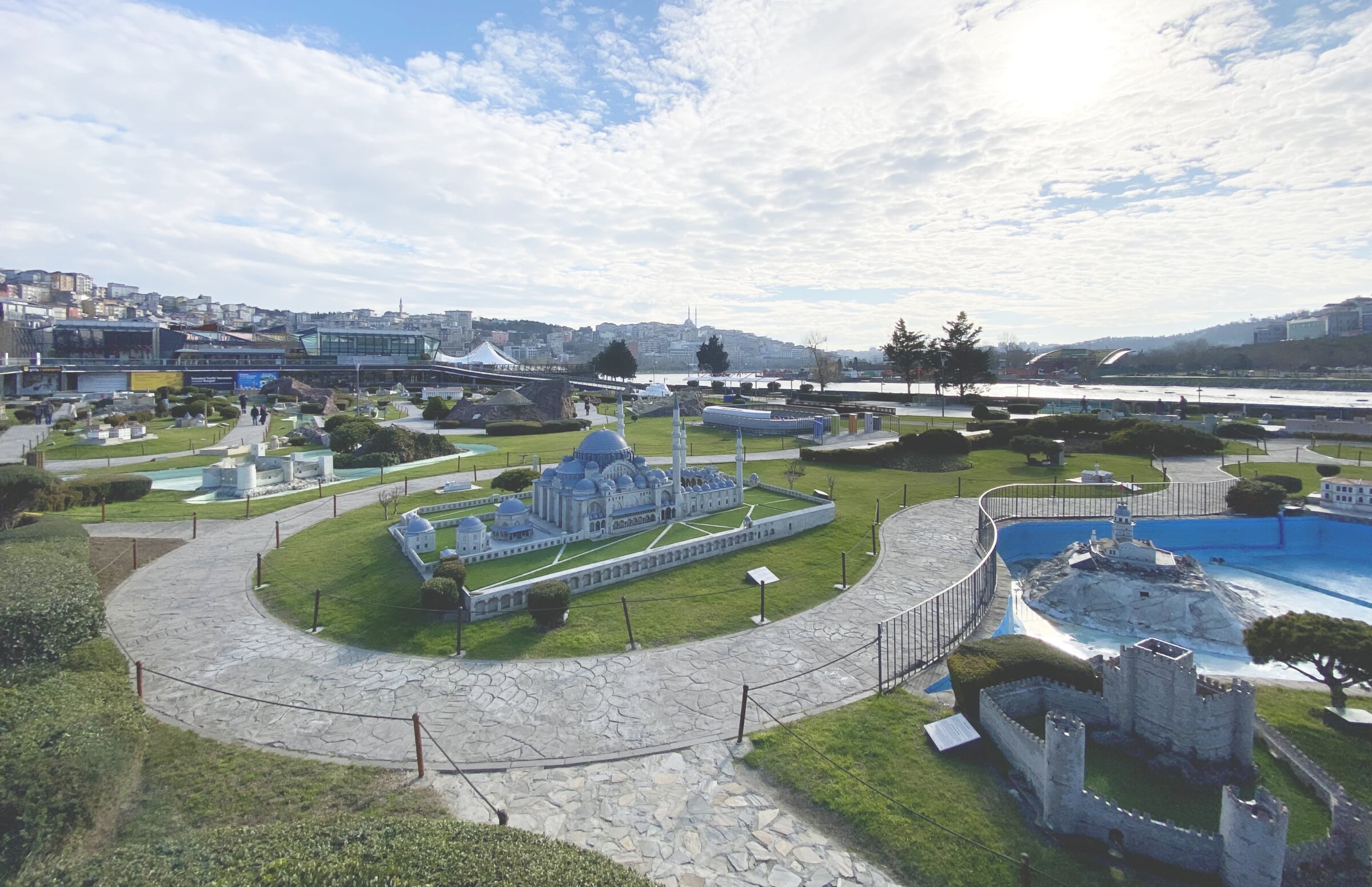
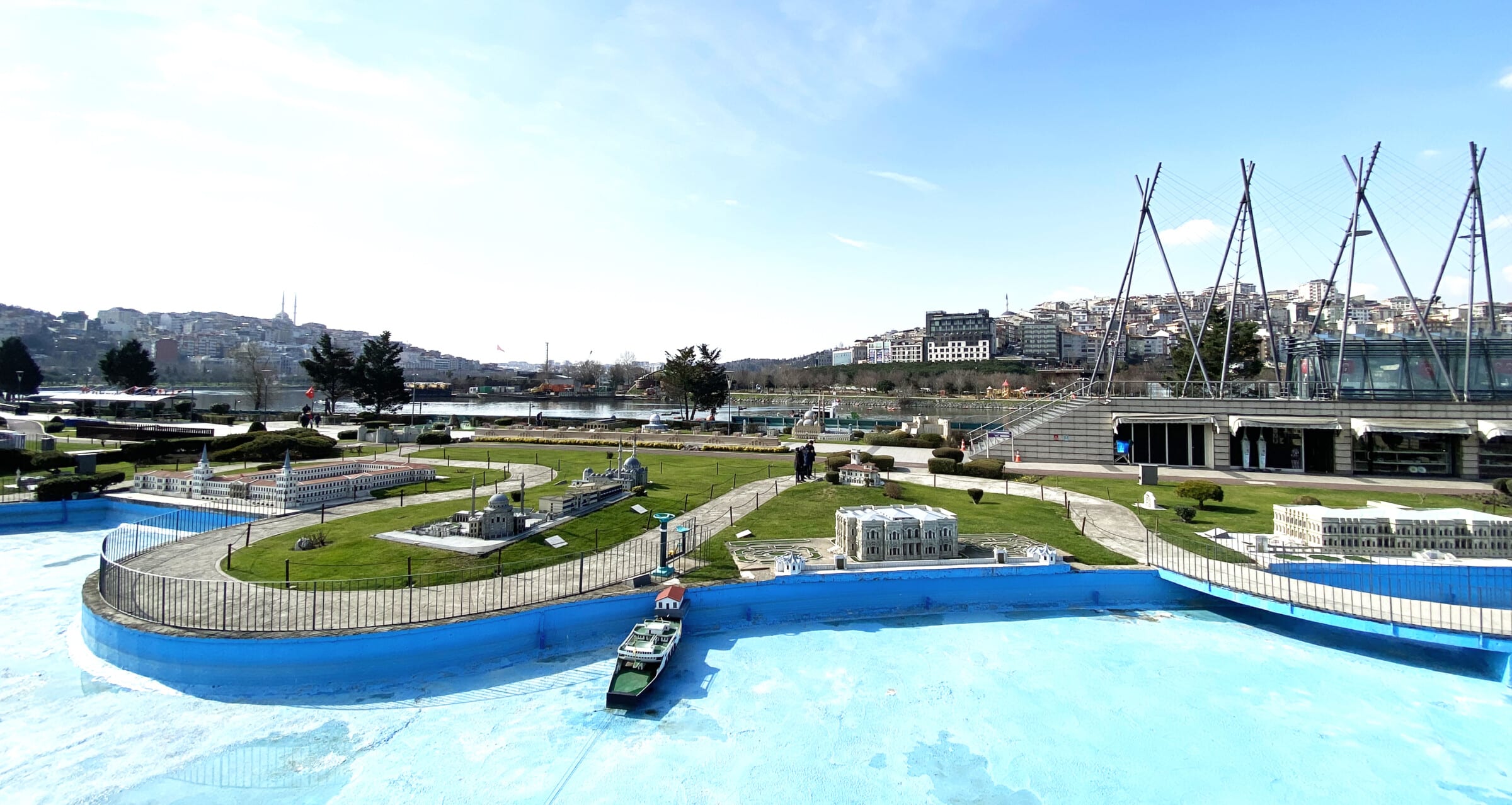
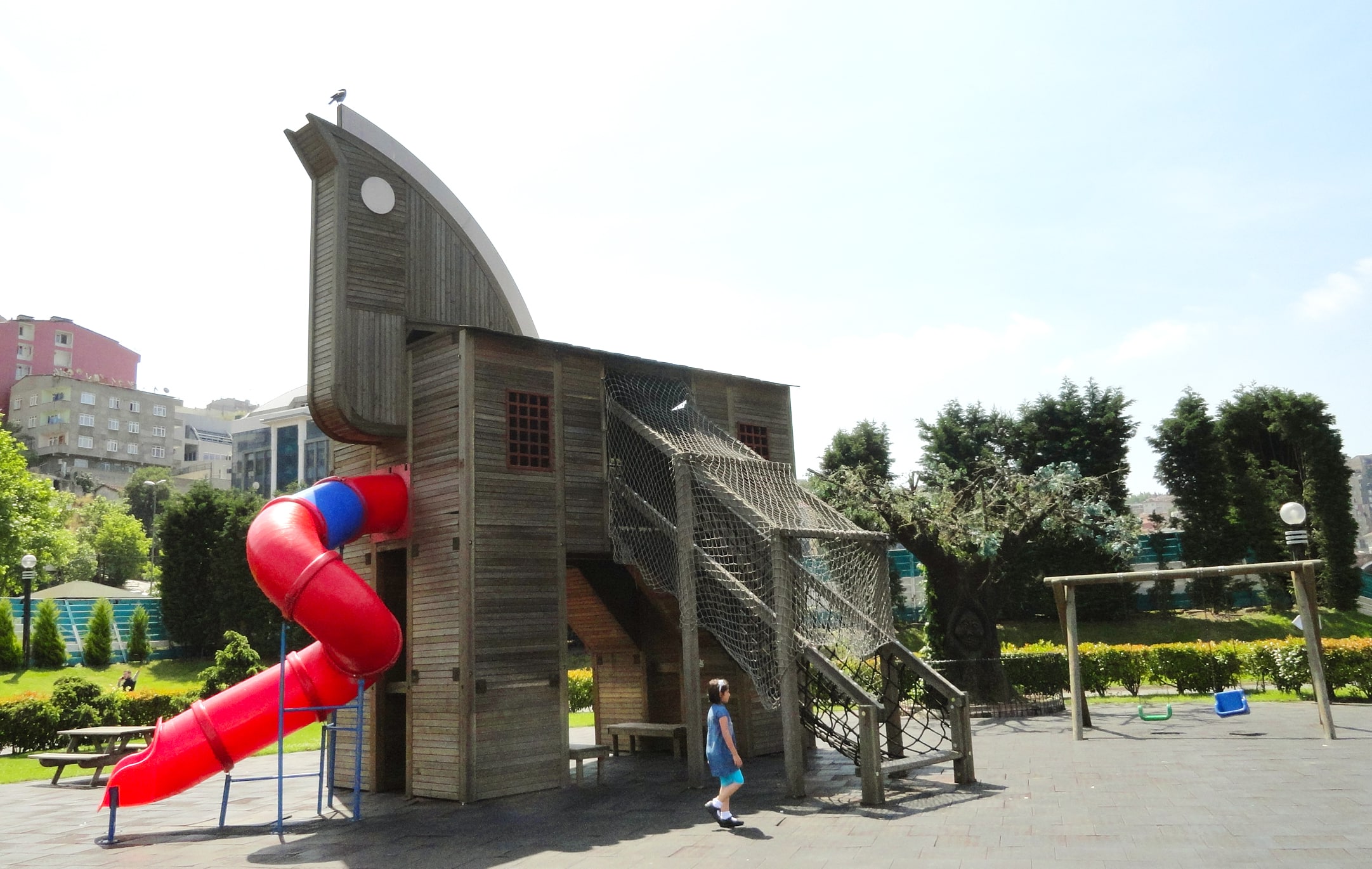
The deck is an enormous space paved in white stone, with two arching ramps on either end that descend into the park. This is the place to view Miniatürk in its entirety. To the north, the concrete and glass architectural and urban bulk of Istanbul crawls up the hills, and to the south, the sleepy waters of the Golden Horn gently lap against a new pedestrian path located just beyond Miniatürk’s perimeter fence. Sprawling out straight ahead is Miniatürk: 15,000 square meters of pathway, 135 architectural models, and sundry other attractions, including a play structure in the form of a kid-size Trojan Horse, another as a wooden fragment of Constantinople’s walls, a giant chessboard, a labyrinth, and a small building where one can experience a virtual helicopter ride of Istanbul. The building in which this simulator ride takes place unsubtly announces itself with a partial helicopter cockpit erupting from the façade, complete with two sunglass-wearing mannequin pilots.
The absurdity of this revealed landscape is magic…
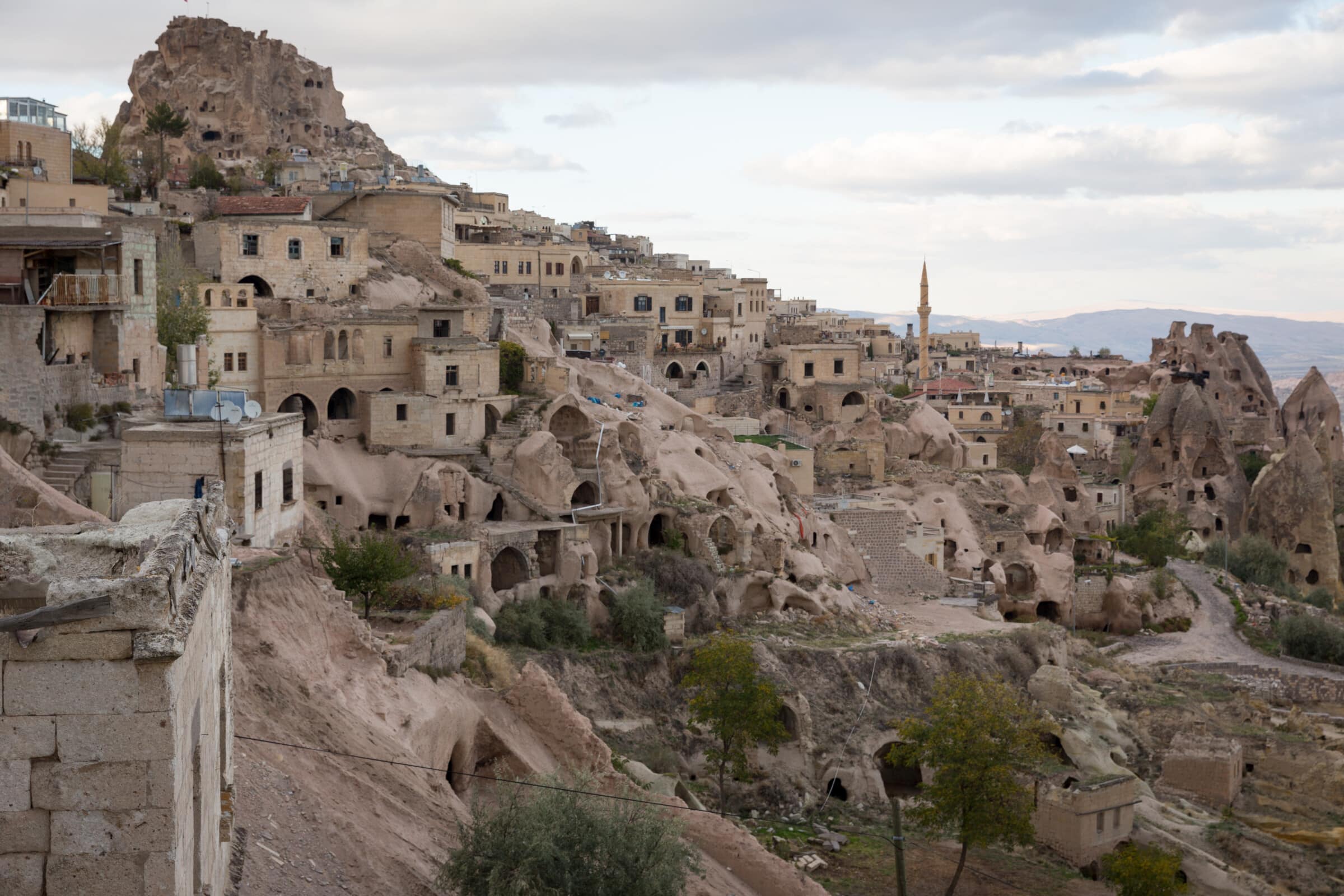
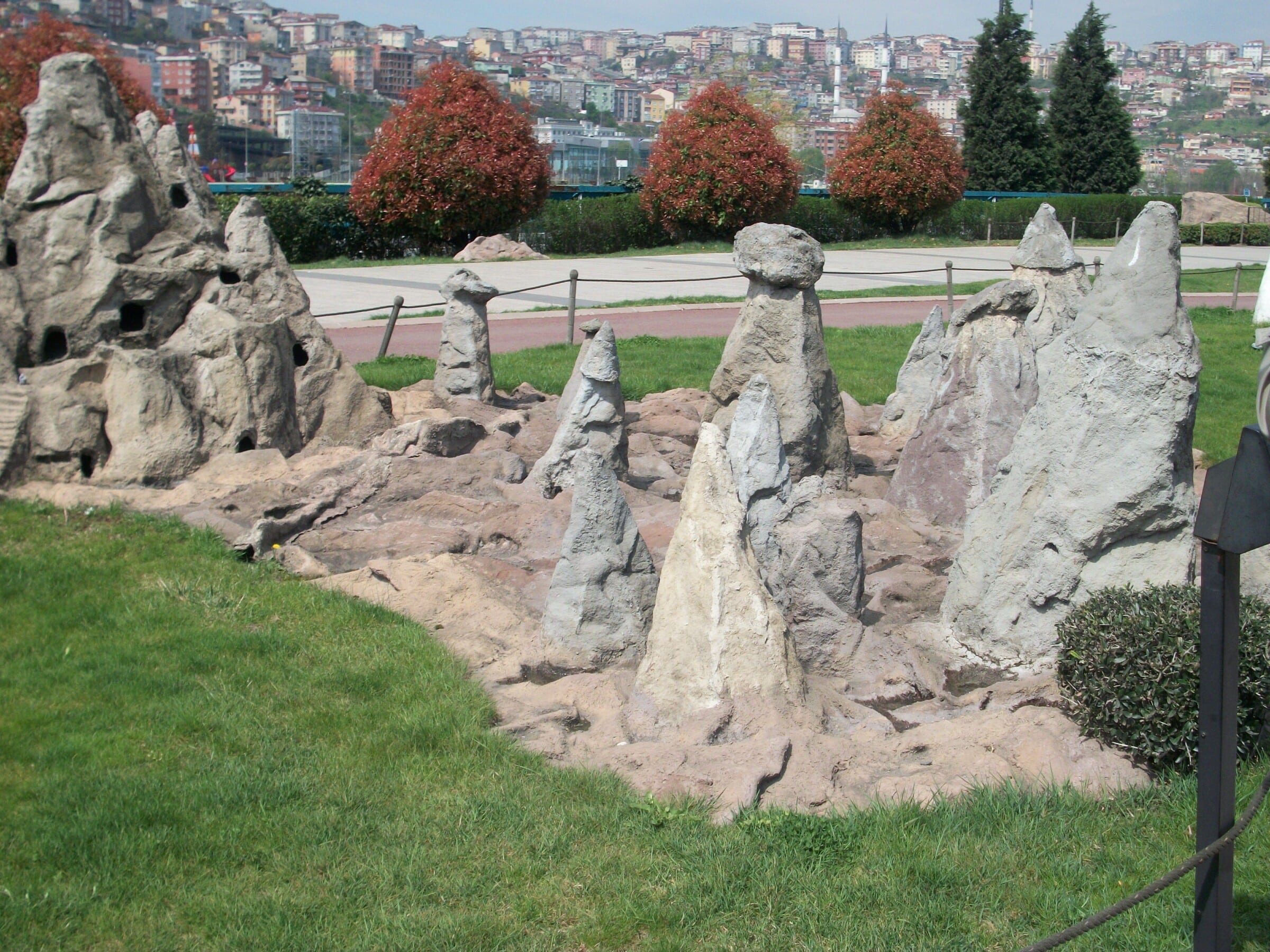
The absurdity of this revealed landscape is magic — the minarets, the walkable Bosphorus Bridge, the staid waterways, the elderly couple leisurely strolling, the sprawl of models that extends farther than the eye can see. I immediately recognized the miniature versions of familiar sights: the Selimiye Mosque, Atatürk’s mausoleum in Ankara, the Ulu Cami in Bursa, the cotton-rock landscapes of Pamukkale, the ethereal fairy chimneys in Cappadocia. All this under a glorious spring sunshine, my reverie accompanied by looped muzak with lilting szaz and flute, piped through speakers disguised as rocks. I stood at the balustrade and tried to take it all in. I watched a cat walk the long processional of Atatürk’s mausoleum, an enormous Turkish kaiju, slinking between the tiny model lions that line the path leading to Mustafa Kemal’s (miniature) resting place.
Then the music stopped, and a voice announced, first in Turkish then in English, “To the attention of all our visitors: Dear guests, we kindly ask from you not to step on the grass, not touching to the models, keeping the environment clean, consuming food and beverages only in areas where restaurants, café, and buffet are present. And we wish you a pleasant visit.” When the music resumed, it was a new tune. As I discovered, there were only two tunes total, with the announcement separating one from the other, and so, eventually, properly instructed, I walked down the ramp, and paused to watch children run in and out of the Trojan Horse, and also stand and yell atop Constantinople’s walls. There was a sign that said, “Gezi Alanı Başlangıcı,” or “Start From Here.” So, I did, being careful not to step on the grass.

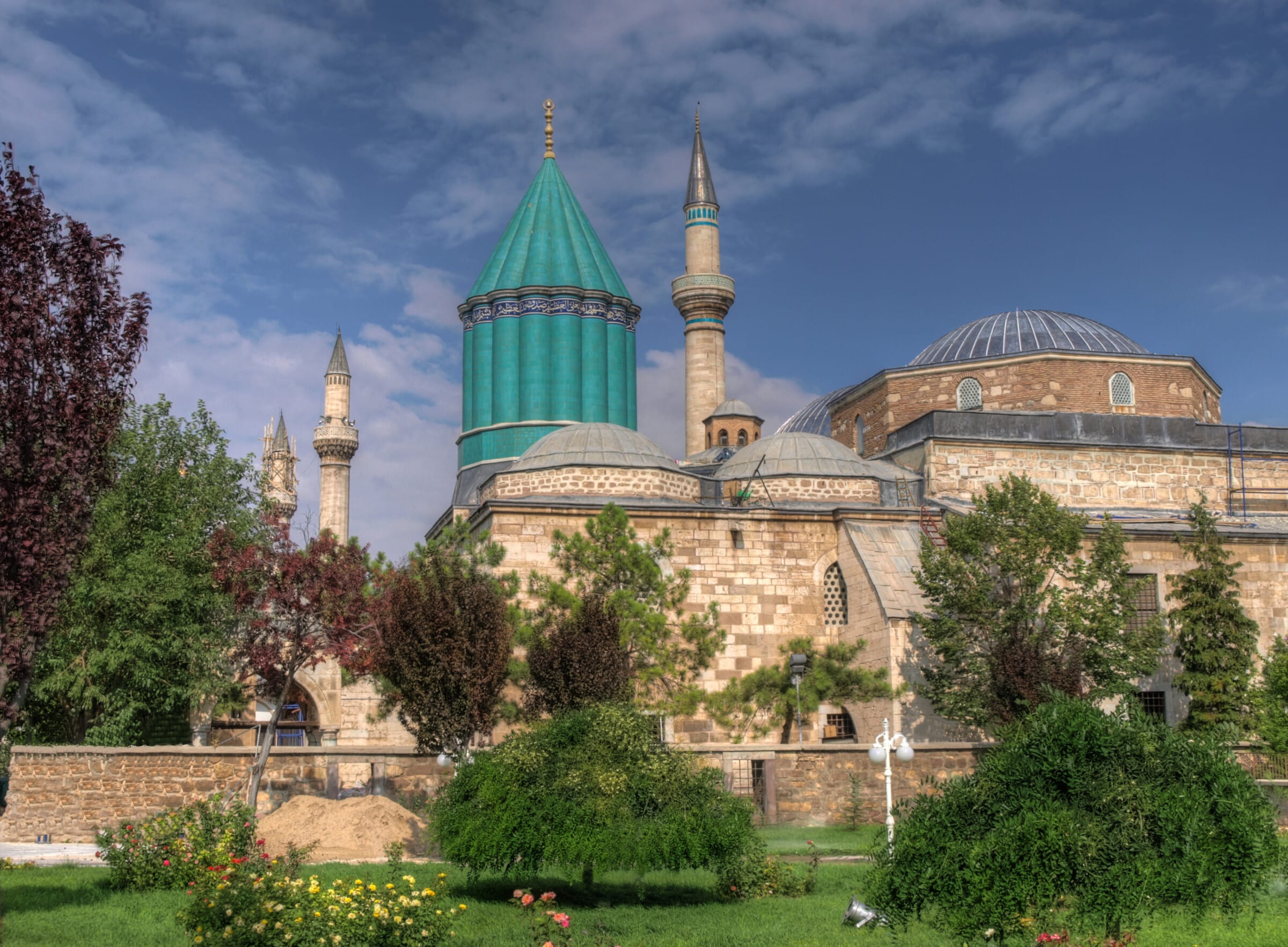
I realized on this visit that Miniatürk — as a miniature theme park, but also as a proxy for Türkiye’s vision of itself — begins (or suggests a beginning, if you’re a stickler for tourist signs), in, of all places, Konya, at the tomb of one of Islam’s most celebrated poets: Jalaluddin Rumi, or Mevlana, as he is more commonly known in Türkiye. The park might have started with Çatalhöyûk (which, ironically, is not far from Konya), an archeological site that evidences Neolithic and Chalcolithic life beginning in 7,400 BC, but instead, the beginning is anchored in 13th-century Anatolia, with an emblem of Islamic divine love and spiritual practice.
Rumi holds a unique position in the cultural space of the Islamic world. Those unfamiliar with the deeper history of this saintly figure probably associate bad (and in many cases, outright wrong) translations of his words with calf-eyed lusty teenagers, or they might know that Brad Pitt has a tattoo of one of the sage’s famous texts, poorly excised from its larger narrative, near the actor’s right armpit. 6 He (Rumi, not Brad Pitt) was in fact a master of spiritual practice, a brilliant scholar of the classical sciences, a noted jurist and theologian, and an exemplar of courtesy and etiquette. His tomb in Konya is a revered site — a place of pilgrimage for many — and also a reliquary, holding a number of sacred artifacts from Islamic history. Although I can’t say for sure, my suspicion is that Miniatürk’s park directors (or their patrons) were very deliberate about this placement — that is, to begin the story of Türkiye at the tomb of a saint and itinerant spiritual devotee, rather than, say, with Atatürk’s mausoleum, or with the mosque and resting place of Sultan Süleyman the Magnificent.
My hunch is that Miniatürk’s planners tried to keep the park as neutral as possible … good luck with that.
For a museum that emphatically asserts a totality of building, landscape, and infrastructure (yes, infrastructure — Miniatürk exhibits dams, bridges, walls, cisterns), it remains politically plastic, a mutable canvas for both the painting of neo-Ottoman dreams and secular Kemalist futures. My hunch is that Miniatürk’s (micro) urban-planners tried to read (and prophesy) the political room, so to speak, and to keep the park as neutral as possible … good luck with that. The “suggested” path starts at Konya today, but what happens if the Republican party wins the next federal election? Might the path shift? What happens when the tour begins at the Republic monument (which was under maintenance, by the way) and not at, say, Mevlana’s tomb? The park is you. The park is me. The park is definitely AKP. No, it’s Kemalist. The park’s narrative allegiances can shift as swiftly as the waters of the Bosphorus. After all, it’s easy enough to move a sign that says “Start From Here,” to anywhere in Miniatürk’s narratively stretchy world. You can start a walk (or a story, or a song, or a worlding narrative) from anywhere, if you really want to.
My walk, however, through Miniatürk (not stepping on the grass) was its own magnificently bemused historical ping-pong. I was reminded of the ferry path along the Golden Horn and the slow-motion whiplash of shifting from shore to shore. The rationale behind each inclusion is not spelled out, and neither is there explanation as to the models’ placement along the Miniatürk amble. For help with the first question, I looked to an official text, a statement published by the non-profit who built Miniatürk in partnership with the Istanbul Metropolitan Municipality. According to Kültür A.Ş:
Works that found a place in Miniatürk were ones that displayed peculiarities of the year in which they were built, ones that reflected the culture and art of a land that had witnessed thousands of years of heavy invasion, war and destruction, works that had not been destroyed simply because they had been created by those who came before, works that were protected, repaired and enjoyed. 7
This perplexed me further. What are the “peculiarities” of a clocktower, a mausoleum, a mosque, an airport, an aqueduct, a dam, a ferry, the Dome of the Rock, or the Al-Aqsa Mosque — all of which live here at Miniatürk? The riddle of the second question was similarly unanswerable. Atatürk’s mausoleum, for instance, is in fourth place along the Miniatürk walking route — after Rumi’s tomb, after a Baroque clock (the Izmir clocktower), and after the apogee of classical Ottoman Architecture — Sinan’s Selimiye Mosque in Edirne — in a spot that feels vaguely like runner-up to the medal-winners. (From the viewing platform, Mustafa Kemal’s Mausoleum is more center stage, in keeping with the continuous and larger-than-life presence of Atatürk in Turkish spaces, via statues, portraits, and other reverences.) True, there is a kind of loose backwards chronology, in that the focus moves from Istanbul to Türkiye (i.e. not Istanbul), to memories of Ottoman dominion. And there is some spatial organization in the sense that the first two sections are circular roundabouts, one preceding the other, and the third a line that parallels the shore of the Golden Horn. But the sum of these is not a coherent narrative arc. 8
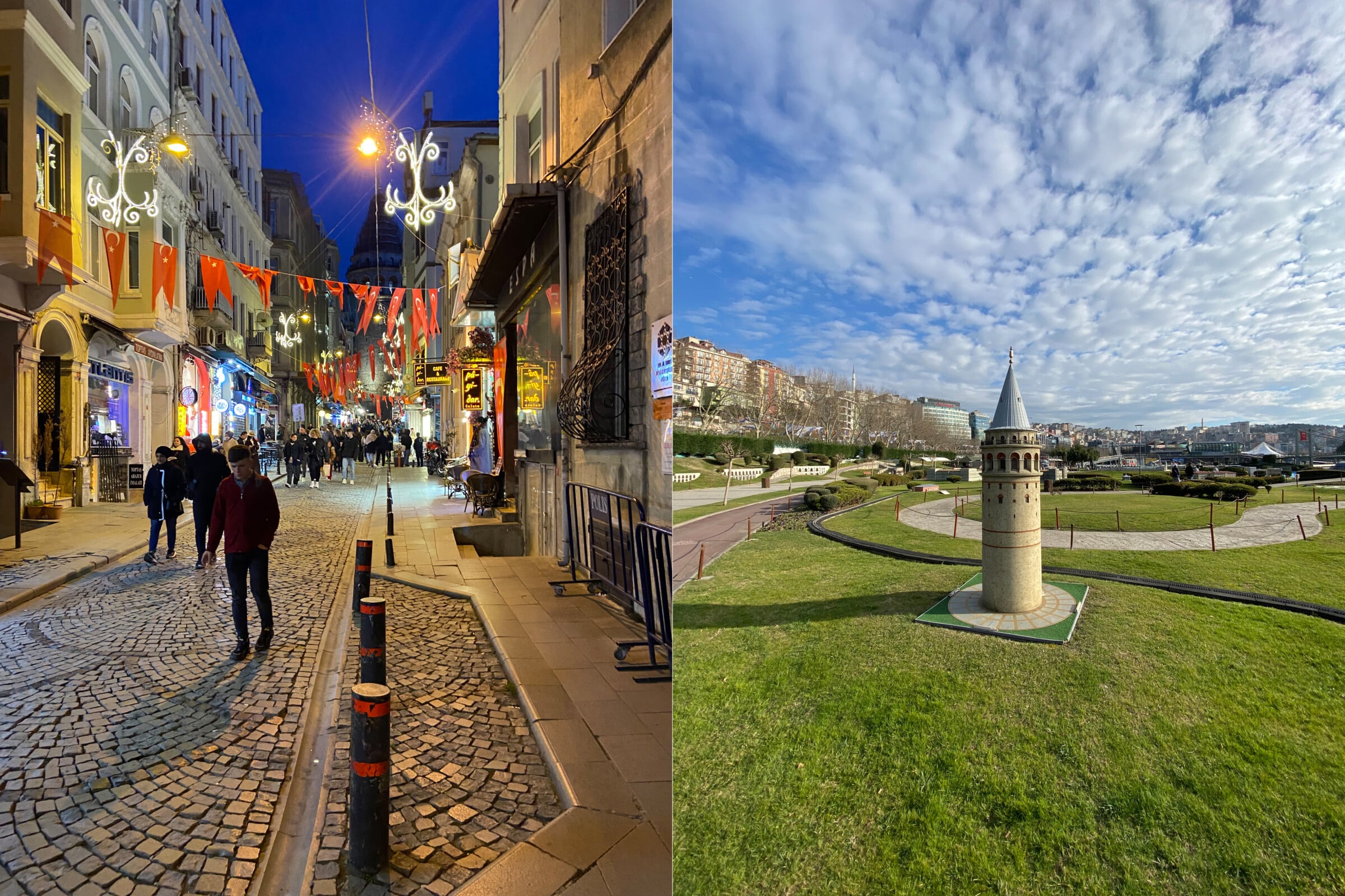
Street leading to Galata Tower, 2024; Galata Tower at Miniatürk, 2024. [Ozayr Saloojee]
Capadoccia, 2014. [Alex Proimos via Flickr under license CC BY-NC-SA 2.0]
Cappadocia at Miniatürk, 2017. [via Wikimedia]
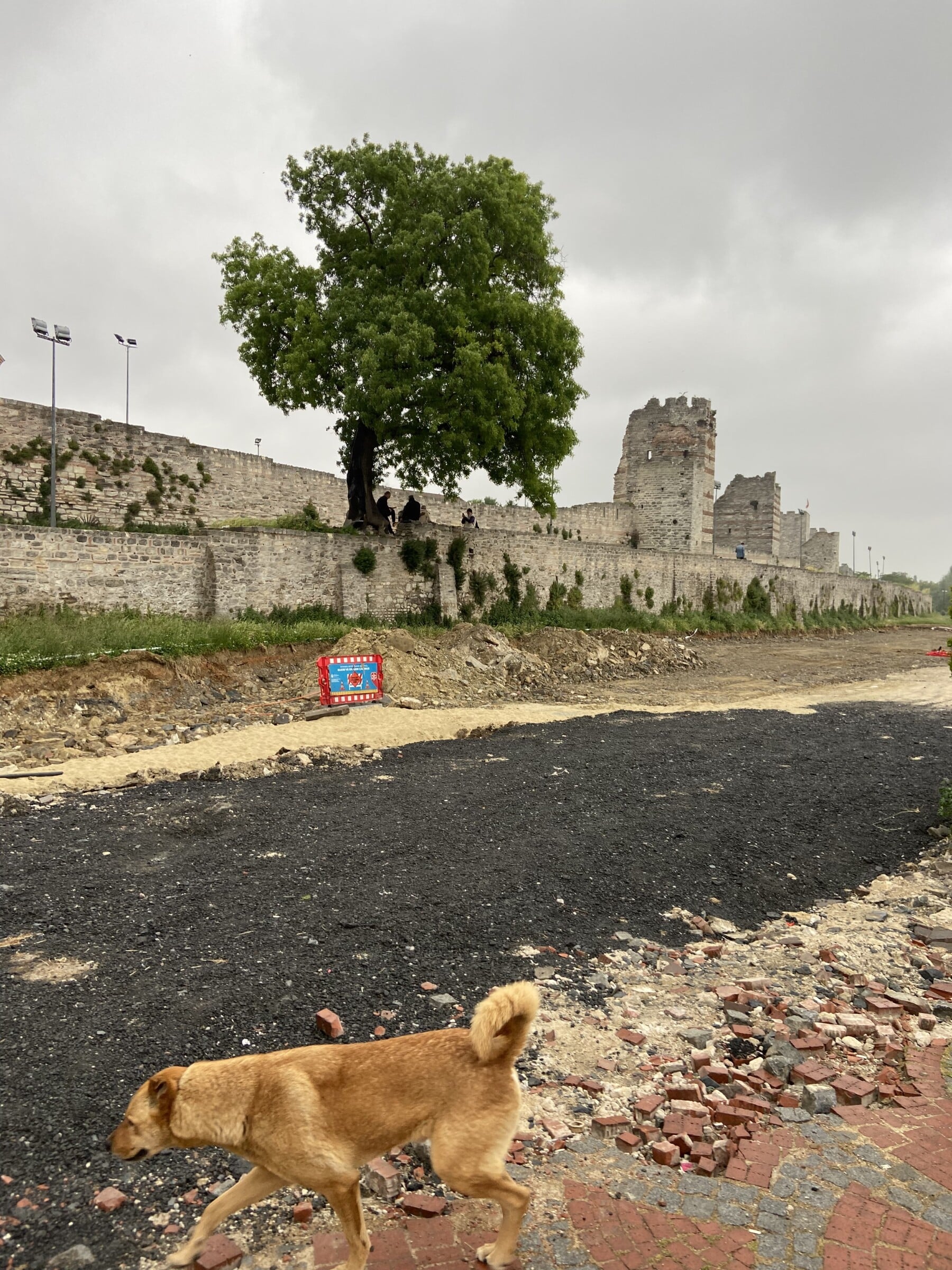
Theodosian Walls and a friendly feral dog, 2024. [Ozayr Saloojee]
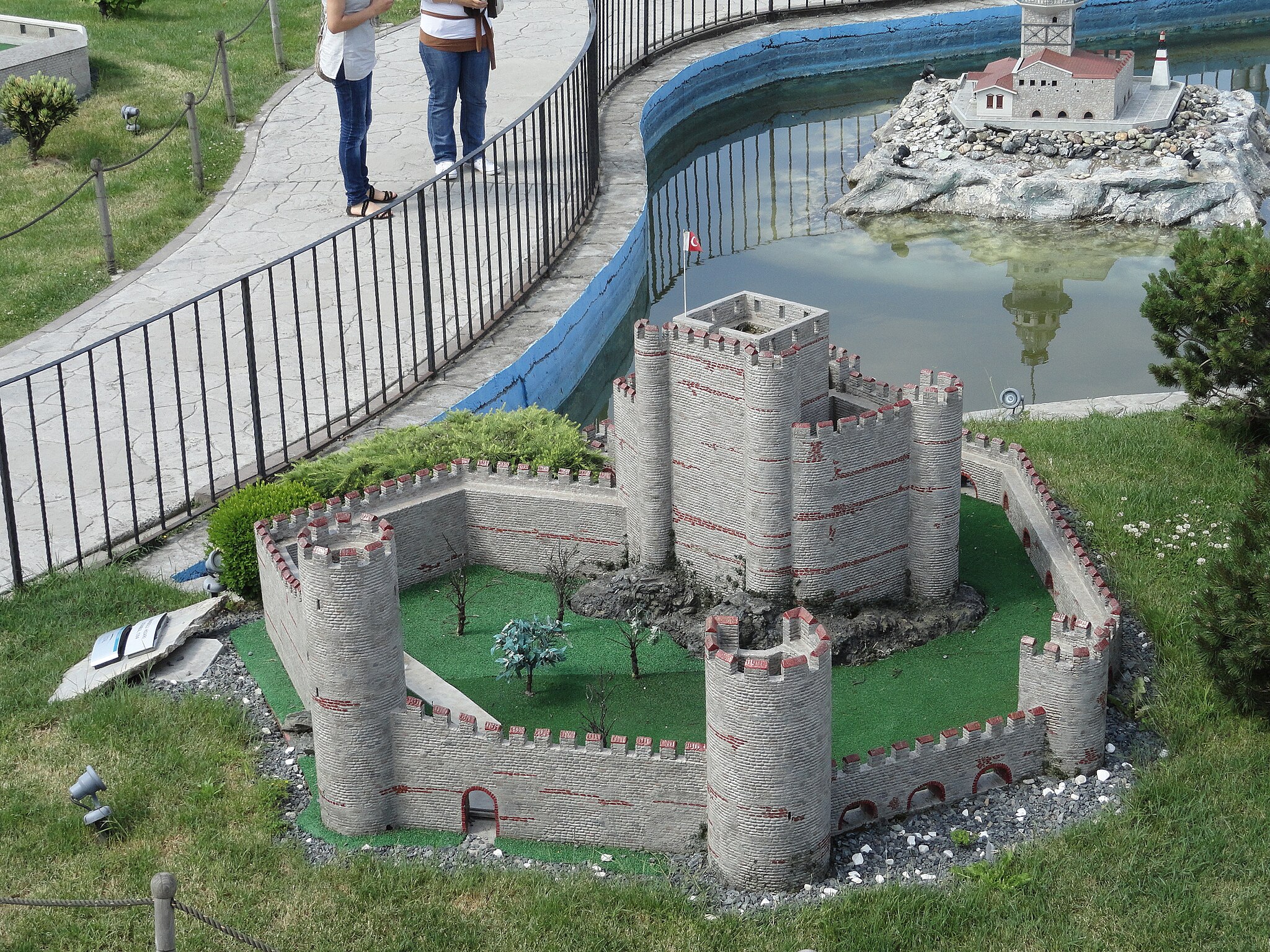
Theodosian Walls at Miniatürk, 2012. [Boris Dzhingarov via Wikimedia under license CC BY-NC-SA 2.0
Sultan Ahmed I Mosque (Blue Mosque), 2020. [Ozayr Saloojee]
Sultan Ahmed I Mosque (Blue Mosque) at Miniatürk, 2024. [Ozayr Saloojee]
Pamukkale, 2023. [Rocío González Guerrero via Wikimedia under license CC BY 4.0]
Pamukkale at Miniatürk, 2012. [Boris Dzhingarov via Wikimedia under license CC BY-NC-SA 2.0]
Sümela Monastery, 2006. [via Wikimedia under license CC BY 4.0
Sümela Monastery at Miniatürk, 2012. [Boris Dzhingarov via Wikimedia under license CC BY-NC-SA 2.0
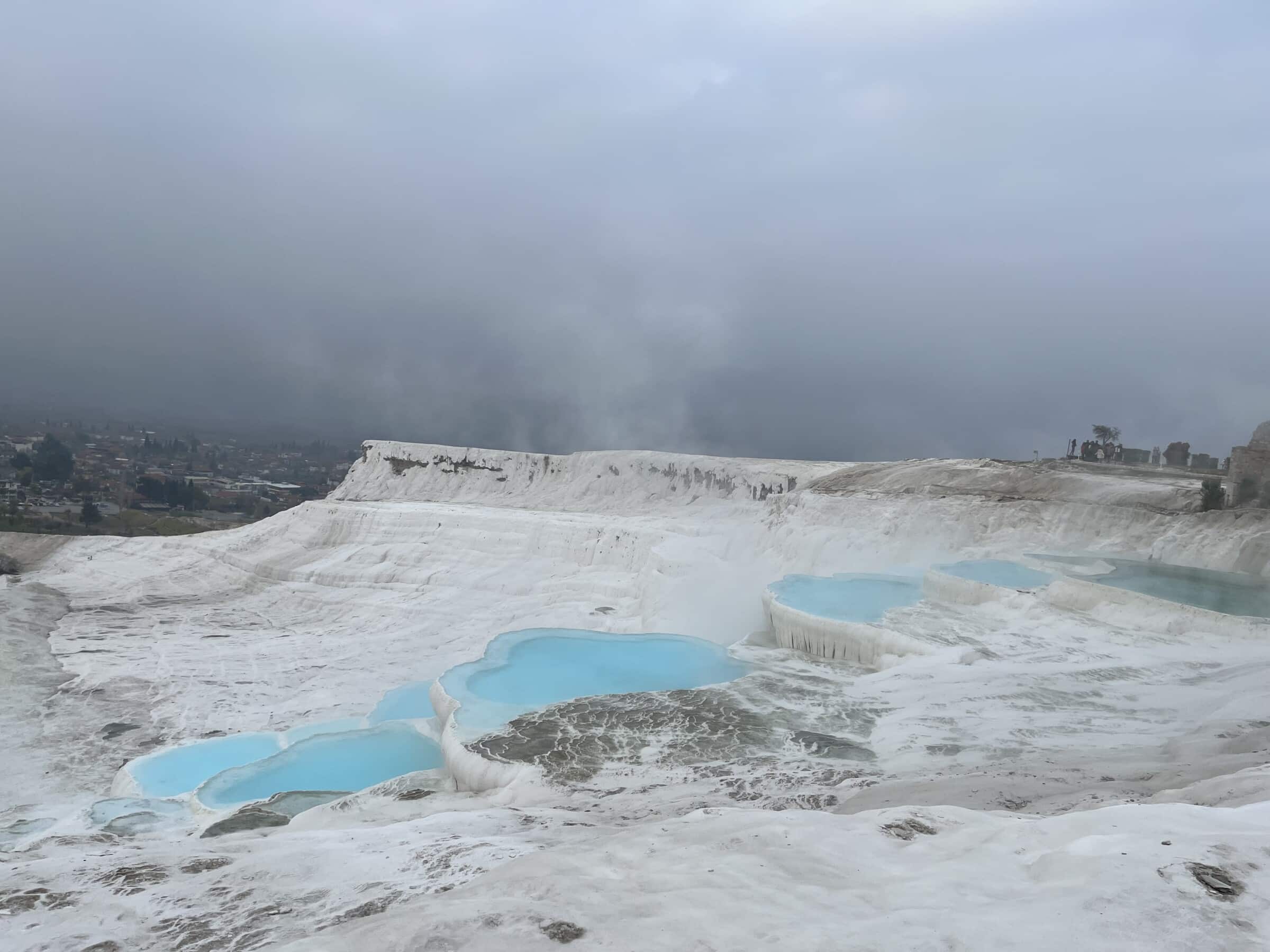
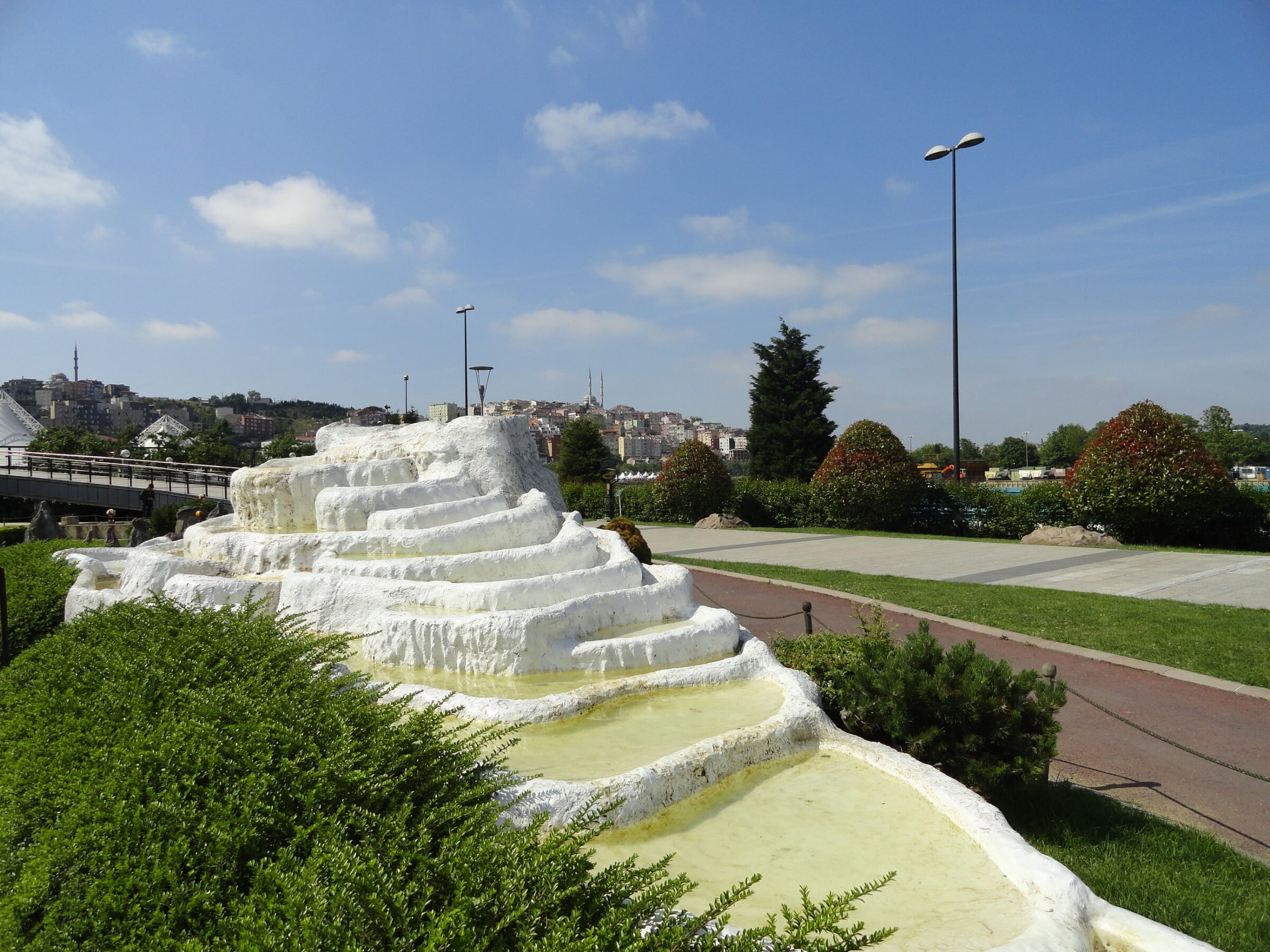
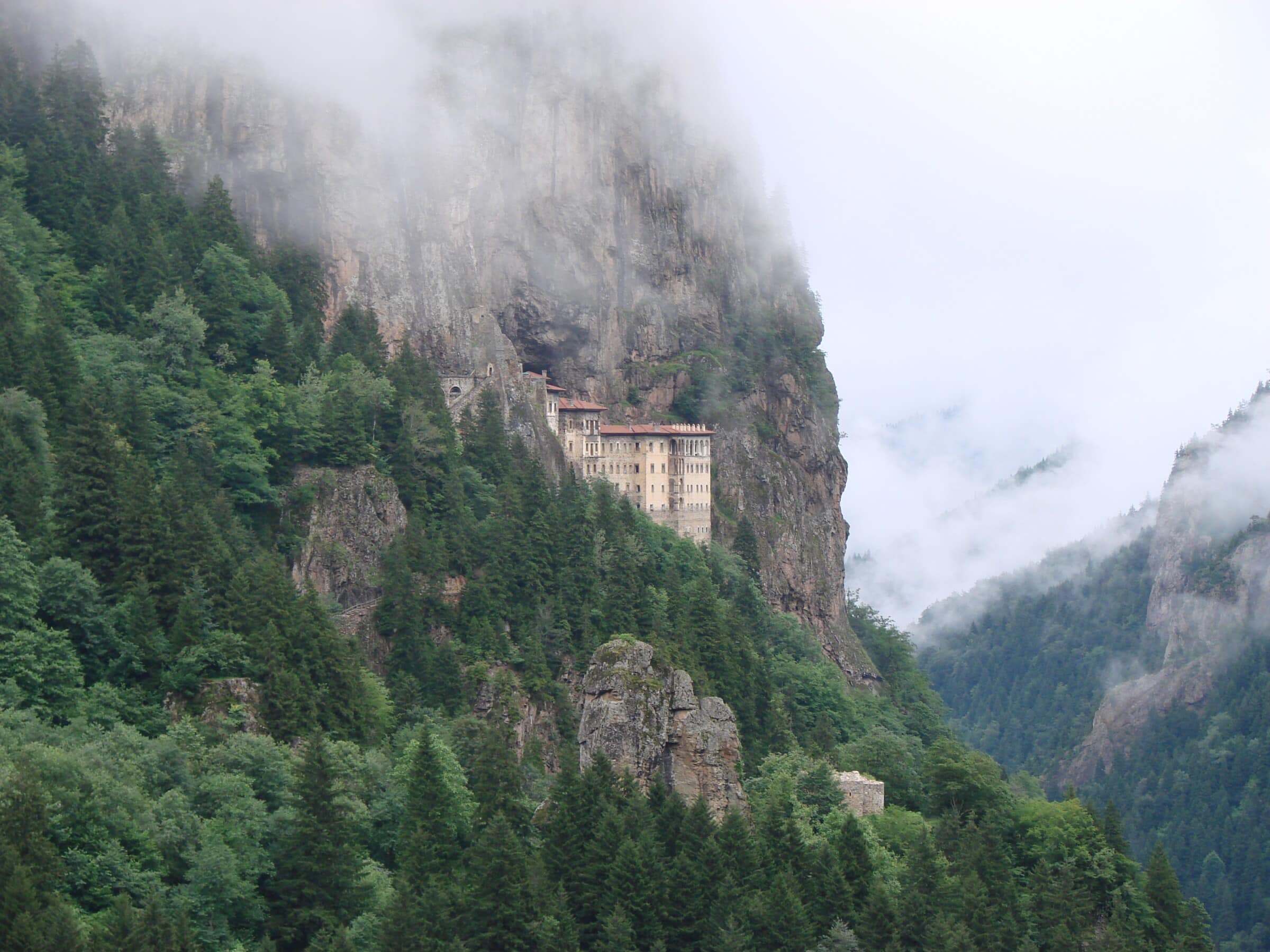
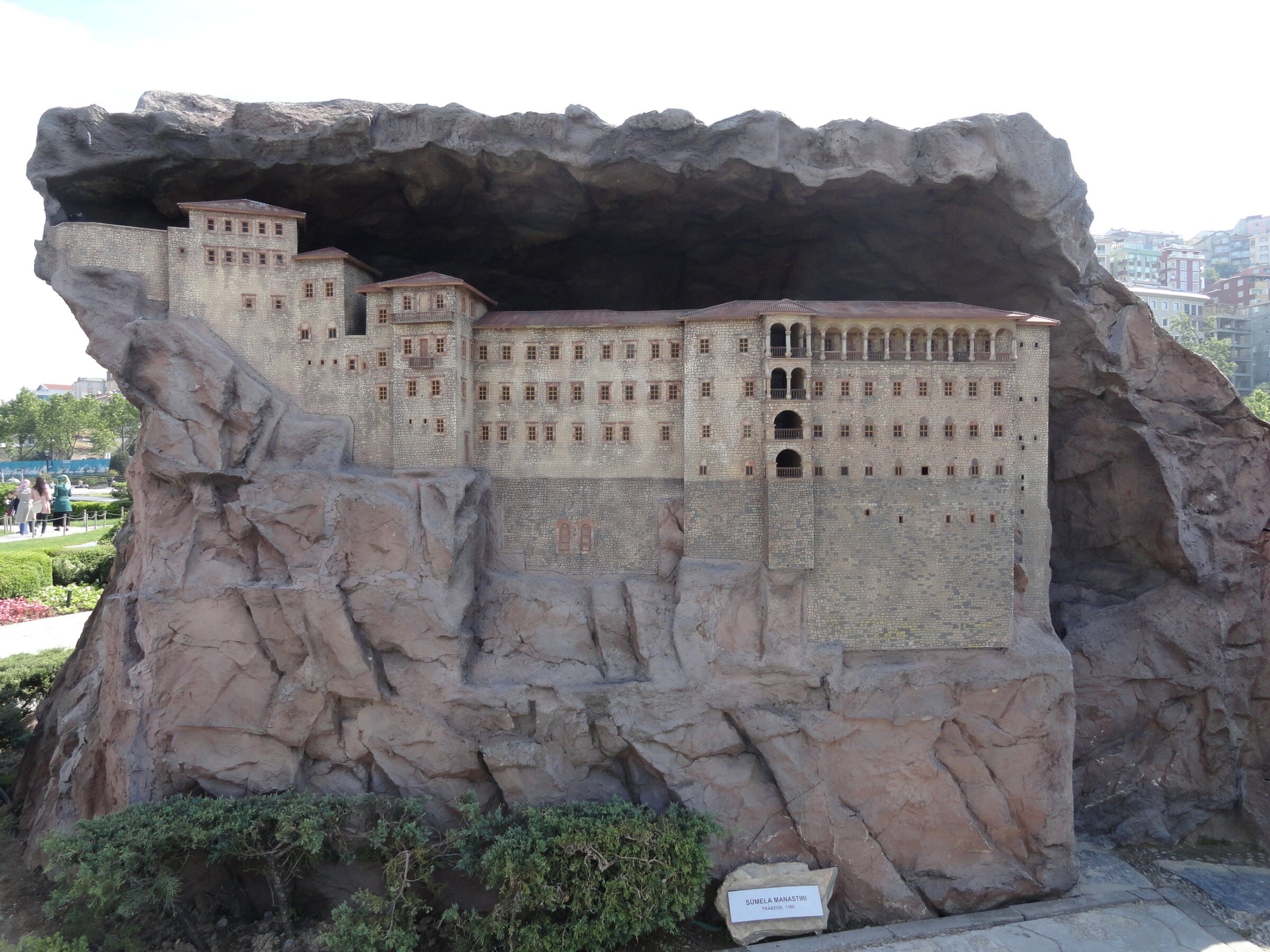
Miniatürk is an attempt to miniaturize what is otherwise too gigantic to comprehend, to scale down the political implications of historical, social, national, and citizenship, and, as historian İpek Türeli notes, to craft instead a substitute citizenship narrative via architectural whimsy, and the most pleasant kind of absurdity. Here, you can listen to smooth, lilting muzak, see cats-as-kaiju occupying the full space of the Selimiye Mosque courtyard, and take an angelic perch on the park’s Bosphorus Bridge, from which you can gaze down at the Dome of the Rock or a drained neo-Bosphorus, the ferry now lying on its side in a pocked concrete pan.
I watched three men in rubber boots with squeegees washing down a soapy Seyhan River, yelling and arguing and stepping across Adana into Mersin and İzmir and back again while scrubbing winter muck off the cement riverbed. Another worker used a broom to brush dead leaves from the roof of Hagia Sophia. There was a group clustered around the Hagia Irene that appeared to be conducting an archeological excavation, such that the steel substructure was exposed. On my next visit, a few days later, the Hagia Irene was missing, and in its place a newly-planted sign, “Under Restoration.” (This is not unlike sightseeing around Istanbul, where museum and monument closures are frequent, fickle, and unexpected.)

Miniatürk doesn’t tell a clear story, but that’s okay; no one’s been hoodwinked, it’s fine — it’s fiiiiiine — because there’s a giant cat on Lion’s Road, and he’s orange, just like the modeled promenade of lions beside his enormous fluffy feet. 9 Turkish, Anatolian, and Ottoman histories are flung out of time and sequence in favor of a perceived monumental value, and in service of valorized and re-valorized collective memory. The architectural flashpoints of history are converted into lieu de mémoire, Pierre Nora’s phrase for objects or places that contain memory, a process that does not require any understanding of sequence and chronology. In Miniatürk, the only time that matters is my bemused Gulliverian time in this Turkish Lilliput. The dynamic is precisely as Susan Stewart described in On Longing, well before Miniatürk existed.
The miniature does not attach itself to lived historical time. Unlike the metonymic world of realism, which attempts to erase the break between the time of everyday life and the time of narrative by mapping one perfectly upon the other, the metaphoric world of the miniature makes everyday life absolutely anterior and exterior to itself. The reduction in scale which the miniature presents skews the time and space relations of the everyday lifeworld, and as an object consumed, the miniature finds its “use value” transformed into the infinite time of reverie. 10
This whirlwind through time and history, the delightfully odd cacophony of sonic landscapes, the fractured time, the constant assessing and re-assessing of my memory versus Miniatürk’s real analogues — all of it continues and builds with each bend in the path and each model encounter, to the degree that I start to question my own memory of the Galata Tower, the Topkapı palace, and the Basilica Cisterns, the last of which are not only miniaturized but confusingly above ground. Where am I? Is this really it? Does that building really do that? When am I?
Where am I? Does that building really do that? When am I?
Wandering through this odd world, a not-quite flaneur, I stopped to stare at the airplanes parked at the miniature Atatürk Airport, and at yet another cat who had made a temporary home on the old airport’s Arrivals runway. The planes were taxiing before but were now sadly static, so that my eyes settled on the aviation livery emblazoned on their sides, declaring the planes part of the “Miniatürk Airlines” fleet. That didn’t feel familiar, so I mentally flipped back in time to my first visit to the park, and my stop at this airport. It was a Turkish Airlines plane then, and, as I recalled, the plane was buried halfway in a hedge, its wheels straining against a buckled tarmac, its taxiing loop halted, its small motor, hidden somewhere in the truncated fuselage, emitting a faint whine. Miniatürk’a hoş geldiniz! Welcome to Miniatürk!
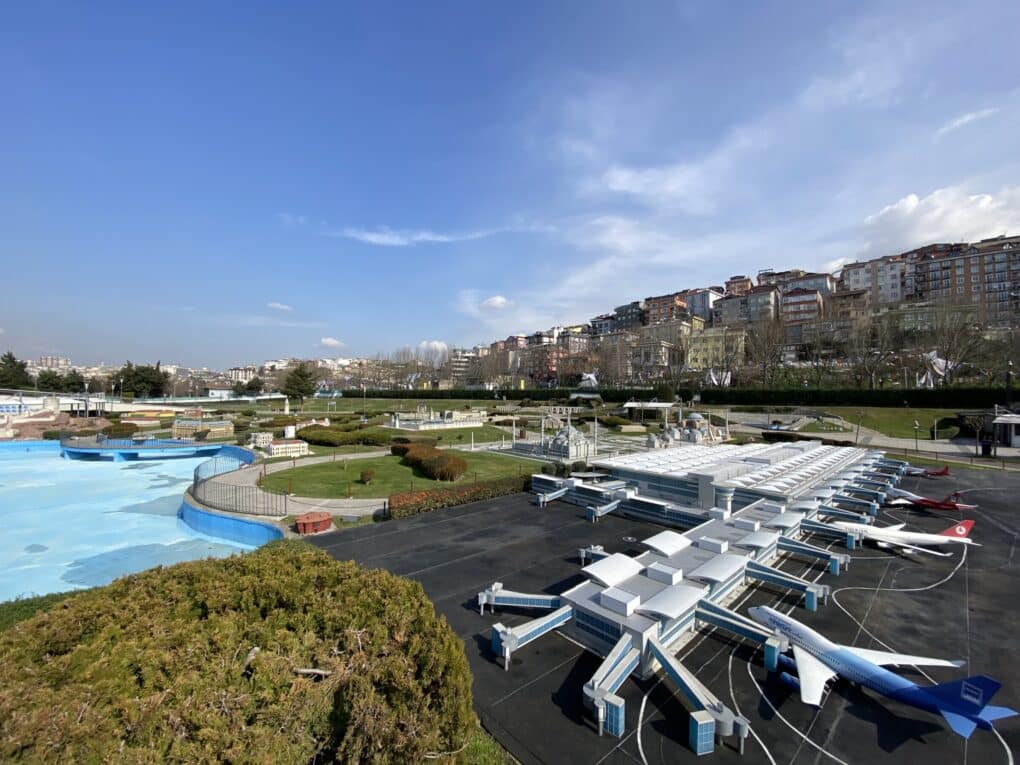
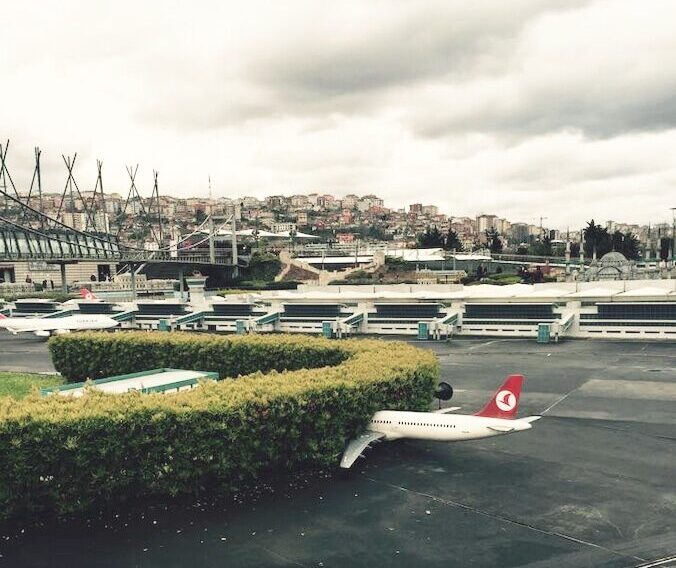
There is something useful, and profoundly disconcerting, about seeing the buildings of Miniatürk without the urban chaos, density, and intensity of their real-life contexts. No traffic, no shoe-shine hustler, no rabbit fortune teller, no cajoling restauranteur. There is no smell either, or at least not the customary smells — of coffee, grilled kebab, cigarette smoke, exhaust, and gasoline, and the swirling dervish smoke that belches from a ferry’s stack (a stench I actually love, horrible as it is). The aural terrains at Miniatürk are similarly limited — just three types of sound, or maybe four if you count the dim hum of traffic: the call to prayer from surrounding mosques, the park muzak and its behavioral reminders, and the sounds visitors make as they stroll through Ottomania. The conspicuous absence of Istanbul’s sensorial registers has the odd effect of making everything seem much, much, MUCH larger, than it actually is — the myth, the politics, the history, all of it. Each Miniatürk model seems to perform its own soliloquy, to a rapt audience. Türkiye, the park declares, is itself a monument, and with each Gulliver’s-eye view, you agree.
Türkiye, the park declares, is itself a monument, and with each Gulliver’s-eye view, you agree.
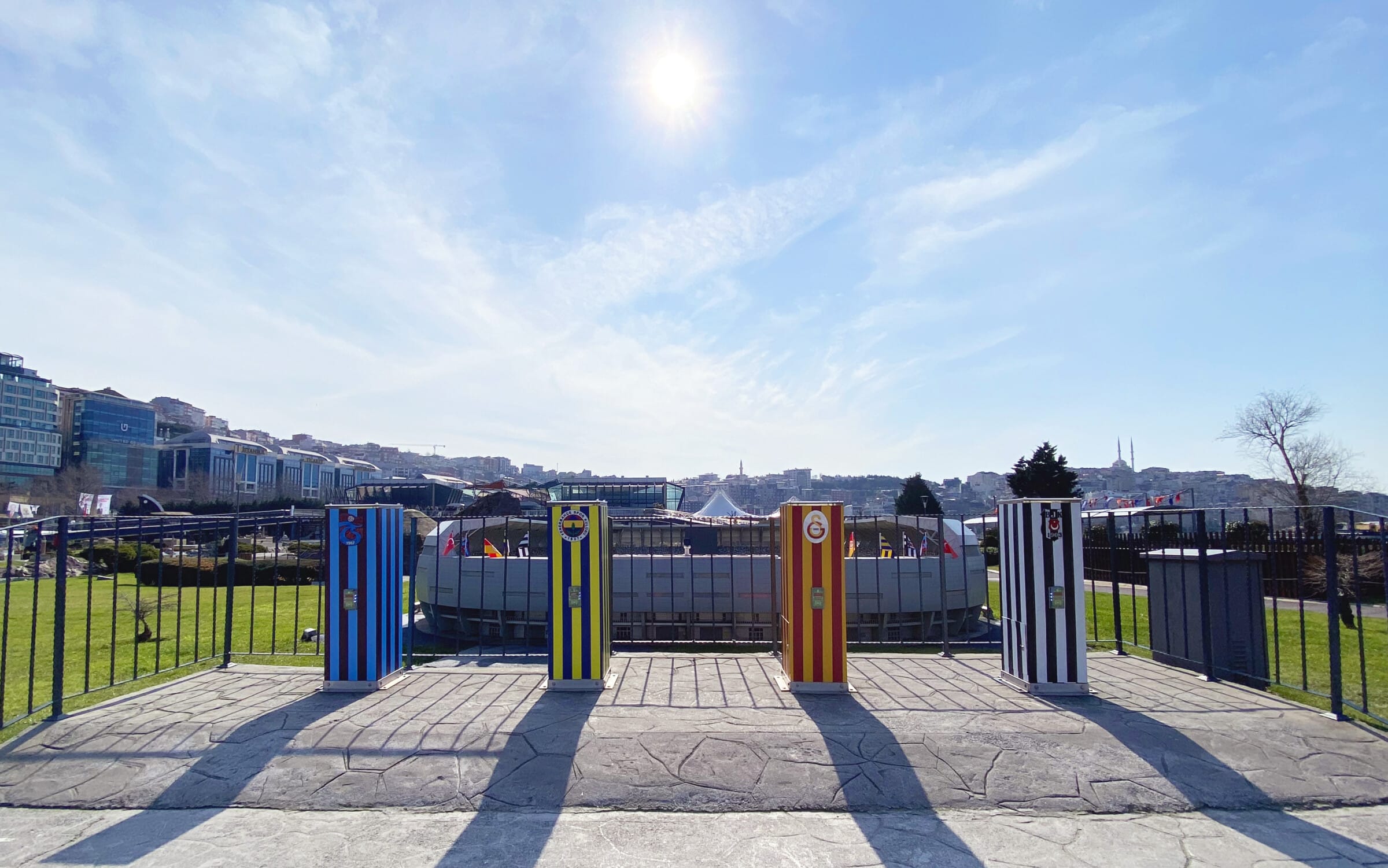
In front of Mini Stadium, with skyboxes and referees and capacity for 53,000 miniature spectators, I placed a few lira into a coin slot marked with the colors of my favorite soccer allegiance — which is Beșiktaş, the only reputable club, and I’ll fight anyone who says otherwise — and when the music piped out, and the flag started waving, I saluted, and sang along to the club anthem. The website explains that Mini Stadium is “specially designed for Miniatürk,” meaning that it is not a model of a particular place, but was fabricated wholesale. 11 The wonderfully absurd performative apotheosis of Miniatürk is, perhaps, here, at Mini Stadium — not on the concrete arch of its Bosphorus Bridge, or in front of Rumi’s or Atatürk’s tombs. Here, with your Fenerbahçe, or Galatasaray, or Trabzonspor, or Beşiktaş kit (and spirit), the visitor becomes the performance, complete with soccer-club allegiance to a model stadium with no equivalent 1:1 architectural counterpart. There is no loyalty to history, time, narrative, or, for that matter, reality.
From the faux soccer arena, I visited the restaurant nestled underneath the park’s entry platform. As I entered an enormous, mostly empty room, with elaborate heavy chairs upholstered in floral patterns, a waiter beckoned me to the back, where a long refrigerator held cakes and baklava and trileçe, and five men in black and white serving uniforms waited to take and prepare my order. I requested a sandwich, a slice of cake, and some tea. I carried my meal on a cafeteria tray and sat alone at a square table, gazing out to the park through a long wall of windows, the gauzy, diaphanous curtains pulled back.
My dining room companions were a group of older Turkish men playing backgammon at a table to my left. The waiters waited. I drank my tea, finished my sandwich. My view was of Ataturk’s Mausoleum, the Grand Mosque of Bursa (the Ulu Cami), and an ersatz mountain range with a broken cable car. Another cat was visible, this one sleeping on the roof of the lower cable-car building. Farther in the distance, I saw the white mounds of Pamukkale and the slaggy peaks of Cappadocia in their Anatolian micro-splendor, and then, closing out the park to the west, the Trabzon Sümela Monastery, famously embedded in the mountains along Türkiye’s Black Sea coast. And behind everything, always there, was the largest model in the park: the Bosphorus Bridge. There was a couple, German, round and happy, strolling across the bridge, the suspension cables moving to a perspective pin-prick behind them. Sipping my tea, it felt as if I was seeing everything, everywhere, all at once, but aside from the click of backgammon (tavla) discs and the “tsks” following a good or a bad move, the everything-everywhere was nearly silent.
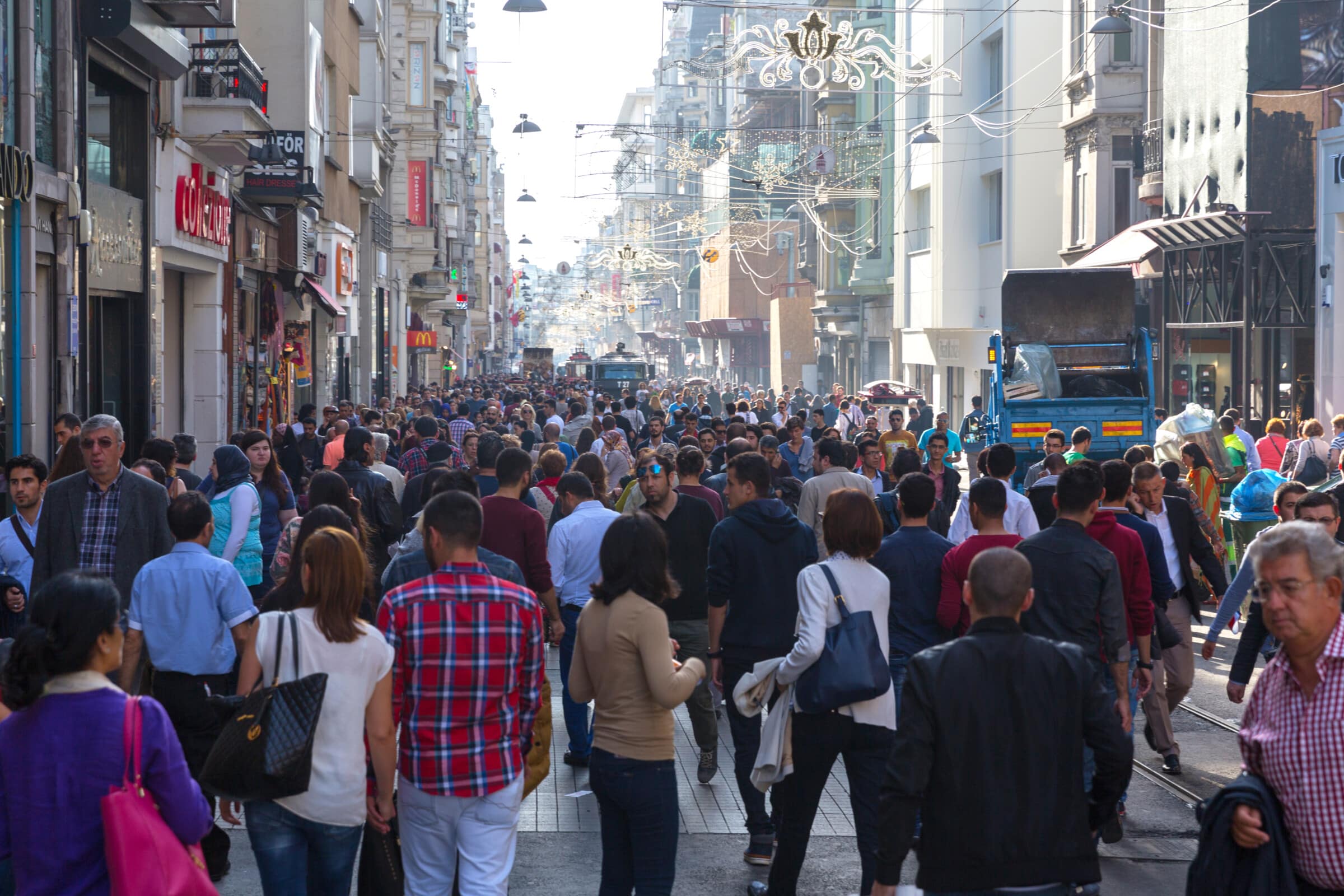
I remembered, in that moment, my many trips traveling across Türkiye on Thracian and Anatolian busses — to Edirne, to Trabzon, to Selçuk and Ephesus, to Pamukkale and Bursa, to Ankara, and afield — and imagined myself making similar journeys here at the park, on a tiny Miniatürk bus. Indeed, there is a train that rolls around, but it’s mostly for children or petite adults, whereas I was imagining a mode of conveyance more real, more true to my previous experience of busses. The bus in my mind goes off-road — apologies to the Miniatürk rock voice, we will be touching the grass — and I tried to imagine how it might be to visit these historical fragments as 1:1 analogues at full scale — that is, still in their sanitized park form, but larger. No one is hustling, no one pushes, and there are no crowds. The sites are clean, quiet, perfectly photographable, Instagrammable. I walk into the Hagia Sophia and I am alone. The courtyard of the Topkapı Palace is as silent as it was during the Ottoman period, when courtiers and palace staff communicated in sign language. 12 I become a Sultan, the German couple becomes grand viziers and ministers, the children on the Theodosian Wall play structure become janissaries and Byzantine soldiers. Everything, everywhere, all at once.
The park has been many things, and will continue to be many things, depending on the political powers-that-be.
This daydreamy exercise, I suspect, is precisely the point of Miniatürk. By removing these buildings from the constraints of historical Gregorian time and narrative, everyone becomes a citizen and sultan of Turkish time and narrative, and thus of Turkish space and belonging. Of course, this is related to the notion that the Nation State is an idea, a projected illusion, an all-inclusive fantasy wedged in this case into a park, a park that achieves coherence only by exempting murky terrains: the disaggregated stories, the elided and obfuscated counter-narratives, the anomalous buildings and events left to the wayside. Historians Secil Yilmaz and Şafak Uysal argue that Miniatürk’s fragmentation, its 19th-century romanticization of Ottoman nostalgic co-existence (everything is everywhere, all at once) and its imperial embrace (over Republican citizenship) are an aspirational mockup for Türkiye’s future, going so far as to claim that “Miniatürk enters the European Union before Türkiye, and endows it with an already gifted, sparkling and paradigmatic model — of a new, inspiringly para-historic, Otto-European citizenship.” 13 I’m not so sure. Not since its (first, second, or third) opening, has Miniatürk — or Türkiye — gotten a hair’s breadth closer to Brussels.
I find Miniatürk’s political claims (and re-claims — remember the triple inauguration) more shifting and mercurial than Yilmaz and Uysal suggest. The park has been many things, and will continue to be many things, depending on the political powers-that-be. Mayor Bedrettin Dalan’s Golden Horn remediation set the neoliberal urban stage for the park — Dalan, who helped former Turkish President Turgut Özal establish a center-right party called “The Motherland Party,” and Dalan who famously declared of the Golden Horn’s water that “Gözlerim gibi mavi olacak,” or, “It will be blue, like my eyes,” an approving nod to the gentrification of the surrounding neighborhood. 14 Erdoğan’s mayoralty, following that of Nurettin Sözen (1989-1994), coincided with the municipal planning of Miniatürk. The succession of Istanbul mayors following Erdoğan that were of the same political party, the AKP — Gürtuna, Topbaş, Uysal — gave way in 2019 elections to a major defeat. That election was won by Ekrem Imamoğlu, representative of the Republican People’s Party (CHP), founded by Atatürk.
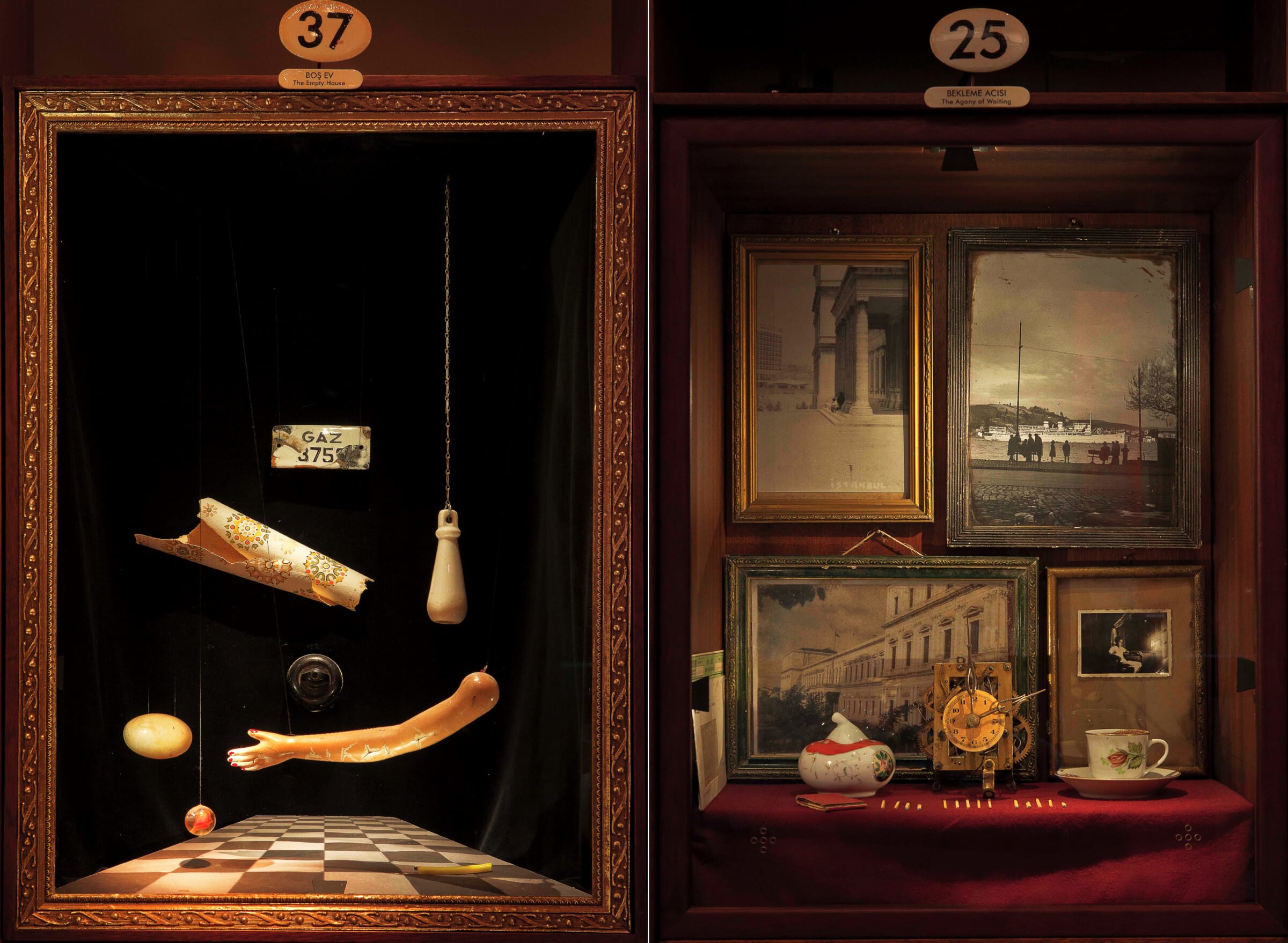
Architecture becomes everything, and nothing. There is no glue to hold it all together. There is no story, despite all the associated political claiming and strange urban de-historicization of the landscape. Miniatürk becomes part of the solo-world of each visitor who walks through these tiny/giant monuments in a green field. The park is in effect a museum of aspirational Turkish architecture (an “Ata-Müze” if you will), one that aims to pull (almost) everything, everywhere, all at once, into an expansive park on the Golden Horn. It doesn’t succeed at being an “official” museum because its narrative is always in flux, adaptable, and delightfully so. It is more akin, perhaps, to Orhan Pamuk’s Museum of Innocence — a strange and Joseph Cornell-esque blend of cabinet of curiosity, constructed fiction, and visitor imagination. 15
The buildings at Miniatürk are all closed, and we can only imagine their insides if we’ve already visited the Blue Mosque or the Selimiye Mosque, or taken the elevator up to the Galata Tower and looked down upon the city. Outside-ness and above-ness is the primary world of the park; it’s a place for looking down, for feeling big. The real Hagia Sophia can make a person feel small and insignificant, and Miniatürk would like to reverse that effect. I am as tall as Sinan’s minarets, and taller still than the domes of the Blue Mosque, and the spire of the Galata Tower, and I can truly see everything, everywhere, all at once. We are made bigger than we know ourselves to be. Architecture, just perhaps, matters a little less than the worlds we are able to construct from and out of it — the malleable, associative ecology of memory, politics, belongings, and exclusions. Miniatürk’s performative elasticity hides all variety of narratives — the potential histories, possible politics, “could-be” scenarios — in plain sight, and site.

Speaking generally, the models are well made, and as a designer and architecture teacher, I found myself absorbed in their craft, both virtues and flaws. Those people are out of scale, I say. Sinan loved his patron, so, I wonder, why did they place his tomb so far from Süleymaniye’s resting place? They missed the broken carving on the portal of the Sultanhan Caravanserai. (A deliberate action on the part of the architect, so the story goes, who felt that only God was perfect, so this human-made ornament must not be.) A corner of the Selimiye Mosque model is noticeably lifting up from the ground, which reminded me of the story, possibly apocryphal, that Sinan, the great architect, set the foundation of the Selimiye Mosque and then waited years and years before beginning construction, so as to ensure that the earth had settled. The builders of Miniatürk were not so patient, and now the model is winking to history. Architecture, is, of course, political — it always is.
The real-world politics really do take second, even third stage to the fact that there’s a cat on the runway, and it’s larger than the 747 he’s lying against.
At 1:1, it is fundamentally about land and property, about patrons, privilege, and of course, power and access. At Miniatürk, though, the real-world politics of projective narratives really do take second, even third stage to the fact that there’s a cat on the runway, and it’s larger than the 747 he’s lying against. “In Miniatürk,” claims the official website, “everything is so original that you feel as if you are traveling all over the country from east to west, from north to south. Of course, it is not the same as seeing the actual works but besides willingness to see the actual ones, it feels quite privileged to able to enjoy these works presented in such an aspect [sic].” 16 Touring Miniatürk is, of course, completely, vastly, and profoundly different than touring Turkey. It’s that difference, dare I say, that is so epically delightful.
Istanbul changes all the time, and quickly. Even just walking through the city, or watching it slide by from a ferry or a bus, the stories are real, tangible, and felt. They’re perceptible, sensorial, around you, over you, above you. You hear and smell them, enter into them, are subsumed by them. Miniatürk refuses all that through its tiny-monumental constancy. It catalyzes, and then holds suspended a bemused narrative absurdity. I walk to the Stadium and play the Beşiktaş anthem. I watch a black and white cat drink from a tiny-size Seyhan River, like a dinosaur out of a swimming pool. I step again onto the park’s miniaturized, gigantic Bosphorus Bridge, to look out one more time over my, your, and our, little big world. And then, Brad Pitt (or a tiny 1:25 Brad Pitt model) winks, and quotes us a little Rumi, à la the freewheeling interpreter Coleman Barks: “There exists a field, beyond all right and wrong. I will meet you there.”




.jpg)

.jpg)

.jpg)
.jpg)
If you would like to comment on this article, or anything else on Places Journal, visit our Facebook page or send us a message on Twitter.