

Is this it? Nicholas asks, lowering his camera in disbelief. I nod. We watch as a young woman wearing a bright pink “Birthday Girl” sash throws her arm around the lava rock obelisk that marks the site of the world’s first nuclear explosion. Her friend snaps a photograph, and Birthday Girl steps away, so someone else can have a turn.
Today is October 21, 2023, the first “open house” at the Trinity Site since the release of Christopher Nolan’s film Oppenheimer. Officials expect a surge of nuclear tourists, perhaps 4,000 people streaming across the White Sands Missile Range. For most of the year, this is an active military installation, the largest in the United States: the Air Force trains fighter pilots; the Army and Navy test missiles and tactical defenses; NASA launches rockets. But for one day in April and one in October, operations are paused so civilians can access the National Historic Landmark within its borders.
The Trinity Site is a strange, unresolved place — a monument that should be a memorial.
The Trinity Site is a strange, unresolved place — a monument that should be a memorial. This is my fourth open house, but my first as a tourist (without a dozen of my architecture students). Despite my deep skepticism of security theater, I encounter this history from a comfortable distance, having no ancestral ties to the land, passing through military checkpoints with the privilege of Whiteness, unobstructed, unabused. Nicholas, a graduate student in art, has come along to take photographs and bear witness. We left Albuquerque hours before dawn, driving 250 miles to claim our spot in a line of cars outside the missile range, arriving as the sun rose to bathe the Sacramento mountains in warm light. To the designers of the nuclear bomb, this place was “deserted” and “barren,” but to me, it is familiar and sublime. 1
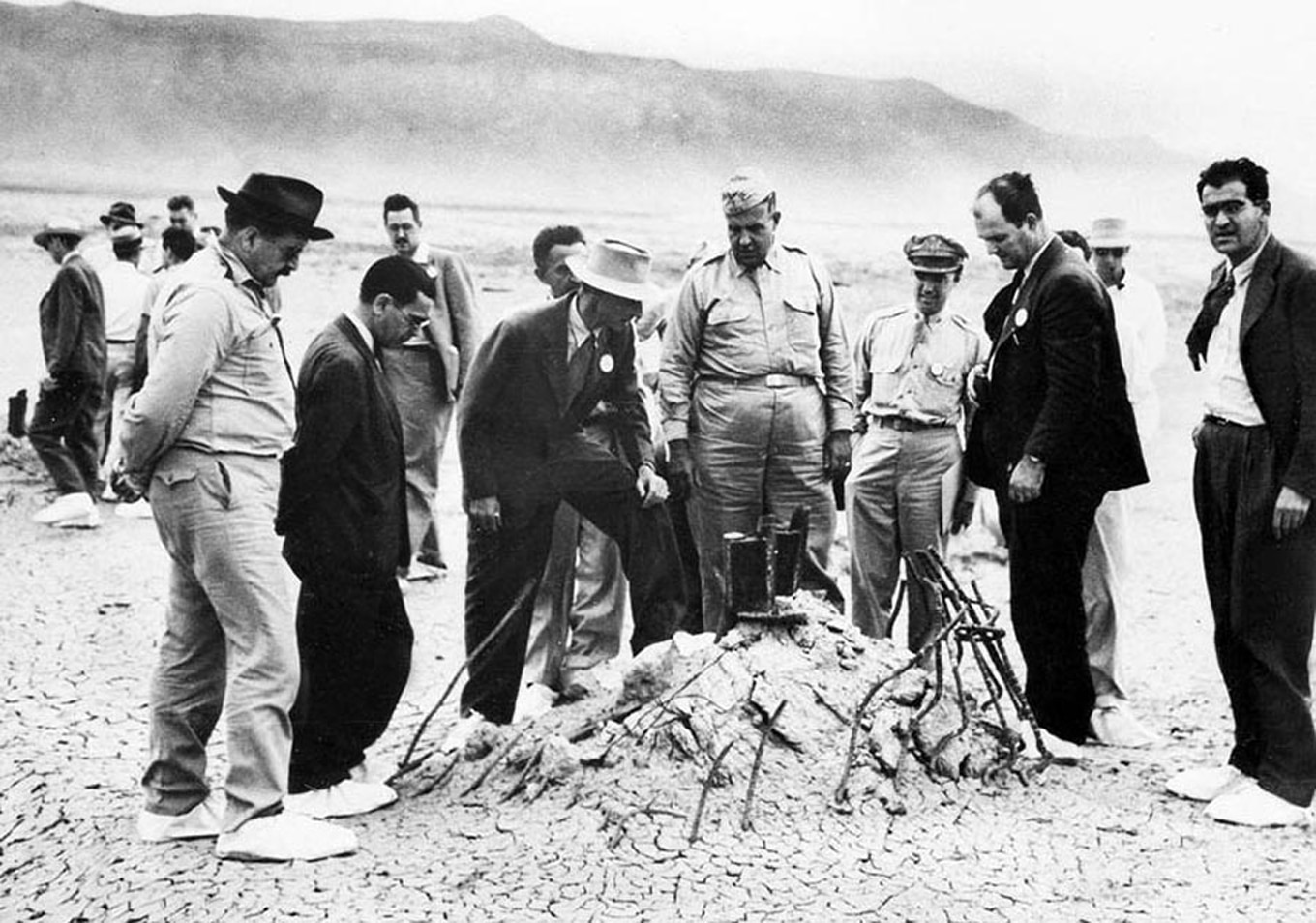
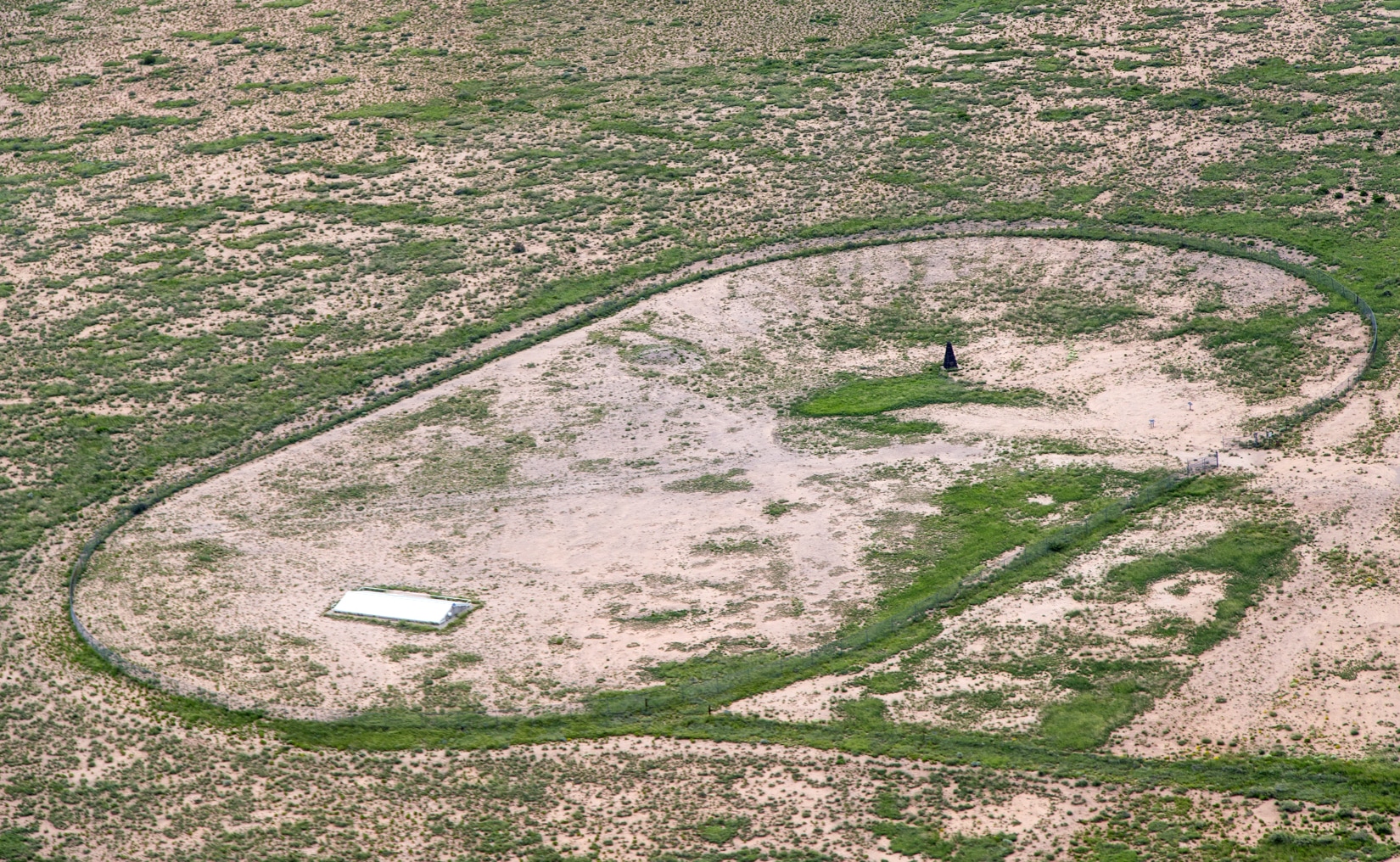
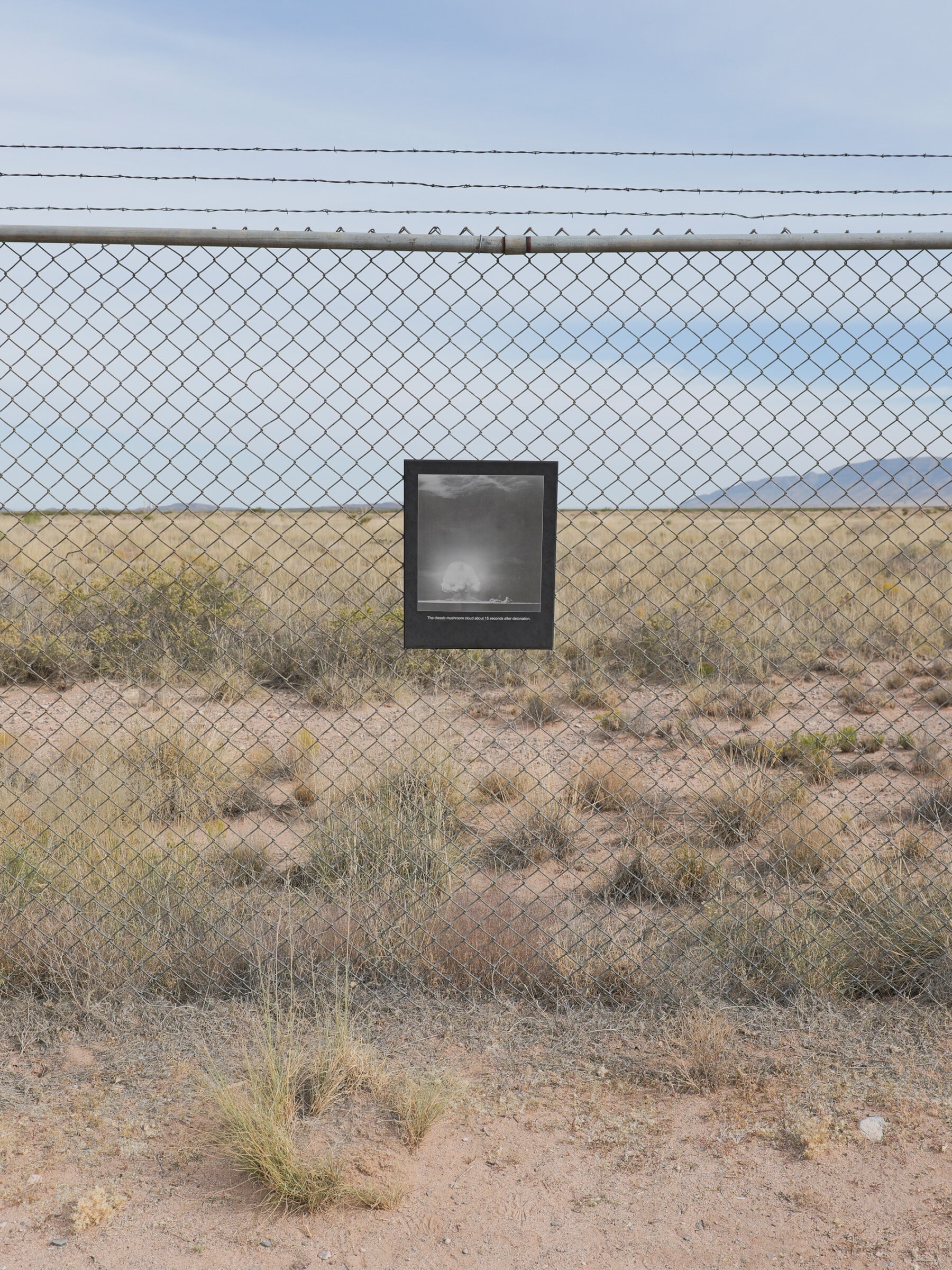
In the Trinity parking lot, there are portable toilets; concessions; kiosks selling T-shirts, keychains, postcards; signs that warn of radioactive danger. Beyond that is an elliptical blast crater 3,200 feet wide, where Gadget — the codename for the nuclear test device — was winched to the top of a 100-foot surplus fire-watch tower appropriated from the U.S. Forest Service, and then detonated. 2 The tower was vaporized, but visitors can appreciate the mangled remains of a concrete footing. Other artifacts on display include the obelisk and plaque erected two decades later, and a half-buried shed with a locked sliding door in the roof, concealing the original crater floor. Nearby is a replica of the bomb casing for Fat Man — the plutonium weapon detonated over Nagasaki — wheeled in on a trailer and left there, with no explanation.

Tourists kick the ground, looking for a piece of the souvenir fallout created when the explosion sucked sand high into the air and returned it to Earth, melted into wormy, radioactive bubbles of green glass. I pick up a fragment, unable to resist. Shortly after the war, the Army commissioned a jewelry designer to turn this trinitite into earrings, hairpins, and a brooch, which were worn by models and actresses in a public relations campaign to deny Japanese claims of harm. 3 Today, it’s a sparkly temptation for tourists who risk being irradiated and charged with a crime.
I drop the trinitite and wander with the crowd toward the only thing left to see, a perimeter fence dotted with portraits of the men — J. Robert Oppenheimer, Kenneth Bainbridge, Leslie R. Groves, Jr. — whose decisions implicated this landscape in unending terror. Their grave, black-and-white headshots, crudely zip-tied in place, are interrupted by photographs of the nuclear test, timestamped at intervals of a fraction of a second.
Where is the space that belongs to the public? We have to make our own.
Now what? Visitors drift aimlessly, a problem predicted by the Department of Interior employees who authored the site’s first interpretive plan, in December 1945. They argued forcefully against self-guided tours. “This will be one of the few national park areas where the story can be best told in a museum,” they wrote. “Except for the remains of the towers at points ‘G’ and ‘Zero’ and for the ‘atomsite’ covering the ground in the vicinity of ‘Zero’ there is little to be seen of a spectacular nature.” They believed “a full and proper understanding of the event … could not possibly be secured merely by allowing visitors to roam at will and unattended over the area.” 4
And so we have this compromise: an open house. An invitation to cross a private threshold, as a guest. Even the selfie-takers must feel awkward. Where is the space that belongs to the public, for critical reflection, for direct expressions of grief? We have to make our own.
Back at the obelisk, Nicholas raises the camera again, waiting for a clear shot. In the background, a woman prays on her knees, forehead pressed into the ground.

Not that a museum secures understandings, anyway. And was it an event, really, the thing that happened here? The Trinity Site is a monument to obliteration. Part of the visitor experience is registering the disconnect between these artifacts and the horror they represent.
There are two distinct histories of the site. One is fixed at 5:29:45 a.m. on July 16, 1945, when the test device fissioned and exploded.
There are two distinct histories of the site. One is fixed at 5:29:45 a.m. MWT (Mountain War Time) on July 16, 1945, when the test device fissioned and exploded. Device is a thin word for a bomb five feet in diameter, weighing 2.65 tons, covered in 32 “lenses” made of two different types of explosives, which squeezed the plutonium core, starting an atomic reaction. Many timelines and geographies collapse in this moment, which stretches forward to include the bombing of Hiroshima on August 6, and Nagasaki on August 9, then the Japanese surrender on August 14, and stretches back to include three years of the Manhattan Project, the secret wartime effort that proliferated through dozens of spaces in London, Montréal, and the United States, including the two important sites in New Mexico: Los Alamos (or “Site Y”), where physicists, chemists, and engineers worked on the theoretical and practical aspects of making nuclear bombs; and the Trinity Site, where those theories were tested in an open-air laboratory. 5 This history, that moment, is visualized in a series of photographs that show a blister rising from the ground, images shot at 10,000 frames per second at a distance of 800 yards, in a steel-and-glass bunker, by Fastex cameras later pulled from the irradiated wreckage by a chain attached to a lead-lined tank. 6
The timestamp itself is a fabrication. “War Time” had just been invented, and radio communication was cut off before the time of the blast could be confirmed. Yet history records the positions of the men who authored the moment: Oppenheimer, the director of Site Y, George B. Kistiakowsky, head of the Explosives Division, and Bainbridge, director of the Trinity test, in a control shelter 10,000 yards south of Ground Zero; and the other scientists 20 miles northwest, on Campañia Hill, their faces smeared with sunscreen, wearing heavy gloves, peering through pieces of welder’s glass. 7 In some versions of this history, Oppenheimer lies on the ground, just outside the control shelter. It was July 16 — it had to be that day, even though the winds were not good — because Truman was headed to the Potsdam conference with Churchill and Stalin. The visible faces of this history are the faces of famous men.

The other history of the Trinity Site is nothing like this. It understands the blast not as a moment, but as a continuous present and future, unfolding over time and through bodies. The first language of this history is a question: what happened, did the sun blow up? This history has no famous images. Its faces belong to ordinary people living ordinary lives until the inconceivable occurs.
The other understands the blast not as a moment, but as a continuous present and future, unfolding over time and through bodies.
These statements are [the] history of my life and the lives of my brothers and sisters and Mom and Dad, opens the affidavit of Wesley E. Burris, who was four years old at the time of the blast. This is one of many written and video-recorded testimonials collected by the Tularosa Basin Downwinders Consortium and made available on their website. 8 Burris was sleeping in his family’s house off U.S. Highway 85, halfway between the towns of Socorro and Truth or Consequences, about 30 miles west of the blast. “Around 5:30 in the morning there was a huge explosion,” he testifies. “Brother Robert and I were asleep in our bedroom which also faced East. There was a 2′ x 2′ window over the head of our bed. When the explosion happened it blew the window back against the wall and broke the glass which fell into the bed with me and Robert. I jumped up to see what had happened and the light was so bright I couldn’t look at it. It was brighter than the sun all over the sky. … I remember asking [my dad] what happened, did the sun blow up?” When his dad went outside to investigate, he found two men wearing field glasses at the end of the driveway. “According to them,” Burris writes, “they didn’t know what happened. Found out years later they knew exactly what happened.”
These men who would not explain themselves were likely working for Los Alamos medical director Louis Hempelmann. The “rough riders” traveled from town to town, in the first hours and days after the explosion, sampling the soil and air, tracking the spread of radiation as the mushroom cloud broke apart and the wind picked up sheets of irradiated dust. 9 Los Alamos scientists had earlier placed radiation meters in the closest towns: Carrizozo, San Antonio, Hot Springs, Socorro, Magdalena. 10 They knew there would be a radioactive cloud, and in the days before the test, they had projected its path, drifting east. But on July 16, the strong winds carried fallout in every direction. As observed by Hempelmann’s colleague Stafford Warren, “one-third drifted eastward, the middle portion to the West and northwest, while the upper third moved northeast,” and “many small sheets of dust moved independently at all levels.” The rough riders, equipped with “portable alpha and gamma ionization chambers and Geiger counters,” chased the cloud into neighboring states, taking measurements over several days. 11
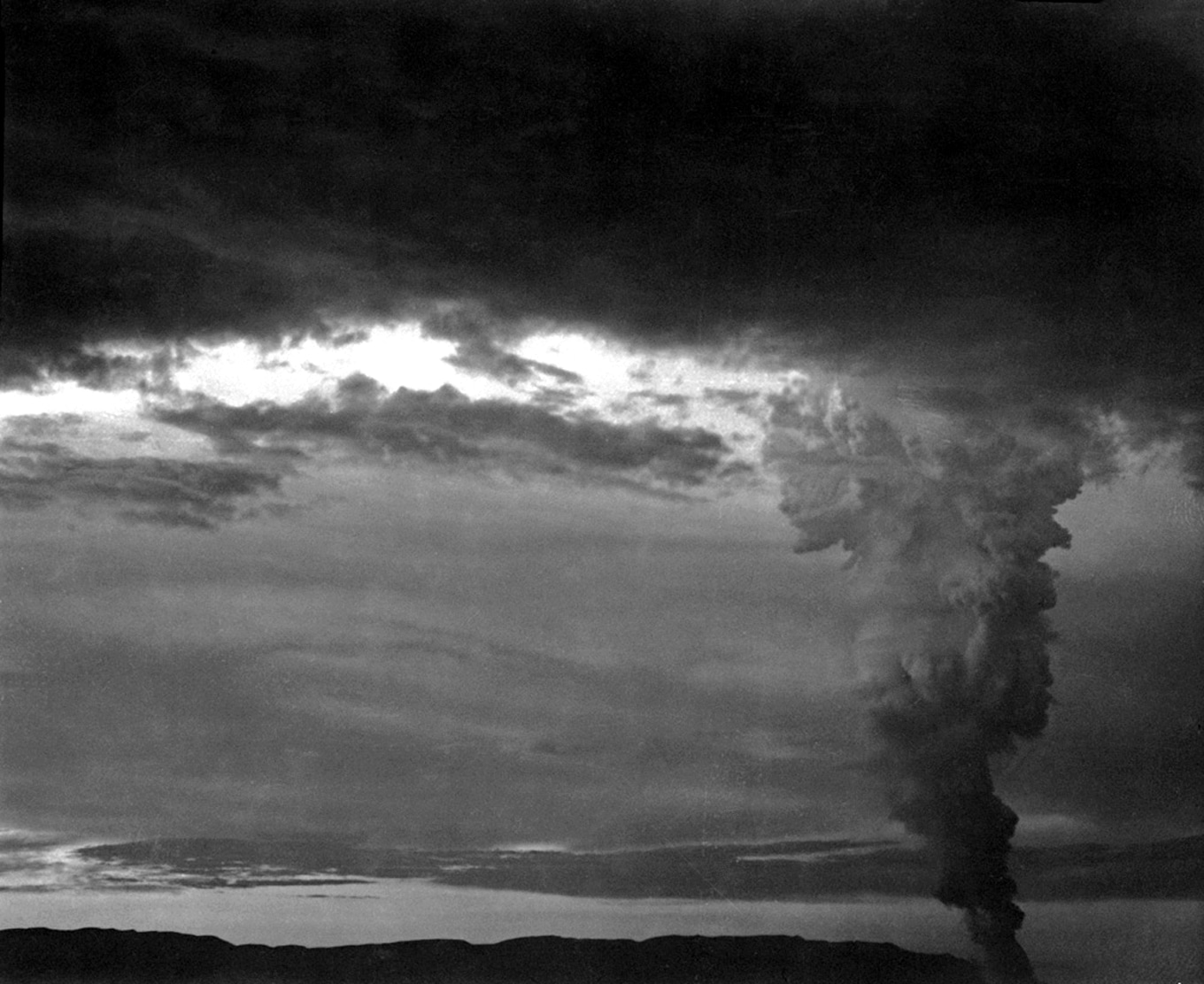
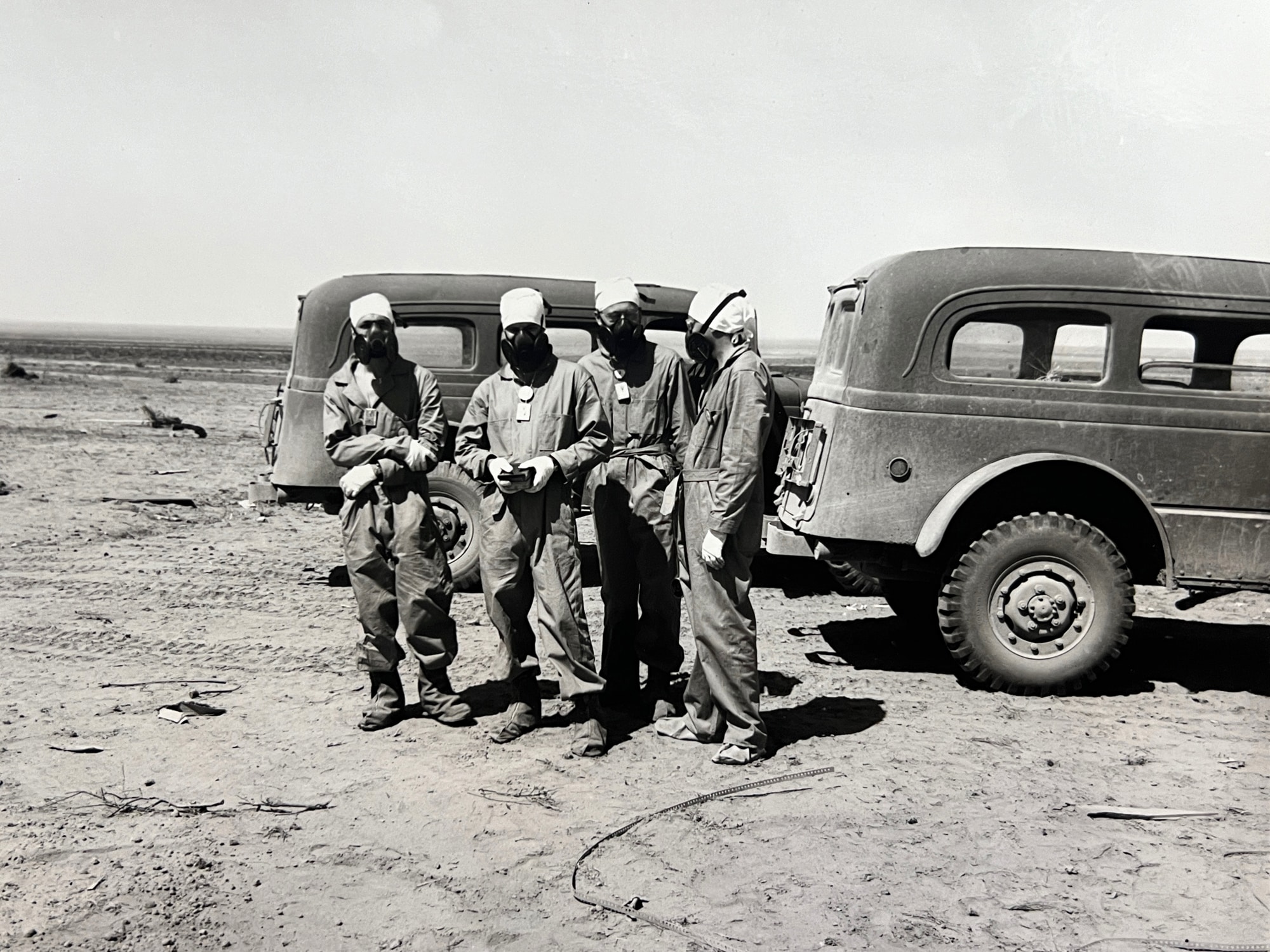
The scientists were concerned first with the bomb’s performance in war. Most of their instruments were designed to measure how much energy it contained. The betting pool held rumors “that the blast would be hot enough to ignite the nitrogen in the atmosphere and annihilate the human race.” Yet while the blast proved larger than predicted, it was also less efficient. “A flash of light brighter than a dozen suns” was seen as far away as Arizona, Texas, and Mexico. Ten miles away, the heat was like “standing in front of a roaring fireplace.” But according to radiologist J. Newell Stannard, only 1.2 of the 6 kilograms of Plutonium-239 in the bomb fissioned. The rest was released into the environment. 12
Only 1.2 of the 6 kilograms of plutonium in the Trinity bomb fissioned. The rest was released into the environment.
Where? Who could say? Many pieces of radiation-detecting equipment were destroyed by the explosion. Others simply failed. Radio calls were garbled and broken, preventing the relay of information from one station to the next. Socorro had no readings “because the automatic recording device ran out of red ink.” 13 Troubled by high radiation in Vaughn and Bingham, officials considered evacuations, but no warning was issued; there weren’t enough cars to get people out, anyway. Months before the test, Army medical staff had suggested readying emergency evacuation crews in case of danger to civilians, but General Groves resisted, not wanting to cause public alarm. 14
As the cloud reached canyons north of the Trinity Site, thermal updrafts caused wind shifts, or inversions, that dispersed fallout unpredictably. Chupadera Mesa, twenty miles from Ground Zero, was irradiated so heavily that the contaminated instruments were useless. Warren estimated that parts of the mesa might have received as much as 230 rad. When Groves heard that, he grounded observation aircraft heading toward the cloud, but he didn’t evacuate the area; it was considered “uninhabited.” Known as “Hot Canyon” ever after, it remained a popular place to graze cattle. 15
M.C. Ratliff watched from his ranch on the mesa as fallout rained down, glittering on the fence posts. Nobody warned him that it was dangerous. Officials visited his family seven times over the next two years, but they didn’t disclose the reason for their interest. The war was over, and Ratliff believed what everyone had read in the paper. There had been an explosion at a munitions dump on the weapons range, nothing unusual. Groves had approved the press release in advance, in case the sound or light was observed beyond the borders of the test site. In the event that anyone died, he’d also approved the line: “The dead were… ” with an empty space for the names. 16

It is telling that the Trinity Site is not an official stop on the Manhattan Project National Historical Park tour. How absurd those words sound when you string them together. The tour traces the early history of nuclear development through three designated American World War II Heritage Cities. They were, at the time, secret cities: Oak Ridge, Tennessee (Site X), where highly enriched uranium was produced; Los Alamos (Site Y), where scientists worked on the design of the bomb; and Hanford, Washington (Site Z), where plutonium was produced.
Likewise, the Trinity Site is an exception in the history of U.S. nuclear testing — used once and never again. The Department of Energy has acknowledged 1,030 tests of atomic and hydrogen bombs, ending in 1992. Some of these bombs were exploded in space or underwater, and some were unleashed upon colonized atolls in the western Pacific Ocean, but the vast majority of atmospheric and underground nuclear tests were conducted at the Nevada Test Site north of Las Vegas. People who lived near that site and suffered as a result of radiation exposure were recognized as “Downwinders” deserving compensation in a 1979 bill, drafted by Senator Ted Kennedy and introduced in Congress, that did not receive a vote. 17
Trinity workers who observed the first nuclear test from twenty miles away were covered under the Radiation Exposure Compensation Act. But people who lived twelve miles away were not.
It took another decade to pass that law, the Radiation Exposure Compensation Act, which in 1990 provided payments to U.S. citizens who developed cancer or other radiation-related illnesses if they had worked on or lived near atmospheric nuclear weapons tests, or mined or milled uranium, within certain time periods and locations. As later amended, RECA covered uranium workers in ten states and Downwinders in parts of Utah, Nevada, and Arizona. But the payments were modest — $50,000 to $100,000 — and the qualifying conditions narrow. And even after the law was expanded, it did not include Downwinders in New Mexico. Trinity workers who observed the first nuclear test from twenty miles away were covered. But people who lived twelve miles away were not. 18
Tina Cordova, a seventh-generation New Mexican, wants to change that. She is co-founder of the Tularosa Basin Downwinders Consortium, representing residents in four counties surrounding the Trinity Site — Lincoln, Otero, Sierra, and Socorro — where more than 40,000 people lived when the bomb was tested. 19 Cordova started the group nearly two decades ago, with the late Fred Tyler, who had seen his mother die of cancer. Cordova knew people in her hometown were getting sick and dying at alarming rates. “We truly believed that if the government knew the harm they were doing,” she says, “they would do something.” 20

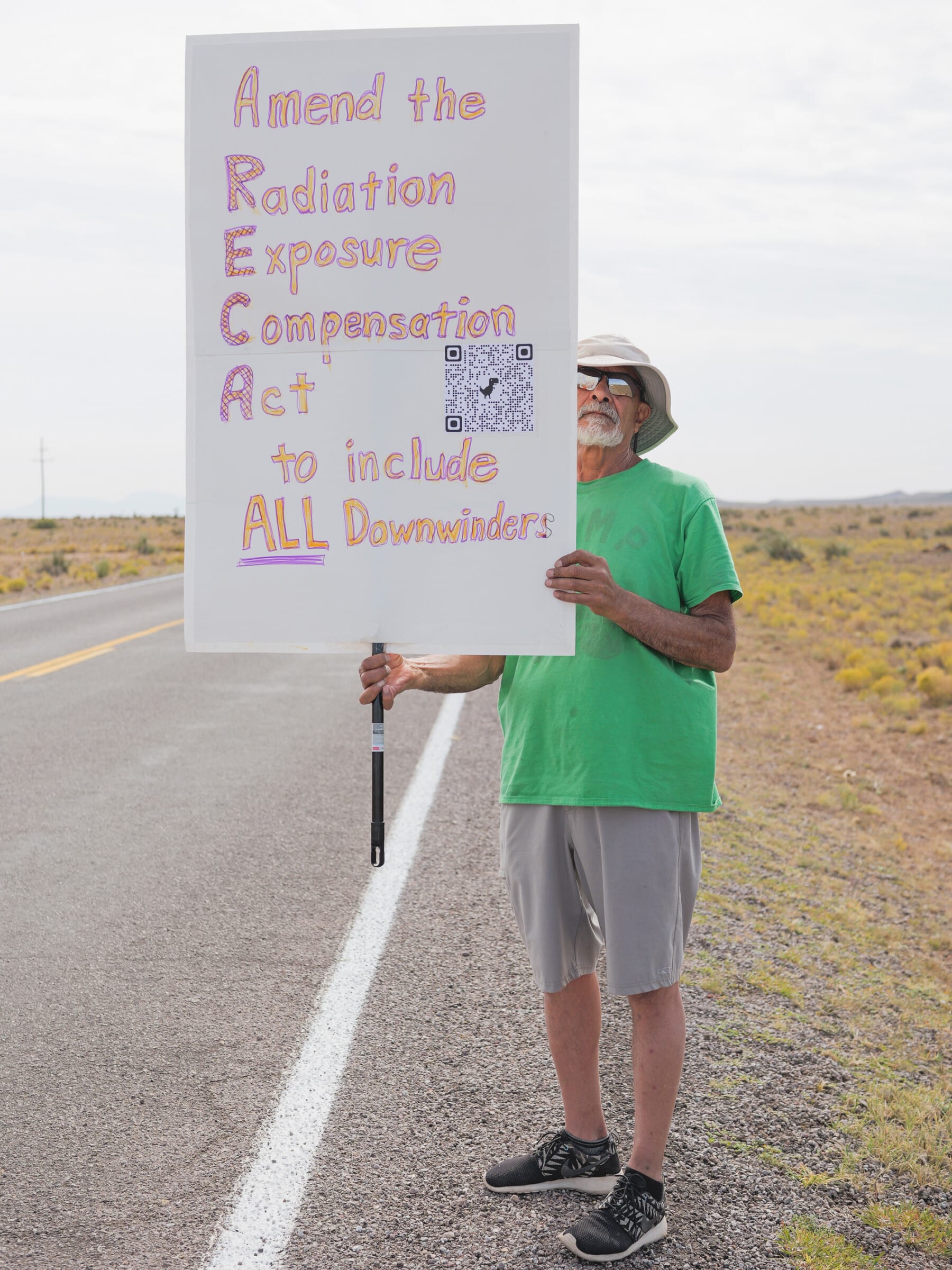
Every fall and spring, coinciding with the open houses, the Tularosa group holds a protest outside the Stallion Gate of the White Sands Missile Range. As Nicholas and I exit the range, one man leans toward the car with a pamphlet and invites us to pull over. We join a few dozen people who occupy a strip of land 20 feet wide, between Highway 380 and an agricultural fence. They carry signs that claim a place for themselves and their families — their parents, grandparents, and great-grandparents — as victims of the U.S. government’s nuclear experiment. Trinity = Cancer for New Mexicans: We Are All Downwinders reads one sign. Another is more blunt: FIRST THEY BOMBED NEW MEXICO, the words encircling a mushroom cloud.
That slogan points, implicitly, to the places bombed next. There is no equivalence between the Trinity test and the annihilation of Hiroshima and Nagasaki, where nuclear blasts killed between 110,000 and 210,000 people, mostly civilians, and caused illness in others, whose families have also not received an apology or reparations from the U.S. government. 21 But that takes nothing away from the Trinity Downwinders’ fight for recognition. These histories, in fact, are intertwined, as the refusal to acknowledge domestic harms emerged from the political imperative to minimize deaths and radiation in Japan. Both involve a failure — a refusal — to see clearly and atone for the legacies of the Manhattan Project.
What the tourists leaving the open house think of these signs is hard to tell. Some drivers honk and give a thumbs-up; some take the literature passed through their open windows. In the shade of pop-up canopies, the Downwinders share homemade cookies, vegetable plates, sandwiches. I say hello to Cordova, who greets me with a warm hug. We’ve had many conversations over the years, as I brought students to protests or invited her to speak to my classes. The energy on the side of the highway is friendly and welcoming, undeniably a protest, but also something like a family reunion. Generational ties to place run deep, and some of the group’s members descend from families that have been ranching here since before New Mexico became a U.S. Territory. 22
Their goal is winning an expansion to RECA that would bring healthcare coverage and partial restitution to New Mexicans exposed to radiation. In 2022, President Biden signed an executive order extending the deadline to make claims, but without granting status to New Mexico Downwinders. With the law set to expire in June 2024, Downwinders in several states have been working with politicians from both parties to expand eligibility and extend RECA for another generation. 23
Cordova learned about the law in 2007. She remembers that first meeting she and Tyler organized, in Tularosa, when she asked how many people in the audience had thyroid disease, or cancer, or were taking thyroid medication; three-quarters raised their hands. She knew she would need to document their health histories. With the help of a Utah physician who had treated patients with radiation illness, she put together a survey that she could take from town to town, meeting with communities, encouraging them to put their histories on the record. To demand to be counted.
Tina Cordova has been administering these health surveys for sixteen years, and she still collects new ones every week.
The survey asks questions about personal and family histories of cancer and tumors of the digestive, urinary, lymph, respiratory, cardiovascular, and reproductive systems and the central nervous system; about multiple myeloma, leukemia, aleukemia; about cancers of the breast, bones and joints, thyroid, brain, and other neoplasms; about non-cancer medical histories, such as thyroid disease; and about an individual’s history of smoking. There is space for respondents to comment on the emotional, psychological, or financial impact of health issues. It’s a lot to take in. Cordova has been administering these surveys for sixteen years, and she still collects new ones every week. 24
In 2009, the Centers for Disease Control prepared a report that sought to “identify all the information that is available concerning past releases of radionuclides and chemicals from the government complex at Los Alamos, New Mexico.” 25 They invited the Tularosa Downwinders to present their findings. This led to a chapter about the Trinity test in the report and a subsequent referral to the Department of Energy, recommending a study of radiation levels and the impacts on local residents. In 2015, as RECA amendments were moving through committees on Capitol Hill, Cordova’s group organized a town hall where eight Trinity Downwinders expressed the urgency of their cause to New Mexico Senator Tom Udall. Since then, Cordova has been invited to testify three times before the U.S. Congress.

One of these appearances is shown in Lois Lipman’s documentary, First We Bombed New Mexico (2023). In 2018, Cordova flew to Washington, D.C. with Bernice Gutierrez and other women who represent the Trinity Downwinders. In a hotel room, the camera captures Cordova preparing for the challenge: “We’ve been left unacknowledged for 73 years, and we have five minutes to tell them about it.” The next day, she makes her case to the Senate Judiciary Committee, addressing Chairman Mike Crapo and Ranking Member Cory Booker. As Cordova describes how the Trinity test created a radioactive cloud that rose into the stratosphere, impacting the bodies and lives of people far away, Senator Kamala Harris leans forward intently. From the dais, Booker gives an impassioned speech, promising to co-sponsor RECA expansion. But one year later, Cordova will recall the experience with sorrow: “The look on Cory Booker’s face … the response that Senator Crapo gave me … the look on Senator Kamala Harris’s face … and to have nothing at all happen since then is so incredibly disappointing to me.” 26
Cordova has testified three times before the U.S. Congress, but she feels quemada, burned, by the experience.
At the height of the COVID pandemic, Cordova was meeting with congressional staff on Zoom three times a week. But in the fall of 2023, she has just made another visit to D.C., and she tells me she feels quemada, burned, by the experience of, once again, re-animating the history so that it would be remembered and acknowledged. Meeting again and again with lawmakers, explaining how her father, Anastacio Cordova, died of cancers for which he had no risk factors, how she herself survived thyroid cancer only to see her niece diagnosed with it at age 23, how her family’s experiences mirror so many others — every time she repeats these facts, she relives the pain.
All the Downwinders have these stories. Paul Pino lived with four family members on a ranch about 40 miles from Ground Zero at the time of the blast; all got sick with cancer. Mary Martinez White’s mother, father, three sisters and a brother all had cancer, while three more siblings developed autoimmune disorders. Bernice Gutierrez had so many immediate family members diagnosed that her endocrinologist asked if they had ever been exposed to large amounts of radiation. 27
It’s worth noting that after Trinity, no nuclear test has been conducted at such low elevation, and so close to populated areas. After seeing the extreme fallout readings, Groves mandated a 150-mile buffer for future tests. But at the time of the Trinity explosion, about half a million people were living within that radius, many of them Hispanic and Indigenous. No government agency ever released a comprehensive study of their health.
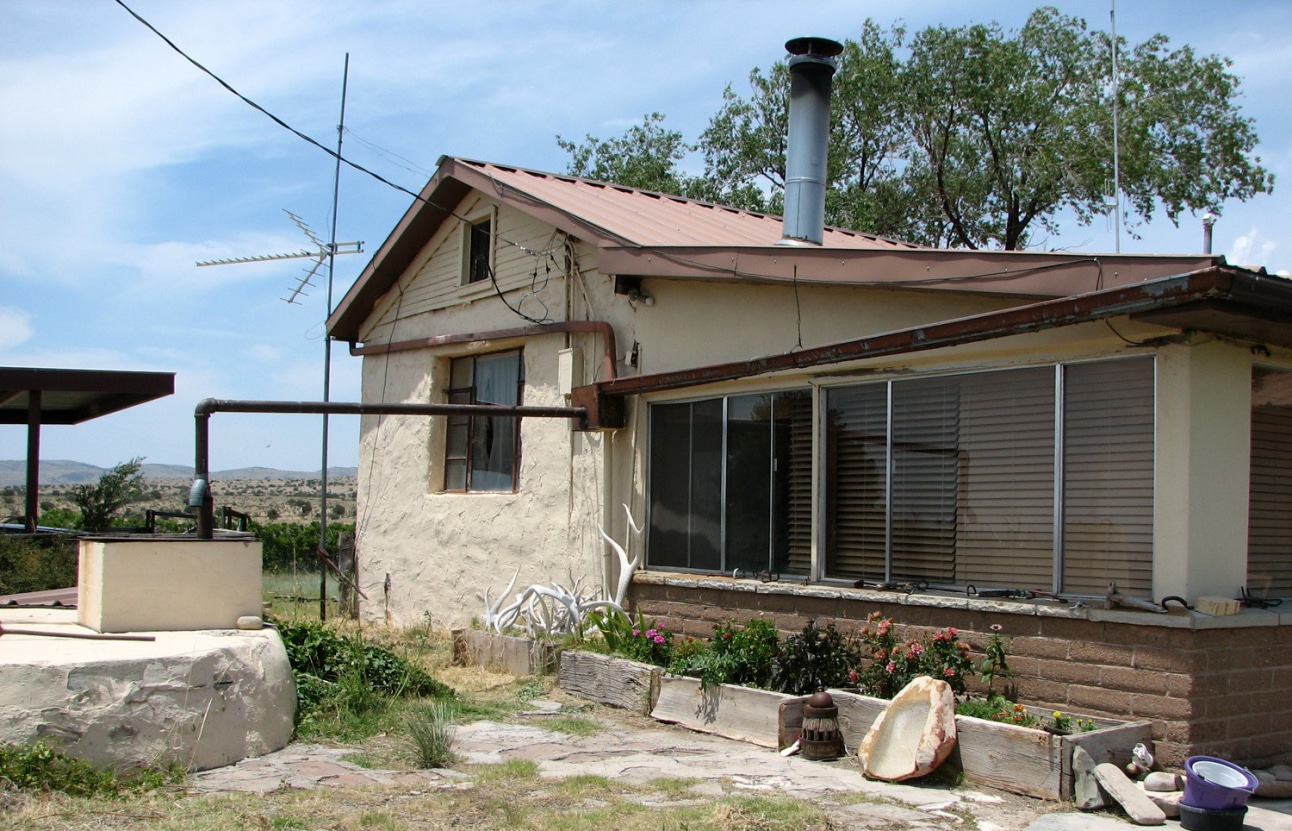

Some of the best available data comes from a health assessment published in 2017 by the Tularosa Downwinders, based on the first 800 surveys they collected. It aimed to fill a gap identified by the CDC report. There were no modern dose reconstruction studies to assess the health impacts of the Trinity test, or to track how ranching lifestyles created exposure pathways after the initial dispersal of fallout. Nobody systematically measured the radioactive water held in cisterns, the milk produced by irradiated cows, the vegetables grown in irradiated soil, the meat from hunted animals, all of which were consumed by people living in the area. Nobody knew if toxins like Iodine-131 and Strontium-90 had entered people’s bloodstream and organs, and in what quantities. 28
Experts conducted as many as 40 classified studies, evaluating radiation in the soil, plants, and animals, but never the people.
Historian Janet Farrell Brodie notes that experts did conduct as many as 40 radiation studies of the area, evaluating the soil, plants, and animals, but never the people. The classification of these reports impeded their circulation outside the relevant agencies — the Los Alamos National Laboratory; the Crocker (later Lawrence) Radiation Lab at the University of California, Berkeley; the Atomic Energy Commission; and the UCLA Atomic Energy Project. And when the studies were made public, decades later, they contained contradictory statements about the dangers. Time is a crucial factor in understanding how radioactive particles decay, and how they move through ecosystems and food chains. UCLA researchers who studied the area from the late 1940s to the mid-1950s found “maximum radiation” on the Chupadera Mesa, at a distance about 28 miles from Ground Zero, including alpha activity (plutonium) in rodents. Radioactivity in plants was initially low and then increased, though this is minimized in a study conducted five years after the event. 29
Detectable or not, one-millionth of one gram of plutonium inhaled or ingested into the body can cause cancer. Consider that the bodies most vulnerable to this are those with adipose fat tissue (women’s bodies) and those with quickly dividing cells (children’s bodies). Now consider that a pregnant woman’s body holds all the eggs that her daughter will ever have — one body holding three generations at the same time. 30 In one of the medical histories collected by the Tularosa Downwinders, Edna Kay Hinkle describes her family members visiting the blast crater to pick up “melted sand”; that is, radioactive fallout. “Back in those days they had a fence around the Trinity Site, but the gate was open. Judy and I were in our mom’s ovaries at the time. Judy and I both got cancer. Wilma was pregnant at the time with Shirley Ann Gililland. Shirley was born without any eyes.” 31

Scientists at Los Alamos were aware of some dangers. In a September 1945 letter, classified at the time, Bainbridge warned a radio reporter who had picked up some “glass material” at the Trinity Site that it “should under no circumstances be put into jewelry of any kind, particularly bracelets or necklaces where it would be close to the skin, as radioactive materials in the glass might produce burns similar to those produced by X-rays.” 32 Indeed, the mutagenic effects of radiation had been recognized as early as the 1920s. 33 Yet, just days before the nuclear test, Hempelmann, the medical director, raised the limit on radiation that the public could be exposed to before towns would have to be evacuated. He initially felt certain that a dose of 68 rad over two weeks would not “result in permanent injury” and “would probably not even cause radiation sickness.” Two days before the test, the limit was bumped to 75. (In contrast, the standard for workers in day-to-day operations at Los Alamos was five hundred times lower, at 0.1 rad per day.) 34
The Tularosa activists want recognition so that their health symptoms are understood as facts.
“Safety,” of course, is relative to the body. In 1949, researchers invented “Standard Man” — who weighed 154 pounds, drank 0.66 gallons of (uncontaminated) water daily, and breathed 20 cubic meters of (uncontaminated) air — to establish the “maximum permissible amounts of radioactive materials in the human body.” By 1974, this figure had morphed into “Reference Man,” a White nuclear industry worker in his twenties, like the members of the International Commission on Radiological Protection who dreamed him up. 35 How many studies have been skewed as a result? As noted by biologist Mary Olson of the Gender + Radiation Impact Project, Reference Man’s risk is lower than people of other demographics and lifestyles. Olson calls for a shift to safety standards designed for the bodies most likely to be harmed, the most vulnerable, especially women and girls. 36
Health impacts are financial, as well. Cordova emphasizes the strain of paying for cancer care while not being able to work, a stress that further impedes recovery. She mentions a study showing that nearly a fifth of New Mexicans carry medical debt, totaling $881 million. 37 Even if RECA eligibility is expanded, Cordova is worried it will be too late for some families. People who were children at the time of the Trinity test are now in their eighties, and most in that generation have passed. Some survived cancer only to die of COVID, worsened by their underlying health issues.
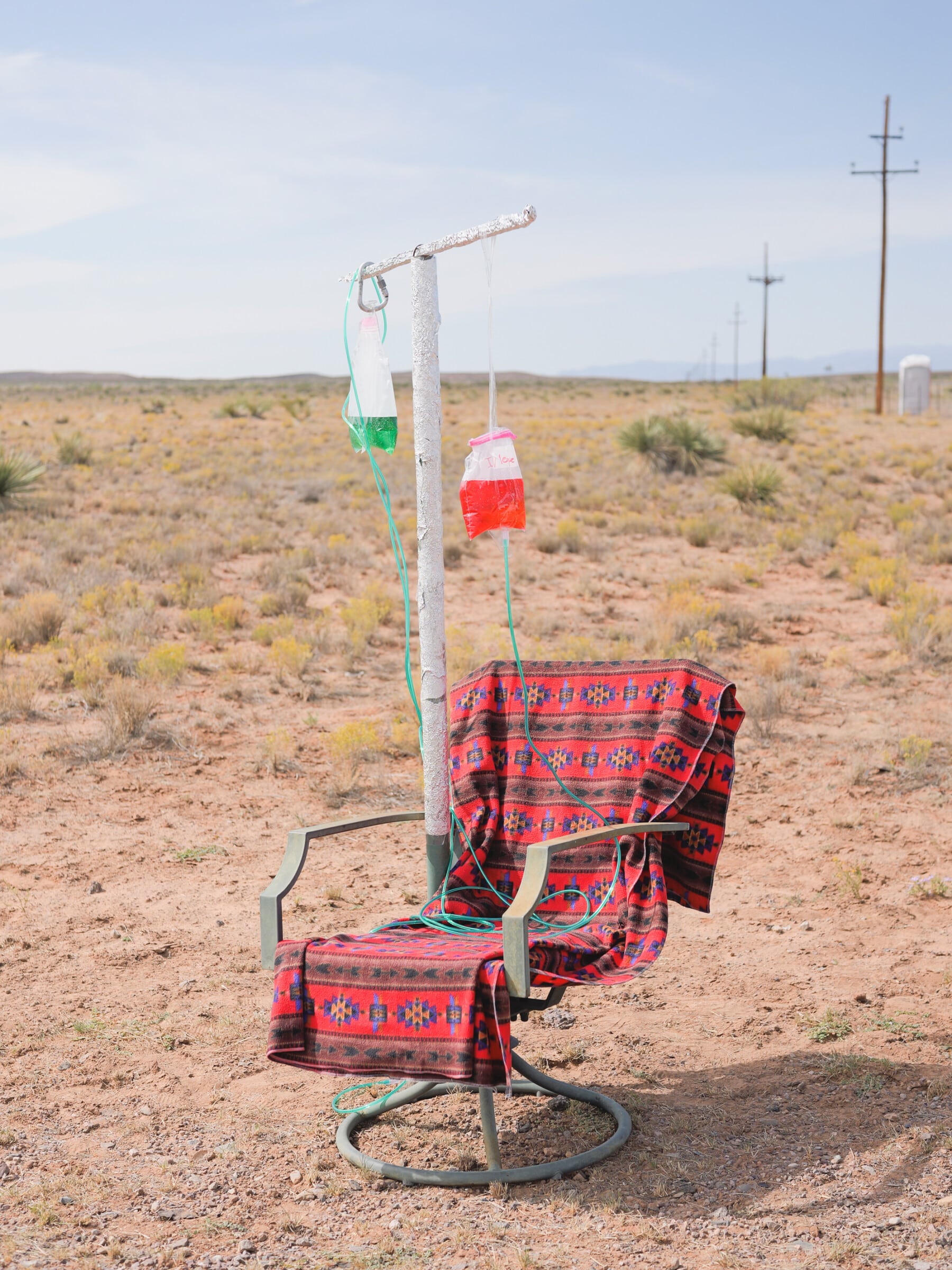
This is an example of the “slow violence” described by environmental historian Rob Nixon:
I mean a violence that occurs gradually and out of sight, a violence of delayed destruction that is dispersed across time and space, an attritional violence … neither spectacular nor instantaneous, but rather incremental and accretive, its calamitous repercussions playing out across a range of temporal scales. … [We] need to engage the representational, narrative, and strategic challenges posed by the relative invisibility of slow violence. 38
Imagine having to constantly “prove” one’s exposure to radiation. The Tularosa activists want recognition so that their health symptoms are understood as facts. 39 The theme of their protest is we are here. All of their organizing has been done without asking for permission, by refusing to be ignored. In 2013, they saw the Los Alamos Historical Society charging $250 per person for a tour that included a hotel stay in Socorro and entrance to the White Sands Missile Range. The activists decided they would be there to meet those buses, and then they came back the next year, and every year after that.
Oppenheimer has led to a huge rise in website engagement and speaking invitations, which Cordova credits to the Hollywood strike. The film pointedly refused to recognize the Downwinders — or any Indigenous or Nuevomexicana/o populations, save a vague reference to giving irradiated land “back to the ‘Indians.’” But with the cast and crew unable to do a press tour, audiences went online and found the Downwinders for themselves.
The sun is still overhead, and the open house has two hours left, when a man next to me shouts the buses are coming! He hands me a sign. “What buses?” I ask, but then I see them. Tour buses, silver, streamlined, their windows a good eight feet above our heads. I raise the sign that has been put in my hand and yell with the Downwinders as the buses speed away from the missile range, covering us in dust.
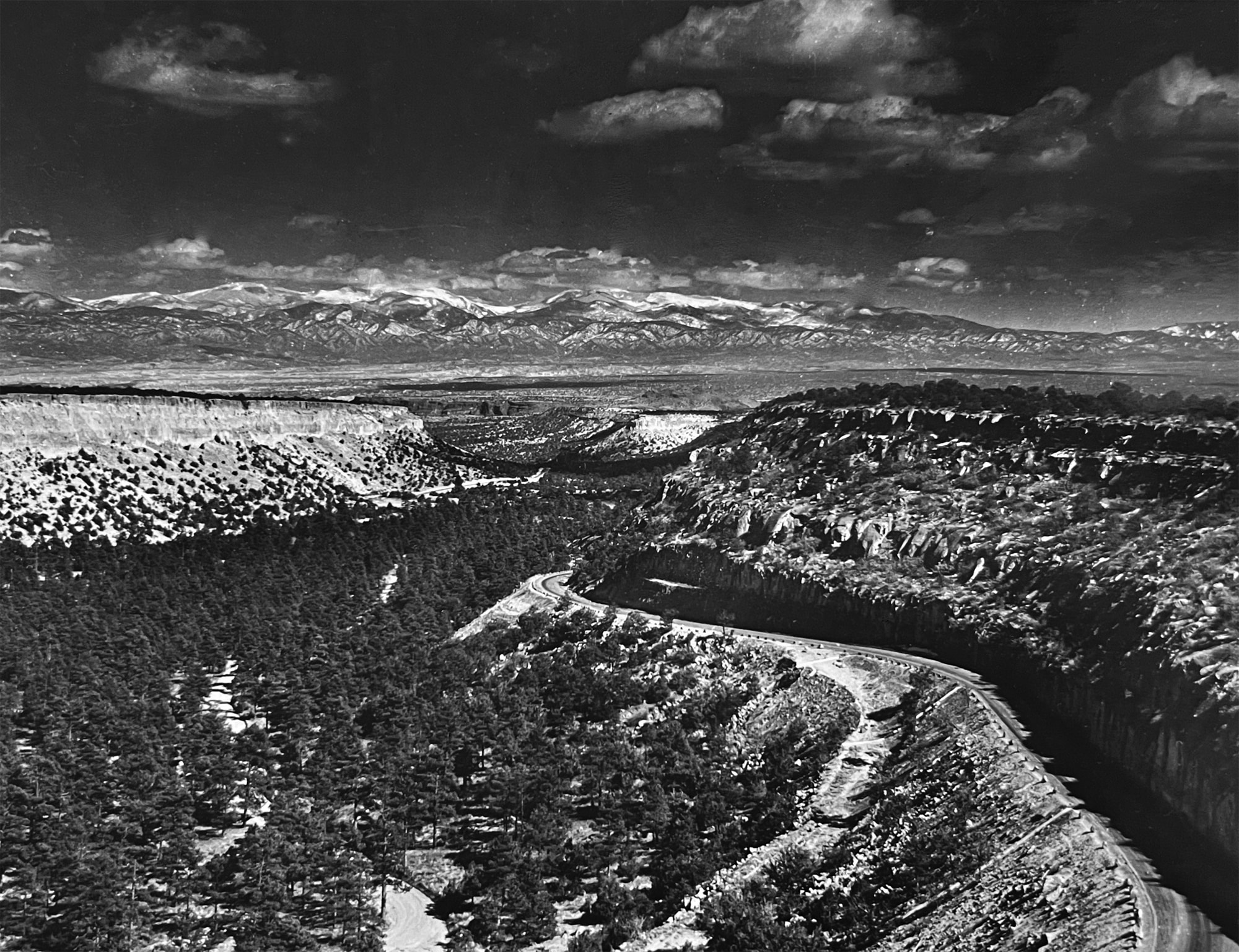
Beyond these two histories of the Trinity Site, there is another timeline that stretches thousands of generations into the past and future, a history that records who benefits from the use and occupation of this land, and who suffers. The nuclear scientists who experimented at Trinity traveled a couple hundred miles south from the Pajarito Plateau, where the weapons laboratory for the Manhattan Project was imposed upon Nuevomexicano and Indigenous communities on the plateau and in the pueblos below the Sangre de Cristo mountains.
In the Oppenheimer mythology, we don’t see any other humans — the history of this place belongs to one man.
When General Groves tasked Major John H. Dudley with selecting a research site, he specified that it would need “good transportation, an adequate supply of water, a local labor force, and a moderate climate for year-round construction.” And it would have to be isolated, “so that nearby communities would not be adversely affected by any unforeseen results from our activities.” 40 Notice the contradiction in terms. He needed people to build the site but not to live nearby. In the Hollywood mythology of Oppenheimer, there is yet another factor: the hero’s biographical connection to the New Mexico landscape. We see the physicist riding on horseback, camping, drinking whiskey. We listen to his fateful desire to marry his love of science with his love for “the desert.” We witness his power to influence decisions. And, conveniently, we don’t see any other humans — the history of this place belongs to one man.
But in reality, the history of human inhabitation here is as old as any in the Americas. In Nuclear Nuevo México, historian Myrriah Gómez traces Indigenous life on the Pajarito Plateau to 8000–9500 BCE. Ancestors built dwellings on the plateau in the 1150s, and then in the lower elevations around Los Alamos by 1600, when a drought and drop in temperature compelled their move. By 1800, they had formed settlements like Po’woh’geh (where the water cuts through), renamed San Ildefonso by Spanish colonizers; Kha’p’o (valley of the wild roses), later Santa Clara; Po’su wae geh (water gathering place), or Pojoaque; and K’úutìim’é (people from the mountains), or Cochiti. 41 These pueblos are all within a long day’s walk from where Site Y was built, 140 years later.
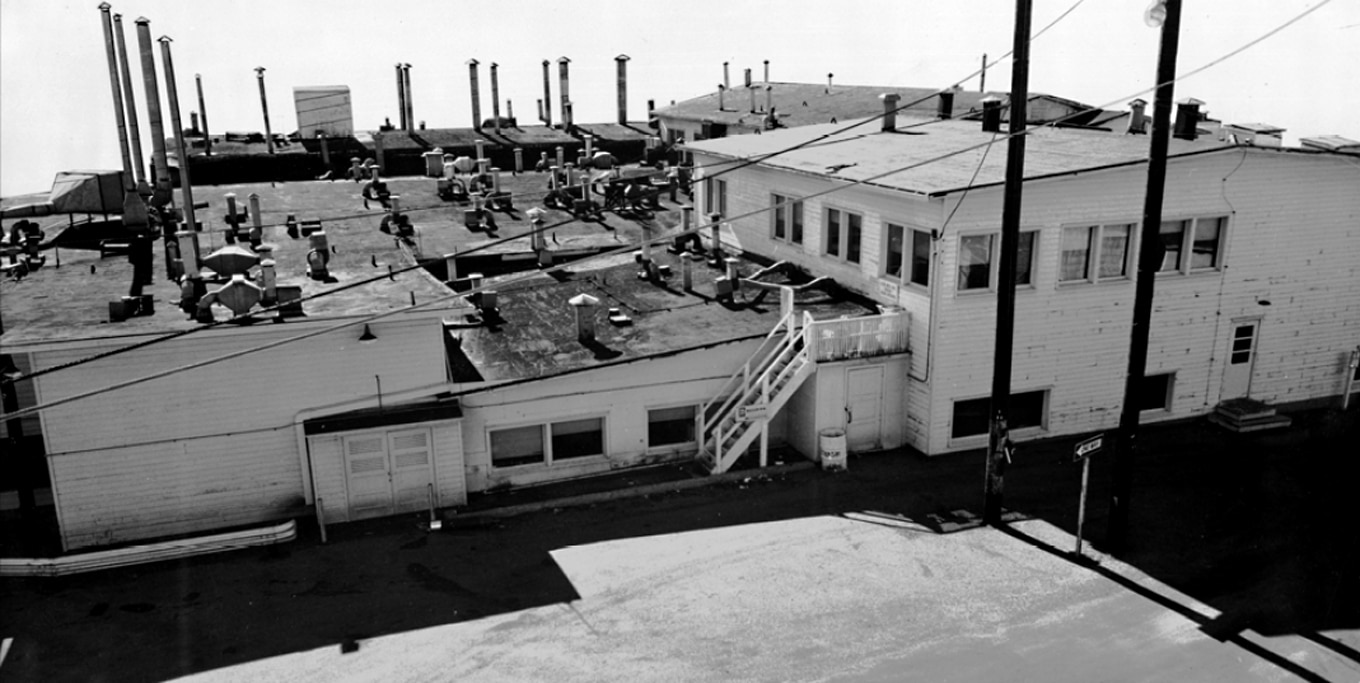
The Manhattan Project’s secret post office box, in Santa Fe, was just down the street from the Palace of the Governors, a structure built in 1610 that has flown the flag, in turn, of Spain, Mexico, and the United States. And these colonial legacies, too, are embedded deep in the landscape. In 1680, Indigenous Pueblos joined the Hopis and Zunis, Apaches, Utes, and Navajos to end the horrific violence they had been subjected to, overthrowing Spanish colonial settlements and destroying land ownership records. The remaining colonists fled, only to return thirteen years later, completing a “Reconquest” that claimed large tracts of land for Spanish officials. 42
In reality, the history of human inhabitation here is as old as any in the Americas.
Gómez reports that in 1742, land on the Pajarito Plateau was given to a former soldier, Pedro Sánchez, who denied access to the Po’woh’geh who had been using it for hunting, fishing, and rituals. Under the Spanish system, settlers built on their land in order to retain title, and by the early 18th century, Indigenous homelands were deeply colonized. 43 Mexico’s independence from Spain, in 1821, accelerated that process. “More land grants were made in New Mexico during the short Mexican period than in the entire Spanish colonial decades,” writes Brodie. 44 In 1848, war brought New Mexico territory into the United States’ project of colonial expansion, but it would not become a state for another three generations. So the 115,000 former citizens of Mexico living there had “an ambiguous political relationship with the U.S., part colony and part territory-to-be-annexed.” They were federal citizens, but not state citizens, and did not have any voting rights. 45
And what of Pedro Sánchez’s claim to the Pajarito Plateau? Gómez reports that in 1851 his supposed heir, Antonio, sold eight of eleven shares to José Ramón Vigil. From there it changed hands rapidly, as Anglo profiteers saw opportunities for its development, and in 1913 a debt-riddled lumber company sold it to Ashley Pond, Jr., a business owner from Detroit. After a failed attempt at a hunting and fishing club, Pond established the more lucrative Los Alamos Ranch School, for the private education of the sons of affluent White families. 46
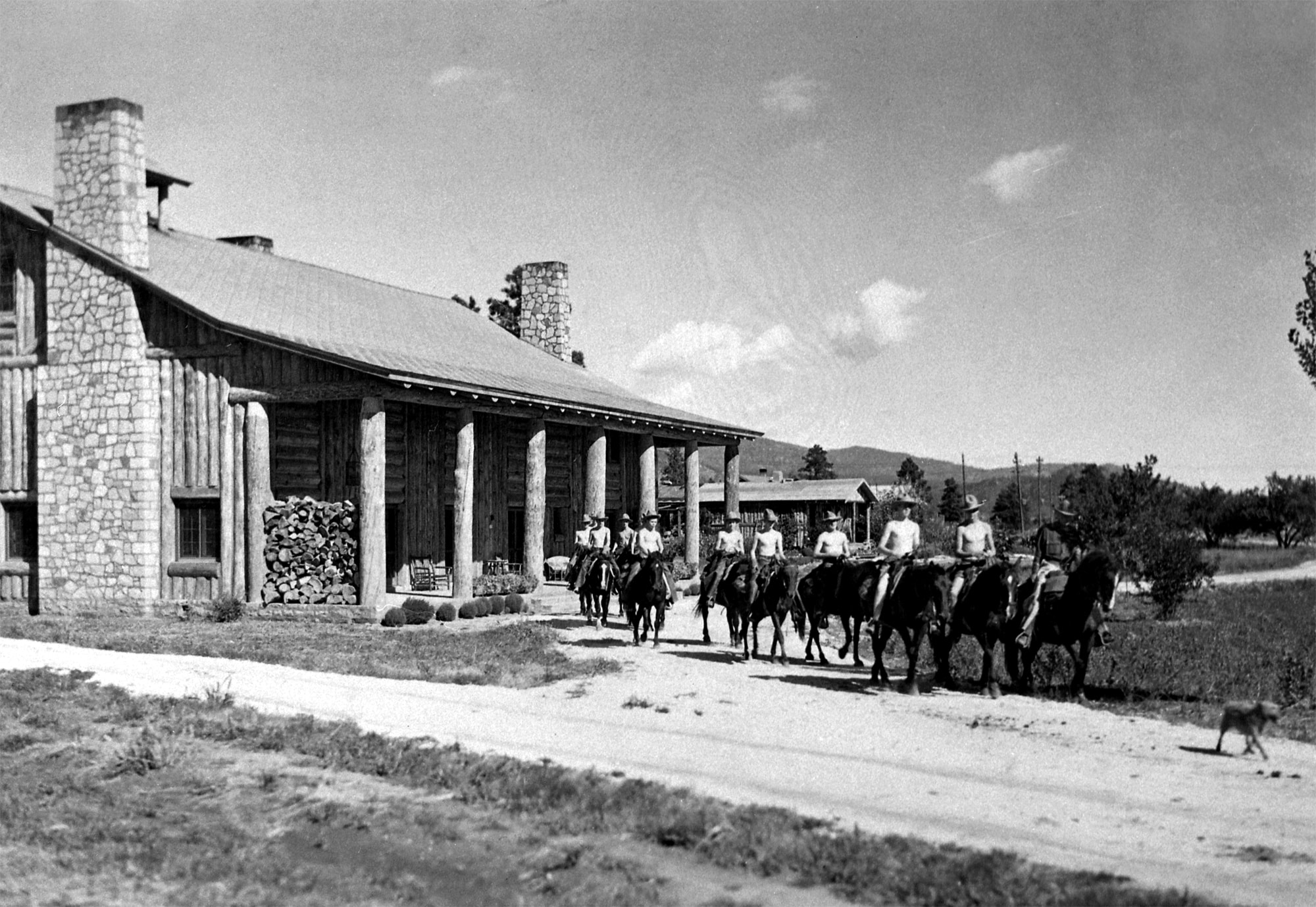
Then, in 1943, Dudley’s people arrived and said they would be closing the school and acquiring the land. Remember, the Manhattan Project needed workers but not neighbors. Los Alamos was chosen, in part, because the Army believed the local population could be coerced and controlled. Dudley’s first choice was Oak City, Utah, but he backed off after learning it would mean relocating several dozen families and closing farms. His second choice was Jemez Springs, a deep canyon northwest of Santa Fe; but Oppenheimer wanted a laboratory with a view. 47 As Gómez explains, the people living on the Pajarito Plateau were mostly Mexican American, Nuevomexicana/o, and Indigenous farmers, ranchers, and homesteaders. They were more expendable, in the eyes of the government, than the English-speaking Mormons at Oak City. This is yet more evidence that racism has been at the center of the nuclear project from the beginning. 48
Evictions at Los Alamos were not peaceful, nor were landowners properly or evenly compensated.
Evictions at Los Alamos were not peaceful, nor were landowners properly or evenly compensated. The owners of the Ranch School negotiated for themselves a buyout of $367,000, or $225 per acre, leaving only $47,000 in the Manhattan Project’s land appropriation budget. School director A.J. Connell told neighbors to accept whatever the government offered. As Gómez reports, “The balance was paid to the owners of the Anchor Ranch, a large Anglo-owned ranch, and to the homesteaders,” who got, on average, $7 to $15 per acre. The homesteaders did not, or could not, attend proceedings because they never received notice. They did not have attorneys. Many did not speak English, let alone read or write it. Eventually, they were removed against their will — loaded into Army jeeps and dropped off near the San Ildefonso Indian Reservation, since Indigenous and Nuevomexicana/o communities were indistinguishable to the U.S. Army. Families watched in horror as soldiers used their abandoned livestock for target practice. 49
Construction of the secret city began immediately. By June 1943, the 300 soldiers and officers were joined by 160 civil service employees and 300 scientists and technicians employed by the University of California. 50 The Ranch School, of course, came with buildings that could be immediately dedicated to nuclear research. The lodge became a dining room and guesthouse. Teacher housing was turned over to Oppenheimer and other scientists, who were privileged to live on “bathtub row.” The Army built long barracks known as the Tech Area, and other structures to house the Theoretical Physics Division; a chemistry and physics building with two Van de Graaff machines; and, near the rim of the mesa, a cryogenics laboratory and Harvard’s cyclotron. The Tech Area was contained by a woven-wire fence nearly ten feet tall, topped with barbed wire, and connected to an alarm system with floodlights. Military police controlled access via security badges. 51

And many of the people evicted from that land were conscripted into labor, as part of the process that Gómez calls “nuclear colonialism.” Maintenance and construction workers, recruited from “nearby valleys, namely Pojoaque and Española, which were populated by Nuevomexicana/o and Tewa peoples,” took on dangerous projects, handling depleted plutonium and other materials that led to fatal accidents. The geography of Los Alamos was forever changed, divided into the militarized “Hill” and the low “Valley,” which was home to traumatized people who had just lost their land and livelihoods. For Gómez, this represents a third wave of colonization, after the earlier waves of Spanish and U.S. occupation. The “nuclear colonizers” included “scientists, military personnel, atomic bomb testing, and nuclear waste.” 52
People evicted from that land were conscripted into labor at the weapons lab, as part of the process that Myrriah Gómez calls ‘nuclear colonialism.’
This observation, by a trained historian with deep ancestral ties to and knowledge of this region, lines up with the fact that some of the military officials self-identified as colonizers. In 1958, at the White Sands Missile Range, soldier and artist Robert Glaisek created a 6 x 16 foot mural for the east wall of the Director’s Office (now known as Building 1504), which depicts a mountain range flanked on the left by a conquistador and, on the right, by a man in brown fatigues holding an atom. A caption reads, “The Organ Mountains Witness a Second Conquistador Who Like the First Comes to Conquer a New World.” They came to make a bomb, and some of them never left. By the end of the war, the population of Los Alamos had swelled to 8,200. 53
And the Manhattan Project did more than disrupt Indigenous access to land and livelihood at Los Alamos, forcing Pueblo communities into labor on the hill. It also made Indigenous people into Downwinders, impacting 19 pueblos, two Apache tribes — particularly the Mescalero Apache, whose reservation is only 50 miles from the Trinity Site — and some chapters of the Navajo Nation. And it made Indigenous people uranium miners on their own lands. Between the Laguna and Acoma pueblos and the Navajo Nations, there are today 500 abandoned mines, from which the nuclear industry has extracted 32 million tons of uranium. Many of these miners, too, are excluded from RECA, and Cordova’s group has joined forces with the Southwest Uranium Miners Post ’71 Coalition to expand the law, recognizing that they share a common struggle. 54

The Trinity Site may not have an interpretive museum, but it does have “Answer Man,” who has somehow become a staple of the open houses, although he has no official role. The volunteer who plays this character varies from one season to the next. On our October 2023 visit, he is a retired Los Alamos employee seated at a card table. As we pass, he announces that he has answers about the history of this place. Indeed, a sign behind him reads, “I have answers.” Visitors gather to hear him deflect questions about the bomb, citing national security concerns and a non-disclosure agreement. He shows photographs of trinitite and laughs away one guest’s worry about radioactivity. Behind him, a woman waves a Geiger counter over a piece of trinitite; it makes no sound. Then she waves it over an old Jeep odometer painted with radium, and it starts clicking loudly. Everything on Earth is radioactive, she chuckles. This hokey rehearsal, and indeed the entire monument, seems less committed to elucidating the history than to performing opacity.
But, of course, that has always been the official approach to the Manhattan Project. Japanese survivors were not warned they had been exposed to radiation and would suffer radiation illness. The U.S. military also lied to Americans. Brodie says The New York Times published 132 articles in the three-day interval between the Hiroshima and Nagasaki bombs, but none of them told the truth about the horror; “anything about radiation or ongoing radioactivity” was “omitted or obscured.” 55 Science reporter William L. Laurence, the only journalist present at the Trinity test, won Pulitzers for stories denying the dangers of radiation. “No Radioactivity in Hiroshima Ruin,” ran the headline on September 12, 1945. Navy pathologist Shields Warren claimed, in a medical journal, that casualties were high because Japanese hospitals lacked blood transfusions and penicillin and “were too disorganized to take care of the victims.’” His reward for this complicity was to become the first director of the Division of Biology and Medicine of the Atomic Energy Commission. 56
This is “agnotology” — Brodie’s term for “the cultural production of ignorance.” The architects of the bomb wanted to preserve their own sense of self-worth, and to do the same for all Americans. “No one wanted the U.S. to be subject to an international stigma.” 57
And still, eight decades later, the government refuses to acknowledge the health impacts on New Mexico Downwinders and nuclear workers. Hard facts are buried and suppressed, like the abandoned uranium mines leaking on Diné and Pueblo lands, out of sight. “Over 3,000 Navajo miners wrenched and blasted raw uranium ore from the ground and then processed it into yellowcake,” writes historian Traci Brynne Voyles. “Abandoned mines sit open, poorly covered, or insufficiently marked. Radioactive tailings piles litter the Navajo landscape, leaching radon gas into the air and water and scattering radioactive debris throughout the ecosystem.” 58
Last summer, a new study found that the radioactive fallout from Trinity reached 46 states, as well as Canada and Mexico.
Meanwhile, refuse from a half-century of nuclear weapons production is entombed at the Waste Isolation Pilot Plant, east of Carlsbad. When the facility was first planned, in the 1970s, its isolation was supposed to be literal. But now there are more than 500 oil and gas wells within two and a half miles of the site, as the Permian Basin is targeted for drilling, fracking, and fluid injection wells. And although the WIPP is nearing the end of its planned life cycle, the Department of Energy wants to continue operations past the year 2080, and to store pure, weapons-grade Plutonium-239. 59 Just east of the site, the energy company Holtec is trying to build and operate a consolidated interim storage facility that would handle spent nuclear fuel from all over the country. 60 New Mexico is still being treated as an “energy sacrifice zone.” 61
Last summer, a new study found that the radioactive fallout from Trinity reached 46 states, as well as Canada and Mexico, an area encompassing hundreds of federally recognized tribal lands. The authors also modeled the composite deposition from tests in Nevada, and their maps escaped from science journals into the pages of The New York Times. The newspaper interviewed Tina Cordova, who called the science “monumental.” But then she acknowledged that it simply confirms “the histories told by generations of people from Tularosa who witnessed the Trinity bomb and talked about how the ash fell from the sky for days afterward.” Nuclear historian Alex Wellerstein added, “The extent to which America nuked itself is not completely appreciated still, to this day, by most Americans.” 62 What he means is that nuclear weapons tests have changed the world, forever altering the chemical composition of the atmosphere and life on Earth.
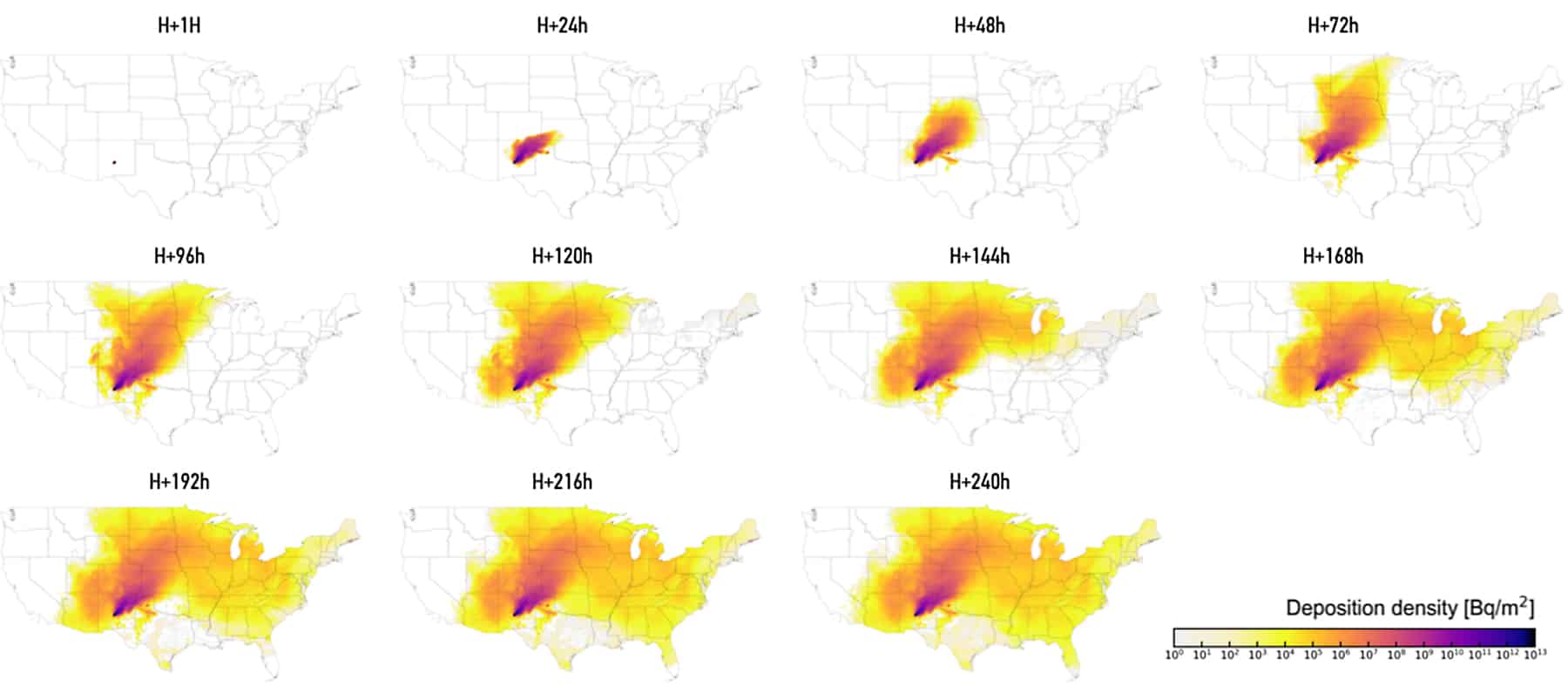
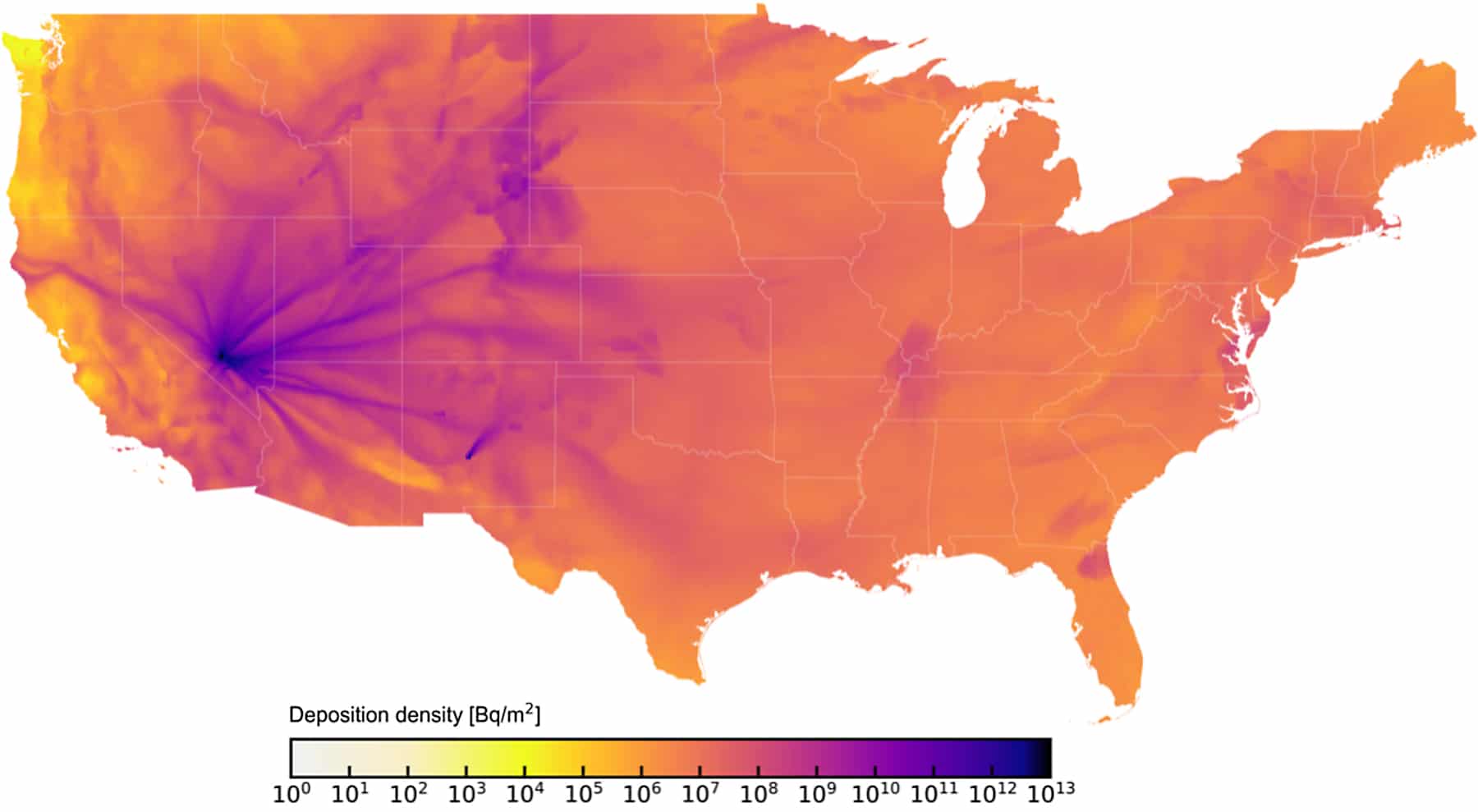
A few months after I stood with Cordova on the side of the highway, I sat across from doctors at the University of New Mexico Cancer Center, as a geneticist drew my family tree to trace a potential genetic link between my parathyroid disorder and my family history. Boxes for boys, circles for girls, she said. My dad’s siblings, Denis and Julie, born in 1943 and 1945, had their box and circle filled in for thyroid cancer. I asked the geneticist if she thought there was any significance to those years, imagining the radioactive plume sailing across the country to my grandmother’s farm in Iowa, where Denis and Julie would have been infants. No, the geneticist said, why? She asked if I had ever smoked. No. She clapped her hands — Good! Good for you! — in a way that felt infantilizing, trivial. There were no questions about exposure to toxins that may have altered my DNA.
The Downwinders speak for all of us who are exposed to environmental dangers beyond our knowledge and control.
The Downwinders speak for all of us who are exposed to environmental dangers beyond our knowledge and control. Decades of activism, research, organizing, and engagement with government officials have led them to this moment, in which the United States might finally acknowledge and atone for the devastation wrought in their communities and bodies. In New Mexico, this work is carried forward by Tina Cordova, Myrriah Gómez, and their collaborators — women with ancestral ties to Nuevomexicana/o and Indigenous communities, who have witnessed and experienced a disaster unfolding for generations, and who have refused to accept silence or inaction as an answer. They are asking us to think across expanded geographies and extended timelines. To think beyond the moment of the blast to the release of radioactive elements whose half-life is measured in tens of thousands of years, and whose impact will be felt for thousands of generations.
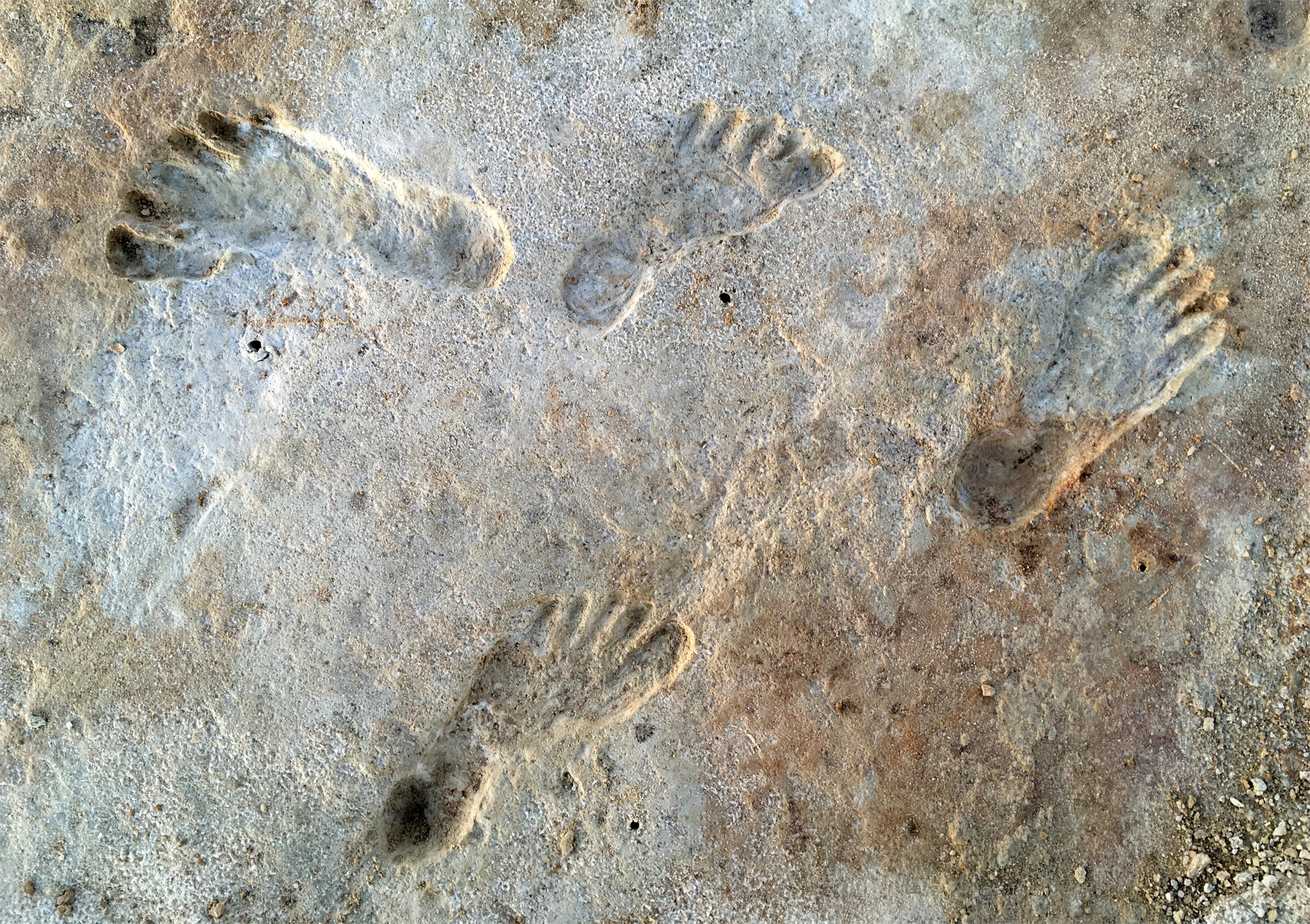
Not far from the Trinity Site, at White Sands National Park, researchers have found human footprints that go back 23,000 years to the Ice Age. Thousands of them, crossing the ancient lakebeds. This is confirmation of what Indigenous people have been saying, that their ancestors have been here much longer than others had believed. Since time immemorial. 63 The salt in the sand pushes the prints to the surface, where archeologists can observe and document these traces, and determine their age with radiocarbon dating. Now the Indigenous knowledge is granted entry to the official record.
What else are we not seeing? What other truths go unacknowledged in mainstream histories? Last summer, at a panel discussion of Oppenheimer in Las Cruces, Downwinders talked about what the film elides. Near the end of the hour, Diego Medina acknowledged the sad irony that those 23,000-year-old footprints — his own ancestor’s traces — were found so close to Trinity. He said they mark the beginning and end of humanity, looking at one another.
On June 7, 2024, the Radiation Exposure Compensation Act expired, after the House Speaker blocked a vote on expansion.
What’s at stake in the Downwinders’ fight for reparations is a future beyond nuclear colonialism. In March 2024, an expansion to RECA again passed the Senate, in a standalone bill, with a large bipartisan majority. It received the support of the Biden Administration. Then it was sent to the U.S. House, where Speaker Mike Johnson refused for two months to bring it to the floor. 64 Cynical Republicans argue that at a projected cost of $50 billion, RECA expansion is too expensive, although it’s a fraction of the spending on nuclear weapons programs. 65 And so, on June 7, the Radiation Exposure Compensation Act formally expired. It will be hard now to revive it, but not any harder than what people in the Downwinder communities face every day. They are offering the U.S. government a historic opportunity to prove that it does not see its own citizens as mere collateral damage in times of war: that it is willing to do more than erect an obelisk and a chain-link fence to acknowledge the legacy of the Manhattan Project’s first mass casualties. The next step will change the future for all of us.


If you would like to comment on this article, or anything else on Places Journal, visit our Facebook page or send us a message on Twitter.