
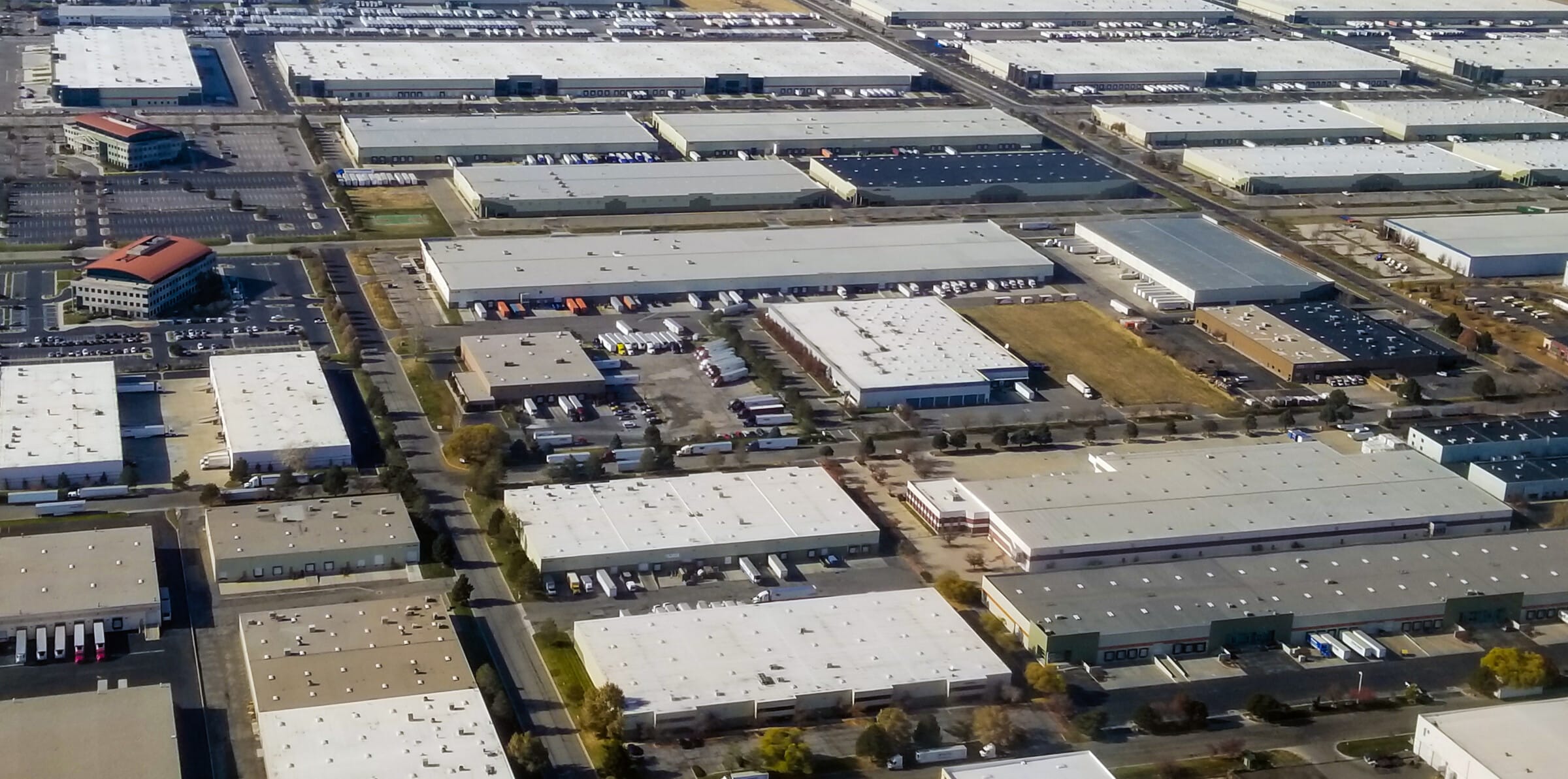
Picture the warehouse, then another: each one marked by indistinction. From the air, they resemble data chips, casting sharp shadows on the hard parking lots. We could be in suburban Chicago, or San Bernadino, or a floodplain south of Dallas — any flattened periphery where distance is abstracted into commercial time. How quickly can a thing get from here to a zip code of consumers, or simply the next delivery node? The warehouse is a place where placelessness is produced. Or it wants to be.
The warehouse is a place where placelessness is produced. … A concealed infrastructure created by capitalists, adapted by fascists.
Driving past, we barely notice these concrete boxes clustered off the freeway, yet few building types have a larger footprint and a greater impact on landscapes and lives. If warehouses are missing from the collective cultural atlas of North America, that’s by design. Logistics companies track everything that passes through these loading doors, but they don’t want to be tracked themselves. They don’t want to be perceived, known, situated, emplaced, by journalists or workplace safety officers or labor activists. Invisibility is efficient.
It’s also dangerous. As I write, the U.S. Department of Homeland Security is converting some of the largest buildings in the country into shadow detention centers, where secret police will warehouse people, holding them without charge, before deporting them. The DHS warehouse is a place of flows made into a place of containment. A concealed infrastructure created by capitalists, adapted by fascists. A disappearing machine. You don’t need to know the history of warehouses to oppose their transformation into concentration camps. There are ways to slow down that machine, jam it up, break it apart, until we end it. But it is useful to know who owns the buildings for sale, who zones the land, who controls levers of power. Writing the warehouse into the atlas helps us diagram its disassembly. 1
1846
The name suggests a humble place of storage, but over the past two centuries the warehouse was transformed from a repository into a flexible conduit for capital. In 1846, Congress passed the Warehousing Act, responding to pressure from merchants in inland cities who complained that import profits were amassing in New York. The act set up a new system, overseen by the Treasury, which allowed smaller traders to stash merchandise in “bonded” warehouses, deferring payment on customs and duties until the goods were sold. This reshaped the waterfront at ports like Norfolk, Virginia, and New Bedford, Massachusetts, and by 1870 the network had expanded along bonded rail and river routes to Chicago and St. Louis, and beyond, lubricating the movement of foreign goods to designated zones of commerce across the continent.
At the turn of the 20th century, the American warehouse was a civic monument, assuring the middle classes that their city was wired into the circuits of capital.
In her magisterial history of these zones, Dara Orenstein shows that merchants needed more than storage; they needed ways to match supply and demand across variable “latitude, climate, seasons, social events, changes in style, customs, taste, and manners.” To compete for their business, warehousemen sold a platform that efficiently diverted surplus goods and facilitated transfer from ship to rail to wagon. The best warehouse was a switch that could instantly freeze or thaw the movement of capital, turning products into “moving stock.” So the warehouse was no longer an infrastructure of subsistence — helping farmers or manufacturers save from “the time of plenty until the time of need” — but of logistical flow. In 1903, the Department of Commerce and Labor described a fluid “nexus of reservoirs … feeding the demand of tributary sections of the country.” 2
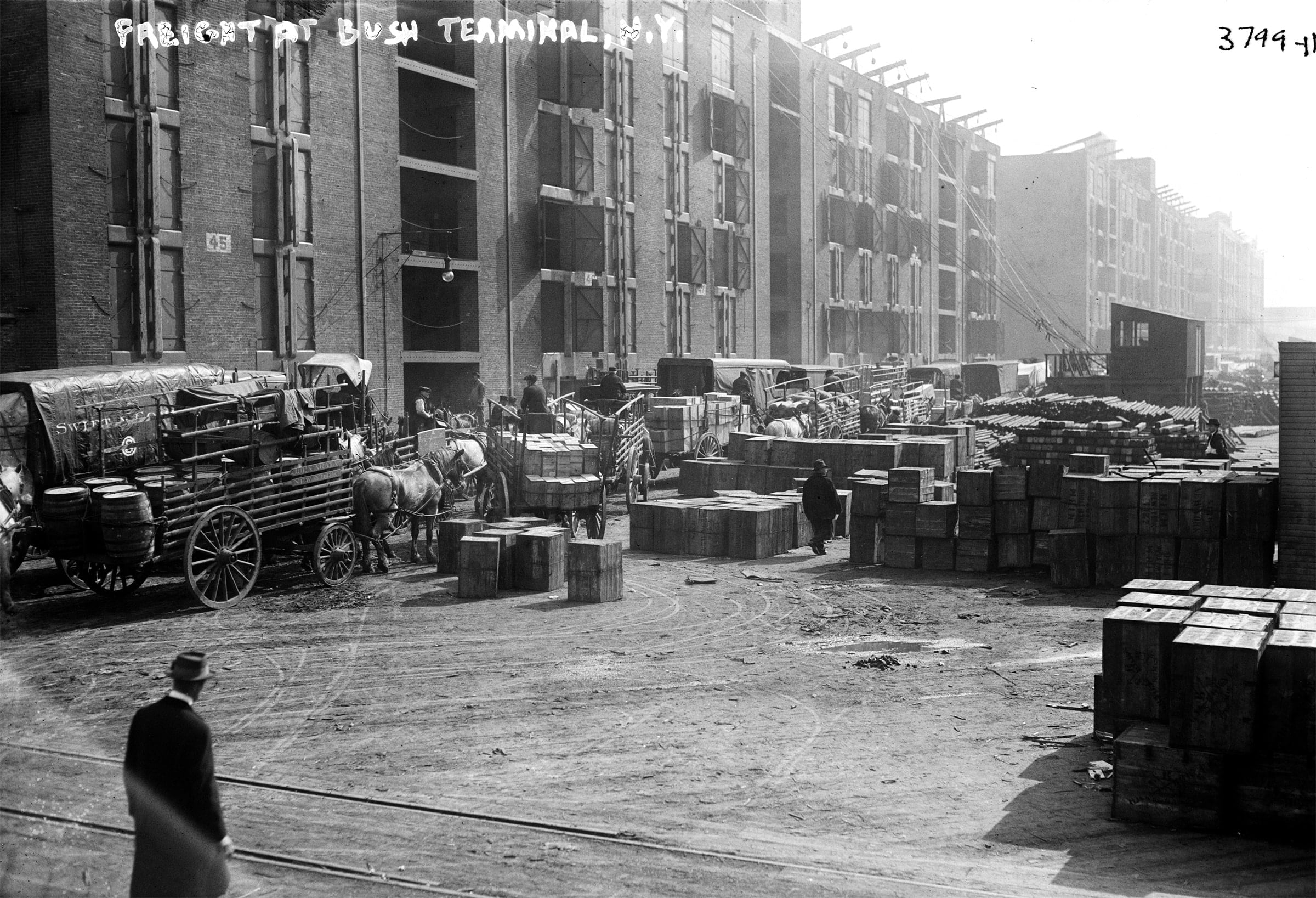
In those years, the American warehouse was a civic monument. 3 Wholesalers clustered storage and freight terminals near the docks, which became a hub for all kinds of activity. Jobbers dispatched imports by carload lots. Banks backed trades. Restaurants serviced throngs of port workers and traveling salesmen. Entrepreneurs bought up these zones, integrating warehouses and factories and all the connecting parts. In 1895, oil scion Irving T. Bush unveiled a development on the South Brooklyn waterfront with eight piers and more than 120 planned warehouses. New York’s problem, he said, was that “factories were scattered about the city on any old street” without easy connections to ships and railroads. By clustering transportation, his terminal would combat “the endless lost motion” and “waste expense” that prevented efficient trade. 4
Then a reversal in trade flows turned the zone inside out, and the warehouse — as a monument — disappeared.
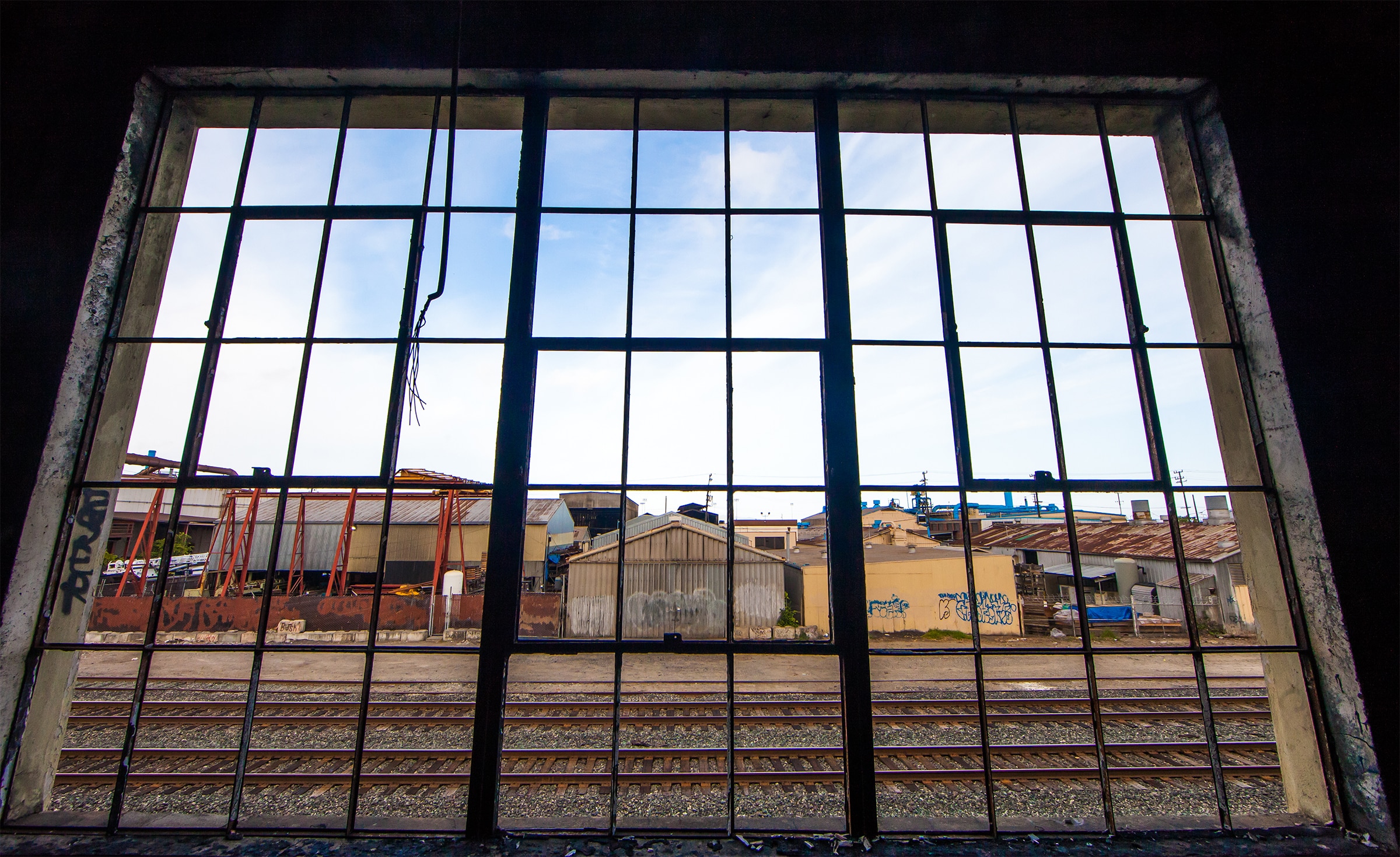
The warehouse assured the middle classes that their city was wired into the circuits of capital. But as those circuits globalized in the late 20th century, a reversal in trade flows turned the zone inside out, and the warehouse — as a monument — disappeared. To circumvent the power of unionized workers, U.S. companies automated production and offshored manual jobs. In a single generation, from 1968 to 1990, the share of the labor force employed in manufacturing fell from one quarter to one seventh. As factories closed, the warehouse zone became a derelict place (awaiting its “renewal” into industrial-chic apartments). By 2010, six million jobs were gone. 5 Some workers transitioned to the service sector, but many — Black men in particular — could not easily find new jobs. 6 The auto worker and militant unionist James Boggs predicted the spatial dimensions of that problem in 1964. While farmers displaced by earlier rounds of mechanization could move to the city to work on assembly lines, this time, he said, “the displaced men have nowhere to go.” 7
1978
In the extant atlas of North America, that displacement is traced through maps of inequality: poverty, transit gaps, health disparities, racialized policing, environmental harm. Somewhere on those maps we need to mark the workers moved from the center to the periphery, where they were rendered invisible, out of sight and mind.
Consider Los Angeles. In just five years, 1978 to 1982, more than 75,000 manufacturing jobs were lost in cities south of downtown. In rapid succession, the U.S. Steel mill closed in Torrance, Bethlehem Steel in Maywood, Kaiser Steel in Fontana. By the end of the decade, the last shipbuilding facility in L.A. harbor had closed, clearing the way for the site’s conversion into a container terminal for the Port of Los Angeles. Working-class Angelenos who once had decent pay at union jobs were forced to find part-time and precarious work on the edges of the service economy, suffering long commutes and predatory debt cycles. 8
In devalued suburbs, business elites experimented with new strategies. Their religion was logistics, which, unlike manufacturing, could not be offshored.
The geography shifted accordingly, as poorer workers migrated to cheaper housing in areas where factories had closed. L.A.’s postwar suburbs, built for a White working class that could access homeownership and sought to protect its advantages through racial exclusion, were demographically transformed. In South Gate, a small city six miles from downtown, the Latinx share of the population grew from 4 to 83 percent in the 1970s and 1980s, coinciding with the closure of a Firestone tire factory and General Motors assembly plant. 9 Nationwide, by the end of Bill Clinton’s presidency, a majority of the working class had moved to suburban and exurban areas, far from transit and job centers. 10
In these devalued suburbs, business elites who dreamed of transforming Los Angeles into a transpacific trade hub could experiment with new strategies. Their religion was logistics, which, unlike manufacturing, could not be offshored. 11 U.S. factories might be gone forever, but the country had a growing base of voracious consumers with access to extortionate credit that consolidated a culture of retail consumption. People wanted stuff, most of it was made in China, and Los Angeles could be the gateway to North American markets. Lobbyists argued that investing public funds in logistics infrastructure could bring back blue-collar jobs at the end of the supply chain.
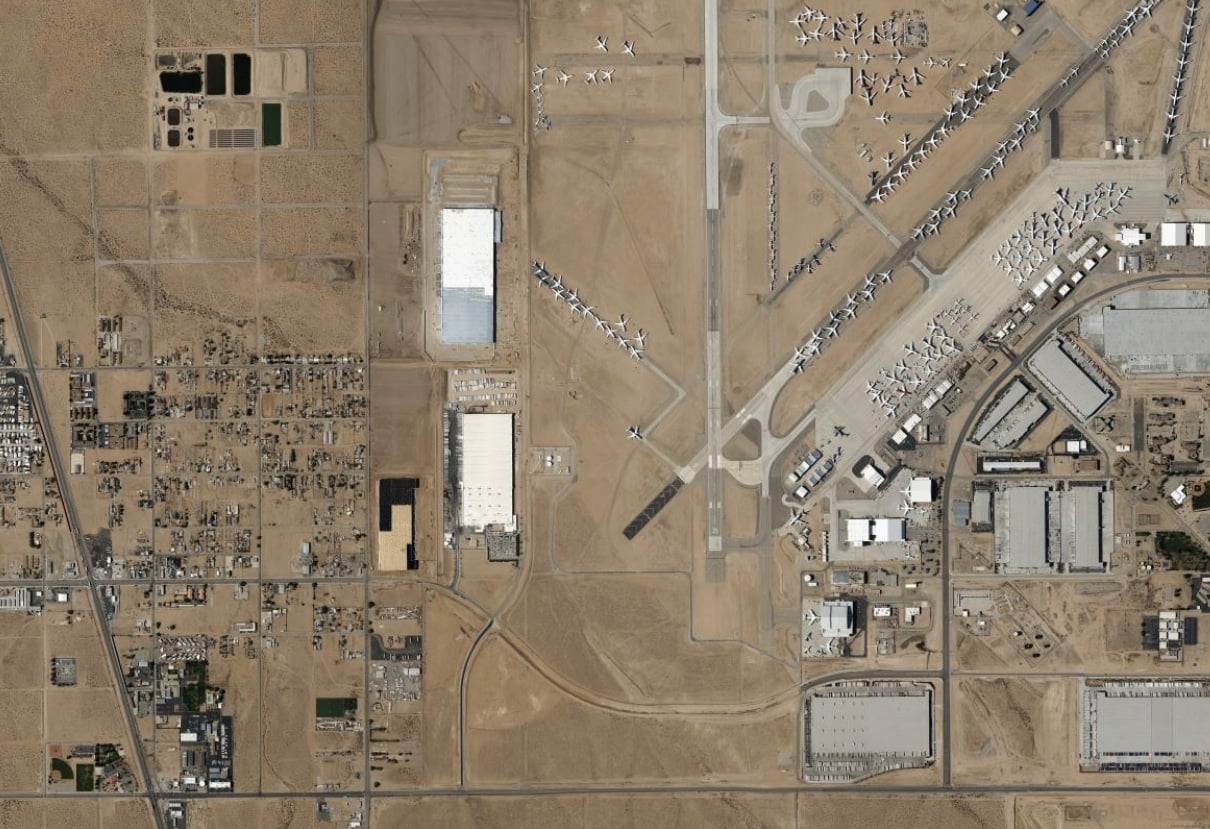
The problem for L.A. boosters was that warehousing is both labor and space intensive, and the land near the Los Angeles and Long Beach ports was crowded by the legacy industrial sites. Savvy investors turned to the Inland Empire, to those parts of Riverside and San Bernardino counties that had enough cheap land for millions of square feet of warehouse space but were close enough to the metropolis to allow short delivery times in the crucial “last mile.” Cities on this fringe were hungry for tax revenues. Fragmented by zoning policies that mirrored Jim Crow segregation, they competed for investment, offering tax breaks, subsidies per job created, and infrastructural support.
And, thus, the warehouse was reborn — as a ‘fulfillment center.’
Everyone involved — from the elected officials to the importers, retailers, freight and trucking companies, and property developers — understood that the future of the distributive city depended on geographies of labor and land that had been rendered surplus in the aftermath of deindustrialization. Together, they would transform warehousing into a consumer business. Wherever they found low land costs, proximity to urban markets, and large numbers of underemployed workers, they would build industrial parks, logistics centers, and retail boxes. And, thus, the warehouse was reborn — as a “fulfillment center.”
Supply chain management structures land use, and in fact supersedes the public interest, in large areas of the country.
This pattern of development is now so fully inscribed in the U.S. political economy that it goes unacknowledged. We take for granted that “supply chain management” — a term popularized in the 1980s — structures land use, and in fact supersedes the public interest, in large areas of the country. This intersects with a widening gap between racialized working-class suburban populations and their high-income counterparts in the city center. 12 Tens of millions of Black and Brown people, many of them immigrants, are entrenched in low-wage jobs, due to long histories of racism that include obstacles to higher education as well as exclusion from or marginalization within unions. They live in suburbs, working in the industries incentivized to be there: shopping malls, airports, light manufacturing and assembly, transport and delivery, and — especially — warehousing. 13 Often they work multiple jobs with unpredictable shifts. Whatever the supply chain demands. Precarity and underemployment are not mere byproducts of industrial blight; they are intentional strategies that bear the imprint of urban racism.
2015
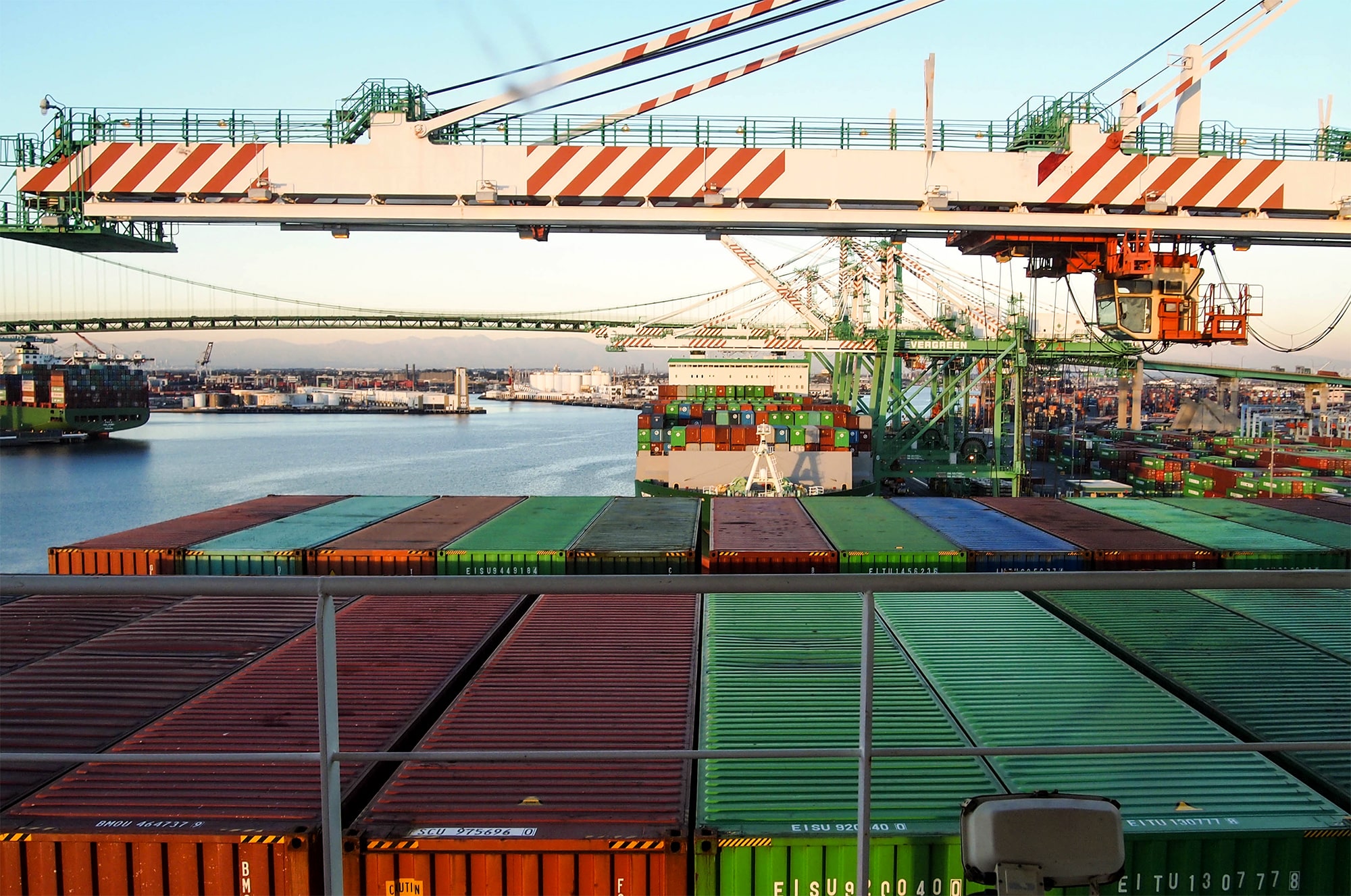
Late in Barack Obama’s presidency, Amazon launched its Prime Now service, offering two-hour delivery in Manhattan, which soon expanded to other cities. At the time, I was living and working on a 111,000-ton ship carrying 8,100 TEUs across the Pacific Ocean. (That’s the industry term for a 20-foot equivalent unit, more widely known as a shipping container, though containers twice that length are now the norm.) I remember the sensation in my bones. Still today, walking down an Oakland street, I can feel the ship surging across the sea. I smell the heavy fuel oil that stayed on my skin after we scooped buckets of it out of the scaffolded crawl space where a pipe had leaked. I can sketch from memory the cavernous depths of the engine room, throbbing with the hum of an engine the size of a church.
When Amazon launched Prime Now, I was living and working on a 111,000-ton ship carrying 8,100 TEUs across the Pacific Ocean.
Life on a container ship moves slow, despite its place at the center of the just-in-time economy. It took six weeks to cross the Pacific, allowing me to ponder unanswerable questions — like, how can Goldman Sachs stack 18 million dollars an hour, or Jeffrey Bezos 18 thousand dollars a minute, while a woman in Bangladesh sews t-shirts for 53 hours to earn enough money to buy one? Cheap goods preserve their allure by hiding the super-exploitation undergirding social relations of production and distribution, and I wanted to understand something about the way fast fashion and furniture depend on the slow, heavy, isolating labor of distributing the world’s commodities. 14
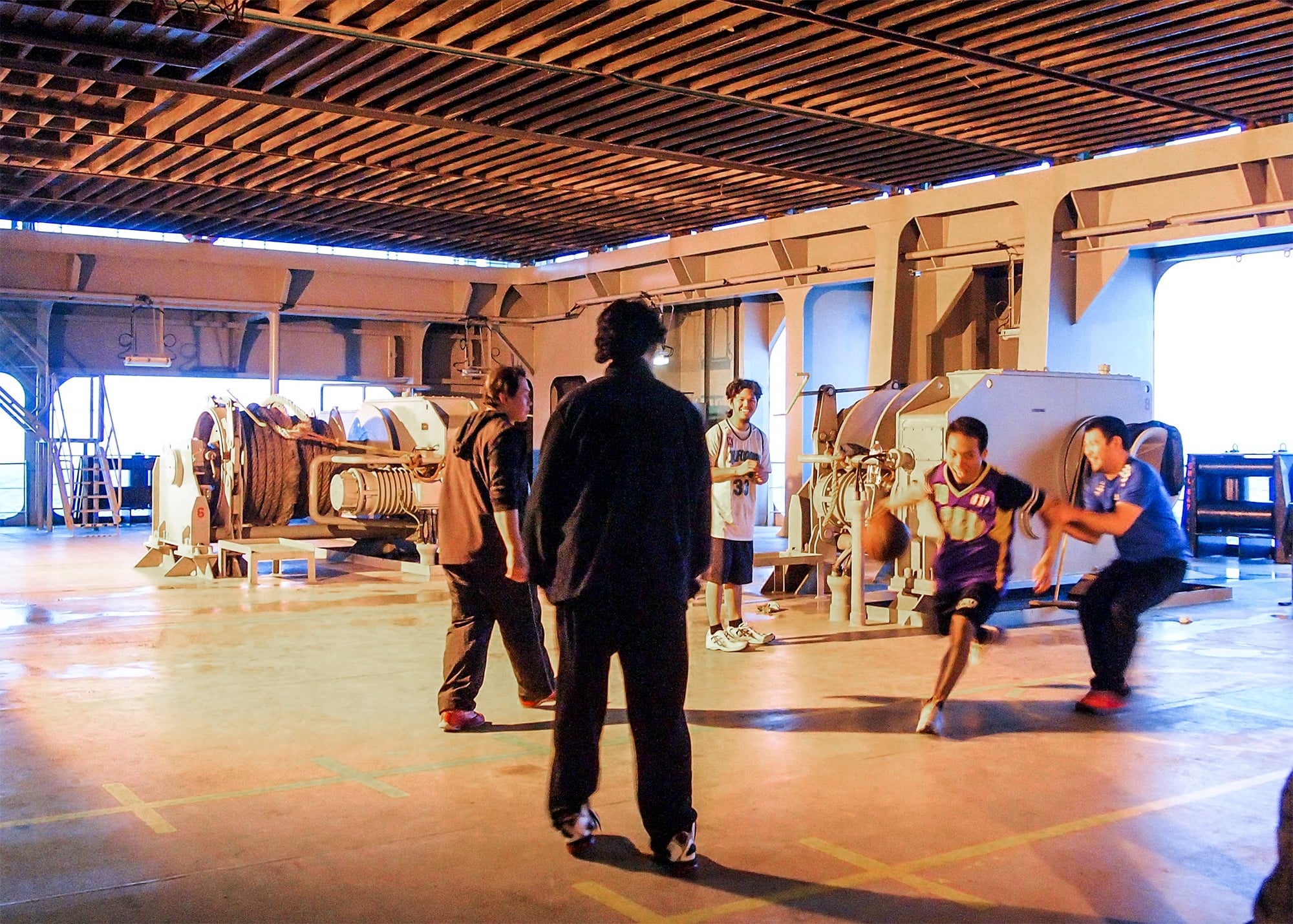
Ordinary seamen Clement, from the Philippines, said, ‘All I see are metal containers. The goods move around the world. We move the goods. But we ourselves? We are trapped on the ship.’
The sailors were easy to get along with. During the day, we washed the deck, checked on refrigerated containers, and cleaned pipes; at night, we smoked cigarettes, played poker, and sang karaoke. But between laughs, they felt deep loneliness. Kept apart from their families for six to nine months on contingent contracts, they saw the ship as a floating prison. “Traveling Alcatraz,” as the oiler Eddie put it. Ordinary seaman Clement, from the Philippines, showed me a photo of his father beaming on the Golden Gate Bridge, in front of the sunset-lit hills of Marin County. “My dad told all these stories of beautiful mountains, beautiful places, and I thought, this what I want: to see the world. But it’s nothing like he described. All I see are metal containers. The goods move around the world. We move the goods. But we ourselves? We are trapped on the ship.” After one ocean crossing, I stepped off the ship, relieved to find firm footing in Taiwan. But most of the men I worked with are still at sea today, getting on a different Alcatraz every nine months or so.
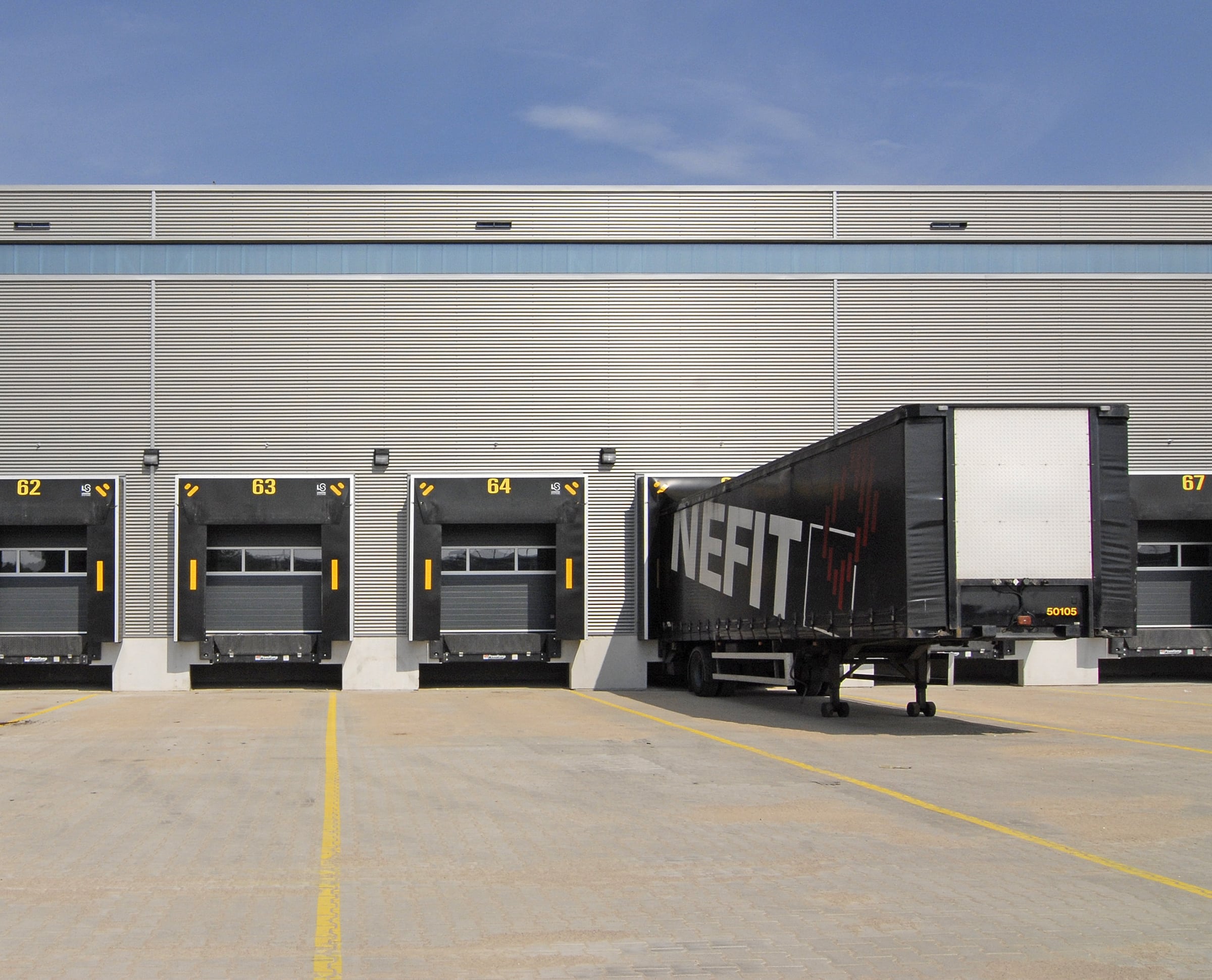
The image of a floating prison returns to me as I drive U.S. interstates choked with trucks, the drivers in their solitary cabs, far from home, delivering goods to warehouses where surveilled workers sort packages and load them onto vans whose drivers can scarcely afford bathroom breaks. Snaking across the country, supply chains are imagined as flexible, agile, always in motion; but their true logic is containment.
Supply chains are imagined as flexible, agile, always in motion; but their true logic is containment. The warehouse, in this sense, is not an efficient switch. It is a trap.
It’s important not to overextend carceral metaphors when nearly 2 million people are in actual conditions of unfreedom in U.S. jails, prisons, psychiatric hospitals, and detention centers. 15 But our cultural atlas needs to recognize also the 6 million transportation and warehousing workers bound by supply chains. As geographer Jacob Bolton has observed, the chains function more as “supply nets — matrices of interconnected lines, prone to becoming tangled, within which workers all too frequently find themselves snared.” 16
The warehouse, in this sense, is not an efficient switch. It is a trap.
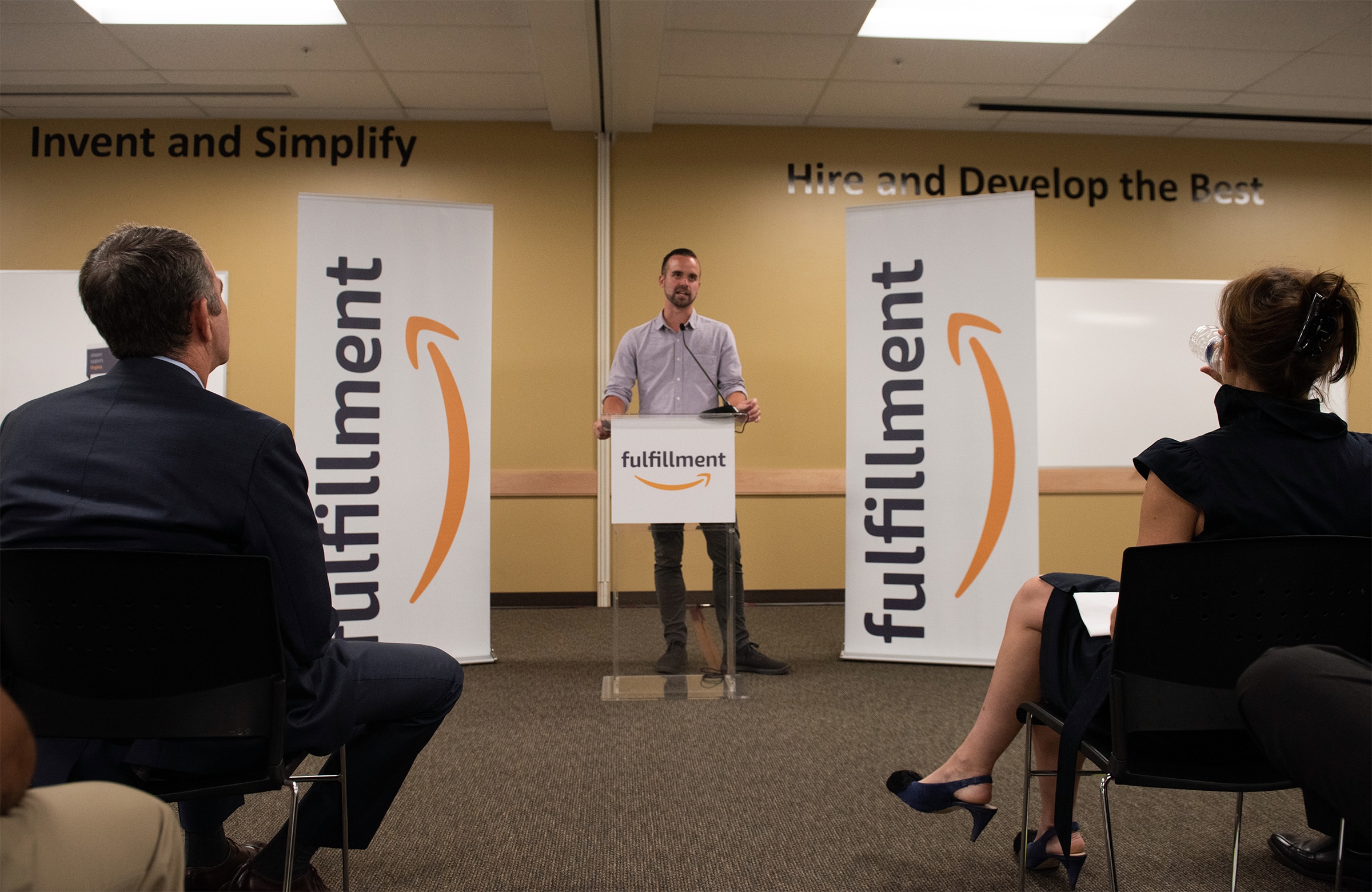
Let the atlas show that Obama’s second term was the crucial window when Amazon captured the door-to-door delivery market, transforming the geography of U.S. retail. Before then, logistics was a companion industry dependent on brick-and-mortar stores. But Amazon, lifted by immense profits from its cloud computing division, cross-subsidized its logistics business, driving massive investment in warehouse expansion. The zero-interest rate policy helped, too. At an Amazon warehouse in Chattanooga, Tennessee, Obama celebrated “good jobs, with good wages, in durable industries.” He praised the company’s job creation programs as a “great example of what’s possible” — an embarrassing lie, when a full-time Amazon worker started at $11 an hour, plus benefits. 17
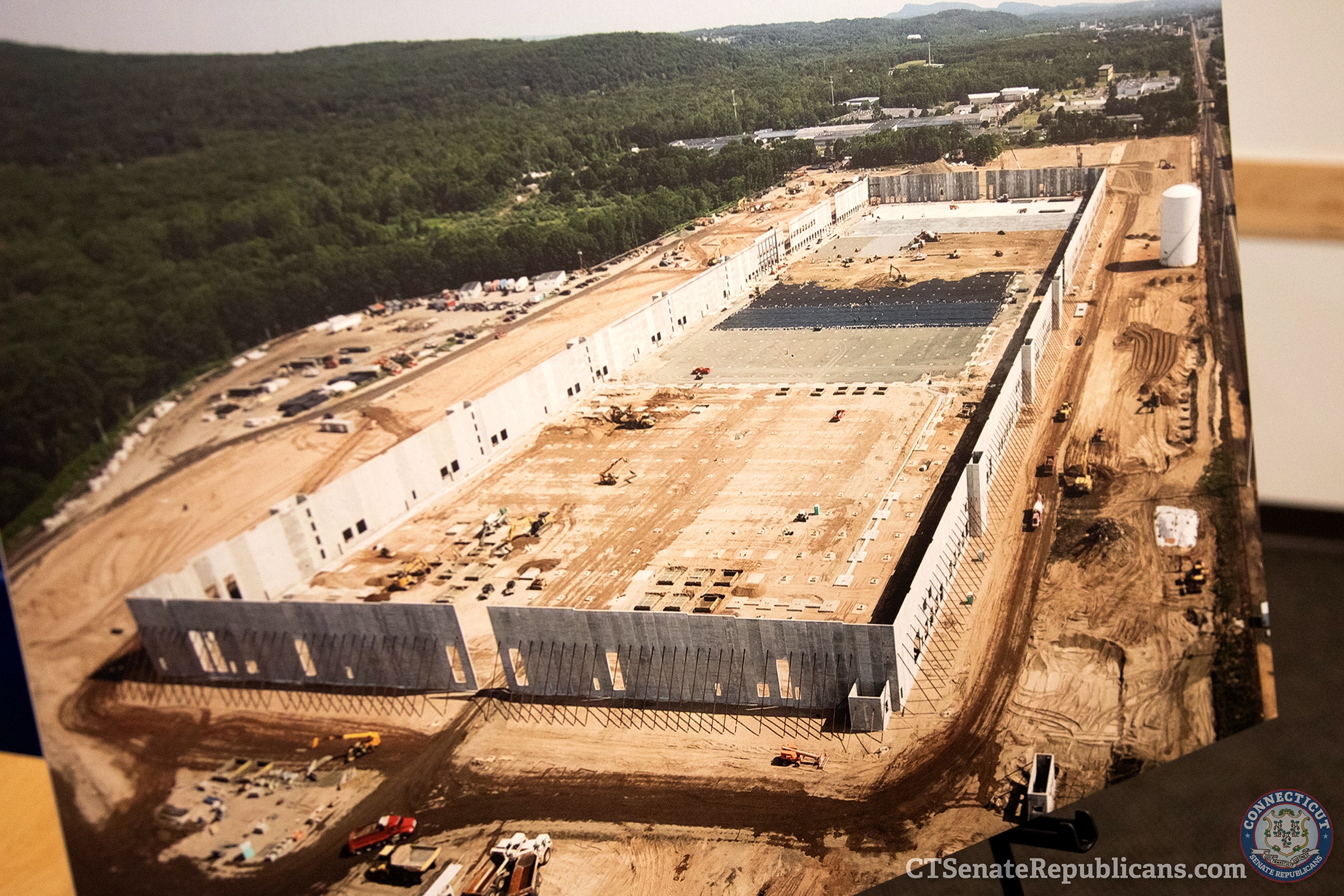
This was the model of the new warehouse: not built for storage, not even for efficiency, but for market capture. It was designed to be a net.
From 2012 to 2015, Amazon nearly tripled its fulfillment footprint, and during the Covid pandemic it doubled that again, thanks to billions in municipal tax breaks. 18 Cities like Shakopee, Minnesota ($5,766,414); Etna, Ohio ($17,543,000); and Lakeland, Florida ($4,500,000) provided tax incentives and public infrastructure that subsidized Amazon jobs. 19 Displaced and underemployed workers signed on for wages and health benefits that were, on average, slightly better than the offerings at big-box stores, chain restaurants, and deregulated third-party logistics companies.
Soon, one out of every three cardboard boxes loaded onto U.S. delivery vans had Amazon’s logo. 20 This was the model of the new warehouse: not built for storage, not even for efficiency, but for market capture. It was designed to be a net. The public appeal was job creation, but that was a myth, as new warehouse gigs were offset by a loss of retail positions. A 2016 report found that Amazon eliminated more jobs than it created: one Sears sales representative exchanged for one Amazon warehouse worker. 21 But while the company did not create jobs, not really anyway, it transformed the nature of work and the way cities function. 22
2020
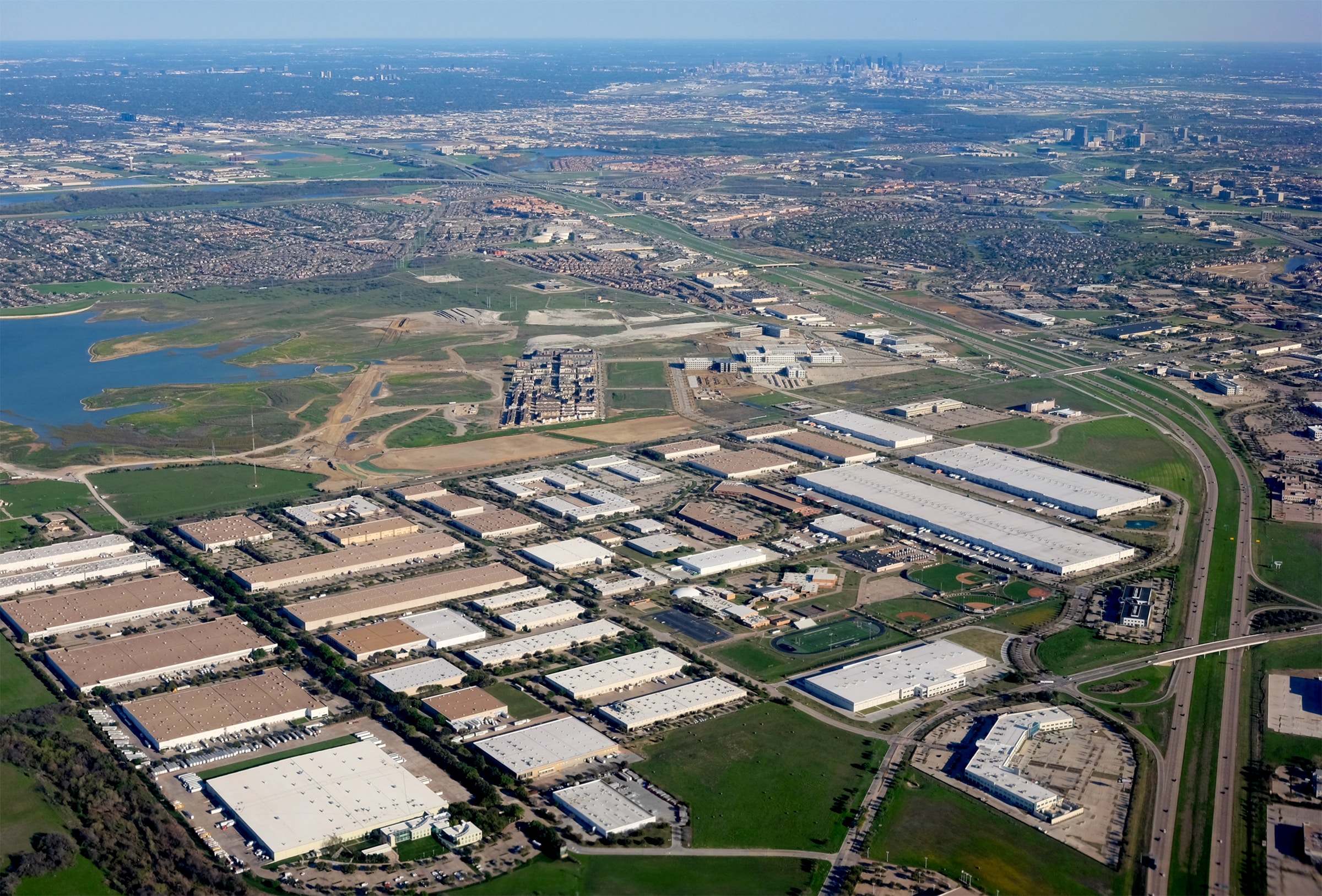
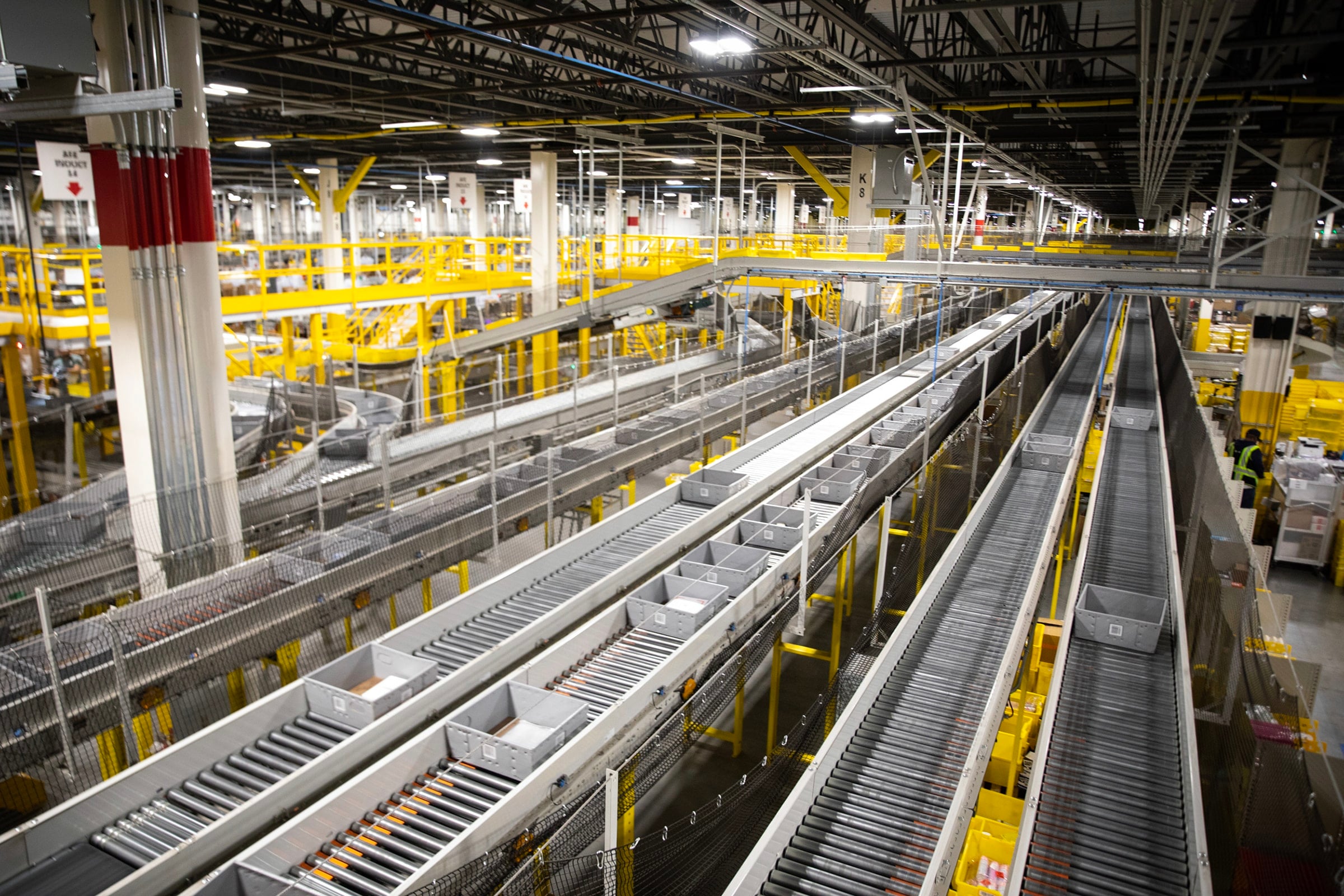
In Donald Trump’s first term, a report prepared for the Southern California Association of Governments found that the region had more than 34,000 warehouses encompassing 1.2 billion square feet, representing an increase of 16 percent in total square footage and 31 percent in average building size, compared to a decade earlier. 23 The explosion of last-mile delivery, logistics hubs, and freight forwarders reorganized supply-chain geographies around new sites of immiseration. Labor, energy, and raw materials were channeled from all corners of the planet into goods that arrived at our doorstep, on an ever-expanding substrate of supporting bodies and life.
Southern California alone has 34,000 warehouses encompassing 1.2 billion square feet.
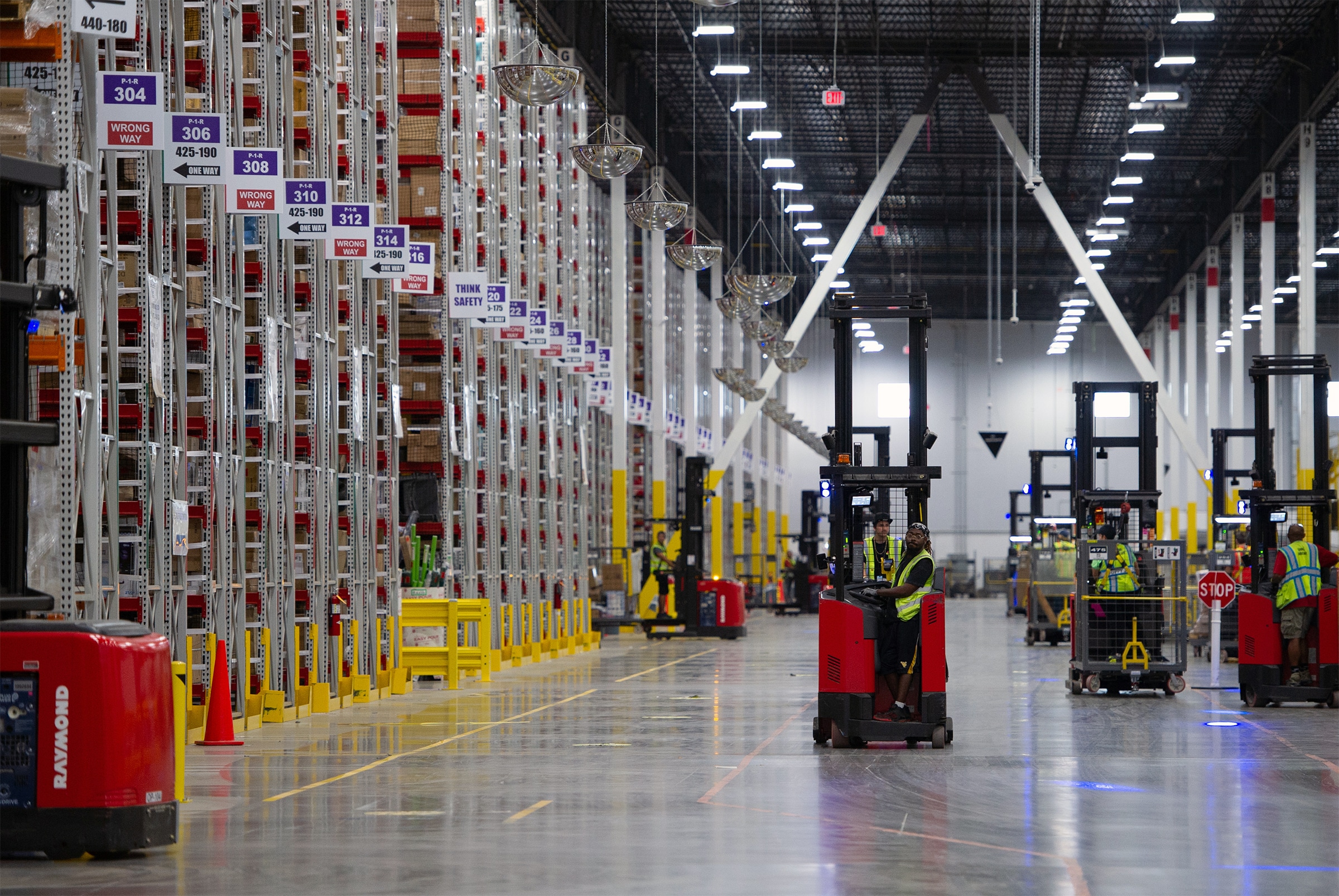
Amazon is now the second largest private employer in the United States (slightly behind Walmart, and well ahead of runners-up UPS and FedEx). Many of its warehouses are staffed mostly by immigrants of color, who unload, pack, sort, and load goods under intense algorithmic scrutiny. 24 Between 2018 and 2020, more than 60 percent of the nearly 400,000 U.S. workers that Amazon hired into its lowest-paying hourly jobs were Black or Hispanic workers; over half were women. 25 Turnover rates are extremely high. For every job at a facility heavily staffed by Somali immigrant women in Shakopee, Minnesota, nearly two workers left their positions within a year. 26
Injury rates are high, too, with nearly a third of new workers injured in the first few months on the job. 27 After Amazon bought a healthcare company to create first-aid clinics for its warehouses, Wired found the medics were pushing injured employees back out on the floor. 28 A worker who fell four feet from a picker and hit their skull on the concrete was sent back to work with dizziness and an unsteady gait. Same for a night-shift worker hit on the head with a box, who reported bleeding from the ear. A worker struck in the back of the neck by two tables that fell from fifteen feet was sent to a hospital in a private taxi; Amazon denied workers compensation and returned them to work the next month. 29
The ships, the trucks, the loading docks: these are containers of immiserated labor, and so they are also containers of revolutionary potential.
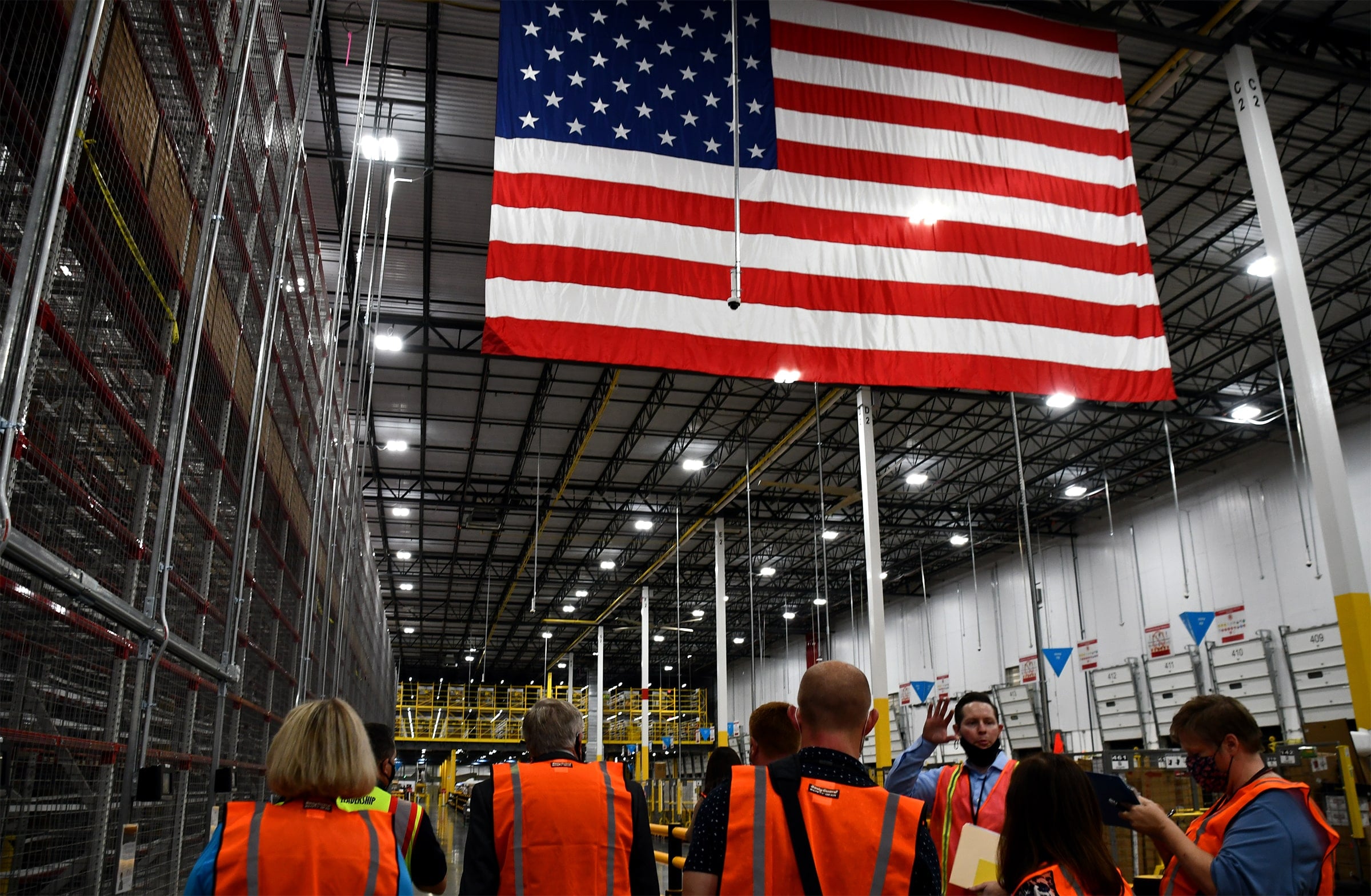
We know these stories because they’ve been reported by journalists and retold in Congressional hearings. The movie Nomadland, a fictionalized version of a nonfiction book about RV dwellers who pick up shifts at an Amazon warehouse in Fernley, Nevada, won three Academy Awards, including best picture. It has speaking roles for Amazon employees and scenes shot inside a real fulfillment center, with the company’s cooperation. Logistics consultants maintain databases of facility specs and locations, and activist groups track Amazon’s public subsidies (“$11.6 billion and counting!” according to Good Jobs First). 30 So it’s not exactly true to say the warehouse is missing from our cultural imagination. What we lack, rather, is an understanding of how the supply net is overlaid on the continent. Where are the warehouses? How much public funding went into their construction? How many hands has your package passed through? Where are those people now? Do they have houses and food and healthcare? Are they safe? Only the logistics companies know the whole route, and only the workers know what happened along the way.
Yet one point is fixed: your doorstep. Where cardboard boxes plug you into systems of global capitalism and bring their concealed violences to your front porch. 31 On the side of production, capital seeks mobility — the cheapest place to go, the least obstructive place to extract wealth — but the last mile cannot be offshored. Goods must be delivered somewhere and to someone. This is why Amazon’s 500-plus warehouses are concentrated near (but not in) major urban centers. Warehouse contracts might be shifted from one exurb to another, but the product still has to reach the consumer. Delivery, in other words, is here to stay.
The displaced people with ‘nowhere to go’ are living in real places — Staten Island, Bessemer, Shakopee, Richmond, Victorville — where they can make tactical cuts in the supply net.
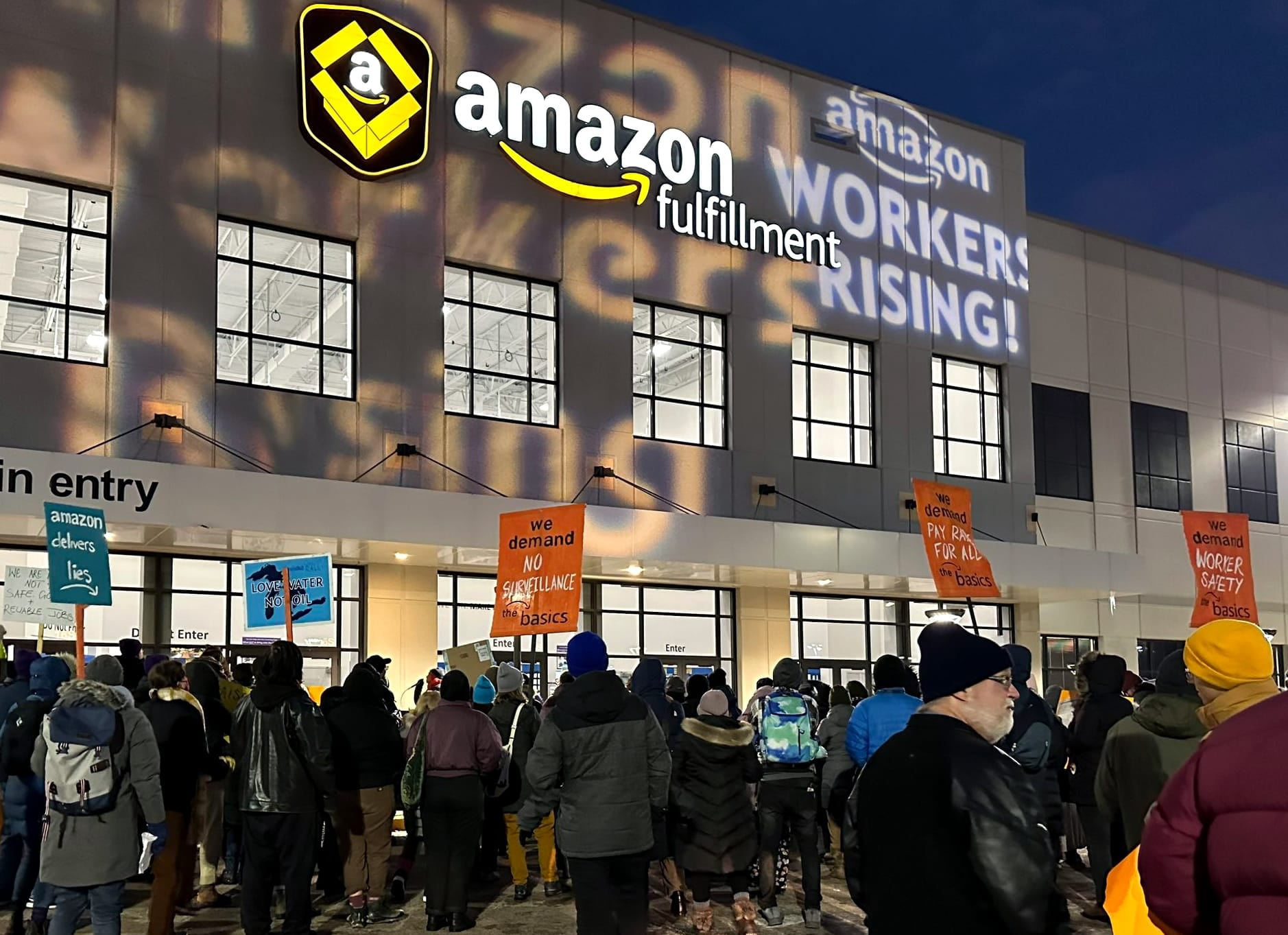
That simple fact raises possibilities for the re-composition and concentration of the new American working class. The displaced people with “nowhere to go” are living in real places — Staten Island, Bessemer, Shakopee, Richmond, Victorville — where they can make tactical cuts in the supply net. From the flat plains of the Midwest to the heart of the South and the outskirts of East and West coast cities, workers at Amazon facilities have begun to organize. Young people of color are growing worker power within the distributive city’s underbelly. They are protesting the unjust firing of coworkers. They are demanding the company address the cost of living, and gendered disparities in working conditions. They have stopped work in the Inland Empire, in the Chicago area, in Queens, in Georgia. 32 The ships, the trucks, the loading docks: these are containers of immiserated labor, and so they are also containers of revolutionary potential. The distributive city has clustered the new working class in communities that can be organized, where confrontations with capital spike and burst open the contradictions of a society built on impoverishing the lives of the very workers who create its wealth.
2026
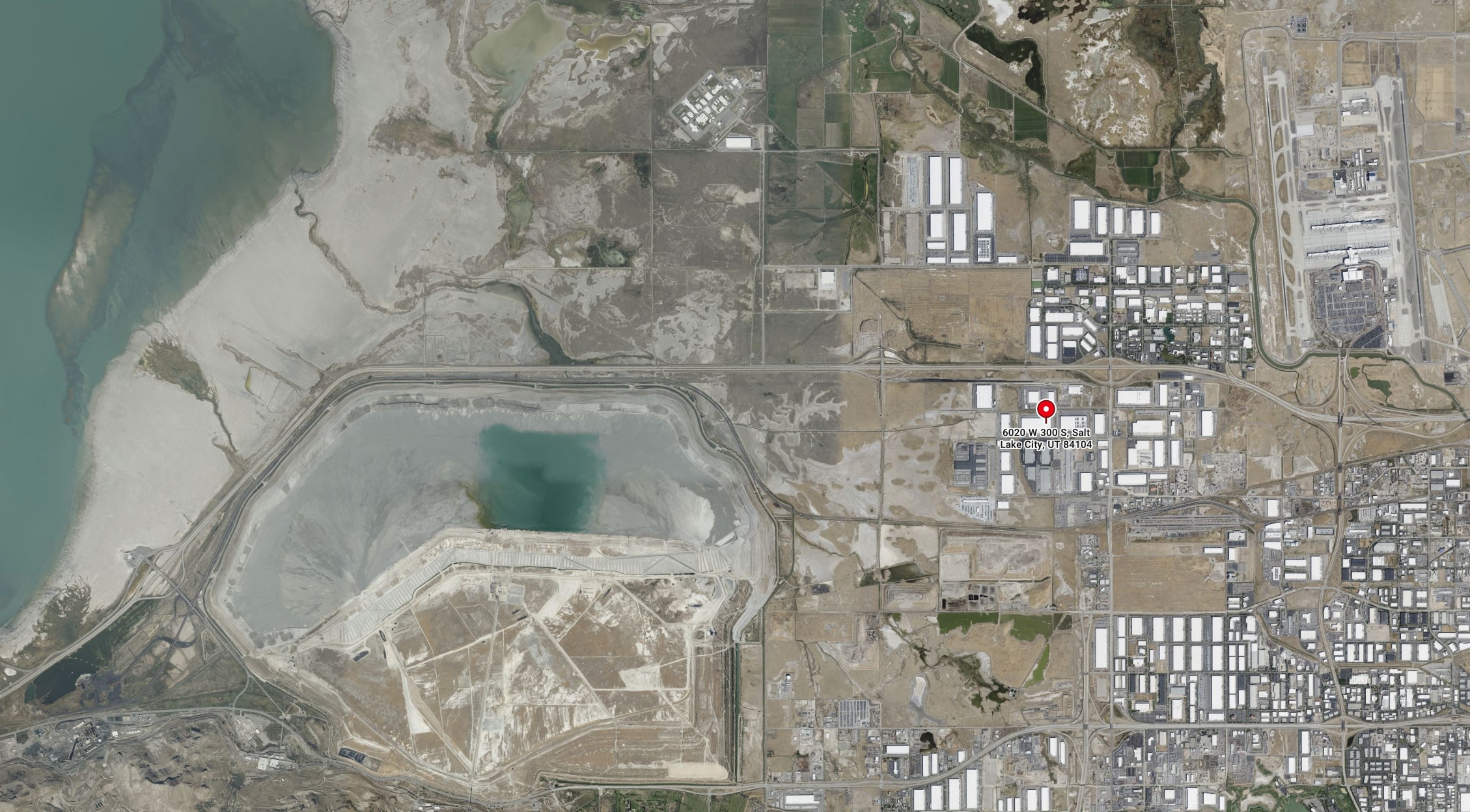
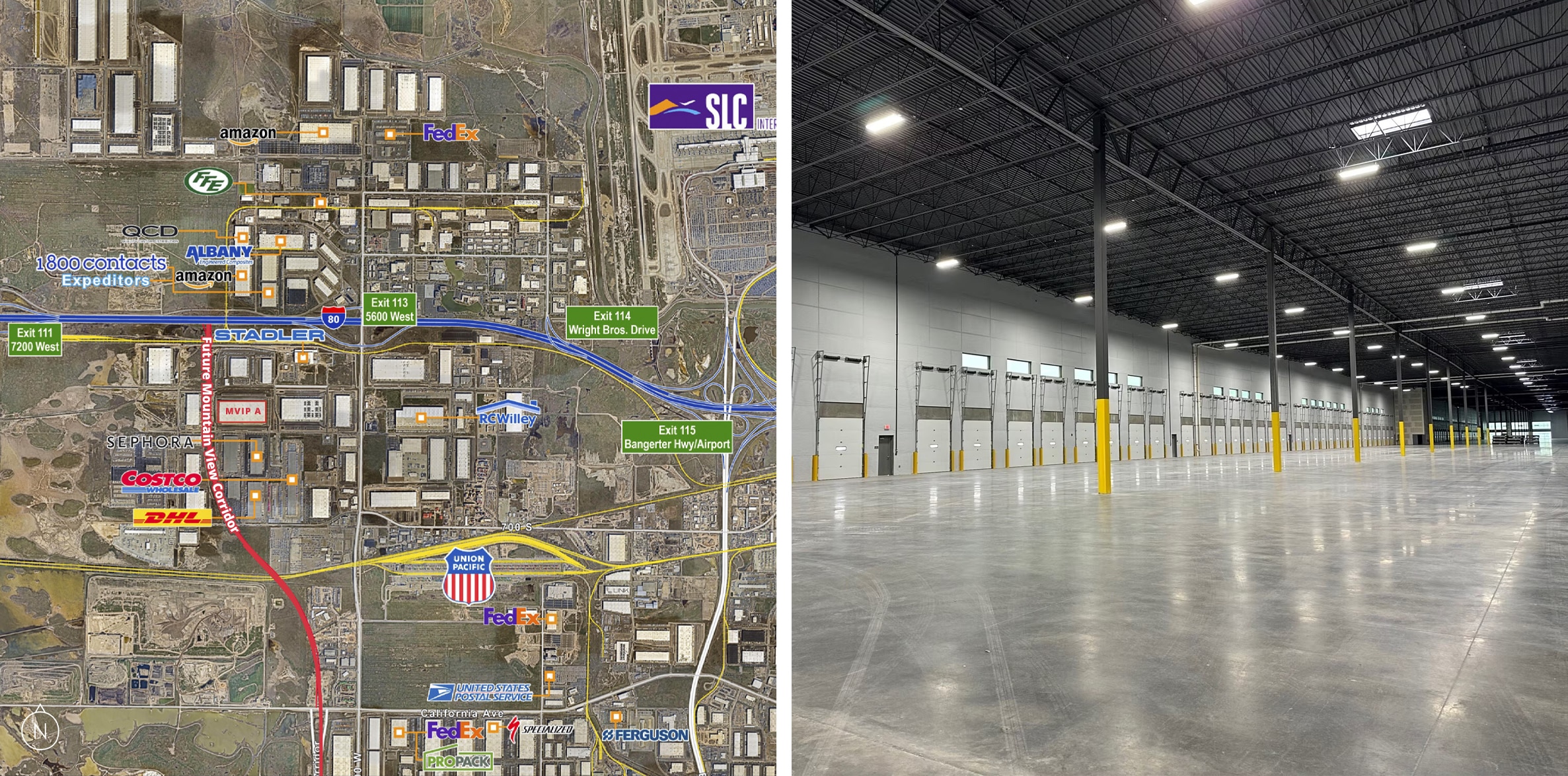
Yet something darker is also brewing, in Socorro and San Antonio, Texas; in Social Circle and Flowery Branch, Georgia; in Tremont and Hamburg, Pennsylvania; Roxbury, New Jersey; Hagerstown, Maryland; Surprise, Arizona; Romulus, Michigan; Salt Lake City, Utah; maybe soon in a hollowed-out suburb near you.
Between 2021 and 2025, pandemic demand led to a frenzied explosion of warehouse construction. Everyone wanted to build a logistics hub and lease it to Amazon. 33 But this was growth without a plan: 71 percent of the warehouse space developers brought to market in the second quarter of 2025 was speculative, and most of it sat empty. Spooked by Donald Trump’s chaotic tariff policies, retailers weren’t signing leases. By the summer, vacancy rates were higher than they’d been in a decade. 34 Supersize warehouses — some exceeding one million square feet — couldn’t find tenants. What would happen to all that surplus space?
The answer is so grim it is hard to face. Last July, Republicans in Congress gave the Department of Homeland Security a staggering $171 billion budget increase, including $45 billion for new detention facilities. 35 Within months, Immigrations and Custom Enforcement began buying commercial warehouses with the goal of retrofitting them into detention centers larger than any prison. By the midterm elections, ICE aims to have 70,000 to 92,600 new beds in a couple dozen warehouses. 36 The open, unplanned layout of the warehouse floor will be reformatted as a concentration camp. 37
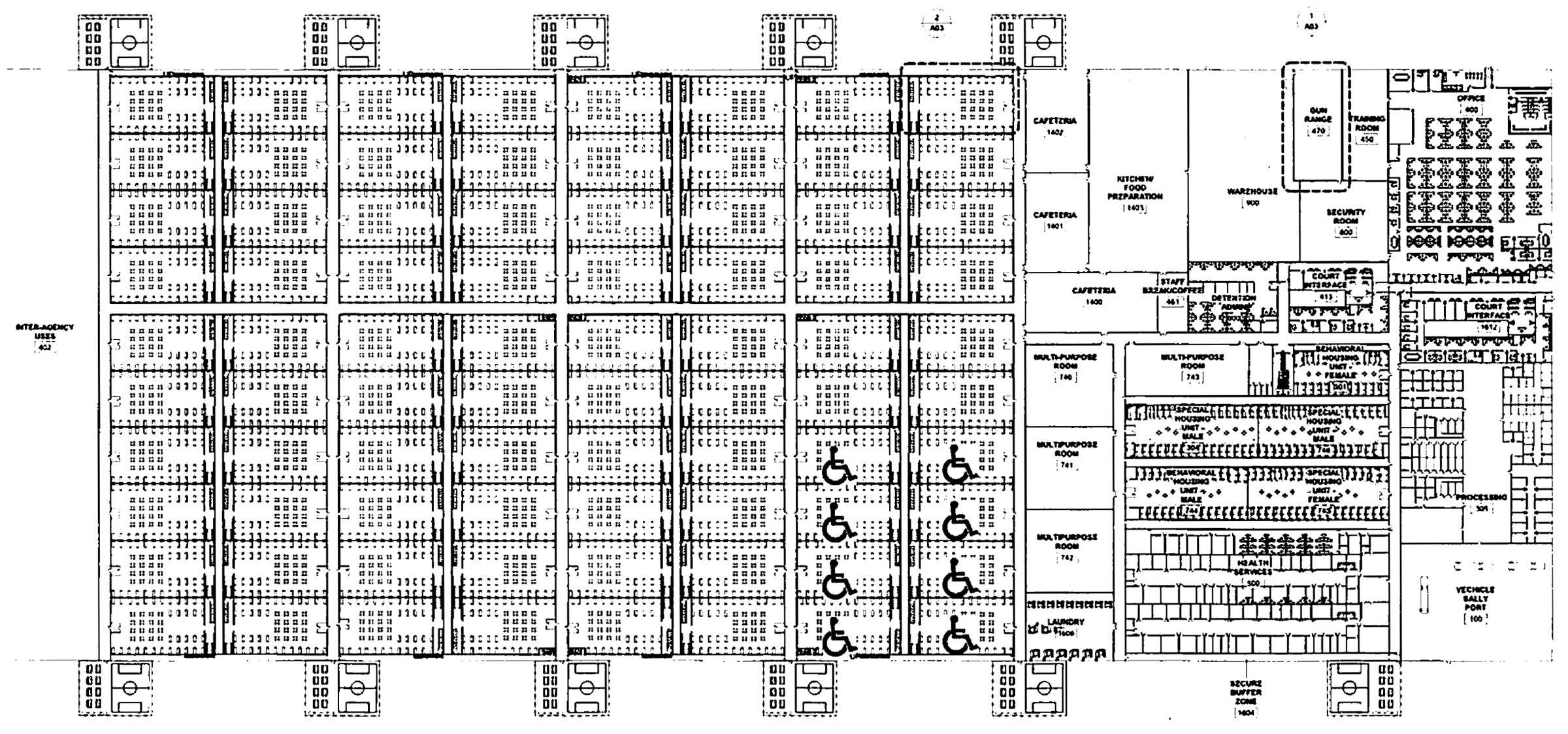
This is a serious escalation in ICE’s terror spree. Acquiring detention space through contracts is slow and inefficient, fragmenting the state’s capacity to sweep and detain people. Under Biden, ICE had about 200 detention sites across the country, mostly space leased in county jails and private prisons, holding about 40,000 people on any given day. As immigration enforcement surged under Trump’s deputy Stephen Miller, that number grew to 66,000 by the end of 2025. 38 And if the “ICE Detention Reengineering Initiative” succeeds, warehouse conversions in 2026 will more than double that capacity.
Republicans in Congress budgeted $45 billion for new detention facilities. This winter, ICE has bought eleven vacant warehouses, totaling 7.9 million square feet, in eight states.
ICE is now using a military procurement program known as WEXMAC to pre-qualify vendors and avoid normal bidding rules, so that construction can start immediately. Sixteen warehouses are planned to hold between 1,000 and 1,500 people, while eight mega-facilities will hold 7,000 to 10,000 people facing imminent deportation. 39 The public knows little about what is happening inside ICE facilities, except for the trickle of horror stories about rancid food, medical neglect, and severe overcrowding, as immigrants are moved across state lines to circumvent legal defense and journalistic scrutiny. 40 At least 32 people died in ICE custody in 2025, and fifteen so far in 2026 — one every six days. 41
This winter, ICE has bought eleven vacant warehouses, totaling 7.9 million square feet, in eight states. More are coming. Flush with cash, the agency is paying a steep premium over market rate. 42 It has learned from warehouse developers that the best way to win local approval is to promise that retrofitting and staffing will create jobs and tax revenue. And for most property owners waiting to convert land into money, it doesn’t matter how the space is used, only that market conditions are met.
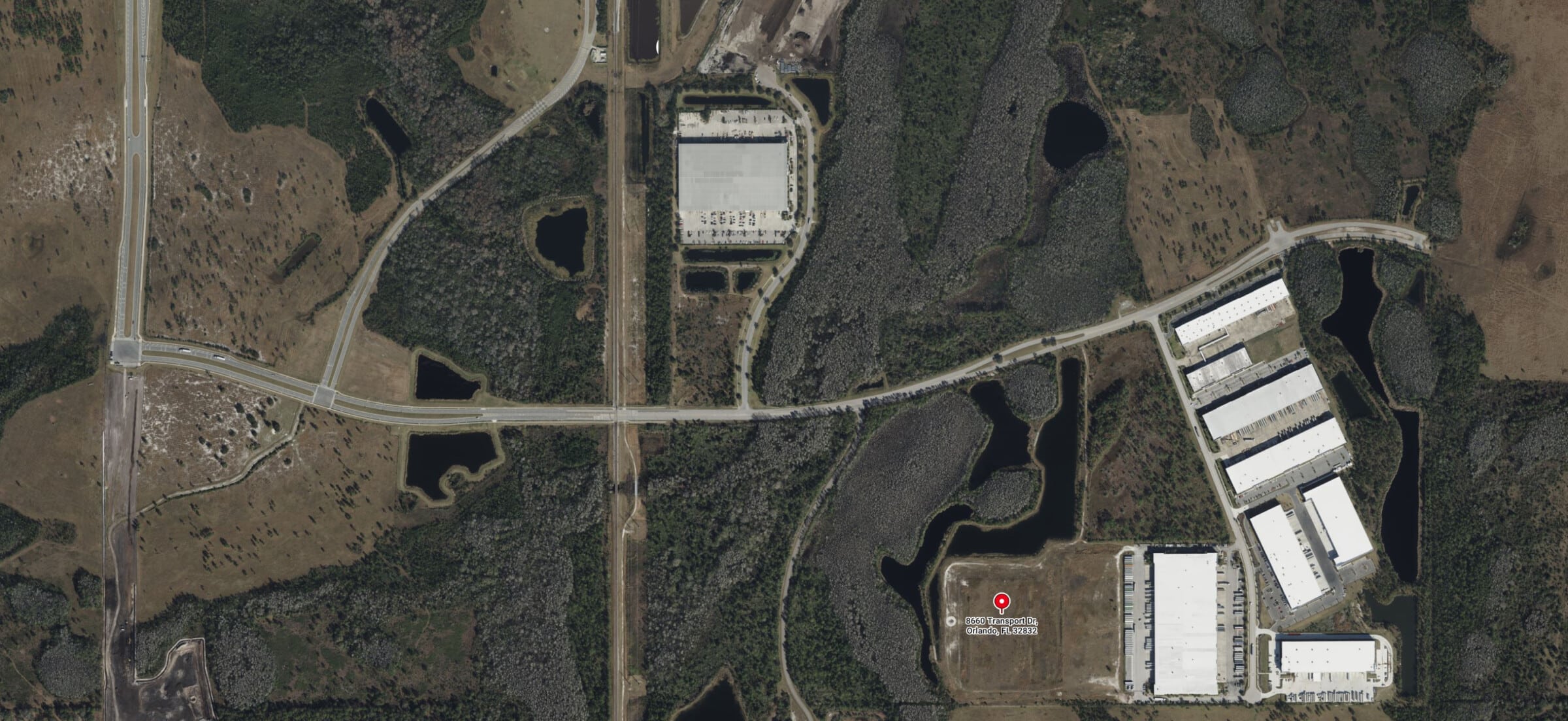
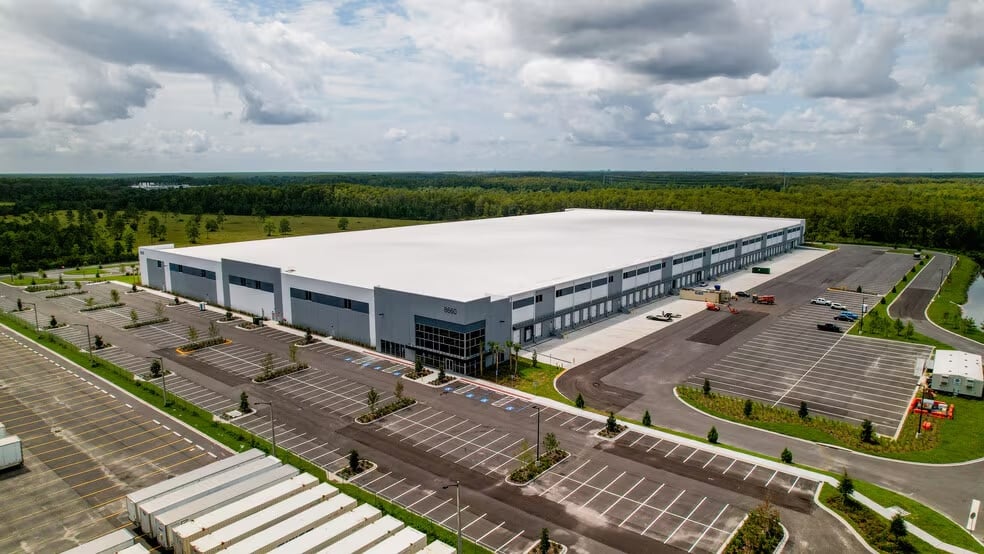
We can understand this absorption of warehouse surpluses through the lens of carceral geographies. Surplus is the logic of containment, as abolitionist geographer Ruth Wilson Gilmore shows in her foundational work Golden Gulag, which examines California’s 1982–2000 prison boom as a response to economic crisis. 43 Three surpluses, she argued — of finance, land, and labor — were brought together through a fourth, “surplus state capacity.” Governments that lost their mandate with the sunsetting of the welfare state formulated new political problems, so they could promote new technical solutions, requiring new markets. Most notably, they manufactured a fear of crime so they could justify a prison boom.
‘We need to get better at treating this like a business,’ said ICE acting director Todd Lyons. ‘Like [Amazon] Prime, but with human beings.’
So we get places like California City in the remote Antelope Valley (the state’s third largest incorporated city, by land area, after Los Angeles and San Diego). Here, a discarded military site became, in the 1960s, a failed real estate development, where a few thousand people settled in a city that was designed for half a million. In 1998, developers built a 2,500-bed private prison there on spec — without any prisoners to fill it. It took several years, but eventually they found tenants, including the U.S. Marshals Service, ICE, and the California Corrections Department. Last year, the site was reactivated as the largest immigrant detention center in California. 44
This pattern now repeats in the spec warehouse market. The Trump regime casts people who came to the U.S. seeking work or asylum as “enemy aliens” and “criminals” who must be removed, which justifies the reformatting of surplus commercial space for mass detention. (But which is a greater threat to public safety: non-citizens who overstay their visas? Or a rogue government agency staffed by secret police, led by an unbroken string of twelve acting directors who have avoided Senate oversight, which is now violating court orders faster than those orders are handed down?) It is not coincidental that this fascist government sees the warehouse as the perfect detention center. The current acting director of ICE, Todd Lyons, made a chilling and explicit comparison last year at a Border Security Expo in Phoenix: “We need to get better at treating this like a business,” he said. “Like [Amazon] Prime, but with human beings.” 45
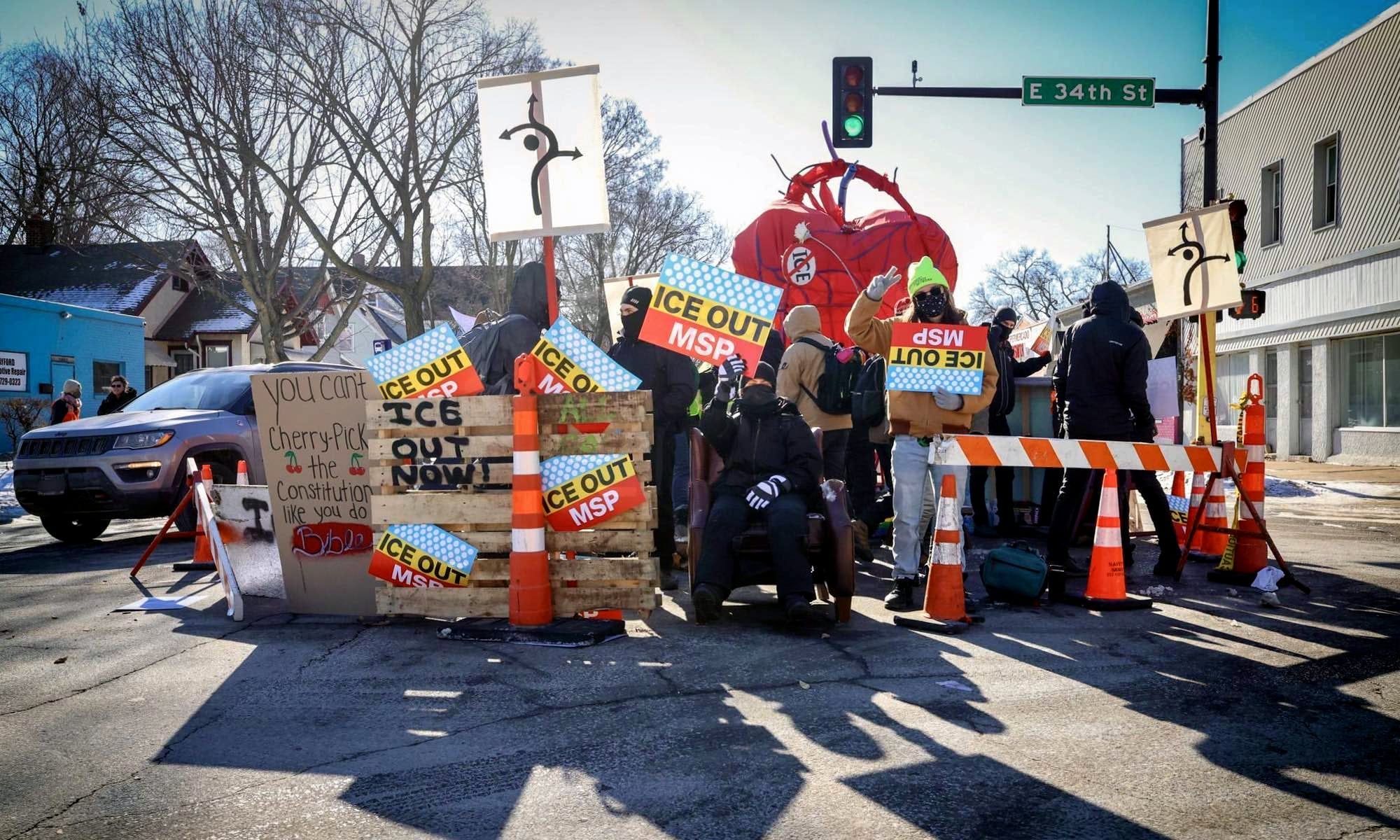
How can the disappearing machine be stopped? The same way warehouse and delivery workers are fighting for their labor rights: through place-based, collective action. Every node in the system is a potential site of disruption. In Minneapolis, neighbors use wooden pallets — that warehouse icon — to set up filter blockades at intersections, slowing ICE vehicles and logging license plates so they can alert the neighborhood. 46 And in at least thirteen U.S. cities where ICE has sought to convert warehouses to detention facilities, communities have organized to stop them.
How can the disappearing machine be stopped? The same way warehouse and delivery workers are fighting for their labor rights: through place-based, collective action.
Resistance looks different in each place. In Kansas City, Missouri, an investment firm canceled a warehouse sale after the city council passed an ordinance prohibiting the construction of new detention facilities. In Surprise, Arizona, an arsonist set fire to a newly purchased ICE warehouse. In Durant, Oklahoma, the Choctaw Nation stepped in to buy a warehouse before ICE could. At public meetings, residents speak out against the strain on public utilities, roads, and emergency services, and officials invoke building codes, noise regulations, environmental reviews. Attorneys general in Maryland, New Jersey, and Michigan have filed lawsuits. But in the small town of Ashland, Virginia, it wasn’t locals who stopped a warehouse sale. Rather, it was Canadians who threatened to boycott grocery stores and cancel advertising contracts owned by the same Canadian firm that sought to sell the warehouse to DHS. 47
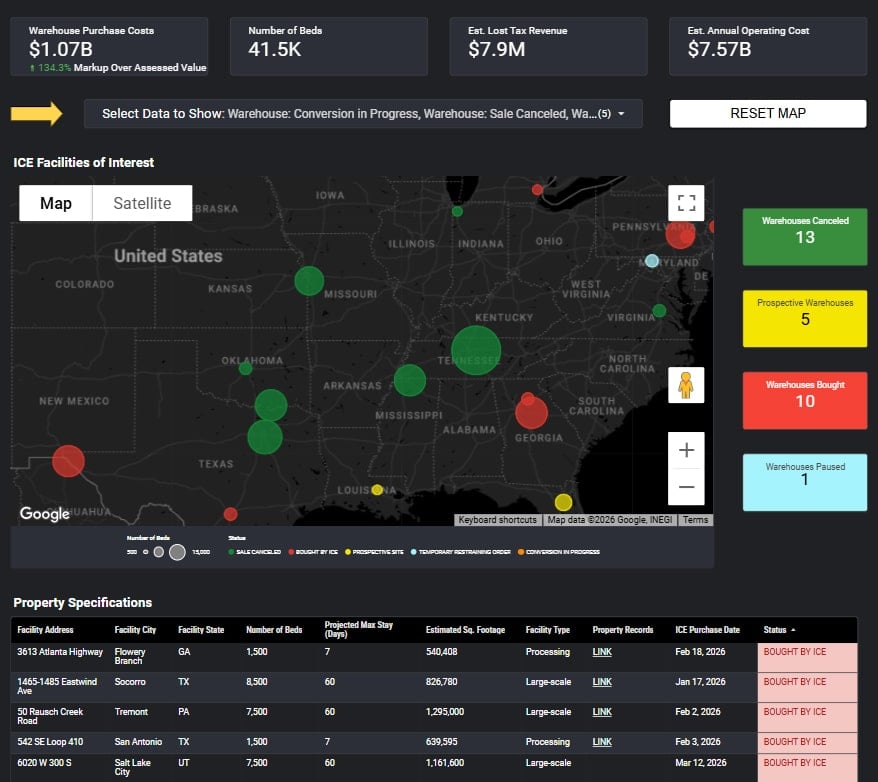
Atlas-making is a political project that reveals hidden lines of power. Anybody can do it. 48 And this spring, thousands of people across the continent are using the crowd-sourced maps of Project Salt Box, a collective of seven volunteers in Baltimore who found each other on Reddit and set up a geographic database where ICE warehouse sales are monitored. 49 They were the first to notice a deed showing that an 825,620-square-foot warehouse near Hagerstown, Maryland, had been sold to the United States of America for $102.4 million. 50 “Conversion in Progress,” the map says, when you click on that dot. Number of Beds: 1,500. Projected Max Stay: 7 Days. Estimated Annual Operating Cost: $273.75 million. There is a tab for financial impacts. Water supply impacts. “Consolidated RiskFootprint™ Environmental Risk Assessments.” 51
The supply net is made visible in the data-forward aesthetic of the logistics industry, in ways that might be used before city councils and planning boards. Warehouses Bought: 10. Paused: 1. Canceled: 13. And on the other end of the disappearing machine, the people who make the textiles and pick the lettuce and drive the delivery vans are being kidnapped, beaten, silenced, deported, and killed. We can refuse their disappearance by marking in the atlas what the warehouse tries to hide.





If you would like to comment on this article, or anything else on Places Journal, visit our Facebook page or send us a message on Twitter.