

Repairing repair
No one will bother listen to recordings of our conversation, concluded participants on the last day of a 1970 conference convened by the cyberneticist Gregory Bateson to talk about fixing New York City. So why am I listening, I ask myself at the end of several days spent in the archive. Because, more than half a century on, we seem no closer to fixing things, and I’ve joined a research group that asks whether there may yet be something in Bateson’s ideas from which designers, artists, and architects can learn.
The mayor’s office in NYC had asked Bateson and his colleagues whether it was possible to “restructure the ecology of a great city,” thereby joining the mission — already a more than a century old — to repair the ravages of modernization. Bateson drew inspiration from William Blake’s opening salvos against untrammeled industrialization and rationalism, which had gone on to motivate the likes of William Morris and his successors. By the postwar decades, Bateson was one of those asking whether something is systemically wrong in our ecology.
One systemic approach to what ails us is “solutionist” (to use a recently coined term); geo-engineering, for example. Bateson would surely see such eye-widening big fixes as further errors of “conscious purpose,” attempts to change a system of which we’re a part yet only partially understand, and can only partially predict or judge. To attempt such hubris is to repeat the sort of “epistemological error” that broke the ecosystem in the first place (notably with the excessive release of CO2, about which Bateson warned in the 1960s).
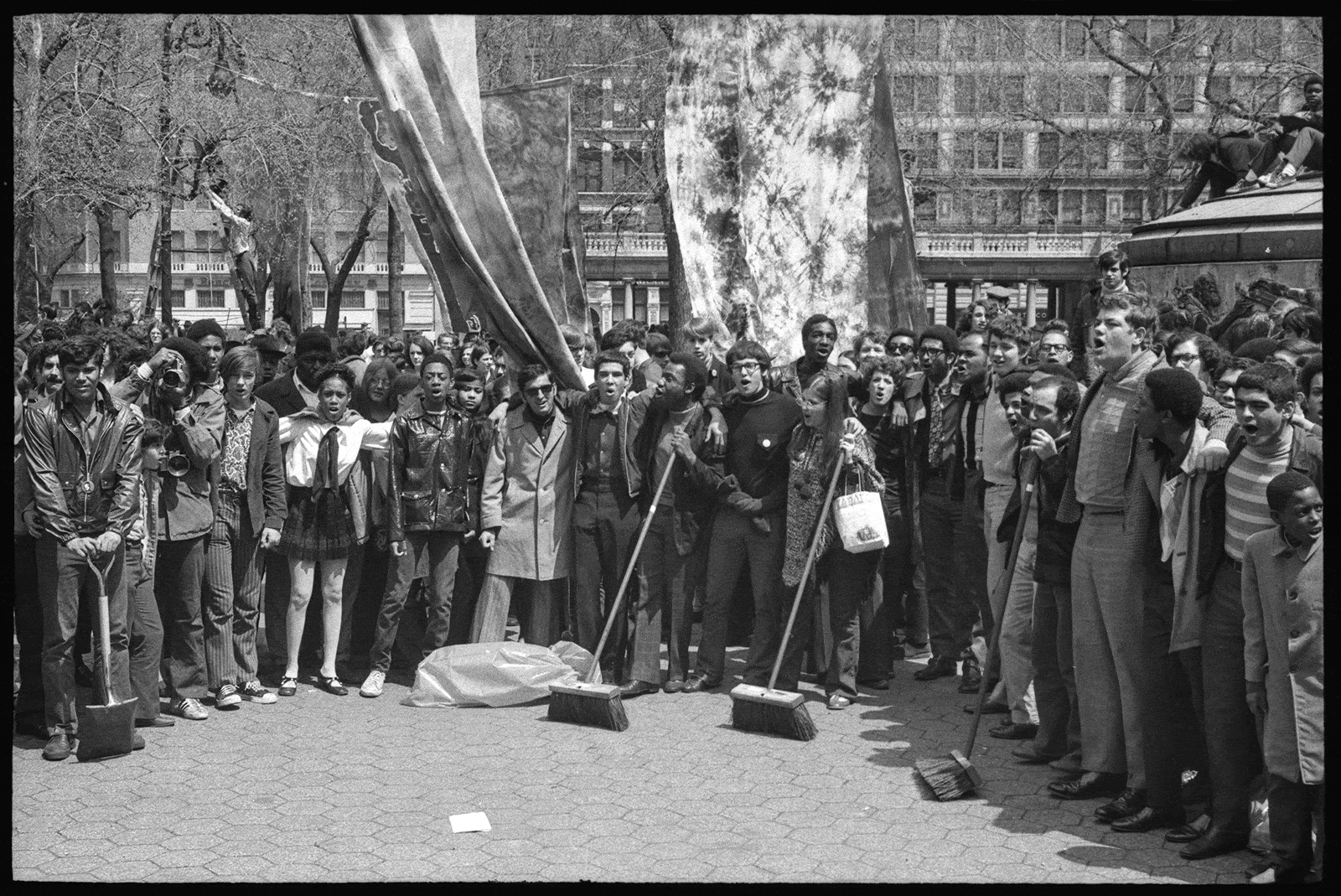
Solutionist hubris is core to conventional design, and “repair” seems a welcome corrective to it. But if the ravages of modernization have been met with efforts at repair for so long now that they’re part-and-parcel of architecture — Romanticism, Arts and Crafts, Garden Cities, gestalt, pattern languages, recycling, ecodesign, community design, regionalisms, historicisms, sustainability, adaptive reuse, Landscape Urbanism, Tactical Urbanism, and lately demands for regenerative design, pluriversalism, cosmotechnics — then what’s going to be different this time round? Are we about to repair repairing?
Architecture and design, already lacking coherent theories of history, change, and ecology, also lack a coherent theory of repair.
After all, demands for repair can quickly get more fundamental, politically, than wetland conservation and seed-bombing. Legacies of colonialism require reparation, even as colonialism’s beneficiaries are plaintive about the restoration of their supposed national identities and traditions. Architecture and design, already lacking coherent theories of history, change, and ecology, also lack a coherent theory of repair. “Sustaining what?,” skeptics ask of sustainability; repairing what, we might now wonder. The conundrums of design — who designs what, for whom, how, why, where, and with what ideology and mindset or epistemology — get restated, not circumvented, by switching to discourses and practices of repair. Who repairs what, for whom, how, why and where, and with what epistemology? That latter question has me listening like a ghost at Bateson’s long-ago conference.
Neoliberal discourse has insisted that networked, self-organized postindustrial growth will correct the excesses of modernization, as though capitalism can evolve like an organism, repairing the ecosystem from which it extracts. The design disciplines had a good run on the back of such beliefs, imagining it was possible to train students to work for Amazon and for the Amazon, with AdobeTM and with adobe. The ruse paid the bills. But it was a double bind, as Bateson might say, promoting more epistemological errors.
— Simon Sadler
Repair as Play
Tech companies publicize their net-zero pledges and other climate-related commitments, and release their annual sustainability reports. But they rarely adhere to these goals, especially given their current investments in energy-intensive generative AI and its associated infrastructures. Meanwhile, activists have pushed for more attention to the transnational supply chains and geographic interdependencies underpinning the tech industry, highlighting “re-user experience” and circular design as critical to holistic sustainability in a realm where planned obsolescence reigns. Repair can help us move beyond the ideas of techno-solutionist decarbonization that tend to dominate tech-industry greenwashing, and to look instead at practices, institutions, and architectures that can extend the lives of systems through refurbishment and repurposing.
How are small-scale refurbishers and volunteer developers adapting decaying systems for new users, as part of broader social justice goals? Much of this work happens on a local level, so I will focus on two examples from my preliminary field research in Oakland, California, where I live. Oakland sees little benefit from its position in the shadow of the wealthiest tech firms; yet small-scale secondhand economies do feed off this unequal relationship.
How are small-scale refurbishers and volunteer developers adapting old systems for new users, as part of broader social justice goals?
Tech Exchange, founded by a retired IBM systems engineer and based in the East Oakland neighborhood of Fruitvale, combines interests in accessibility and inclusion with climate justice. The organization takes donations from major corporations, and from individuals. The devices they refurbish, many of them laptops, are distributed to schoolchildren, unhoused people, and the elderly. In addition to saving e-waste from landfills — and helping to prevent the hazardous downstream effects of electronics pollution in places like Southeast Asia — these refurbished machines are enfolded into local social programs: digital skills training, free tech support, and assistance in accessing free or low-cost internet service. Moreover, some devices (especially vintage game consoles) take on new market value once repaired: Tech Exchange has an eBay store where they sell such high-end items to help keep their multiple projects going.
I interviewed one local software developer who refurbishes Chromebooks as a volunteer for Tech Exchange. He started this work early in the pandemic, when supply chain snags, chip shortages, and the pivot to Zoom instruction meant that students needed laptops, but were often unable to find them. He sourced ancient laptops on NextDoor and Facebook Marketplace, and power adapters on eBay, and fashioned Frankenstein Chromebooks from old parts, outfitting them with Linux.
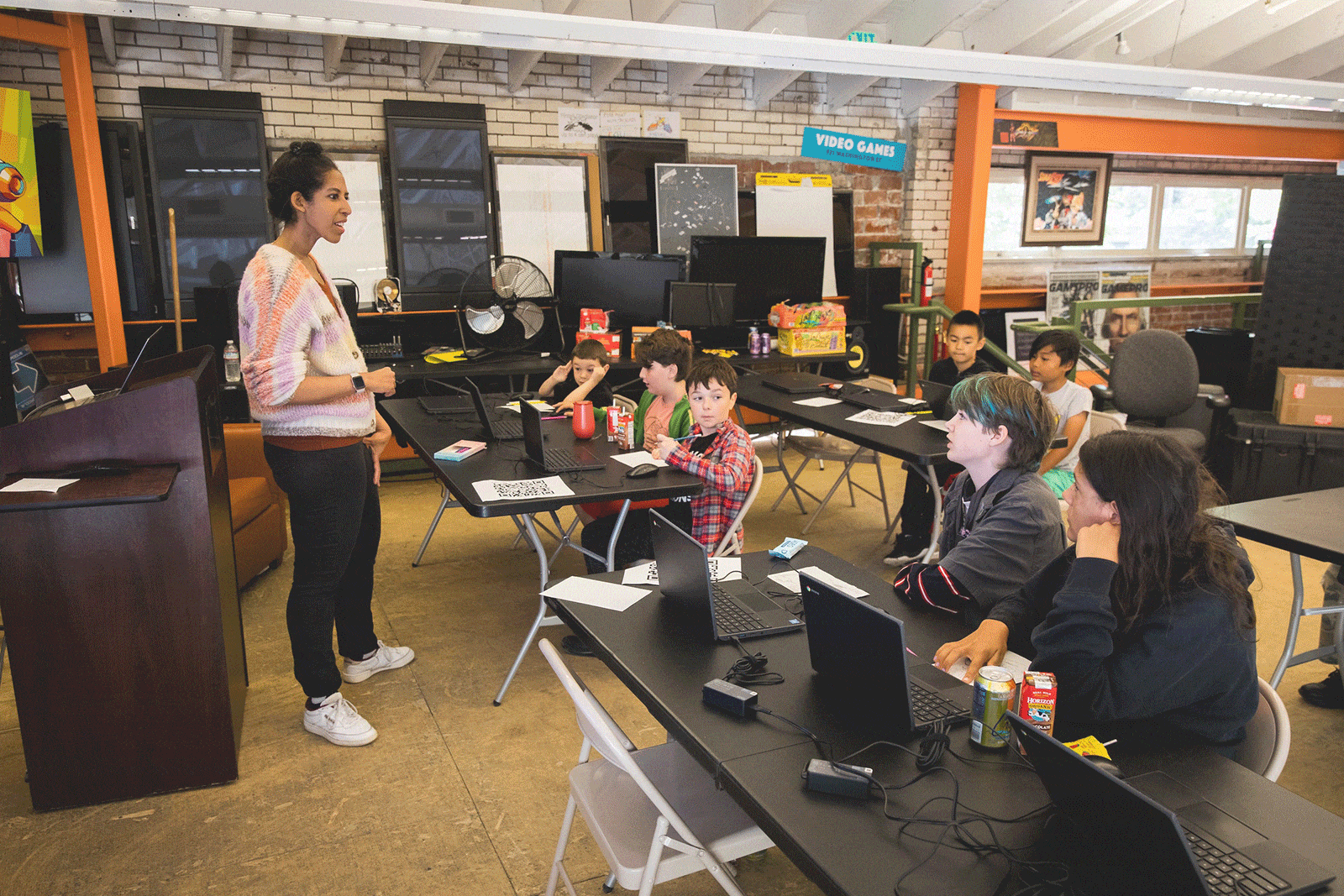
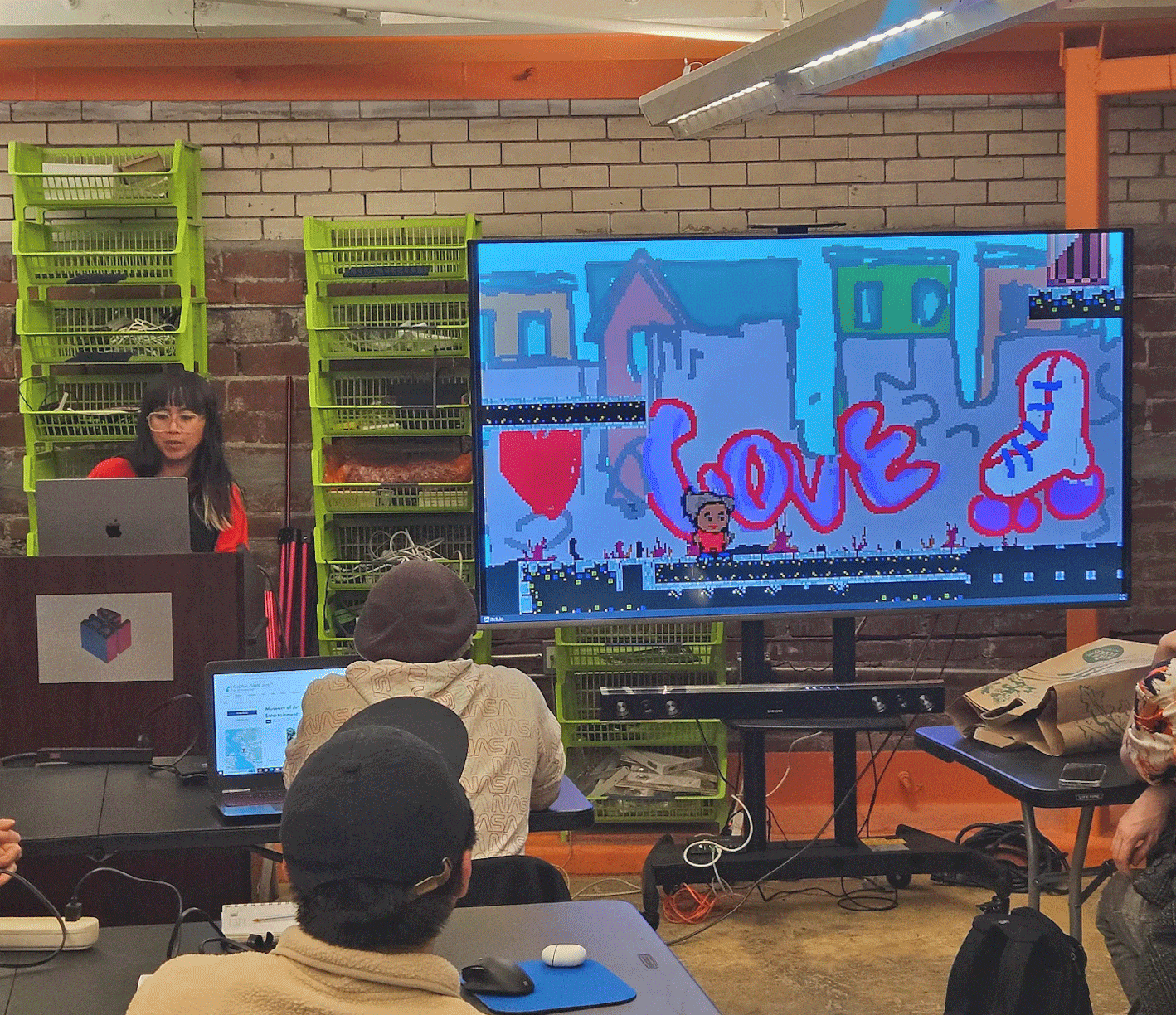
Close by in Old Oakland, near downtown, is The MADE, or the Museum of Art and Digital Entertainment, a video game museum that offers similar repair and training programs. The museum’s former executive director, Shem Nguyen, had noticed how parents came to play games alongside their kids. A software engineer at his day job, Nguyen now uses space at The MADE to teach small groups of Oakland middle schoolers how to critically reimagine game design by using refurbished laptops outfitted with open-source software and vintage games.
Refurbishment and repair allow us to consider the development and uses of technology beyond innovation or techno-solutionism, training us to value older systems, and to see reuse as essential to more sustainable and equitably distributed technologies. I came to work on repair, maintenance, and sustainability through my research on digital inheritance, which is a form of reuse. Refurbished devices make use of open-source software to avoid proprietary software updates that render hardware unusable, and passing laptops or files from one generation to the next requires a similar kind of care. Such repair is a political activity, and it contributes to larger efforts in circular design. It also fosters pleasure and play.
— Tamara Kneese
Design Pedagogy as a System of Care
We the People of the United States, in Order to form a more perfect Union, establish Justice, insure domestic Tranquility, provide for the common defence, promote the general Welfare, and secure the Blessings of Liberty to ourselves and our Posterity, do ordain and establish this Constitution for the United States of America.
The Preamble to the U.S. Constitution (adopted September 17, 1787) indirectly provides a definition of the self, both individual and collective — the people, united in mutual liberty — and an ideology of care for that self or those selves. As political ideology is legislated, i.e. translated into law, policy, ordinance, and code, such interpretations of the Preamble mutate phenomenologically, shaping spatial experience and social mobility.
Pedagogy in architecture, landscape architecture, and urbanism examines these dynamics between public and private — open and closed, fluid and static. All the while, the reproduction of caste systems and a violent geopolitical economy daily eliminate human beings’ access to the public goods outlined by the Framers. Accordingly, now may be an opportune time to trade in the dissonant compromises made by more than a century of design pedagogy for less visible architectures that can revolutionize community care.

Perhaps what we need is a fundamental shift in spatial priorities, towards the protection of those beings who are non-White, non-binary, Indigenous, immigrant, neurodivergent, disabled, and/or otherwise othered, as well as the ever-decreasing nonhuman species upon which we all depend.
I propose, in other words, a reality check that can help design to become a more explicitly sociocultural endeavor. How can we better understand the ways in which systems of design reinforce spatial and behavioral limits, or foster liberation for living beings?
I propose a critical design pedagogy in which issues of care, social justice, and democracy are not distinct from teaching and learning.
I want to insist that the goal is to emancipate through an awakening of critical consciousness.
I advocate for a design that prioritizes public health to support an inclusive public life — a design for wellness. Spatial care begins with human care, and if this is taught from a point of view of unconditional and nonbinary thinking, students can better cope with overlapping crises, develop inclusive awareness, and build holistic systems.
Health equity and community care are essential to spatial justice, and encompass more than the absence of harm.
The contemporary ideology of self-care was initiated, in part, in the 1950s by proponents of patient-centered medicine to encourage personal autonomy and improve health. This approach was adopted during the Civil Rights era by the Black Panther Party as a core component of “community care” in the fight against systemic anti-Black racism. “Wellness,” as it has been appropriated by consumerism, lacks the original movement’s holistic emphasis on revolutionary practices of community care intended specifically to preserve the health and wellbeing of Black bodies.
Health equity and community care are essential to spatial justice. Care encompasses more than the absence of harm, but comprises multiple measurements of comfort — balance and alignment in body, mind, and spirit, resulting in feelings of contentment, belonging, and, purpose. Equitable access to public space and all that is contained in the built environment can deliver justice in the form of places for reparation, repose, and healing, shaped specifically for those historically othered and exposed to dis-ease.
— Nina M. Briggs
Thermal Justice
The past few years have seen heat records broken, again and yet again. This past summer, in Delhi, temperatures reached 40° Celsius or more, for more than 40 days. A vital question emerges in the face of this climate reality: what does repair mean in the context of place-based specificities and structural inequities in cities? In the context of particular environmental histories that have brought us to this climate juncture? To put it plainly, a full account of repair must contend with the global racial capitalism and coloniality that have fundamentally transformed the planet we inhabit.
What might collective repair look like given the brutal effects of extreme heat alongside colonial legacies of violent extraction? If repair is meant to be social, through the exchange of experiential knowledge, we need to acknowledge that some experiences — mediated by gender, class, and caste — have long been, and remain, at the forefront of coping with and surviving heat and its extremities.
What might collective repair look like given the brutal effects of extreme heat alongside violent colonial legacies?
Different kinds of workers in India, for instance, will feel the relentlessness of heat differently, depending on whether or not they have access to shade, water, and ventilation, and depending also on the types of materials they use in their line of work. The construction worker who labors during peak daytime hours, the brick maker who toils amidst hot kilns, the waste sorter who must also deal with toxic fumes — all will be disproportionately harmed. According to a bulletin in Think Global Health, brutal heat can cause skin irritation, headaches, muscle spasms and cramps, miscarriages and stillbirths, heat stroke, kidney damage, and heart attacks. Some workers will lose their lives. “In May, a laborer died due to extreme heat in the north Indian state of Rajasthan while loading stones in a tractor trolley,” we learn from that same bulletin. “Another, a worker at an under-construction refinery, perished a few days before him; earlier, a 25-year-old laborer succumbed to a heat stroke in the southern Indian city of Chennai.” And, of course, the population of those who labor outdoors, and who lead lives that are unsheltered or under-sheltered from heat, maps closely onto various intersecting inequities.

The promise of infrastructure to guarantee thermal comfort is fraught. Air conditioning, increasingly more accessible and ubiquitous, is made possible through unsustainable energy consumption, which in turn depends upon deforestation and land dispossession. And still, air conditioning remains out of reach for the poorest.
How might an ethics of repair move us closer to thermal justice? To contend with heatwaves, we must turn to those on the frontlines and pay close attention to their accounts of where infrastructure, housing, and urban planning is broken, and how it can be repaired to ensure proper shelter and dignified working conditions, and more broadly, rights to the city. We need imaginative infrastructures that provide access to cooling without planetary destruction; labor regulations that protect workers, especially when the weather makes it impossible to work safely; and urban planning policies that go beyond technocratic solutions to restore our relationships with the environment.
Such an ethics of repair reminds us of our co-dependency with other humans, with non-humans, with ecosystems, and with material worlds within the city. It relies on a collaborative commitment to sustaining life in a world of extreme heat. Ultimately, we need a reparative framework that does not simply reproduce existing social hierarchies but seeks to transform them. Every strand of this entangled web matters.
— Kavita Ramakrishnan
Destruction and Repair: Architecture’s Economy
There are fourteen entries about “repair” in the latest edition of The Architect’s Handbook of Professional Practice. Half describe the architect’s altruistic role in assessing building damages caused by natural disasters, environmental forces, or war. The other half focus on financial strategies that architects can deploy for estimating repair costs and maximizing their own profit.
This twofold approach reflects a deeper and sometimes contradictory economy at the core of architectural work. Unsurprisingly, architects, educators, and scholars tend to focus intensely on the former — on material and technical solutions for improving the built world and enhancing the social value of architects — particularly when the world is at war and the economy is in a slump. Likewise, they often overlook the less benevolent aspects of practice — the fact that powerful architects and engineers form alliances with state actors and thus contribute to the very forces of destruction that bring about the need for repair. Today, many large businesses, from HDR to AECOM, rebuild war-ravaged cities, plan everyday urban infrastructures, and design reparative community centers; but they also accept commissions for ammunitions plants, military bases, and prisons.

Powerful architects form alliances with state actors and contribute to the destructive forces that bring about the need for repair.
This paradoxical economy of destruction and repair was established in the United States during the 20th century as architects began working for both the military and international aid organizations. Today’s global conflicts underscore that this economy is all too persistent and that architects continue to be complicit in acts of colonial violence. AECOM, for instance, which locates its work within “Construction, Repair, and Maintenance” sectors, has designed power plants, airports, and urban infrastructures in countries around the world, including Russia. Following Russia’s invasion of Ukraine, in 2022, the U.S. Agency for International Development, or USAID, hired (and then fired) AECOM as a “reconstruction delivery partner” to “repair” cities in Ukraine; Ukraine also hired AECOM to rebuild its power infrastructure, and the company closed its Russian office in an act of solidarity. “Our business is cyclical and vulnerable to economic downturns and client spending reductions” one public statement explained, suggesting that market volatility and financial losses could result in “lower cash proceeds.” More recently, amid Israel’s daily bombings of Palestine, AECOM began assembling a new team for repair there, too: this past summer the company posted jobs for design managers for reconstruction in the West Bank and Gaza.
This architectural economy fits all too comfortably within the framework of what Naomi Klein describes as “disaster capitalism”: on the one hand, architects and engineers line their pockets through lucrative commissions; on the other, they claim to “save” or “repair” damaged buildings, cities, communities. In fact, disaster capitalism has become more than a playbook for architects and administrators; it’s now written into the profession’s handbook as “standard” practice.
— Aaron Cayer
Earthseed Futura: Reimagining, Regeneration, and Repair
All that you touch
You Change.
All that you Change
Changes you.
The only lasting truth
Is Change.
— Octavia Butler, Parable of the Sower
Octavia Butler’s dystopian science fiction novel, Parable of the Sower, presents a near-future vision of the United States, which has collapsed due to climate change, economic hardship, and social chaos. Butler’s protagonist is a Black woman named Lauren who develops a new belief system called Earthseed. Central to Earthseed is the idea that “God is Change,” which emphasizes adaptability, resilience, and the potential for humanity to shape its destiny by embracing uncertainty.
We need to embrace a Just Transition, in which regenerative design is used to renew ecosystems, communities, and economies
Butler’s premise is not far from our current circumstances and, at this point, the need for a new framework for change is critical. As our global community grapples with environmental degradation and social inequities, we must question why we continue to use traditional design and planning methods that are falling short in addressing the complex challenges we face — and, in fact, exacerbating environmental injustices. The change we need to embrace is a Just Transition, in which regenerative design is used to restore and renew ecosystems, communities, and economies. This ethos of repair and care must move beyond sustainability (maintaining current conditions) to regeneration (improving conditions), thus healing the damage done by past exploitation and environmental degradation.
For the past three years, I have taught an intersectional and transdisciplinary design studio entitled “Just Urban Ecologies,” as an adjunct professor at Syracuse University, the University of Virginia, and most recently as an assistant professor at the Spitzer School of Architecture at the City College of New York. At Spitzer, the studio addressed multiple crises simultaneously — climate change, extreme heat, cultural erasure sparked by gentrification, and food insecurity in the Little Caribbean community in the Flatbush neighborhood of central Brooklyn. The intention was to center the principles of regenerative design and afro-indigenous traditions of land stewardship, in order to transform spatial narratives about the Flatbush African Burial Ground — a vacant and newly landmarked site in the heart of the Little Caribbean. The studio asked how design can repair relationships between people and the natural environment, via the reimagining of public open spaces.
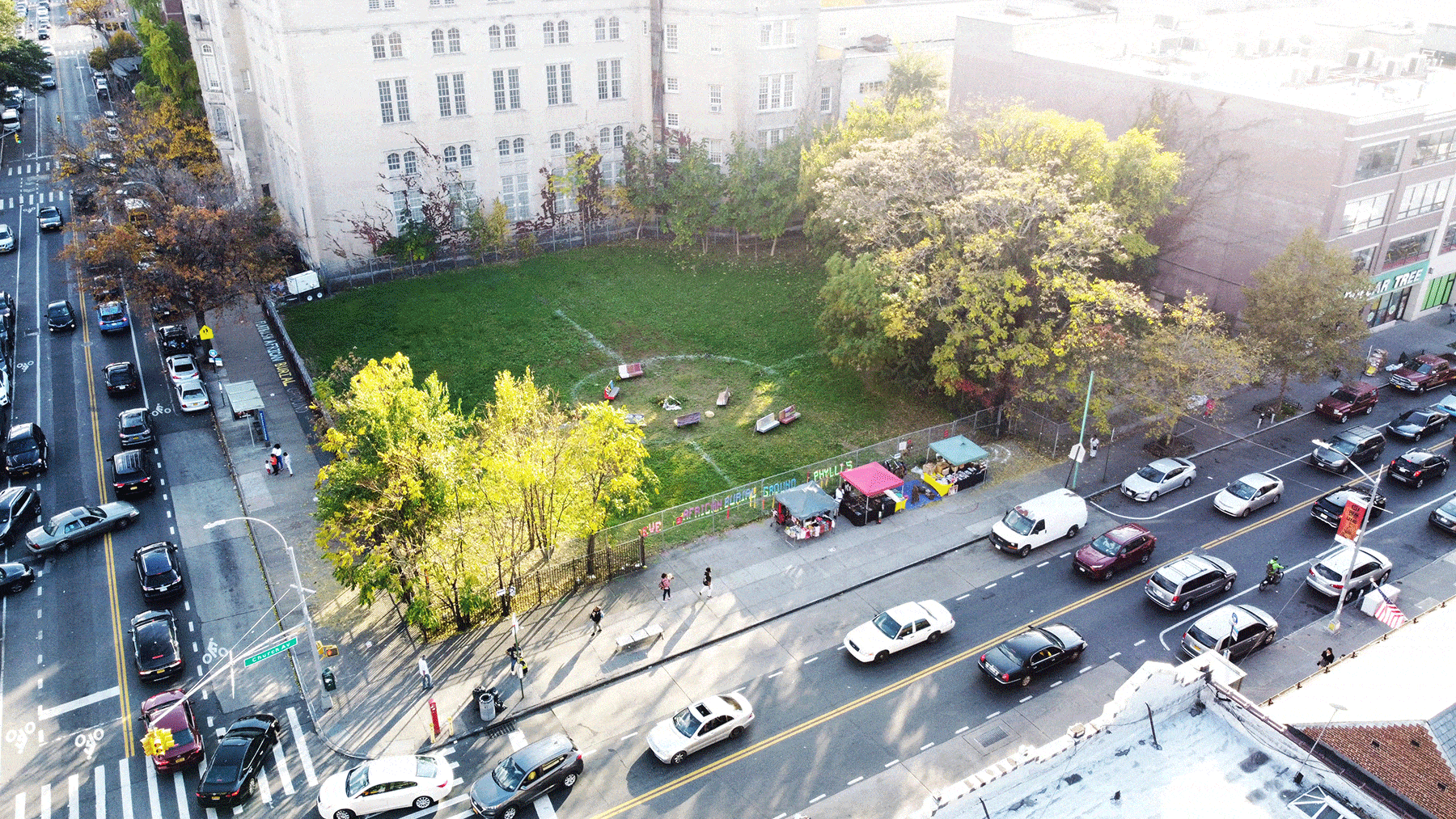
The ethos of repair embedded in regenerative design acknowledges the damage inflicted by human activities on natural and social systems. It calls for active measures to restore ecosystems, rehabilitate degraded landscapes, and heal fractured communities. Over the course of the studio, students engaged the community, collaborated on teams, and used collage, sculpture, and other forms of visual narrative to analyze and reimagine the Flatbush African Burial Ground and adjacent streetscapes. The studio encouraged students to think about new uses for streets and open spaces in a potentially car-free future, with corresponding impacts on transportation, energy generation, economic development, food production, and public health — all as aspects of a regenerative neighborhood ecosystem.
Regenerative design practice extends beyond environmental concerns to encompass social well-being, emphasizing inclusivity, equity, and community engagement. It recognizes that healthy ecosystems are intertwined with healthy communities, and advocates for the equitable distribution of resources and opportunities. This is particularly relevant in addressing environmental justice issues, where marginalized communities often bear the brunt of environmental degradation. By prioritizing these communities in regeneration efforts, we can work toward rectifying historical injustices and creating a more just society as the lasting truth of change.
— Ifeoma Ebo
Not Beyond Repair
In 1845, a year of prolonged agricultural crises in Germany, the year in which the Great Famine began in Ireland, the year of the First Sikh War between Punjab and the British East India Company, Karl Marx formulated his theses on Ludwig Feuerbach. The eleventh thesis reads: “Philosophers have only interpreted the world in various ways; what matters is to change it.” In 2024, with more than 110 armed conflicts currently active, with one million species at risk of extinction, it is important to rewrite this thesis: “Philosophers have only interpreted the world; what matters is to repair it.” To repair the world differently, we need to understand how capitalism has broken relations of repair with the world.
Repair is a way of relating to broken relations themselves — relations with things that are not working, environments that are depleted, lives that have been ruined.
If capitalism has taught people one thing, it is a specific understanding of made things’ lifespans: sell-by dates, use-by dates, and, I want to add here, repair-by dates. To be “beyond repair” means that this date has passed; fixing or reconstituting has become impossible, futile. The capitalist imperative is to relate to the world in such a way that being beyond repair marks the end of useful life for things and environments — and this means living in a world that cannot be saved. Things are thrown away; environments are abandoned. Care is no longer required. “Beyond repair” is a sentence of death. Beyond repair neatly articulates capitalism’s imperative to incorporate death-making into economic relations, which in turn penetrate deep into social and ecological relations. This leads to a belief that social and ecological relations are also beyond repair; that it does not matter to repair them; that capitalism will only usurp any energies expended toward repair.
But social and ecological relations are not beyond repair; it does matter to repair them; and reparative energies can, I want to argue, be effective.
Repair is not understood here as quick fix, techno-fix, or climate fix. This repair, rather, is a way of relating to broken relations themselves — relations with all the things on the planet that are not working, all its environments that are depleted, all its lives that have been ruined. Such repair insists that these breakages can be addressed. Repair therefore is a process, not an end. It is not about putting things back in order, as they are not (at all) in good order now. Much rather, this repair must aim to mend the necro-political consequences of capitalist pedagogies.
What is urgently needed is to work against the death-making understanding of selling, using, and throwing away or recklessly abandoning. In order to repair the liveliness of our world, it is important to learn to imagine that not only does repair matter: it is possible.
— Elke Krasny
Uncareful repair of Scandinavia’s segregated cities
Urban planners are very good, given the appropriate resources and legal framework, at solving problems. They are not always very good at defining what the most import problem to solve might be, and often terrible when it comes to questioning a problem already defined by someone else. If the problem is how to churn out as many little boxes as possible, there will be lots of little boxes on the hillside.
When the technocratic expertise of planners is at work, in other words, it is important to pay close attention to which problems are formulated, and in which ways, in order to frame what is “broken.”
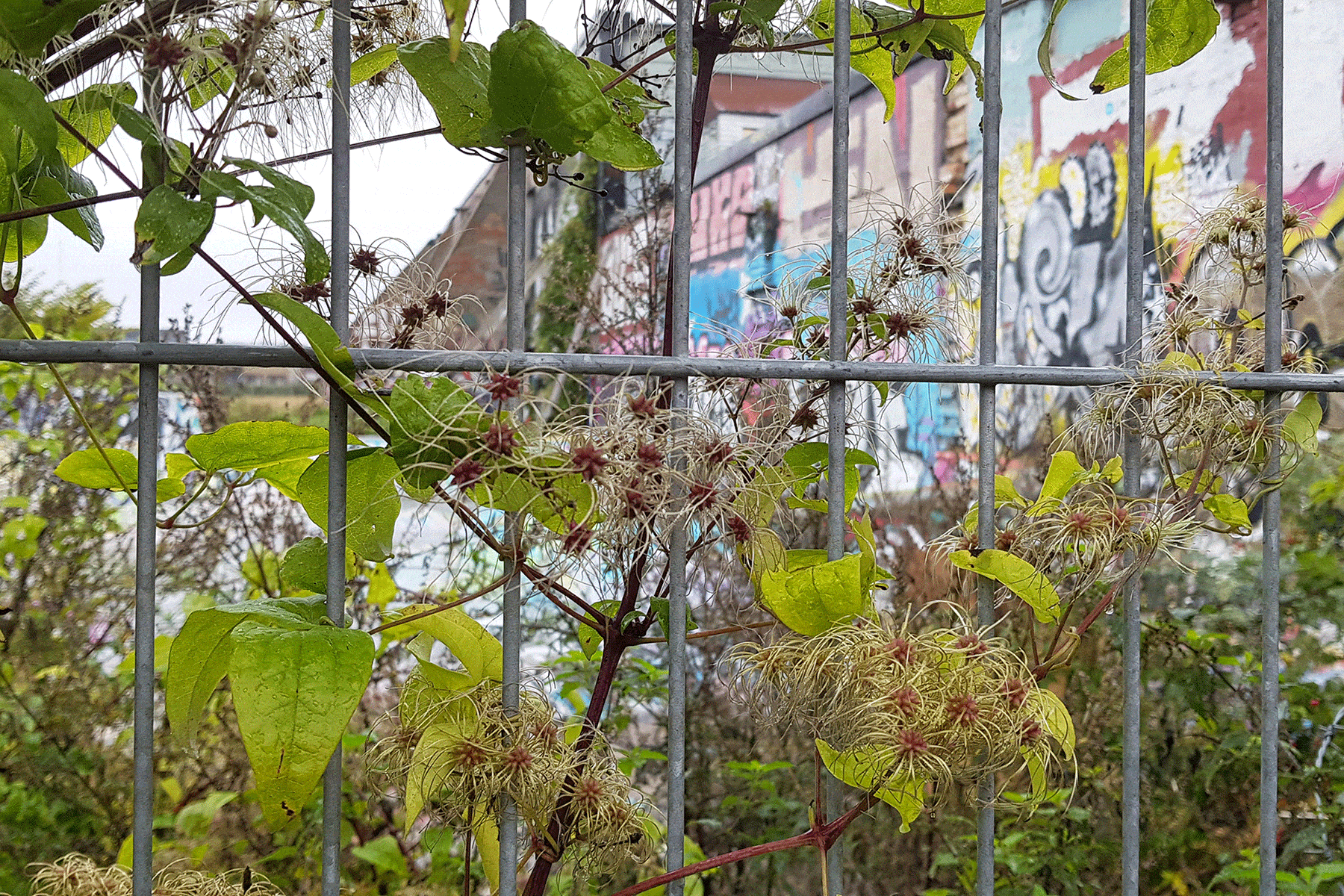
Recently, in key Scandinavian planning documents, the logic of care and repair has increasingly described interstitial spaces as problems to be “fixed.” The argument goes like this: such gaps in the built fabric indicate disuse, and unused places are uninviting. Uninviting scenes create everyday barriers, and everyday barriers separate communities. Thus, filling in-between spaces has, at least in the Scandinavian context, emerged as a prized method for repairing urban landscapes marred by segregation. Plans are churned out at a mad pace, systematically obliterating what is understood as empty land.
In Sweden, the logic of care and repair too often leads to urban redevelopment that maintains racialized inequities.
This planned eradication is invariably framed as a repair, a healing of urban wounds and a caring for marginalized groups. Is it? I’ve yet to see convincing empirical evidence. But even if this approach has contributed to repairing urban landscapes, the core problem remains that the framing ignores structural dimensions of racialized inequity, and at the same time manages to do harm to many whom it seeks to aid. This approach does not see segregated housing, schools, workplaces, or leisure spaces as problems that require planning interventions. The problems to be fixed instead become the wide green wedges around these places or the unclear functions of abandoned industrial estates nearby. The postindustrial Sorgenfri area in the Swedish city of Malmö is an almost too-perfect example of the interstitial itself rendered as a problem. Rather than seeing the deprived housing areas beyond this disused industrial estate as in need of more public services, a research team I’ve been part of shows how planners came to view Sorgenfri — an interstitial space now home to urban wilderness, small businesses, and collective art spaces — as itself a patch of wasteland supposedly contributing to segregation, and thus needing to be filled in by redevelopment.
In other words, while such in-between spaces are discursively constructed as “empty,” they are often spatial resources for, and at times co-designed by, the communities that planners claim to help. And so the solution to the problem becomes a way in which racialized inequalities are maintained, and even deepened, by dispossessing constituents of a particular kind of public place, without ever confronting the real issues at stake.
If filling up the city’s in-betweens constitutes repair, then it is an authoritarian and uncaring version of it. Such uncareful repair reveals that we accept far too easily mistaken ideas about what is broken in our cities.
— Johan Pries
Repair as a Paradigm for Design and Community Healing
Reparative spatial design, like any good design, necessitates a thorough assessment of the project site through participatory engagement. This involves examining layers of historical and social context, including the impacts of colonialism. A collaborative approach, in which the designer works with community stakeholders to navigate ambiguous pasts and respond to emerging questions on contested grounds, is therefore crucial.
My work emphasizes opportunities for healing. Repair, as a healing act, explores what individuals need in order to feel rooted in their spaces, and so storytelling and reflection are integral to my practice, helping to uncover migratory patterns that connect human identity with place. In the American South, for example, I have examined sites where diasporic journeys — and memories about these journeys passed down through generations — intersect with and help to create complex networks of commercial activity, environmental change, and cultural influence.
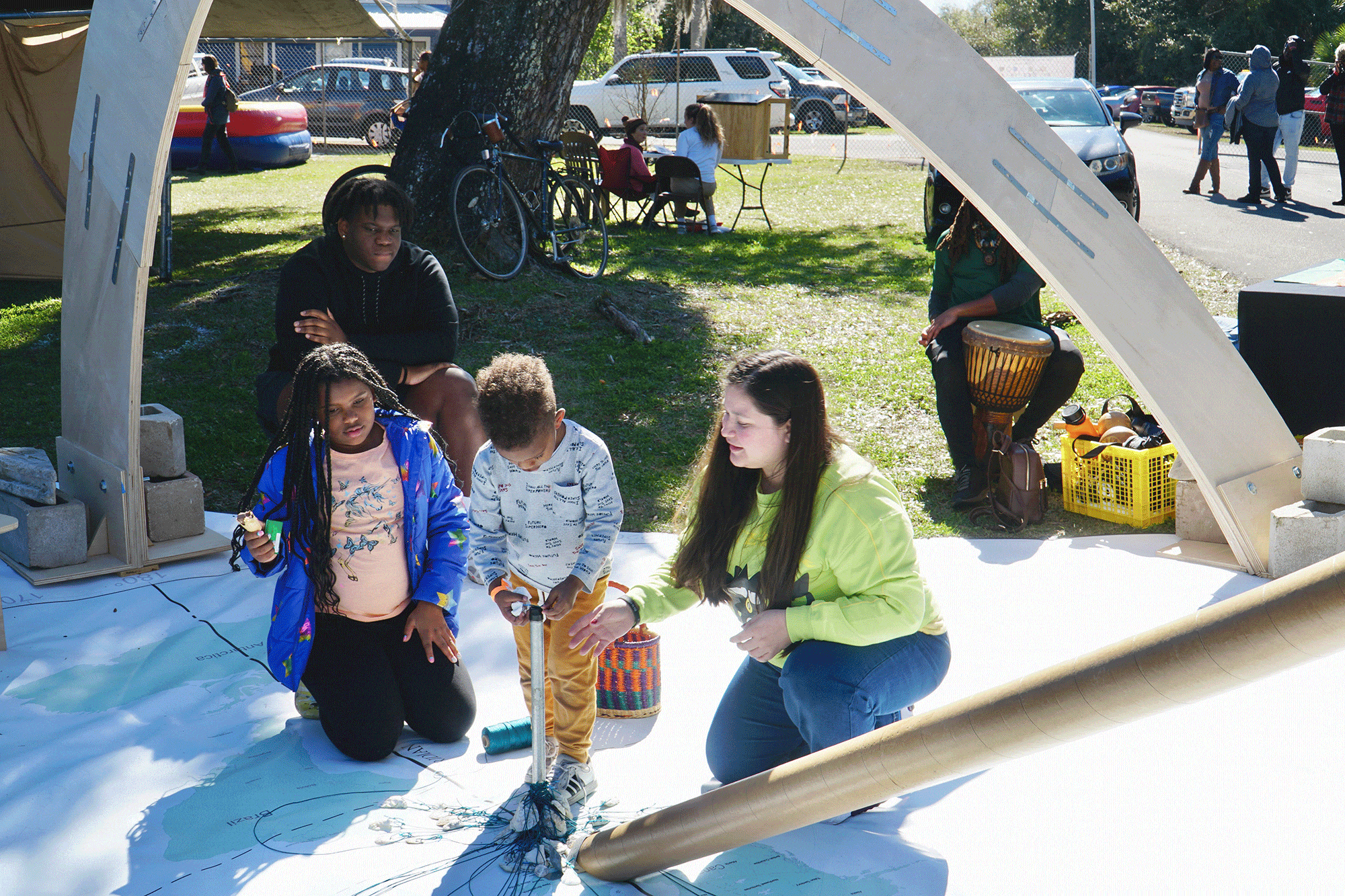
One project in Apalachicola, a rural Black community in North Florida, invites participants to define their understandings of home, mapping their own travels and movements alongside those of family members and ancestors. For an African American heritage festival in this community in 2023, I designed the Meridian Dome, an interactive installation featuring a large equinoctial sundial. Timekeeping undertaken as a collective act helps us to understand the unique nature of a specific location, and this, in turn, fosters a sense of shared history and identity, both of which are crucial for the repair of community bonds.
Rather than being a goal to achieve, repair can function as a design tool.
An important aspect of this healing process, for me, is this involvement with solar time, using meridians of longitude and lines of latitude to explore how celestial influences have guided human settlement and timekeeping. Communities like Apalachicola are built on past generations who navigated using celestial bodies as they sought to establish permanence and community, even in spaces marked by colonialism and migration. By convening conversations around these historical phenomena, we can better understand our present-day social environment, helping communities to build their own archives and narratives and fostering a deeper sense of identity and continuity.
Rather than being a goal to achieve, repair can function as a design tool that fosters dialogue about participants’ futures, both in the spaces they now occupy and in those they claim in their narratives of home. This ethos of repair challenges architecture’s traditional focus on novelty and innovation, urging the design disciplines to shift toward practices of care and maintenance.
— Kyle Spence
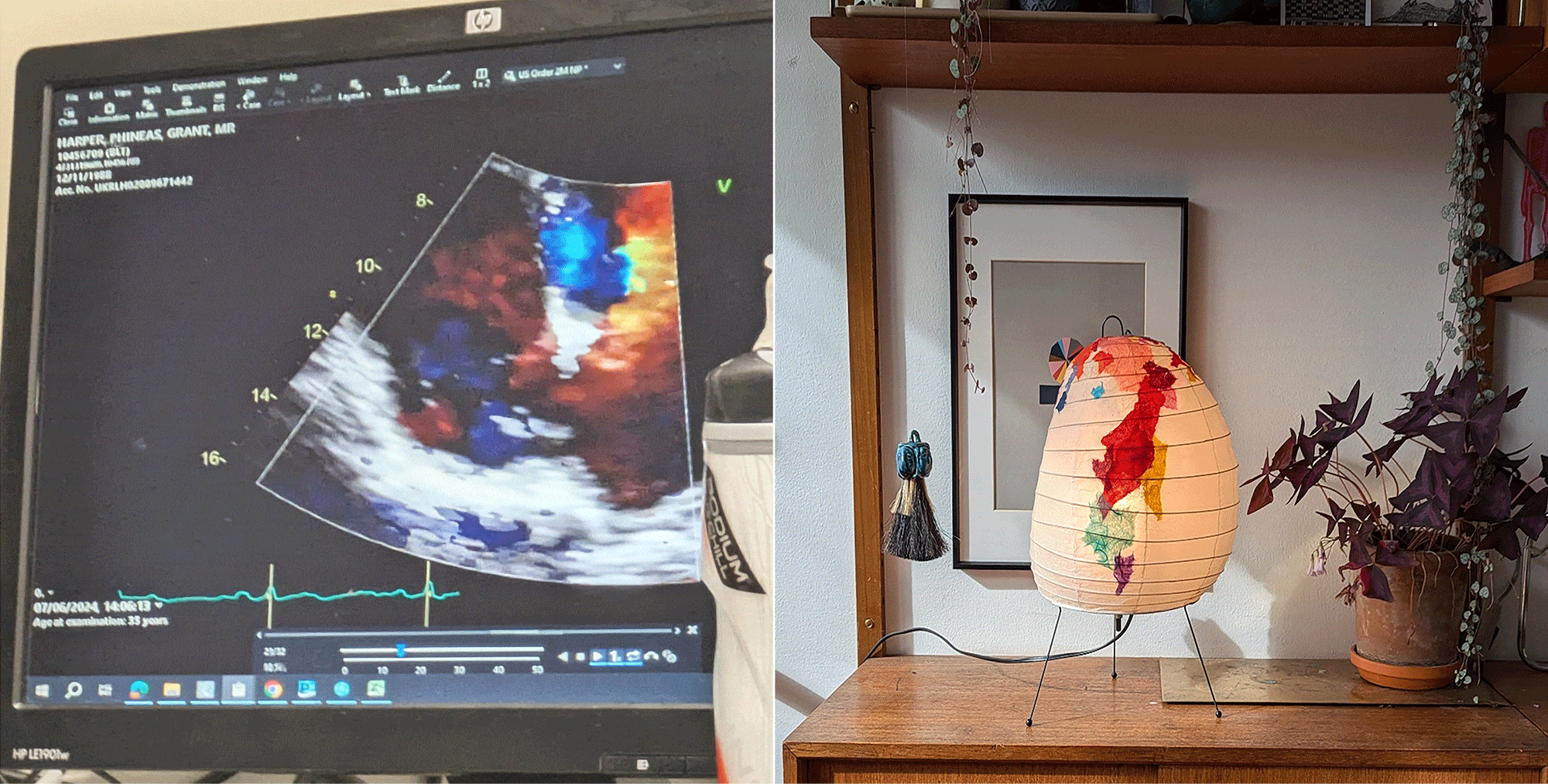
I have two holes in my heart. One is physical: a recently discovered defect from childhood which the doctors are hoping to patch with a tiny umbrella-like plug threaded down a vein and opened in the center of my chest. Until they fix it, at any moment a blood clot could slip through the hole and be pumped to my brain, where it would cause a stroke, as one did just a few weeks ago. But the other hole is much worse.
Maintenance should not be a dirty word, but a sign of healthy relationships between people and places.
Heartbreak has no medical cure. There isn’t a clever procedure available on the NHS to bung the wound left by a relationship that ended long before you were ready for it to do so. While medication, counselling, exercise, and the love of good friends can stave off some of the feelings of horror and panic, a heart, broken by bereavement or otherwise, may never fully heal. And we shouldn’t expect it to. The mechanistic idea that humans are squishy androids who can be returned to “full working order” by tightening the right screw is seductive but toxic nonsense. Tempting as it is to believe that despondent feelings can be quickly shaken off by hot sex with hot strangers or a long walk in nature, I know the only real repair for my shattered heart will be a slow and unsteady process taking as long as it takes.
Repair is like that in architecture too — an ongoing job. Once every 20 years, over 150 residents of Shirakawa-go in Japan scale the roofs of their historic buildings to re-thatch the steep pitches. In Mali, residents of Djenne climb the walls of their Great Mosque to reapply a thick mud render after annual rains. In London, the members of my gardening club weed, prune, and plant our housing estate’s modest greenery. Caring for the urban landscape can never be completed.
Yet often, in the construction industry, I encounter a weird belief that repairing things is bad. Many believe that a careful designer is one who specifies super tough high-carbon materials to avoid the need for maintenance. This is the exact opposite of being careful. To be full of care should mean being willing to engage in upkeep, restoring, and cultivating, rather than seeking to reduce our caring obligations from the outset.
The care that goes into maintenance should not be a dirty word, but a sign of healthy relationships between people and places. Think of any other kind of relationship. Is a good romance once in which you shag continuously for three weeks and then don’t hold hands for three years? As a parent, do you check on your baby in the morning, then leave them alone for the rest of the day? A healthy relationship is a constant process of checking in, of caring, of touching, of communicating.
Repair can be slow, tedious, and rife with setbacks, but true acts of care cannot be rushed. Care takes time.
— Phineas Harper
Saying No with Nonsolutions
Early in my architectural practice, I published a short statement: “‘Yes’ to the design of public buildings and cultural, educational and infrastructure facilities. ‘No’ to chauvinist, racist or discriminating architecture, to exploitative project proposals, sub-urbanizing single-family homes or speculation ventures.” Back then, in 2009, my decision to refrain from designing detached new constructions on open land irritated some colleagues; today, the statement feels less controversial. Indeed, it feels timely to sharpen the meaning of saying “No.”
At Kassel University, we are redefining the official denomination “Building Economy and Project Development.” We are interested in “Rebuilding,” in “Re-Economies” — i.e. diverse, solidarity-based, and feminist economies — and in Project Development as radically democratic, as detached as possible from growth and free-market speculation. We work on projects of reuse, repair, re-collectivizing, and on strategies towards more just redistribution of existing built space.
We should be co-creating a new aesthetic, without extractivism at its core.
In practice and academia, concepts of repair run against two mainstream arguments. First, architects warn about a loss of aesthetic form. Second, there is anxiety about the future of architecture, with critics seeing in ecological repair an ethics of abstinence, of refraining from any building. To this we reply that not to build anew, but rather to reuse and to rebuild, demands increased rather than diminished creativity and ambition, as we need to de-learn and re-learn how to practice such design. What aesthetic norm is endangered, if not an aesthetic of newness, of abundant resources and their consumption — a western aesthetic, which has always depended on clients’ social realities, all too frequently based in political and economic domination? We should be co-creating a new aesthetic, without extractivism at its core.

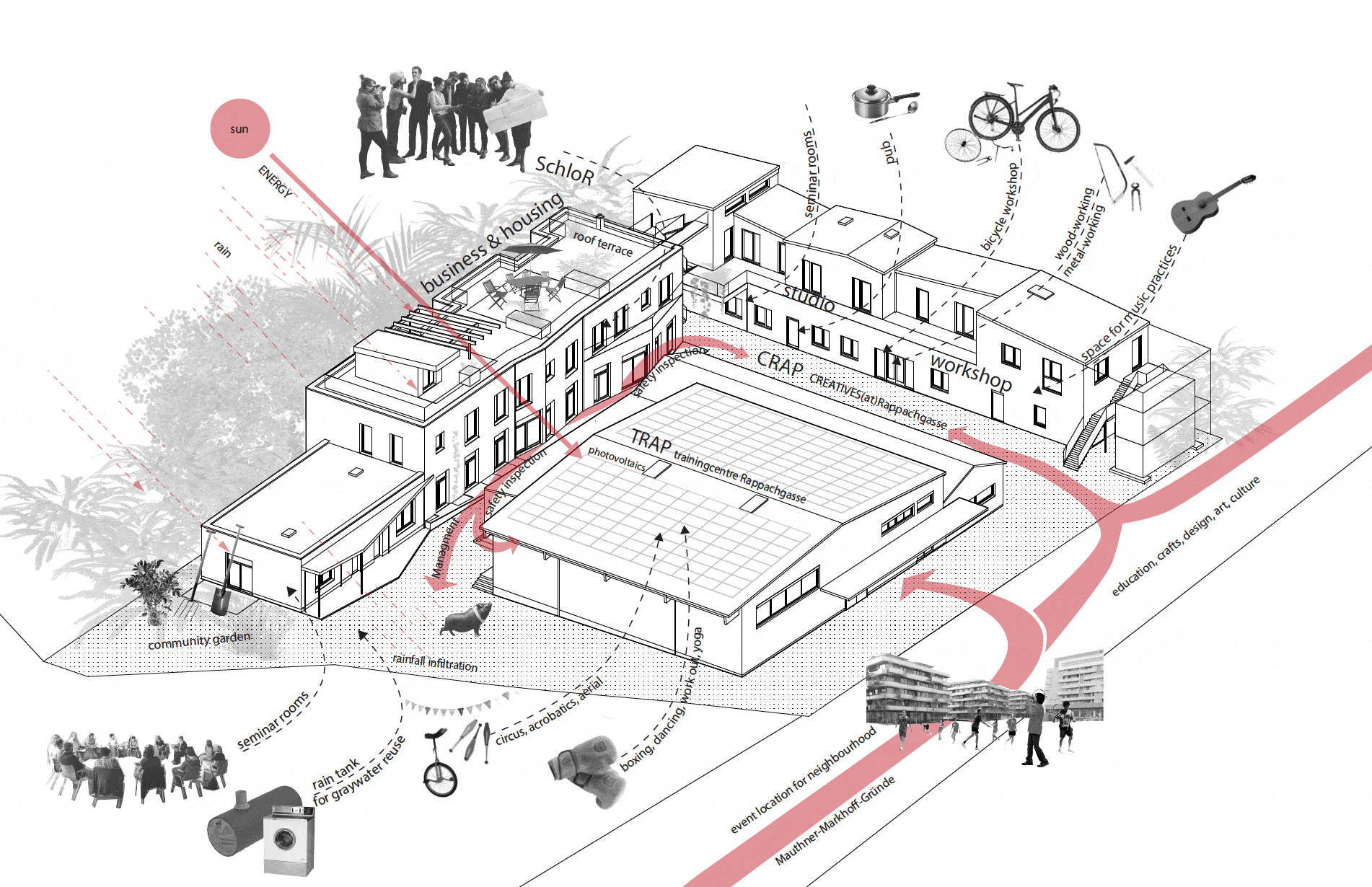
Does the real problem not lie in architectural solutionism? With practice under scrutiny, familiar technological “solutions” reappear — which we must oppose if we are pursuing paradigm change rather than “more of the same, but with a new label.” Architectural solutionism fosters the same old competitive approach, with uncritical design strategies of sufficiency in housing (especially when it comes to low-cost housing) resembling the existential minimum discourse of the 1920s, so aptly critiqued in 1970 by Giancarlo de Carlo for favoring “how?” over “why?” and “for whom?” Architecture’s techno-fixes are similar to e-cars: Plus-Energy-Houses, and new technologies and materials, and their promise that we can continue to build disregarding postcolonial land politics, questions of property, etc.
So, repair requires saying “No!” as a mark of systemic opposition. This “No!” implies an explicit choice not to take on certain jobs and clients. “No!” extends the question of “what?” to an urgently needed “what (no more)”? To say “No” in this confrontational manner, however, reciprocally opens the practitioner up to say “Yes.”
Architects need to become activists for rent control and democratically changed property laws.
“Yes!” to alliances with critical transformative movements; to pairing architecture with NGOs and anticapitalist degrowth endeavors. “Yes!” to co-creation and co-resistance. I advocate a “Yes!” to critical retrieval of lost modernist futures, e.g. communal and socialist housing in Frankfurt and Vienna; or social ownership in the former Yugoslavia (in its egalitarianism, rather than its aesthetics and logics of tabula rasa, paternalism, and conformism). We need to be explicit about the destructive logic of private property: e.g. homelessness coexists with vacancy. Vacancies, and the deterioration and demolition of buildings, often relate to the rights of owners to misuse, or even to destroy their properties. We need to protest this — with repairing the world in mind.
To say “No!” and “Yes!” at the same time requires the re-pairing of passivity and activity, or the political radicalism of “active passivity.” A nonsolutional way of thinking answers the urge for solutions while embedding a larger critique. On our own, architects won’t succeed in changing the broader conditions in which we practice. Hence, we need to become activists for democratically changed property laws, rent control, ending demolition and expropriation. While we advocate for these changes, we should repair as much as we can, conceiving of our repair as “non-reformist reforms,” as nonsolutions. We acknowledge that problems do exist and solutions are needed. But we remain faithful to conflicted yet transformative processes.
— Gabu Heindl

If you would like to comment on this article, or anything else on Places Journal, visit our Facebook page or send us a message on Twitter.