
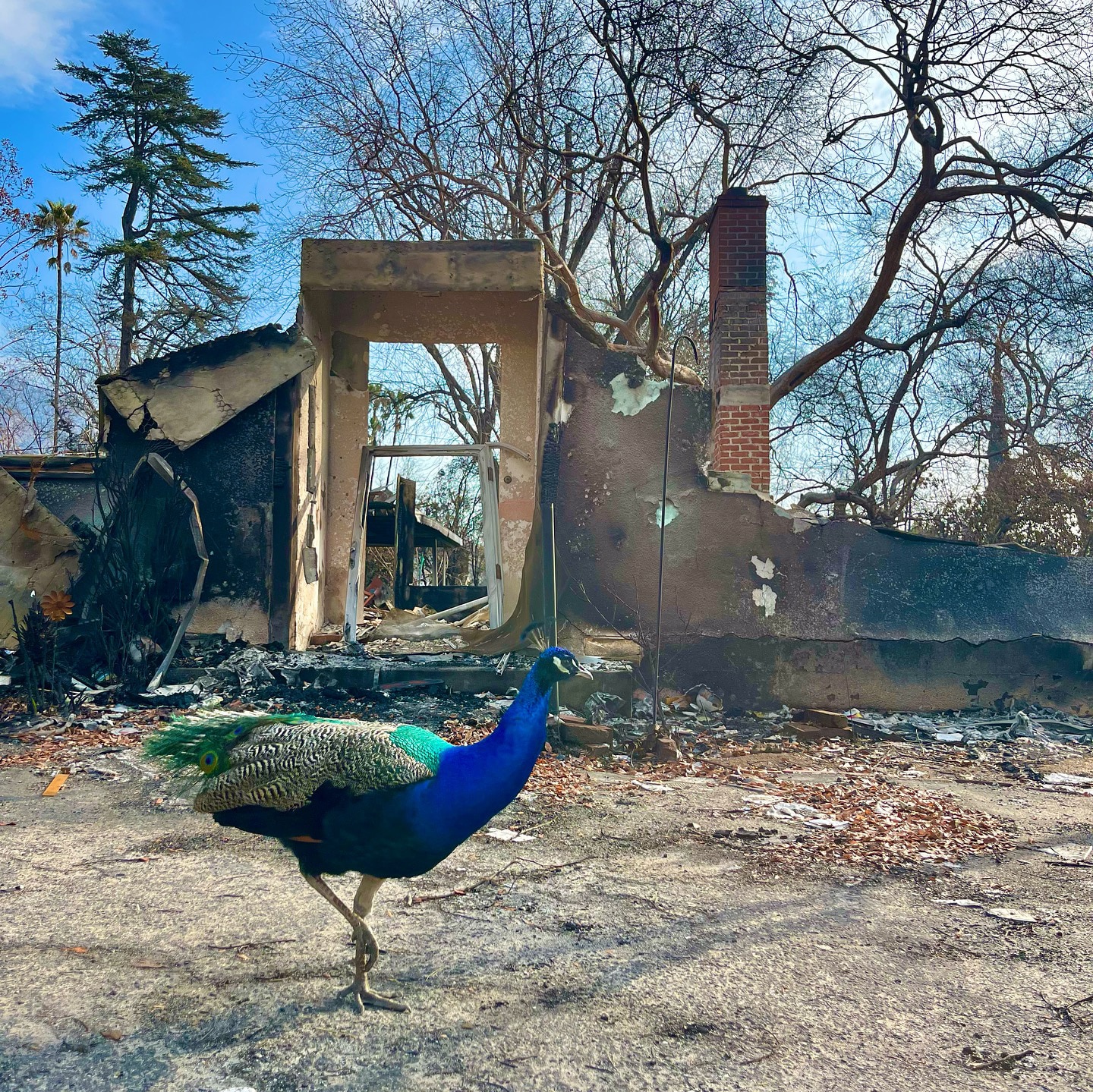
The Burning Forest
Myriam Gurba
The first time I went to visit Octavia Butler’s grave, I had a hard time finding it. A cemetery gardener riding a lawnmower noticed my meandering and graciously asked if I needed help finding someone. After telling him the location of the author’s elusive tomb — Eagles View, Lot 4517, Grave 6 — he escorted me to the site and said, “If you wait just a few minutes, I’ll take care of the overgrown grass and clean it off.”
To escape the afternoon sun, I stood in the cool shade of a tall crypt while the gardener tidied. When he finished, he waved goodbye and rode away on his lawnmower, rumbling in the direction of a sun-dappled mausoleum. At last alone with Butler, I sat cross-legged beside her resting place, shut my eyes, and prayed. I thanked her for her literary work and for having lived a life that modeled tenacity and integrity. I asked that she bless my work, and placed coins and candies on her headstone.
Octavia Butler was raised by Altadena and Pasadena, and her continued presence is one reason that I choose to make my home here.
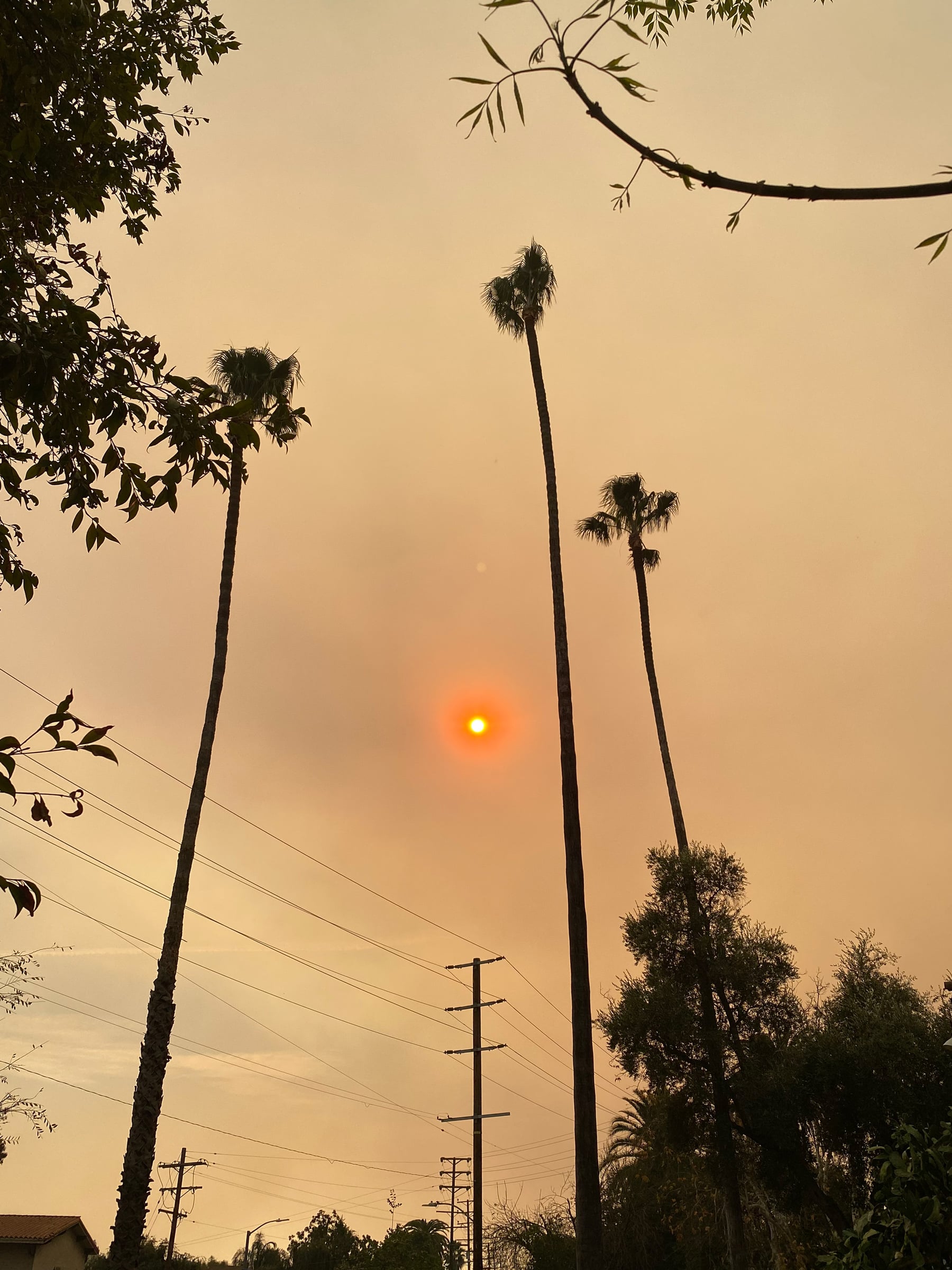
Butler was raised by Altadena and Pasadena, and her continued presence is one of the reasons that I choose to make my home here. Her memory, bones, and spirit enrich the land, creating an atmosphere that recasts the impossible as probable.
Since that afternoon visit, I’ve gone to Butler’s grave several more times. During my most recent trip to the Mountain View Cemetery, I did without an escort; my feet carried me directly to the Afrofuturist. It was the Day of the Dead, and because Butler is someone I esteem as a literary ancestor, I brought her traditional offerings, marigolds and tequila. After bathing her grave with the Mexican libation, I arranged the bright orange flowers around her headstone. As usual, I thanked her.
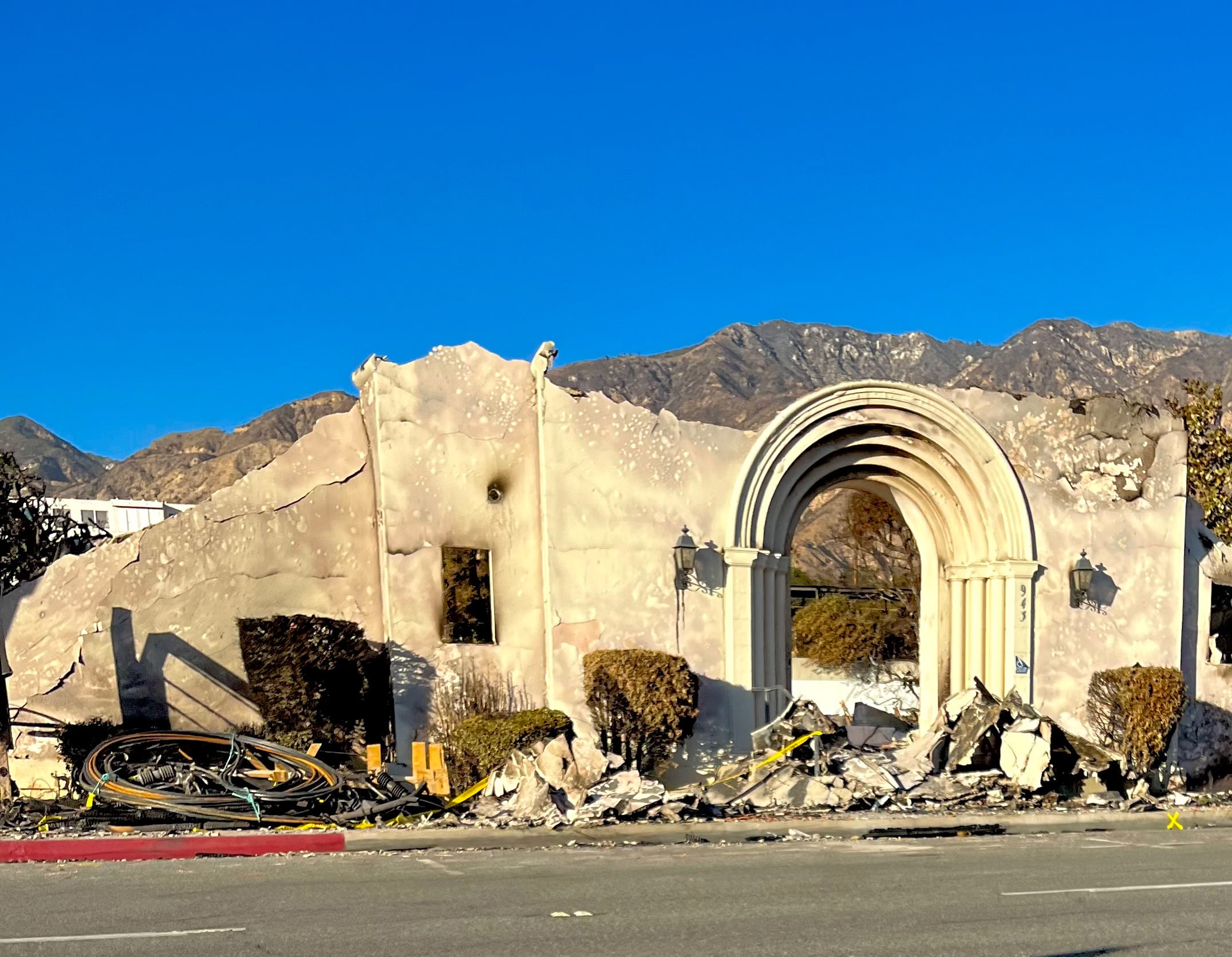
Beyond the burned façade of Altadena Community Church rise the San Gabriel Mountains.

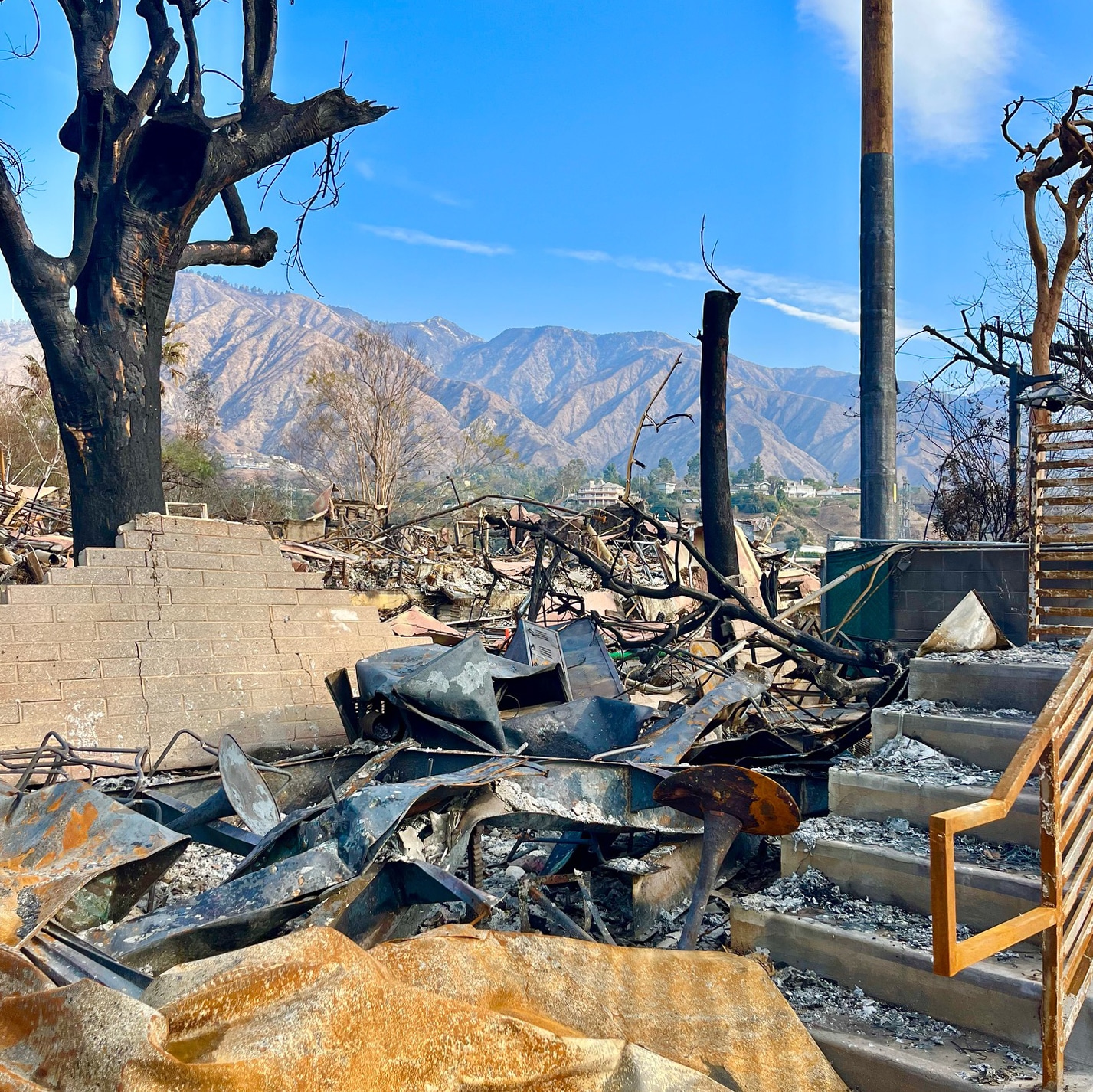
Some stairs in a burned house now lead nowhere.
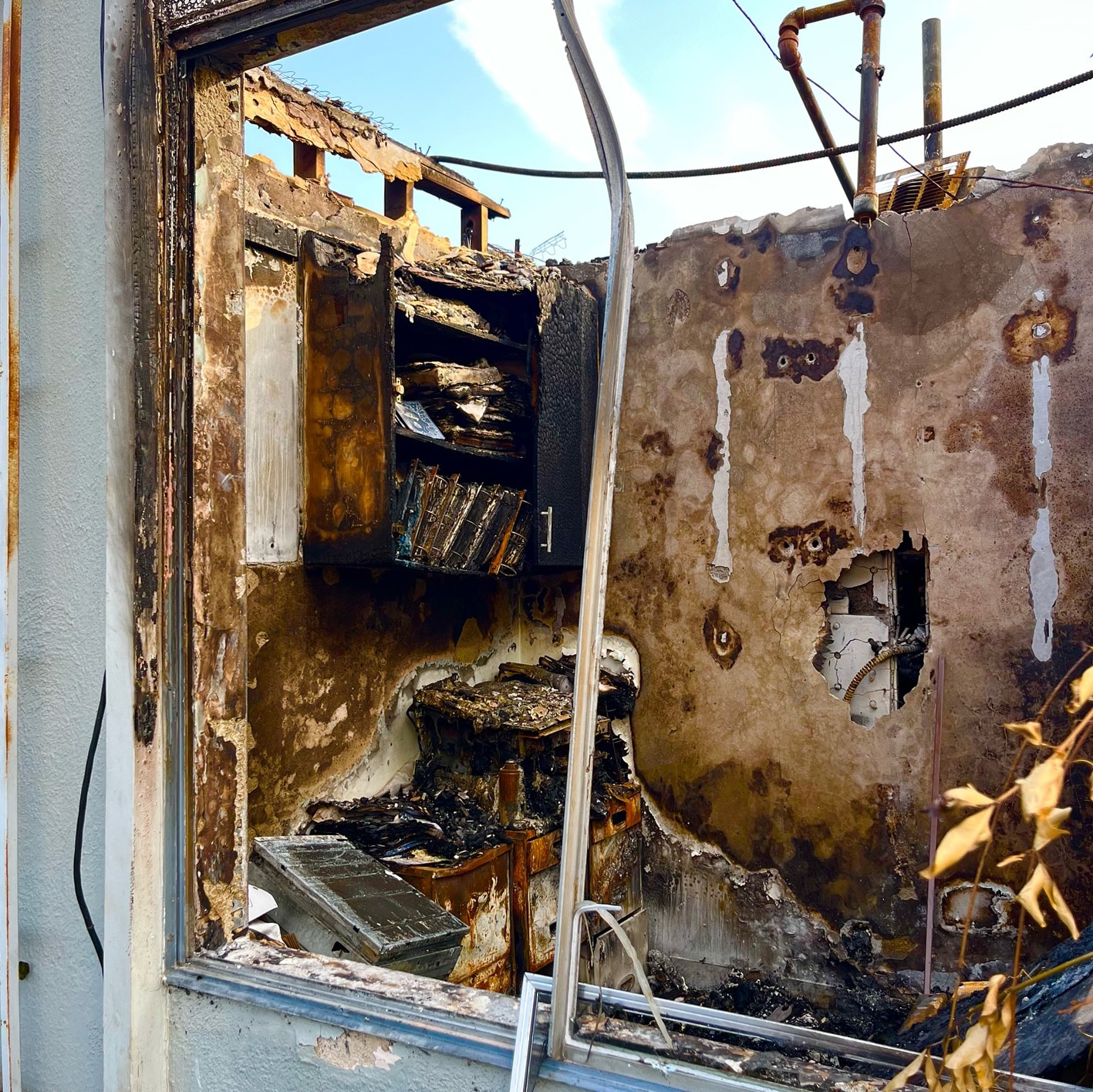
The doors of a charred cabinet hang open, revealing medical records.
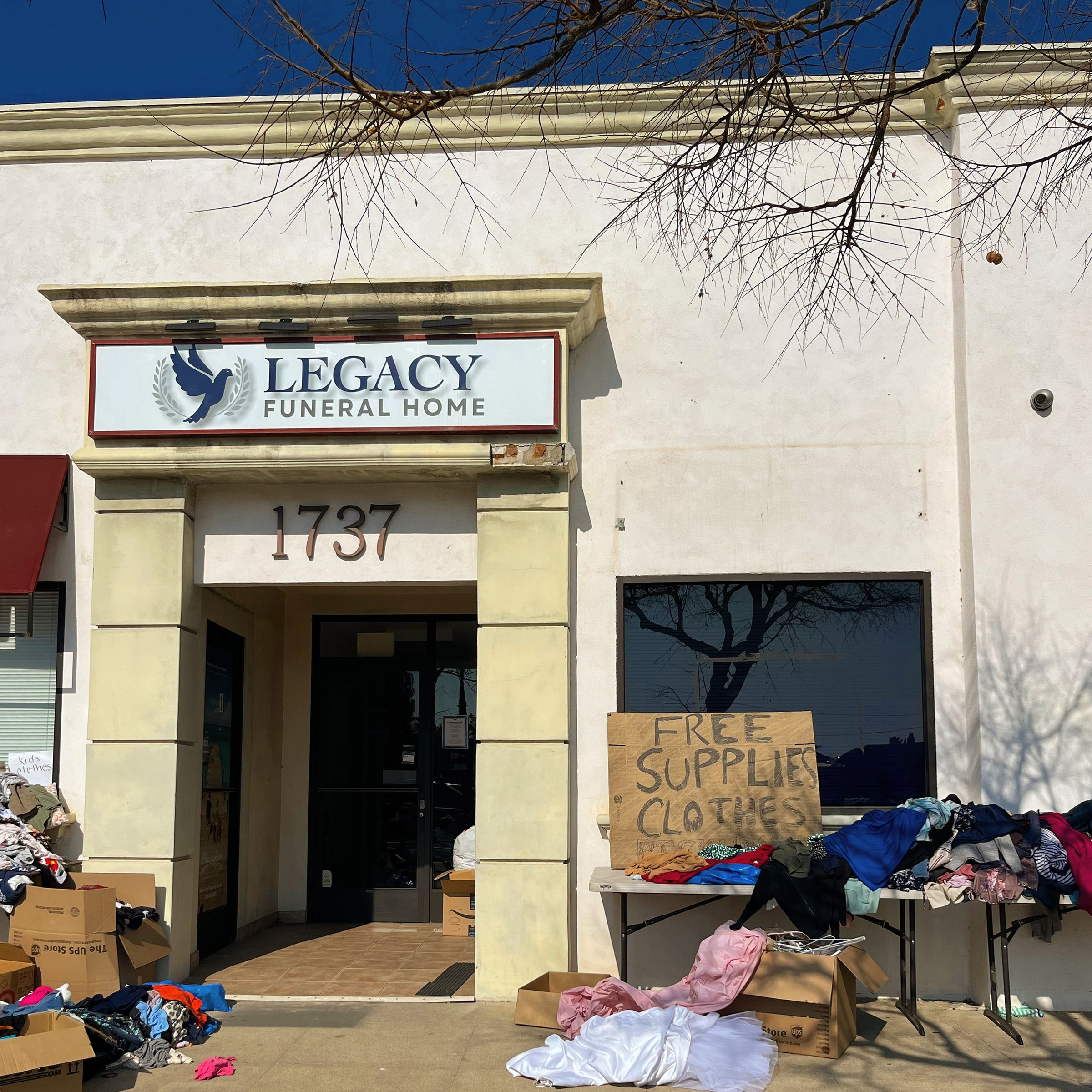
Donated clothes form messy piles in front of a funeral home on Washington Boulevard.
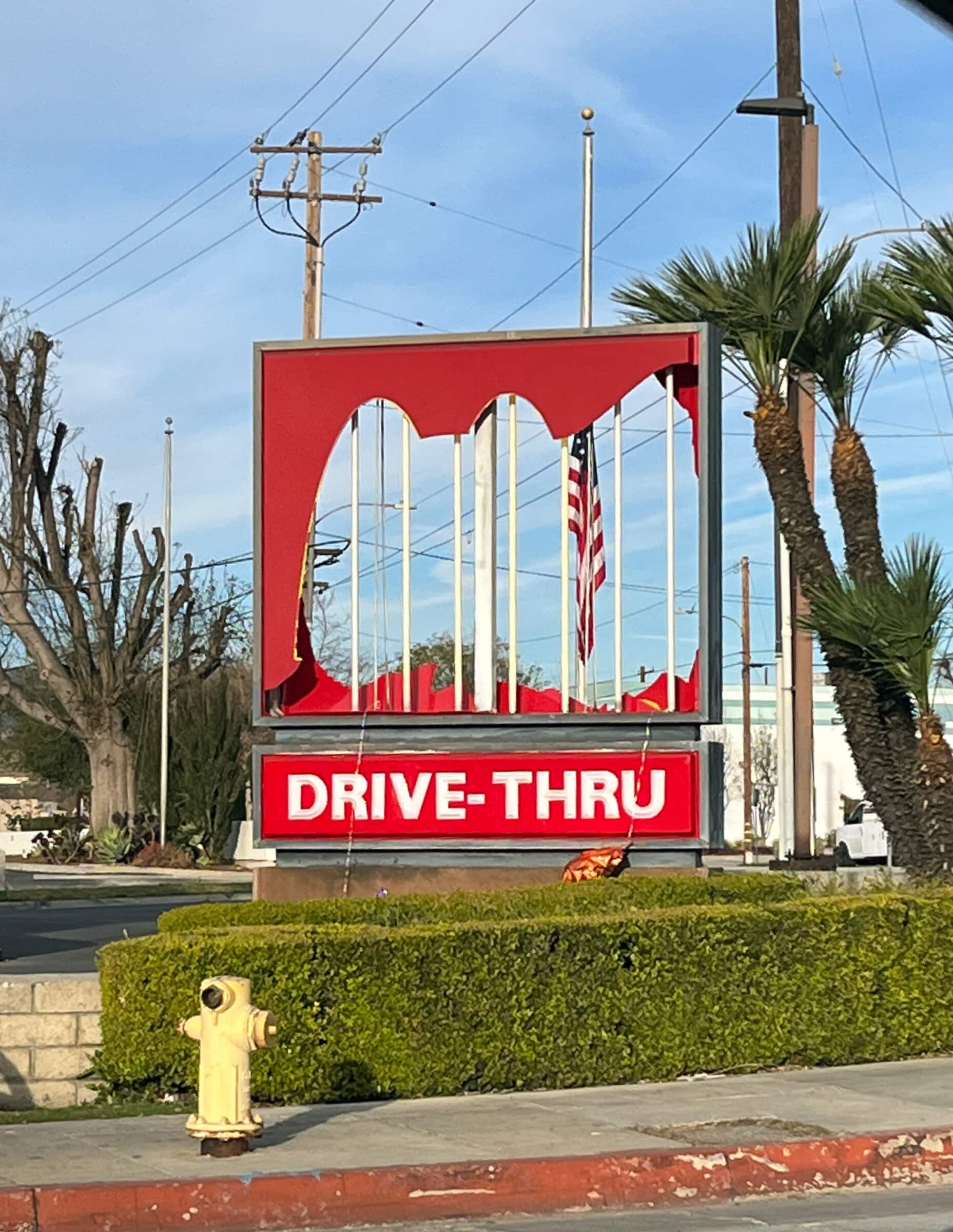
The Santa Ana winds tore a hole through the McDonald’s sign on Woodbury Road.
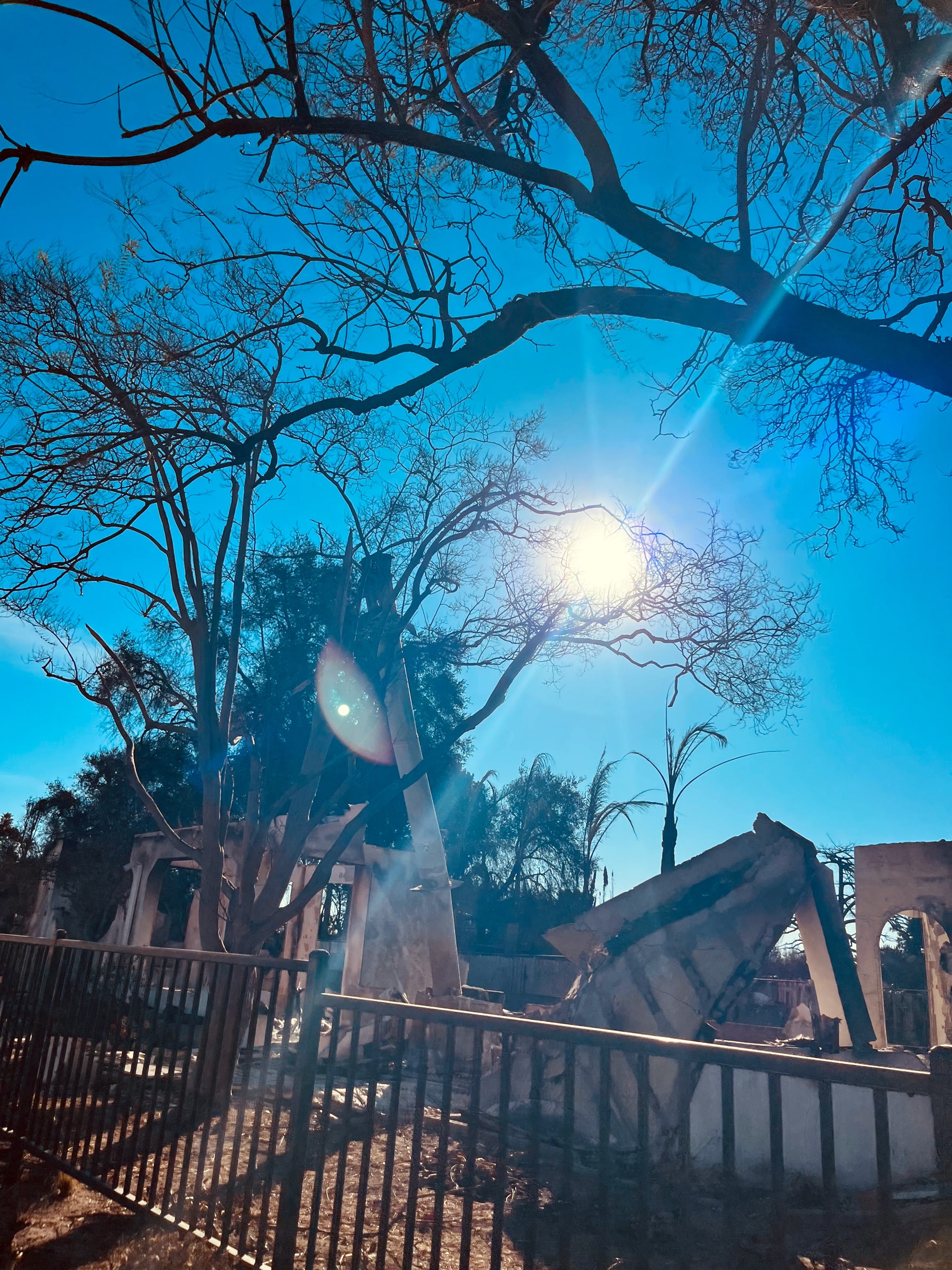
Morning sun illuminates ruins along the east side of Lake Avenue.
Southern California’s iconic palm trees fuel wildfires. In the background stands the intact dome of the disused St. Luke's Hospital in Pasadena.
More than a thousand residents were evacuated from assisted living facilities in Altadena and Pasadena.
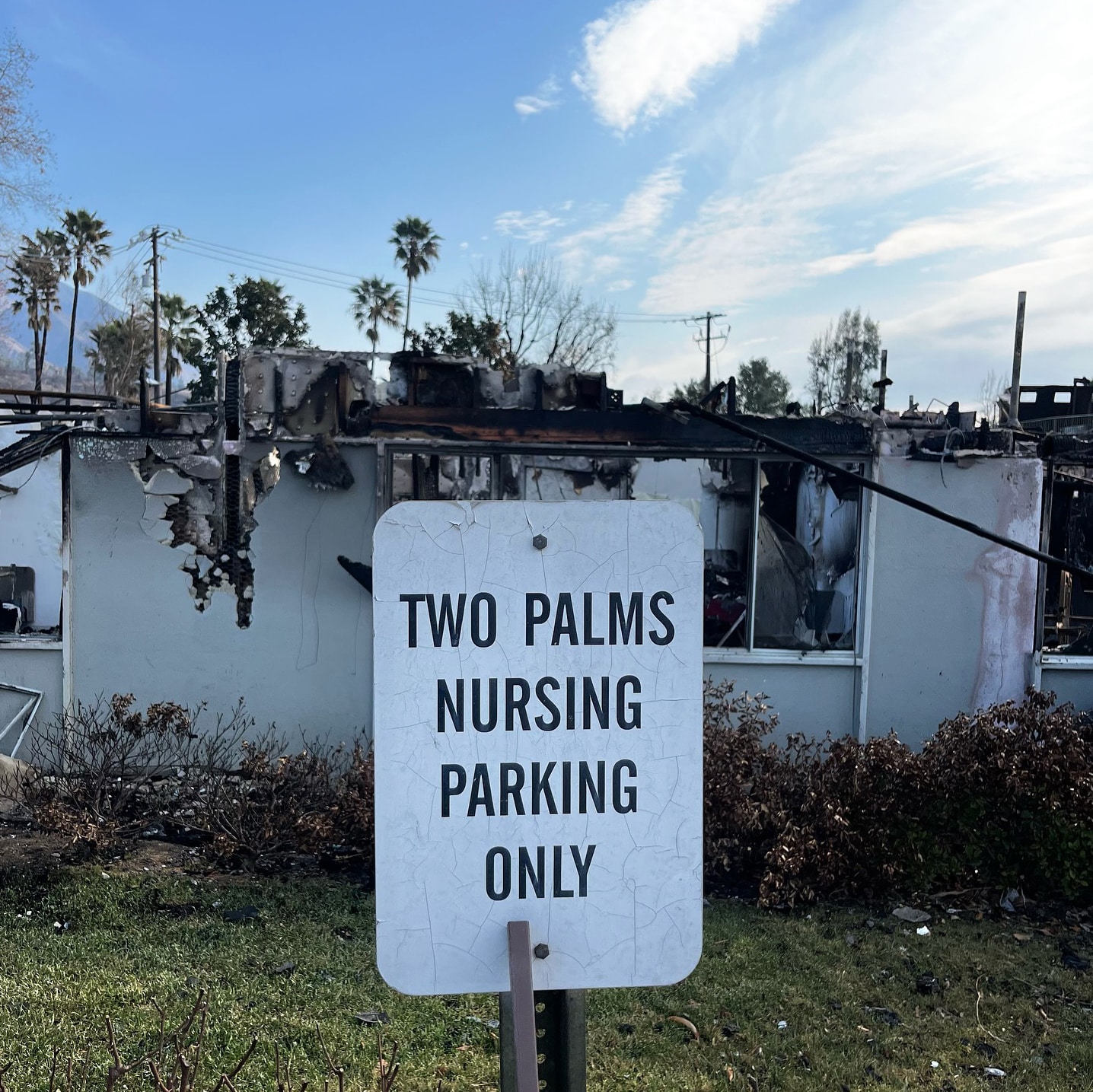
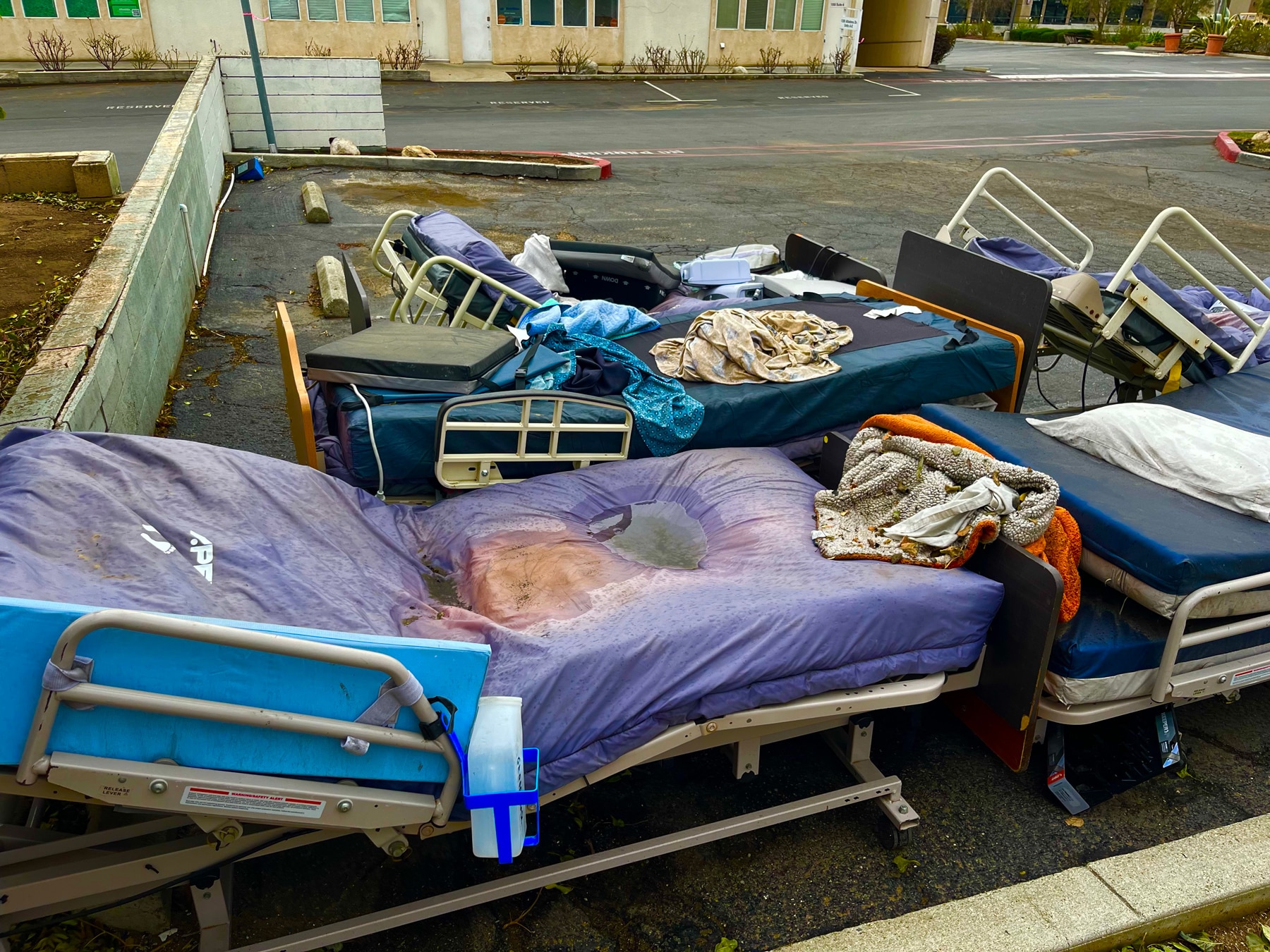
Puddles form in abandoned beds outside an evacuated nursing home on Altadena Drive.
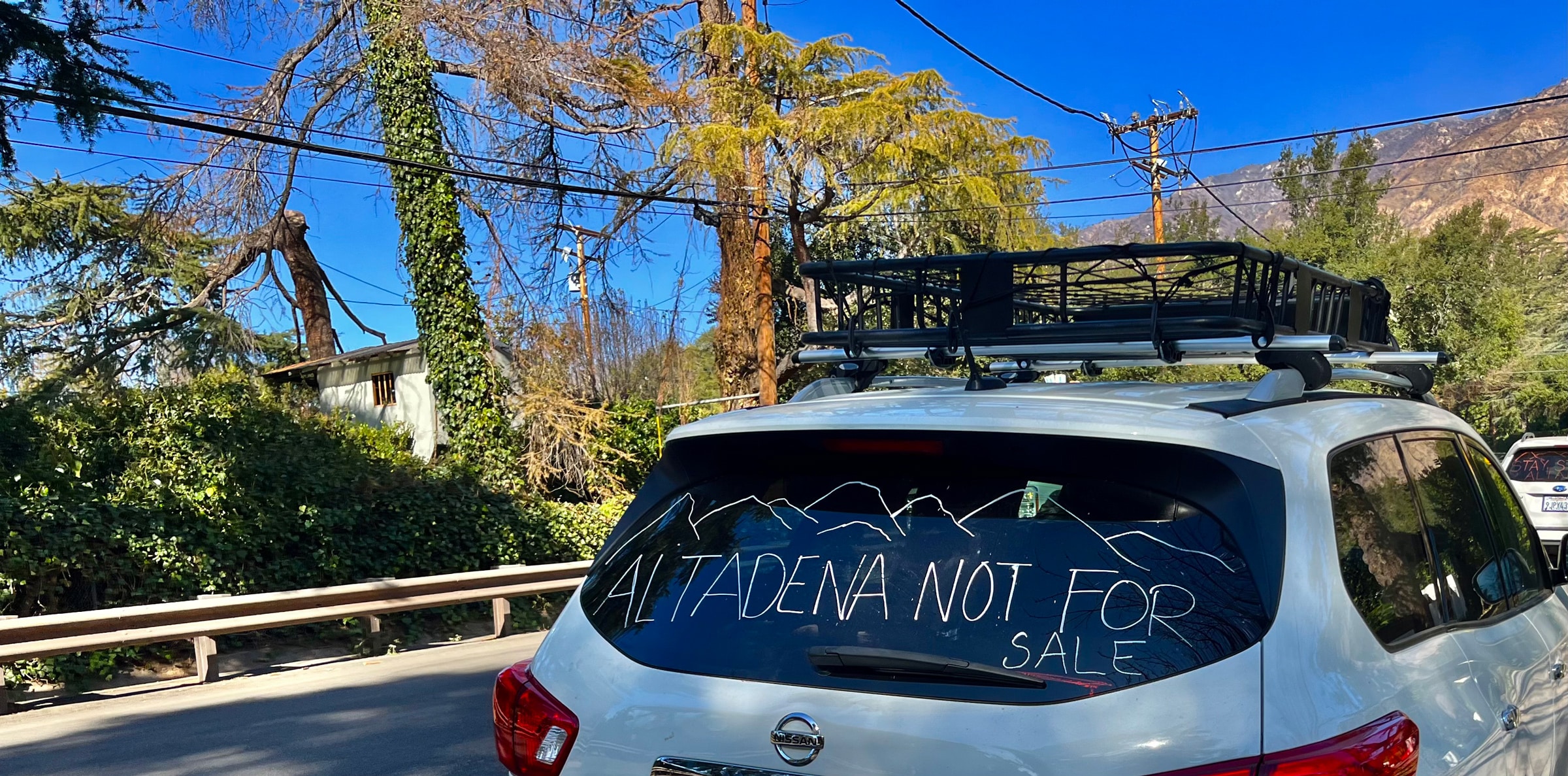
An SUV displays what has become a local slogan: ALTADENA NOT FOR SALE.

Many of Butler’s readers refer to her as a prophet, but she insisted that her ability to make accurate predictions was the result of her study of history. Her speculative fiction eerily anticipated many of the calamities we now face, including wildfires caused by climate change. Published in 1993, her novel Parable of the Sower opens with an accidental blaze set in February 2025: “We had a fire today. People worry so much about fire, but the little kids will play with it if they can. We were lucky with this fire. Amy Dunn, three years old, managed to start in her family’s garage.”
This January, a blaze began in Altadena’s Eaton Canyon. From my porch, I watched as the brightest orange overtook the San Gabriel Mountains, turning them the same color as the marigolds that I brought to the cemetery in November. Santa Ana winds moving more than 100 miles per hour carried embers into neighborhoods where wooden bungalows ignited, palm trees combusted, and coyotes panicked. More than 9,000 buildings were destroyed. To quote Butler, we were lucky with the fire. When I evacuated, I took a small bag with me. In it was a small jar filled with plants harvested from the forest that was now burning. This was my small way of trying to save the forest by preserving her seeds.
The fire ate around my home, sparing it, and I’ve swung back and forth between emotions, at times feeling guilt and at other times feelings gratitude. This is a common reaction to trauma. Ruins surround me, and I’ve been able to walk to them and witness the lesson of the fire. I do believe that fire is a teacher. We ignore its elemental lessons at our peril.
Raining Words
Moriah Ulinskas
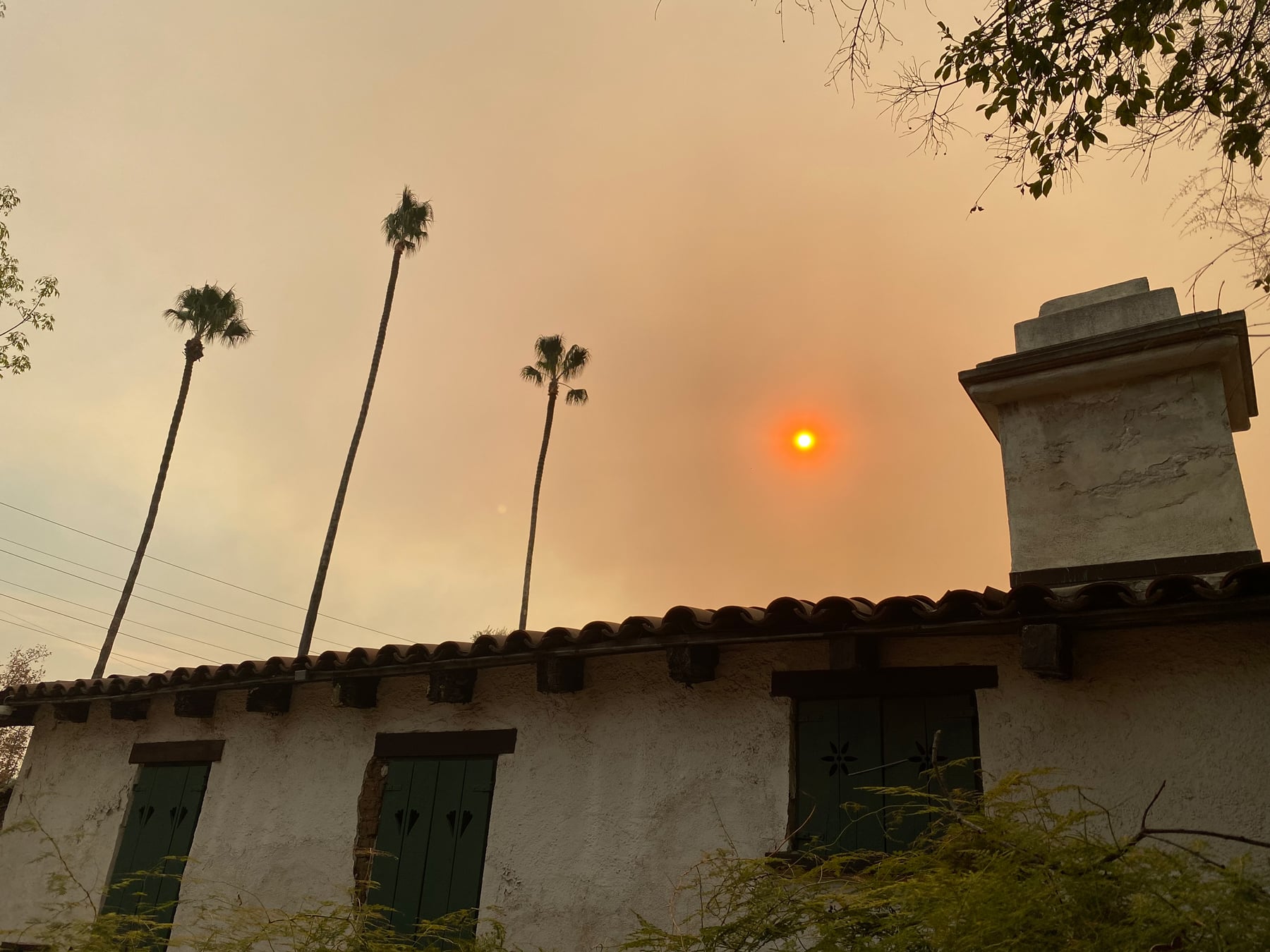
I’m no stranger to wildfires. I lived in the Bay Area through the Tubbs Fire in 2017, the Lightning Complex fires in 2018, and the Camp Fire in 2020. I remember lovingly putting a drop of orange essential oil into each of my children’s N95 masks before sending them off to school, the way you might tuck a note of encouragement into a lunchbox. Now — an empty nester living in Los Angeles — I put on my own mask (sans orange oil), and on the afternoon of January 8, I took my dogs to the park across the street from my house, about eight miles from the fire that was still smoldering in Altadena.
Flakes of ash fell from the gray air like dry rain, as delicate and ephemeral as snowflakes. I picked them up and read fragments of text.
The sky was filled with that weird light particular to wildfires, ominous and beautiful, and I struggled to capture it on my phone while managing multiple leashes and picking my way across a layer of ash that was sifting down on the grass and leaves on the ground. The sun had the appearance of setting hour after hour as it moved across the sky, a persistent dusk that would continue through the week. Fine ash fell from the gray air like dry rain, larger chunks cutting irregular paths above me as they drifted towards earth, as delicate and ephemeral as snowflakes. I picked them up and read fragments of text, photographing them before they dissolved in my palm. I posted the pictures to my Instagram account, sharing with concerned friends and family outside the L.A. area: “It’s raining words.”
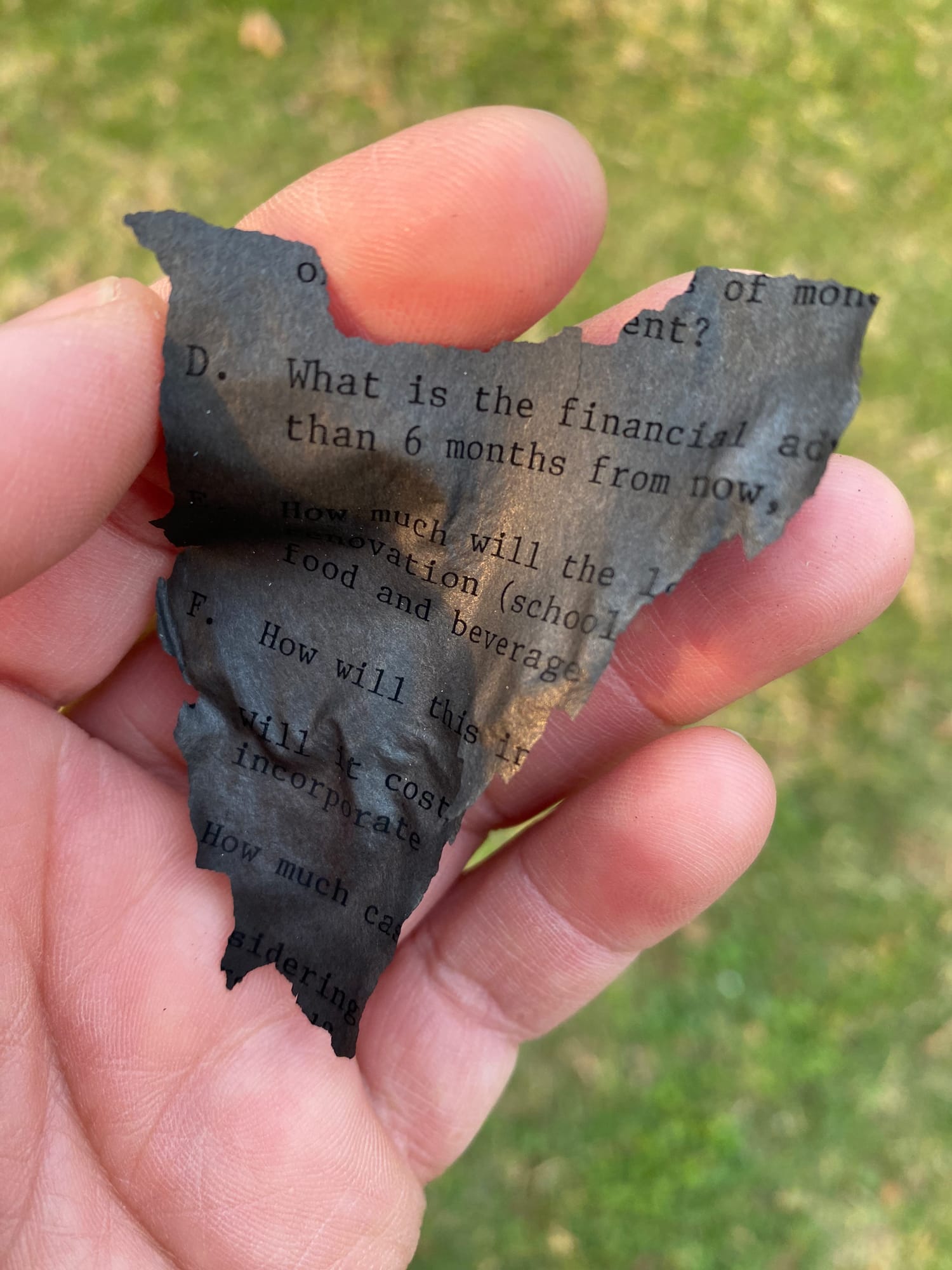
“D. What is the financial ad … than 6 months from now”: Burned fragment of a financial document addressing the provision of school meals.
“‘Damn you,’ she says … ‘Sure,’ I says”: Burned fragment of William Faulkner’s The Sound and the Fury.
“Speech prohibited …” from Supplement to fourth editions of Constitutional Law...
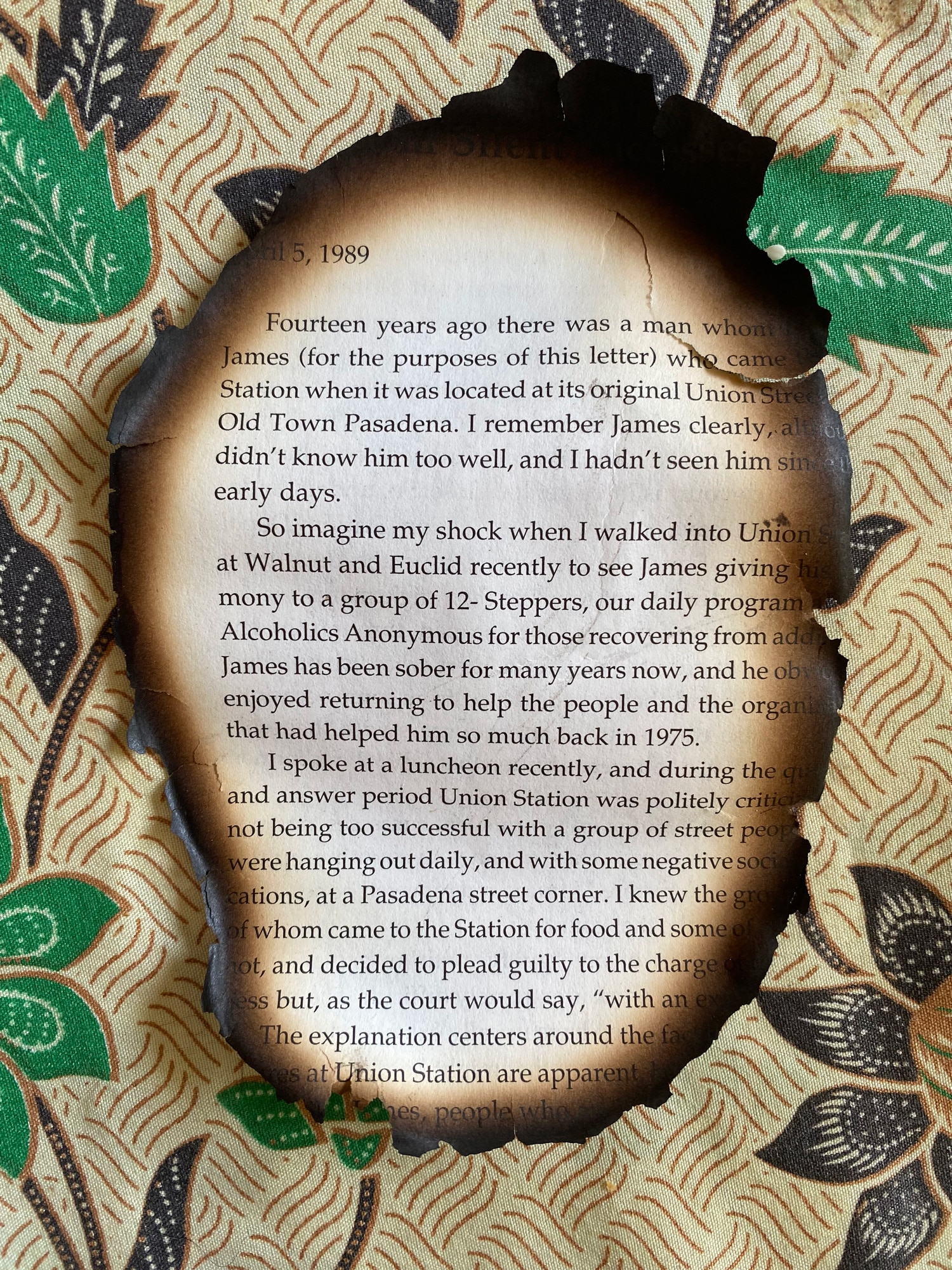
“So imagine my shock …”: Burned fragments of A Journey of Compassion: Letters From a Street Minister, by Rev. Bill Lane Doulos, 2016.
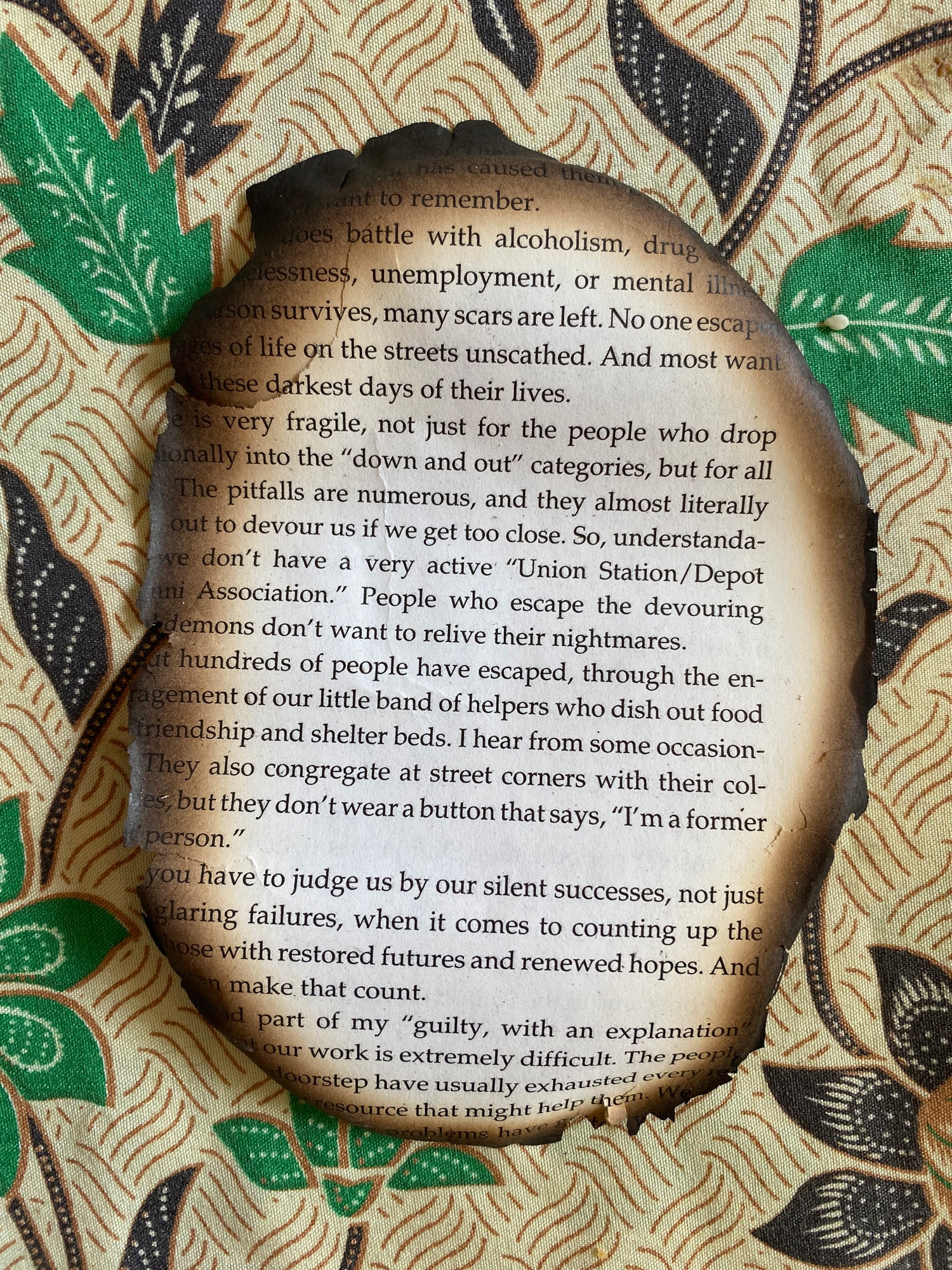
“Very fragile, not just for the people who drop ... ”: Burned fragments of A Journey of Compassion: Letters From a Street Minister, by Rev. Bill Lane Doulos, 2016.
January 9, 2025, 1:30 pm. The constantly setting sun still high overhead.
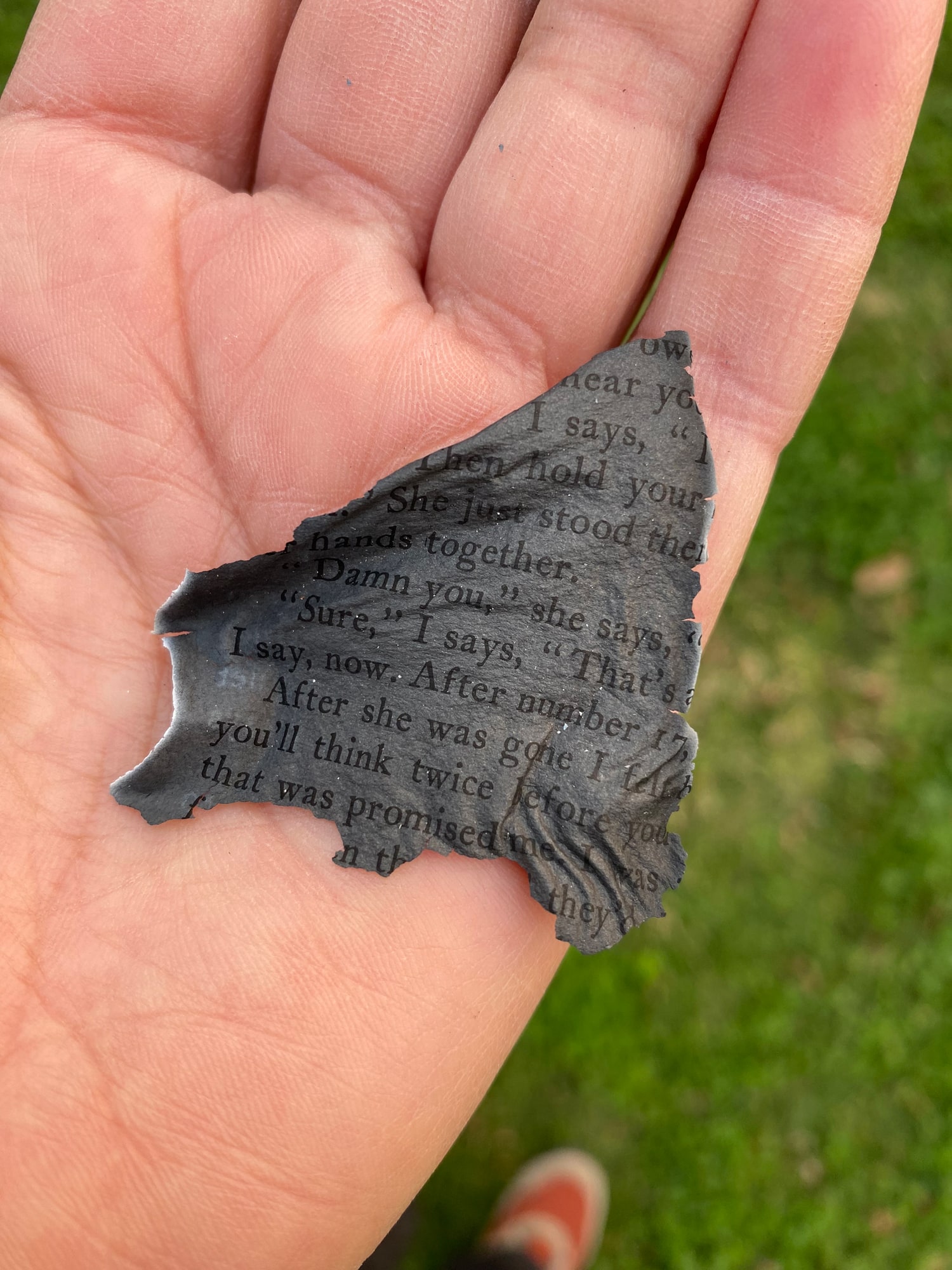
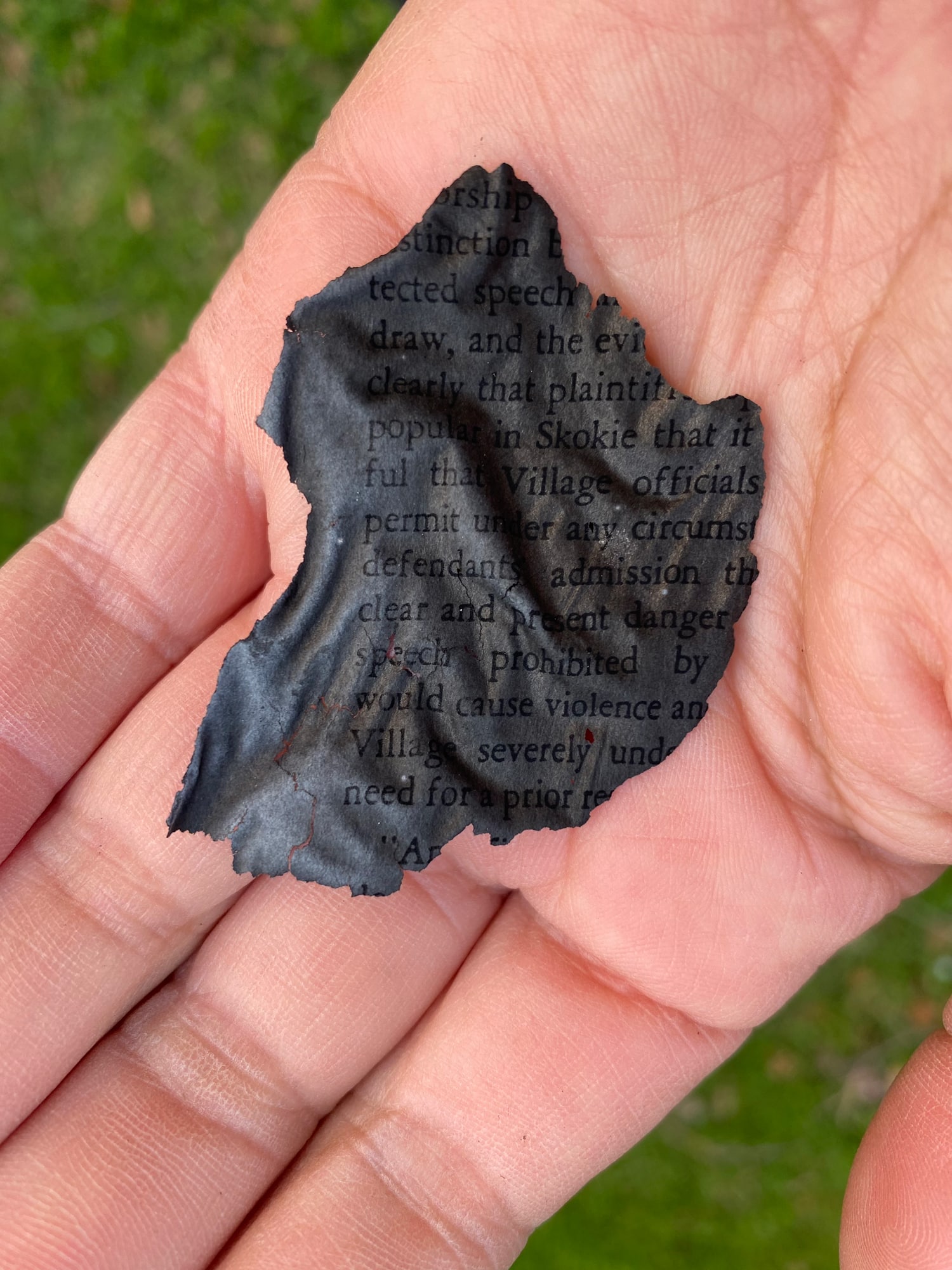
The first text-flake I picked up seemed to be a financial document addressing school meals. Line D asks, “What is the financial [something] … than 6 months from now?” I caught another blackened wisp midair as it fluttered down. In some sort of effort to name things that were being lost to the fire, I later identified it as a passage from William Faulkner’s The Sound and the Fury. Investigating the others, I found that one was a fragment from a textbook titled Supplement to Fourth Editions of Constitutional Law—Cases, Comments, Questions; The American Constitution—Cases and Materials; Constitutional Rights & Liberties—Cases and Materials, first published in 1975 by West Publishing Company of St. Paul, Minnesota, by W.B. Lockhart, J.H. Choper, and Y. Kamisar.
The next day, in my yard, I was again trying to photograph the weird wildfire light when I retrieved an entire page from a book — the two sides of a single page from what turned out to be A Journey of Compassion: Letters From a Street Minister, by Rev. Bill Lane Doulos, published in 2016. This piece of paper is burned around the edges so precisely that it doesn’t look real. Amazing that an entire page could be lifted by the heat of fire and carried miles, to land in my tiny garden. I brought the page inside and fastened it into my diary, sealing it under a layer of clear packing tape where it will remain to record what I did that day: January 9, 2025.
January 8, 2025
Carolyn Castaño
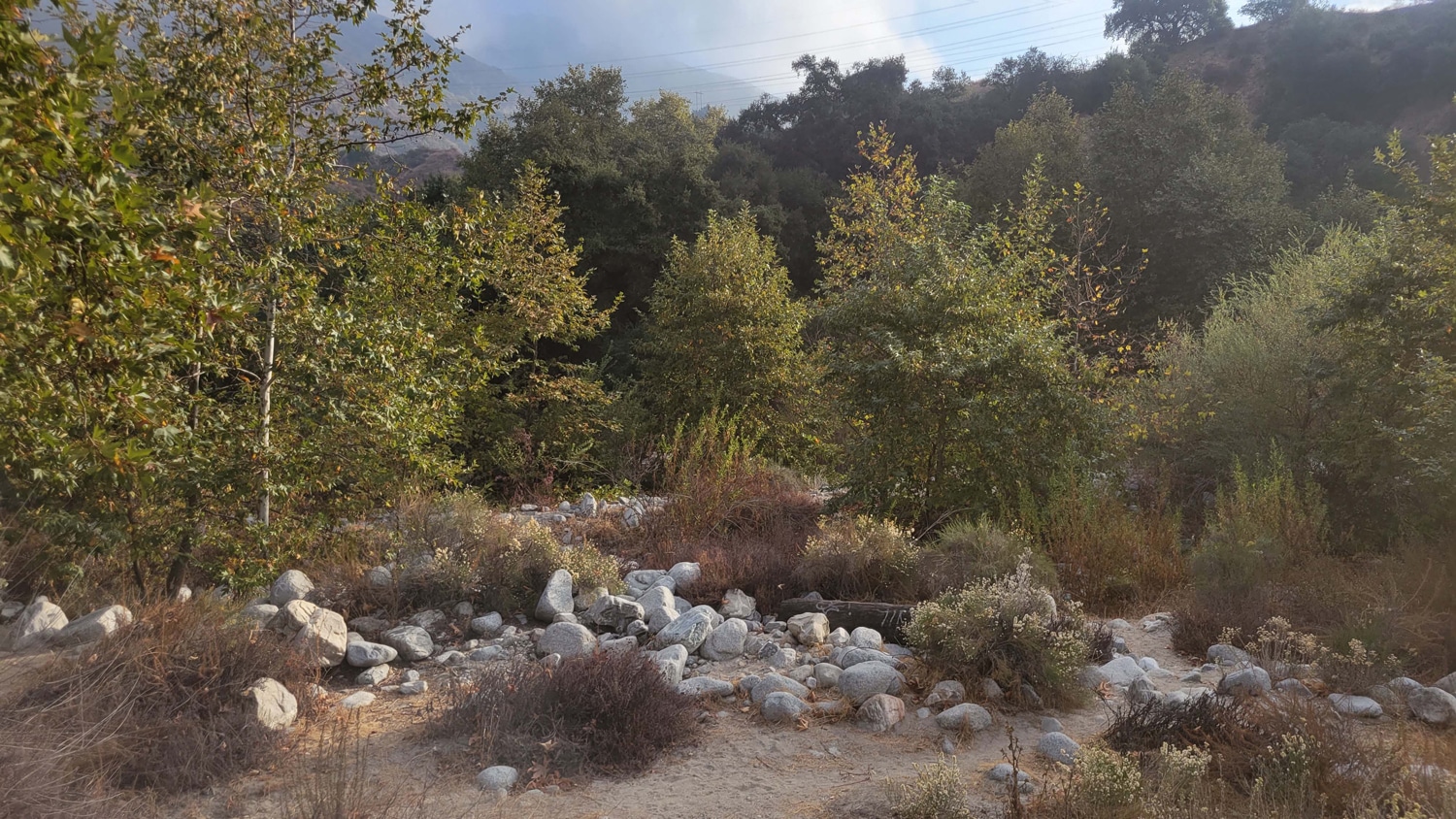
In 2023, my partner and I moved to northwest Pasadena, just a few blocks from the border with Altadena. We had been looking to buy a house and had seen many possibilities in Altadena itself; we were attracted by the natural surroundings and the area’s reputation as an artists’ enclave. As a biracial family (Black and Latino), we wanted our two boys to grow up with that slower, old-town feel, as well as to invest in what traditionally has been a middle-class Black community. I loved to walk in beautiful Eaton Canyon, with its native oak trees.
Even now, the blackened trees and hollowed-out structures look like scenes from a post-apocalyptic horror movie.
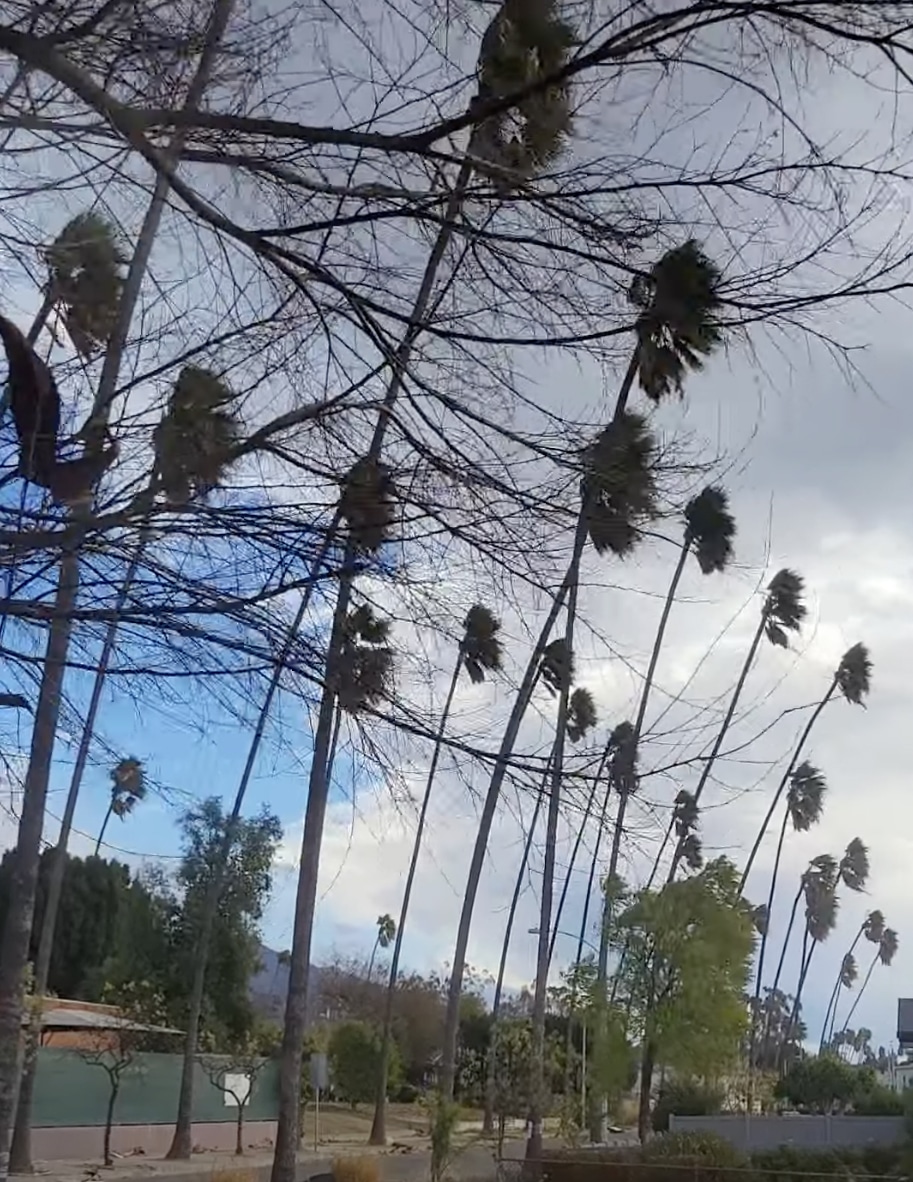
On Tuesday, January 7, 2025, the news forecast strong winds. I was wary about what that meant exactly, as intense weather is often announced in L.A., and things usually turn out to be okay — until they’re not. Around 3:30 that afternoon, I braved the gusts and went to Trader Joe’s in La Cañada, adjacent to Altadena, to pick up food for dinner. At the store, the power had been in and out, and the cashiers seemed frazzled. Everyone was in a hurry to get home.
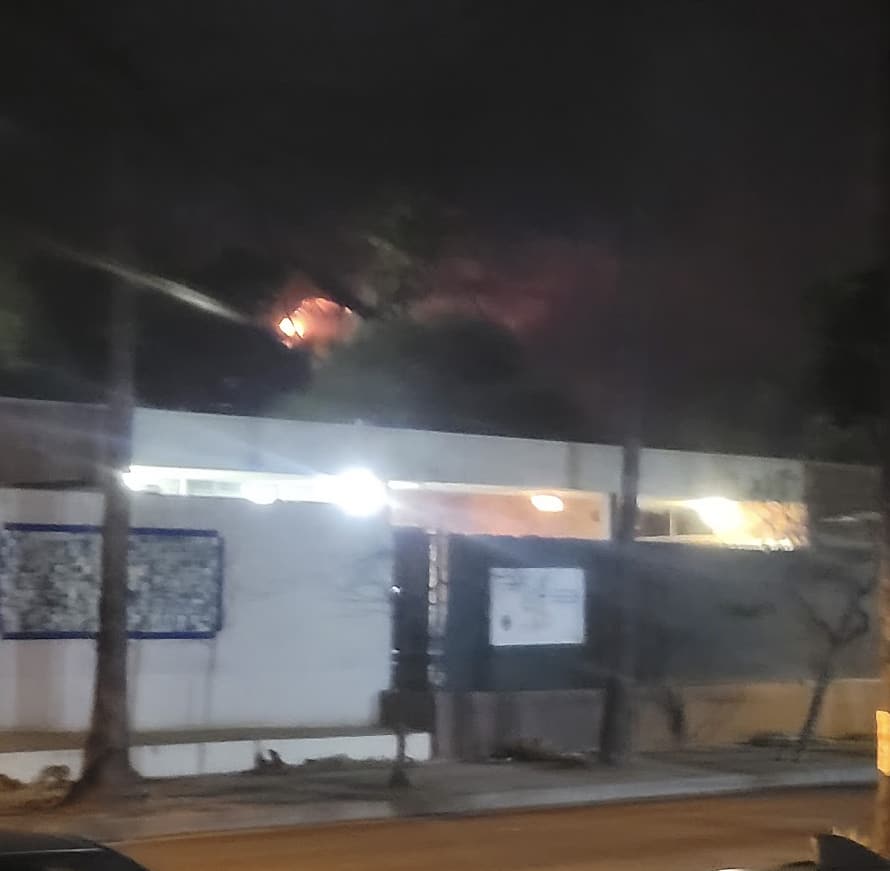
Winds kicked up as the evening progressed, and at about 7:00 pm, I saw an alert that the area around Eaton Canyon was being evacuated. I texted my friend Coleen, who lives near the foothills. She was already packing her bags. At 10:00 pm, I went out to walk the dog and was surprised to see a ball of fire in the hills, much closer to our house than we expected.
Hour by hour into the night, I received texts from friends from all over the city, checking in and offering their places for refuge. At first, it seemed like an overreach to evacuate, but by midnight, it became apparent that the fire was spreading and that, at the rate it was moving, it might reach us. We prepared bags and placed them by the door. The next day, the air was thick and gray. The hills north of us, towards Altadena, were covered in smoke. (We never did get an evacuation order, though we left town temporarily, to escape the dangerously polluted air.)
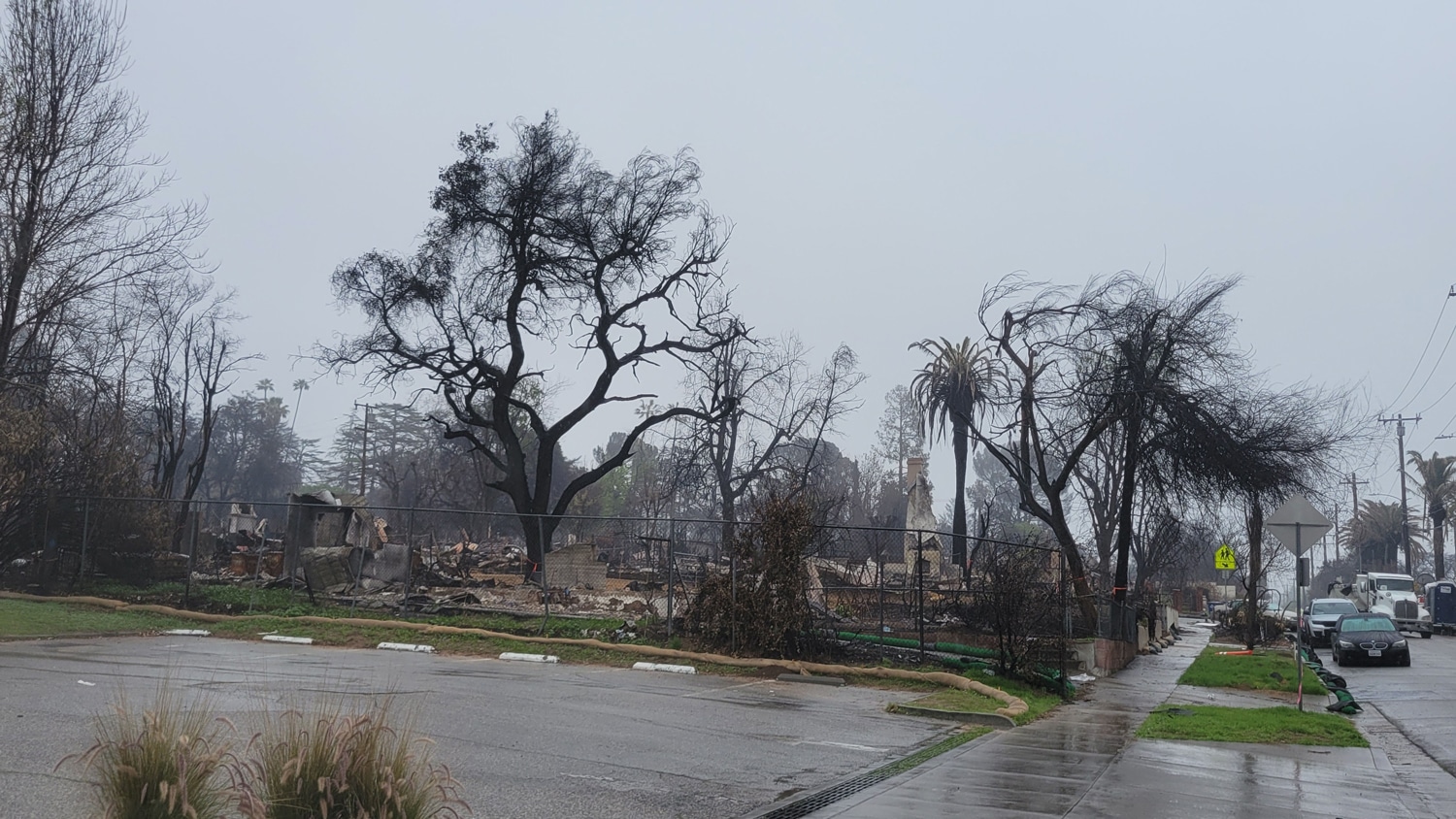
West Palm Street, Altadena, March 2025.
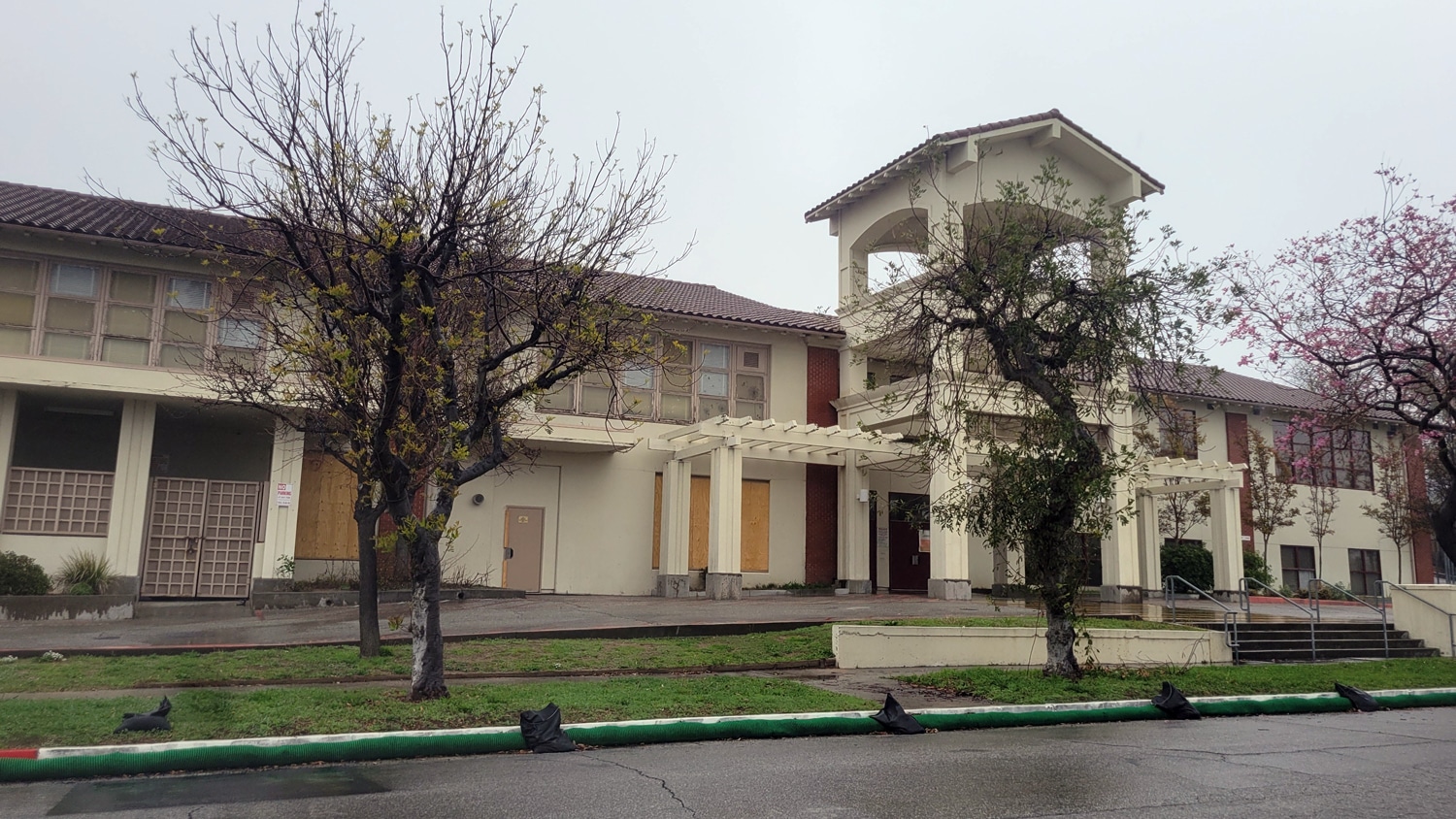
Odyssey Charter School South on West Palm Street, boarded up and red-tagged as uninhabitable, March 2025.
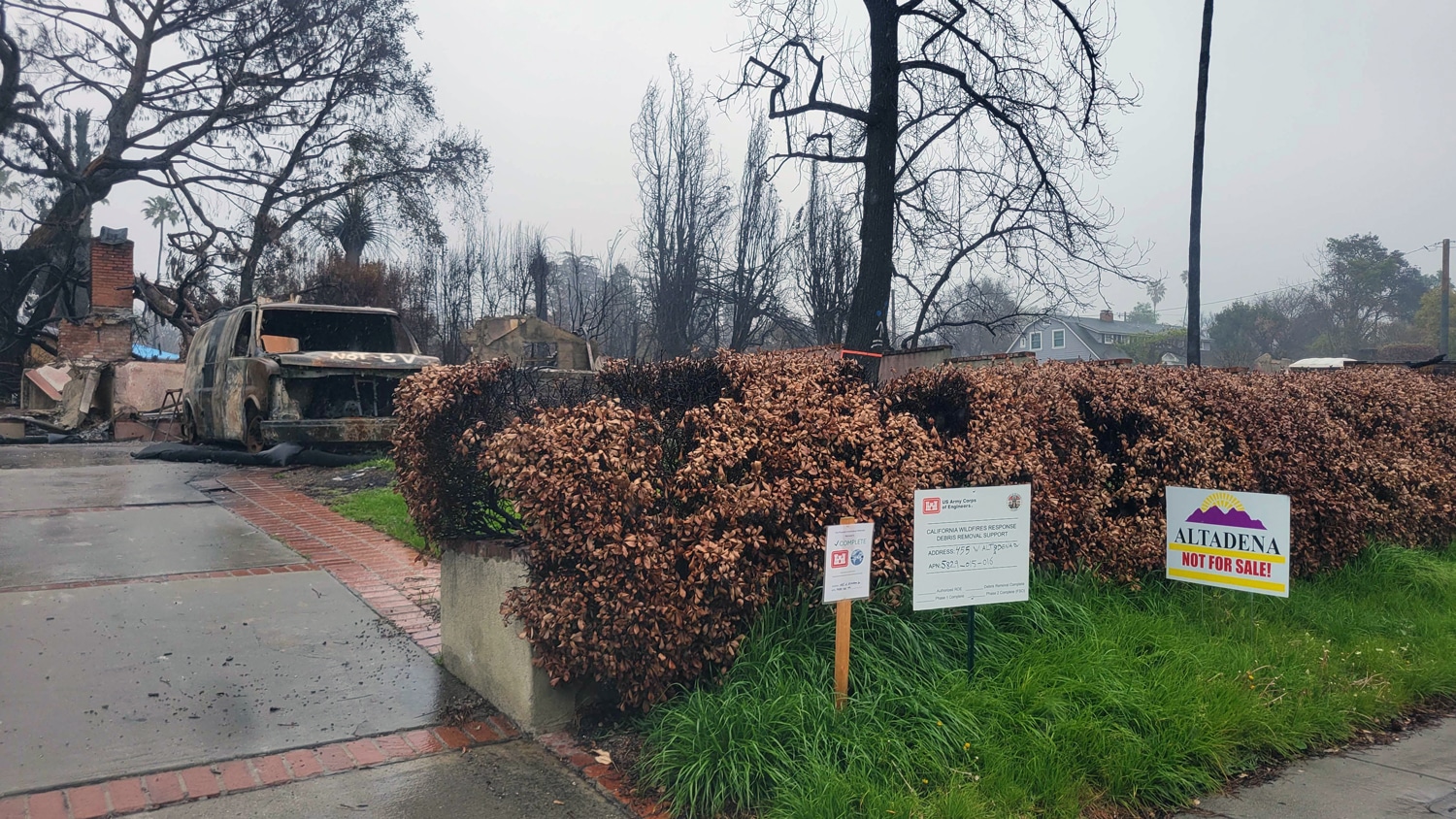
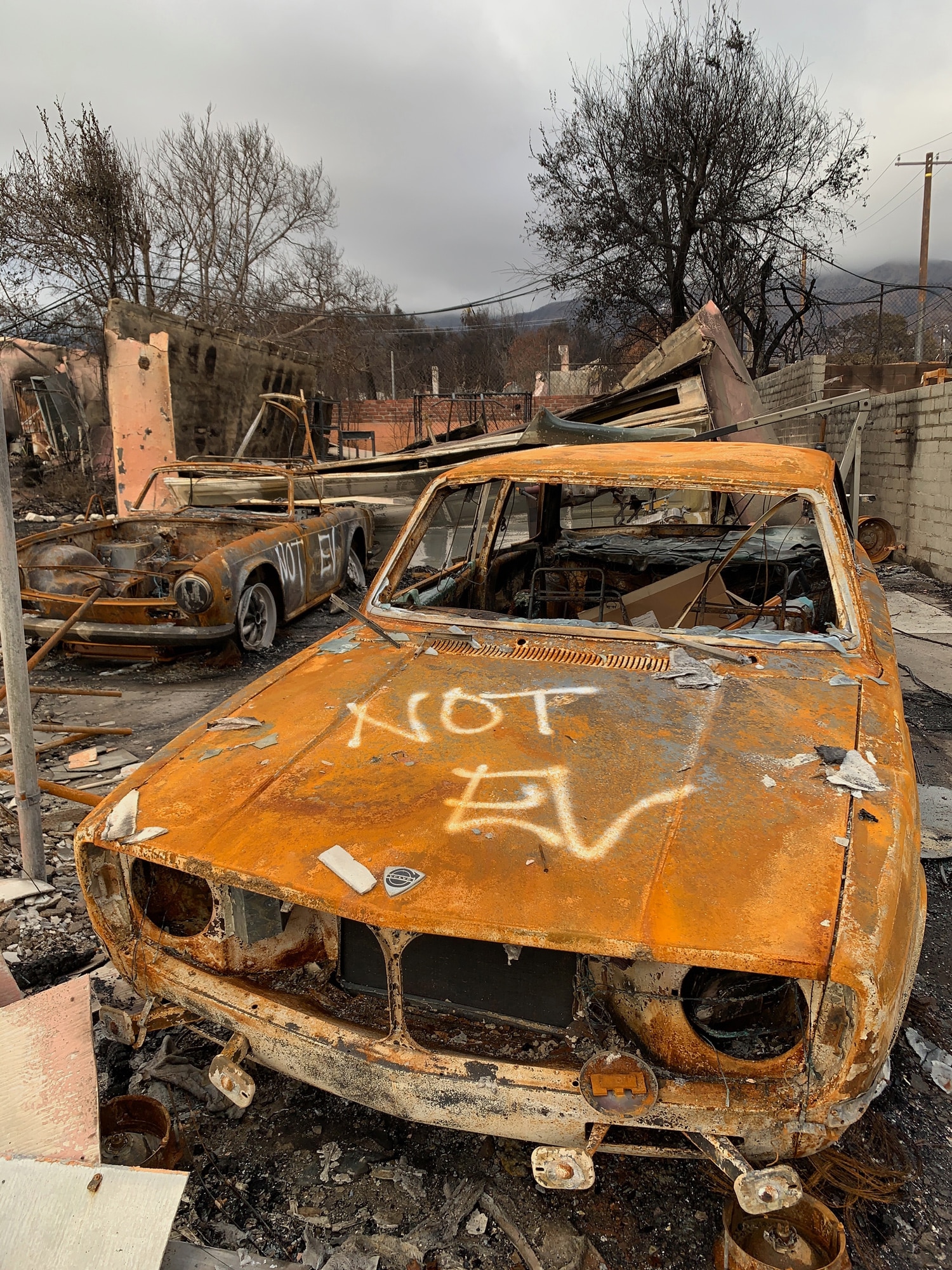
On Altadena Drive: ALTADENA NOT FOR SALE! March 2025. The EPA has tagged burned vehicles “EV” or “Not EV,” alerting clean-up crews to the presence of toxic lithium-ion batteries in electric vehicles.
Winds whipping the palm trees outside the author’s home, 7:00 pm, January 7, 2025.
Fire in the hills of Altadena, 10:00 pm, January 7, 2025.
Smoke in the air, January 8, 2025.
Mary Anna Pomonis with her paintings at her Alto Beta opening, January 5, 2025.
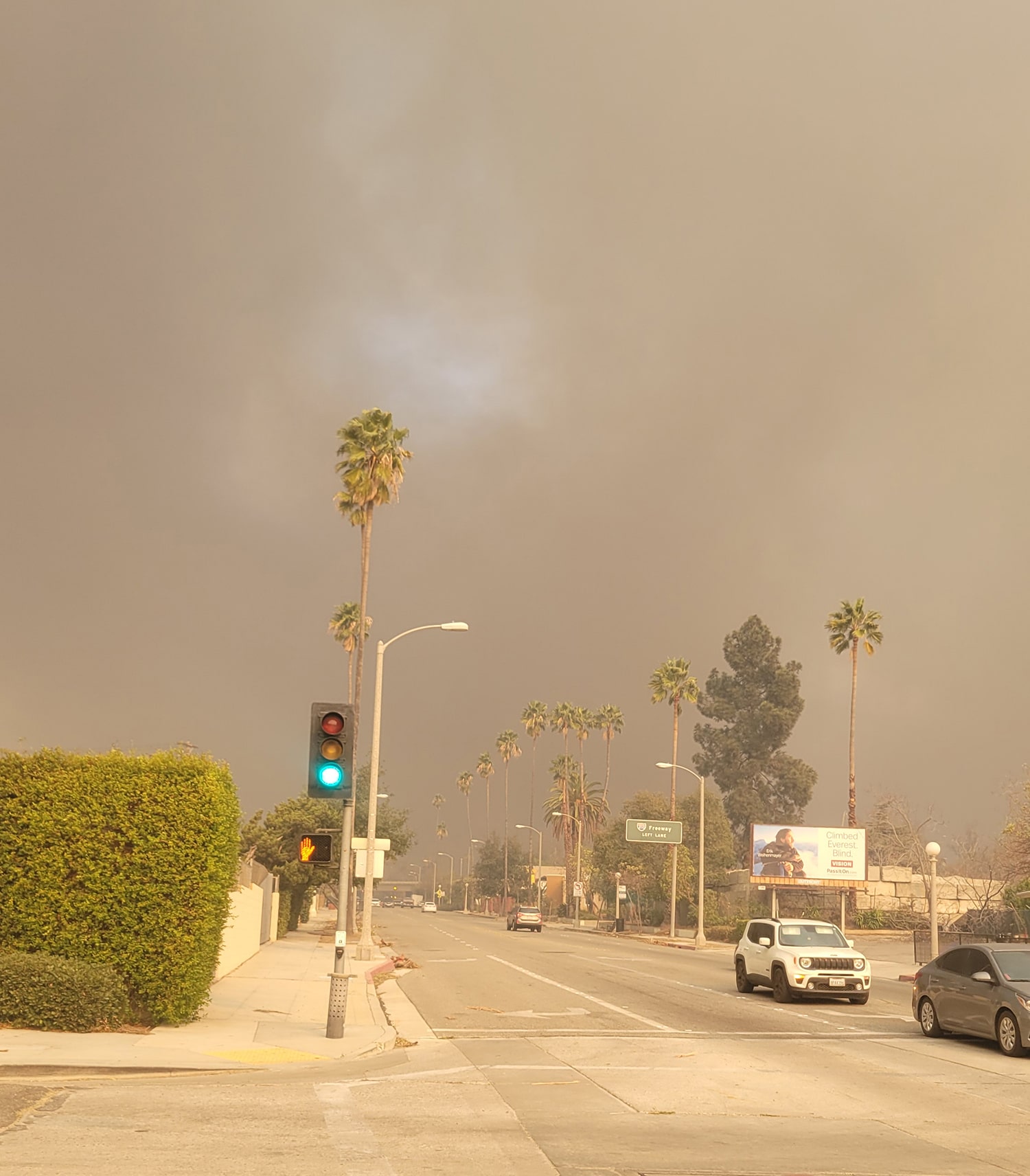
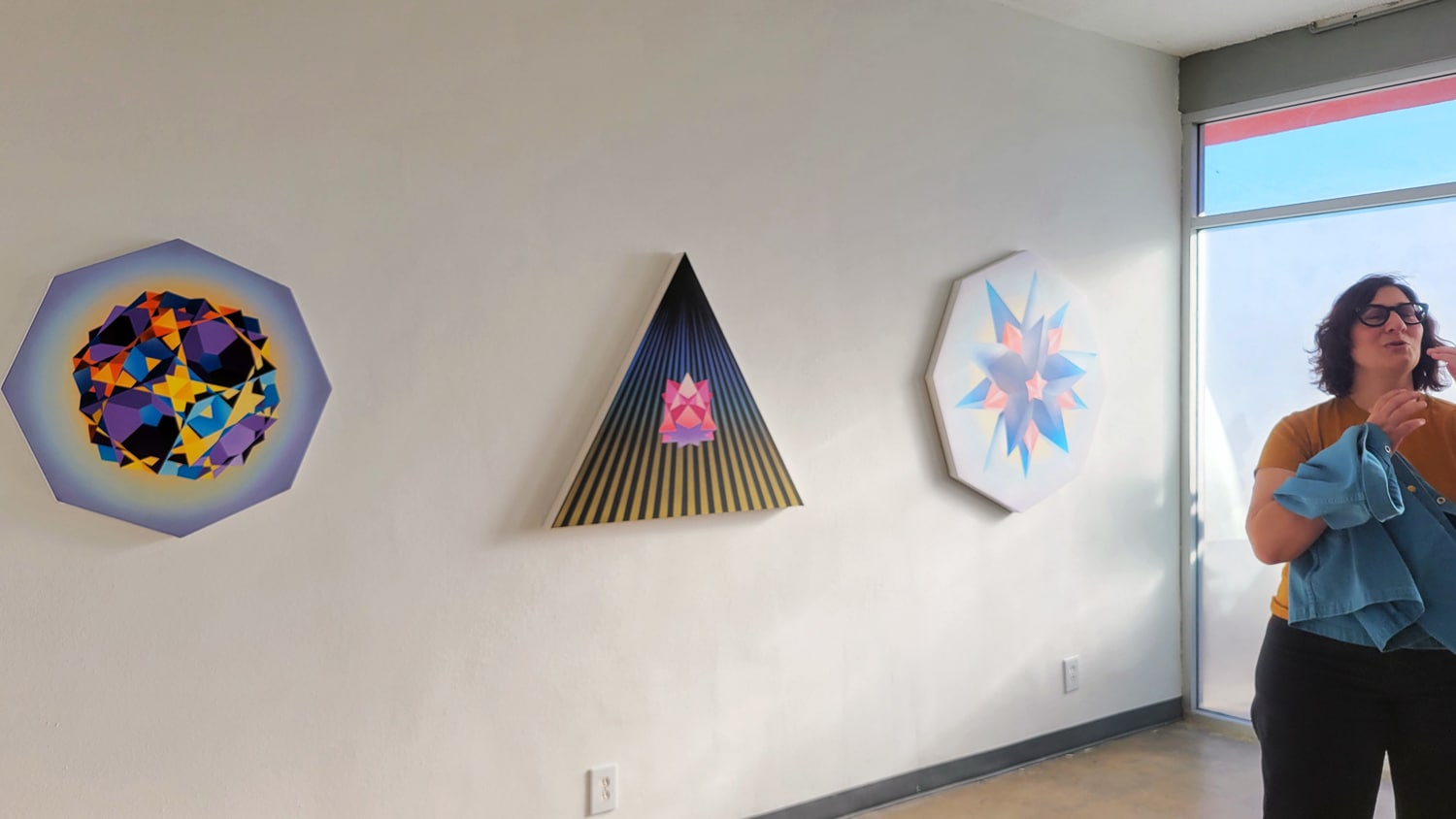
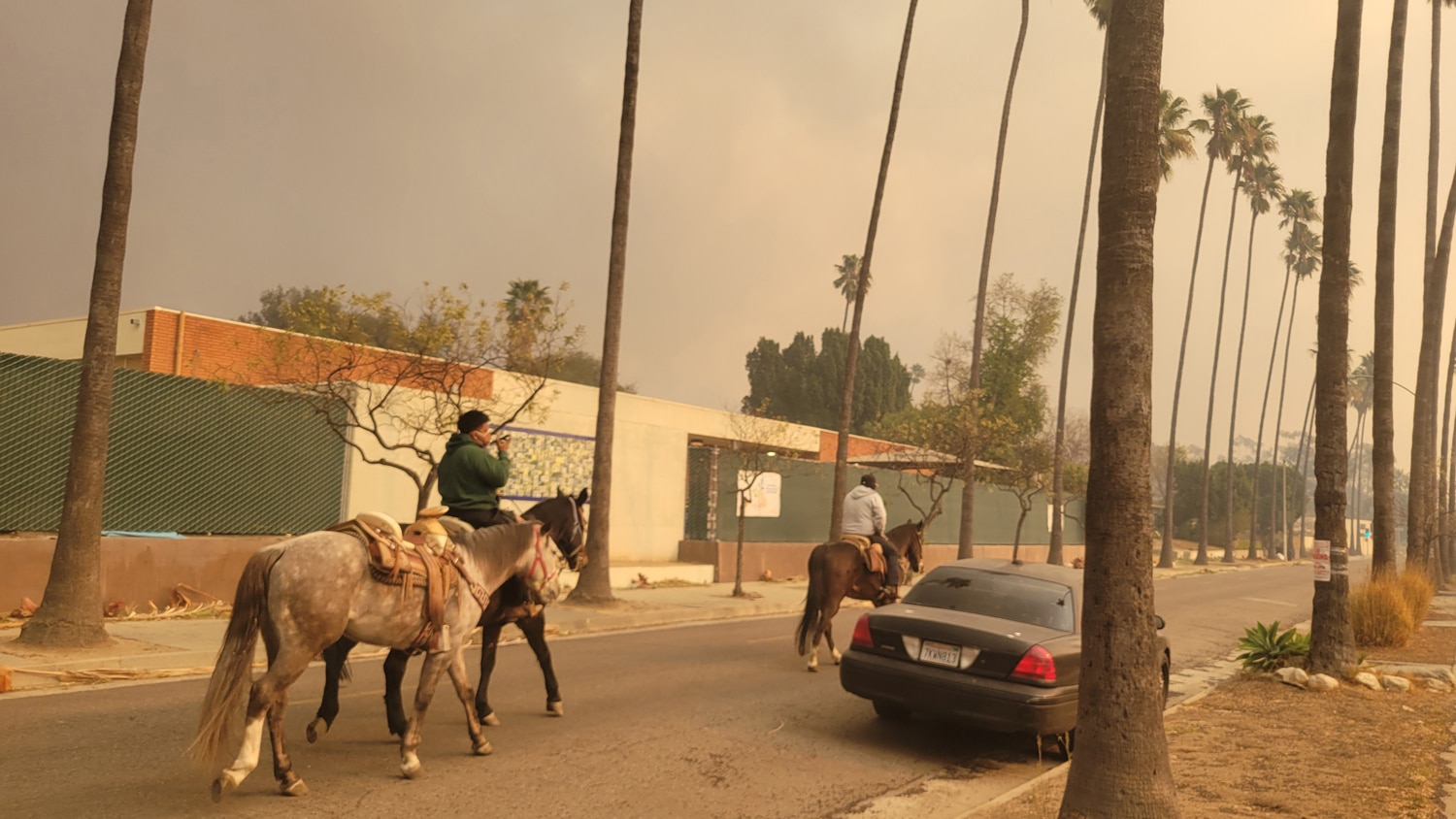
Walking my dog again that morning, January 8, I saw two guys riding horses past our house, one leading a third saddled horse. There are stables in Loma Alta Park, and we often saw people on horseback riding up and down Lincoln Boulevard. In past emergencies, the nearby Rose Bowl had served as a large animal shelter. (This time, it became a hub for first responders.)
Many in the Los Angeles art community lost their homes and studios in the Eaton fire, including Alto Beta, an artist-run space off Fair Oaks Avenue. Founded by Brad Eberhard in a mini-mall storefront, Alto Beta doubled as his studio and a shared exhibition space, a popular hub for artists from Altadena and beyond. You could always expect to catch someone you knew there; the Sunday before the fire, I had been to an opening for my good friend Mary Anna Pomonis, who was showing her dazzling geometric abstract paintings, homages to Greek goddesses. Alto Beta burned down and with it all of Mary Anna’s beautiful new work, as well as much of Brad Eberhard’s work stored in the space. The gallery is mobile now, and they are in residency at other spaces until they figure out what to do.
My sons’ school Odyssey Charter South burned too, one of five area schools destroyed or severely damaged. Part of the main building at OCS still stands, but the whole place was red-tagged by the fire department as unhabitable; my boys are at school now in a temporary site, with the OCS community dispersed across three different locations in Pasadena. Many houses on the school’s block are gone, and even now, three months later, the blackened trees and hollowed-out structures look like a scene from a post-apocalyptic horror movie.
As the weeks pass and crews clear debris, it’s not uncommon to see signs reading ALTADENA NOT FOR SALE. There is worry in the community about whether Altadena will ever return to normal. And, if so, what will it look like?
Left on Harriet
Merrill Feitell
The house was just 1,060 square feet, but the only recognizable thing rising from the rubble is the bathtub, which has become my north star; I have to locate it to figure out what room I’m in and where to start sifting for whatever I’m hoping to find.
I always thought fiction writing was the ultimate way of making the familiar strange, but now I realize it’s fire.
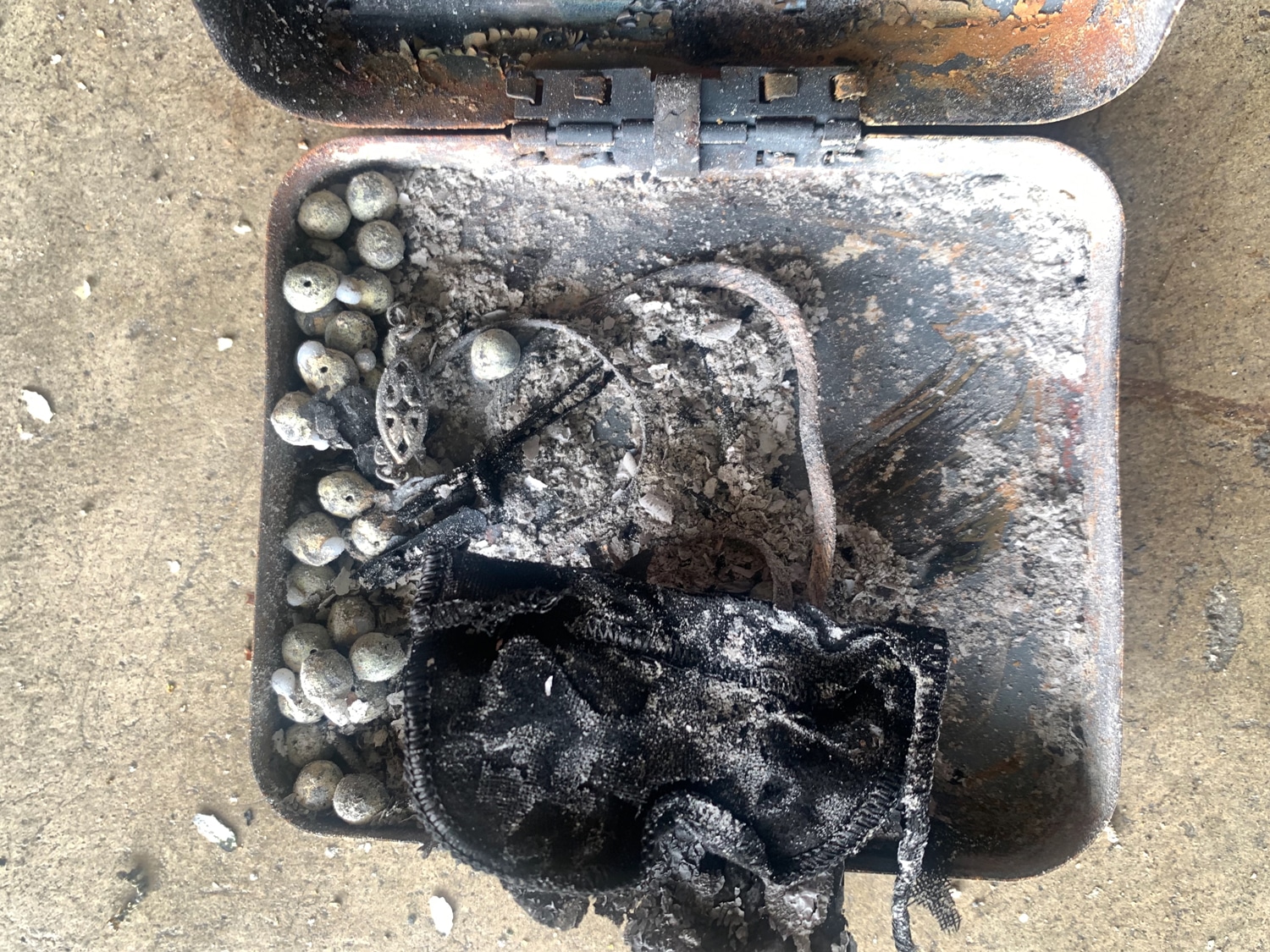
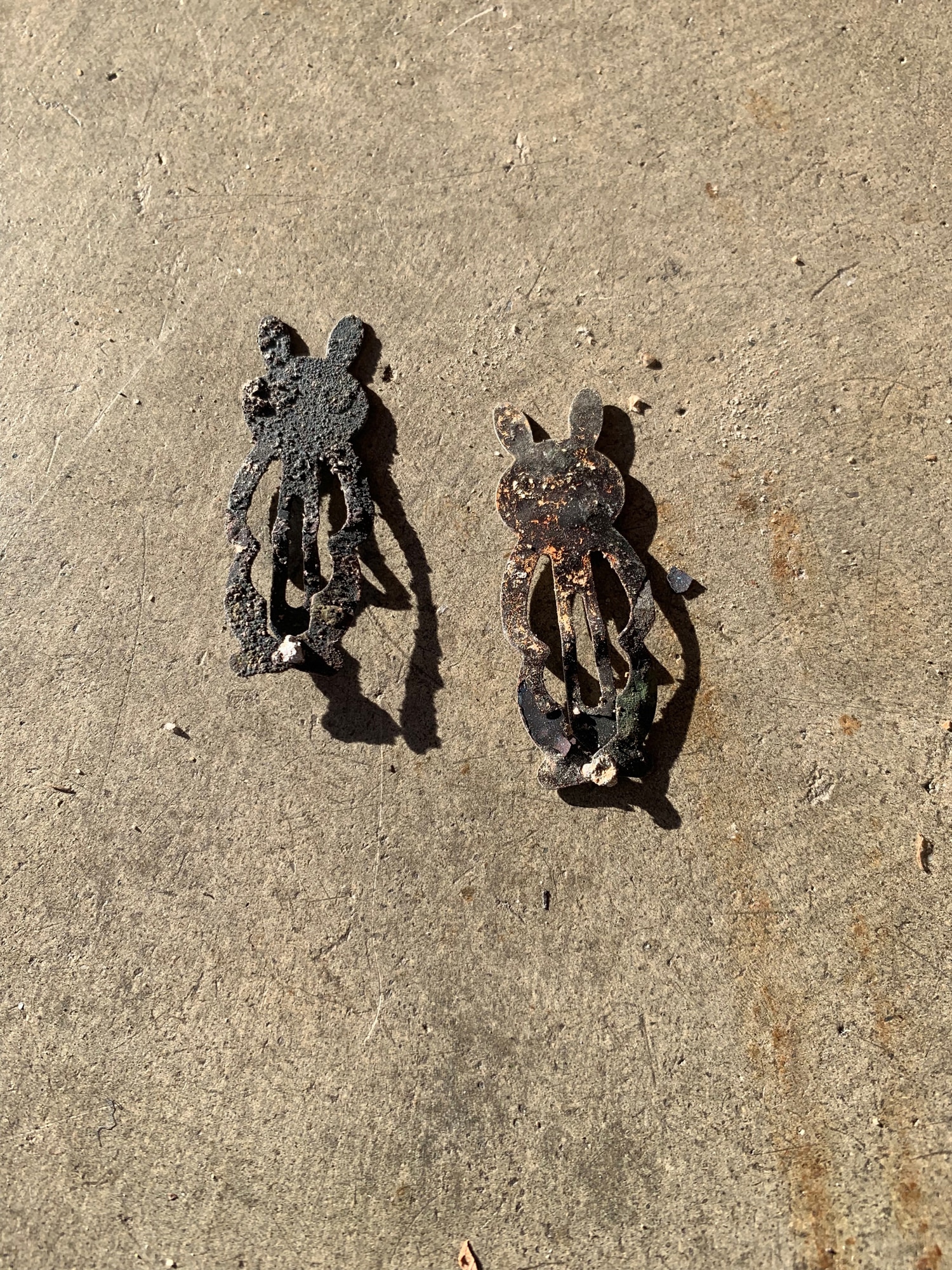
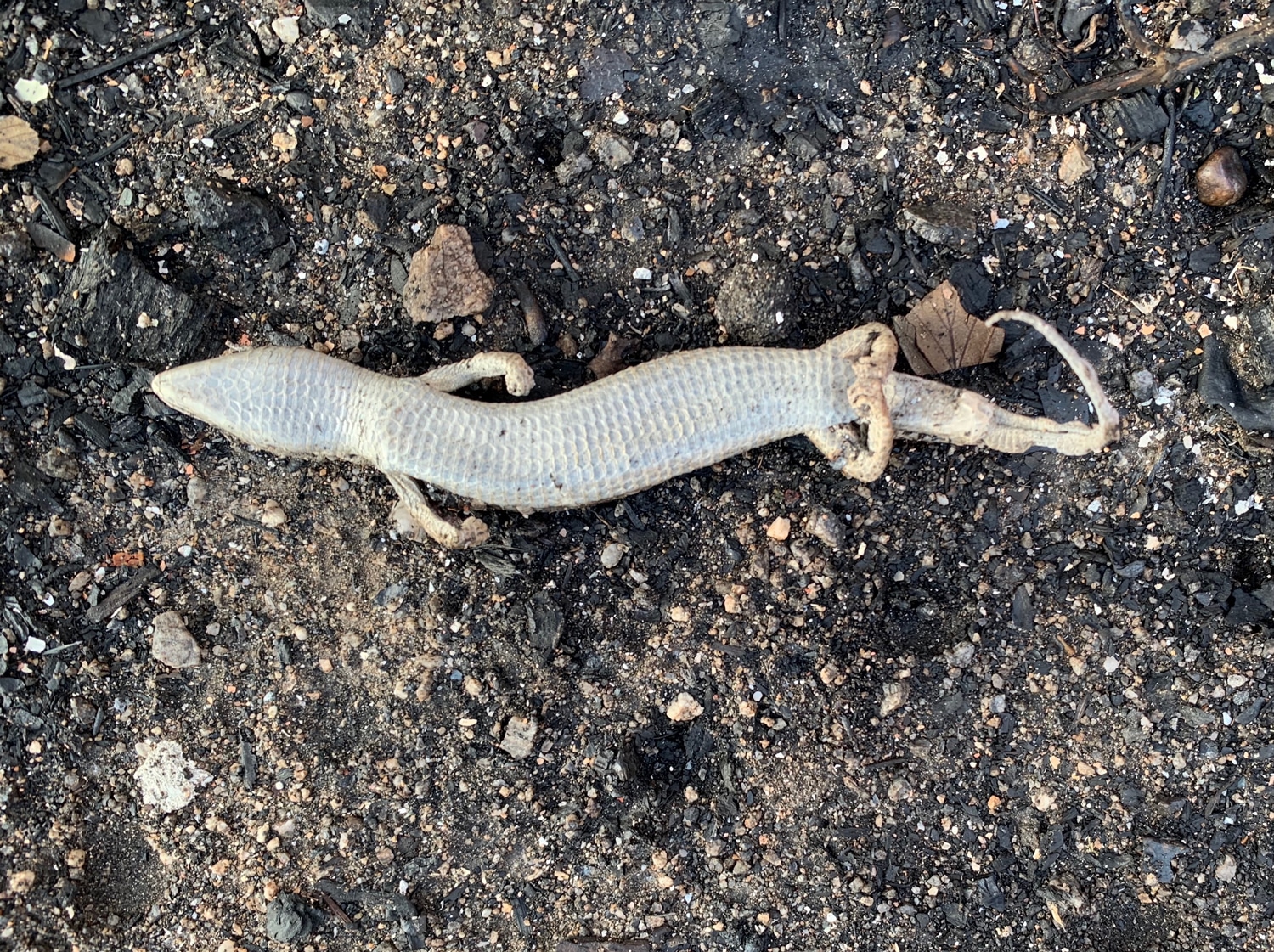
Since I began searching, I’ve found plenty of things — my mom’s pearls, for example, which I’d ever so wisely secured in an old Sucrets tin. I found a piece of the corgi menorah, intact enough to celebrate Chanukah for three nights, a pair of bunny-rabbit barrettes, a dead lizard.
I have yet to find anything that’s not ruined, but I keep digging, as if the goal is less about salvage than engaging in the game of figuring out what a hunk of something once was. It’s a brain teaser; a logic test.
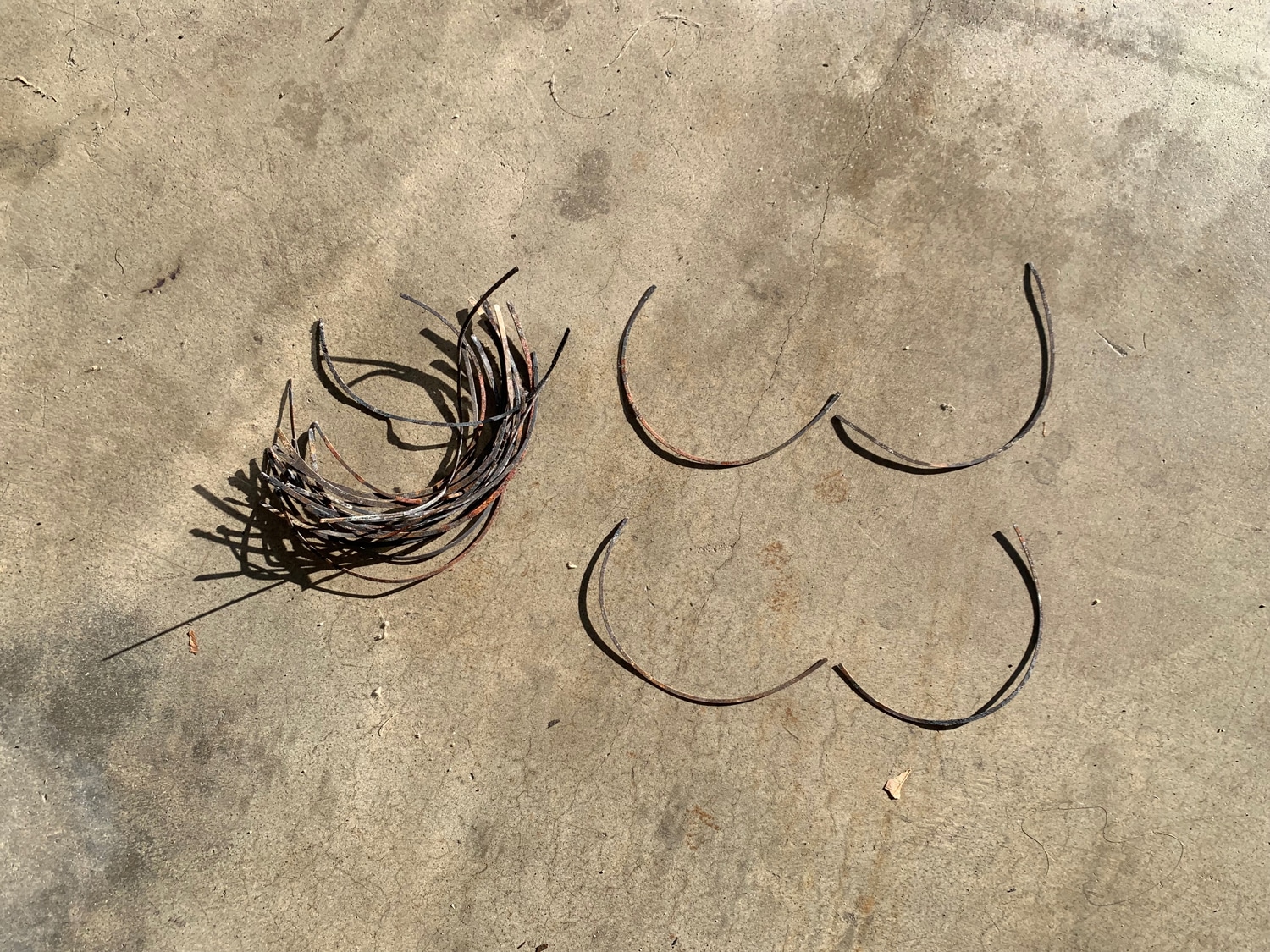
When I found a bunch of arched metal strips in a pair of piles where my dresser used to be, I puzzled over them all day, but it was only later in bed as I imagined the step-by-step burning collapse of the place that I realized the treasure I’d unearthed was a bunch of bra underwires caked in microplastics, arsenic, and dirt. Even the beloved baby blue vintage Volvo in the driveway is hard to recognize in its new role as storage container; the only shelter for stowing the shovels and PPE.
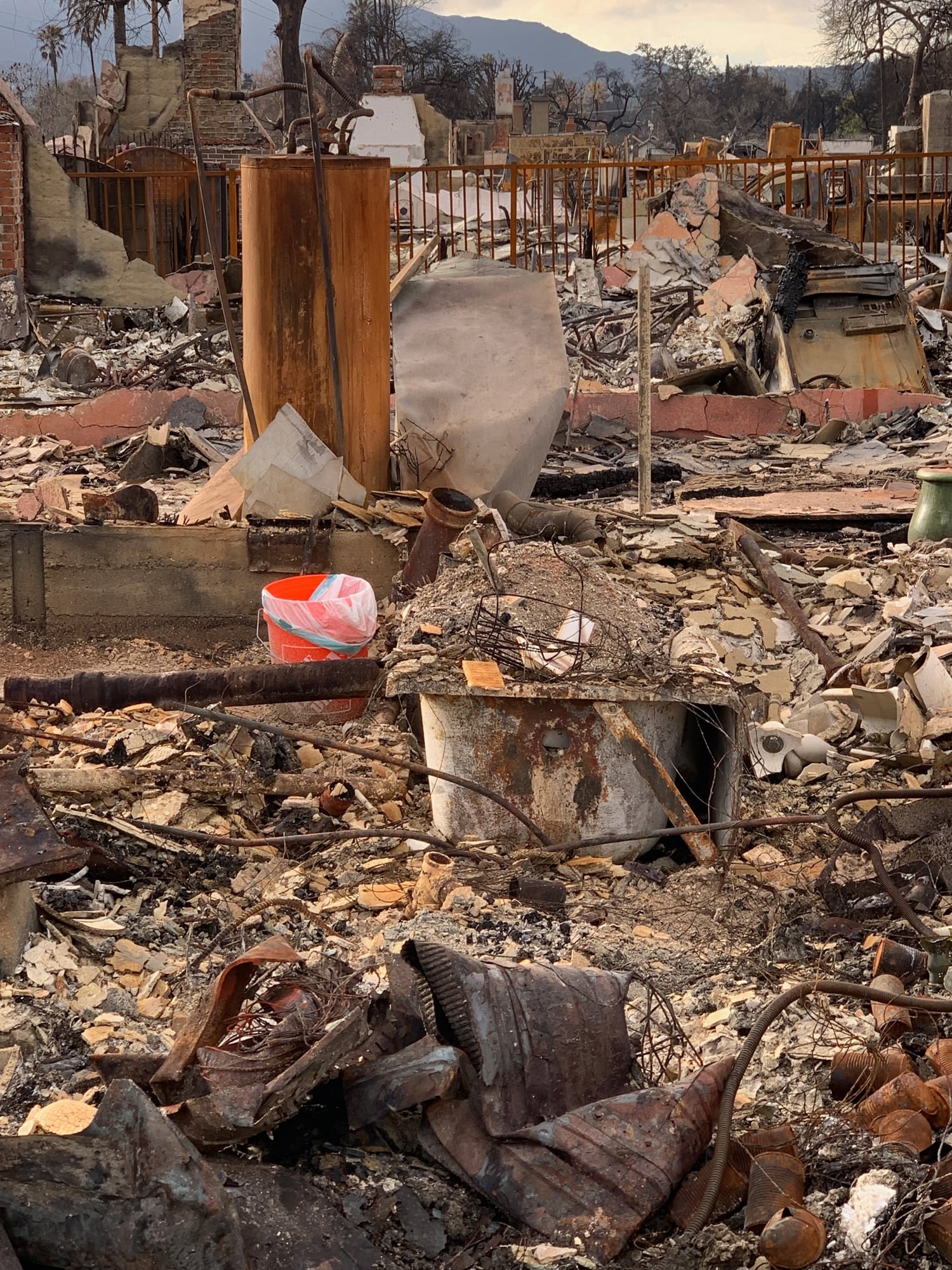
The bathtub.
The 1970 Volvo, once pale blue. The EPA has tagged burned vehicles “EV” or “Not EV,” alerting clean-up crews to the presence of toxic lithium-ion batteries in electric vehicles.
The bunny-rabbit barrettes.
The bra underwires.
The remains of the corgi menorah.
Keys.
Nail polish, still arranged in a cosmetics tray.
Broken chairs.
Scorched fig tree regrowing in its melted plastic pot.
Ruined nesting bowls repurposed as a planter.
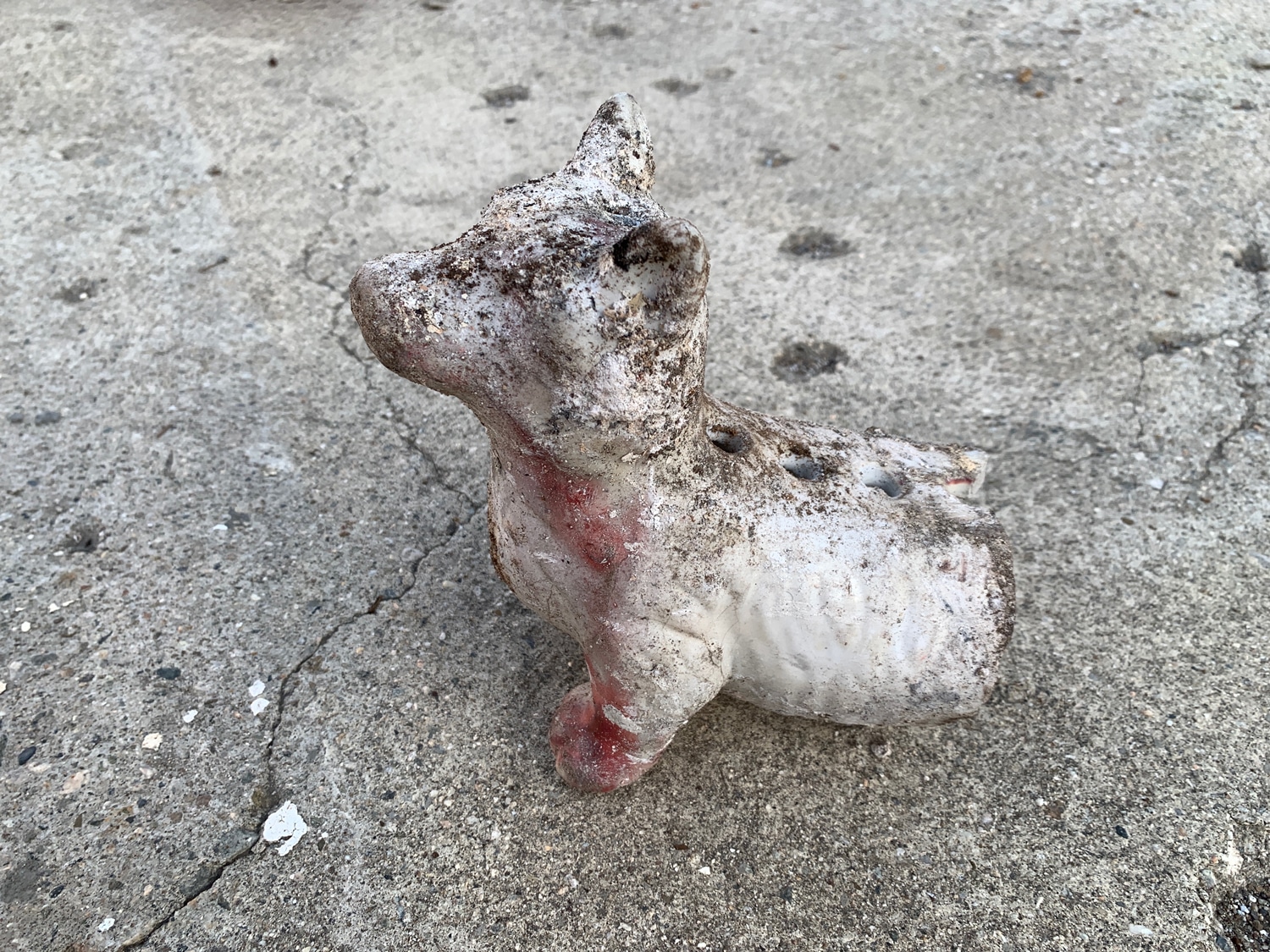
Most of the Brayton Laguna cat from the mantle.
The dead lizard.
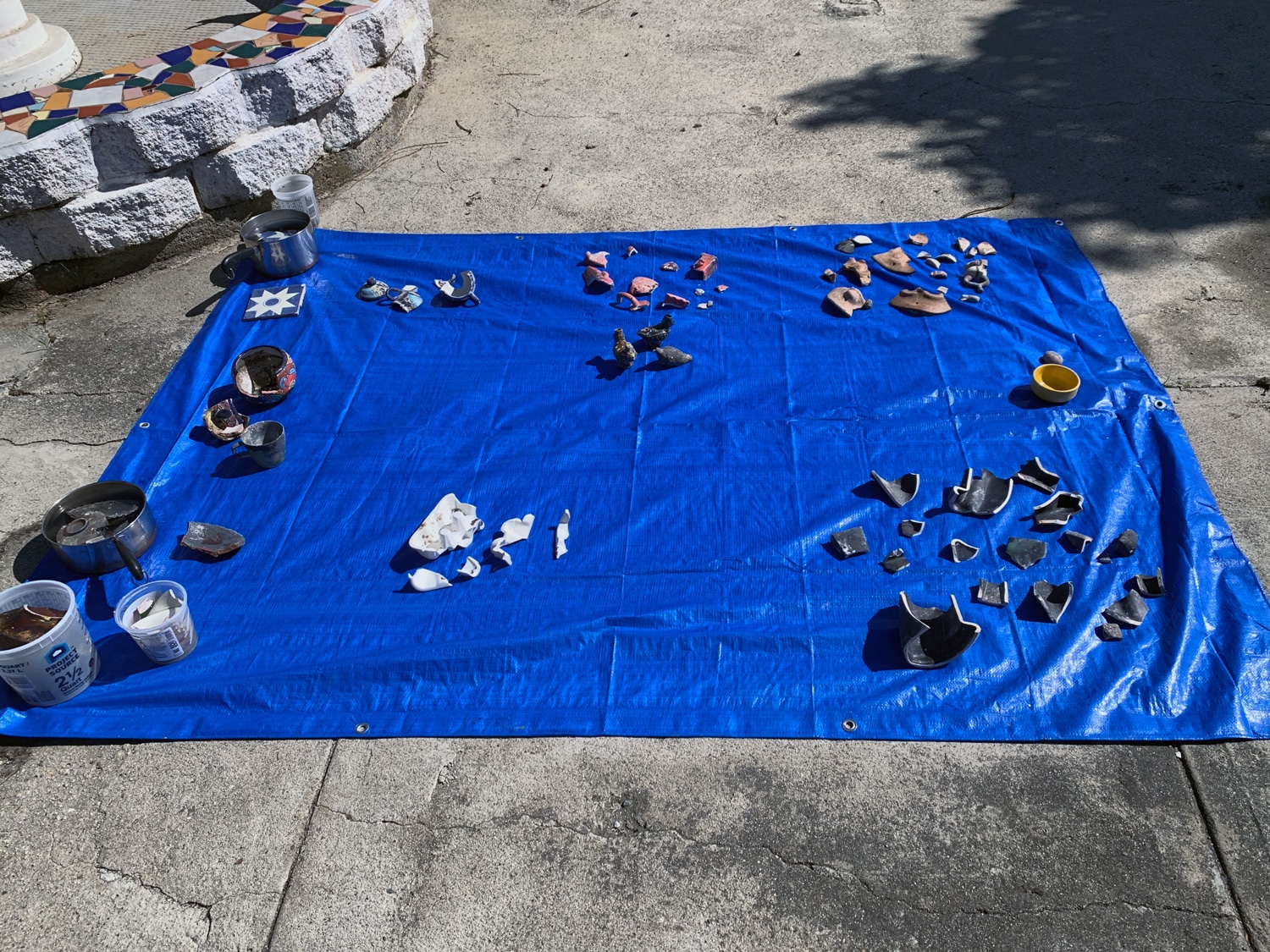
Sorting the shards.


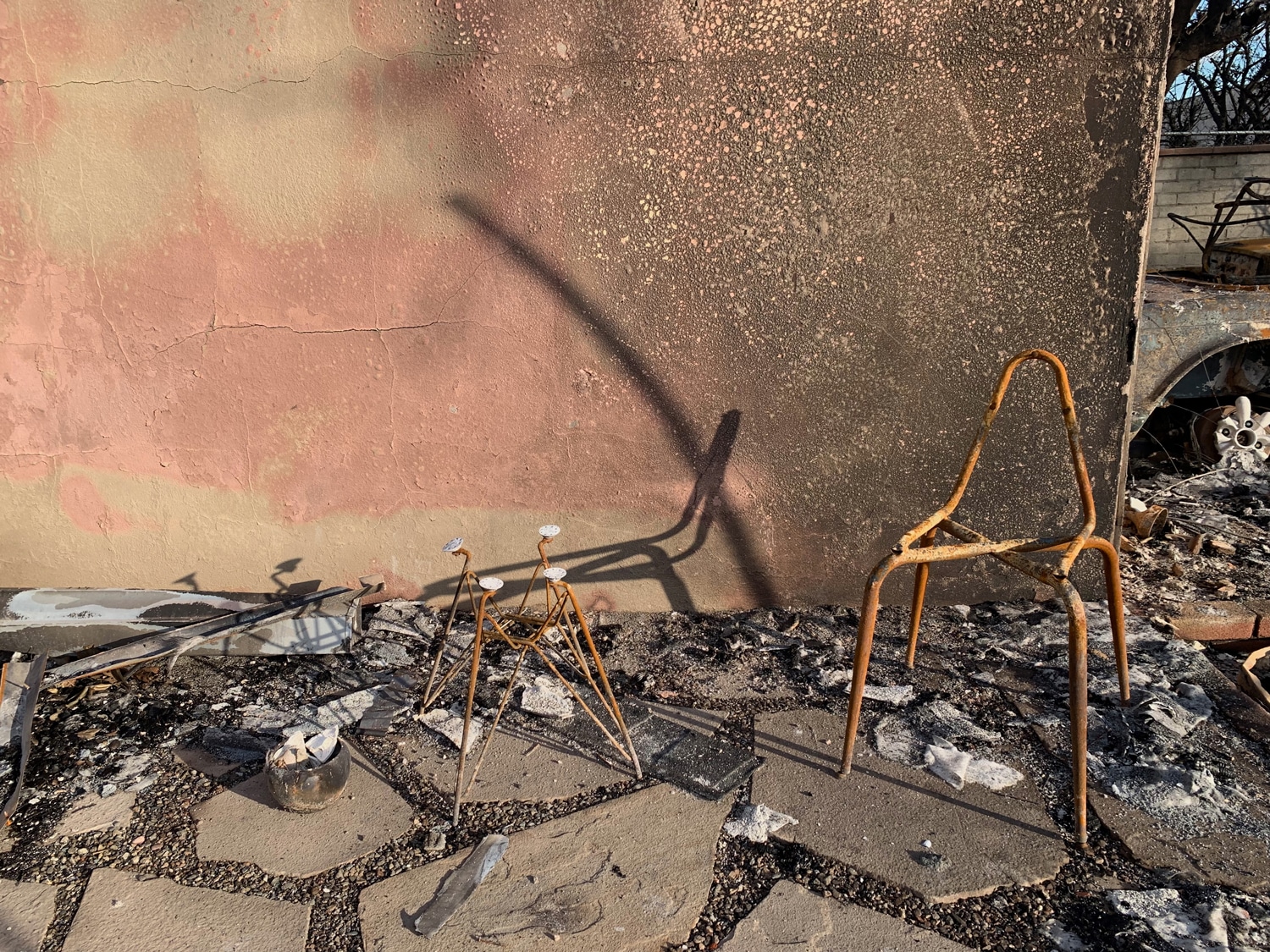
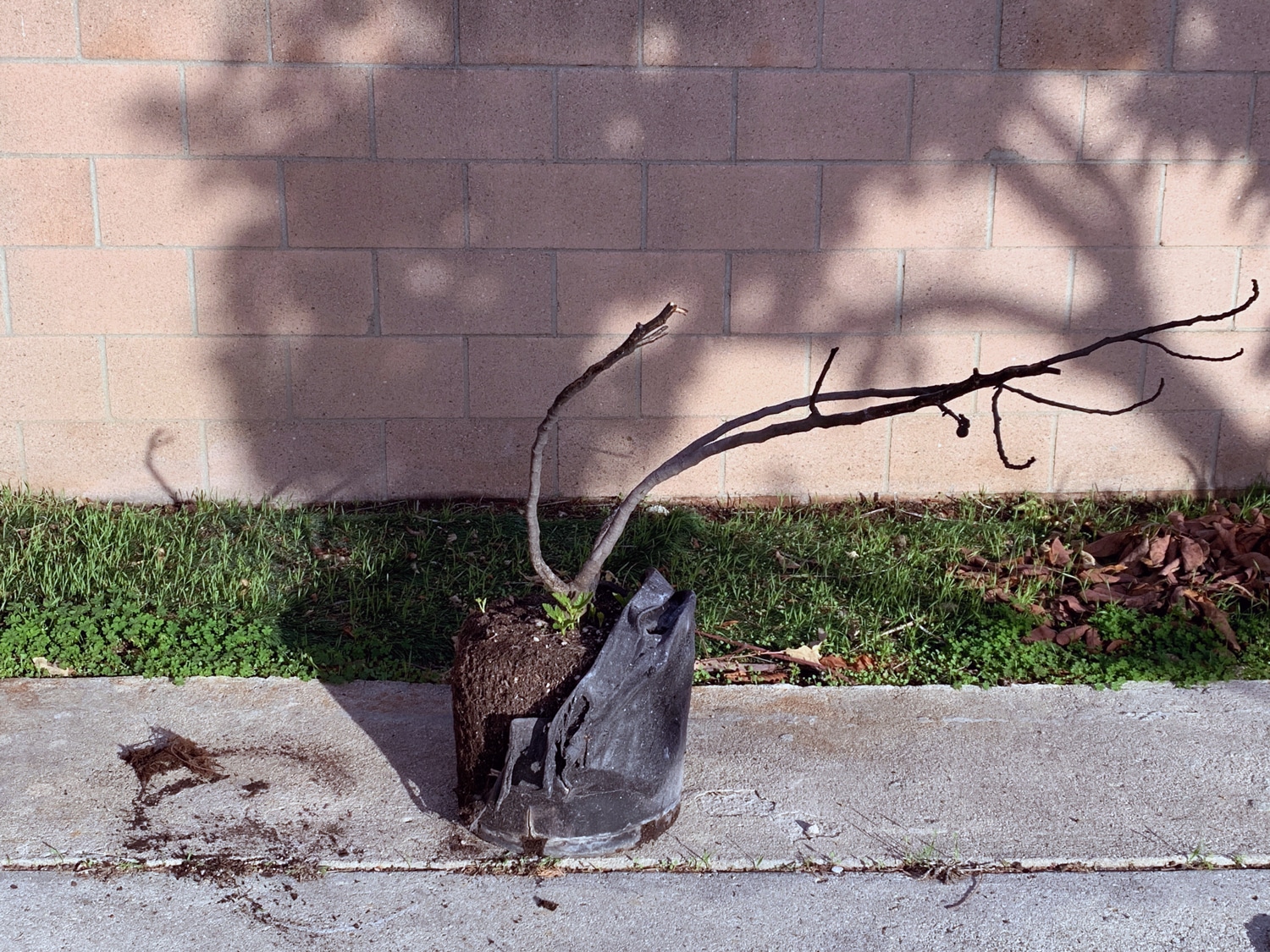
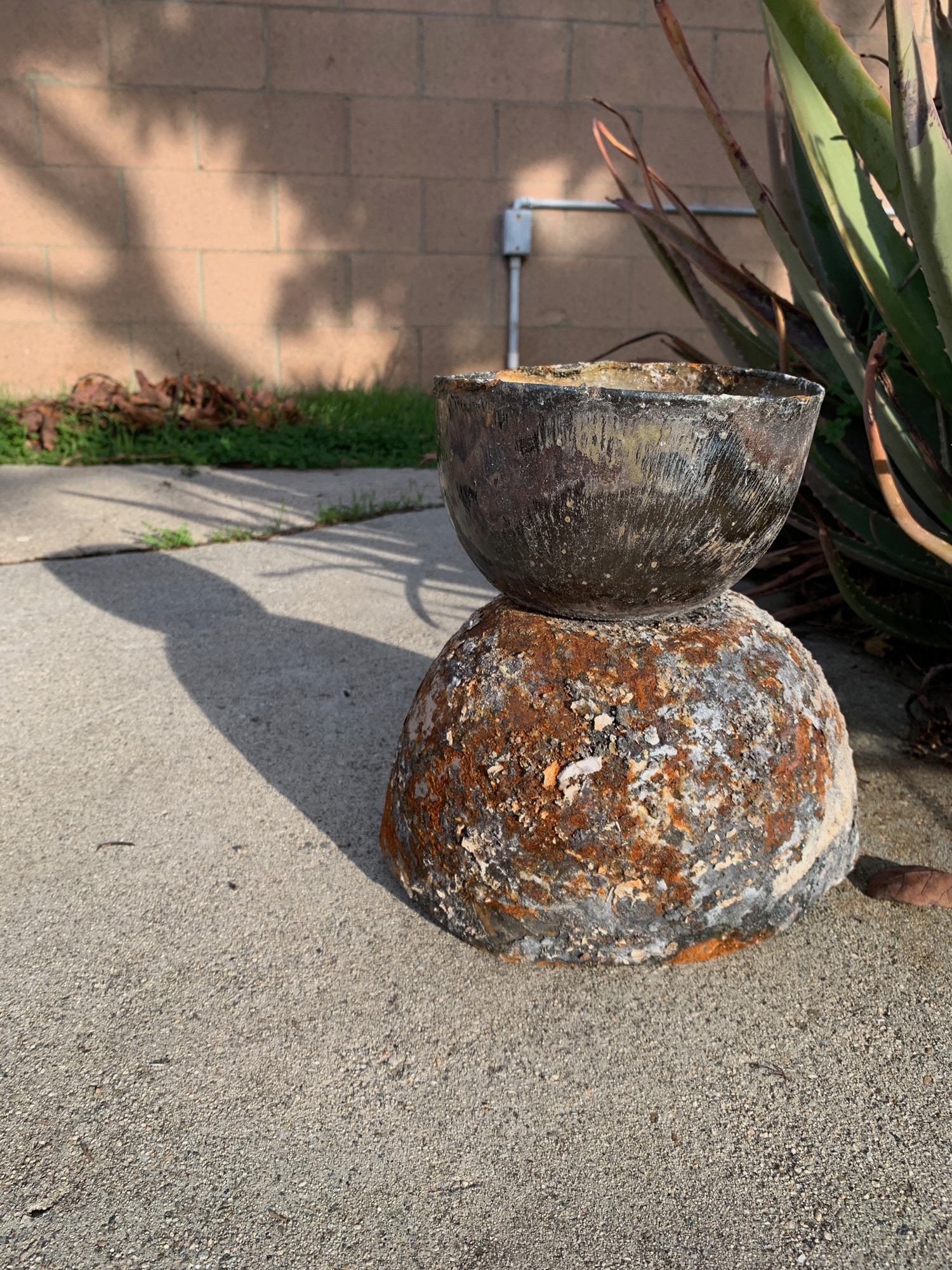
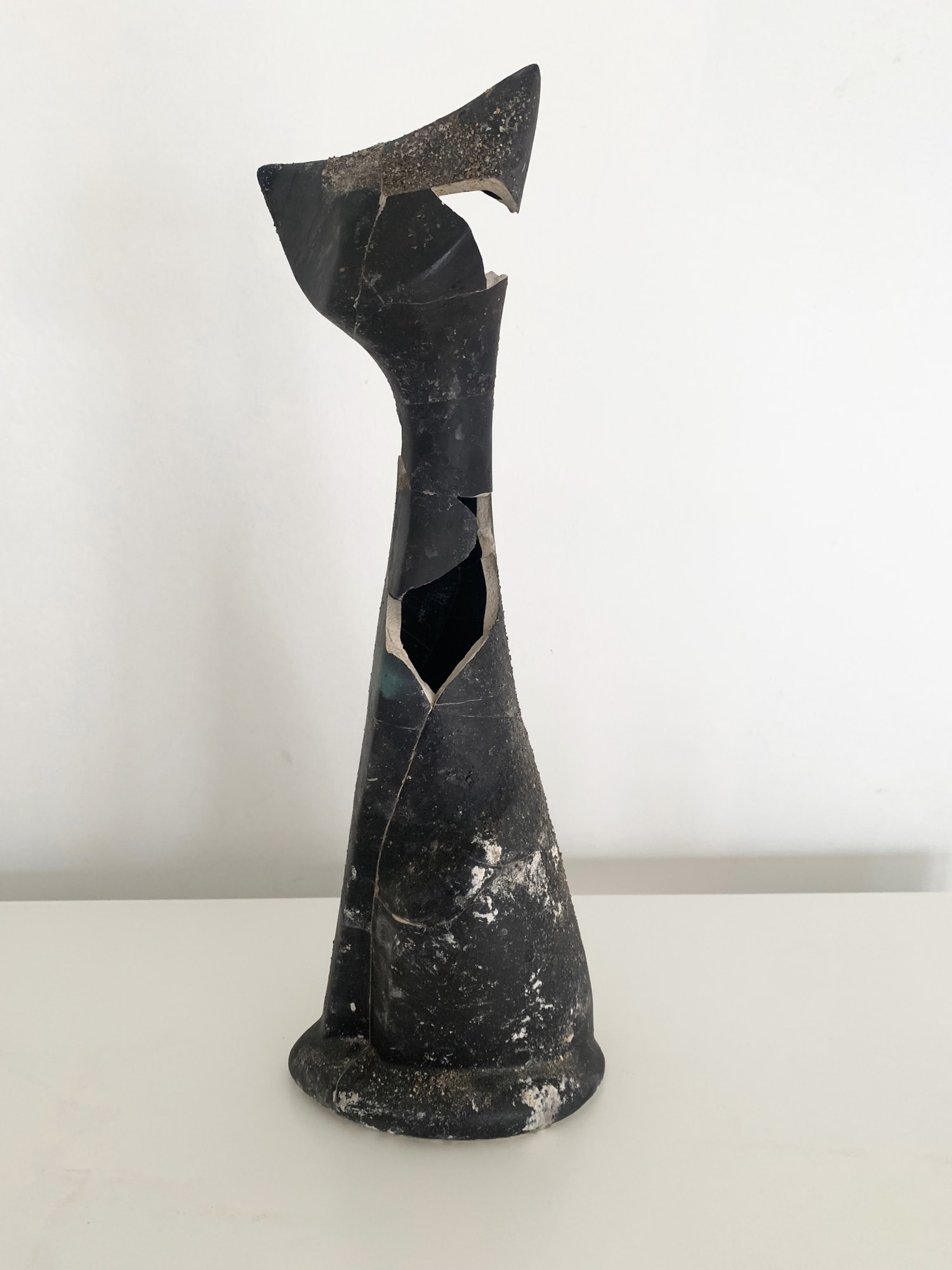
I always thought fiction writing was the ultimate way of making the familiar strange, but now I realize it’s fire.
In fact, at the height of the inferno, CNN was broadcasting right from our block — and even though Anderson Cooper mentioned Harriet Street by name, with the houses gone, the shrubbery on fire, and the embers rolling like tumbleweeds, I couldn’t figure out where he was standing until I matched the wrought iron gates behind him on TV with the houses you could still see standing on Google Earth.
Every day delivers another puzzle. Are the ceramic shards from our dishes or from our sewage pipes? Have I found a favorite bracelet, or is it just a bent nail bejeweled with chunks of grout? How can you know what you’ve lost and what to look for if you can’t even figure out what you’ve managed to find?
I know there’s nothing more to scavenge that’s worth wading through the toxic mess, but I keep digging, like the only way out of the confusion is tunneling through it. Or maybe the digging is an involuntary act of hope, like the way my heart jumps every time I round our corner and I slap my pocket in panic that I don’t have my keys, before remembering there isn’t a house to unlock.


If you would like to comment on this article, or anything else on Places Journal, visit our Facebook page or send us a message on Twitter.