
![Clockwise from top left: Joel Martínez Soto in his frepair shop on Articulo 123 Street, Mexico City [Ivonne Santoyo-Orozco]; "Broken" [Quinn Dombrowski via Flickr under License CC 2.0]; Western North Carolina, repair in the aftermath of Hurricanes Helene and Milton, October 2024. [L.A. Fire Department via Flickr under License CC 2.0]; Climate Design Action Cards, Parks in Action, Toronto, Fadi Masoud and Victor Perez-Amado.](https://placesjournal.org/wp-content/uploads/2024/11/Field-Notes-Repair-1-lead-composite.gif)
How might we unbuild (with care) a wildly overbuilt planet? How might we rethink the making of buildings, cities, infrastructures, and communities towards the goal of planetary endurance and repair — of staying rather than going, preserving rather than abandoning? Can we eschew salvation in favor of a patient and ordinary hope? Who and what might we do this with? Where might we find the strength? Where might we find the time(s)?
Repair studies has sought to invert the presumptions of fields with stubborn addictions to the new.
In recent years a growing substrate of repair studies has emerged across fields too numerous to list, from geography to computing, sociology to architecture, design to (post)development. In the process this has underscored important regional flavors and variations, distinct conditions of breakdown and repair around the world, and the wild plurality of maintenance and repair practices that underpin infrastructural continuity and human flourishing (or simply staying with the trouble). Some of these have brought new attention and respect for repair practices previously overlooked or neglected, often with a valorizing intent. Others have sought to invert the presumptions of fields with stubborn addictions to the new. How, for example, might architecture change if pursued under the ethos of broken world building? Or if the delusion of timelessness gave way to the recognition that “buildings must die”?

Still others have explored the complex, essential, and sometimes troubled relations of repair to other key values and practices, from care, justice and whatever it is that lies beyond sustainability, to flourishing, renewal, and hope. Repair has come to stand for a going back and a going forward, a source of endurance and a source of change. It has been both forward looking and profoundly conservative, world breaking and world making (in equal measure?).
Planetary repair can mean many things, but I don’t think it means geo-engineering or guarded enclaves or interstellar travel.
In my own recent work I have been focusing on the planetary, taking the brokenness, but also the resilience, of the planet — this one, right here, now — as both question and starting point. (“On earth” is meant to simultaneously center and provincialize the planet while reminding us that we have only one truly conceivable home. I recommend this approach: might “buildings on earth,” “cities on earth,” etc., provide an alternative to our pale and tired language of sustainability?) Given my disciplinary location(s), I have followed in particular the problem(s) of computing on earth: sourcing and extraction, energy and water, waste and repair, all now being massively expanded due to the proliferation of AI and datafication as we dig our way into the cloud(s).
The planetary, for me, can be very big or very small — as large as the globe seen from space, and as small and mysterious as the field across the street; or the mycorrhizal filaments connecting roots to soil; or the chemical pathways transmitting mercury, cadmium, and lead from discarded monitors and hard drives to fingers, livers, and water tables. Planetary repair can mean any number of things, but I don’t think it looks like geo-engineering (which seems rather more of the same, and ultimately likely to repeat the same old violences and stories). I also don’t think it looks like escape, whether to fantasy and distraction, guarded enclaves, or interstellar travel. The truth is, I don’t know what it looks like — other than that it is something we will and must do together, in and with the worlds around us: patiently, modestly, and in hope.
— Steven J. Jackson
Repairing Repair
Repair is a noble cause, but it is inseparably fraught with political anxieties and machinations. Because the idea of repair is often popularly perceived as an ethically grounded panacea, we frequently miss seeing how it dovetails with our understandings of another problematic concept: injustice. Insofar as we want to operationalize it as a tool for social good, it is important to understand “repair” in its turbulences, fluidities, and anomalies.
Imagine a city — full of rich heritage, economic potential, and informal settlements — struck by a powerful earthquake. The city is decimated. In the aftermath, administrators, policymakers, and civil society feel it is their moral duty to repair their city. Yet after much contentious debate, there is no consensus as to how to rebuild.
Oligarchs want to generate hefty returns on their investments. The heritage preservation community is deeply divided. One group wants to restore historic buildings exactly as they were prior to the earthquake. Another wants to modernize, to retrofit with amenities consistent with the age. Another traditionalist group seeks to restore buildings to their original state, as they were when built ages ago, based on archival sources, textual evidence, and oral histories.
Repair is a noble cause, but inseparably fraught with political anxieties and machinations.
The neoliberal polity see the devastation as an opportunity to rebrand their city via a “Bilbao effect,” banishing the poor to the climatically precarious urban fringe. Poverty-reduction advocates protest this move. The poor, for their part, refuse to be evicted, claiming their right to the city. A nature conservation group argues that urban areas must be “re-wilded” to combat global warming, and that free-market-friendly progress should not take precedence over natural well-being. A humanitarian organization demands that the city accept climate refugees and provide them affordable housing. Leading theologians suggest, however, that the seismic catastrophe was God’s punishment for hubris and excesses; the task of repair should be understood as penance.
Thus, a stalemate. Repair becomes an impossible goal — and this is assuming that all has transpired under the auspices of democratic politics.
Consider Lisbon in the wake of the 1755 earthquake. As Judith Shklar demonstrates in The Faces of Injustice, the devastation not only prompted the citizens of Lisbon to ask why God inflicted such suffering, but stirred Enlightenment philosophers like Voltaire, Rousseau, and Kant to consider the nature of divinity. Could a just God do unjust things to innocent people? If a natural disaster is deemed either as proof of God’s wrath or as mere misfortune, how do people mitigate its calamitous effects? This question provoked an intellectual debate at the heart of the Enlightenment.
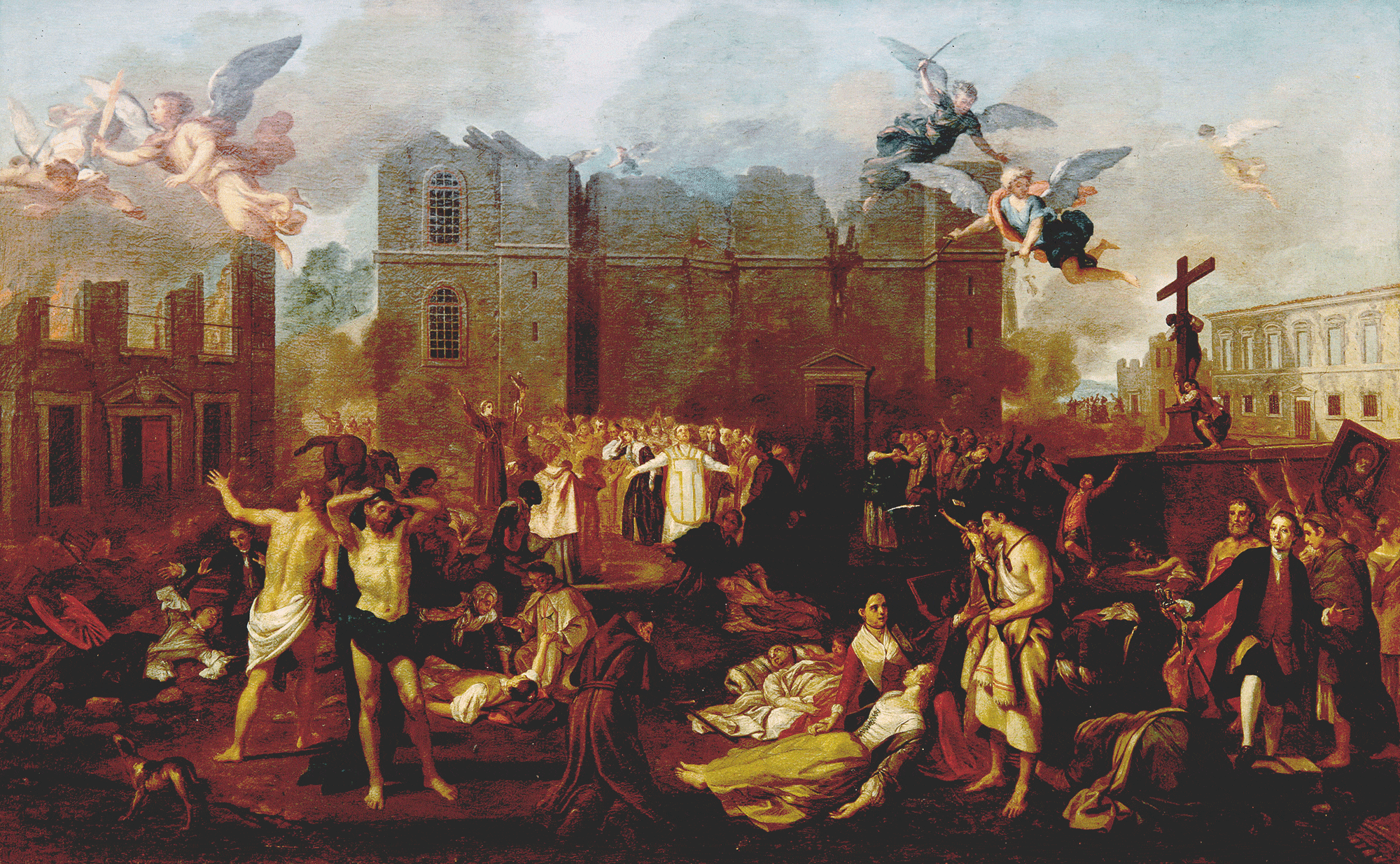
Voltaire’s “Poem upon the Lisbon Disaster” forcefully rejects the fatalist’s argument that whatever God does stems from a larger purpose, along with the teachings of “philosophers, who cry, ‘All’s well.’” Voltaire felt betrayed by God’s apparently irrational act. Rousseau was incensed by Voltaire’s failure to see faith in a merciful God as the poor’s last hope. Instead of blaming Providence, Rousseau accused the complacency of Lisboetas who had built tall, arrogant edifices, as opposed to abodes in harmony with nature. The poor, Rousseau argued, were kept poverty-stricken through the cunning orchestration of nature into the manmade. The young Kant’s position wasn’t unlike Rousseau’s. Instead of laboring to understand inscrutable “acts of God,” he focused on the possibility of minimizing human-driven atrocities like war. In their disparate ways, all three investigated the same thing: the injustice and inequality caused by unholy human actions.
All this is to suggest that there is no readily operable concept of repair with which we could magically fix the problems that afflict our societies, cities, built environments, and educational systems. Repair — or rather “repairing” — becomes tenable only when we dispel its romantic, ethical framing and the false promise that its unproblematic application would somehow return us to a golden age.
— Adnan Z. Morshed
Repair Stories
We keep saying to each other that we’ve had enough of repair. Then we hesitate, because we must remind ourselves at every turn that the thing about repair is that it is never complete. Repairs are necessarily ongoing (as we have argued here and here). There’s always somewhere, someplace, that’s closed for repairs. The position we have arrived at is that repair comes first. It’s not good enough to wait until the moment of breakdown.
The thing about repair is that it is never complete.
As Steven J. Jackson recommends, we need to think with the inherent brokenness of the world. We need to work with planetary damage. The old existential play between the present-at-hand and the ready-to-hand returns us again and again to our entanglements with environments and things, with naturecultures come undone. We know where to point the finger: at the capitalist-colonial continuum and its voracious wasting of worlds. The authorized proprietorial repair built into smart phones, compounded by the unrepairability of fast fashion, are the kinds of dis/repair that make us despair. Like carbon credits, these forces represent a sly move to monetize and naturalize the negative entropy of the world, because things generally fall apart. No one should own repair, but we should all share in its careful management.
We are often shocked when we listen to lectures by engineers, construction managers, and designers too, when they begin to dream of a maintenance-free world. No such thing, we say. Françoise Vergès calls out the fact that apparently invisible cleanup and fix-it jobs have been outsourced to struggling nation-states, often places already stripped clean by the extractivist logics of colonialism-capitalism. Who is doing the work of cleaning and maintaining, and the care of repairing and reproducing? Usually the most vulnerable among us, migrants, people of color, those who have not had the privilege of access to education, healthcare, and secure housing.
We are in search of a radical practice of repair, one that locates itself between a moratorium on new construction (see Zosia Dzierżawska and Charlotte Malterre-Barthes) and a moratorium on demolition (see Joe Giddings). This is the impossibly narrow margin in which the designer can make a humble contribution. It will be important that we work collectively on this program and learn from one another to become world-menders and not world-destroyers.
— Hélène Frichot and Lucy Benjamin
I’ve spent a good part of the past two decades critiquing the preservation paradigm, and advocating instead for a focus on process and emergence. I wrote a book about curation as collaboration with other-than-human agencies of decay and entropy, and flagged the potential in a “ruderal heritage” sensibility, attuned to disturbance and renewal. Initially, these ideas were exploratory and speculative; as the reality of accelerating climate change has begun to bite, however, I’ve been drawn into discussions about how to apply these ideas in practice. Most recently, I collaborated with heritage practitioners to a develop a new conceptual framework — “adaptive release,” defined provisionally as the “active decision to accommodate and interpret the dynamic transformation of a heritage asset and its associated values and significance.”
People will need to find new ways (or rediscover old ways) of sustaining lives and livelihoods in place.
But doubts have crept in, and I am now asking questions for which I don’t have easy answers. Does encouraging people to accommodate, and even embrace, heritage transformations deflect attention from how lifestyles in the Global North continue to drive processes of climate breakdown? How do concepts like adaptive release relate to cultural heritage in places where catastrophic climate change is compounding engrained injustice and inequality? The promises gathered around the concept of adaptive release imply that most of the change we seek to shape will be gradual and manageable, and not violent and abrupt; that the ecologies and agencies we release will not do harm; that limited resources can be stretched to support experimental approaches; and that space can be held for complexity and uncertainty as things (societies, institutions, communities) begin to unravel. But what happens when confronted with mounting evidence that change is likely to be sudden and unplanned, and that the window for meaningful preparation is now vanishingly small?
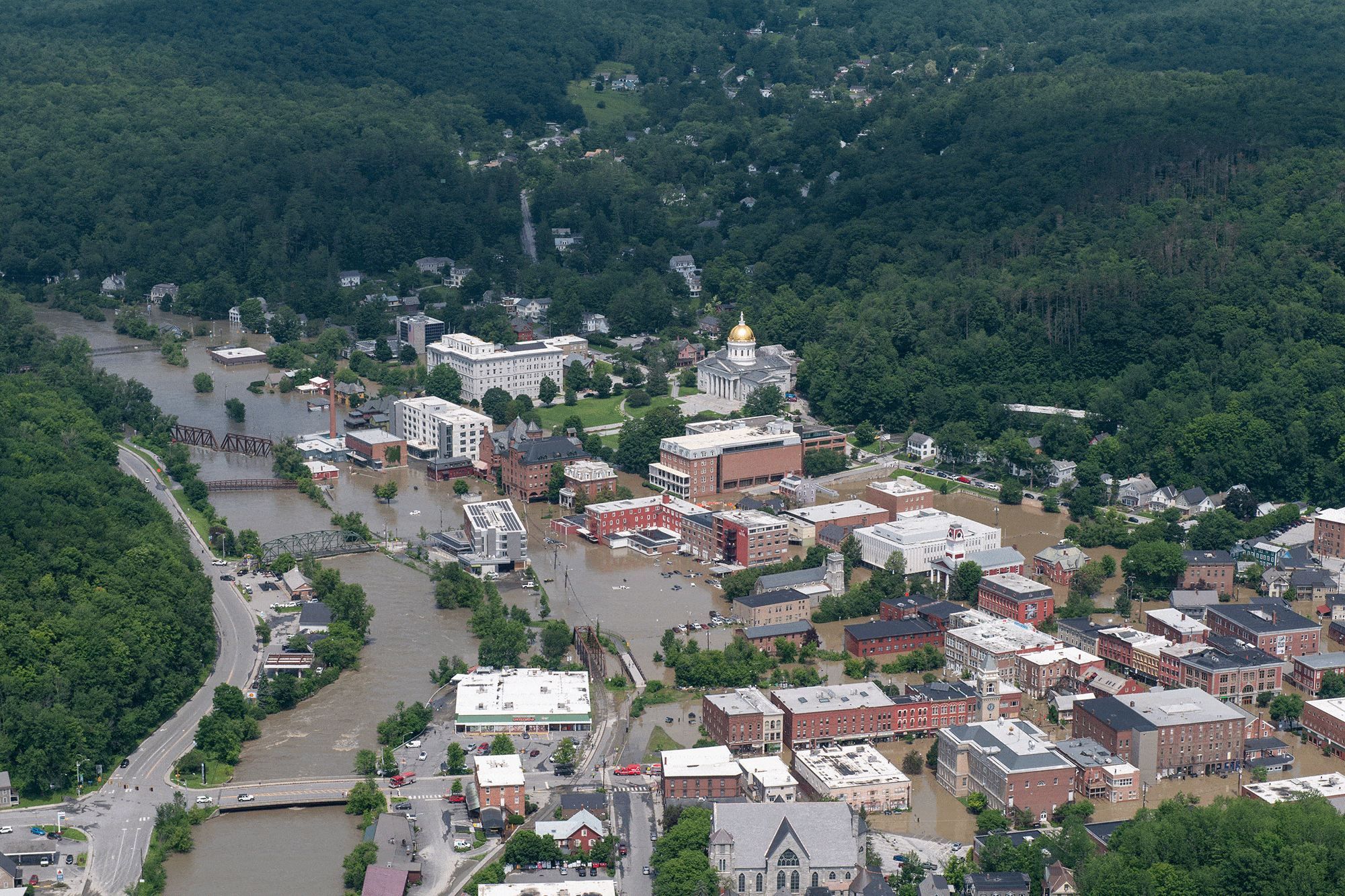
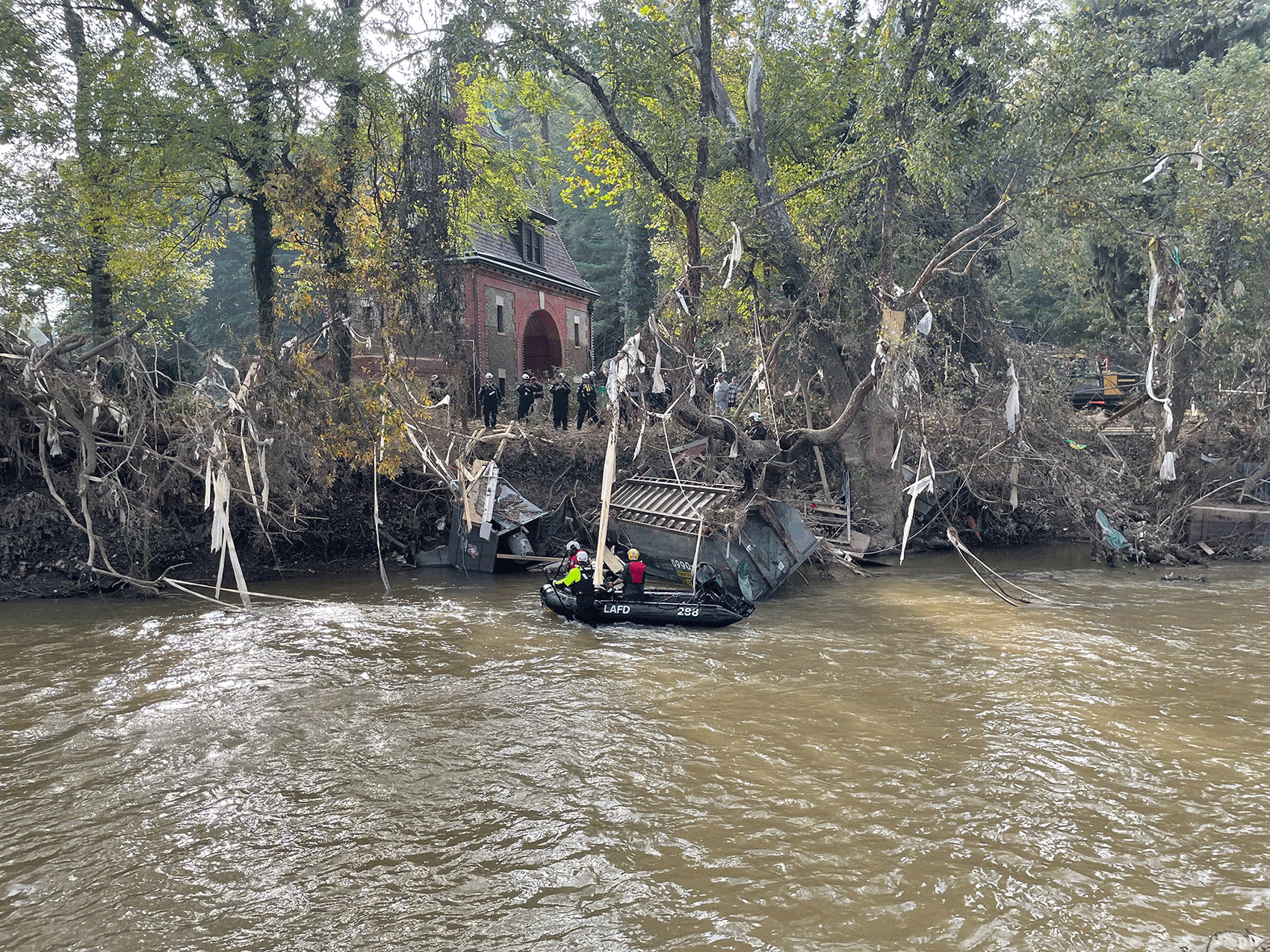
In a climate-changed world, the ambient awareness of crisis long familiar to people in many parts of the world is becoming pervasive even in privileged enclaves where breakdown was previously abstract rather than actual, elsewhere rather than embodied. In Vermont, where I grew up, the summer of 2023 saw unprecedented flooding: bridges were carried away, roads washed out, towns drowned in mud and debris. Similar scenes played out this autumn in North Carolina, Nepal, and Nigeria. The response, in these places, was not release. It consisted, instead, of concerted and collective acts of repair. Residents of flood-stricken communities hauled waterlogged belongings from flooded homes, swept mud off the streets, cleared debris, and started again.
Repair and release may seem locked in opposition — one focused on holding things (places, buildings, objects) together and the other focused on relinquishing our hold on things, and allowing them to become something else. I sense, though, that we will need to cultivate both sets of skills in the years to come. As resources become even more strained than they already are, the responsibility for repair and recovery will, increasingly, fall to individuals and communities, rather than institutions and governments. People will need to find new ways (or rediscover old ways) of sustaining lives and livelihoods in place. Where this is not possible, repair may need to be reconfigured as a cultural capacity, oriented towards helping people carry their past into the future even as the places that anchor that past are — gradually or abruptly — released.
— Caitlin DeSilvey
The Perkins Process
Lately, I’ve been writing about Chicago architect and Progressive Era reformer Dwight Perkins, and learning a lot about how the program and function of buildings can transcend our pettiest urges, helping us to detach from object-based obsessions with novelty as a solution to problems in the built environment. Not nearly renowned enough for the 40-some public schools he designed for his city early in the 20th century, Perkins has been cast as a Prairie School bit player and an Arts and Crafts holdout. Yet perceptive scholars have identified him as perhaps the first self-conscious American design activist.
For Dwight Perkins, design was a bureaucratic street fight.
A contemporary of Jane Addams and the settlement house movement, Perkins was accustomed to being harangued by corrupt civic officials and assailed by value engineers. Design for him was a bureaucratic street fight. As such, he scarcely paid attention to what his buildings should look like. (Yet somehow most of them are still beautiful, and beloved.) He obsessed over what they should do. Developing unique programming that could embrace the immigrants and emerging industrial proletariat then flooding into the city, he provided spaces for education, but also for forging solidarity and self-determination. Their innovations included manual training facilities (shops for carpentry and metal work), along with art studios, test kitchens, and gardens for the study of science and botany.
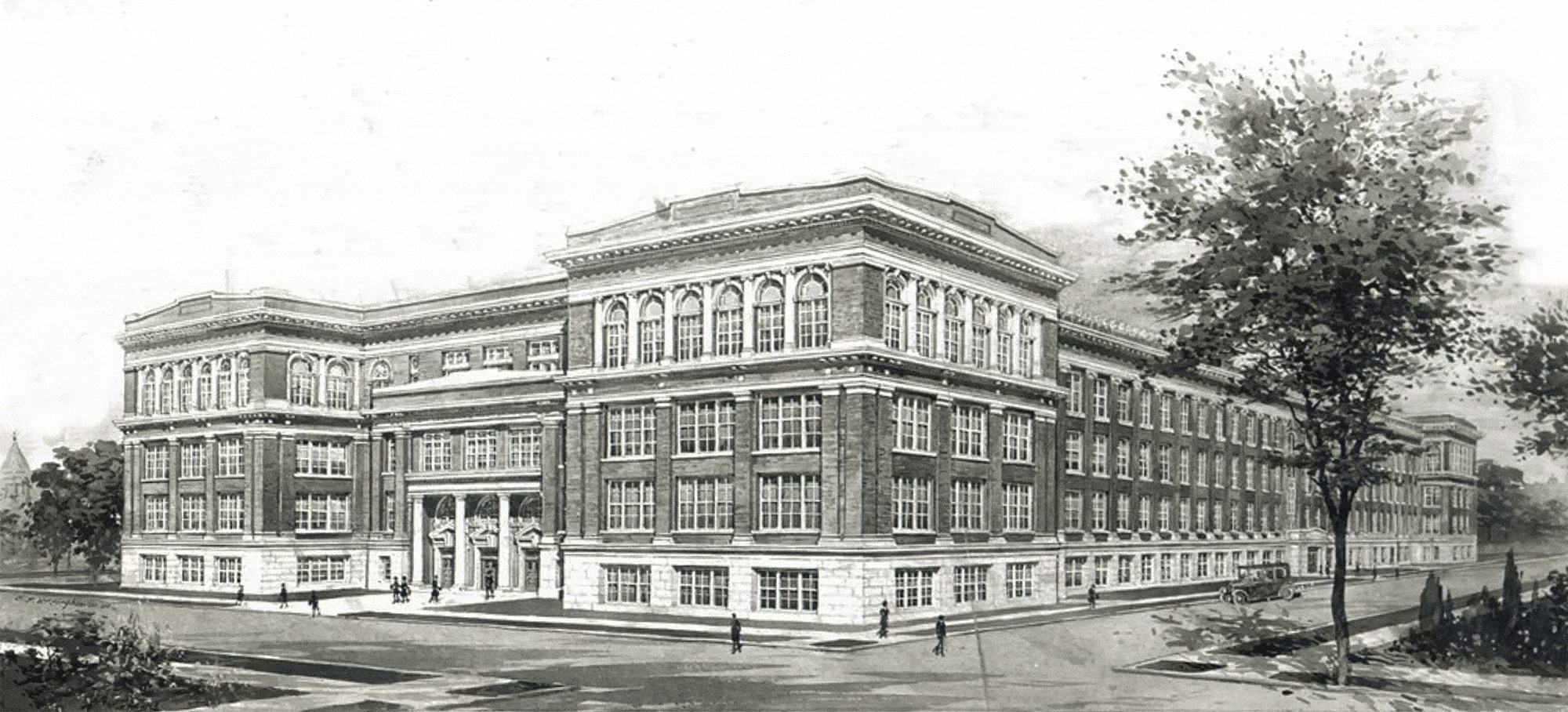
Perhaps most importantly, the buildings were flexible spaces open to the entire community. Large auditoriums were located across the entry halls from the front doors, to serve as public forums for lectures and meetings. At the same time, the buildings’ layouts allowed wider communities to use one section while students used the others. There were classrooms where you might learn English or plot with your neighbors to oust a city council hack who didn’t serve your interests, and install your own. Fundamentally, these were spaces for care and repair, meant to weave new Chicagoans into emergent formations of American liberal democracy.
The democracy Perkins wanted to facilitate was not a product but a process; a program that would evolve and devolve depending on the day’s synthesis of people, culture, and material constraint. And I hope there’s a lesson here we can observe today. How much blood, treasure, and trauma can be saved, and how much humanity preserved, if we conceptualize the built world as a collection of mutable and dynamic programs realized in the material resources we have, instead of definitive statements on who we think we are, or want others to think we might be?
— Zach Mortice
Artículo 123
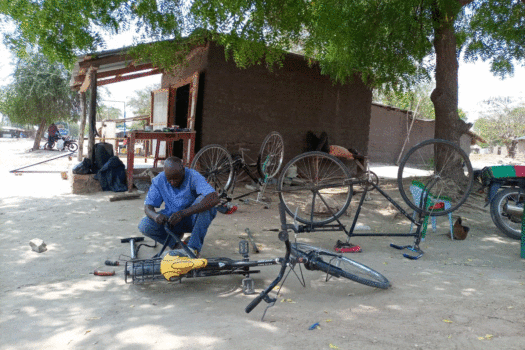
Que estas buscando? What are you looking for? It’s a question you hear multiple times as you walk along Artículo 123, a street in Mexico City dedicated to the repair of appliances. Spanning five blocks, with more than 100 businesses, the district of refaccionarias (spare-parts stores) has every sort of mechanism, from the simplest spring to highly specialized industrial components; some are new, some are retooled, and some, as I was told, are created from scratch. For those like myself who don’t understand much about machinery, the street is also home to repair shops where, in a matter of hours if not minutes, technicians can extend the lifeline of most appliances.
The street is part of a cluster of maintenance-related services in the historic city center; parallel to Artículo 123, you find Calle Victoria, with store after store dedicated to electrical components and lighting supplies; perpendicularly, Calle Revillagigedo will cover your plumbing needs. This is a world of repair possibilities in the most literal sense.
Artículo 123 models a repair culture that is alive and well, but needs to be valued and supported.
At a time when climate activists, environmental economists, and scholars are calling attention to the importance of reducing material waste and energy consumption, Artículo 123 provides a model that could thrive in a world reoriented towards degrowth. Yet, despite the inclusion of repair in legislation recently approved by the Mexico City Congress that aims to reduce waste and uphold the circular economy, repair remains undervalued. Most technicians in Mexico earn below minimum wage and operate in the informal economy. And, while shops along Artículo 123 are thriving, with so much work that it spills onto the sidewalks, such businesses are rarely found in higher-income neighborhoods. There, the mall represents an inverse model of single-use consumption.
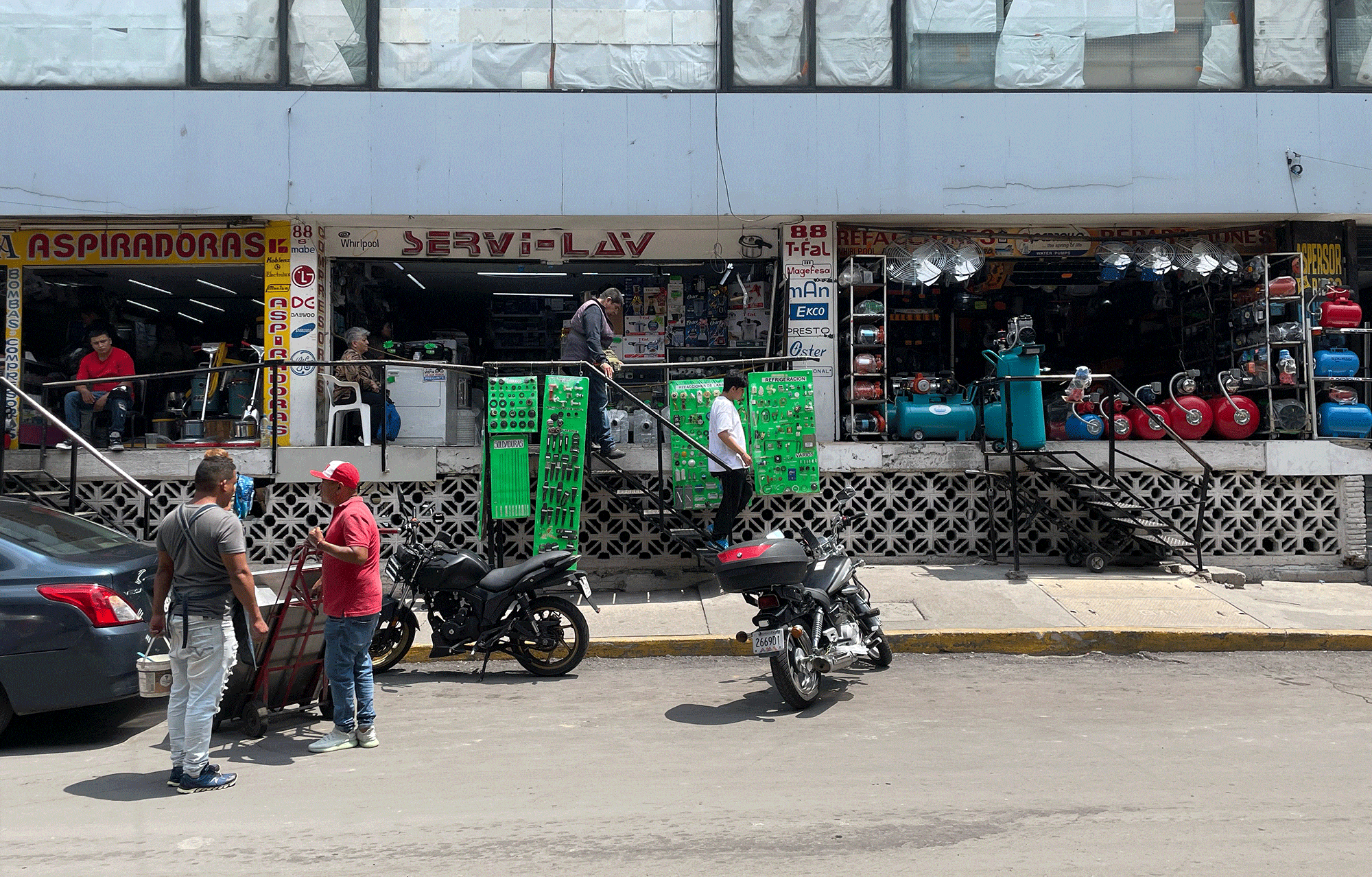

This tendency towards disposability is not an expression of class; rather, it has shaped the market as a whole. It is not surprising that sales of new appliances in Mexico have grown exponentially since the 1990s. Artículo 123 remains socially and economically fragile. This zone of repair cannot, on its own, transform the world.
I don’t know if, having the choice, clients who visit Artículo 123 would choose to repair an old appliance or to buy a new one. I do know that, throughout my childhood, I went there only when my family had to save money. As a middle-class kid, going to Artículo 123 never felt celebratory, the way it did when a new box arrived at the house. Now that I understand my misconception, I hope that renewed interest in the “right to repair” is not stripped of the class politics in which repair is always already embedded.
With a planet breaking down, repair is being discussed as a social and political ambition — a crucial practice for building a new world. For that to be possible, however, we need to confront the systemic inequality that differentiates between people who perform repairs as a way to manage structural abandonment, and those who ignore this “reparative” way of life. Until then, Artículo 123 will model a repair culture that is alive and well, but needs to be valued and supported.
— Ivonne Santoyo-Orozco
Many of us are consumed by the challenges of climate adaptation, and it seems to me that many of the obstacles we face concern the “how” rather than the “what.” Change is beyond urgent, yet we remain collectively stymied by the inertia of business as usual, and by vested interests in the status quo. A paradigm shift from growth and consumption to care and repair can only be achieved by changing the ground rules, and the players.
As usual, I think education is at the heart of what is needed — because, as design educators and scholars, we can help students and young practitioners to shape emerging ideas about the professions.
Education is our most powerful tool in making the cultural transition that is required so urgently.
We have seen architecture schools across Ireland engage in a swift and collaborative process to fully de-carbonize their curricula. But such a large-scale, ambitious, atypical approach goes directly against the bureaucratic navel-gazing and lethargy endemic in many of our institutions. I think this is true in pedagogy, creative practice, and research alike, and it behooves us all to test our programs for their relevance to the challenges of the coming decades.
Universities, at least theoretically, remain places where the constraints of service to capital do not apply. Education is our most powerful tool in making the cultural transition that is required so urgently. Education provides opportunities to reframe the disciplines, and to reimagine our professions as they could or should be.
— Elizabeth Mossop
Parks in Action
The City of Toronto manages over 1,500 parks on 20,000 acres, ranging from small neighborhood parkettes to destination regional parks. While most are “traditional,” with active and passive recreational elements, a conspicuous number of idiosyncratic sites are labelled as “parks” but are effectively curb medians, wedges between residential parcels, and parking lots. These informal spaces tend to be concentrated in Toronto’s inner suburbs, where most of the city’s equity-deserving populations live. Many “traditional” parks, in contrast, were built in the postwar era in the suburbs, without a designer on record, for a relatively heterogeneous population. Today, these suburban parks often underperform in their role as public assets. Most of the surface area is dedicated to single-purpose sports fields (like baseball) or mowed turf, and these spaces have been maintained with tax dollars in the same state for more than half a century.
Parks in Action recommends repairs and upgrades to both types of parks, suburban-traditional and idiosyncratic, to better reflect their neighborhoods’ diversity and maximize their climate-adaptation potentials — such as their ability to store water, mitigate heat and air pollution, and increase biodiversity. A critical challenge in this process is overcoming public perceptions — shared by some city administrators — of parks as passive amenities rather than critical social and environmental infrastructure.
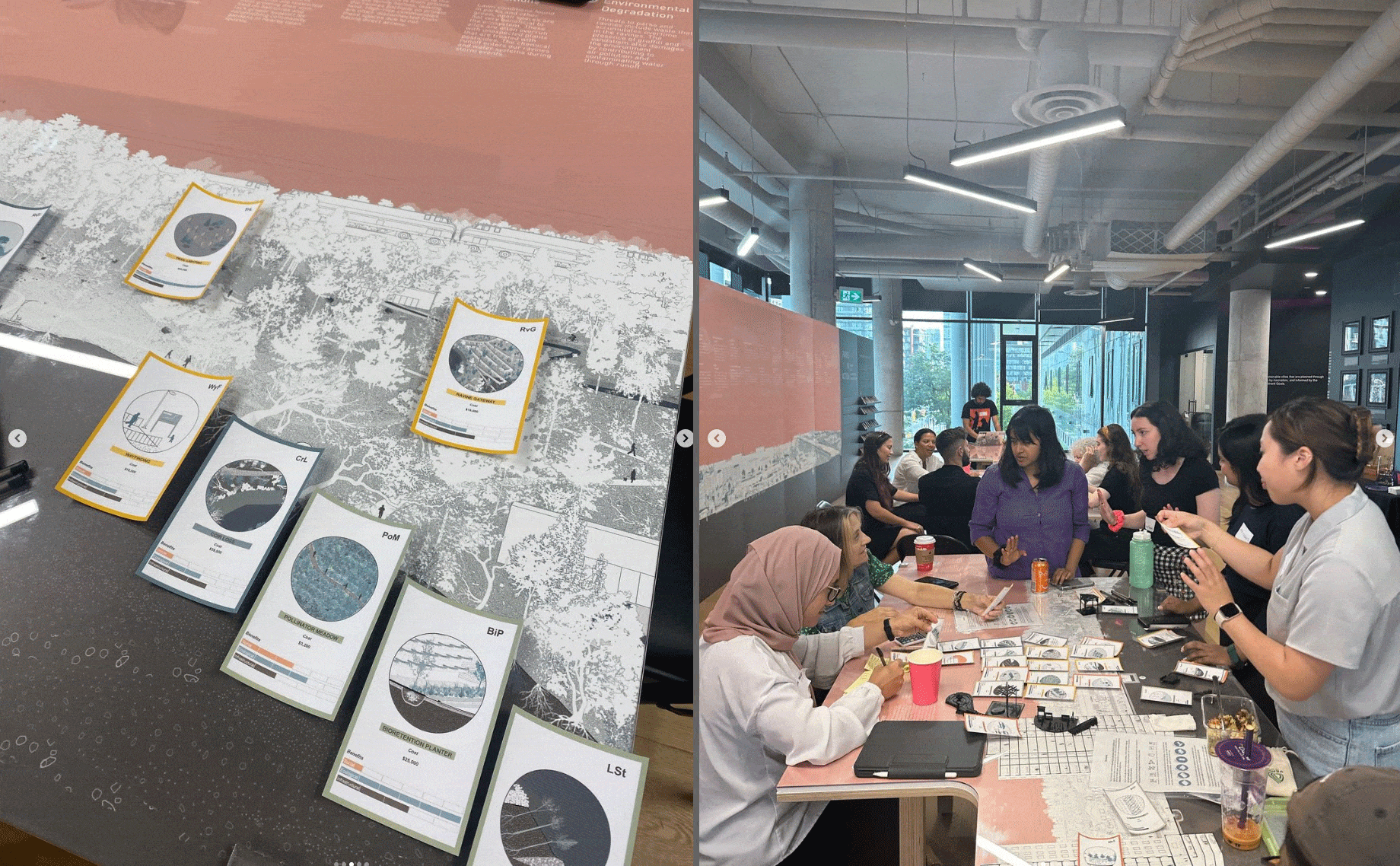
Our multi-institutional, multidisciplinary team has adopted a collaborative and participatory approach, engaging grassroots leaders, city officials, and community members through “Knowledge Exchange” sessions. These include distributing risk-and-opportunity maps illustrating links between surface heat, air pollution, land cover, and tree canopy. Such exchanges build a shared understanding of parks’ crucial role in residents’ daily lives and long-term health and well-being. Local leaders and climate champions can then use the data, combined with existing policies and their lived experience, to advocate for neighborhood-level change.
Urban parks are not simply passive amenities; rather, they are critical social and environmental infrastructure.
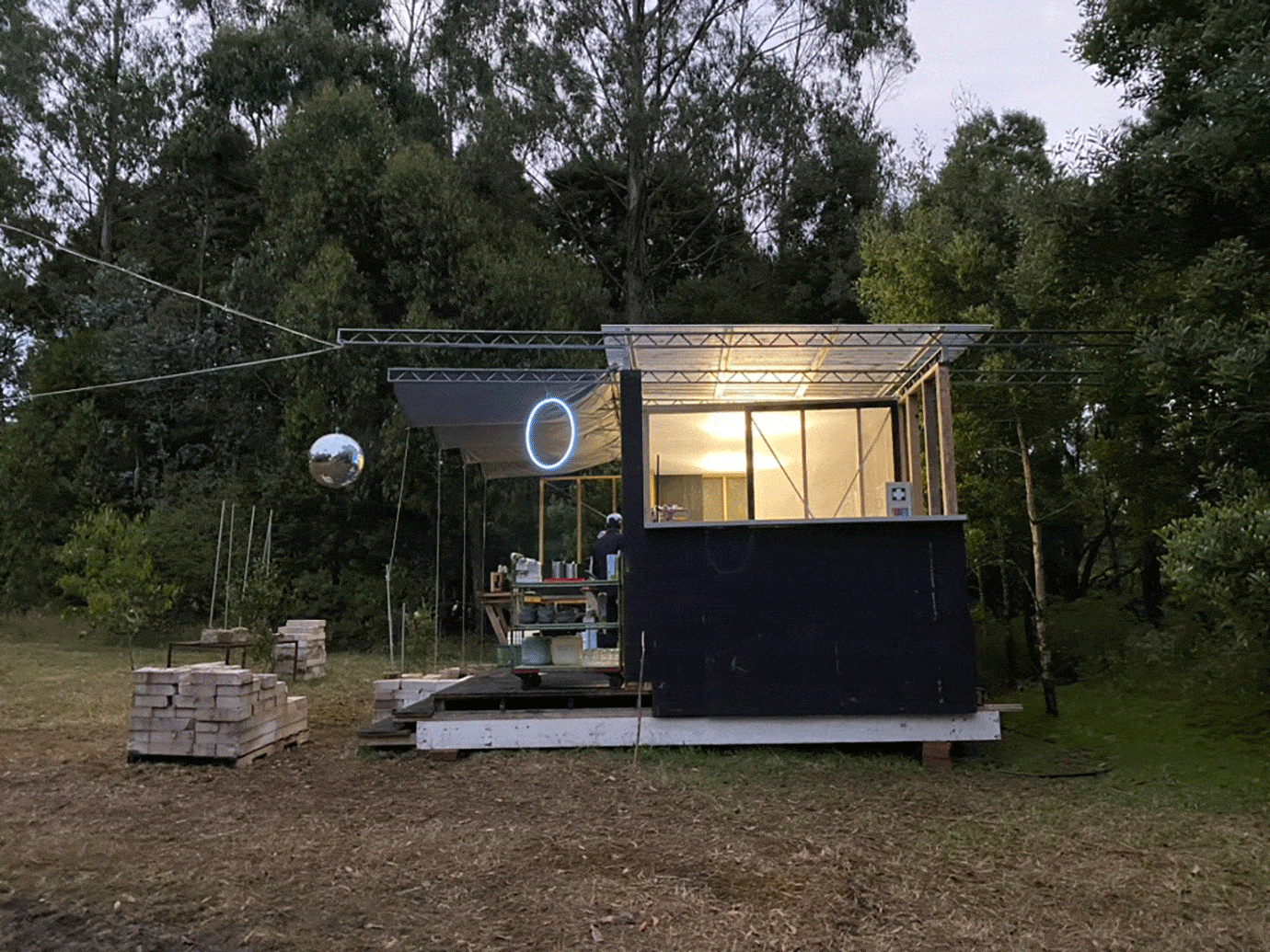
Based on these workshops, the team has also created “Climate Design Action Cards” identifying a range of climate-adaptation design solutions, from small interventions to significant actions. Park-focused design “actions” span from watershed-scale projects to temporary installations, from biodiverse meadows to increased tree canopy and cooling/shade structures — a shift away from the all-season, sun-biased standards traditional for cities in temperate climates. Opportunities for nature-based play, multi-generational activity areas, planting, foraging, and permitting processes friendly to community gatherings are also encouraged. Additionally, “Community Climate Action Hubs” have been designed for parks in under-resourced neighborhoods, exemplifying the project’s commitment to reinventing outdoor spaces, providing environmental education, increasing accessibility, and creating socialization spaces through in situ installations.
Parks in Action evaluates the role of parks and open spaces in fostering climate action in Toronto’s inner suburbs. Our aim is to strengthen the links between social and environmental impacts through rigorous design research, mapping, and active community engagement, with an emphasis on equitable urban resilience. Parks in Action is rooted in the belief that landscape is critical to climate mitigation and adaptation, acknowledging the agency and capacity of nature in urban contexts.
— Fadi Masoud and Victor Perez-Amado
“Repair” and the Colonial World Order
How can the world be “repaired” if the academic institutions that are supposed to teach and support that “repair” are broken? By now, it is clear to many that most colleges and universities continue to use colonial language, promote colonial politics, enforce colonial policies, and impose colonial protocols. Since October 7, 2023, and the beginning of Israel’s current war on Gaza, it is unequivocal that the same academic institutions that have pretended to advocate for decolonization, decarbonization, and care are maintaining and reinforcing warfare and colonization.
It is no secret that the voices of Palestinians and those who support Palestinian liberation — along with events, courses, texts, songs, images, videos, flags, symbols, activities, and actions that do the same — are unwelcome in many academic settings around the world. It is also no secret that these institutions are censoring, repressing, harassing, bullying, threatening, arresting, and prosecuting Palestinian and pro-Palestinian students and employees. What, then, does “repair” convey, and how does it operate in today’s (still) colonial world order?
How can the world be ‘repaired’ if the institutions that are supposed to teach and support that ‘repair’ are broken?
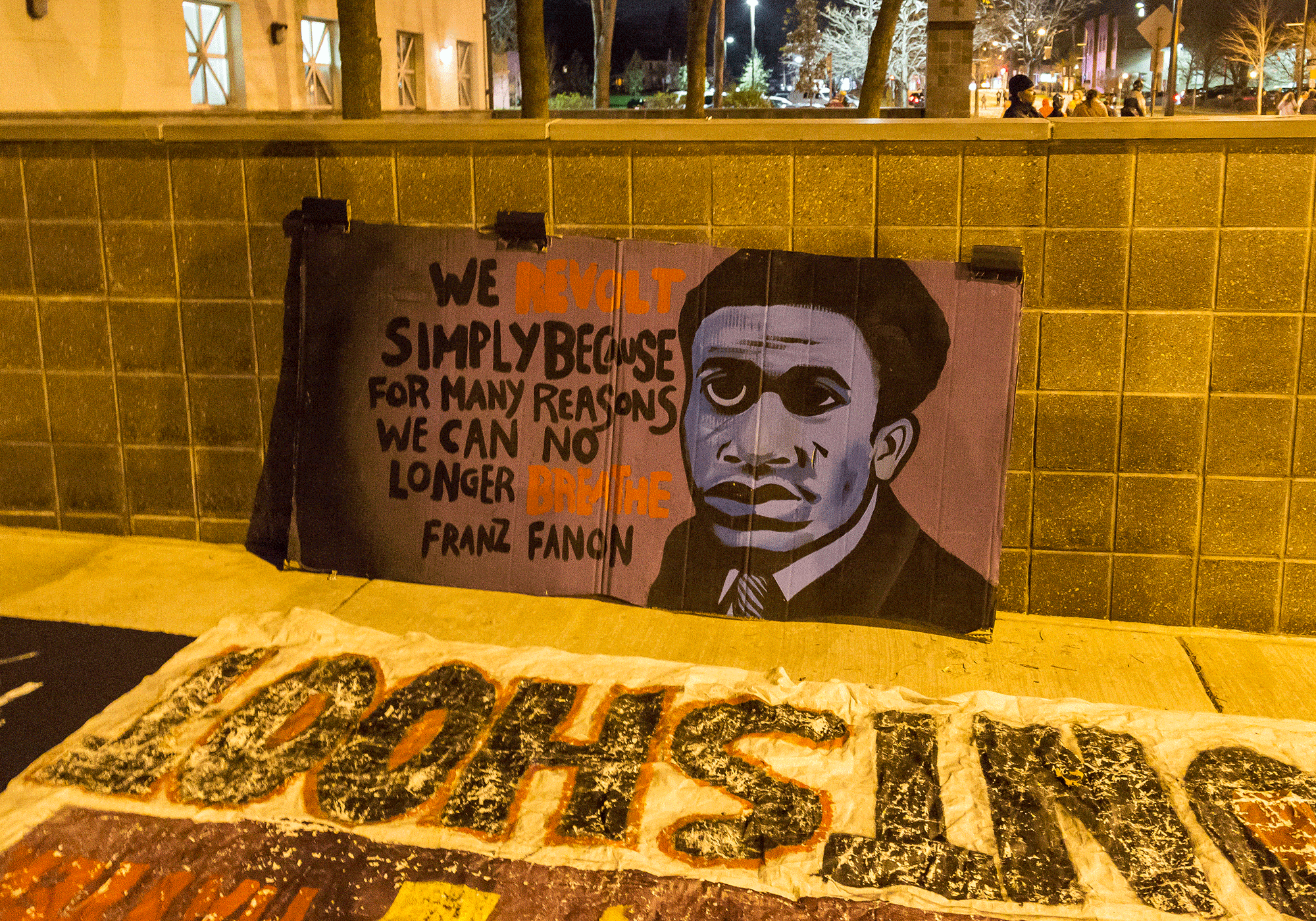
Frantz Omar Fanon (1925–1961), an anticolonial psychiatrist and political philosopher from the French colony of Martinique (today a French department), argued in his seminal 1961 book Les damnées de la terre (The Wretched of the Earth), that “the colonial world is a Manichean world.” Fanon’s analysis of colonial society — marked as it is by violence, destruction, segregation, exploitation, dispossession, censorship, and lies — exposes the designed mechanics of a monetized system of power. Critiquing the psychology and psychopathology of colonialism and violence, Fanon scrutinized colonial protocols and doctrines that he himself experienced in colonized Martinique, in France, in colonized Algeria, and elsewhere. In doing so, he crafted an ethics of anticolonial practice as a commitment to human dignity, accountability, and liberation. Many scholars and students continue to study Fanon’s work, and that of other anticolonial writers, and to ask academic institutions to fulfill their ethical promises. Yet, many academic institutions refuse to do this. They are preserving the colonial world order, and thereby not “repairing the world.”
As many lawyers, politicians, scholars, architects, and activists argue, Palestinian liberation is a global cause and responsibility. What, then, does “repair” mean and do when universities take draconian measures against their own students and employees asking for justice? Can academic institutions keep pretending to defend decolonial, antiracist, critical, feminist, queer, social, spatial, and environmental justice if they can’t protect their students and employees demanding accountability? No institution can preserve the colonial world order and at the same time “repair the world.”
— Samia Henni
A Metaphor for a New Architectural Education Epoch
Daisugi, a 15th-century Japanese forestry strategy that emphasizes growing trees from existing ones rather than clearcutting and replanting, serves as a powerful metaphor for evaluating urban renewal efforts toward community development. Rather than requiring contractors at a building site to demolish everything, haul it away, and bring new material to the location, we can encourage builders to work with existing infrastructure to restore the location and simultaneously retain the memory of the place.
In this context, the effectiveness of a project can be measured by several criteria: the extent to which original materials were preserved; the level of community participation; and the amount of material sourced locally from deconstructed buildings. Each factor reflects a commitment to sustainability, collaboration, and local resourcefulness, mirroring the principles of daisugi in preserving and reusing valuable resources. In the face of increasingly catastrophic weather events such as hurricanes, tornadoes, floods, and fires, the time to act is now.

Architecture pedagogy needs to shift towards supporting sustainable recovery efforts that foster resilience in affected communities. To do this, we must encourage a new ethos of repurposing through repair and upcycling and train a new body of professionals to serve such communities. Shifting our educational model towards redesigning and rehabilitating existing structures expands on architectural and cultural legacies in ways that are not currently part of the western canon. This positive shift will couple historic preservation with mainstream architectural curricula.
Steven Jackson’s essay, “Rethinking Repair,” advocates for a fundamental change in how we interact with the planet, urging us to focus on learning from what already exists rather than continuously prioritizing the new. Once buildings are constructed, they immediately become existing structures. So why do we disproportionately value new designs over refurbishing and repurposing the old ones? This approach can be seen as a form of cultural erasure. Embracing practices like historic preservation, deconstruction, and upcycling encourages practical learning and truly sustainable development, and exemplifies cultural preservation.
Why do we disproportionately value making new designs over refurbishing old ones?
To boldly turn towards a model that promotes the reuse of existing buildings and materials will involve developing new financial products which incentivize historic preservation, prioritize deconstruction over demolition, and establish a market for reclaimed materials. It is crucial to train both current and future generations in the art of building rehabilitation, both to ensure we have a skilled workforce capable of preserving our extant structures, and to incorporate testing protocols for reclaimed structural materials into building codes. We also need to require “nth generation markets,” which are markets that value products based on their number of useful life cycles. Given that urban centers across the United States are filled with underutilized existing buildings, there is tremendous opportunity for a radical educational shift.
— Kwesi Daniels
These days, what doesn’t appear broken? Why bother to make a list? At every scale, it’s easier to find broken-ness than not. Repair feels like the most natural way to proceed — more appealing than growth, continuation, or novelty.
The first-blush appeal of “repair” is that it implies we can make things whole again, or, if not that, at least the attempt has a kind of Hippocratic harmlessness. Repair can hardly make things worse, right?
I’ve noticed, though, that part of repair’s appeal is that it can manifest as a flight from difficult choices. My family participates in a monthly volunteer day, tending a native landscape restoration project in our neighborhood. We pull weeds, put native plants in the ground, water, and mulch. Part of what I enjoy about these volunteer stints is the virtuous simplicity. I trust the Indigenous gardeners and student leaders. We do what they tell us, and trust that restoring the landscape is more beneficent than other kinds of alterations.
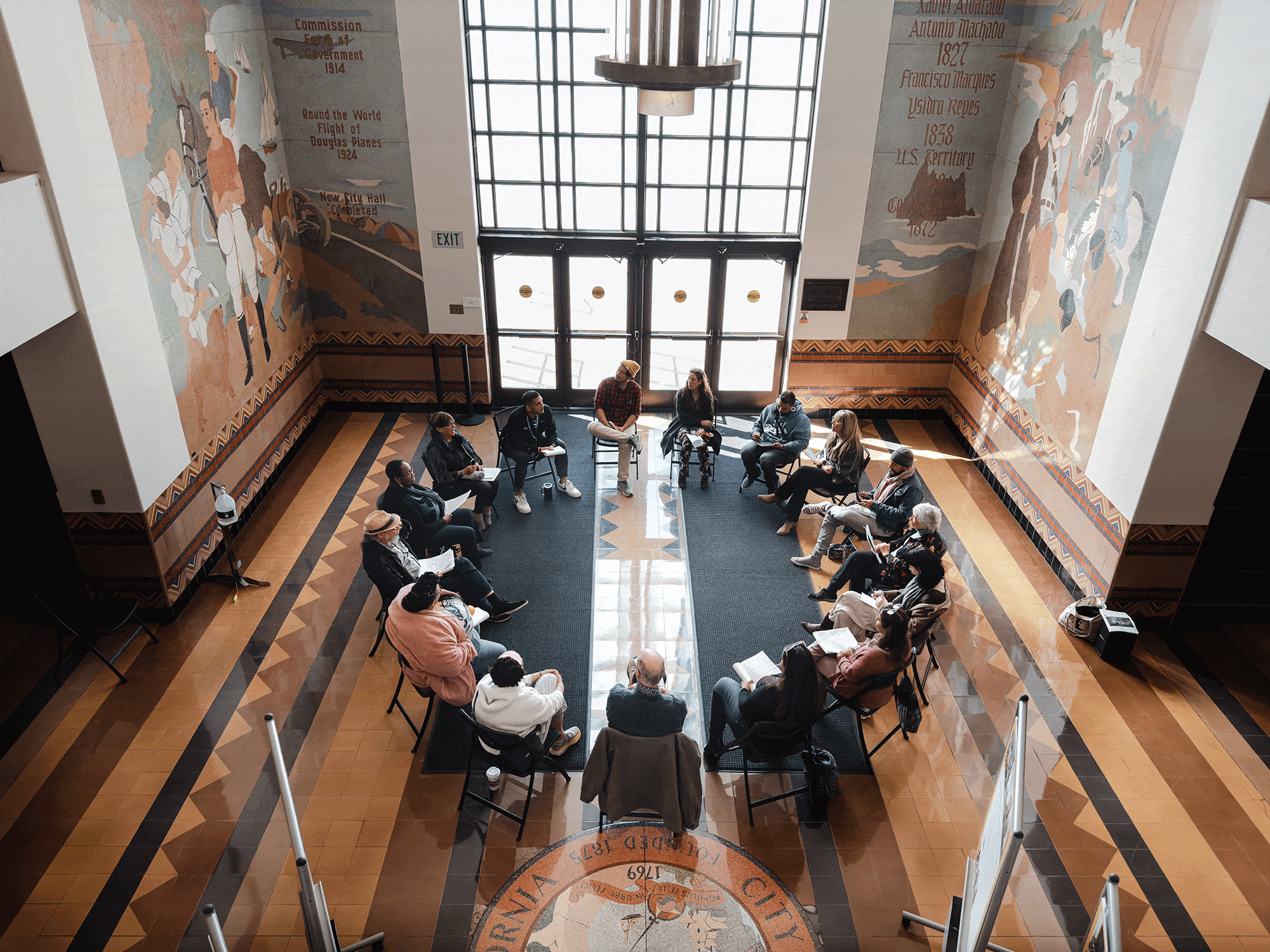
Repair can manifest as a flight from difficult choices. It’s easy to forget that there is no singular original form to put back together.
It’s easy, during these volunteer shifts, to forget the fact that there is no single landscape to restore to, no original form to put back together. Repairing the world is nothing like repairing a watch. There’s no manual, and no perfect functionality to reference. (As if on cue, the morning after I wrote this note, I learned of a serious fracture in the land restoration project’s leadership.) People often talk about “bringing back” the Los Angeles River, for instance, but depending on who’s saying the words, they can mean everything from putting in a row of condos to completely removing urban development on both sides of the channel.
When I think about an ethos of repair, I find it helpful to look to models from restorative justice, or the community accountability work of Mariame Kaba. What tools can designers and place-makers learn from practices that look to address harm, restore relationships, create accountability, and forge new agreements for going forward? Repair is not an escape from politics or difficult choices. To do the work of repair is to engage in the messy process of crafting a shared vision, and to take the time to understand the consequences for everyone.
— Rosten Woo




.jpg)
If you would like to comment on this article, or anything else on Places Journal, visit our Facebook page or send us a message on Twitter.