
A Reparative Framework for Historic Preservation
Historic preservation educators prepare students to become expert surveyors, reviewers, regulators, process planners, building conservationists and stewards. Yet preservation education has yet to contend with how the field has wielded its expertise to cause harm; we have yet to effectively engage our hidden scripts, power dynamics, and aesthetic biases. Today we need more than increased protection, designation, and recognition. We must establish a reparative historic preservation framework that will enable us to achieve social, economic, and spiritual convergence in our work. To this end, the field should look to the United Nations’ proposed remedies for harm, which include restitution, compensation, rehabilitation, and satisfaction.
My fourth great-grandmother and her progeny, who founded historic Black settlements in Texas, were enslaved by some of the state’s founders.
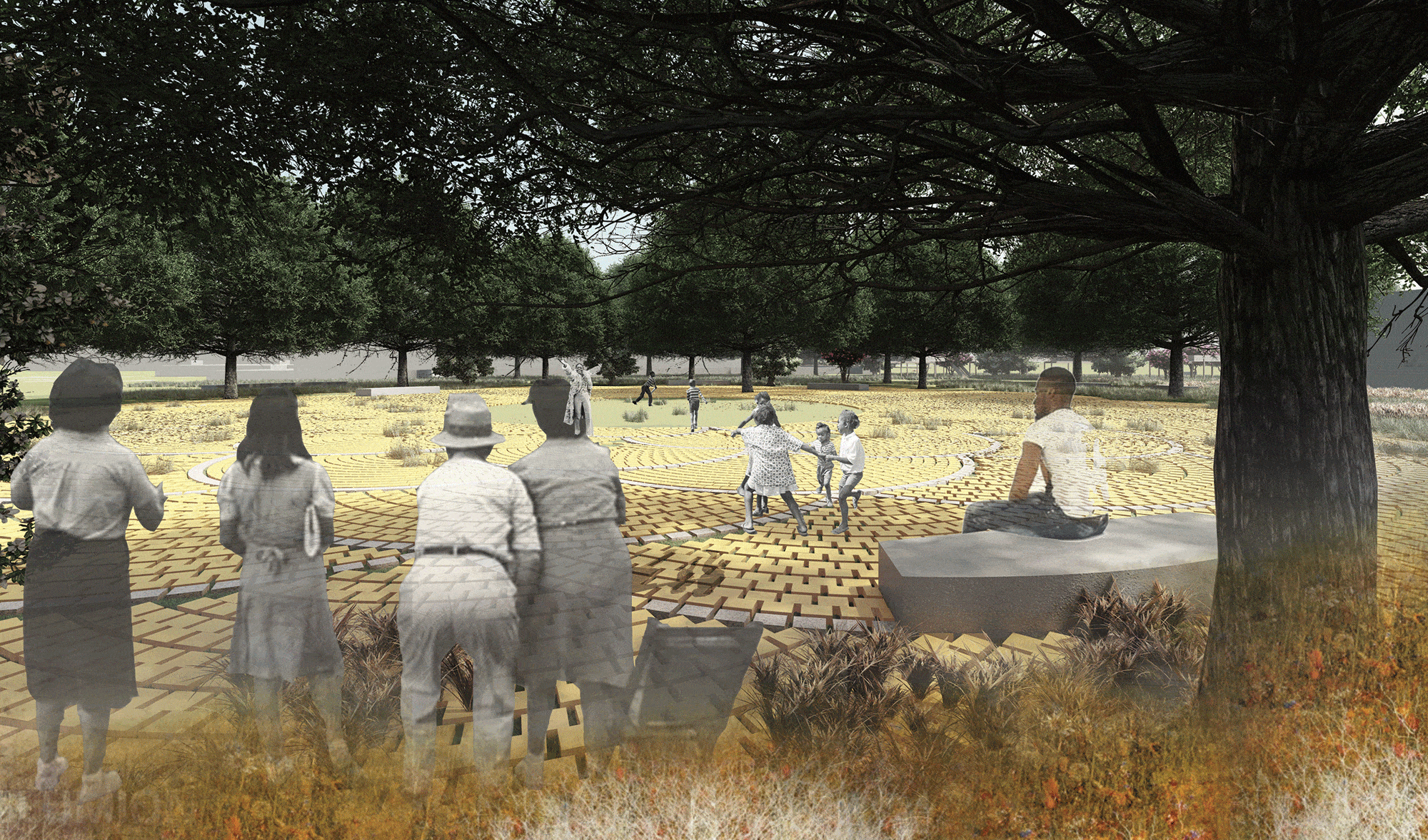
For the past several years I have been working to create a radical reparative preservation pedagogy and praxis in Black cultural landscapes: the Texas Freedom Colonies Atlas. This work is deeply personal for me. It started when I discovered that my fourth great-grandmother and her progeny, who founded historic Black settlements in Texas, were also enslaved by some of the state’s founders, known as the Old 300; back then land grant holders and settlers were awarded another 80 acres for every enslaved person they brought to the Republic. In a just system, the descendants of the Old 300 would owe descendants of the enslaved the value of that additional 80 acres and the wealth it generated; however, post-emancipation, Texas law prohibited distributing publicly-held land to the formerly enslaved. The story of Texas told in public sites and historic markers, in Texas history courses, and in popular culture doesn’t begin to tell this story of the state’s origins.
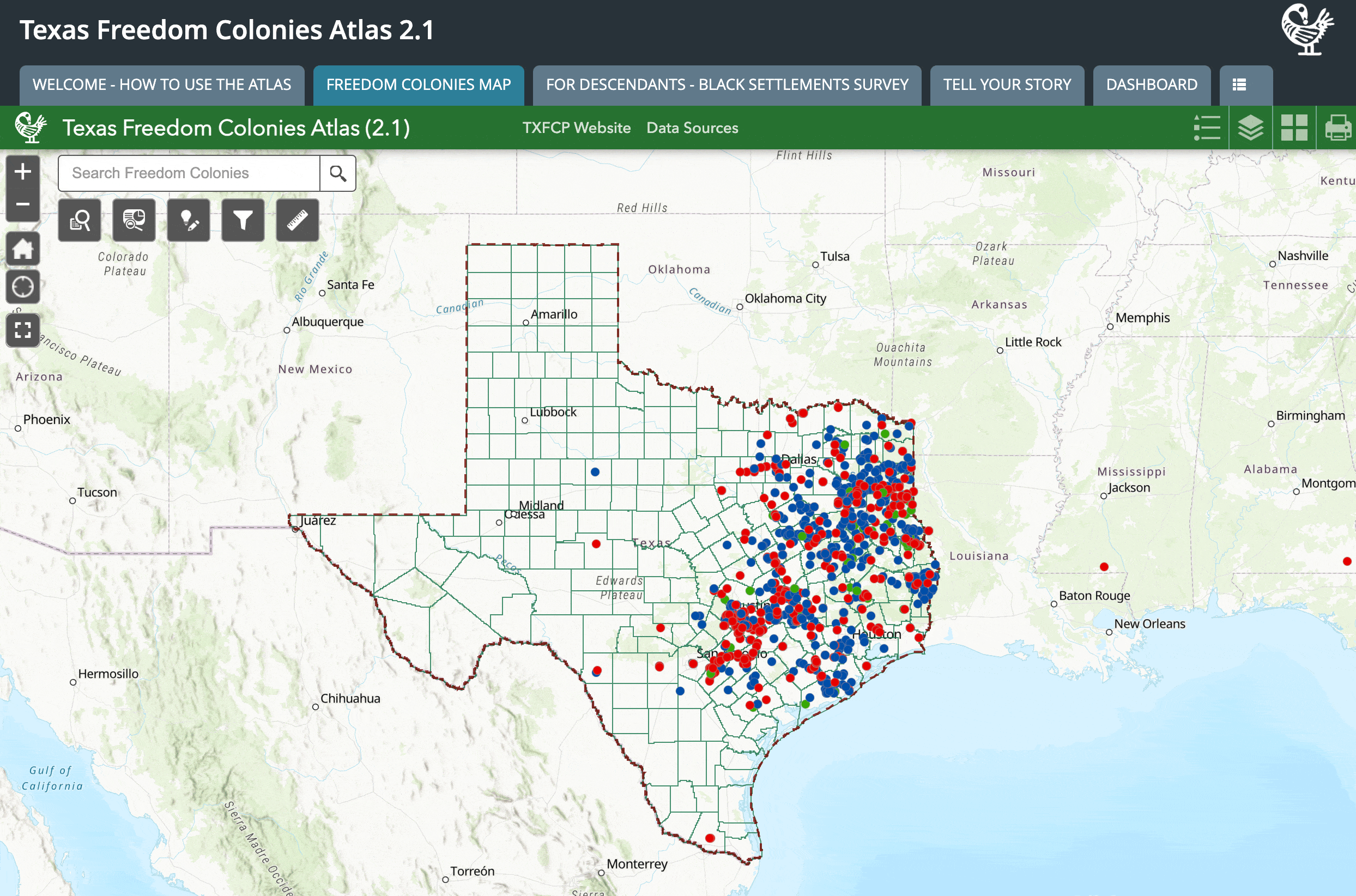
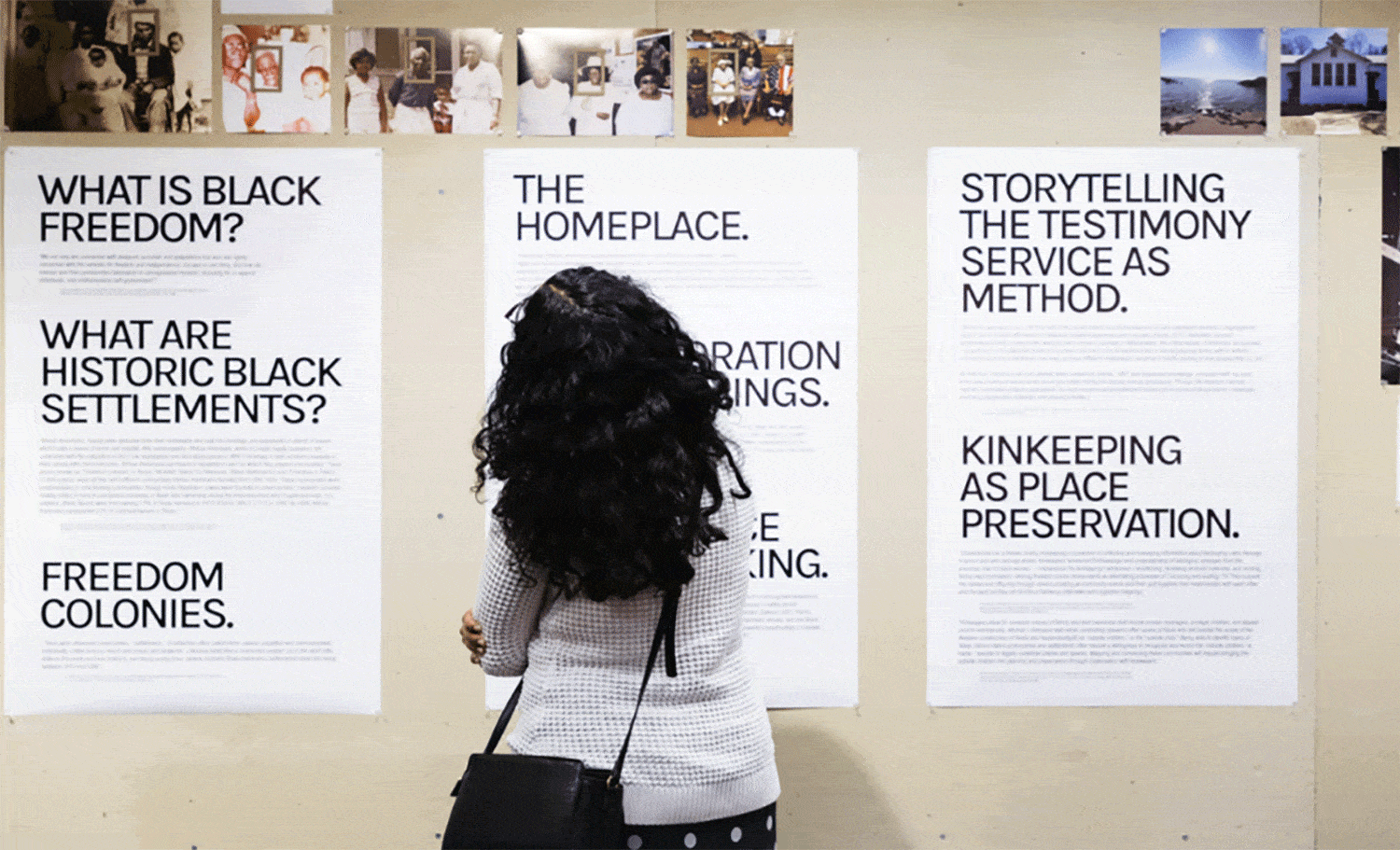
More than simply telling my own story, I’ve sought to spotlight the collective strength that emerges when we aggregate descendant voices and power by place or settlement. To do so, I recorded stories of descendants’ placemaking and stories of their land loss — stories with no paper trail showing proof of ownership or rights. These stories underscore that from its earliest days Texas was founded in land takings, dispossession, and exploitation, and that for too long these narratives were hidden in Black memory, Black personal archives, and Black commemorative events.
I’ve learned that to tell these stories on a landscape scale is to bring forth expansive notions of repair. Indeed, place-based ties challenge more traditional notions of historic rights based on biological kinship and on caste systems mediated by class, education, proximity to urban centers, and even phenotypical characteristic. To say you are a descendant because you owned land, and the settlement is named after your ancestor, is one thing. To claim descendant status with substantive citizenship because your family members attended a church or lodge, or were baptized in the settlement’s stream, is to decolonize belonging, to expand claim-making, and to disrupt preservation’s obsession with rarity and firsts. The Freedom Colonies Atlas cannot repair the problems of preservation as a discipline; but it is a reparative infrastructure for visualizing the brilliance of place creation; the sorrows of erasure, taking, and encroachment; and the need for redress and reconnection across various dimensions of kinship.
My contribution to radical reparative preservation is building classrooms, scholarship, happenings, and virtual platforms that enable visualization, stewardship, and translation of place significance — and doing so in ways that shift policy and practice. I developed the Atlas to create a foundation for processes of restitution or satisfaction for those without lawyers, who live in places without planning infrastructure or preservation ordinances. Front-line regulators and public agency staffers now use the Atlas’ entries to fill in the historical gaps left by state preservation offices and federal agencies. In this way, we are making an infrastructure of care (for descendants’ memories) and a space for organizing claims that current grievance conduits or consultation policies cannot satisfy.

Ultimately, radical reparative work must lean into the discomfort of accountability.
At the Center for Cultural Landscapes at UVA, I am leading a related project: the Outsider Preservation Initiative will expand the mapping, place histories, and participatory research from Texas to Virginia and California. Borrowing from the tradition of outsider, intuitive, visionary, and self-taught artists, the OPI will fund descendant preservationists and artists who leverage the foundational stories of settlements to re-activate freedom colonies and thus contribute to community building, to diasporic return from the Upper South and West, and to regeneration. These artists will show films, stage performances, create murals, and lead tours back to their home places. The goal of the OPI is to build an infrastructure of regeneration and repair — a web portal, new pedagogy, grants for descendants, and convenings where we wrestle with thorny ethical questions that professionals or activists might not have time or space to discuss. In this light the OPI is one more step forward in actualizing radical reparative pedagogy and thus correcting power asymmetries that subjugate the practices of outsider preservationists — the descendants themselves.
Ultimately, this work must lean into the discomfort of accountability. All too frequently, reparative preservation makes a beeline to White redemption and comfort. Designation and recognition must occur in tandem with consideration of Black entanglements with Native land dispossession, slavery, the right to return to our communities through affordability measures, and exposure of government complicity in the destruction of historic Black settlements and towns. Remembrance, ceremony, and symbolism have their place, but they are insufficient to facilitate repair. Reparative preservation should enable a progressive convergence of local knowledge, creative expression, spiritual renewal, economic satisfaction, and justice.
— Andrea Roberts
Fixing buildings is messy, and it’s hard to think about repair in terms of delight. Unlike the repair culture that thrives in other consumer product circles, the built environment is wildly bespoke and has no teardown tutorials or repair manuals (home improvement television notwithstanding). Architects, moreover, rarely encounter the actual disorder of fixing buildings; if they play any role at all, it’s often far removed, clicking dashed lines on a demolition plan from an approximated as-built drawing, abstracting a messy old wall through clean representational conventions. As in so many cases of alienated labor, there’s little delight to be found — and this is to say nothing of the manual labor required to execute these tasks.
As renovations outpace new construction, architects have every interest in growing more acquainted with processes of repair. And in doing so, several questions emerge. How might fixing buildings not only contribute to mitigating climate change, but also inspire inventiveness and pleasure? How could the labor of repair forge new relations between the design and building trades and professions? What theories or technologies might help to unlock the creative potential of repair? Moreover, how do we teach these lessons to future generations of architects?
The potential for delight in the design of repair lies in its messiness, irregularity, and muddle.
I want to make the case that the potential for delight in the design of repair lies in its messiness. Messiness in the built environment takes many forms: irregularities in planar dimensions, inoperable building systems, inconsistencies in material qualities, and improvisational solutions left over from previous repairs, to name a few. Many renovations overlook these variables, and project a rationalized system of organization onto an otherwise unruly as-built condition. But in a design framework that embraces irregularity and muddle, these issues simply join the myriad constraints that already structure the creative process. And with digital scanning technology growing ever more precise and accessible, the endless particularities of the built environment find formidable representational proxies to be explored in the design studio and construction site alike.
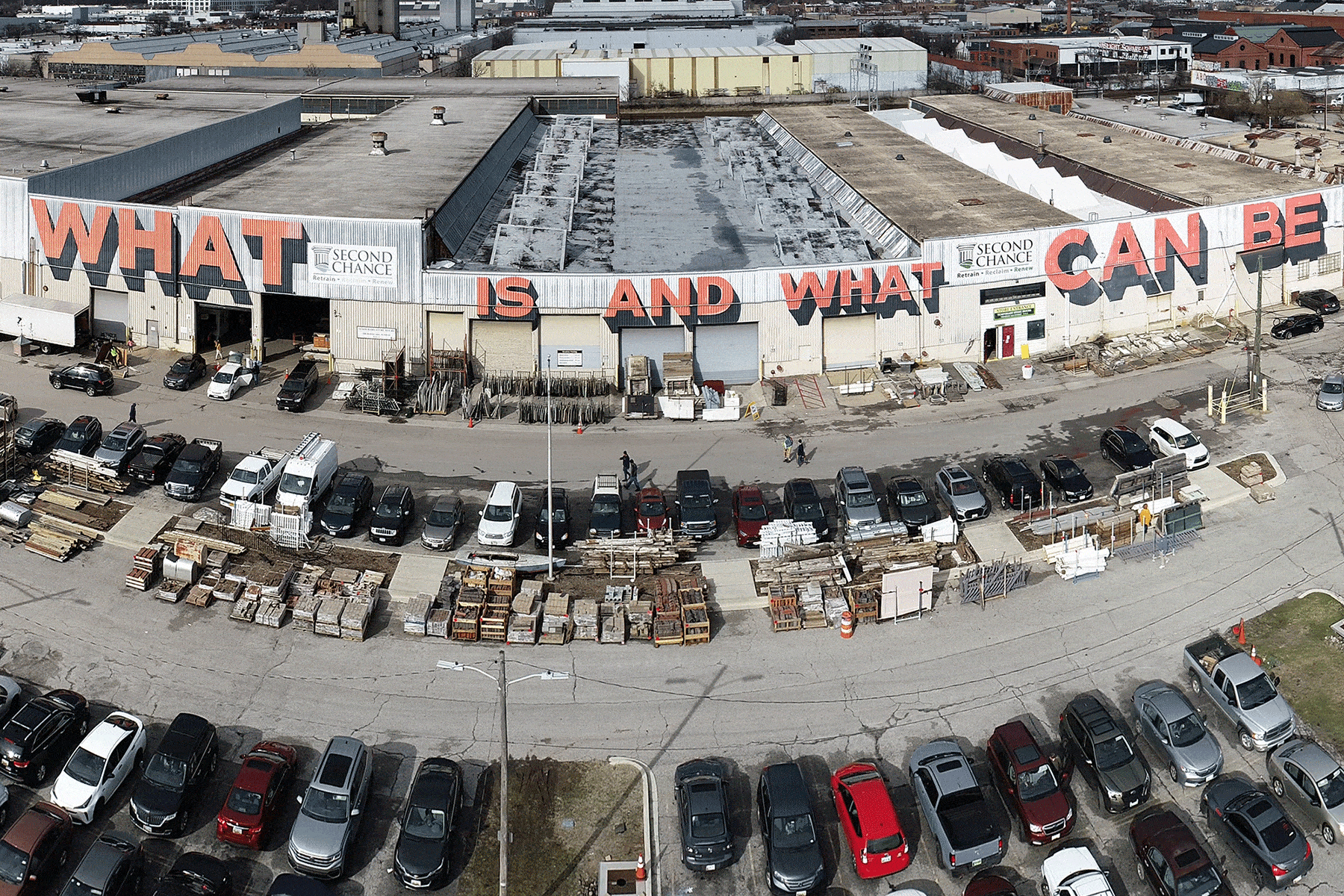
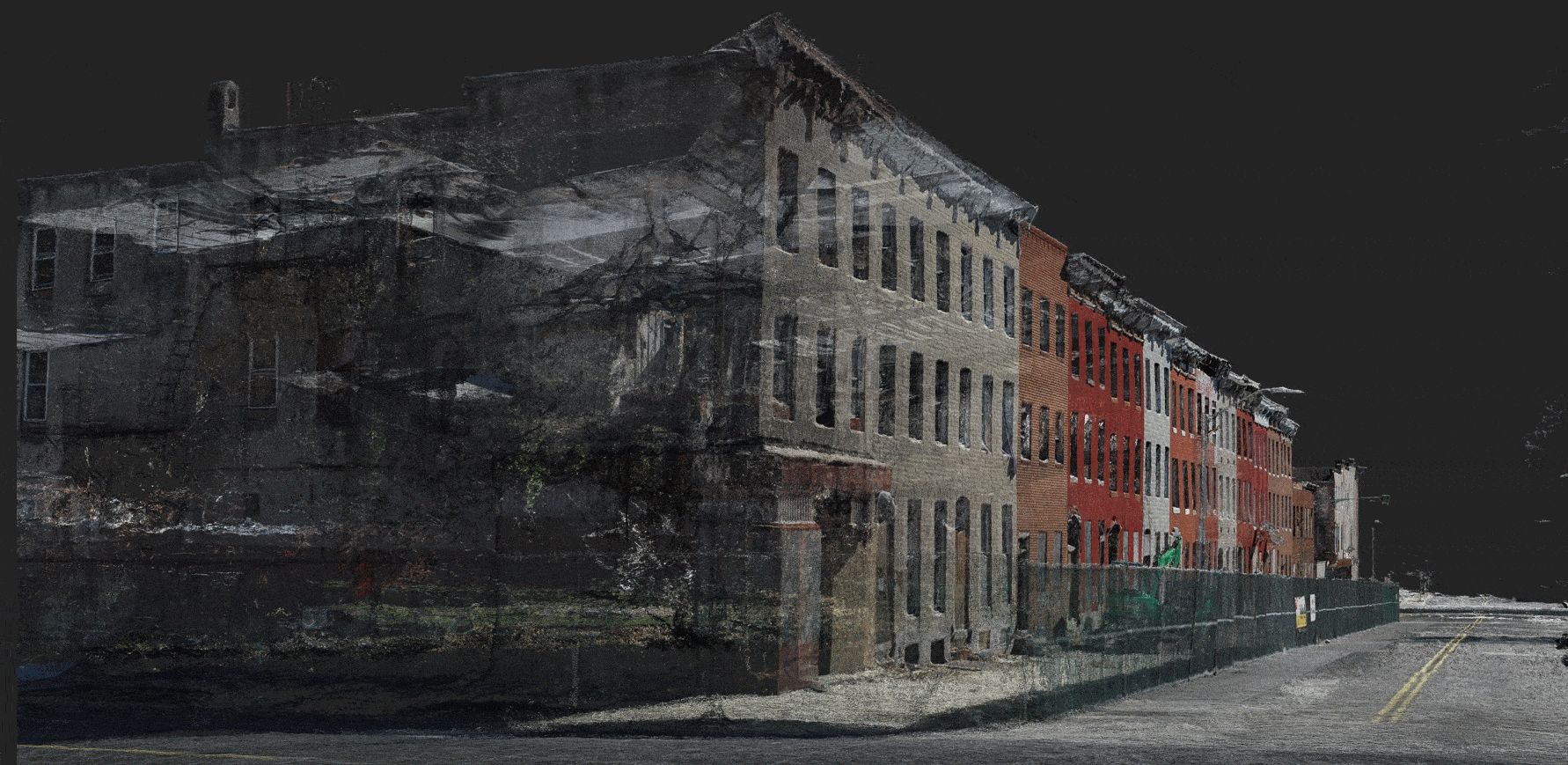
In recent years, much of my work with students has grappled with repair. Fundamental to these investigations are both critical engagement with theoretical texts that explore the meanings and implications of repair, as well as experiments in designing with and around imperfection. Using handheld-, aerial-, and ground-based scanning technologies, students learn how to create high-resolution digital proxies for a project site, and through discussions with material salvagers, reuse specialists, and zero-waste experts, they build a rich vocabulary for implementing messy design solutions. Throughout, students remain grounded in the material world, engaging a reality that too often becomes sanitized in architectural design. While many of the projects remain speculative, students develop a kinship with their surroundings, caring for it as they would a companion, flaws and all. Instead of approaching repair from a negative position of brokenness, we seek delight in the messiness that attends contemporary life.
— Brent Sturlaugson
There has long been debate in architecture schools about whether architecture is a service, or something more autonomous. While the conclusion is likely somewhere between “both” and “neither,” such questions position the architect in relation to an ever-changing, ever-intensifying, ever-expanding field of forces within and through which buildings can be built. Behind all this is another, similar debate about the role of architectural history and its relation to architectural practice.
Architecture distinguishes itself from building as such by maintaining an intellectual history of the discipline. In this sense, architectural practice depends on architectural history in order to justify its existence. At various points, architectural history has been to greater or lesser degrees autonomous from architectural practice, departing from fundamental questions and focusing more on self-referential (even solipsistic) issues. With the rise of industrialization and modernity, various 20th-century figures (be they practitioners, historians, or critics) sought to re-forge the link between history and practice.
Architecture needs to construct an intellectual history autonomous from the act of building.
Postwar technological innovations, political events, cultural shifts, and economic transformations had thrown the established position of the architect into question. While there was never doubt about the need for more buildings (though perhaps, in hindsight, there should have been), it was unclear what architects could contribute to wider social developments without abandoning their own history. These questions were not asked for too long, however, as the act of building was so politically valuable that architectural practitioners and historians alike were able to carve out sufficient space for the advancement of disciplinary positions, traditions, and concerns.
I cannot help but feel a resonance between the situation of architecture today and that at pivotal moments in the last century. Perhaps this is because, while much has changed — climate collapse, rampant precaritization, gross inequality, and omnipresent war are accelerating — it’s also true that little has changed. Capitalism, fascism, White supremacy, and the like may have mutated, but operate on the same principles, and with the same effects. In light of this, I would raise again the question of architectural history in its relation to architectural practice, and wonder if we might take a different approach to architectural historiography.
I would argue that one of the most urgent tasks for the architectural discipline is to construct an intellectual history of architecture that is autonomous from the act of building. This would require looking closely at the reasons why buildings have been or might be built, and questioning whether building is actually the best way for those motivations to be realized in social or material form. It would mean looking at buildings as symptoms of much deeper causes, and — in the long tradition of considering the architect as analogous to a medical professional — prescribing the most effective and appropriate forms of treatment for a given “condition.”
— Nick Axel
Every single day
For the planet to survive, everything must change. But there are scales of change. There is BIG, global-scale change, and there is small, here-is-what-I-am-doing-everyday change. I will focus on the small as it also influences the BIG. As the American organizer / educator / archivist / curator Mariame Kaba says: “Hope is a discipline. It’s less about ‘how you feel,’ and more about the practice of making a decision every day, that you’re still gonna put one foot in front of the other, that you’re still going to get up in the morning. And you’re still going to struggle.” Hope requires discipline, commitment, and tenacity. Nothing less will do.
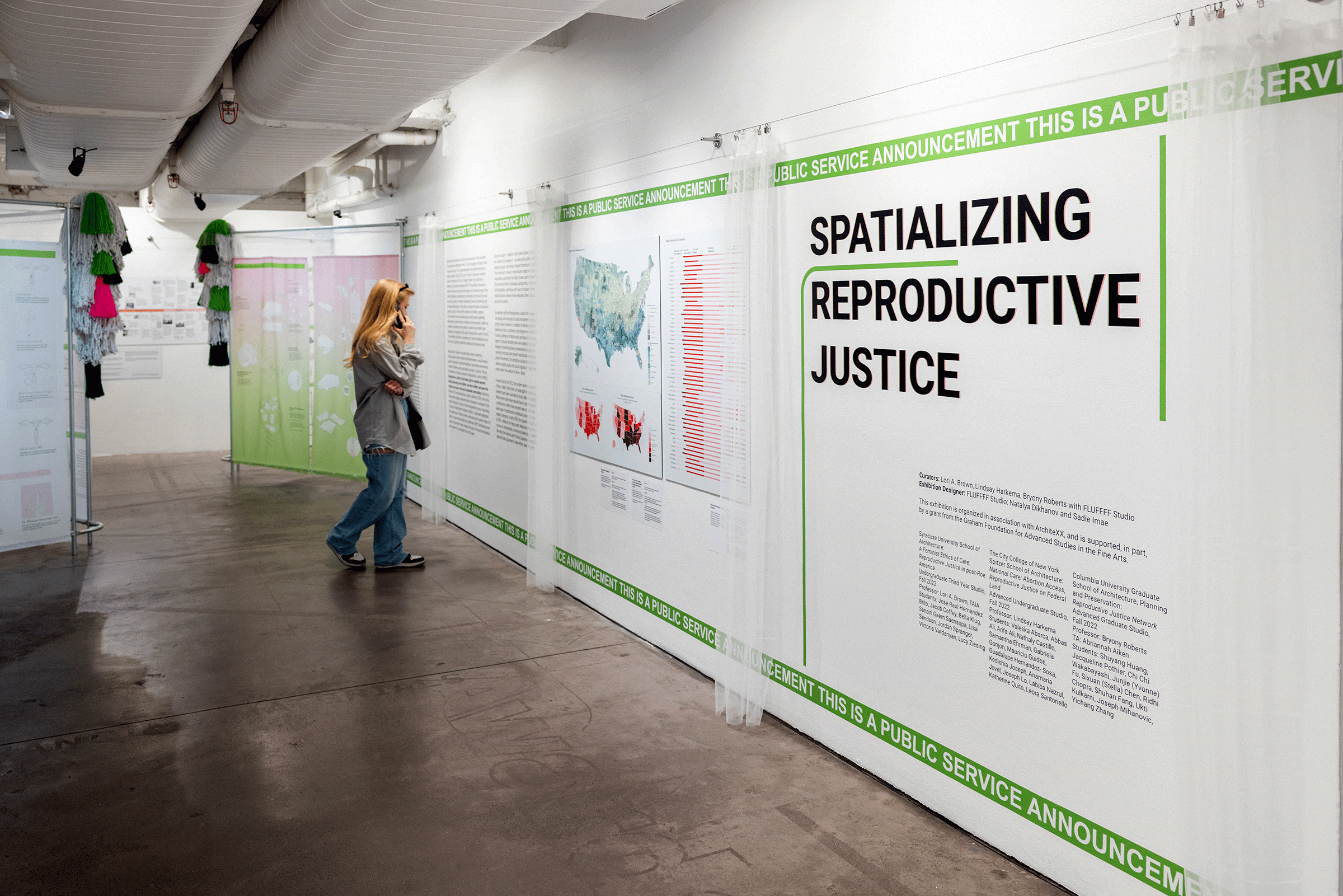
Architecture has got to take positions. To get comfortable with discomfort.
I cannot be responsive to the climate crisis without also focusing on extreme inequalities; they are inextricably interconnected. To varying degrees, we live them every day. For me, the discipline of hope means centering spatial inequities in my teaching and engaging my students in these struggles. My teaching is an extension of these entanglements, and I ask my students to join me in responding to complex and challenging problems. Sometimes this requires taking positions that are not popular. Being comfortable with discomfort. Caring about things that have not, at least historically, been considered important in the discipline of architecture; that are not the newest, the most attractive, the most innovative. As the feminist scholar Maria Puid del la Bellacasa writes, citing Donna Haraway, you “… must be in the action, be finite and dirty, not transcendent and clean.”
I teach from a feminist ethics of care — care for the classroom, care for my students, care for others, care for the planet. To be in that action, architectural practice and architectural education have got to take positions. To get dirty. To radically transform. Every single day.
— Lori A. Brown
Histories of Duration
The design disciplines are striving towards an unprecedented reorientation of their economies, tools, values, methods, and metaphors. In this context, architectural history — understood as a history of precedents — struggles to find a voice. Influenced by early 20th-century writers who recast the history of architecture as a genealogy of modernism, the teaching of history only slowly relinquishes the habit of lining up past buildings, whether canonical villas or prototype solar houses, as lessons for the future.
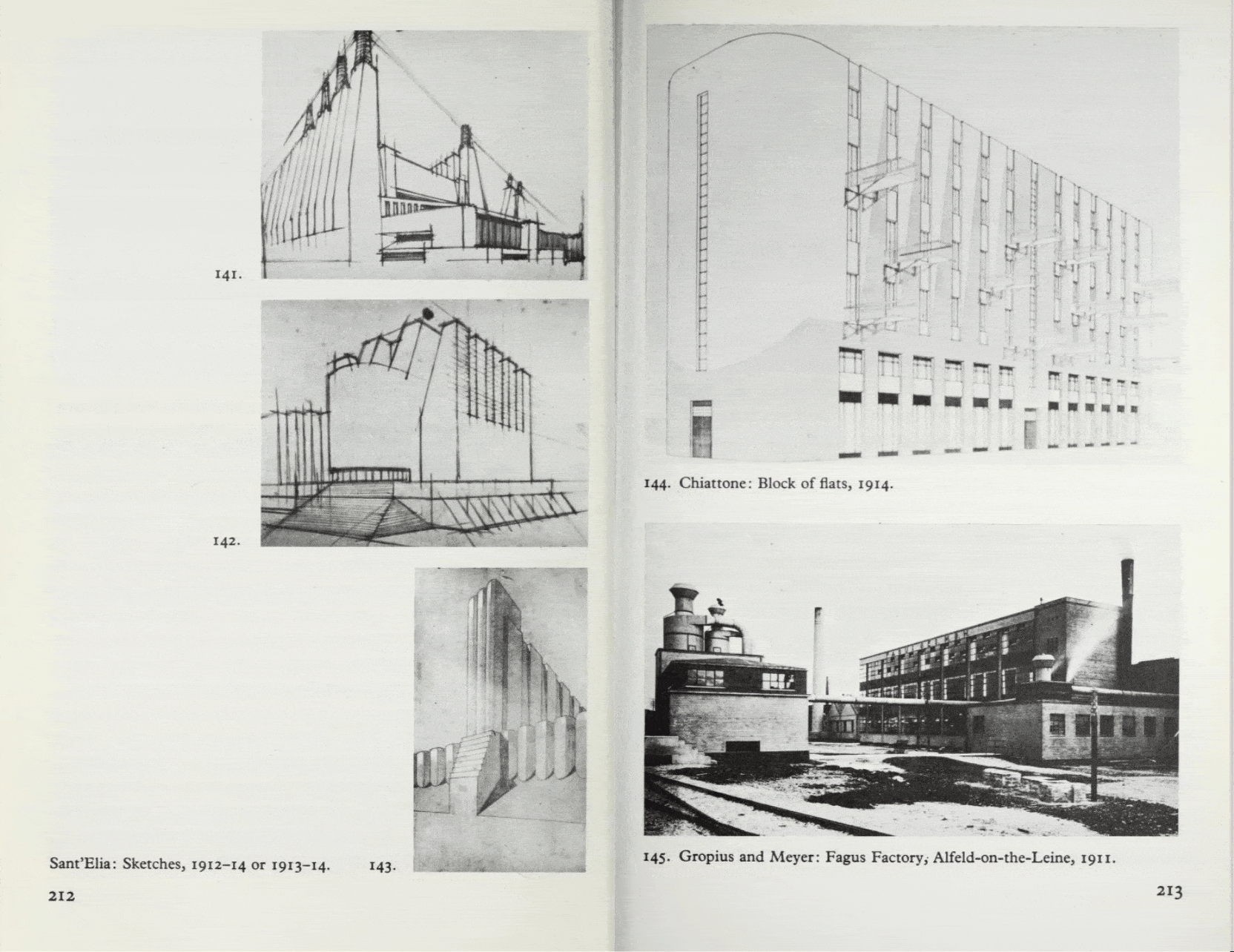
And yet, even standard texts seemingly detached from today’s concerns, such as Nikolaus Pevsner’s Pioneers of Modern Design (1936) or Sigfried Giedion’s Space, Time and Architecture (1941), can suggest a different approach to writing history. The starting point may appear to be a technicality: the ways in which buildings are dated. Consider the figures in these books, and you will notice that several buildings are dated by a time span rather than by a single year. These spans are rarely explained; they are often inconsistent from book to book. Some years cited seem to refer to the period of a building’s construction. Others include the period of design, and yet others acknowledge longer intervals during which a building was reprogrammed. These intervals sometimes account for a change of the design architects, acknowledging periods of interruptions in the work.
The emergence of a building is a duration rather than a single, contained event.
Such ambiguities reflect the basic fact that the emergence of a building is a duration rather than a single, contained event. This, in turn, helps us to move away from the narrative of architecture centered on design invention — that singular event captured in the precious first sketch — and to leave behind received hierarchies that value the labor of design above the labor of construction, maintenance, and repair. Instead of rehearsing these hierarchies, an architectural history of duration pays attention to the differentiated, heterogenous, and often conflicting practices by means of which a building is assembled and held together over time.
— Łukasz Stanek
Building Conscience
To build means to reconfigure, at scale, the organization of materials extracted from the earth. Thus, the starting point to assembling architecture — the structure of human habitation — is disassembly, taking apart elements of our collective home … the atmospheric, marine, and terrestrial components of Earth’s living tissue.
In the 21st century, human and ecological suffering is no longer a technological challenge but a sociopolitical phenomenon; we know that the logic of global society — capture, extraction, exploitation, private property, economic growth — drives disequilibrium by design. While billions of us buy smartphones, browse the web, and stream entertainment on our mobile devices, other species go extinct and othered members of our human family — sons and daughters, brothers and sisters, mothers and fathers, aunties and uncles, grandmothers and grandfathers — die needlessly, but continuously, in human-made conflicts. Before the occlusion of European enlightenment and the modernity myth, a common worldview — still shared by Indigenous communities — recognized that all things, from the mineral to the metaphysical, constitute forms of life. Just as all things interrelate as a single entangled lifeform: universe.
While billions of us browse the web and stream entertainment on our devices, species go extinct.
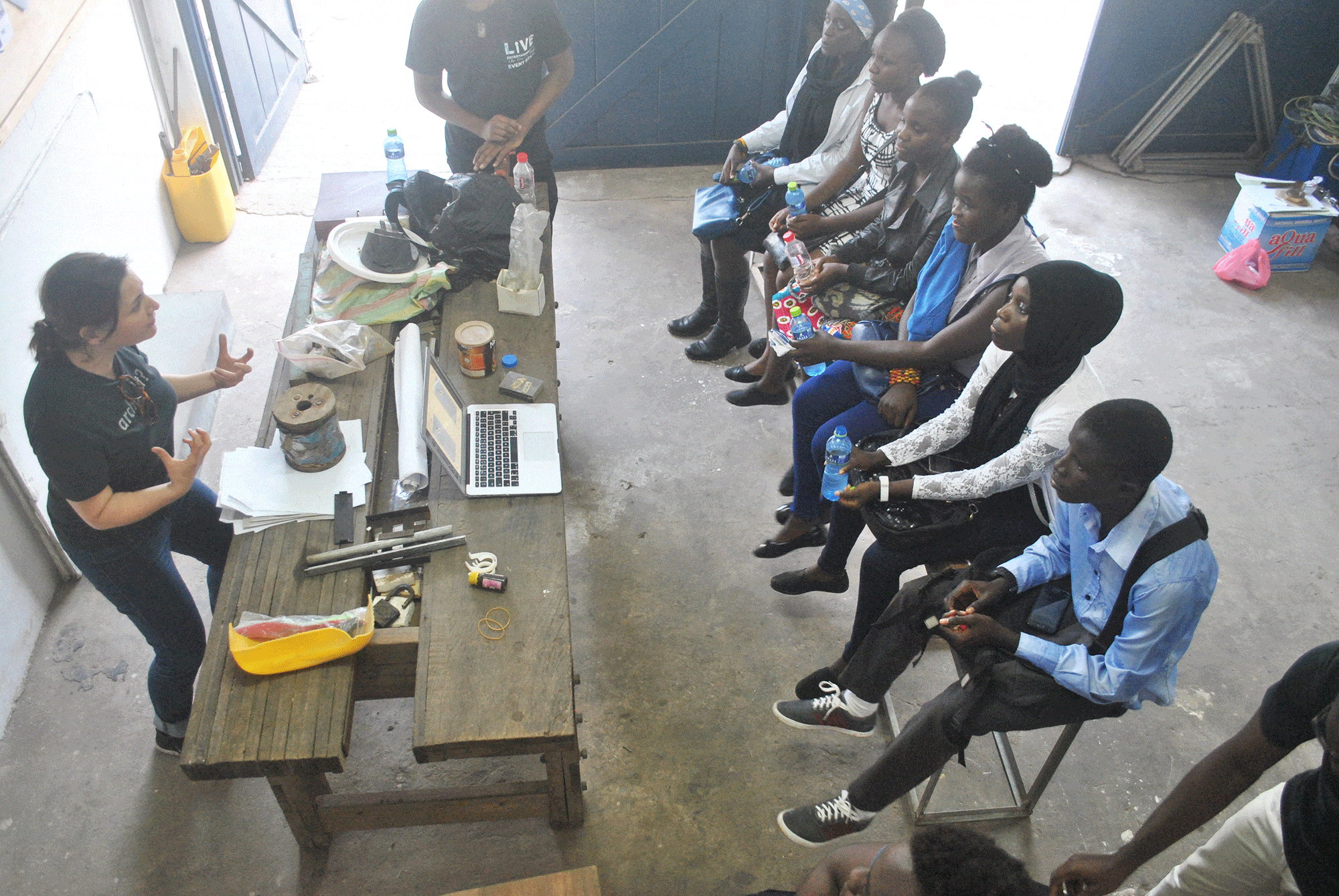
A decade ago in Ghana, with support from the Rockefeller Foundation, Yasmine Abbas and I launched the Agbogbloshie Makerspace Platform in a scrapyard at the heart of Accra named after a god who lives nearby in the Odaw River. At that time, the Agbogbloshie scrapyard, along with the Old Fadama slum on the banks of the nearby Korle Bu lagoon and estuary facing the Gulf of Guinea, featured frequently in international news media, often maligned, falsely, as “the world’s largest e-waste dump.” In response, our project, AMP, set out to demonstrate how participatory design can foster inclusive urban innovation, specifically by acting to repair a toxic landscape through the co-innovation of hyper-local practices linked to the recycling of electrical and electronic equipment, i.e., e-waste, on the ground in Agbogbloshie — where everything from mobile phones to televisions, computers, microwaves, fridges, transformers, automobiles, and even airplanes could be dismantled and scrapped.
Collaborating with over a thousand youth from West Africa, Europe, and the United States (half grassroots makers in the so-called informal sector, and half students and recent graduates in science, technology, engineering, arts, and mathematics), we discovered that making is a cycle. It loops from taking apart to putting together, through repair, repurposing, recycling, etc. We also learned that, amongst youth, curiosity is universal.
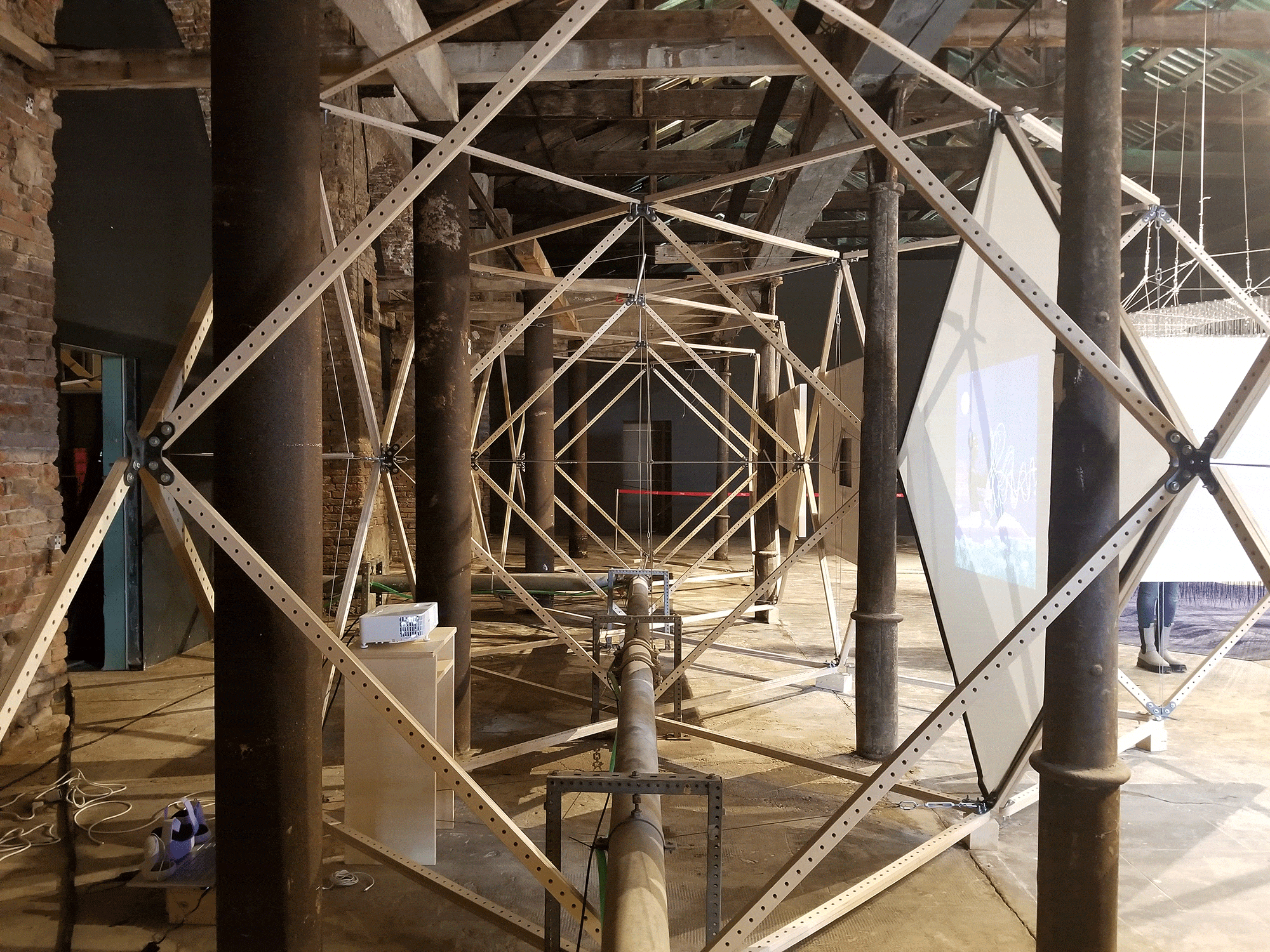
As may be vouchsafed by any contemporary custodian of ancient African knowledge, which has been amassed across millennia of mining and metal-smithing, science explains that physical reality is itself electronic; interactions of electrons and photons determine most phenomena we perceive. Space is energetic or conscious, and materials can be spiritually active — or what we may consider to be “alive.”
The English dictionary establishes the word “repair” as deriving via Old French from Latin: reparare means to restore to order, or to make ready anew. It is interesting to note, however, that transliteration of the phonemes “r-pr” into the hieroglyphic script of the Kemetic language of ancient Egypt can be rendered as ???? ????, or ???? ???? – meaning either “the power of the mouth and voice” (the rolling “r”), or Ra, the circular principle of manifestation (resonant in ray, radius, radiance, radio), conjoined with the glyph “pr,” which looks like a floor plan with a doorway (persisting in par, pier, pierce, porch, portal, portable). In Kemetic tradition, houses of knowledge were named after the principal spirit guiding them, e.g., per ankh (house of life), per maat (house of justice).
Which spirits manifest in our built environment today? What unseen forces do we permit to dwell within our hearts, guide our minds, and influence our actions as we make, un-make, and re-make buildings? Let us use design to repair our human conscience — something real, but nonphysical.
— DK Osseo-Asare
A Mathematics for an Infrastructure of Repair
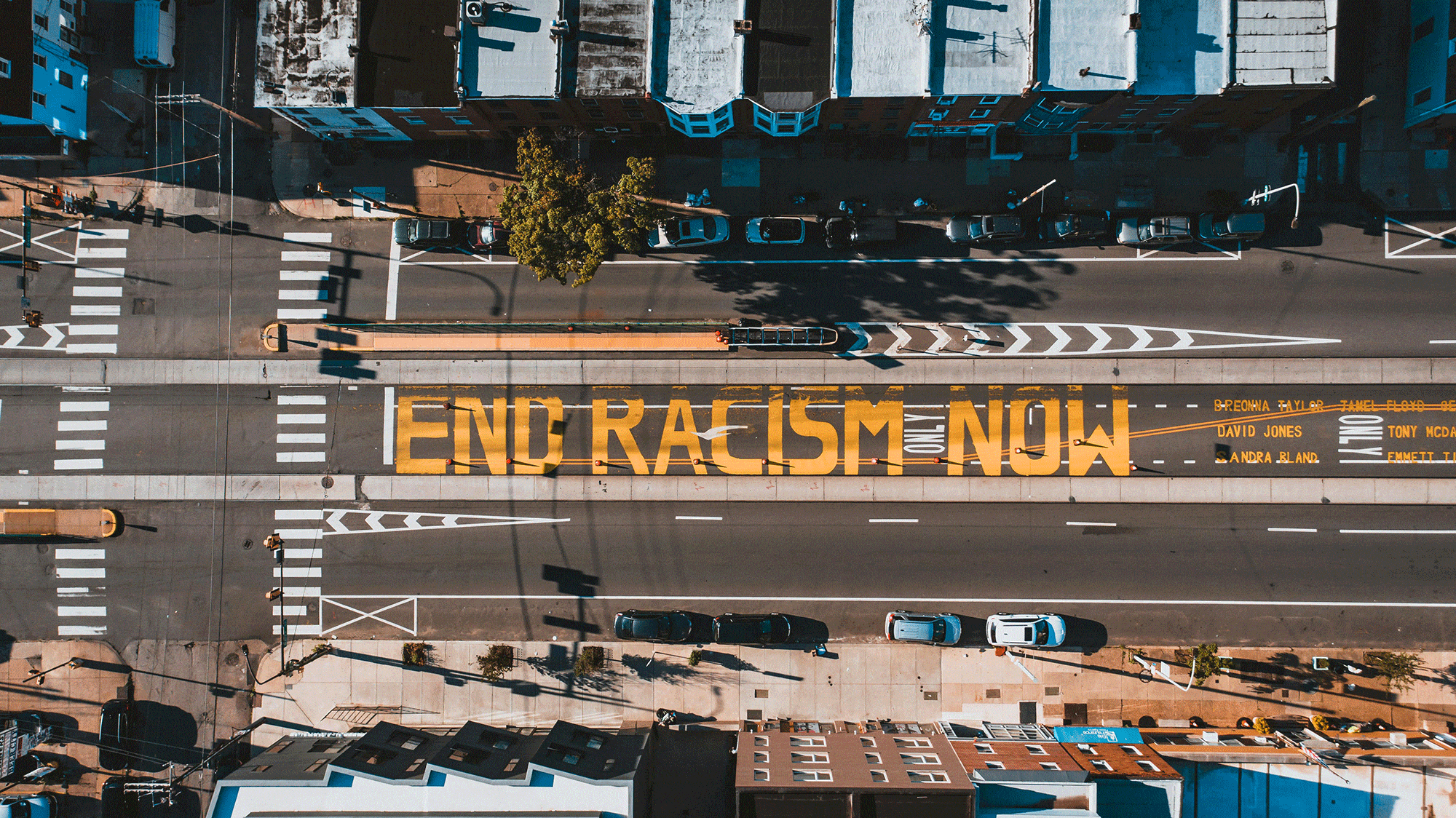
Urban landscapes rest on the infrastructural assumptions and developmental aspirations of colonization, plantationism, and modernity. Time and again, the land has been shaped, drained, scoured, scorched, paved over, and made to serve the interests of racial capitalism. Time and again, those who have less have become hosts to these urban infrastructures and their environmental and economic repercussions; have actually and figuratively supported the infrastructures that others benefit from and build their wealth upon. Time and again, communities of color have suffered most from the recombinatory effects of heat, pollution, devaluation, noise — racism in material form, racism in sonic form, racism in perpetual motion.
We know this. We know the where, and the what. We know the number of miles of highways, how hot, how loud.
We know how hard it is to breathe.
What is repair when we know these discernible facts? Is repair simple? Is it simply compensation for the enumerative, quantifiable dimensions of inequality? Does it consider the singular economic value of a property that was acquired to make way for a highway over 50 years ago? If so, is it the value then, or now? Even if we adjust for the change in value over time, could a monetary amount truly account for the loss of home, for the loss of a past, for the loss of a future in that home? Even if we adjust, can we account for the fact that some properties are, and have historically been, economically and culturally valued more highly than others? Can we account for how this same highway has been both an initial burden and a continued source of harm, while others, who live elsewhere, have benefitted from its incalculable weight? What is repair then? Is it simply the difference in racialized property values? Could this economic difference quantify repair?
White Property Value – Black Property Value = Economic Difference = Amount of Repair
This equation suggests a comparative metric, one set to the developmental aspirations and valuations of White privilege and affluence. There are absences in these assumptions.
One absence = a (racial capitalist) system that maintains inequalities
One absence = how these inequalities are embedded in the land, in the bank, in the home, in the body
One absence = the toll these systems take on someone’s body
One absence = someone’s absence from this land
These absences suggest the complexity of repair. These absences suggest that measuring the indices of difference does not mean that reparations are exact, even though they should be exacting. These absences are persistent. They are insistent. They insist that repair is not a simple equation. It is not a subtractive accounting in which a singular enumerated difference will equal redress.
Repair seeks a complex logic. It is continual.
We should make reparations, but repair won’t be limited to one check or one stimulus or one project. Repair seeks a more complex logic. It is continual. Repair occurs where streets and highways touch the ground, where ground supports home, where home touches on body, where body touches on land, where land touches on infrastructure. We must account for the inflammation in lungs. We must account for the loss of oak trees and the expanse of their shade, for the ability to sit in the sun on a front stoop, for the loss of that stoop. We must account for the hope lost, the lead in the soil, the vulnerability to rising water, the vulnerability to more death,
the possibility for more joy,
more love.
We must imagine repair as a set of relationships that can move us forward and away from these ongoing, unequal burdens. Repair must be set against the infrastructural tapestry of death. We must imagine that it is located in the land, in the body, in the home; that repair is the possibility of an expansive hope that one’s children will be safe.
As our infrastructures crumble, before we patch and maintain — before we take down these monuments to racial capitalism without ensuring that those who live in the infrastructures’ shadows can stay and bask in the quiet — we need an accounting this is not limited to the miles or the materiality of deconstruction. We need an accounting that is as simple, as necessary, as imperative as healing. We imagined these monstrous infrastructures on which we rest our lives. Why can’t we imagine joy? Isn’t that a place too?
— Anna Livia Brand
Unbuilding to Rebuild
If we valued everyone’s lives equally, if we placed the public health and well-being of the many above the profits of a few, there wouldn’t be a climate crisis. There would be nowhere to put a coal plant, because no one would accept the risks of living near such a monster if they had the power to choose.
— Hop Hopkins, Sierra Magazine
The climate crisis and racial oppression are rooted in a common sociopathy: namely, that some people and some places are less valuable than others. Today we find ourselves at a pivotal moment that demands deliberate and decisive action to repair the planet. But at the same time we need to grapple with interconnected problems we have ignored for too long.
Specifically, we must fundamentally rethink our approach to the design of buildings, landscapes, and cities, and to the policies that determine them. Our systems — social, economic, ecological — are distressed not by chance, but by intent — by priorities that favor growth over care, innovation over preservation, consumption over conservation. The shift from building the world to repairing the world is more than a technical challenge; it requires a profound transformation of our values, a reimagination of our disciplines, a redefinition of what progress truly means.
A commitment to prioritizing people lies at the heart of an ethos of repair. It encourages us to collaborate with communities and to understand their unique histories and cultural contexts. It pushes us to center the experience of individuals who have been othered by social norms. It challenges us to dismantle sociopolitical structures that reinforce inequities and channel benefits to a privileged few.
Our systems are distressed not by chance, but by intent — by priorities that favor growth over care, consumption over conservation.
As designers, we need also to rethink our processes— to focus not just on what we create but also on how we create. This means adopting practices that are inclusive and participatory, and that allow for deeper appreciation of the embodied knowledge and lived experiences of others. In this way the designer is re-positioned as translator and facilitator — rather than creator and visionary — in an iterative process of co-creation and ideation. To truly pursue an ethos of repair, we must foster a deep reverence for places as living ecological and social systems integral to collective well-being. Valuing place means respecting the limits and capacities of our ecosystems; protecting and restoring natural habitats; ensuring that our interventions enhance rather than degrade the environment. It also means honoring the cultural and historical significance of places, acknowledging stories and identities rooted in the land. In doing so, we can create spaces deeply connected to people and their histories.
The work of repair requires careful reflection and detailed attention as we unbuild and rebuild; and it requires time — a sustained commitment to seeing people and places we have been conditioned to ignore. This transformation requires us to rethink not only what we design, but also who we design for, how we design, and where we design.
Let’s go.
— Rashida Ng
I write as a practitioner, feet on the ground, out doing in the world; yet also as a wanna-be intellectual; as a repair activist, investor, and artist; temperamentally pragmatic and spiritually inclined; joint degrees from management and divinity schools. What I have to say doesn’t suit many, but urgency compels pragmatism.
Despite legitimate calls for its demise, capitalism isn’t going away anytime soon, and time is short.
Regardless of its inherent antagonism toward healthy living systems, and despite legitimate calls for its demise, capitalism isn’t going away anytime soon, and time is short. In the immediate to medium term, fact is: enterprises will continue to pursue profit by following market demand and lowering costs within their regulatory environments. But we don’t have to live with capitalism as it’s currently practiced. We already have the tools to exploit capitalism’s machinery and channel its force away from growth-at-all-costs: social values shape how capitalism plays out. A society that values repair makes it part of successful business models, thereby bankrupting growth-based capitalism and moving toward resiliency-based capitalism. Repair is resiliency in action, and accelerating a cultural shift that normalizes repair is imperative.
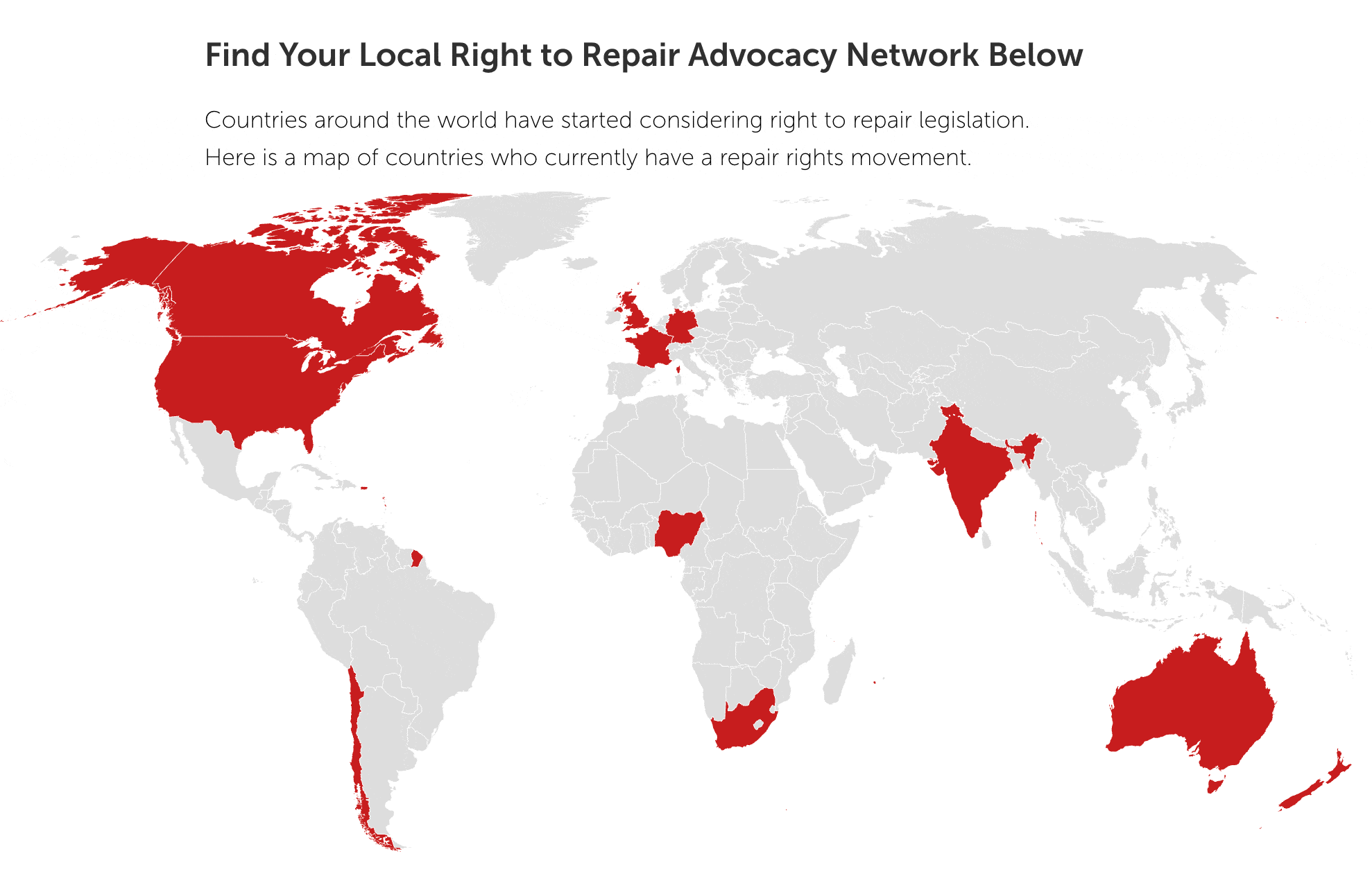

When we citizens and consumers: 1) demand repairable goods; 2) favor products made of already used and repaired goods; and 3) enact regulations that protect the capacity to repair, enforce anti-trust laws, and flex taxing authority, then astute corporate managers will unshackle design, manufacturing, and marketing from growth-based consumerism, and instead direct employees to develop products and processes that enable customers to do what we want to do: take care of what we have.
Witness: 1) iFixit’s collaboration with the tech company Lenovo; 2) Patagonia’s Worn Wear; and 3) the passage of Right-to-Repair laws in California, Colorado, Minnesota, New York and Oregon.
When companies thrive by meeting customers’ demand for repair, skillful investment managers and bankers will provide them with cheaper capital. Investors will reap reasonable returns and bankers will be assured repayment. Supporting repair isn’t shareholder activism or community service. It’s exercising a fiduciary duty to invest and lend well.
Growth-based capitalism enflames precarity and suffering. The tools we have for bankrupting it are our values.
As repair advocates, it’s our job to normalize repair through every channel available. Scholars, designers, journalists, politicians, religious leaders, educators, economists, corporate managers, small business owners … We’re all people going to local repair cafés and hootin’ and hollerin’ over successful fixes, celebrating what we know to be right and good, transforming our conceptual knowledge into experiential knowledge. This is fuel for action. Growth-based capitalism enflames precarity and suffering. The tools we have for bankrupting it are our values, forcefully realized in what we buy and how we govern. Every purchase, vote, investment, design, scholarly paper, sermon, loan, news article, class lesson … every one of these matters in cultivating a vibrant and pervasive culture of repair.
Capitalism isn’t going away, but the ecological crisis is sufficient to catalyze a paradigm shift if people perceive an accessible alternative, a narrative that offers some sense of security: resiliency-based capitalism, where repairing and reuse is unexceptional.
— Vita Wells
Repair as Regenerative Design
Repair to design is learning, and design to repair is thinking about adapting.
We use this phrase frequently in our internal discussions, especially as we continue to grapple with the aftermath of the May 2024 floods that devastated Nairobi, intensifying the vulnerability of low-income neighborhoods and the violent responses of authorities, in this case through forced demolitions of informal settlements.
While building something new may be tempting, the challenges faced by the communities we serve are not merely technical. They are deeply rooted in historical, sociopolitical, economic, and environmental dynamics. Development in informal settlements thus calls for a different approach — one that works with what already exists.
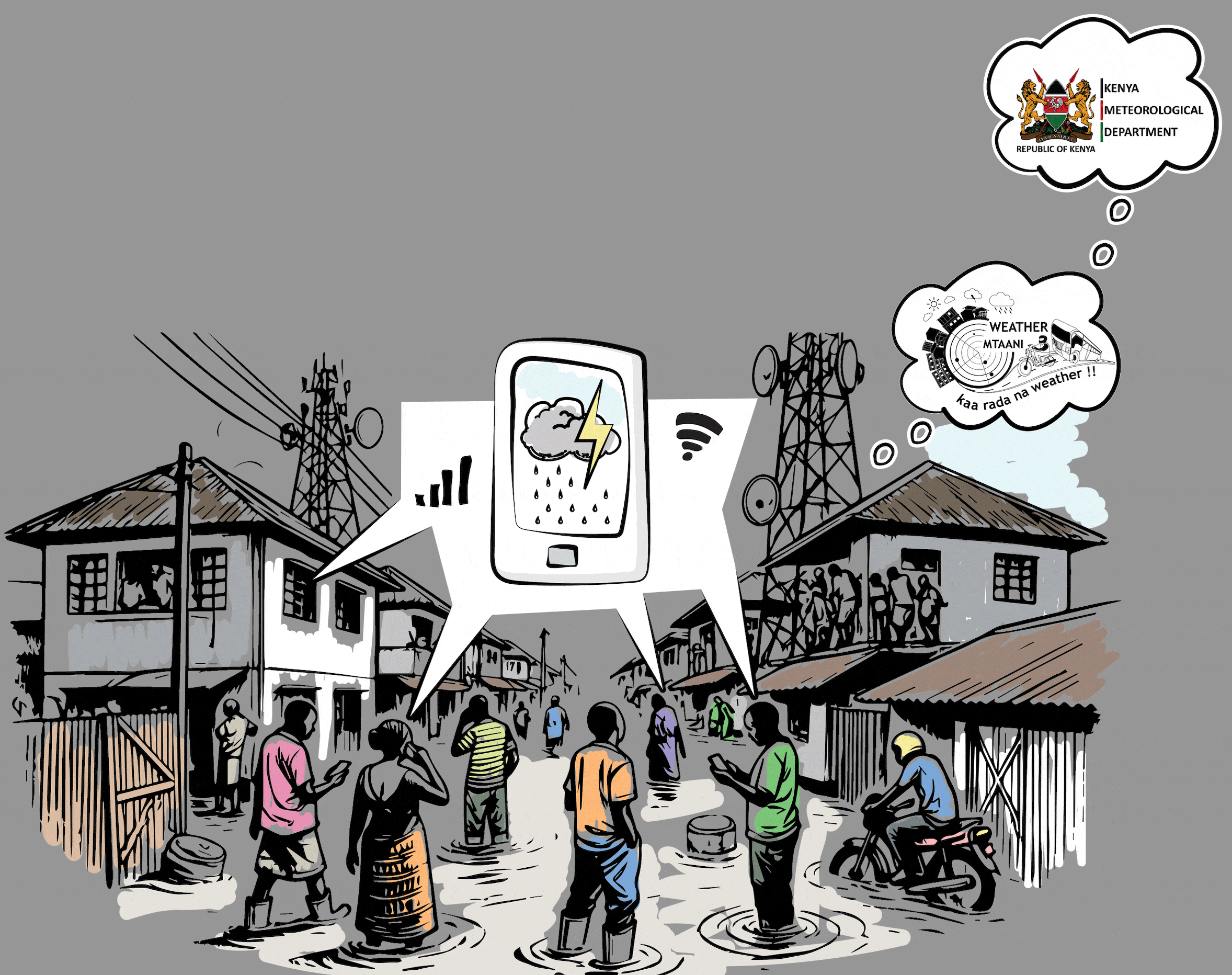
In settlements where land tenure is contested, municipal infrastructure is inadequate, and many needs compete for limited resources, small-scale, incremental enhancements are often the most viable solutions. In Nairobi, over 60 percent of the population resides in informal settlements that occupy just six percent of the city’s untitled land. These settlements contend with inadequate sanitation, poor drainage, and unsafe housing, leaving residents vulnerable to climate and health hazards. Despite such difficulties, communities demonstrate remarkable agency, innovating within constraints to navigate municipal neglect and everyday risks.
When communities are not just clients but co-creators, design becomes socially constructed.
At its core, then, for us, repair is about improving what already exists. It involves recognizing people’s agency and the inherent value of existing structures and systems, particularly in informal settlements where resilience, adaptability, resourcefulness, and social capital are part of everyday life. Repair extends beyond the physical; it also touches on the political and socioeconomic, because infrastructural difficulties are deeply rooted in Nairobi’s colonial history, a legacy of racial segregation that persists today. The perception of informal settlements as temporary or undesirable justifies municipal eradication policies rather than enhancement (see post-flood demolition and forced relocations). Repair in this context becomes a corrective action, as we advocate for and strive to build “just cities,” addressing historical environmental, social, and infrastructural injustices.
Design, when focused on informal settlements, is a problem-solving process aiming to maximize incremental solutions, meeting the needs and aspirations of residents. Through a multi-authored approach, in which communities are not just clients but co-creators, design becomes socially constructed, embedded within the everyday experiences, existing solutions, historical contexts, needs, and resources of the community.
Repair and design are urban development ideologies that commingle in mutually beneficial ways around regenerative design. Good design inherently considers repair by definition, in that it anticipates future needs and minimizes potential disruptions. Good design involves reflection, learning from the past and making tactical improvements that adapt to changing contexts. In this way, in our praxis, anticipation and reflection inform what we call regenerative design — building on existing community interventions, starting small, scaling through incremental improvements, and considering repair from the onset and throughout a project’s lifecycle.
As interpretive and supportive agents of regenerative design, embracing an ethos of repair and care requires us to make an ideological shift away from urban development practices traditionally focused on building new, large-scale things. Regenerative design means working with the old, evolving the existing incrementally, and, most importantly, caring for the physical, environmental, and social structures of communities.
— Kounkuey Design Initiative: Mathews Wakhungu, Jack Campbell-Clause, Gloria Tanui, and Joe Mulligan
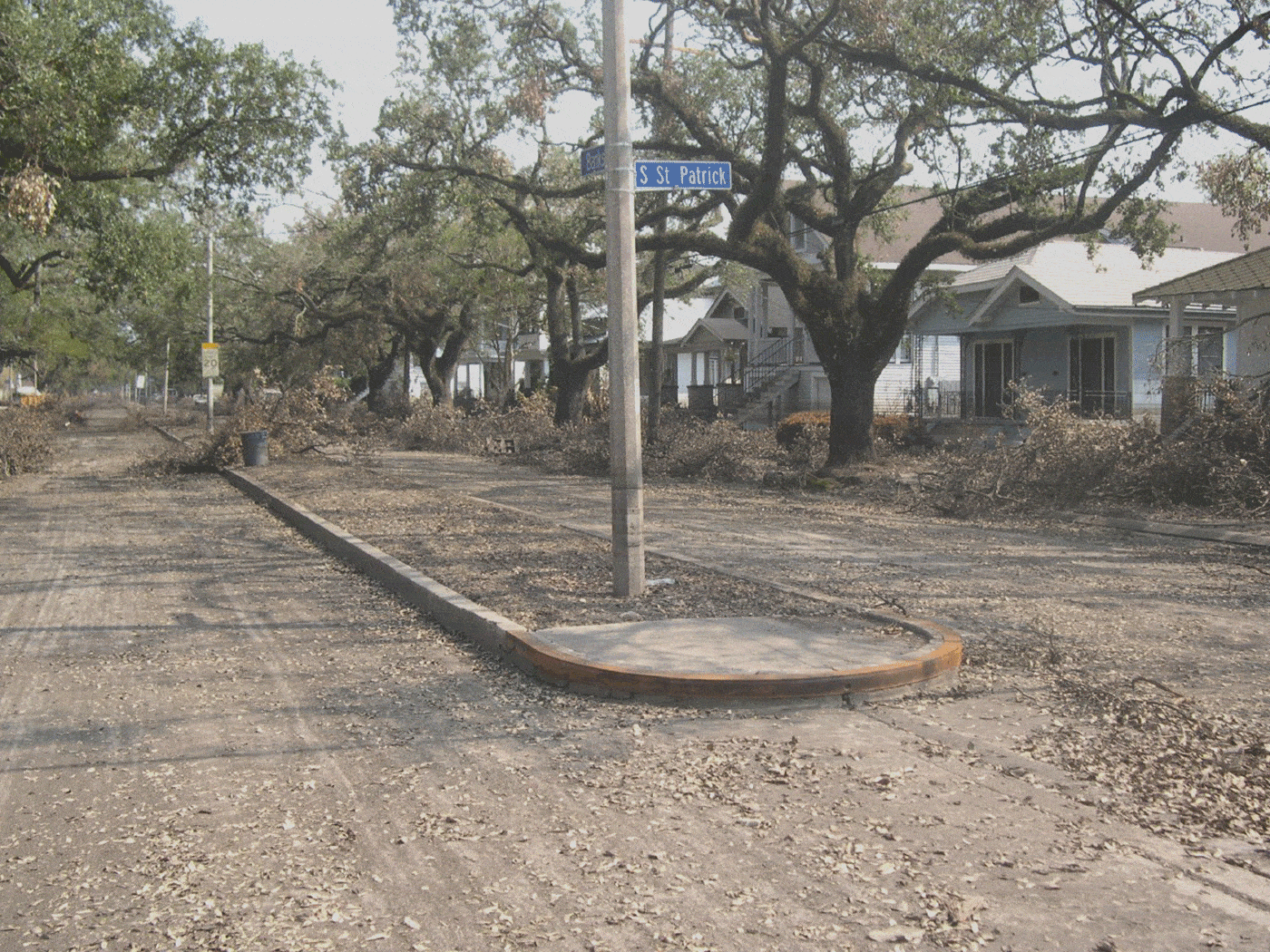
Nineteen years ago, I had just started my design career at an architectural office in New Orleans when Hurricane Katrina ravaged the city. My colleagues and I returned six weeks after the levees broke, and in the early days of the recovery, our primary task was to painstakingly document the wreckage so that FEMA could calculate the exact amount of aid to dole out. Day after day, I donned a Hazmat suit and went room to room in hospitals, retirement homes, and schools to evaluate whether damages warranted “repair, replace, or neither” — and, each time, I asked myself who would ultimately be served by those determinations.
FEMA will only fix a facility to “perform the pre-disaster function as well as it did prior to the incident.” Crucially, the agency will not support repairs for a facility to perform better. Yet a world existed in New Orleans, and this detailed work of documenting damage to and possibilities for that vibrant world contrasted with characterizations put forward by the starchitects, academics, and New Urbanists who soon descended on the city, eager to stamp their ideas on what they saw as a blank slate.
Crucially, FEMA will not support repairs for a facility to perform better.
An ethos of repair requires specificity in methods and language. The first, essential step in any design process is a survey of existing conditions, but it takes experience to represent places in ways that are truthful and just. Although designers have an ever-expanding suite of tools and data with which to analyze buildings and landscapes, the danger is that these increased capacities multiply the opportunities to distort our findings to suit preconceived notions. Instead, we need to reckon with how conditions are right now, from the mundane to the sublime — and to open our minds to see the sublime in the mundane. Especially when working in vulnerable communities, it is imperative that we not only document existing conditions and redress deficits, but see what assets can be nurtured.
Often “repair” is discussed in contrast to innovation and novelty. Yet it is in repair that we most need invention. Most of us live in buildings and cities that are not equipped for the climate crisis. We need air conditioners that can fit in an apartment casement window without heating the air outside. We need ventilation systems that can clean classroom air without requiring wholesale replacement of a school’s system. We need building envelopes that allow fresh air in, but also protect us when that air is hazardous due to wildfire smoke or unchecked emissions. We need shelter and shade, now, in neighborhoods that can’t afford to wait for trees to be planted and grow in. Remediation, retrofitting, reuse, rewilding, and de-paving are all forms of repair, but all require technological skills that designers and educators need to become more familiar with.
This is not a call to abandon speculative futures, but to really come to terms with the landscape in which we exist, in order to reframe our ideas of what might come next. After all, speculation is where hope remains.
— Sara Jensen Carr
Beyond Repair: Reclaiming Reparation
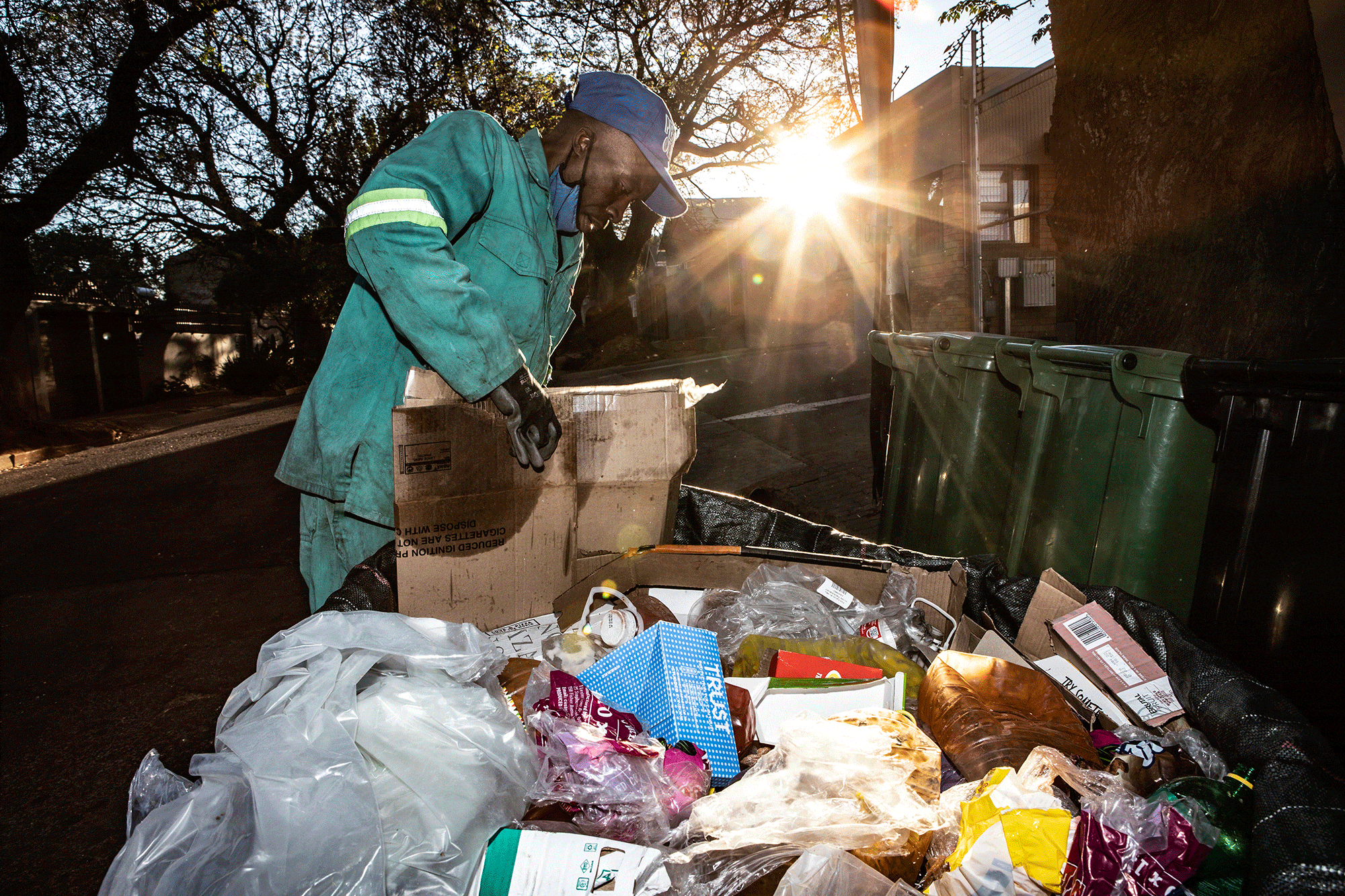
Living in Johannesburg — one of the world’s most unequal cities — provides daily insight into the allure, but also the limitations of the current interest in “repair.” Nothing brings this into sharper relief than my work with reclaimers — people often problematically referred to as “waste pickers,” although they perform complex labor to salvage (rather than simply collect) items with value (not waste).
The reclaimers’ work presents a highly visible critique of capitalism’s waste-to-consume dynamic.
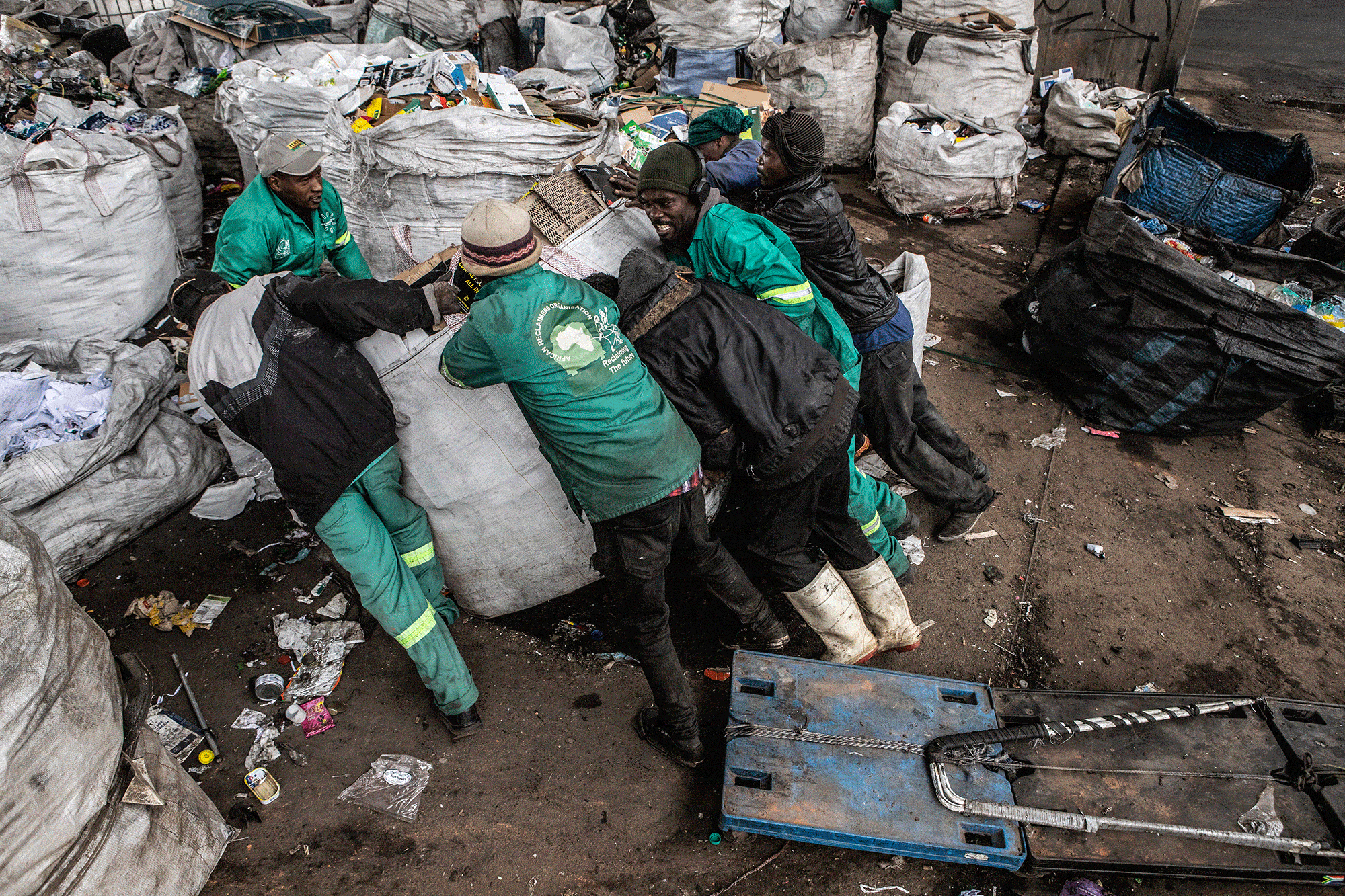
Long before South African municipalities took an interest in recycling, reclaimers saw that they could support their families by creating a “separation outside source” (or SoS) system to extract recyclable and reusable materials from residents’ trash. These materials are sold into the global recycling value chain or second-hand markets, used in reclaimers’ homes, or refashioned into items with new use values. The reclaimers’ work thus presents a highly visible critique of capitalism’s waste-to-consume dynamic — its built-in encouragement to trash perfectly good items and buy new ones, to keep profits growing. In this sense, reclaimers exemplify the principles of preservation, maintenance, and care.
When Johannesburg eventually decided to promote recycling, reclaimers organized into the African Reclaimers Organization (or ARO) to demand that the municipality strengthen and expand their SoS system rather than contracting private companies to “create” a recycling system in the city. This too could be seen as exemplifying repair — recognizing and supporting systems auto-constructed by the poor, instead of assuming that poor people need novel interventions by the state and corporations (See “Notes on a Southern Urban Practice,” by Gautam Bhan.)
It is also true, however, that repair implies no particular politics. It can mean building on reclaimers’ SoS system. But it can also mean upgrading and maintaining Johannesburg’s crumbling water and electricity infrastructure. As this infrastructure was designed under colonialism and apartheid to cater to the city’s White residents, repairing it would only entrench gross inequities.
Johannesburg’s reclaimers are not simply calling for and practicing “repair.” Through ARO, they are demanding, and enacting, reparations.
Reclaimers emphasize that their stigmatization, and the municipality’s erasure of their SoS system, are rooted in colonial ideologies that associated Black people with waste as part of efforts to dehumanize them. While the city could repair the poorly functioning recycling system it has attempted to impose on top of SoS, reclaimers argue that strengthening SoS must be prioritized. Anything else would be an act of colonization.
We need to reject the political neutrality of repair, and speak instead about reparation.
Reclaimers also stress that decades of nonpayment for the services they provide underpins profitability for the recycling industry, continuing the super-exploitation of Black labor under racial capitalism. As a result, ARO has successfully mobilized to ensure that South African regulations require industry to pay reclaimers, and to provide them with resources to change their position in the value chain. Unsurprisingly, industry is doing everything possible to avoid these “new” costs. Still, the argument that reparations are owed gives ARO’s demands historical, moral, and political grounding, and fuels their ongoing struggle.
Reclaimers’ praxis makes it clear that before the emancipatory aspirations attached to an ethos of care can be achieved, we need to reject the supposed political neutrality of repair, and speak instead about reparation, rooted explicitly in redressing and transcending patriarchal White supremacist settler colonialism and gendered racial capitalism.
Yet this also creates a challenge for reclaimers. Recycling reduces some impacts of ecocidal industrial production. But in doing so, it staves off more fundamental transformation. (See Gone Tomorrow: The Hidden Life of Garbage, by Heather Rogers.) As Raj Patel and Jason W. Moore argue, reparation must acknowledge that capitalism and colonialism are predicated on the exploitation of nature, and must forge new, harmonious relations that can heal the planet. The urgent political question that reclaimers must grapple with is whether — and how — their praxis can advance this more expansive understanding of reparations, which would require movement beyond a narrow focus on recycling to encompass interventions promoting more fundamental transformations in production and consumption.
— Melanie Samson
At Where Is My Land, we’ve encountered hundreds of Black families whose individual stories are microcosms of the systematic dispossession Black people were subject to en masse. Sometimes, as we’re taking stock of the deluge of engineered social ills that plague our community, we ask ourselves: What came first? But when we look at specific family claims, the chronology is clear.
Governments, individual actors, and private entities used land theft to cement Black folks’ position as an inferior social class. They could not fathom how we, once property ourselves, accumulated sixteen million acres of our own less than 50 years after emancipation. Land represents so much more than equity and generational wealth. For Silas White and the Ebony Beach Club, for instance, land meant community care and respite from segregation. For Carrie Matthews, land meant stewardship and a home to raise 11 children. For “Old Joe” Edwards, land ownership meant self-determination after slavery.
For the White supremacist “vultures” — this is the word Brea Baker uses in Rooted: The American Legacy of Land Theft and the Modern Movement for Black Land Ownership — land equaled capital. Formerly enslaved Old Joe acquired hundreds of acres of land in the Smackover Formation in Arkansas. His descendants, the Darden family, should have inherited the land, but it was stolen by covetous lawyers. During the Arkansas oil boom of the 1920s, Murphy Oil found a treasure trove on Old Joe’s land, and the family’s estate lawyers wanted the profit.
The theft of Black land unleashed environmental apartheid. The answer to this injustice is Black Land Back.
Through the theft of Black land, a two-fold environmental apartheid was unleashed. Land holdings like Old Joe’s morphed into corporate drill sites, where natural resources were ruthlessly extracted, with no regard for Mother Earth or her inhabitants, and used to drive global warming. Meanwhile, Black folks driven off their lands were corralled into neighborhoods carved out by redlining and restrictive covenants. More covenants allowed bad actors to infuse White neighborhoods with green spaces, so as to improve property values, with total confidence that Black families would never benefit, while Black communities became readymade sites for disposal facilities, oil and gas wells, and other pollutants that exacerbate health determinants already affected by racialized trauma. This hellish feedback loop puts us at higher risks of property damage due to disasters, and of chronic illnesses and various other problems that impact economic mobility. All the while, business conglomerates line their pockets from the bounty of stolen lands.
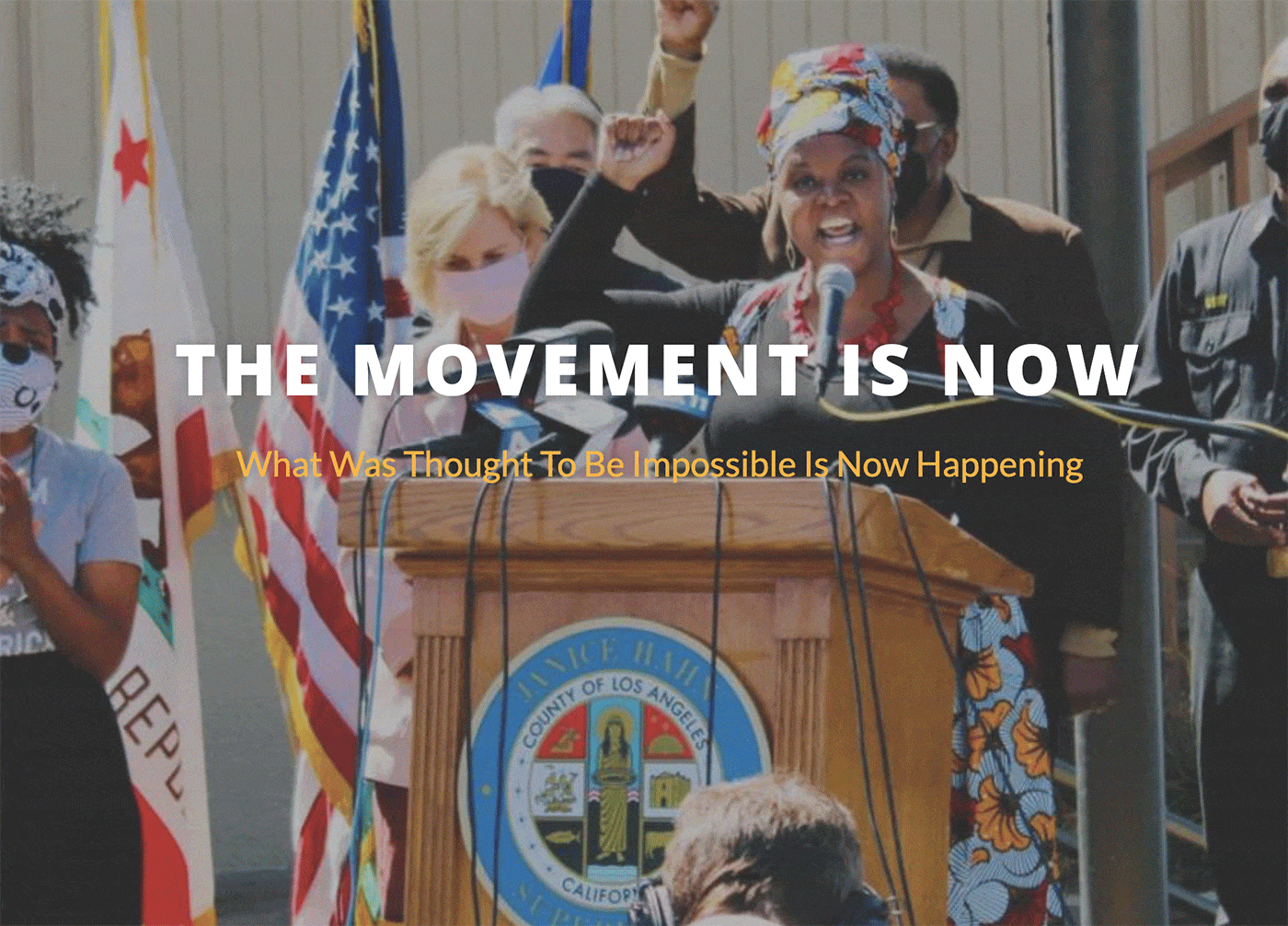
The only answer to this cycle is Black Land Back — a movement started in the wake of the first Black land return in history, helmed by Kavon Ward and Justice for Bruce’s Beach. We are reclaiming the land that is our birthright.
Racial capitalism dictates who and what are worthy of resources. Conversations surrounding reparations and Black land back are often approached with scarcity arguments. The same folks who raced to seize Black assets and resources now protest, “But how do we pay for it?” Asking the harmed populations to do the work of formulating plans and solutions is an affront. Many of us are still fighting for our lives. And in any case, the answer is obvious, people just don’t care to see it: Dismantle oligarchical hoarding.
— Where Is My Land


If you would like to comment on this article, or anything else on Places Journal, visit our Facebook page or send us a message on Twitter.